Explore printable Static Equilibrium worksheets for Grade 10
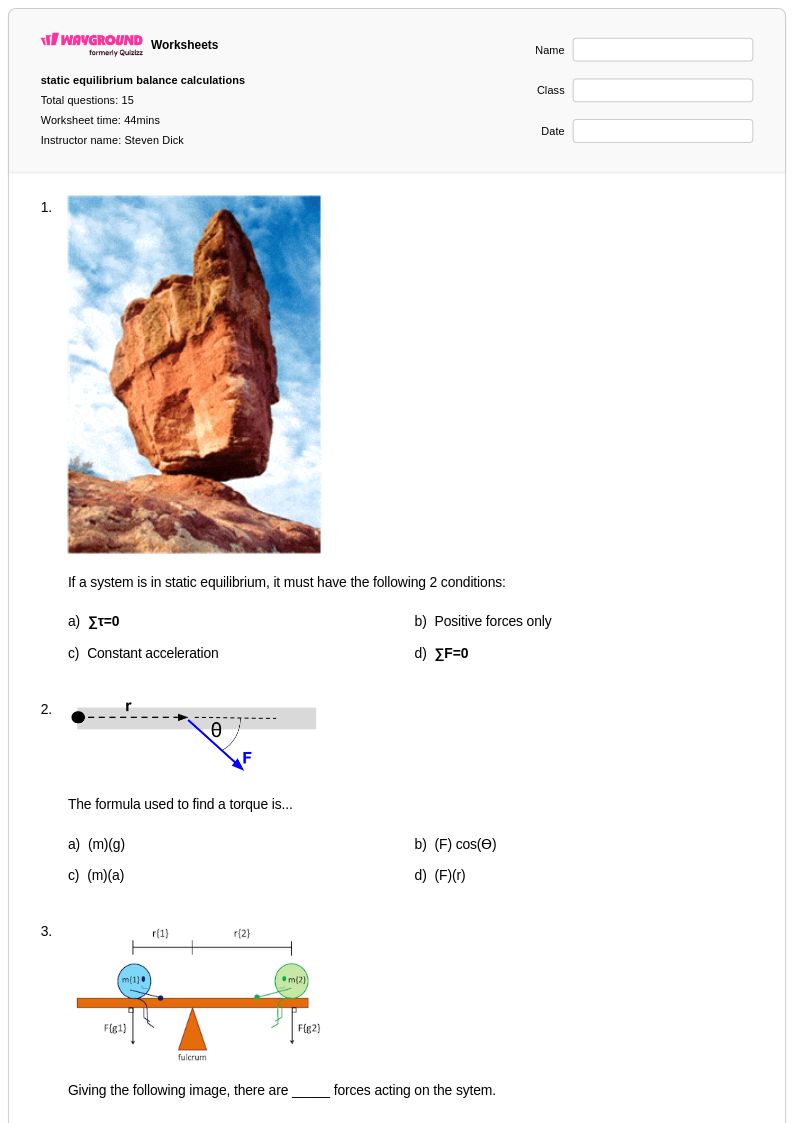
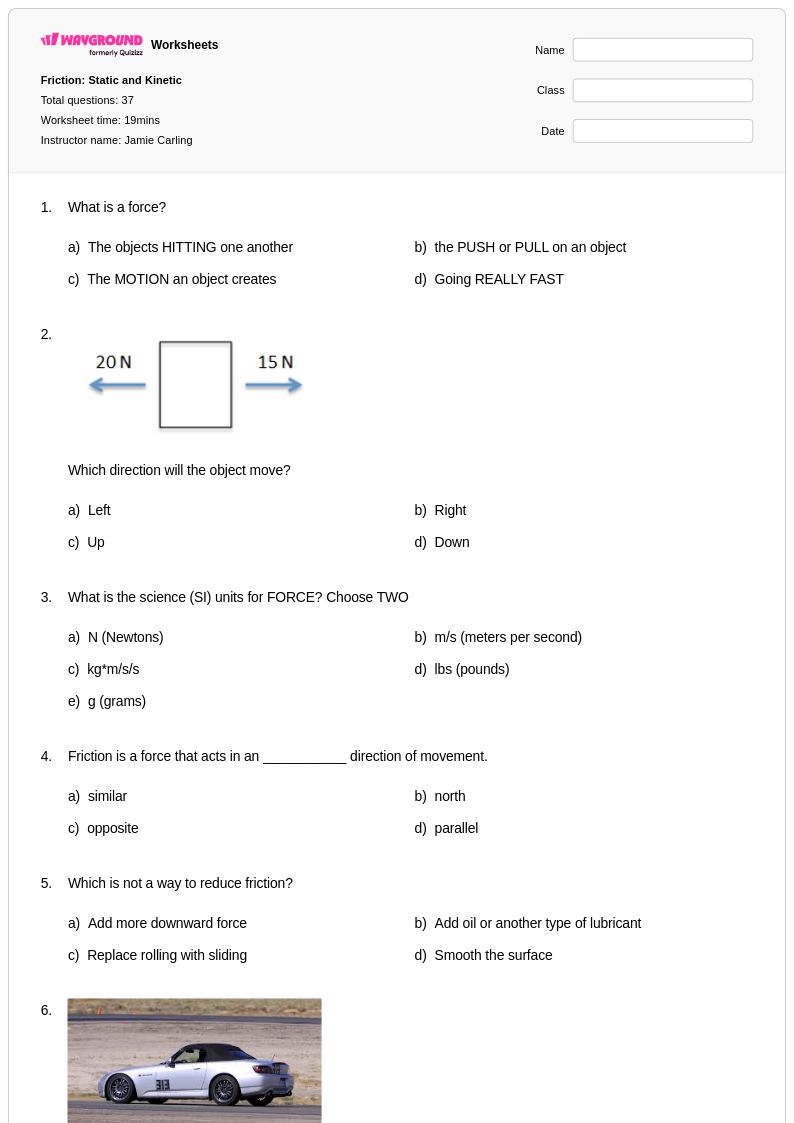
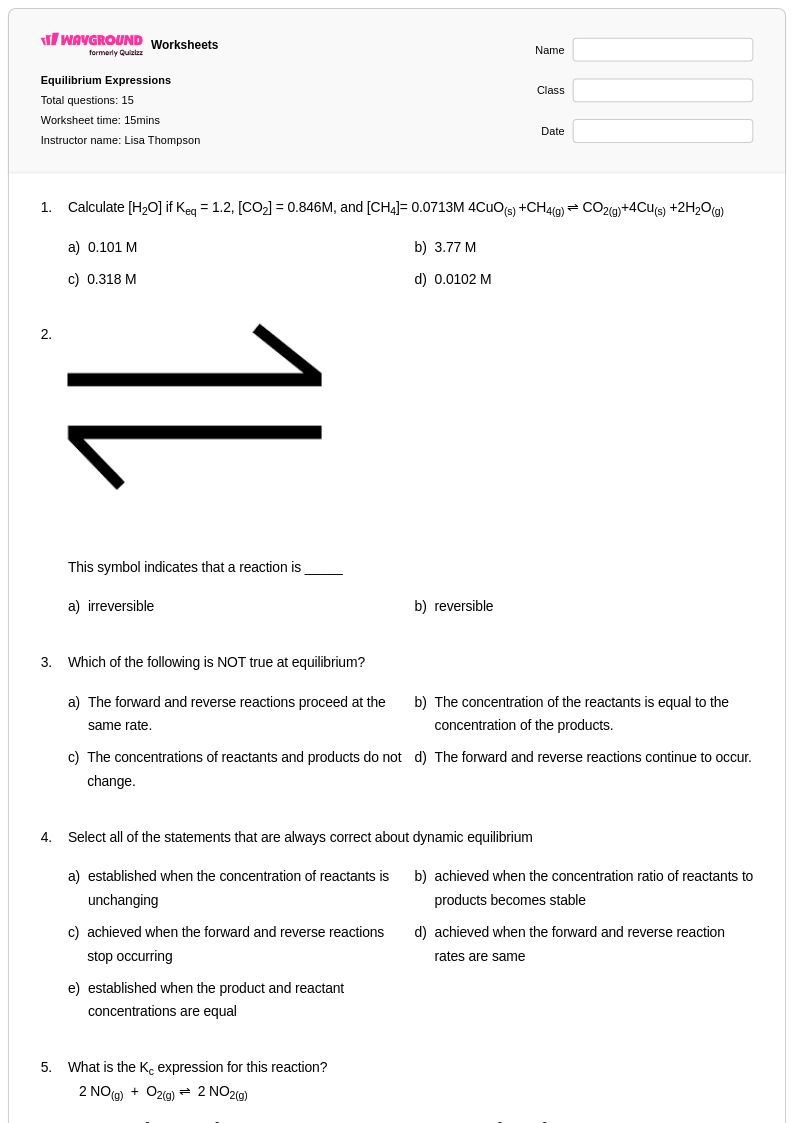
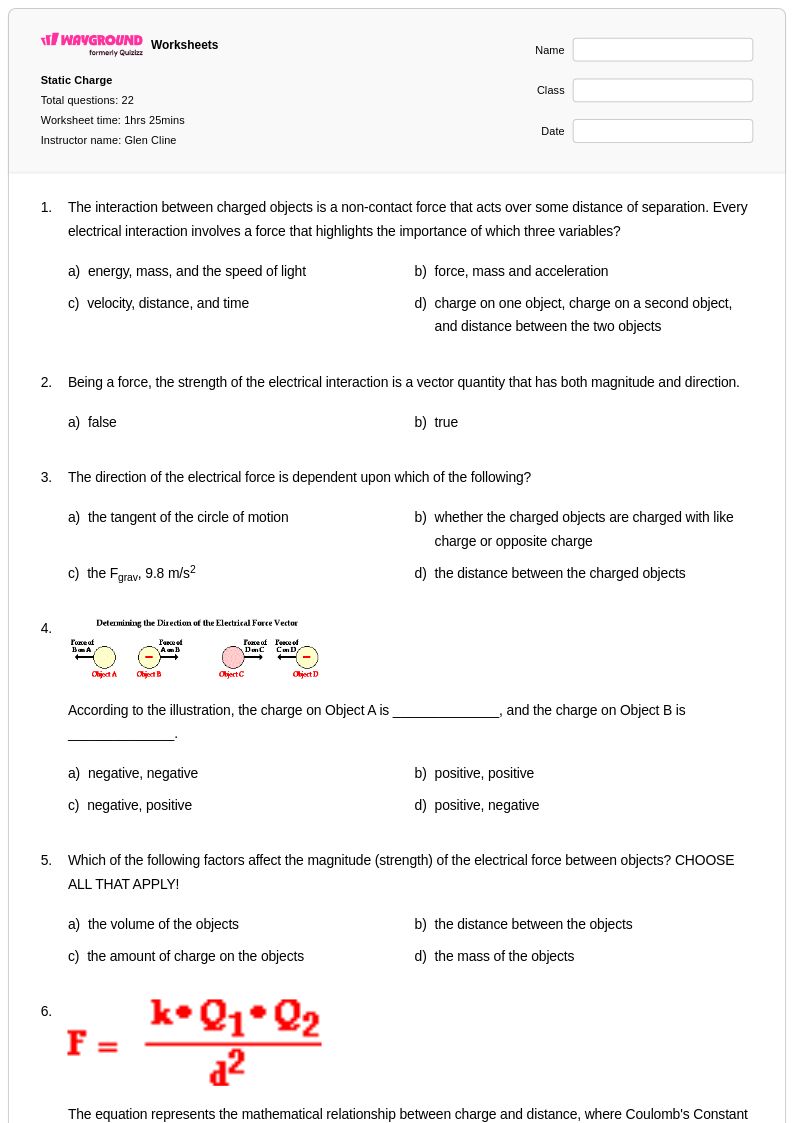
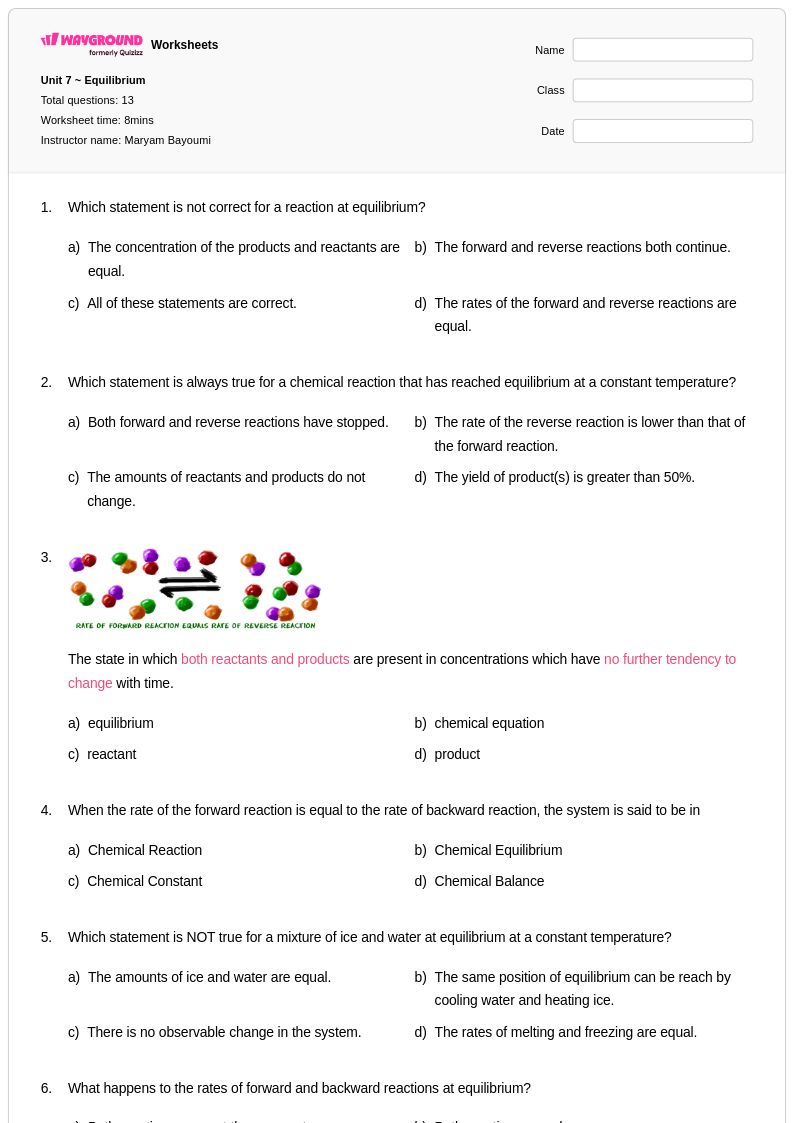
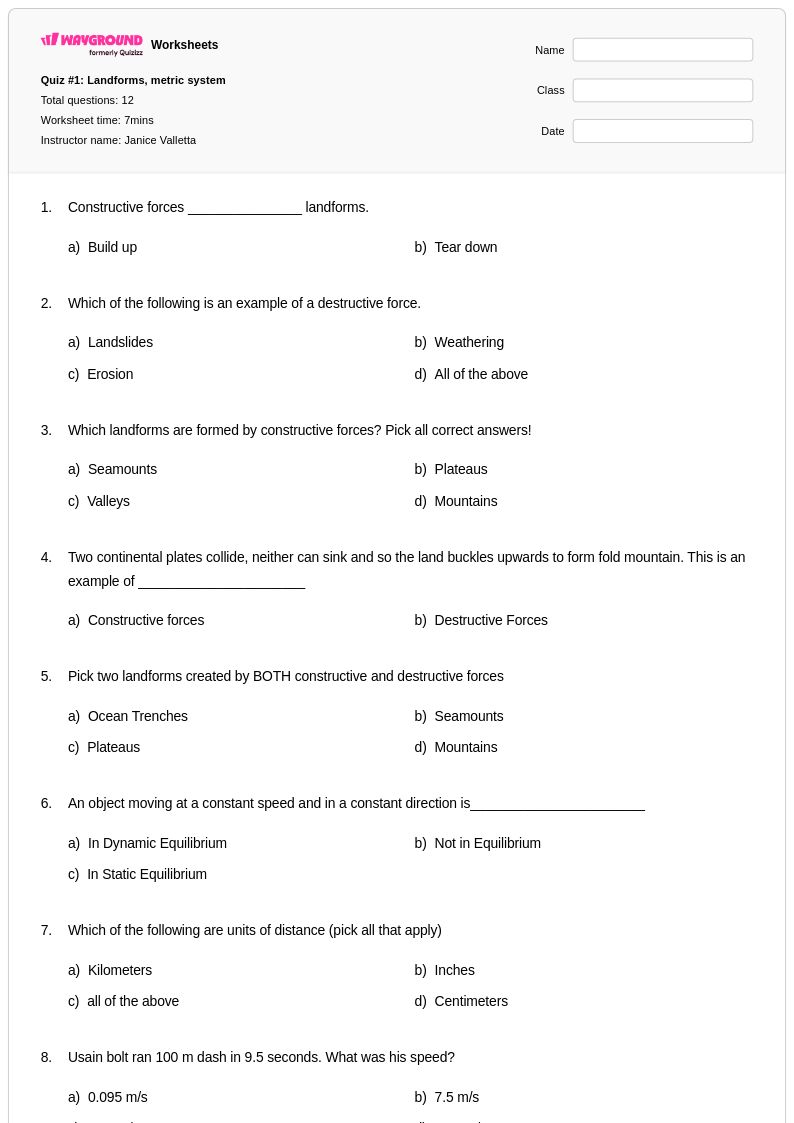
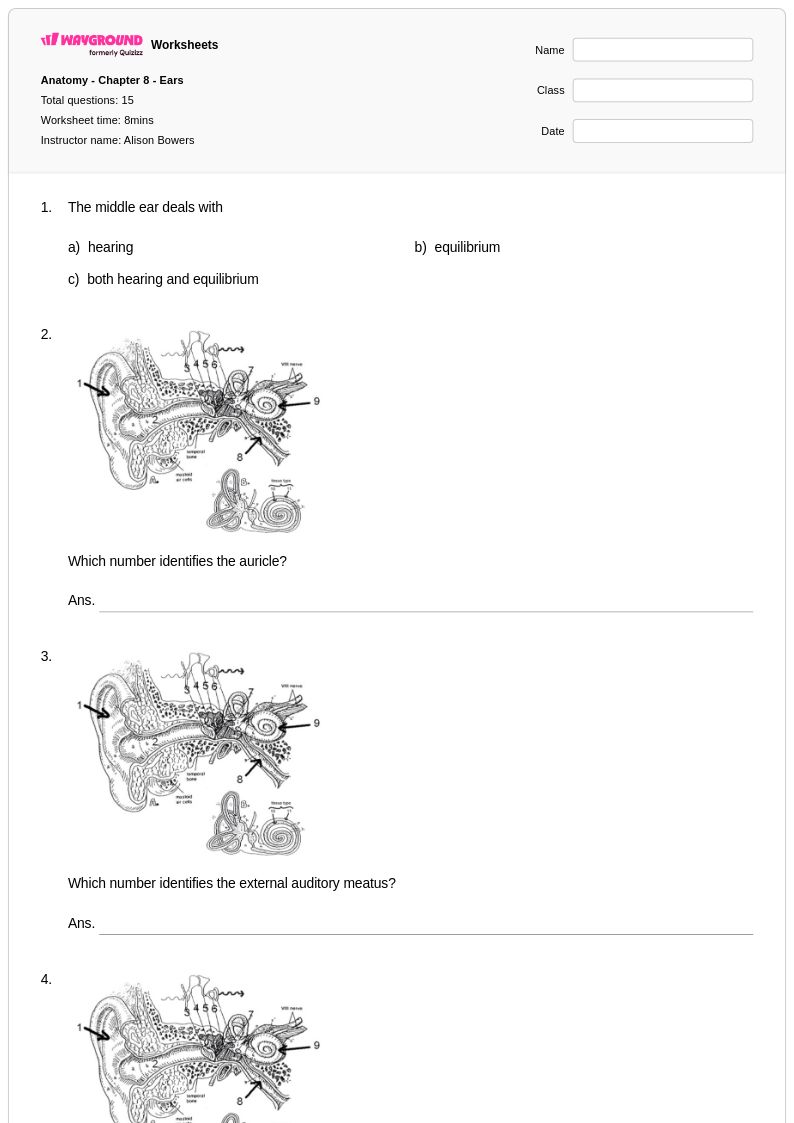
Static equilibrium worksheets for Grade 10 physics students through Wayground (formerly Quizizz) provide comprehensive practice with the fundamental principles governing objects at rest under balanced forces. These expertly designed resources help students master critical concepts including force vector analysis, torque calculations, and the conditions necessary for rotational and translational equilibrium. Students develop essential problem-solving skills through practice problems that cover free body diagrams, coefficient of friction applications, and multi-force systems in static scenarios. Each worksheet includes detailed answer keys that guide students through step-by-step solutions, while the free printable format ensures accessibility for both classroom instruction and independent study. The pdf resources systematically build understanding from basic force balance concepts to complex real-world applications involving structural mechanics and engineering principles.
Wayground's extensive collection of static equilibrium worksheets draws from millions of teacher-created resources, offering educators powerful search and filtering capabilities to locate materials perfectly aligned with curriculum standards and student needs. The platform's robust differentiation tools enable teachers to customize worksheet difficulty levels, problem types, and mathematical complexity to support diverse learning requirements within Grade 10 physics classrooms. Available in both printable and digital formats including downloadable pdf versions, these resources seamlessly integrate into lesson planning for initial instruction, targeted remediation, and advanced enrichment activities. Teachers can efficiently identify specific static equilibrium concepts requiring additional practice, whether addressing foundational force analysis or advancing to sophisticated multi-body equilibrium problems, while the platform's flexible customization options ensure optimal alignment with individual classroom objectives and pacing requirements.
FAQs
How do I teach static equilibrium to physics students?
Start with the two core conditions: the net force on an object must equal zero (translational equilibrium) and the net torque about any point must equal zero (rotational equilibrium). Build understanding progressively by beginning with concurrent force systems before introducing torque and pivot points. Real-world examples like bridges, levers, and structural supports help students see why these principles matter beyond the classroom.
What practice problems help students master static equilibrium?
Effective practice should move from simple systems with two or three concurrent forces to complex problems involving multiple forces, pivot points, and distributed loads. Students benefit from working through vector component analysis, torque calculations about chosen pivot points, and setting up equilibrium equations systematically. Problems grounded in real scenarios such as beams, cranes, and support structures reinforce the connection between abstract equations and physical meaning.
What mistakes do students commonly make when solving static equilibrium problems?
The most frequent error is choosing an inconvenient pivot point, which creates unnecessarily complex torque equations when a better choice would eliminate unknown forces. Students also frequently forget to resolve all forces into components before applying equilibrium conditions, or they apply the sum-of-forces condition without also checking rotational equilibrium. Sign convention errors, particularly with torque direction (clockwise vs. counterclockwise), are another consistent source of mistakes.
How can I differentiate static equilibrium instruction for students at different levels?
For students who are struggling, begin with problems involving only two or three forces acting at a single point before introducing moments. More advanced students can work through scenarios with distributed loads, multiple constraints, and engineering applications. On Wayground, teachers can apply accommodations such as reduced answer choices to lower cognitive load for individual students, or enable read-aloud support for those who need it, while the rest of the class works with default settings.
How do I use Wayground's static equilibrium worksheets in my classroom?
Wayground's static equilibrium worksheets are available as printable PDFs for traditional classroom use and in digital formats for technology-integrated environments, including the option to host them as a quiz directly on Wayground. Teachers can use them for in-class practice, homework assignments, or assessment preparation. Each worksheet includes detailed answer keys with step-by-step solution methods, making them practical for independent student work as well as guided instruction.
How do I help students who struggle with torque calculations in equilibrium problems?
Students who struggle with torque often need explicit instruction on selecting a strategic pivot point to simplify the problem. Reinforce that the pivot can be chosen freely, and that placing it at the location of an unknown force eliminates that force from the torque equation entirely. Structured practice problems that isolate torque calculations, separate from full equilibrium problems, help build procedural fluency before students tackle multi-step scenarios.