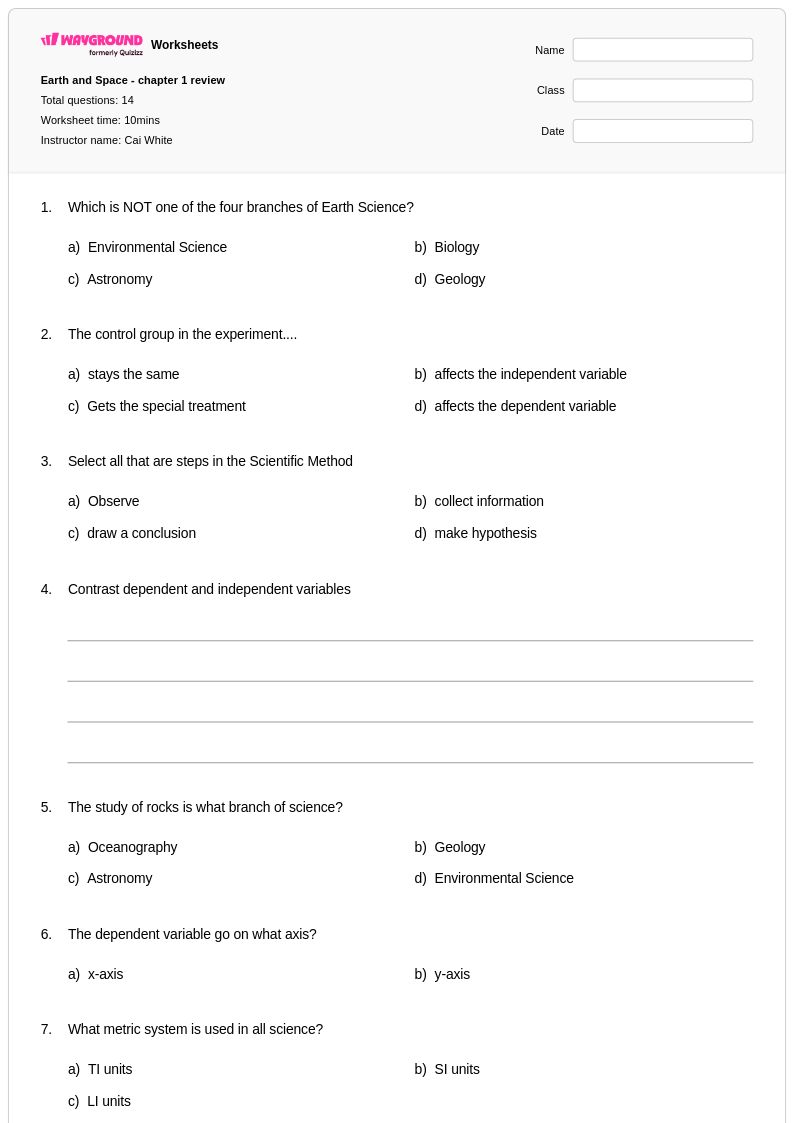
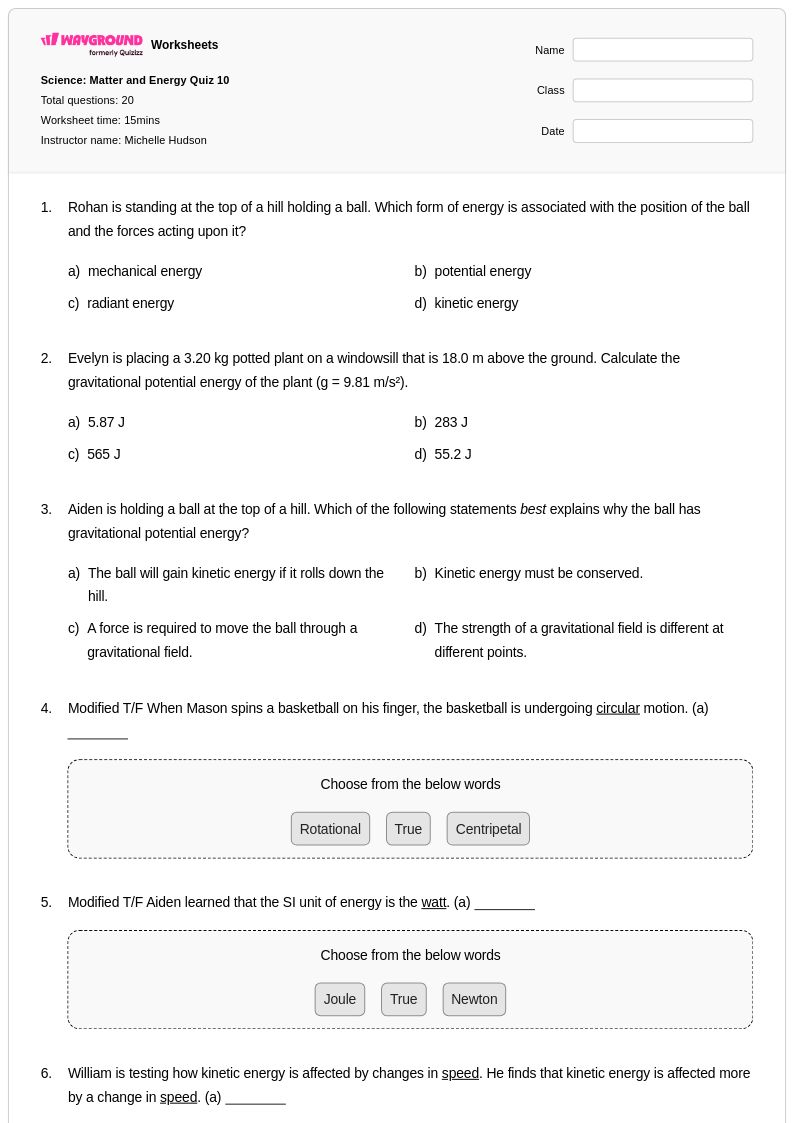
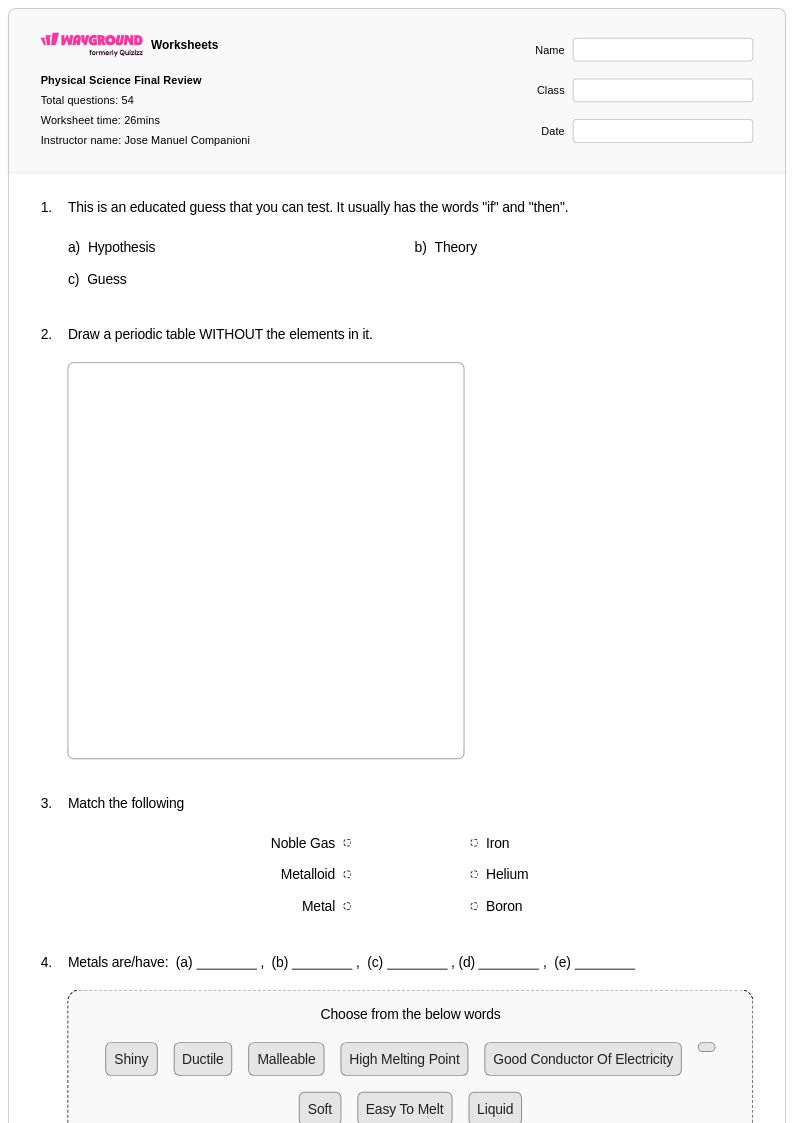
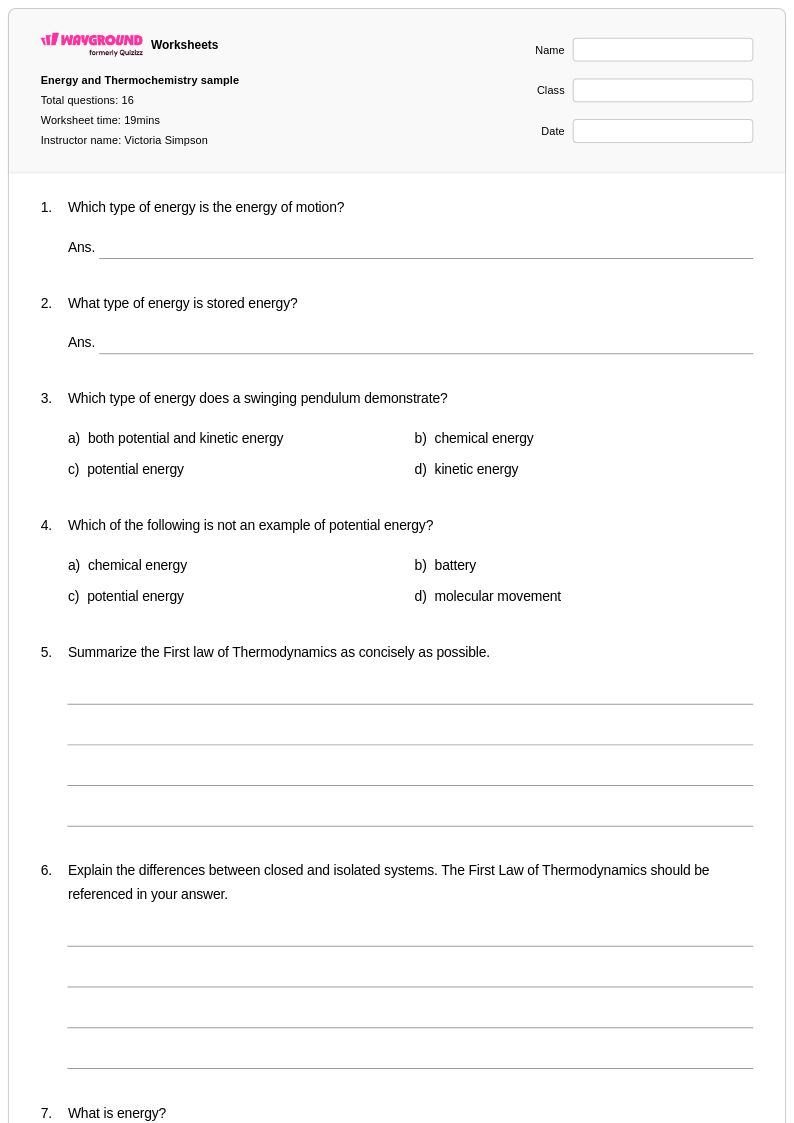
Wayground's free Grade 12 SI Units worksheets offer comprehensive printables and practice problems with answer keys to help students master the International System of Units in scientific measurements.
Explore printable Si Units worksheets for Grade 12
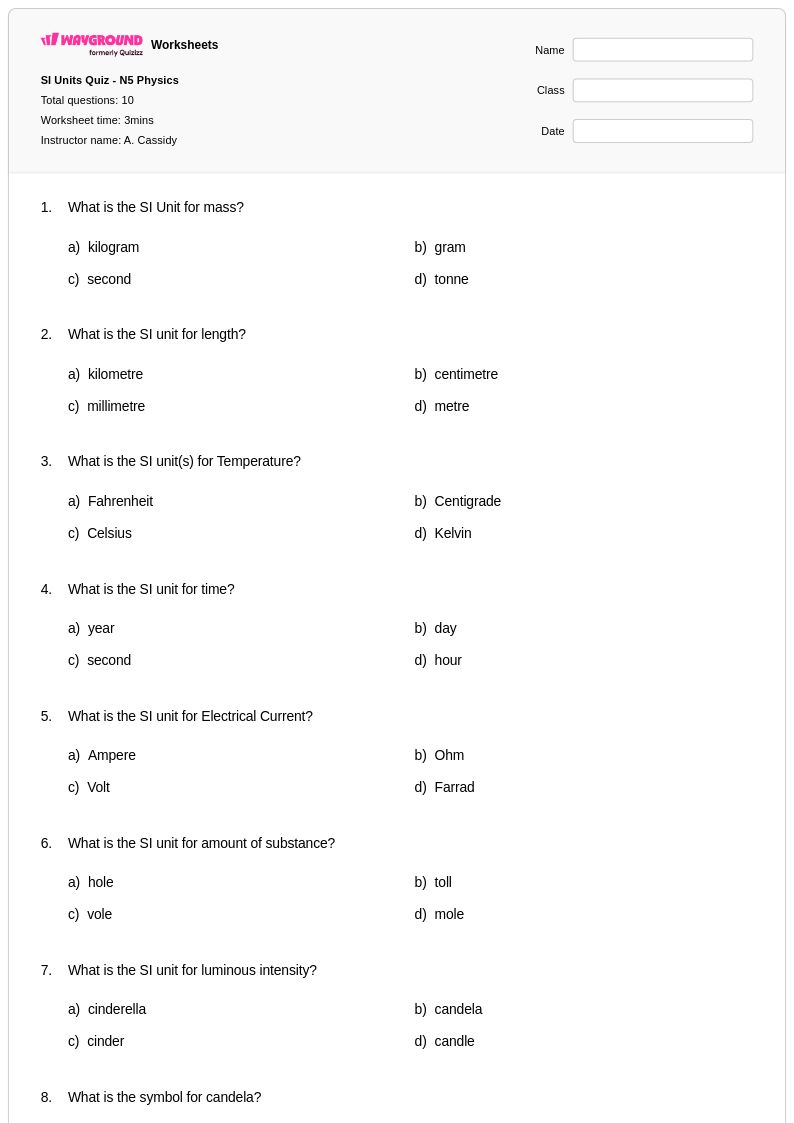
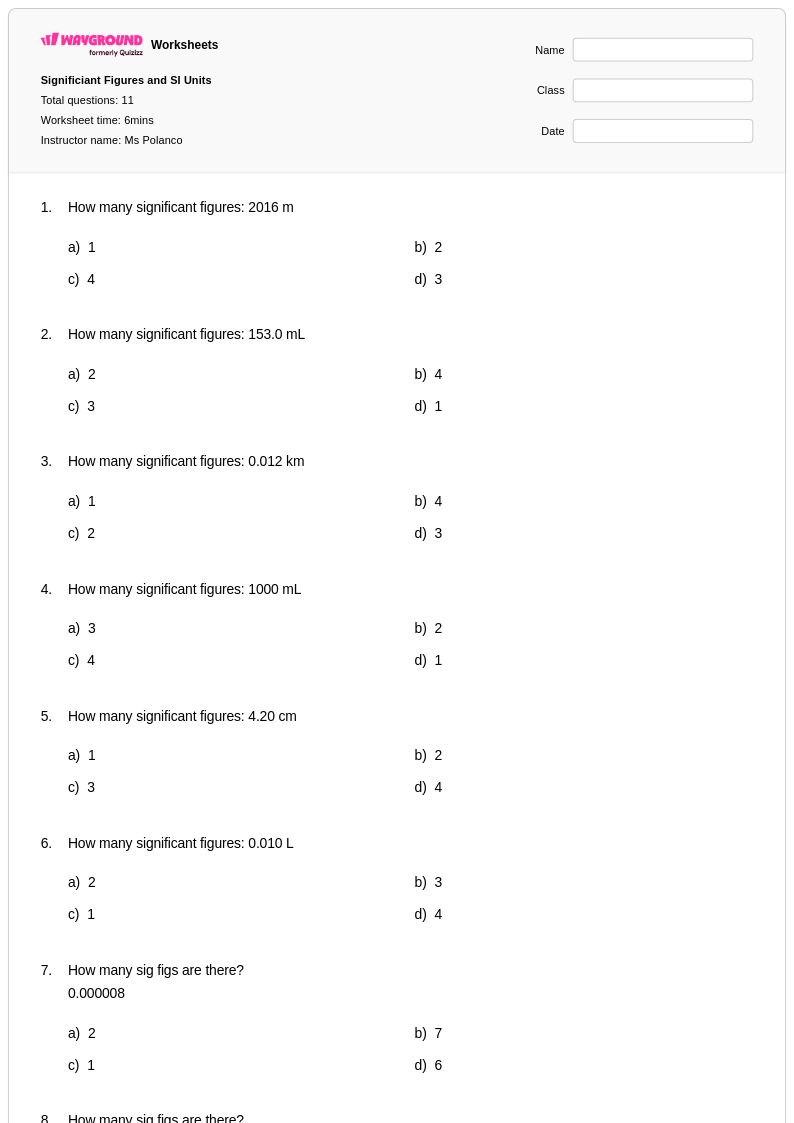
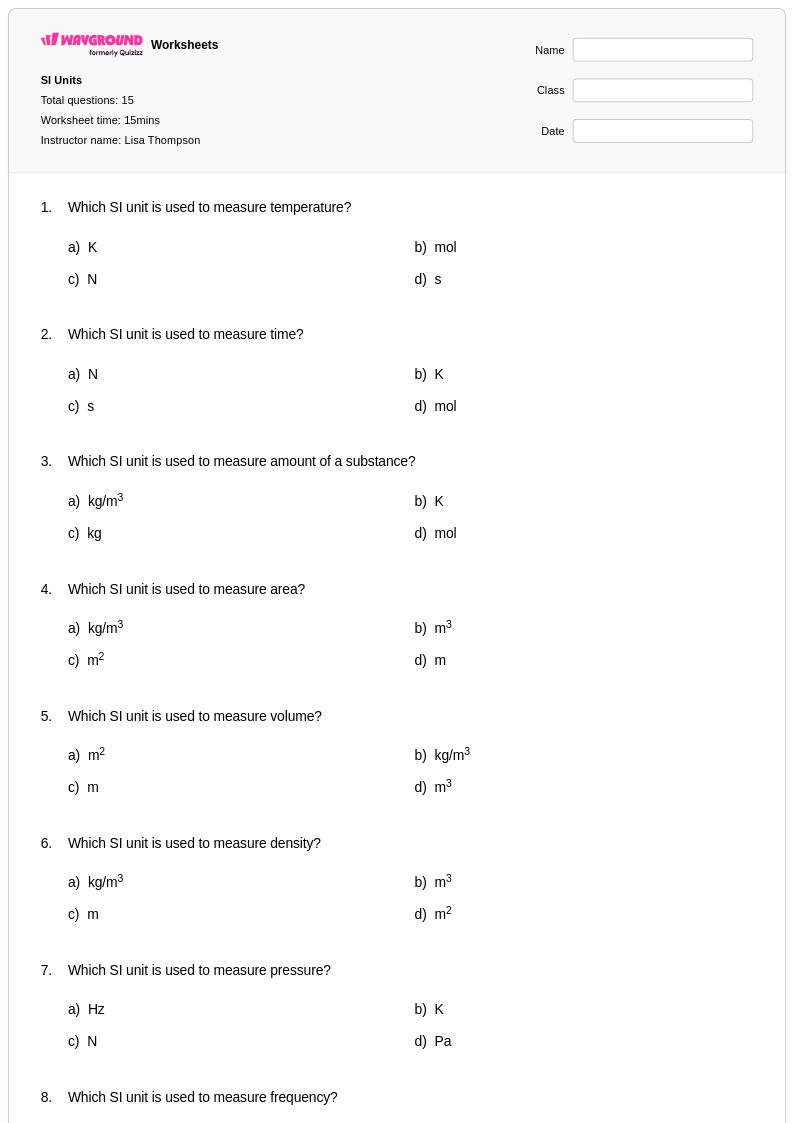
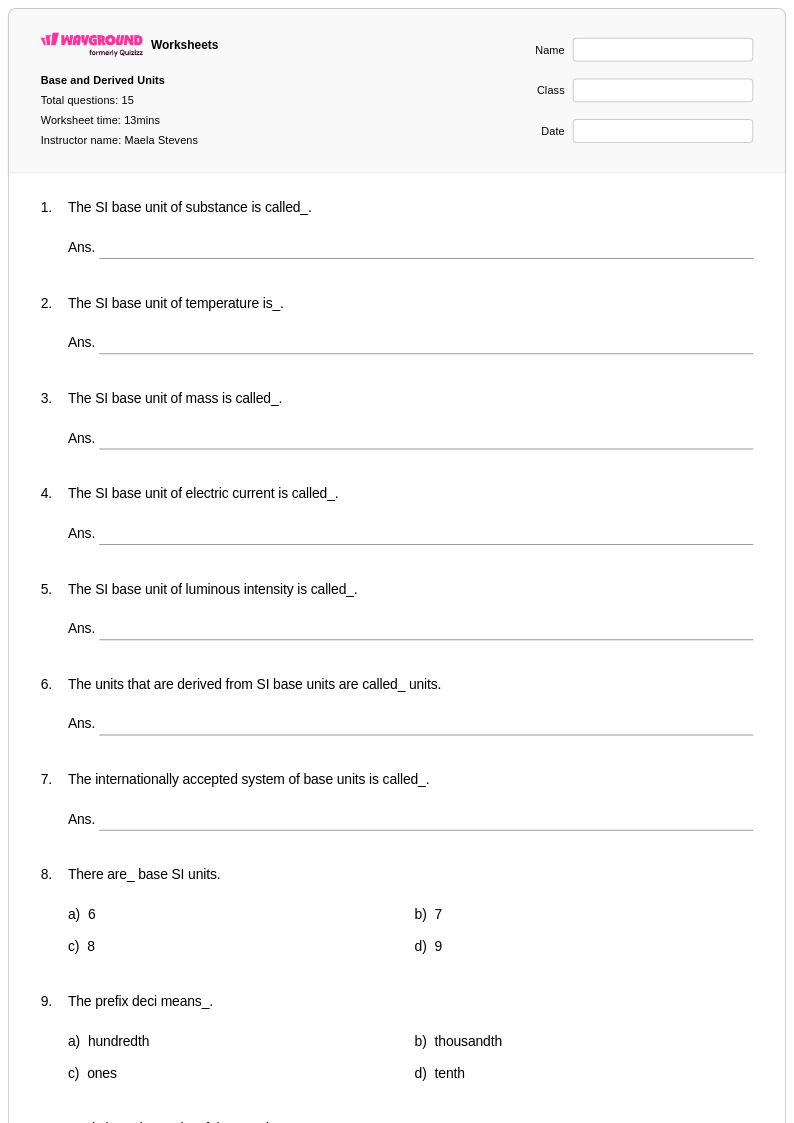
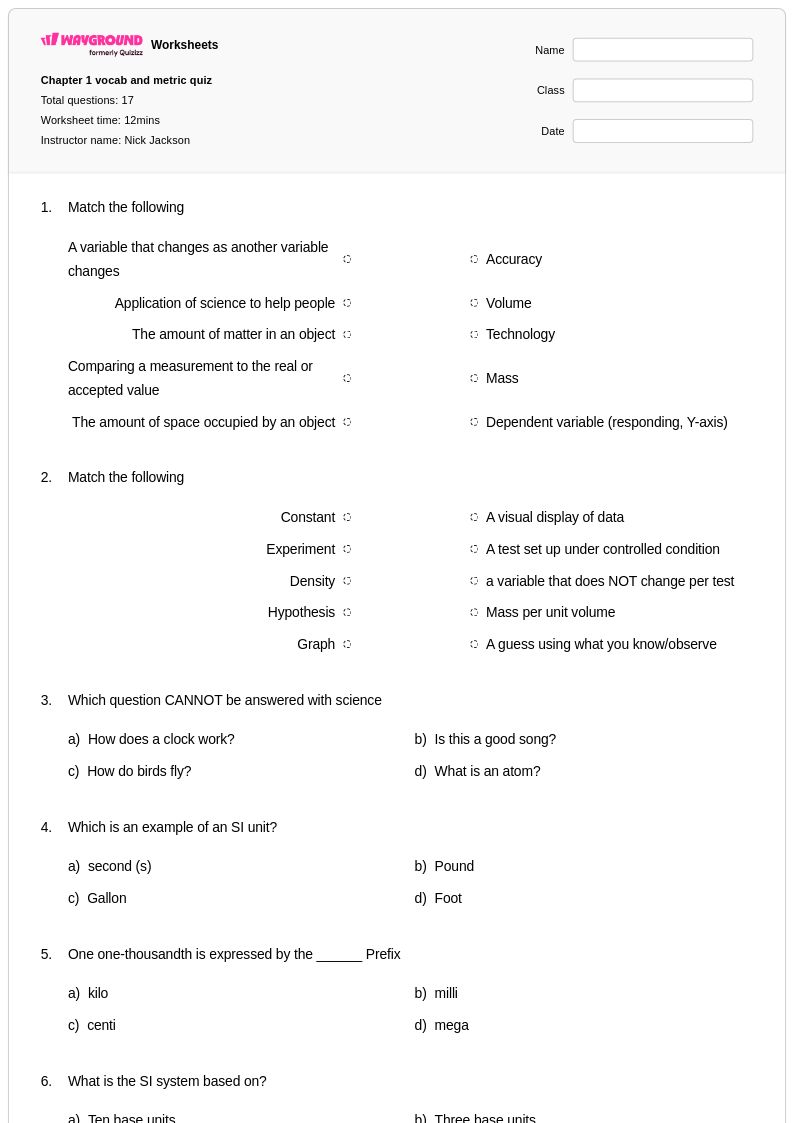
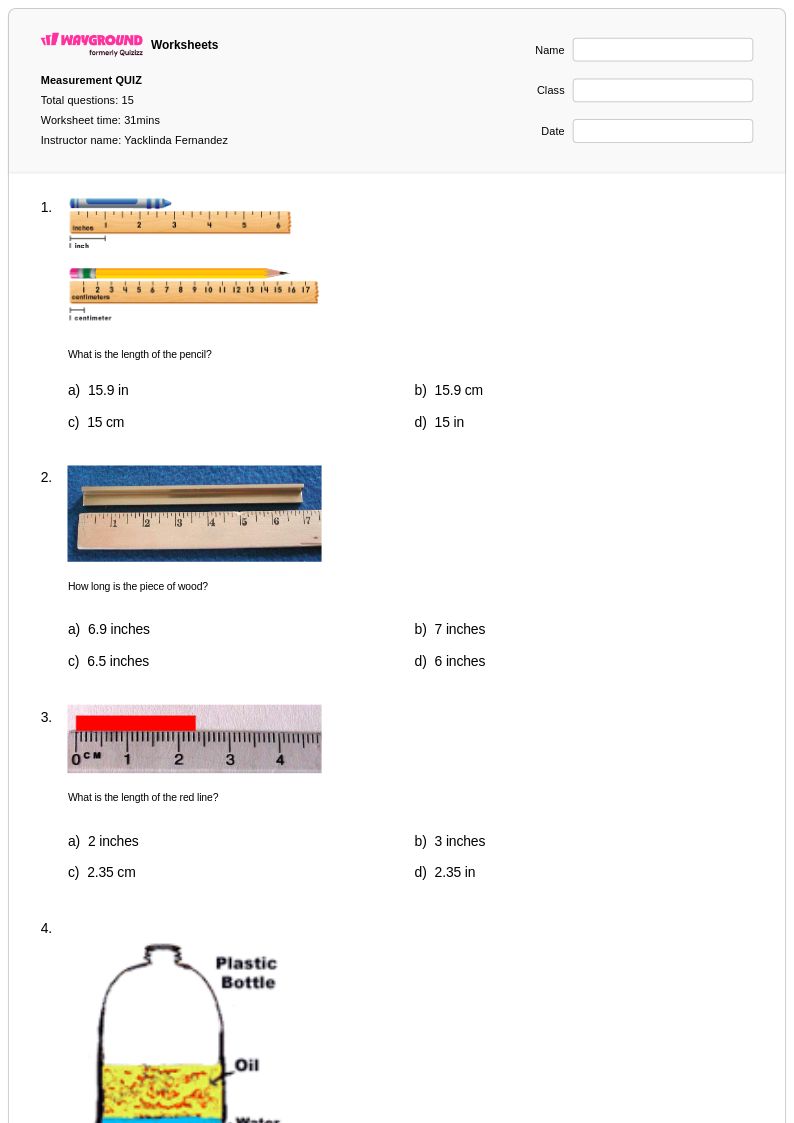
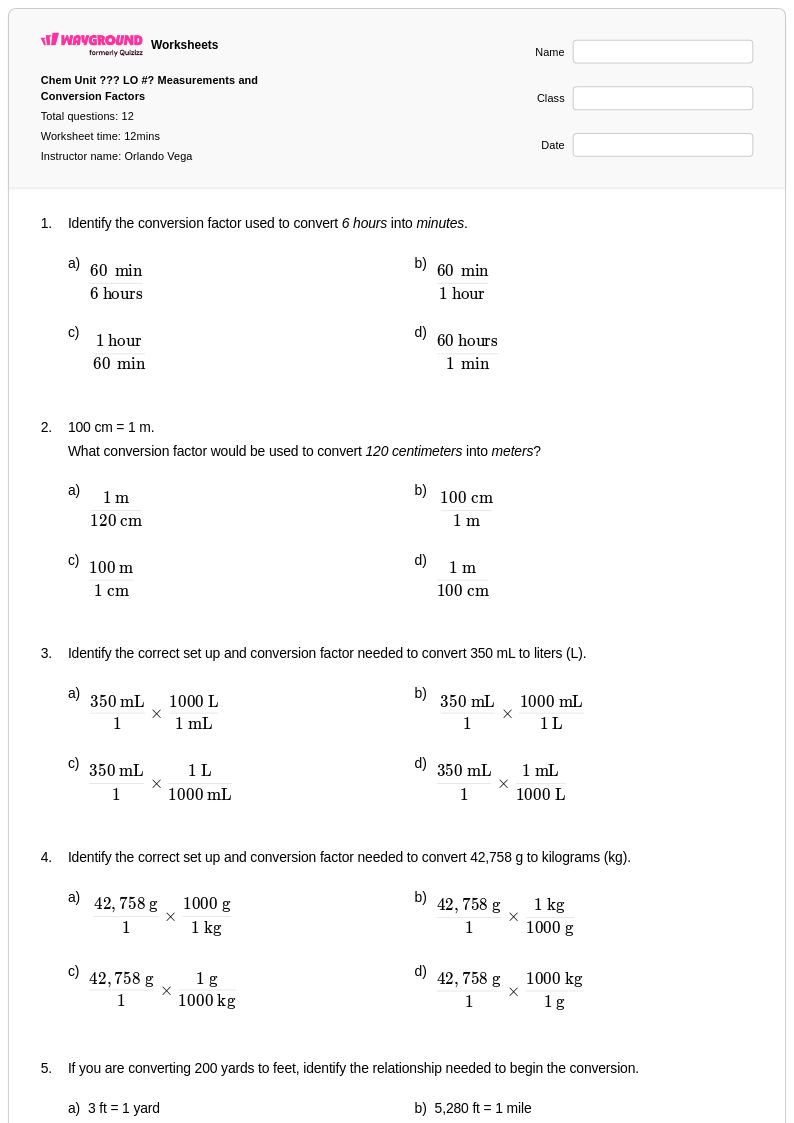
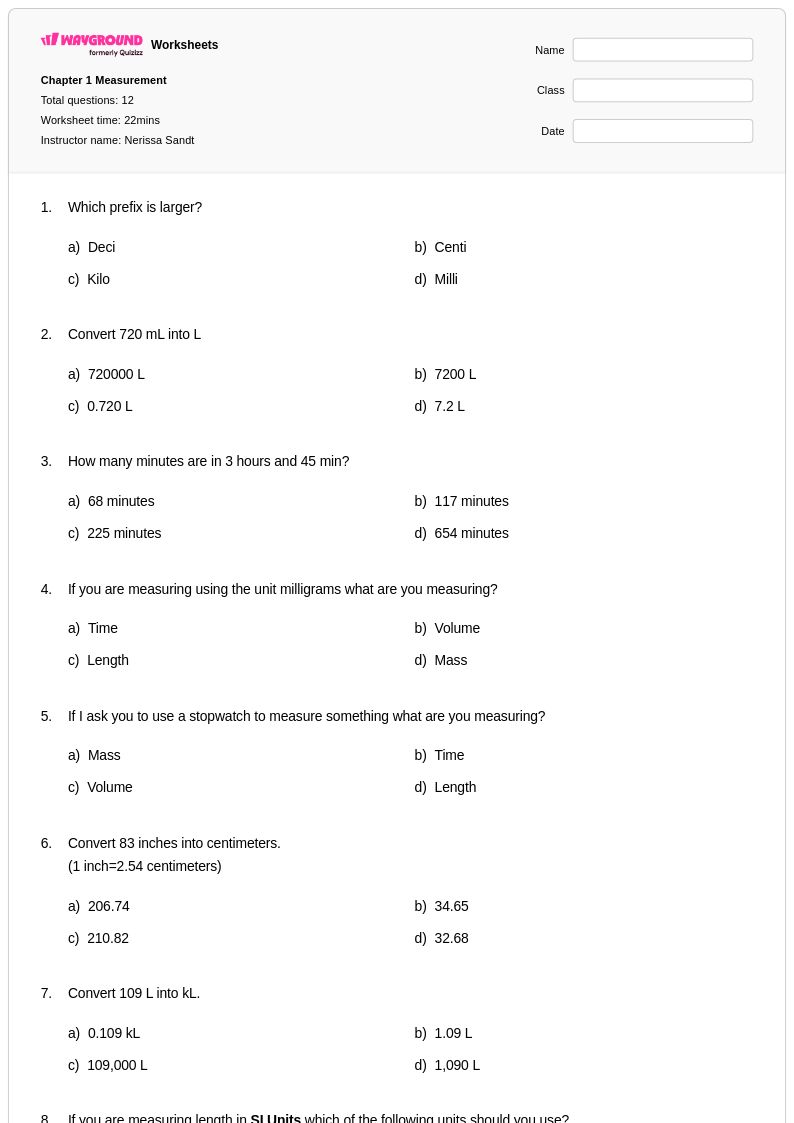
SI Units worksheets for Grade 12 students available through Wayground (formerly Quizizz) provide comprehensive coverage of the International System of Units, focusing on the seven fundamental base units and their derived counterparts that form the foundation of scientific measurement. These expertly crafted resources strengthen students' ability to convert between different SI units, apply appropriate prefixes and scientific notation, and understand the relationships between base units like the meter, kilogram, second, ampere, kelvin, mole, and candela. The practice problems within these free printables challenge students to master unit conversions across multiple scientific disciplines, from mechanics and thermodynamics to electromagnetism and chemistry. Each worksheet includes detailed answer keys that support independent learning and self-assessment, while the pdf format ensures easy distribution and consistent formatting for classroom use.
Wayground (formerly Quizizz) empowers educators with access to millions of teacher-created SI Units resources that can be seamlessly integrated into Grade 12 science curricula. The platform's robust search and filtering capabilities allow teachers to quickly locate worksheets aligned with specific learning standards and academic objectives, while built-in differentiation tools enable customization based on individual student needs and skill levels. These versatile resources are available in both printable and digital formats, including downloadable pdfs, making them ideal for traditional classroom instruction, remote learning environments, and hybrid teaching models. Teachers can leverage these comprehensive worksheet collections for targeted skill practice, remediation of fundamental measurement concepts, enrichment activities for advanced learners, and efficient lesson planning that addresses the critical foundation of scientific measurement systems.
FAQs
How do I teach SI units to students who have never used the metric system?
Start by grounding students in the seven base SI units and their real-world referents before introducing prefixes or conversions. Anchor instruction in familiar measurements — a kilogram of water, a meter-long ruler — so the system feels concrete rather than abstract. Once students have a reliable mental model of base units, introduce the prefix scale (nano through giga) systematically, using charts and pattern recognition to show how each step represents a power of ten. Conversion practice becomes much more approachable once students understand the structure of the system rather than memorizing isolated facts.
What are the most common mistakes students make with SI unit conversions?
The most frequent error is multiplying when students should divide — or vice versa — when moving between units with different prefix magnitudes. Students also commonly confuse the prefix abbreviations (for example, mixing up milli- and micro-, or kilo- and mega-), which leads to answers that are off by factors of 1,000 or more. A third common mistake is failing to carry units through every step of a dimensional analysis problem, causing them to lose track of what cancels. Requiring students to write out every unit at each calculation step significantly reduces these errors.
What practice exercises are most effective for reinforcing SI unit skills?
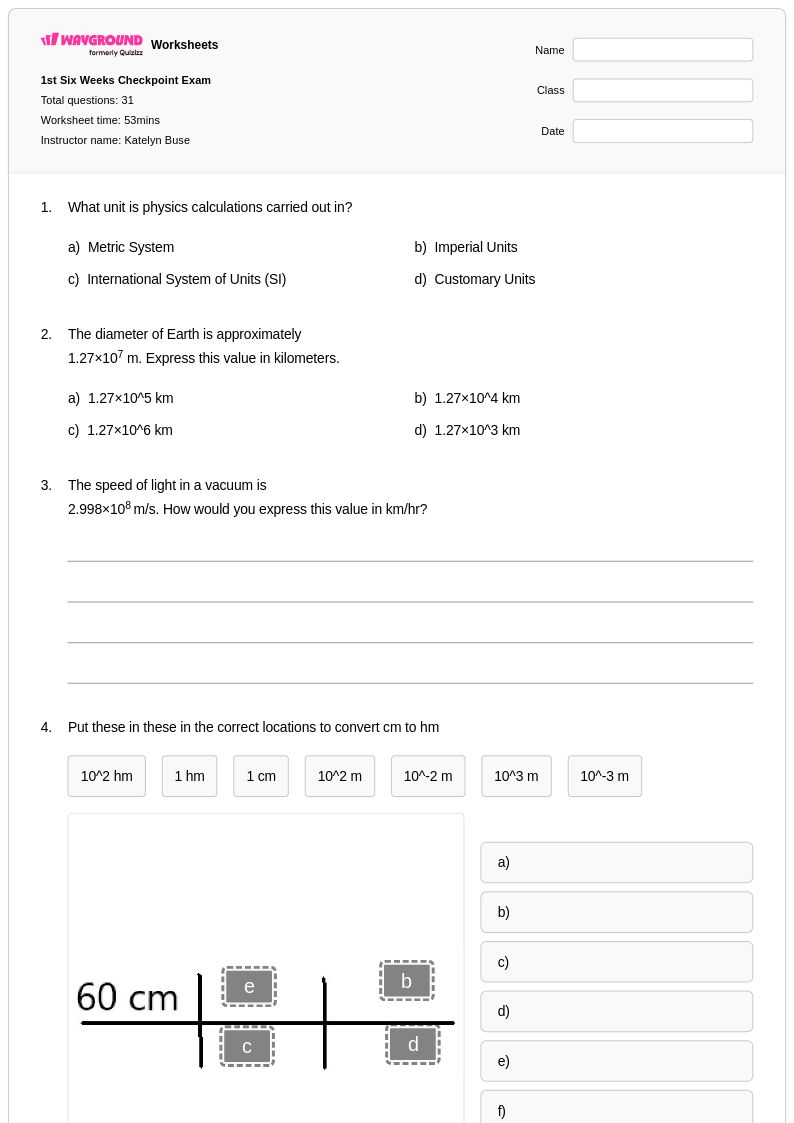
Dimensional analysis chain problems are among the most effective exercises because they require students to apply multiple conversions in sequence, reinforcing both prefix knowledge and algebraic reasoning. Unit identification tasks — where students match quantities to their correct SI unit — build fluency before students tackle conversions. Exercises that mix base units and derived units (such as converting speed from m/s to km/h) challenge students to see how SI units combine and relate, which is essential preparation for physics and chemistry coursework.
How do I differentiate SI units instruction for students at different skill levels?
For students still building foundational fluency, focus practice on single-step conversions within the metric system using the most common prefixes (milli, centi, kilo). Advanced students benefit from multi-step dimensional analysis problems involving derived units, scientific notation, and cross-disciplinary applications in physics or chemistry. On Wayground, teachers can apply accommodations such as reduced answer choices for students who need lower cognitive load, or extended time for those who need more processing time during timed practice, without signaling anything to the rest of the class.
How can I use SI units worksheets from Wayground in my classroom?
Wayground's SI units worksheets are available as printable PDFs, making them easy to distribute for in-class practice, homework, or assessments in traditional classroom settings. They are also available in digital formats, allowing teachers to assign them for remote learning or technology-integrated instruction. Teachers can also host worksheets as a quiz directly on Wayground, which enables real-time tracking of student responses and streamlines grading, particularly useful when working through unit conversions or dimensional analysis problems that require step-by-step review.
How does understanding SI units support students in science courses?
SI units form the universal measurement language of scientific disciplines, meaning that fluency with them is a prerequisite for success in physics, chemistry, biology, and engineering. Students who struggle with unit conversions or metric prefixes encounter compounding difficulty in lab work, data analysis, and quantitative problem-solving. Mastering SI units early removes a significant cognitive bottleneck, allowing students to focus on scientific reasoning rather than getting stuck on the mechanics of measurement and calculation.