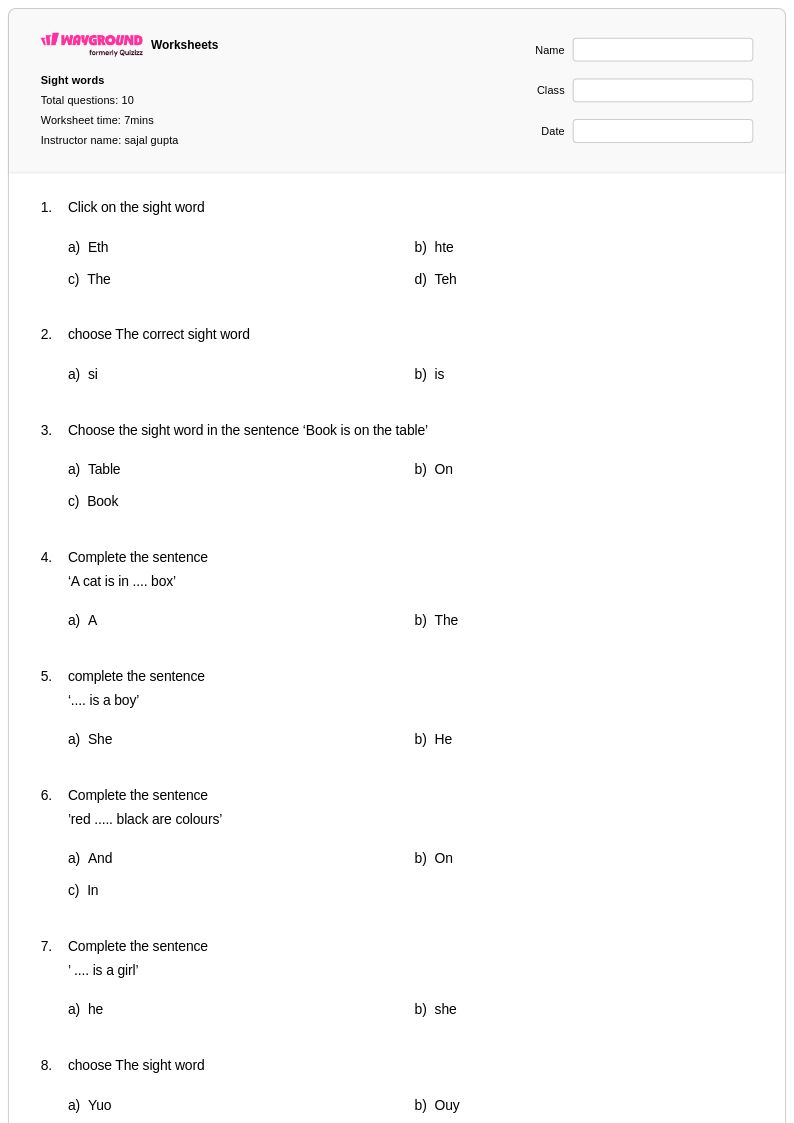
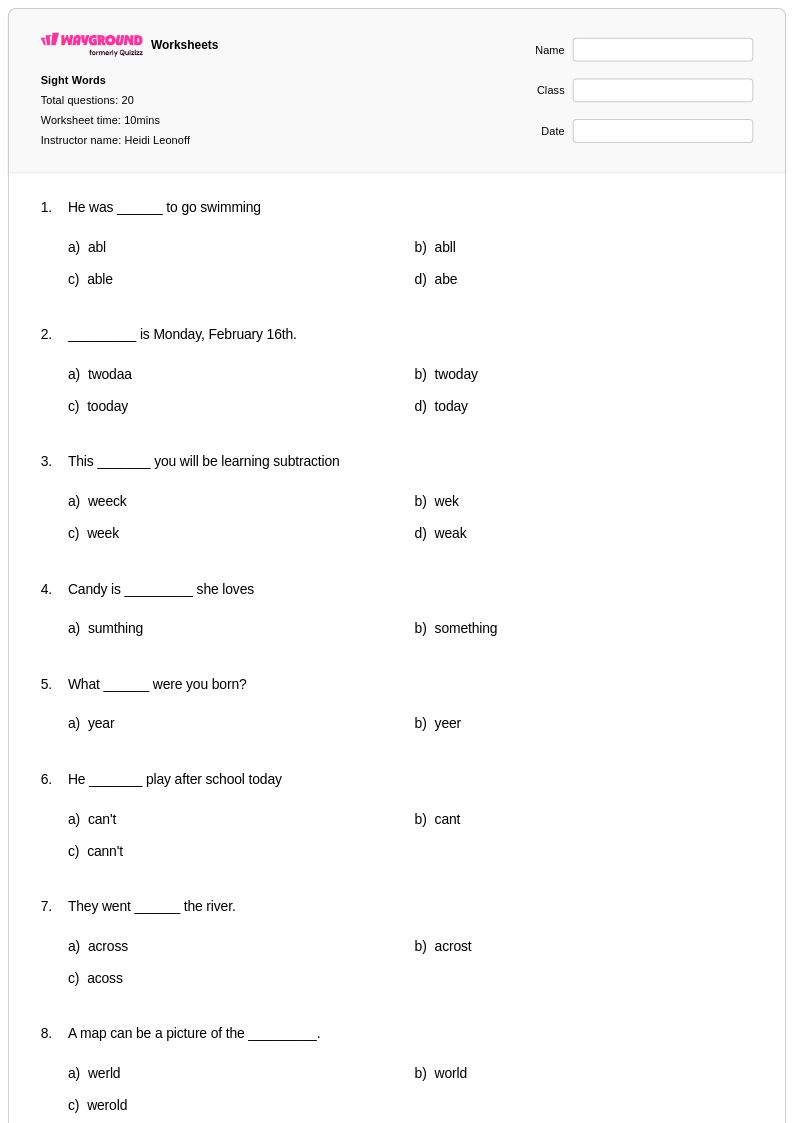
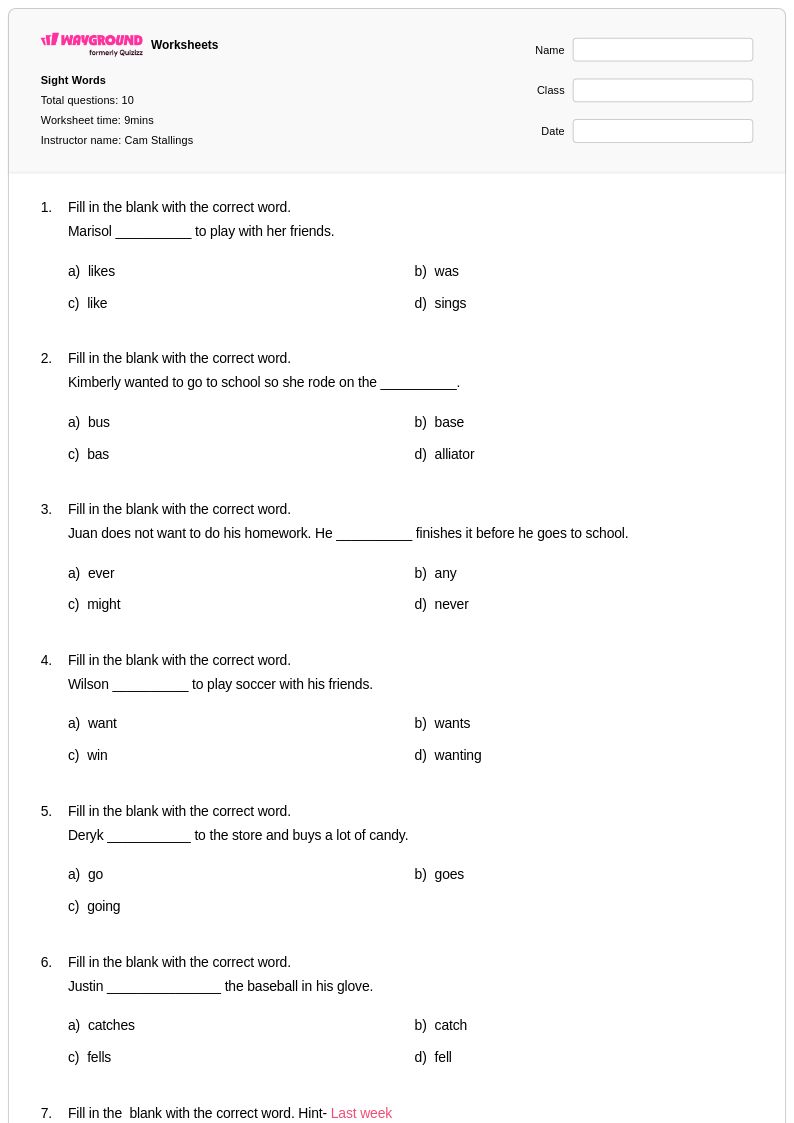
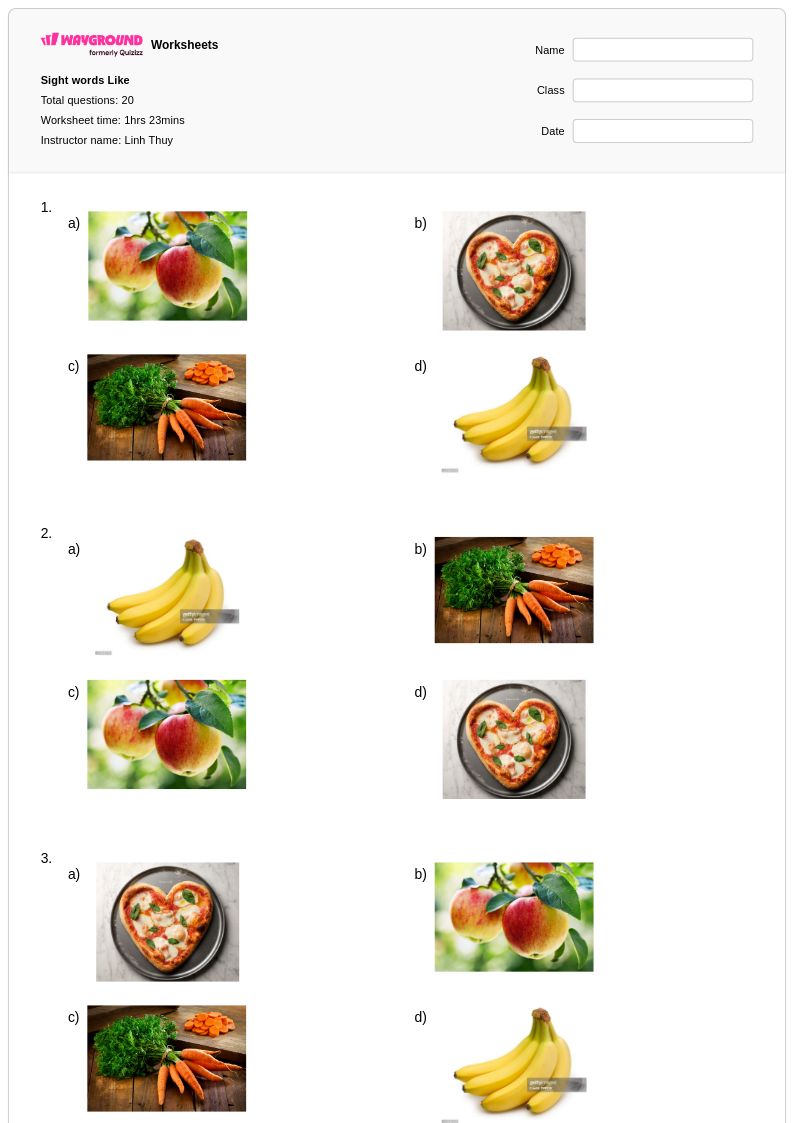
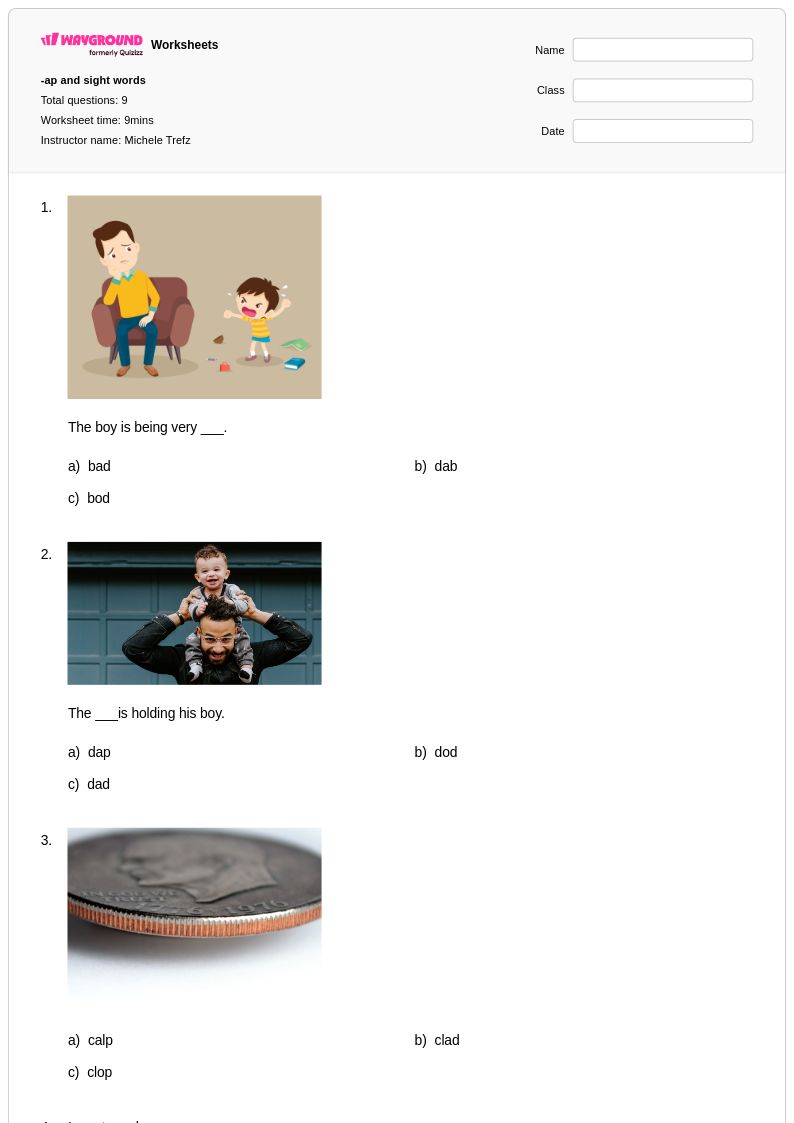
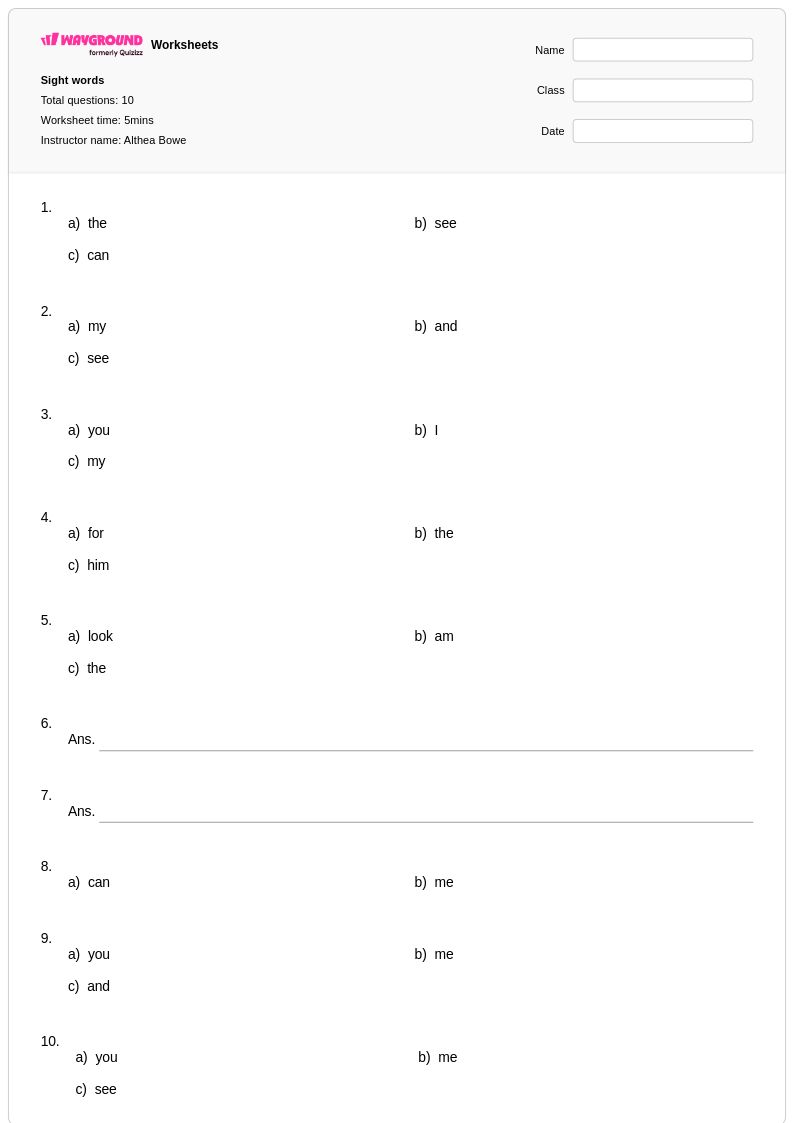
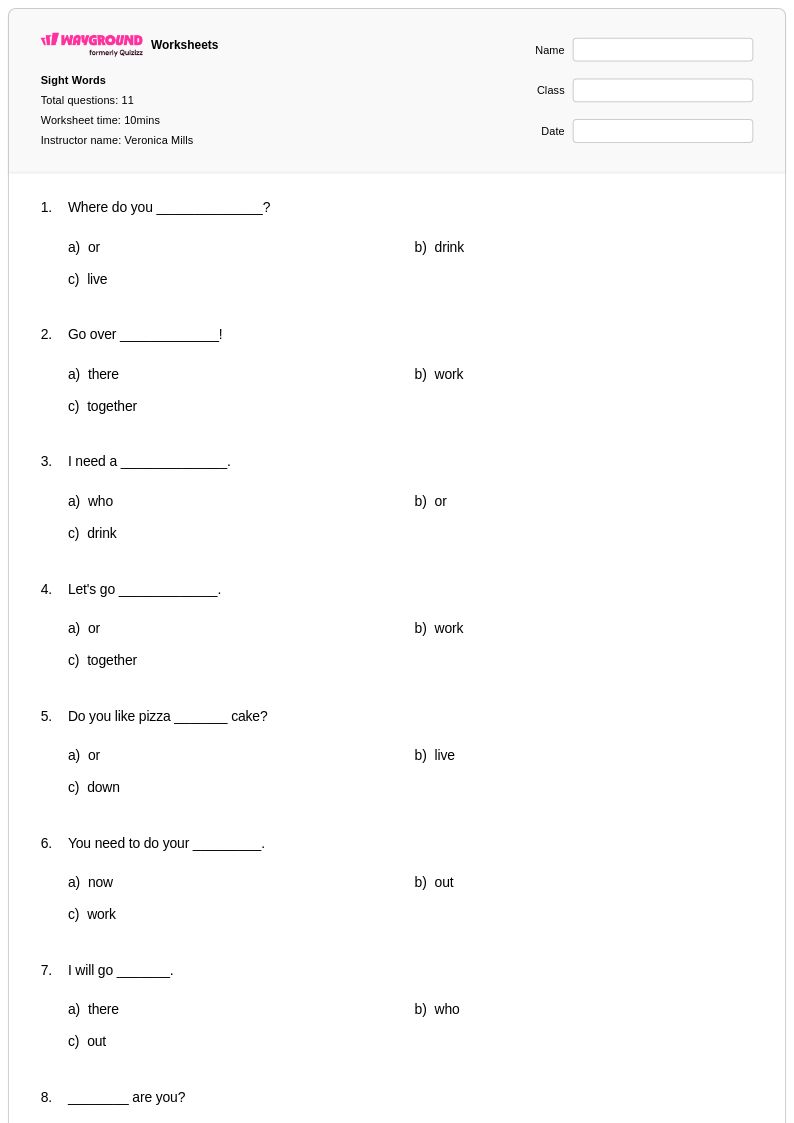
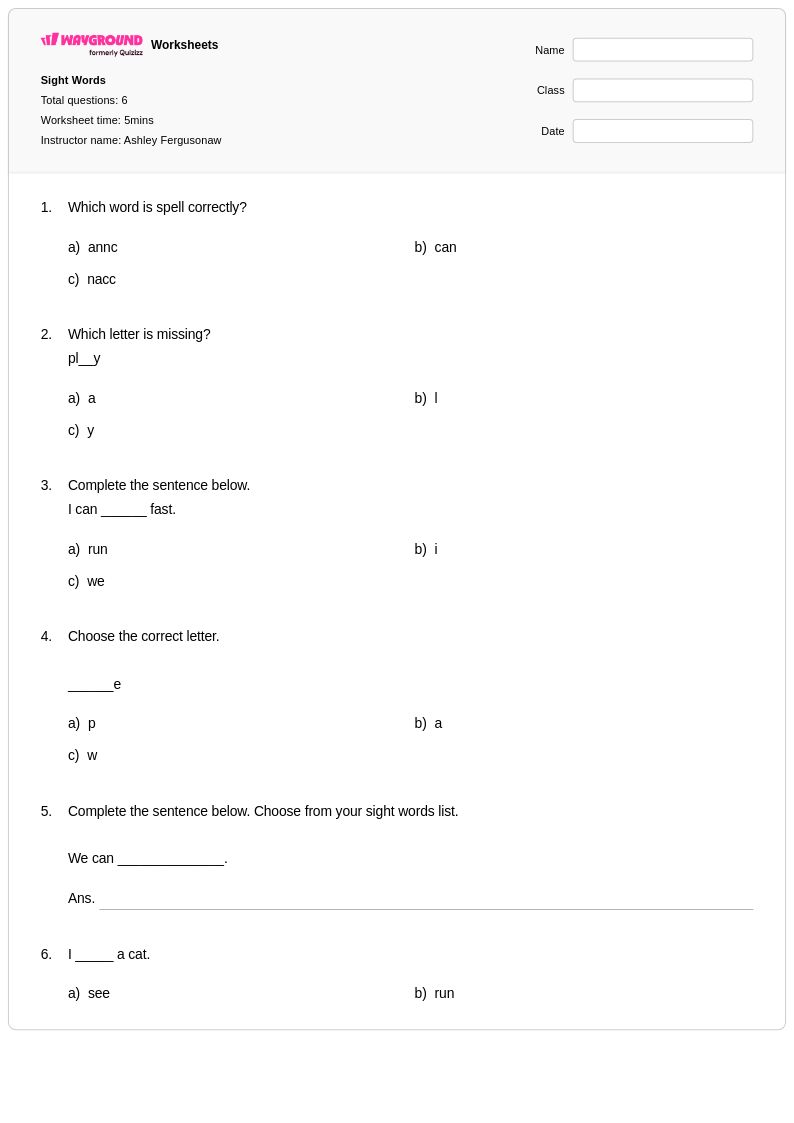
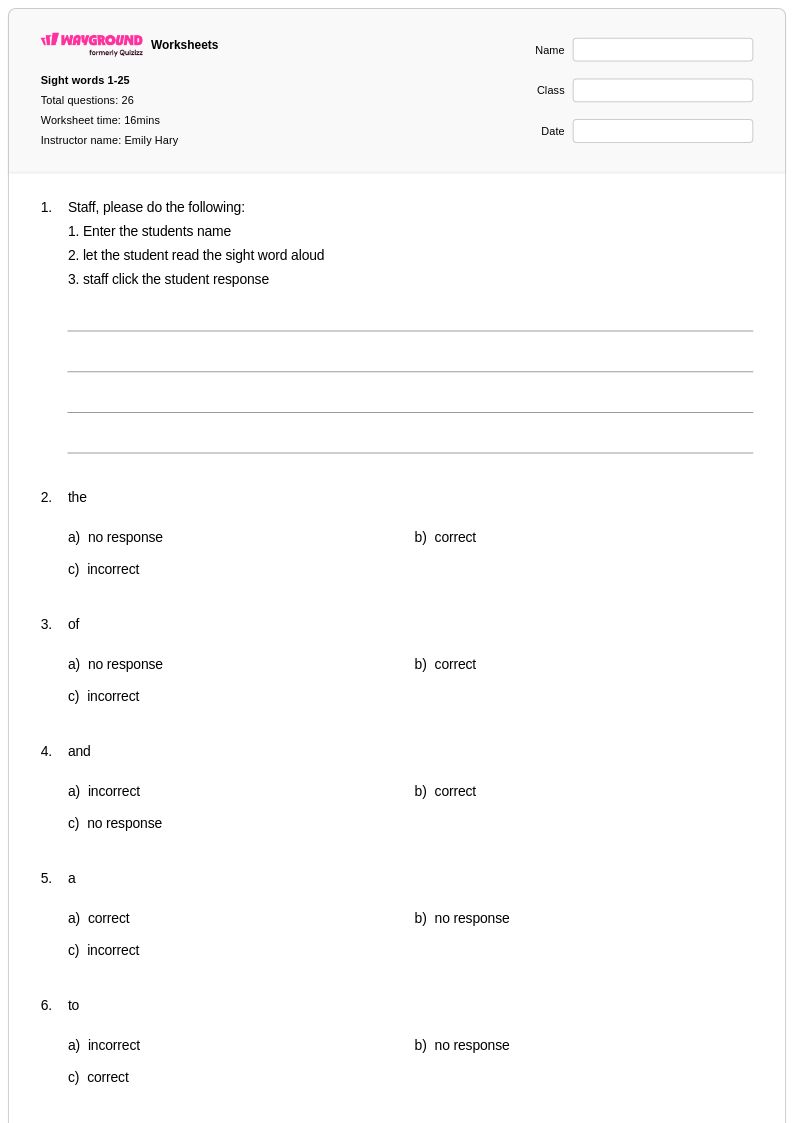
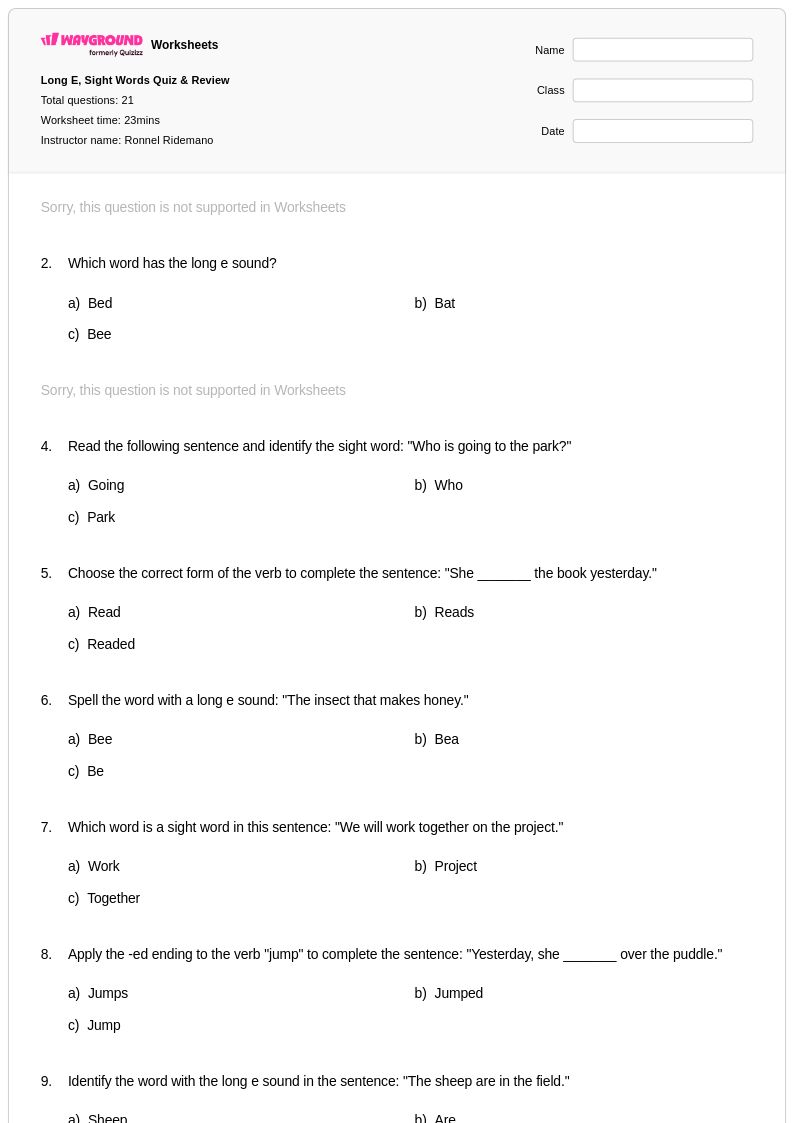
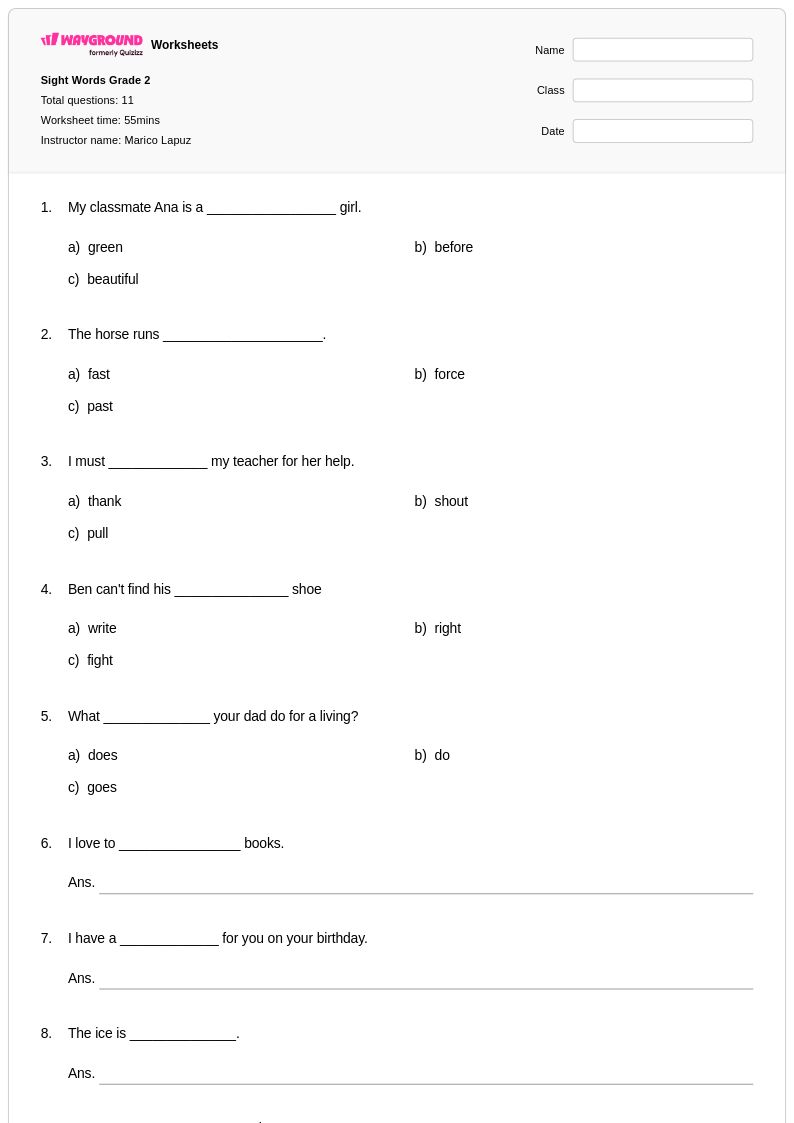
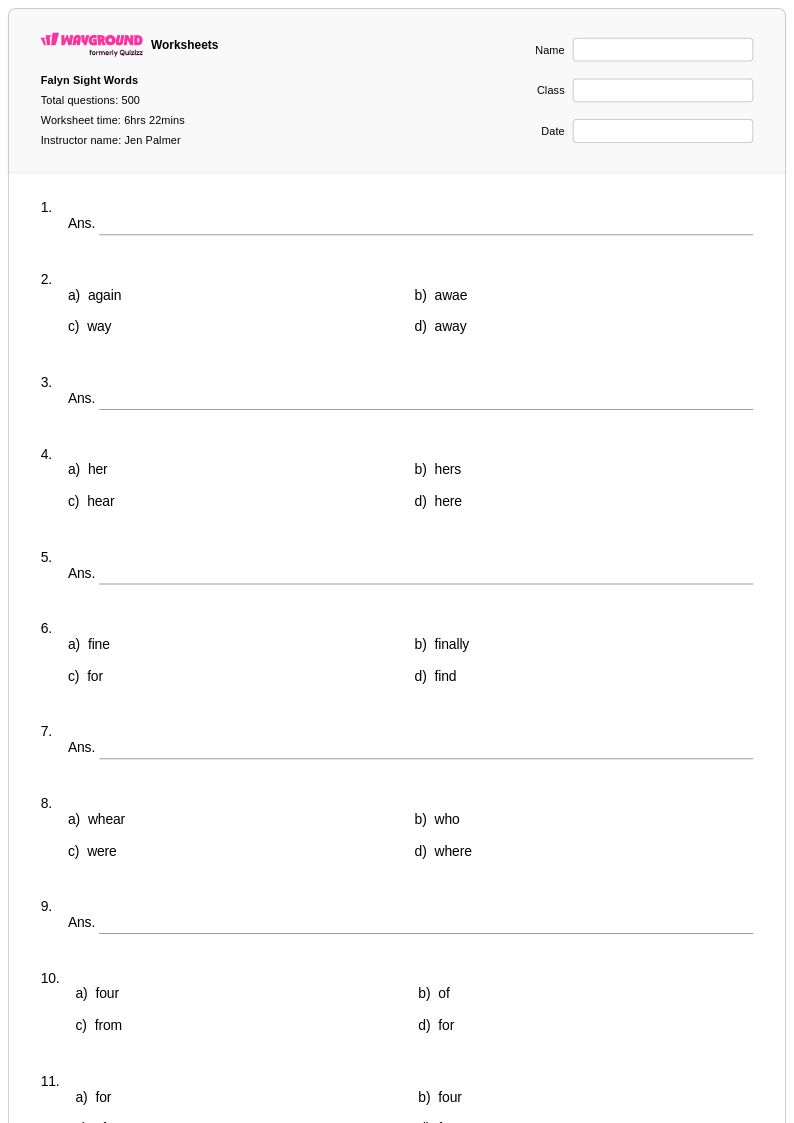
Enhance Grade 1 students' reading skills with our free sight words worksheets and printables, featuring practice problems and answer keys to build vocabulary recognition and spelling fluency.
Explore printable Sight Words worksheets for Grade 1
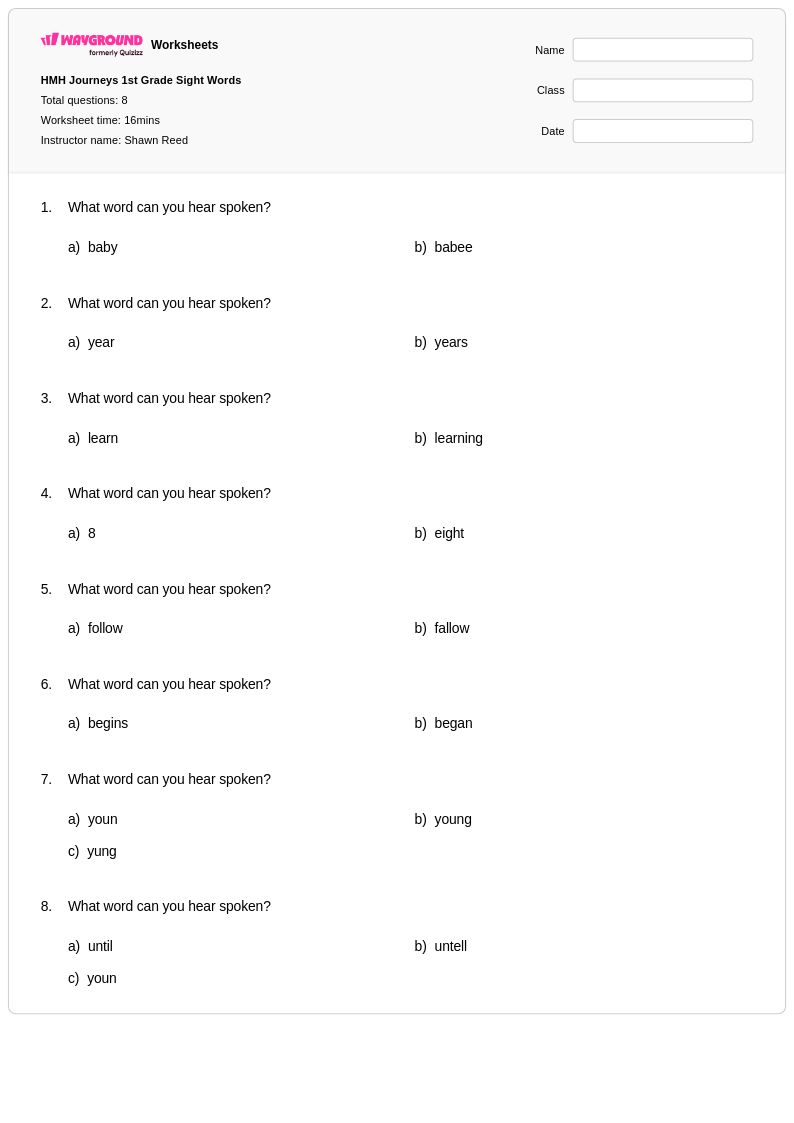
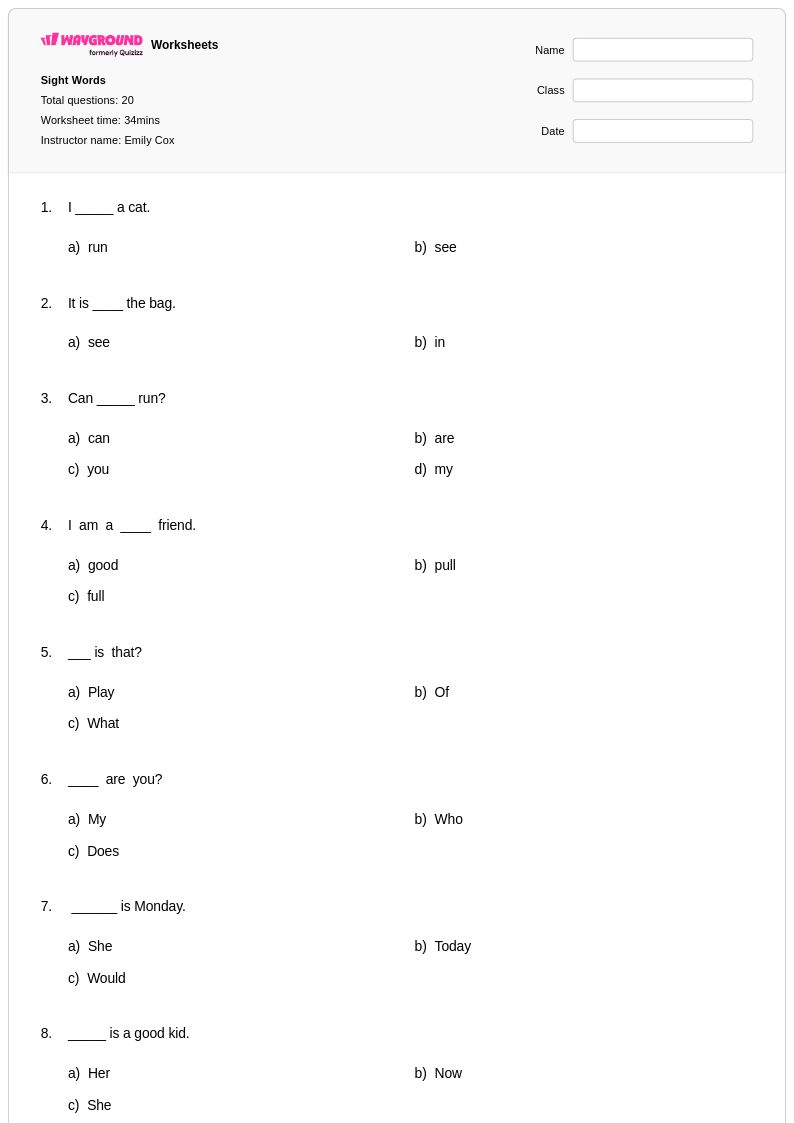
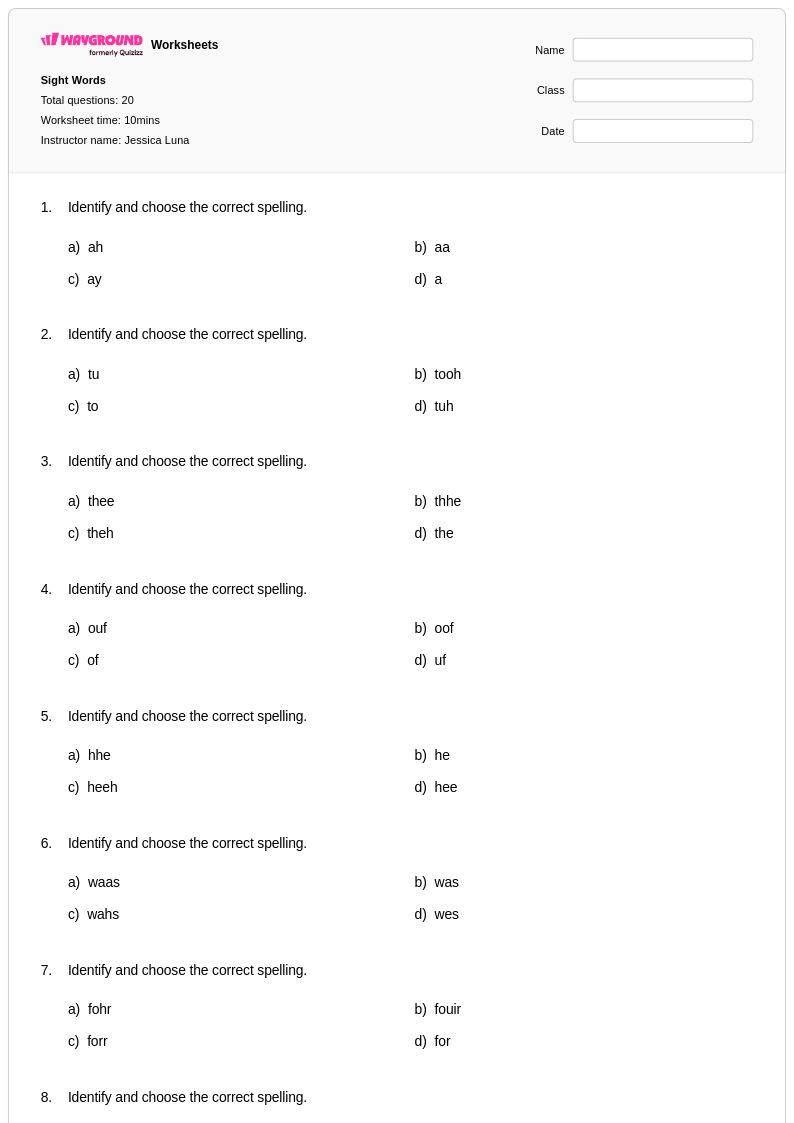
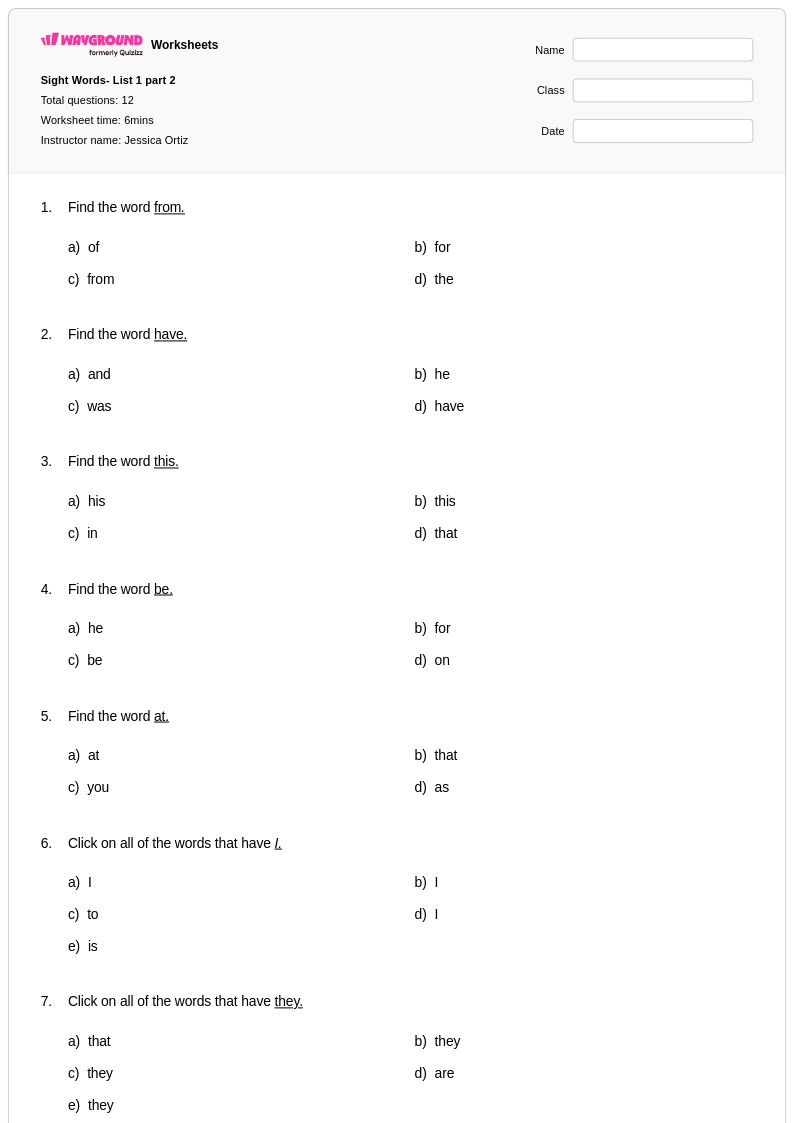
Grade 1 sight words worksheets from Wayground (formerly Quizizz) provide essential foundational practice for young readers developing automatic word recognition skills. These comprehensive printables focus on high-frequency words that students encounter repeatedly in early reading texts, helping children build the visual memory and instant recall necessary for fluent reading. Each worksheet targets critical literacy skills through engaging activities that reinforce sight word identification, spelling patterns, and contextual usage. Teachers can access complete answer keys alongside these free practice problems, making assessment and progress monitoring streamlined and effective. The pdf format ensures consistent printing quality while supporting both classroom instruction and home practice, allowing educators to distribute materials that strengthen students' reading confidence and comprehension abilities.
Wayground (formerly Quizizz) empowers educators with millions of teacher-created sight word resources specifically designed for Grade 1 learners, featuring robust search and filtering capabilities that allow instructors to locate materials aligned with specific reading standards and curriculum requirements. The platform's differentiation tools enable teachers to customize worksheets for varying skill levels within their classrooms, supporting both remediation for struggling readers and enrichment opportunities for advanced students. These flexible resources are available in both printable and digital formats, including downloadable pdfs that facilitate seamless lesson planning and implementation. Teachers can efficiently organize skill practice sessions, create targeted intervention materials, and develop comprehensive assessment tools that track student progress in sight word mastery, ultimately supporting the critical transition from letter recognition to fluent reading.
FAQs
How do I teach sight words effectively in the classroom?
Effective sight word instruction relies on repeated, multisensory exposure rather than phonetic decoding, since many high-frequency words do not follow standard phonics rules. Teachers should introduce a small set of words at a time, using techniques like flashcard drills, word walls, and contextual reading to build automatic recognition. Embedding sight words into meaningful sentences and short texts reinforces memory and helps students connect words to real reading practice.
What exercises help students practice sight words?
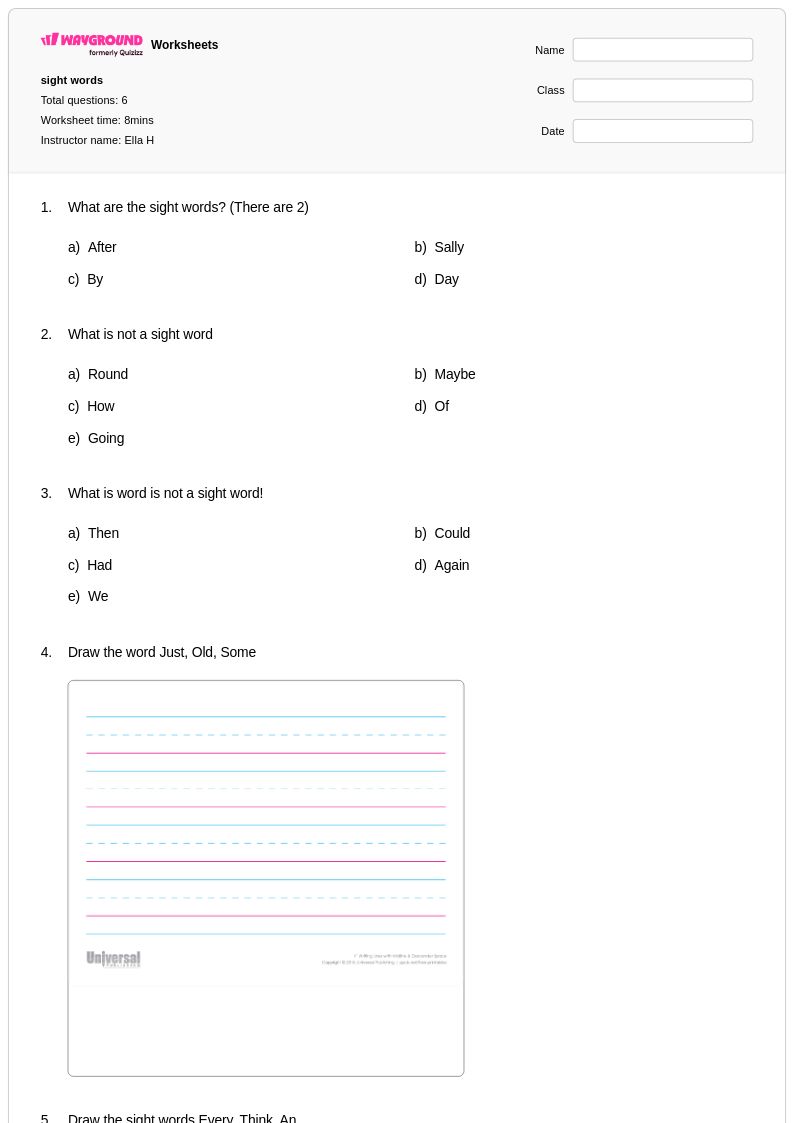
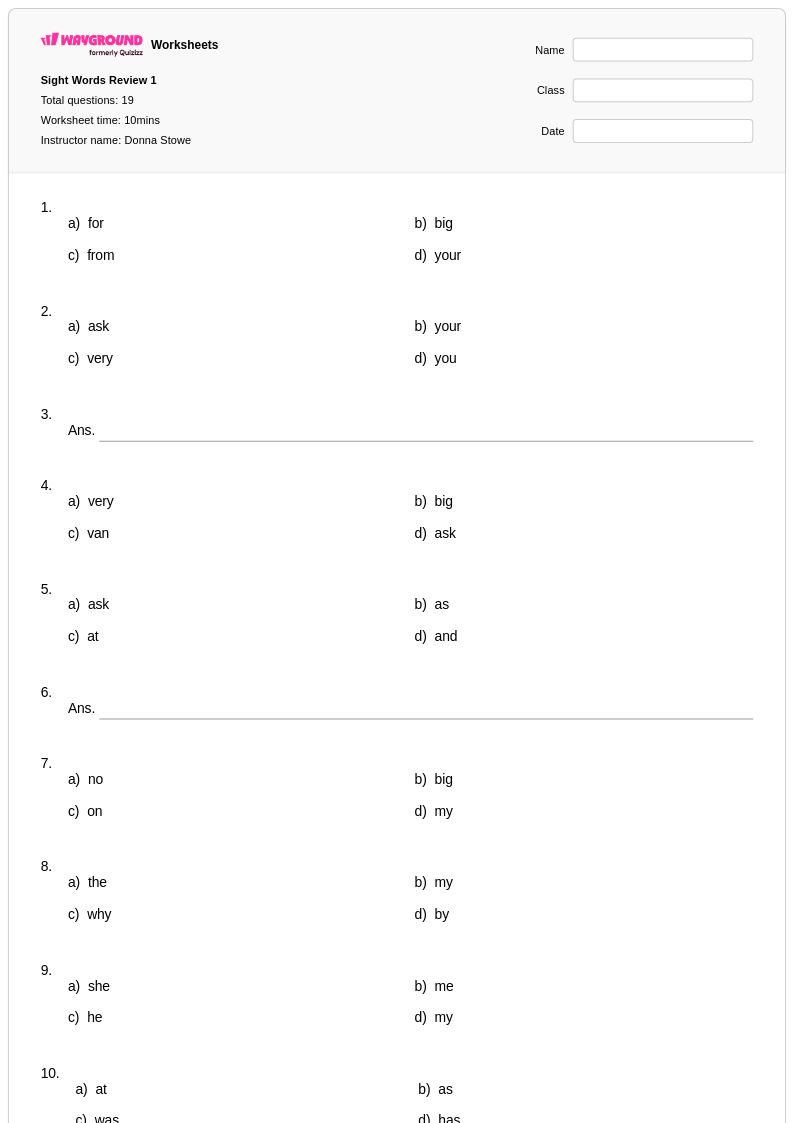
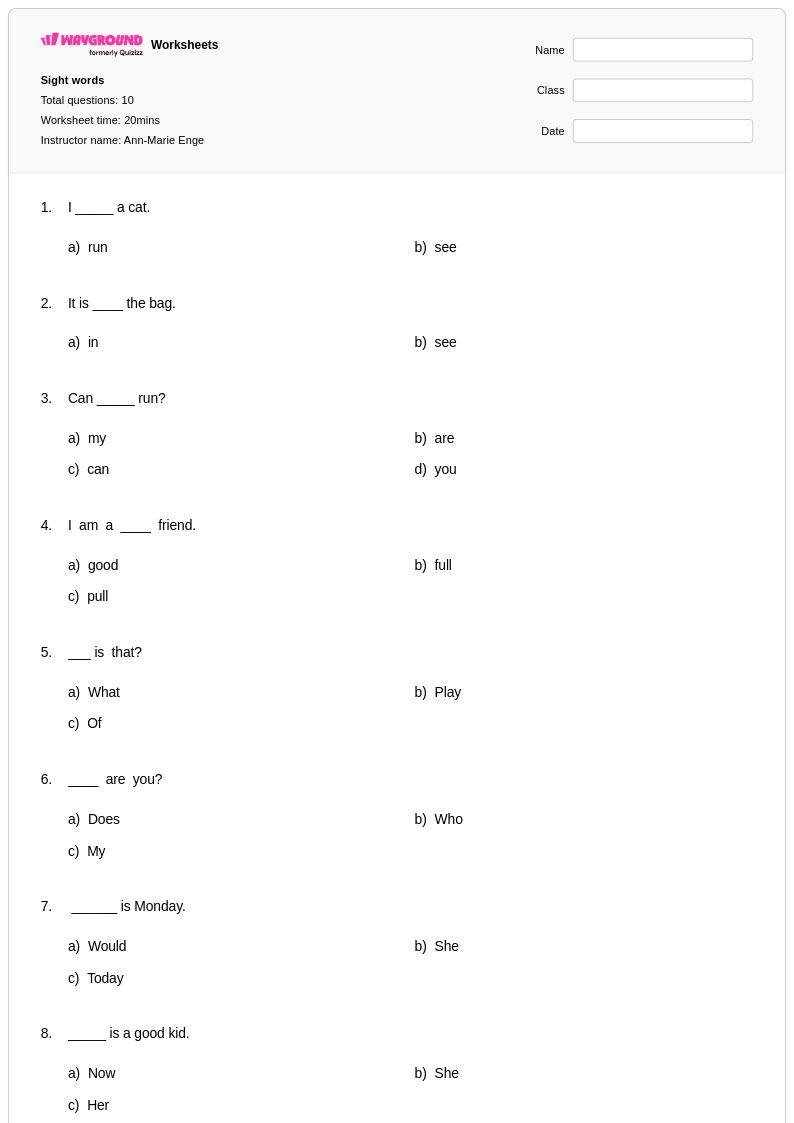
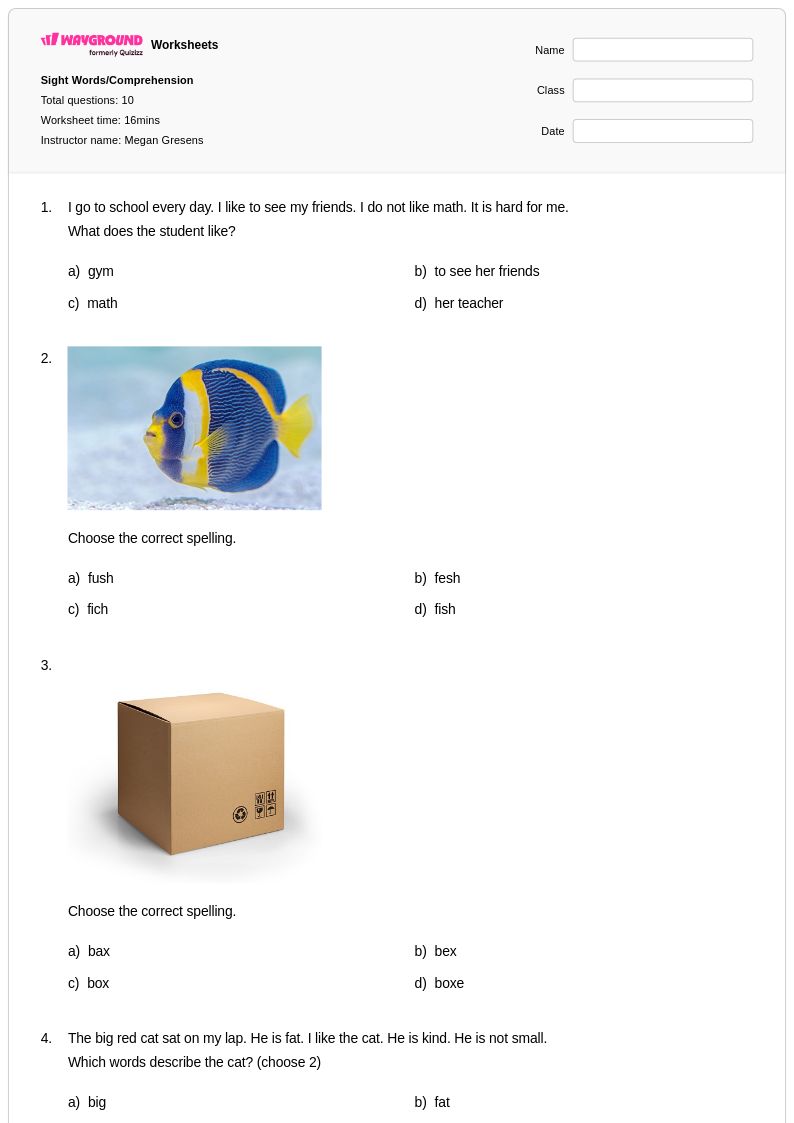
Effective sight word practice includes word identification tasks, sentence completion exercises, and contextual usage activities that require students to recognize and apply words in context rather than just memorize them in isolation. Varied formats prevent rote repetition fatigue and strengthen different aspects of word recognition, including visual memory and reading speed. Worksheets that cycle through the same words across multiple exercise types provide the repeated exposure research shows is necessary for automatic recognition.
What mistakes do students commonly make when learning sight words?
A common error is confusing visually similar words such as 'where' and 'were', 'then' and 'than', or 'this' and 'that', because students rely on partial visual cues rather than attending to the full word form. Another frequent issue is recognizing a word on a flashcard but failing to identify it within a sentence, which indicates isolated memorization rather than true automatic recognition. Teachers should watch for students who slow down dramatically on sight words mid-text, as this signals the word has not yet moved from effortful decoding to automatic recall.
How do I differentiate sight word instruction for struggling readers and advanced students?
For struggling readers, reducing the number of target words introduced at one time and providing additional repetition through varied low-stakes practice helps build confidence alongside recognition. On Wayground, teachers can apply individual accommodations such as read-aloud support and reduced answer choices for students who need extra scaffolding, without signaling any difference to the rest of the class. Advanced students can move through grade-level word lists more quickly and engage with enrichment activities that embed sight words in more complex sentence and passage contexts.
How do I use Wayground's sight words worksheets in my classroom?
Wayground's sight words worksheets are available as printable PDFs for traditional classroom use and in digital formats for technology-integrated environments, giving teachers flexibility across in-person, hybrid, and remote settings. Teachers can also host the worksheets as a live or assigned quiz directly on Wayground, allowing students to complete practice digitally while teachers monitor progress in real time. Each worksheet includes a complete answer key, making them practical for independent practice, homework, or small-group intervention without additional prep.
At what reading stage should students be introduced to sight words?
Sight word instruction typically begins in kindergarten and extends through early elementary grades, with different word lists targeting different developmental stages. High-frequency word lists such as the Dolch or Fry lists are sequenced by frequency and complexity, allowing teachers to systematically build student vocabulary from the most common words encountered in beginning texts onward. Early and consistent sight word practice is foundational because automatic recognition of high-frequency words frees up cognitive resources for comprehension as text complexity increases.