Free Printable Simple Machines Worksheets for Kindergarten
Explore Wayground's free kindergarten simple machines worksheets and printables that help young learners discover basic physics concepts through engaging practice problems, complete with answer keys and downloadable PDFs.
Explore printable Simple Machines worksheets for Kindergarten
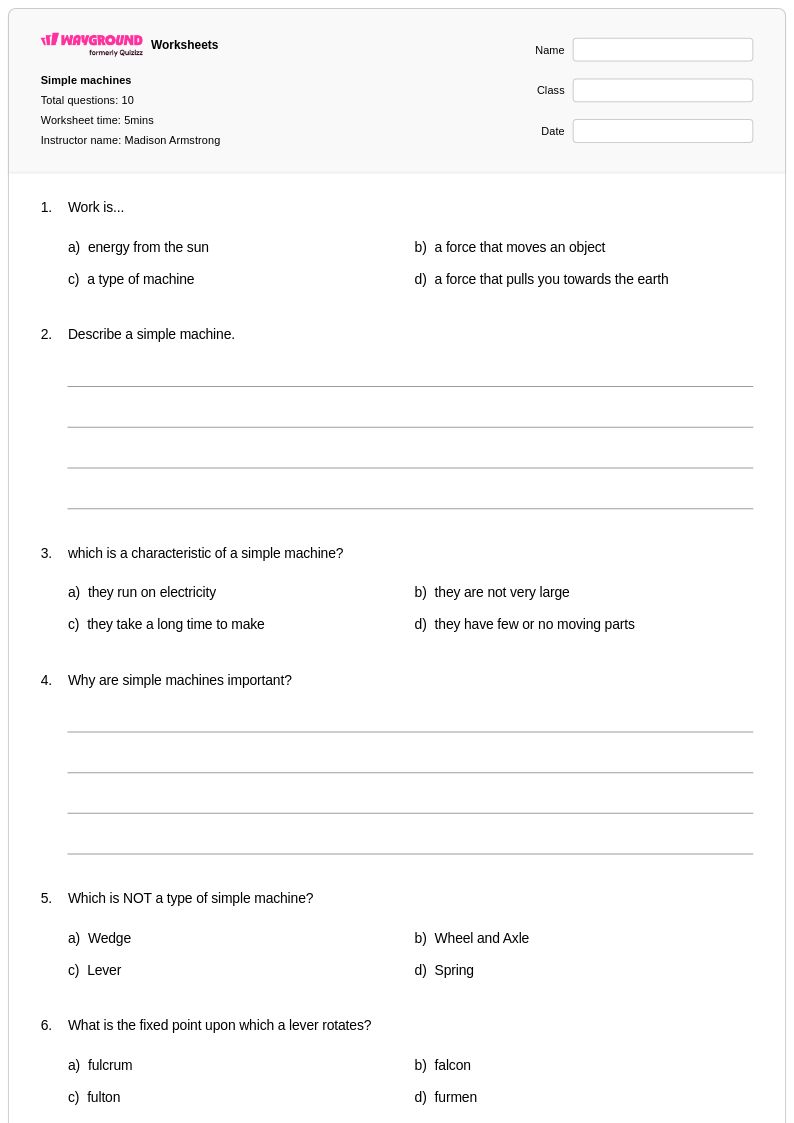
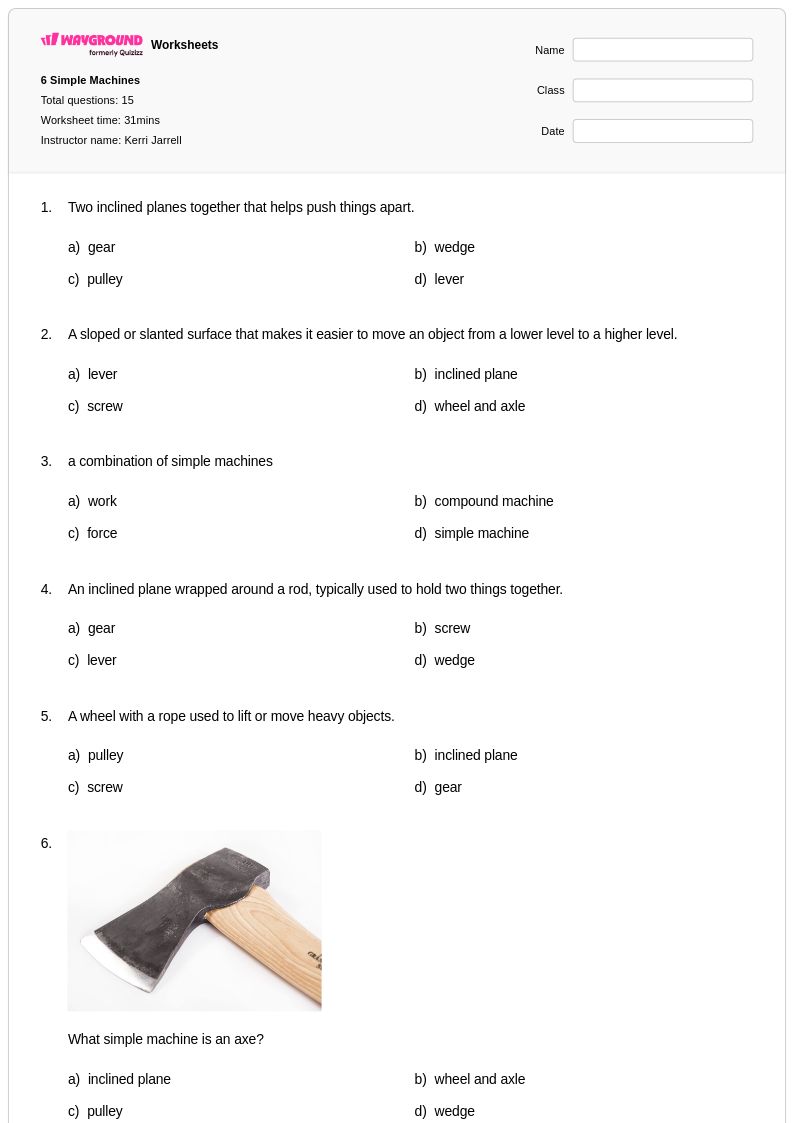
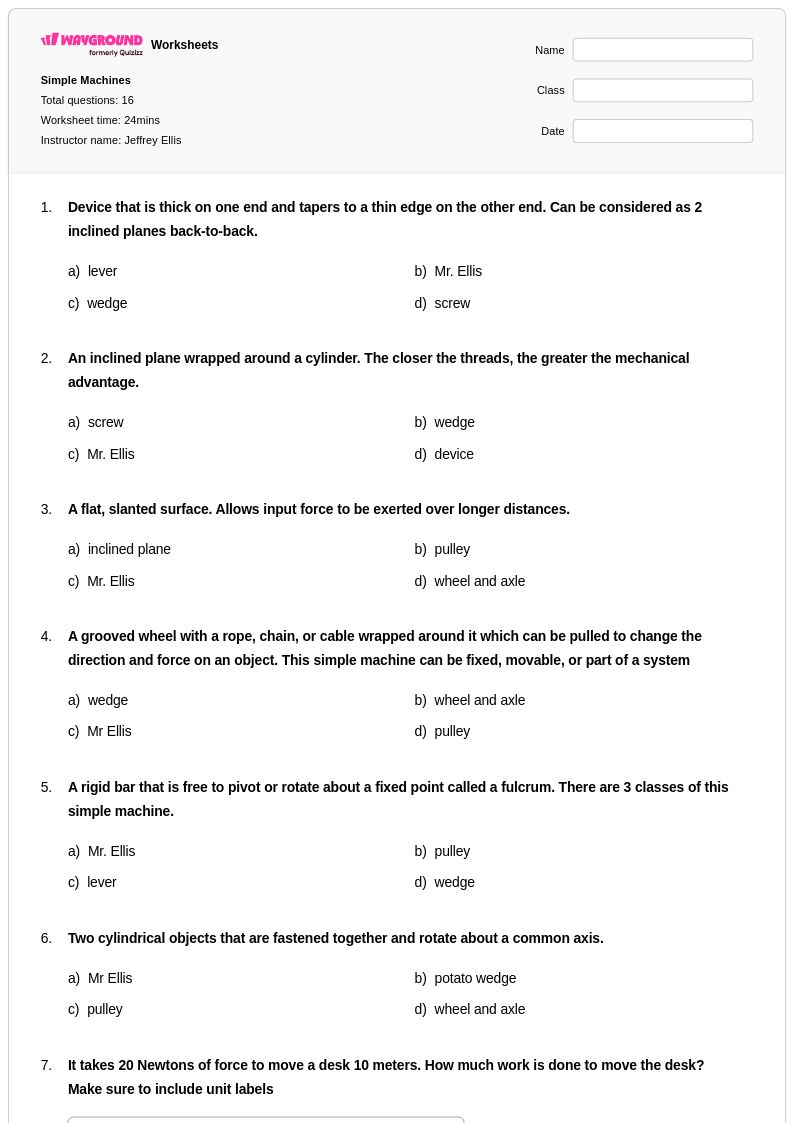
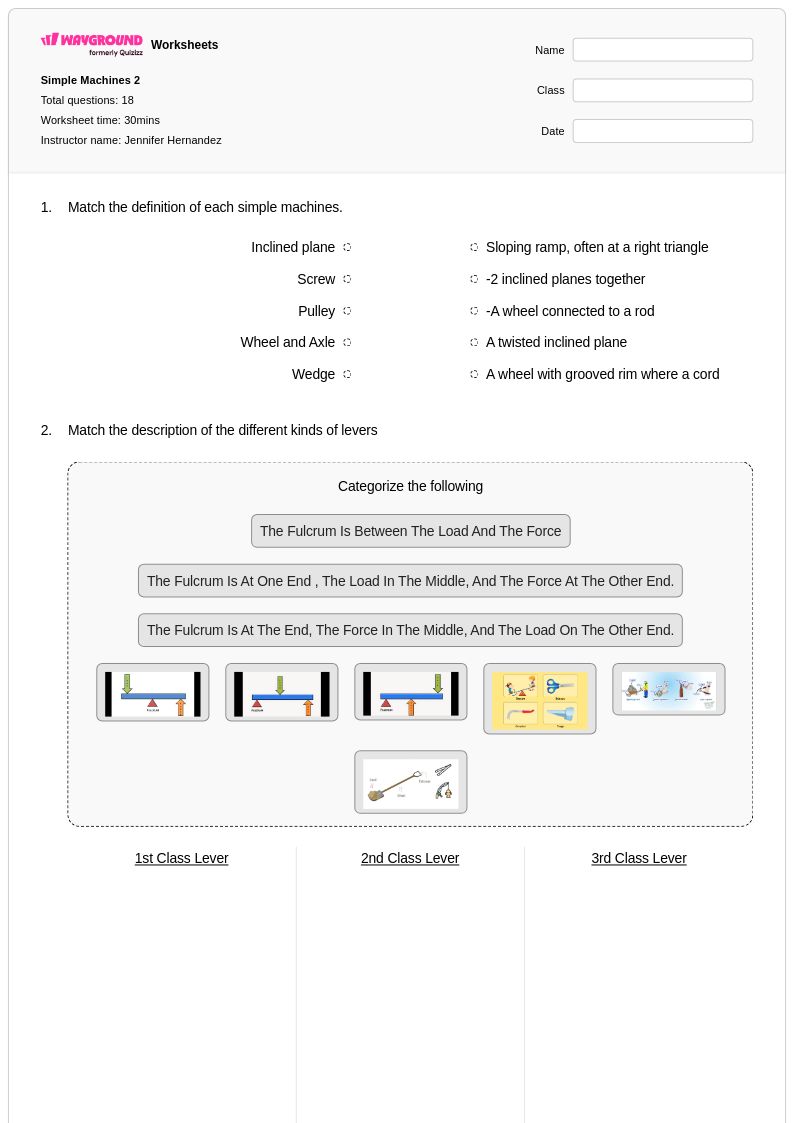
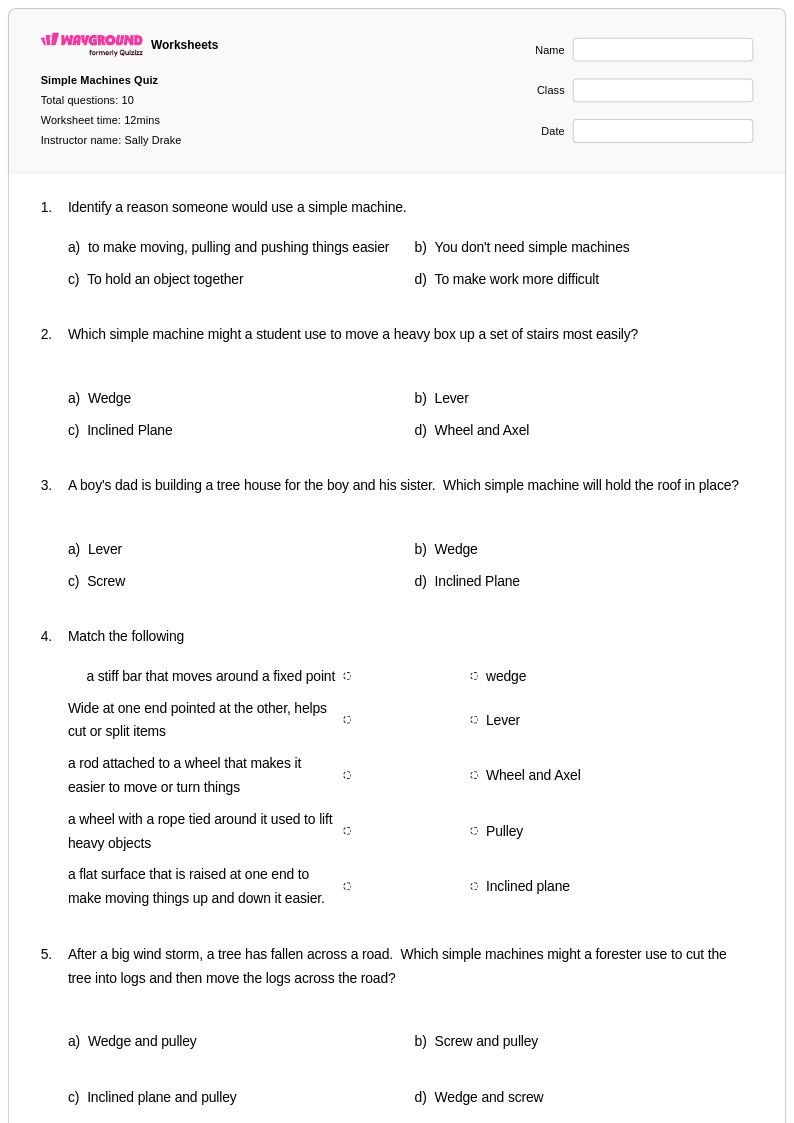
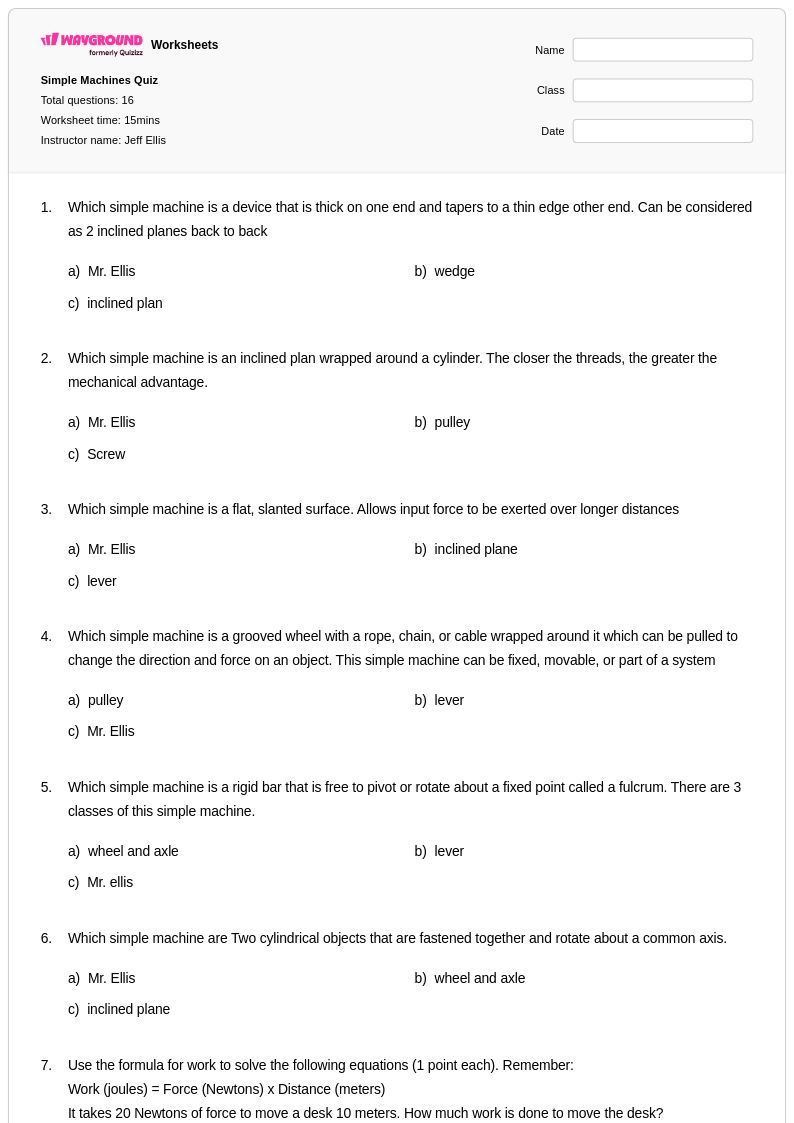
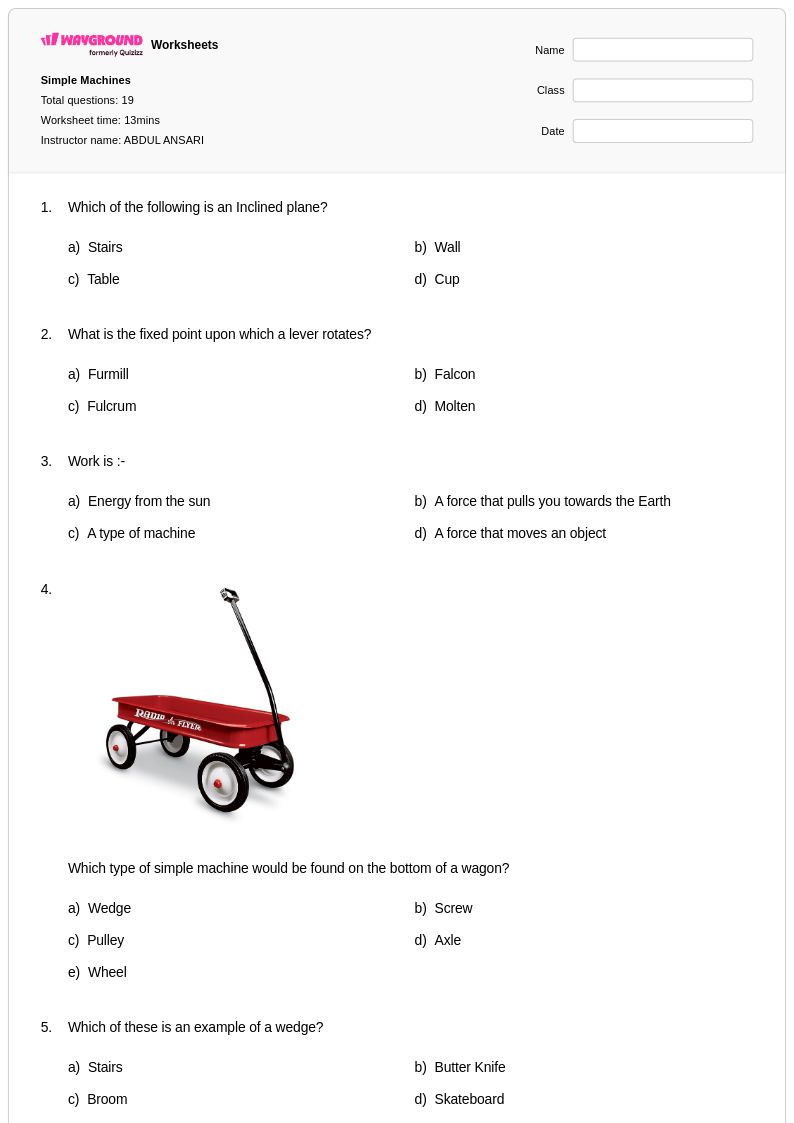
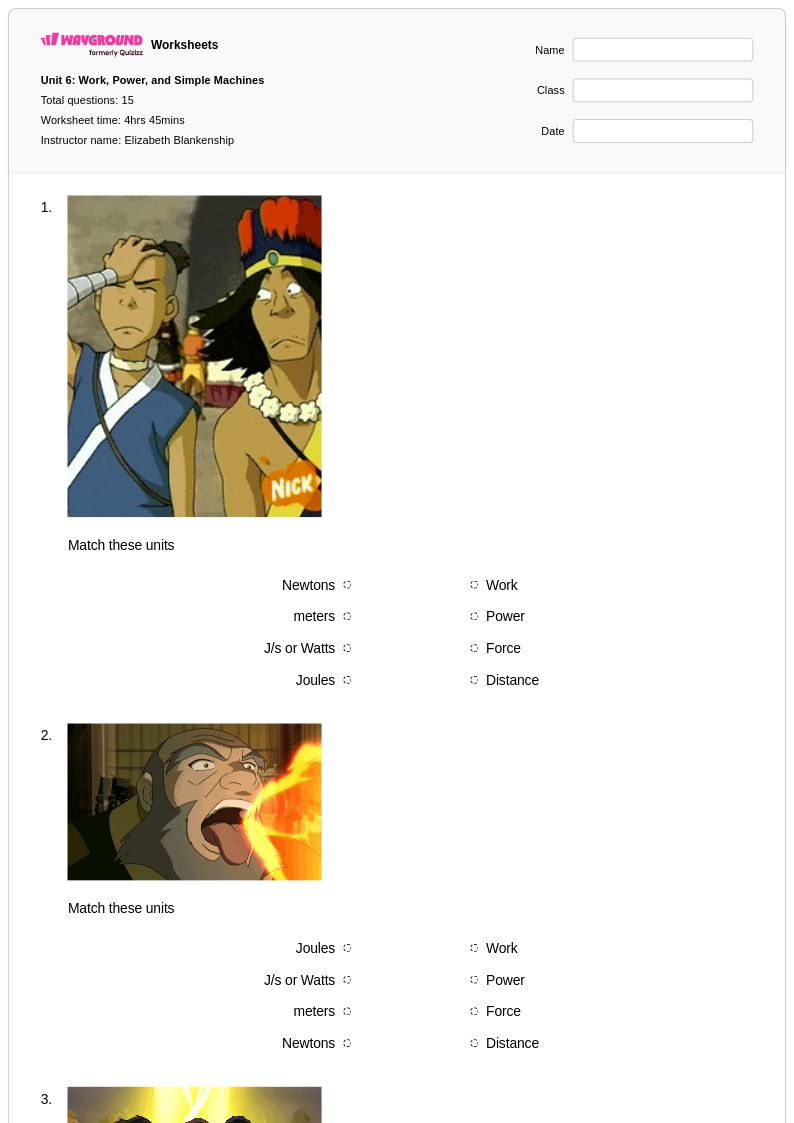
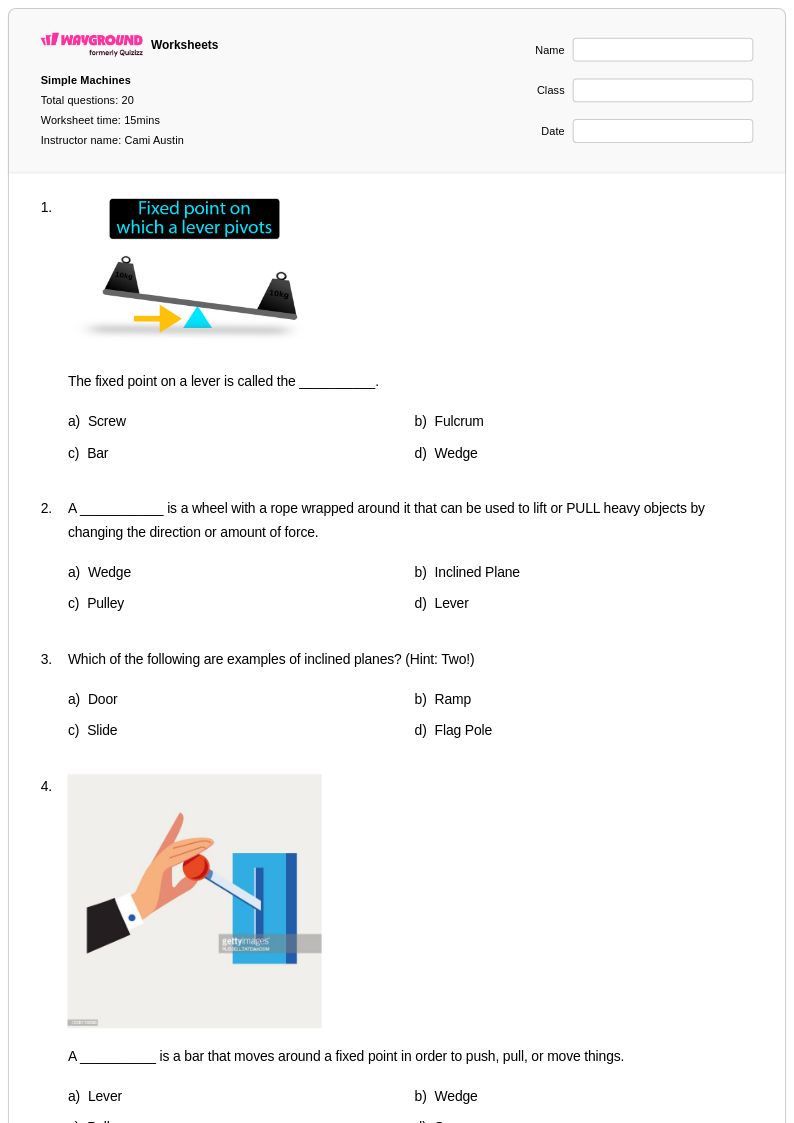
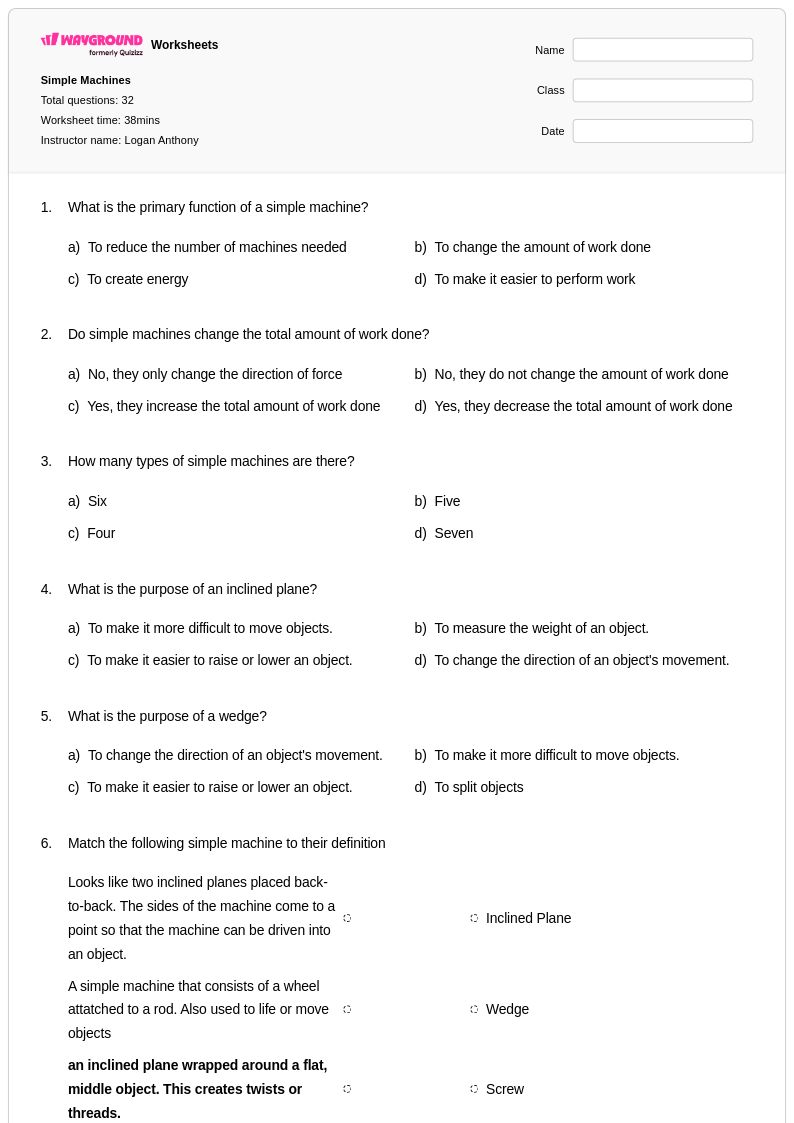
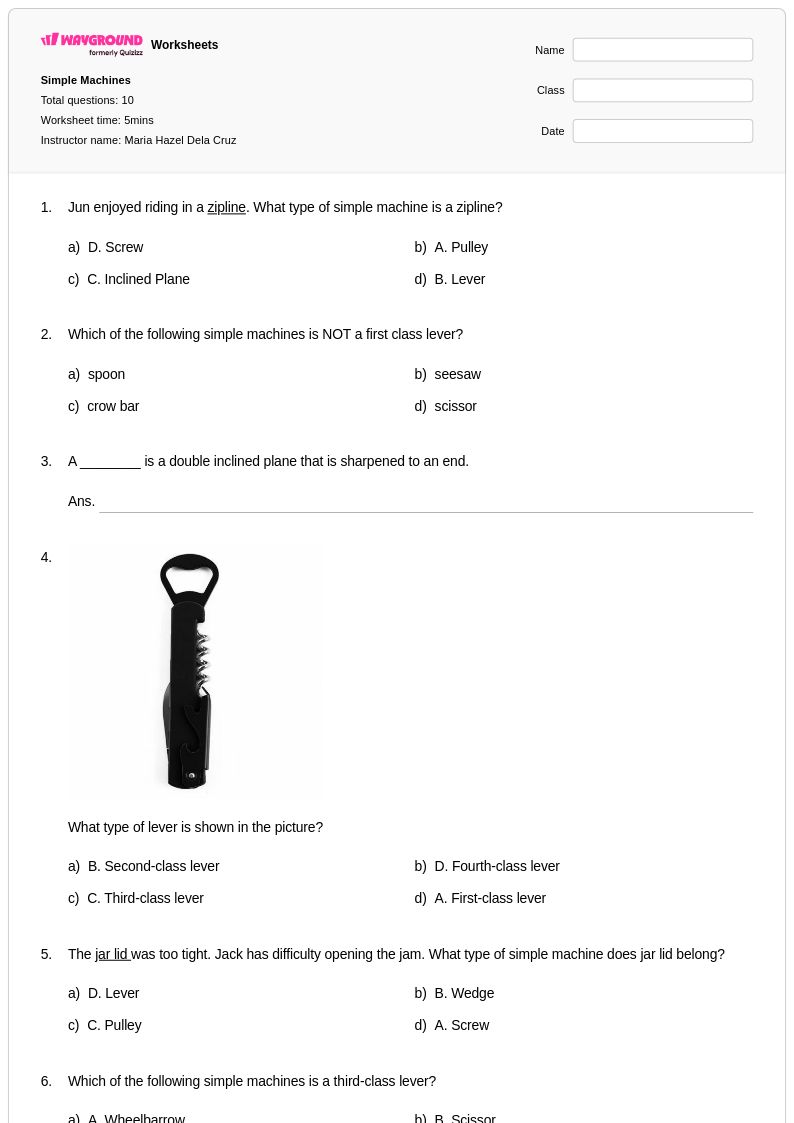
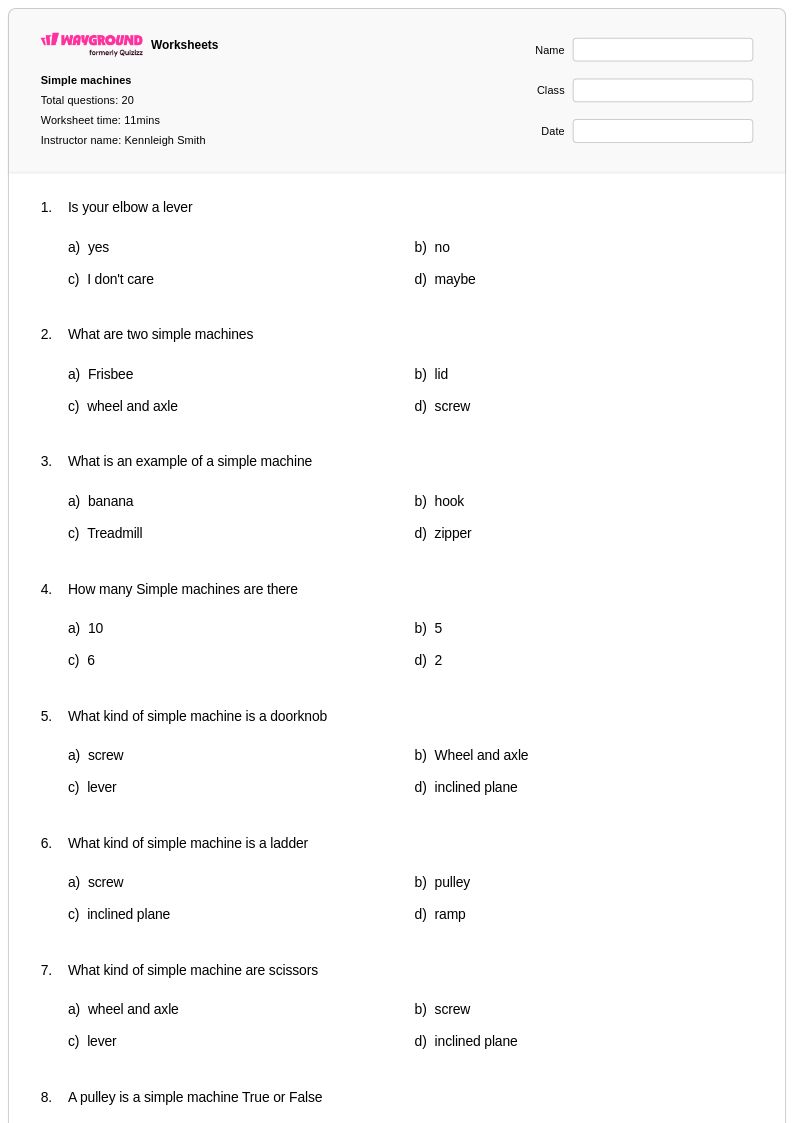
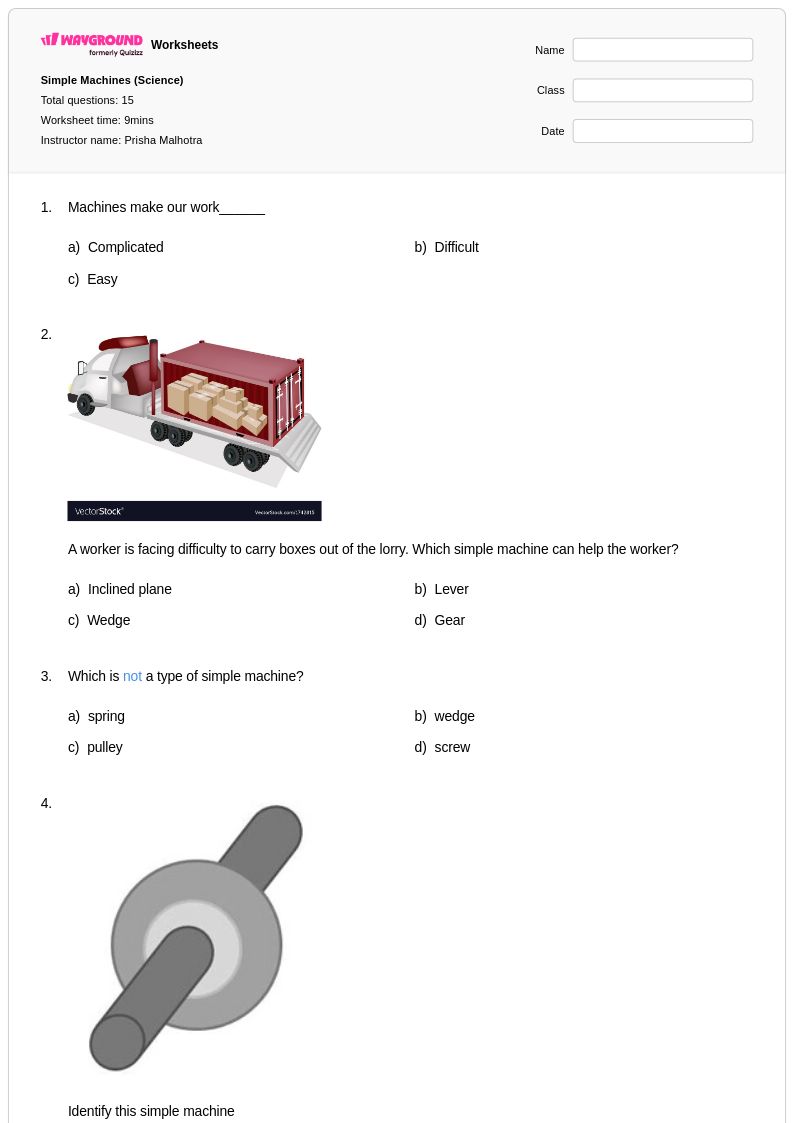
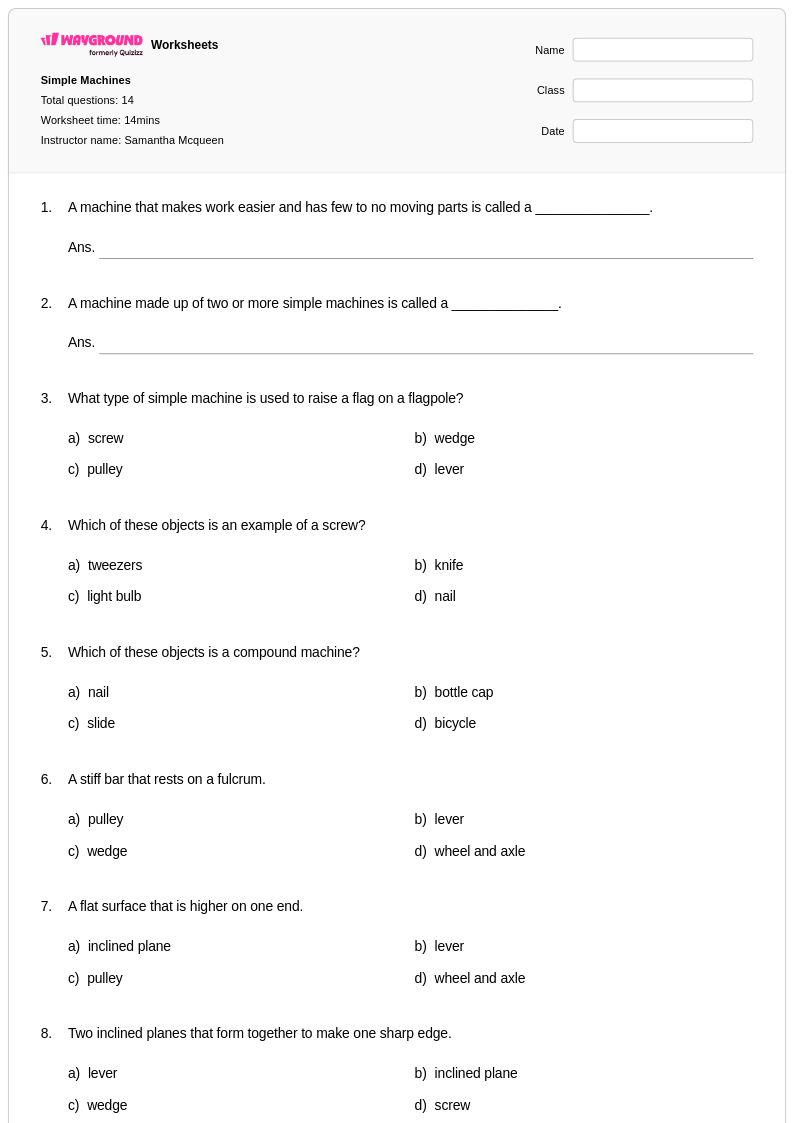
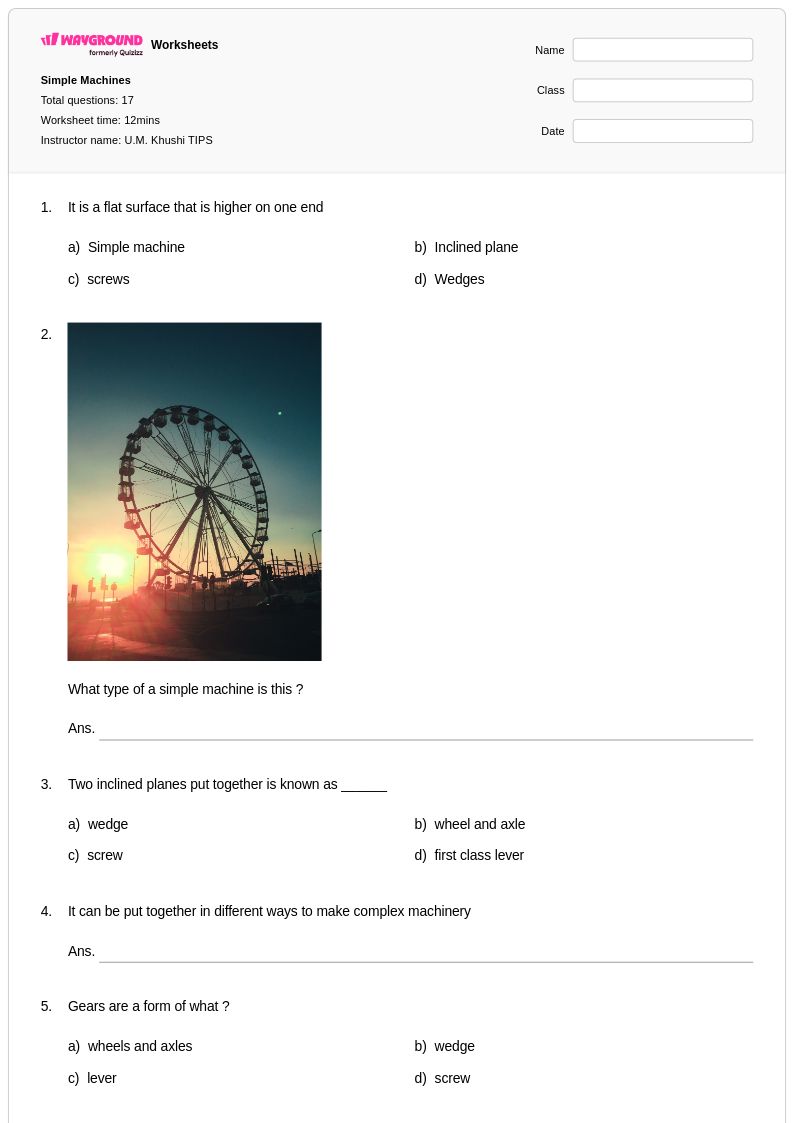
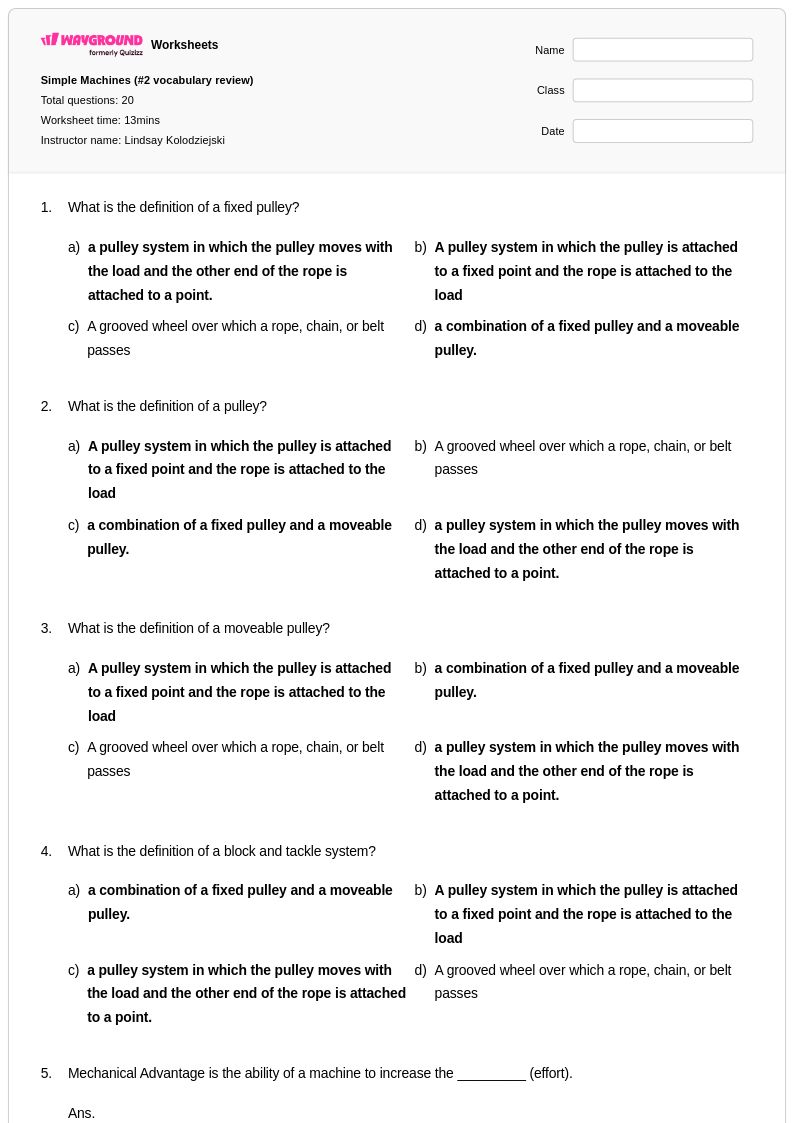
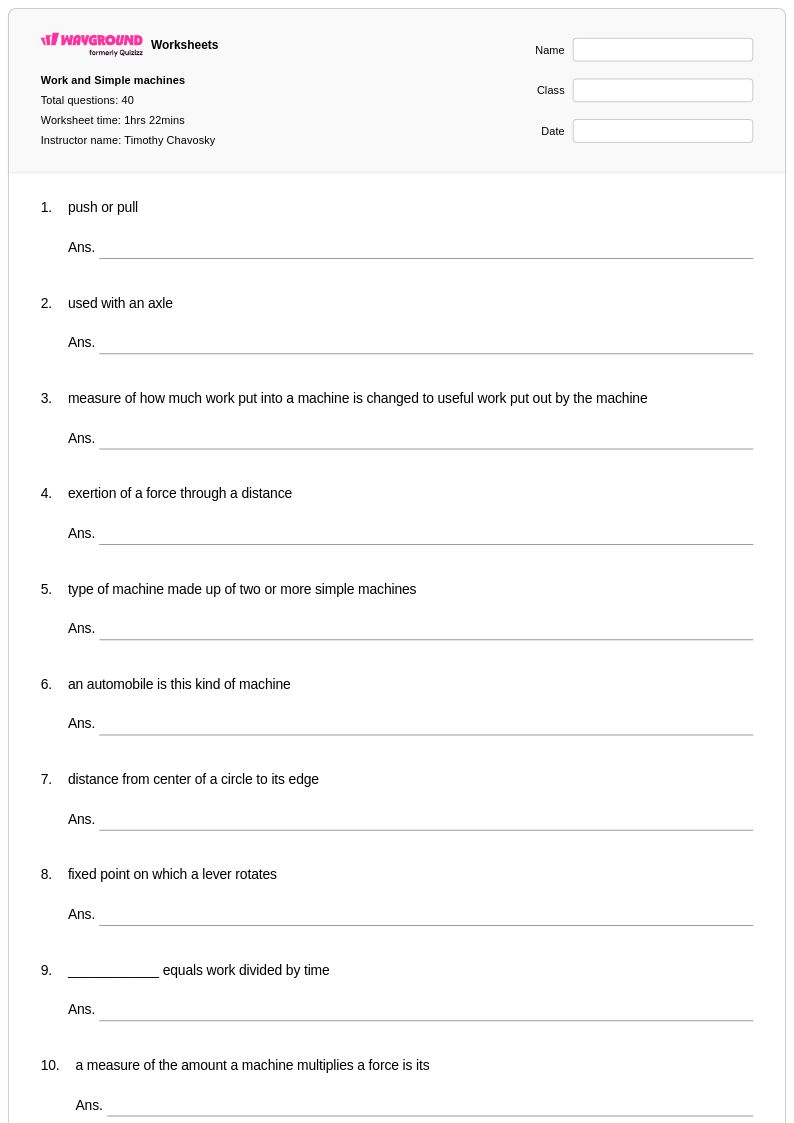
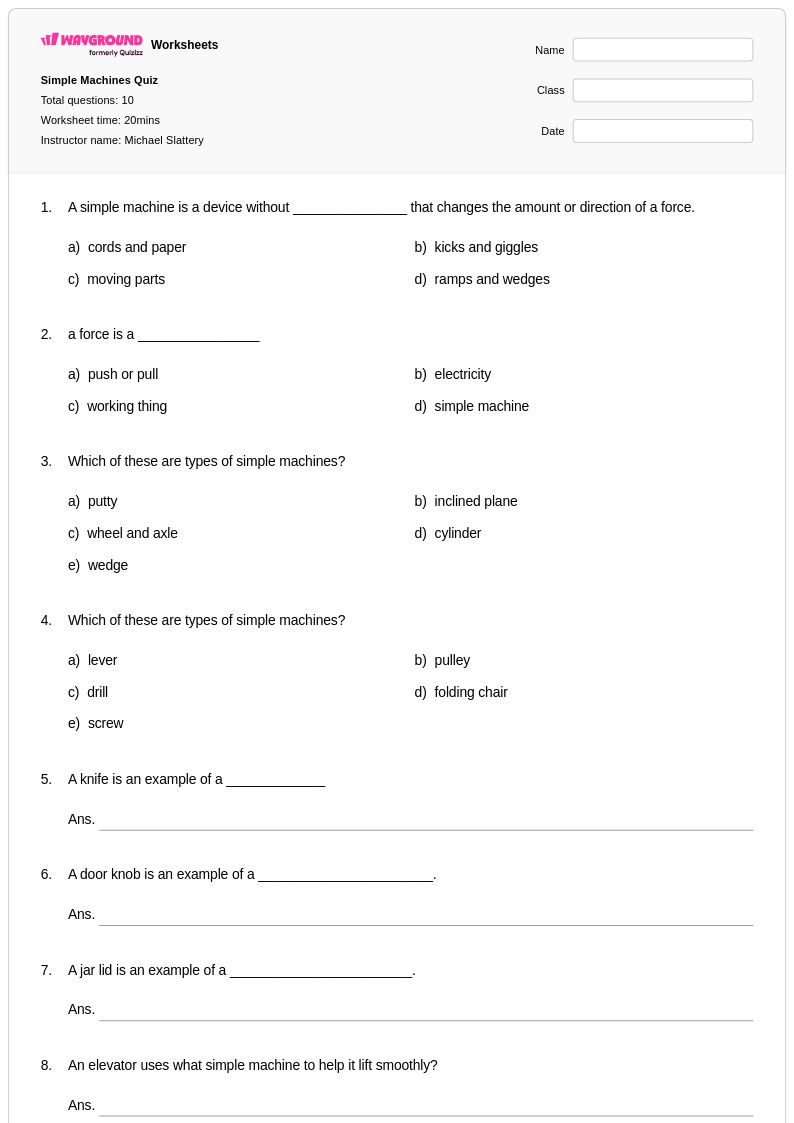
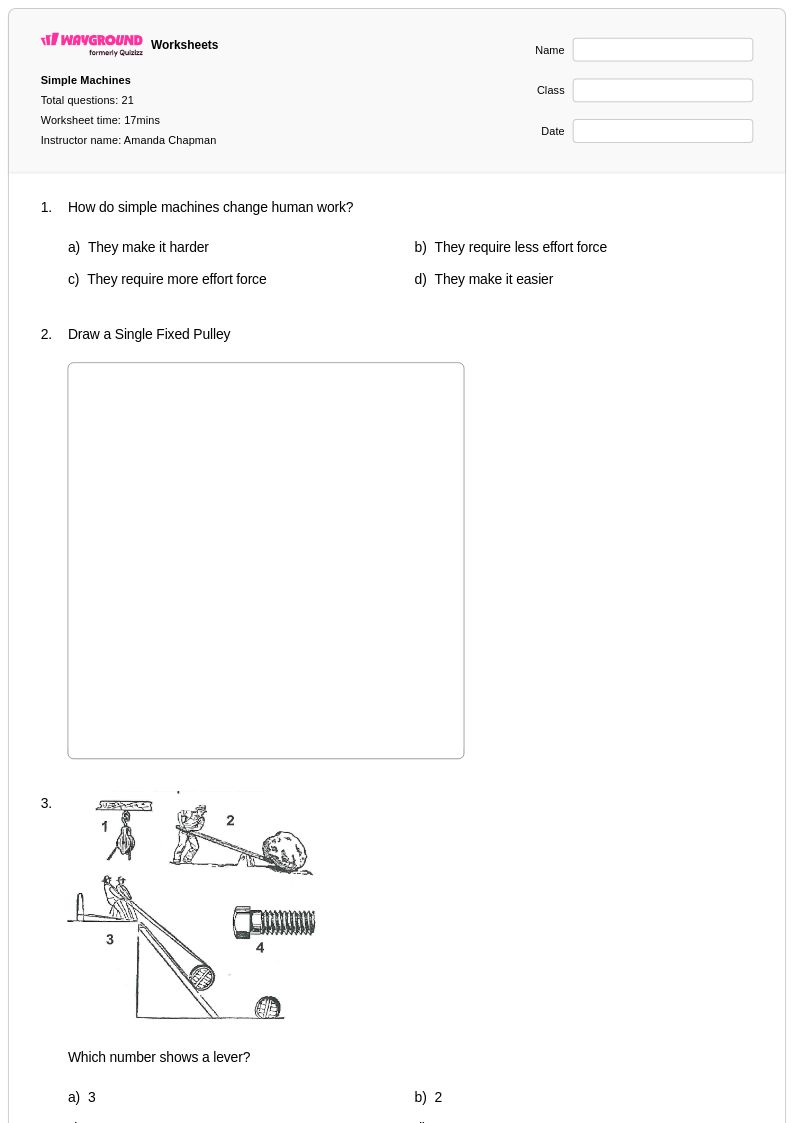
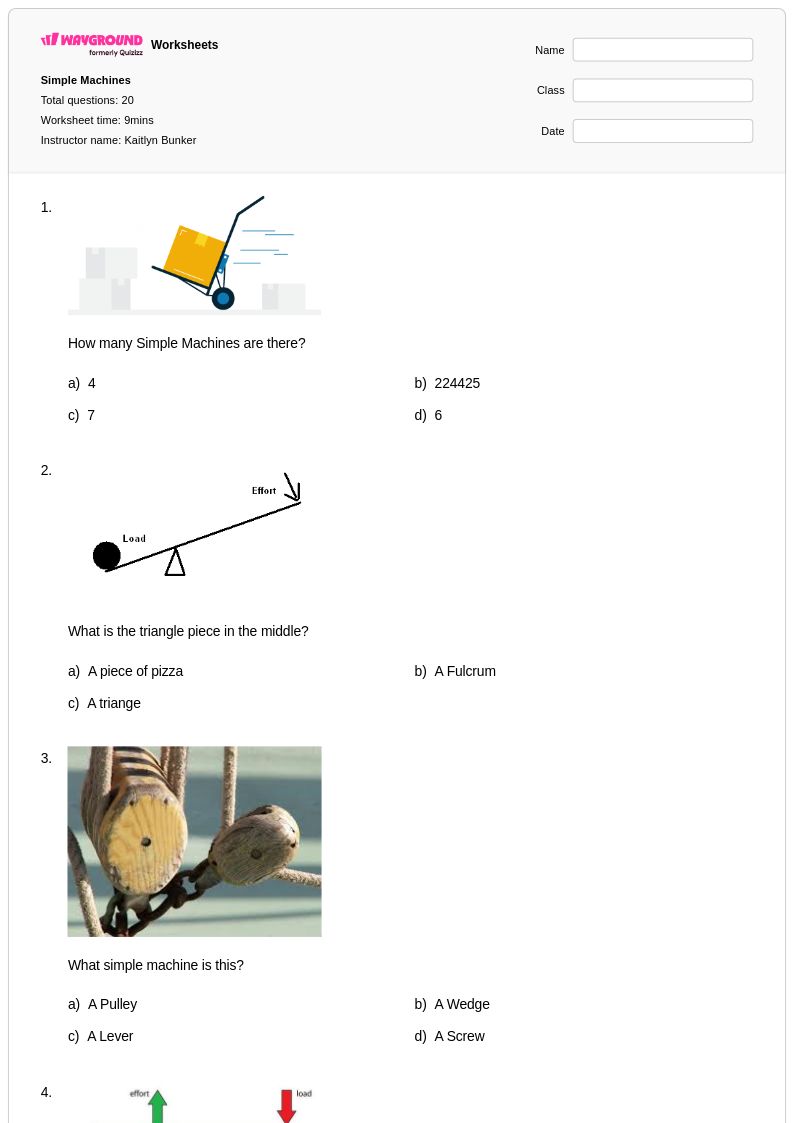
Simple machines worksheets for kindergarten students through Wayground (formerly Quizizz) introduce young learners to fundamental physics concepts through age-appropriate activities and visual exercises. These educational resources help kindergarten students identify and understand basic simple machines like levers, wheels, pulleys, and inclined planes through hands-on exploration and recognition activities. The worksheets strengthen critical thinking skills, observational abilities, and early scientific reasoning as students learn to categorize everyday objects and tools according to their mechanical properties. Each printable resource includes clear instructions and visual aids that make complex physics concepts accessible to early learners, while accompanying answer keys provide teachers and parents with comprehensive guidance for supporting student learning through structured practice problems and assessment activities.
Wayground's extensive collection of teacher-created simple machines worksheets offers educators access to millions of professionally developed resources specifically designed for kindergarten-level physics instruction. The platform's robust search and filtering capabilities enable teachers to quickly locate materials that align with specific learning standards and accommodate diverse student needs through built-in differentiation tools. These customizable worksheets are available in both printable pdf formats and interactive digital versions, providing flexible options for classroom instruction, homework assignments, and independent practice sessions. Teachers can seamlessly integrate these resources into lesson planning for initial concept introduction, targeted skill remediation, or enrichment activities that challenge advanced learners, while the comprehensive answer keys and detailed explanations support effective assessment and individualized instruction strategies.
FAQs
How do I teach simple machines to elementary and middle school students?
Start by grounding students in the definition of work in physics terms, then introduce each of the six simple machines (lever, pulley, inclined plane, wedge, screw, and wheel-and-axle) with concrete, everyday examples like scissors, ramps, and doorknobs. Use hands-on demonstrations before moving to written practice so students can physically observe how each machine reduces the effort needed to move a load. Connecting each machine type to real-world applications helps students retain the abstract concept of mechanical advantage.
What exercises help students practice identifying and calculating mechanical advantage for simple machines?
Effective practice includes labeling diagrams to identify machine type and its components (effort, load, and fulcrum for levers), calculating mechanical advantage ratios using the formula MA = output force ÷ input force, and matching everyday objects to their corresponding simple machine category. Worked example problems that walk students through force distribution on inclined planes and pulley systems help bridge conceptual understanding and numerical reasoning. Mixed-format worksheets that combine diagram analysis with calculation problems build the full range of skills assessed on physics tests.
What mistakes do students commonly make when learning about simple machines?
A frequent misconception is that simple machines reduce the amount of work done — students confuse reducing effort force with reducing total work, when in reality the work remains the same but is distributed differently. Students also commonly misidentify compound machines (like scissors or bicycles) as single simple machines rather than combinations. When calculating mechanical advantage, errors often arise from inverting the input and output force values or forgetting to account for the length of effort arm versus load arm in lever problems.
How can I differentiate simple machines instruction for students at different skill levels?
For struggling students, start with visual identification tasks before introducing any calculation, and use diagrams with labeled components to reduce cognitive load. Advanced learners can be challenged with compound machine analysis, multi-step mechanical advantage problems, or design tasks where they must select the appropriate simple machine for a given real-world scenario. On Wayground, teachers can apply accommodations such as reduced answer choices or read-aloud support to individual students without disrupting the rest of the class, making it practical to run differentiated practice within a single session.
How do I use Wayground's simple machines worksheets in my classroom?
Wayground's simple machines worksheets are available as printable PDFs for traditional classroom use and in digital formats for technology-integrated environments, so they work whether students are at desks or on devices. Teachers can also host the content as a quiz directly on Wayground, enabling real-time response tracking. The included answer keys support both self-paced independent work and teacher-led review, making the same resource usable across multiple instructional contexts.
How do pulleys and levers differ in how they provide mechanical advantage?
A lever provides mechanical advantage by varying the distance between the effort force, the fulcrum, and the load — a longer effort arm relative to the load arm means less force is needed to lift a heavier object. A pulley redirects or multiplies force depending on its configuration: a fixed pulley only changes the direction of force, while a movable pulley or block-and-tackle system multiplies the effort force by increasing the number of rope segments supporting the load. Teaching this distinction explicitly helps students avoid conflating the two machine types when solving mechanical advantage problems.
What are the six types of simple machines students need to know?
The six classical simple machines are the lever, pulley, inclined plane, wedge, screw, and wheel-and-axle. Each reduces the effort required to do work by changing the direction or magnitude of an applied force. Students should be able to identify examples of each in everyday objects: a lever in a seesaw, a pulley in a flagpole, an inclined plane in a ramp, a wedge in an axe blade, a screw in a jar lid, and a wheel-and-axle in a doorknob.