
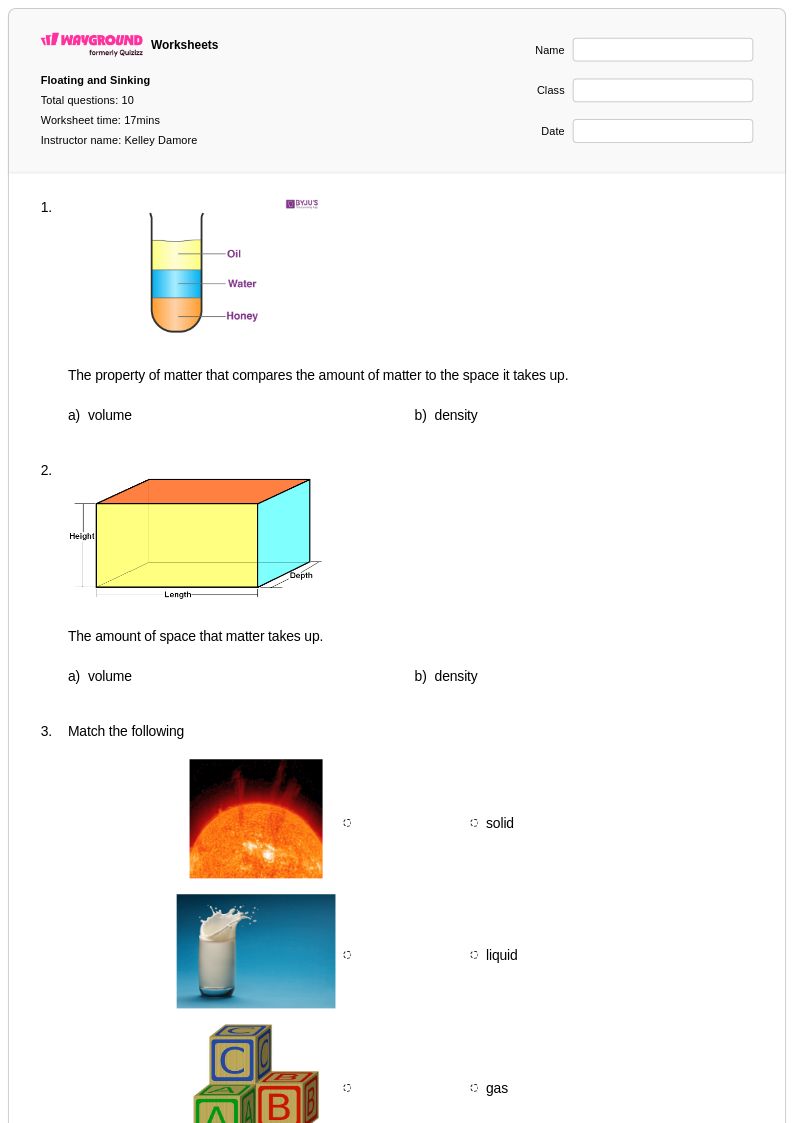
10 Q
4th
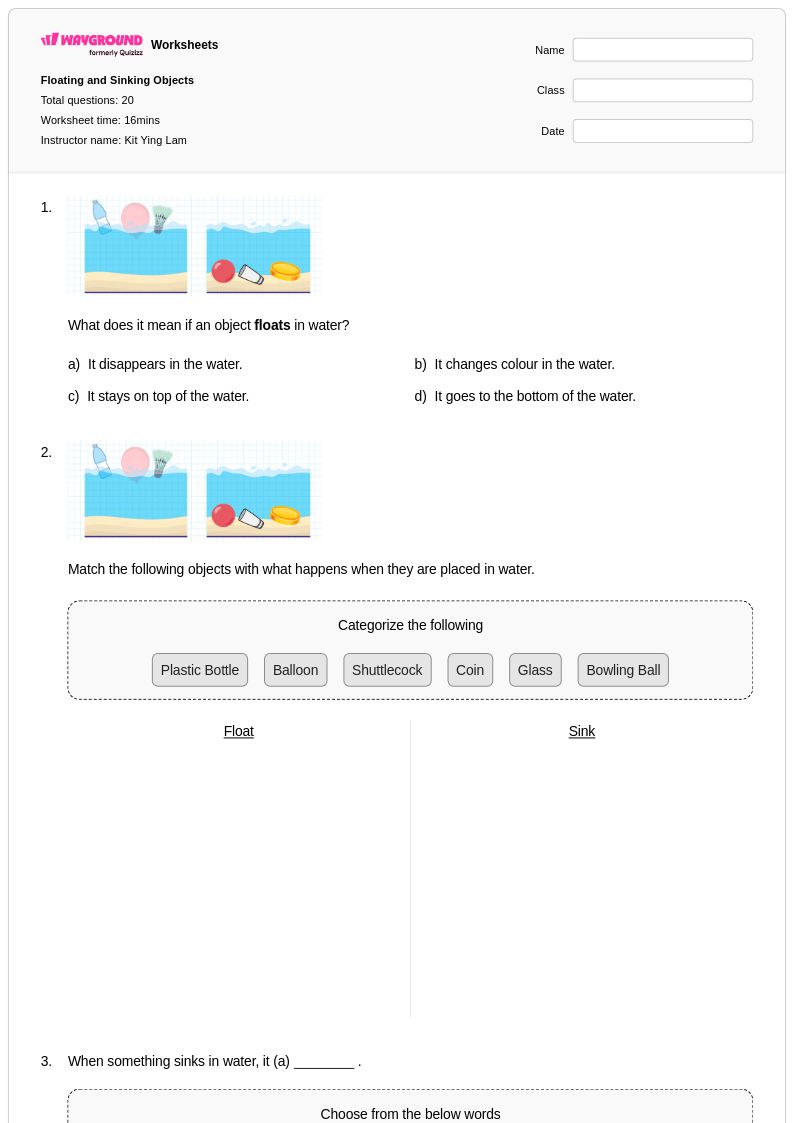
20 Q
1st
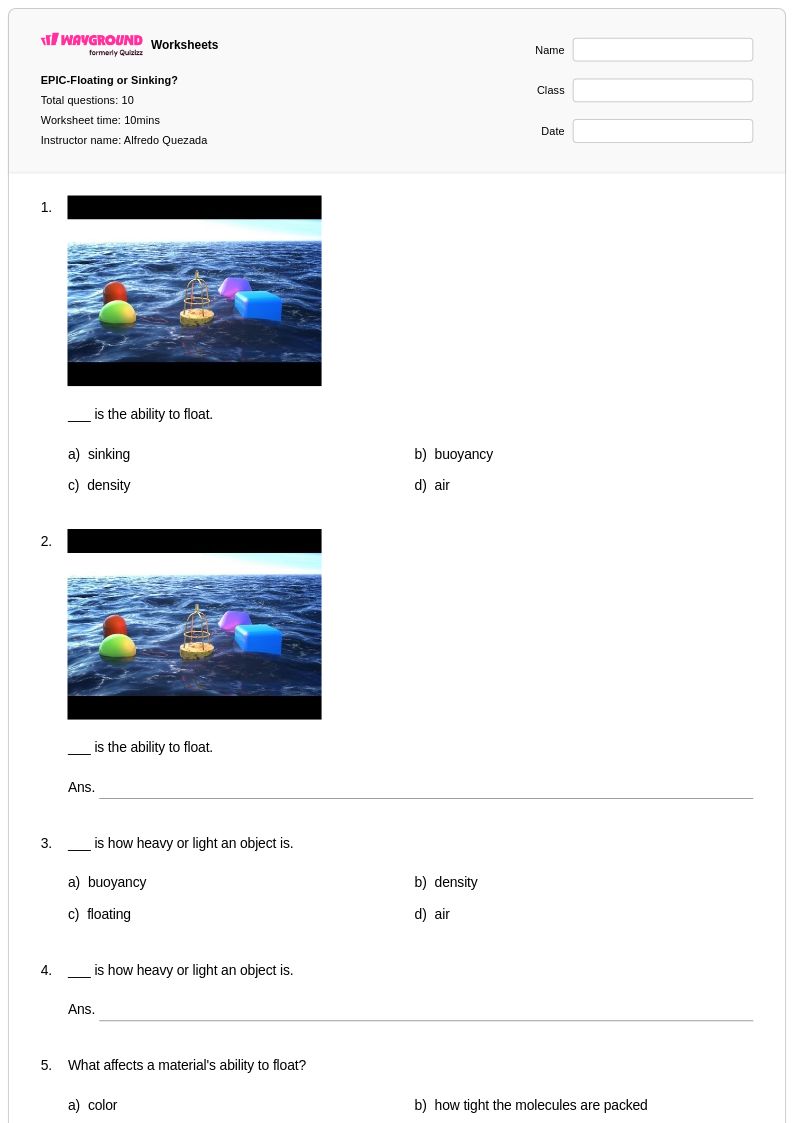
10 Q
3rd - 4th
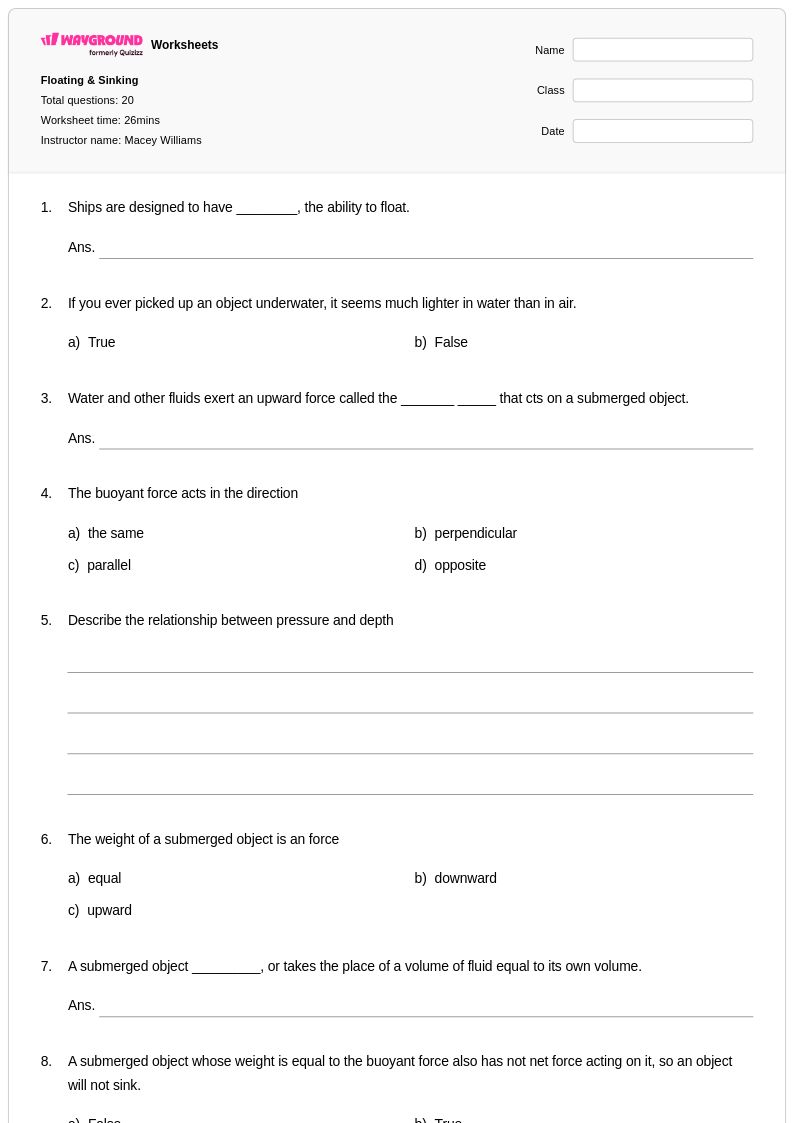
20 Q
8th
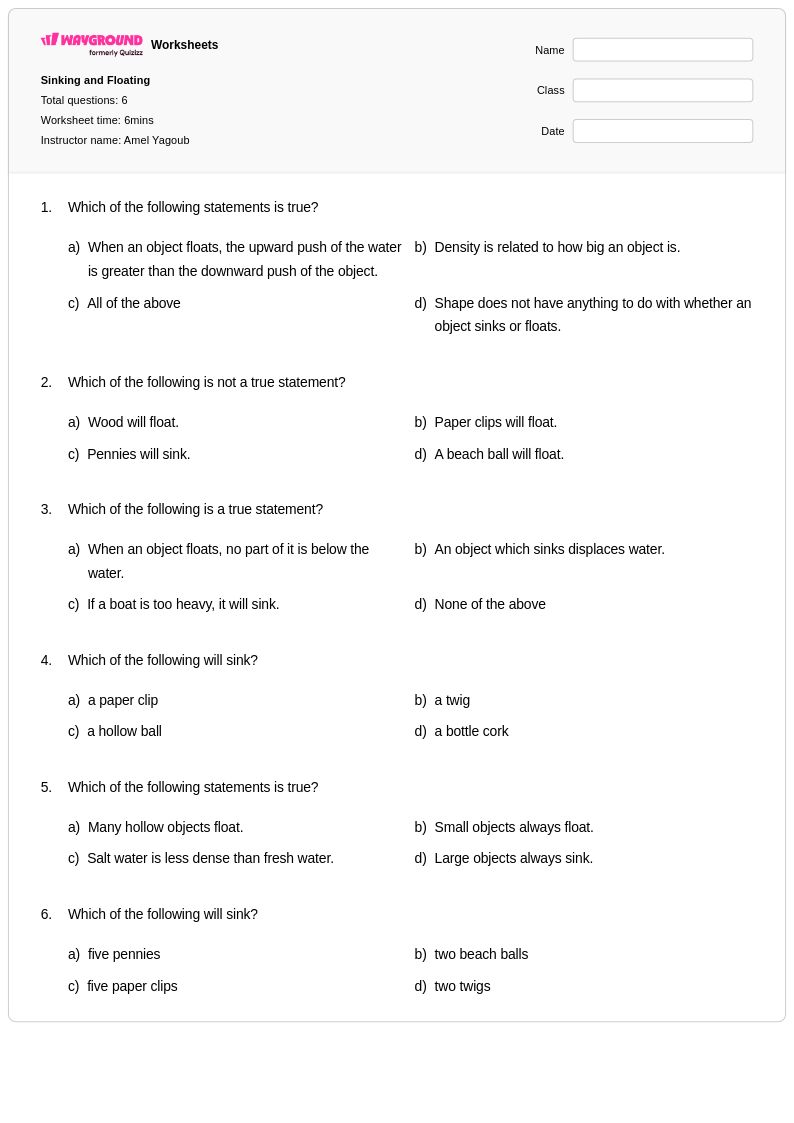
6 Q
1st - 5th
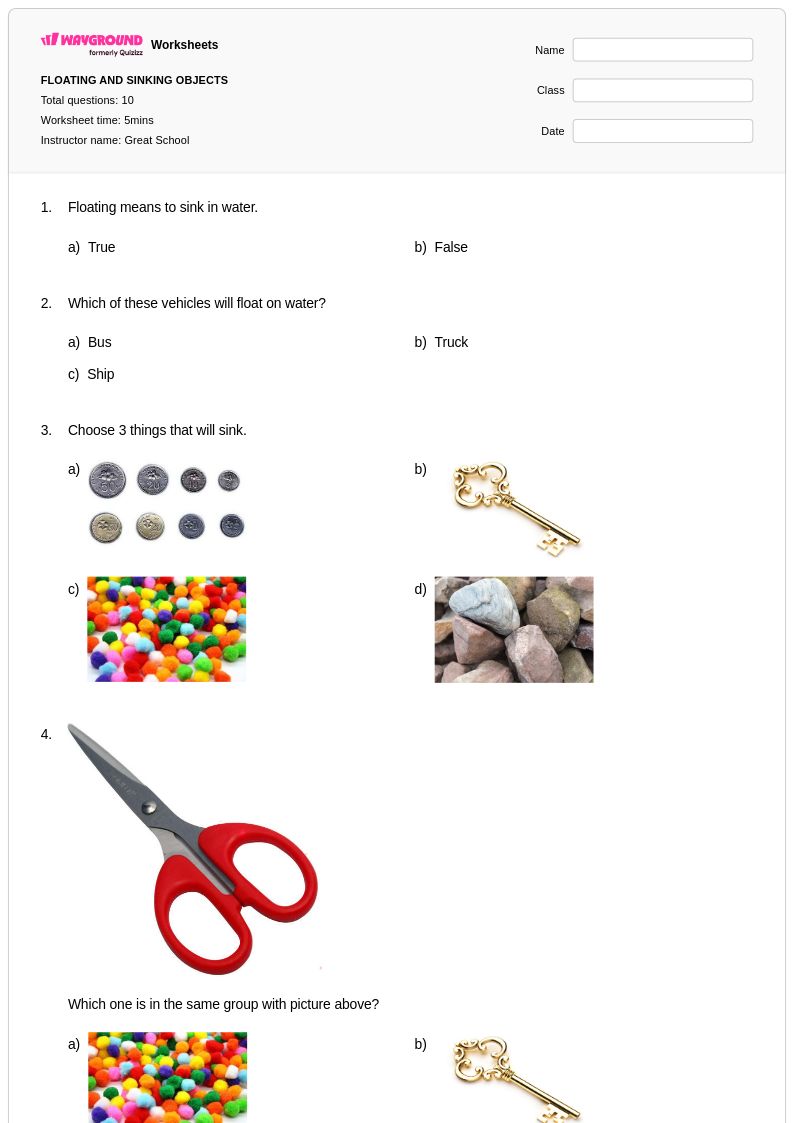
10 Q
1st
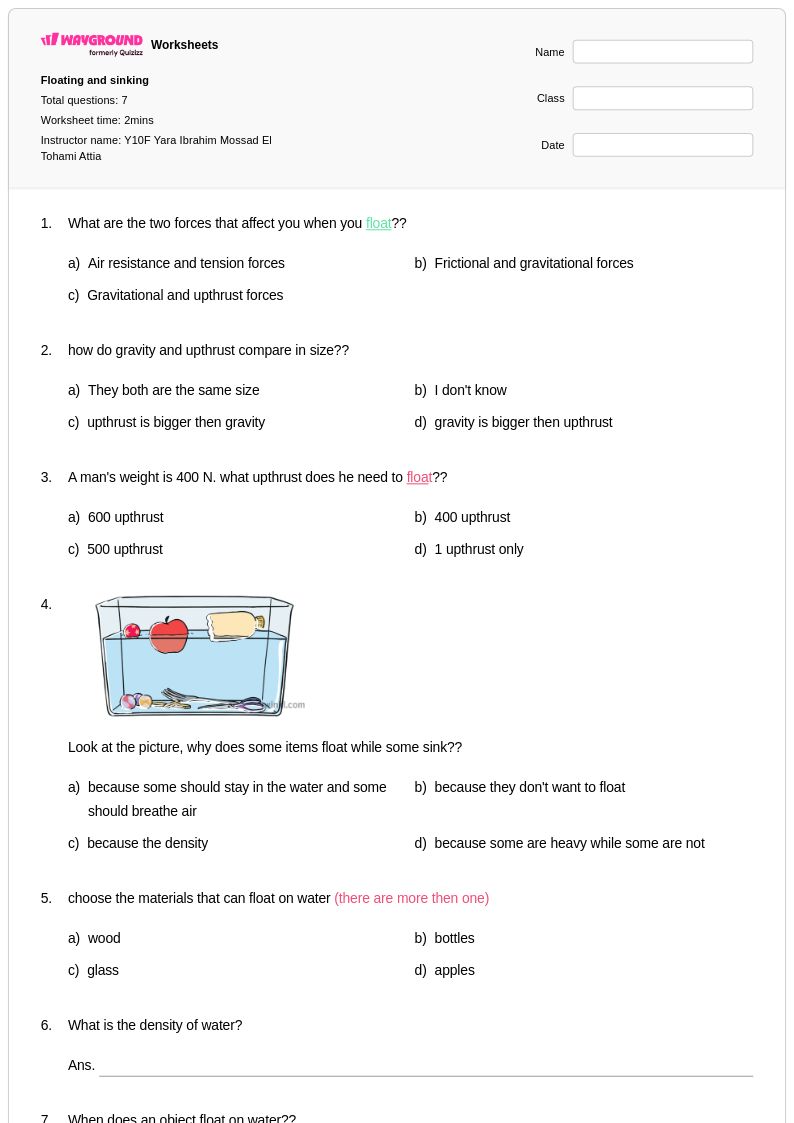
7 Q
4th - 8th
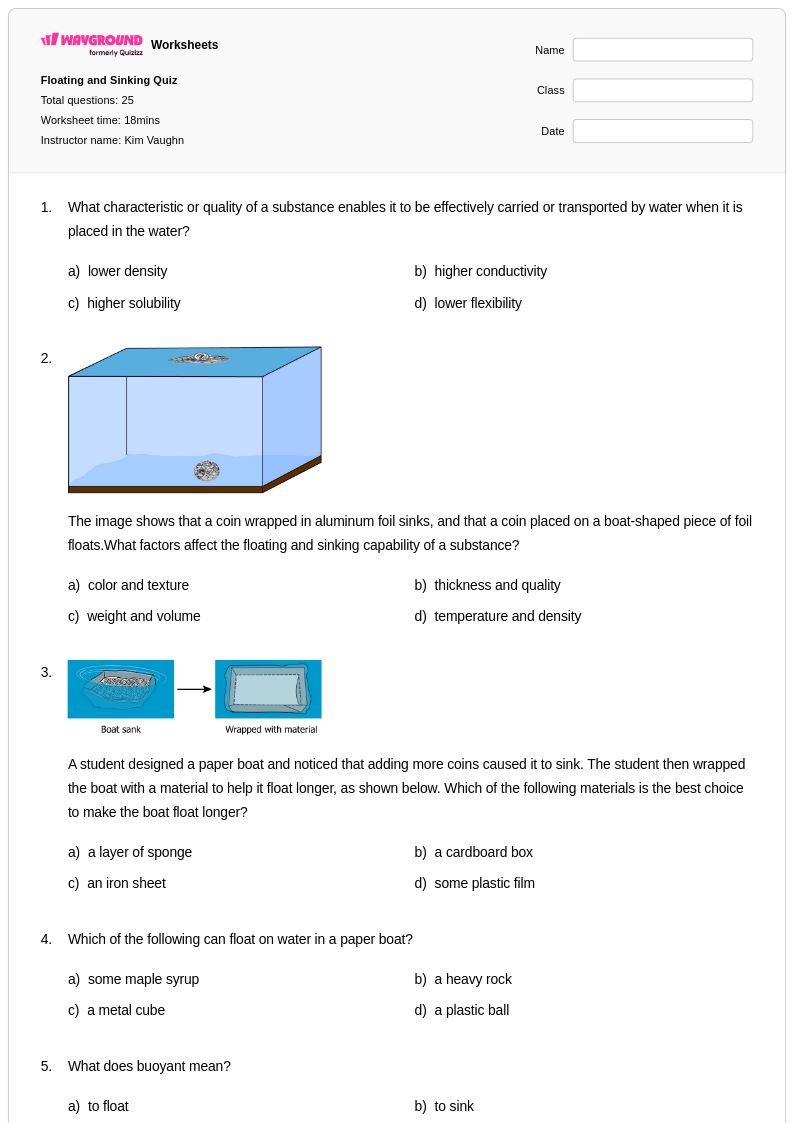
25 Q
5th
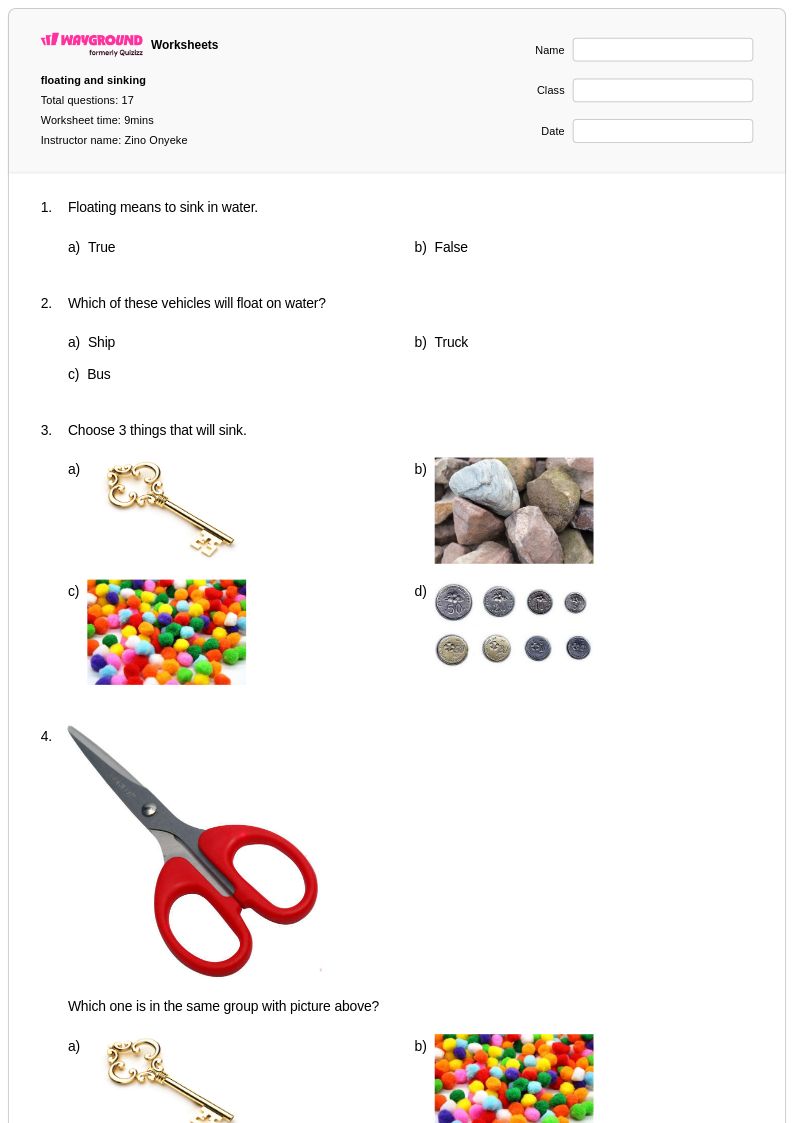
17 Q
1st
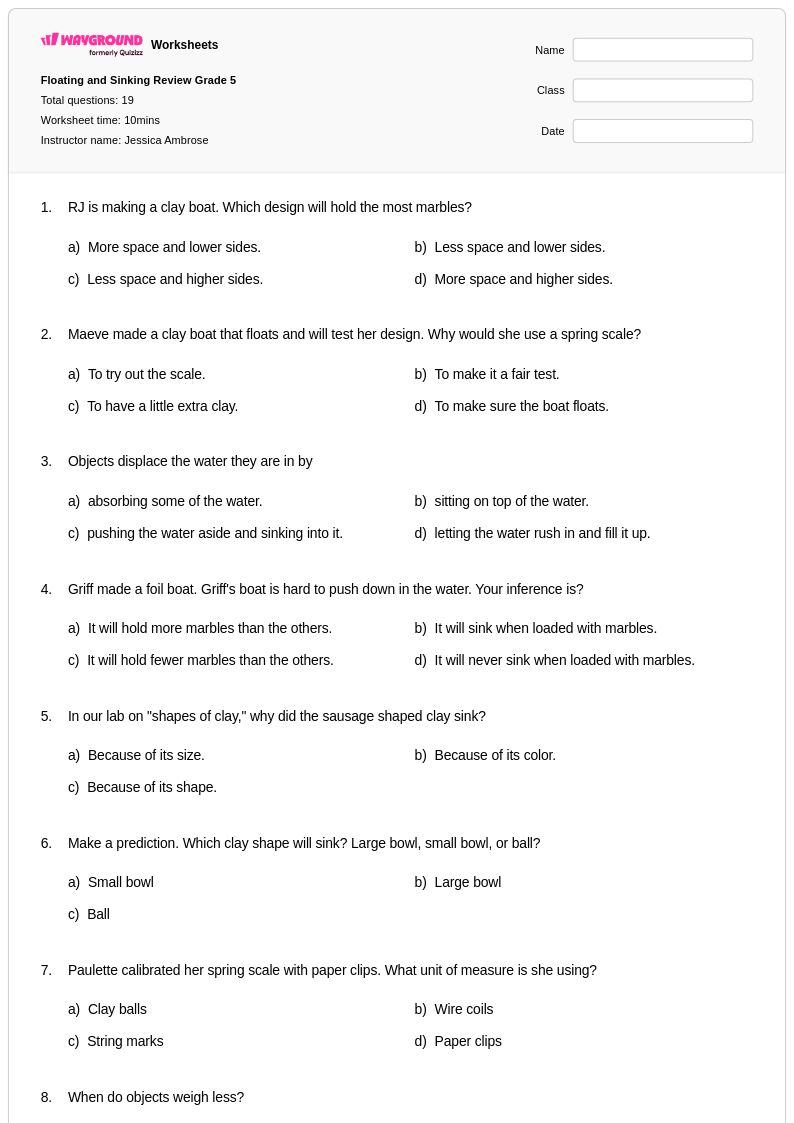
19 Q
5th
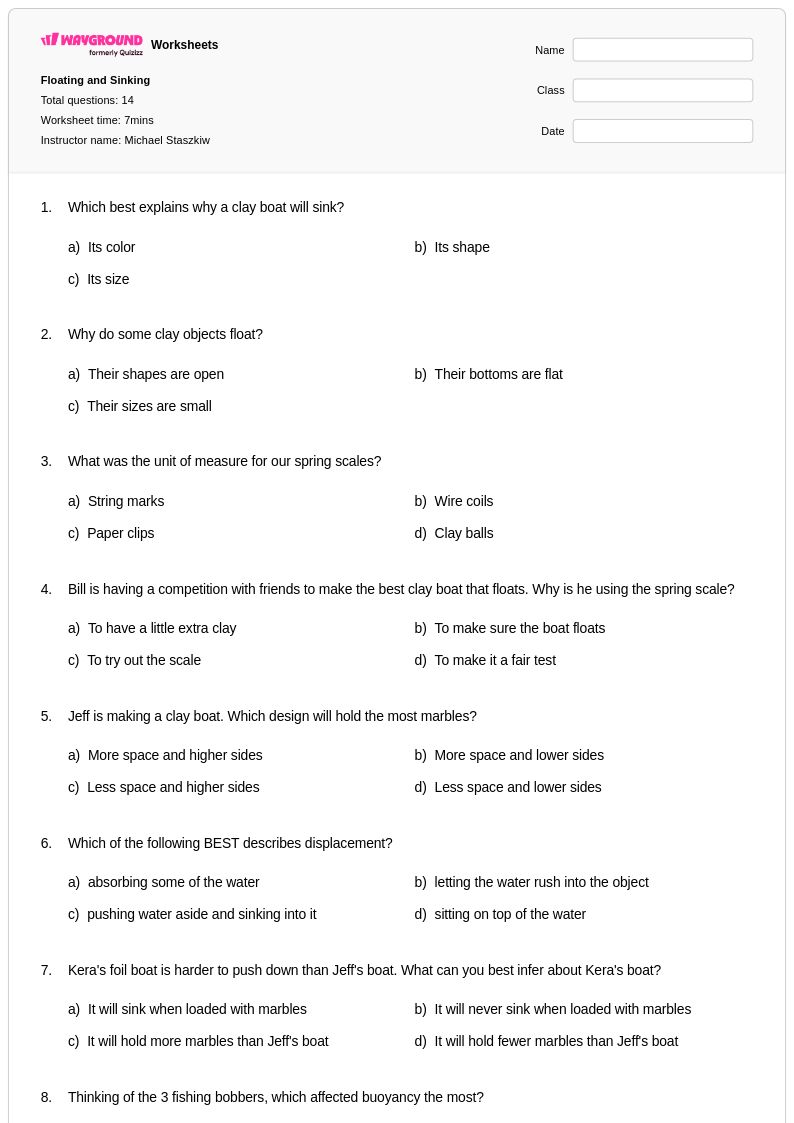
14 Q
5th
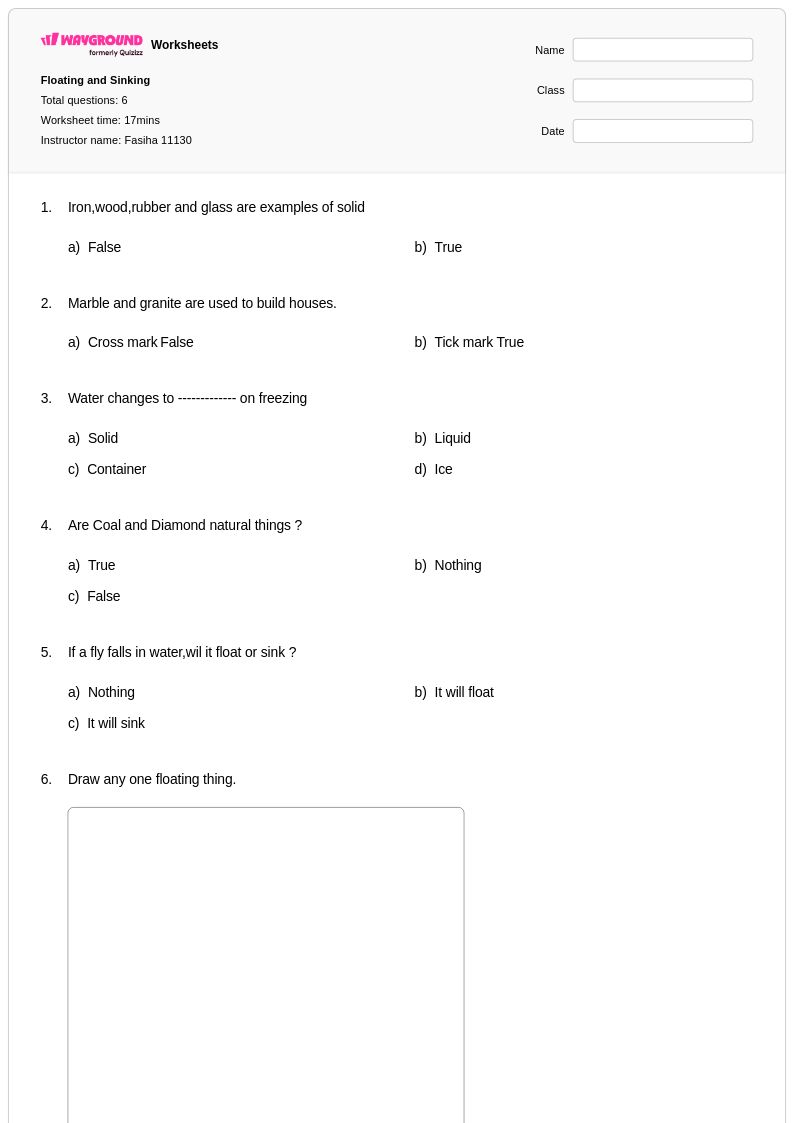
6 Q
3rd
20 Q
2nd - 3rd
15 Q
2nd - 4th
10 Q
1st - 3rd
14 Q
6th
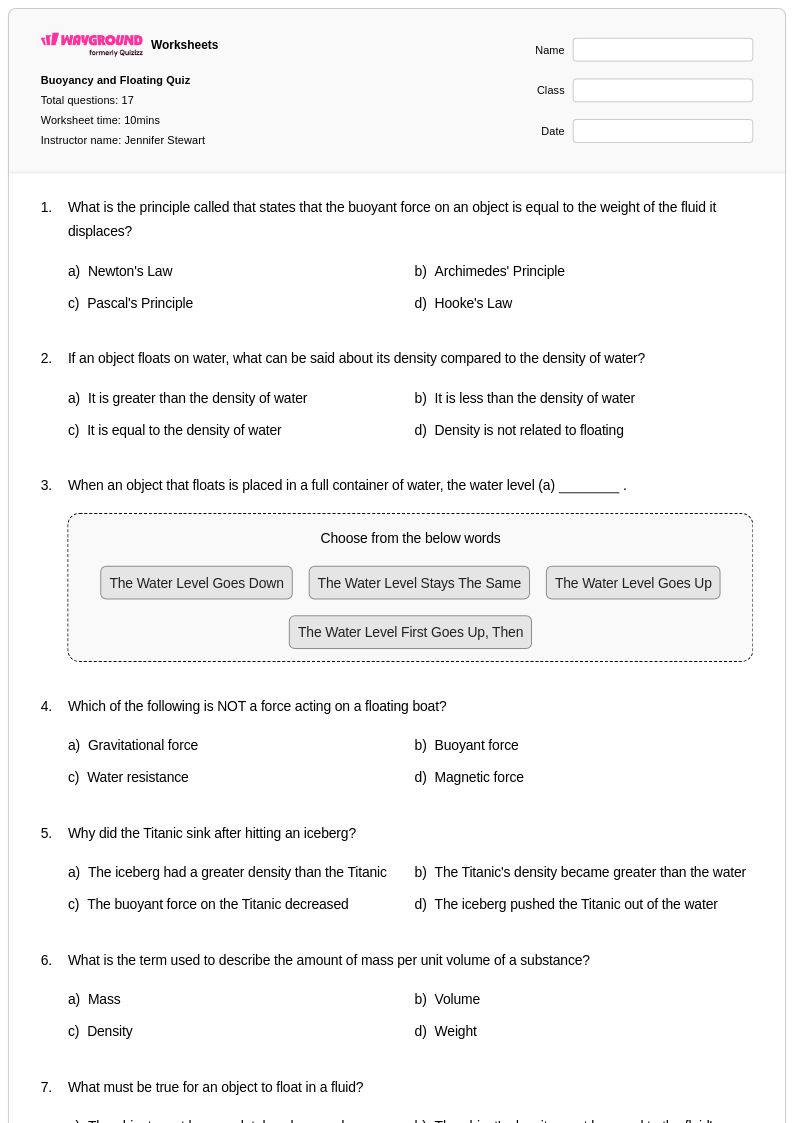
17 Q
5th
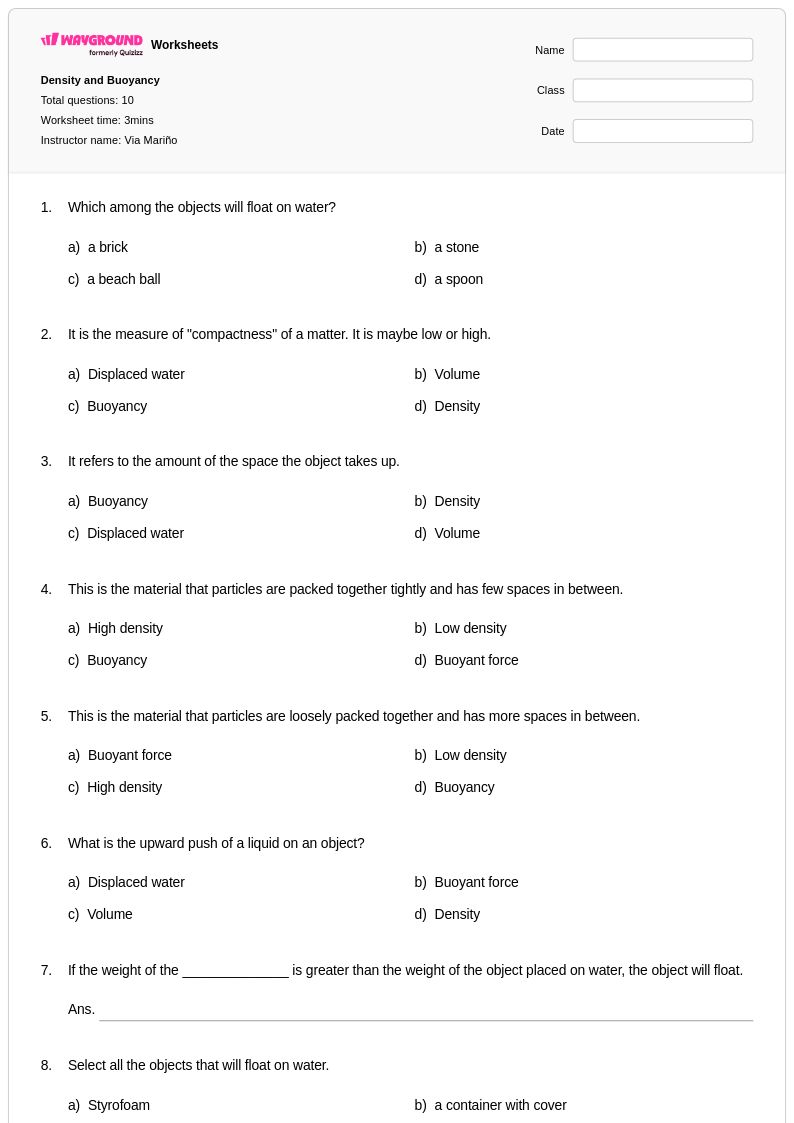
10 Q
1st - 6th
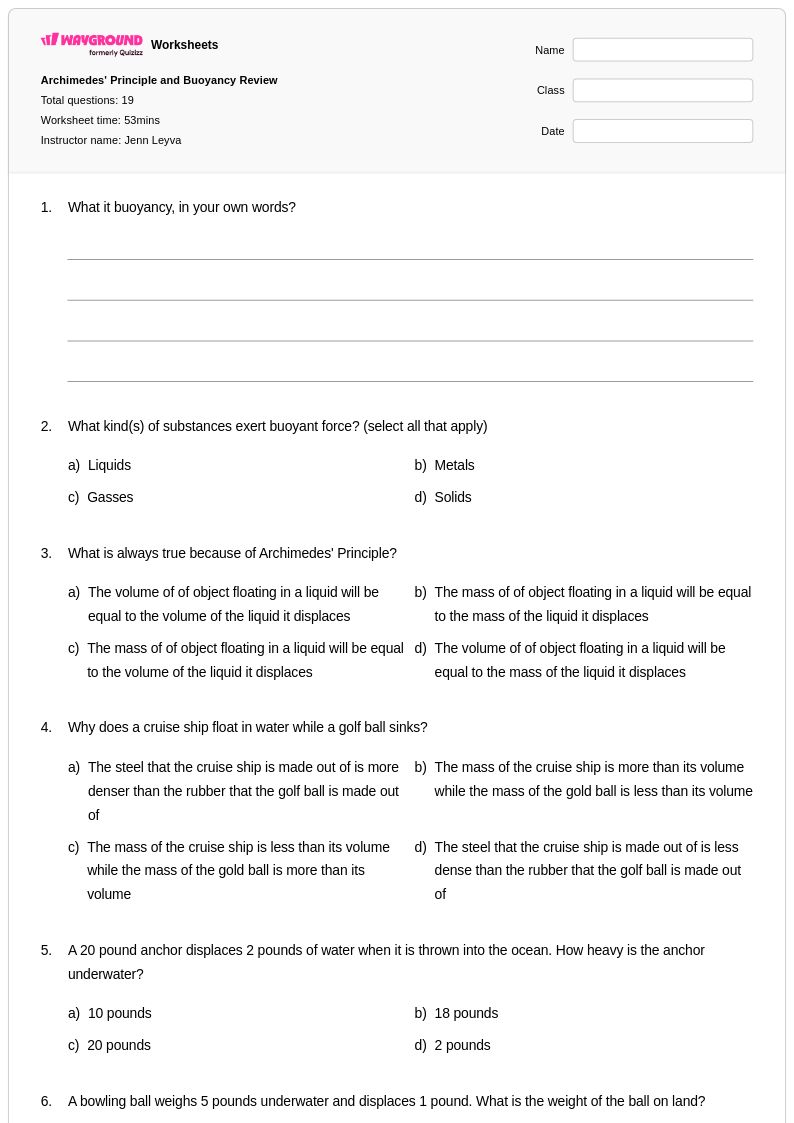
19 Q
7th
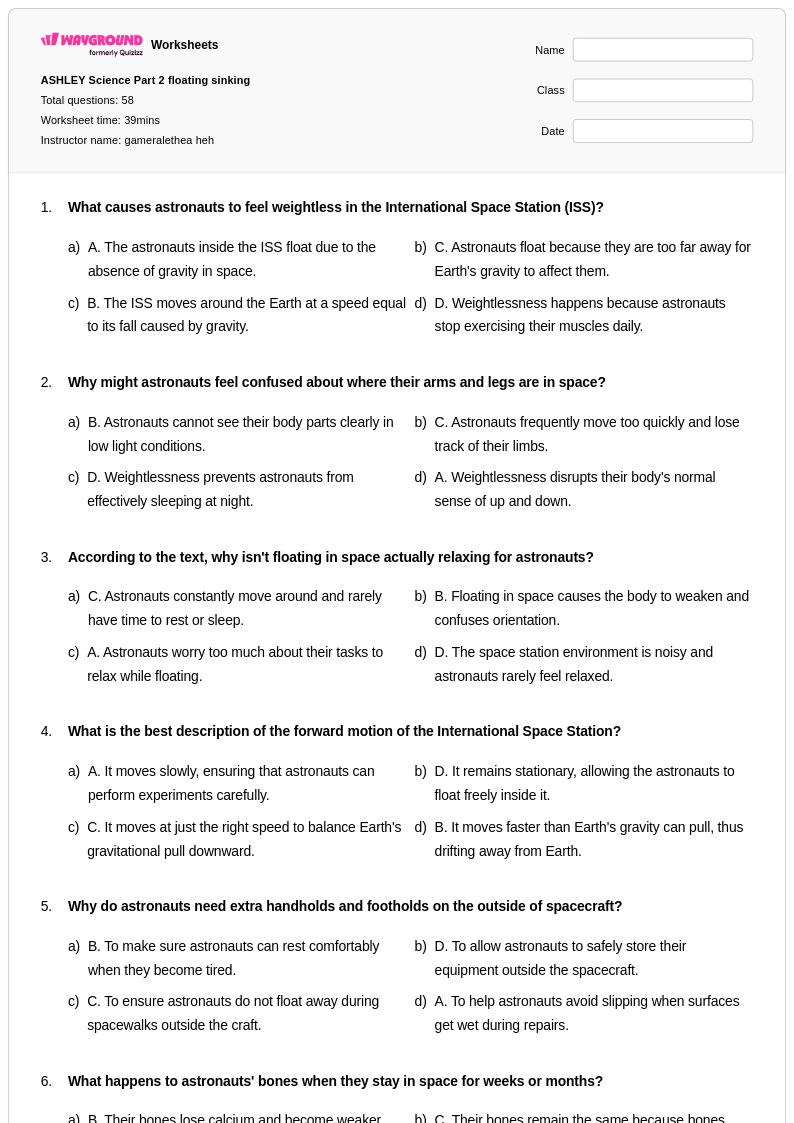
58 Q
6th
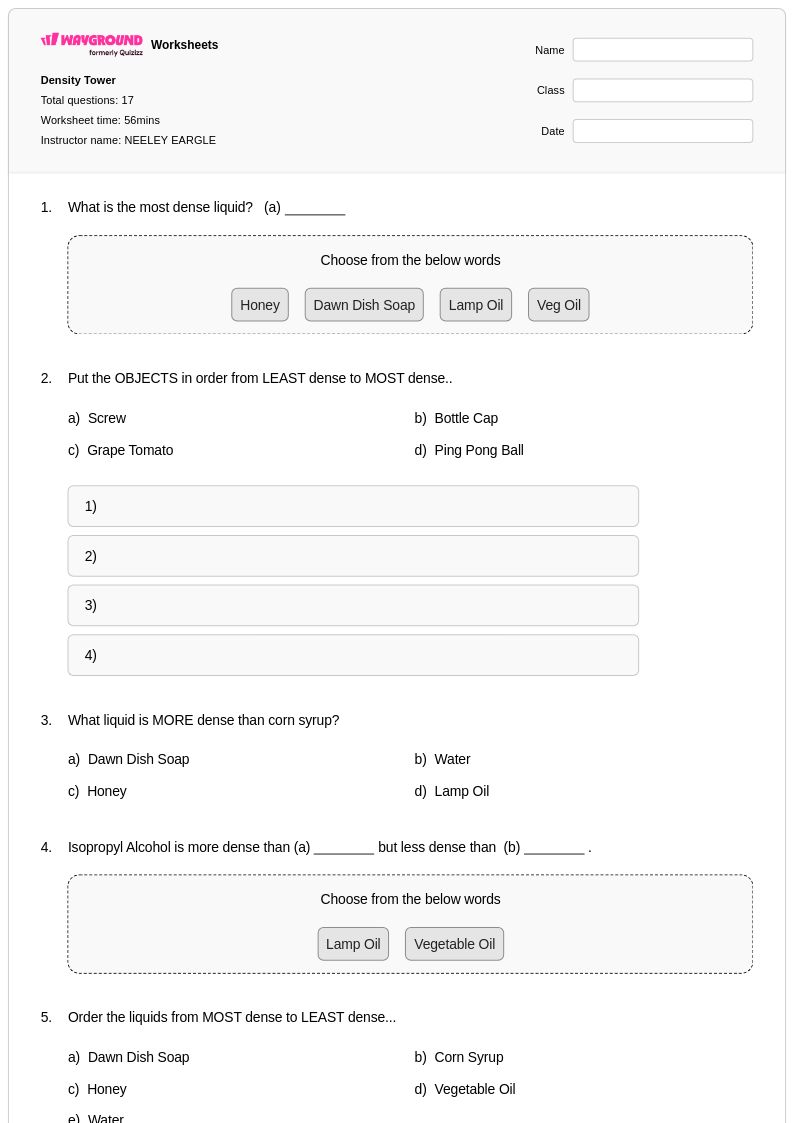
17 Q
4th
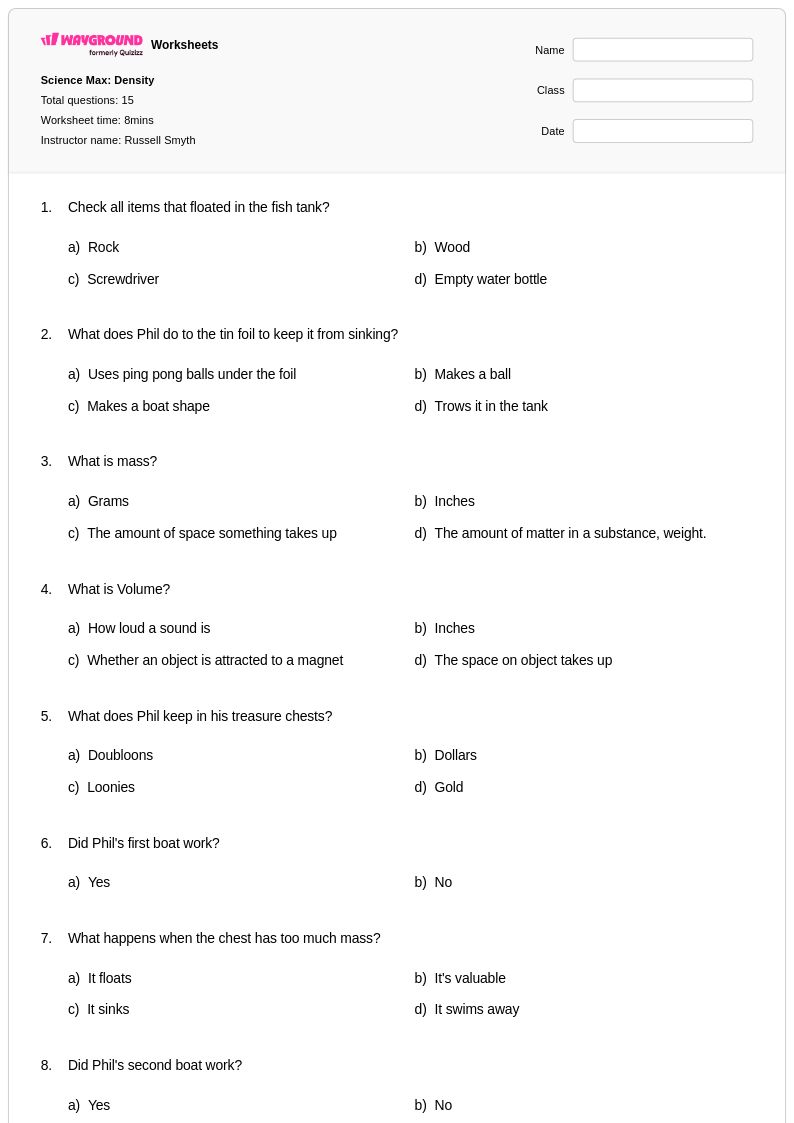
15 Q
3rd - 5th
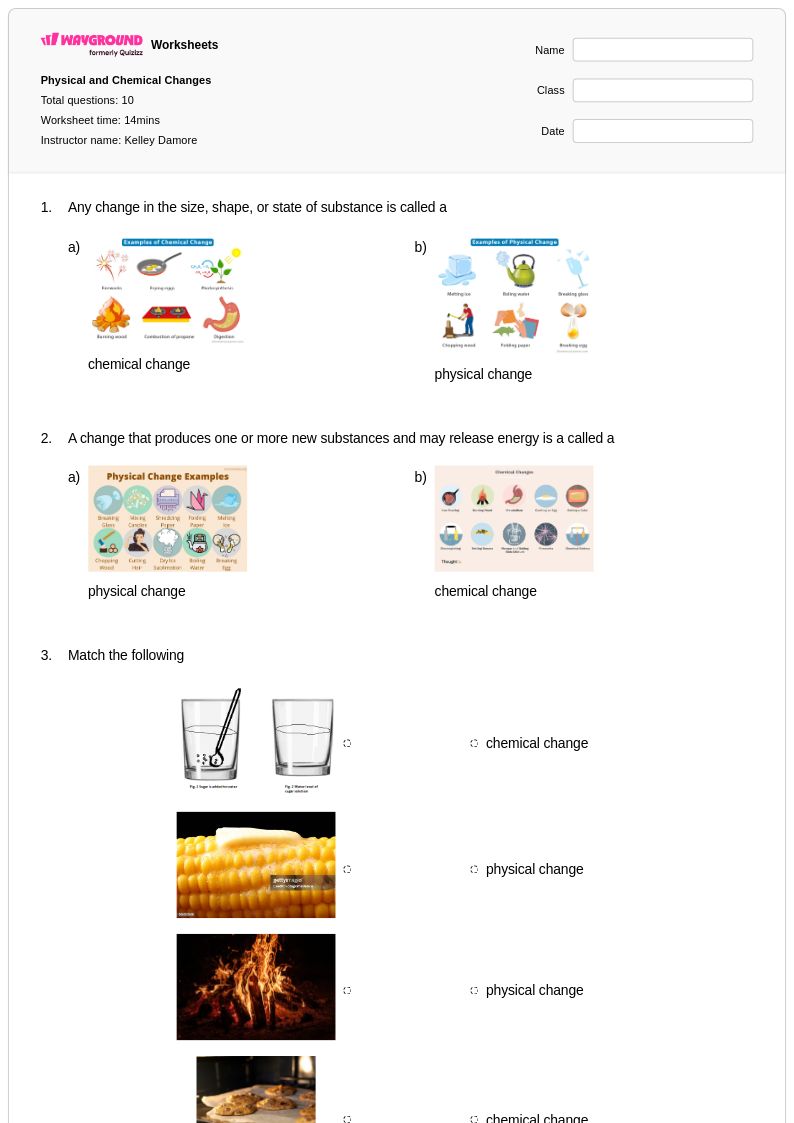
10 Q
4th
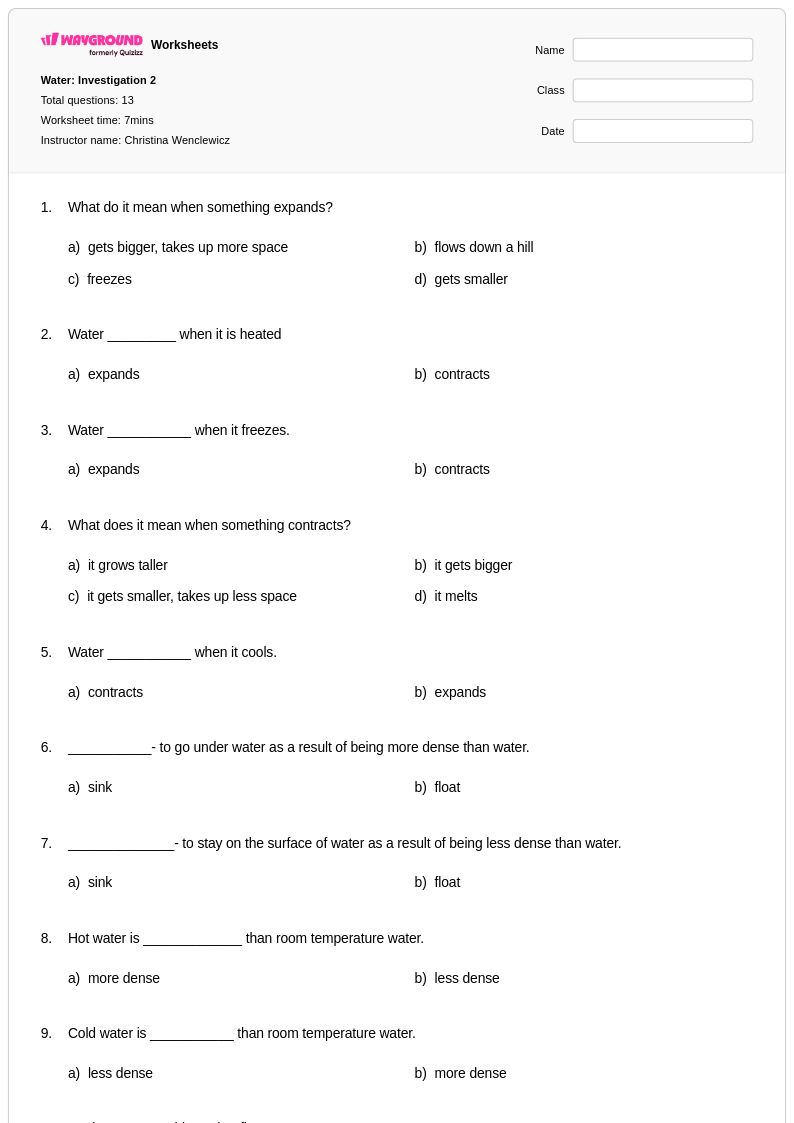
13 Q
3rd
Explore Other Subject Worksheets for kindergarten
Explore printable Sinking and Floating worksheets for Kindergarten
Sinking and floating worksheets for kindergarten students provide foundational experiences with fundamental physics concepts through age-appropriate, hands-on learning activities. These educational resources introduce young learners to the basic scientific principles that determine whether objects sink or float in water, helping them develop critical observation skills and early scientific reasoning abilities. The worksheets feature engaging practice problems that encourage students to make predictions, conduct simple experiments, and record their findings about various materials and objects. Each printable resource includes clear instructions and visual aids that support emergent readers, while comprehensive answer keys enable teachers and parents to guide learning effectively. These free educational materials strengthen essential skills including hypothesis formation, data collection, and basic classification, all presented in formats that capture kindergarten students' natural curiosity about the physical world around them.
Wayground, formerly Quizizz, empowers educators with an extensive collection of teacher-created sinking and floating worksheets specifically designed for kindergarten science instruction. The platform's millions of curated resources undergo careful review to ensure age-appropriate content that aligns with early childhood science standards, while advanced search and filtering capabilities help teachers quickly locate materials that match their specific classroom needs. These differentiation tools allow educators to customize worksheets for diverse learning styles and ability levels, supporting both remediation for students who need additional practice and enrichment for those ready for extended challenges. Available in both printable pdf formats and interactive digital versions, these resources provide maximum flexibility for lesson planning, independent practice sessions, and small group activities. Teachers can seamlessly integrate these materials into their existing curriculum to reinforce scientific thinking skills while building students' confidence in making observations and drawing conclusions about fundamental physics concepts.
FAQs
How do I teach sinking and floating to elementary students?
What exercises help students practice buoyancy and density concepts?
What mistakes do students commonly make when learning about sinking and floating?
How can I differentiate sinking and floating instruction for students at different skill levels?
How do I use Wayground's sinking and floating worksheets in my classroom?