Free Printable Sinking and Floating Worksheets for Grade 5
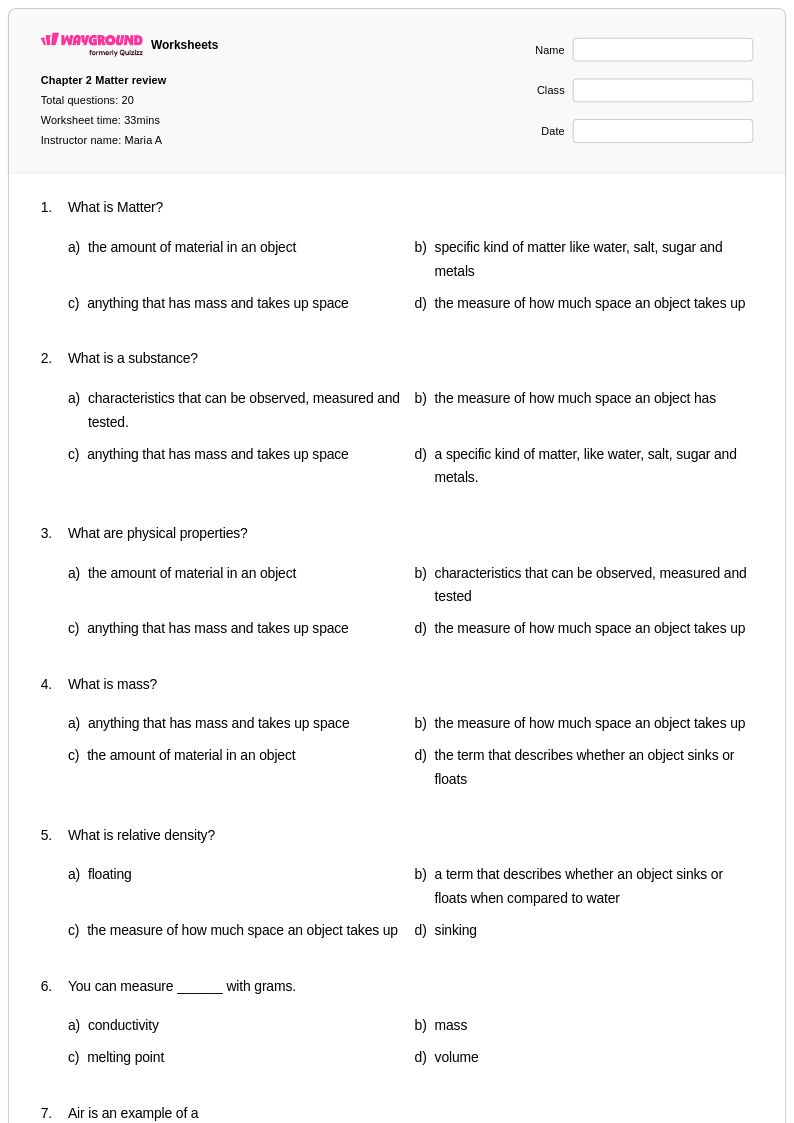
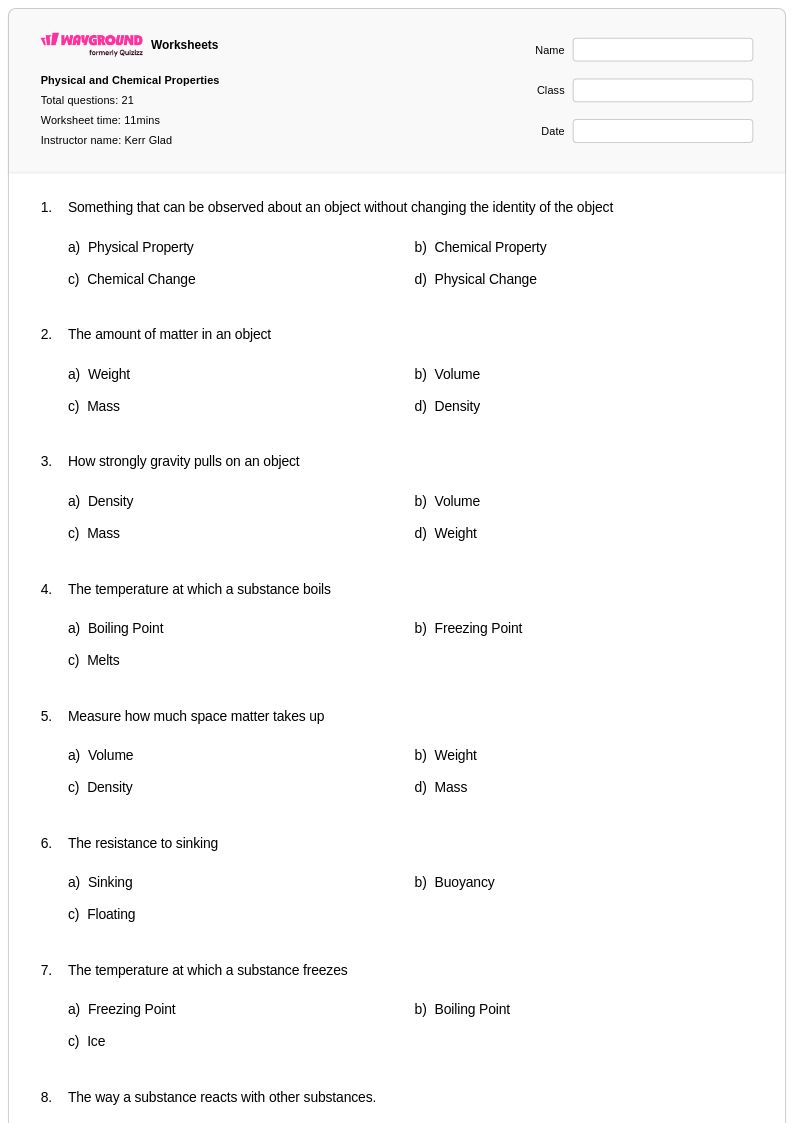
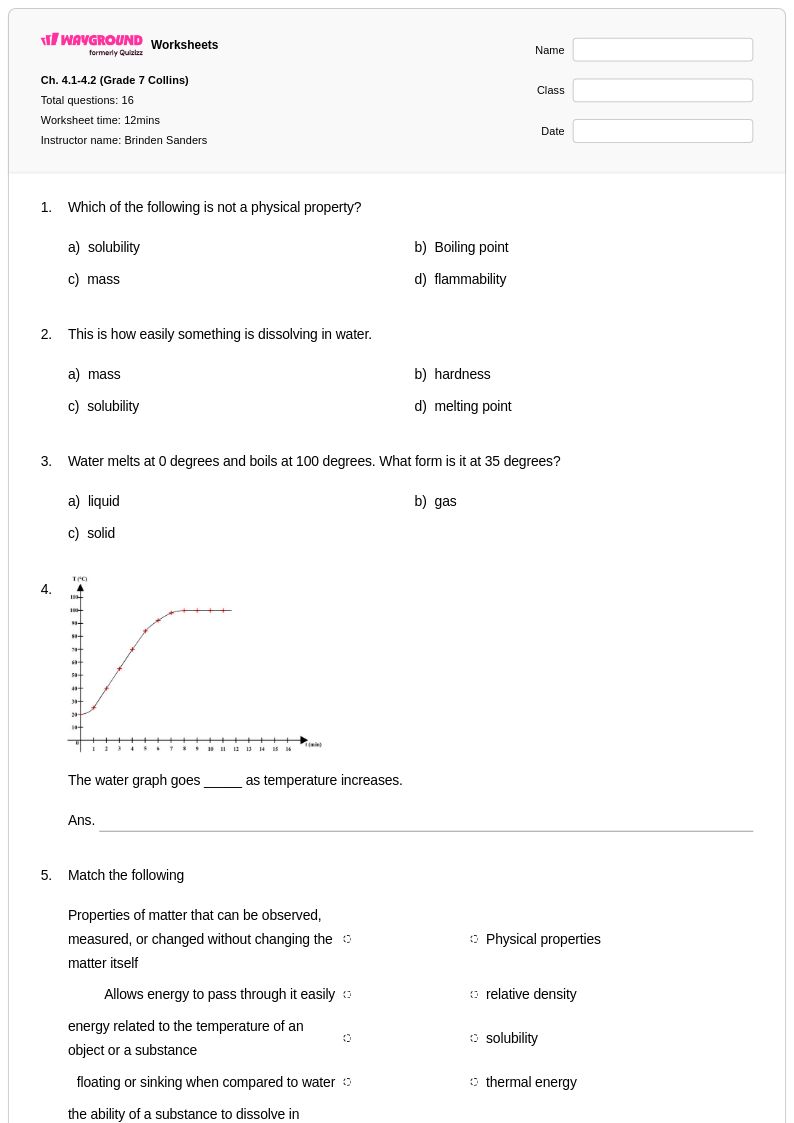
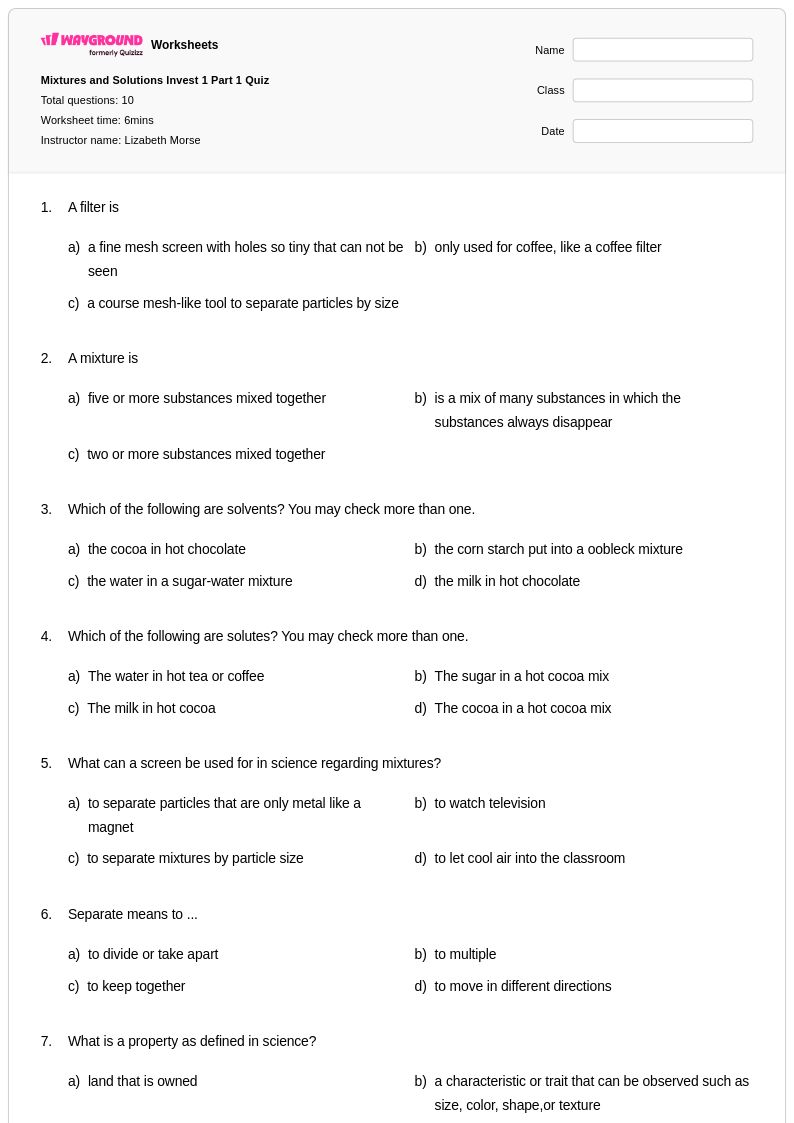
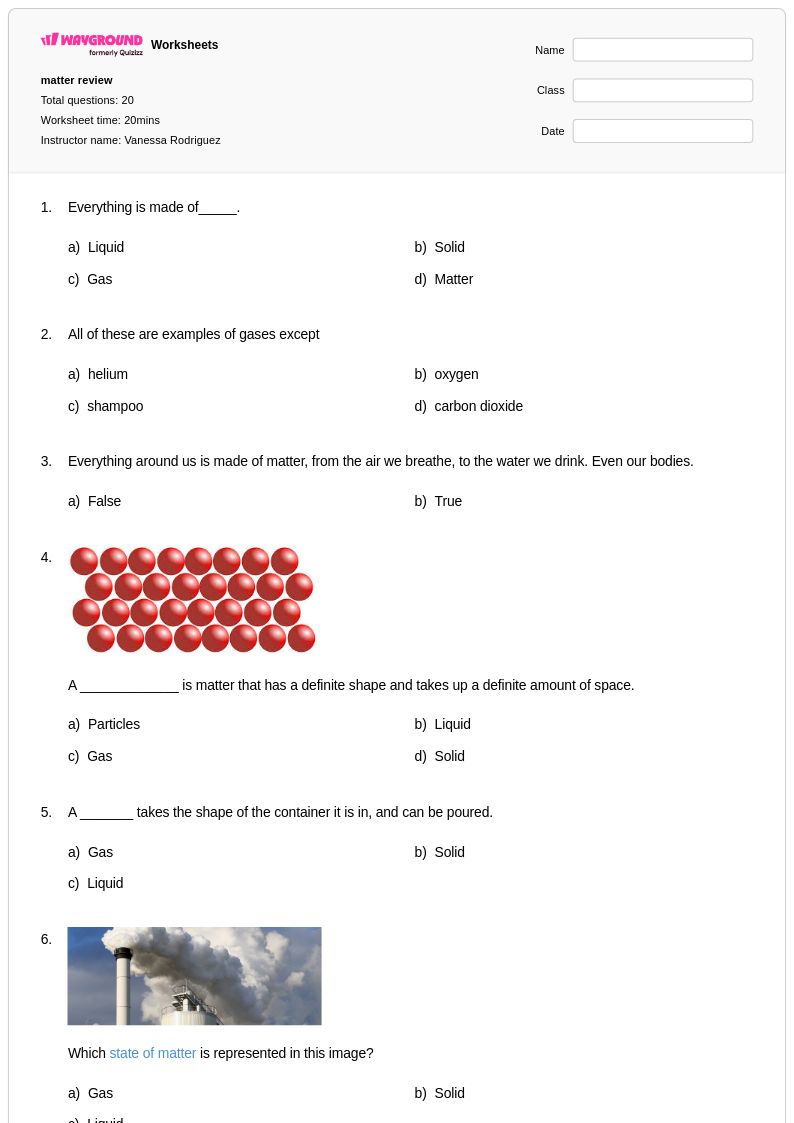
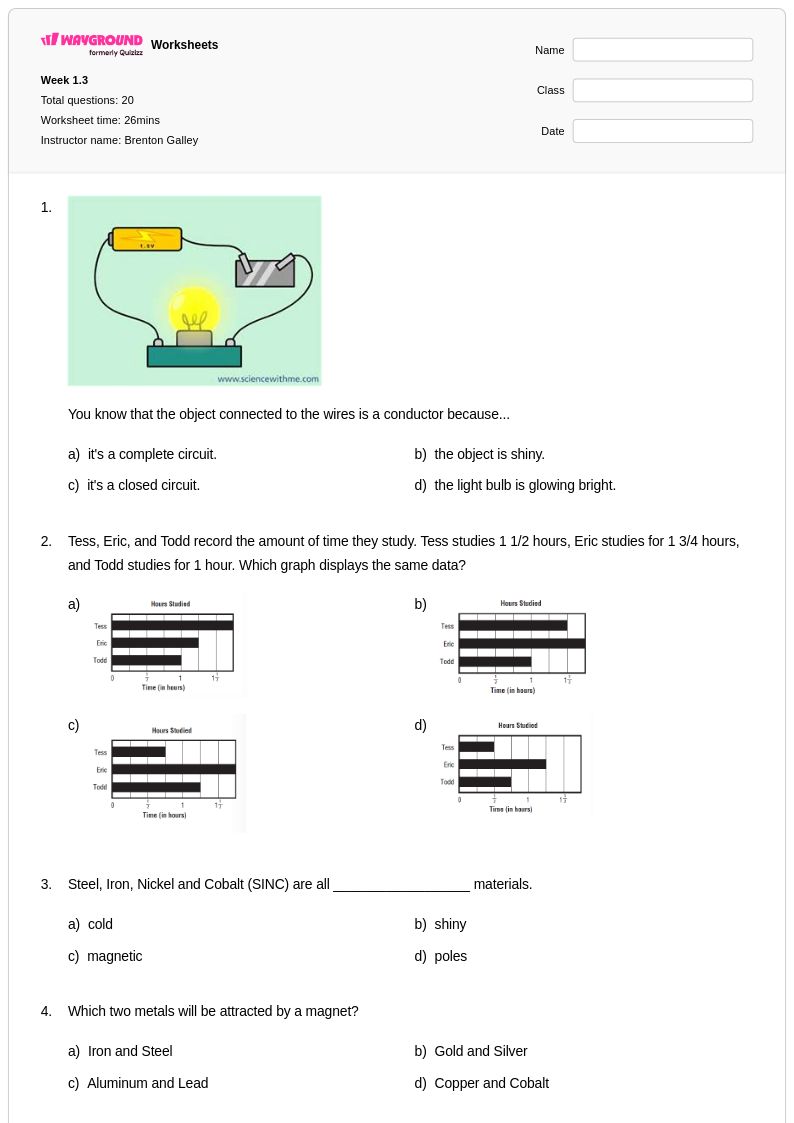
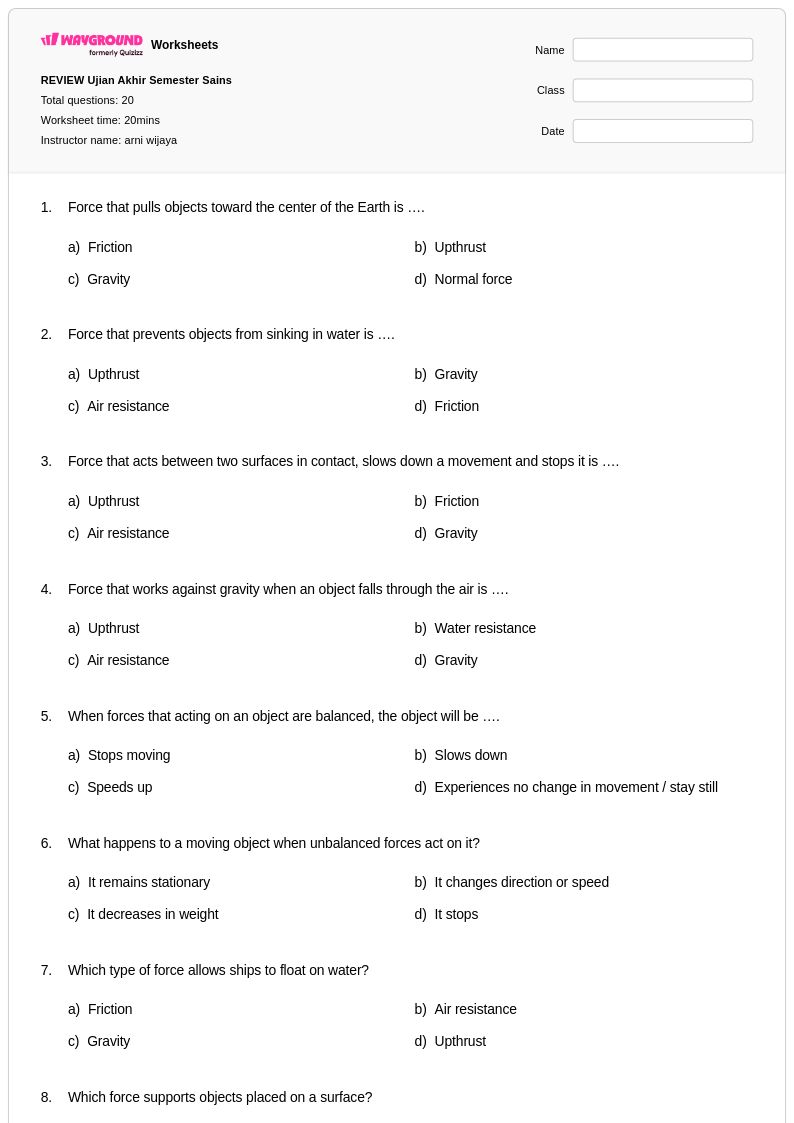
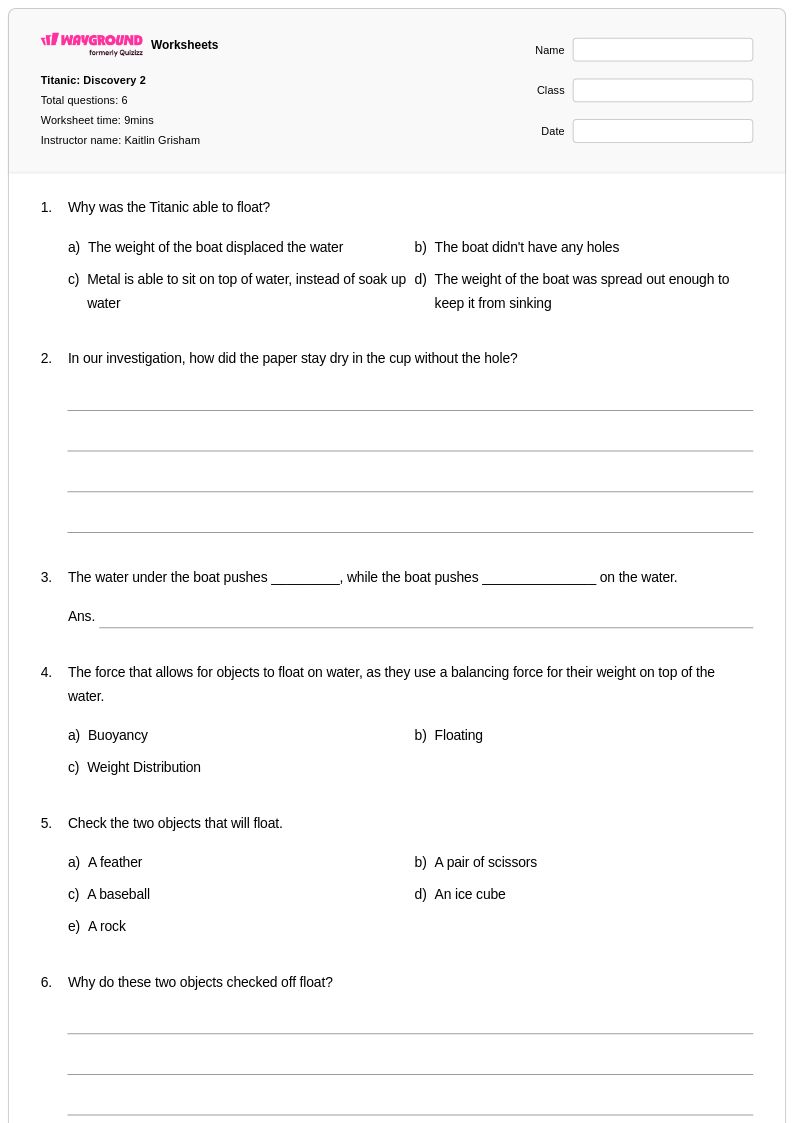
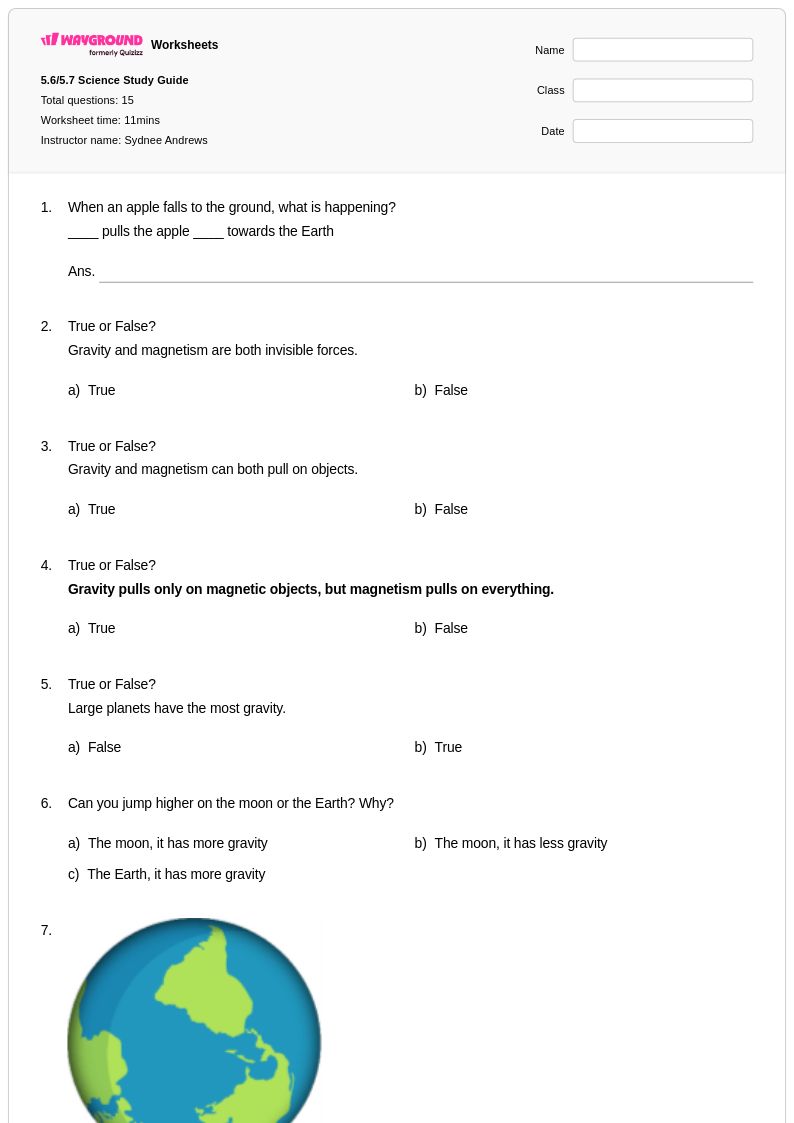
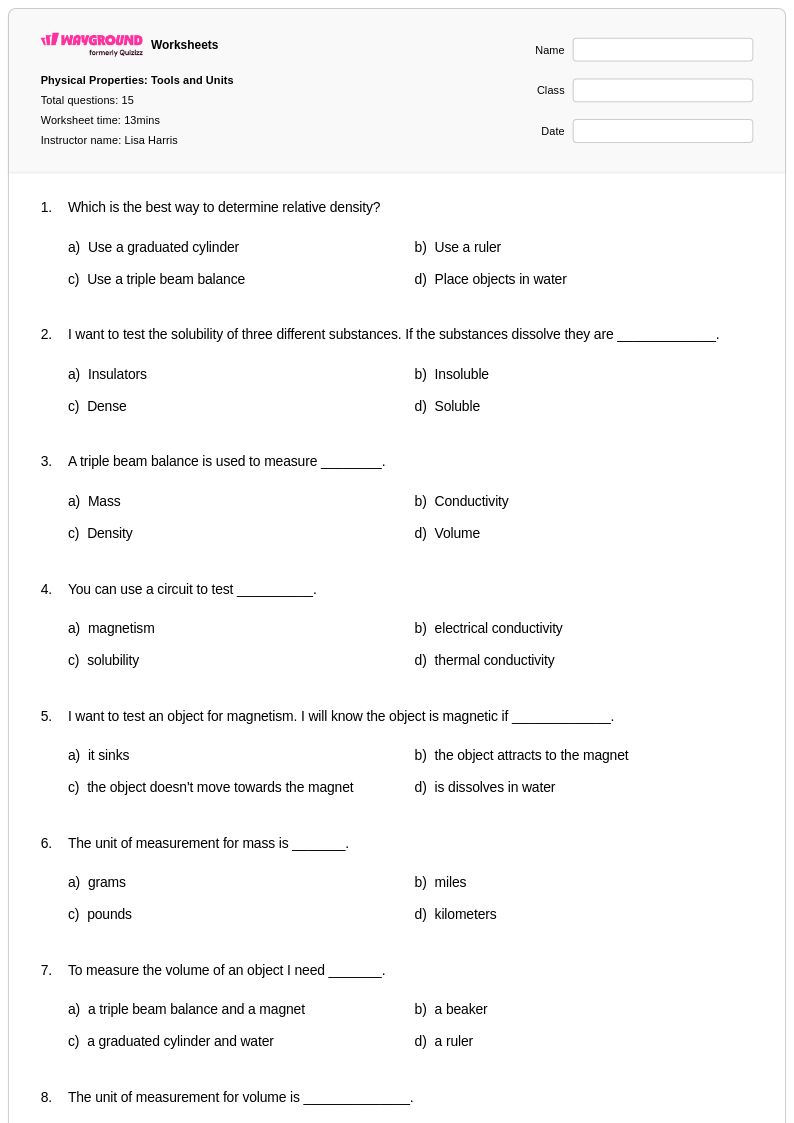
Grade 5 sinking and floating worksheets from Wayground help students explore density and buoyancy through engaging printables, practice problems, and comprehensive answer keys in convenient PDF format.
Explore printable Sinking and Floating worksheets for Grade 5
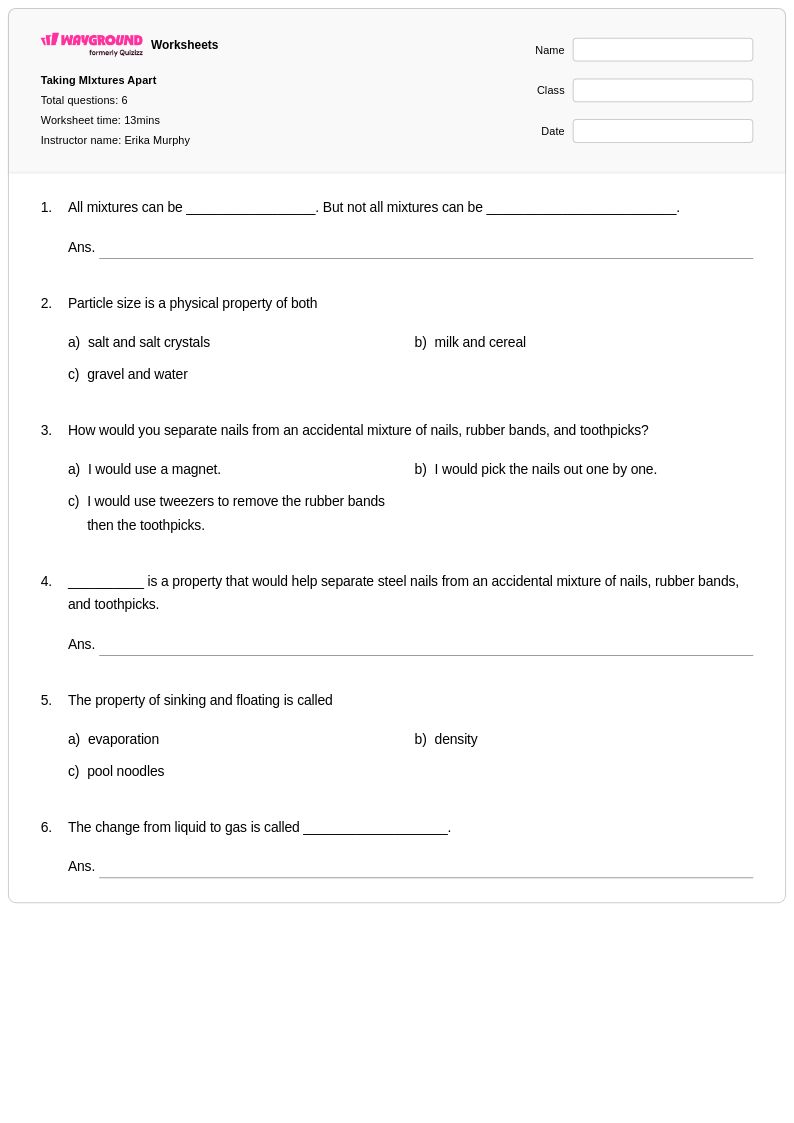
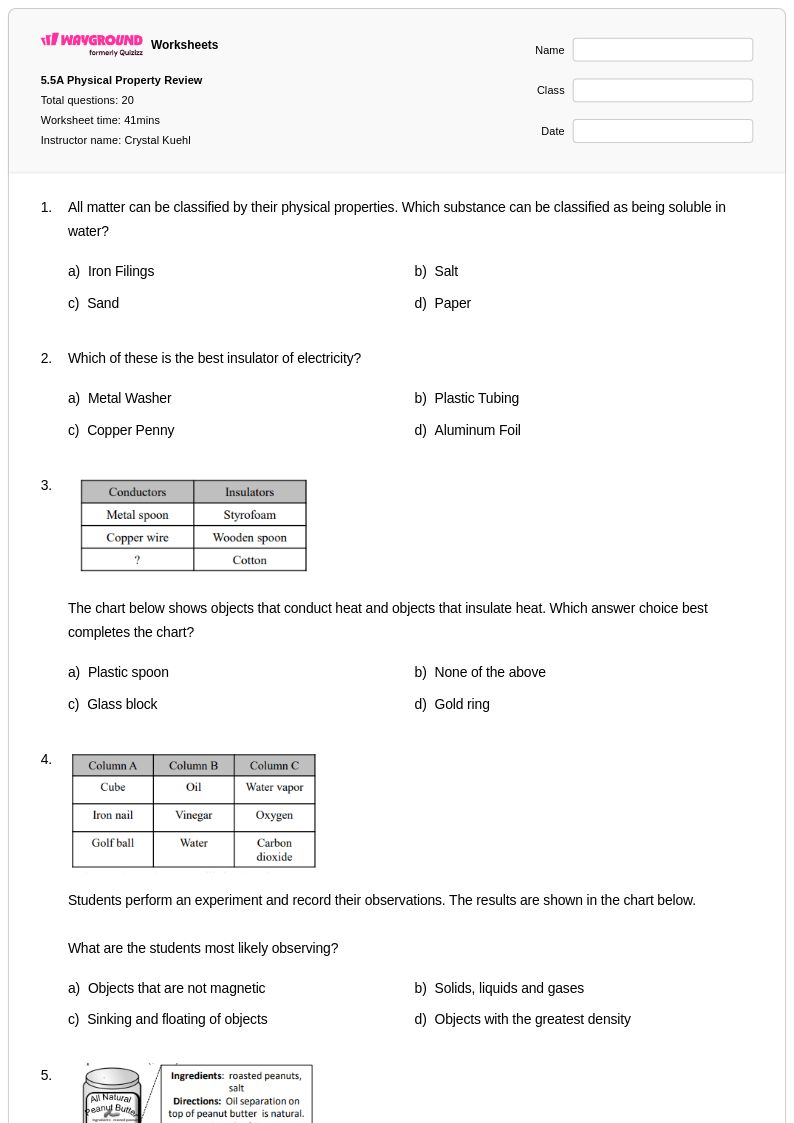
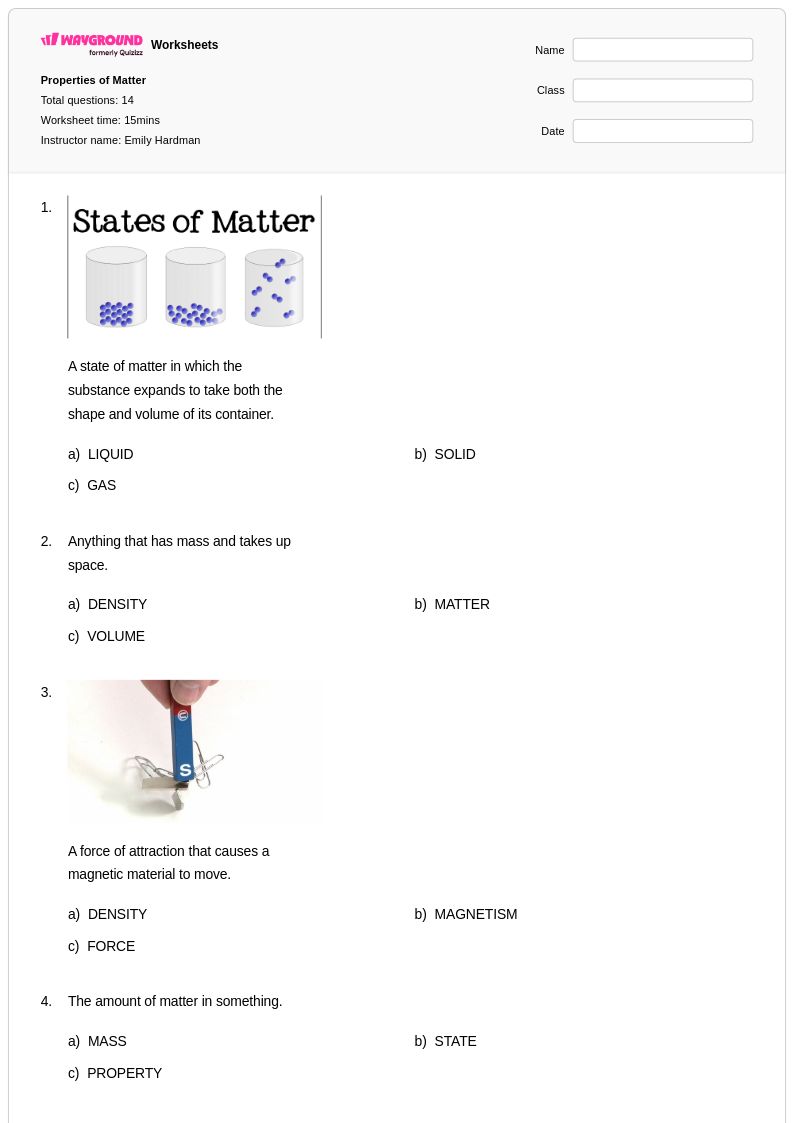
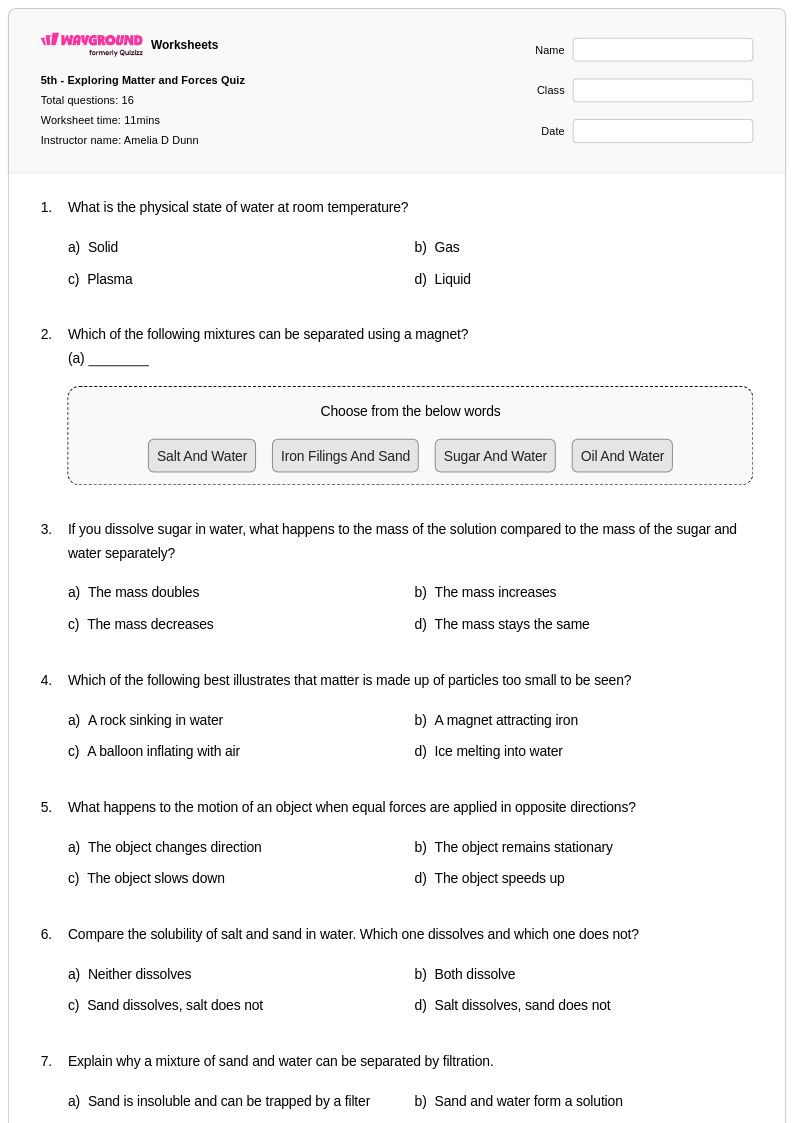
Sinking and floating worksheets for Grade 5 students through Wayground (formerly Quizizz) provide comprehensive practice with fundamental physics concepts that form the foundation of scientific inquiry. These carefully designed educational resources help students develop critical thinking skills as they explore density, buoyancy, and material properties through hands-on investigations and theoretical applications. The worksheets strengthen observation skills, hypothesis formation, and data analysis abilities while guiding students through experiments that demonstrate why certain objects sink while others float. Each practice problem set includes detailed answer keys that support both independent learning and teacher-guided instruction, with free printables available in convenient pdf format for seamless classroom integration and home study support.
Wayground (formerly Quizizz) empowers educators with access to millions of teacher-created sinking and floating worksheet collections that streamline lesson planning and enhance student engagement. The platform's robust search and filtering capabilities allow teachers to quickly locate age-appropriate materials aligned with Grade 5 science standards, while differentiation tools enable customization for diverse learning needs and ability levels. These versatile resources are available in both printable and digital formats, including downloadable pdf versions, making them ideal for traditional classroom instruction, remote learning environments, and hybrid educational models. Teachers can effectively use these comprehensive worksheet libraries for skill remediation, concept enrichment, formative assessment, and targeted practice sessions that reinforce understanding of density principles and scientific methodology.
FAQs
How do I teach sinking and floating to elementary students?
Start with hands-on prediction activities where students guess whether common objects will sink or float before testing them in water. Once students have observed results, introduce the concept of density as the key variable — objects less dense than water float, while denser objects sink. Connecting observations to Archimedes' principle helps students move from intuitive understanding to scientific reasoning.
What exercises help students practice buoyancy and density concepts?
Effective practice includes prediction tasks where students classify objects before testing, data analysis problems using experimental results, and scenario-based questions asking students to apply Archimedes' principle to real-world situations. Worksheets that require students to compare object density to fluid density reinforce the core relationship underlying all buoyancy behavior.
What mistakes do students commonly make when learning about sinking and floating?
The most common misconception is that heavier objects always sink and lighter objects always float. Students frequently confuse mass with density, leading them to incorrectly predict outcomes for large, low-density objects like wood logs or small, high-density objects like metal coins. Explicit instruction on the density-to-fluid-density comparison, rather than mass alone, is essential to correcting this error.
How can I differentiate sinking and floating instruction for students at different skill levels?
For struggling learners, focus on concrete classification tasks with familiar objects before introducing density calculations. Advanced students can be challenged with problems involving multiple fluids of different densities or layered liquid scenarios. Wayground's differentiation tools allow teachers to customize worksheets for varying skill levels, supporting both remediation and enrichment within the same classroom.
How do I use Wayground's sinking and floating worksheets in my classroom?
Wayground's sinking and floating worksheets are available as printable PDFs for traditional classroom use and in digital formats for technology-integrated environments, making them flexible for in-class activities, homework assignments, and assessment preparation. Teachers can also host worksheets as a live quiz on Wayground for real-time student engagement. Each worksheet includes a complete answer key, supporting both teacher-led review and independent student self-assessment.