
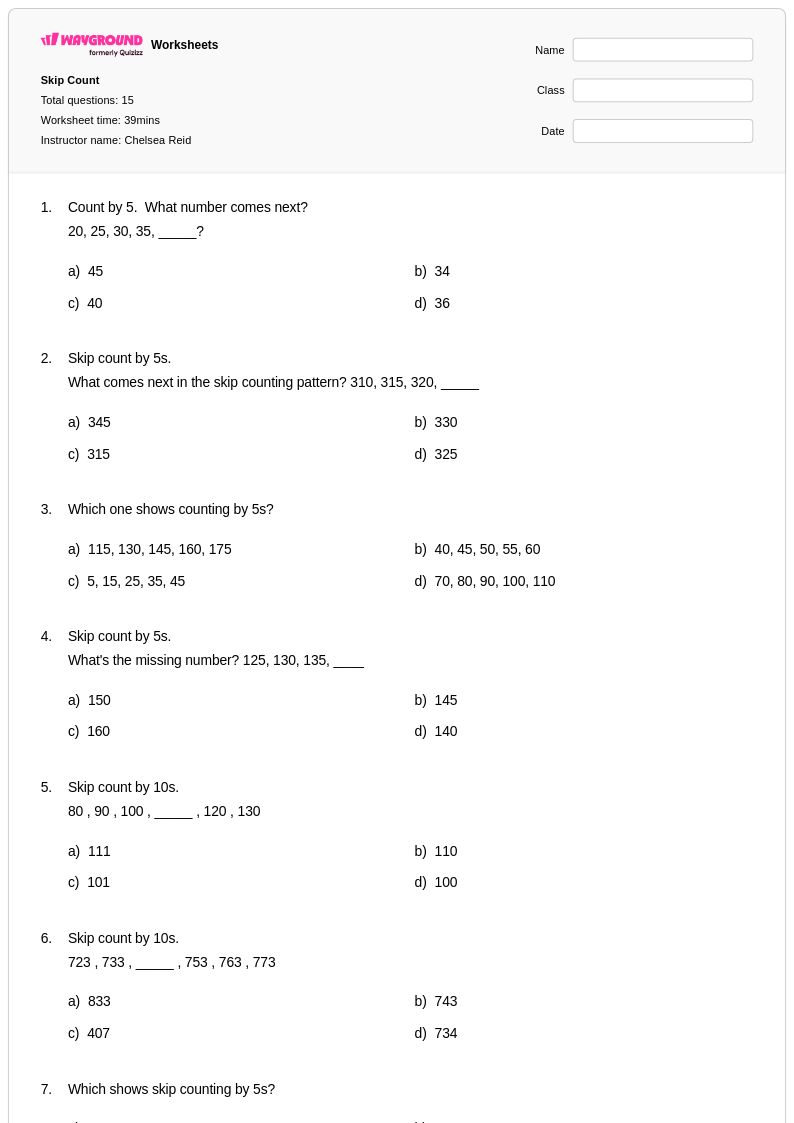
15 Q
1st - 3rd
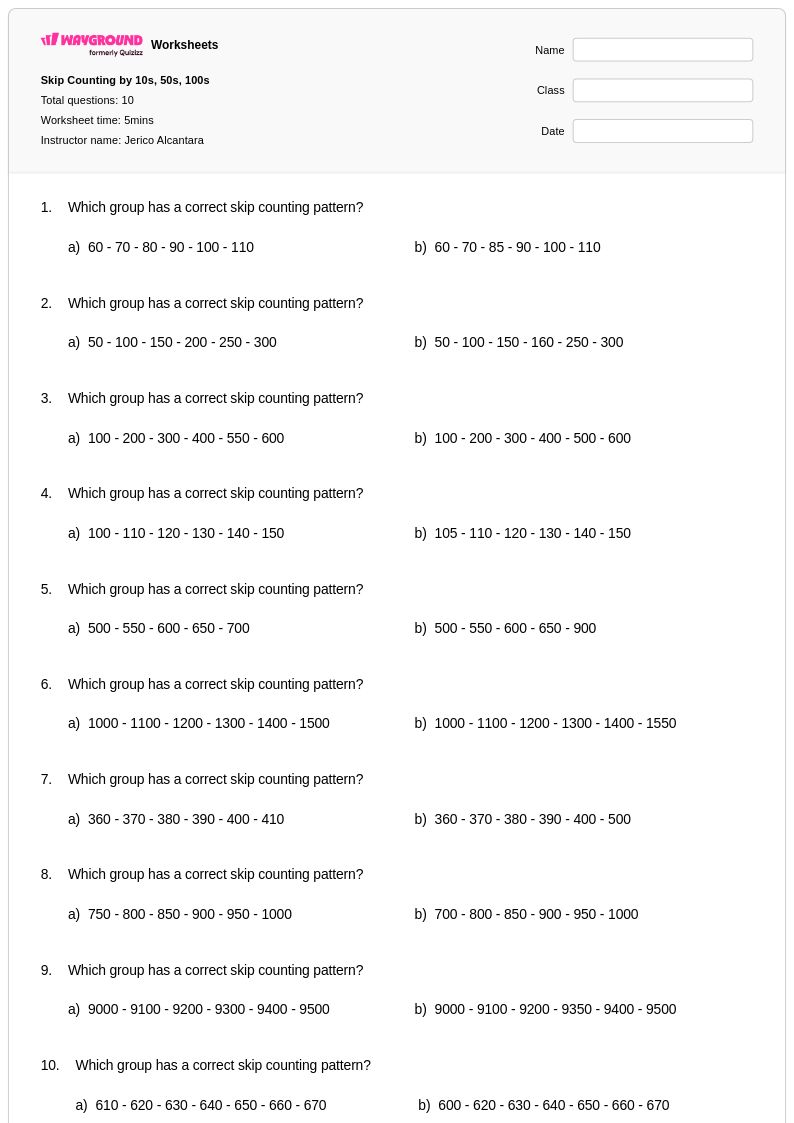
10 Q
1st - 3rd
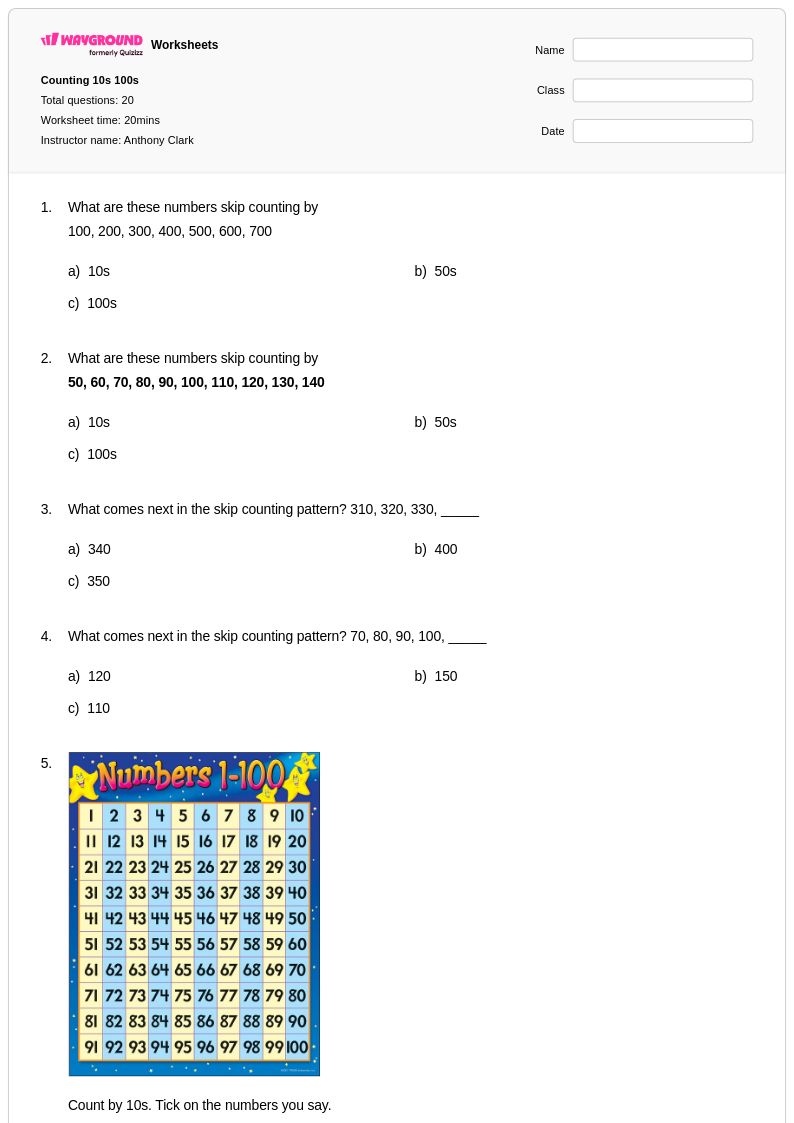
20 Q
2nd - Uni
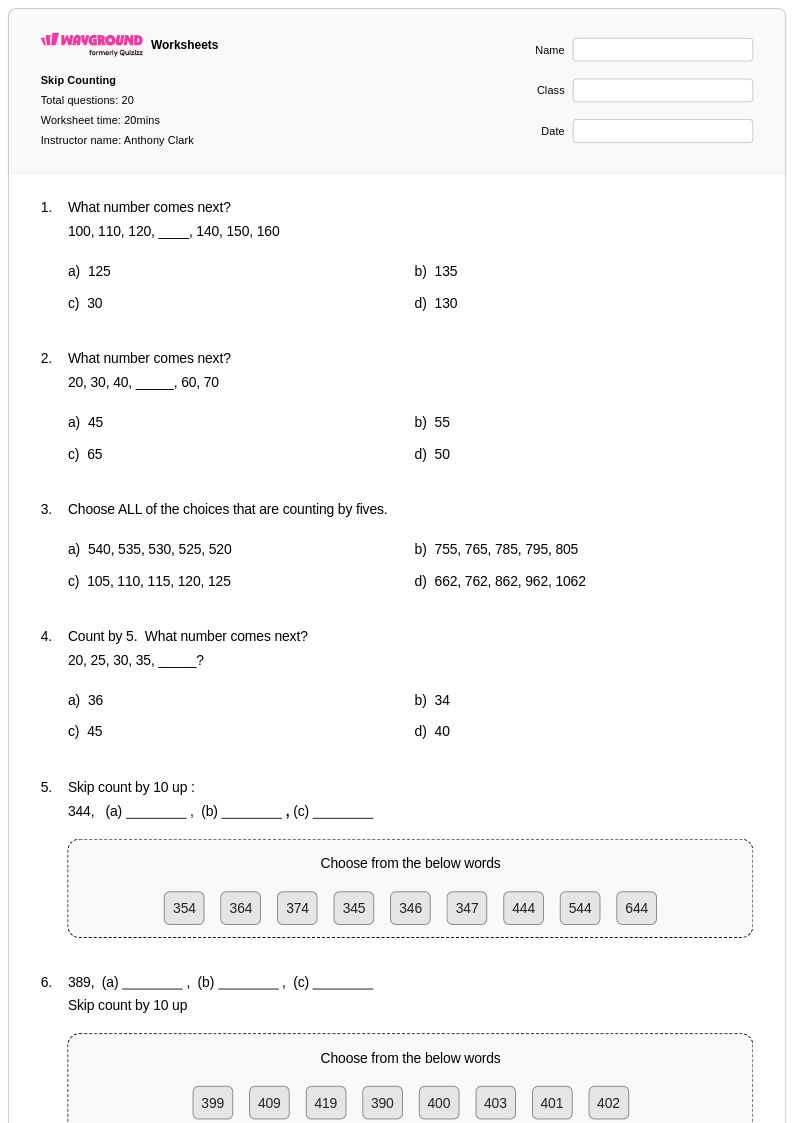
20 Q
2nd - Uni
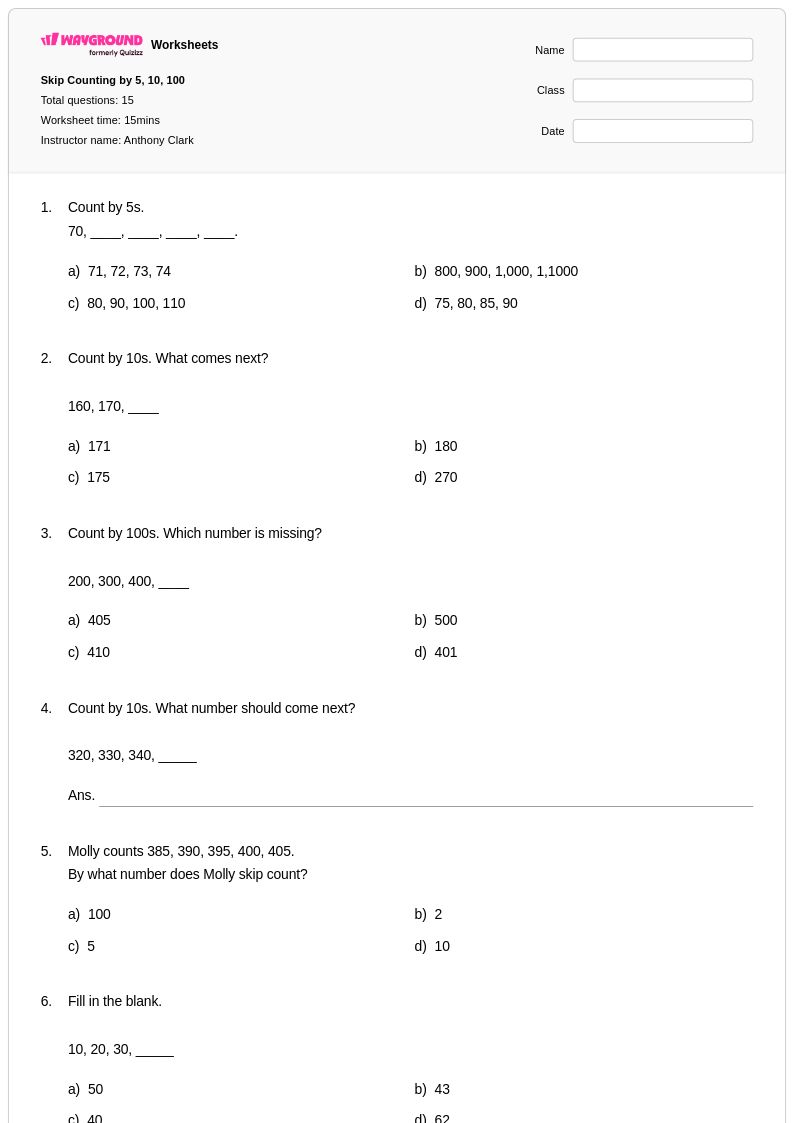
15 Q
2nd - Uni
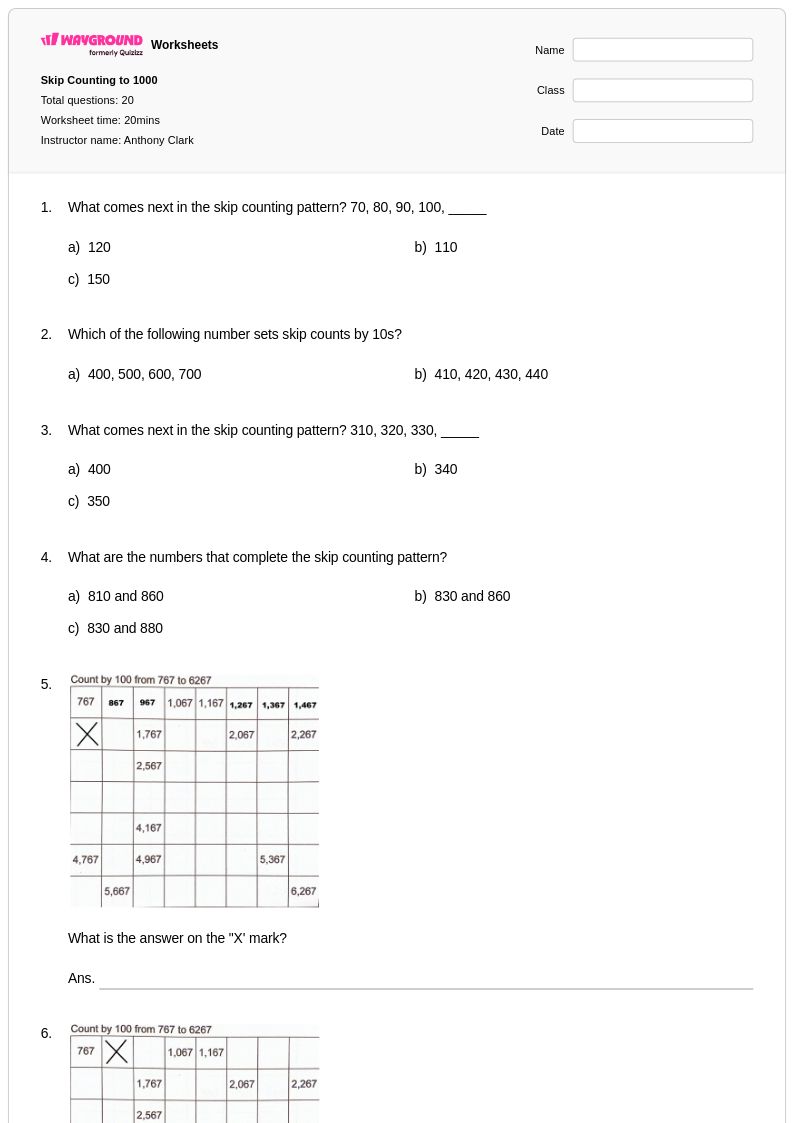
20 Q
2nd - Uni
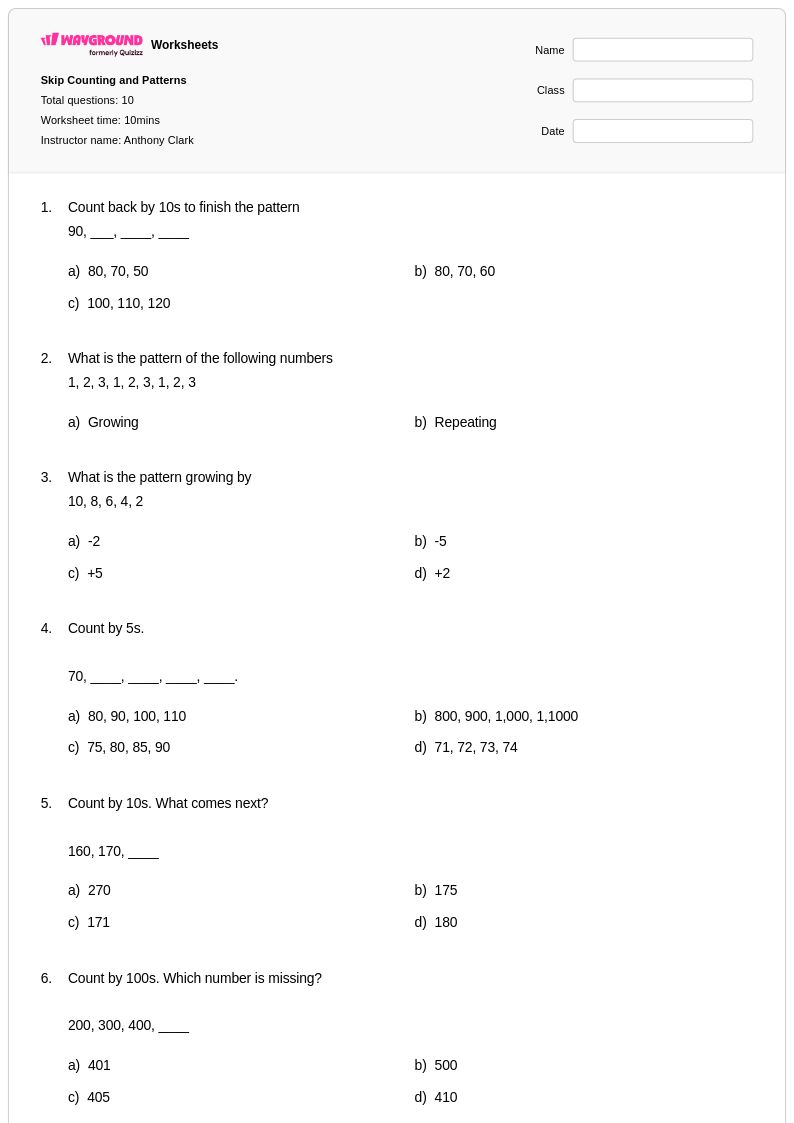
10 Q
2nd - Uni
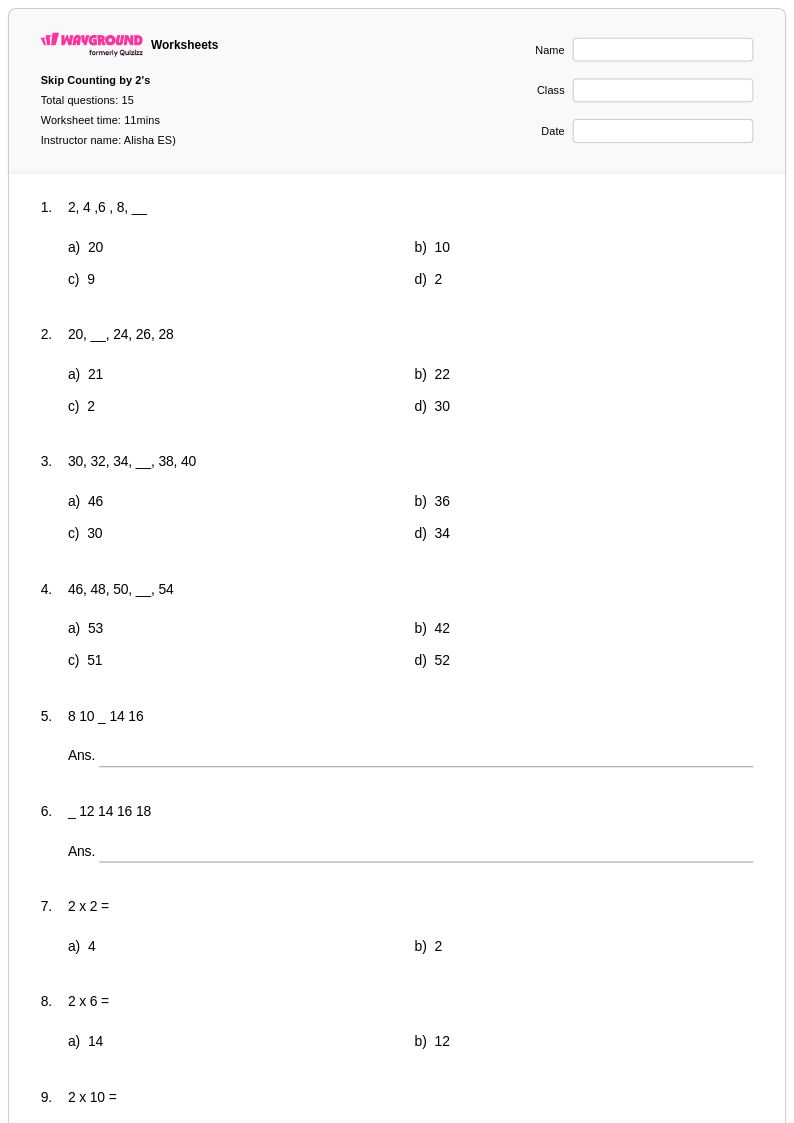
15 Q
3rd
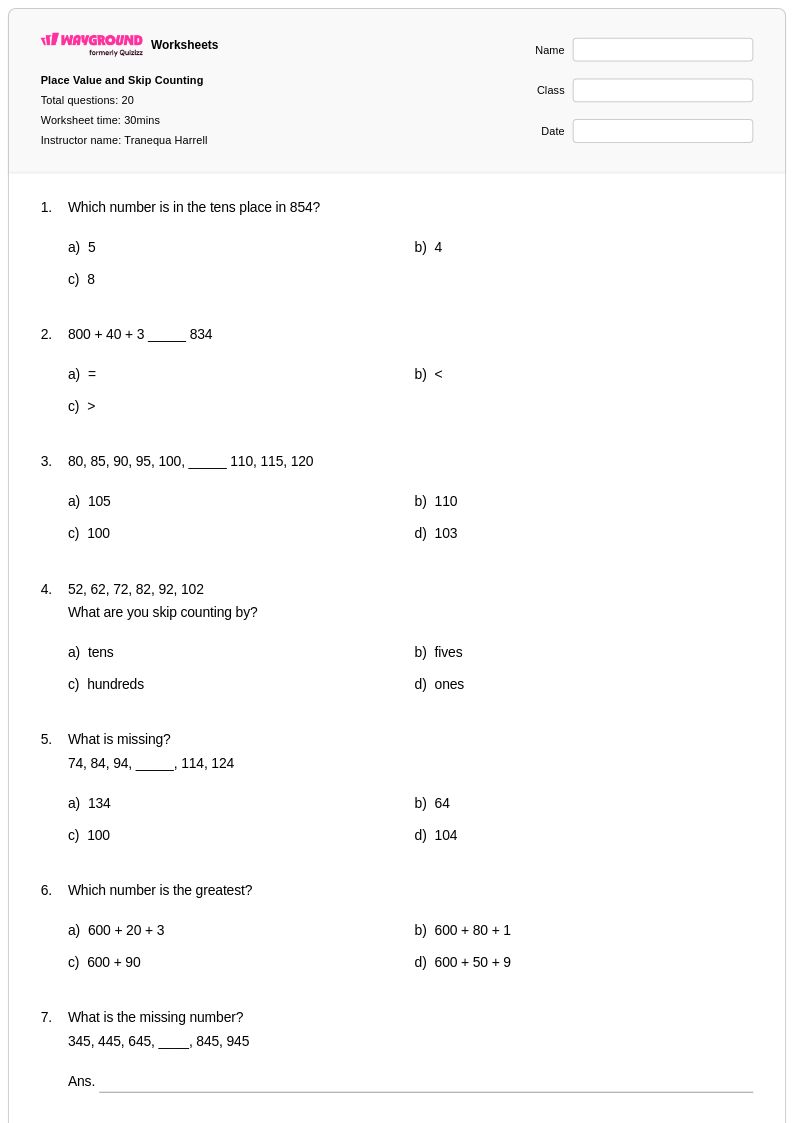
20 Q
2nd - Uni
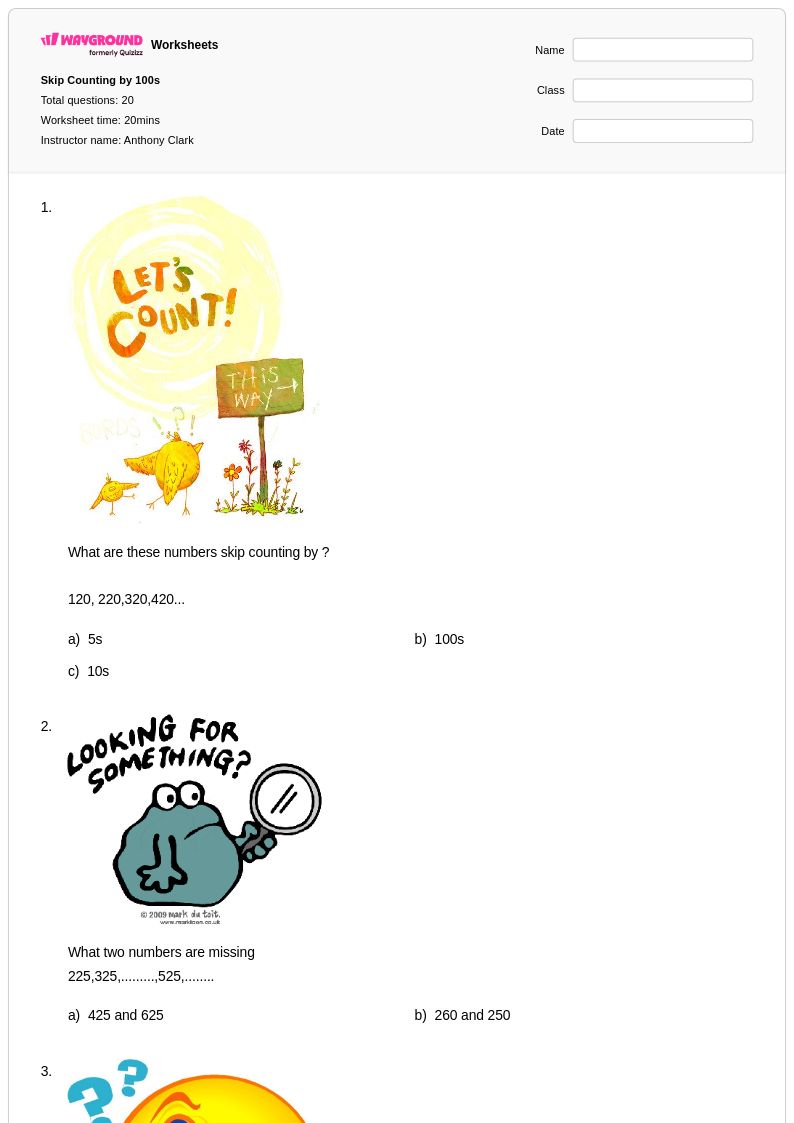
20 Q
2nd - Uni
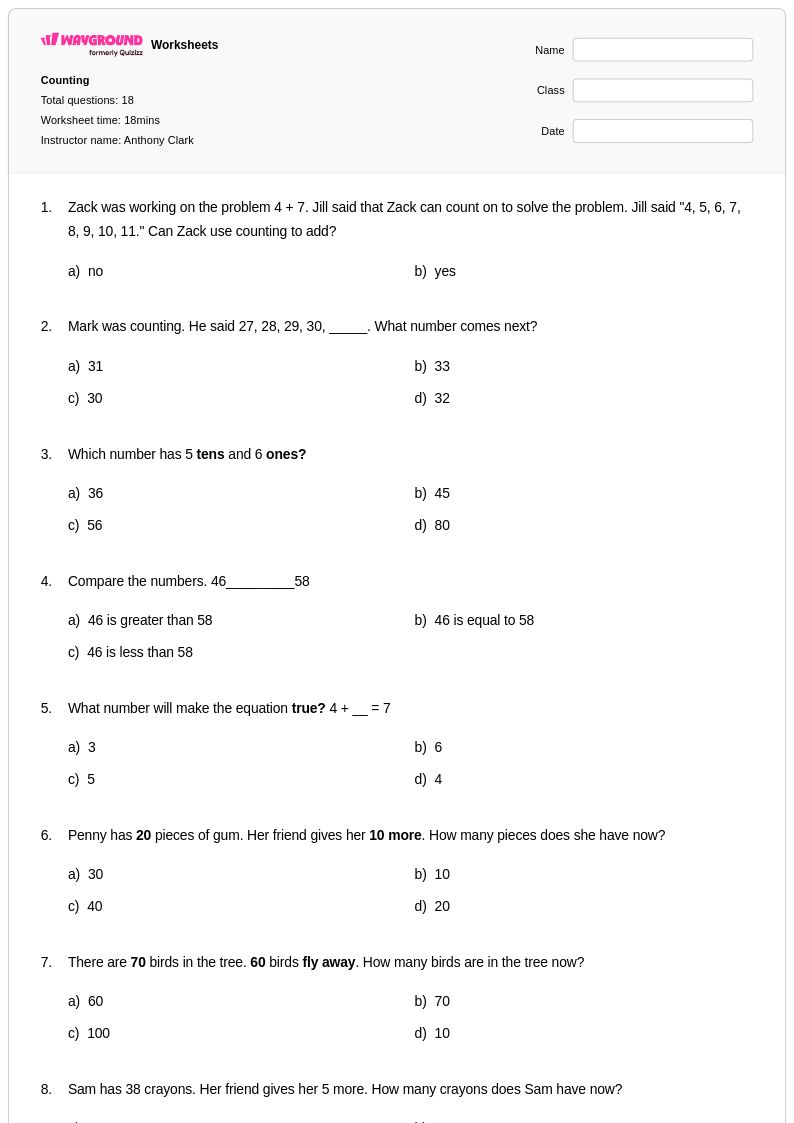
18 Q
1st - Uni
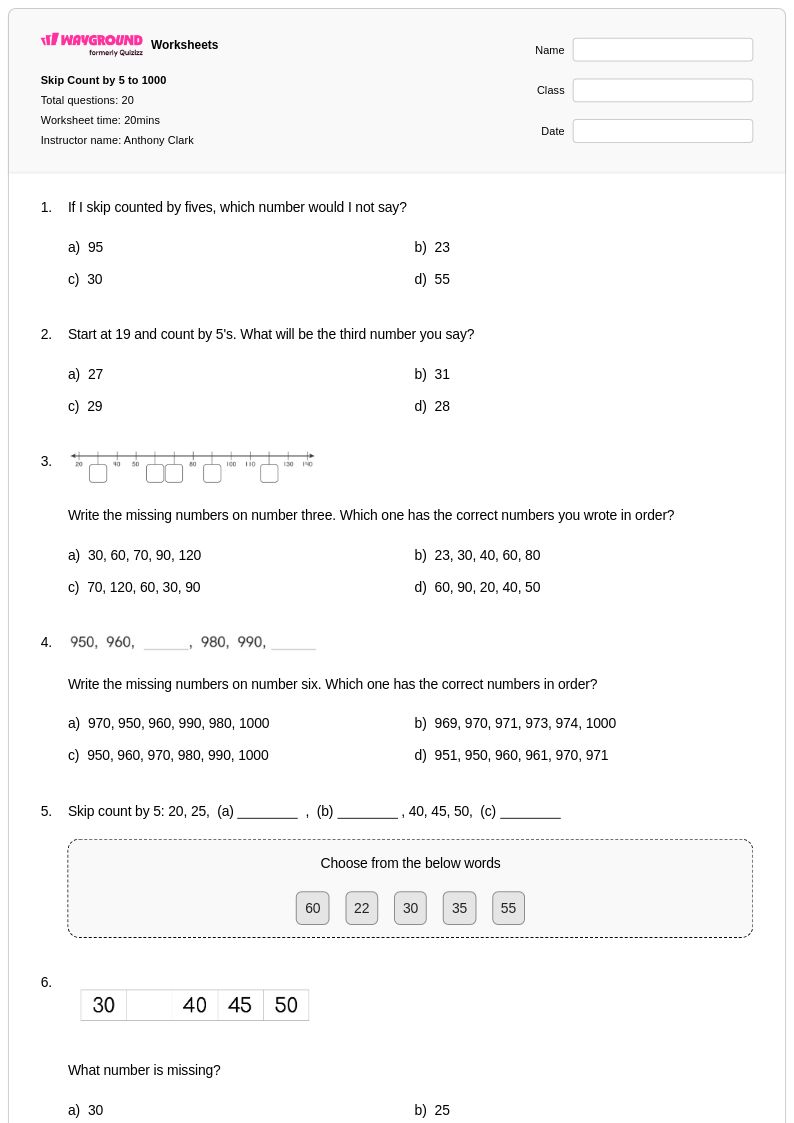
20 Q
3rd - Uni
20 Q
3rd - Uni
20 Q
2nd - Uni
15 Q
2nd - Uni
20 Q
2nd - Uni
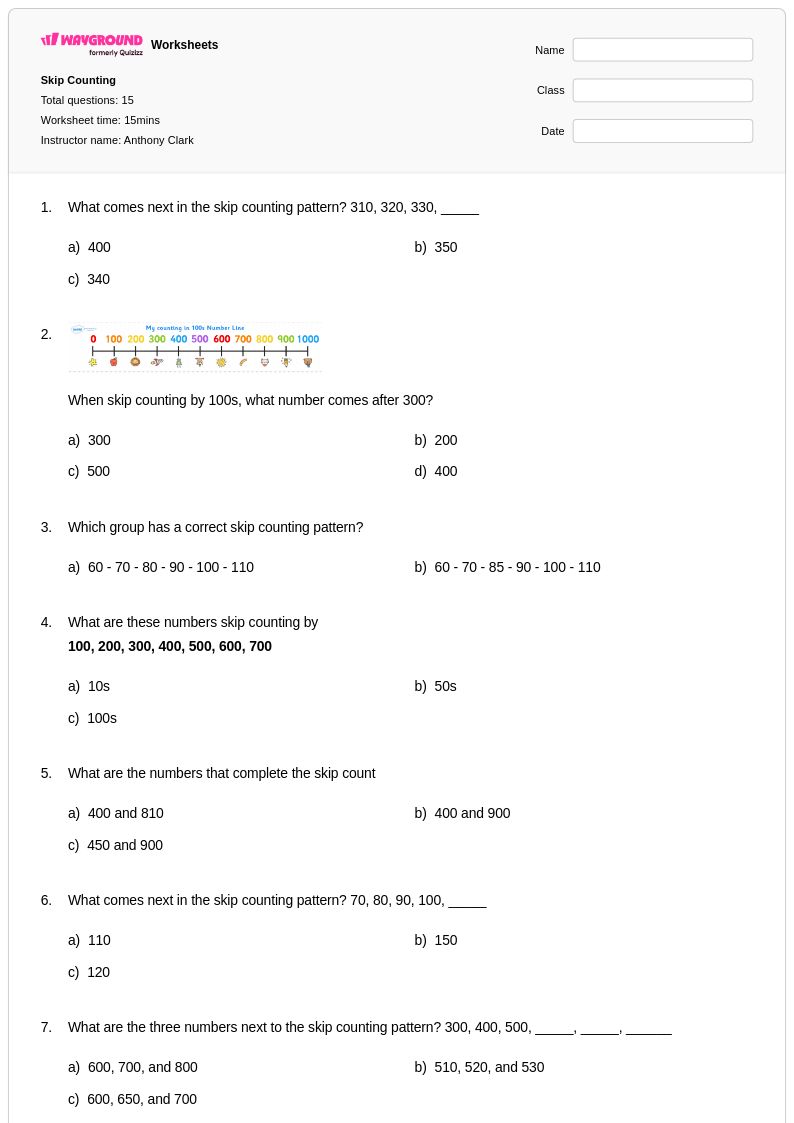
15 Q
2nd - Uni
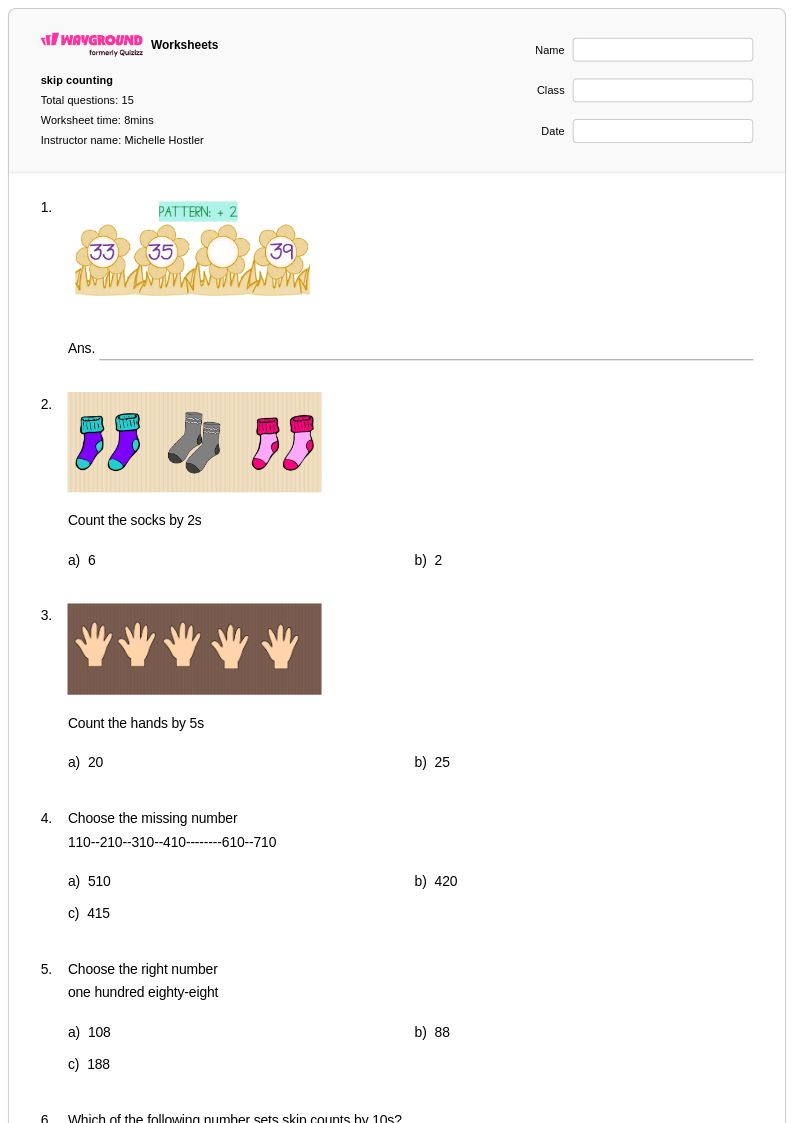
15 Q
2nd - 4th
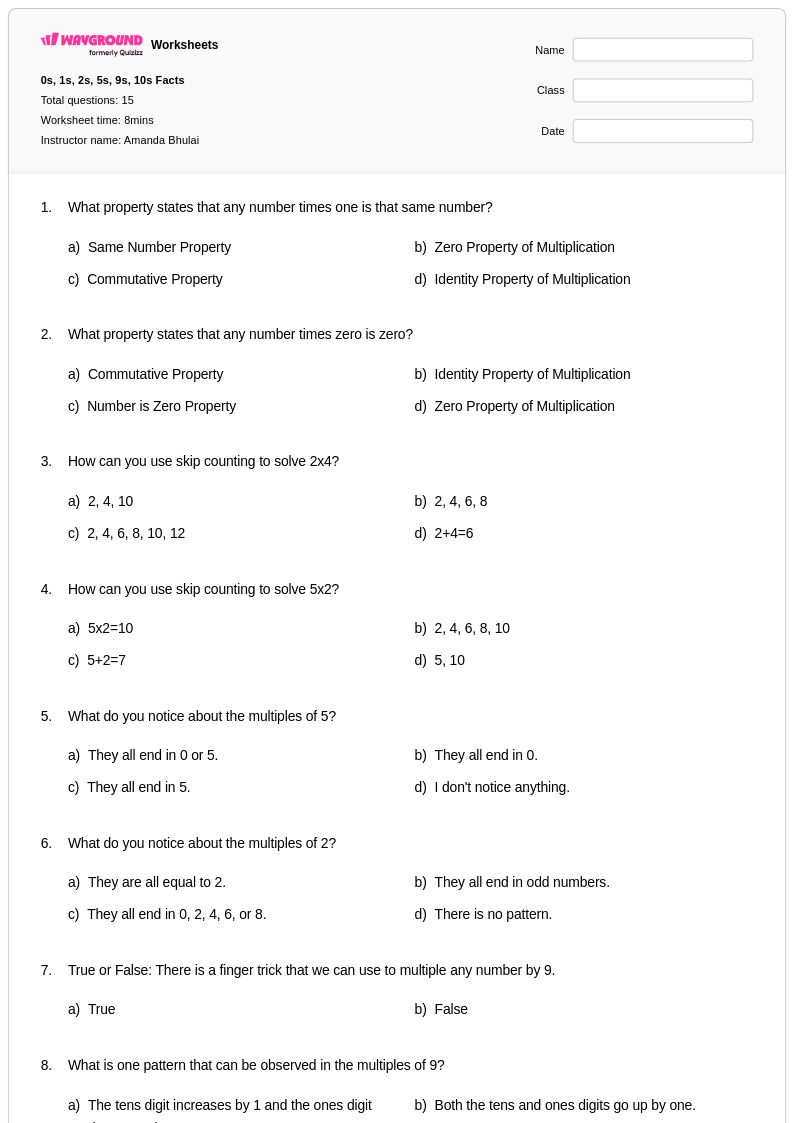
15 Q
3rd
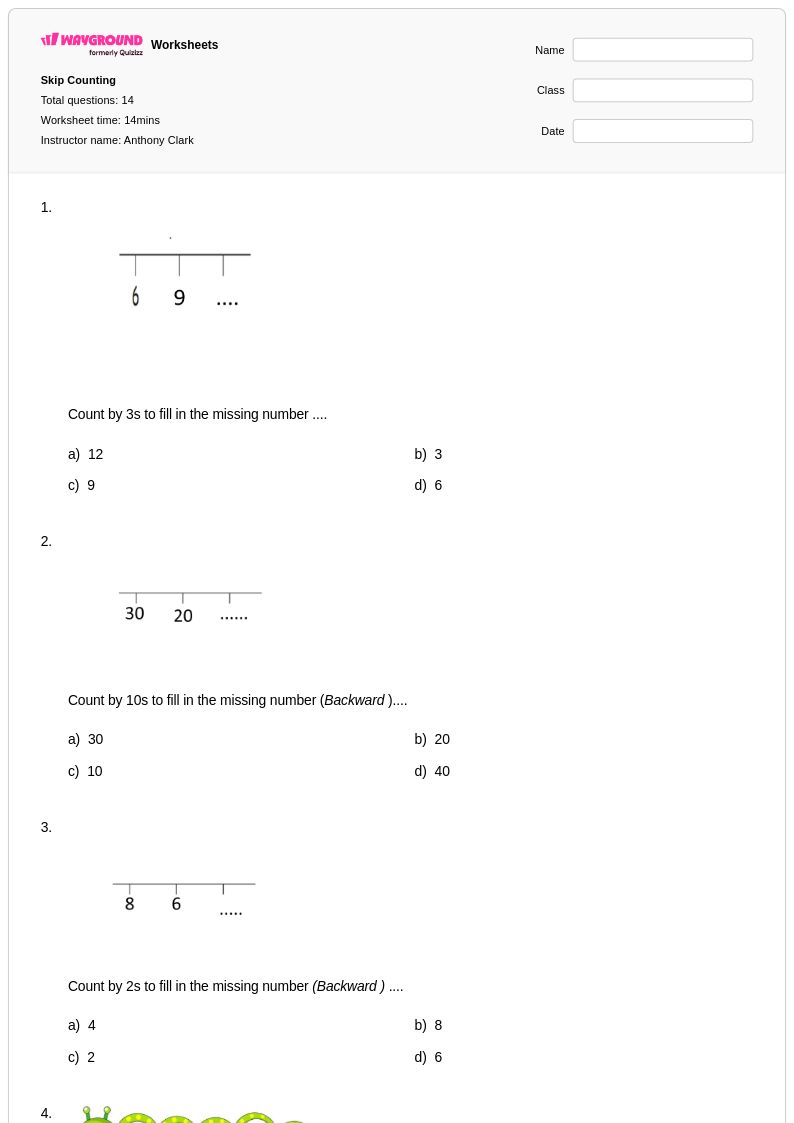
14 Q
2nd - Uni
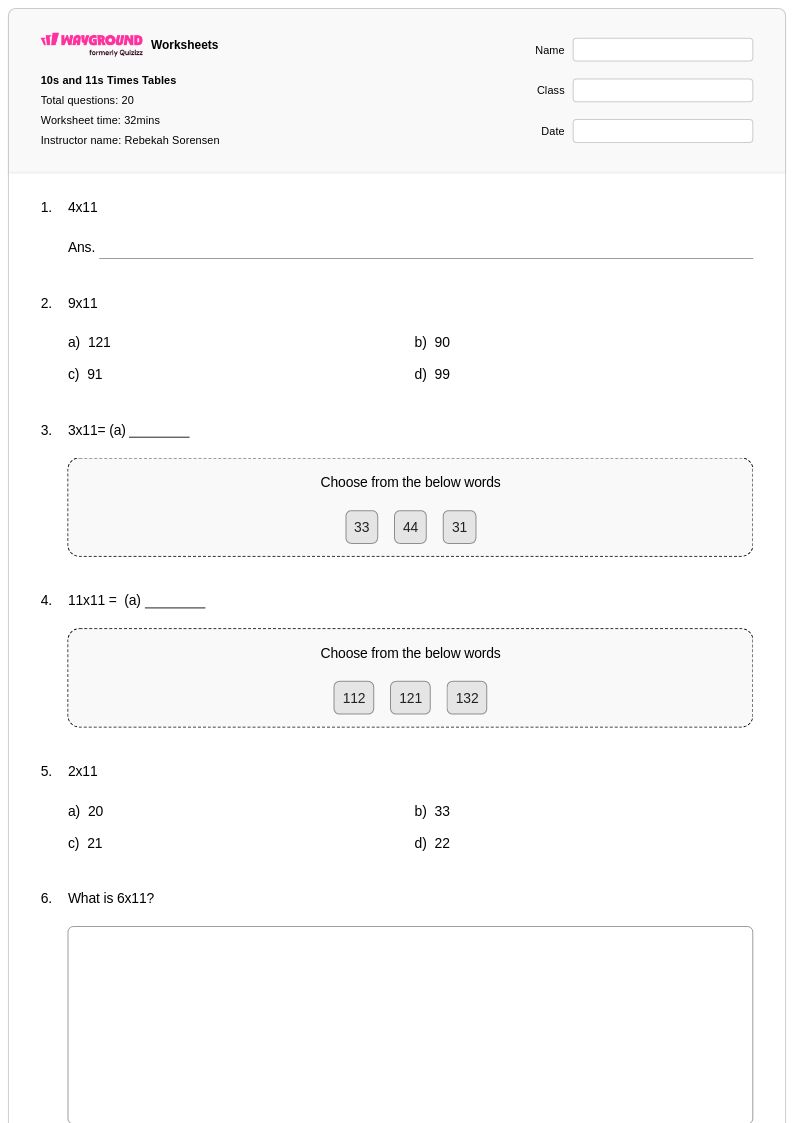
20 Q
3rd
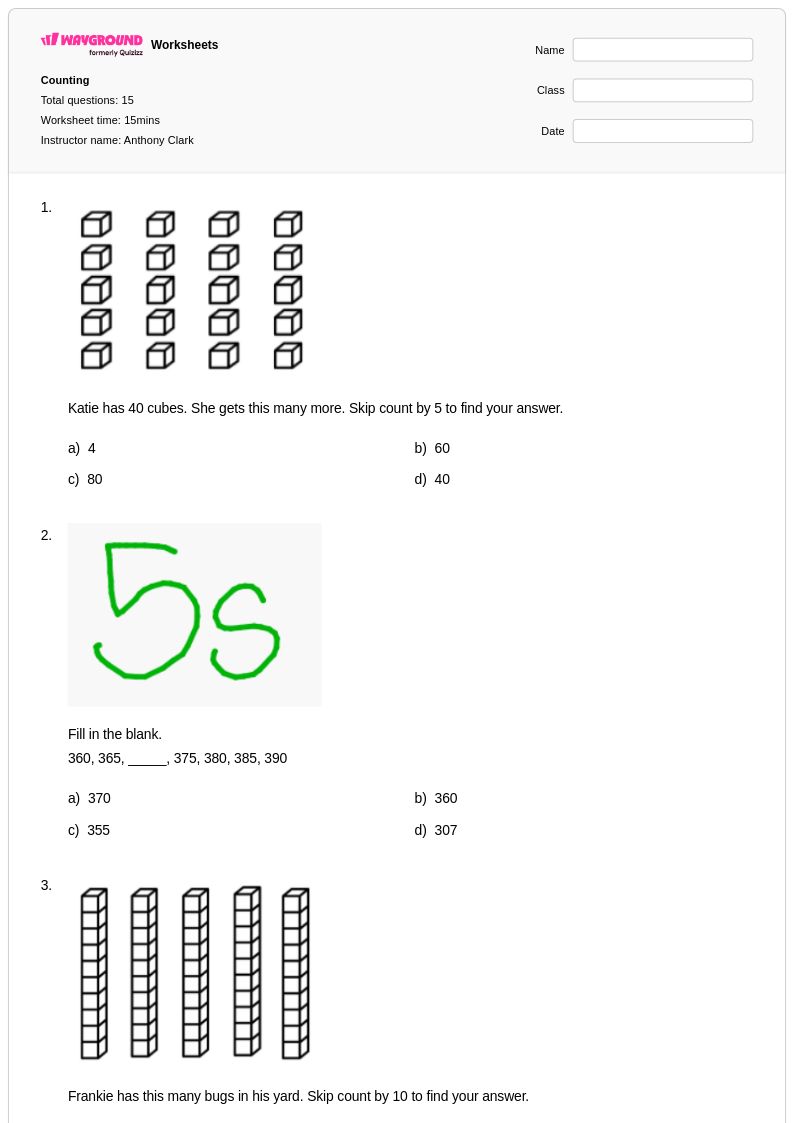
15 Q
2nd - Uni
Explore Skip Counting by 10s Worksheets by Grades
Explore Other Subject Worksheets for grade 3
Explore printable Skip Counting by 10s worksheets for Grade 3
Skip counting by 10s worksheets for Grade 3 students available through Wayground (formerly Quizizz) provide essential foundational practice for developing number sense and multiplication readiness. These comprehensive printables focus on helping third-grade learners recognize patterns in the decimal number system by counting forward and backward in increments of ten from various starting points. The worksheets strengthen critical mathematical skills including pattern recognition, mental math computation, and place value understanding, while building confidence with larger numbers. Each practice problem set includes a complete answer key, and these free pdf resources offer educators multiple formats ranging from number line activities to fill-in-the-blank sequences and word problems that apply skip counting by 10s to real-world scenarios.
Wayground (formerly Quizizz) supports mathematics teachers with an extensive collection of millions of teacher-created skip counting by 10s resources that streamline lesson planning and differentiated instruction for Grade 3 classrooms. The platform's robust search and filtering capabilities allow educators to quickly locate worksheets aligned with specific curriculum standards and learning objectives, while customization tools enable teachers to modify existing materials or create personalized practice sets. These versatile resources are available in both printable pdf format and digital formats, making them ideal for traditional classroom instruction, homework assignments, remediation sessions, and enrichment activities. Teachers can effectively address diverse learning needs by selecting from various difficulty levels and problem types, ensuring that all students receive appropriate skill practice while building mastery of this fundamental mathematical concept.
FAQs
How do I connect skip counting by 10s to multiplication for third graders?
What kind of skip counting practice is relevant for Grade 3?
What error indicates a third grader needs more practice with this skill?
How can I use this Grade 3 worksheet in my classroom?
How does this skill relate to third-grade math standards?