Grade 3 estimation worksheets and printables help students develop number sense skills through engaging practice problems that teach rounding, approximating quantities, and making reasonable mathematical predictions with comprehensive answer keys and free PDF downloads.
Explore printable Estimation worksheets for Grade 3
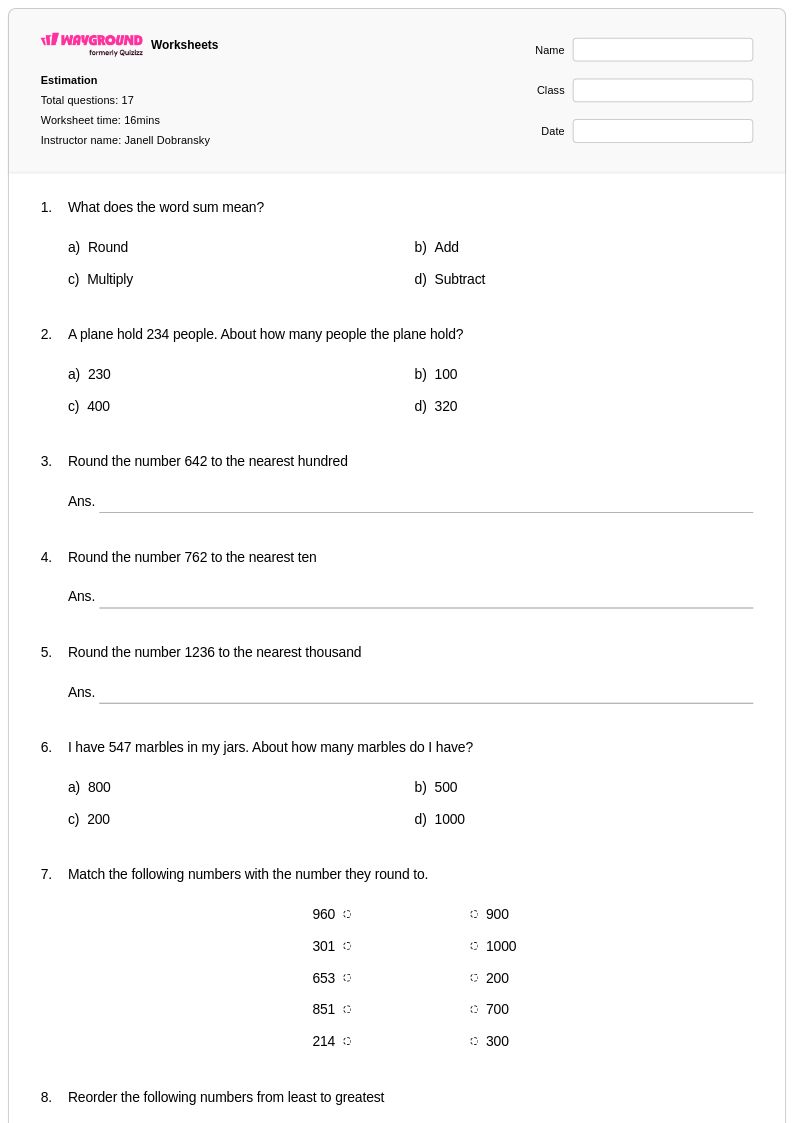
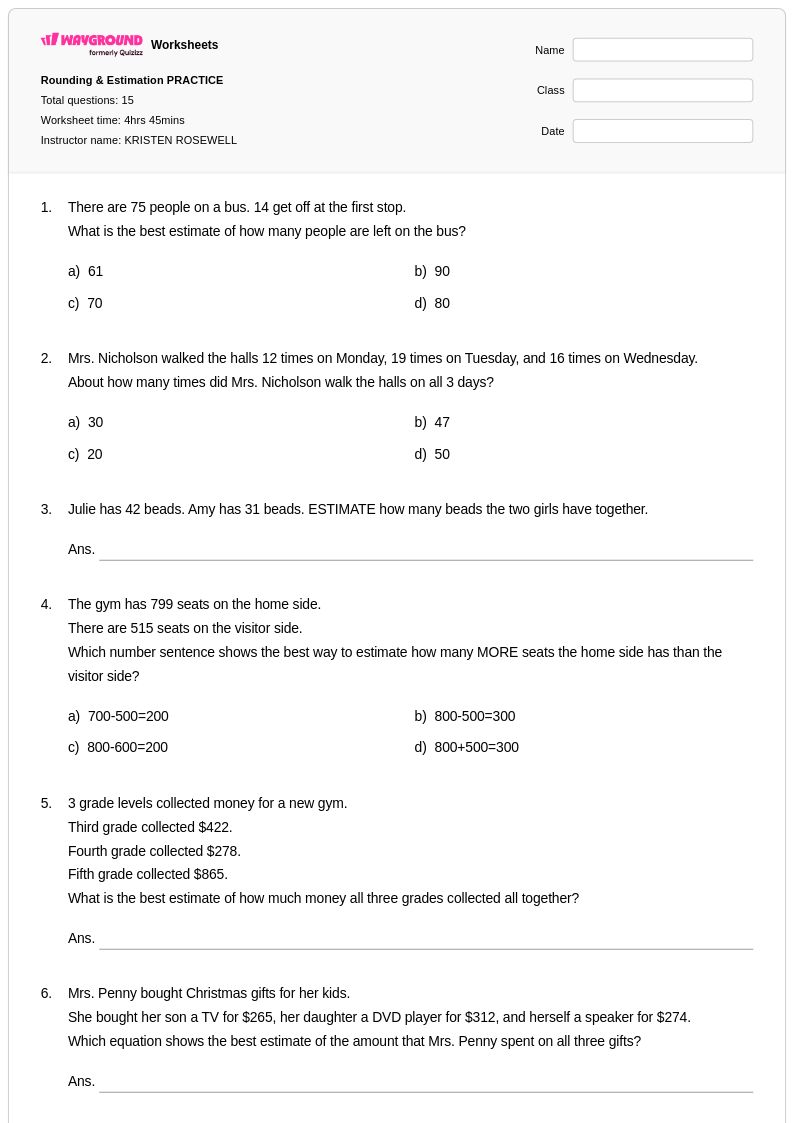
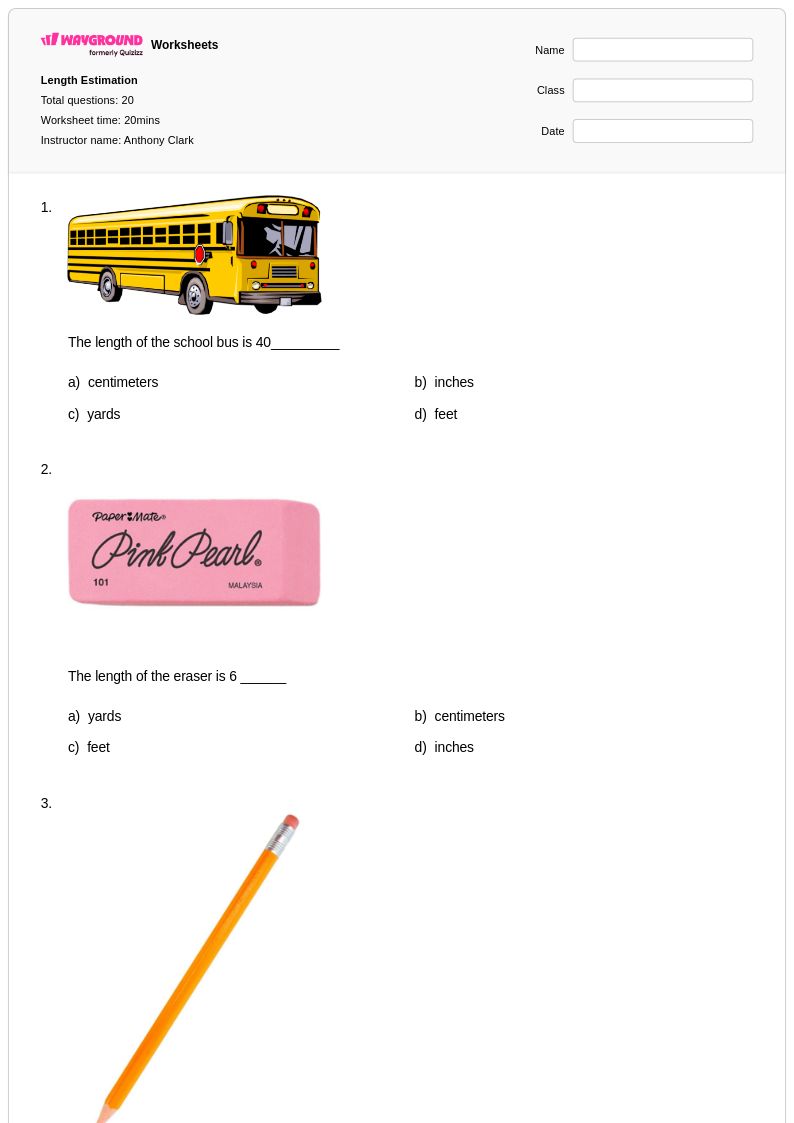
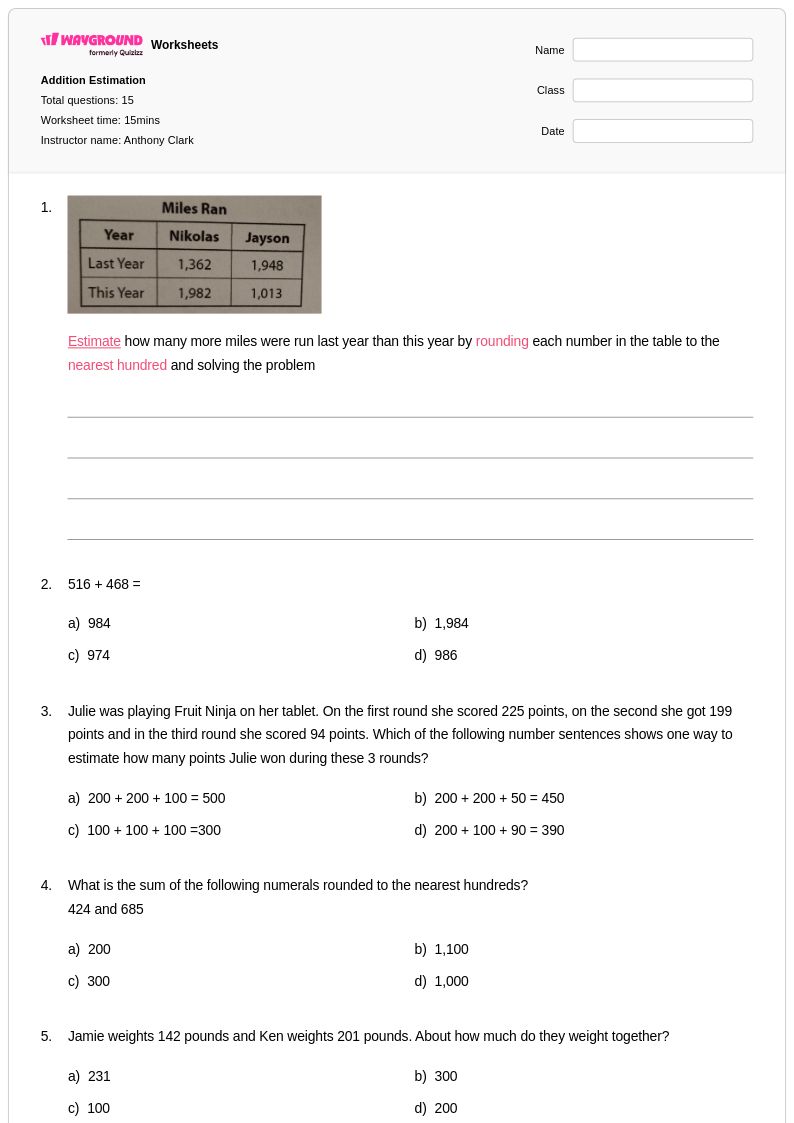
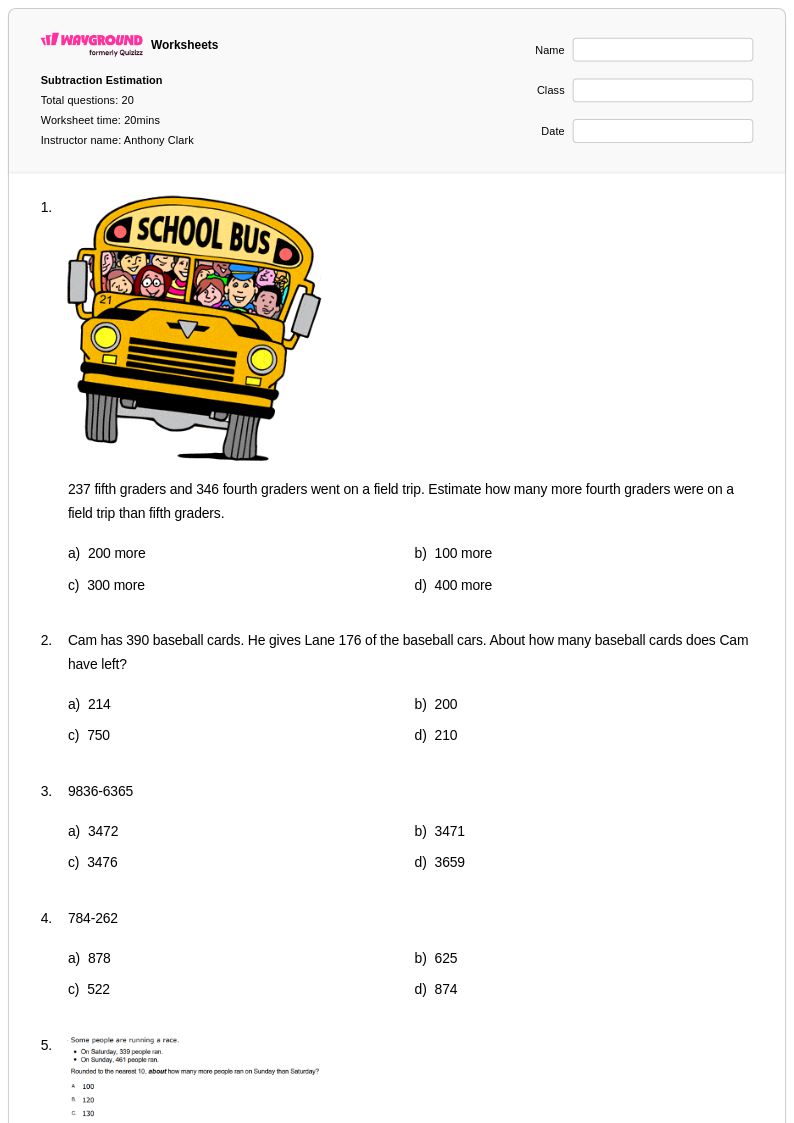
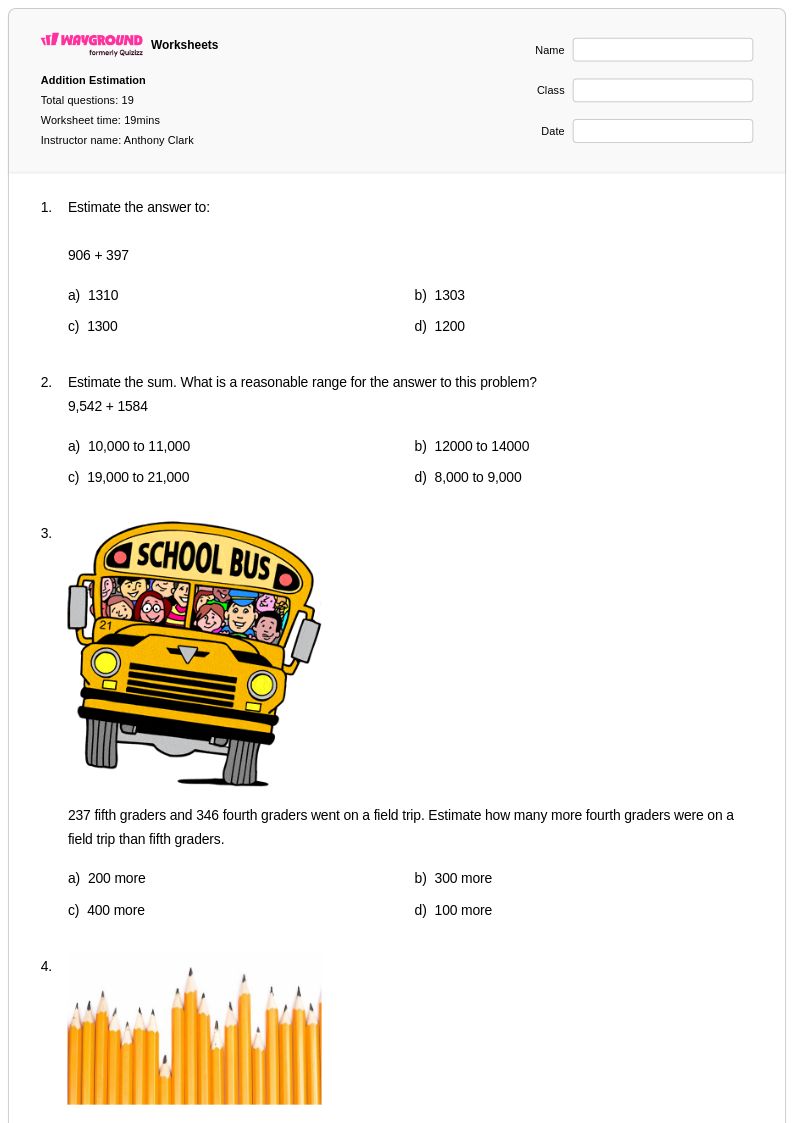
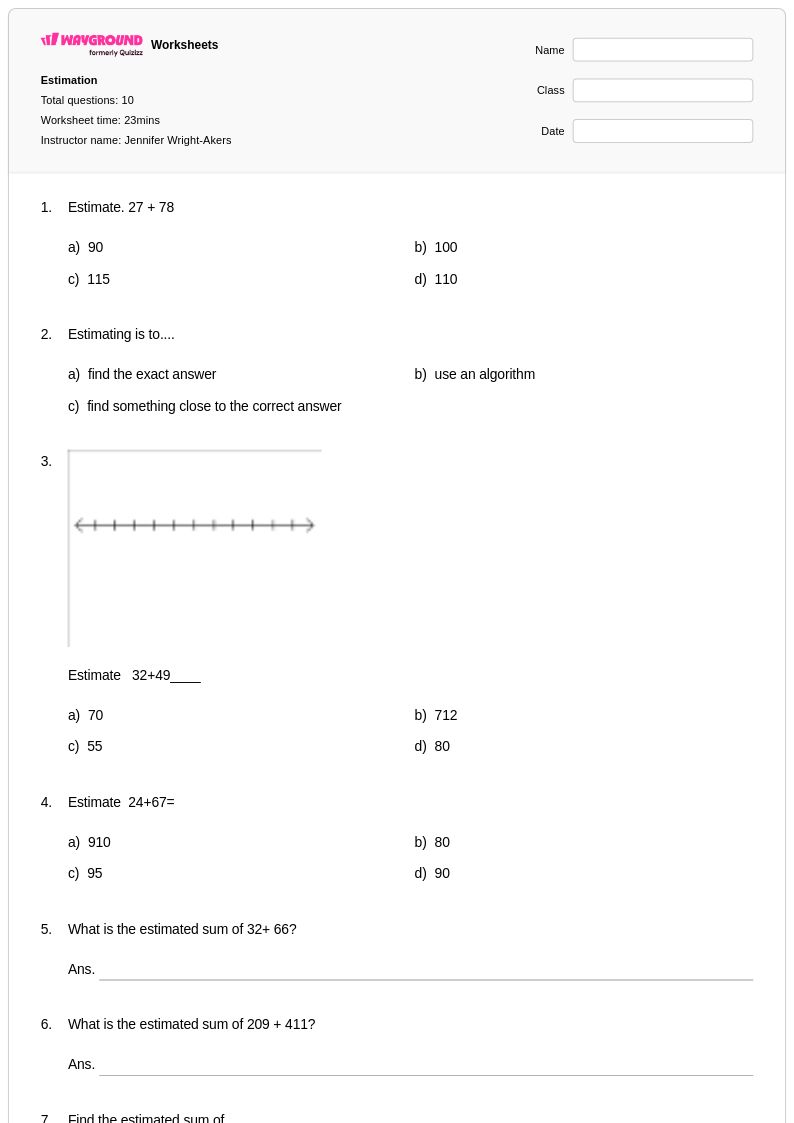
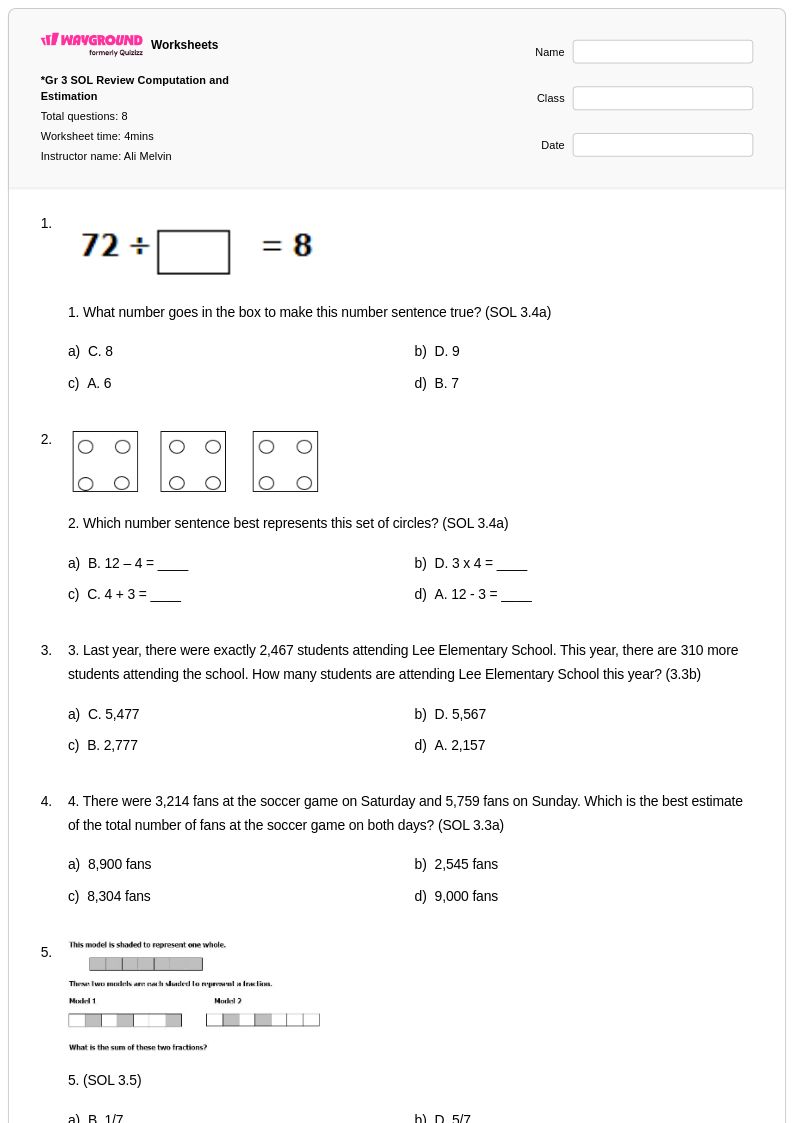
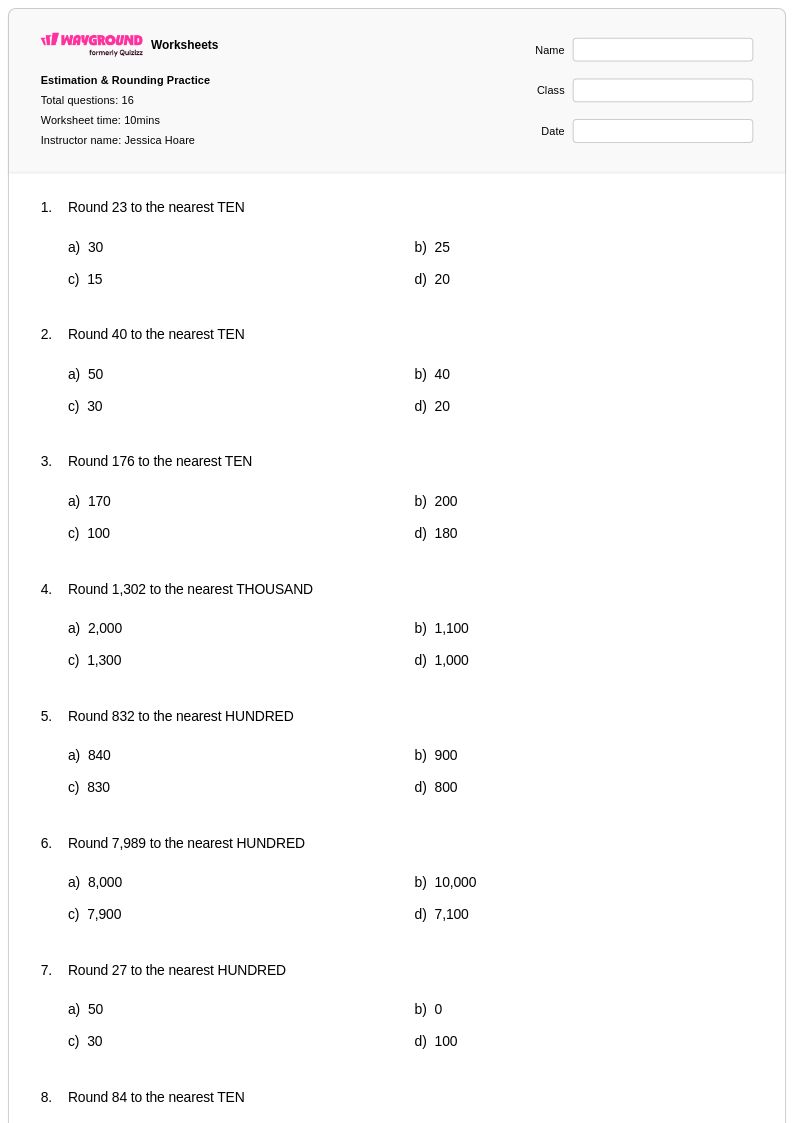
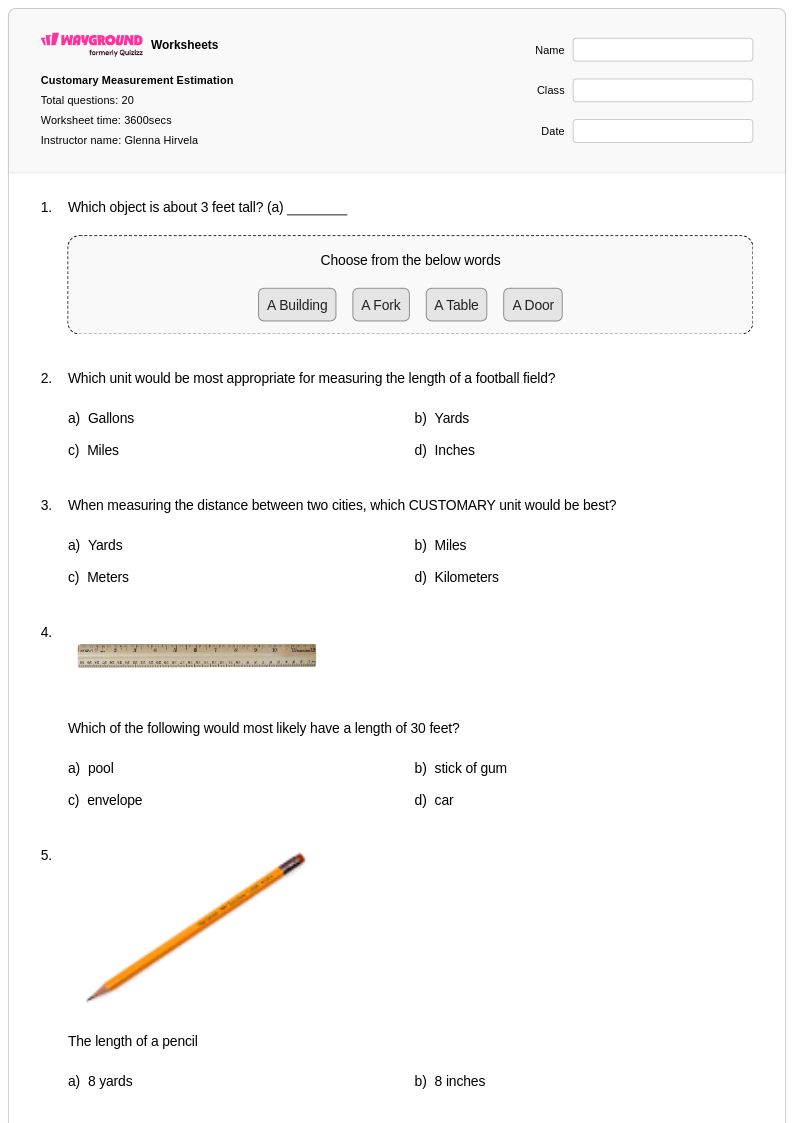
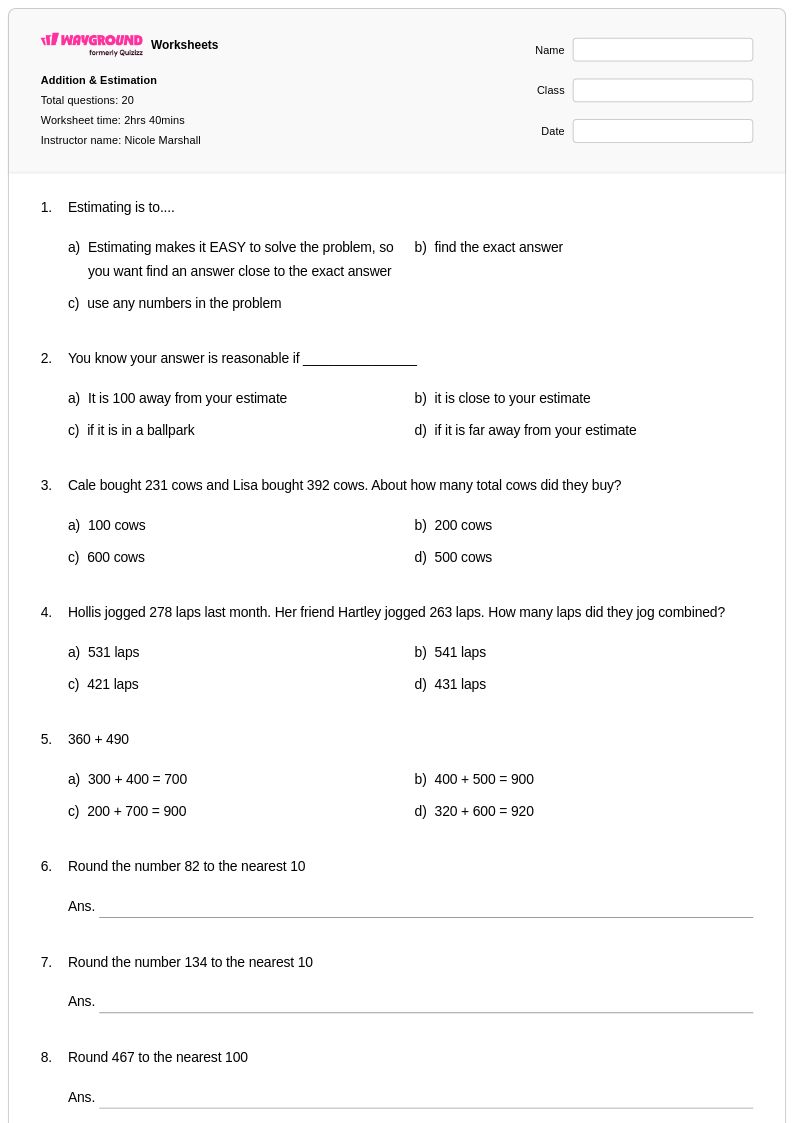
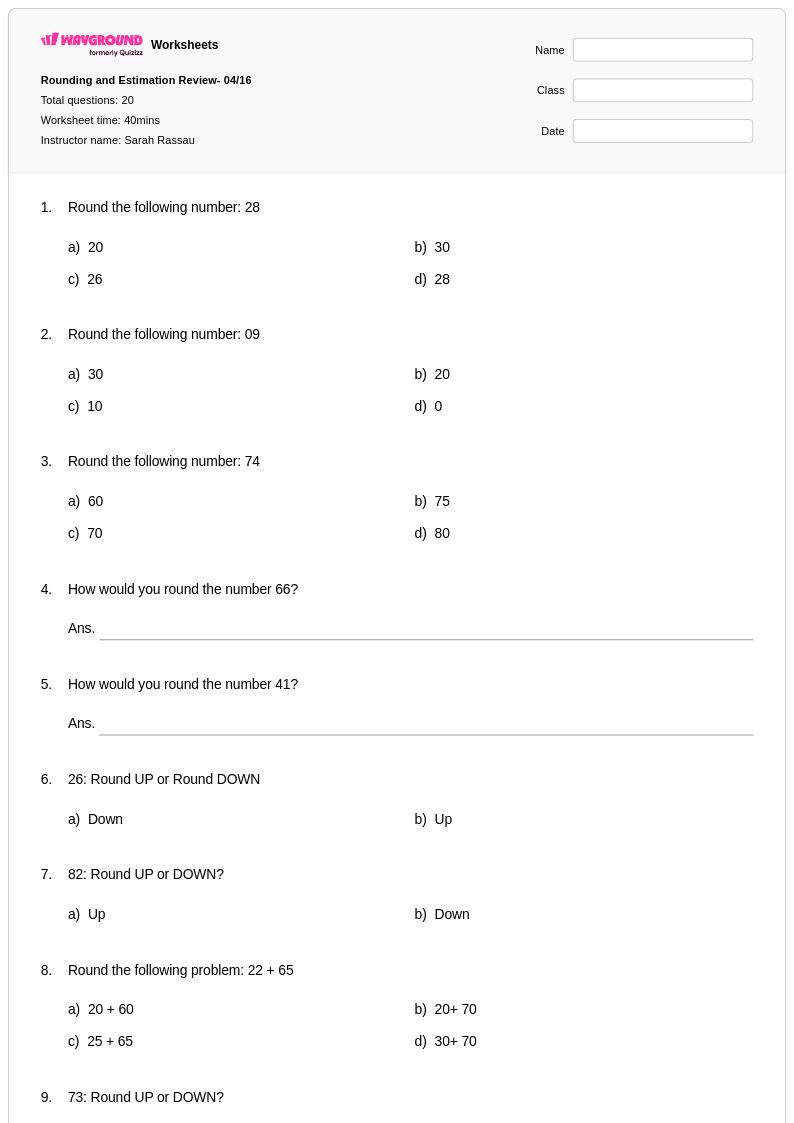
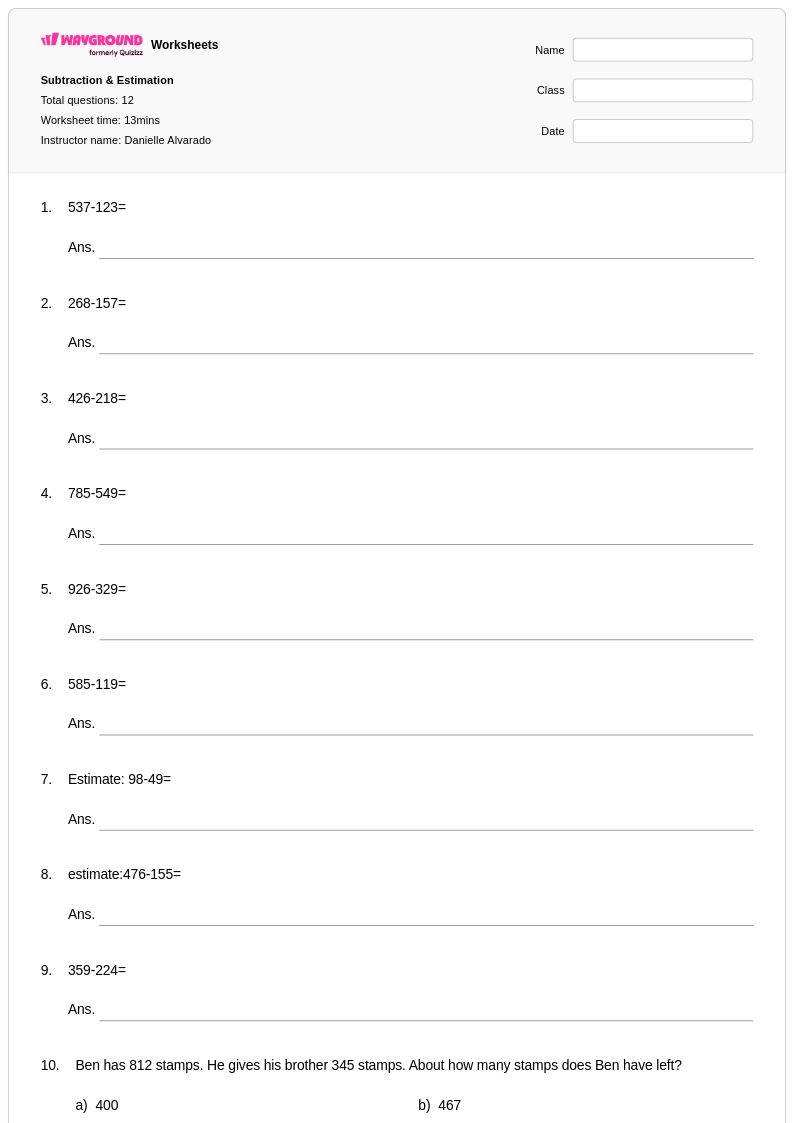
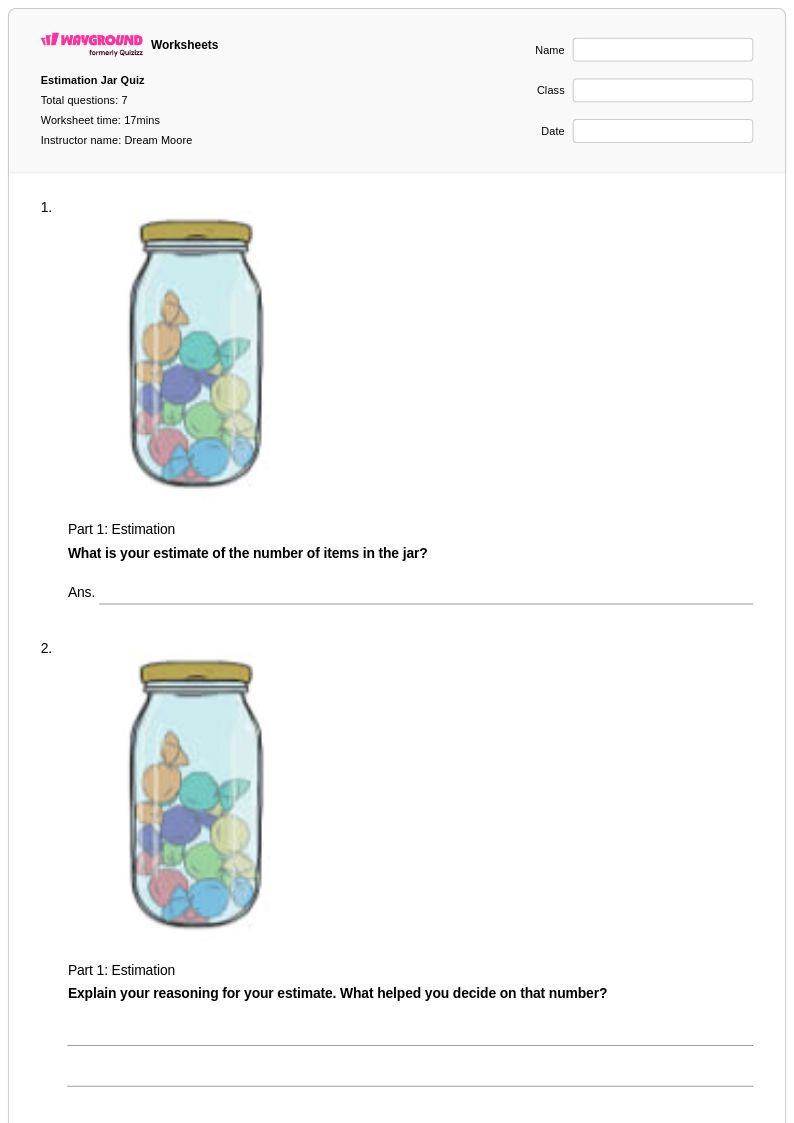
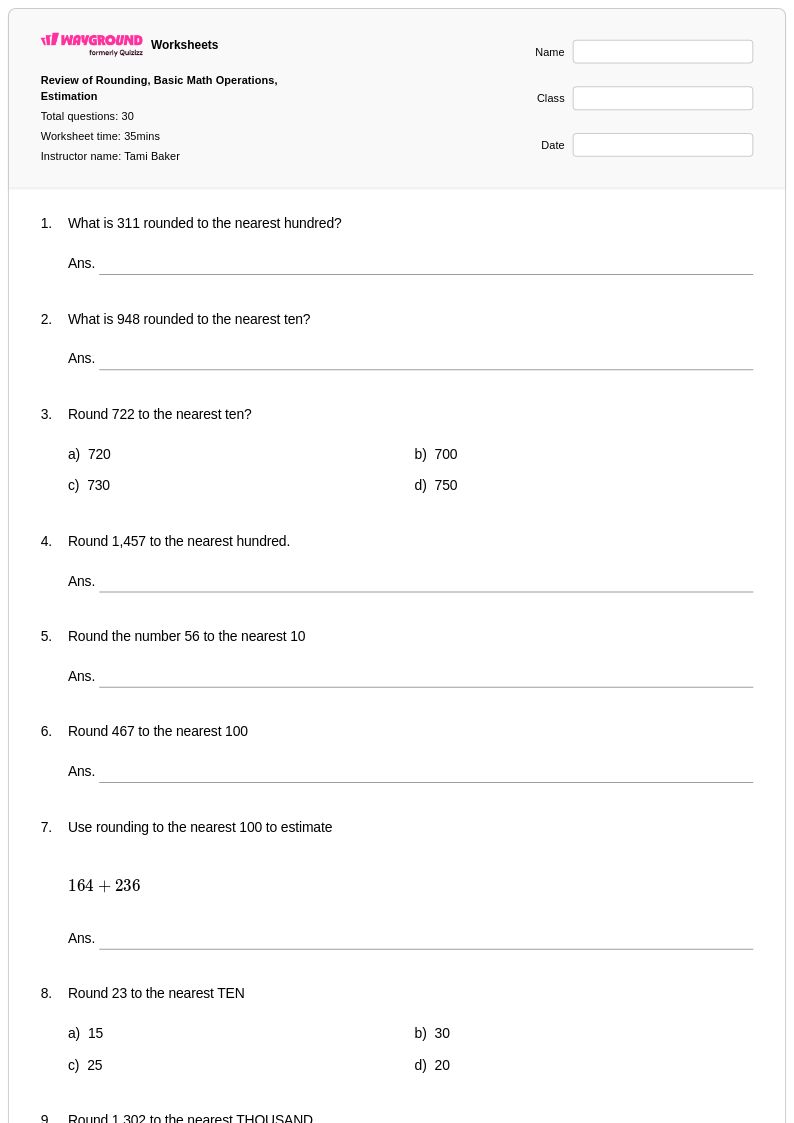
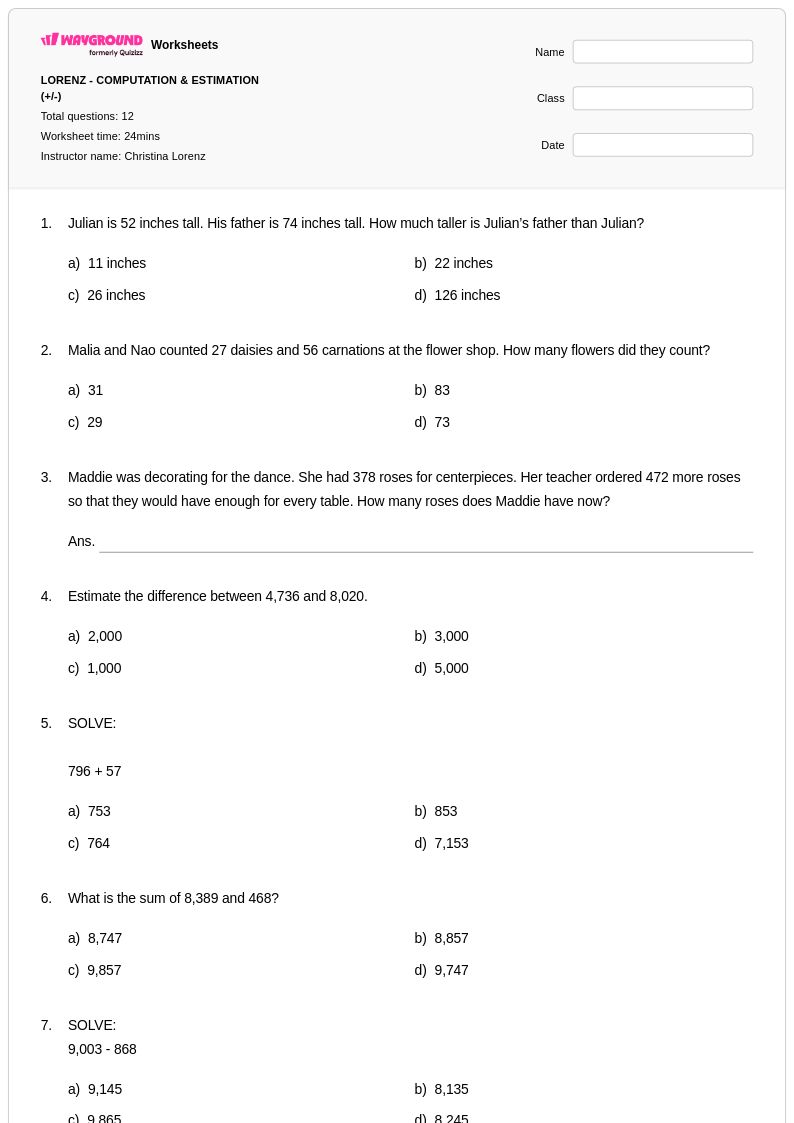
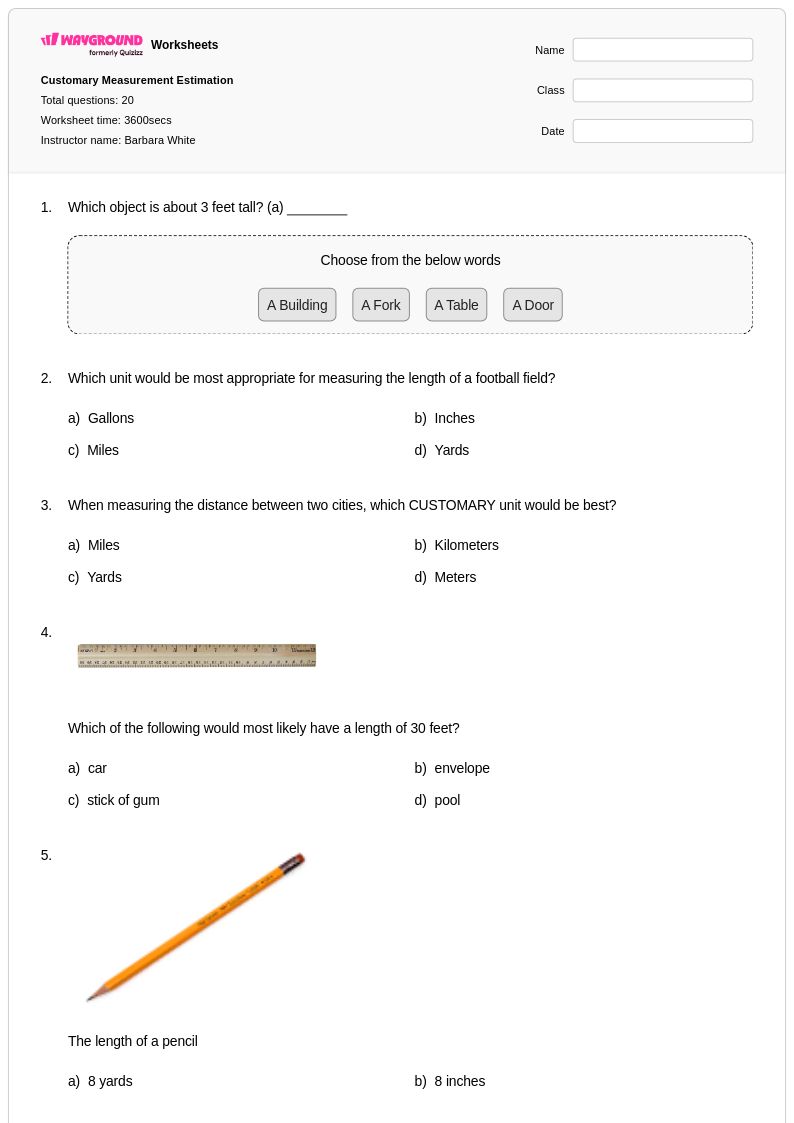
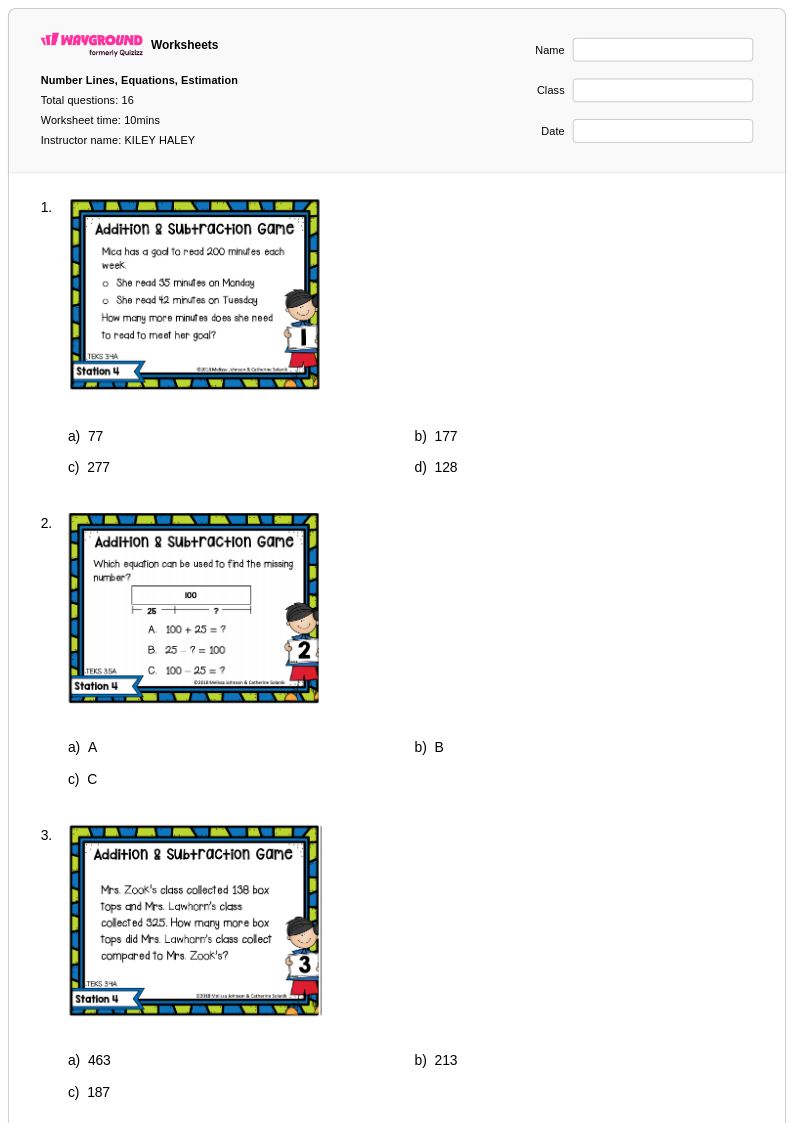
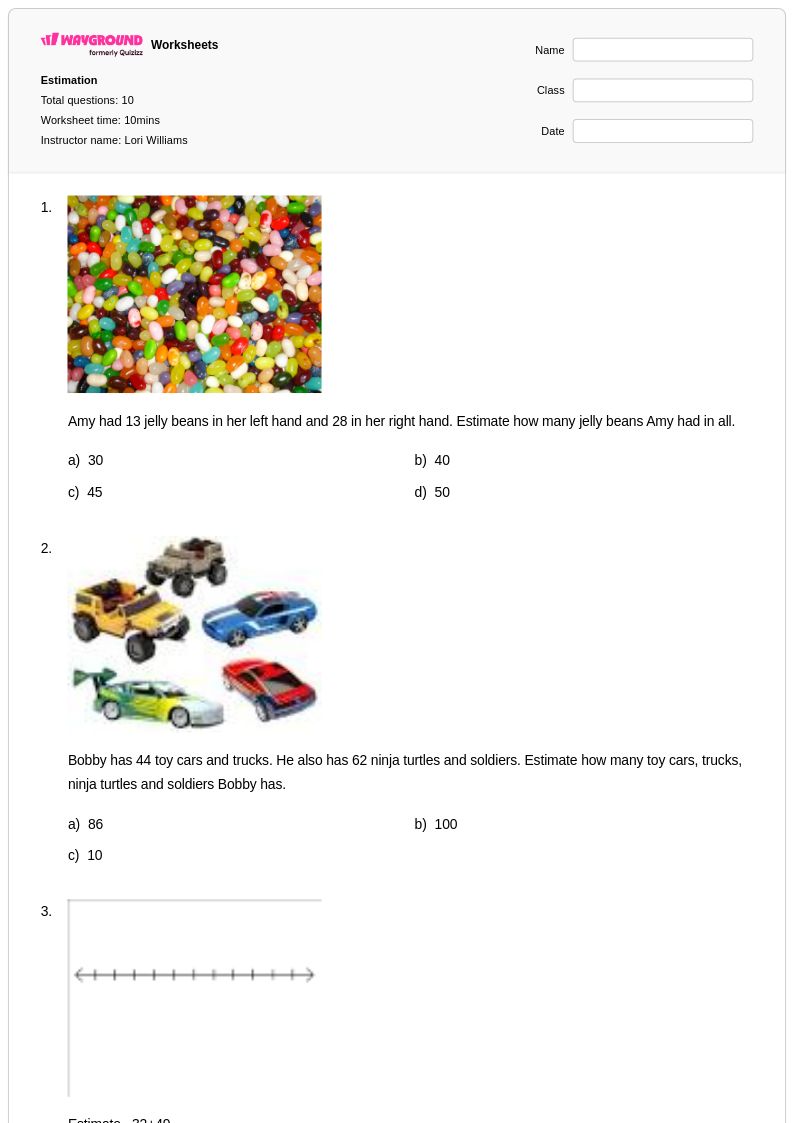
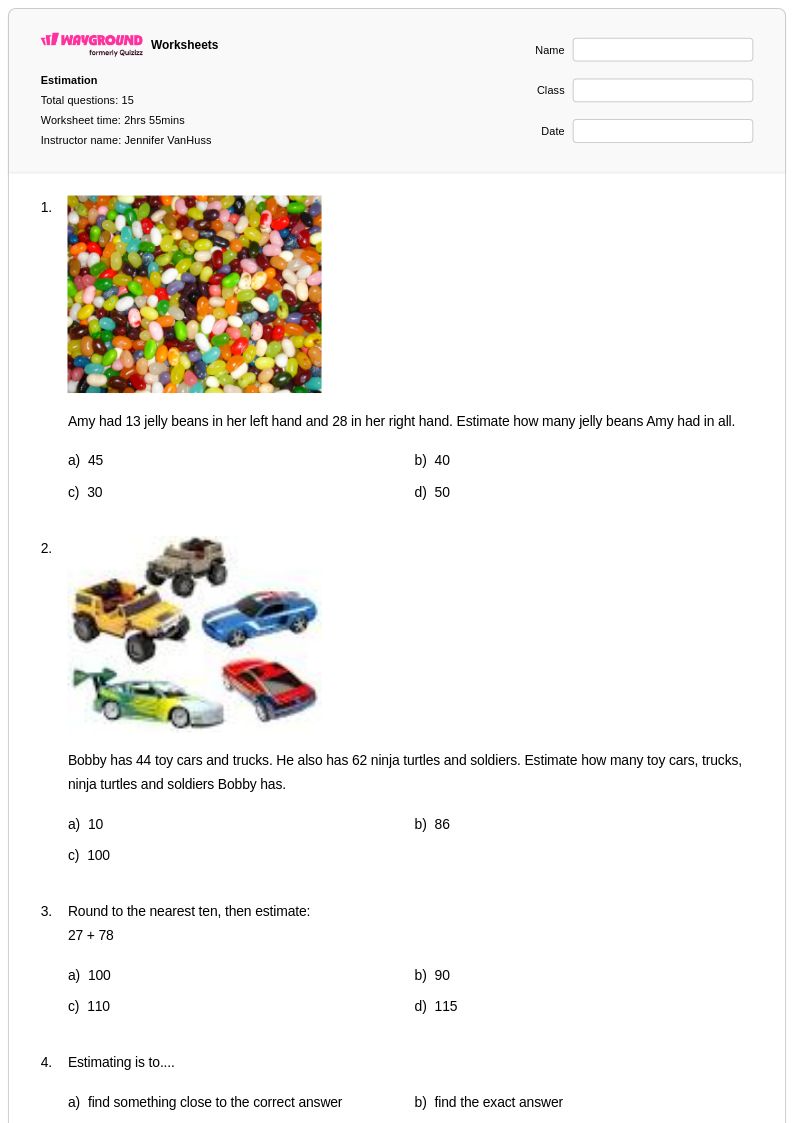
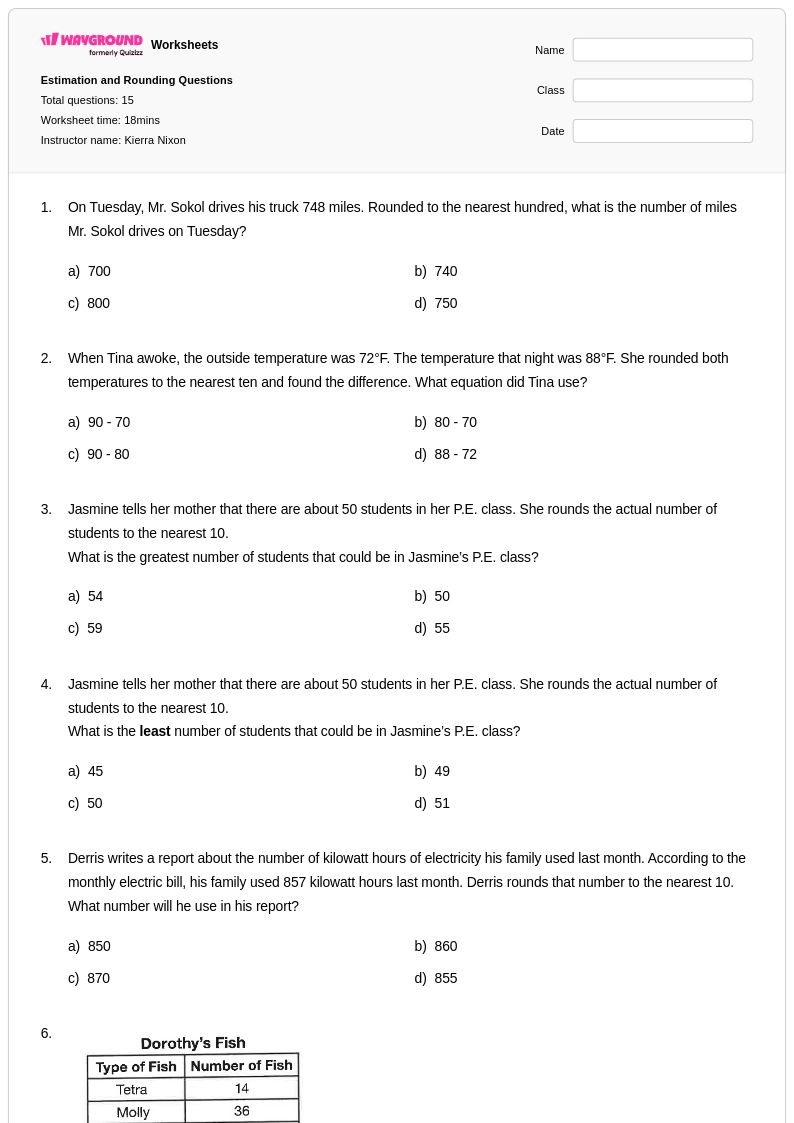
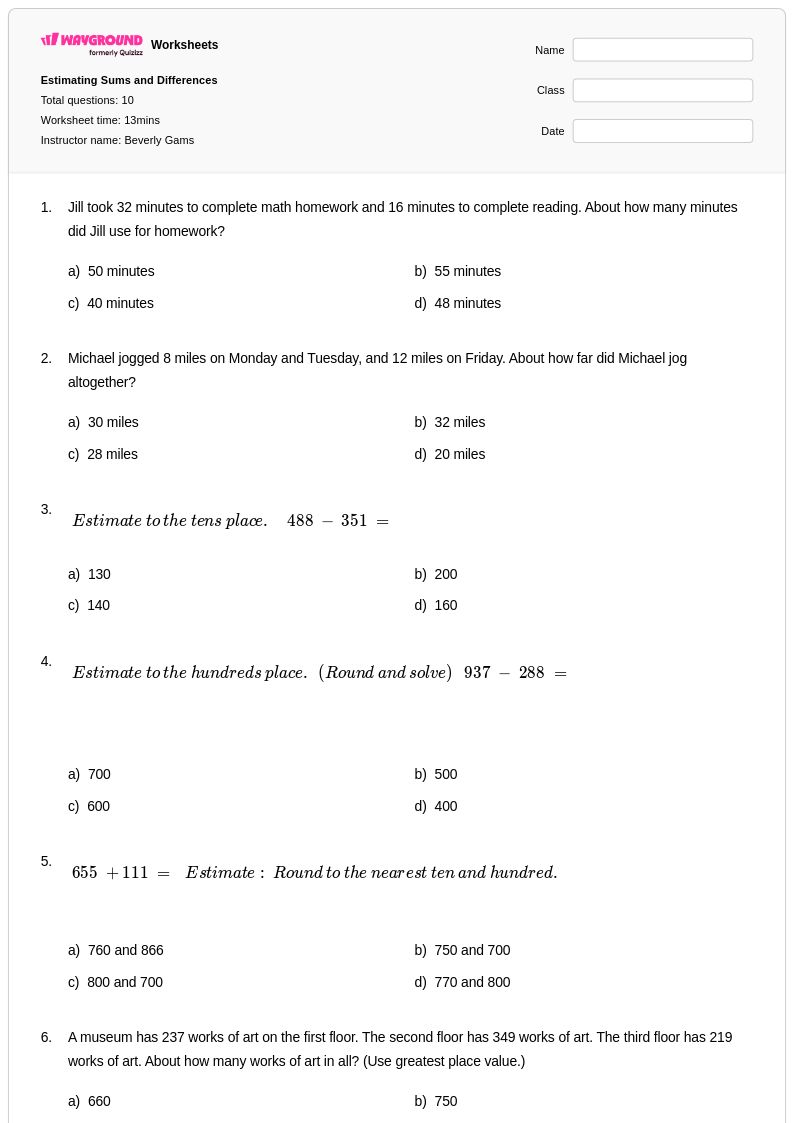
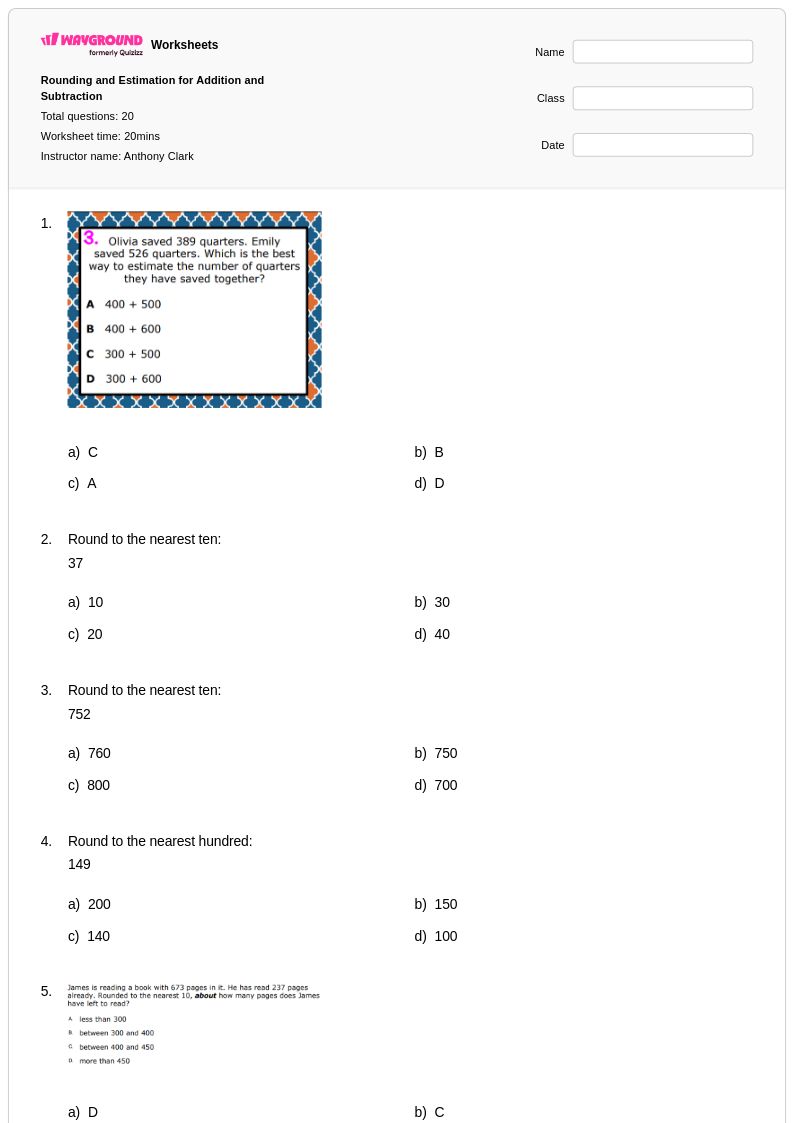
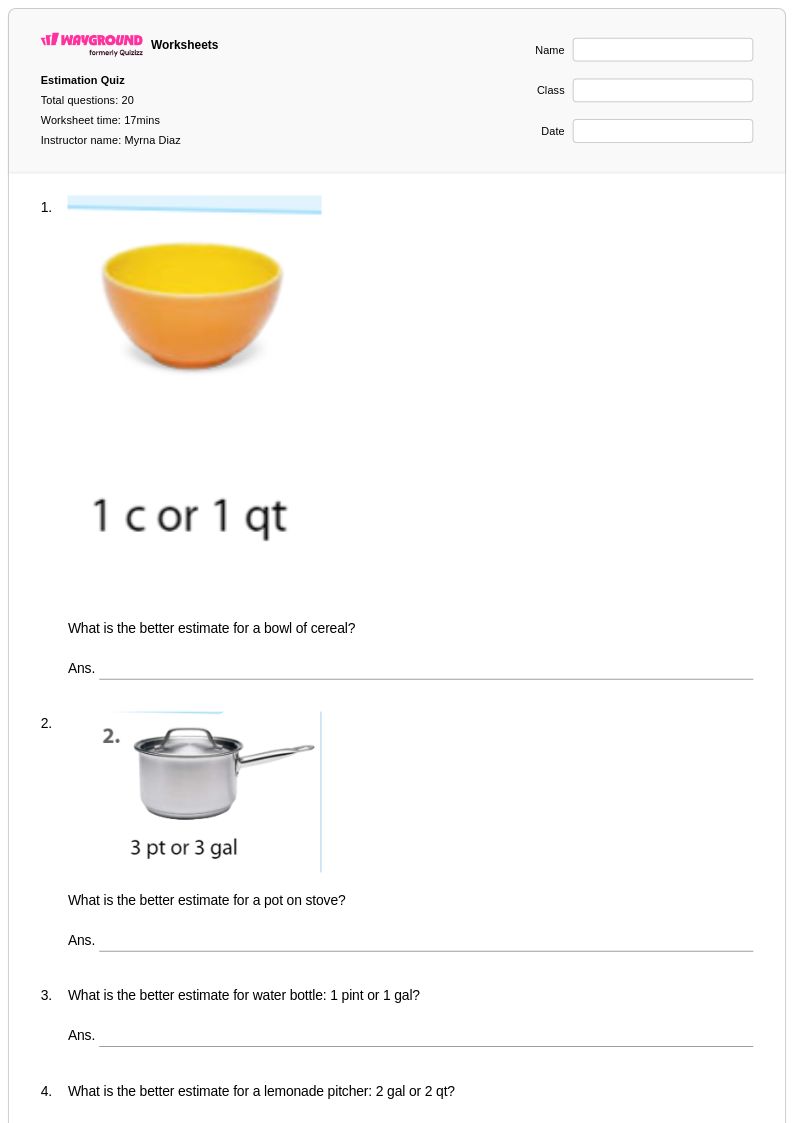
Estimation worksheets for Grade 3 through Wayground (formerly Quizizz) provide essential practice in developing students' number sense and mathematical reasoning abilities. These comprehensive resources help third-grade students build confidence in making reasonable approximations with whole numbers, quantities, and basic operations without requiring exact calculations. The worksheets feature carefully structured practice problems that progress from simple visual estimation tasks to more complex numerical scenarios, allowing students to strengthen their ability to judge the reasonableness of answers and develop intuitive understanding of number relationships. Each worksheet collection includes detailed answer keys and is available as free printables in convenient pdf format, making them accessible for both classroom instruction and independent practice at home.
Wayground (formerly Quizizz) empowers educators with an extensive library of millions of teacher-created estimation resources specifically designed for Grade 3 mathematics instruction. The platform's robust search and filtering capabilities enable teachers to quickly locate worksheets that align with specific learning standards and match their students' skill levels, while built-in differentiation tools allow for seamless customization to meet diverse learning needs. These estimation worksheet collections are available in both printable pdf formats and interactive digital versions, providing flexibility for various teaching environments and learning preferences. Teachers can efficiently plan targeted skill practice sessions, implement remediation strategies for struggling learners, and offer enrichment opportunities for advanced students, all while tracking progress through the platform's comprehensive assessment features that support data-driven instruction in mathematical estimation skills.
FAQs
How do I teach estimation to third graders?
Grade 3 is where estimation becomes explicitly tied to rounding rules and multi-digit operations. Start by solidifying rounding to the nearest 10 and 100, then move to using those rounded values to estimate sums, differences, and — once multiplication is introduced — products. A critical teaching move at this grade: after students compute an exact answer, ask 'Is that reasonable?' and have them check it against their estimate. Students who skip this step are the ones who later accept obviously wrong answers without noticing.
What exercises help third graders practice estimation?
Effective Grade 3 estimation practice includes: rounding multi-digit numbers before adding or subtracting, estimating products by rounding one or both factors, and word problems that require judging whether an answer makes sense in context. Wayground's Grade 3 worksheets progress from simpler visual and rounding tasks to more complex numerical scenarios, giving students practice with both the mechanics of rounding and the judgment of reasonableness.
What mistakes do third graders commonly make with estimation?
Three patterns show up consistently. First, students round to the wrong place value — rounding 347 to 300 when rounding to the nearest 10 would give a more useful estimate. Second, students who've learned multiplication facts sometimes compute exactly rather than estimating, especially on smaller numbers. Third, and most consequential: students treat estimation as a separate skill from checking answers, rather than using it as a built-in reasonableness check on their own work.
How do I use Wayground's Grade 3 estimation worksheets?
The worksheets are available as printable PDFs and as digital quizzes hosted on Wayground — same content, either format. Every worksheet includes a complete answer key. For digital sessions, Wayground provides immediate feedback as students work through problems. For printed versions, the Wayground for Teachers app lets you scan and grade student submissions without re-entering answers manually, which is practical when you're reviewing a full class set after independent practice.
How does estimation fit into the Common Core math progression at Grade 3?
Grade 3 is when Common Core formally introduces rounding whole numbers to the nearest 10 and 100, making it the first grade where estimation has explicit standard-level expectations rather than just supporting number sense. This is also the grade where multiplication and division are introduced, and estimation plays a direct role: students are expected to use rounding to assess whether a product or quotient is in the right ballpark. The skill then extends in Grade 4 to rounding multi-digit numbers and estimating with larger values.
How can I differentiate Grade 3 estimation practice for mixed-ability students?
For students who are still shaky on place value — which is the foundation of rounding — Wayground's worksheet tools let you increase font size and widen spacing so the numbers are easier to parse visually. For students who need more challenge, push them to estimate using two different strategies (e.g., front-end estimation vs. rounding) and compare the results, which deepens understanding without requiring a separate worksheet. During digital sessions, extended time can be configured individually for students who need more processing time without affecting the rest of the class.