Free Printable Estimation Worksheets for Kindergarten
Wayground's free kindergarten estimation worksheets provide engaging printables and practice problems that help young learners develop number sense skills through hands-on activities, complete with answer keys for easy assessment.
Explore printable Estimation worksheets for Kindergarten
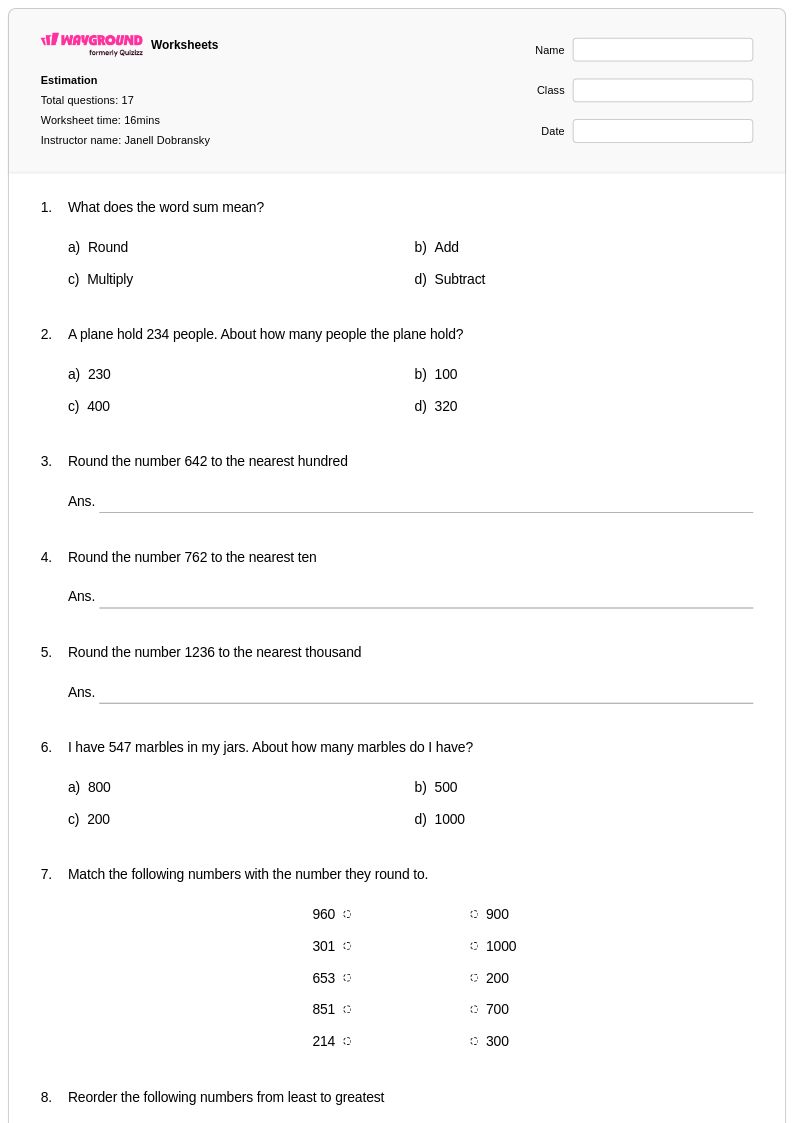
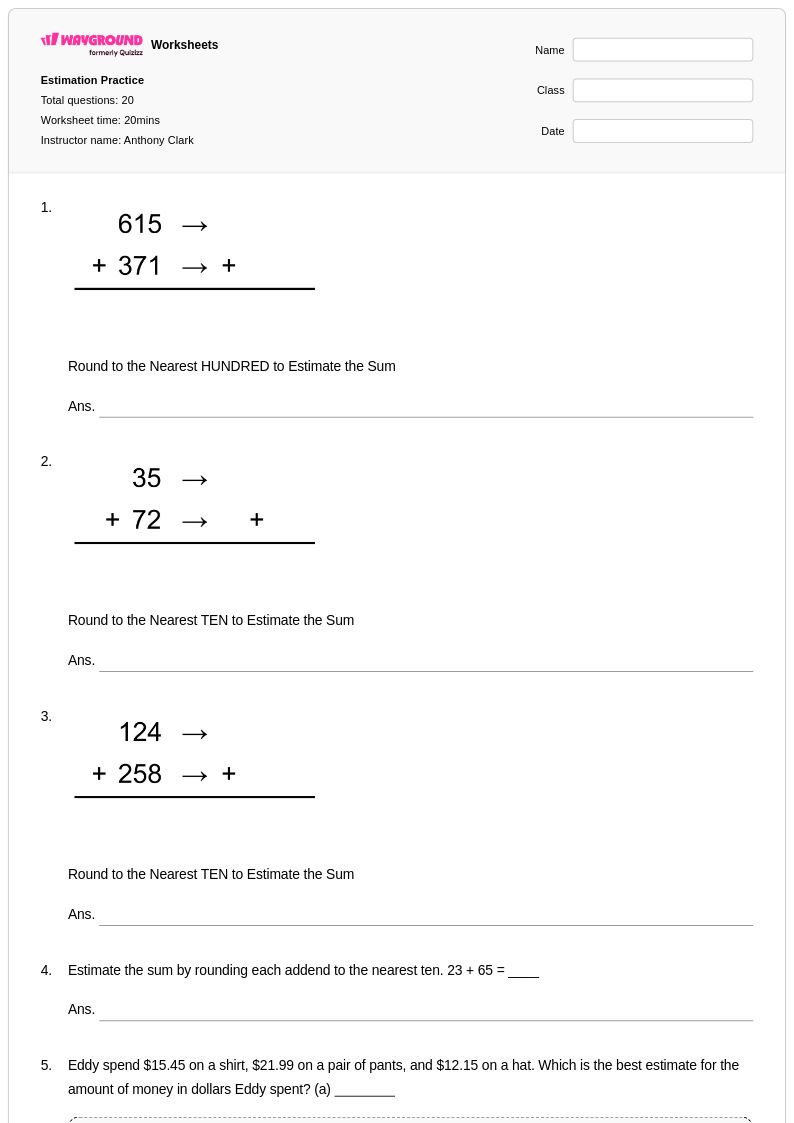
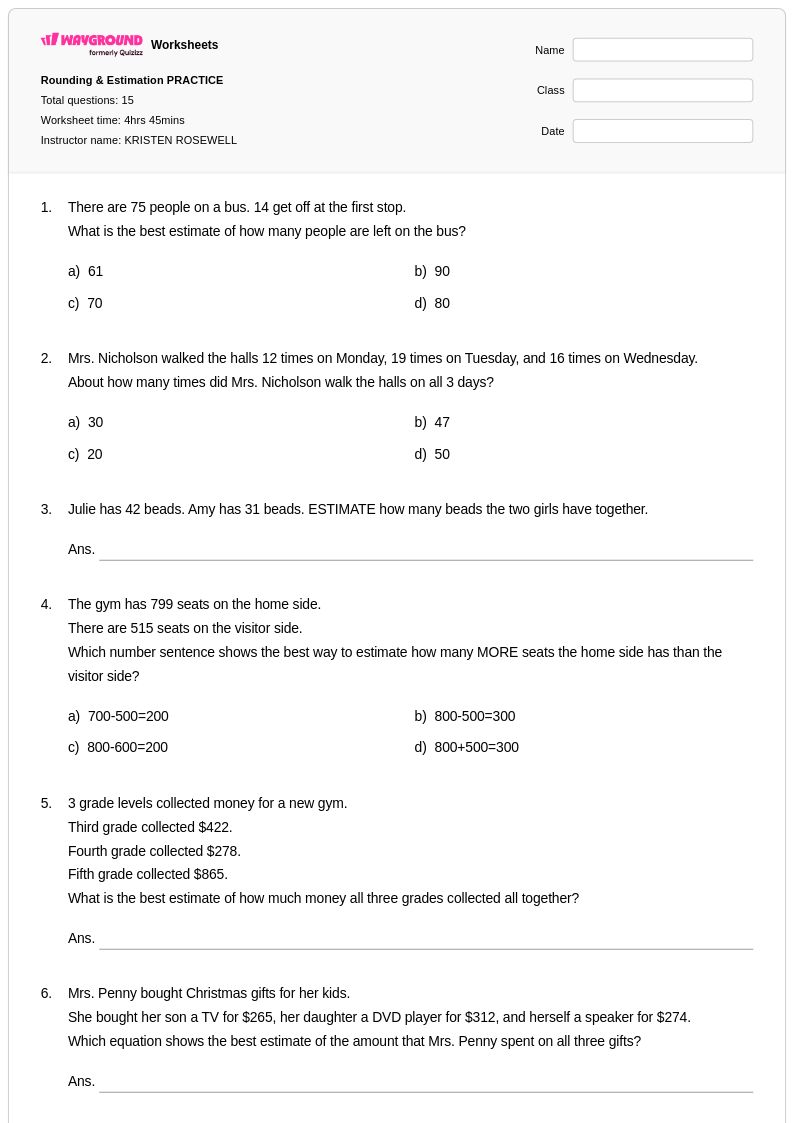
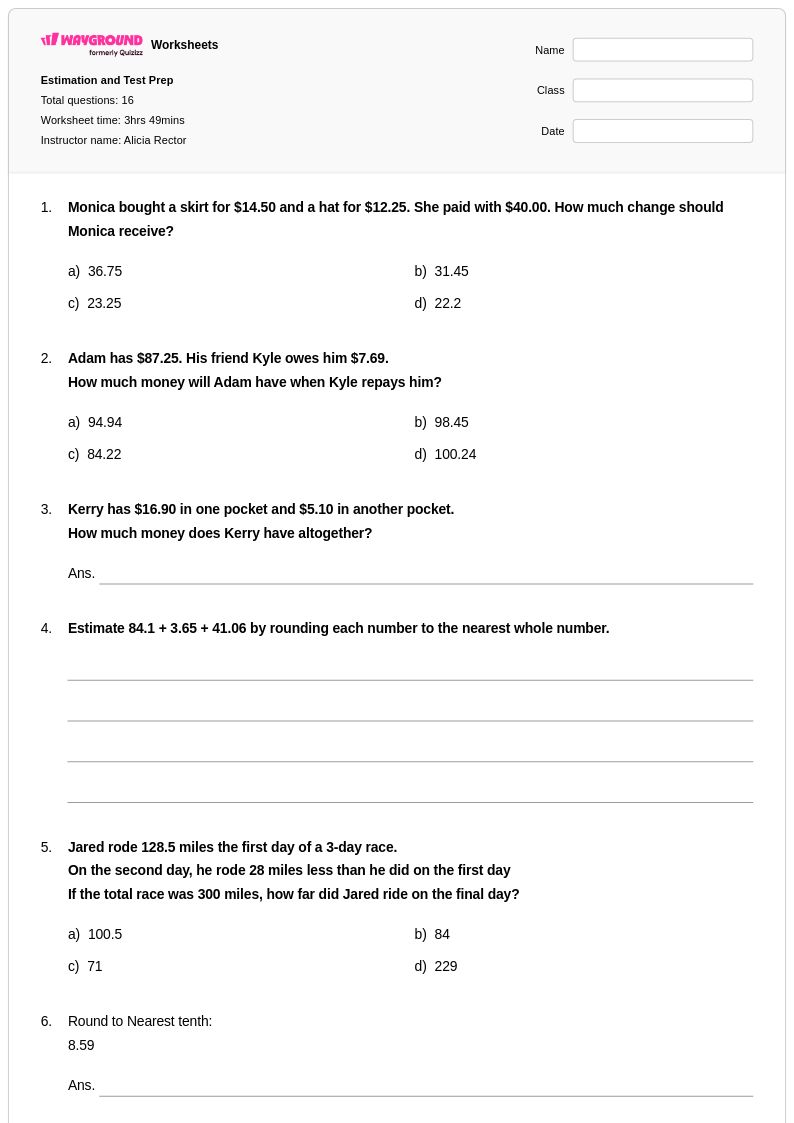
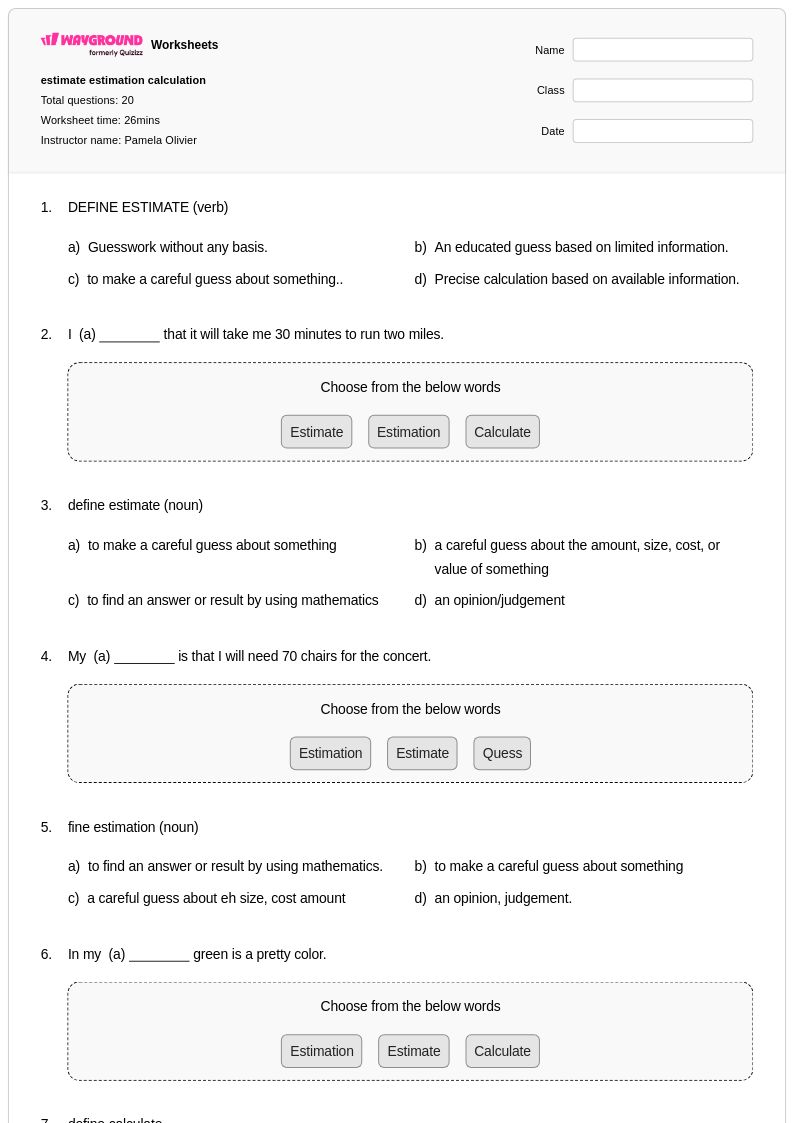
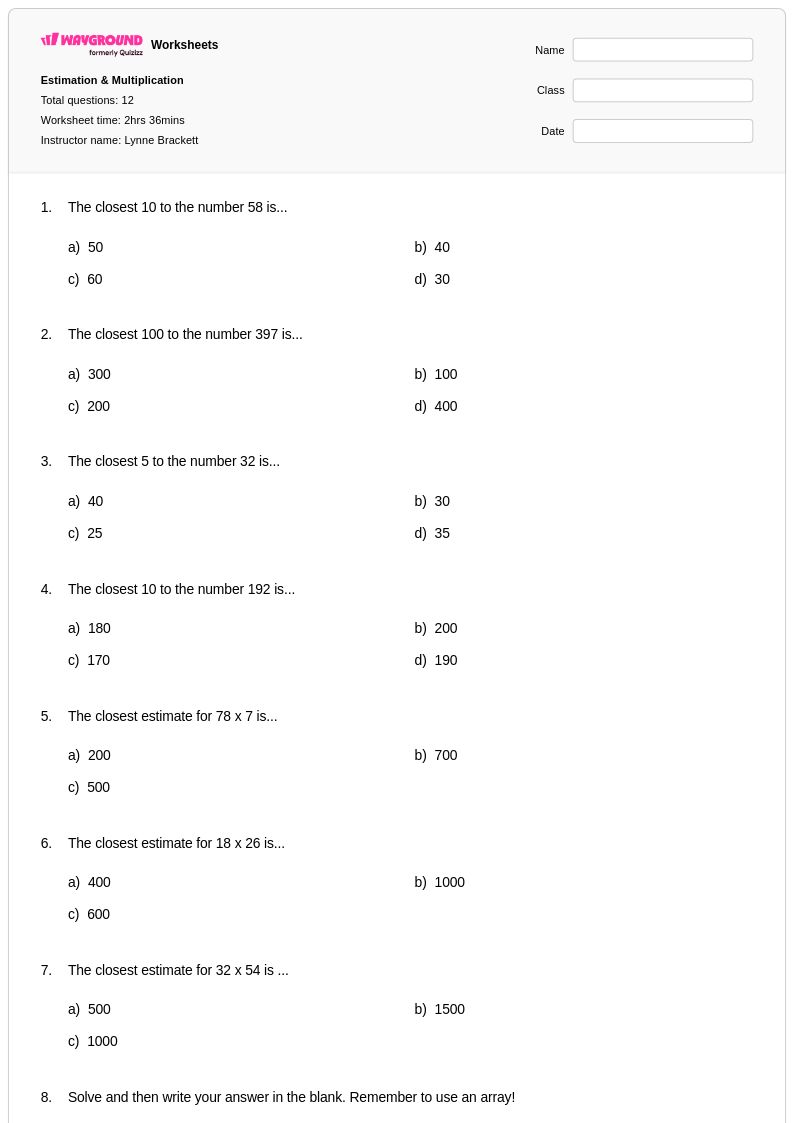
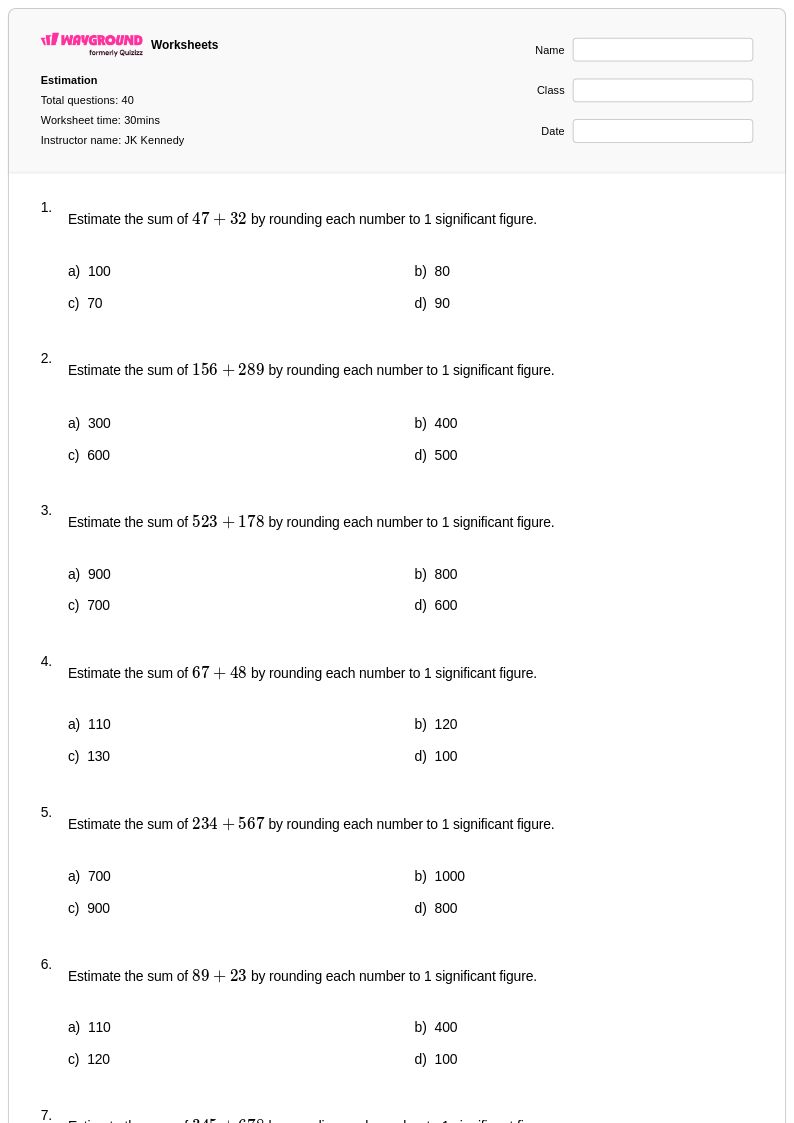
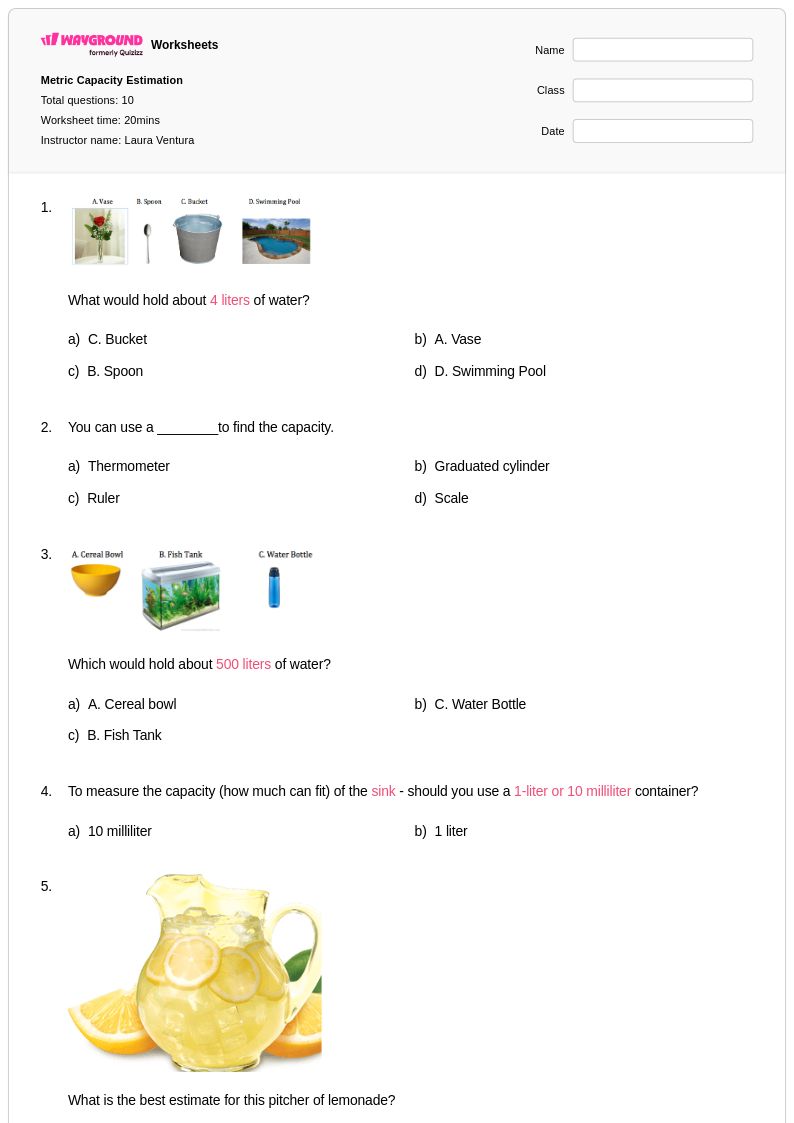
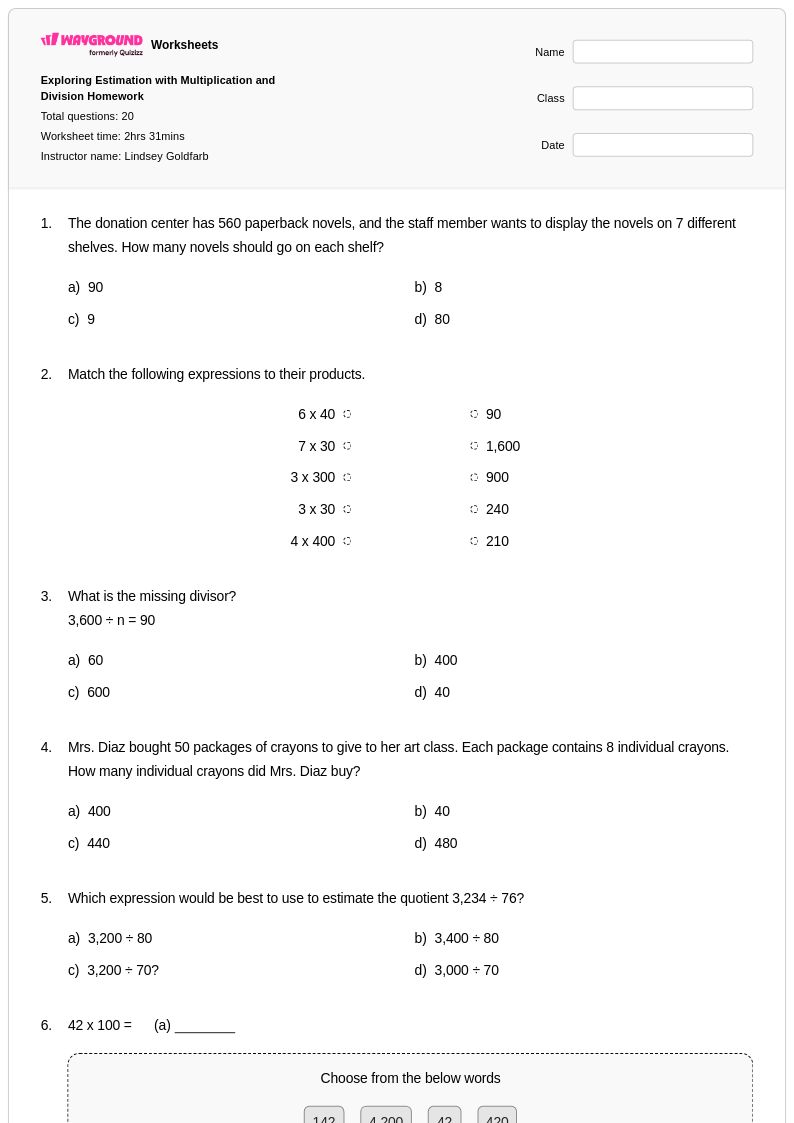
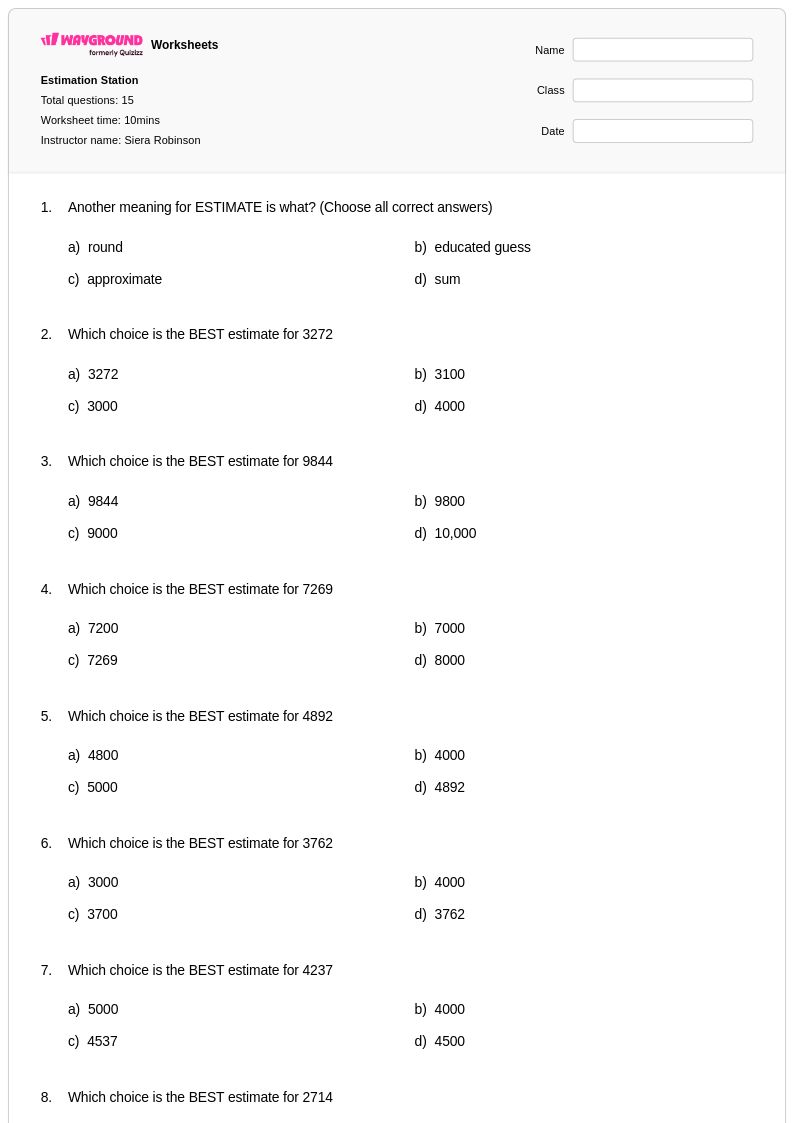
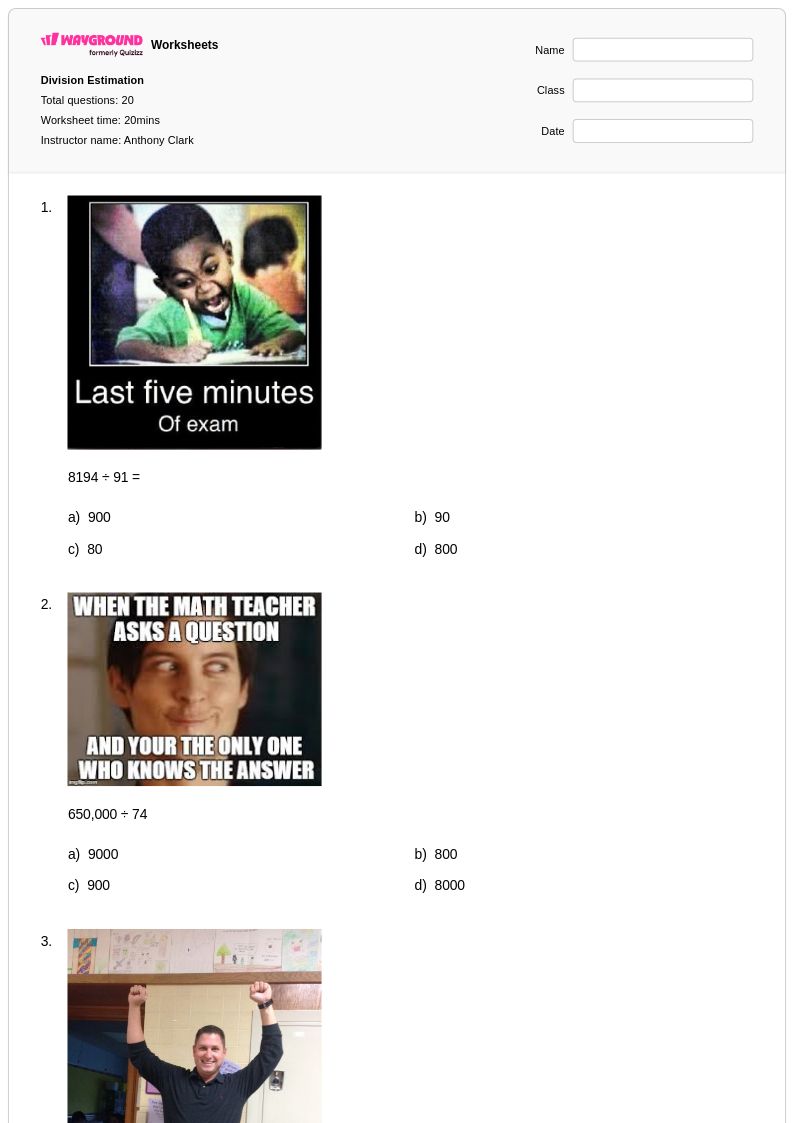
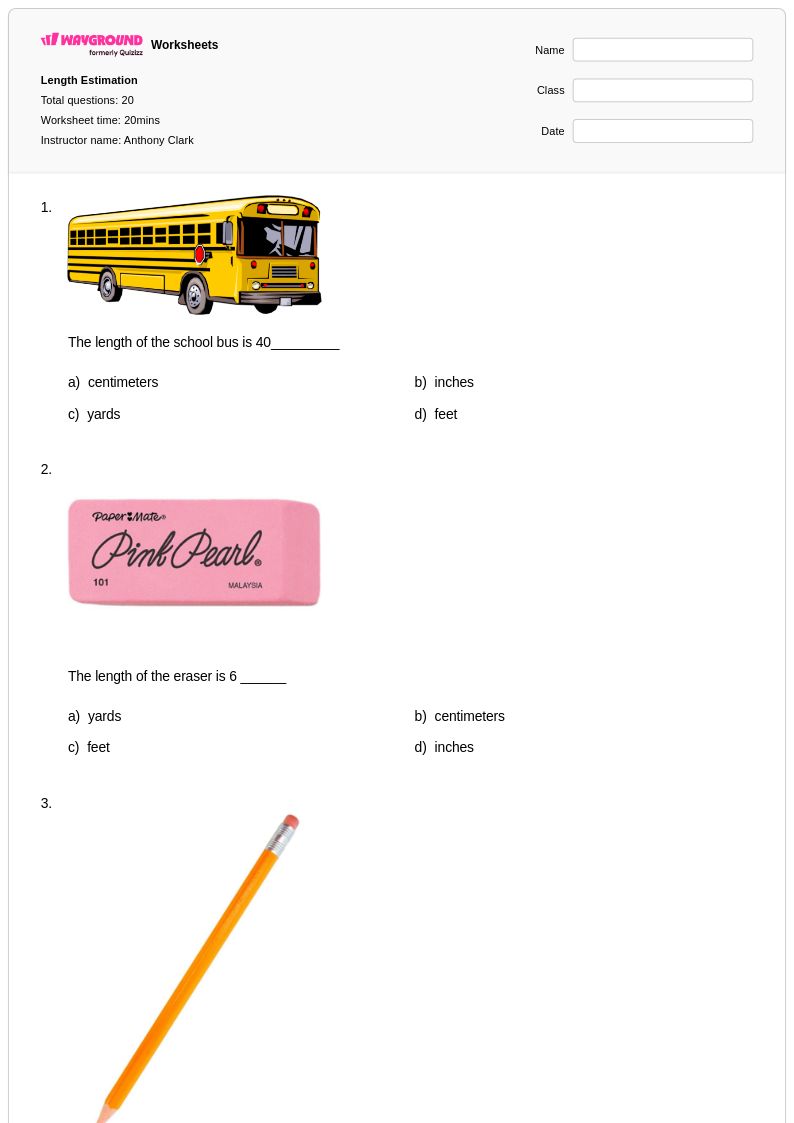
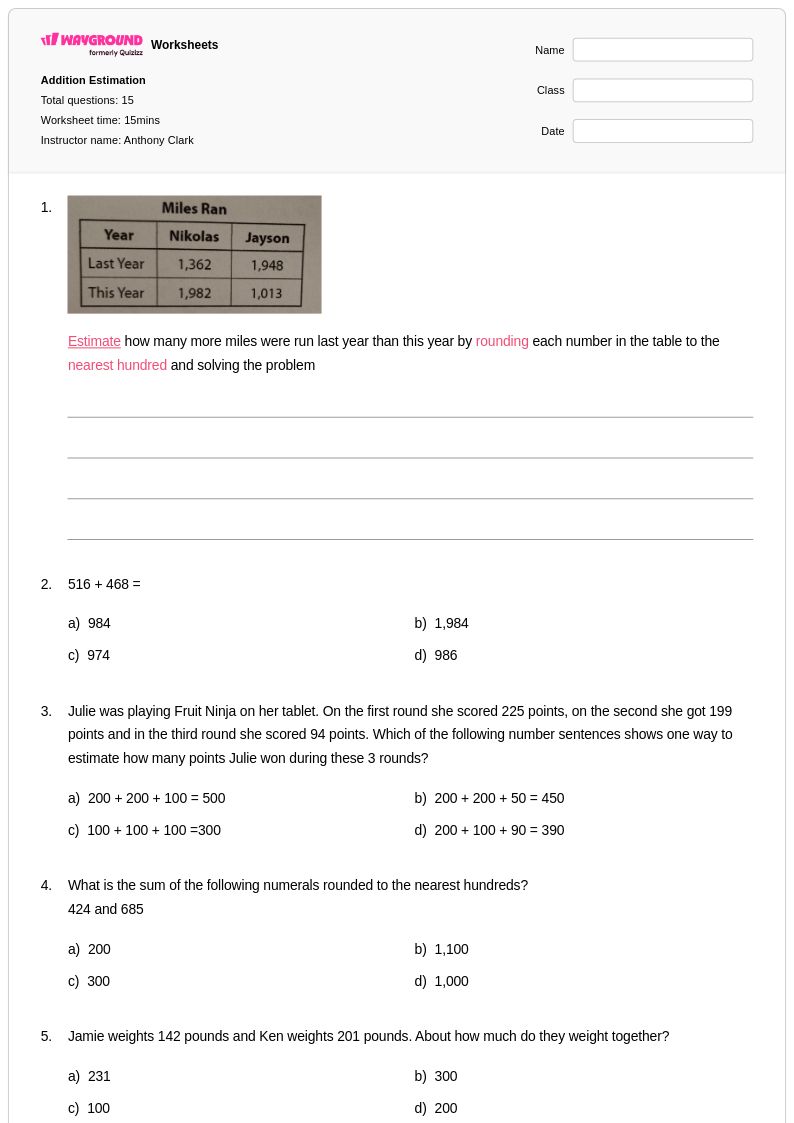
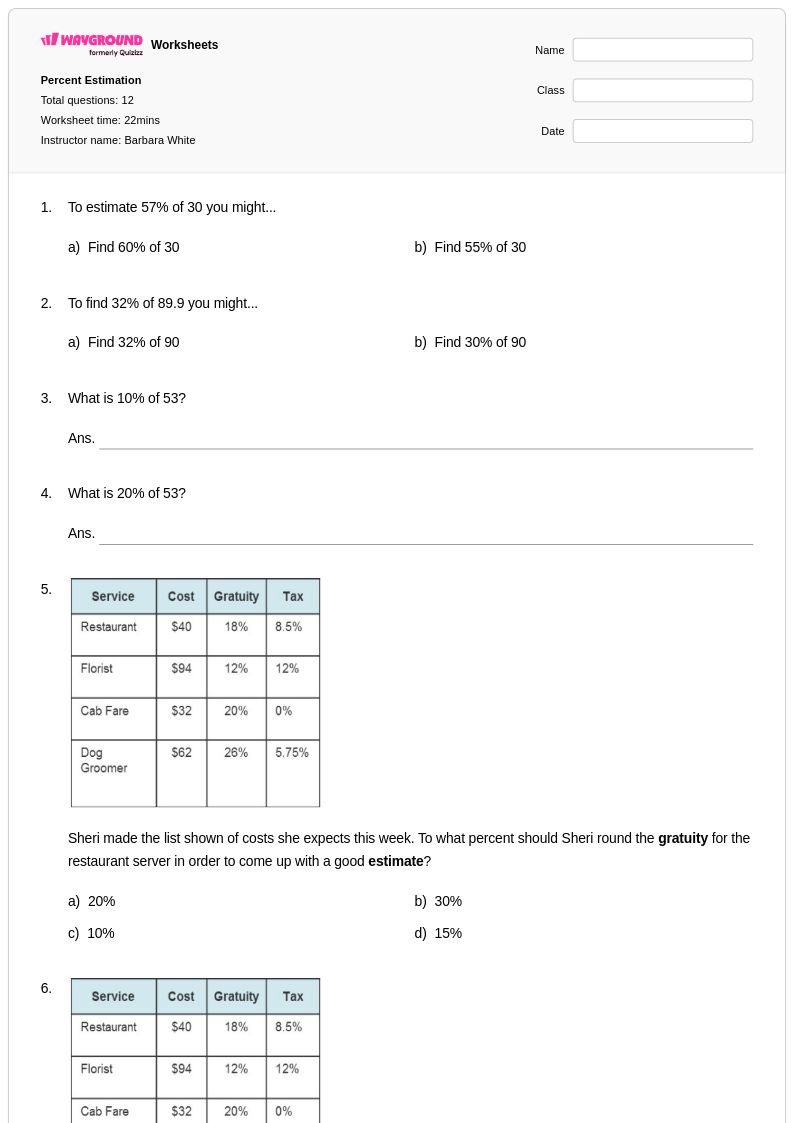
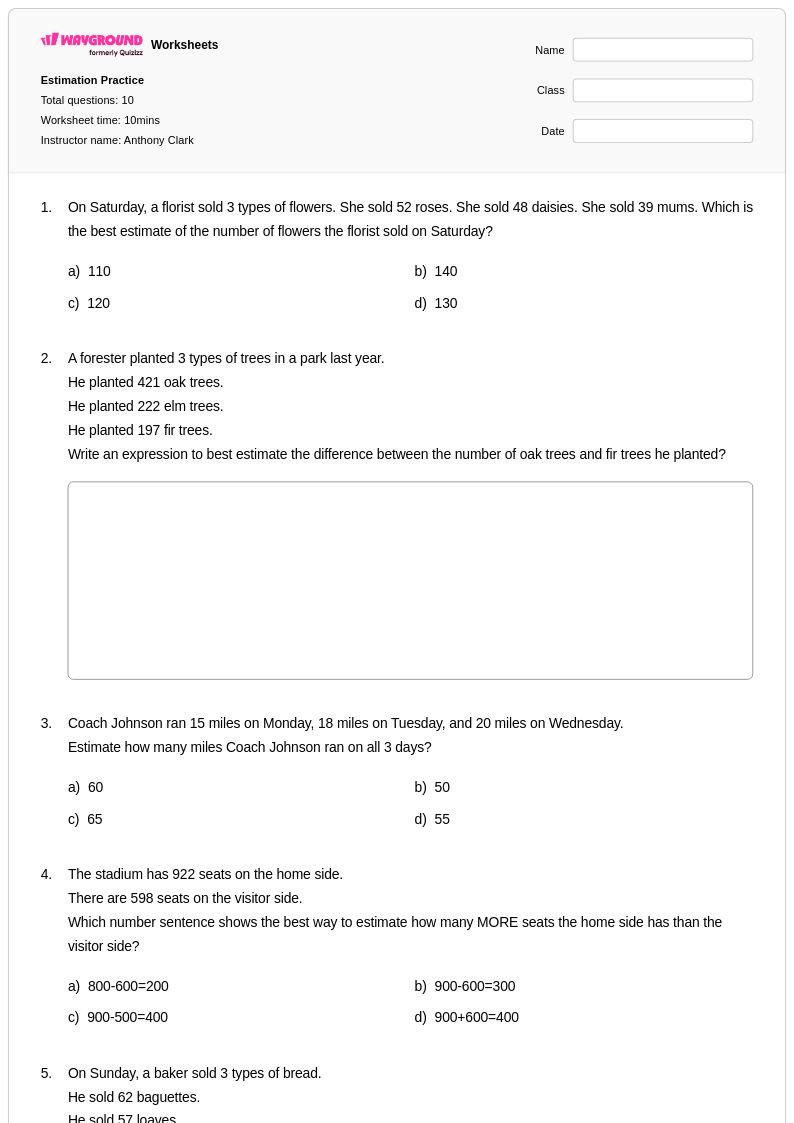
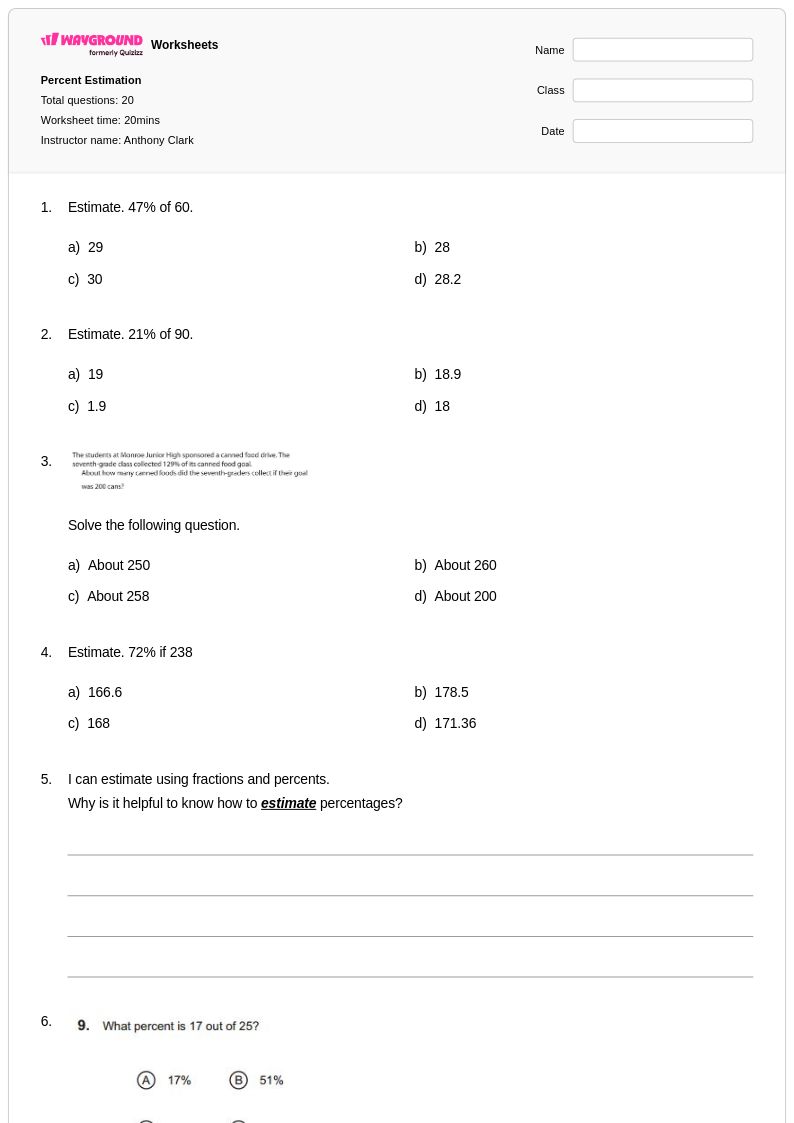
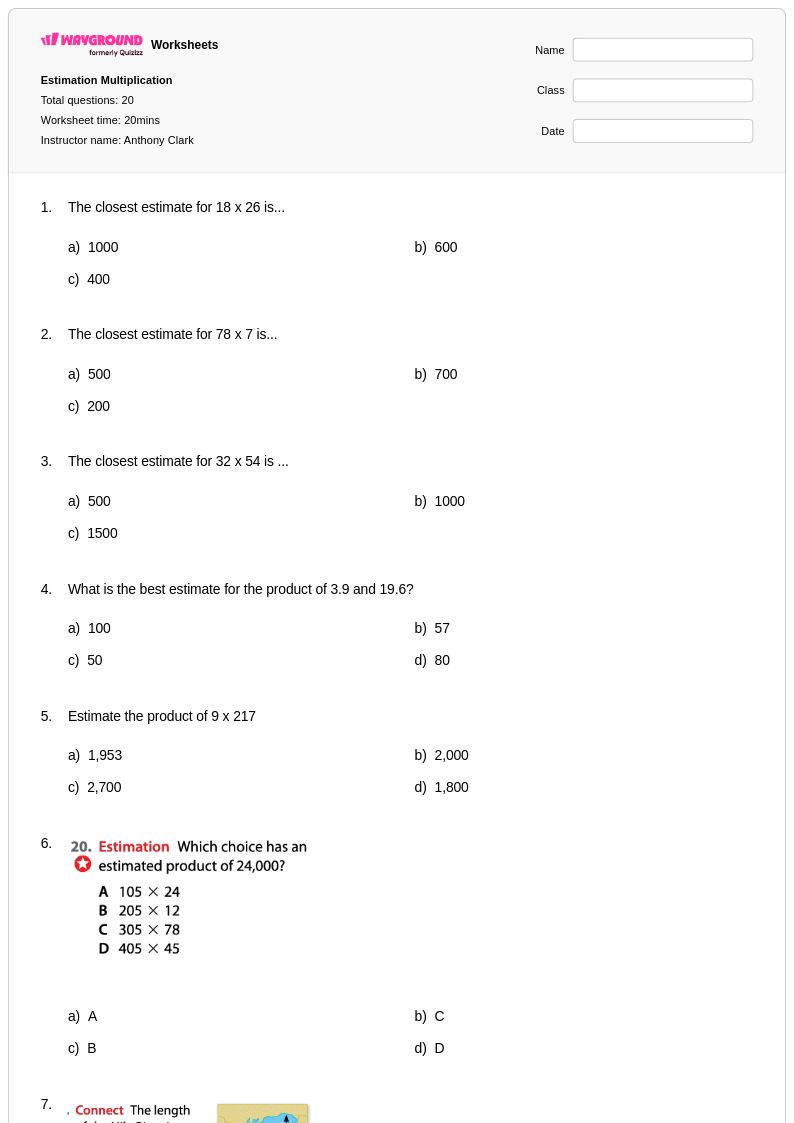
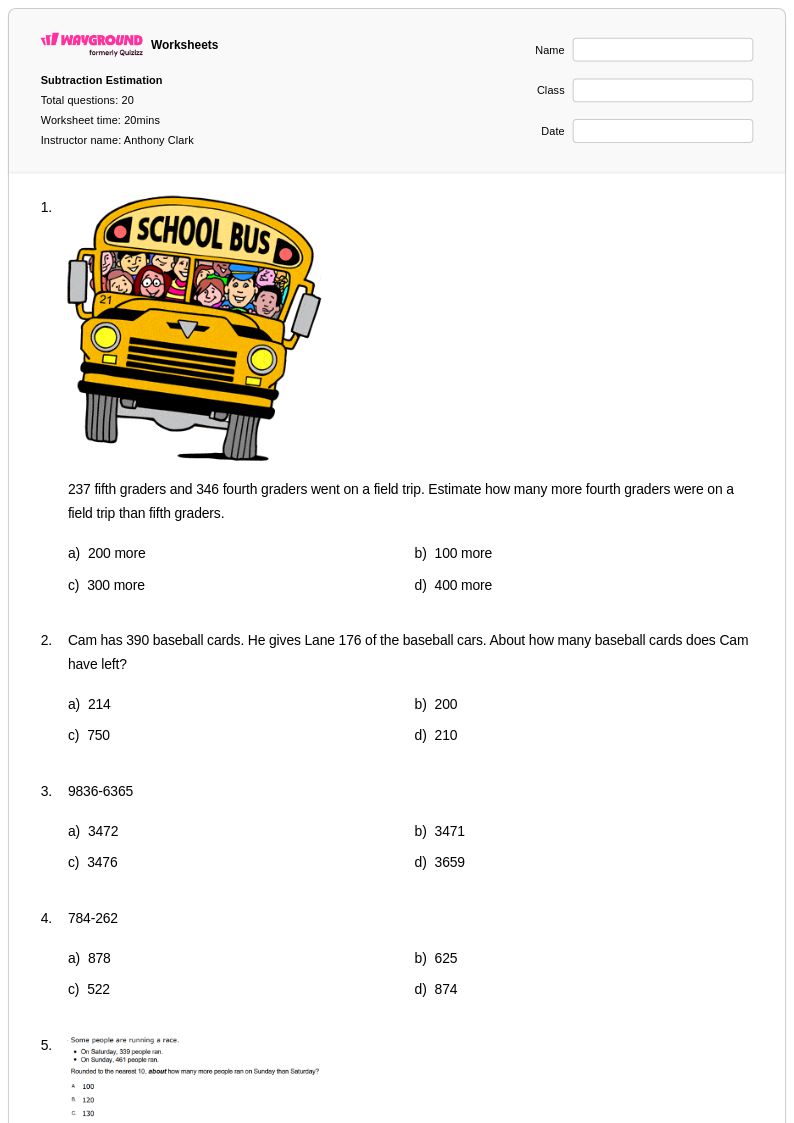
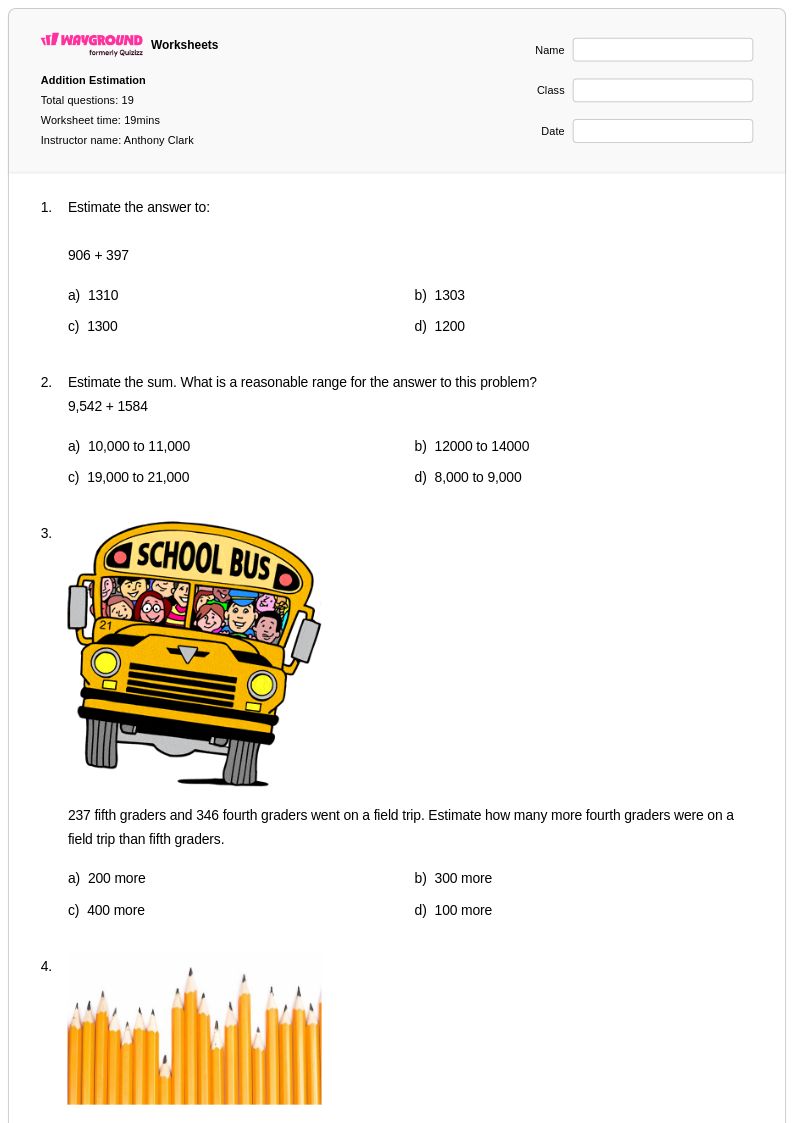
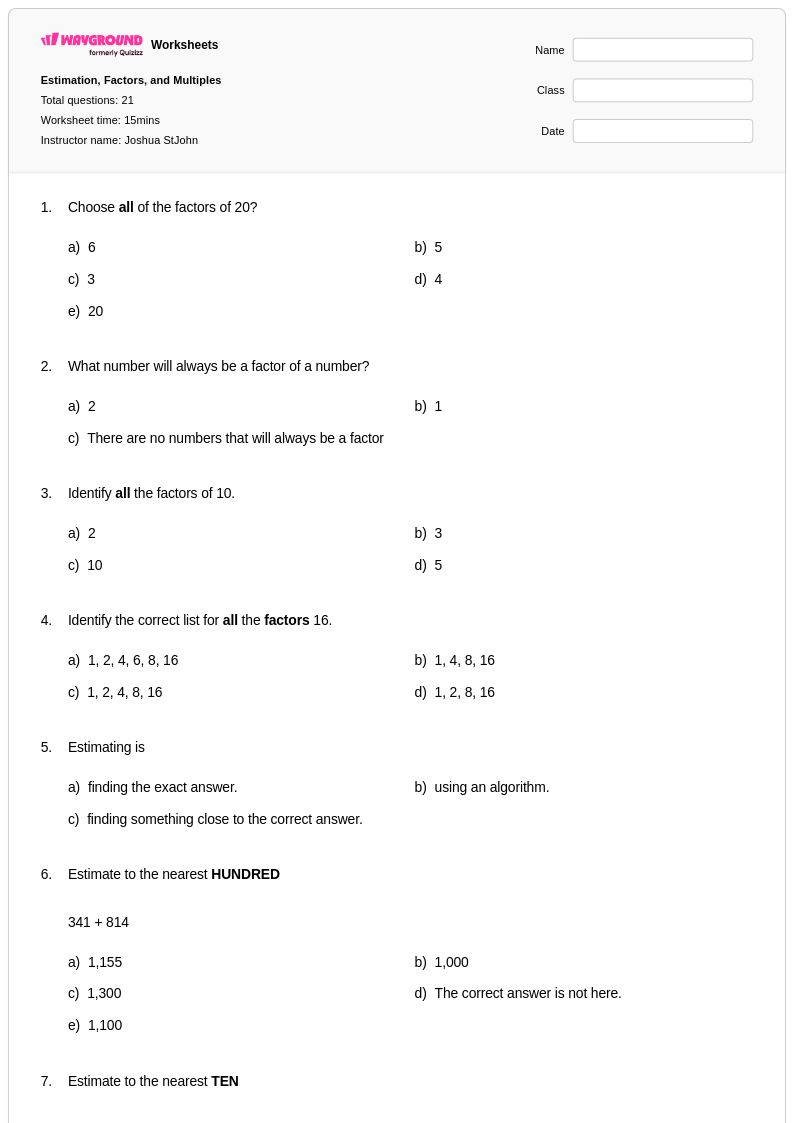
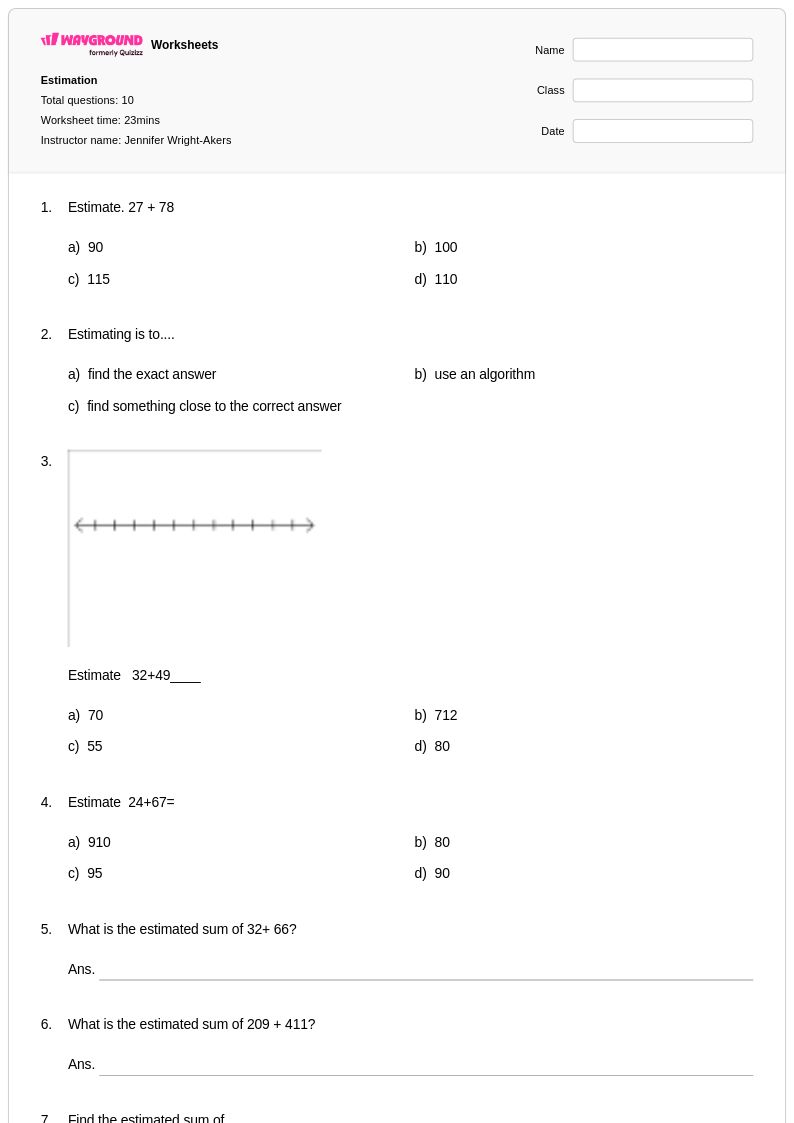
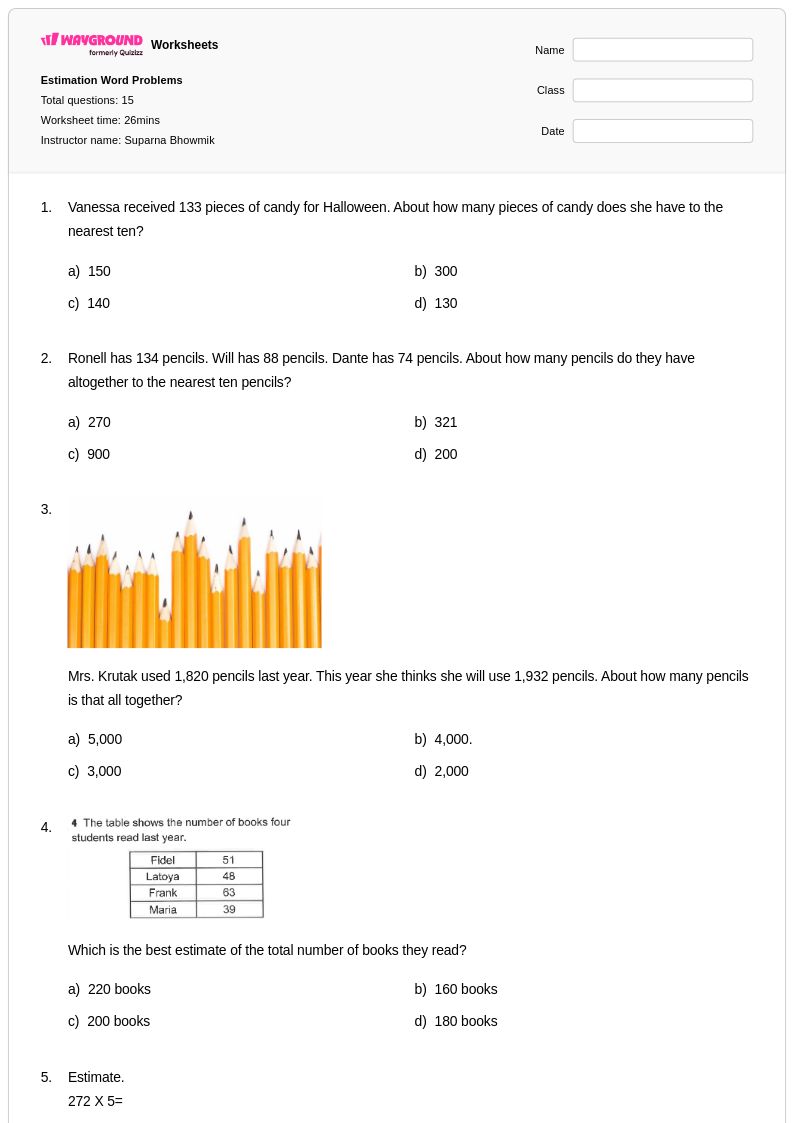
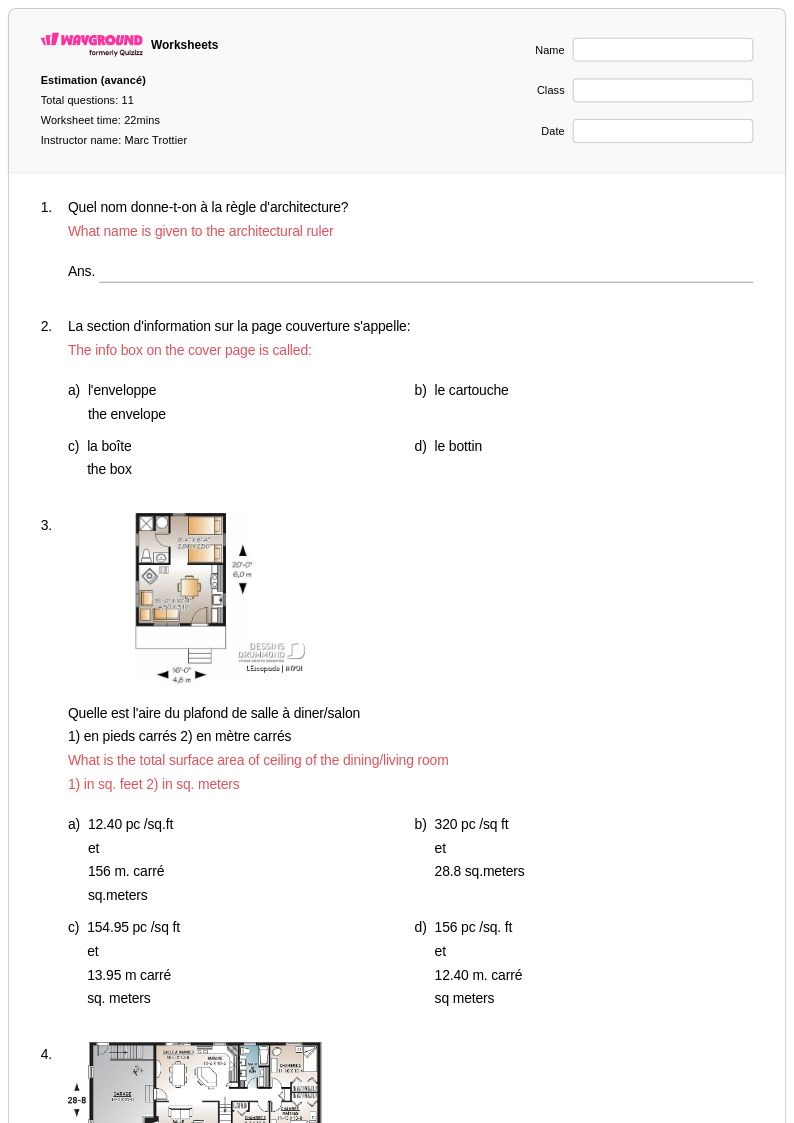
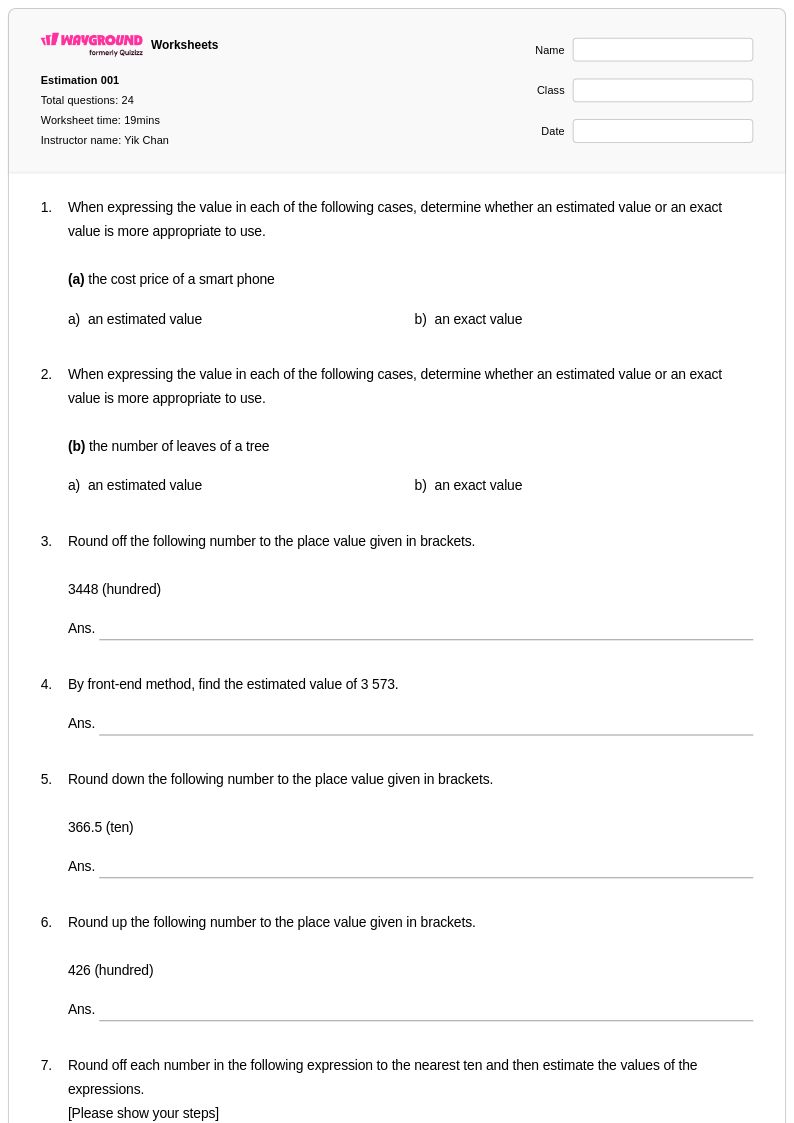
Estimation worksheets for kindergarten students available through Wayground (formerly Quizizz) provide foundational experiences with approximate reasoning and visual quantity assessment that form the cornerstone of mathematical thinking. These carefully designed printable resources introduce young learners to the concept of making reasonable guesses about quantities, sizes, and measurements through engaging activities that connect abstract mathematical concepts to concrete, everyday experiences. The worksheets strengthen essential number sense skills by encouraging students to use visual cues, prior knowledge, and logical reasoning to make educated approximations about groups of objects, lengths, and simple measurements. Each free pdf worksheet includes structured practice problems that guide kindergarten students through the estimation process, from initial visual assessment to checking their approximations against actual counts, with comprehensive answer keys that support both independent learning and guided instruction.
Wayground's extensive collection of kindergarten estimation worksheets draws from millions of teacher-created resources that have been tested in real classroom environments, ensuring educational effectiveness and age-appropriate content delivery. The platform's robust search and filtering capabilities allow educators to quickly locate worksheets that align with specific learning objectives and curriculum standards, while built-in differentiation tools enable teachers to modify content complexity to meet diverse student needs within the same classroom. These versatile resources are available in both printable and digital formats, including downloadable pdf versions that facilitate flexible lesson planning and seamless integration into existing mathematics instruction. Teachers utilize these estimation worksheet collections for targeted skill practice, remediation support for struggling learners, and enrichment activities that challenge students to apply their developing number sense in increasingly sophisticated ways, creating a comprehensive approach to building mathematical confidence and analytical thinking skills.
FAQs
How do I teach estimation to kindergarten students?
At this age, estimation is almost entirely visual and concrete. Use jars of counters, groups of blocks, or pictures of objects and ask students to guess 'about how many' before counting. The goal isn't accuracy — it's building the habit of looking at a quantity and forming a reasonable expectation before verifying. Anchor guesses to familiar benchmarks: 'Is it closer to 5 or closer to 10?' gives students a scaffold that pure open-ended guessing doesn't.
What estimation activities are appropriate for kindergarteners?
The best kindergarten estimation practice is grounded in pictures and objects rather than numbers alone. Effective activity types include: estimating how many items are in a group (then counting to check), comparing two groups to decide which has more, and estimating lengths using informal units like hand-spans. Wayground's kindergarten estimation worksheets use visual quantity tasks and structured guess-then-check formats that match how five- and six-year-olds actually build number sense.
What misconceptions do kindergarteners have about estimation?
The most common one is that a guess is wrong if it doesn't match the exact count. Young students often feel they 'got it wrong' when their estimate was off by a few, which discourages risk-taking. Reinforce early and often that a close estimate is a success, and that the point of checking is to learn — not to grade the guess. Some students also conflate estimating with random guessing; they need to see that looking carefully at a group before guessing is part of the skill.
How do I use Wayground's kindergarten estimation worksheets?
The worksheets are available as printable PDFs, which works well for kindergarten since hands-on, paper-based tasks suit this age group and support schools managing screen time in the early grades. Every worksheet includes an answer key so you can quickly review responses during small-group time. If you do assign them digitally, Wayground can host the worksheet as an interactive session — and the Read Aloud accommodation is especially useful here, letting the platform read questions to students who aren't yet independent readers.
How does kindergarten estimation connect to the Common Core math progression?
Common Core's kindergarten math standards build number sense through counting, comparing, and composing numbers up to 20. Estimation at this level supports that foundation directly: when students look at a group and judge 'about how many,' they're practicing the same quantity reasoning that underpins counting and cardinality. This visual estimation work prepares students for Grade 1, where they begin placing numbers on a number line and making more structured comparisons between quantities.
How can I support diverse learners during kindergarten estimation activities?
For students still developing fine motor skills or print awareness, larger font sizes and wider spacing on printed worksheets reduce visual clutter so the math stays front and center. During digital sessions, the Read Aloud feature is particularly valuable in kindergarten — many students at this level can reason about quantities but can't yet read the question independently, and having it read aloud removes that barrier without changing the estimation task itself.