Free Printable Soil Composition Worksheets for Grade 3
Explore Grade 3 soil composition worksheets and printables that help students discover different layers and components of soil through engaging practice problems, free PDF resources, and comprehensive answer keys.
Explore printable Soil Composition worksheets for Grade 3
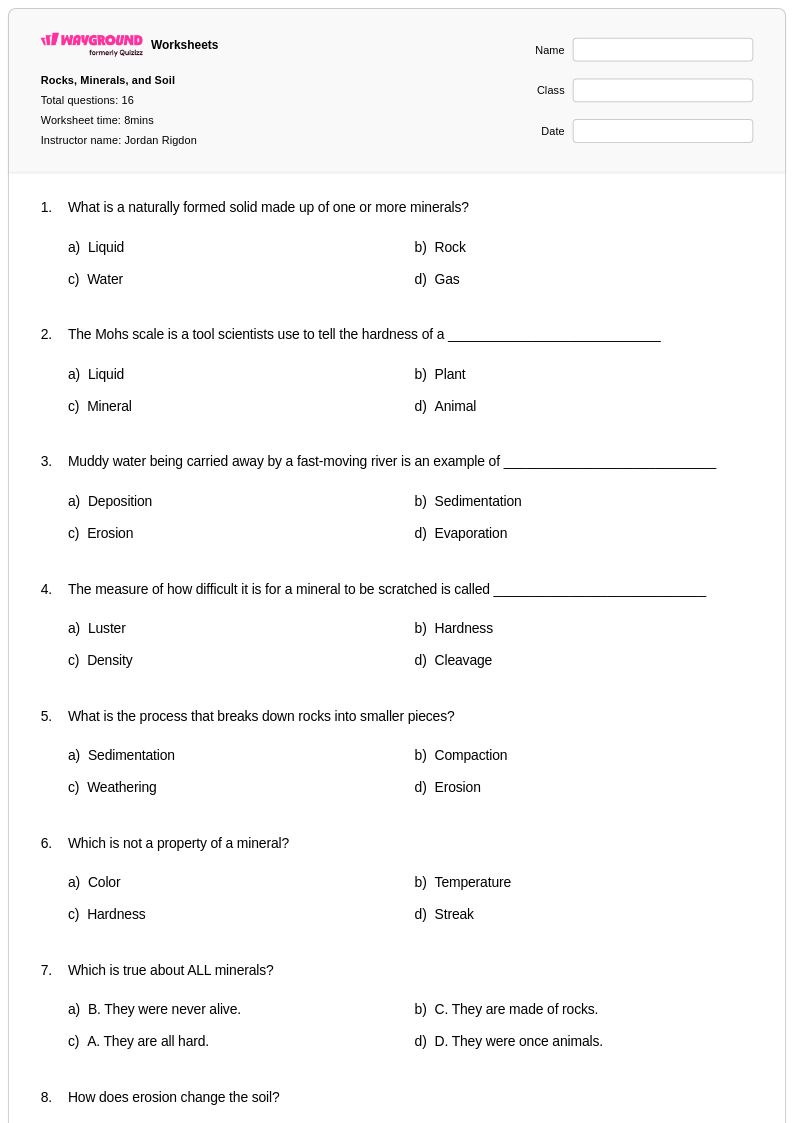
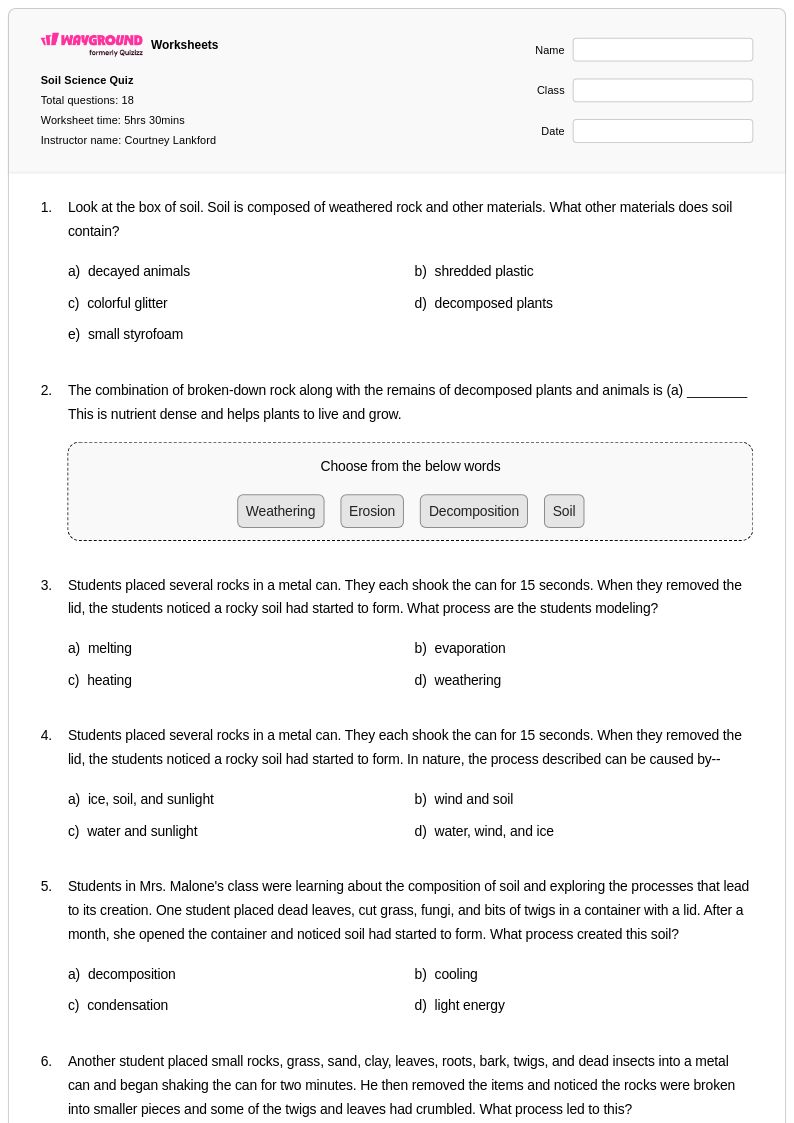
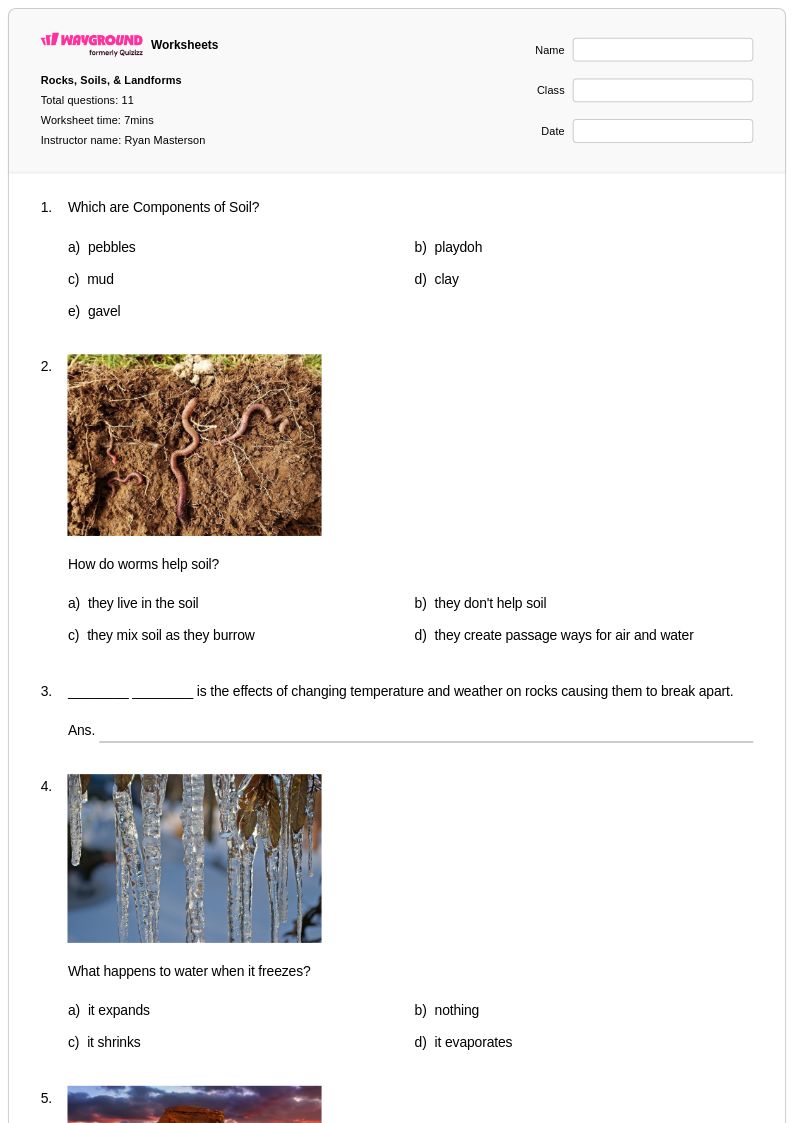
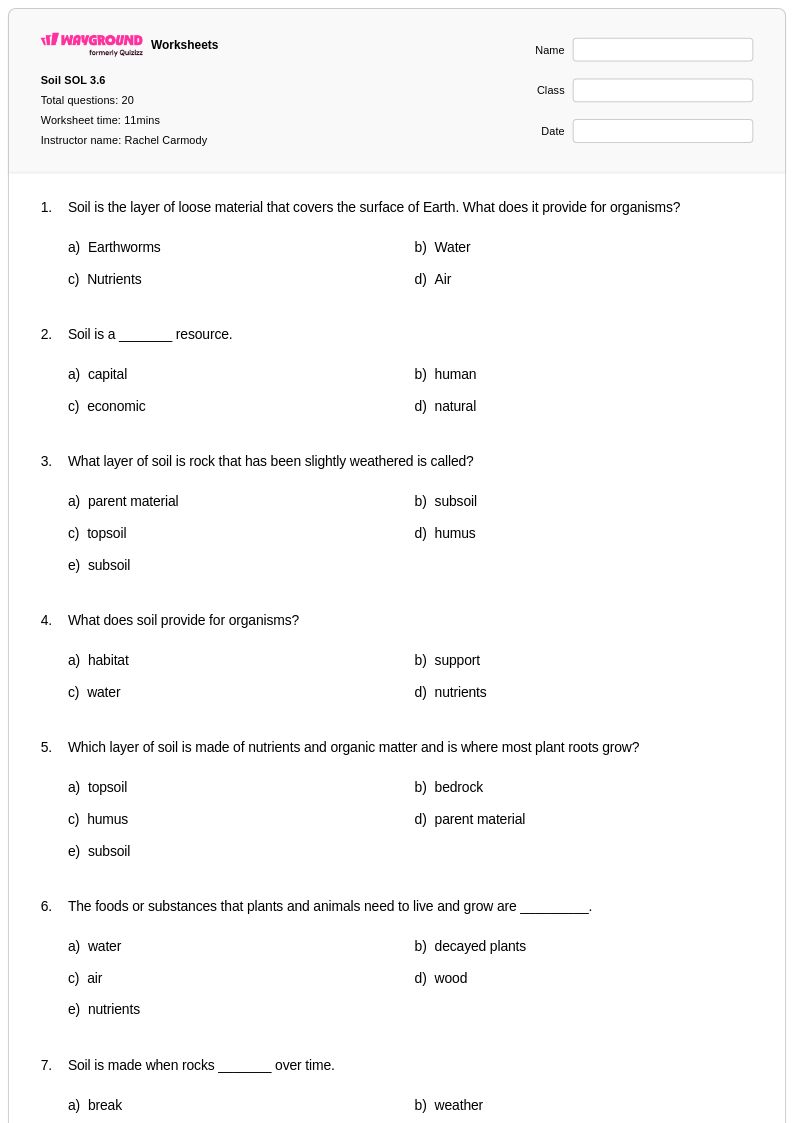
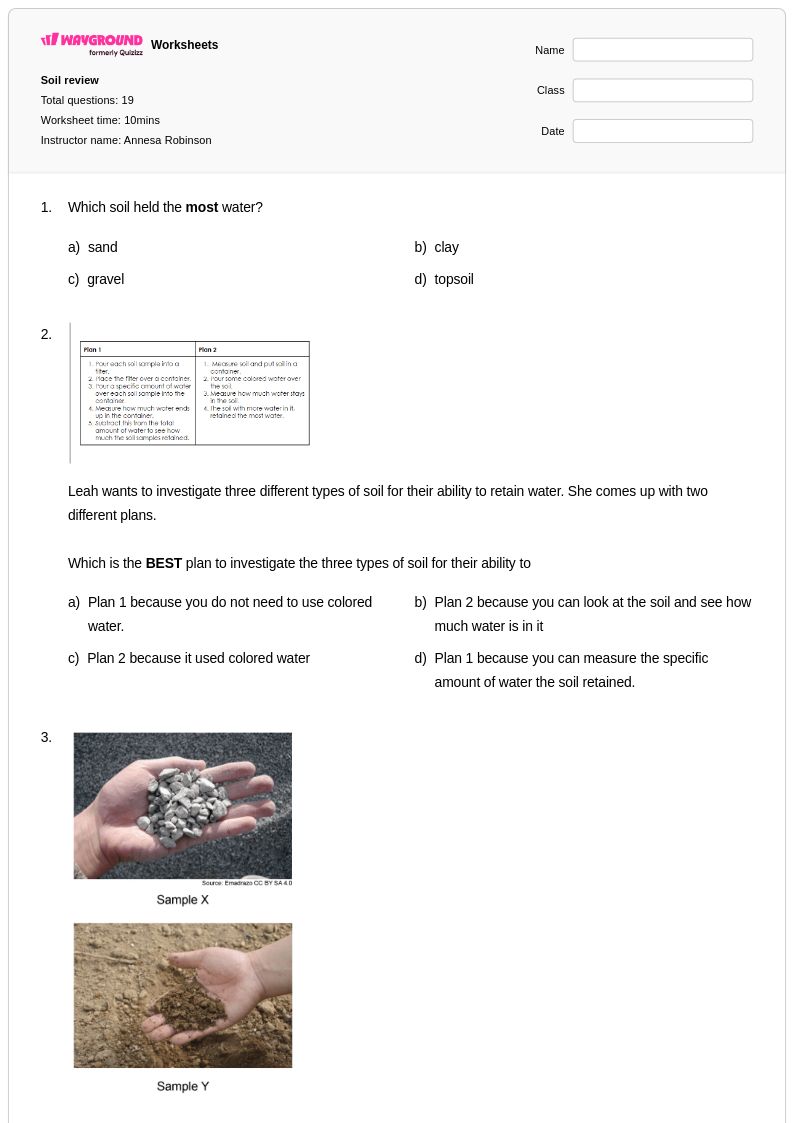
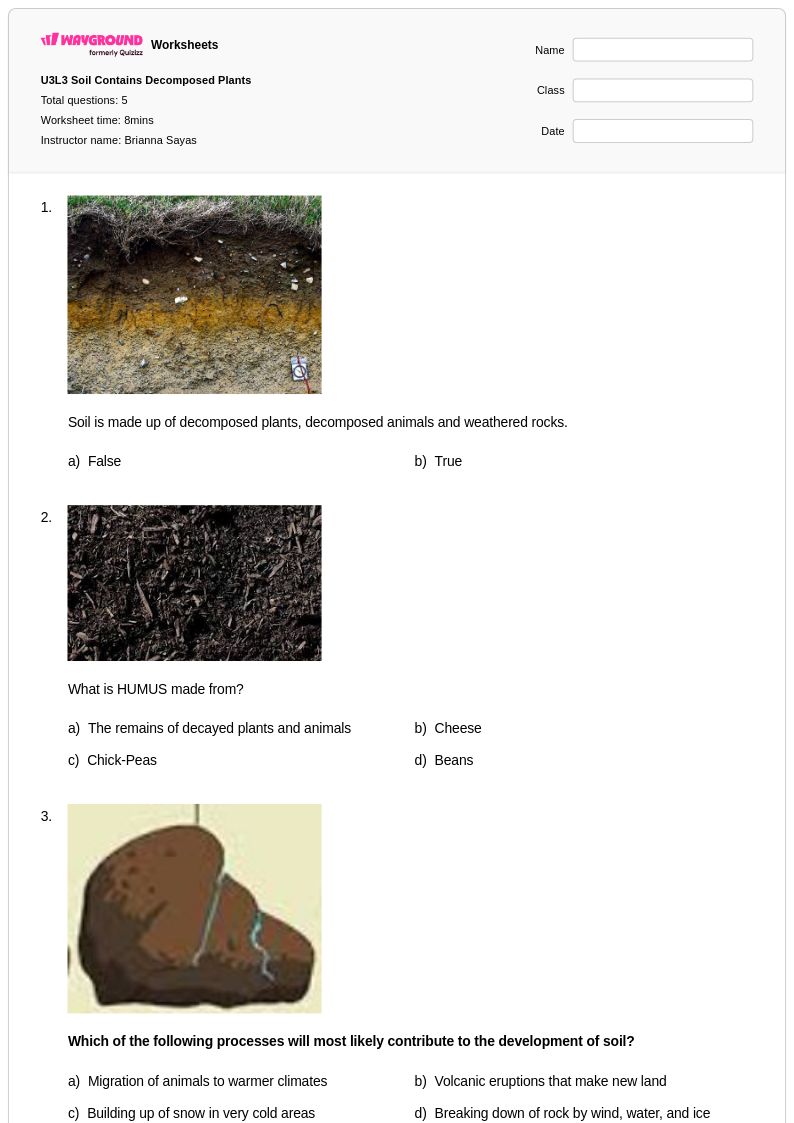
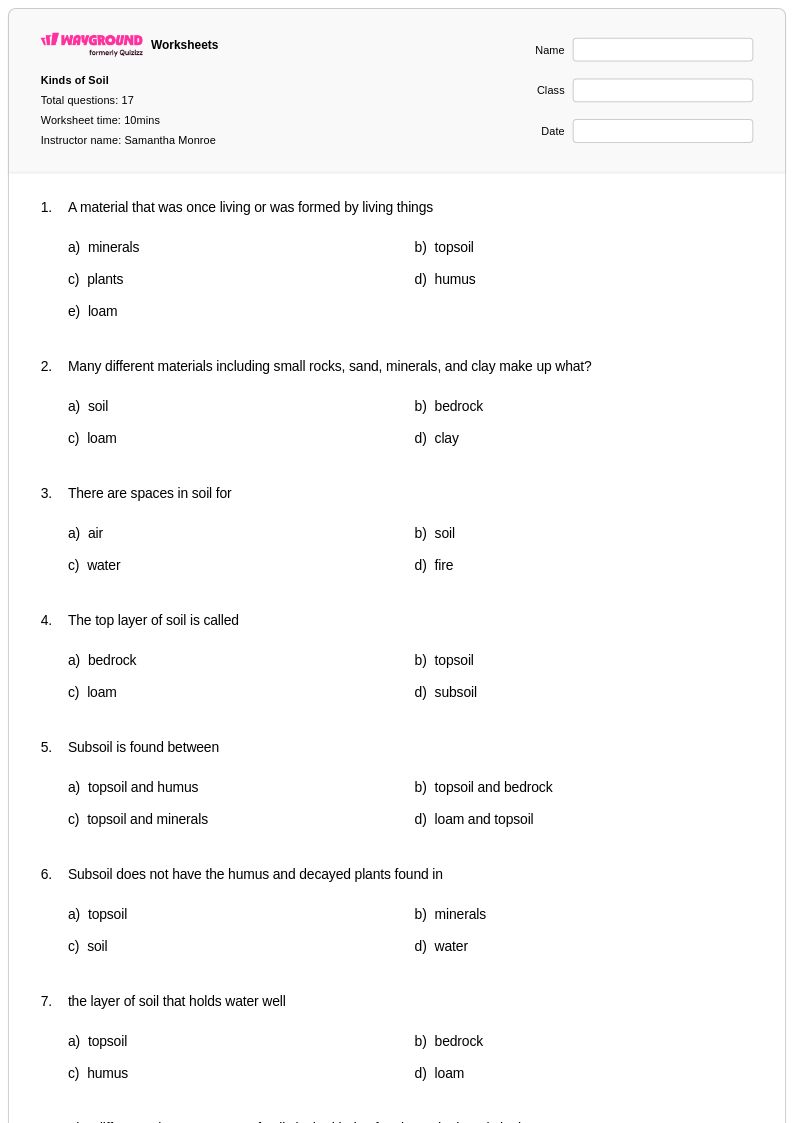
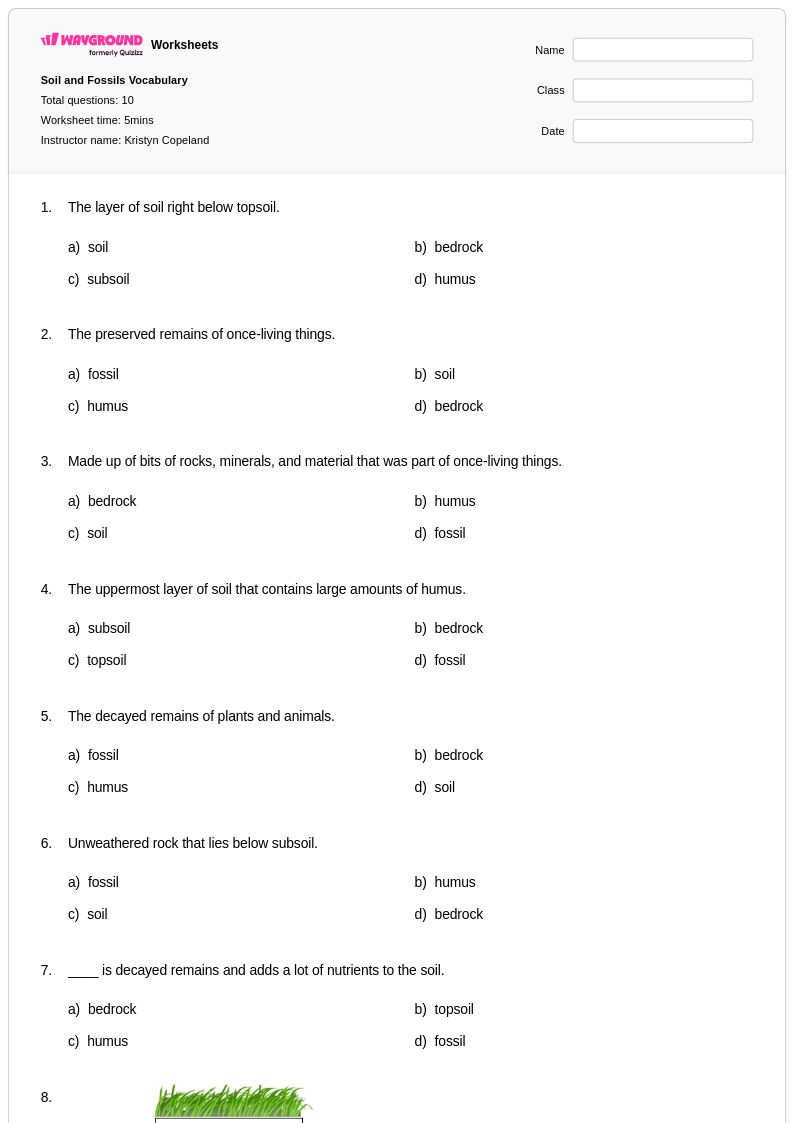
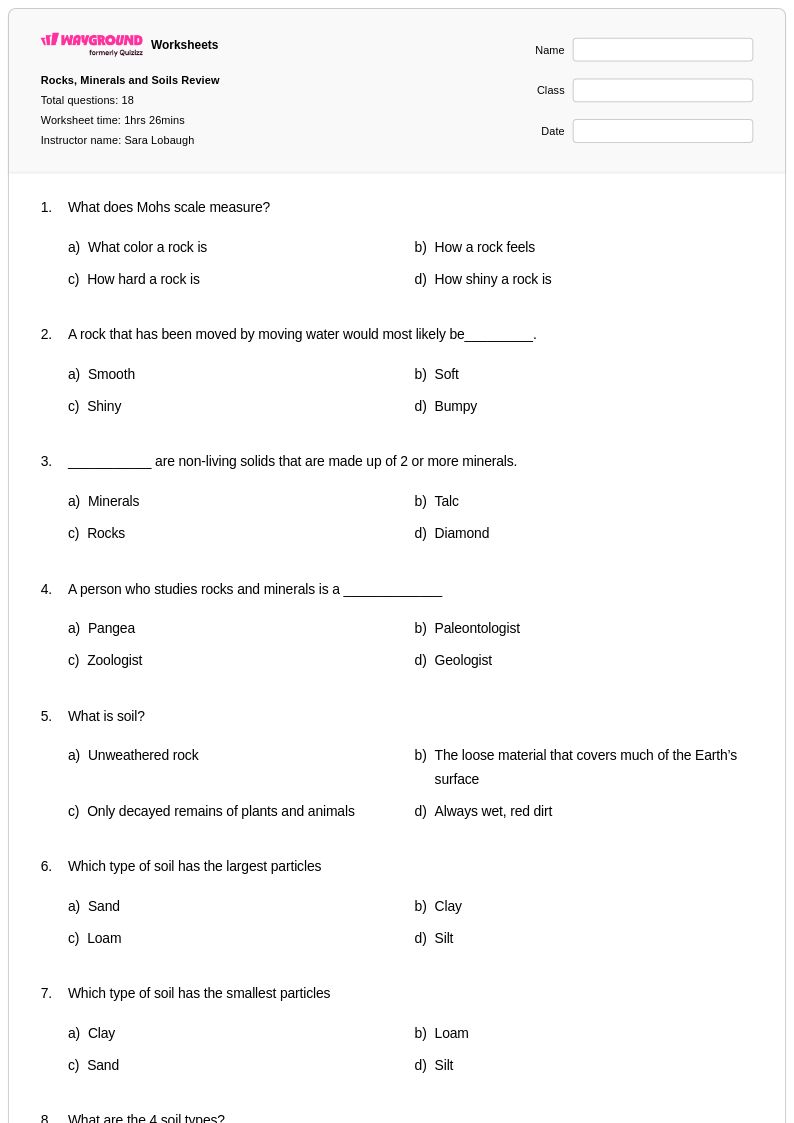
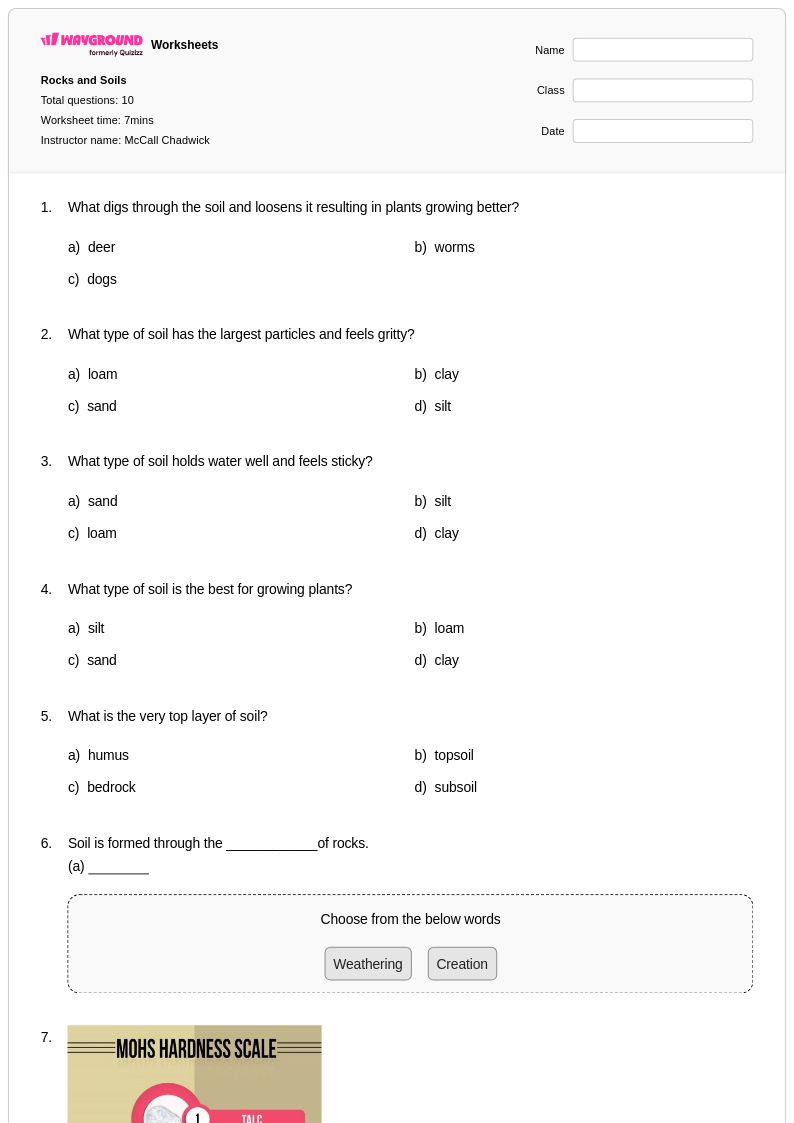
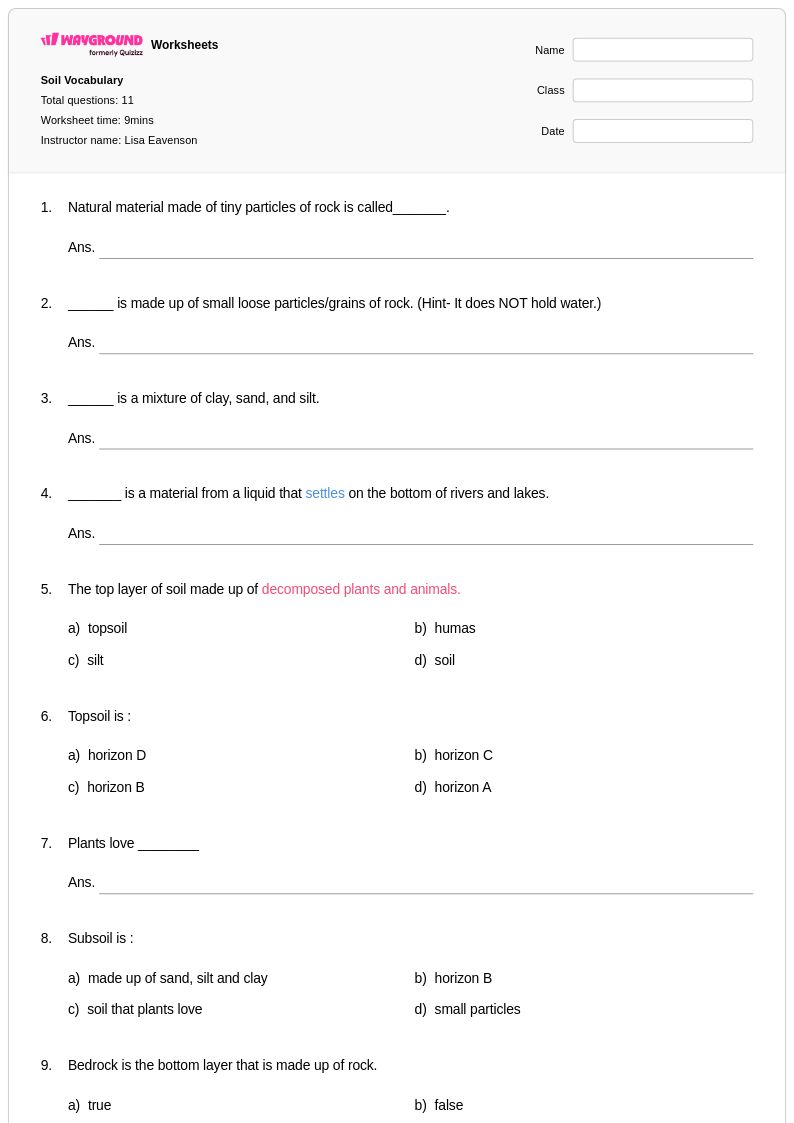
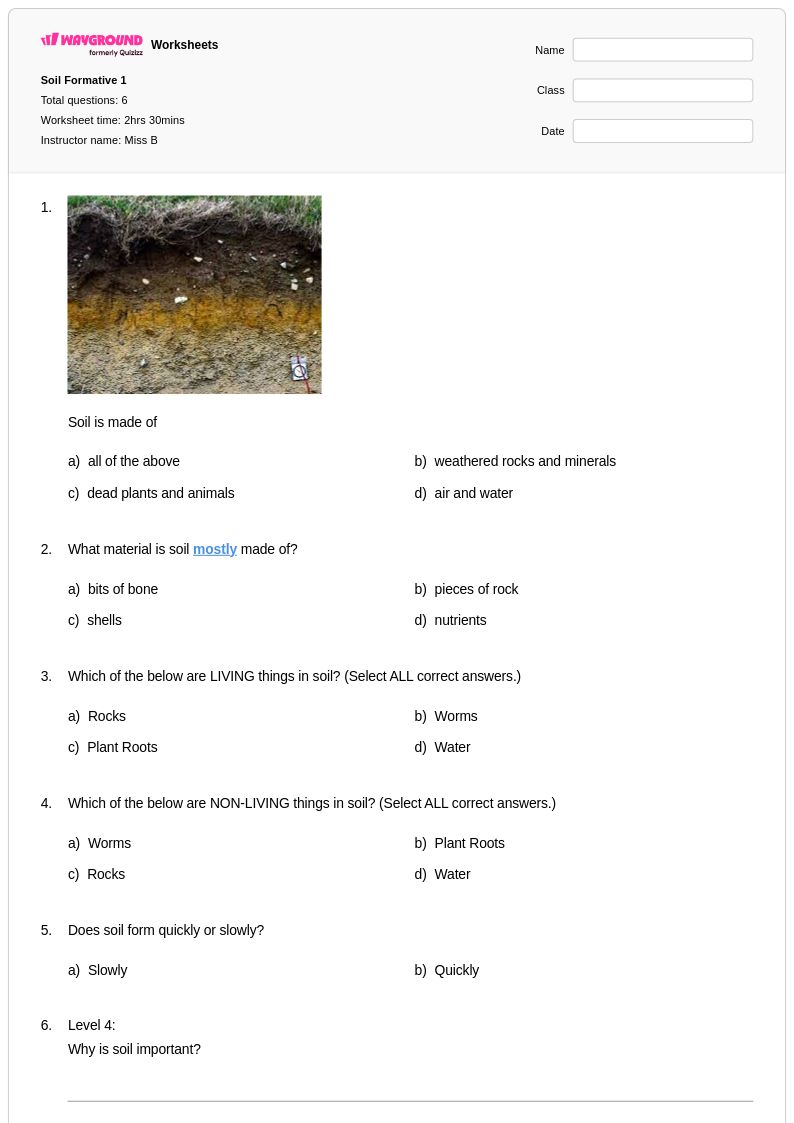
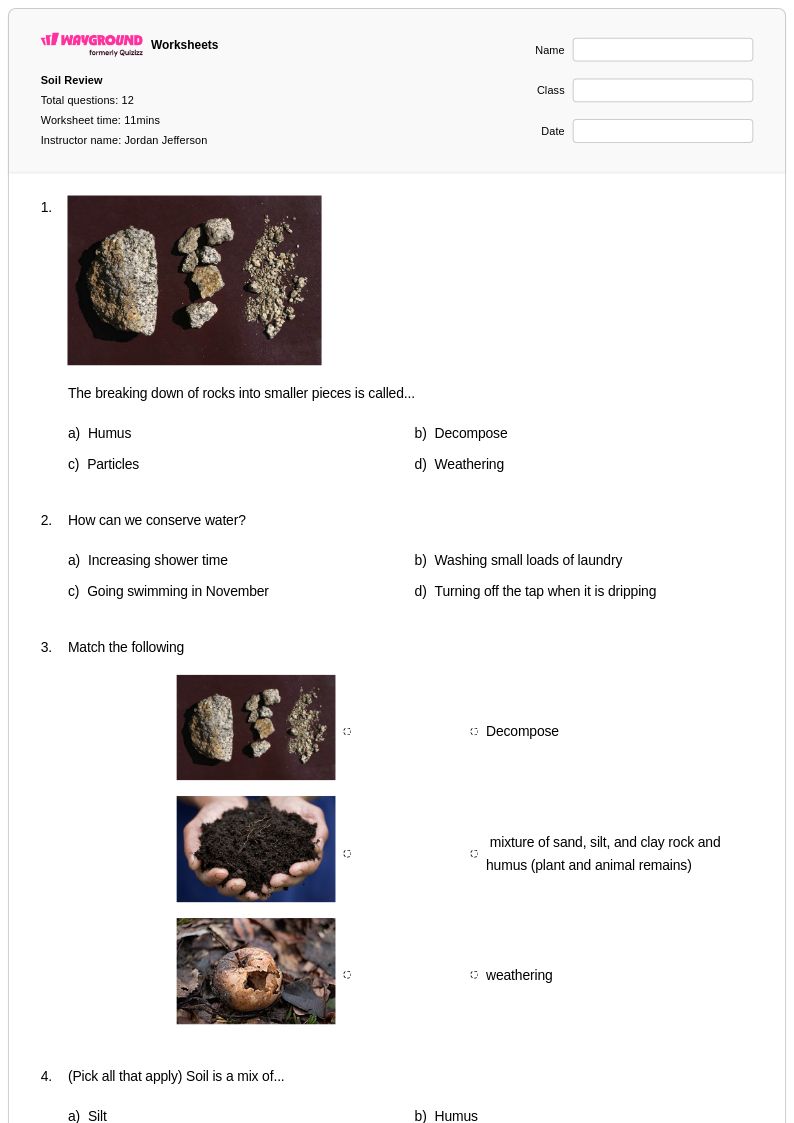
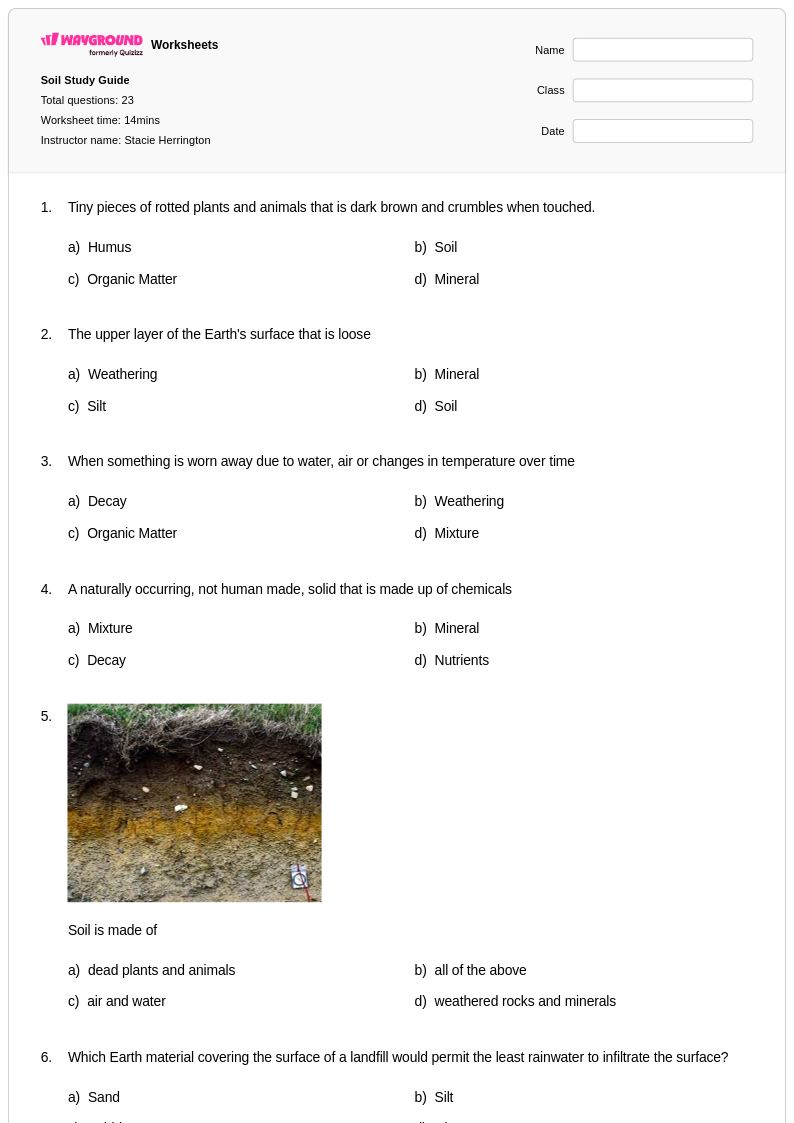
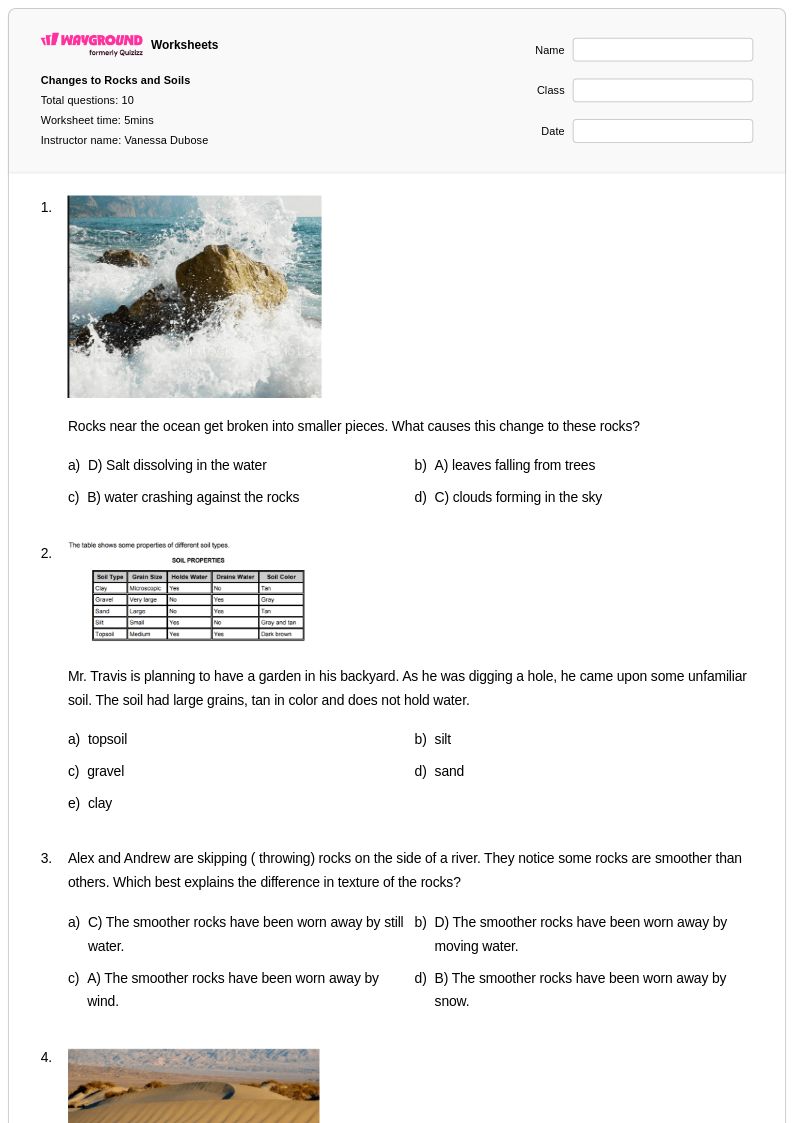
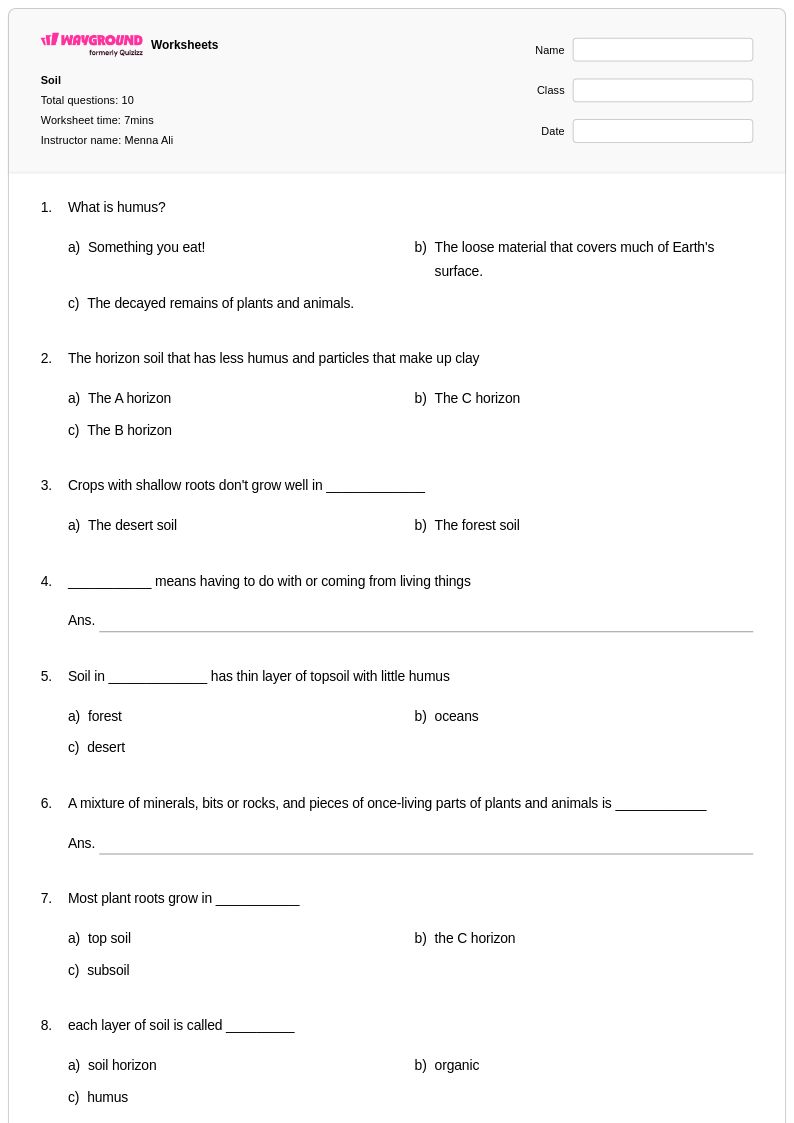
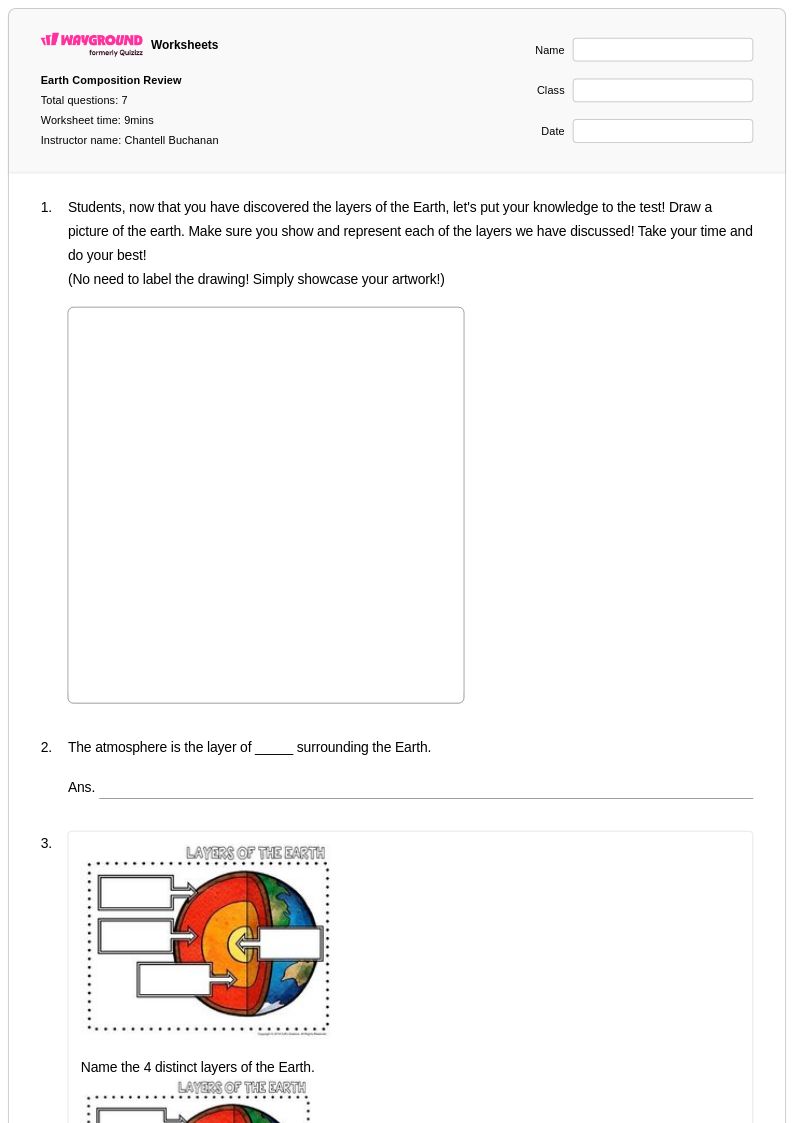
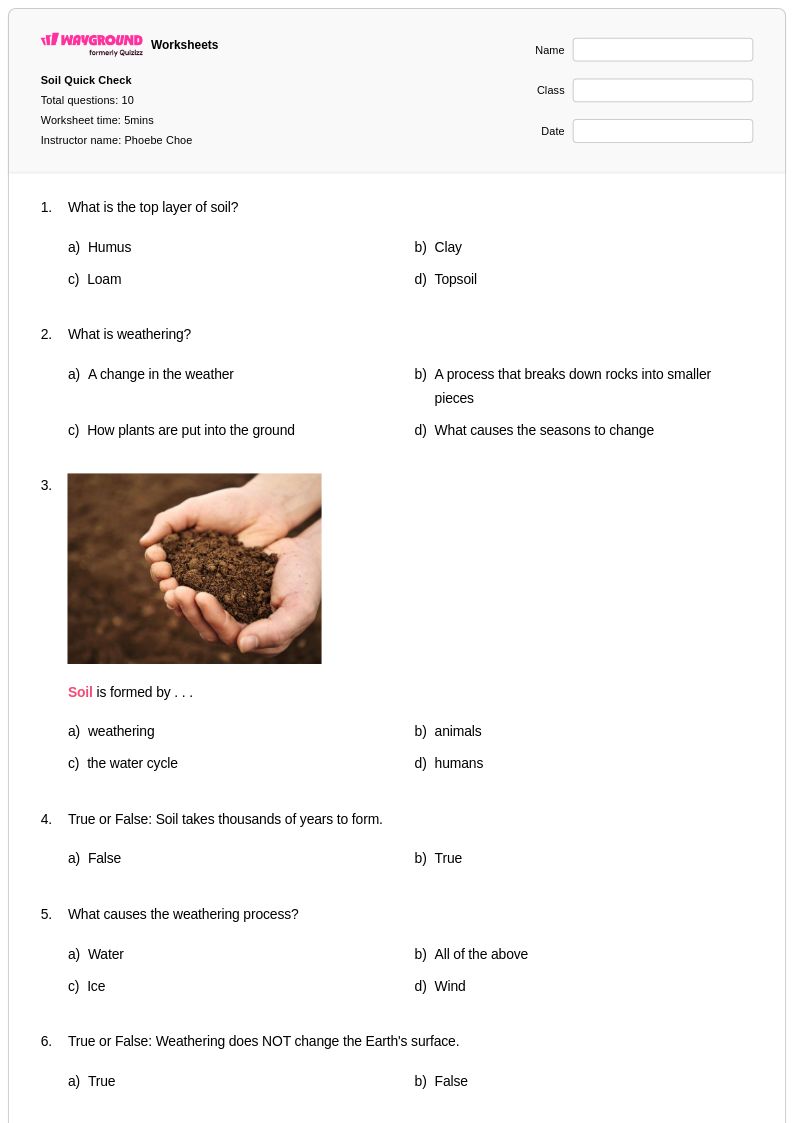
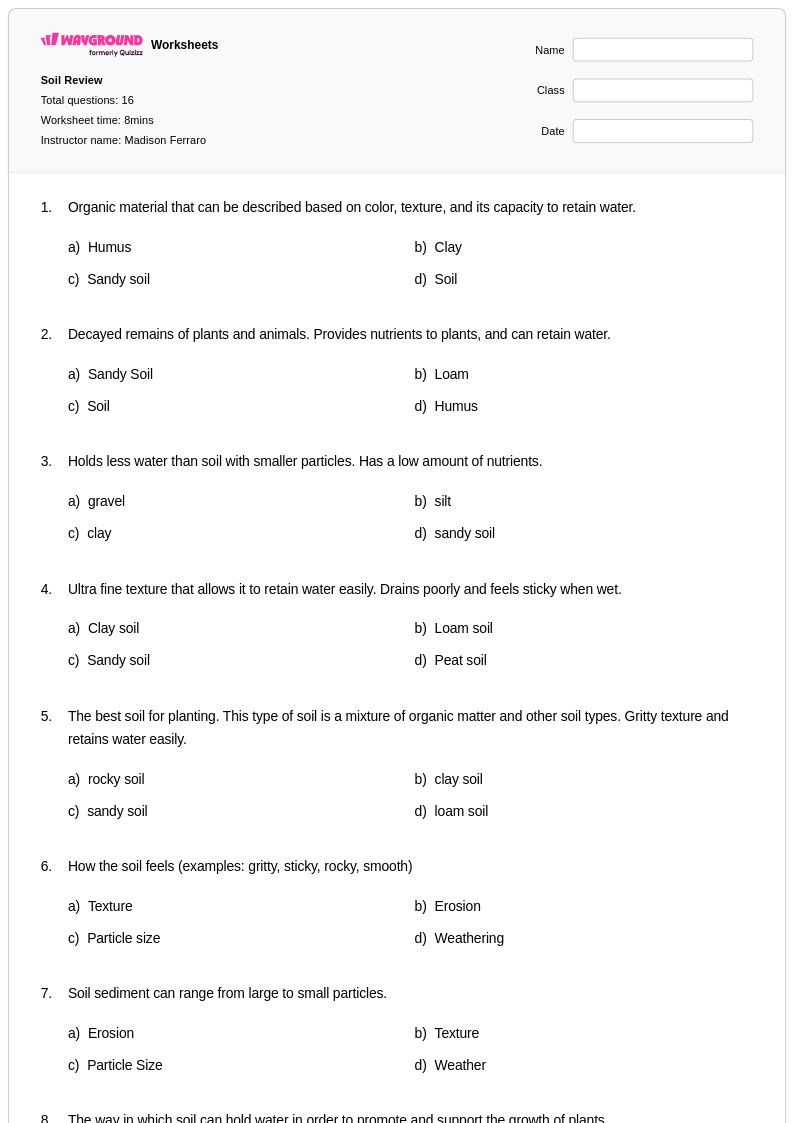
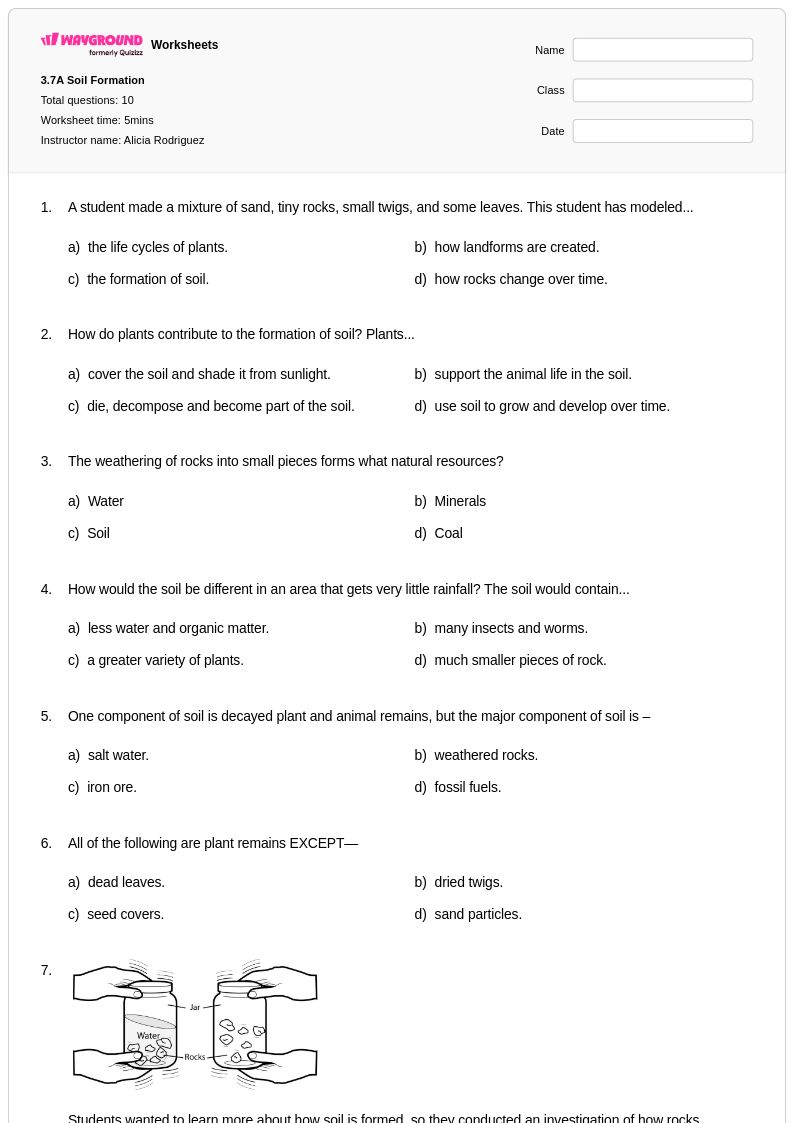
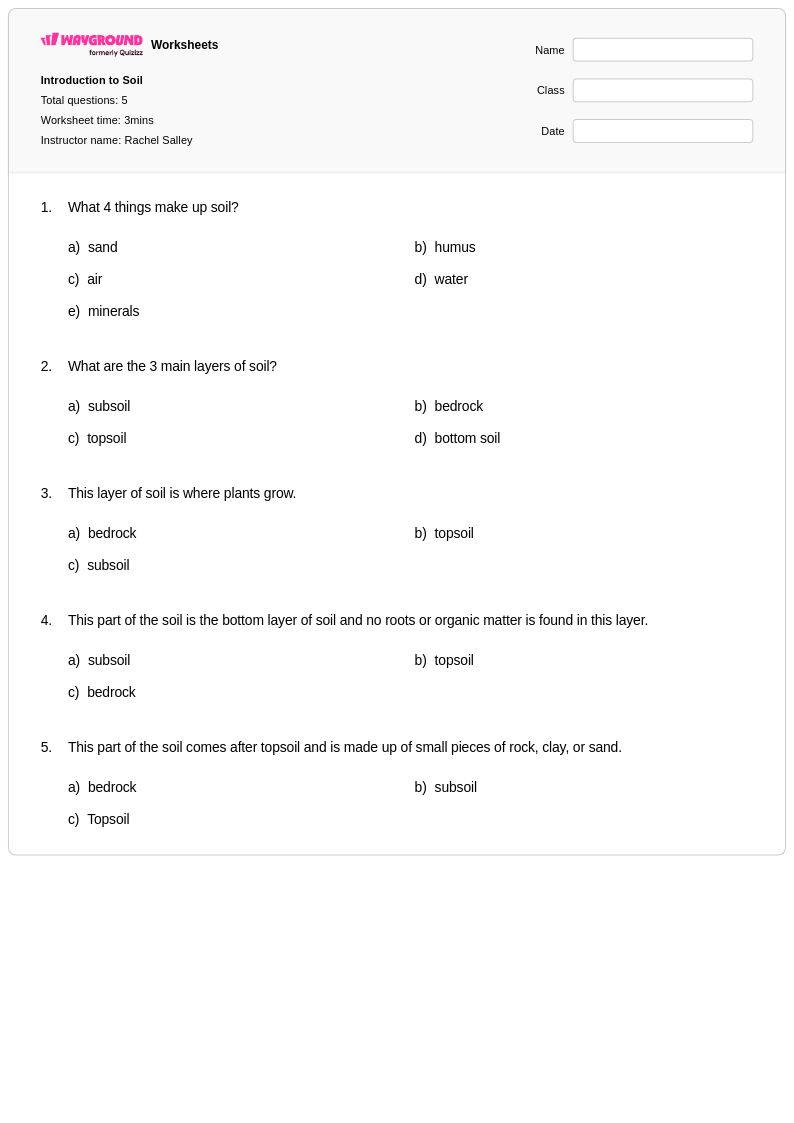
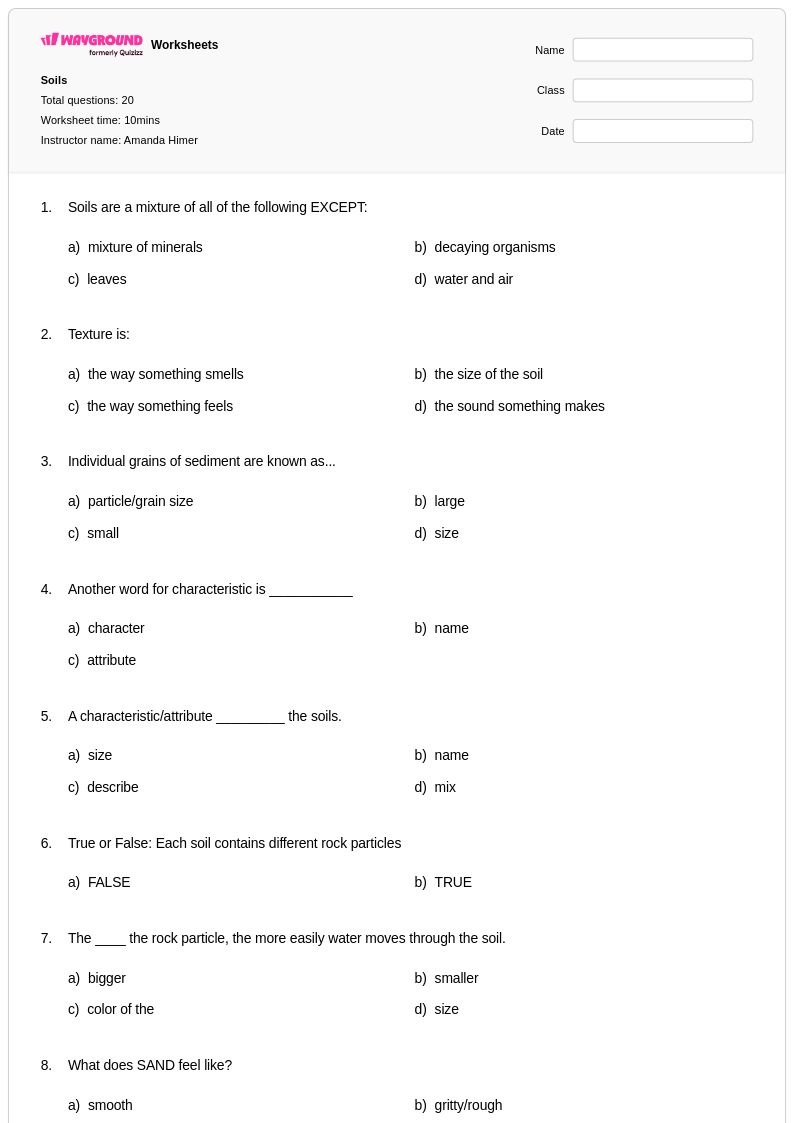
Soil composition worksheets for Grade 3 students available through Wayground (formerly Quizizz) provide young learners with hands-on opportunities to explore the fundamental components that make up Earth's soil layers. These educational resources focus on helping third-grade students identify and understand the basic ingredients of soil, including sand, clay, silt, organic matter, and small rock particles, while developing critical observation and classification skills essential for earth science comprehension. The collection features engaging practice problems that guide students through soil sample analysis, comparative activities between different soil types, and interactive exercises that demonstrate how various materials combine to create fertile growing mediums. Teachers can access comprehensive answer keys and free printable pdf versions that support both independent student work and guided classroom instruction.
Wayground's extensive library of teacher-created soil composition resources supports educators with millions of expertly designed materials that streamline lesson planning and enhance student engagement in Grade 3 earth and space science curricula. The platform's robust search and filtering capabilities allow teachers to quickly locate standards-aligned worksheets that match specific learning objectives, while built-in differentiation tools enable seamless customization for students with varying skill levels and learning needs. These versatile resources are available in both printable and digital formats, including downloadable pdf options, making them ideal for traditional classroom settings, remote learning environments, or hybrid instruction models. Educators can effectively utilize these materials for initial skill introduction, targeted remediation sessions, enrichment activities for advanced learners, and ongoing practice that reinforces essential concepts about Earth's soil systems and their role in supporting plant and animal life.
FAQs
How do I teach soil composition to students?
Teaching soil composition effectively starts with helping students visualize the four main components: mineral particles, organic matter, water, and air spaces. Begin with a soil profile diagram activity so students can see how layers differ in texture and function before moving into hands-on analysis. Connecting each component to a real-world role, such as how organic matter drives nutrient availability or how particle size affects drainage, gives abstract concepts a concrete anchor.
What worksheets or exercises help students practice identifying soil components?
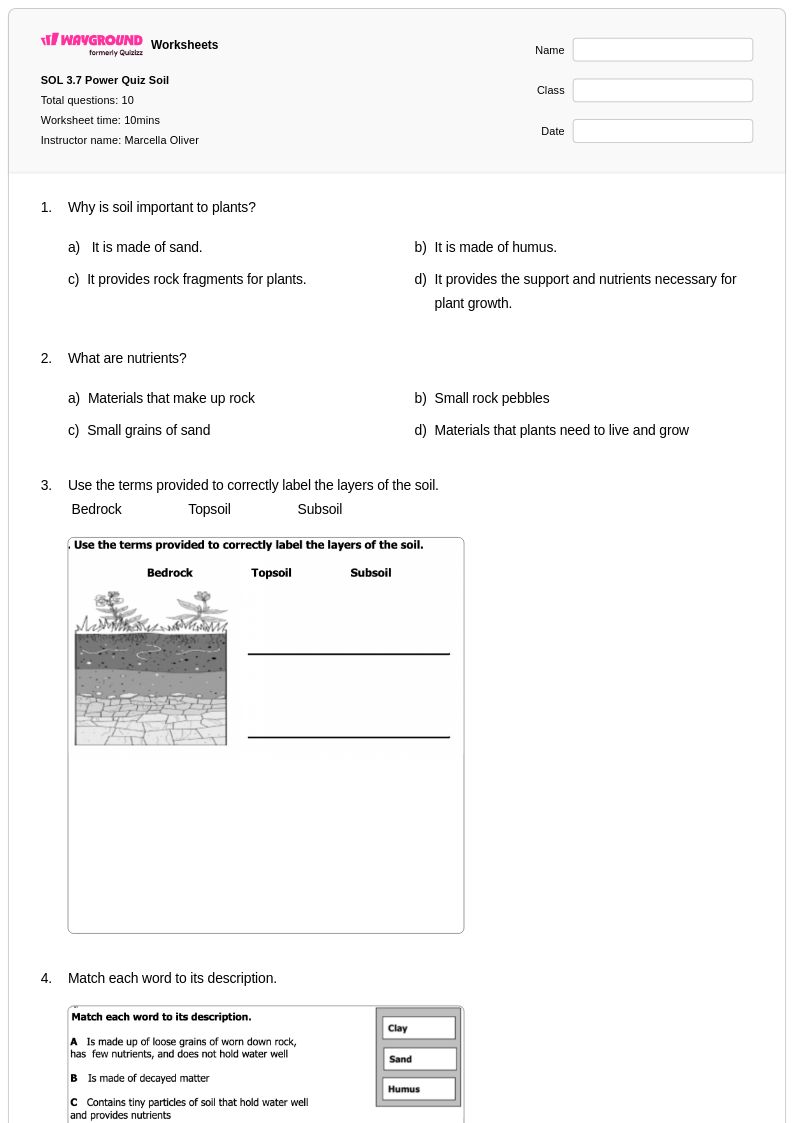
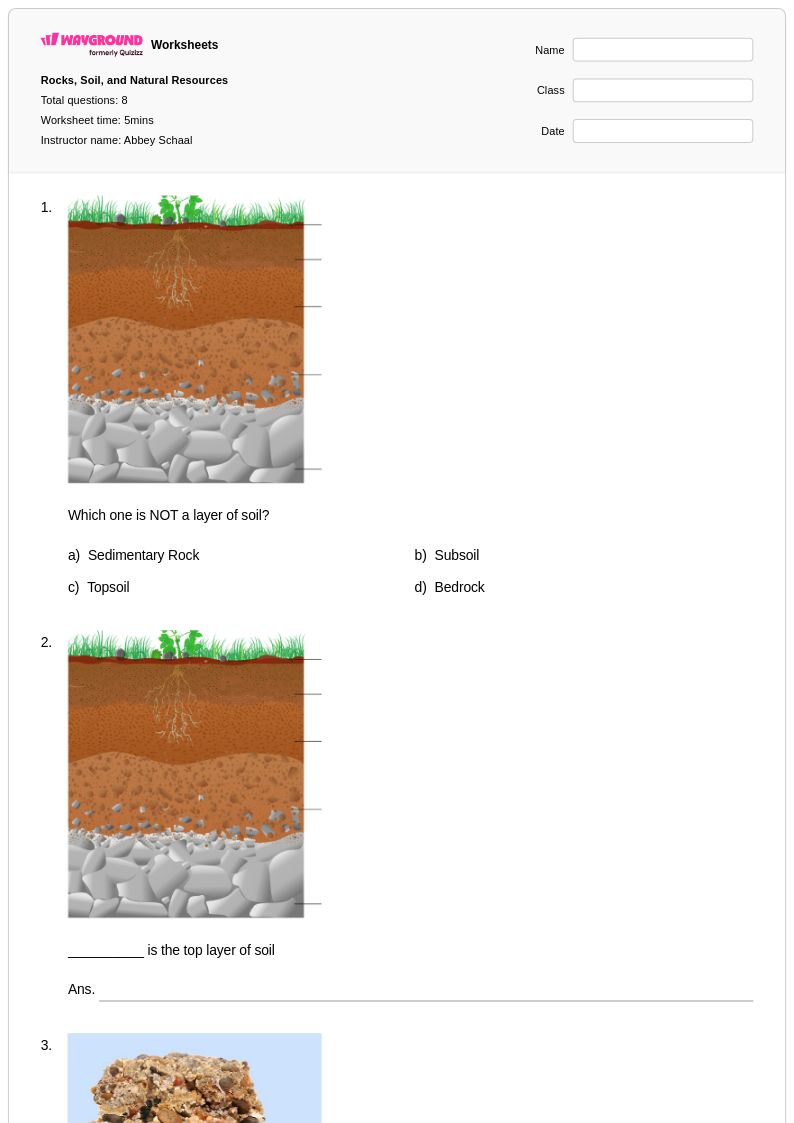
Effective practice activities for soil composition include soil profile labeling diagrams, particle size classification exercises distinguishing clay, silt, and sand, and analysis problems asking students to evaluate how organic matter content affects soil fertility. Worksheets that present different soil samples and ask students to predict their properties based on composition reinforce both identification and reasoning skills simultaneously.
What common mistakes do students make when learning about soil composition?
A frequent misconception is that soil is a single uniform substance rather than a mixture of components with distinct physical and chemical properties. Students also often confuse organic matter with living organisms, not recognizing that decomposed material plays its own distinct role in soil structure and fertility. Another common error is conflating particle size with nutrient content, assuming sandy soils are nutrient-rich because they drain well, when in fact clay-rich soils typically retain more nutrients.
How do I use Wayground's soil composition worksheets in my classroom?
Wayground's soil composition worksheets are available as printable PDFs for traditional classroom and laboratory settings, as well as in digital formats for technology-integrated or remote learning environments. Teachers can also host worksheets directly as a quiz on Wayground, allowing students to complete them interactively online. Each worksheet includes a complete answer key, supporting both teacher-led instruction and independent student review.
How can I differentiate soil composition instruction for students at different skill levels?
For foundational learners, start with basic soil component identification and visual soil profile activities before introducing chemical properties. Advanced students can tackle soil chemistry analysis, formation processes, and the relationship between composition and land use. On Wayground, teachers can apply individual accommodations such as read aloud support, reduced answer choices, or extended time to specific students, ensuring every learner engages with soil composition content at an appropriate level without disrupting the rest of the class.
Why is understanding soil composition important for science students?
Soil composition is foundational to understanding Earth's surface systems, connecting directly to ecology, agriculture, geology, and environmental science. Students who understand how mineral particles, organic matter, water, and air interact in soil are better equipped to analyze topics like nutrient cycling, erosion, food production, and land degradation. It also builds critical thinking skills around how physical and chemical properties determine function, a transferable concept across multiple science disciplines.