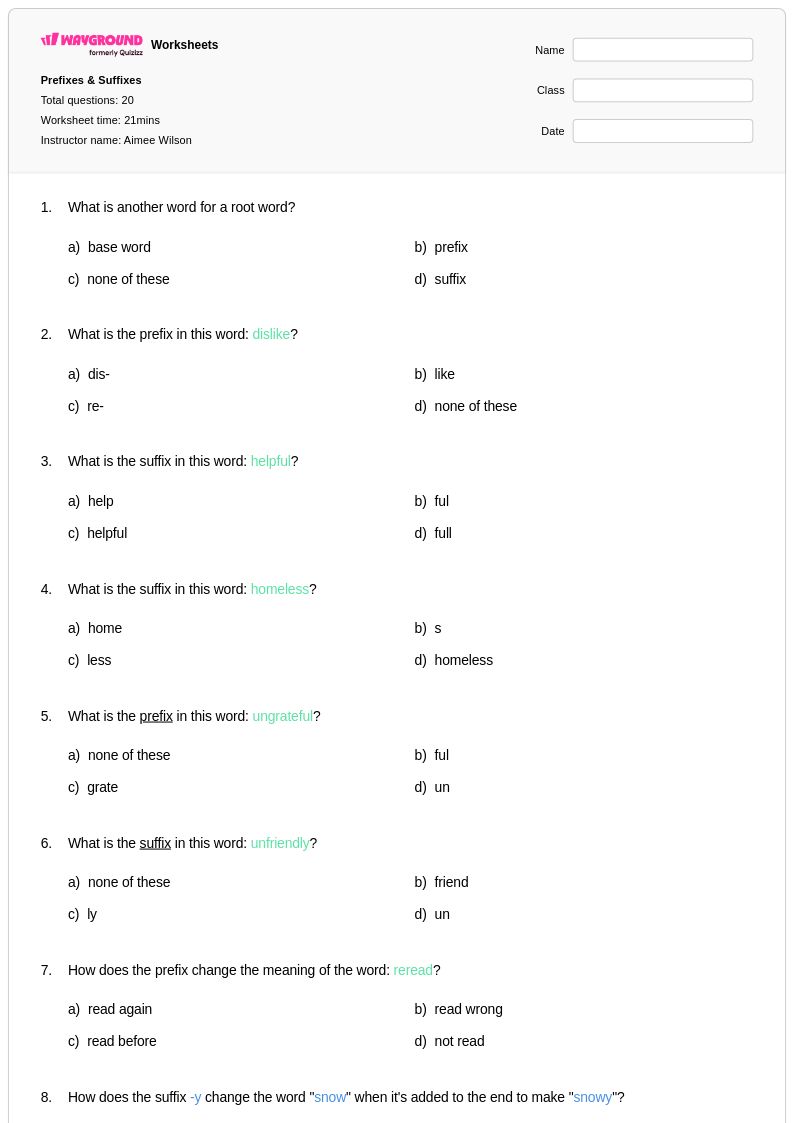
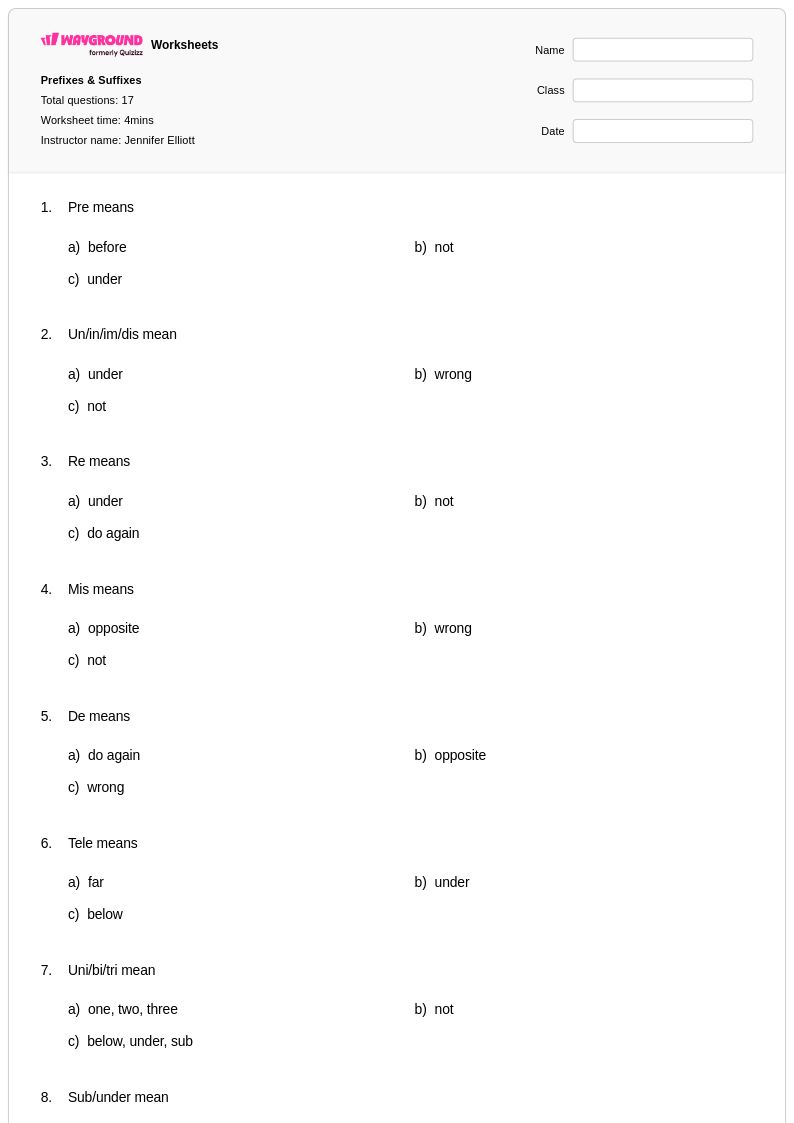
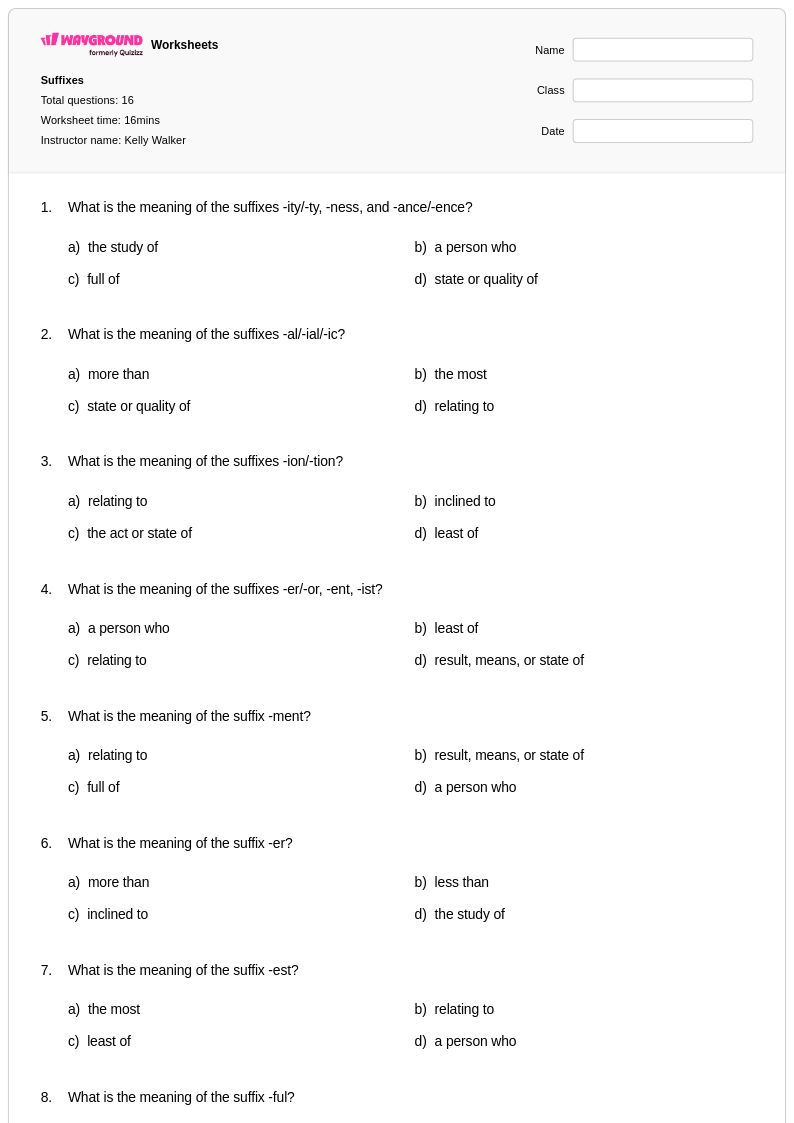
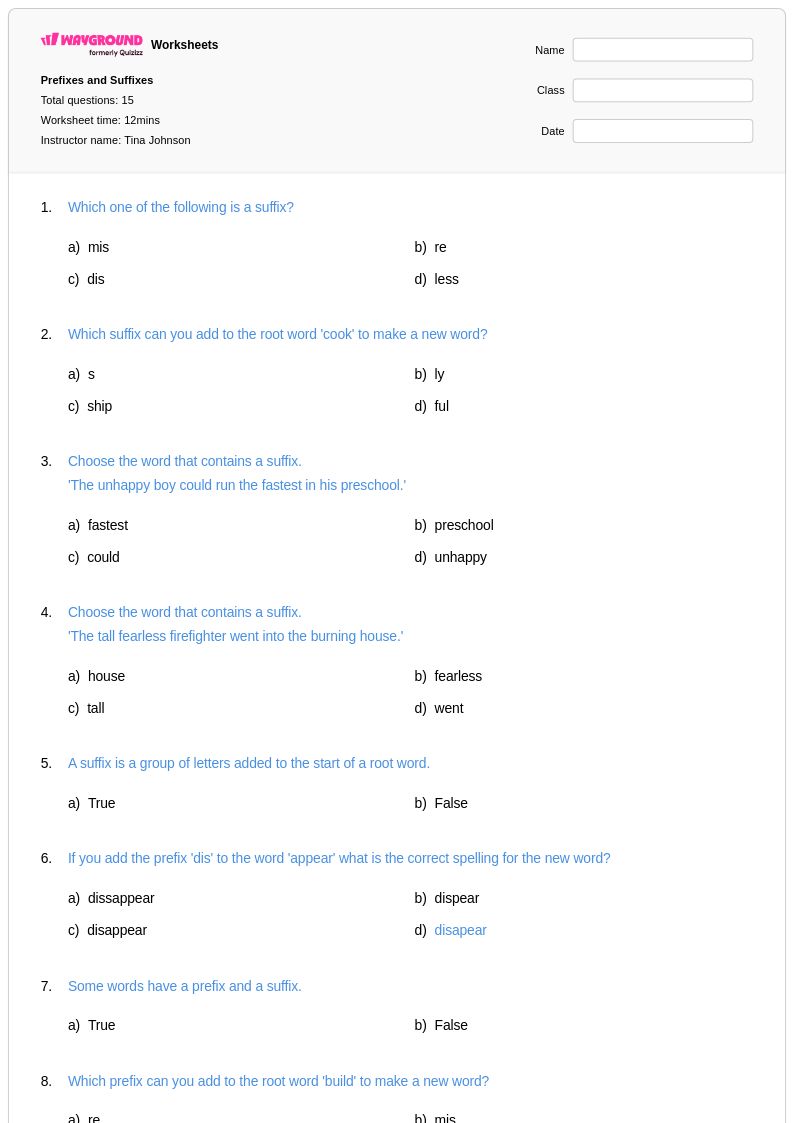
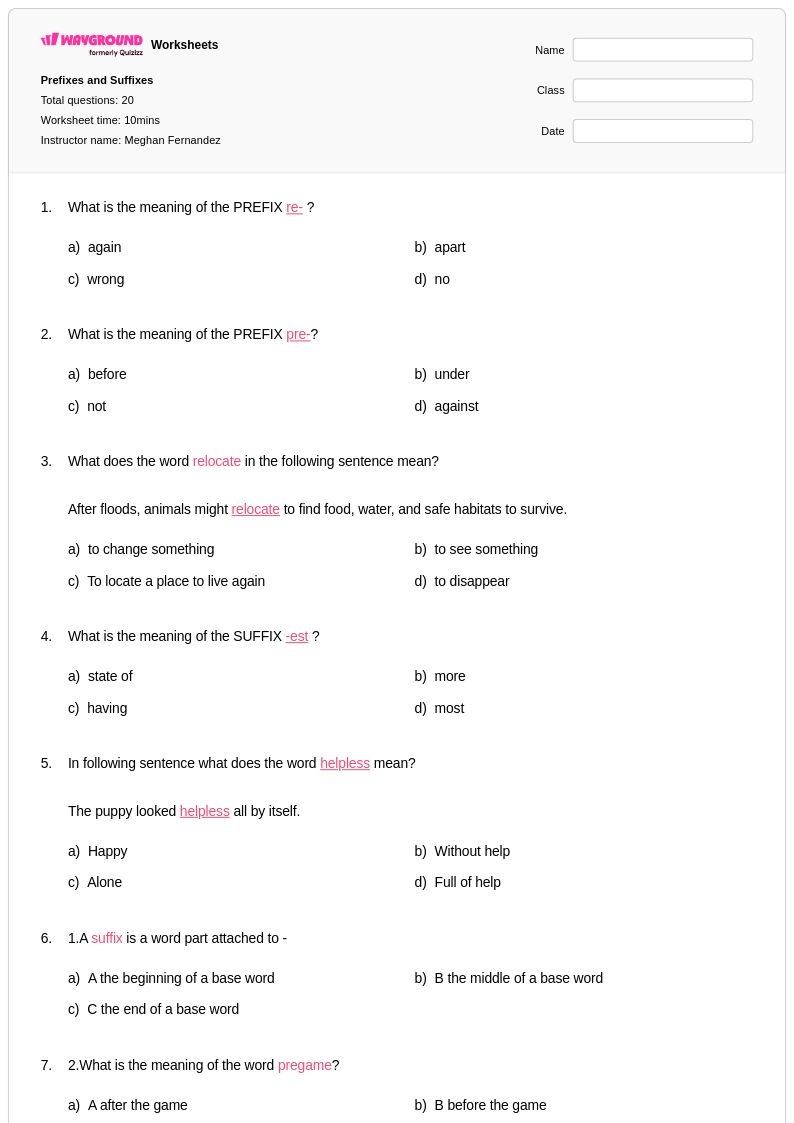
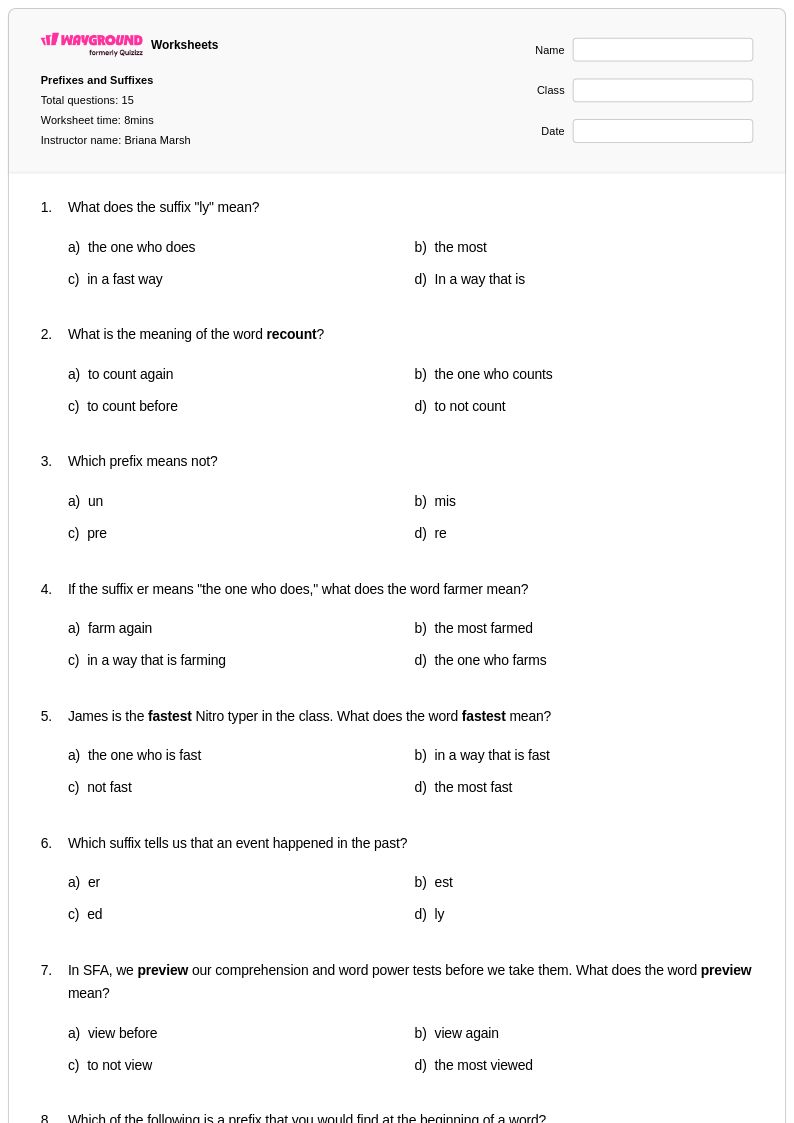
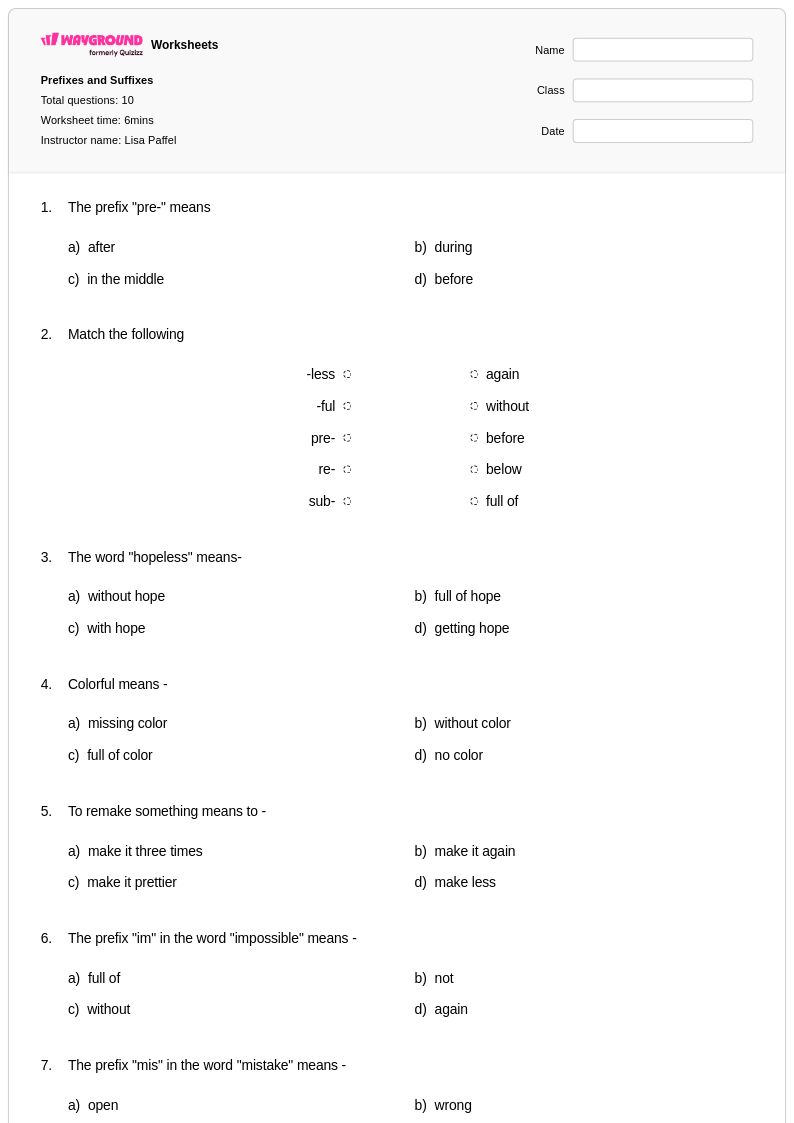
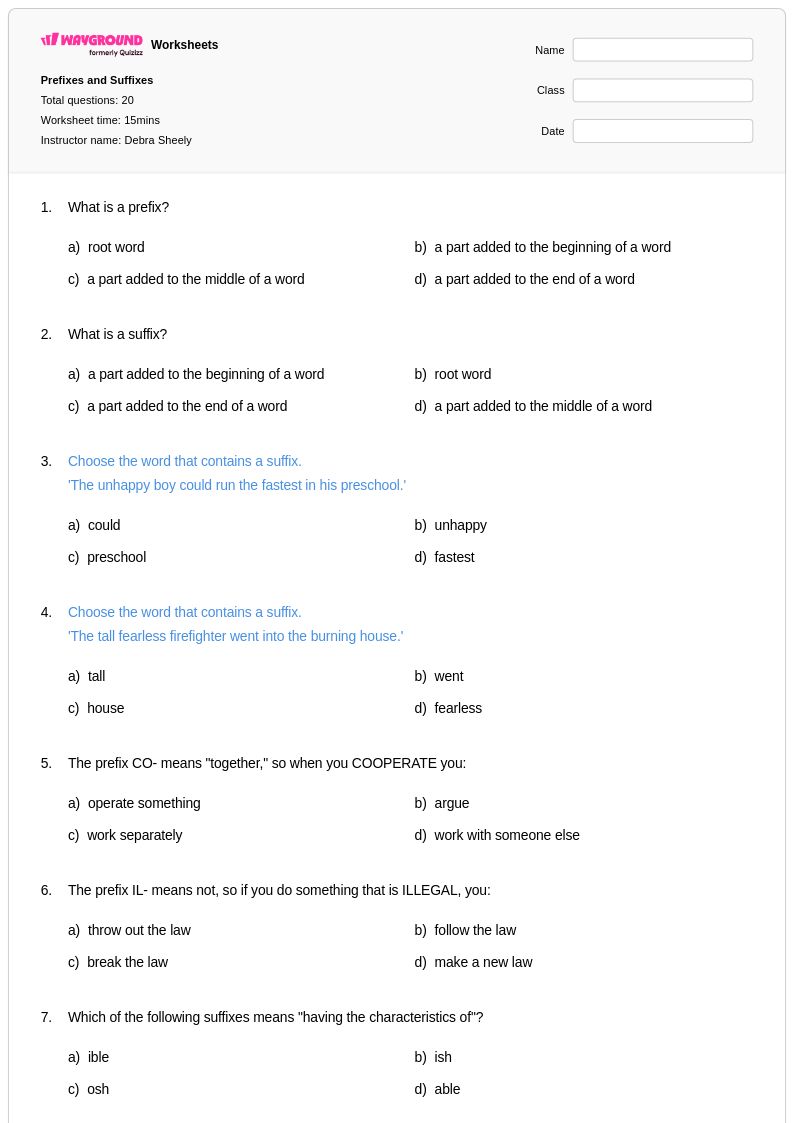
Discover free Grade 3 suffixes worksheets and printables from Wayground that help students master word patterns through engaging practice problems with comprehensive answer keys and downloadable PDFs.
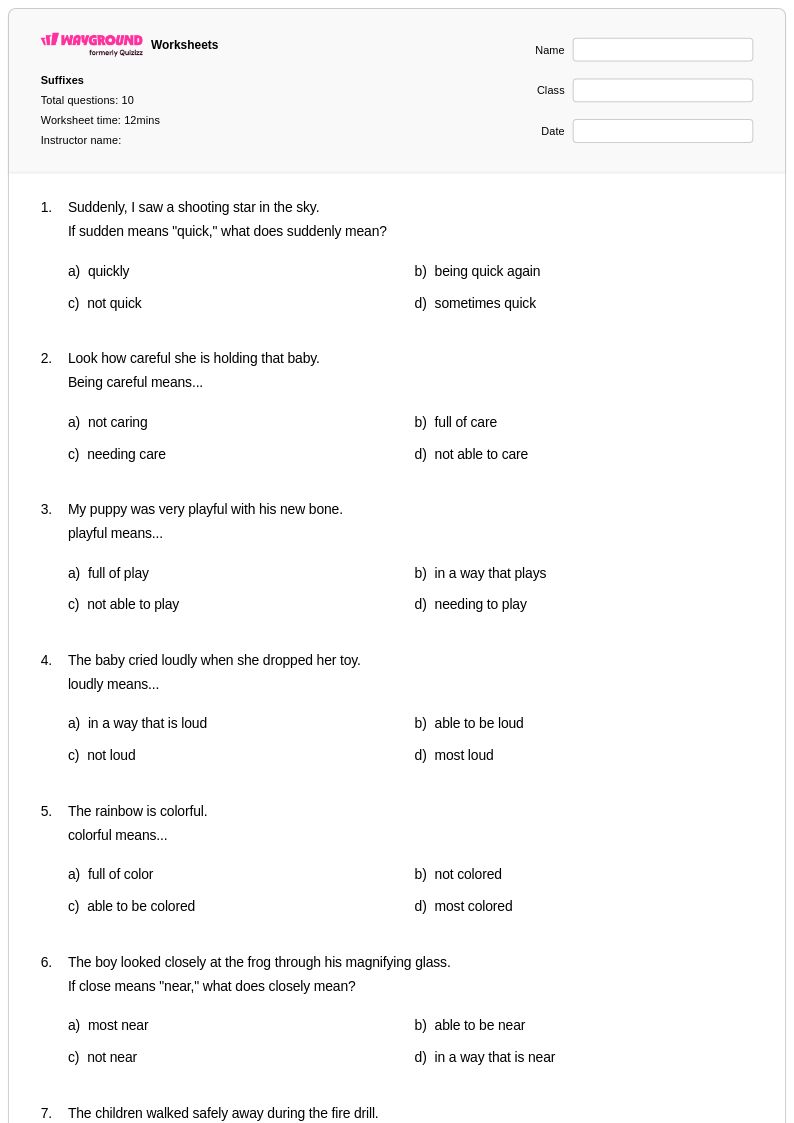
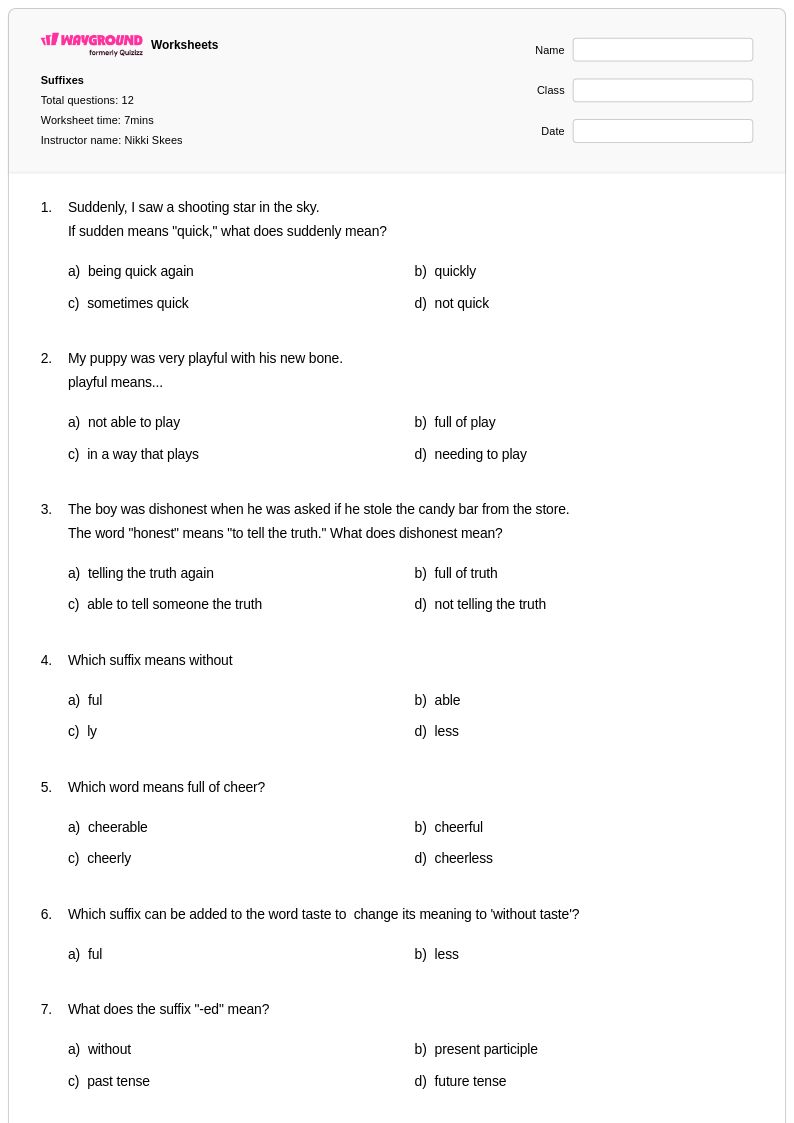
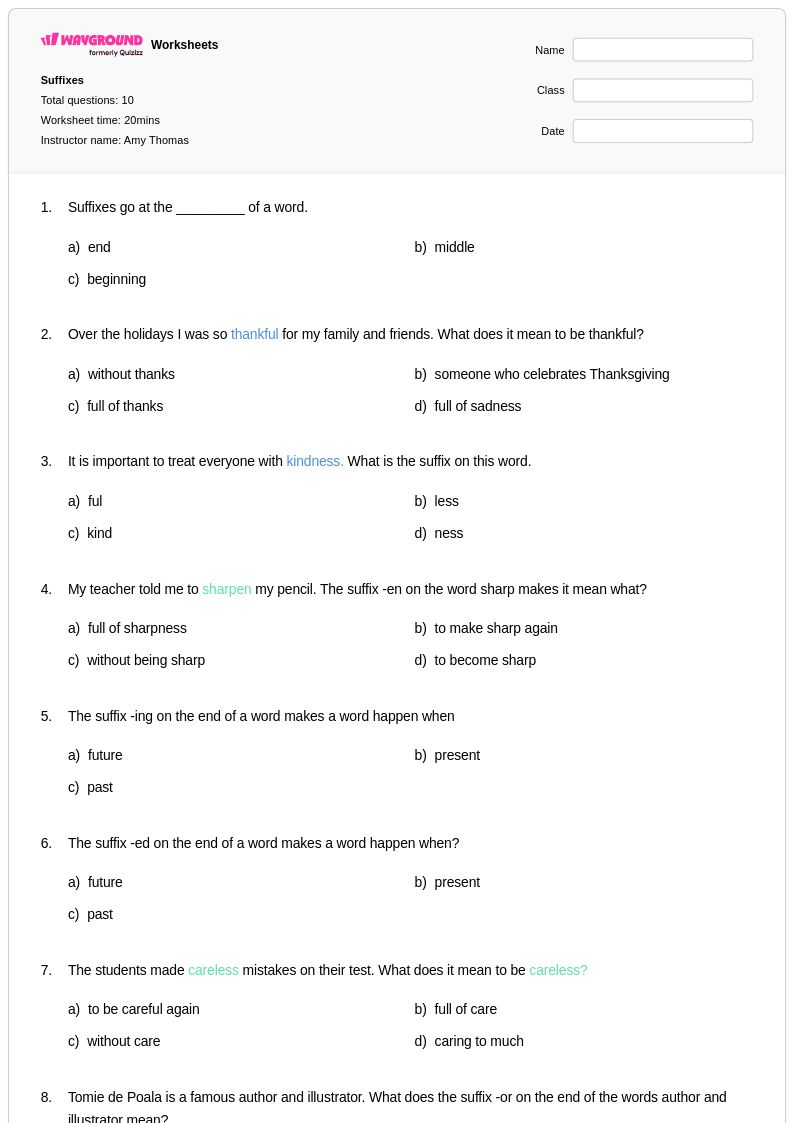
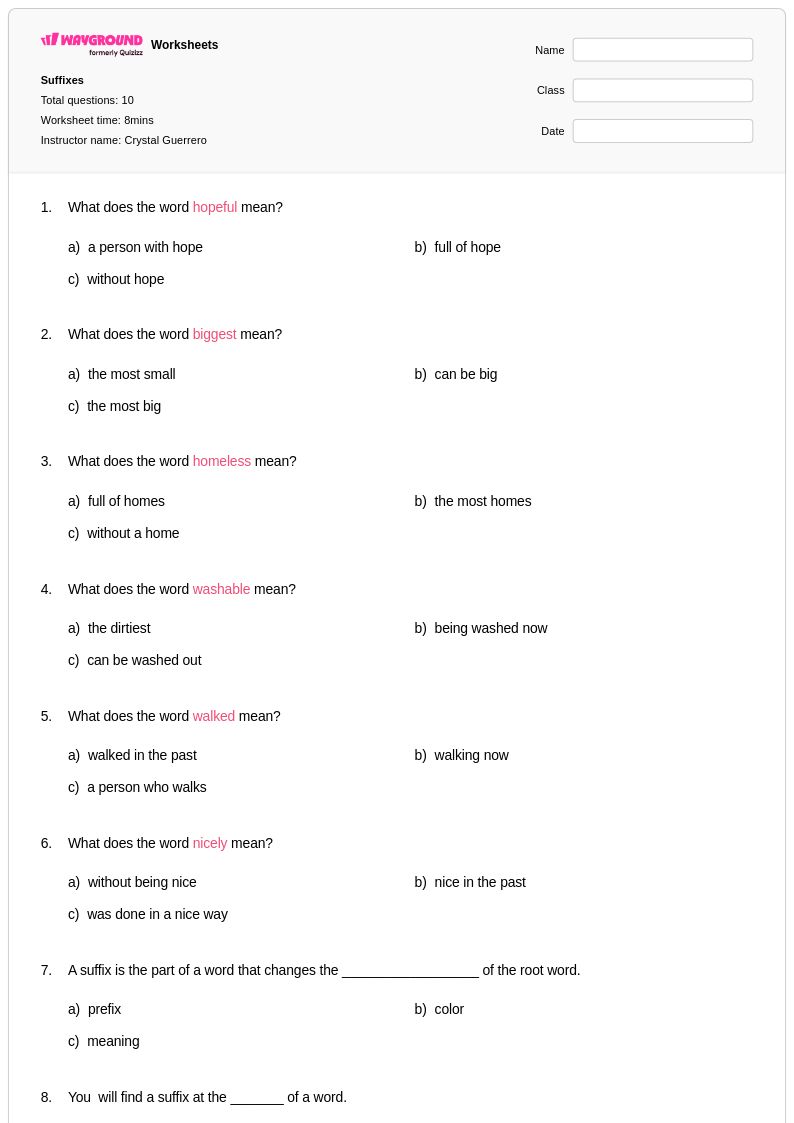
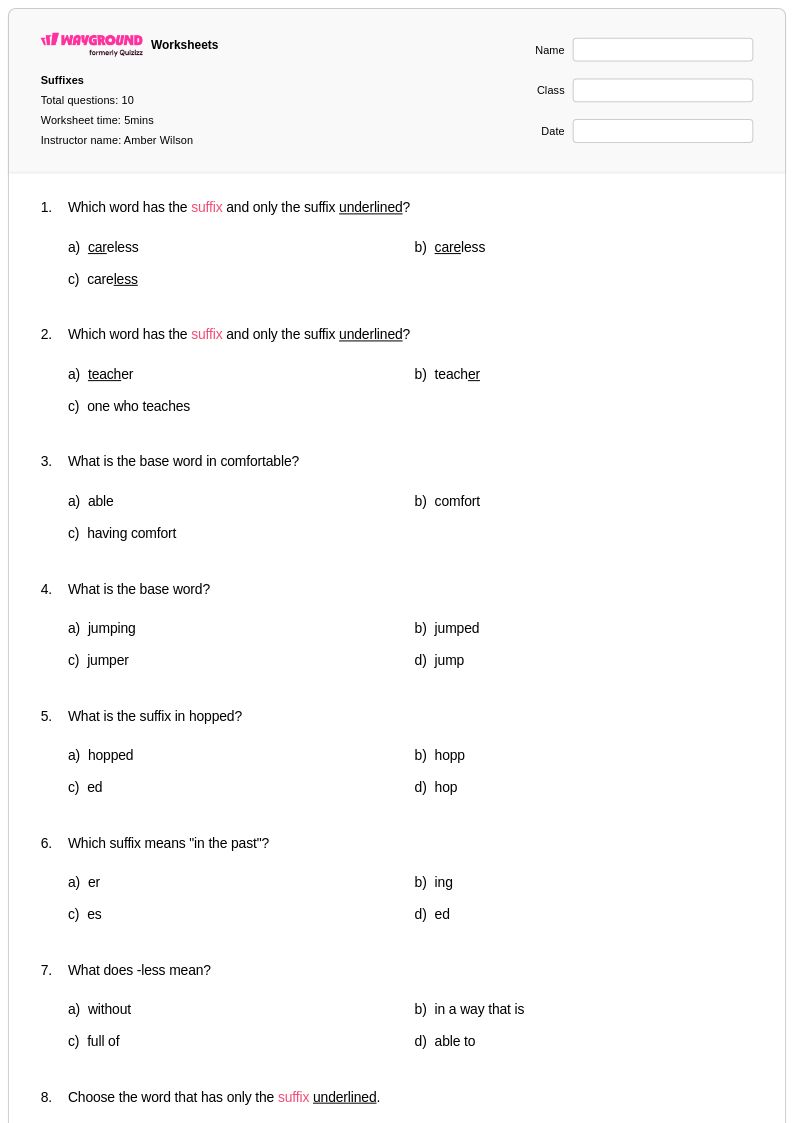
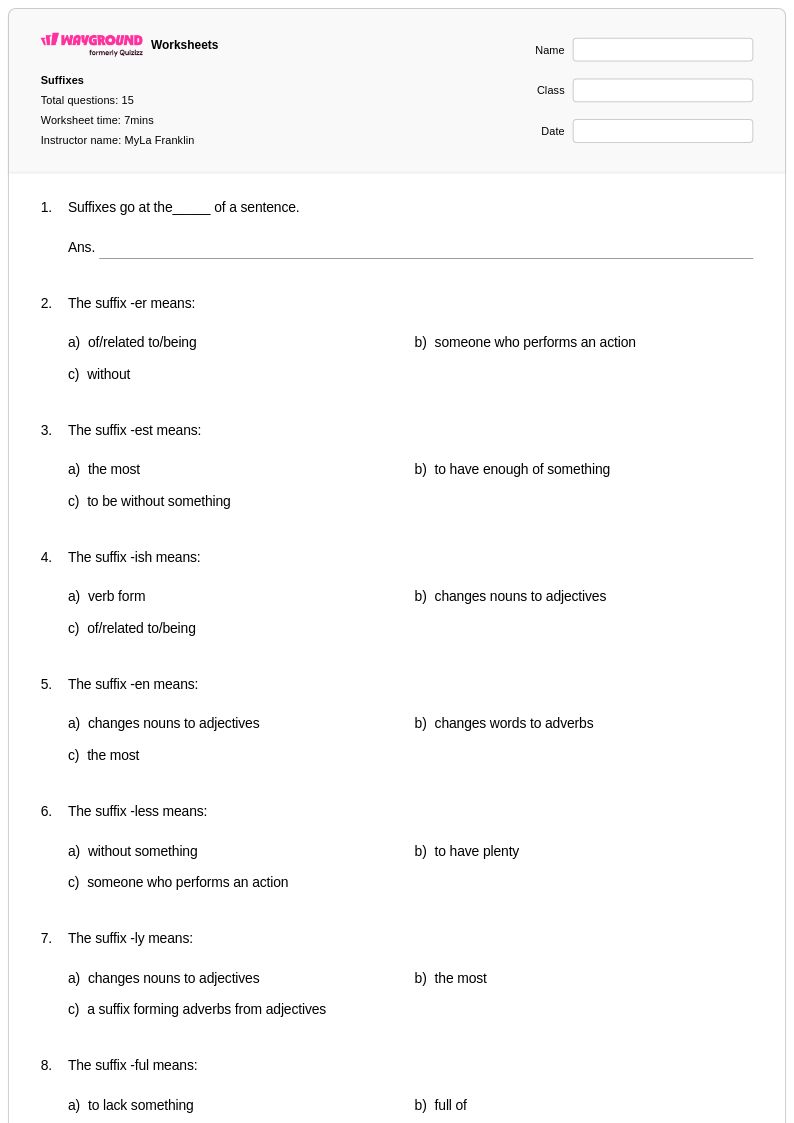
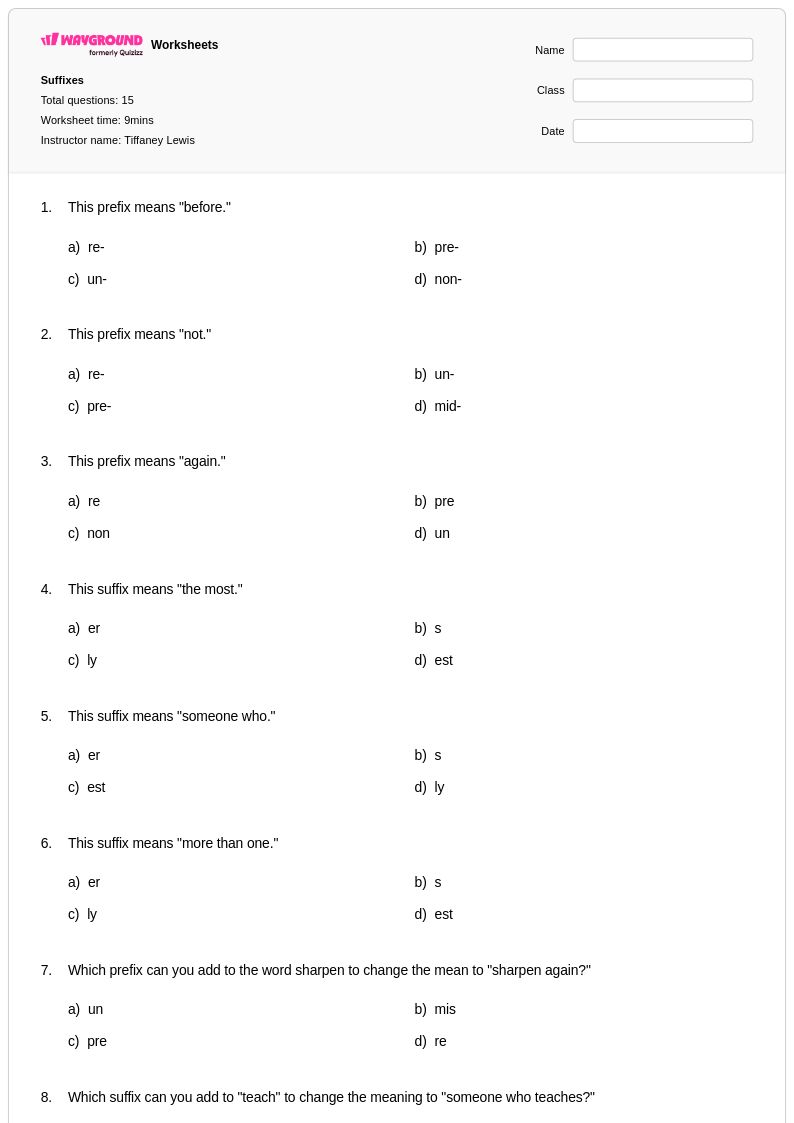
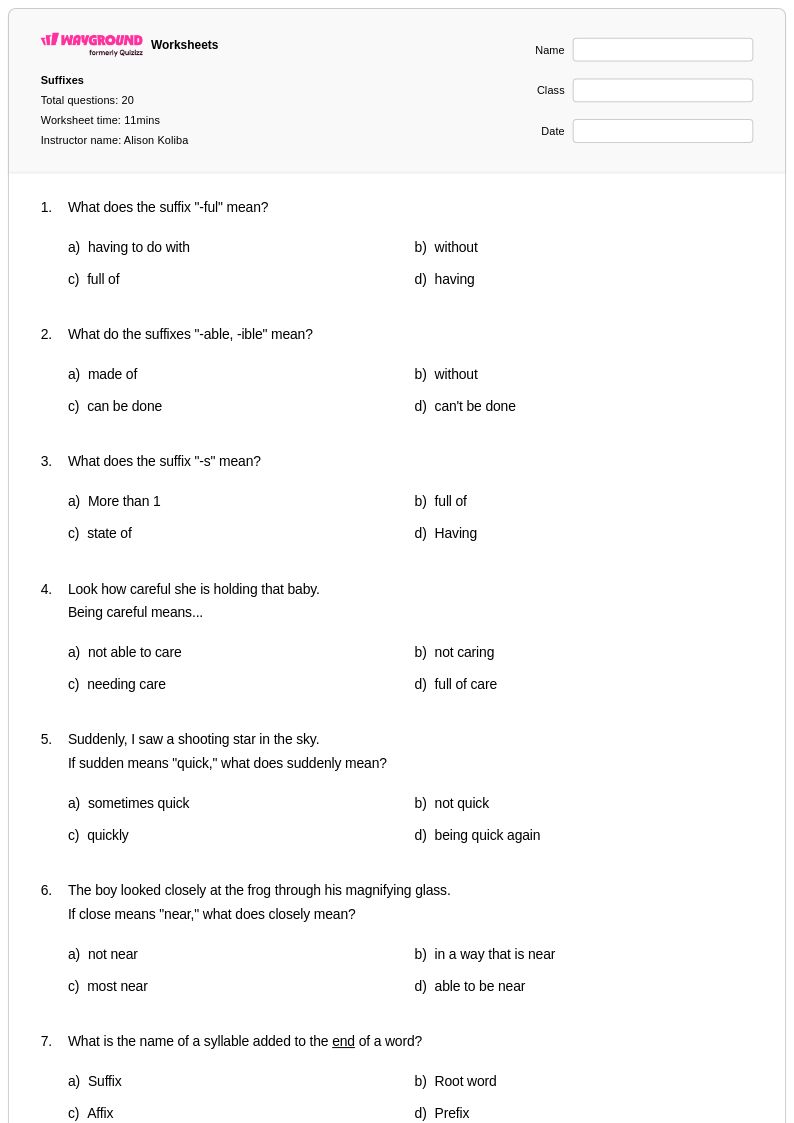
Suffixes worksheets for Grade 3 students available through Wayground (formerly Quizizz) provide comprehensive practice in understanding how word endings transform meaning and function. These carefully crafted educational resources help young learners master essential suffix patterns including -ed, -ing, -er, -est, -ly, and -ful, building foundational skills in word analysis and vocabulary expansion. Students engage with systematic practice problems that guide them through identifying base words, applying suffix rules, and recognizing how these word parts change meaning, tense, and grammatical function. Each worksheet collection includes detailed answer keys and is available as free printables in convenient PDF format, allowing educators to seamlessly integrate suffix instruction into their literacy curriculum while supporting students' developing understanding of English word patterns.
Wayground (formerly Quizizz) empowers teachers with an extensive library of millions of educator-created suffix worksheets specifically designed for Grade 3 instruction, featuring robust search and filtering capabilities that streamline lesson planning and resource selection. The platform's comprehensive collection aligns with key literacy standards and offers sophisticated differentiation tools that enable teachers to customize worksheets based on individual student needs and learning objectives. These versatile resources are available in both printable and digital formats, including downloadable PDFs, providing maximum flexibility for classroom implementation, homework assignments, and independent practice sessions. Teachers can efficiently address varying skill levels through targeted remediation support for struggling learners while simultaneously offering enrichment opportunities for advanced students, ensuring that all Grade 3 students develop strong foundational skills in suffix recognition and application.
FAQs
How do I teach suffixes to elementary students?
Start by anchoring instruction in familiar base words students already know, then show how adding a suffix like -ing, -ed, or -er changes the word's meaning or part of speech. Use word-sorting activities where students group words by suffix to build pattern recognition before moving to sentence-level application. Explicit morphology instruction works best when students can see and hear the transformation, so reading examples aloud alongside written practice reinforces both spelling and pronunciation shifts.
What exercises help students practice suffixes?
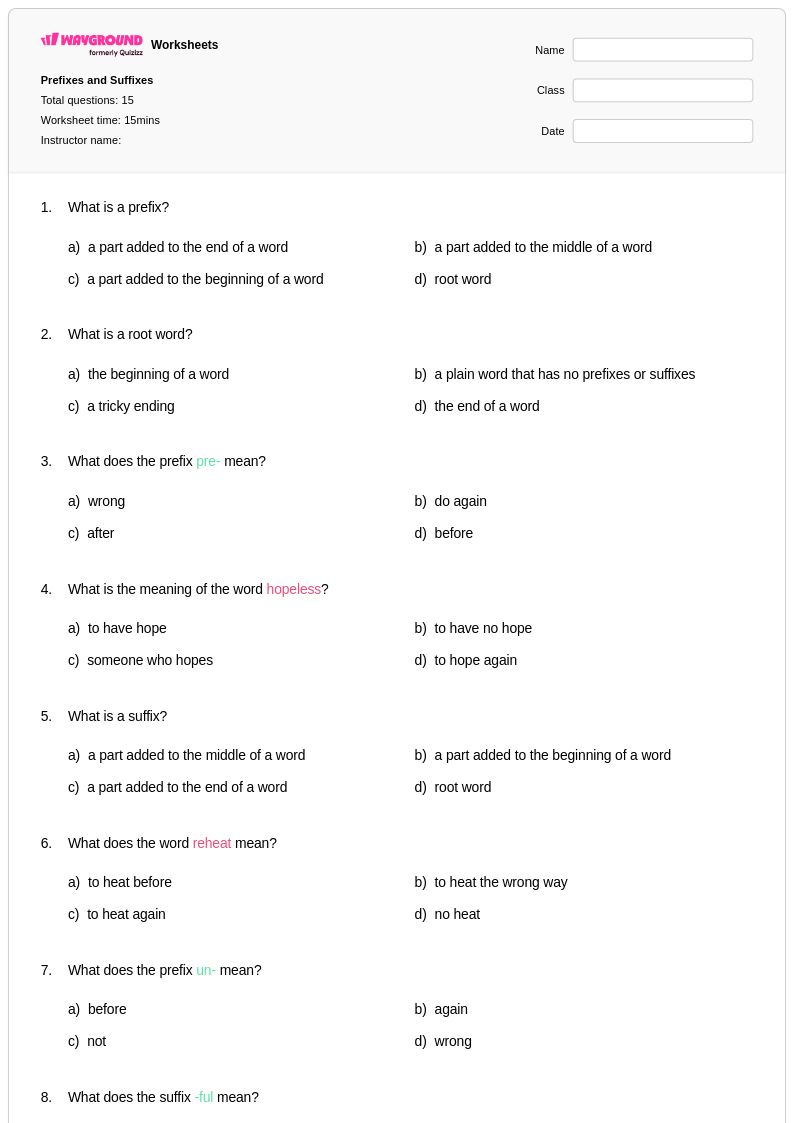
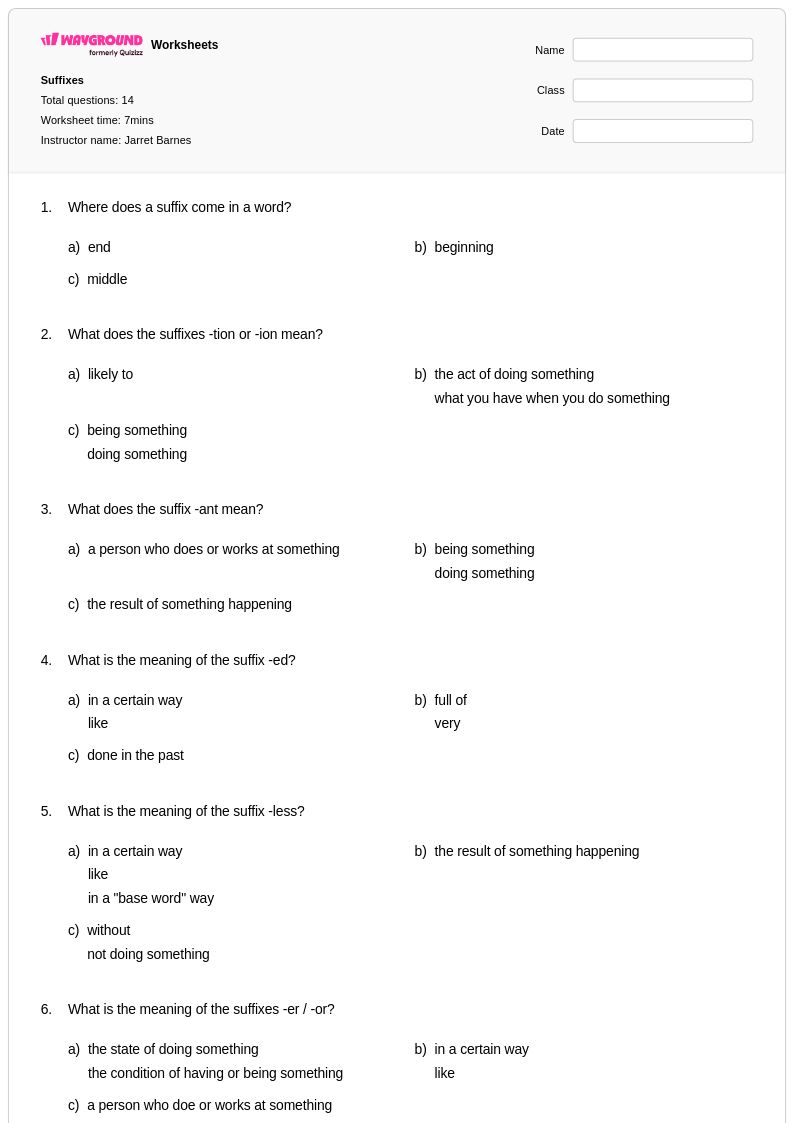
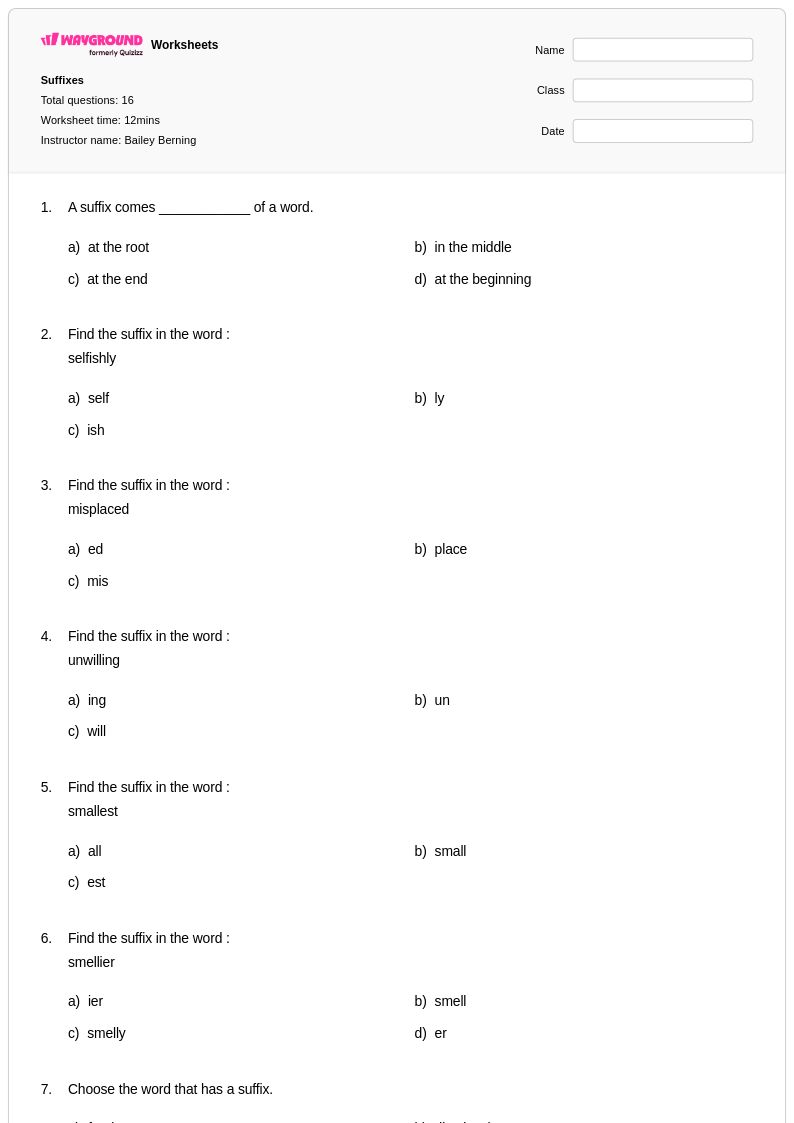
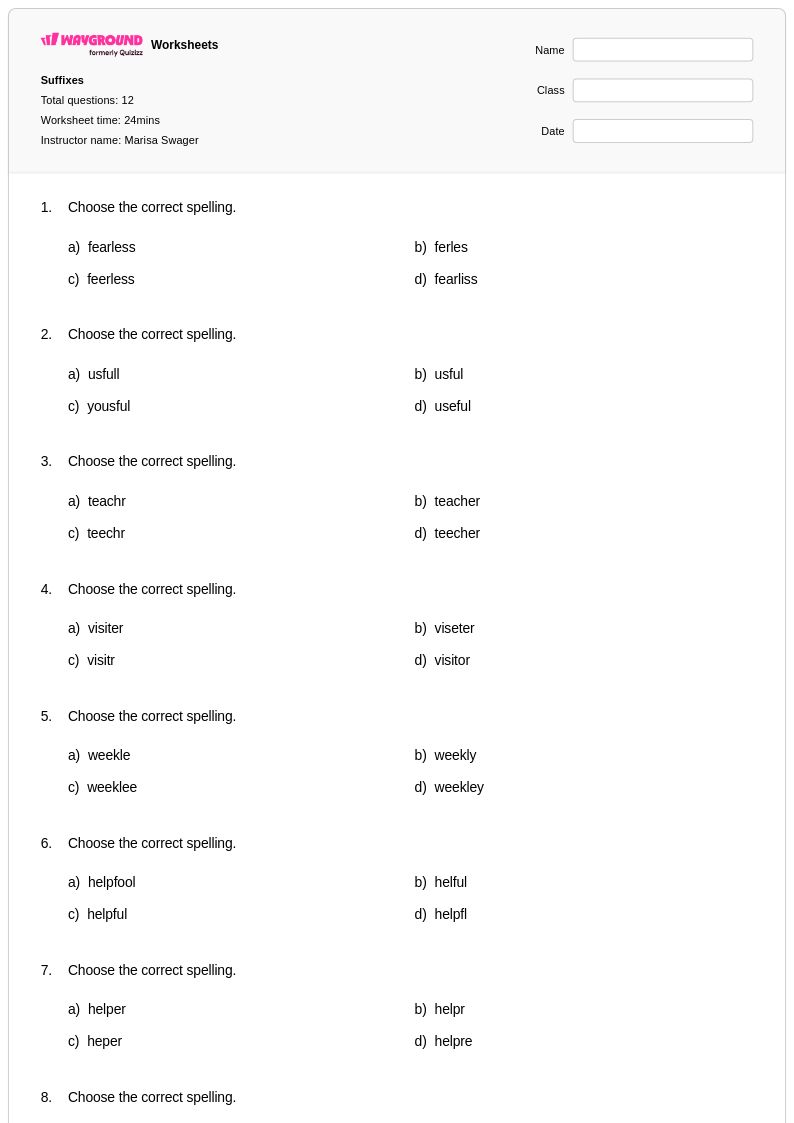
Effective suffix practice includes base-word transformation tasks (e.g., converting a verb to a noun using -tion), fill-in-the-blank sentences that require choosing the correct suffix form, and error-correction exercises where students identify misspelled or misused suffixes. These structured formats mirror what students encounter in reading and writing, making the practice directly transferable. Worksheets that progress from identification to application give students the scaffolded repetition needed to internalize suffix rules.
What mistakes do students commonly make with suffixes?
One of the most frequent errors is failing to apply spelling rules before adding a suffix, such as forgetting to drop a silent -e before -ing (writing 'makeing' instead of 'making') or not doubling a final consonant before a vowel suffix. Students also commonly confuse suffixes that sound similar but serve different grammatical functions, such as -er (comparative adjective) versus -er (agent noun). Targeted practice with these specific patterns, paired with immediate feedback from answer keys, helps students self-correct and build accuracy.
How can I differentiate suffix instruction for struggling readers?
For students who need additional support, reduce the number of suffix options presented at one time so they can focus on pattern mastery before expanding their repertoire. Wayground's digital worksheets support accommodation settings such as reduced answer choices and read-aloud functionality, which lowers cognitive load and makes suffix tasks more accessible for students with decoding challenges. Pairing visual word-part cards with worksheet practice also helps struggling readers see the structure of words rather than treating them as unanalyzable wholes.
How do I use Wayground's suffix worksheets in my classroom?
Wayground's suffix worksheets are available as printable PDFs for traditional classroom use and in digital formats for technology-integrated environments, including the option to host them as an interactive quiz directly on the Wayground platform. Teachers can assign them for independent practice, use them as warm-up activities, or project them for whole-class instruction. Each worksheet includes a complete answer key, so they work equally well for self-paced student review or teacher-led correction.
How do suffixes help students build vocabulary and reading comprehension?
Understanding suffixes gives students a decoding strategy for unfamiliar words, allowing them to break a word like 'carelessness' into its base and suffix components to infer meaning rather than guessing from context alone. This morphological awareness directly supports reading comprehension because students encounter fewer truly unknown words when they can analyze word structure. Research consistently links suffix knowledge to stronger vocabulary growth, particularly in the intermediate and middle grades when academic vocabulary becomes increasingly complex.