Free Printable Summarizing Fiction Texts Worksheets for Grade 7
Grade 7 students can master summarizing fiction texts with Wayground's comprehensive collection of free worksheets, printables, and practice problems that include detailed answer keys to strengthen reading comprehension skills.
Explore printable Summarizing Fiction Texts worksheets for Grade 7
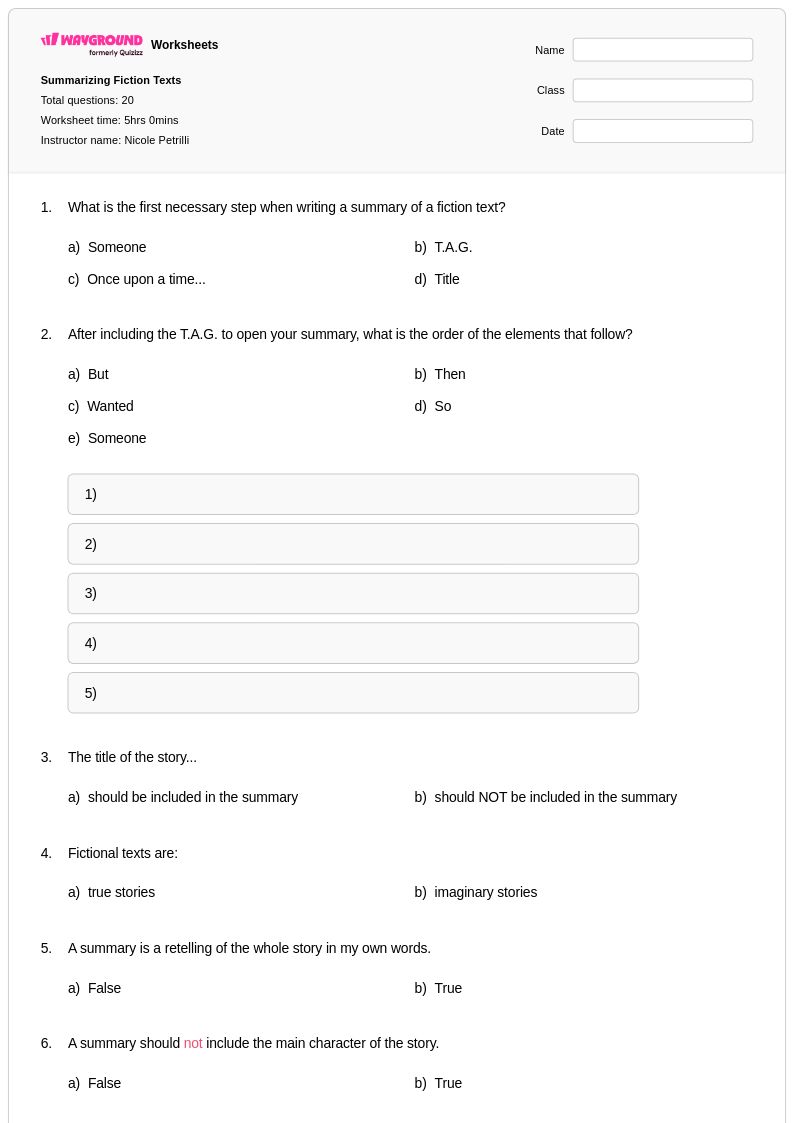
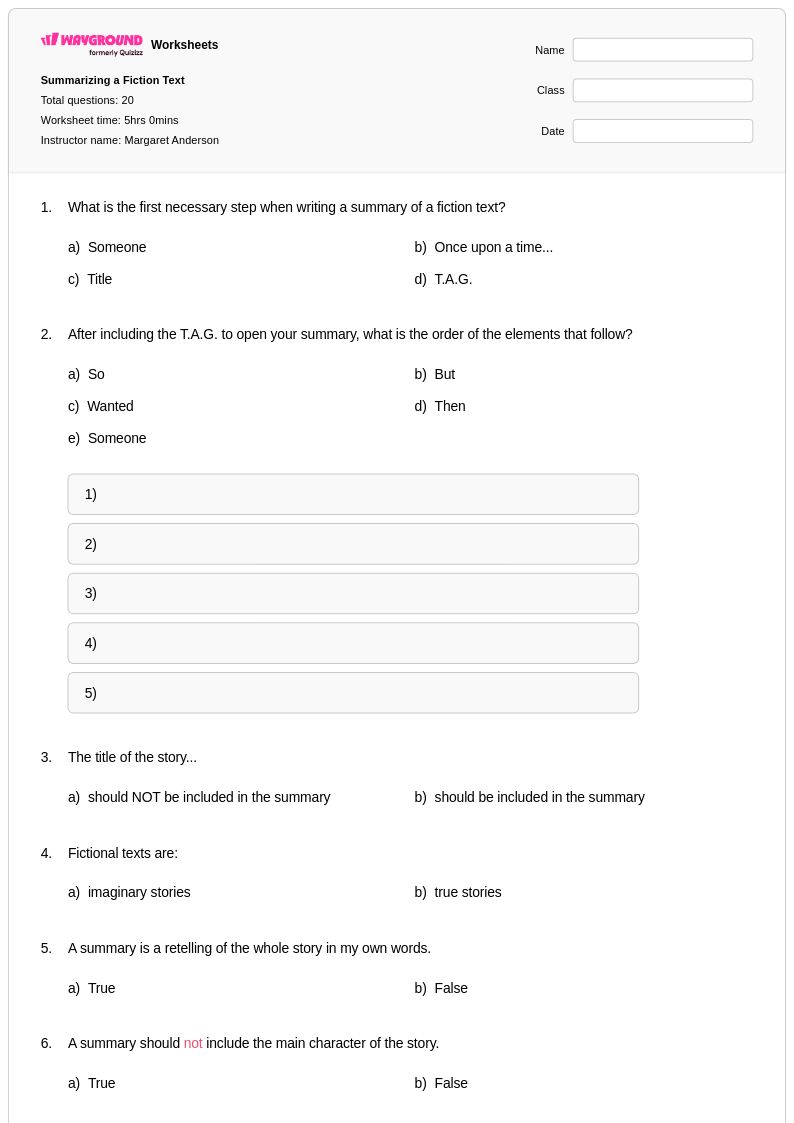
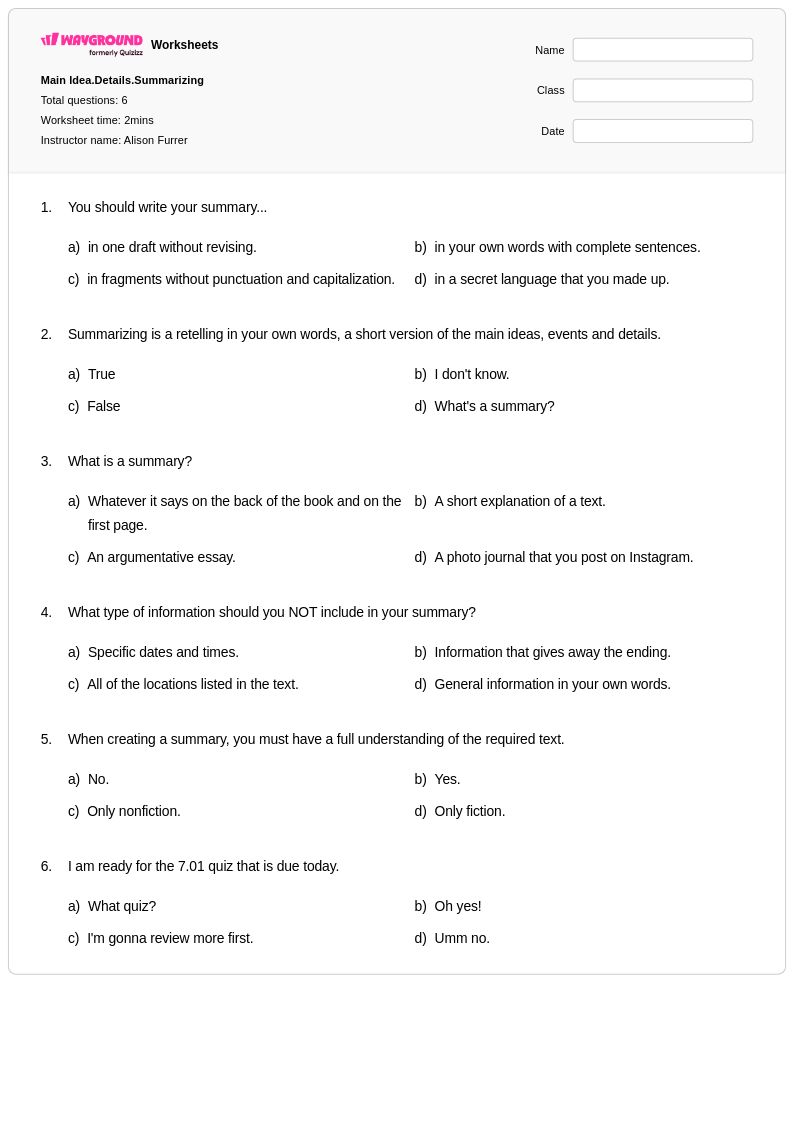
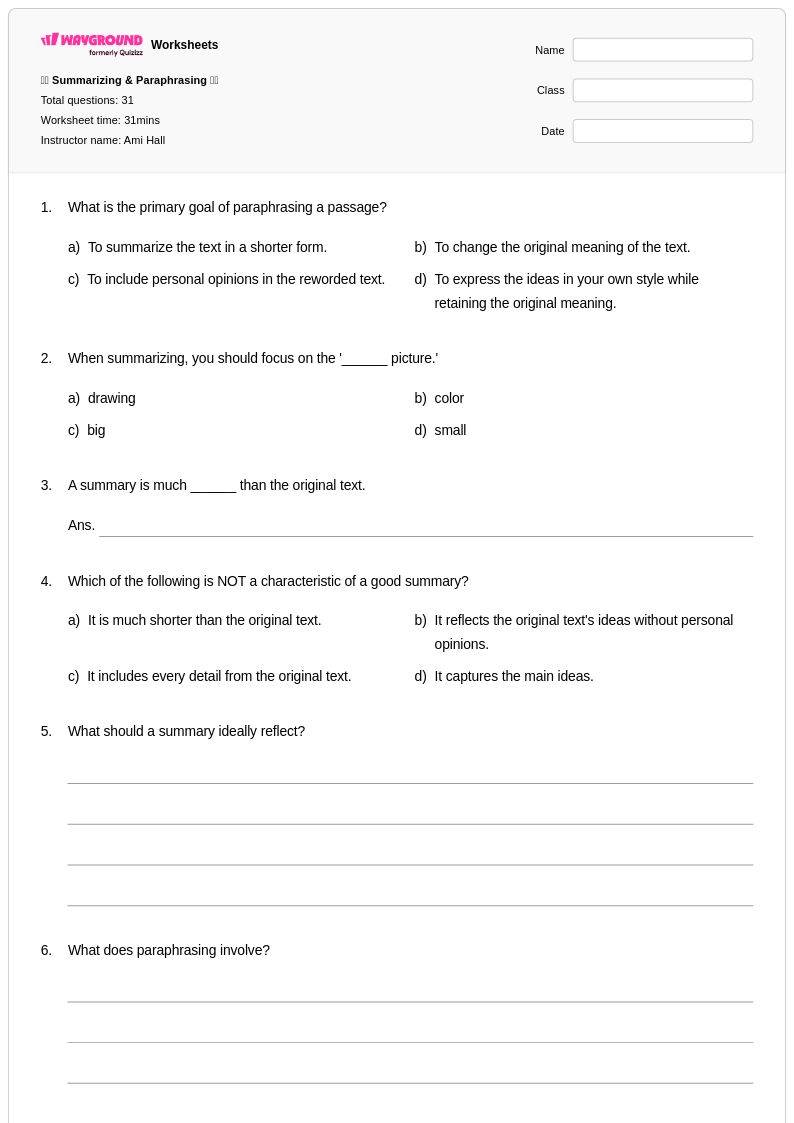
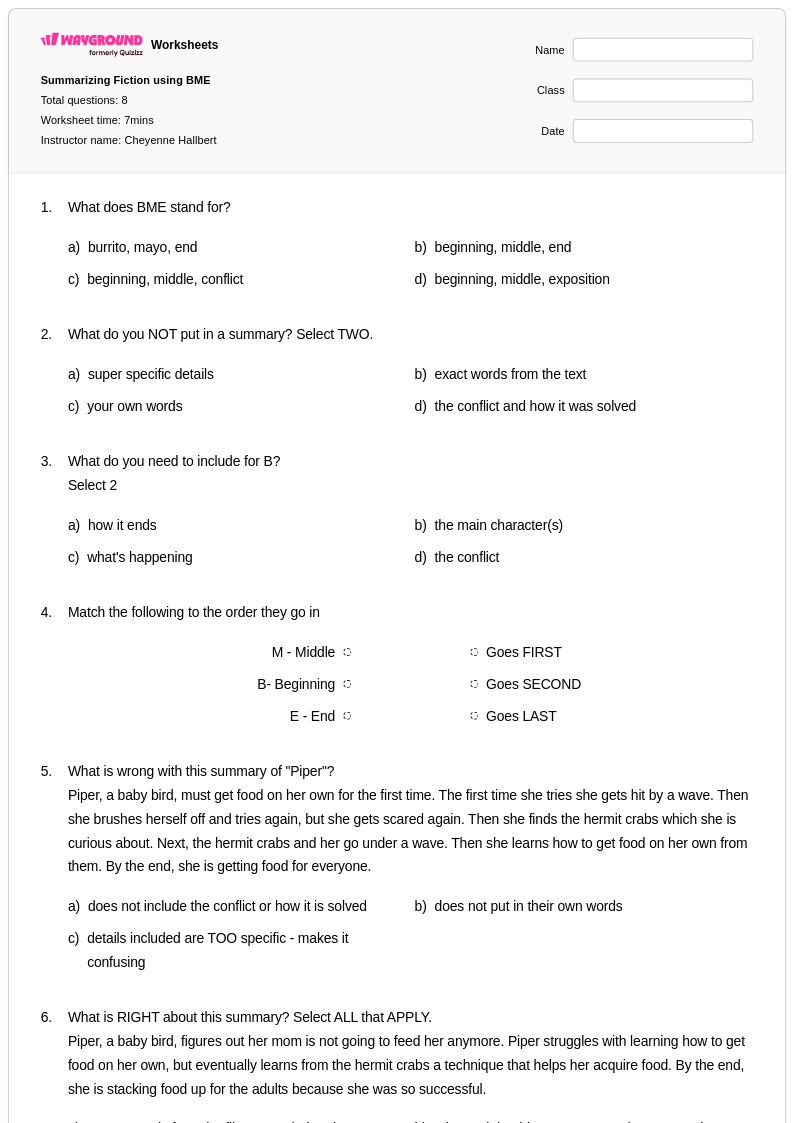
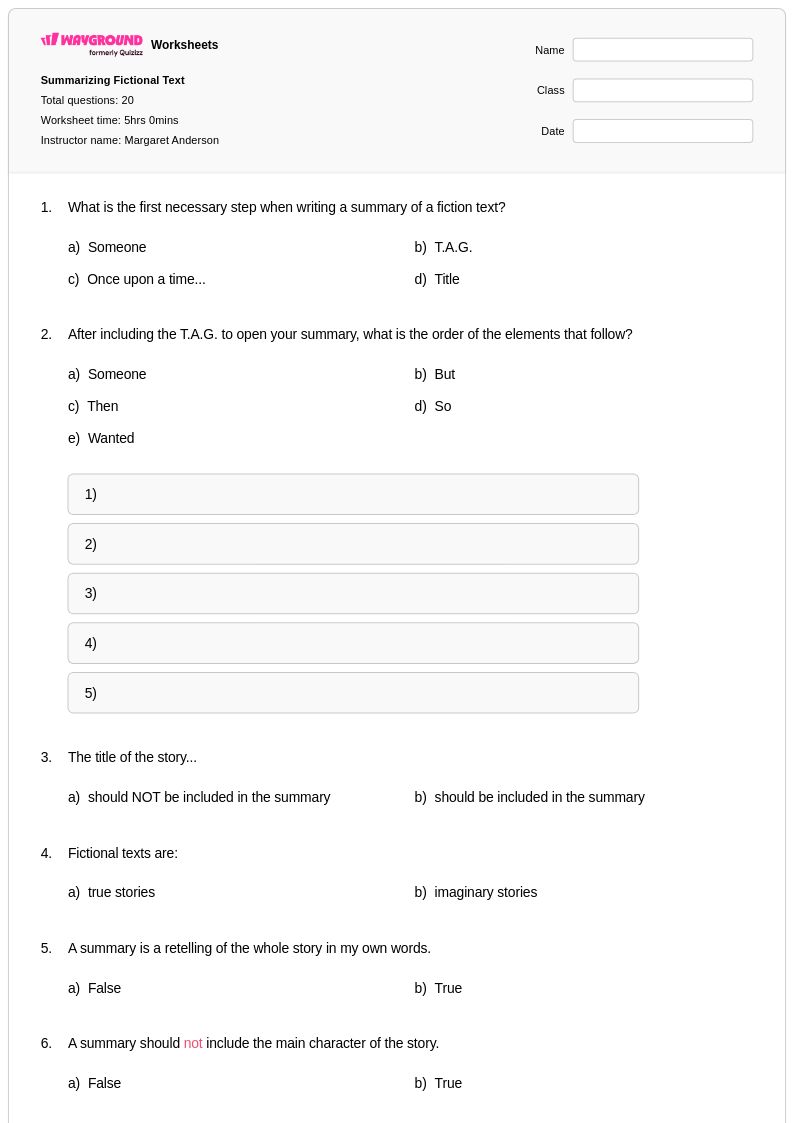
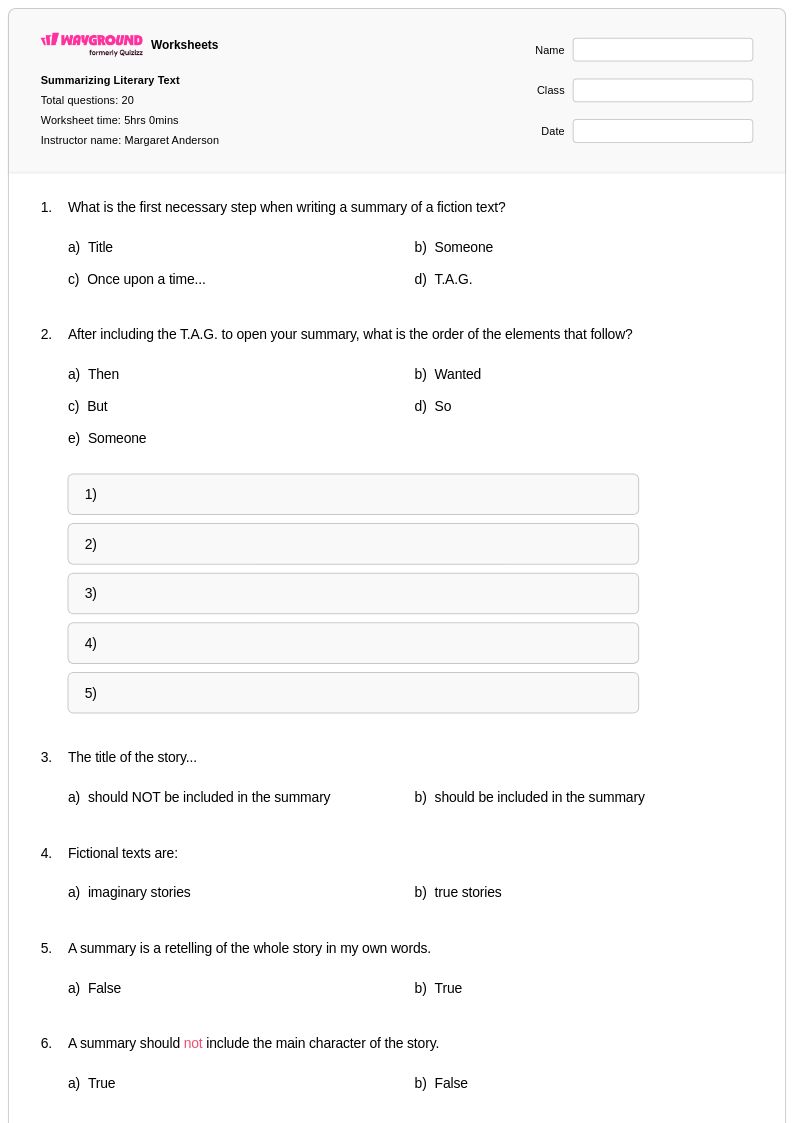
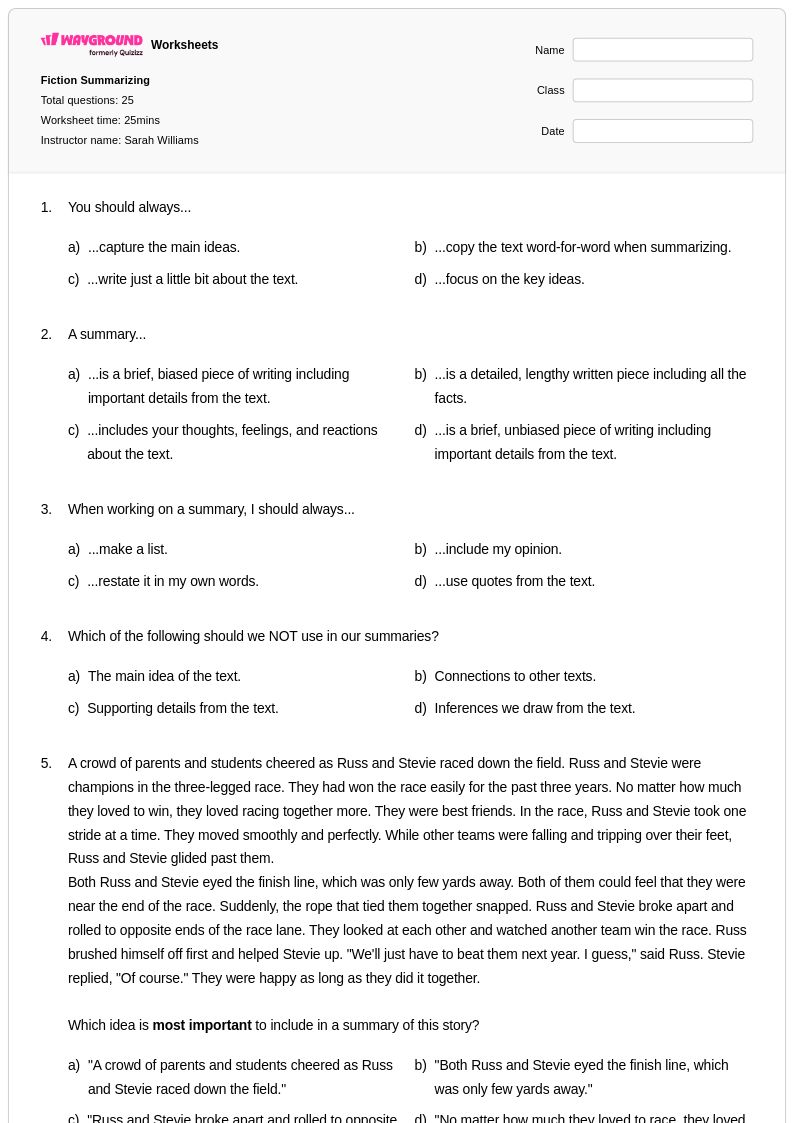
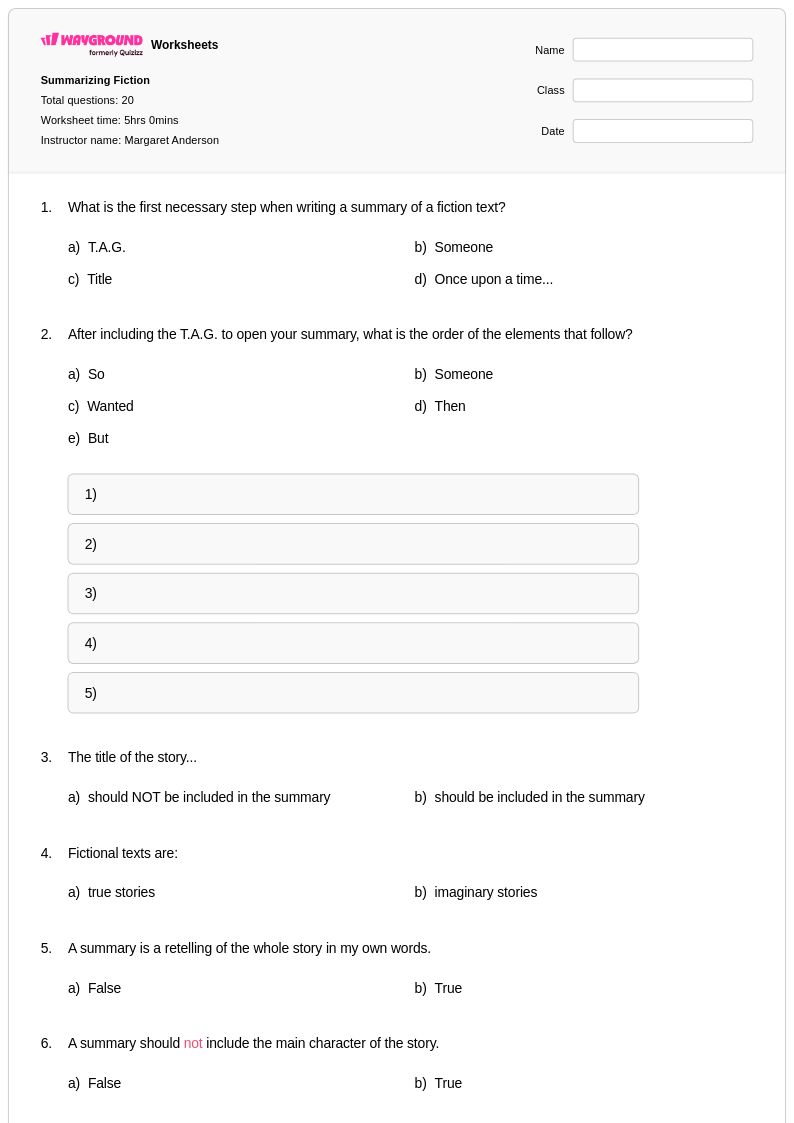
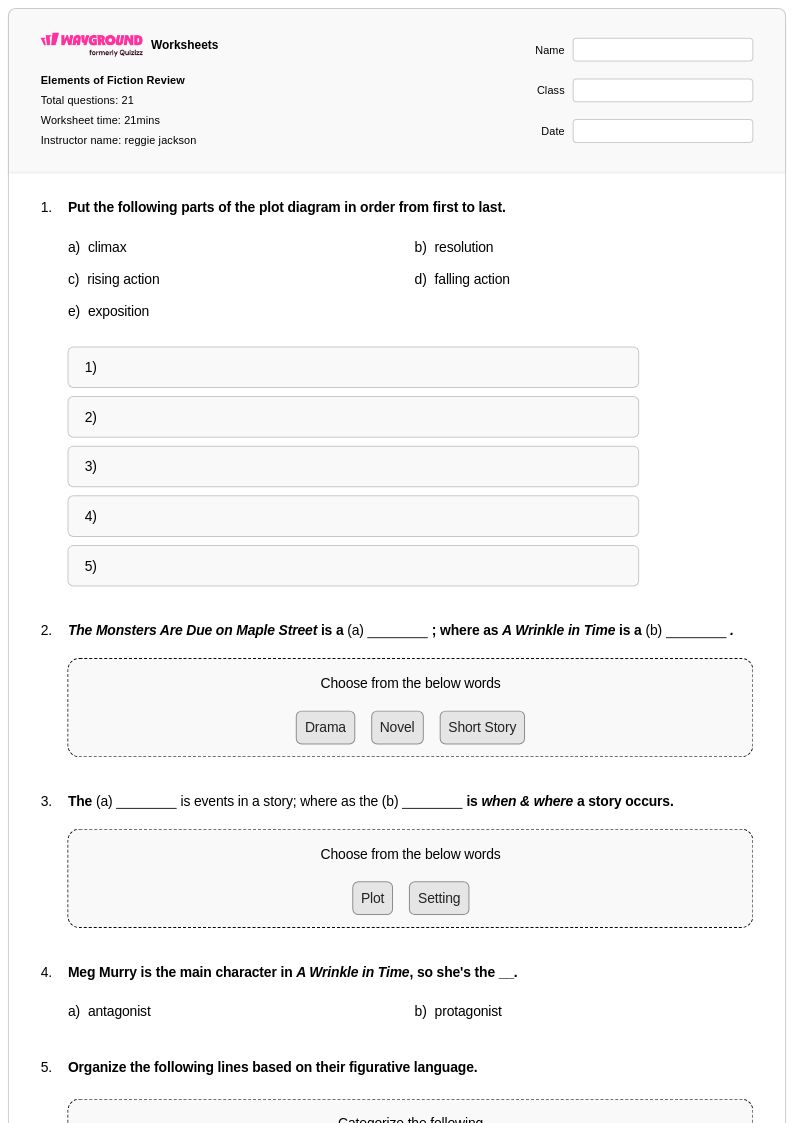
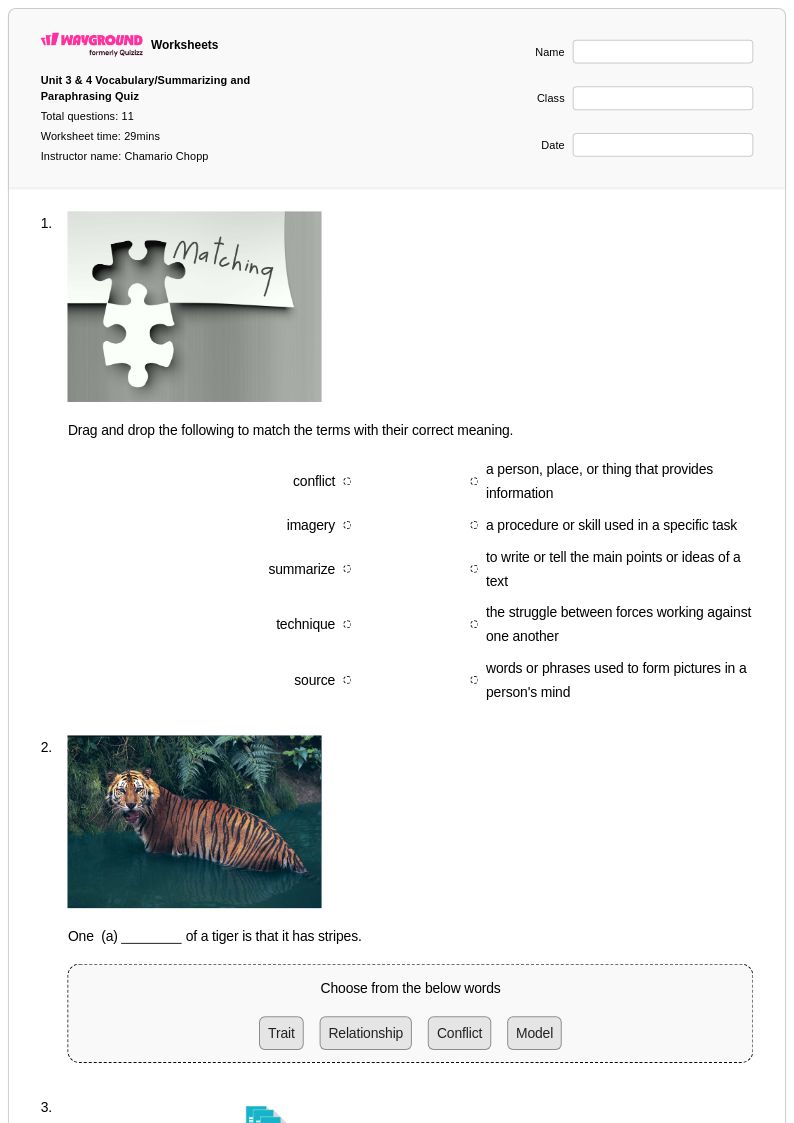
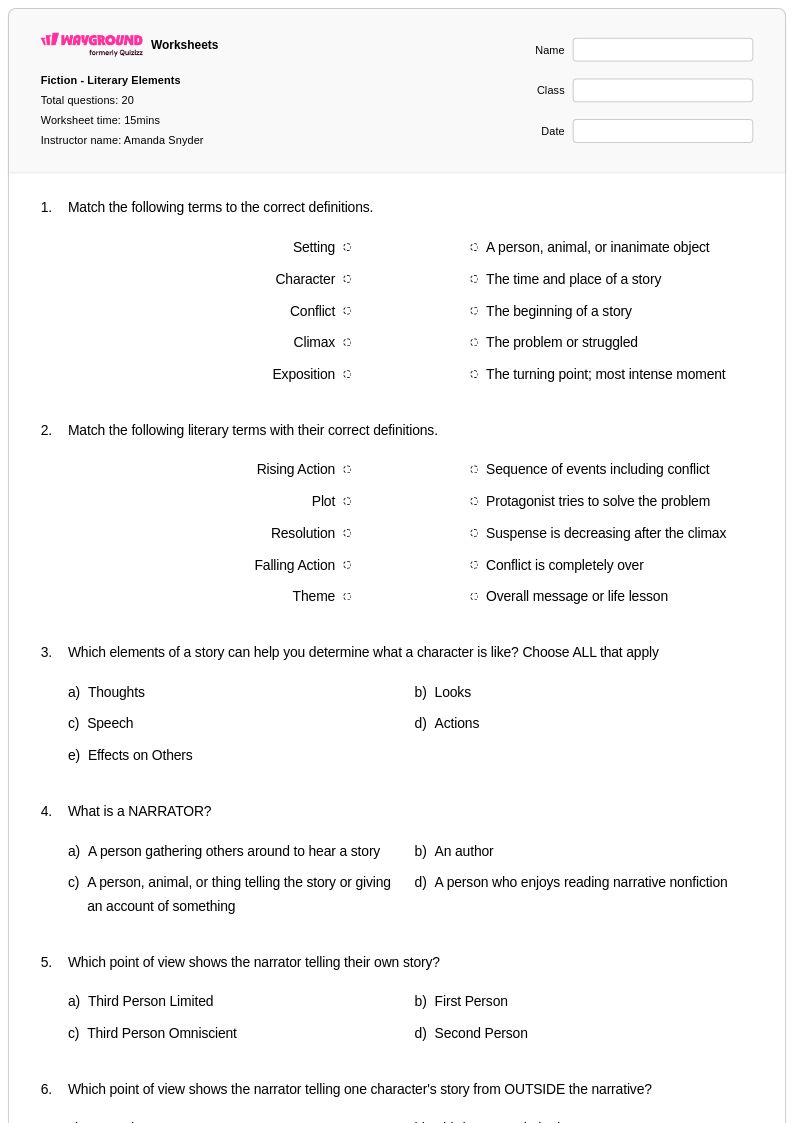
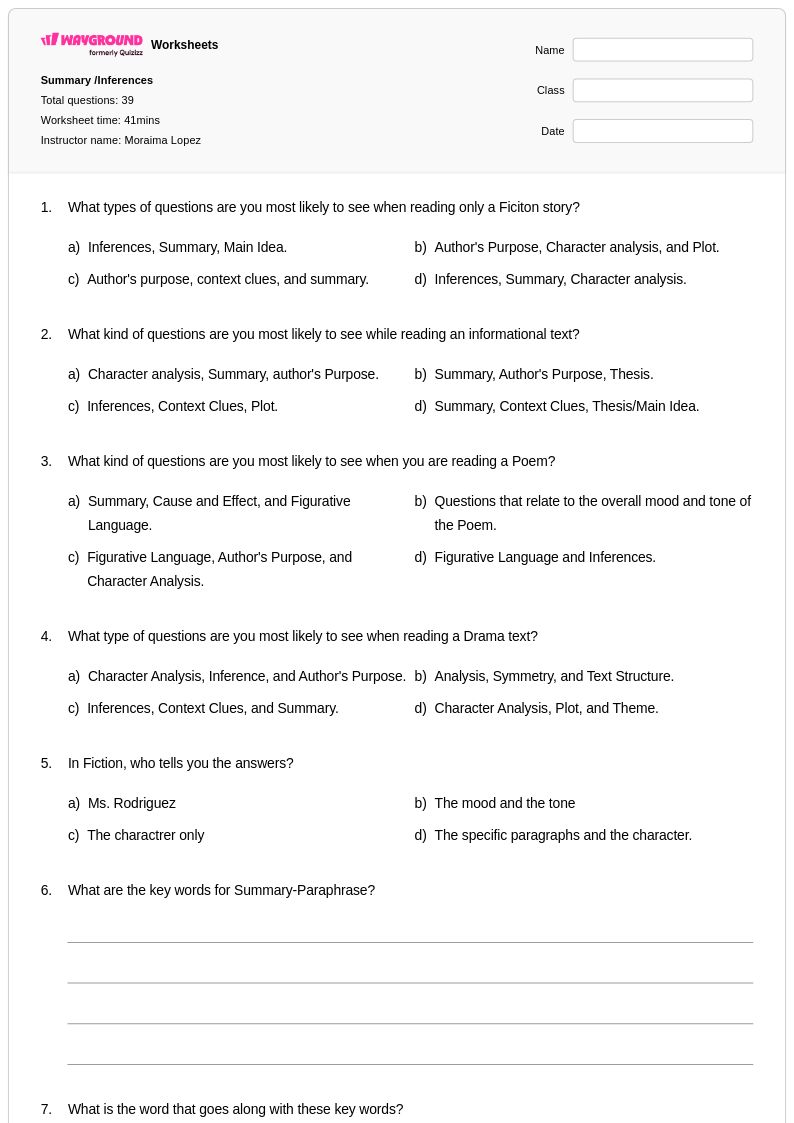
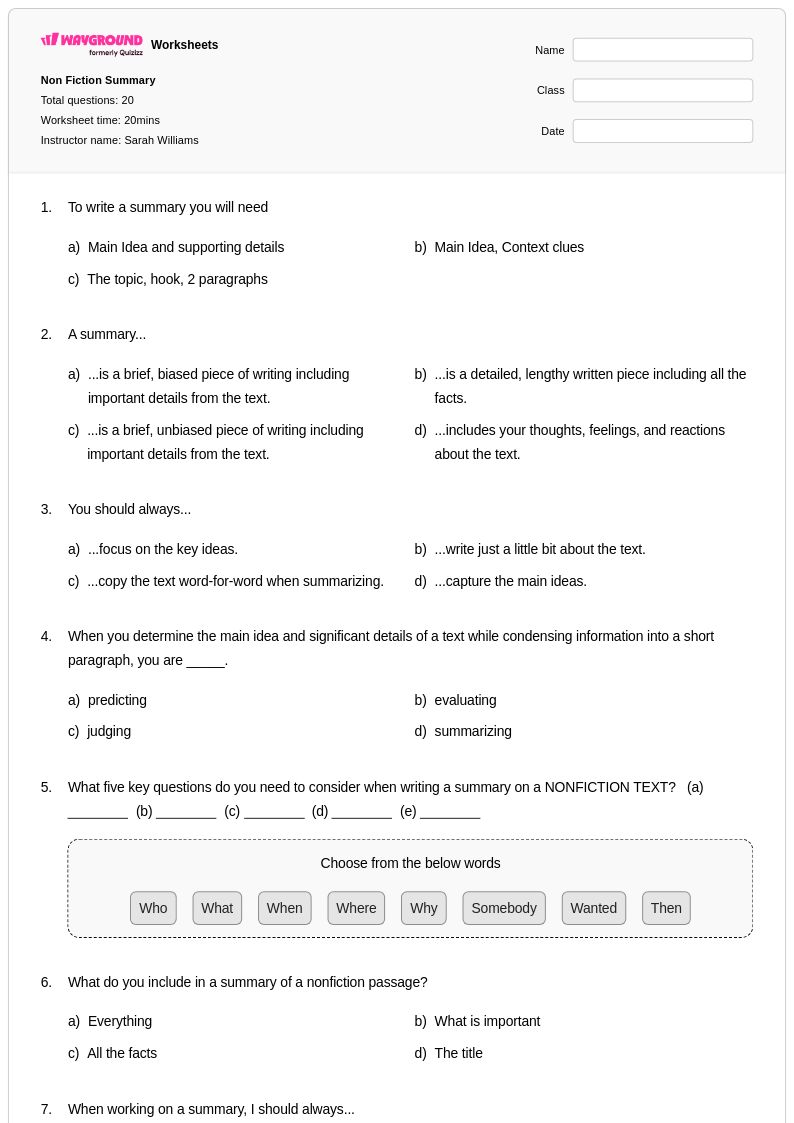
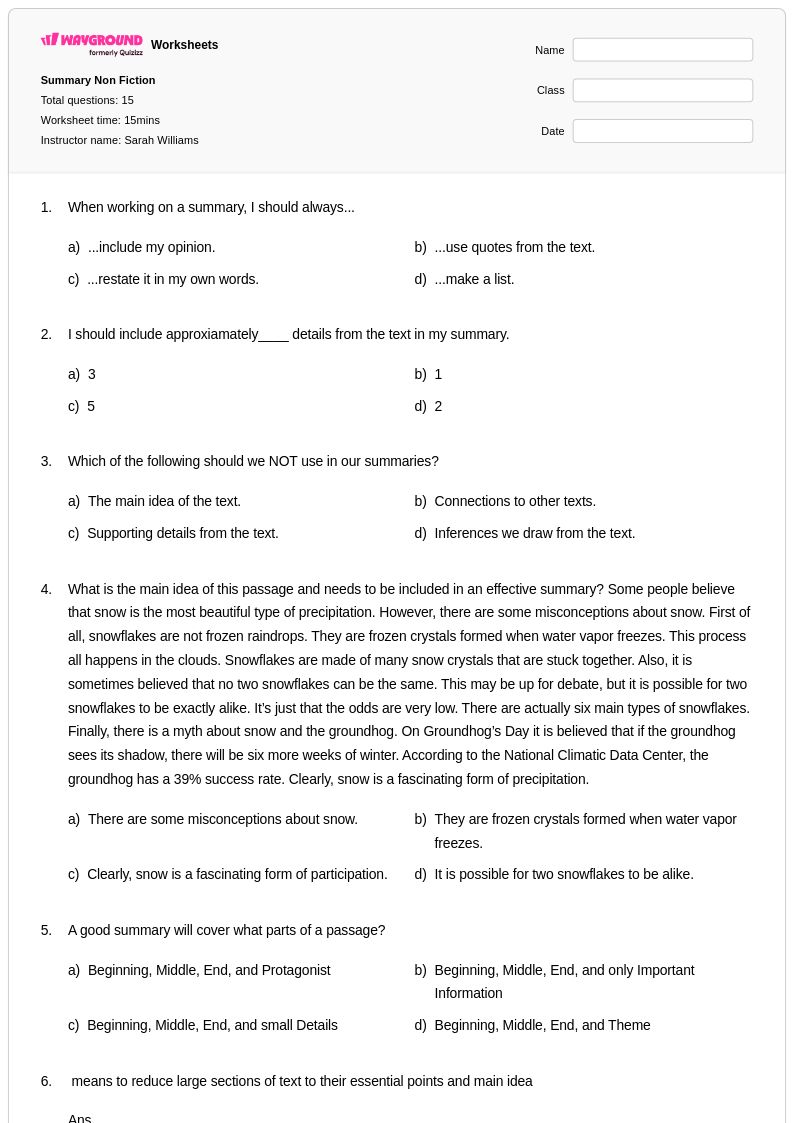
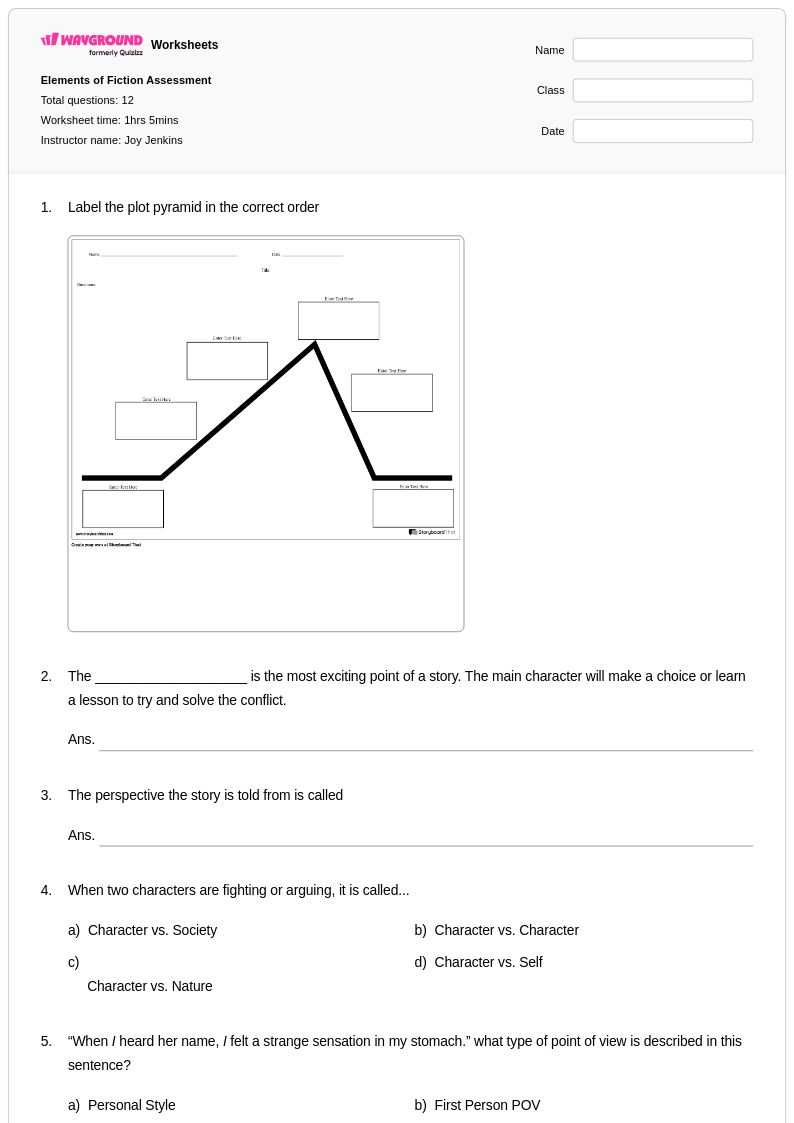
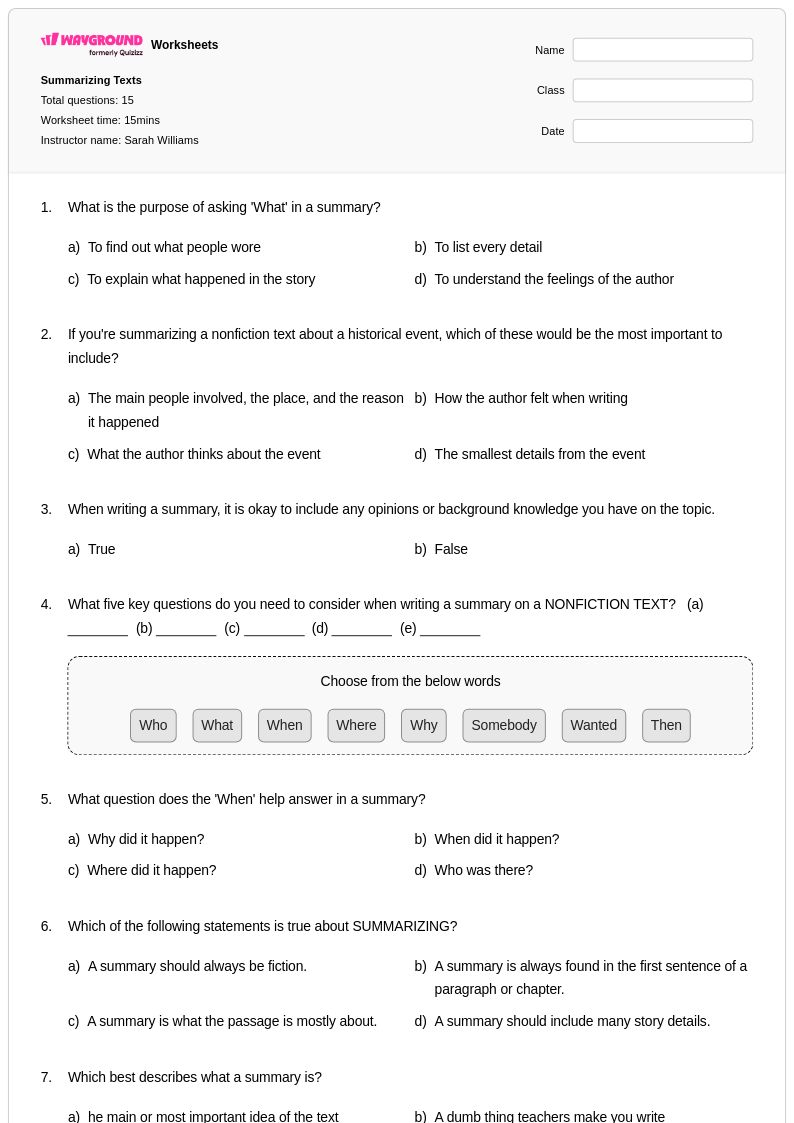
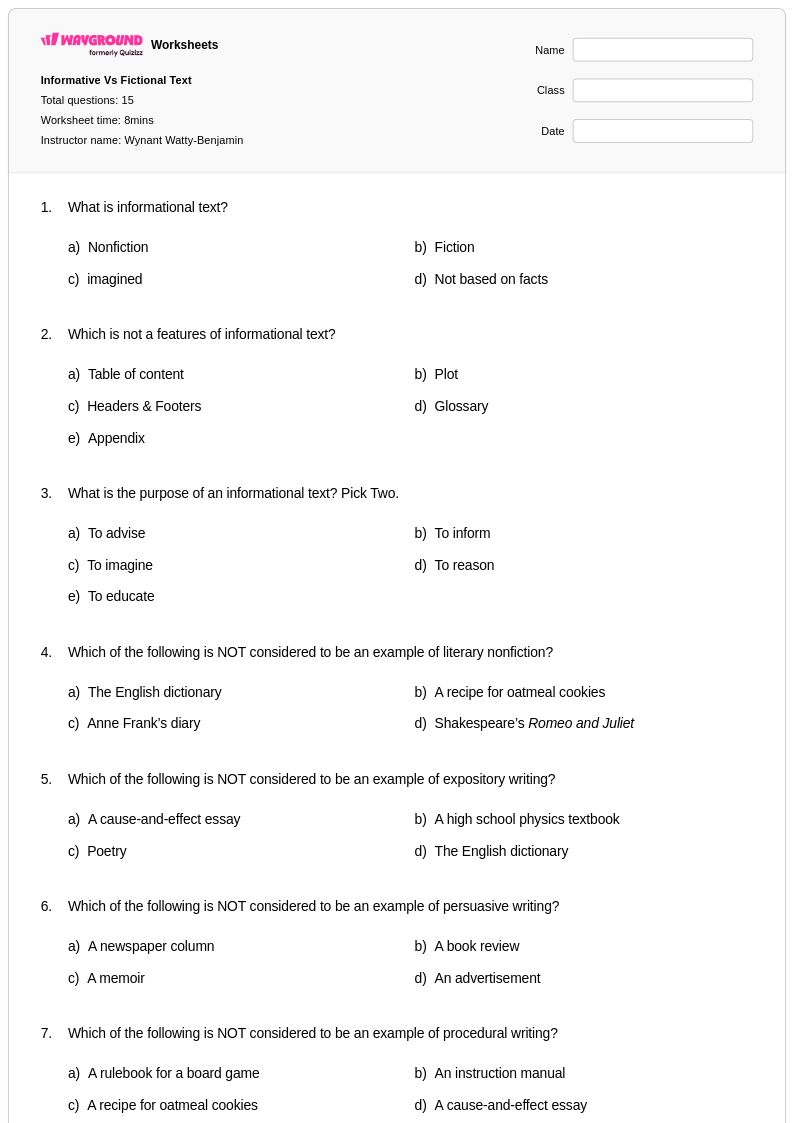
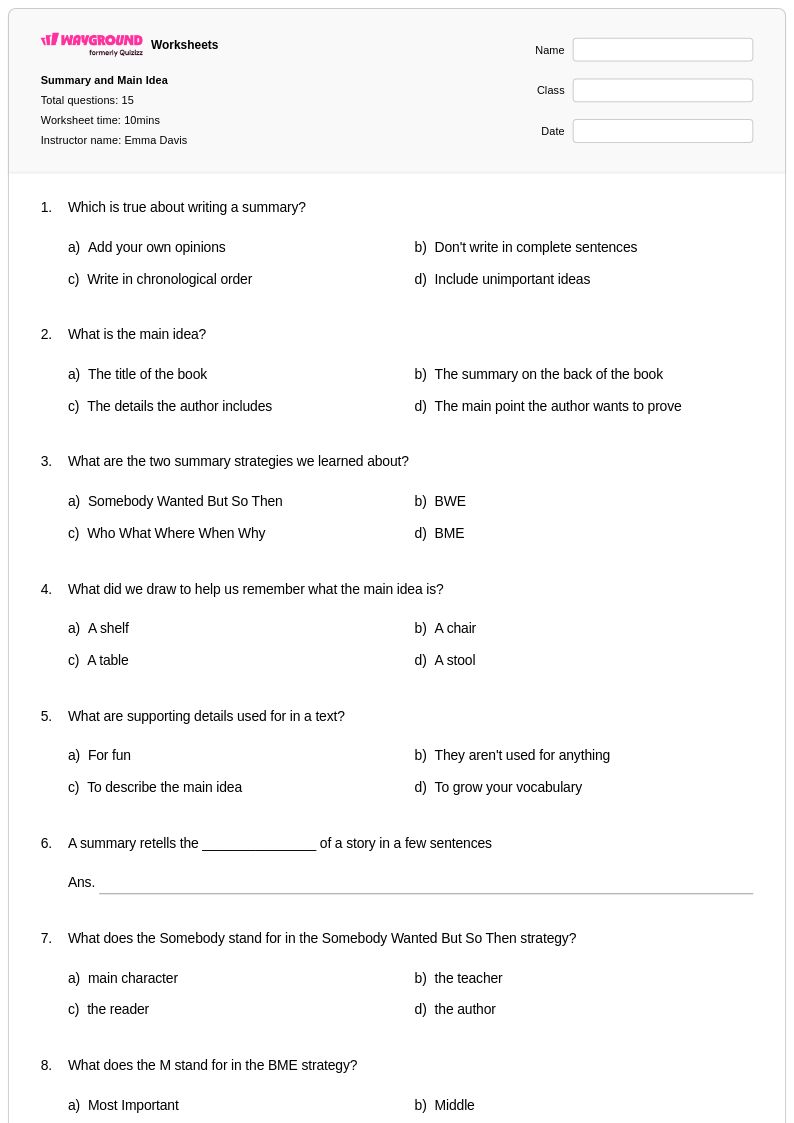
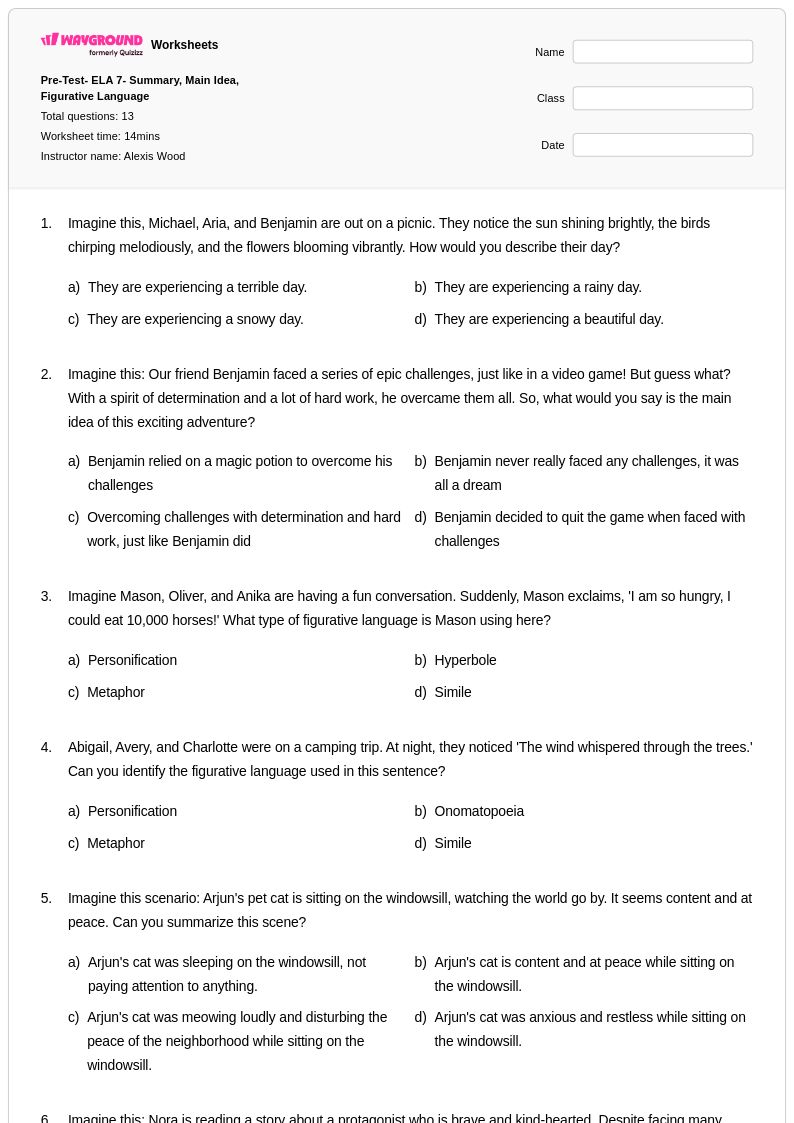
Grade 7 summarizing fiction texts worksheets from Wayground (formerly Quizizz) provide students with comprehensive practice in identifying and condensing the essential elements of narrative works. These carefully designed resources help seventh graders develop critical reading skills by focusing on key story components including plot structure, character development, setting, theme, and conflict resolution. Each worksheet strengthens students' ability to distinguish between important details and supporting information while maintaining the original meaning and tone of fictional passages. The collection includes free printable materials with complete answer keys, allowing students to practice extracting main ideas from short stories, novel excerpts, and various narrative formats through structured practice problems that build confidence in analytical reading.
Wayground (formerly Quizizz) empowers educators with access to millions of teacher-created resources specifically designed for fiction text summarization instruction. The platform's robust search and filtering capabilities enable teachers to quickly locate worksheets aligned with grade-level standards and differentiate instruction based on individual student needs. These customizable materials are available in both printable PDF format and digital versions, providing flexibility for classroom instruction, homework assignments, and independent practice sessions. Teachers can efficiently plan targeted remediation for struggling readers while offering enrichment opportunities for advanced students, utilizing the comprehensive collection to support systematic skill development in reading comprehension and analytical thinking across diverse fictional texts and genres.
FAQs
How do I teach students to summarize fiction texts effectively?
Effective summarizing instruction starts with teaching students to distinguish between major plot events and minor details, using frameworks like somebody-wanted-but-so-then to anchor their thinking. Model the process with short, familiar stories before asking students to summarize independently, gradually releasing responsibility as they gain confidence. Consistent practice with a variety of fiction genres helps students internalize the difference between retelling everything and capturing only what drives the story forward.
What exercises help students practice summarizing fiction?
Structured practice exercises work best when they guide students through identifying specific story elements before writing a full summary, such as prompts that ask for the central conflict, key character actions, and resolution separately. Sequencing activities, graphic organizers, and sentence-frame scaffolds are particularly effective for building the skill incrementally. Repeated practice across different fiction types, from short stories to novel excerpts, reinforces the transferable nature of summarizing strategies.
What mistakes do students commonly make when summarizing fiction?
The most common error is retelling rather than summarizing, where students include every event in sequence instead of selecting only the plot points essential to the story's meaning. Students also frequently omit the central conflict or resolution, producing summaries that feel incomplete or unfocused. Another typical mistake is copying dialogue or descriptive passages verbatim rather than paraphrasing ideas in their own words, which signals a surface-level understanding of the text.
How can I differentiate summarizing fiction worksheets for different reading levels?
For struggling readers, scaffolded worksheets that provide sentence starters, word banks, or partially completed graphic organizers reduce the cognitive load while still targeting the summarizing skill. Advanced students benefit from open-ended prompts that ask them to justify their choices about which details are essential and which are not. On Wayground, teachers can apply accommodations such as read-aloud support and reduced answer choices to individual students, allowing the same worksheet to serve the full range of learners without singling anyone out.
How do I use Wayground's summarizing fiction texts worksheets in my classroom?
Wayground's summarizing fiction texts worksheets are available as printable PDFs for traditional classroom use and in digital formats for technology-integrated learning environments, making them flexible enough for in-class work, homework, or remote assignments. Teachers can also host the worksheets as a quiz directly on Wayground, enabling real-time tracking of student responses. Answer keys are included with every worksheet, so teachers can provide immediate feedback without additional prep time.
How do I assess whether students have truly understood a fiction text through their summaries?
A strong student summary should reference the central conflict, the protagonist's goal or motivation, the turning point, and the resolution without padding with minor details or copied phrases. Look for evidence that students have paraphrased rather than transcribed, and that their summary would make sense to someone who has not read the story. Common gaps to assess for include missing resolution, vague character identification, and the absence of any mention of conflict or theme.