
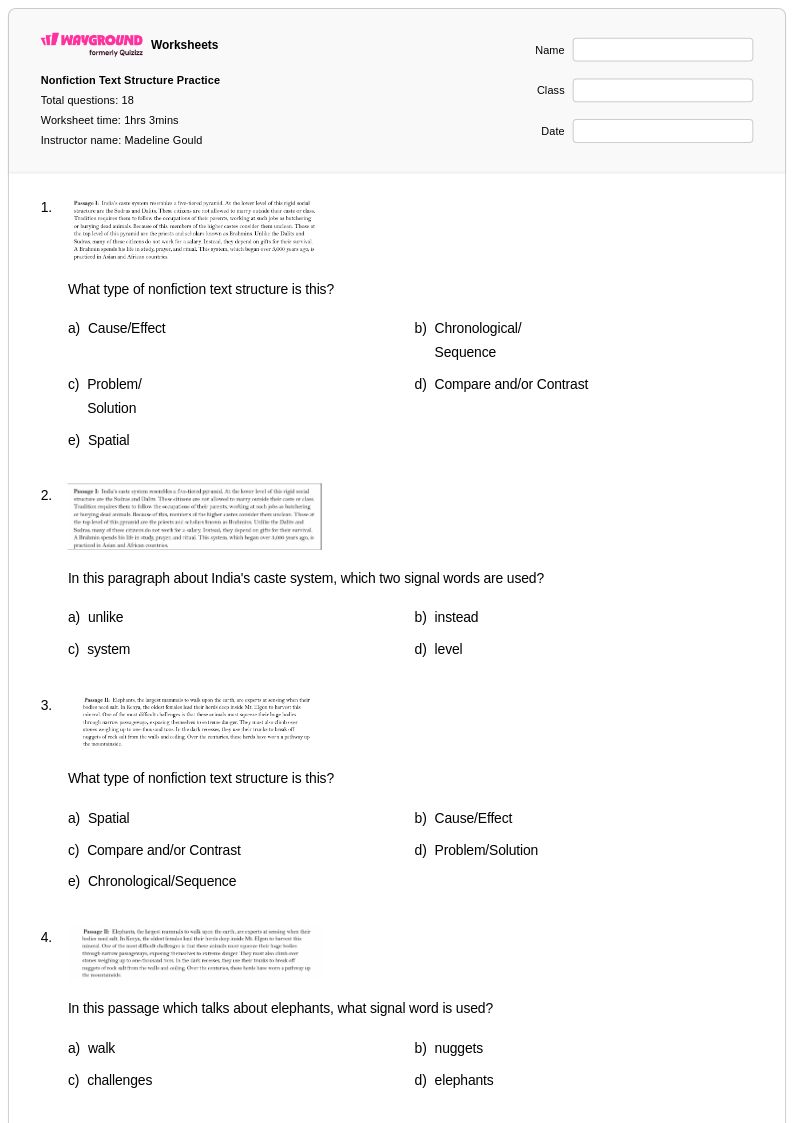
18 Q
6th - 8th
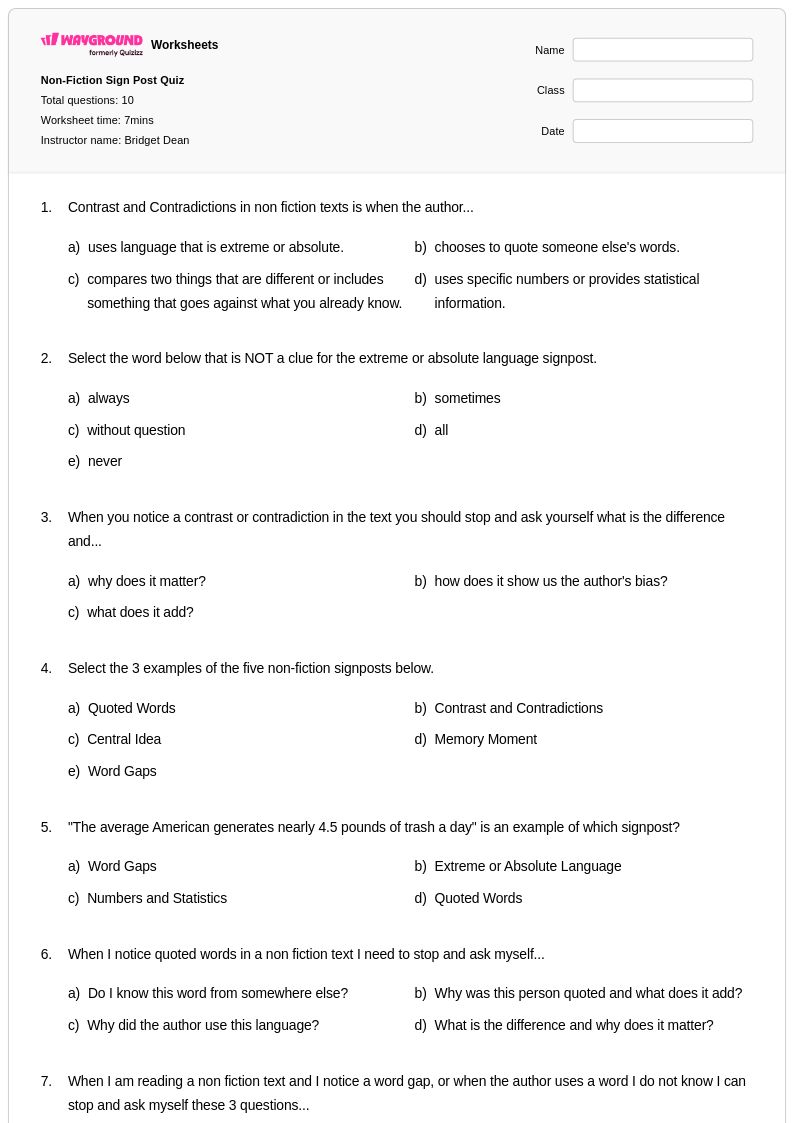
10 Q
8th
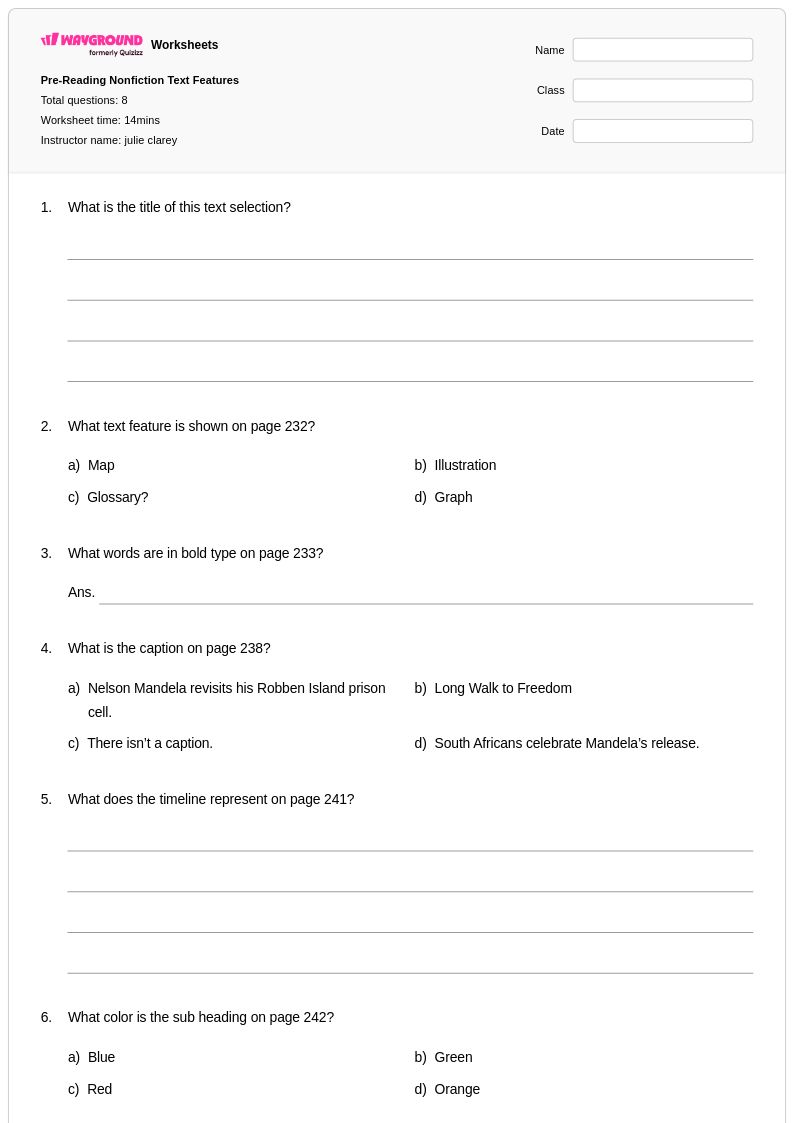
8 Q
5th - 8th
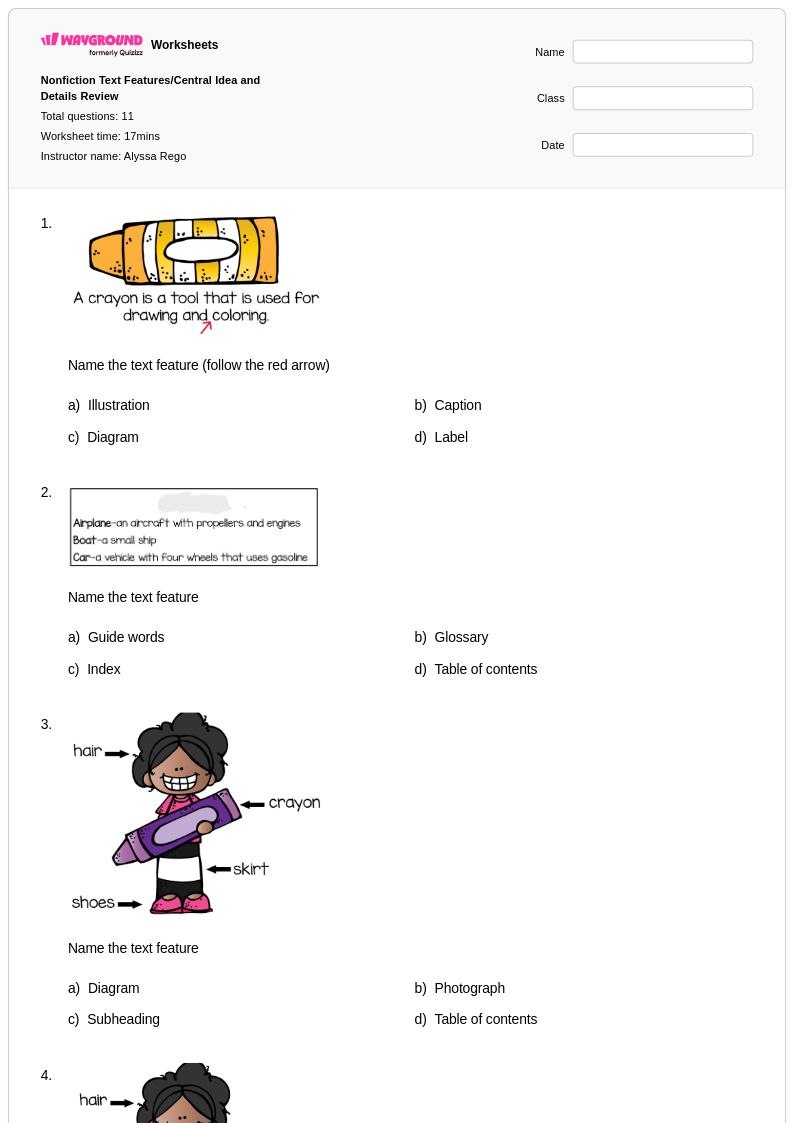
15 Q
6th - 8th
15 Q
5th - Uni
19 Q
8th

11 Q
6th - 10th
16 Q
8th
22 Q
7th - 8th
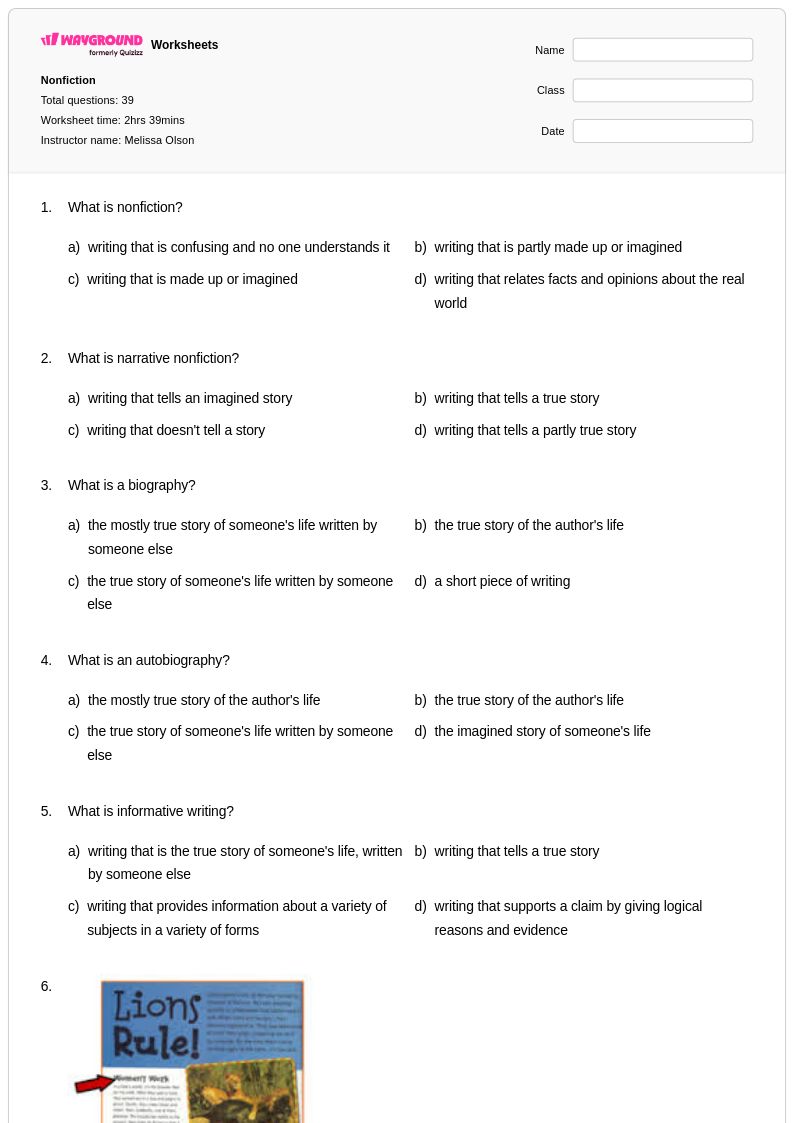
39 Q
8th
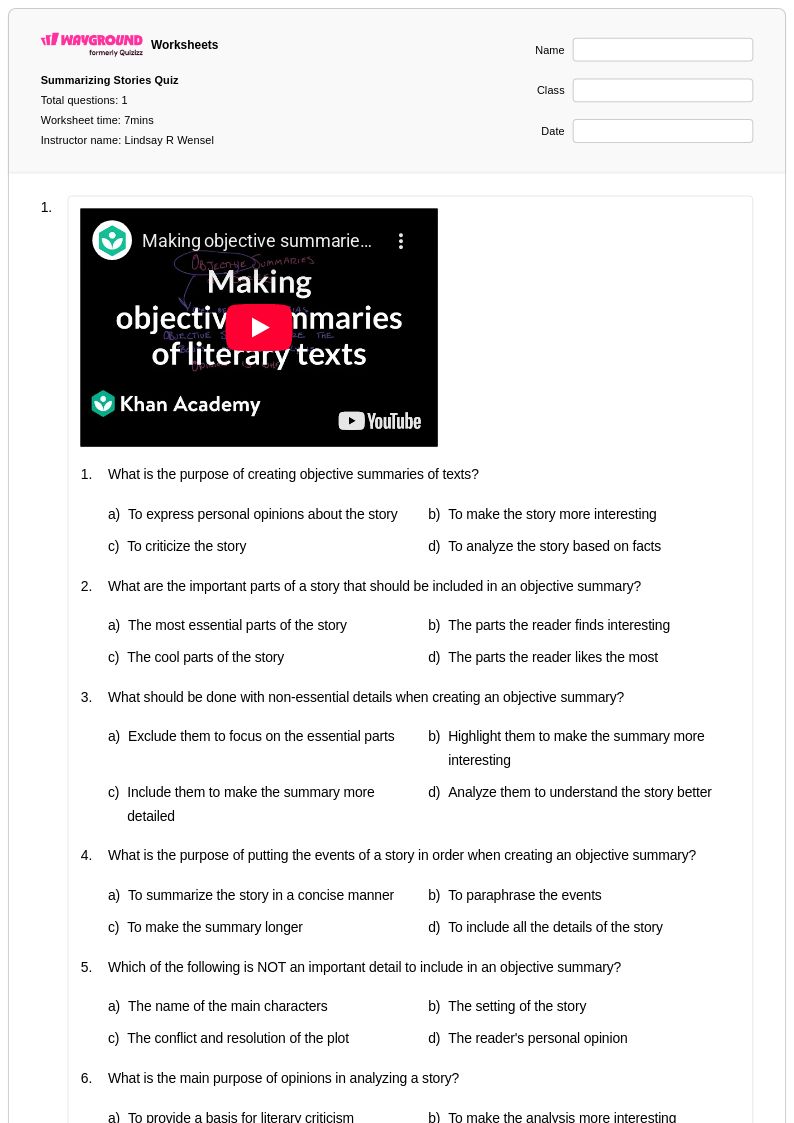
11 Q
8th
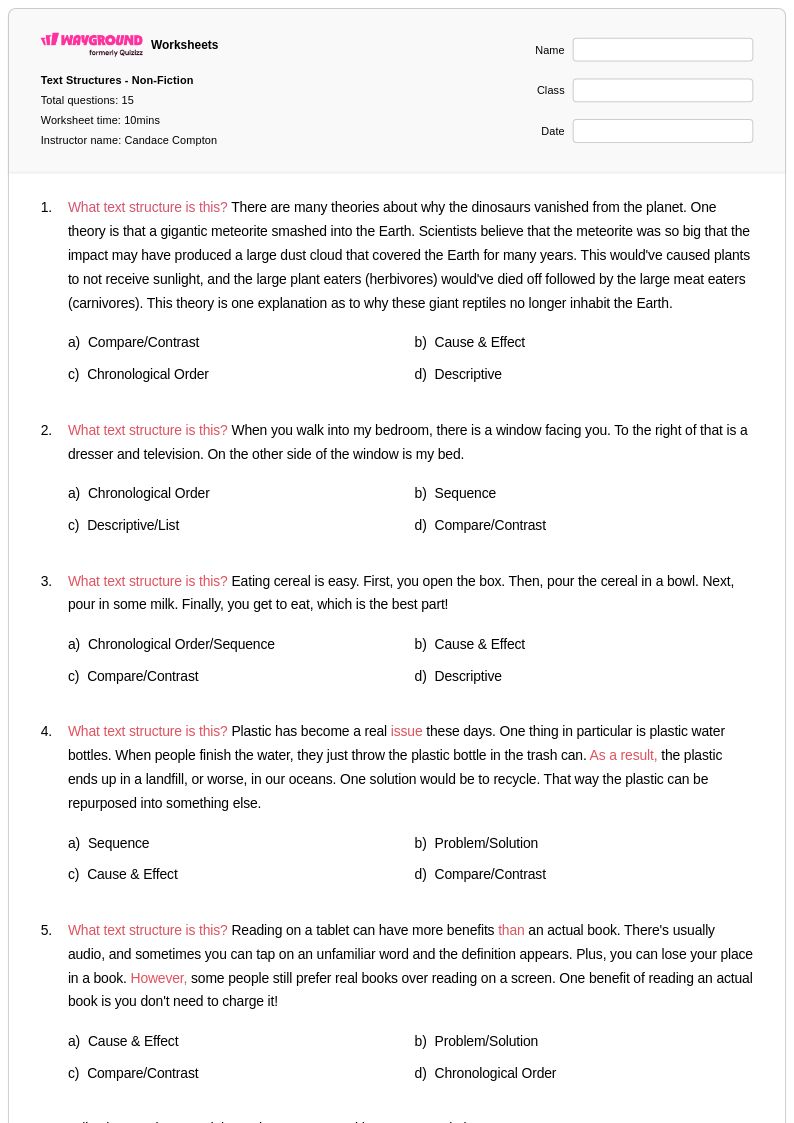
15 Q
6th - 8th
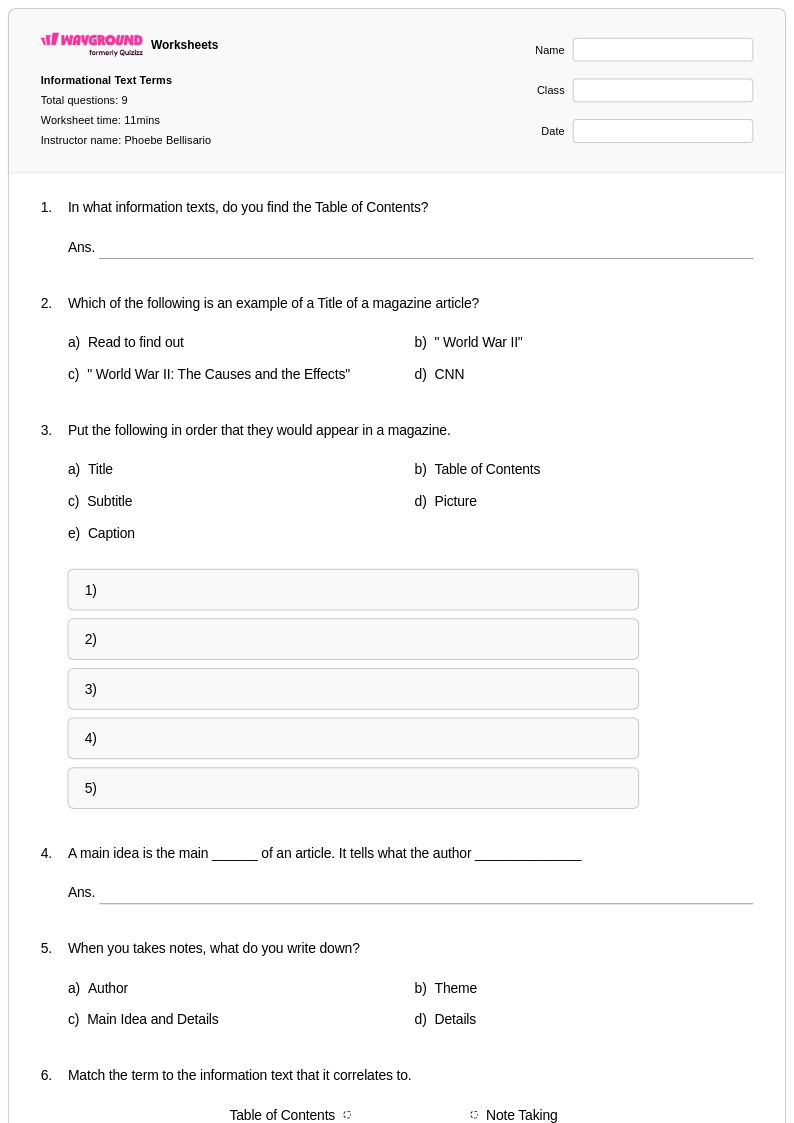
9 Q
6th - 8th
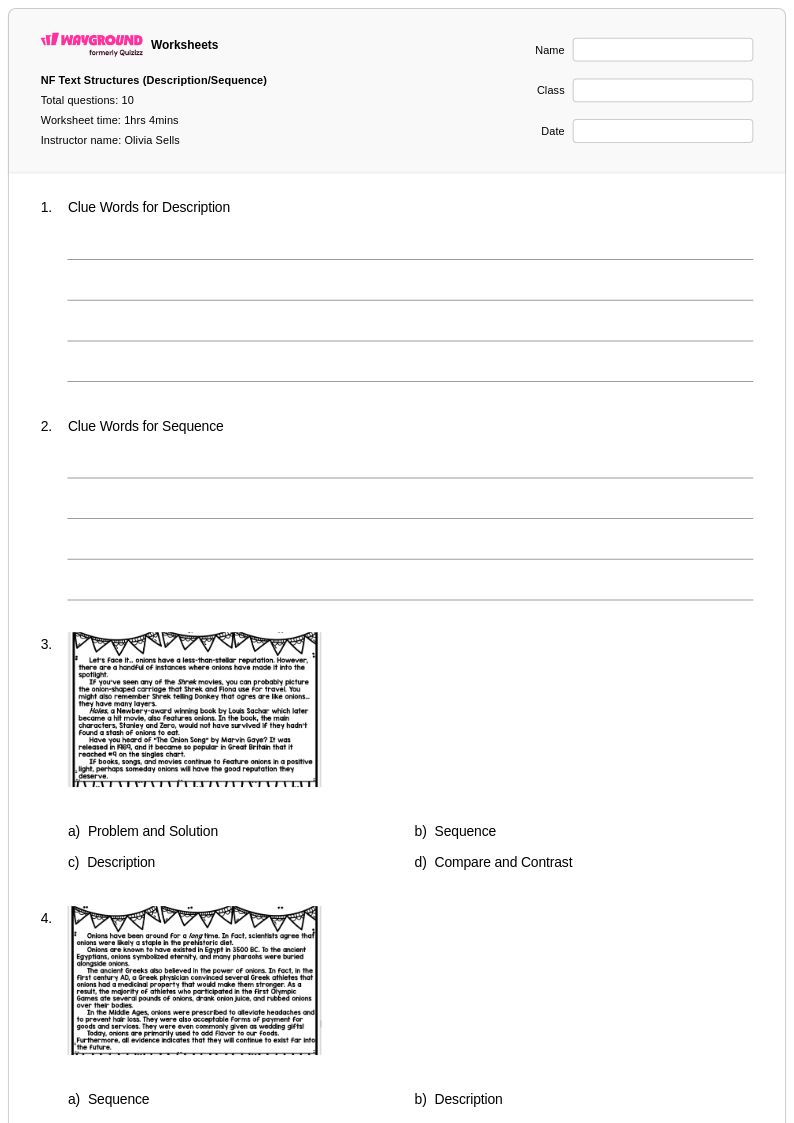
10 Q
6th - 8th
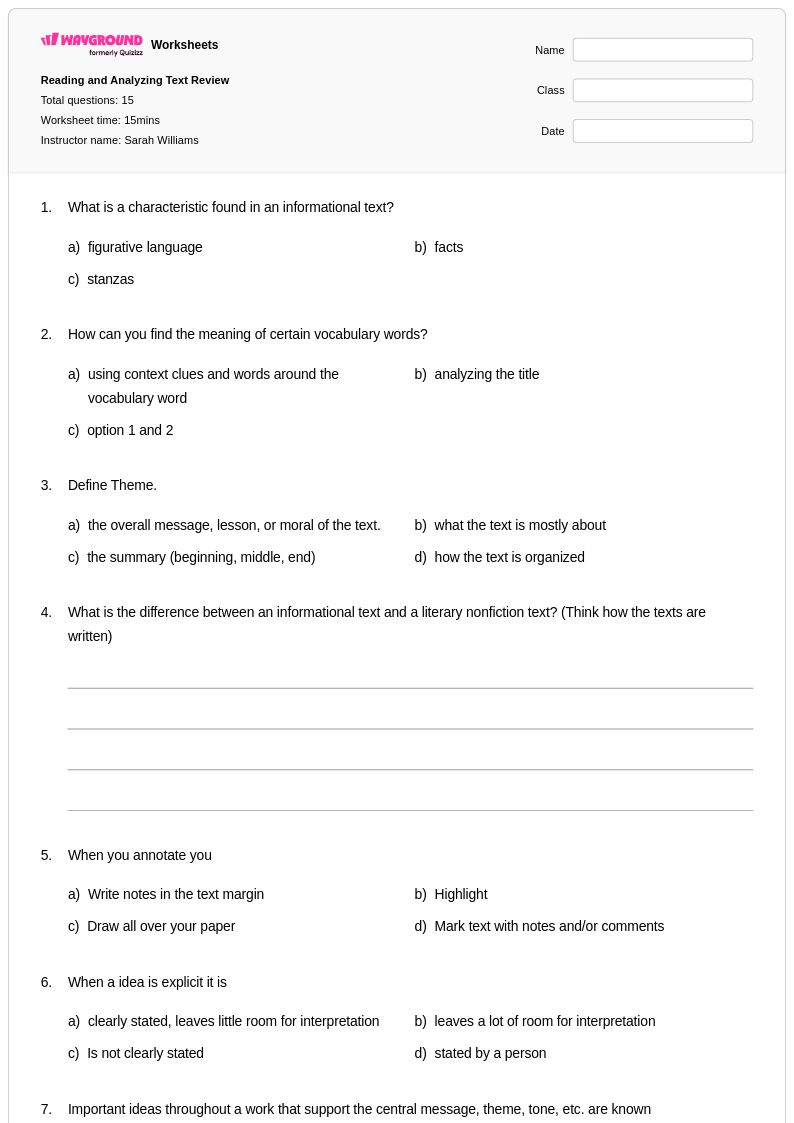
15 Q
7th - Uni
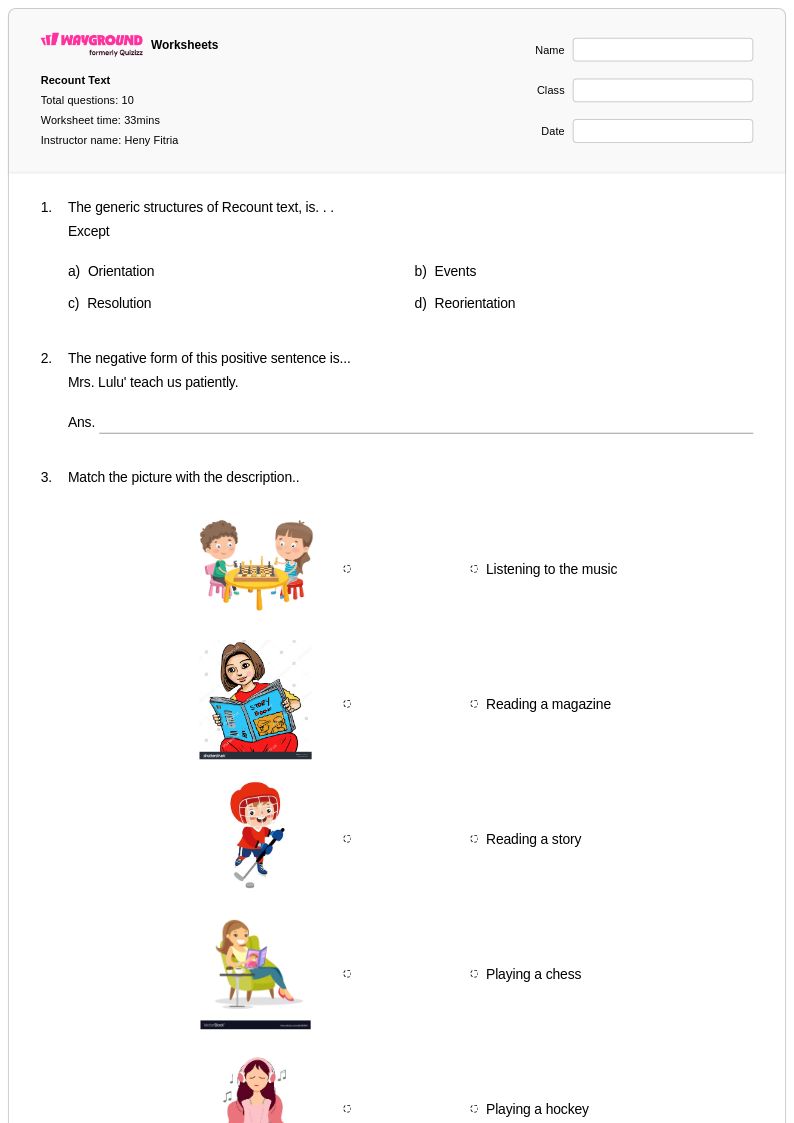
10 Q
8th
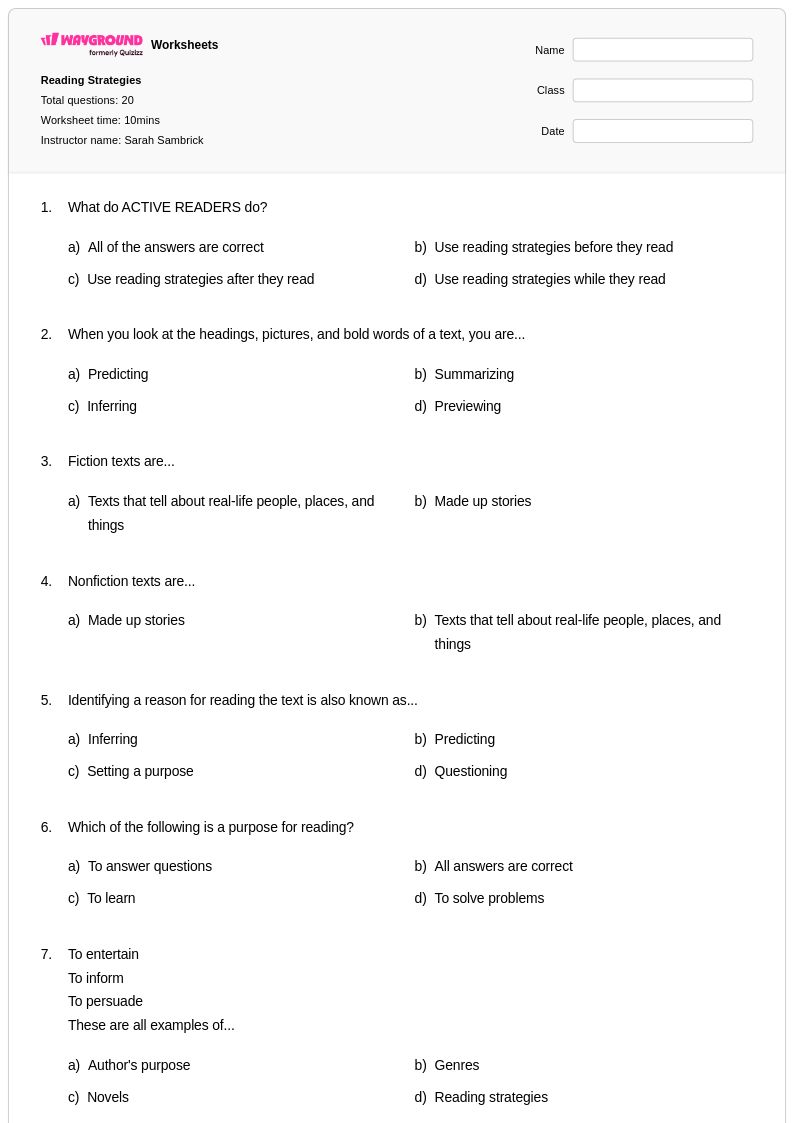
20 Q
6th - 8th
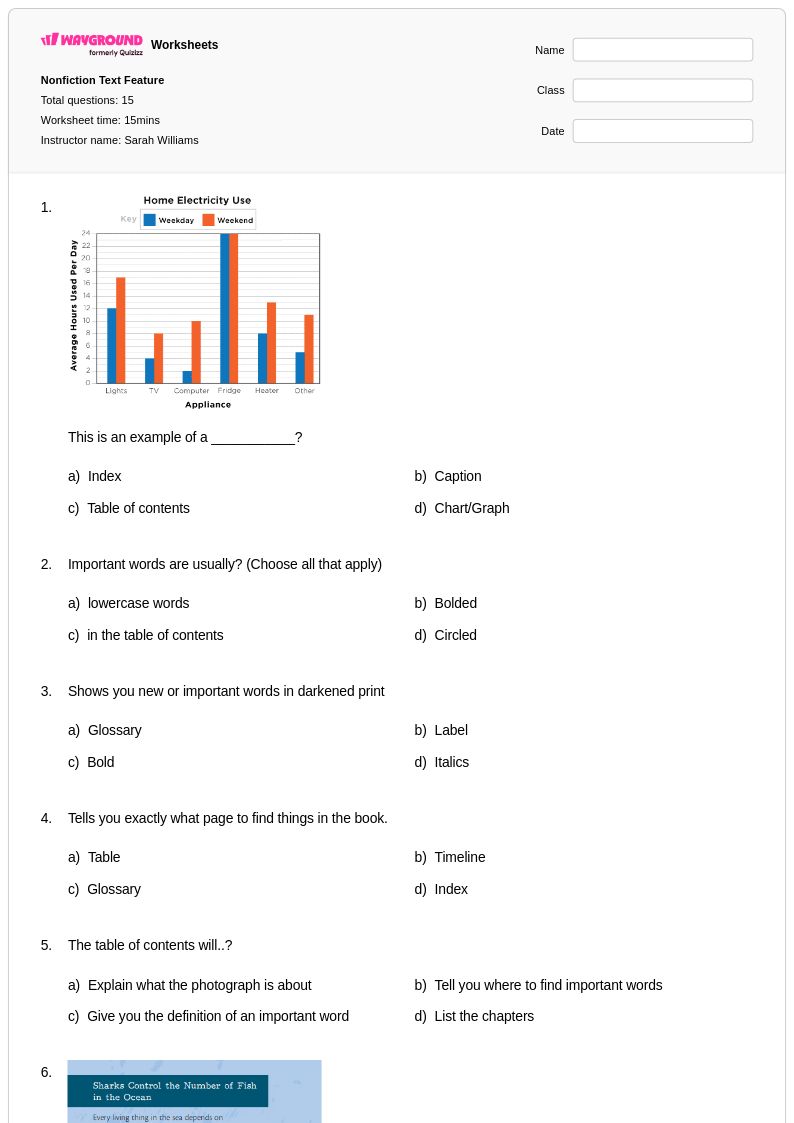
15 Q
2nd - Uni
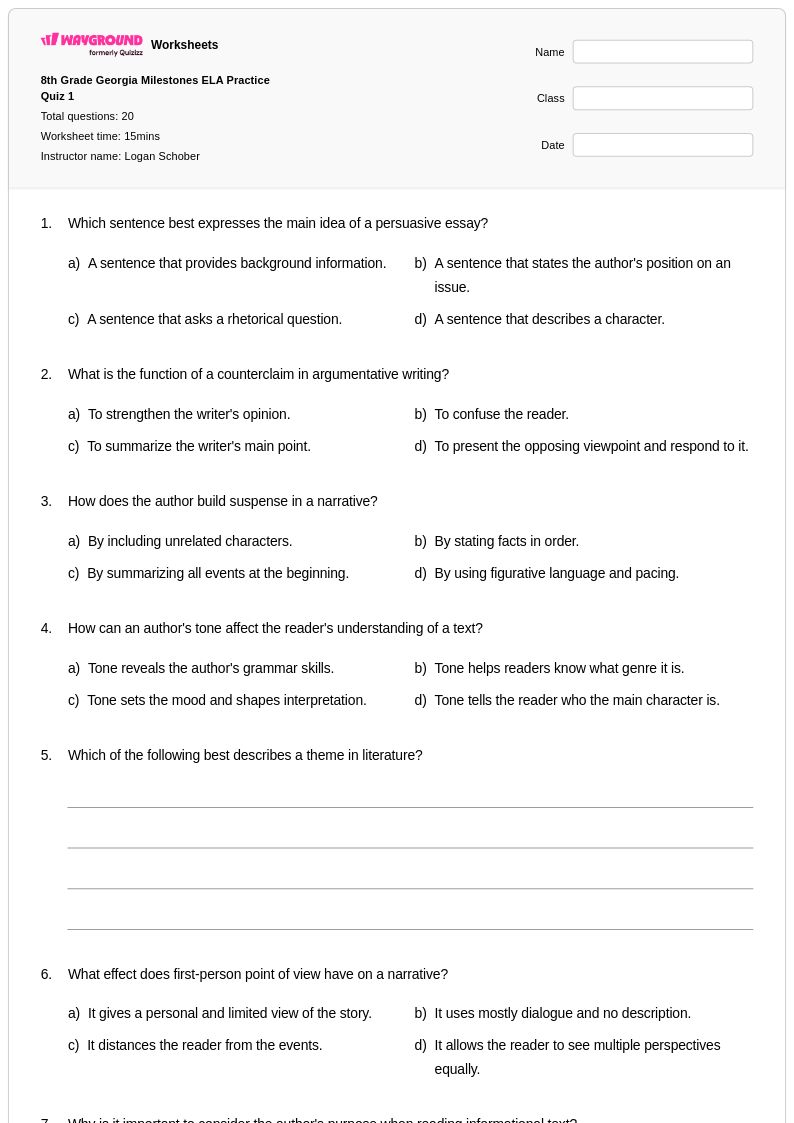
20 Q
8th
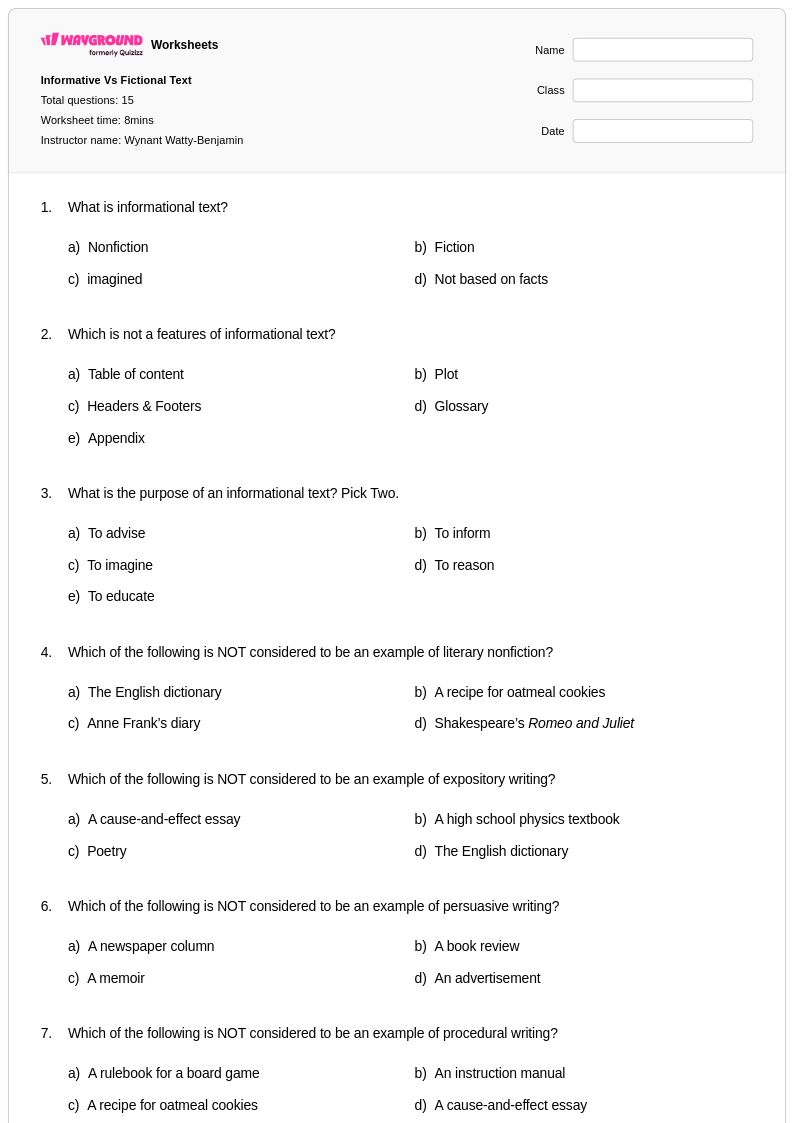
15 Q
6th - 8th
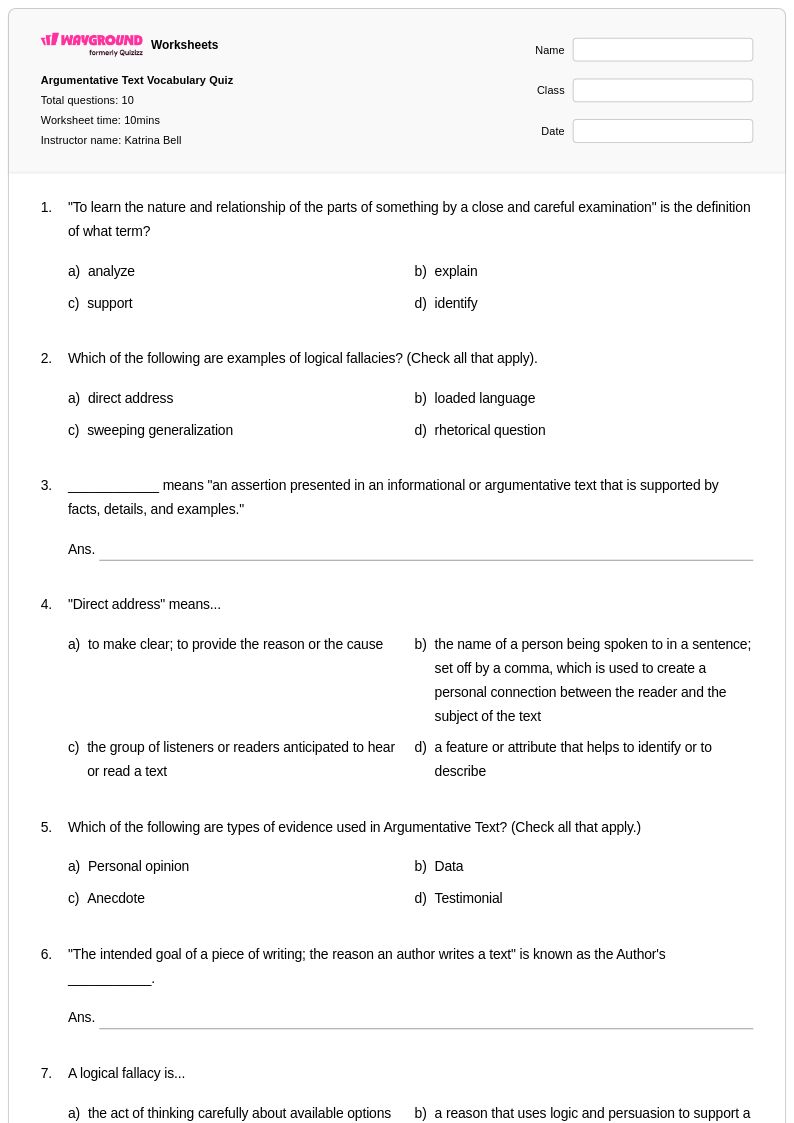
10 Q
6th - 8th
51 Q
6th - 8th
11 Q
6th - 8th
21 Q
5th - Uni
Explore Summarizing Nonfiction Texts Worksheets by Grades
Explore Other Subject Worksheets for grade 8
Explore printable Summarizing Nonfiction Texts worksheets for Grade 8
Grade 8 summarizing nonfiction texts worksheets available through Wayground (formerly Quizizz) provide comprehensive practice opportunities for students developing critical reading comprehension skills. These educational resources focus specifically on teaching students how to distill complex informational passages into concise, accurate summaries that capture main ideas, supporting details, and essential arguments. The worksheets strengthen fundamental literacy skills including identifying topic sentences, distinguishing between major and minor details, recognizing text structures, and synthesizing information across multiple paragraphs or sections. Each printable resource includes carefully crafted nonfiction passages from various domains such as science, history, and current events, accompanied by guided practice problems that scaffold the summarization process. Students work through systematic exercises that teach them to eliminate redundant information, combine related ideas, and express complex concepts in their own words, with answer keys provided to support independent learning and immediate feedback.
Wayground (formerly Quizizz) empowers educators with an extensive collection of teacher-created summarizing nonfiction texts worksheets, drawing from millions of educational resources that can be easily searched and filtered by specific learning objectives and difficulty levels. The platform's robust standards alignment ensures that Grade 8 summarizing activities meet curriculum requirements while offering differentiation tools that allow teachers to modify content complexity for diverse learners. Teachers can customize worksheets to target specific nonfiction genres, adjust passage length and vocabulary difficulty, or focus on particular summarization strategies such as the somebody-wanted-but-so-then framework or hierarchical summarizing techniques. Available in both printable pdf format and interactive digital versions, these resources support flexible lesson planning whether used for whole-class instruction, small group remediation, individual enrichment, or homework assignments. The comprehensive collection enables educators to provide consistent skill practice across multiple units while tracking student progress in developing sophisticated reading comprehension abilities essential for academic success.
FAQs
How do I teach students to summarize nonfiction texts?
What exercises help students practice summarizing nonfiction texts?
What mistakes do students commonly make when summarizing nonfiction texts?
How do I help struggling readers summarize nonfiction texts?
How can I use summarizing nonfiction text worksheets in my classroom?
How do I align summarizing nonfiction worksheets to specific reading standards?