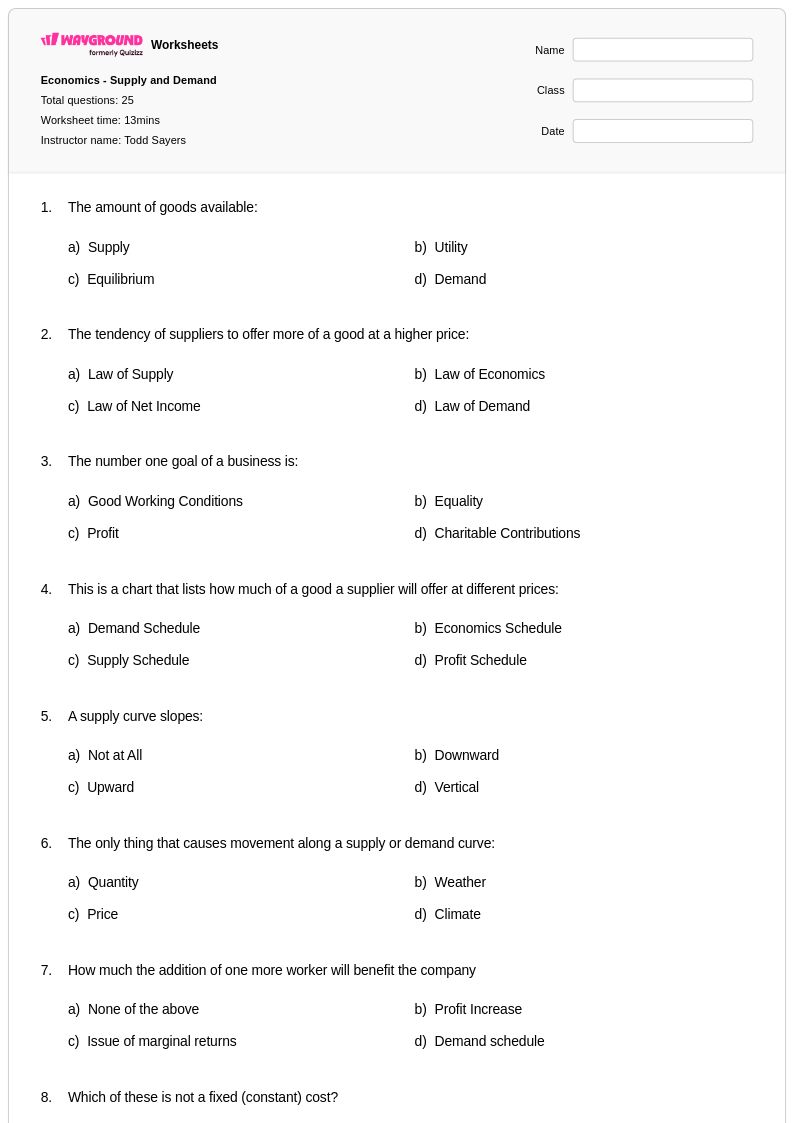
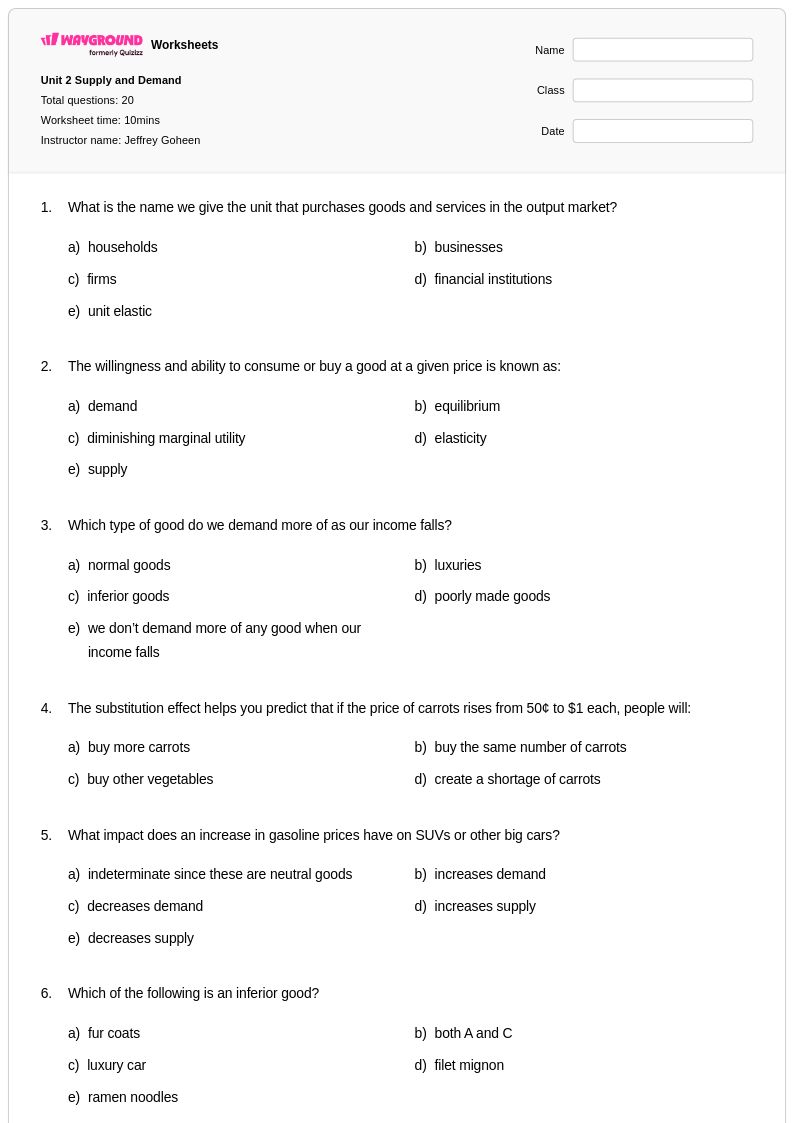
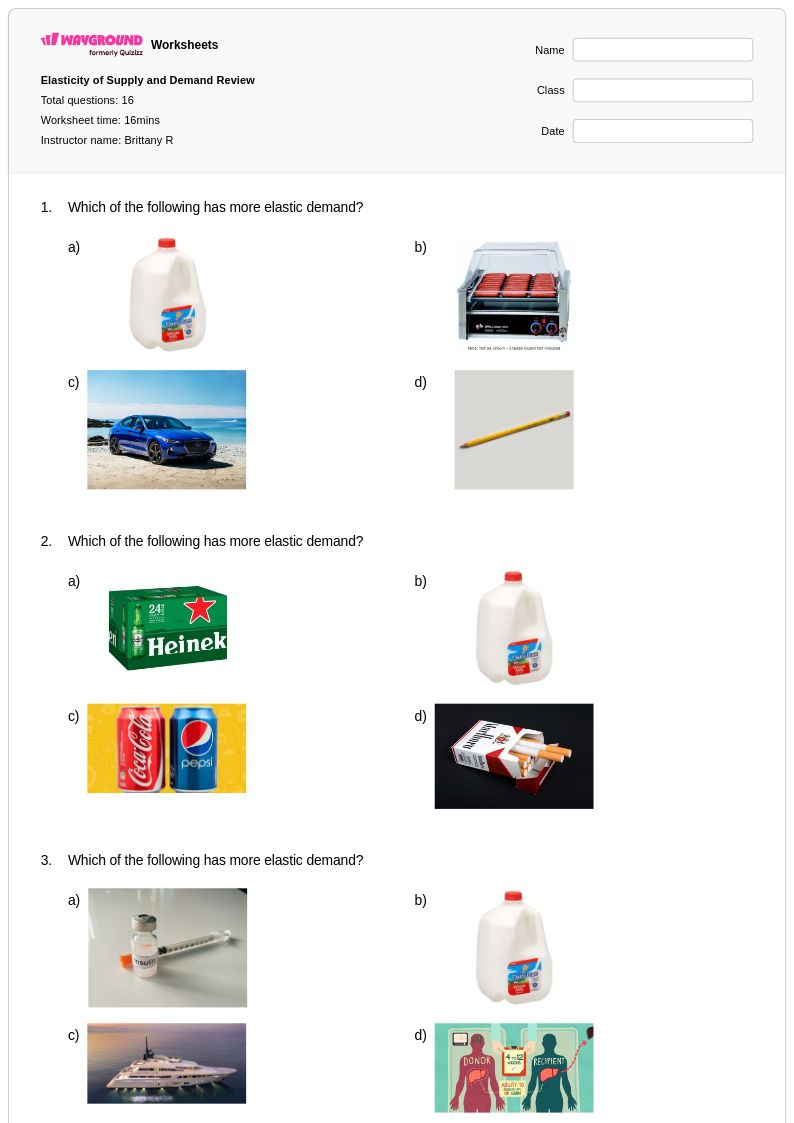
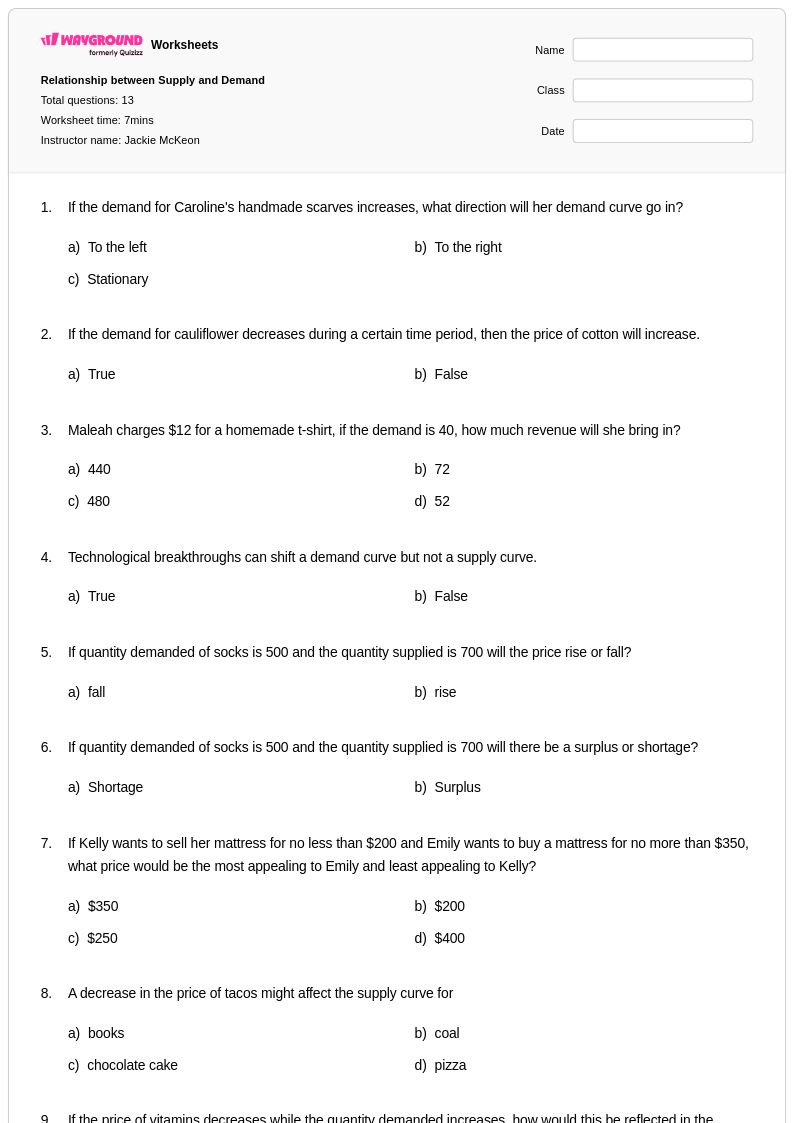
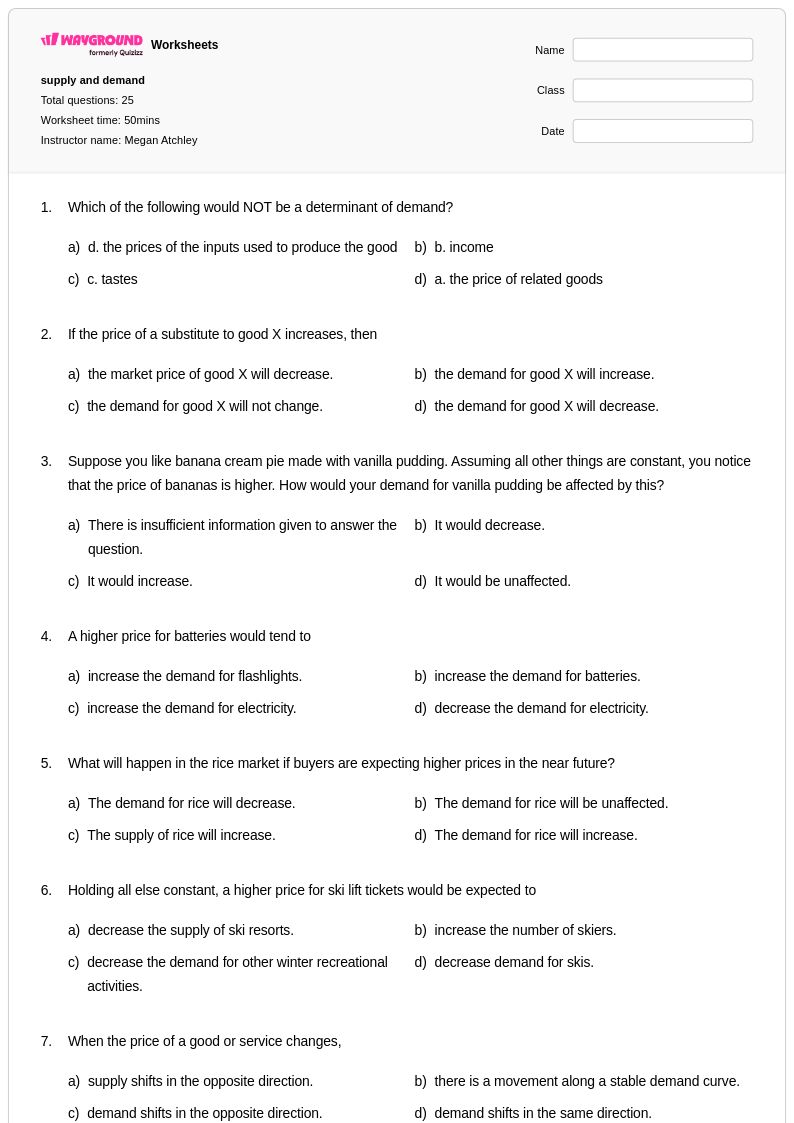
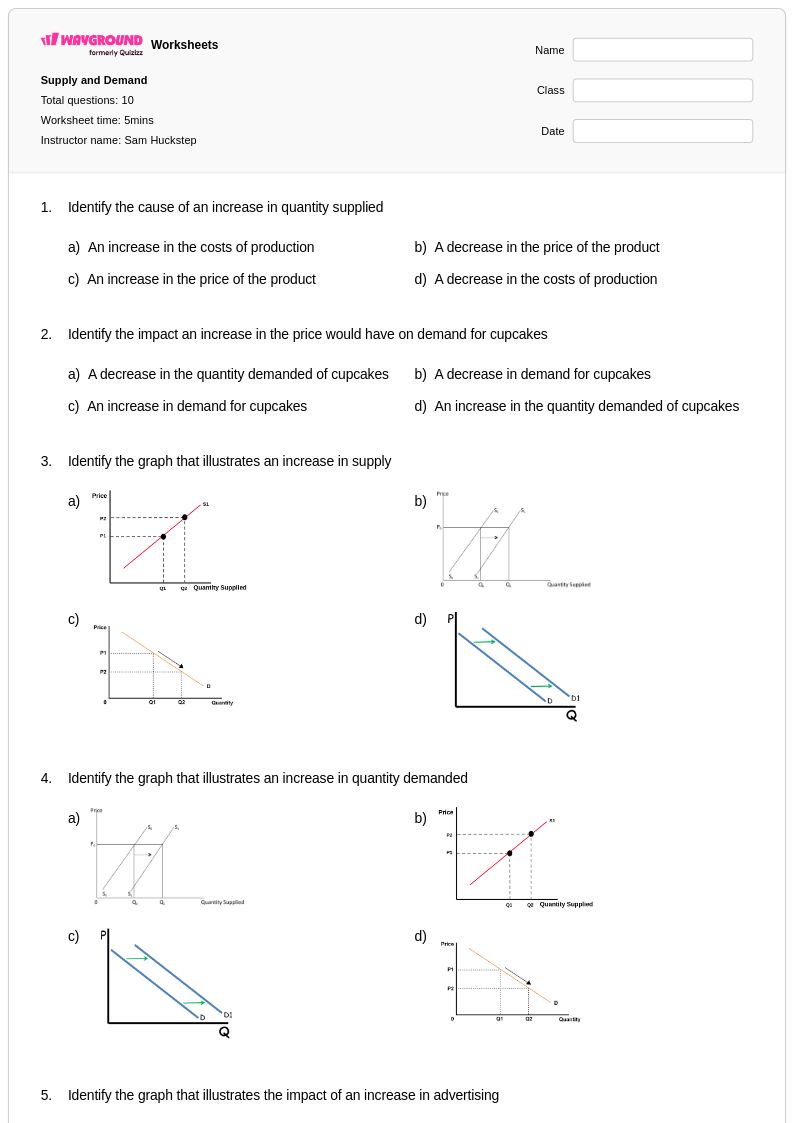
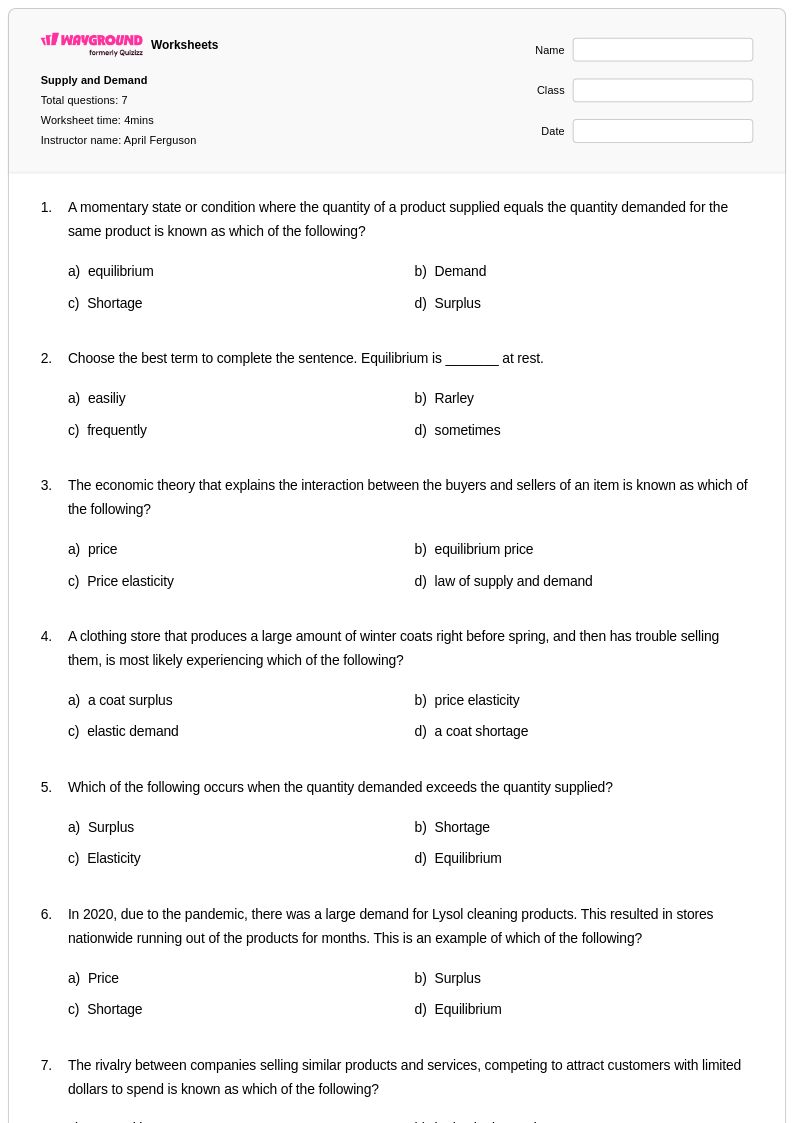
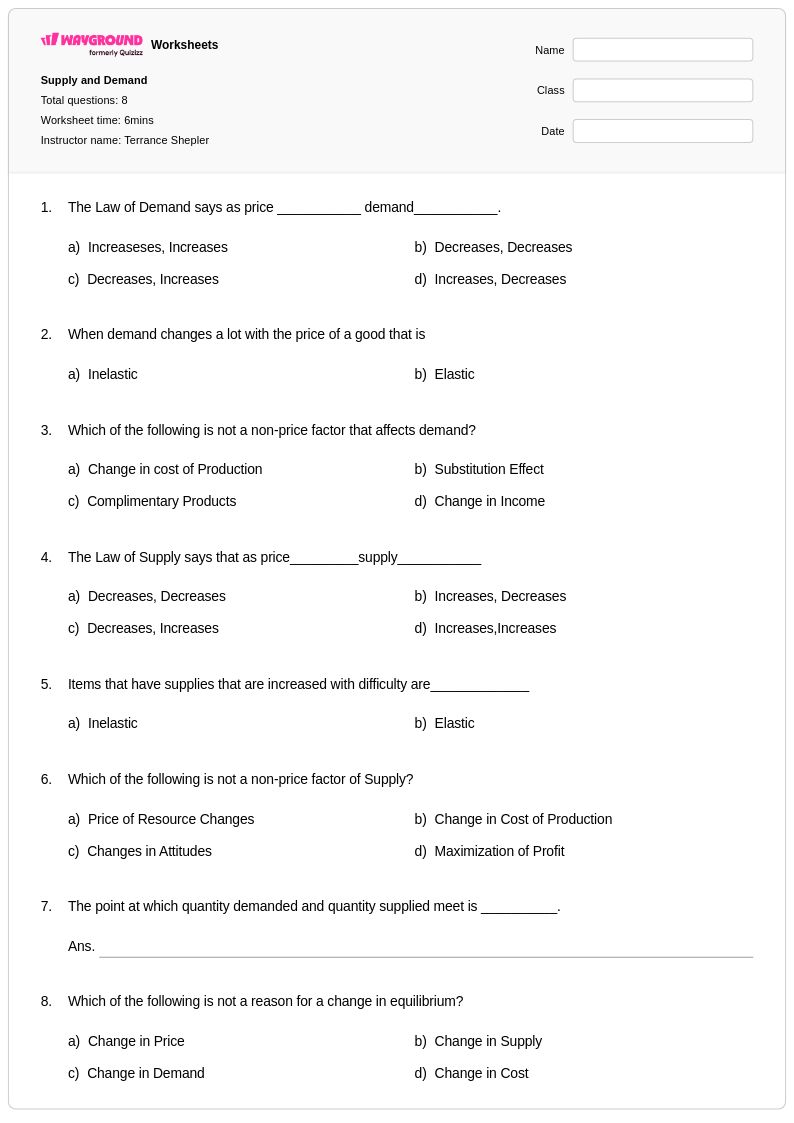
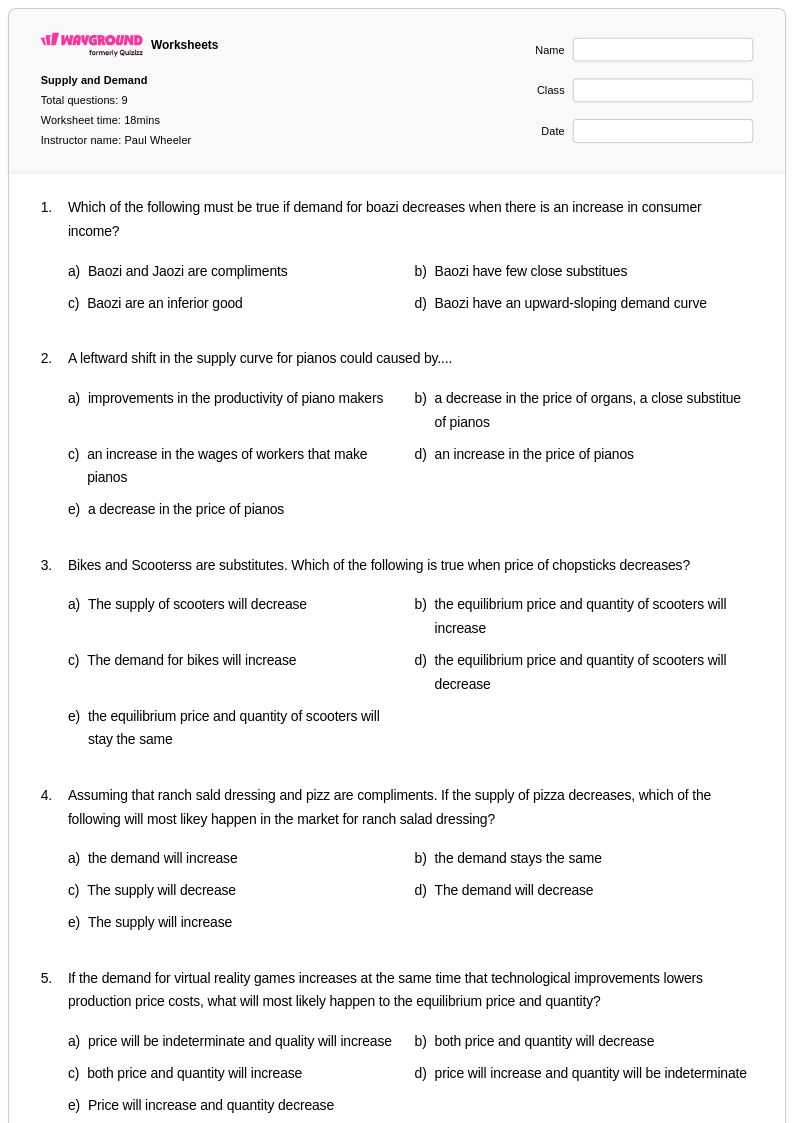
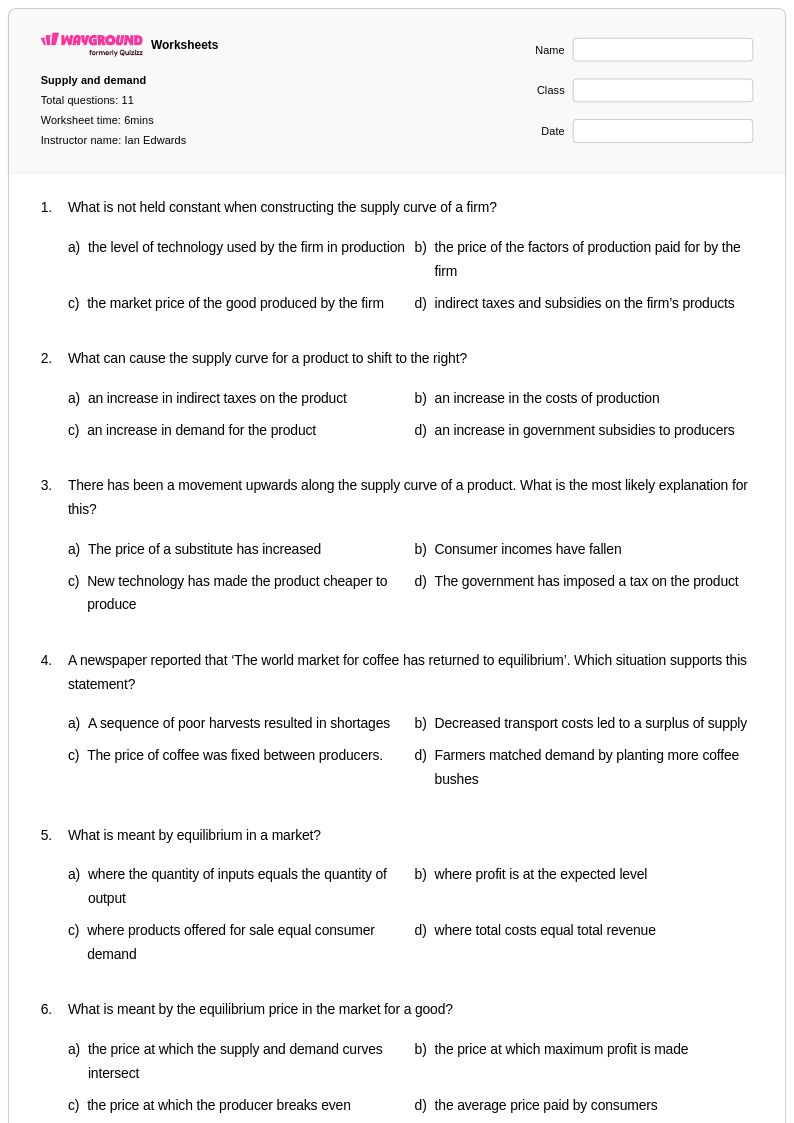
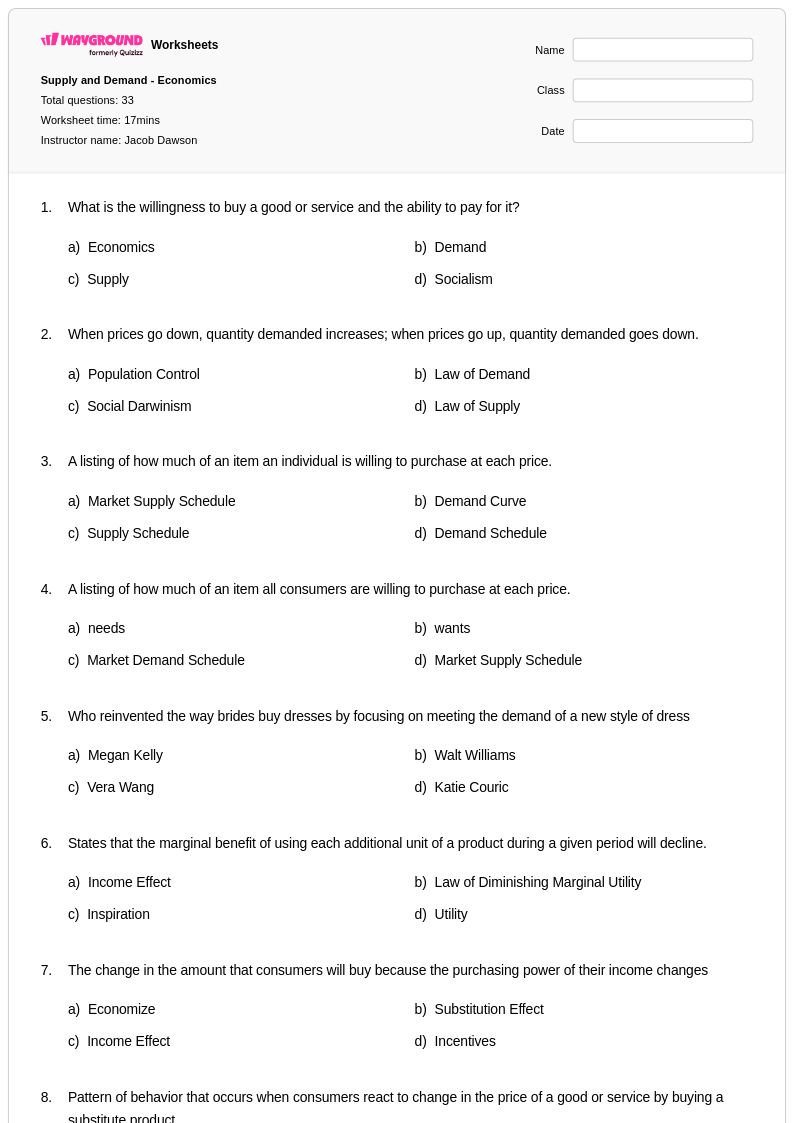
Explore Wayground's free supply and demand worksheets and printables that help students master economic principles through engaging practice problems, interactive exercises, and comprehensive answer keys in PDF format.
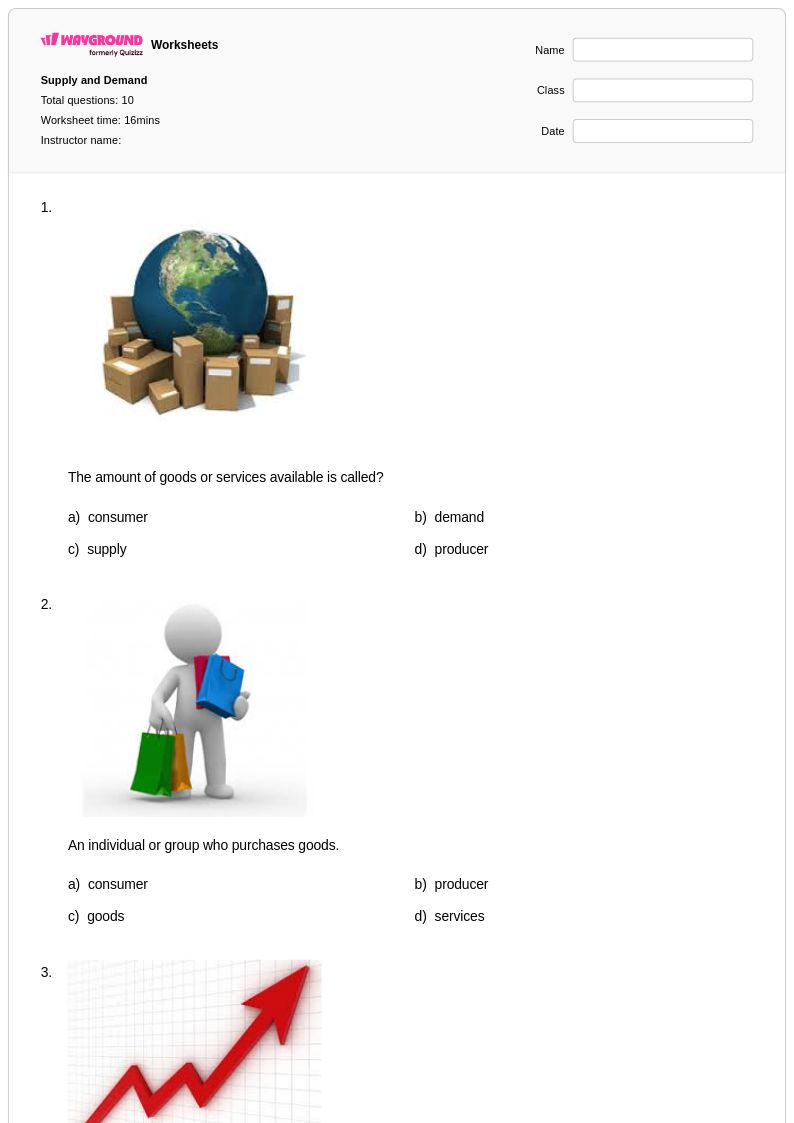
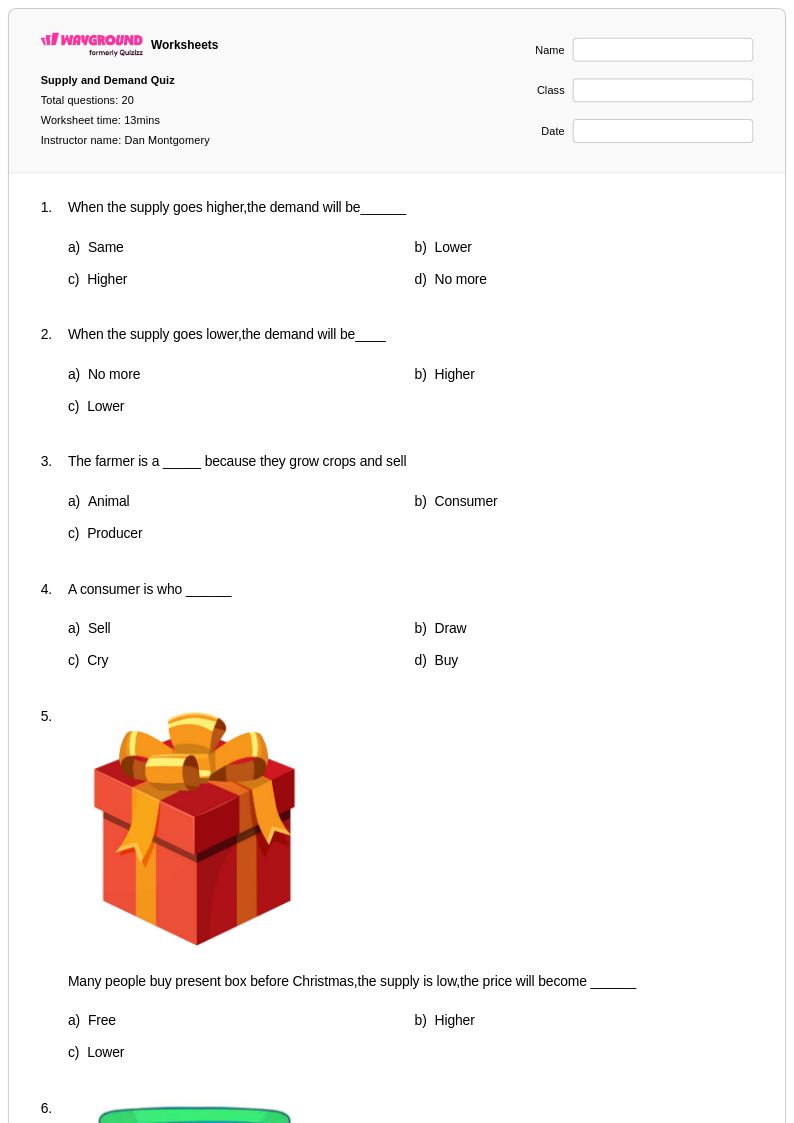
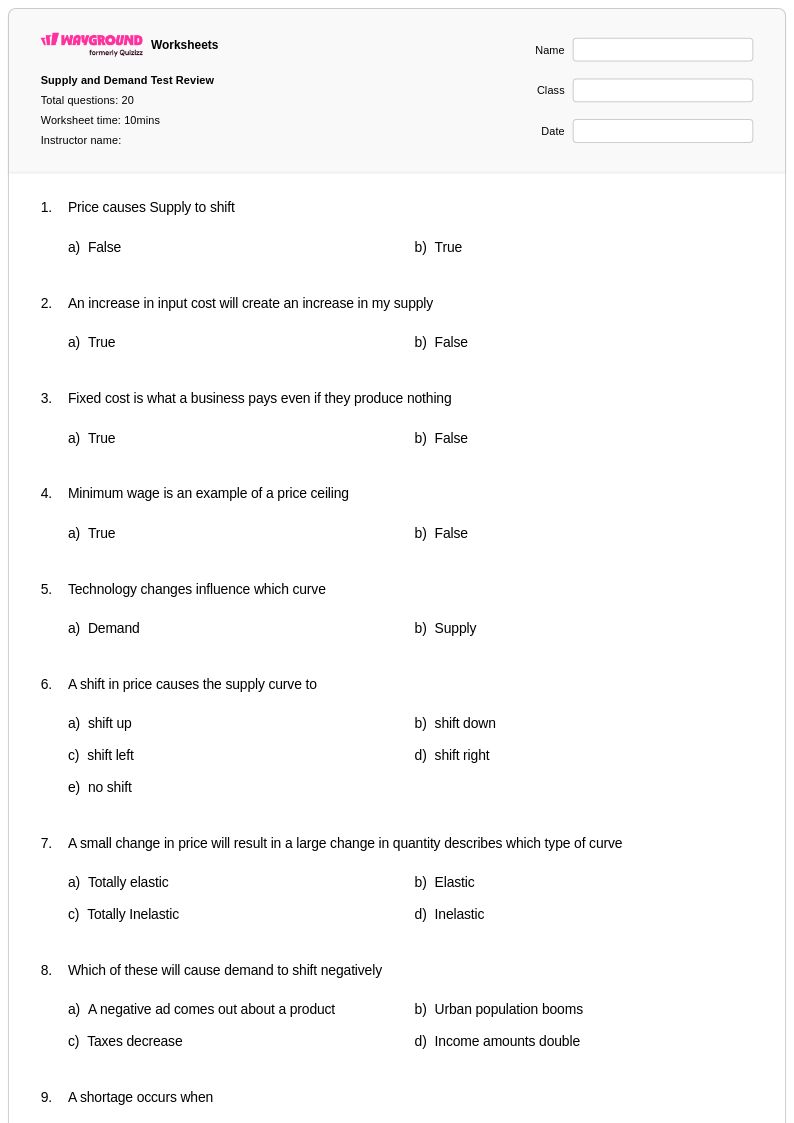
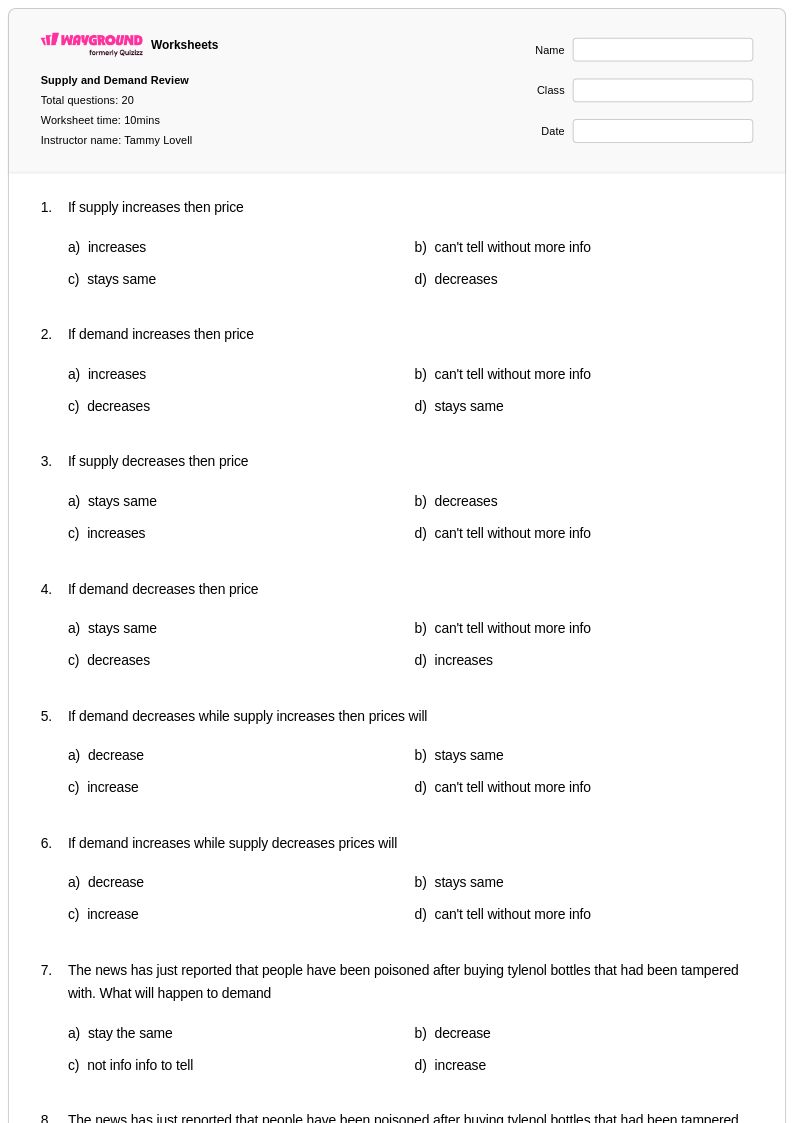
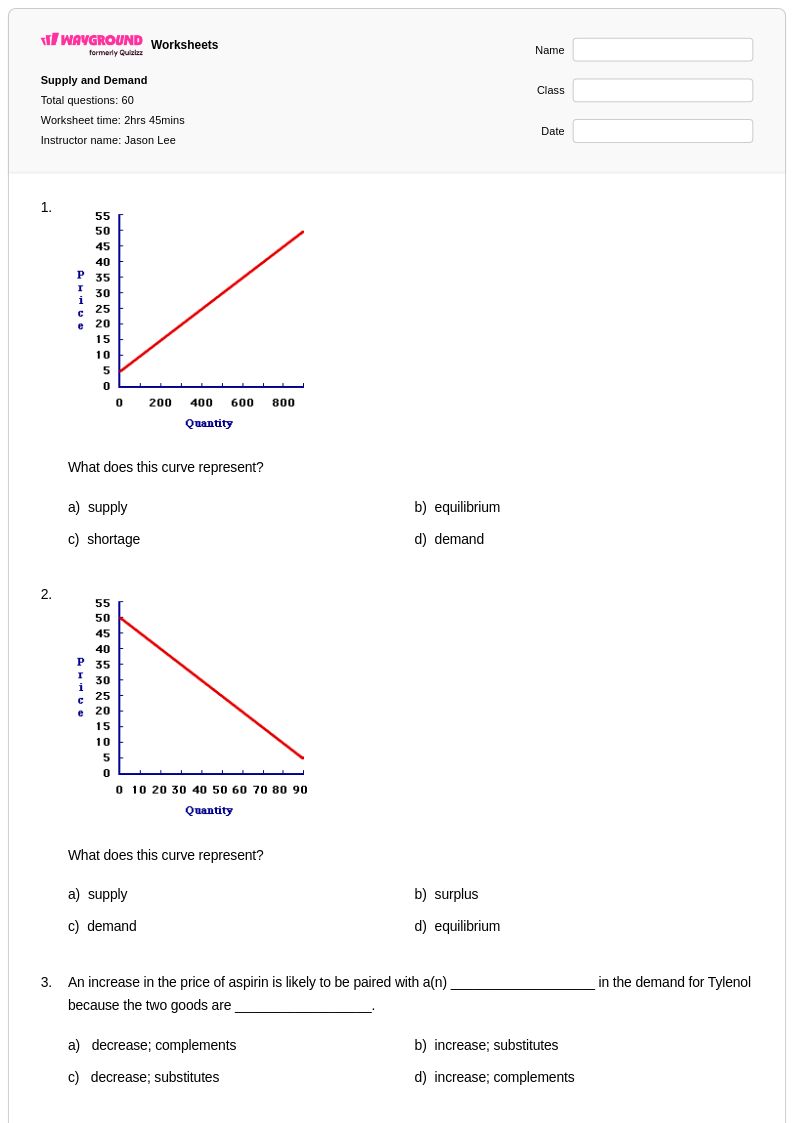
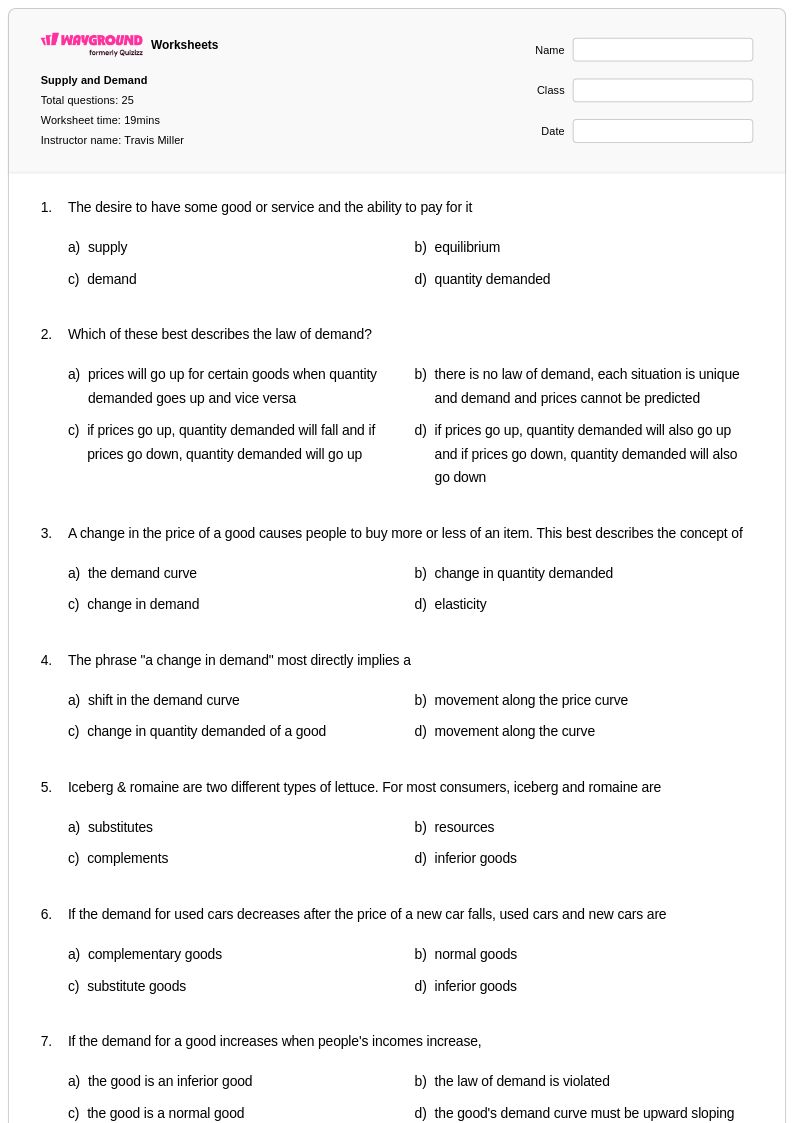
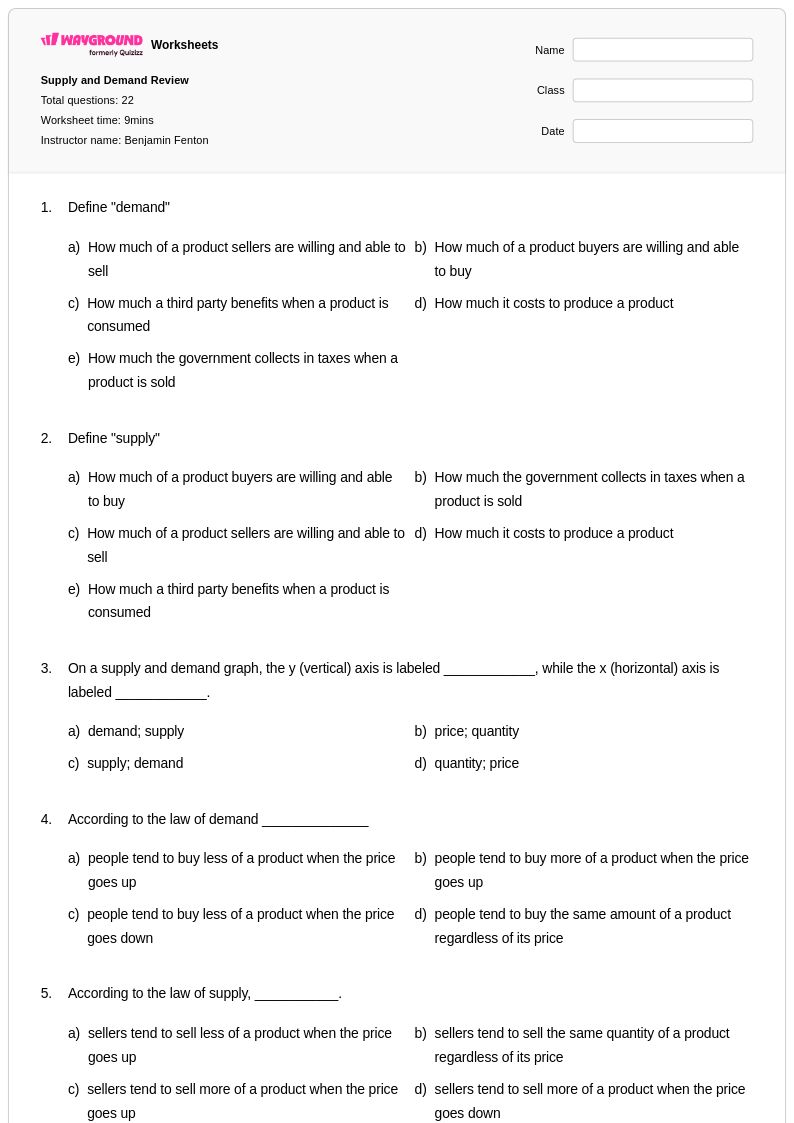
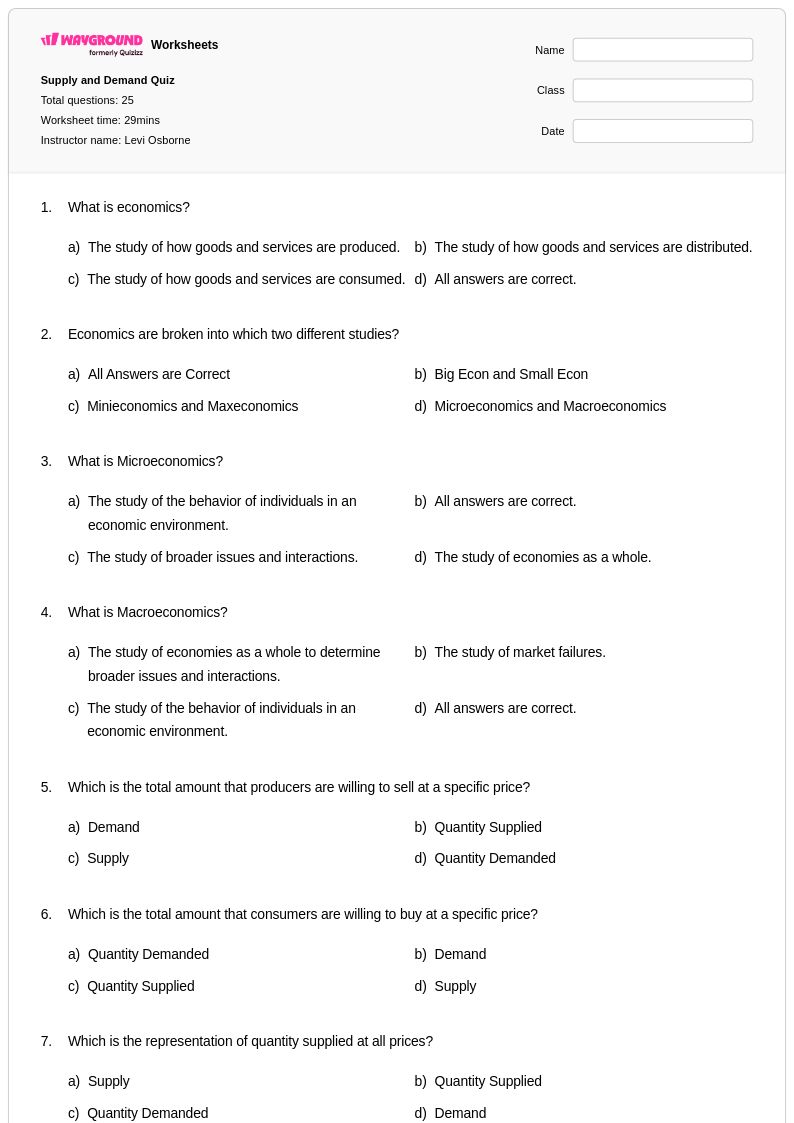
Supply and demand worksheets available through Wayground (formerly Quizizz) provide students with comprehensive practice in understanding one of economics' most fundamental concepts. These educational resources strengthen critical thinking skills by guiding learners through the relationship between consumer demand and producer supply, helping them analyze how price equilibrium is reached in various market scenarios. The worksheets feature real-world examples and practice problems that challenge students to interpret supply and demand curves, predict market outcomes, and evaluate the impact of external factors on pricing. Each worksheet includes detailed answer keys that support independent learning and self-assessment, while the free printable format ensures accessibility for diverse classroom environments and study situations.
Wayground's extensive collection of supply and demand worksheets draws from millions of teacher-created resources, offering educators unprecedented flexibility in lesson planning and skill reinforcement. The platform's advanced search and filtering capabilities allow teachers to quickly locate materials that align with specific curriculum standards and learning objectives, while built-in differentiation tools enable customization for students at varying skill levels. Whether delivered in printable pdf format for traditional classroom use or accessed digitally for remote learning, these worksheets support targeted remediation for struggling learners and enrichment opportunities for advanced students. Teachers can seamlessly integrate these resources into their economics curriculum to provide consistent practice opportunities that reinforce supply and demand concepts across multiple learning contexts and assessment scenarios.
FAQs
How do I teach supply and demand to students who struggle with abstract economic concepts?
Start with concrete, relatable scenarios before introducing formal curves — ticket prices for a popular concert, the cost of umbrellas during a rainstorm, or the price of a new gaming console at launch. Once students can reason through real-world examples verbally, introduce the graphical model as a way to formalize what they already understand intuitively. Connecting abstract shifts in supply or demand to causes students can name (weather, technology, consumer trends) dramatically reduces confusion when interpreting curves.
What exercises help students practice reading supply and demand curves?
Practice problems that ask students to identify equilibrium price and quantity, then shift one curve based on a described event, are the most effective for building fluency. Exercises that require students to predict whether price and quantity will rise, fall, or become indeterminate after a double shift (both curves moving simultaneously) push higher-order thinking. Worksheets that pair a written scenario with a blank graph students must draw and label reinforce both comprehension and application in one task.
What mistakes do students commonly make when working with supply and demand graphs?
The most frequent error is confusing a change in quantity demanded (movement along the curve) with a change in demand (a shift of the entire curve). Students also routinely mislabel axes or draw curves with incorrect slopes, which then leads to wrong equilibrium readings. A third common misconception is assuming that an increase in price causes demand to increase, reversing the direction of the relationship. Targeted practice problems that isolate each of these error types help students self-correct before these misunderstandings become entrenched.
How can I assess whether students understand how external factors affect market equilibrium?
Use scenario-based questions that describe a real-world event — a drought affecting crop supply, a new competitor entering a market, or a change in consumer income — and ask students to predict the directional change in price and quantity. This format tests whether students can identify which curve shifts, in which direction, and what the resulting equilibrium effect is. Checking whether students can articulate the causal chain (event → curve shift → equilibrium change) reveals deeper understanding than asking them to simply label a pre-drawn graph.
How do I use Wayground's supply and demand worksheets in my classroom?
Wayground's supply and demand worksheets are available as printable PDFs for traditional classroom use and in digital formats for technology-integrated or remote learning environments, accommodating a range of teaching setups and student preferences. Teachers can also host worksheets directly as a quiz on Wayground, enabling real-time student responses and instant scoring. Each worksheet includes a complete answer key, making them suitable for independent practice, guided instruction, or homework assignments without additional preparation from the teacher.
How can I differentiate supply and demand instruction for students at different skill levels?
For students who are still building foundational understanding, reduce the complexity of scenarios to single-curve shifts and focus on identifying equilibrium before introducing changes. Advanced students benefit from double-shift problems, ambiguous outcome scenarios, and tasks that require written justification of their graph interpretations. On Wayground, teachers can apply student-level accommodations such as reduced answer choices to lower cognitive load for struggling learners, or enable read-aloud functionality for students who need audio support, without affecting the experience of other students in the class.