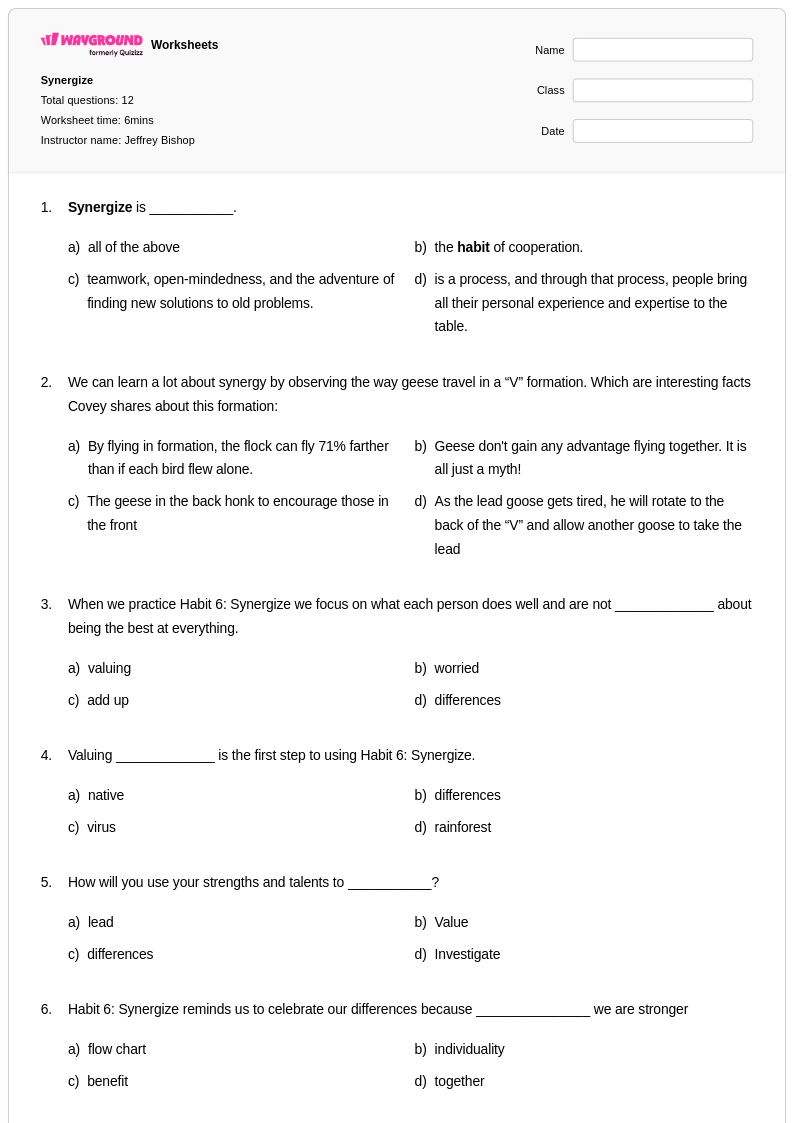
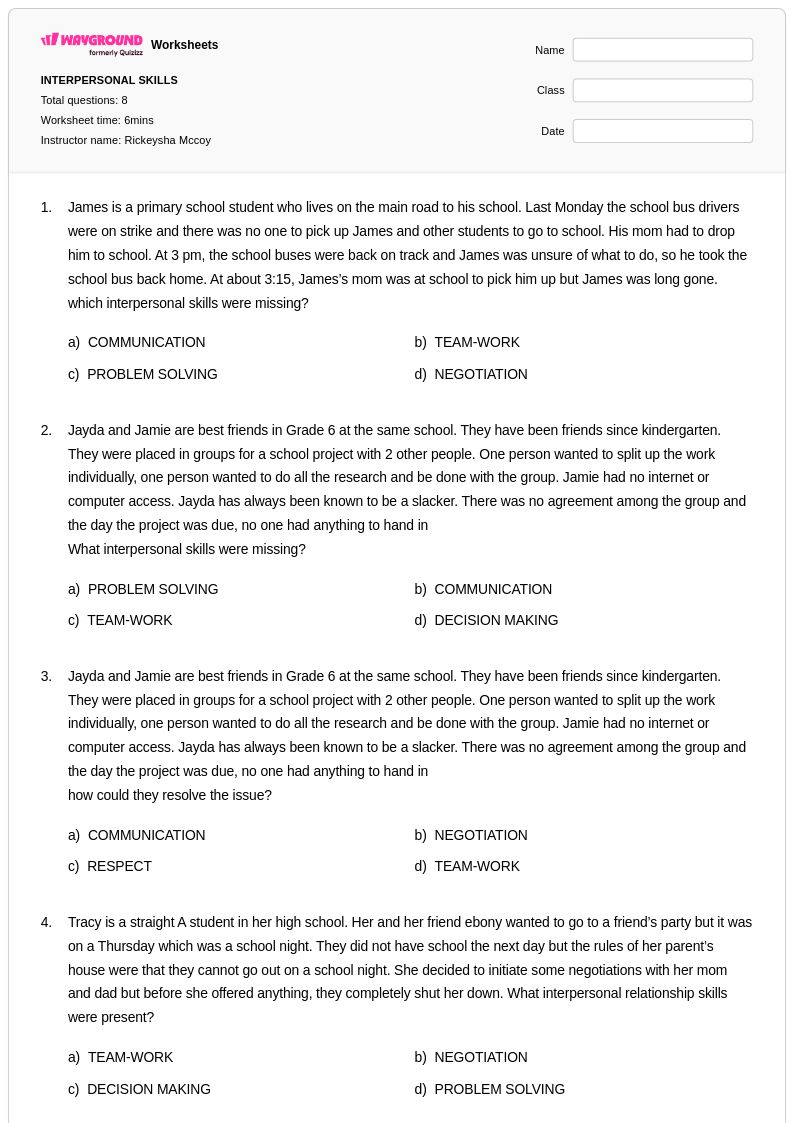
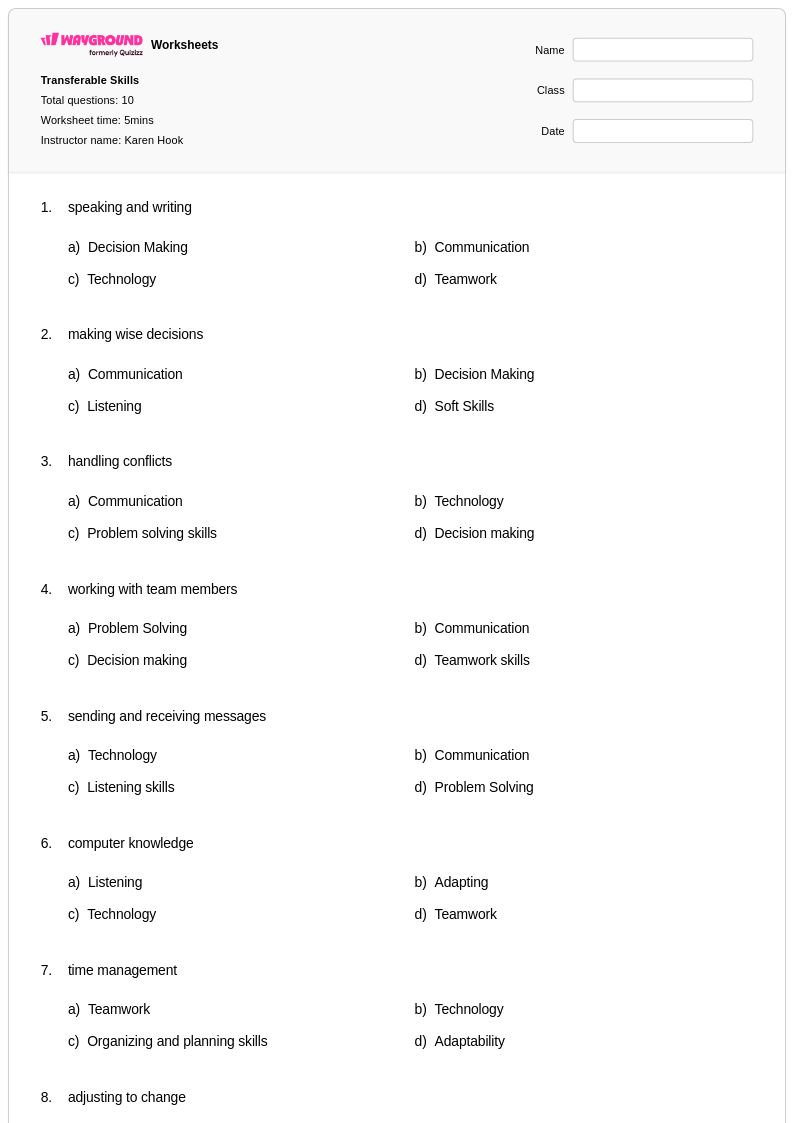
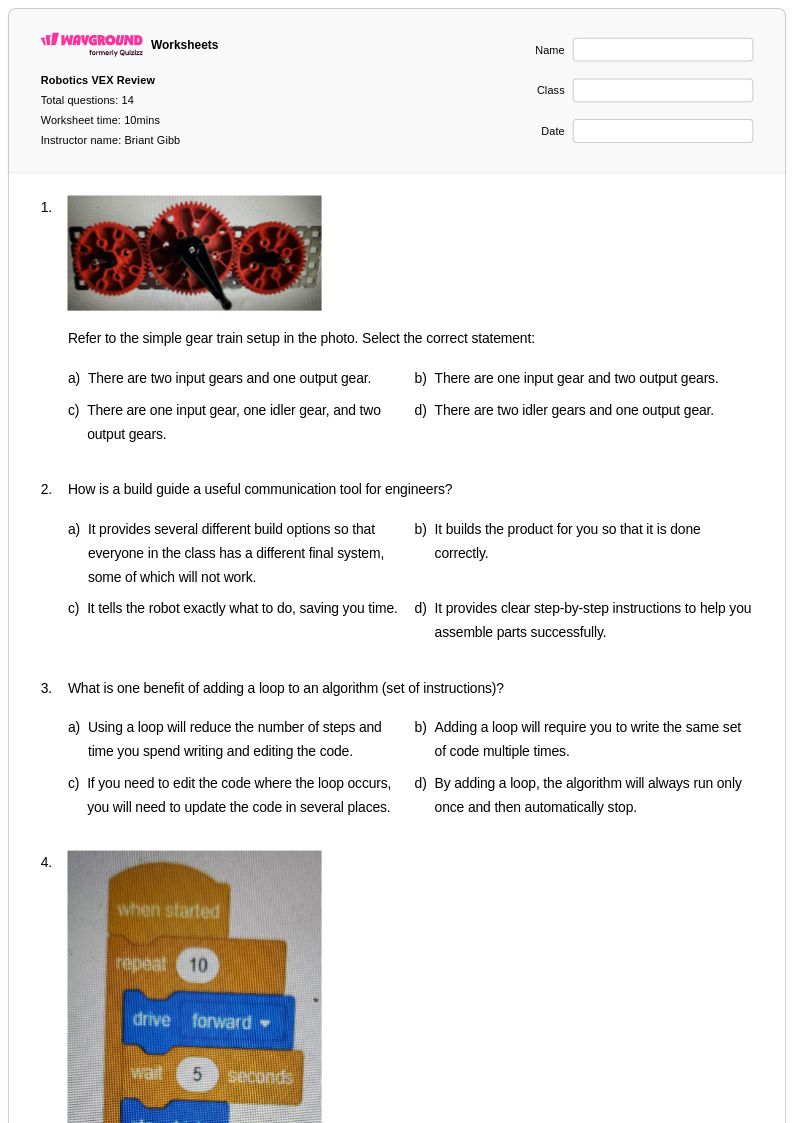
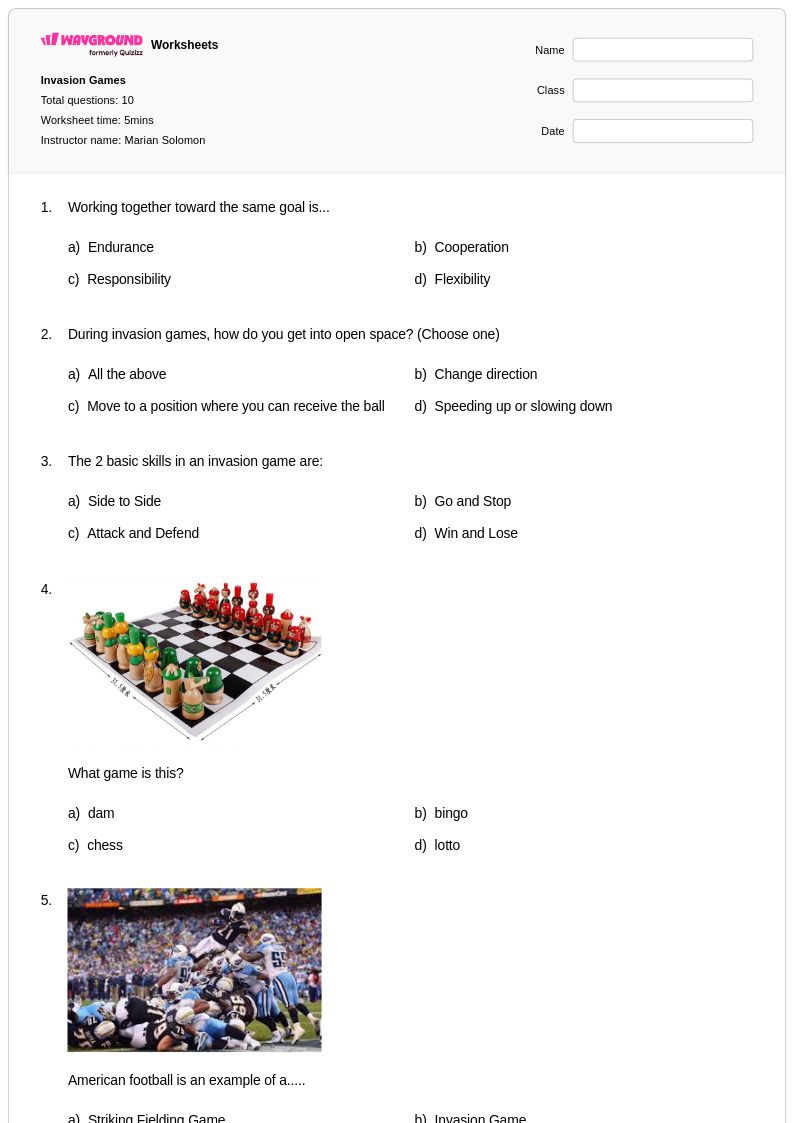
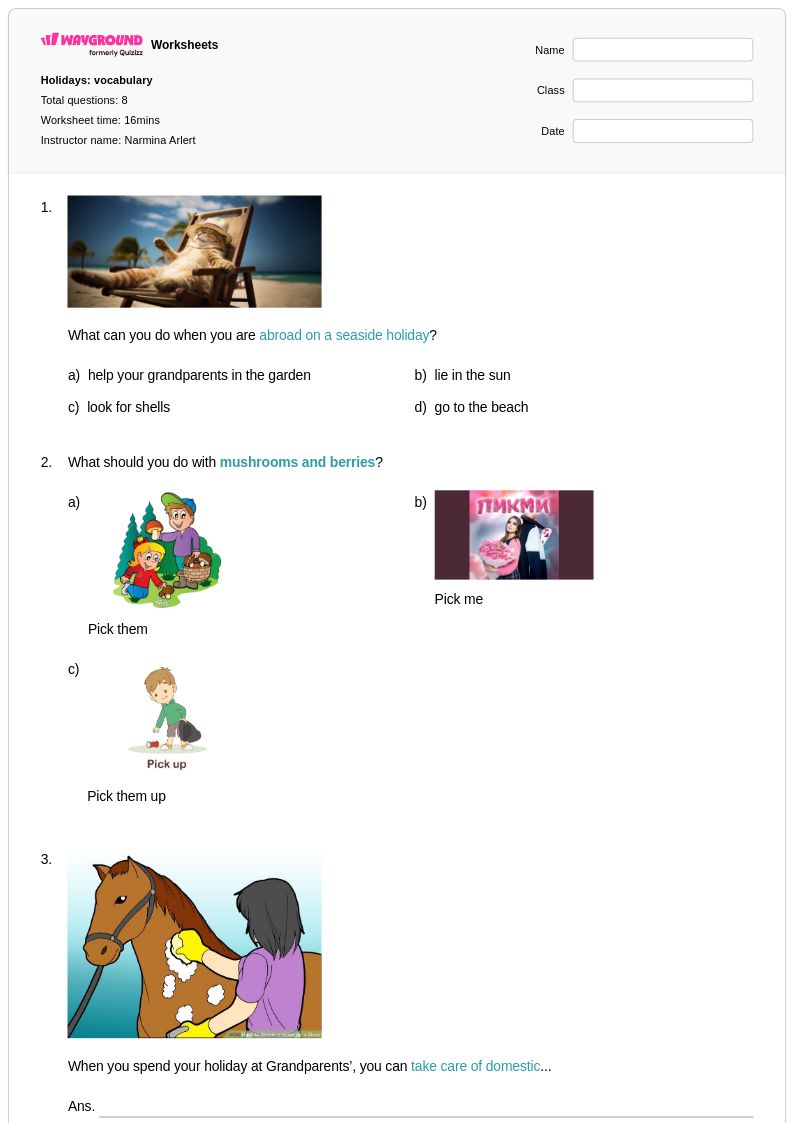
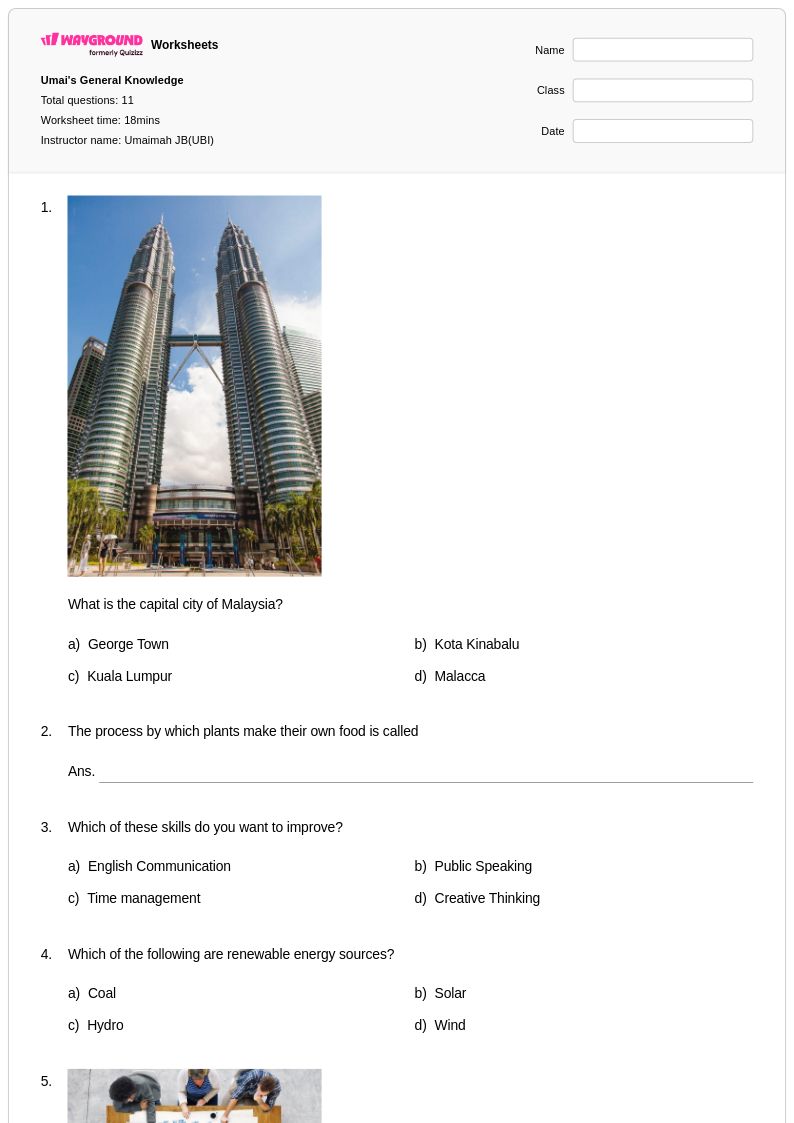
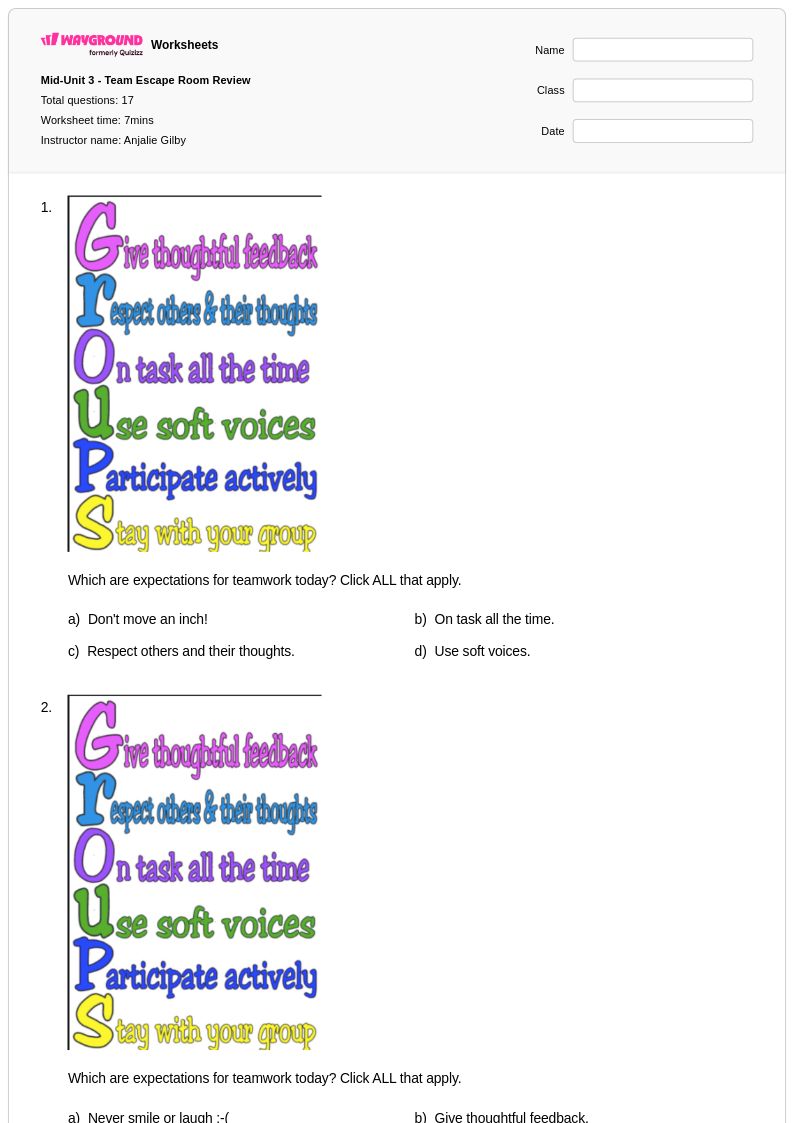
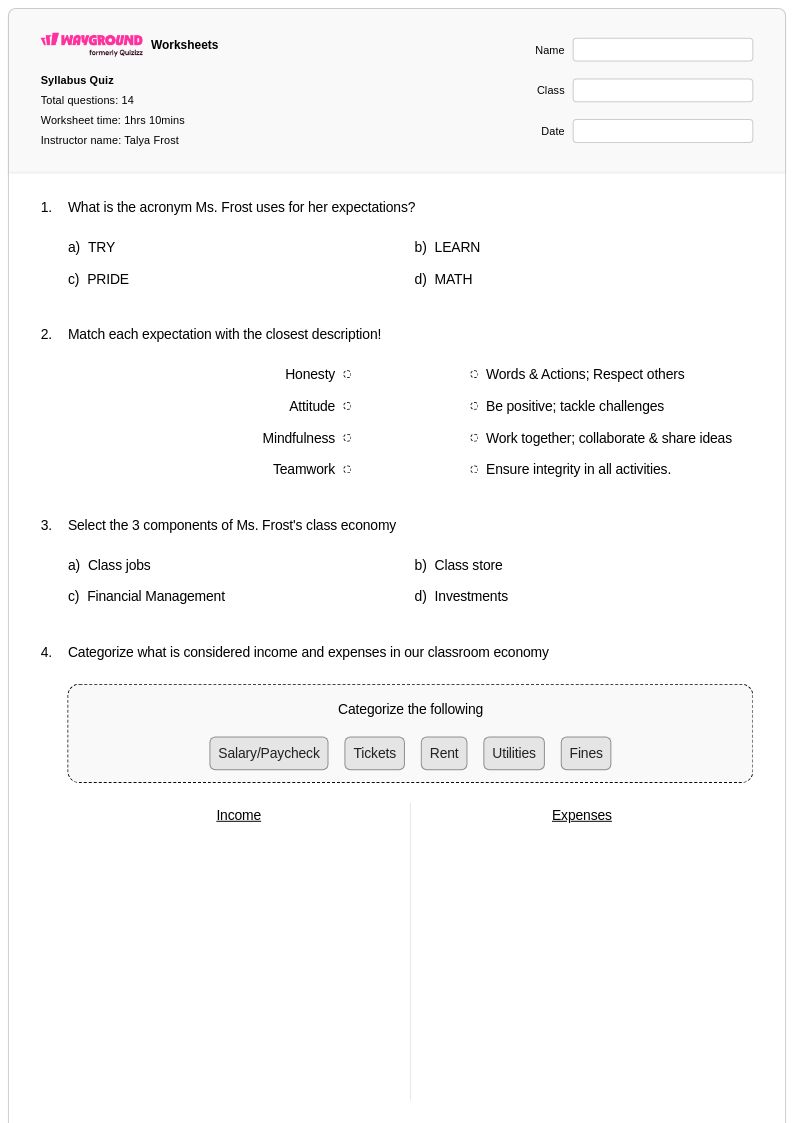
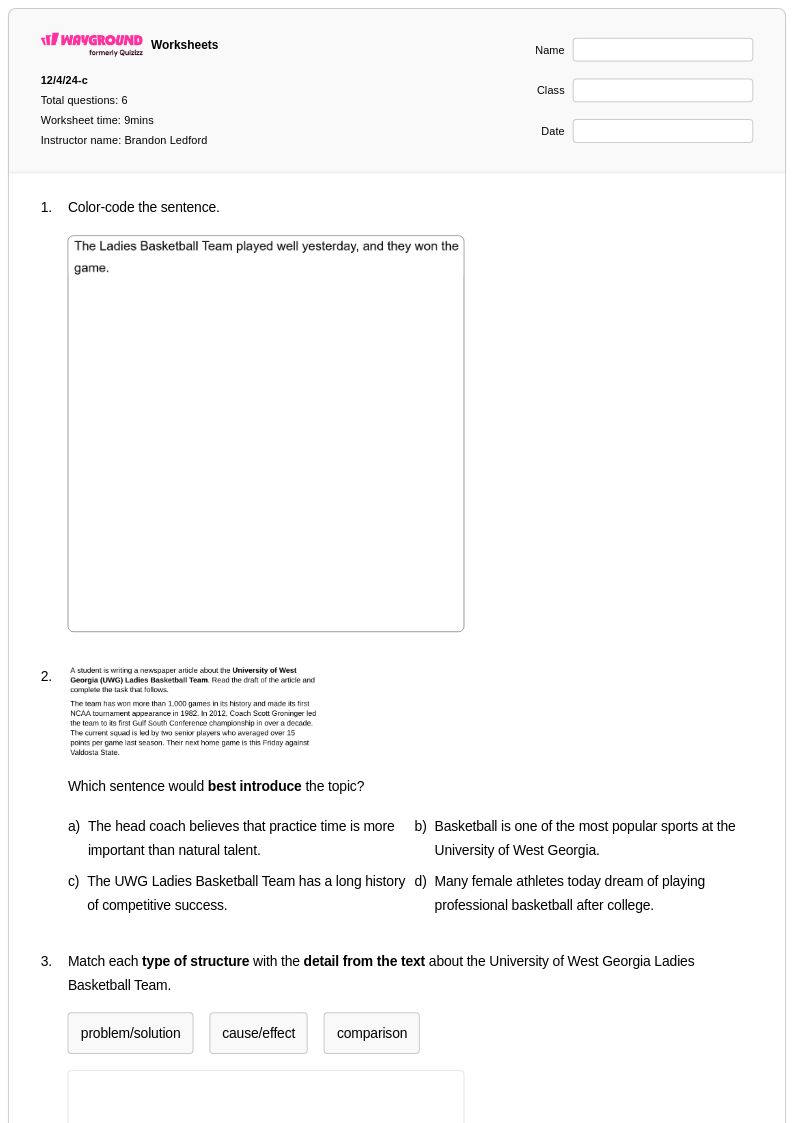
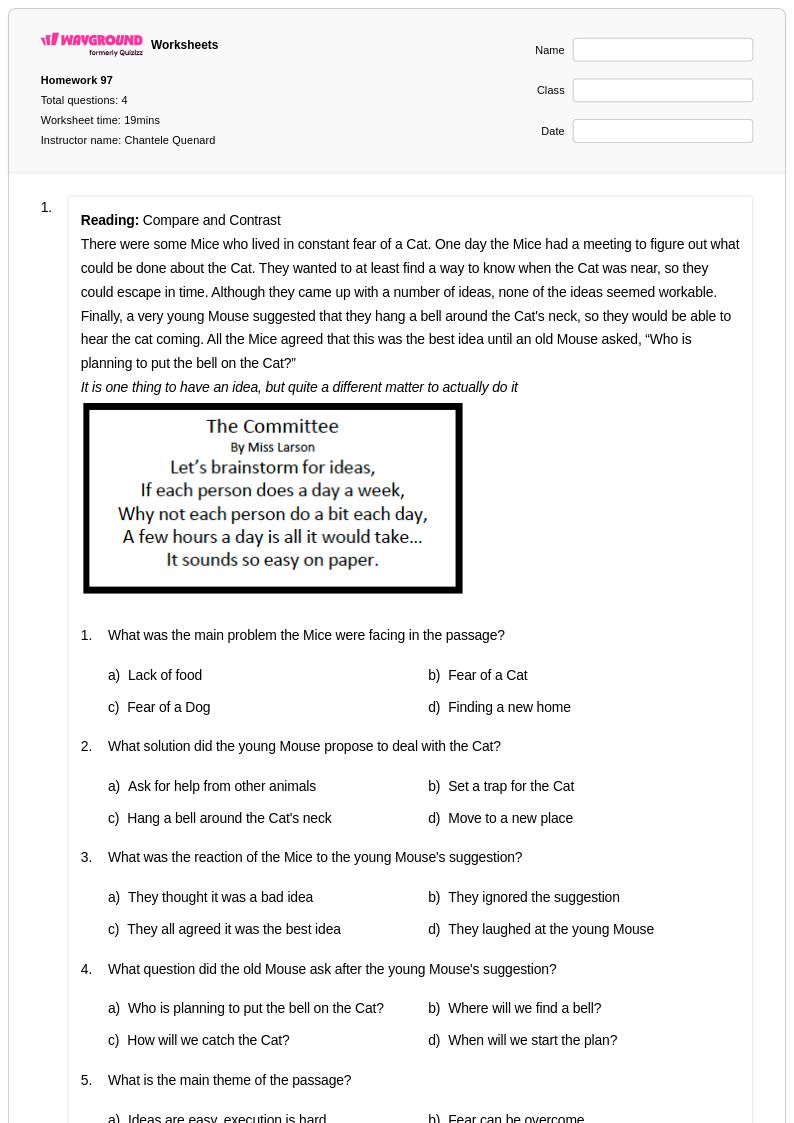
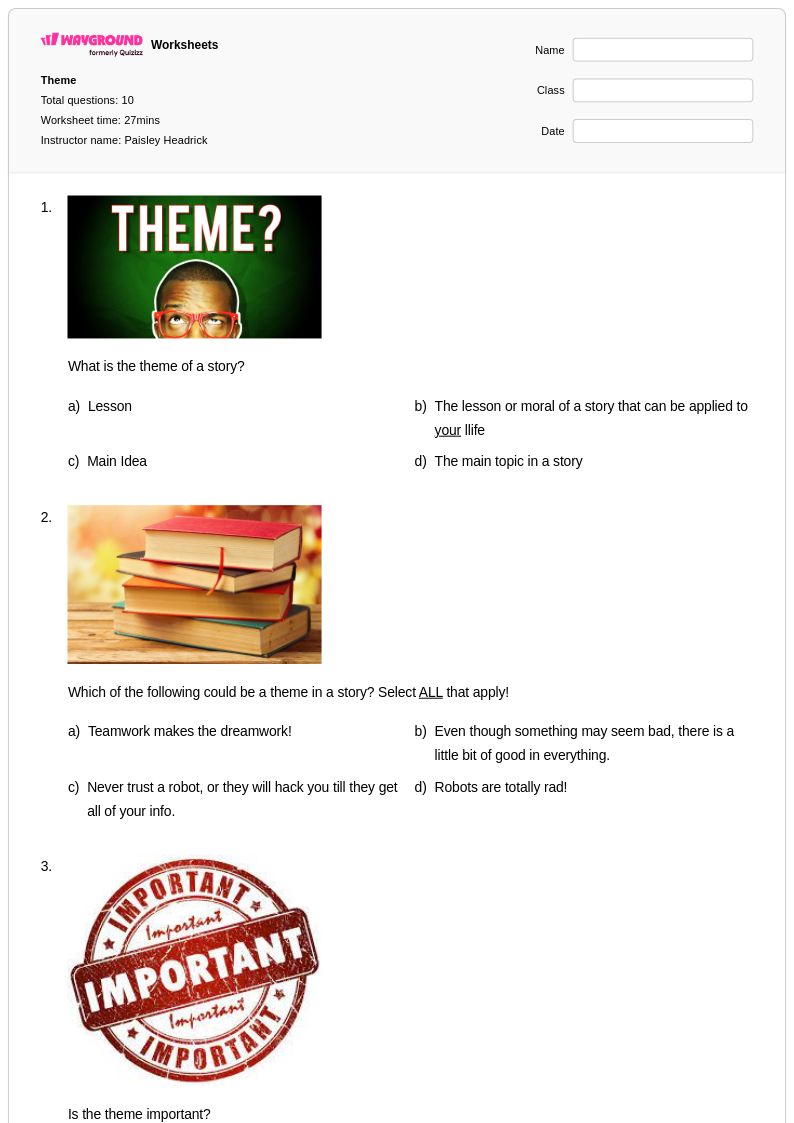
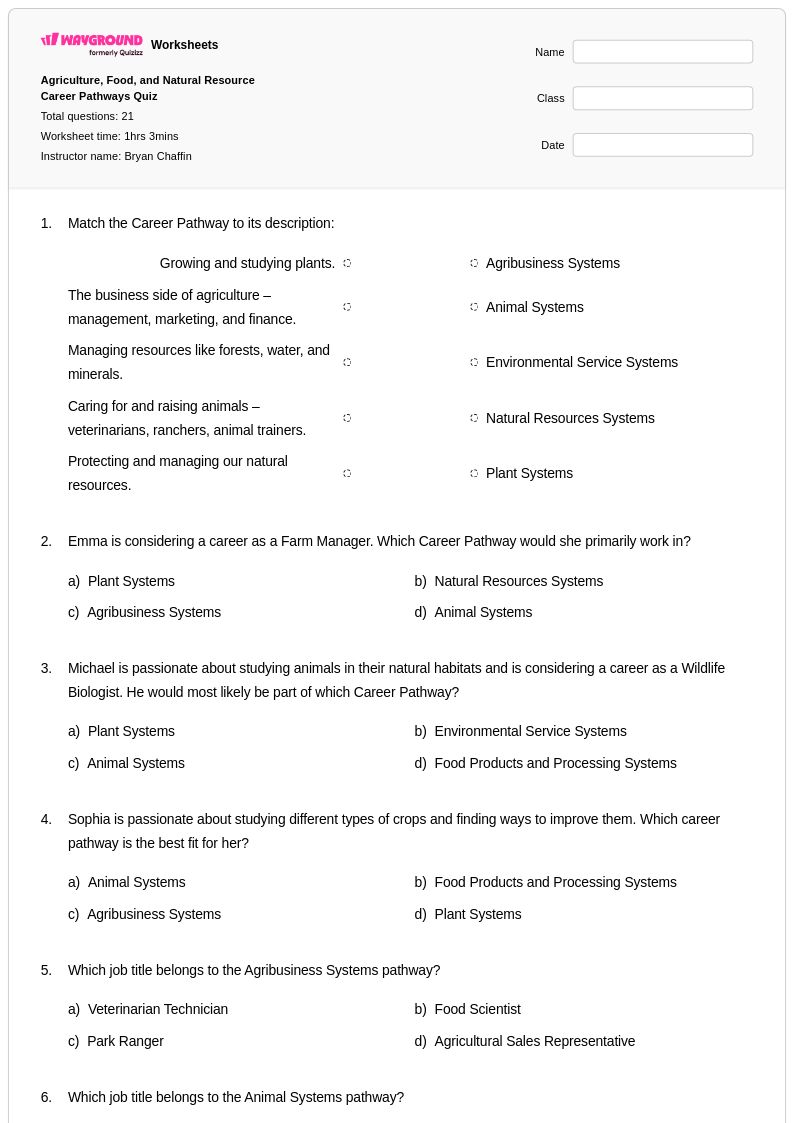
Grade 6 teamwork worksheets and printables help students develop collaborative skills through engaging physical education activities, featuring free PDF resources with practice problems and answer keys for effective social-emotional learning.
Teamwork worksheets for Grade 6 Physical Education provide students with structured opportunities to develop essential collaborative skills while engaging in physical activities and sports-based scenarios. These comprehensive resources from Wayground (formerly Quizizz) focus on building communication, cooperation, and leadership abilities through practical exercises that mirror real-world physical education experiences. The worksheets include practice problems that challenge students to analyze team dynamics, resolve conflicts constructively, and understand the importance of individual roles within group settings. Each printable resource comes with a detailed answer key to support both independent learning and classroom instruction, while the free pdf format ensures easy accessibility for teachers and students alike.
Wayground (formerly Quizizz) empowers educators with millions of teacher-created resources specifically designed to enhance teamwork instruction in Grade 6 Physical Education curricula. The platform's advanced search and filtering capabilities allow teachers to quickly locate materials that align with specific learning standards and differentiate instruction based on individual student needs. These flexible customization tools enable educators to modify existing worksheets or create personalized versions that address unique classroom requirements, supporting both remediation for struggling learners and enrichment opportunities for advanced students. Available in both printable and digital pdf formats, these resources streamline lesson planning while providing consistent skill practice that reinforces collaborative learning objectives throughout the physical education program.
FAQs
How do I teach teamwork skills in Physical Education?
Teaching teamwork in Physical Education is most effective when students are placed in structured group challenges that require genuine interdependence, such as cooperative sports drills, team problem-solving activities, or group fitness circuits. Explicitly naming the skills at play — communication, shared responsibility, conflict resolution — helps students connect the physical activity to the social-emotional learning objective. Pairing activities with reflective exercises, such as guided discussion prompts or written responses, reinforces what students experienced and makes abstract concepts like trust and cooperation more concrete.
What exercises help students practice collaboration and teamwork?
Effective collaboration practice involves scenarios where no single student can succeed alone, such as relay-style tasks, team strategy planning, or group decision-making challenges tied to physical activities. Worksheets that ask students to analyze team dynamics, assign roles, or evaluate the effectiveness of their group's communication translate PE experiences into transferable social skills. Structured reflection prompts after group activities are especially valuable because they push students to articulate what worked, what didn't, and why.
What mistakes do students commonly make when learning teamwork?
One of the most common errors is confusing cooperation with agreement — students often assume a good team never disagrees, rather than understanding that constructive conflict resolution is itself a teamwork skill. Students also tend to default to one or two dominant voices in a group, missing opportunities to practice shared responsibility and active listening. Worksheets that present specific team scenarios and ask students to identify breakdowns in communication or role distribution help surface these misconceptions directly.
How can I differentiate teamwork worksheets for students with different skill levels?
Differentiation for teamwork activities often means adjusting the complexity of the scenario or the depth of reflection required rather than changing the core skill being assessed. On Wayground, teachers can apply individual student accommodations such as read aloud support, reduced answer choices, and extended time, which are especially helpful for students who struggle with reading comprehension or processing speed during written reflection tasks. These settings can be assigned per student without notifying the rest of the class, keeping the experience consistent for everyone.
How do I use Wayground's teamwork worksheets in my PE class?
Wayground's teamwork worksheets are available as printable PDFs, making them easy to distribute before or after a group activity as a pre-lesson primer or post-activity reflection tool. They are also available in digital formats, so teachers can assign them through a technology-integrated environment or host them as a quiz directly on Wayground. Each worksheet includes answer keys, which means teachers can use them for both formative instruction and quick evaluation without additional preparation.
How do I assess teamwork skills in a Physical Education setting?
Assessing teamwork is challenging because it involves observable behaviors rather than a single correct answer, which is why rubric-based tools are more effective than traditional scoring. Look for evidence of communication (did students talk through decisions?), role distribution (did responsibilities shift or stay fixed?), and conflict resolution (how did the group handle disagreement?). Worksheets that prompt students to self-evaluate or analyze a described team scenario give teachers a written artifact to assess alongside behavioral observation during the activity itself.