Free Printable The Letter B Worksheets for Kindergarten
Discover free printable Letter B worksheets and practice problems designed to help kindergarten students master letter recognition, phonics, and writing skills with comprehensive PDF resources and answer keys.
Explore printable The Letter B worksheets for Kindergarten
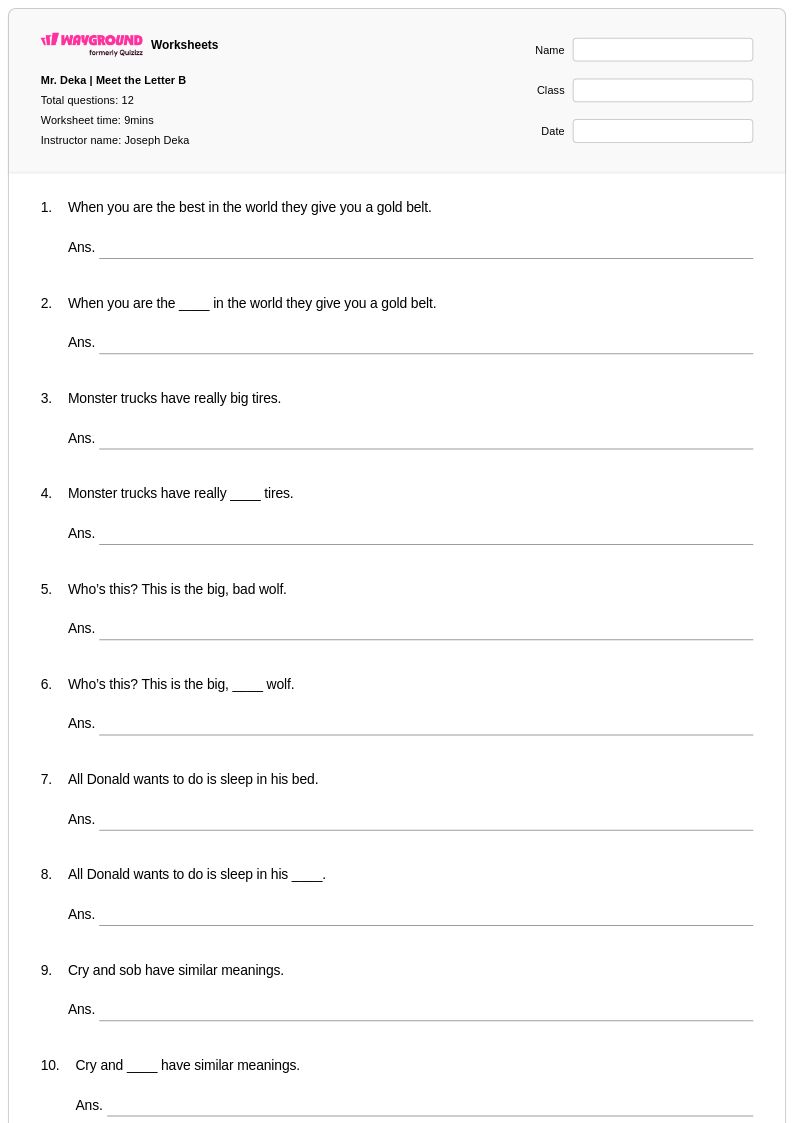
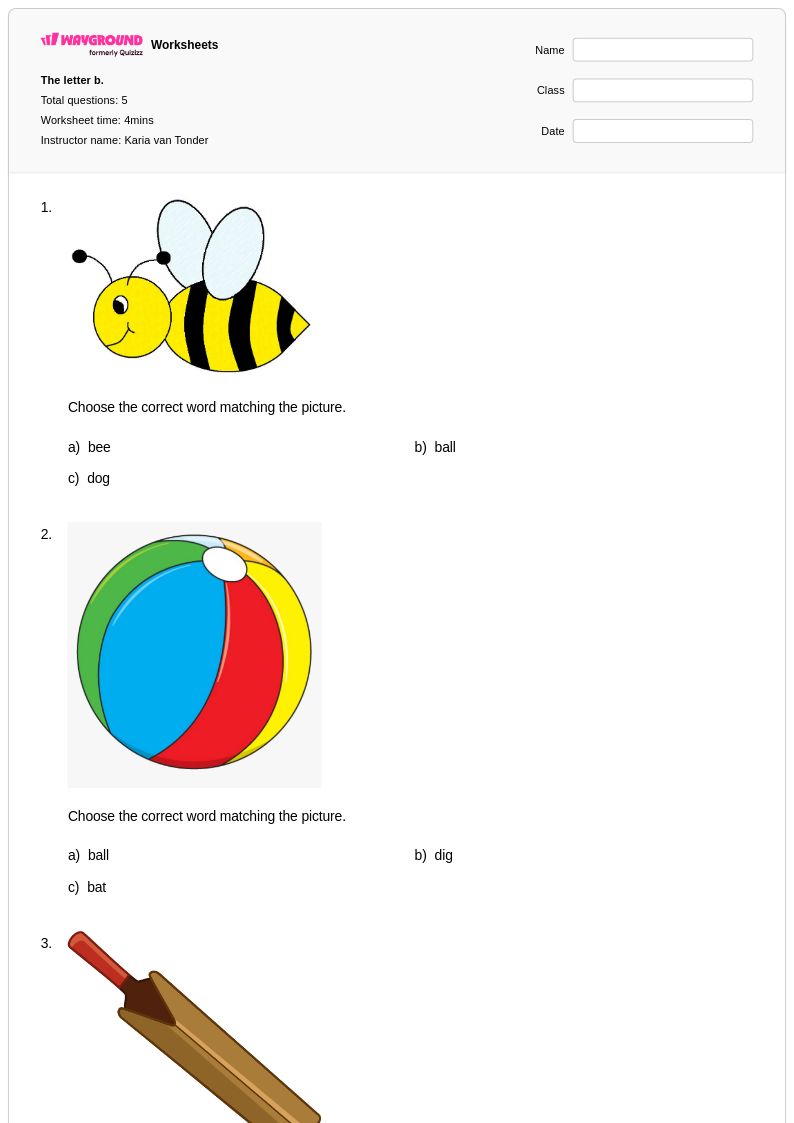
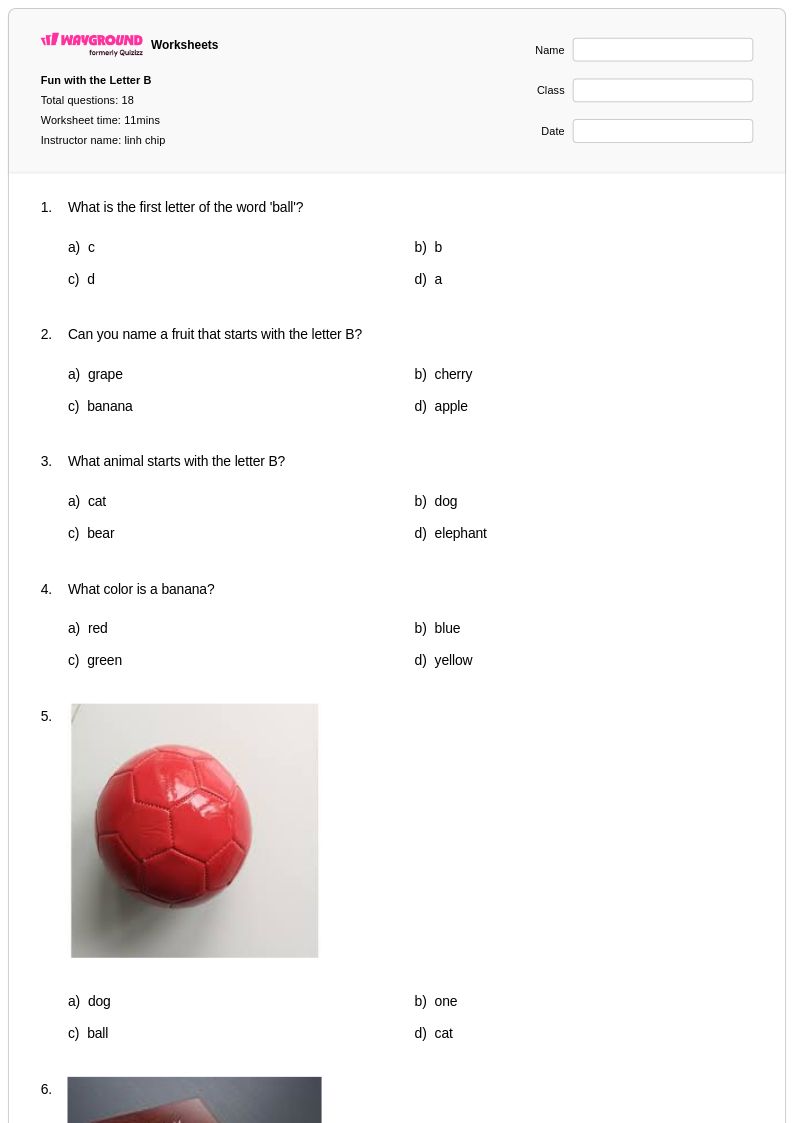
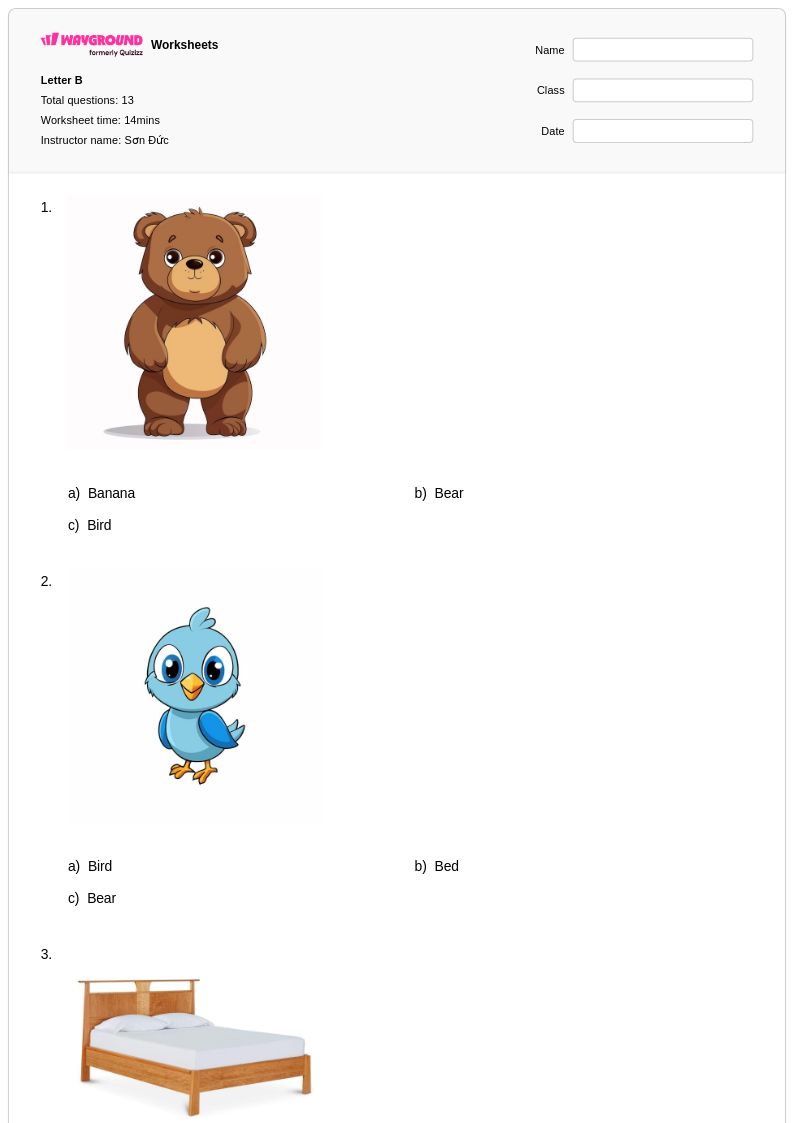
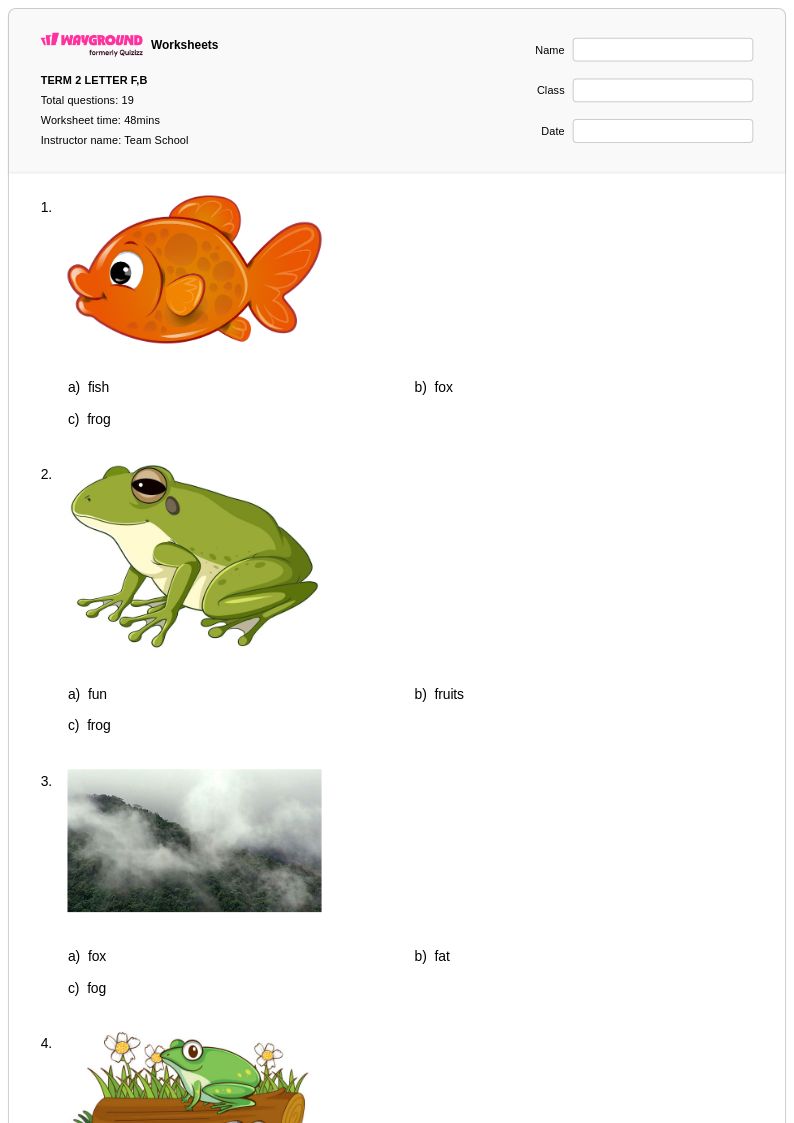
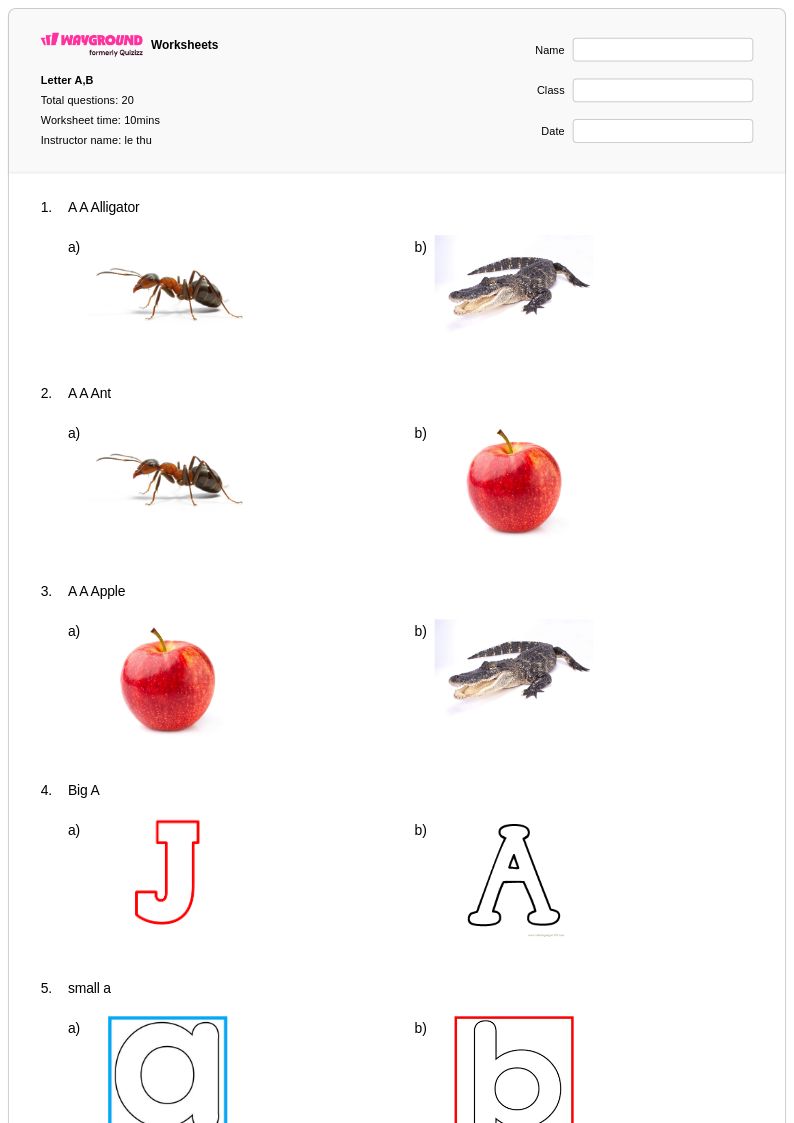
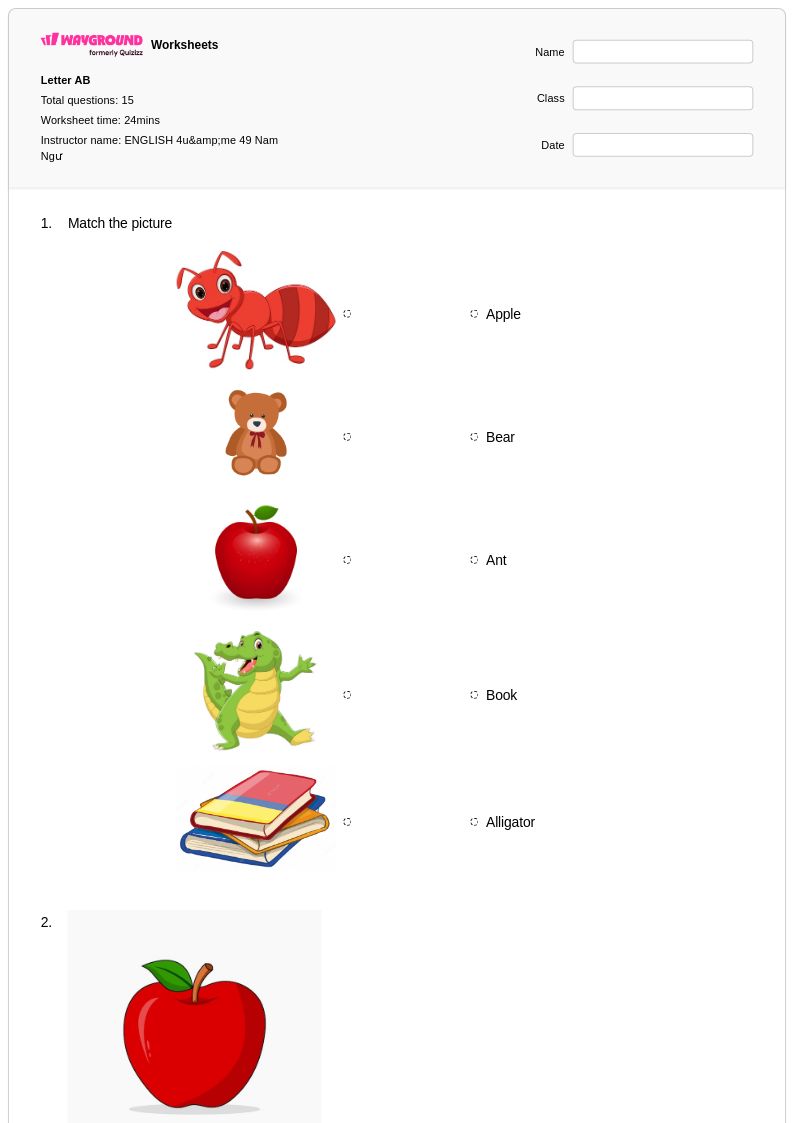
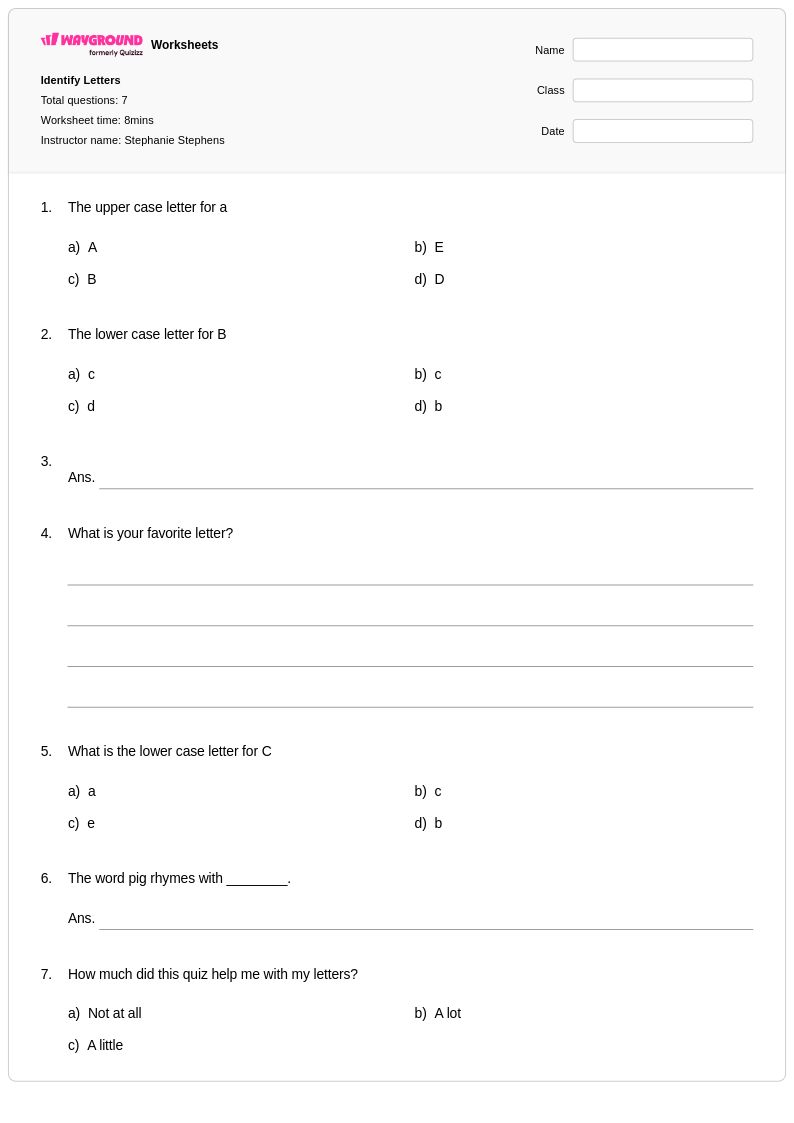
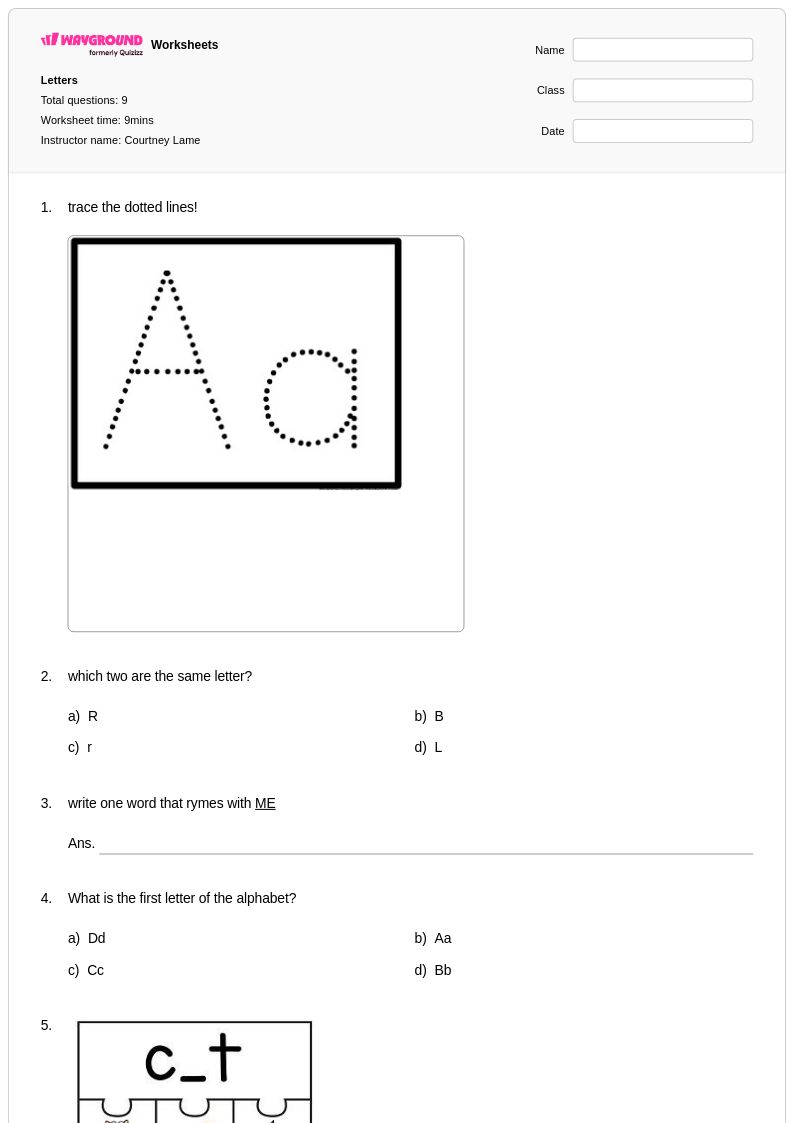
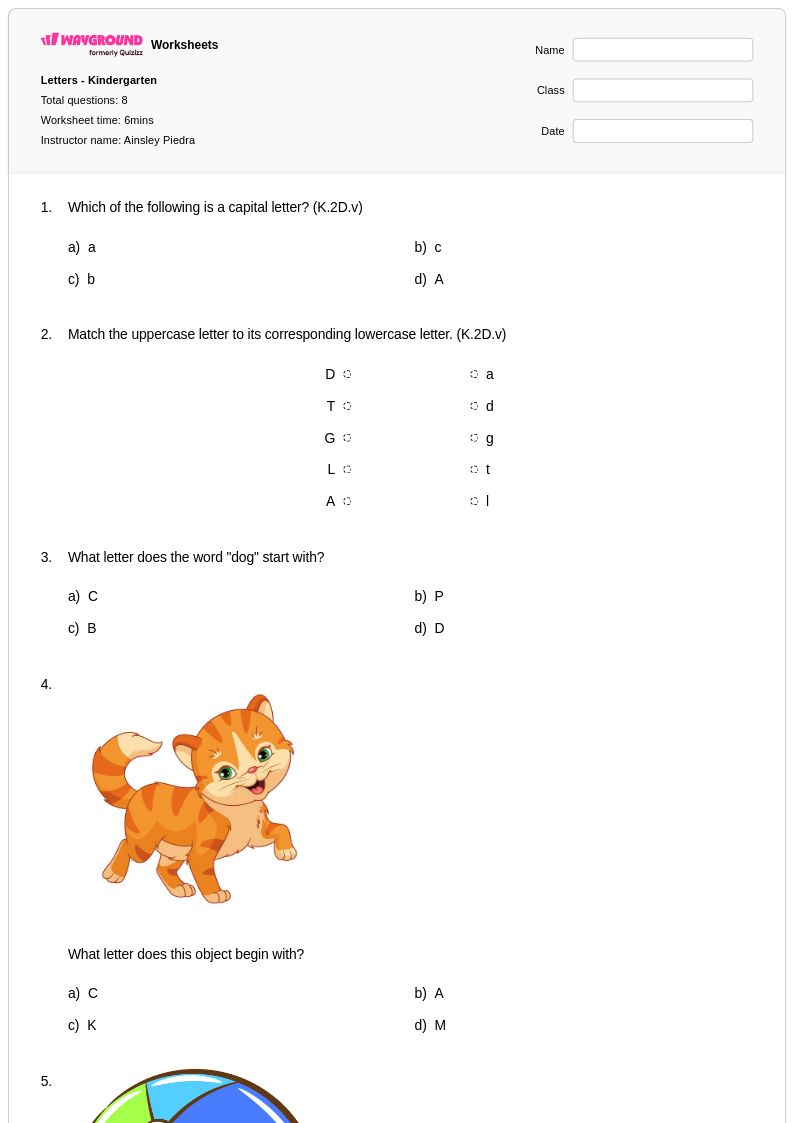
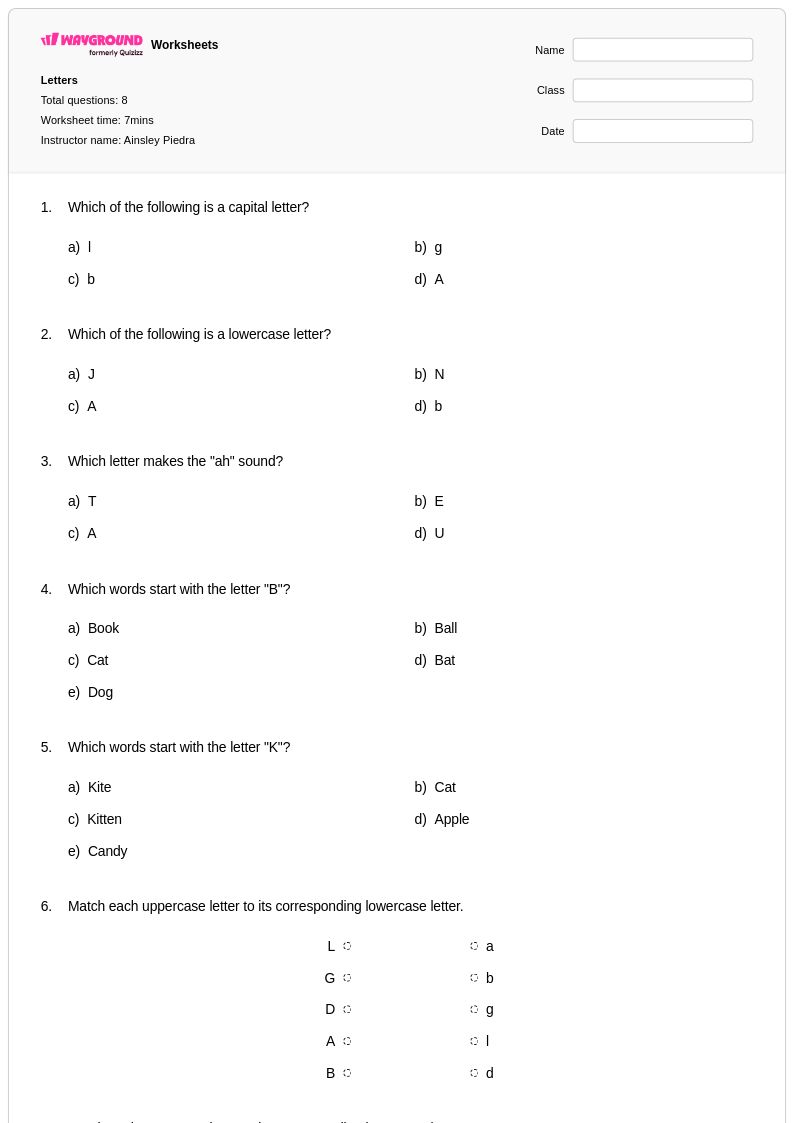
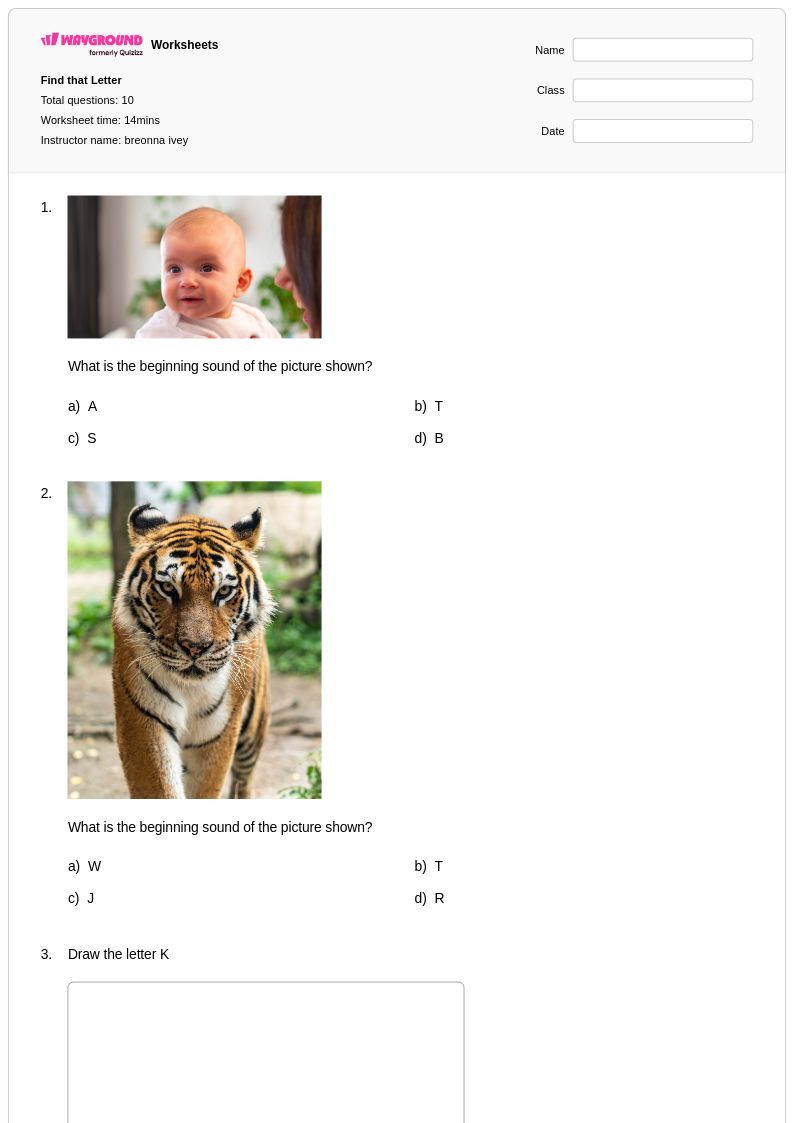
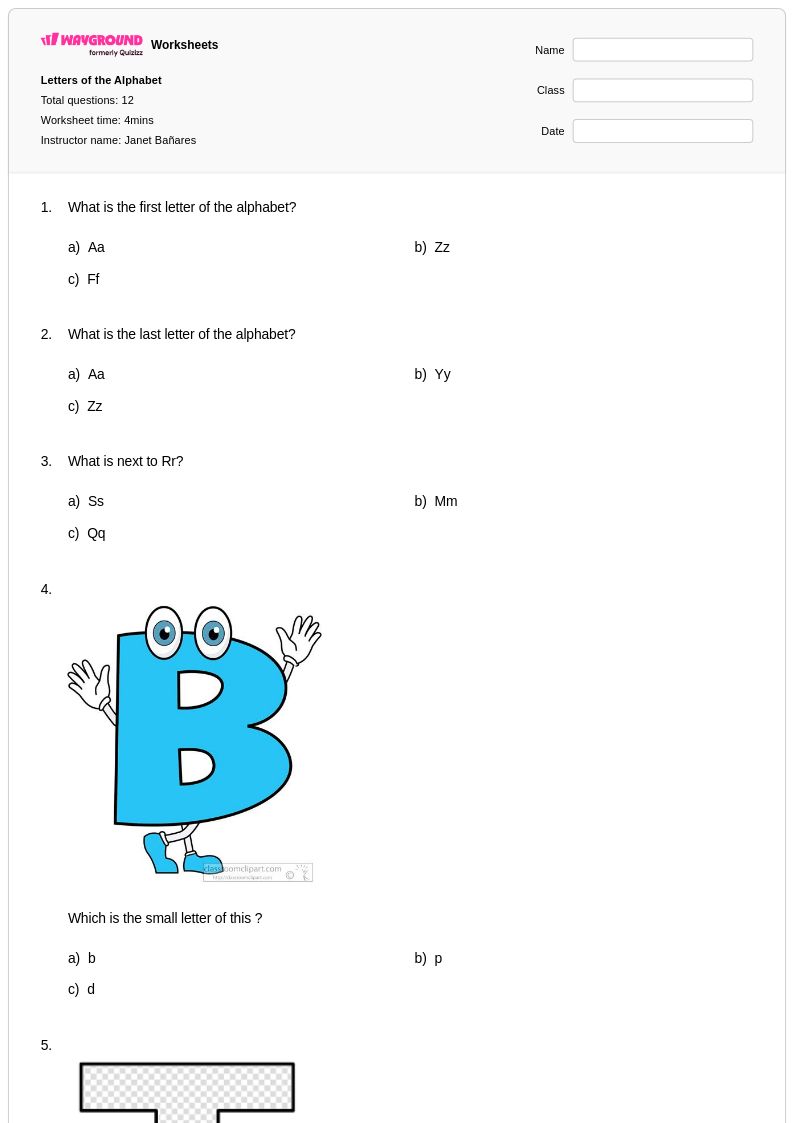
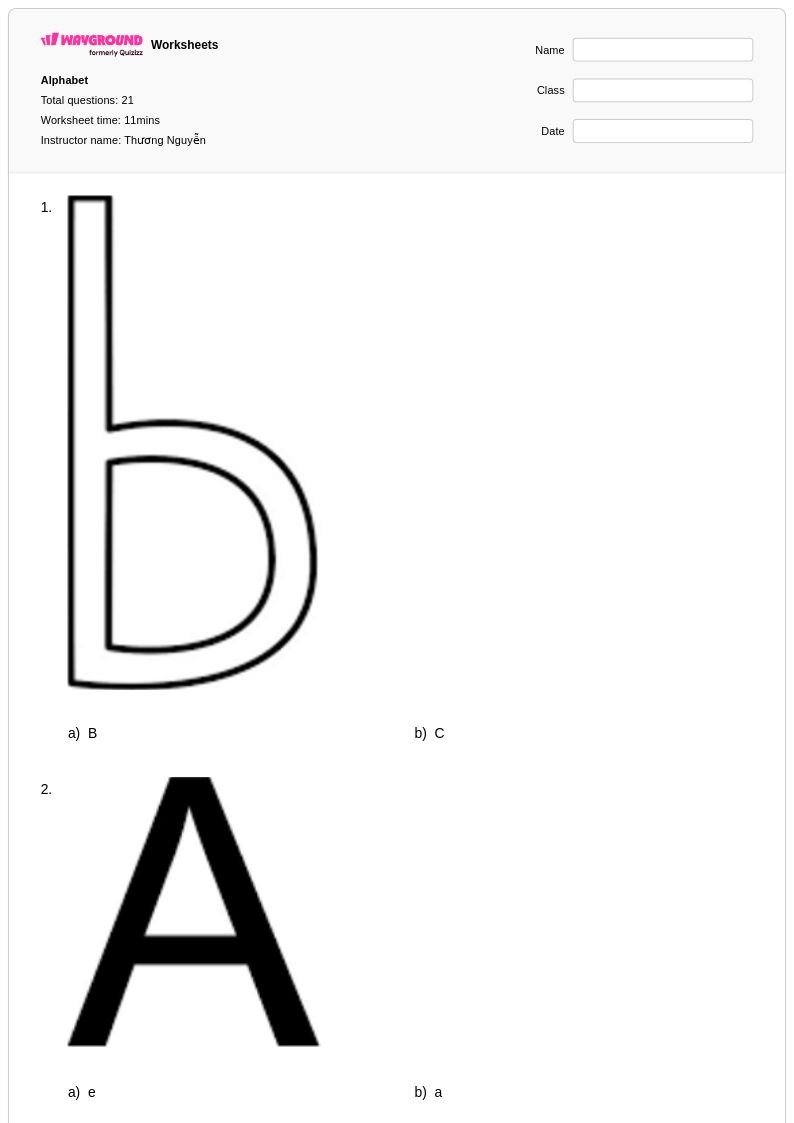
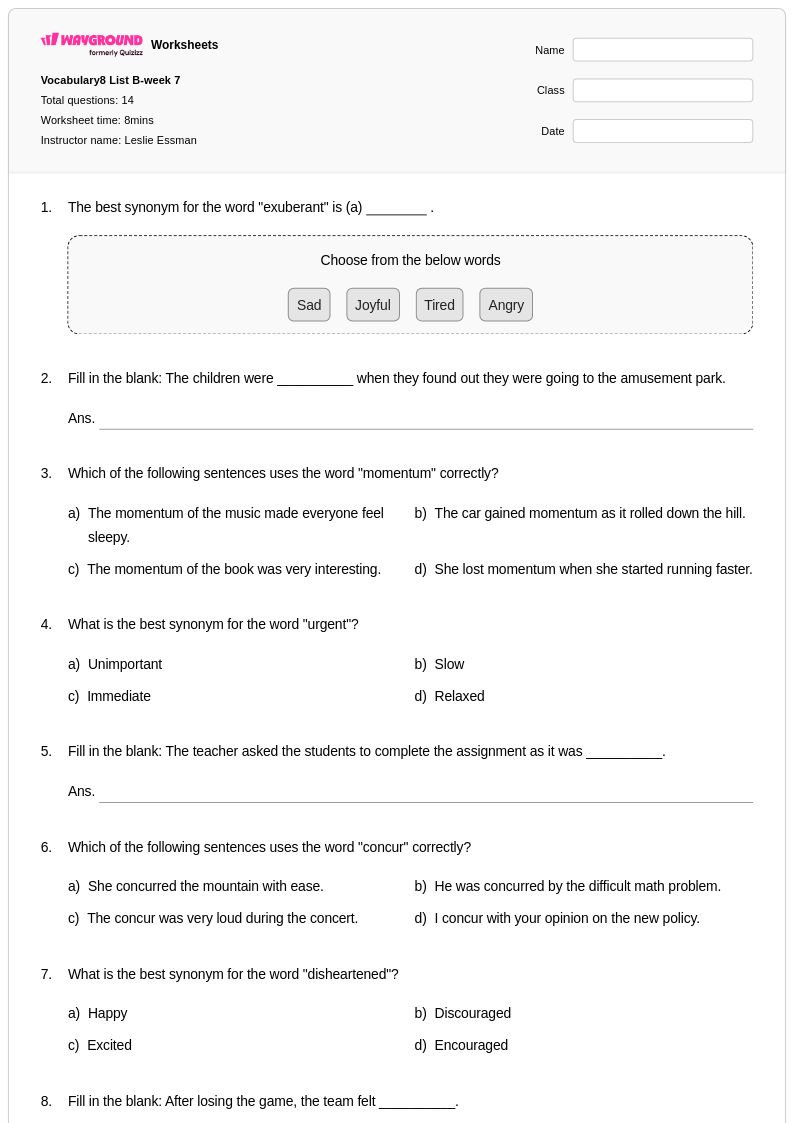
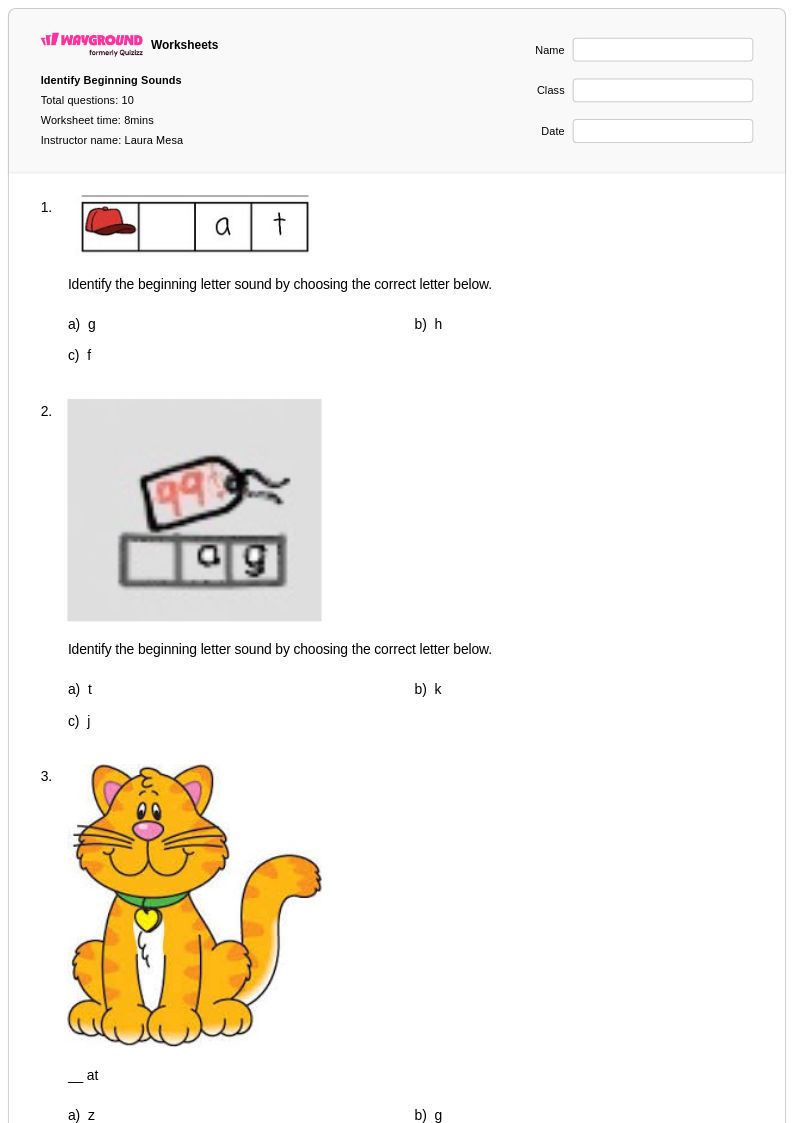
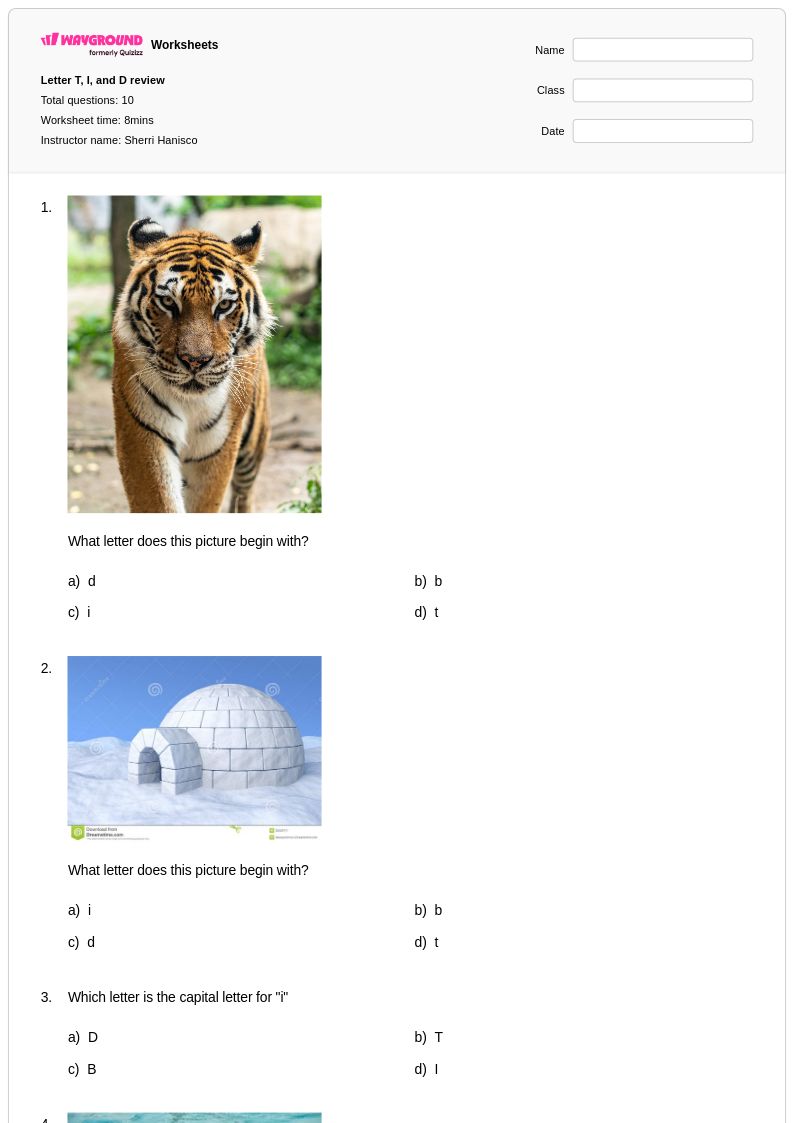
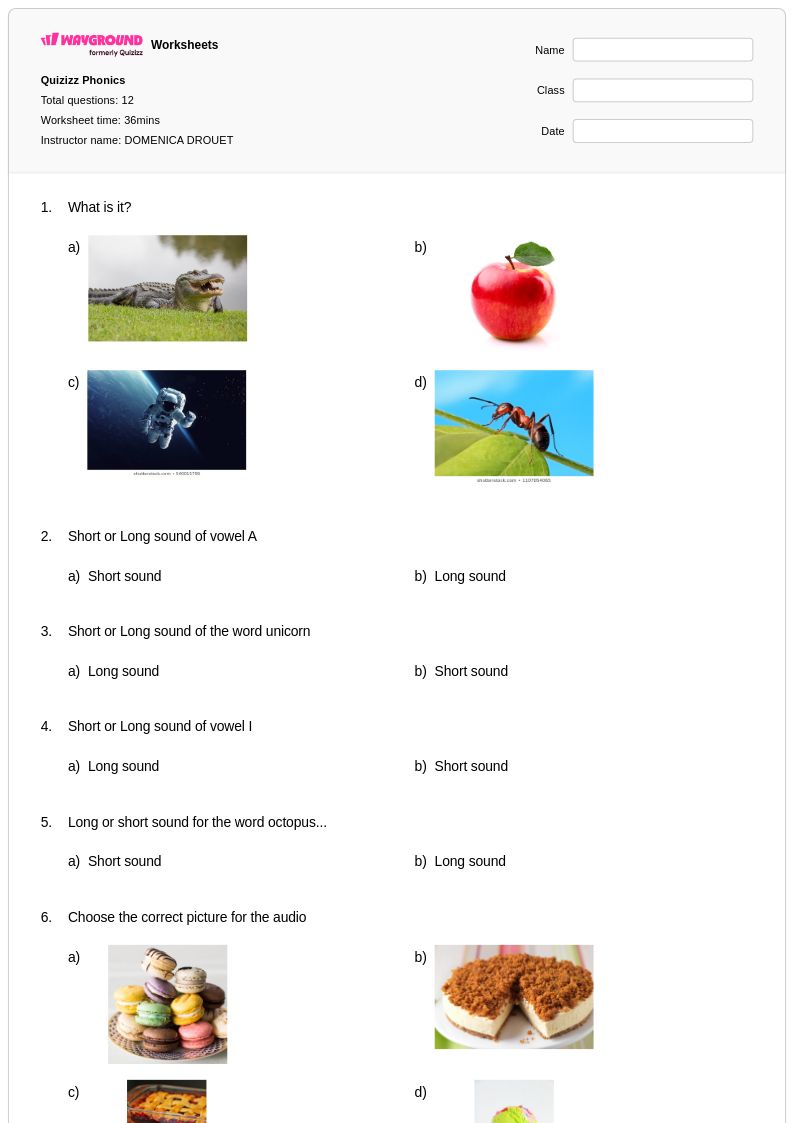
The Letter B worksheets for Kindergarten students available through Wayground (formerly Quizizz) provide comprehensive practice in recognizing, writing, and understanding this essential consonant. These expertly designed printables focus on building foundational phonics skills by helping young learners identify the letter B in both uppercase and lowercase forms, associate it with its corresponding sound, and connect it to familiar words that begin with B such as ball, bear, and banana. Each worksheet includes engaging activities like letter tracing, picture matching, and beginning sound identification, complete with answer keys to support both independent practice and guided instruction. The free pdf resources systematically develop pre-reading skills through practice problems that strengthen letter recognition, fine motor control, and phonemic awareness—critical building blocks for reading success.
Wayground (formerly Quizizz) empowers educators with access to millions of teacher-created Letter B worksheets specifically aligned to Kindergarten learning standards and developmental expectations. The platform's robust search and filtering capabilities allow teachers to quickly locate resources that match their students' specific needs, whether for initial letter introduction, skill reinforcement, or remediation support. These differentiation tools enable seamless customization of worksheets to accommodate varying ability levels within the classroom, while the availability of both printable and digital pdf formats provides flexibility for different learning environments and teaching preferences. Teachers can efficiently plan engaging Letter B lessons, create targeted practice opportunities for struggling learners, and offer enrichment activities for advanced students, all while ensuring systematic skill development in alphabet recognition and early literacy foundations.
FAQs
How do I teach the letter B to early readers?
Teaching the letter B effectively starts with connecting the letter's shape and sound to familiar, concrete words like 'ball,' 'bear,' and 'butterfly.' Begin with explicit instruction on uppercase and lowercase formation using guided tracing, then move into phonemic awareness activities where students identify the /b/ sound at the beginning of words. Visual discrimination exercises that contrast B with visually similar letters like D and P help solidify recognition and prevent common reversal errors.
What activities help students practice writing and recognizing the letter B?
Effective practice for the letter B includes tracing exercises that reinforce proper stroke sequence for both uppercase and lowercase forms, beginning sound sorting tasks, and picture-word matching activities tied to B-words. Repeated, structured practice with immediate feedback helps students internalize the letter's shape and sound, which is why worksheets with answer keys are particularly useful during independent work or literacy center rotations.
What mistakes do students commonly make when learning the letter B?
The most common error students make with the letter B is reversing it with the letter D, a mistake rooted in the mirror-image similarity of the two letters. Students may also confuse the uppercase B with the number 8 or struggle to consistently reproduce the two bumps on the right side of the letter. Visual anchors, multisensory practice, and activities that explicitly compare B and D side by side are among the most effective strategies for addressing these misconceptions.
How can I differentiate letter B instruction for students at different skill levels?
For students who are still developing fine motor skills, start with large-format tracing and sky-writing before moving to pencil-on-paper work. More advanced learners can move quickly from tracing into independent writing and beginning sound identification tasks. On Wayground, teachers can apply individual accommodations such as read aloud support and reduced answer choices for students who need additional scaffolding, while other students in the same class receive standard settings without disruption.
How do I use Wayground's letter B worksheets in my classroom?
Wayground's letter B worksheets are available as printable PDFs for traditional pencil-and-paper practice and in digital formats for technology-integrated learning environments, including the option to host them as an interactive quiz directly on the platform. This flexibility makes them suitable for whole-class instruction, small group work, literacy centers, and at-home practice. All worksheets include complete answer keys, so teachers can assess student progress efficiently without additional preparation.