
13 Q
1st
12 Q
KG
10 Q
KG
5 Q
KG - 1st
47 Q
1st
5 Q
KG - 1st
10 Q
1st
5 Q
KG
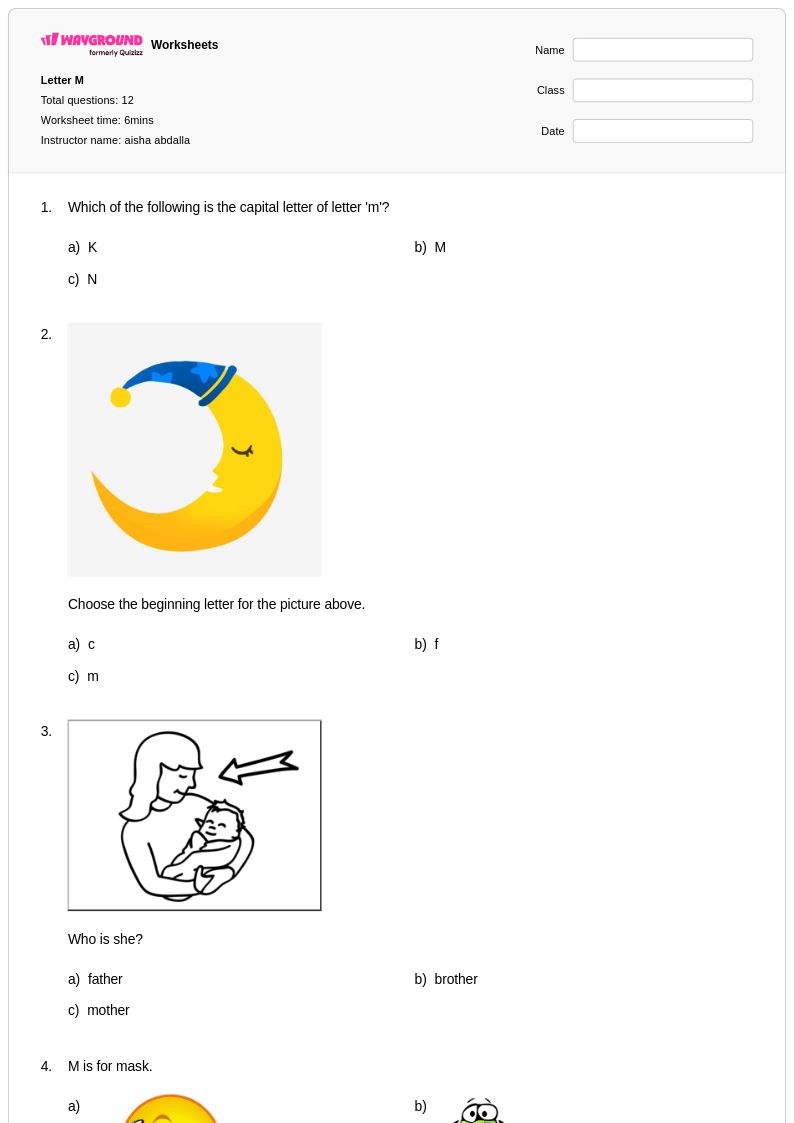
12 Q
2nd
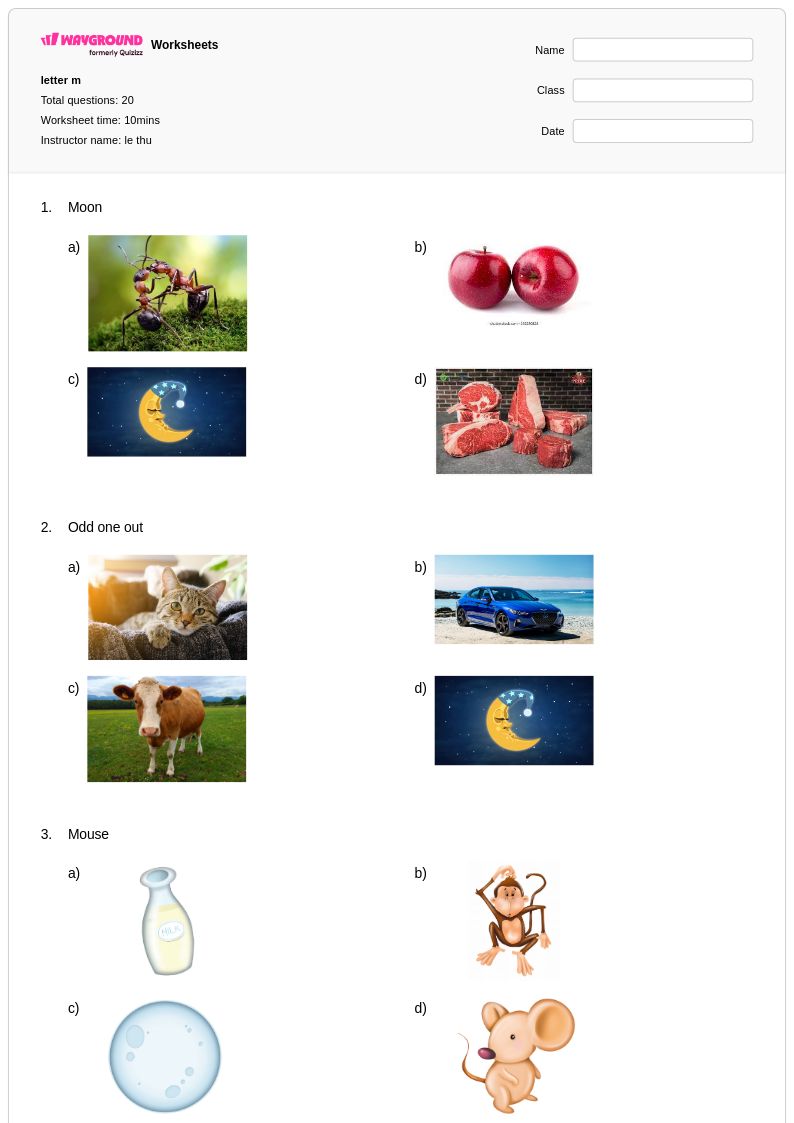
20 Q
1st
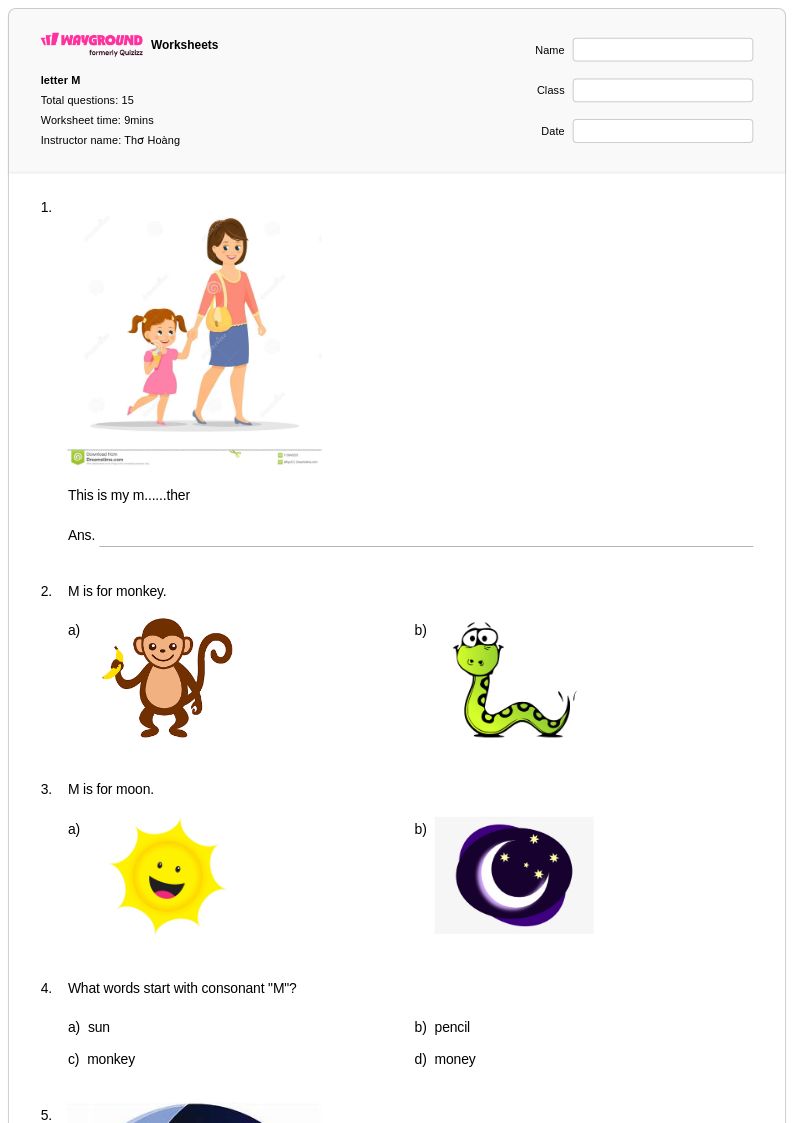
15 Q
2nd
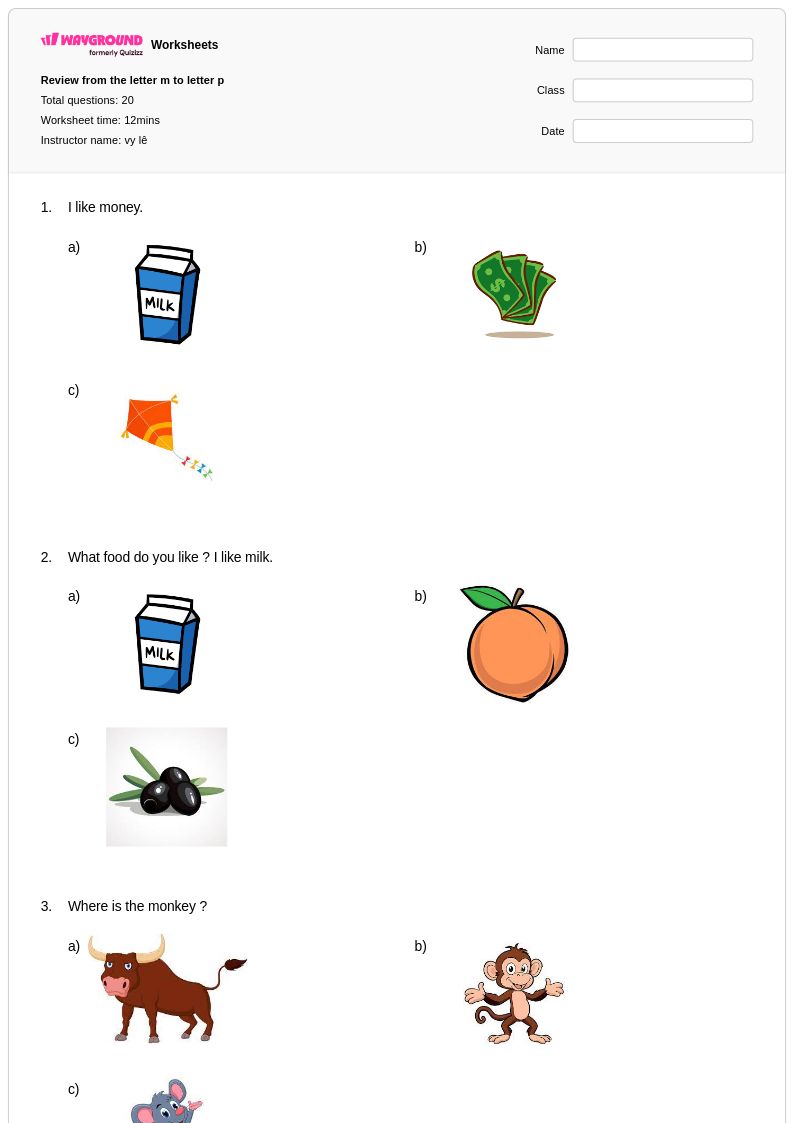
20 Q
1st
15 Q
10th
10 Q
KG
8 Q
KG
12 Q
KG
9 Q
KG
7 Q
KG
18 Q
2nd
14 Q
1st
20 Q
2nd
20 Q
12th
10 Q
8th
23 Q
9th - 12th
Explore The Letter M Worksheets by Grades
Explore Other Subject Worksheets for kindergarten
Explore printable The Letter M worksheets for Kindergarten
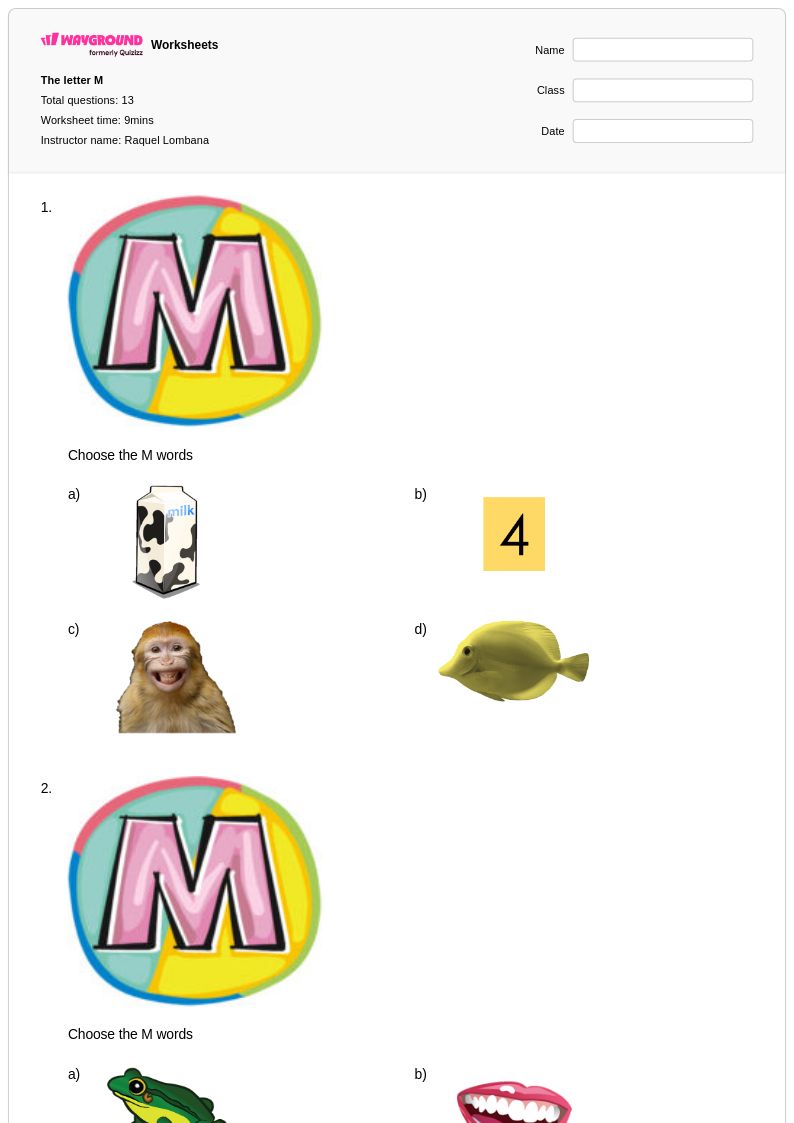
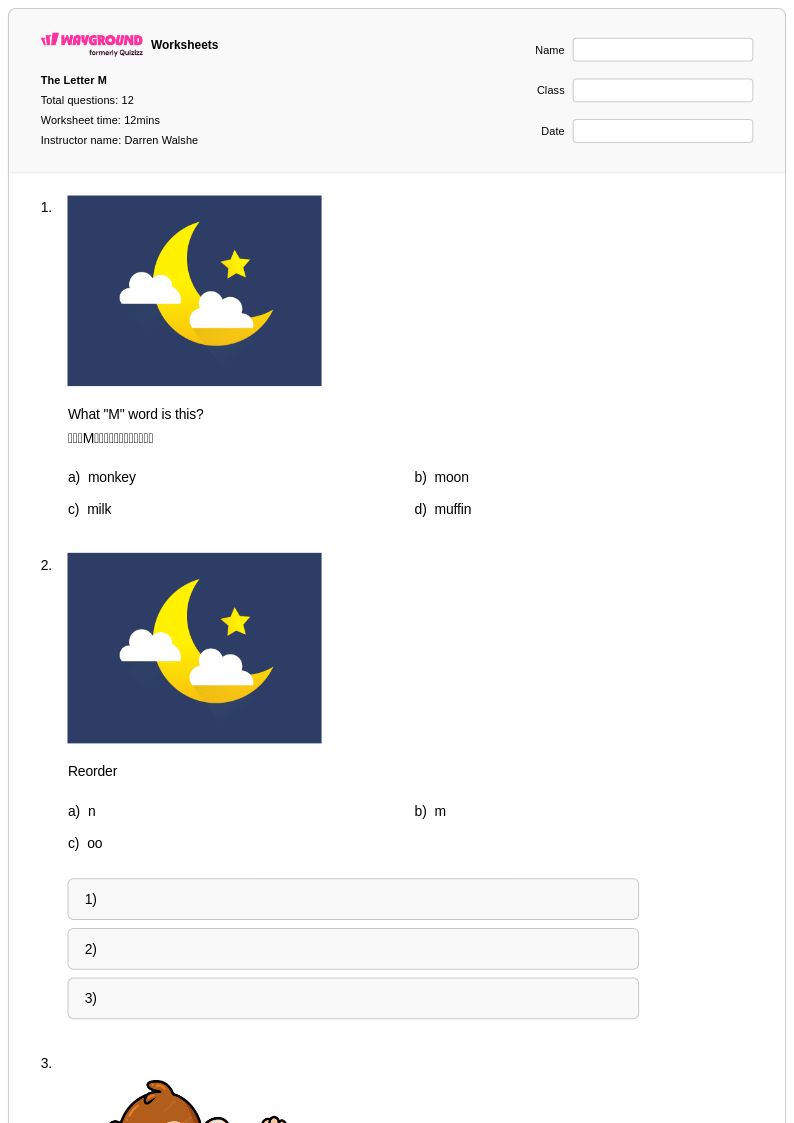
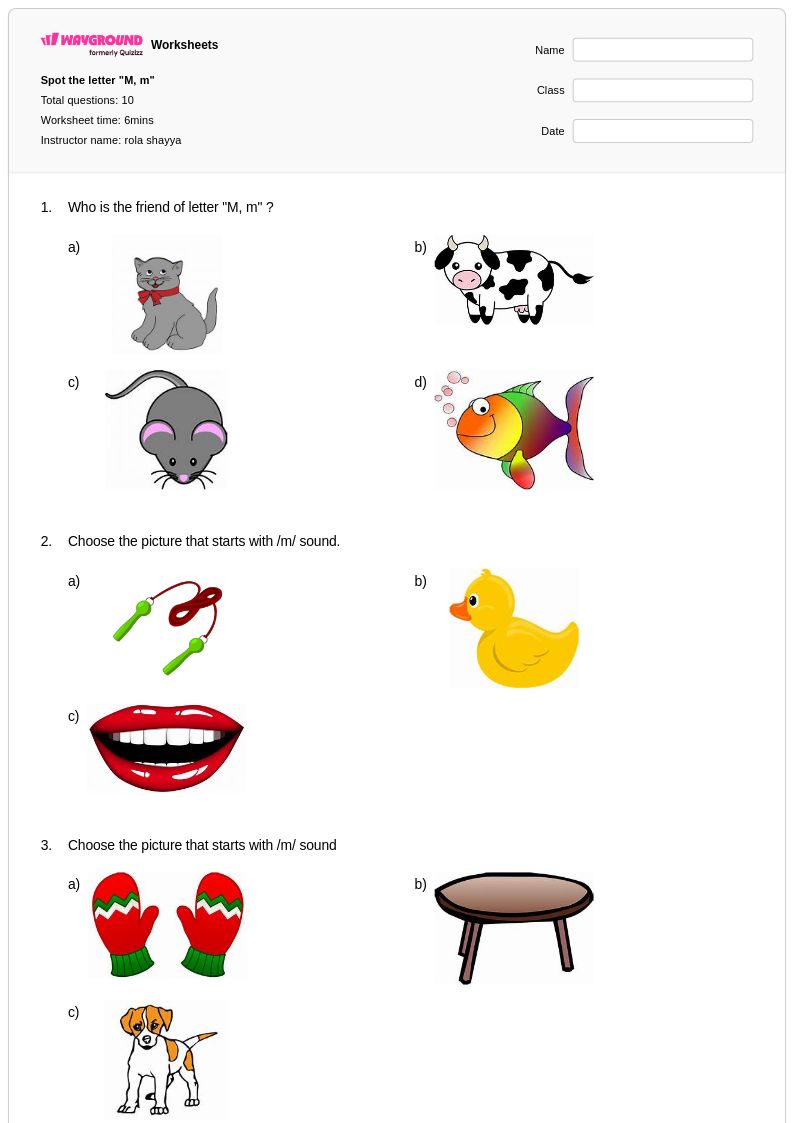
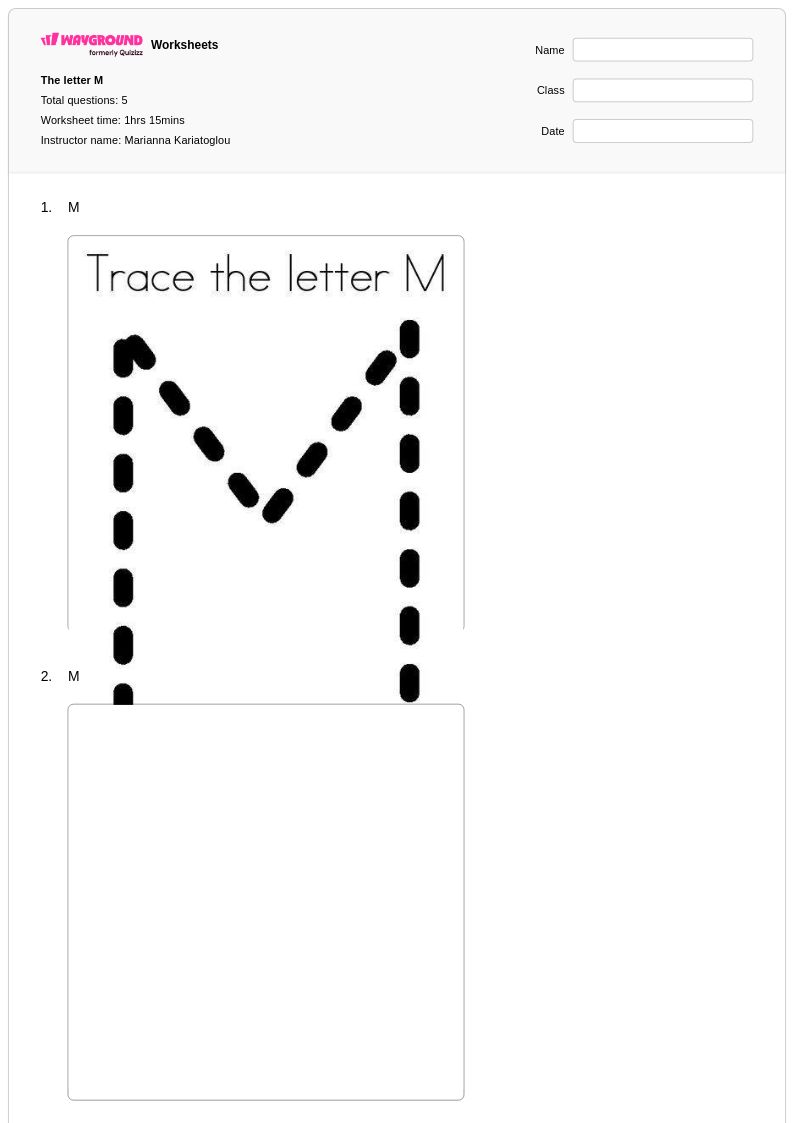
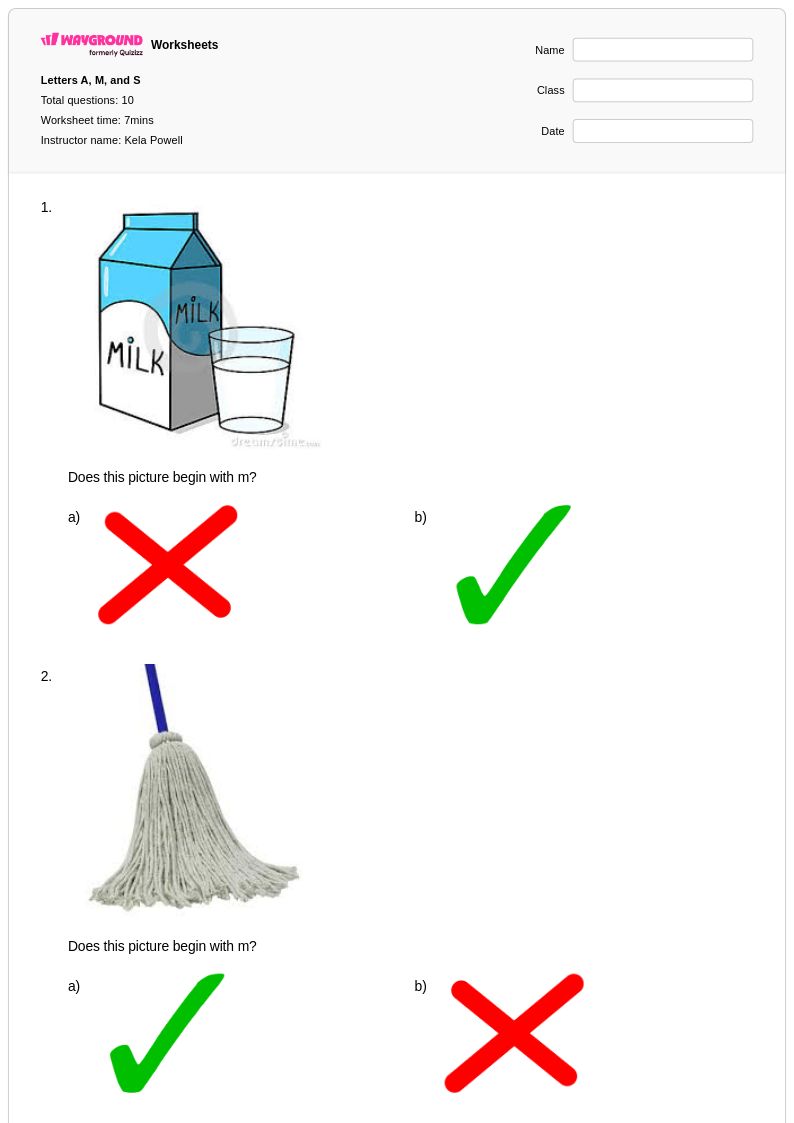
The Letter M worksheets available through Wayground (formerly Quizizz) provide kindergarten students with comprehensive practice in letter recognition, formation, and phonemic awareness. These carefully crafted printables focus on helping young learners master the distinctive features of the letter M, including its uppercase and lowercase forms, proper stroke sequence for writing, and initial sound identification. Each worksheet incorporates engaging activities such as tracing exercises, picture sorting tasks, and beginning sound matching games that reinforce the /m/ phoneme through words like "monkey," "moon," and "milk." Teachers can access complete answer keys and free pdf downloads that support systematic letter instruction, whether used for whole-group lessons, small-group interventions, or independent practice problems that build foundational literacy skills.
Wayground's extensive collection of Letter M resources draws from millions of teacher-created materials, offering educators powerful search and filtering capabilities to locate worksheets that align with specific curriculum standards and student needs. The platform's differentiation tools enable teachers to customize activities for varying skill levels, from students just beginning to recognize letters to those ready for more advanced phonics applications. These versatile resources are available in both printable pdf format and interactive digital versions, making them ideal for traditional classroom instruction, remote learning environments, and hybrid teaching models. Whether planning daily lessons, providing targeted remediation for struggling readers, or offering enrichment activities for advanced learners, teachers can efficiently organize skill practice that builds essential pre-reading competencies through systematic letter study.
FAQs
How do I teach the letter M to early learners?
What exercises help students practice letter M recognition and formation?
What mistakes do students commonly make when learning the letter M?
How can I differentiate letter M practice for students at different skill levels?
How do I use Wayground's letter M worksheets in my classroom?