
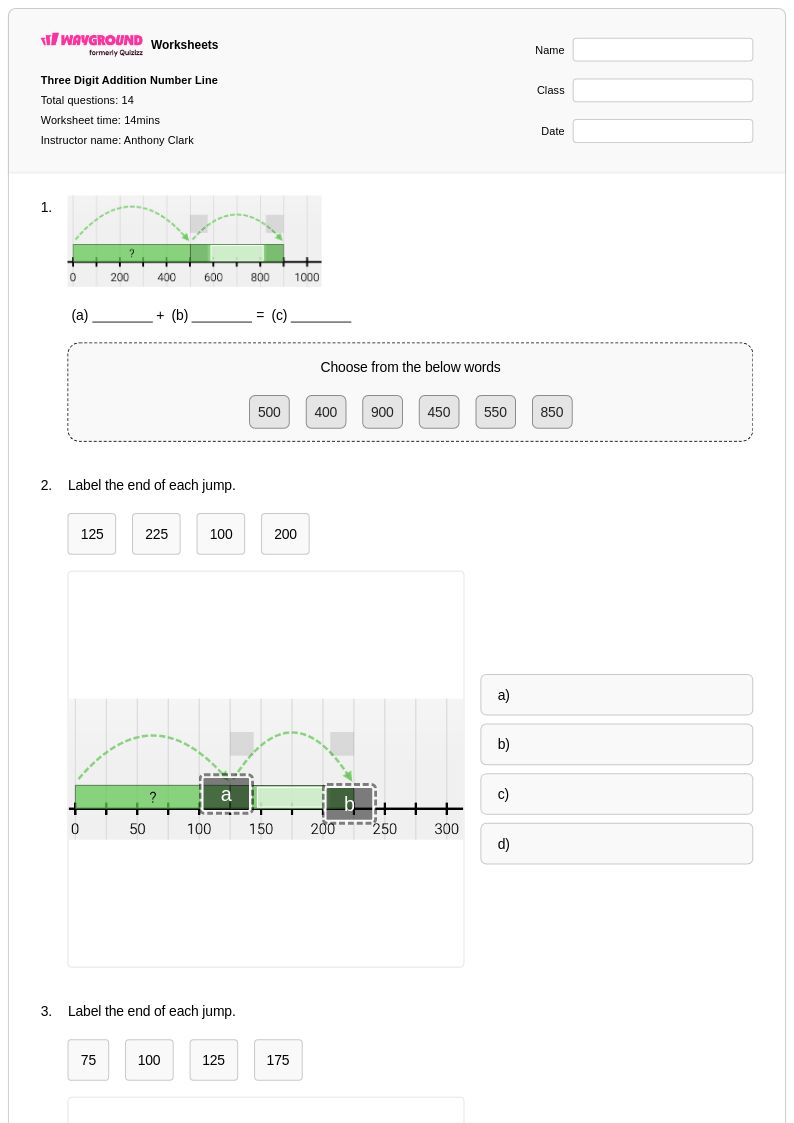
14 Q
2nd - Uni
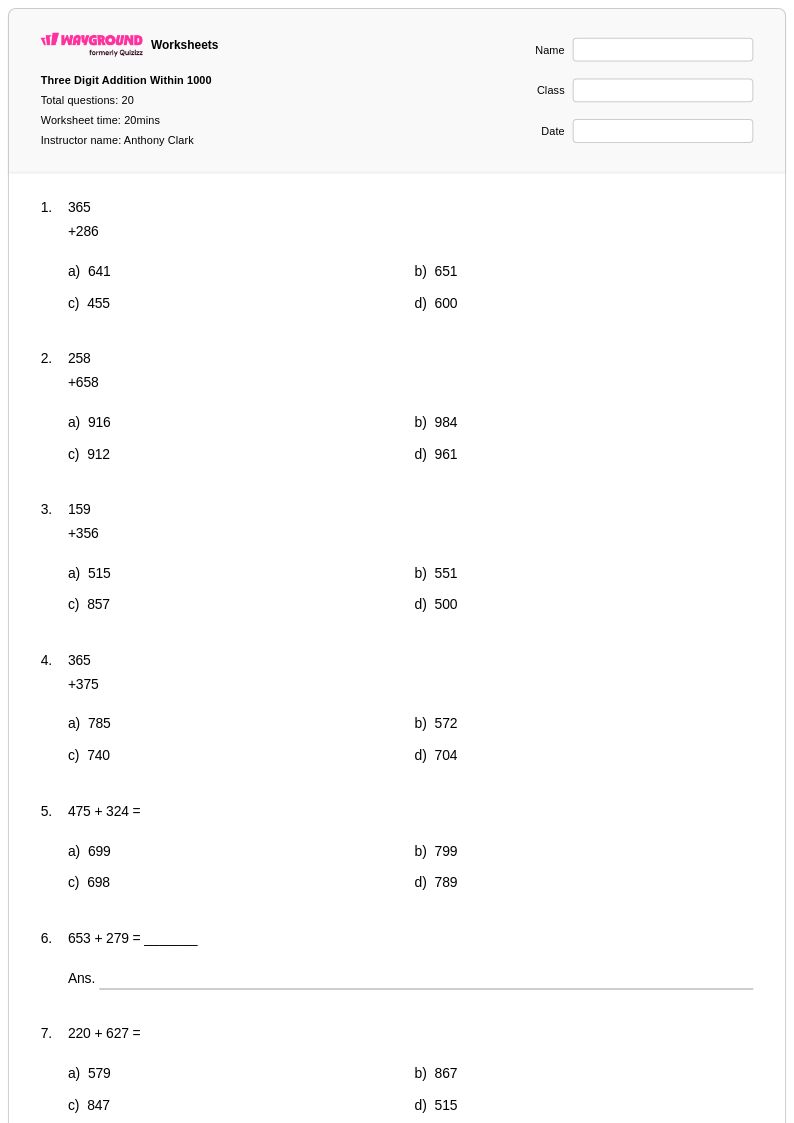
20 Q
2nd - Uni
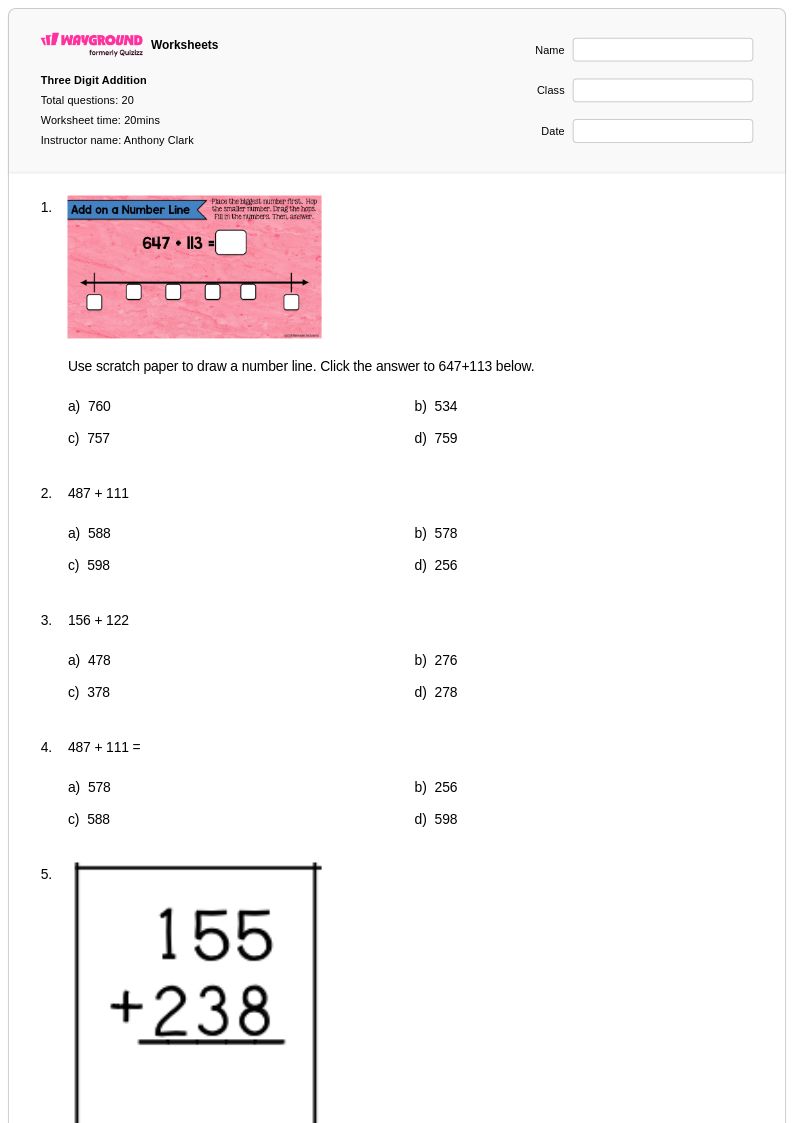
20 Q
2nd - Uni
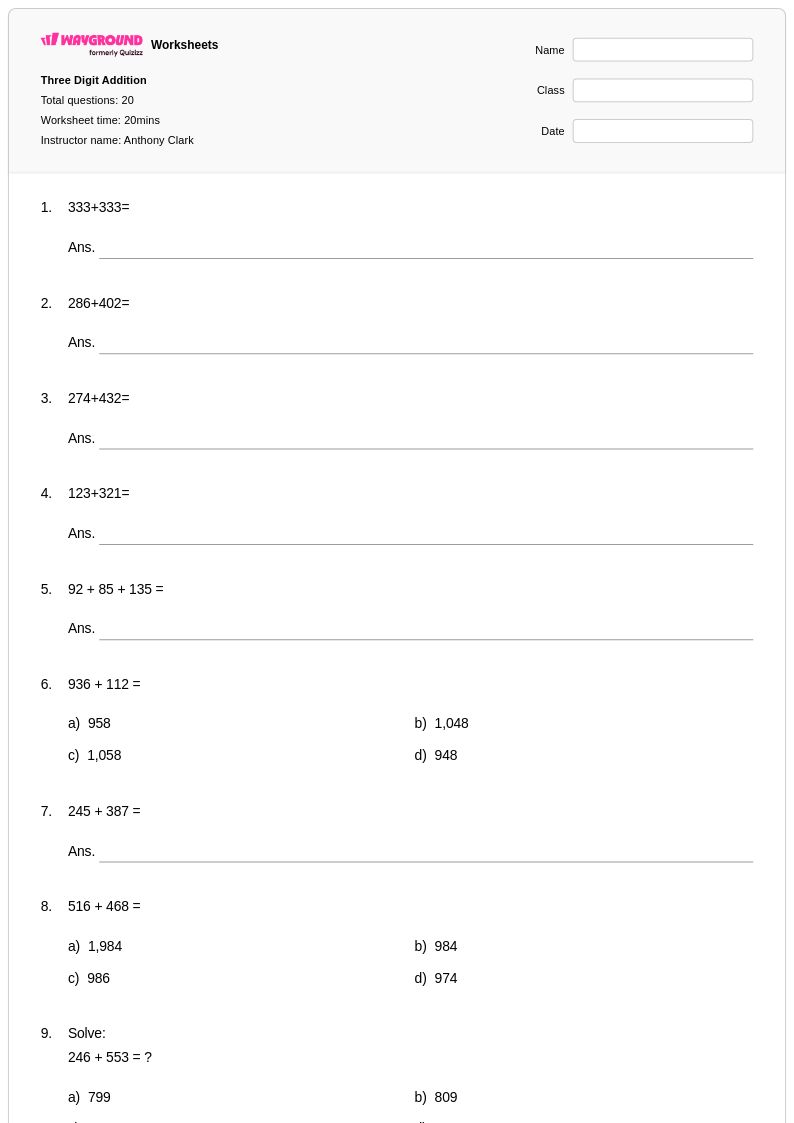
20 Q
3rd - Uni
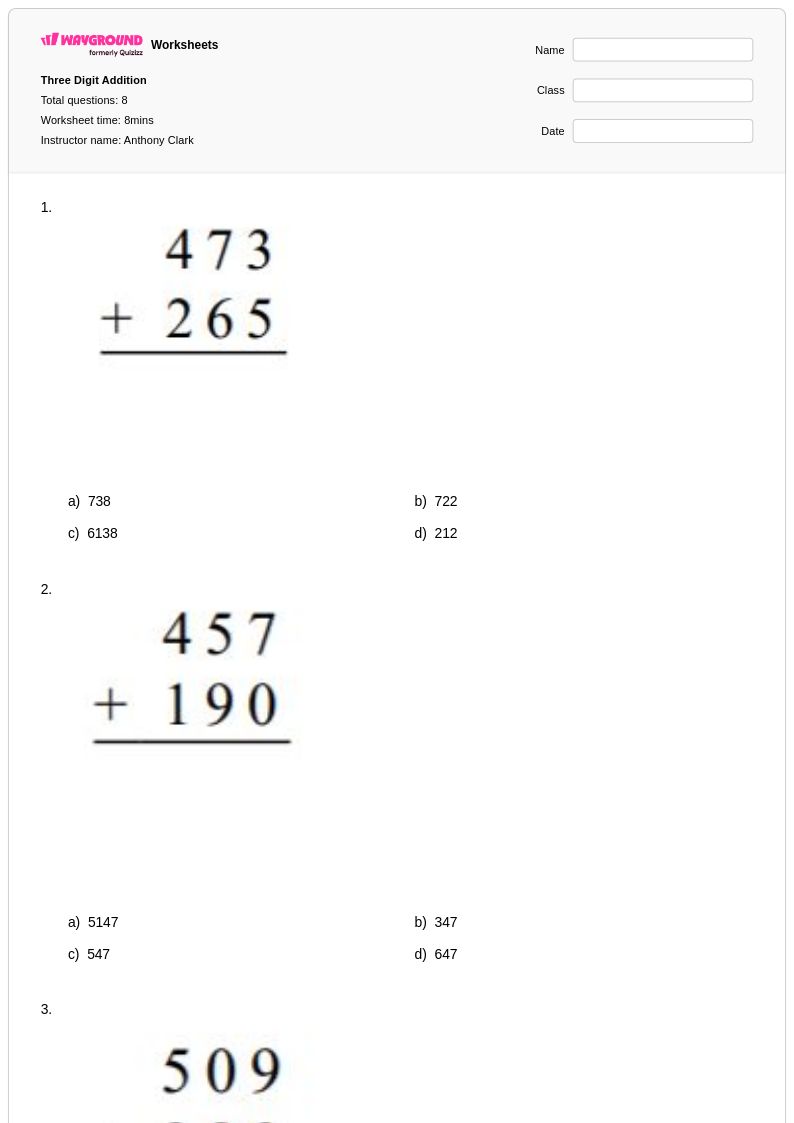
8 Q
5th - Uni
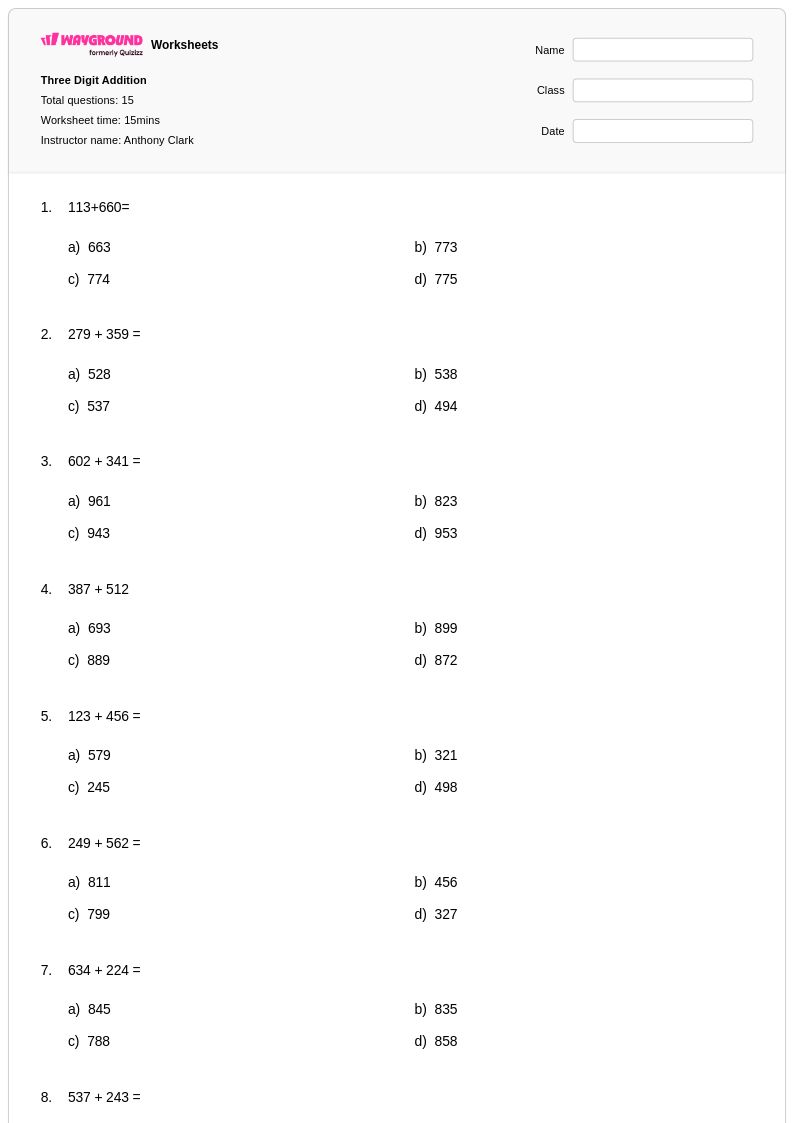
15 Q
2nd - Uni
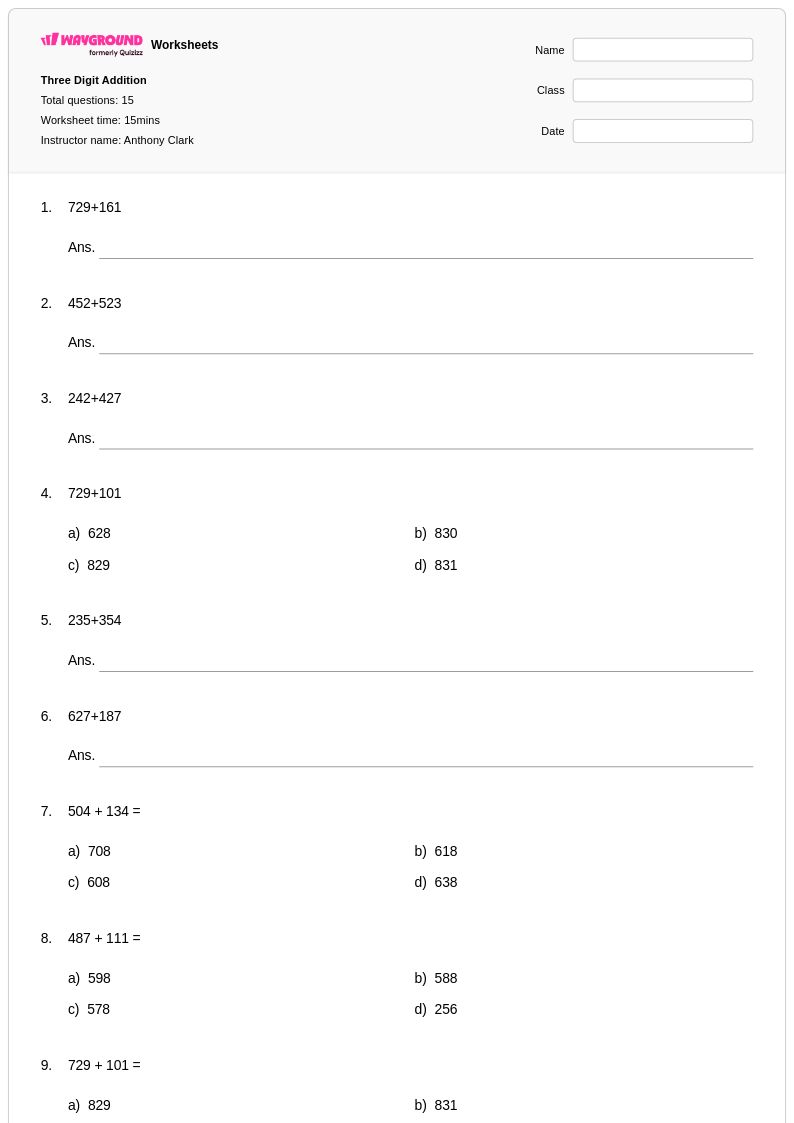
15 Q
2nd - Uni
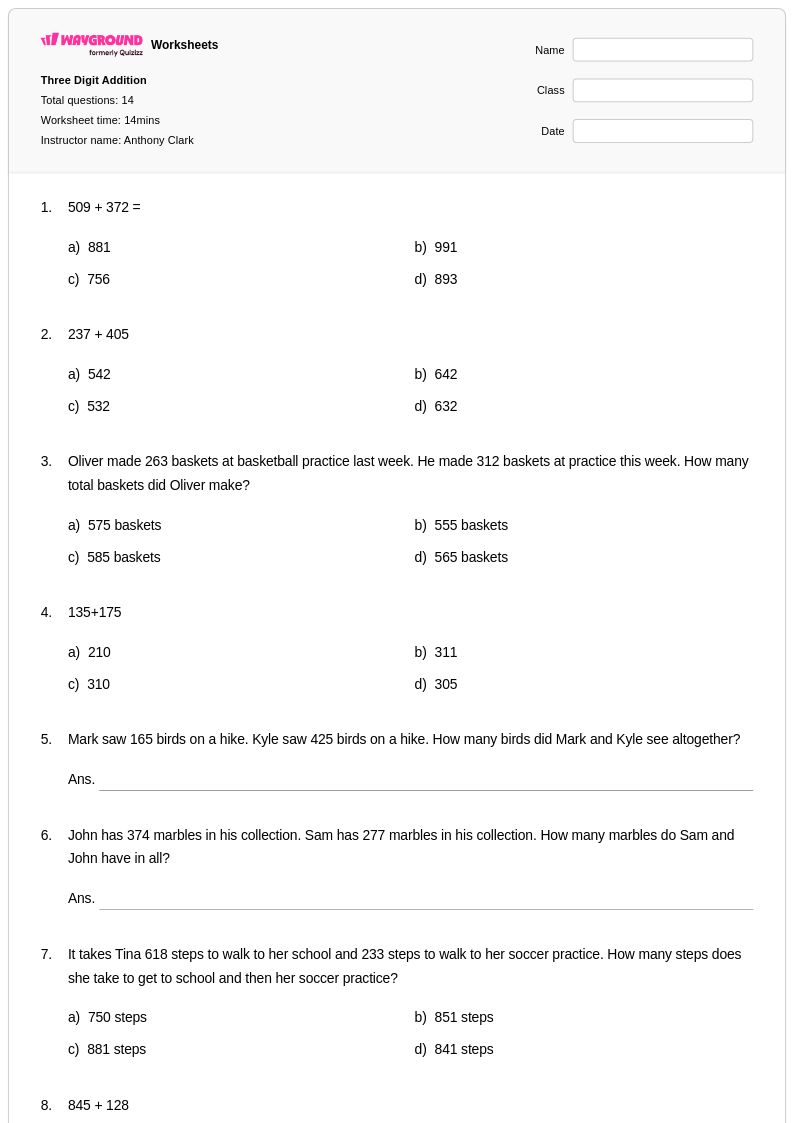
14 Q
3rd - Uni
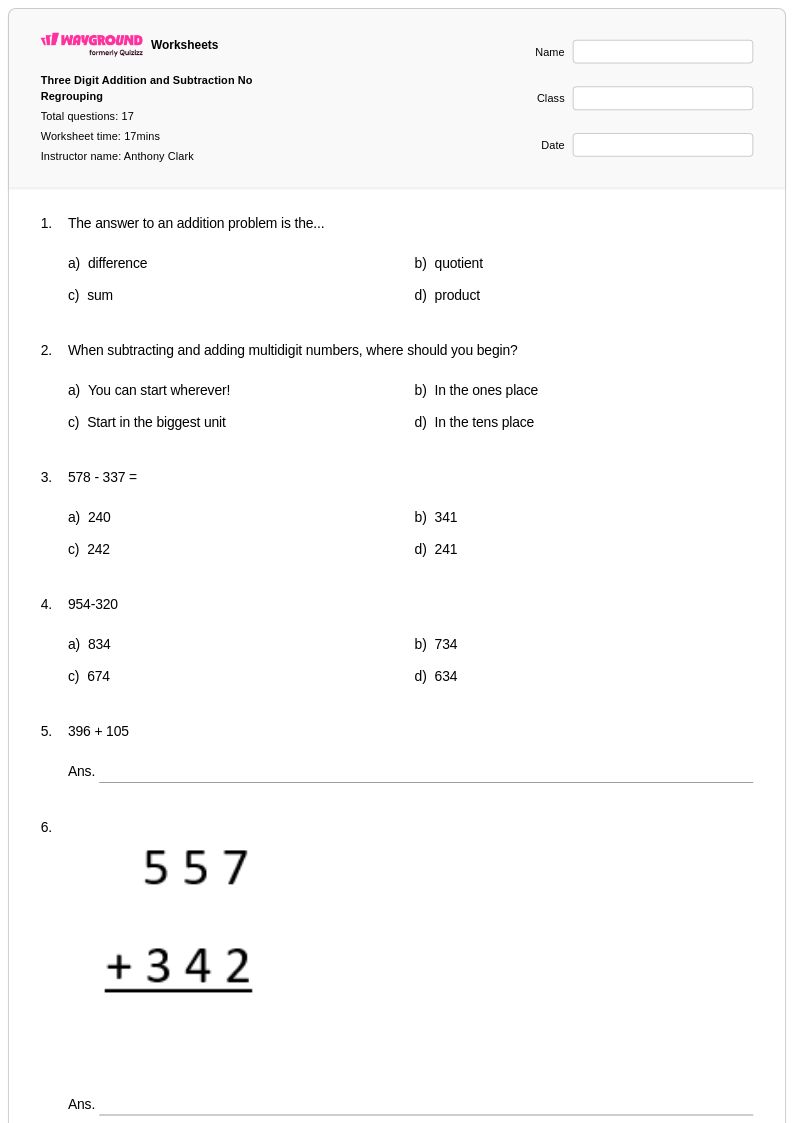
17 Q
3rd - Uni
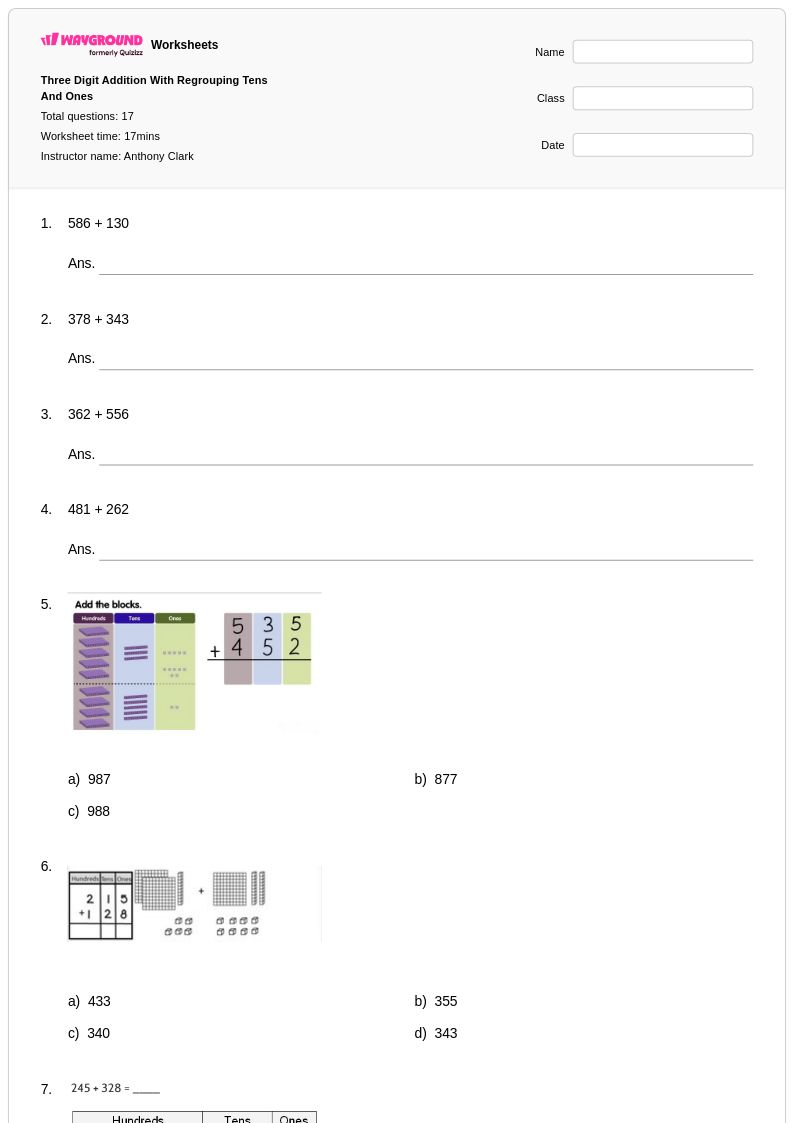
17 Q
2nd - Uni
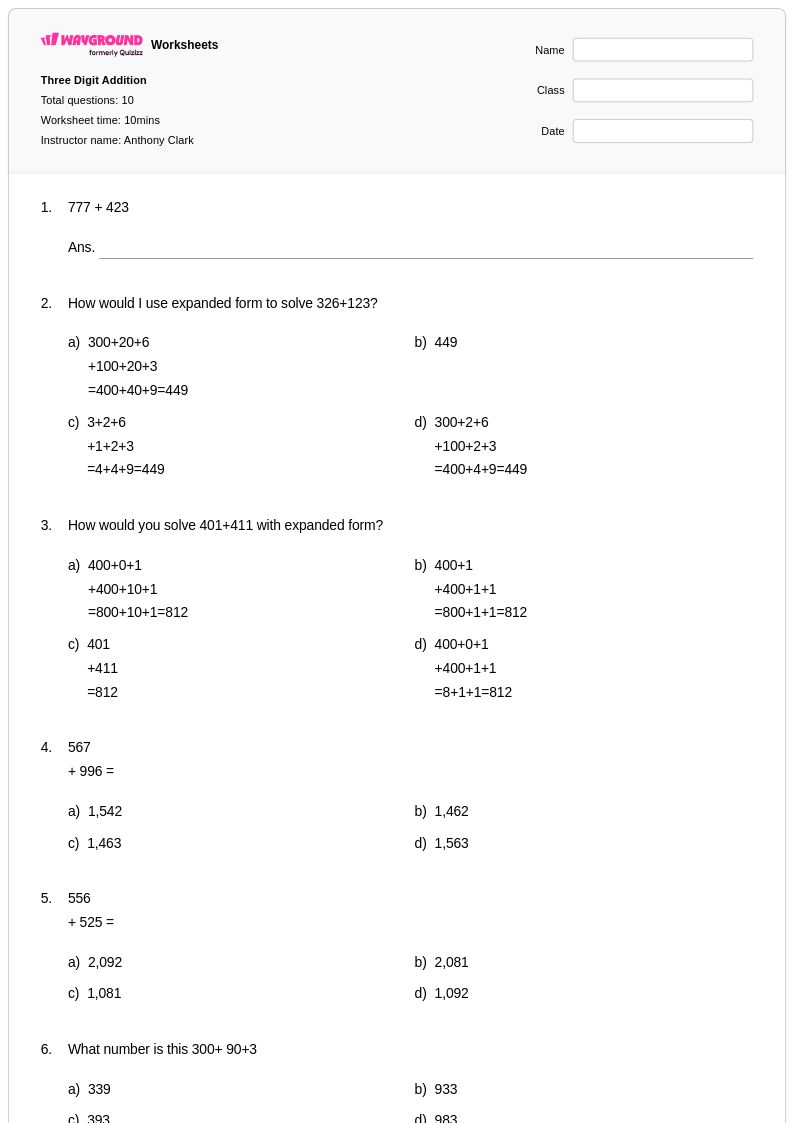
10 Q
3rd - Uni
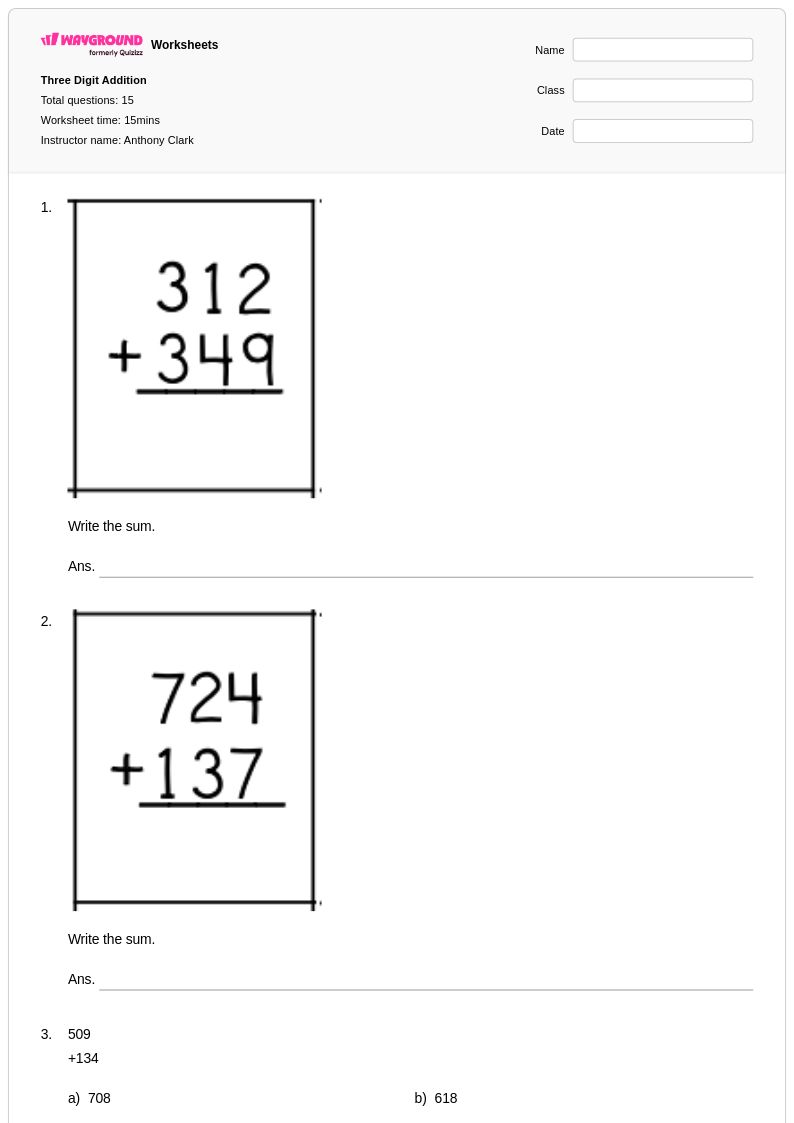
15 Q
3rd - Uni
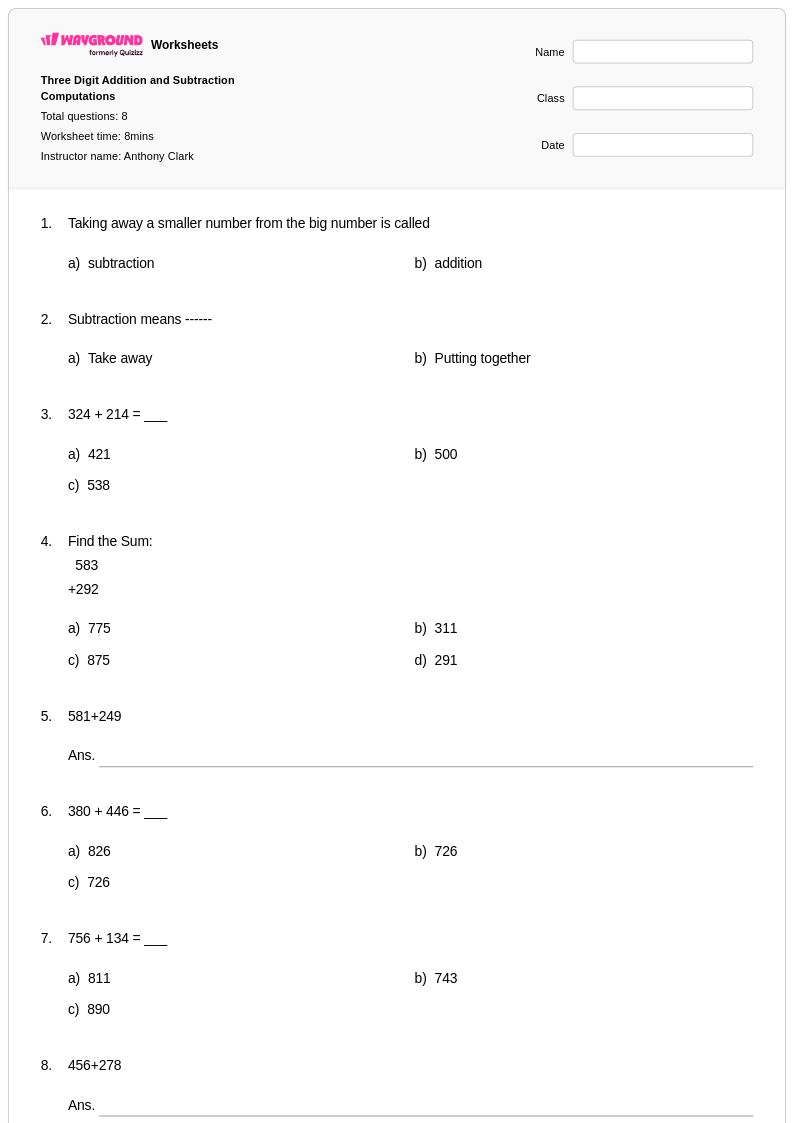
8 Q
2nd - Uni
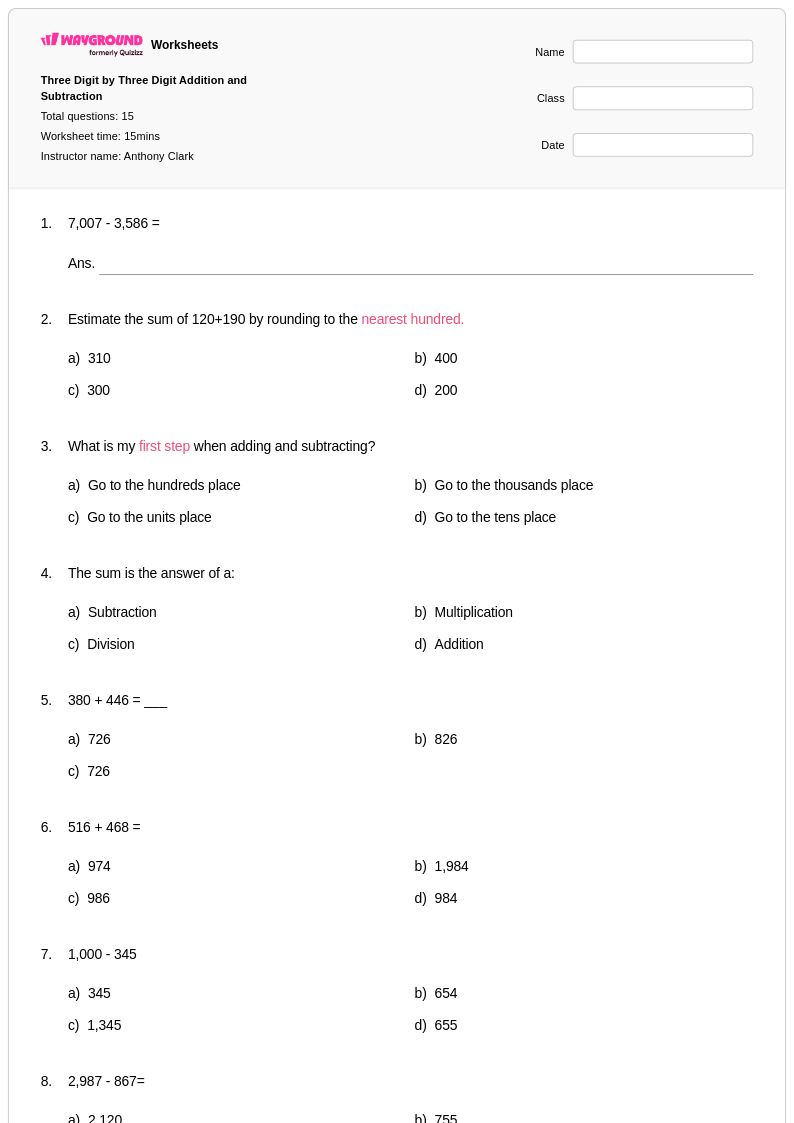
15 Q
5th - Uni
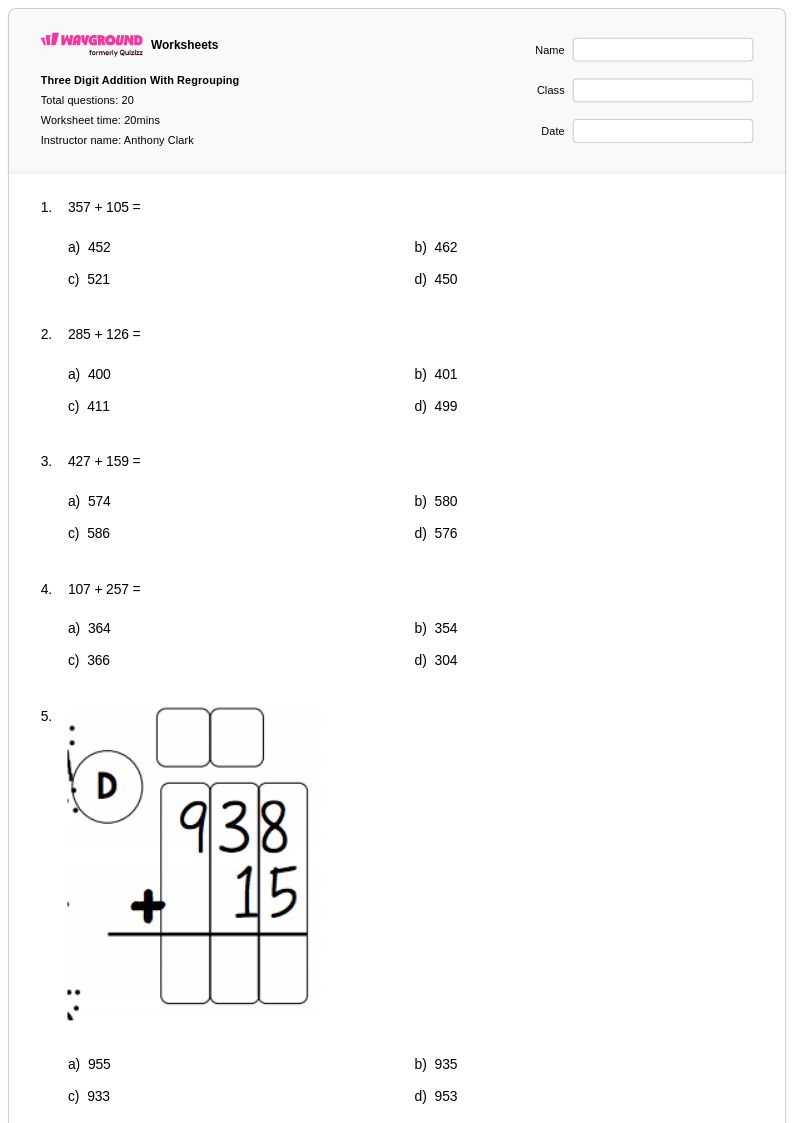
20 Q
2nd - Uni
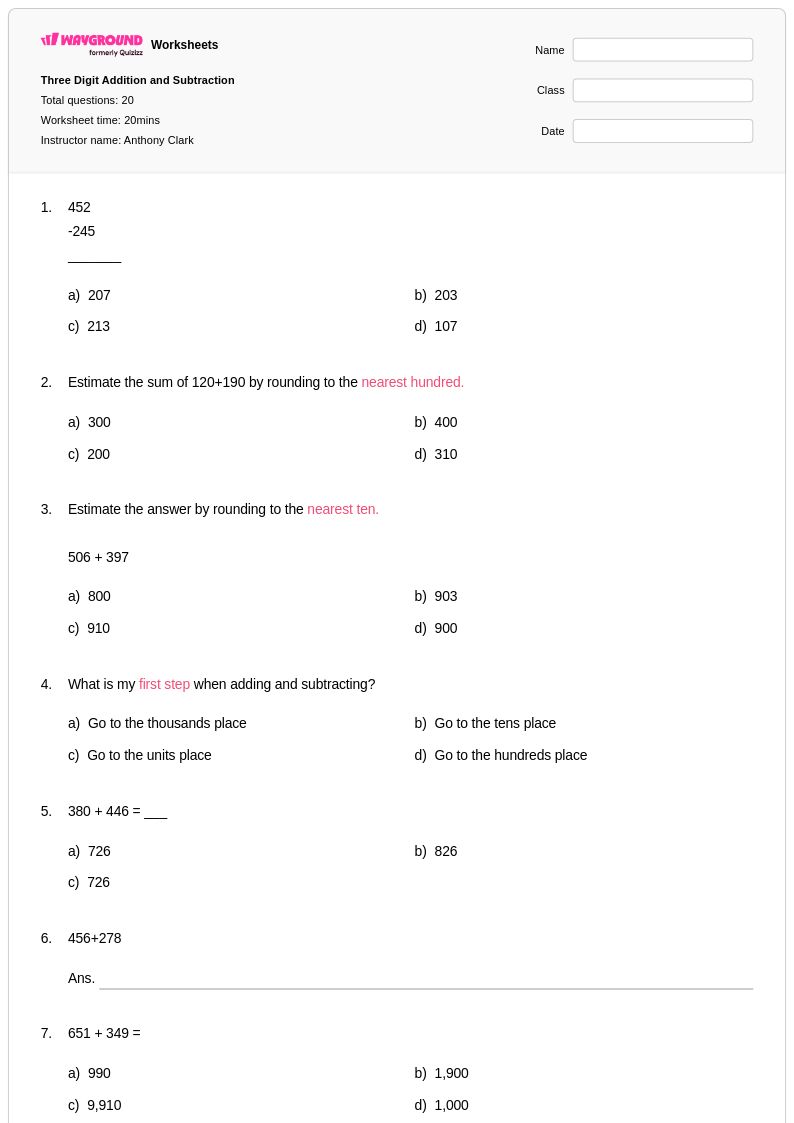
20 Q
4th - Uni
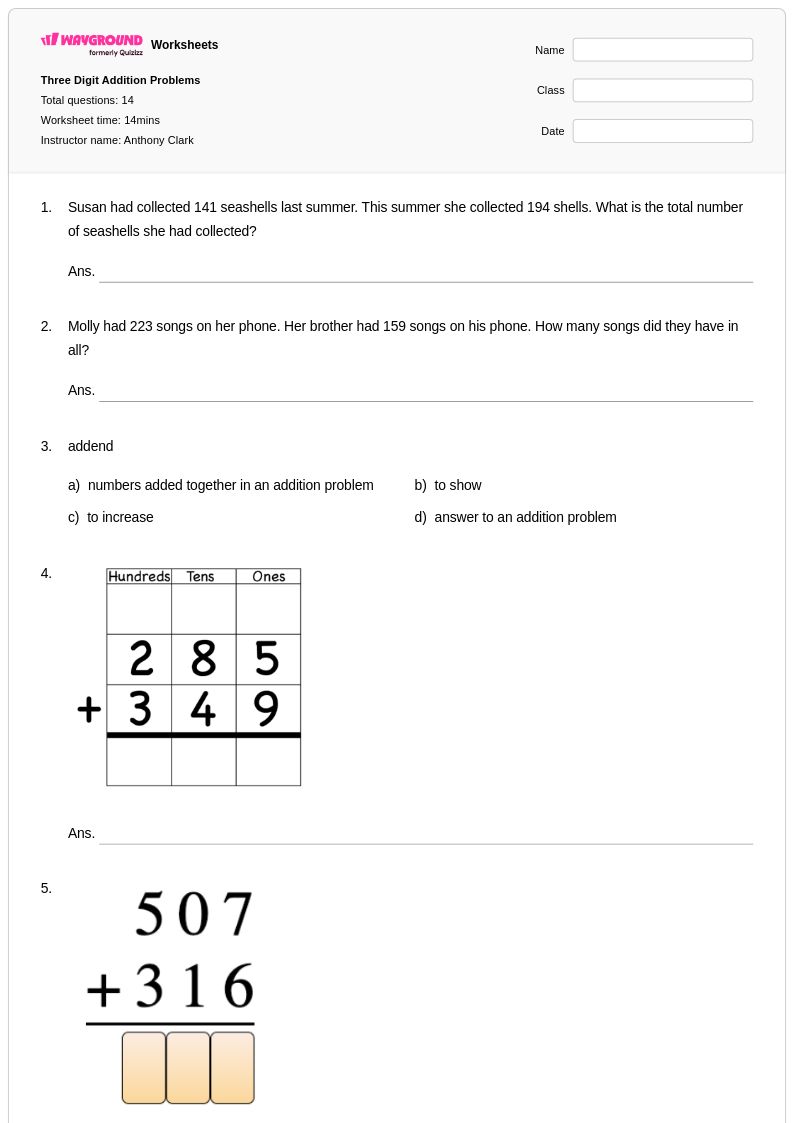
14 Q
2nd - Uni
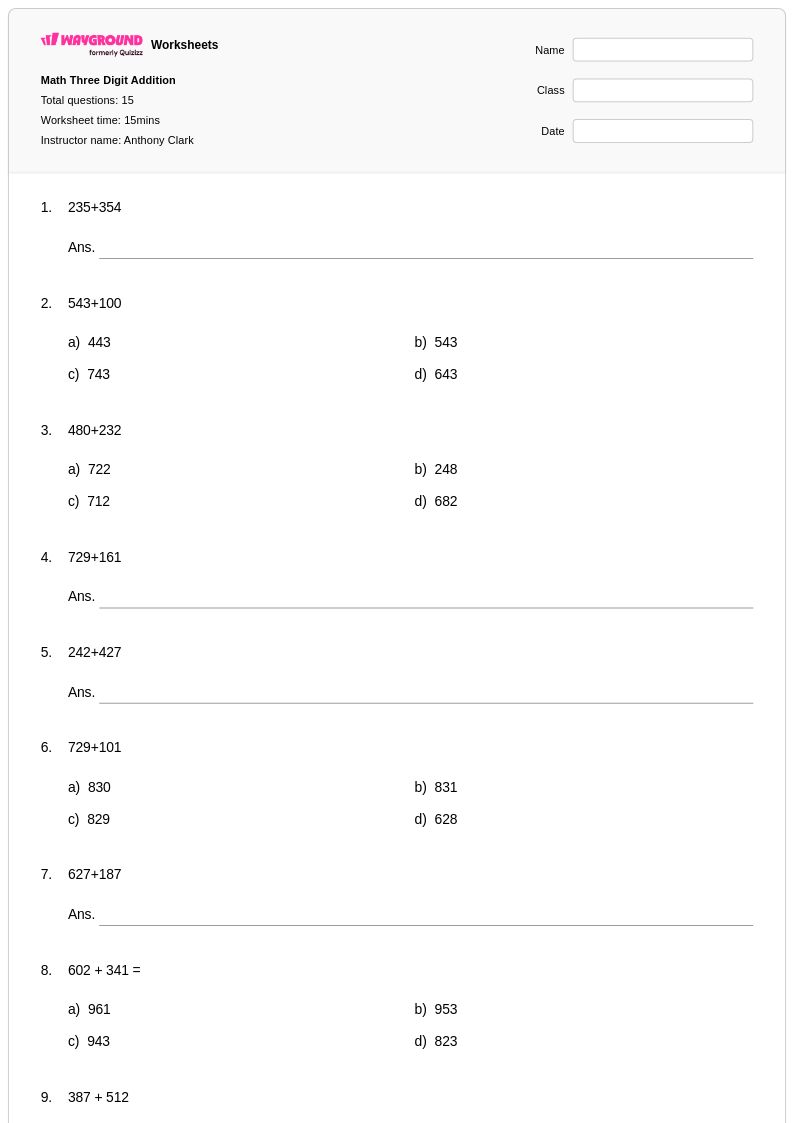
15 Q
2nd - Uni
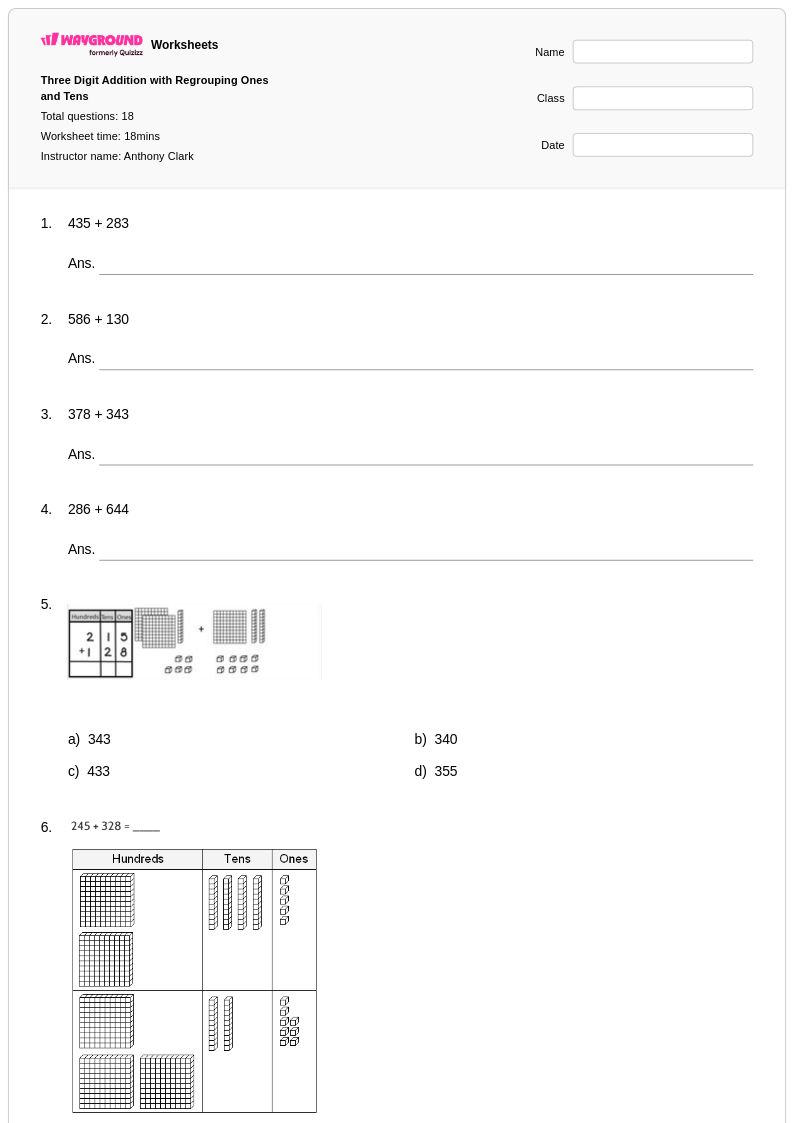
18 Q
2nd - Uni
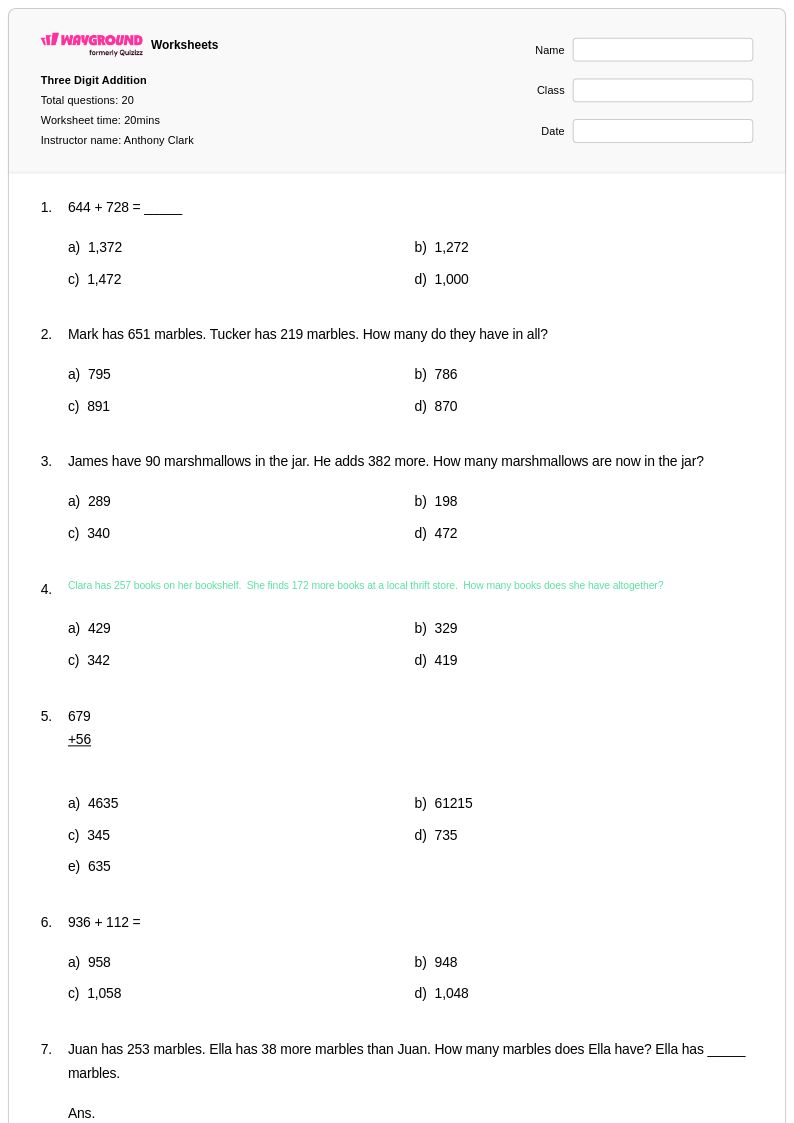
20 Q
2nd - Uni
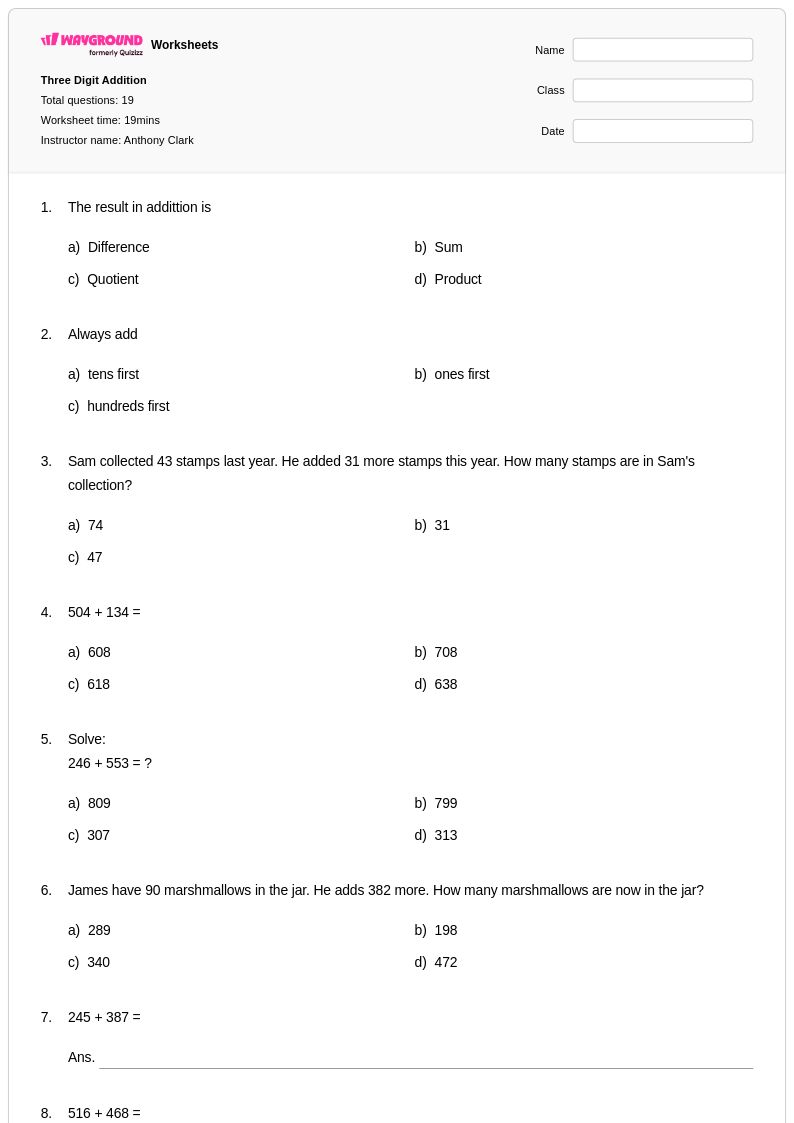
19 Q
3rd - Uni
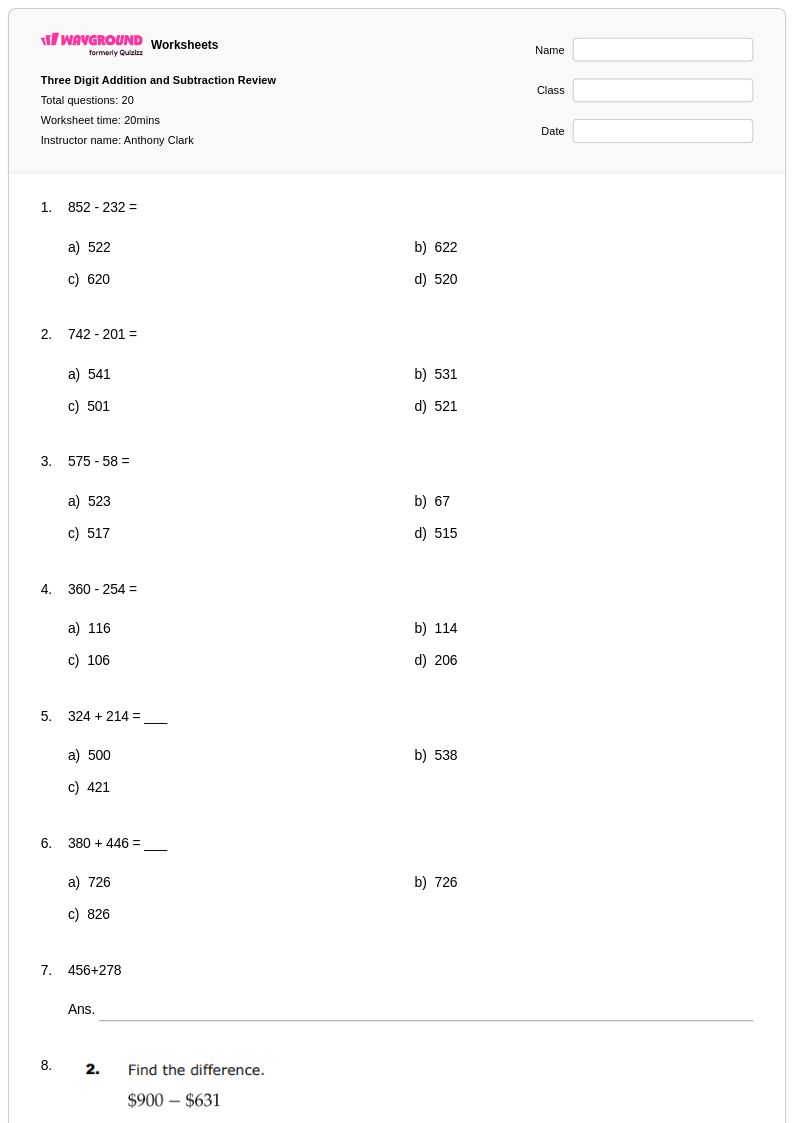
20 Q
3rd - Uni
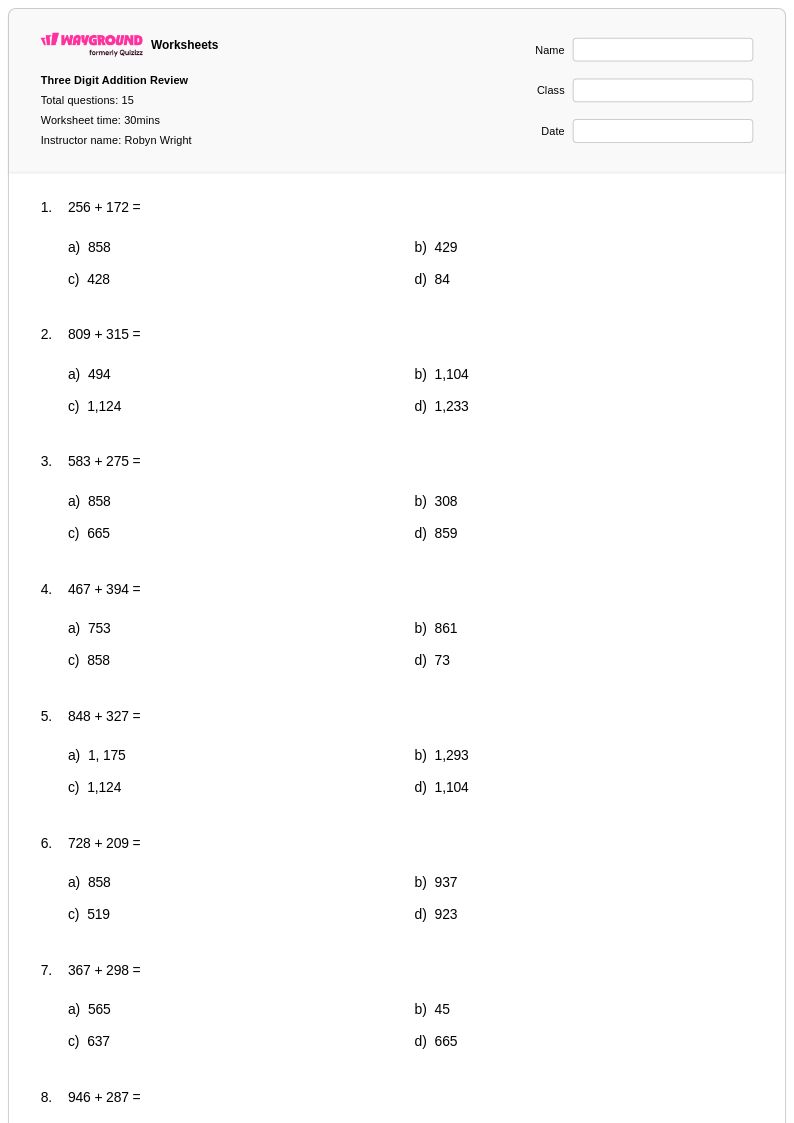
15 Q
5th - 6th
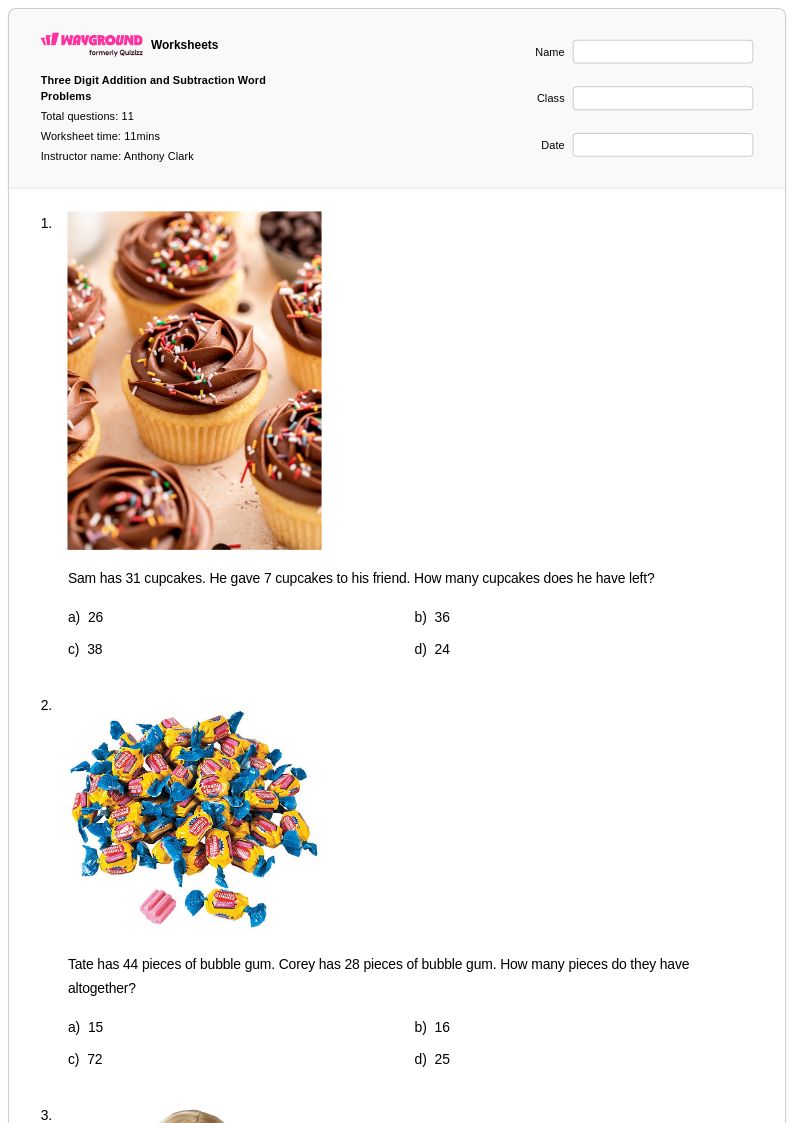
11 Q
4th - Uni
Explore Other Subject Worksheets for grade 5
Explore printable Three-digit Addition worksheets for Grade 5
Three-digit addition worksheets for Grade 5 students available through Wayground (formerly Quizizz) provide comprehensive practice opportunities that strengthen fundamental arithmetic skills essential for mathematical fluency. These carefully designed resources focus on helping students master the complexities of adding numbers in the hundreds, including regrouping across multiple place values and understanding column alignment principles. Each worksheet collection includes structured practice problems that progress from basic three-digit combinations to more challenging scenarios involving multiple addends and varied number patterns. Teachers can access complete answer keys alongside each printable resource, ensuring efficient grading and immediate feedback opportunities. The free pdf format makes these materials readily accessible for both classroom instruction and independent practice, supporting students as they build confidence with multi-step addition procedures.
Wayground's extensive library draws from millions of teacher-created resources, offering educators powerful search and filtering capabilities to locate three-digit addition materials that align with specific curriculum standards and learning objectives. The platform's differentiation tools allow teachers to customize worksheet difficulty levels, accommodating diverse learning needs within Grade 5 classrooms through varied problem complexity and visual support options. These resources are available in both printable pdf formats for traditional paper-based learning and digital formats for interactive classroom environments. Teachers can efficiently plan targeted skill practice sessions, design remediation activities for struggling learners, and create enrichment opportunities for advanced students, all while maintaining consistent focus on three-digit addition mastery that serves as a foundation for more complex mathematical concepts.
FAQs
How should I teach three-digit addition to Grade 5 students?
What three-digit addition exercises are useful in Grade 5?
What errors should I look for in Grade 5 three-digit addition work?
How can I assign Wayground’s Grade 5 three-digit addition worksheets?
How does three-digit addition support the Grade 5 Common Core math progression?
How can I differentiate three-digit addition worksheets in a Grade 5 class?
Are three-digit addition worksheets appropriate for Grade 5?