
14 Q
2nd - Uni
20 Q
2nd - Uni
20 Q
2nd - Uni
20 Q
3rd - Uni
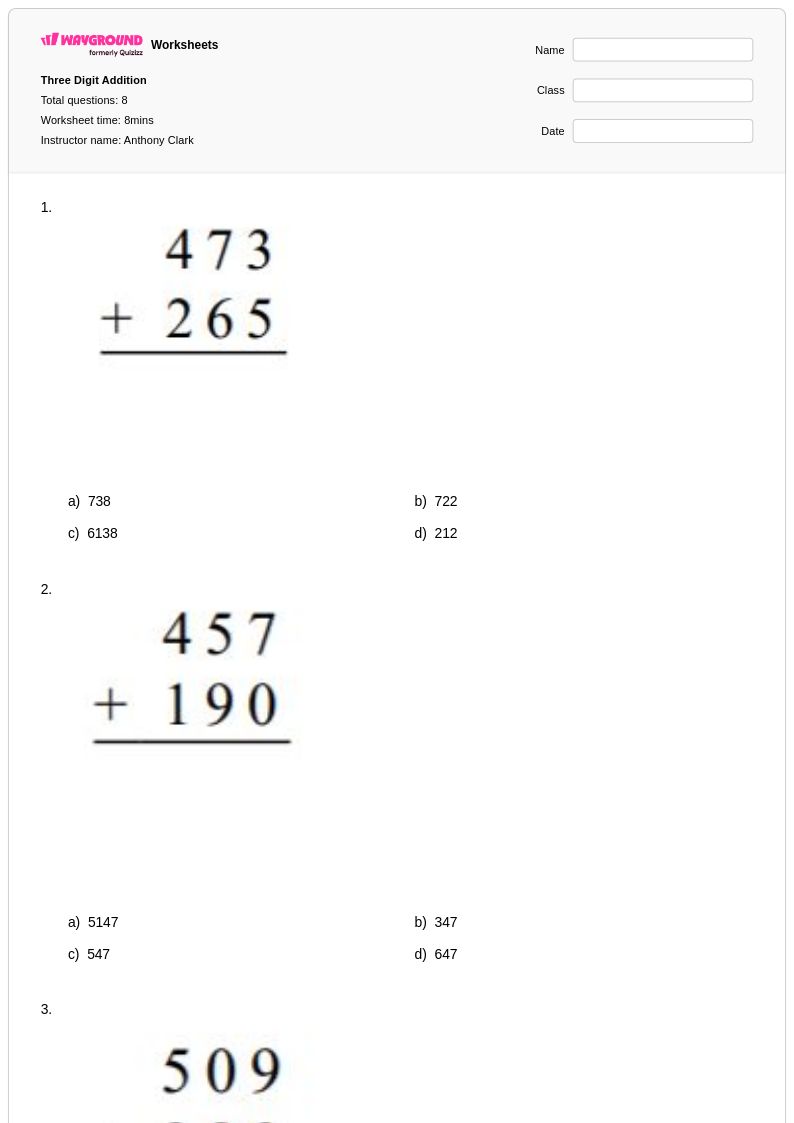
8 Q
5th - Uni
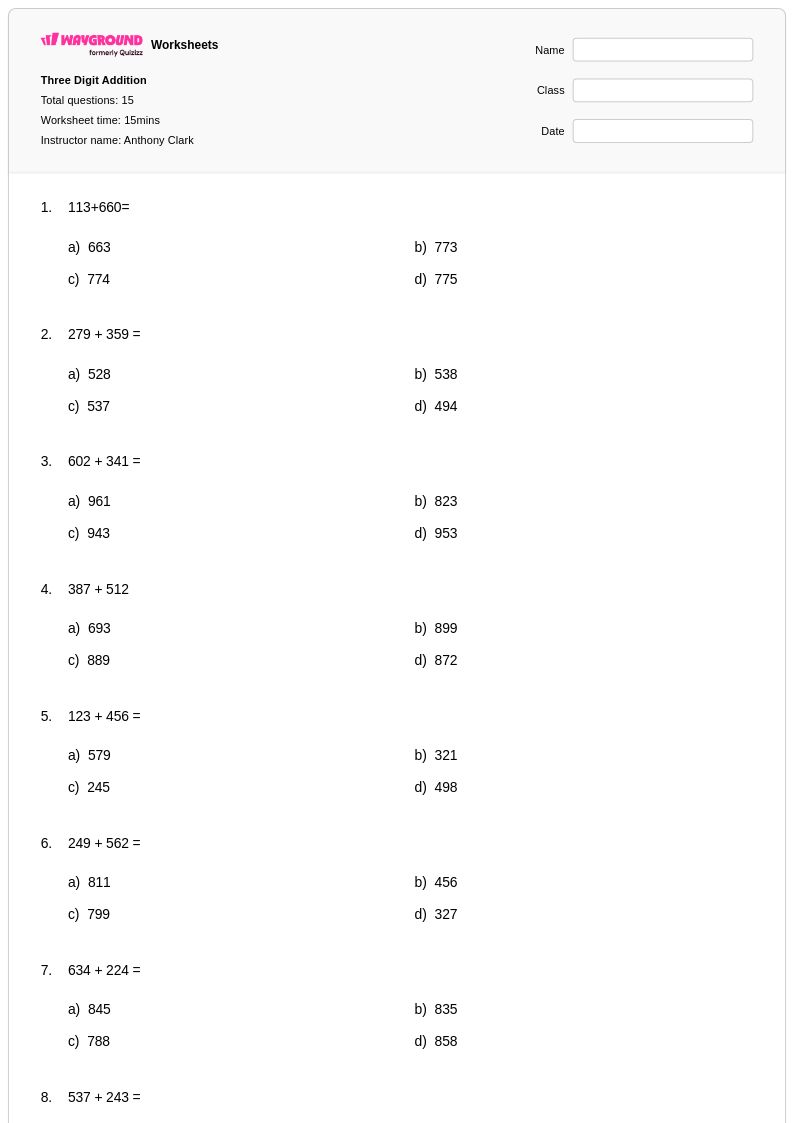
15 Q
2nd - Uni
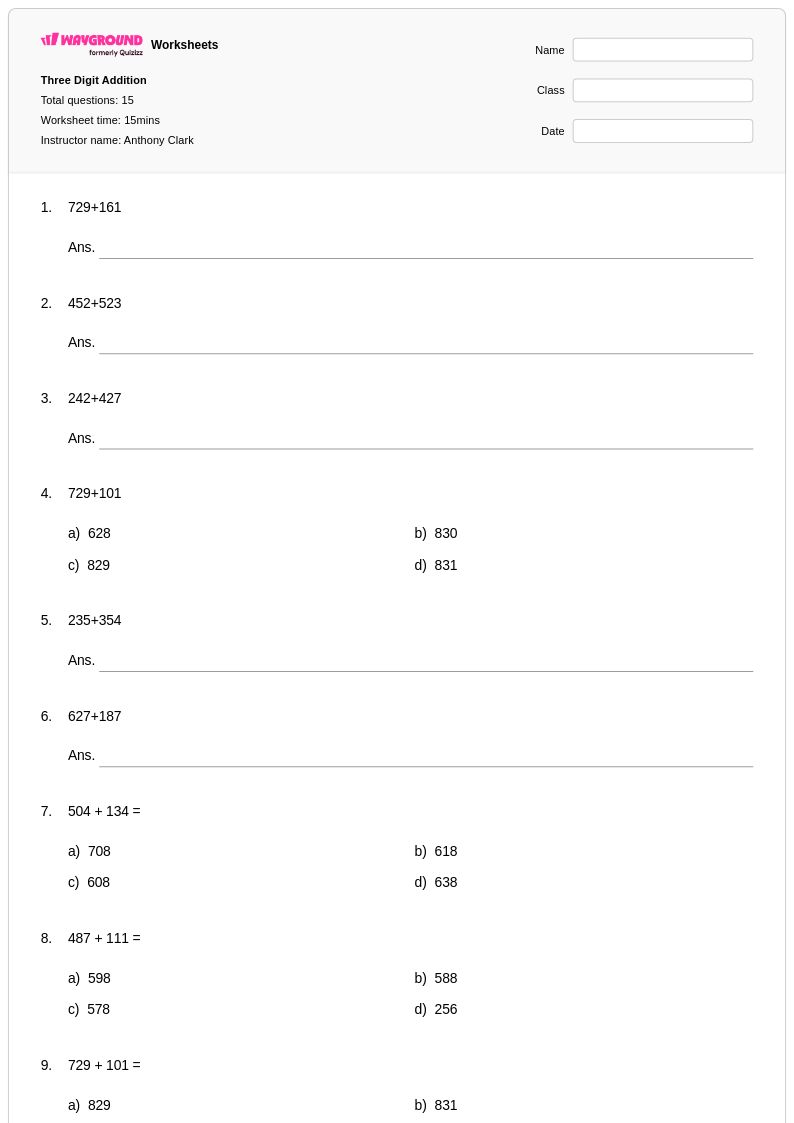
15 Q
2nd - Uni
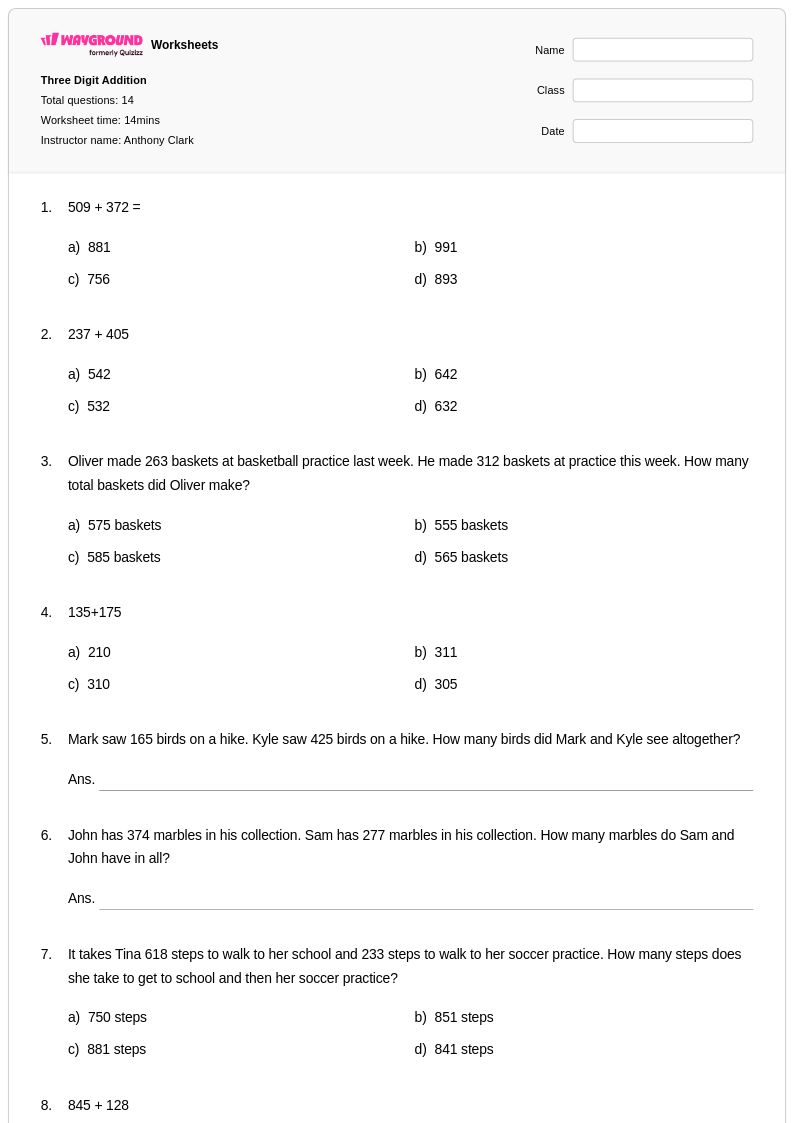
14 Q
3rd - Uni
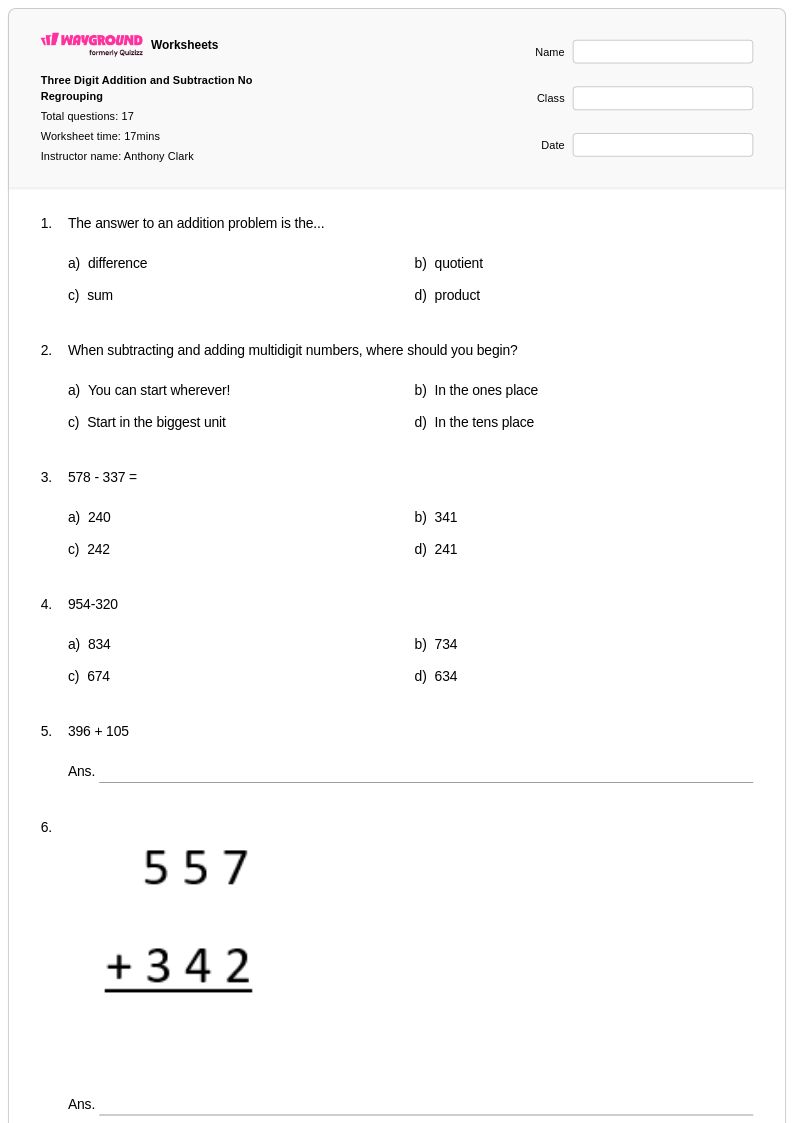
17 Q
3rd - Uni
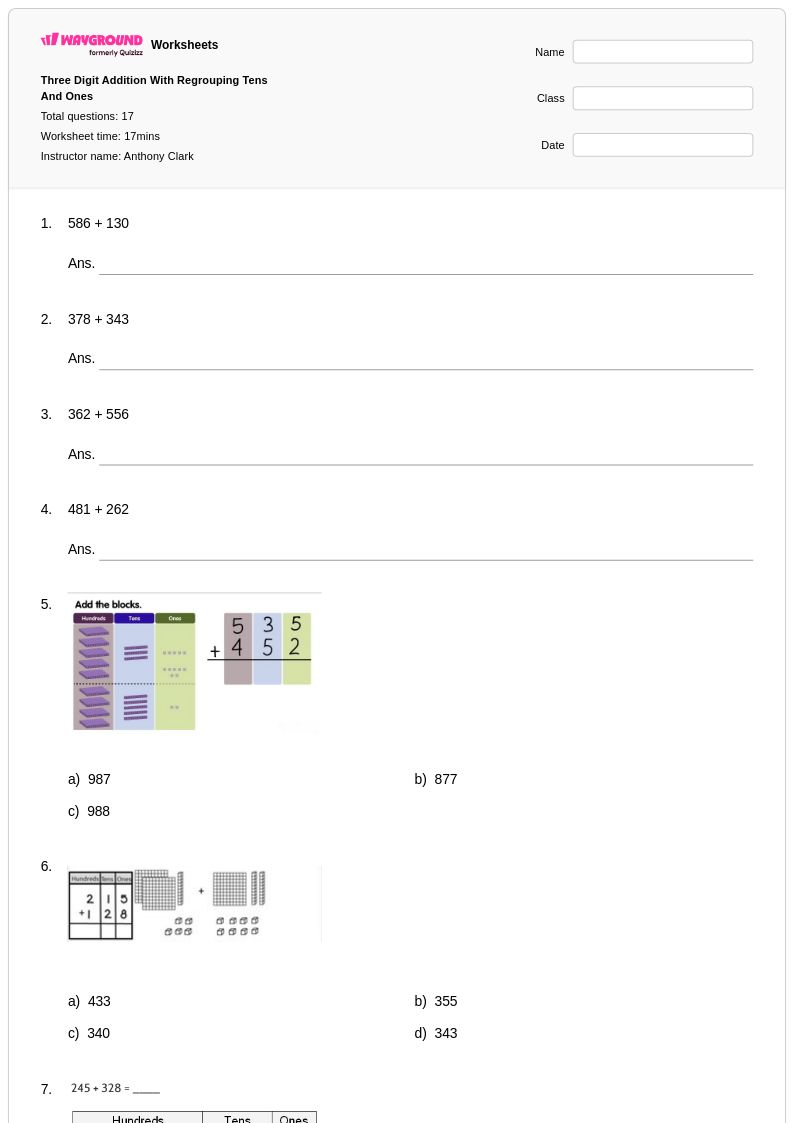
17 Q
2nd - Uni
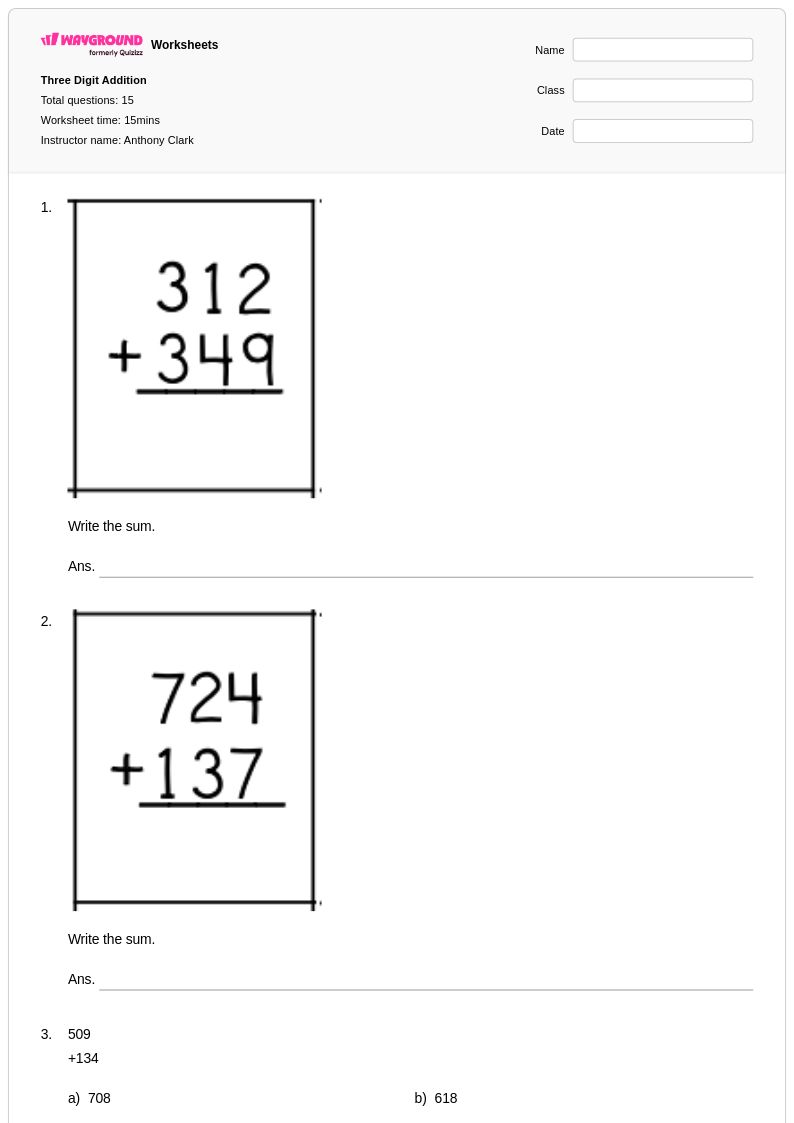
15 Q
3rd - Uni
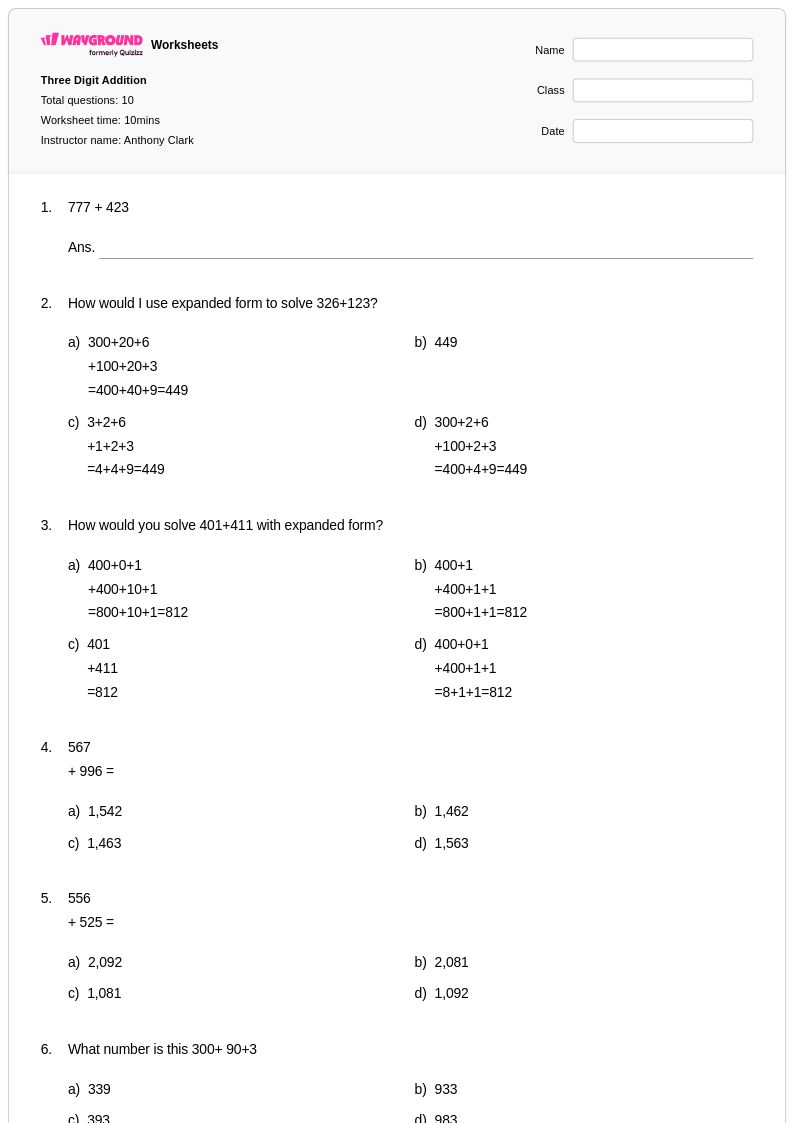
10 Q
3rd - Uni
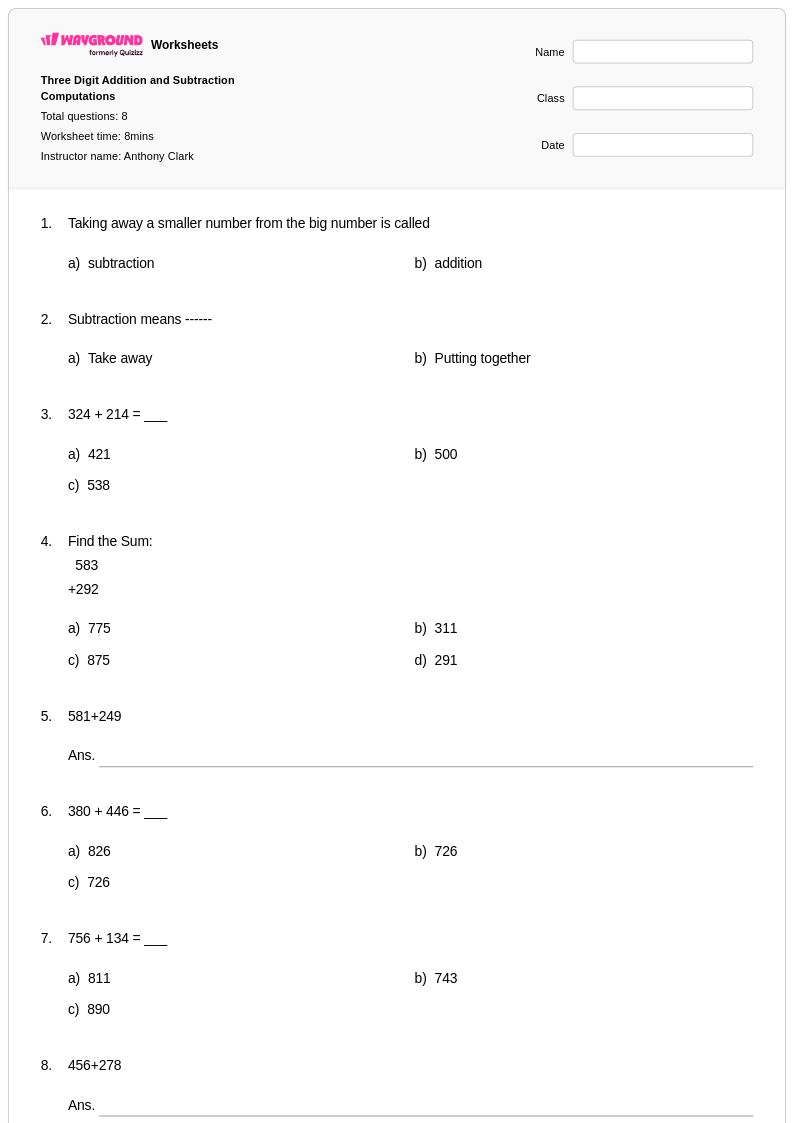
8 Q
2nd - Uni
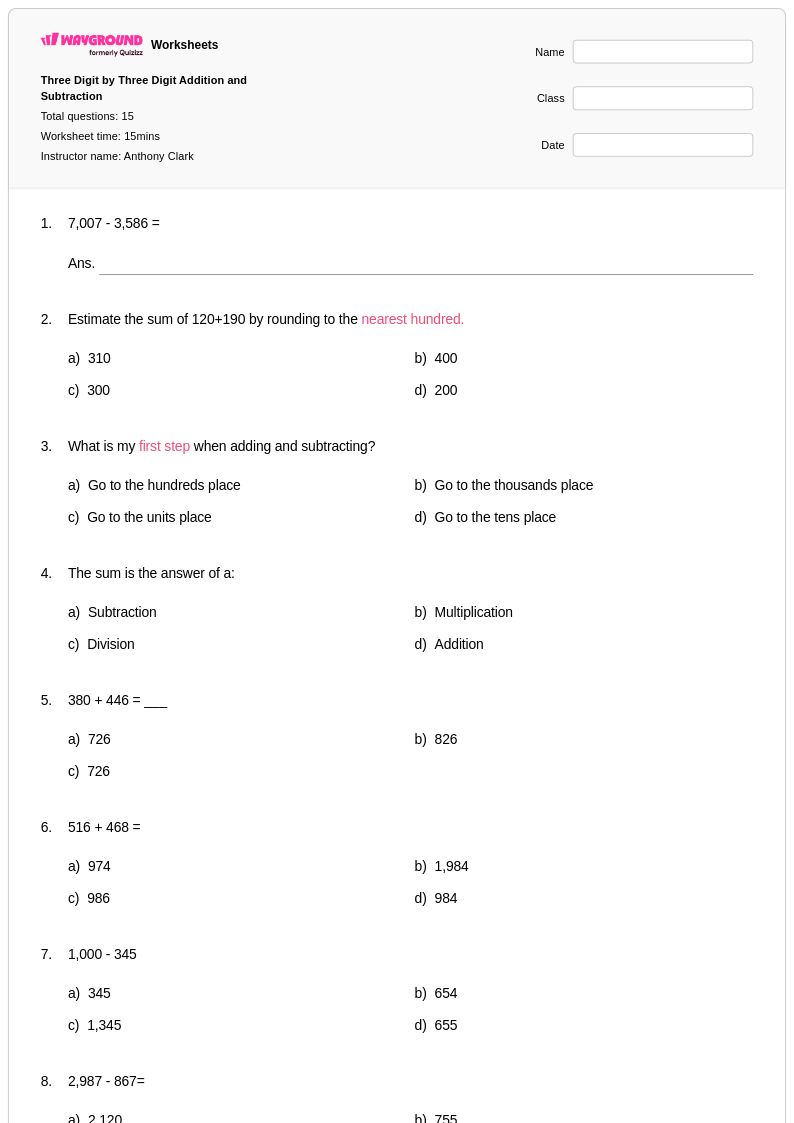
15 Q
5th - Uni
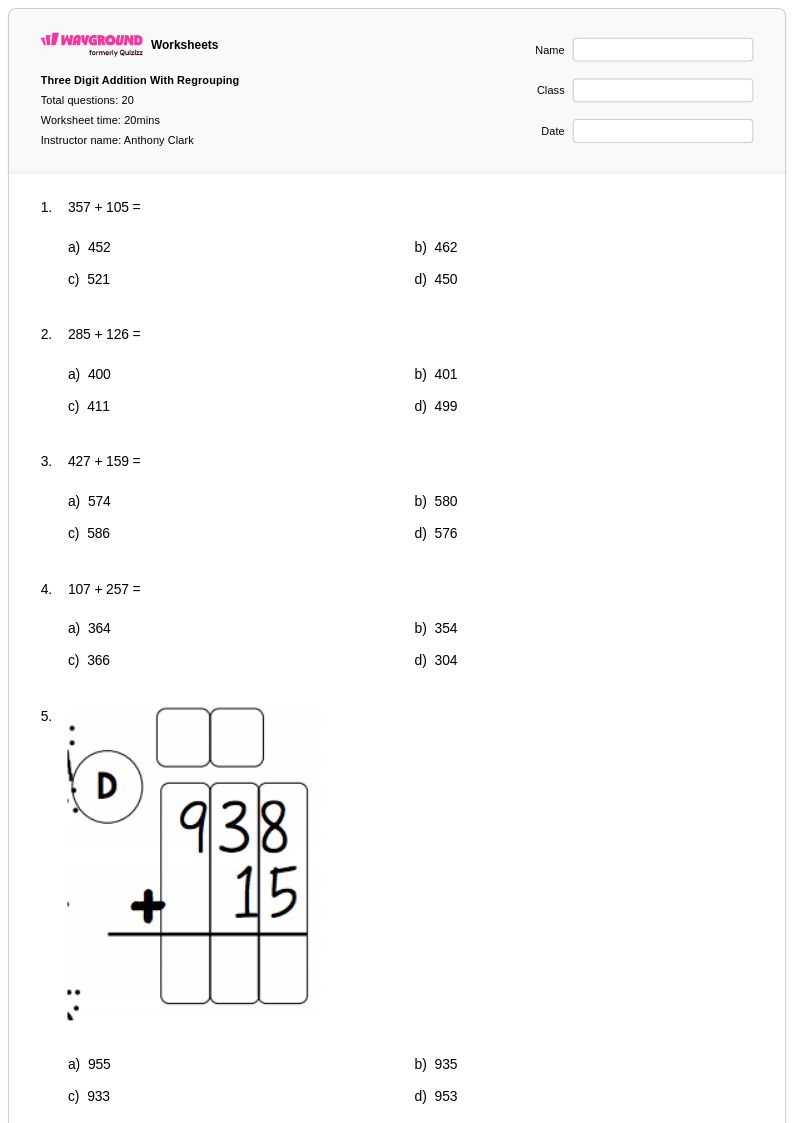
20 Q
2nd - Uni
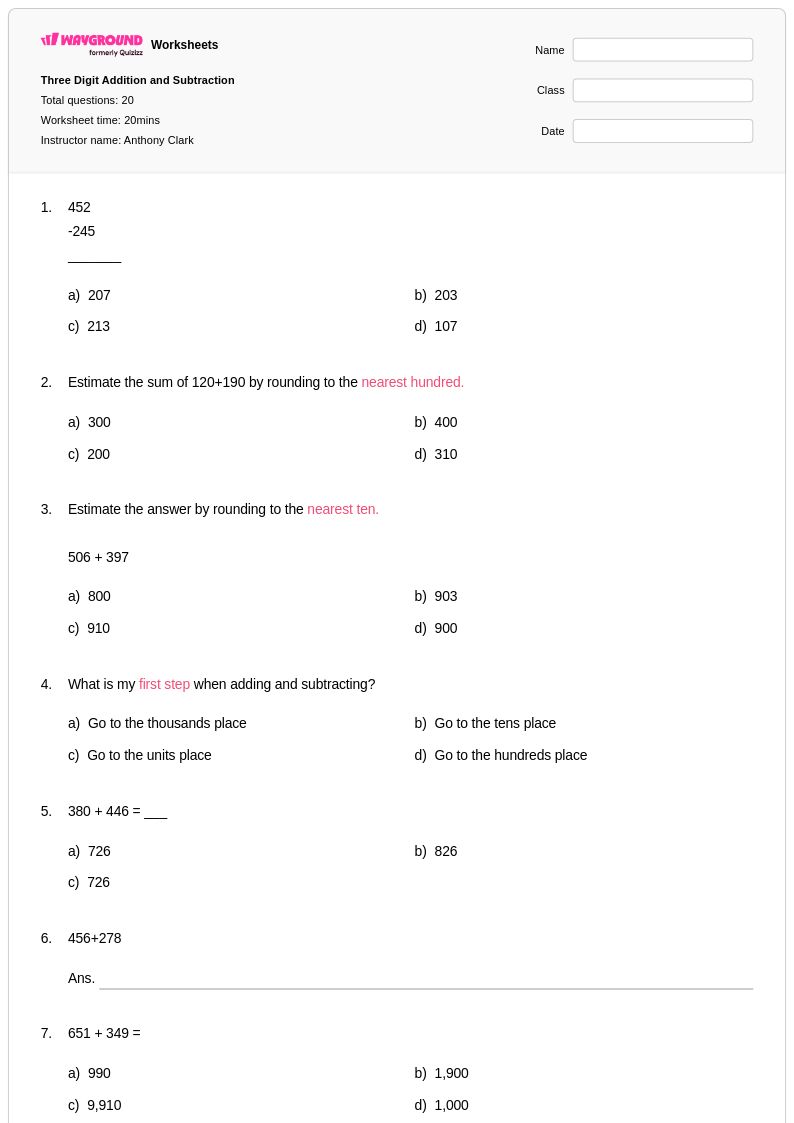
20 Q
4th - Uni
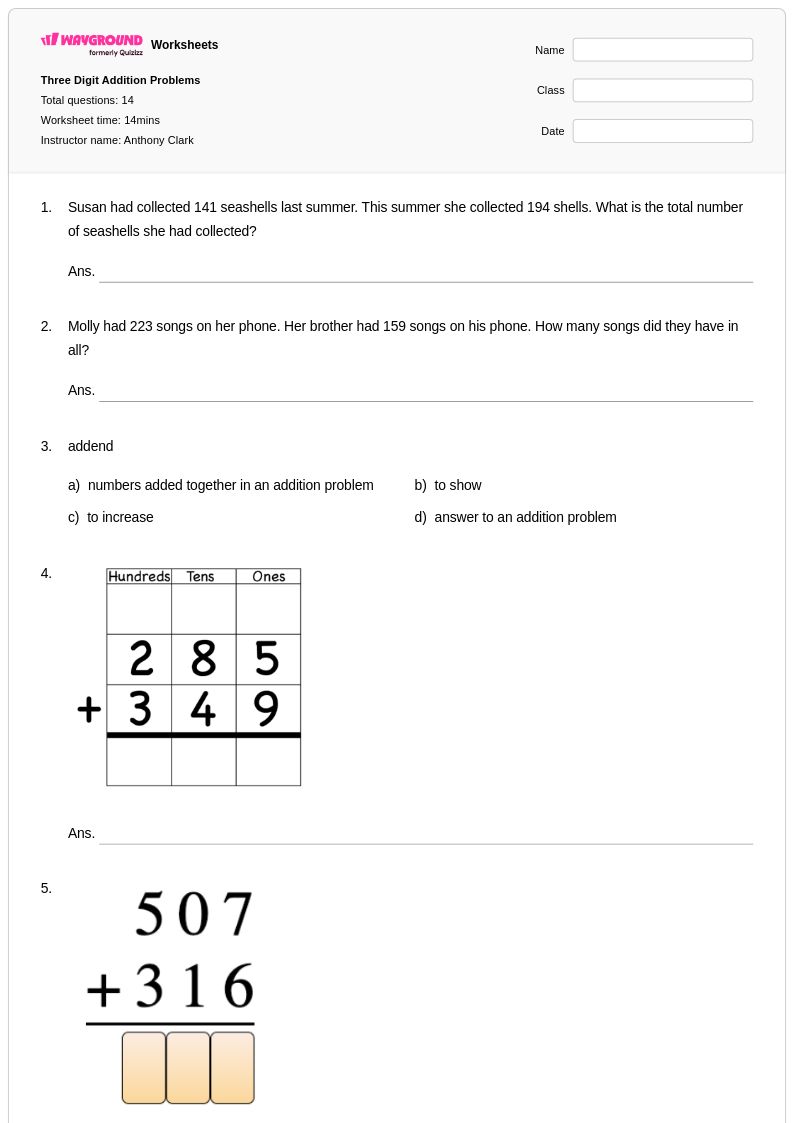
14 Q
2nd - Uni
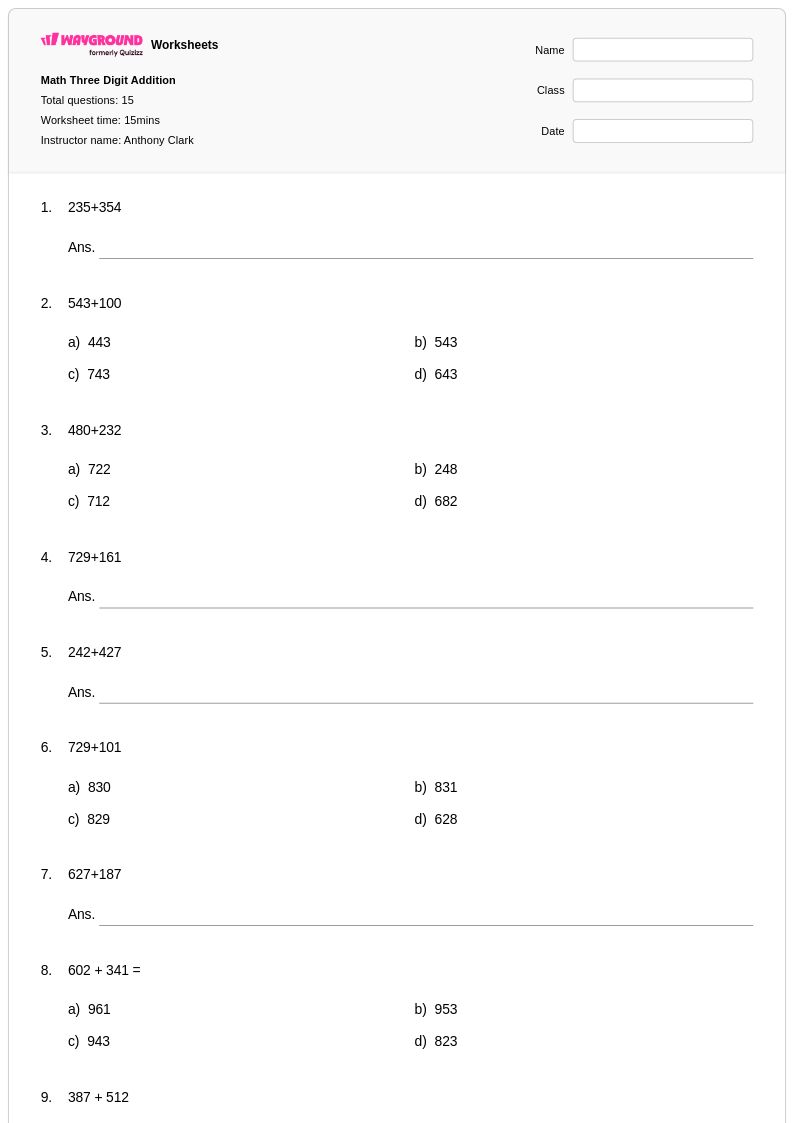
15 Q
2nd - Uni
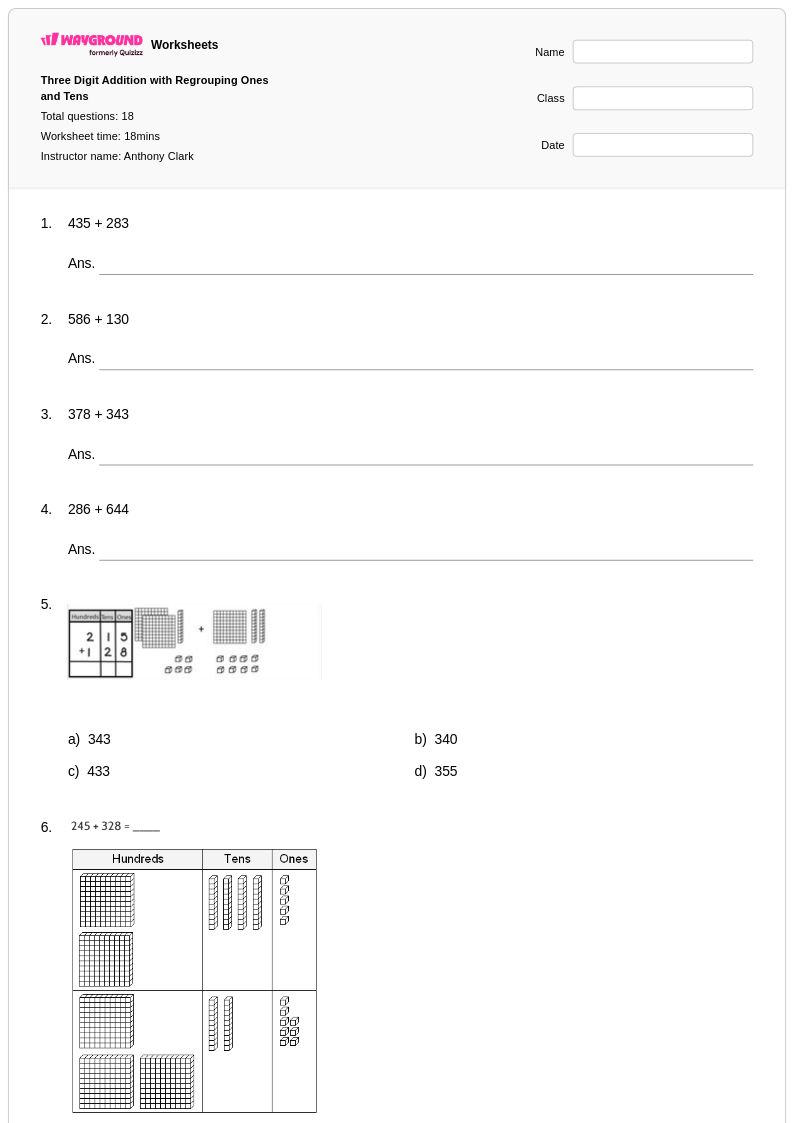
18 Q
2nd - Uni
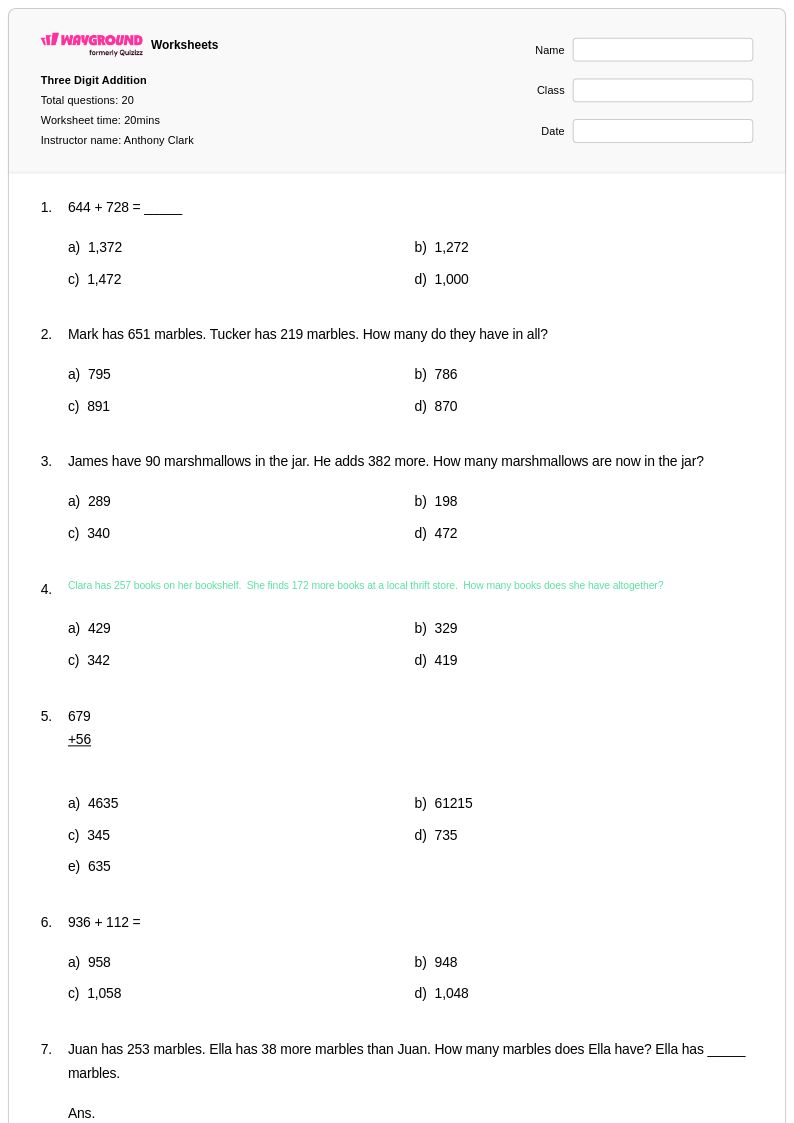
20 Q
2nd - Uni
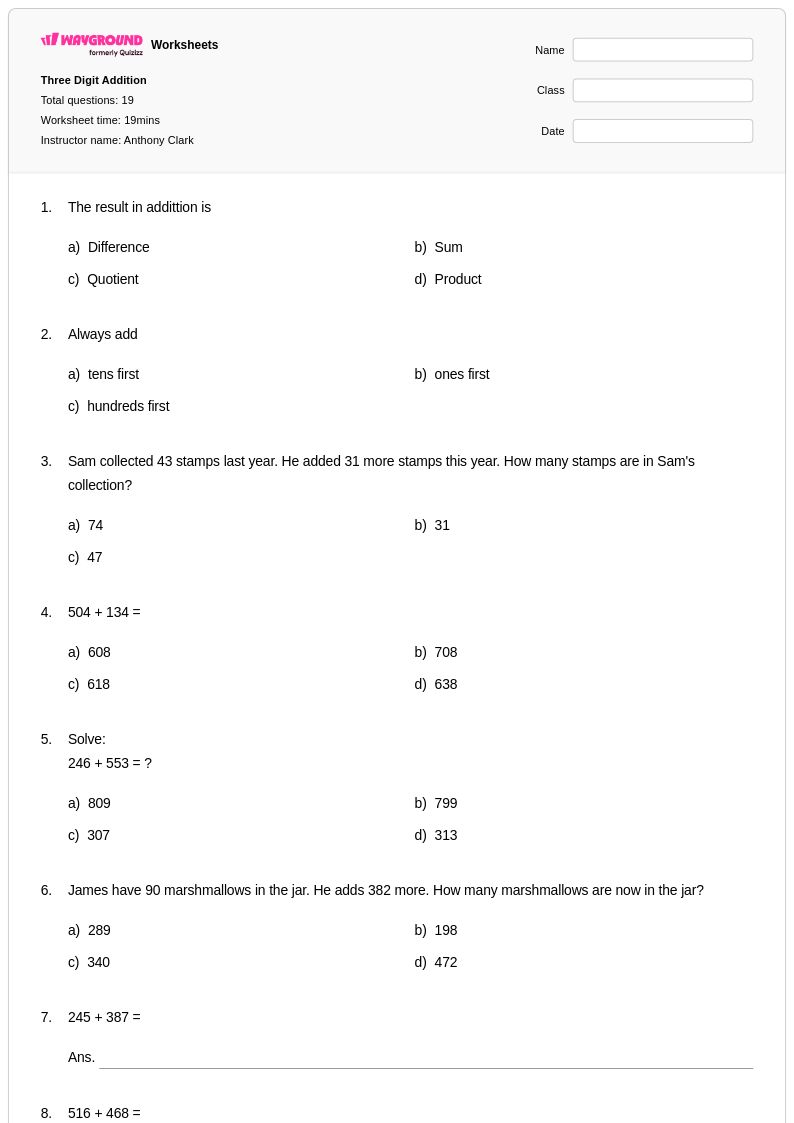
19 Q
3rd - Uni
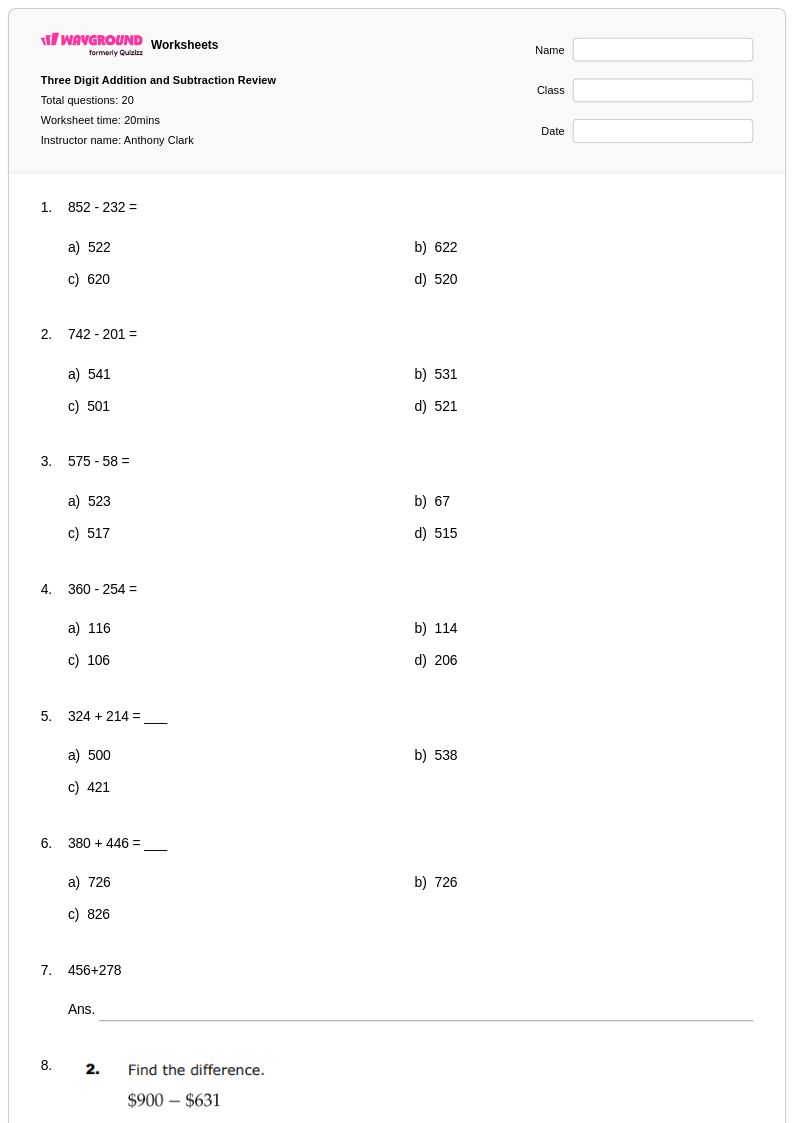
20 Q
3rd - Uni
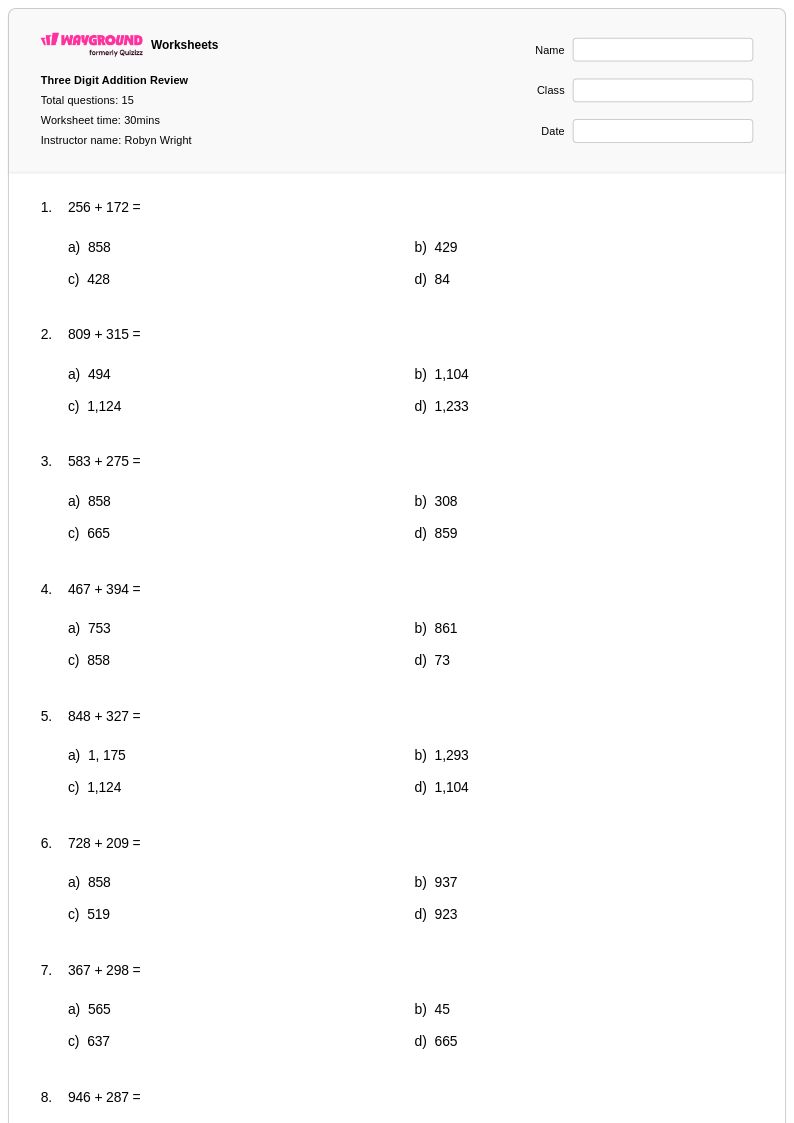
15 Q
5th - 6th
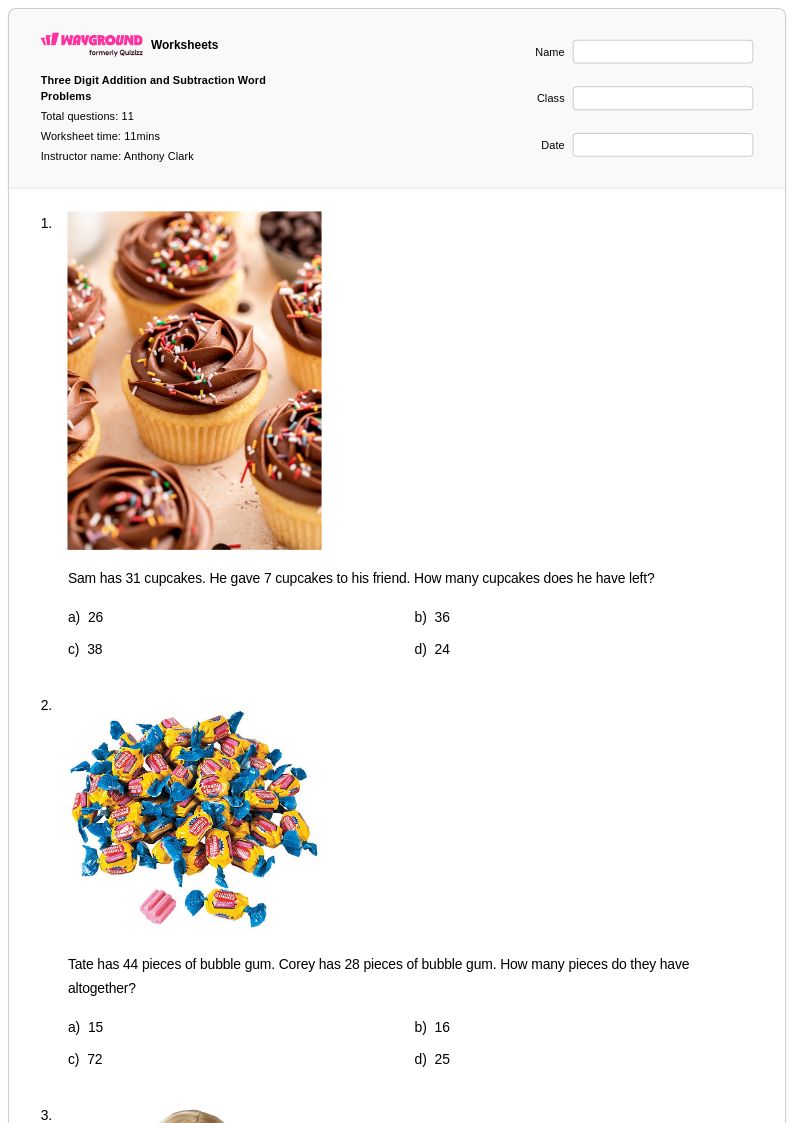
11 Q
4th - Uni
Explore Other Subject Worksheets for grade 6
Explore printable Three-digit Addition worksheets for Grade 6
Three-digit addition worksheets for Grade 6 students through Wayground (formerly Quizizz) provide comprehensive practice opportunities that strengthen foundational arithmetic skills essential for advanced mathematical concepts. These carefully designed resources focus on building computational fluency with three-digit numbers, helping students master regrouping techniques, place value understanding, and mental math strategies. The worksheets include varied practice problems that challenge students to add numbers ranging from 100 to 999, incorporating both vertical and horizontal formats to develop versatility in problem-solving approaches. Each printable resource comes complete with answer keys, making them valuable tools for independent practice, homework assignments, and assessment preparation. Available as free pdf downloads, these materials support systematic skill development while reinforcing the algorithmic thinking required for multi-digit operations.
Wayground (formerly Quizizz) empowers educators with access to millions of teacher-created three-digit addition resources that streamline lesson planning and differentiated instruction. The platform's robust search and filtering capabilities allow teachers to quickly locate worksheets aligned with specific standards and learning objectives, while customization tools enable modification of difficulty levels and problem types to meet diverse student needs. These versatile materials are available in both printable and digital formats, including downloadable pdfs, providing flexibility for classroom instruction, remote learning, and homework assignments. Teachers can effectively use these resources for targeted remediation with struggling learners, enrichment activities for advanced students, and regular skill practice to maintain computational proficiency. The comprehensive collection supports data-driven instruction by offering varied assessment options that help educators monitor student progress and identify areas requiring additional support.