
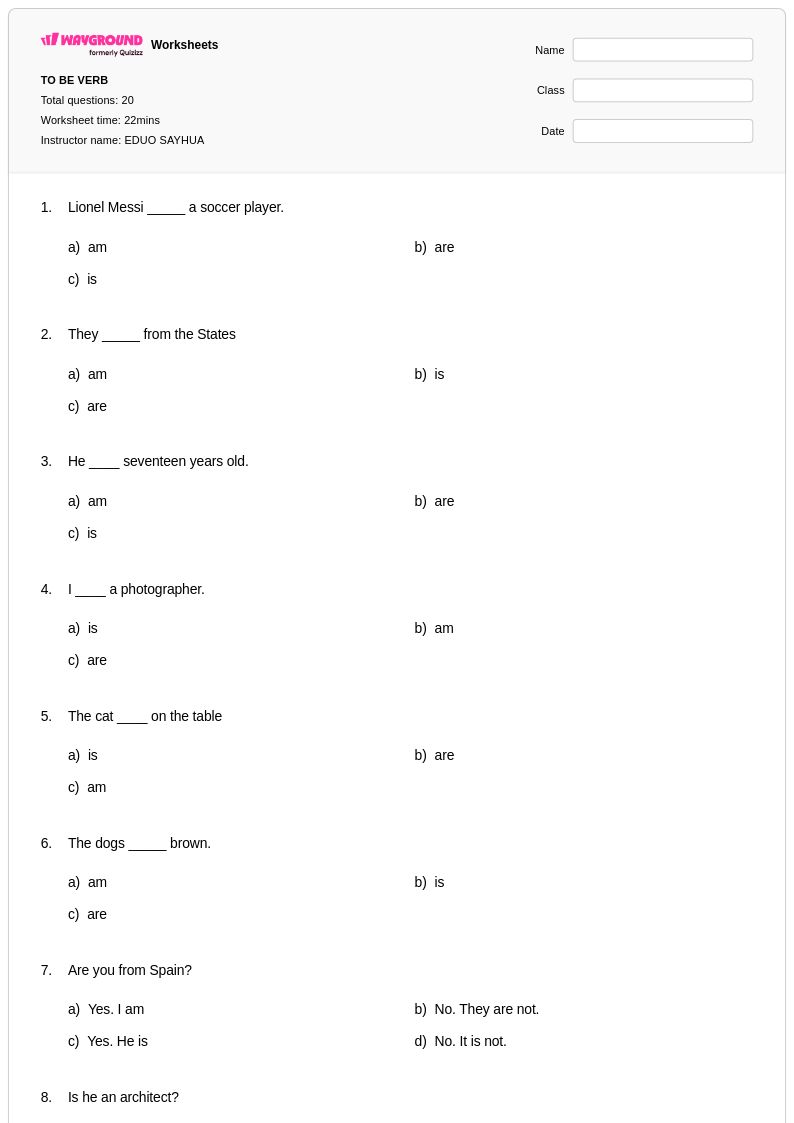
20 Q
1st - 2nd
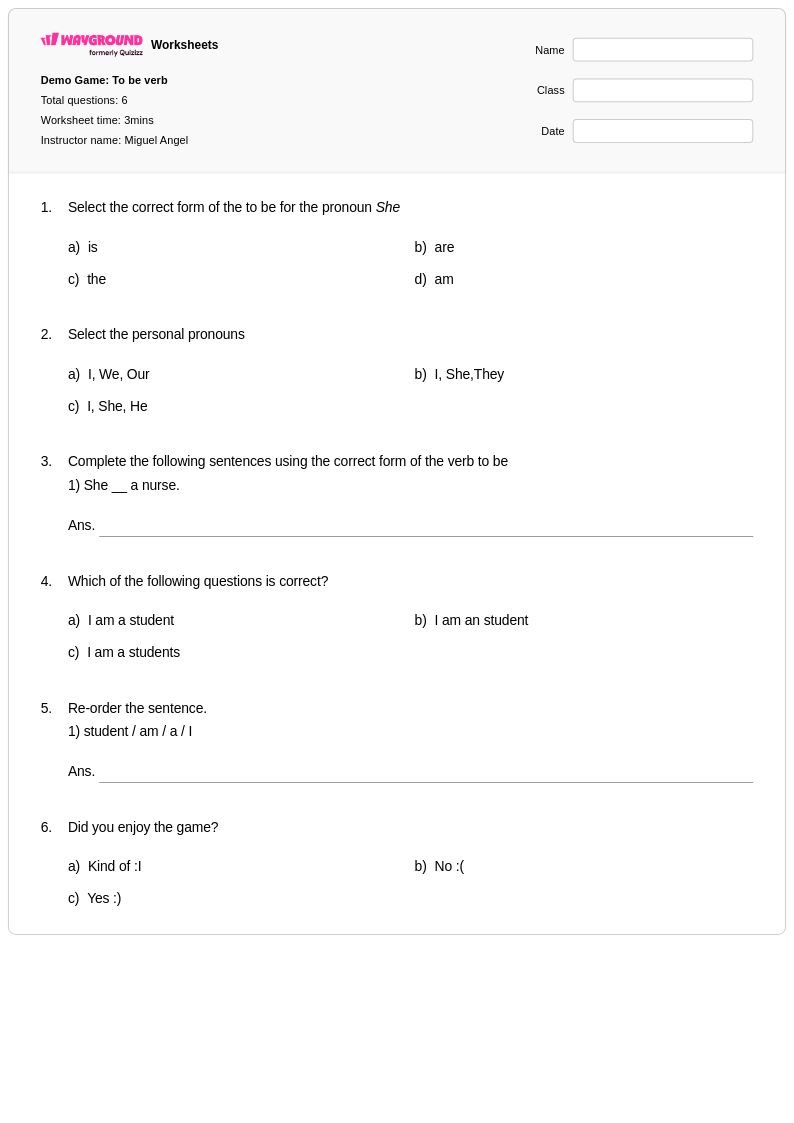
6 Q
1st - 3rd
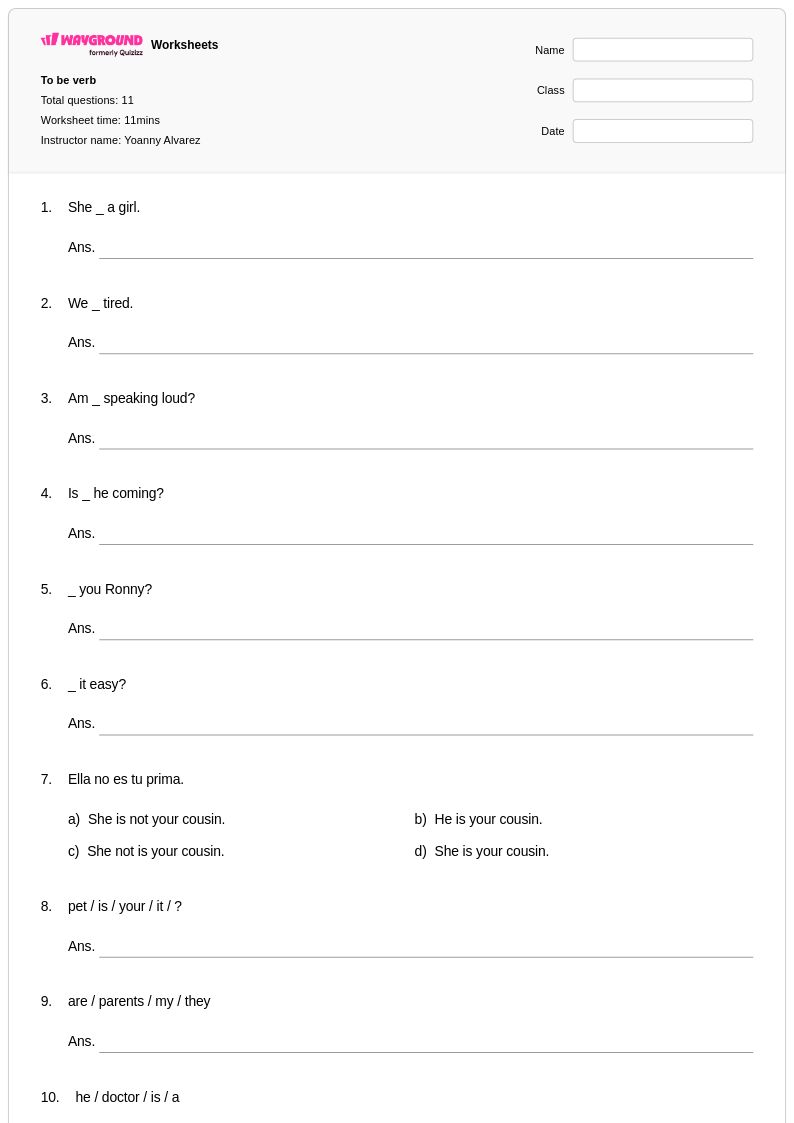
11 Q
1st - Uni
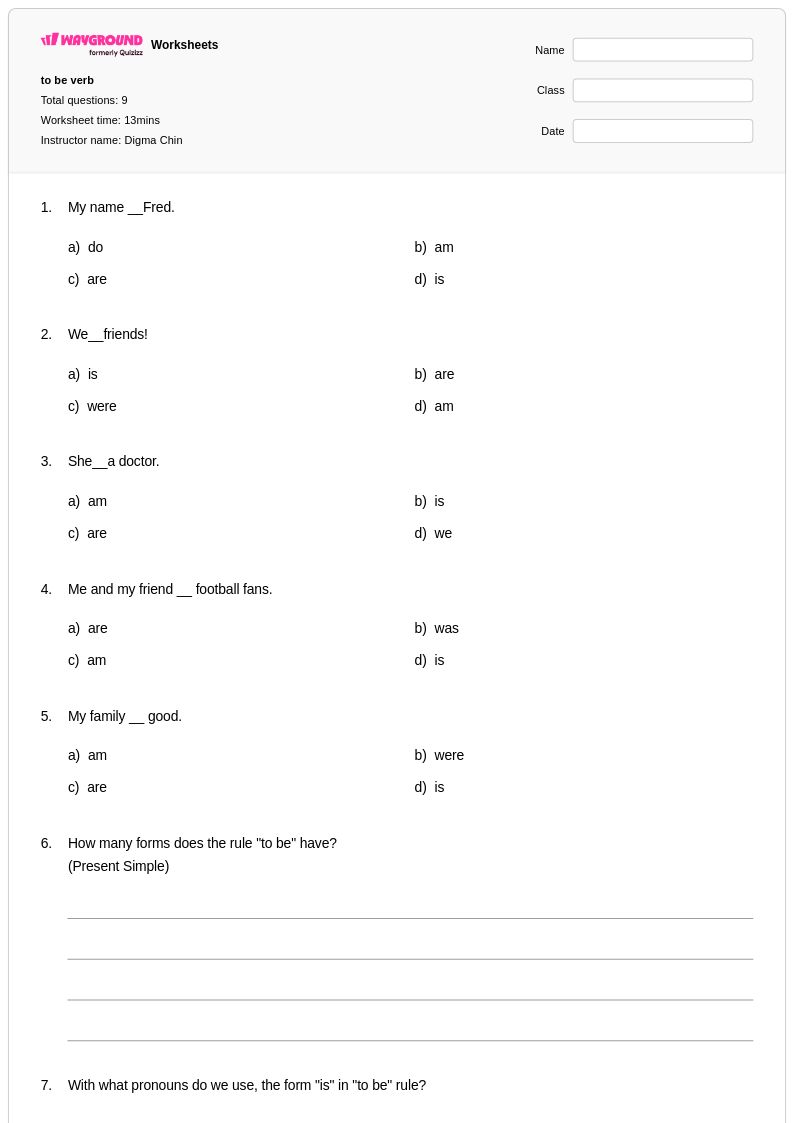
9 Q
2nd
11 Q
2nd - 4th
63 Q
1st - 5th
10 Q
1st - 10th
20 Q
1st - Uni
7 Q
2nd - 5th
10 Q
2nd
5 Q
2nd
15 Q
1st - 5th
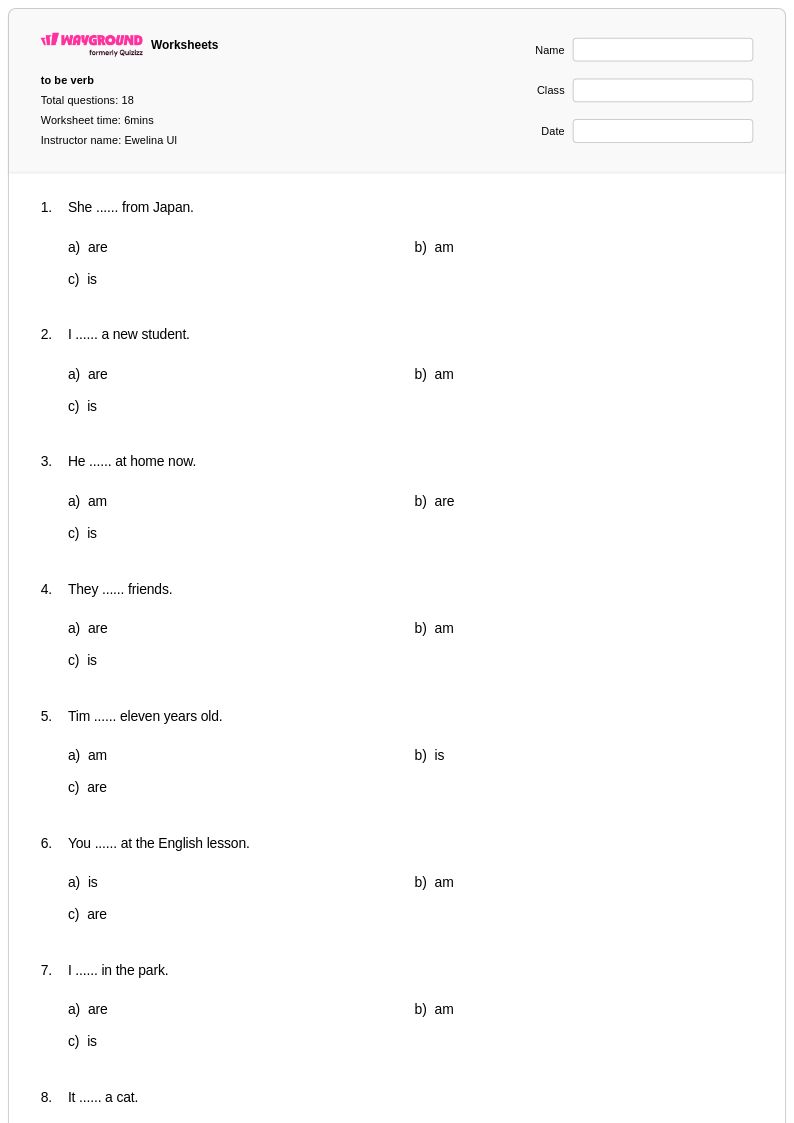
18 Q
2nd - 3rd
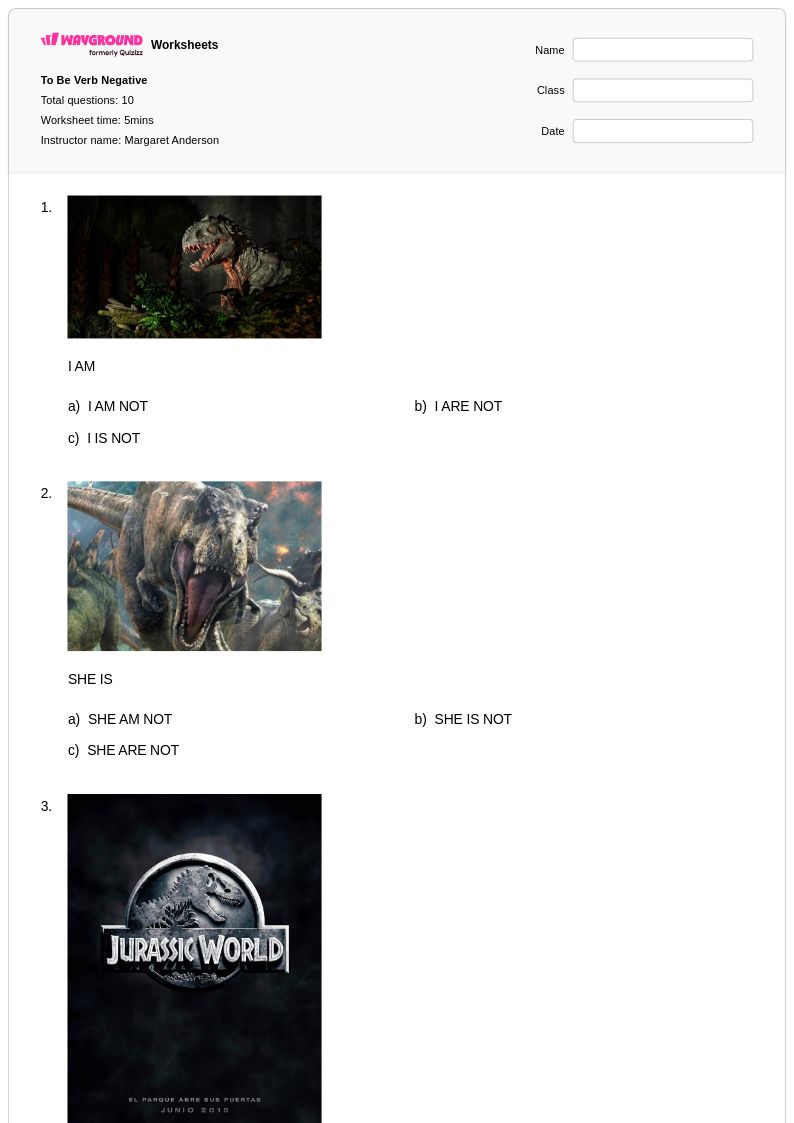
10 Q
2nd
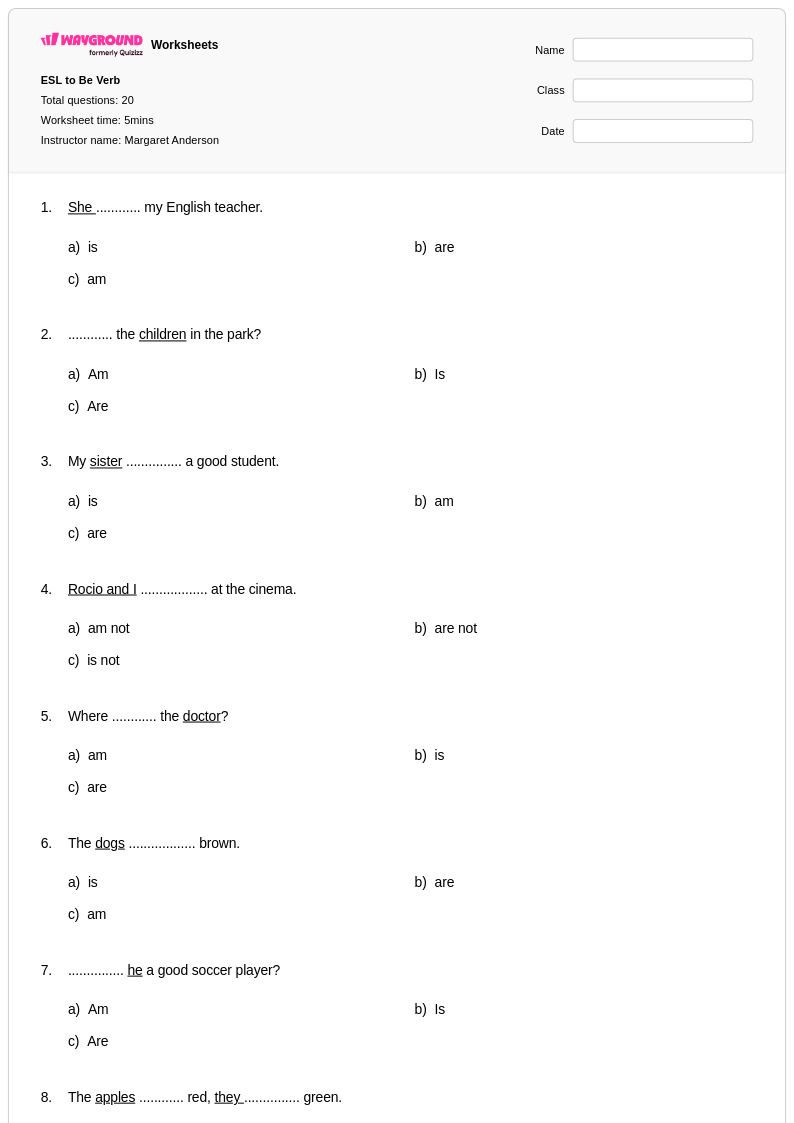
20 Q
1st - 2nd
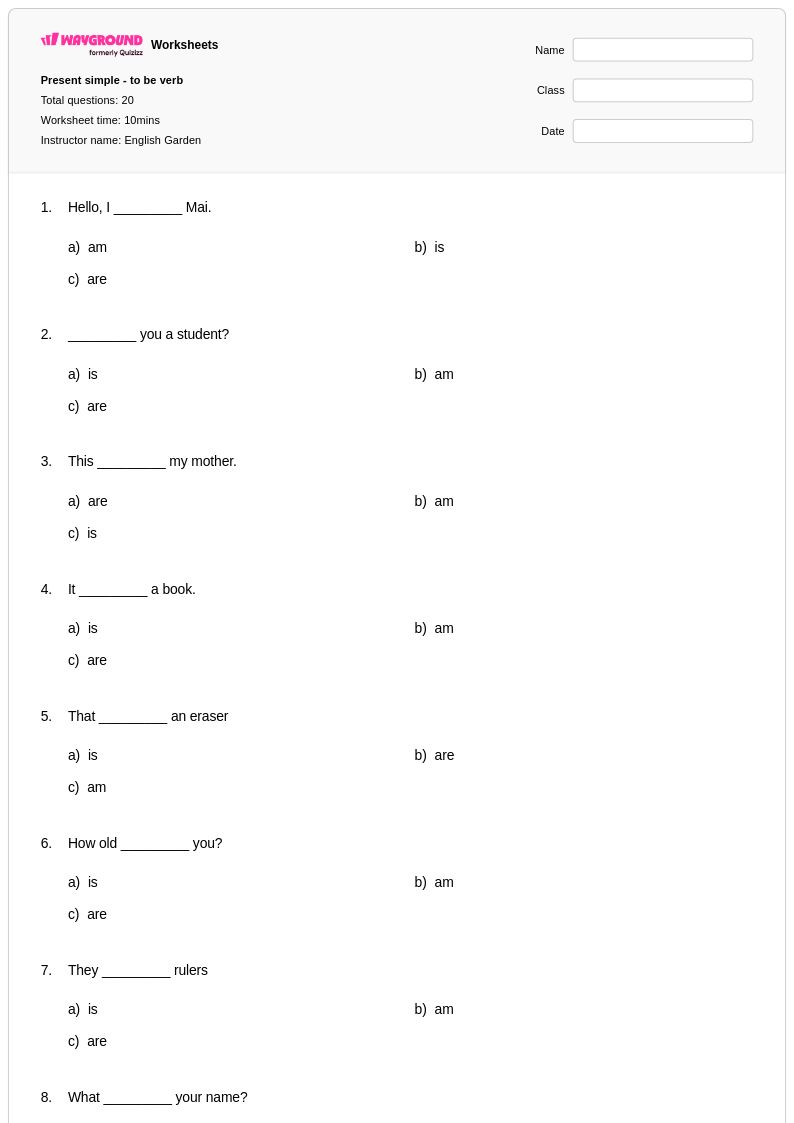
20 Q
1st - 5th
27 Q
1st - 5th
10 Q
1st - 12th
8 Q
2nd
11 Q
1st - 3rd
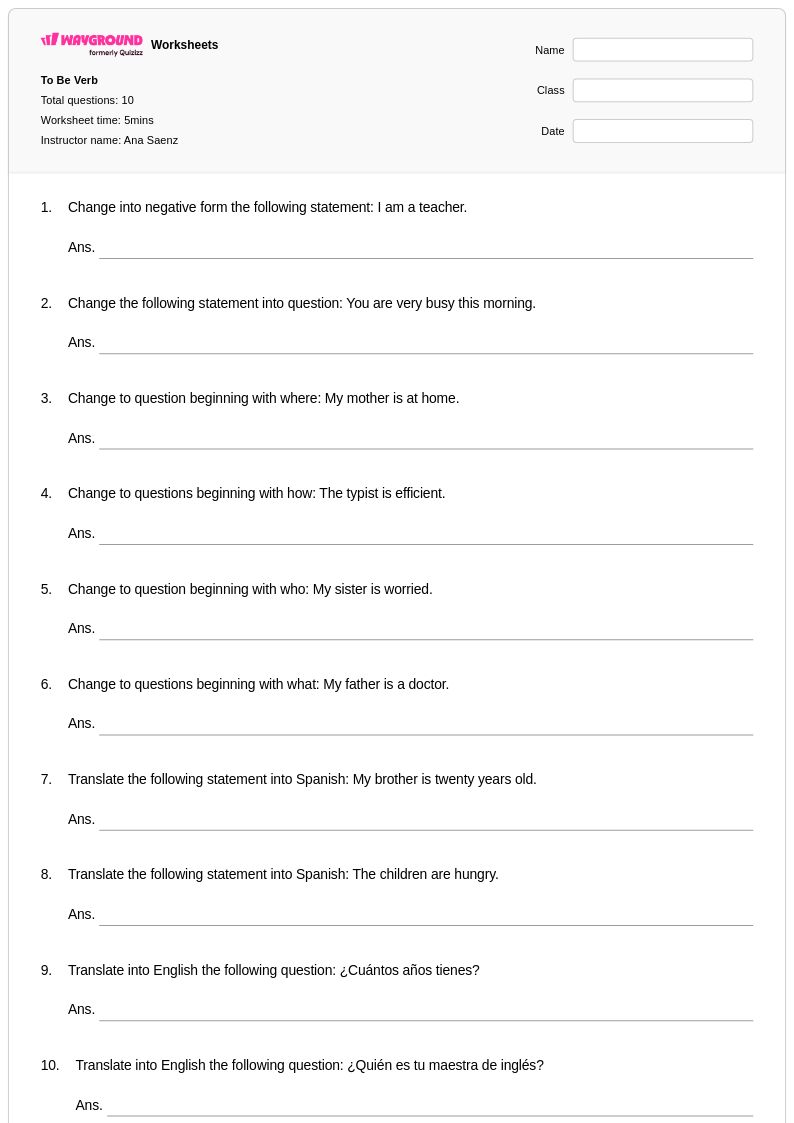
10 Q
1st - 12th
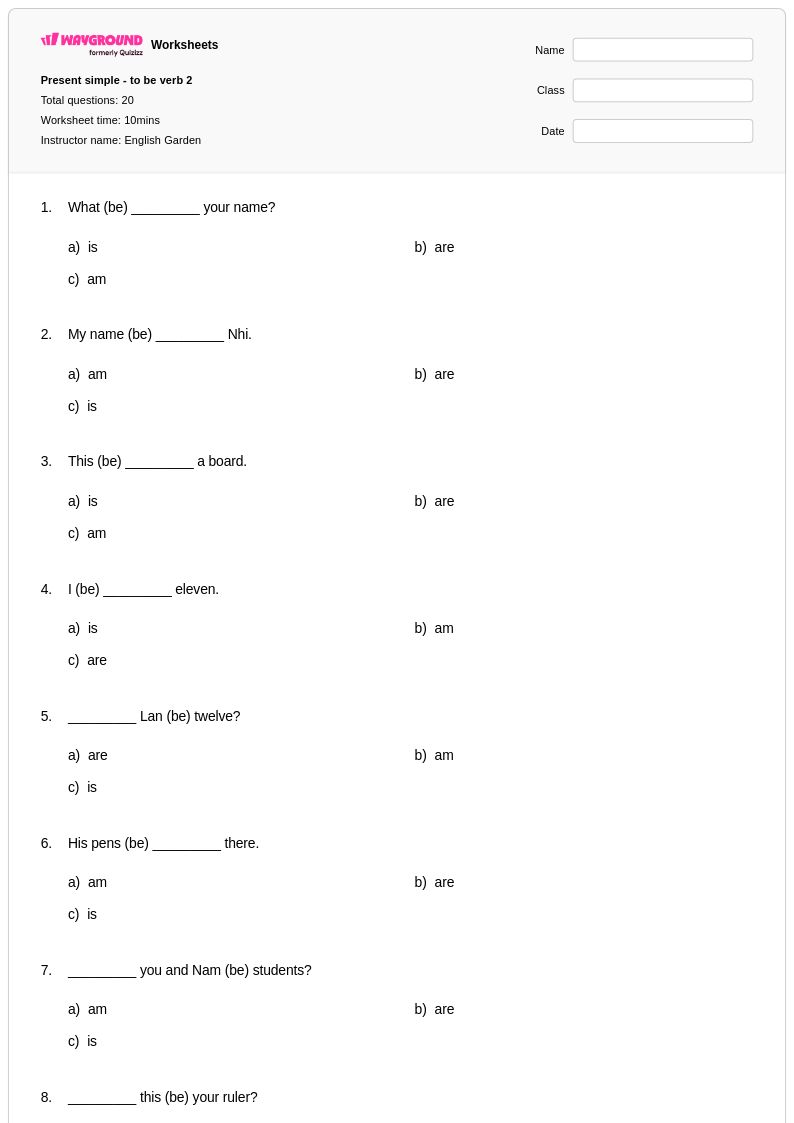
20 Q
1st - 5th
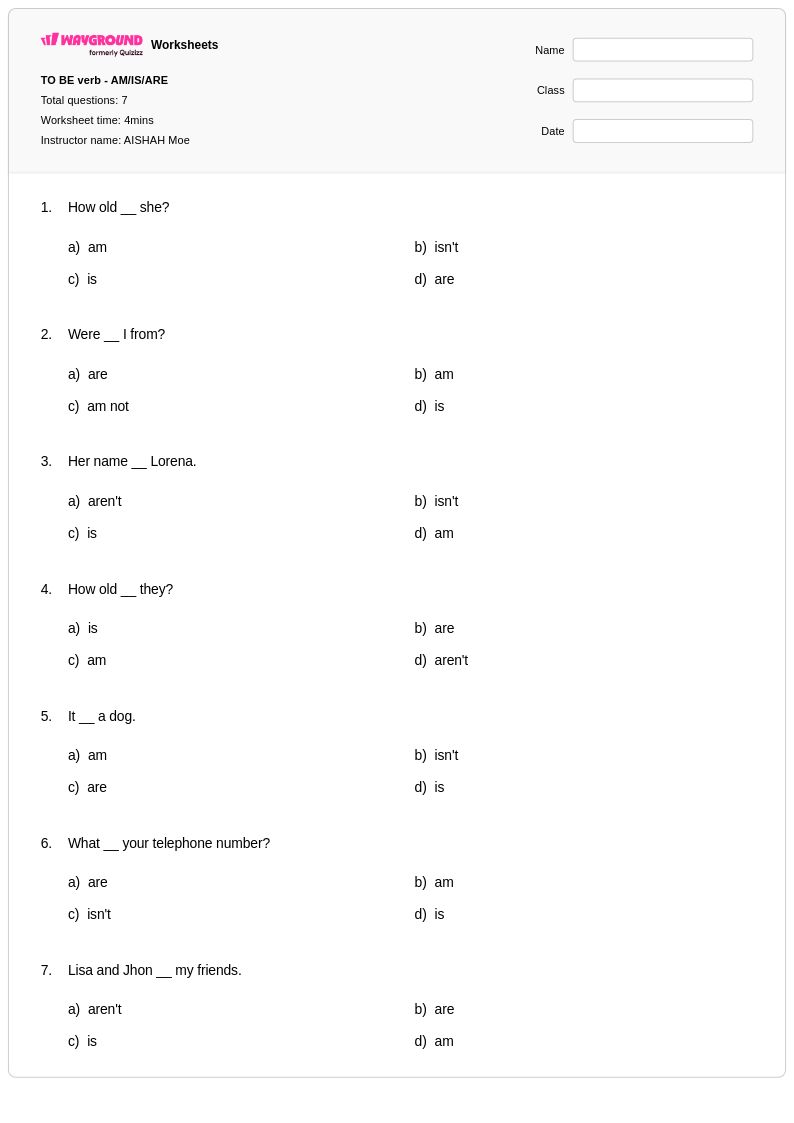
7 Q
1st - 3rd
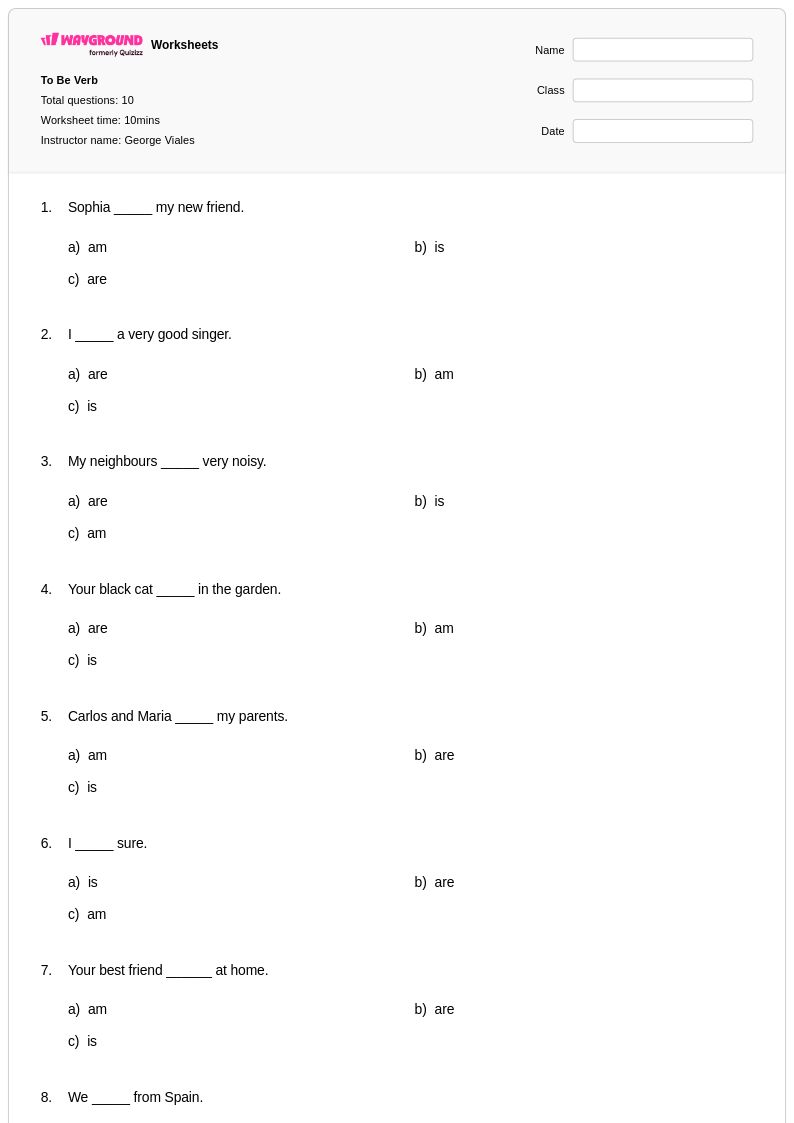
10 Q
2nd
Explore Other Subject Worksheets for grade 2
Explore printable To Be Verb worksheets for Grade 2
To Be verb worksheets for Grade 2 students available through Wayground (formerly Quizizz) provide essential foundation practice for young learners developing their understanding of fundamental English grammar concepts. These comprehensive printables focus specifically on helping second graders master the various forms of the To Be verb including "am," "is," "are," "was," and "were" through engaging practice problems that reinforce proper usage in different sentence contexts. The worksheets strengthen critical language skills by teaching students to identify appropriate verb forms based on subject-verb agreement, recognize singular versus plural applications, and understand present and past tense distinctions. Each free pdf resource includes structured exercises with clear answer keys, enabling both independent practice and guided instruction while building confidence in fundamental grammatical structures that serve as building blocks for more advanced language learning.
Wayground (formerly Quizizz) empowers teachers with an extensive collection of millions of teacher-created To Be verb worksheets specifically designed for Grade 2 instruction, offering robust search and filtering capabilities that allow educators to quickly locate resources aligned with curriculum standards and individual student needs. The platform's differentiation tools enable seamless customization of worksheet difficulty levels, making it simple to provide targeted remediation for struggling learners or enrichment opportunities for advanced students within the same classroom. These versatile resources are available in both printable and digital formats, including downloadable pdf options, giving teachers maximum flexibility for lesson planning whether conducting in-person instruction, remote learning, or hybrid educational environments. The comprehensive worksheet library supports systematic skill practice across various learning scenarios, helping educators efficiently address diverse student needs while maintaining consistent focus on essential To Be verb mastery throughout their Grade 2 English curriculum.
FAQs
How do I teach the to be verb to students who are just starting out with English grammar?
What exercises help students practice conjugating the to be verb correctly?
What mistakes do students commonly make when using the to be verb?
How do I differentiate to be verb practice for students at different ability levels?
How do I use Wayground's to be verb worksheets in my classroom?
How do I assess whether students have mastered the to be verb before moving on?