Free Printable Tooth Structure Worksheets for Grade 10
Explore Wayground's comprehensive collection of Grade 10 tooth structure worksheets, featuring free printables and practice problems with answer keys to help students master dental anatomy and biology concepts.
Explore printable Tooth Structure worksheets for Grade 10
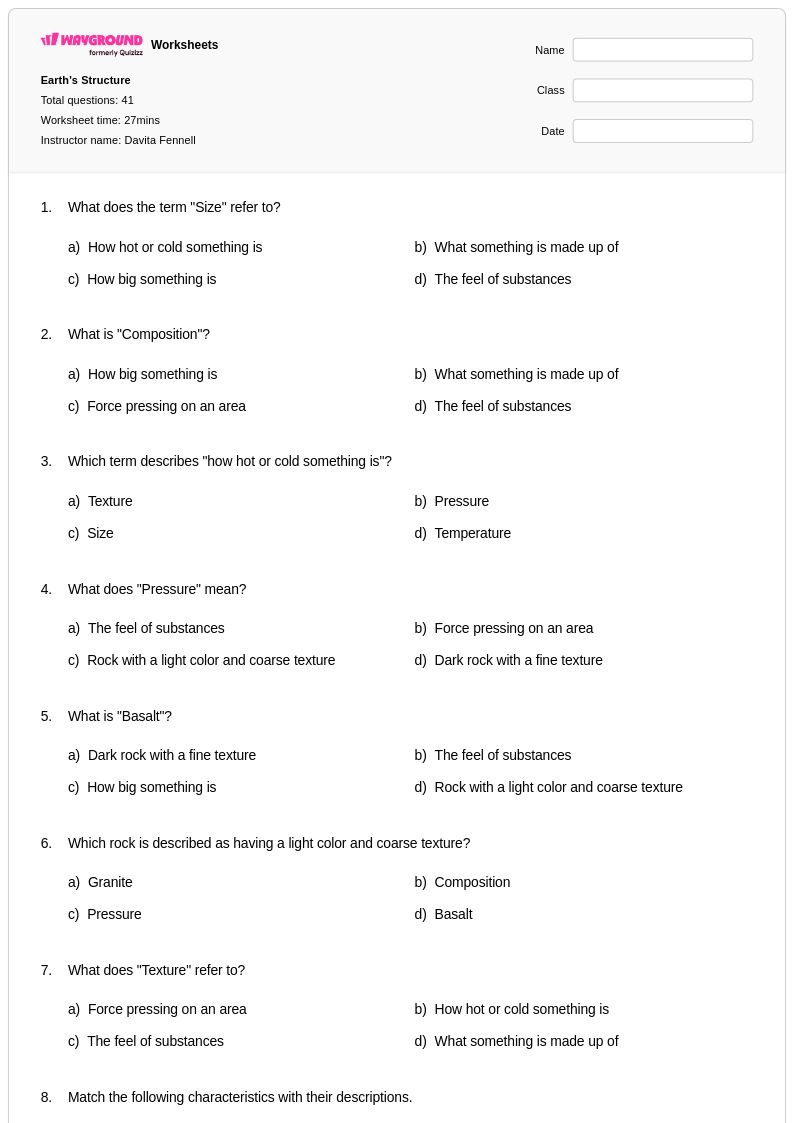
Tooth structure worksheets for Grade 10 students through Wayground (formerly Quizizz) provide comprehensive exploration of dental anatomy and the specialized tissues that comprise human teeth. These educational resources guide students through detailed examination of enamel, dentin, pulp, and cementum, helping them understand the relationship between structure and function in these essential organs of the digestive system. The worksheets strengthen critical thinking skills as students analyze cross-sectional diagrams, identify cellular components, and explore the developmental processes that form permanent teeth. Practice problems challenge learners to apply their knowledge of mineralization, tooth eruption patterns, and the histological differences between various dental tissues, while accompanying answer keys support independent study and self-assessment of their understanding of oral biology concepts.
Wayground (formerly Quizizz) empowers educators with millions of teacher-created resources specifically designed for tooth structure instruction, featuring robust search and filtering capabilities that allow quick identification of materials aligned with Grade 10 biology standards. The platform's differentiation tools enable teachers to customize worksheets for diverse learning needs, providing both printable pdf formats for traditional classroom use and digital versions for interactive learning environments. These comprehensive collections support effective lesson planning by offering varied question types, detailed anatomical illustrations, and scaffolded activities that progress from basic identification tasks to complex analysis of dental pathology and comparative tooth structure across species. Teachers can seamlessly integrate these resources for targeted skill practice, remediation of challenging concepts, and enrichment activities that deepen student understanding of how tooth structure reflects evolutionary adaptations and functional demands.
FAQs
How do I teach tooth structure to students?
Start by introducing the four primary tooth types — incisors, canines, premolars, and molars — and connect each shape to its function in cutting, tearing, and grinding food. From there, move into the internal layers of a tooth: enamel, dentin, pulp, and cementum, explaining how each layer contributes to tooth strength and sensitivity. Using labeled diagrams alongside direct instruction helps students anchor vocabulary to visual structures, making the anatomy more memorable and easier to apply in assessments.
What activities help students practice identifying tooth anatomy?
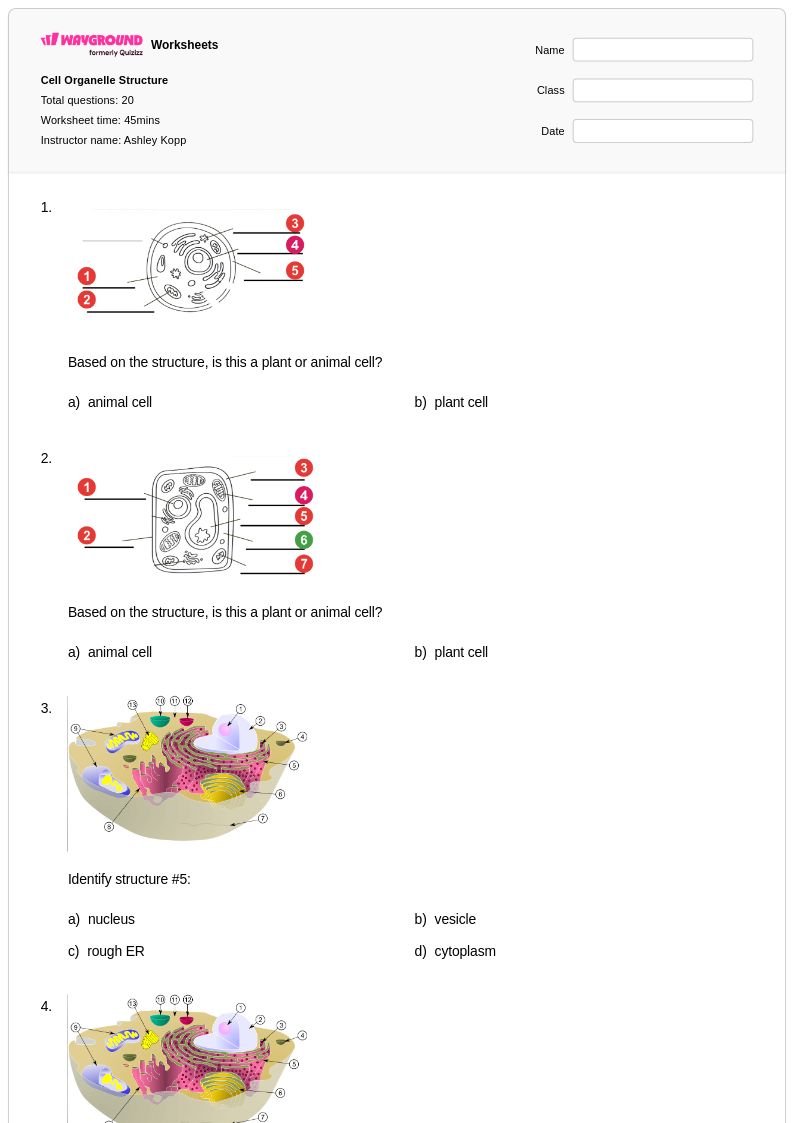
Diagram labeling exercises are among the most effective practice tools for tooth anatomy, requiring students to correctly place terms like enamel, dentin, pulp, and cementum on cross-sectional illustrations. Pairing labeling tasks with short answer questions that ask students to explain the function of each layer deepens comprehension beyond simple recall. Identifying and classifying the four tooth types by shape and location in the dental arch also reinforces the link between structure and function in the digestive process.
What mistakes do students commonly make when learning tooth structure?
A common misconception is that enamel extends throughout the entire tooth — students often confuse enamel with dentin, not realizing enamel only covers the crown while cementum covers the root. Students also frequently conflate the pulp cavity with the root canal, or treat them as unrelated structures rather than understanding the root canal as the channel through which the pulp extends into the root. Asking students to annotate diagrams with brief function notes, rather than just labels, helps surface and correct these errors.
How does tooth structure connect to diet and digestion?
Tooth structure is directly tied to dietary function — incisors are shaped for biting and cutting, canines for gripping and tearing, and premolars and molars for crushing and grinding. This structural variation is also a useful entry point for discussing dietary adaptations across species, comparing herbivore, carnivore, and omnivore dentition. Connecting tooth anatomy to its role in mechanical digestion gives students a meaningful biological context and reinforces cross-cutting concepts in life science.
How do I use Wayground's tooth structure worksheets in my classroom?
Wayground's tooth structure worksheets are available as printable PDFs for traditional classroom use and in digital formats for technology-integrated environments, including the option to host them as a quiz directly on Wayground. Each worksheet includes a complete answer key, supporting independent student practice, self-assessment, and efficient teacher review. For students who need additional support, Wayground allows teachers to enable accommodations such as Read Aloud, extended time, or reduced answer choices on an individual basis without disrupting the rest of the class.
How can I differentiate tooth structure worksheets for students at different levels?
For foundational learners, start with basic diagram labeling of the four tooth types before introducing internal anatomy layers. Advanced students can be challenged with analytical questions that ask them to connect enamel hardness, pulp sensitivity, or root depth to real-world scenarios like diet, decay, or dental trauma. On Wayground, teachers can apply student-level accommodations — including reduced answer choices and adjustable reading modes — so each student engages with the material at an appropriate level without requiring separate worksheet sets.