Free Printable Transition Sentences Worksheets for Grade 6
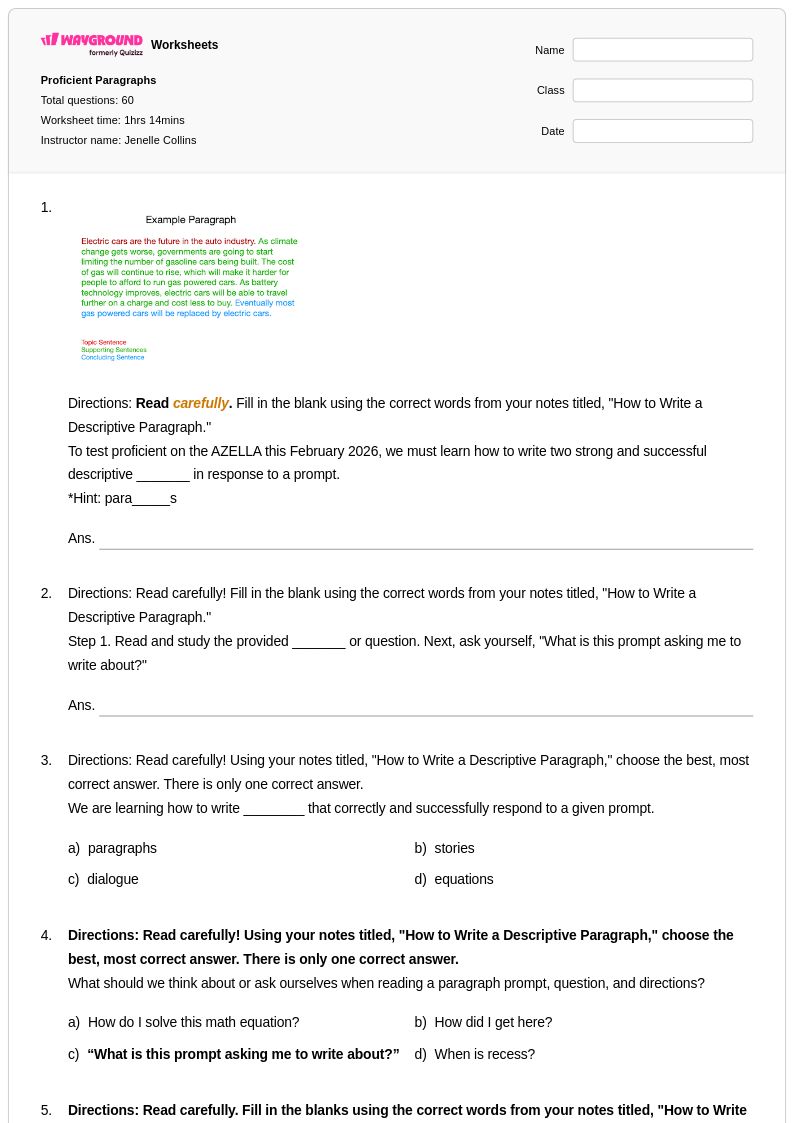
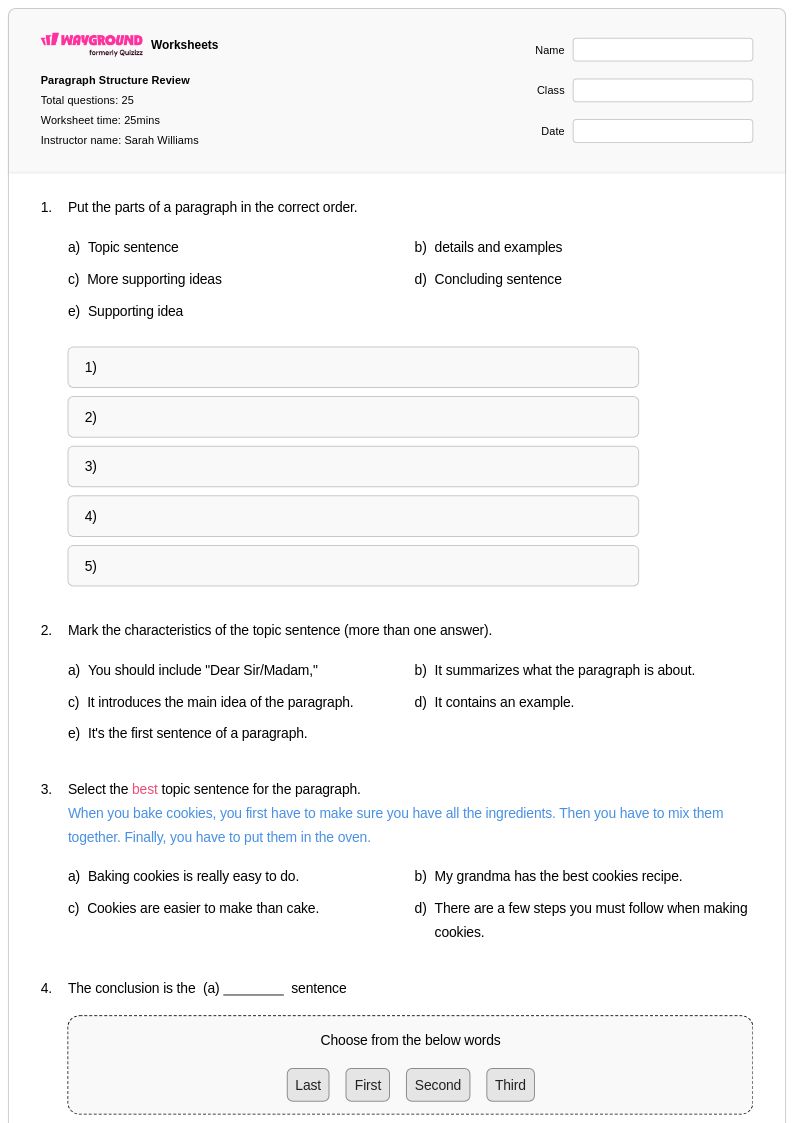
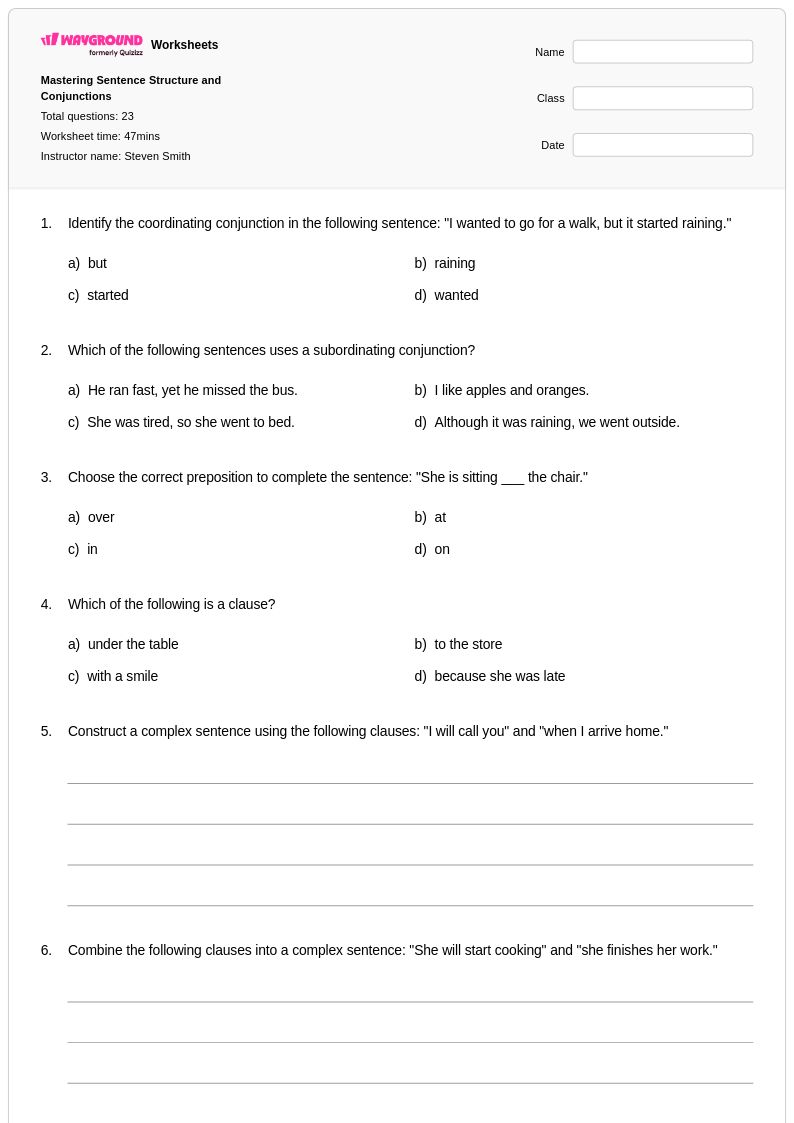
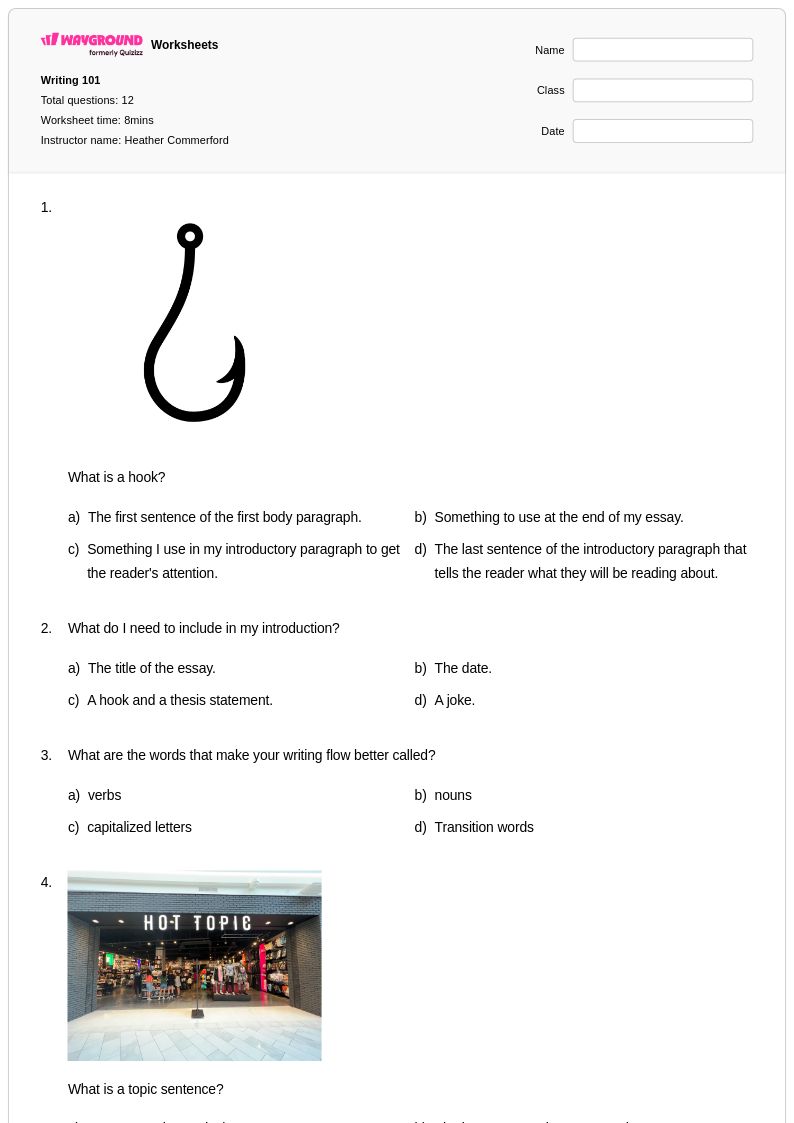
Grade 6 transition sentences worksheets from Wayground help students master smooth connections between ideas through engaging printables, practice problems, and comprehensive answer keys for improved writing organization.
Explore printable Transition Sentences worksheets for Grade 6
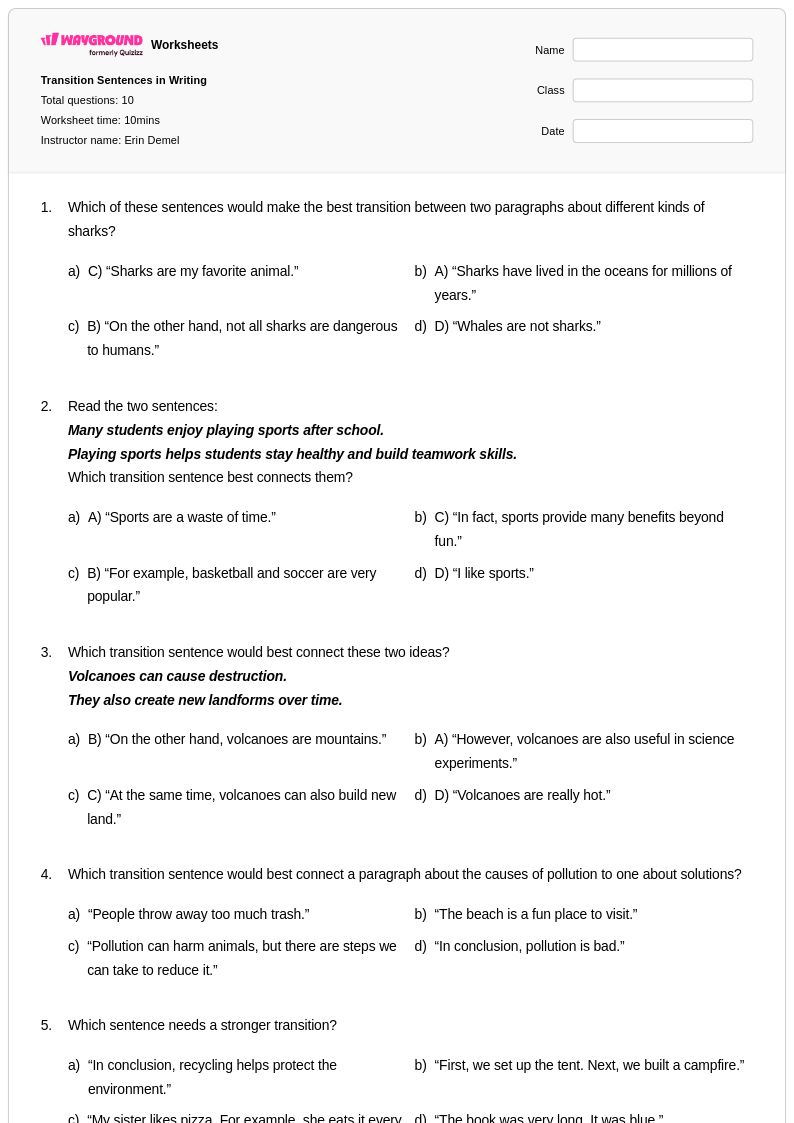
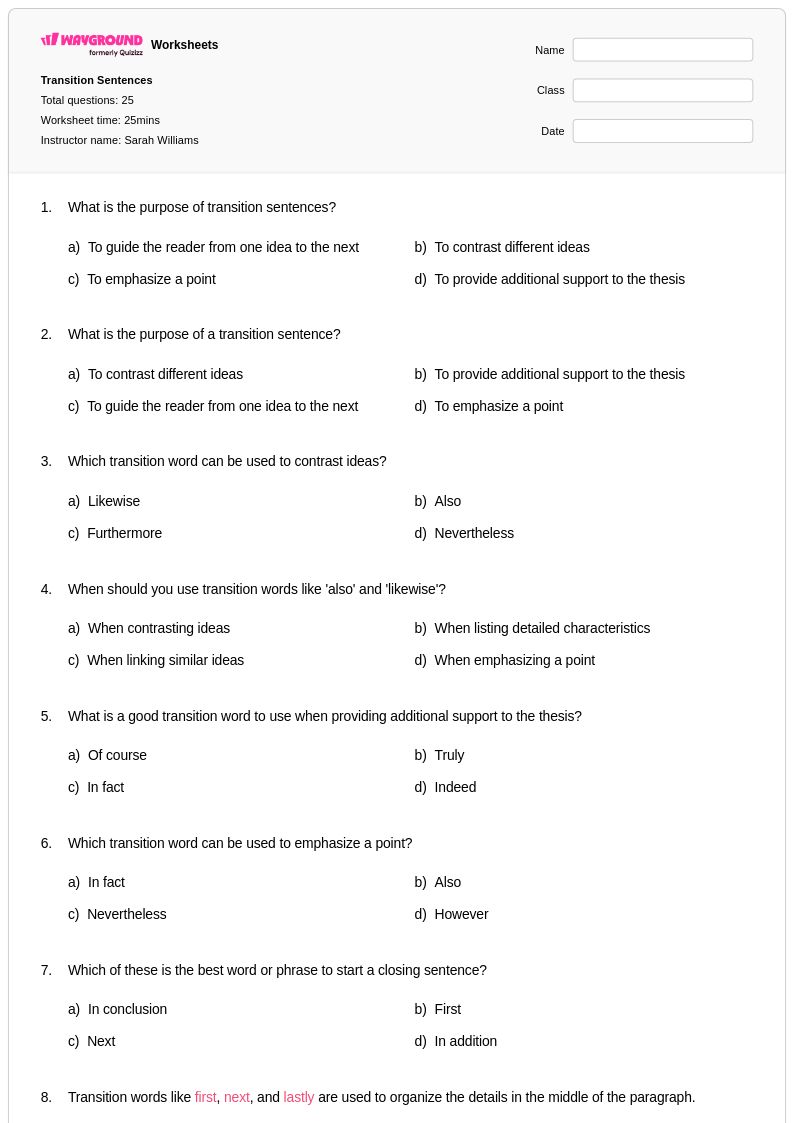
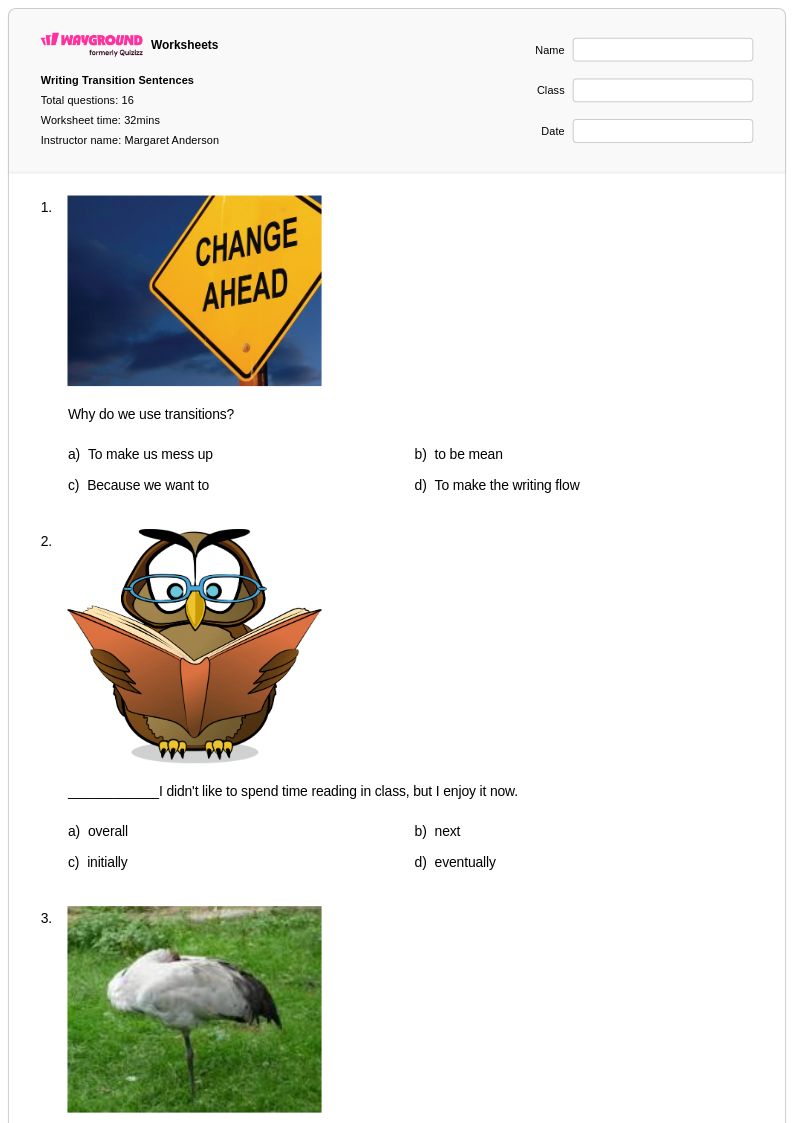
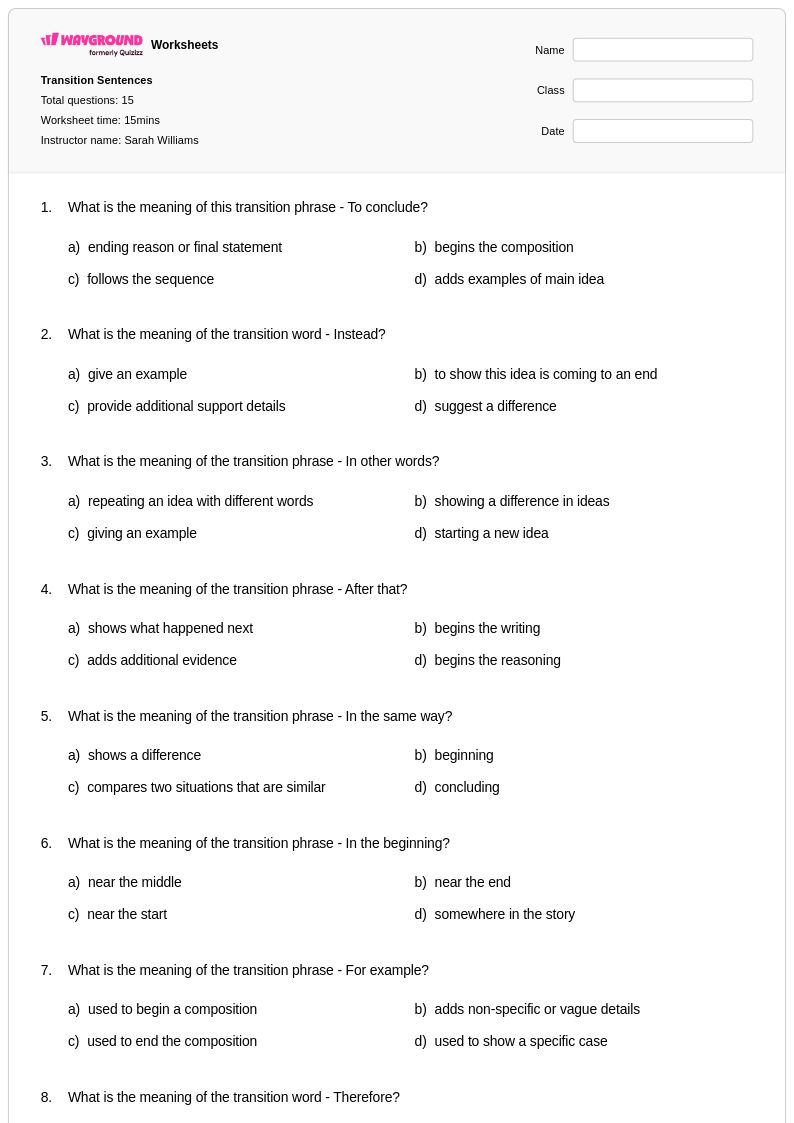
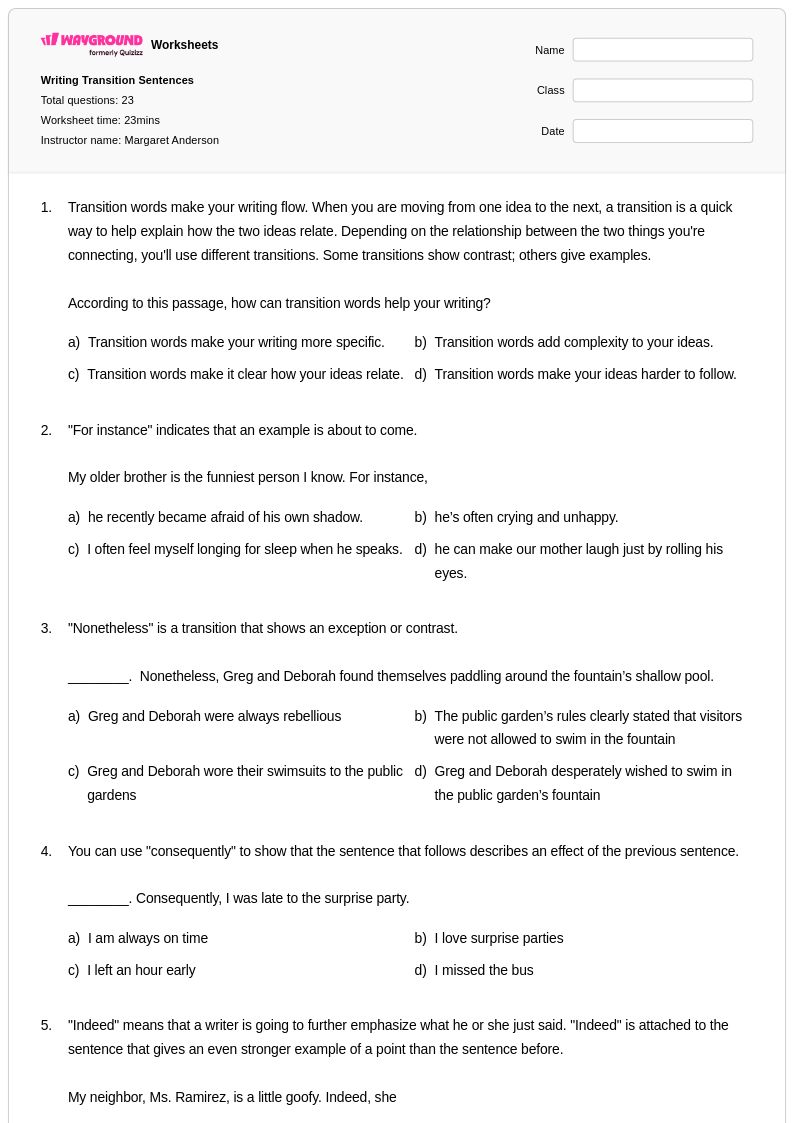
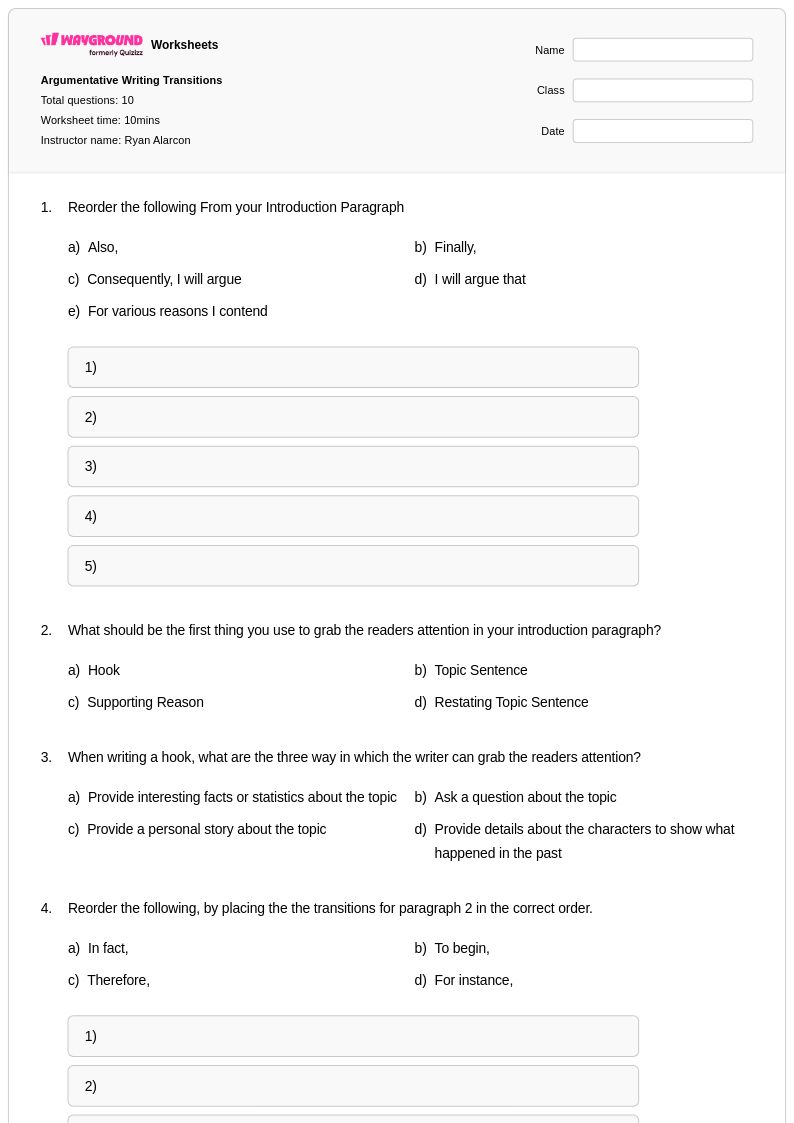
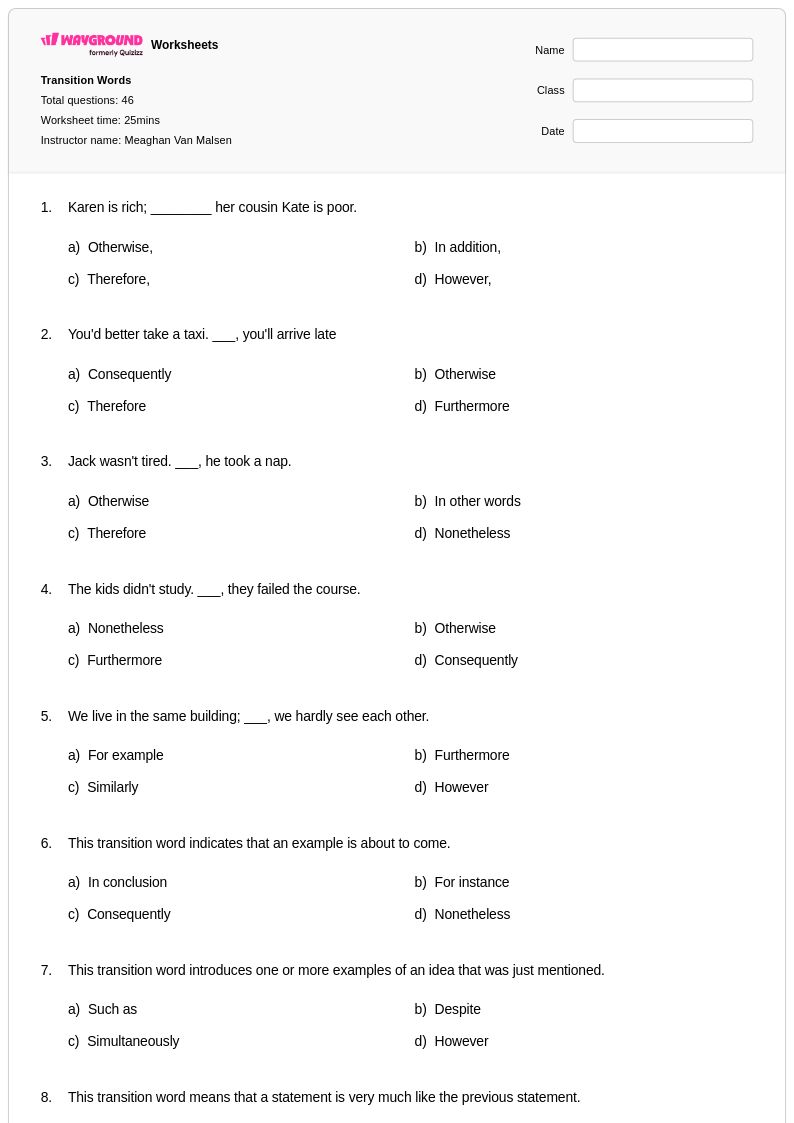
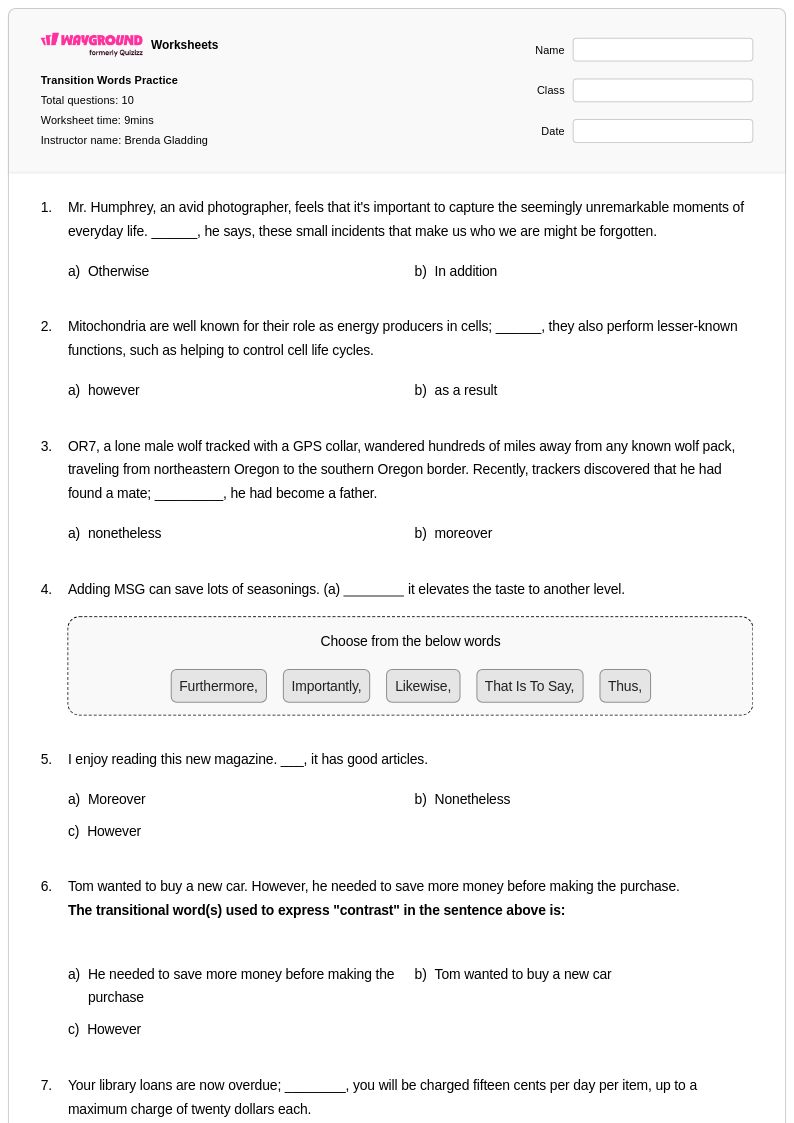
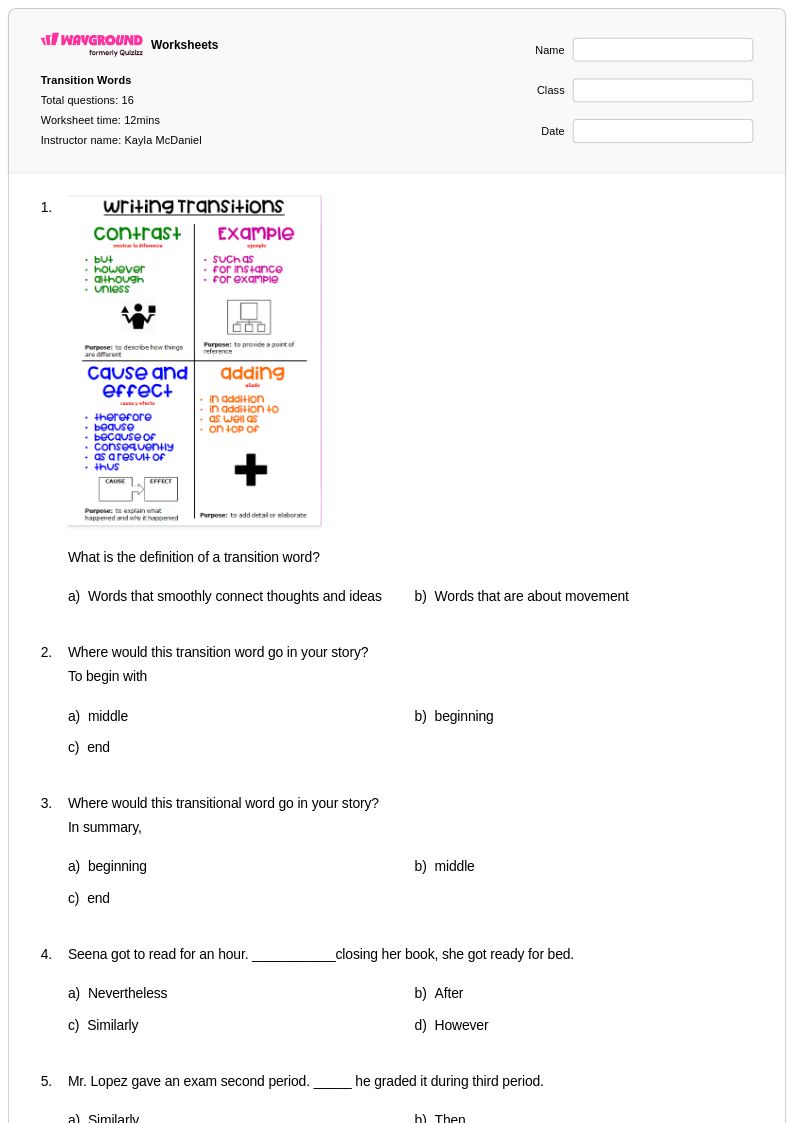
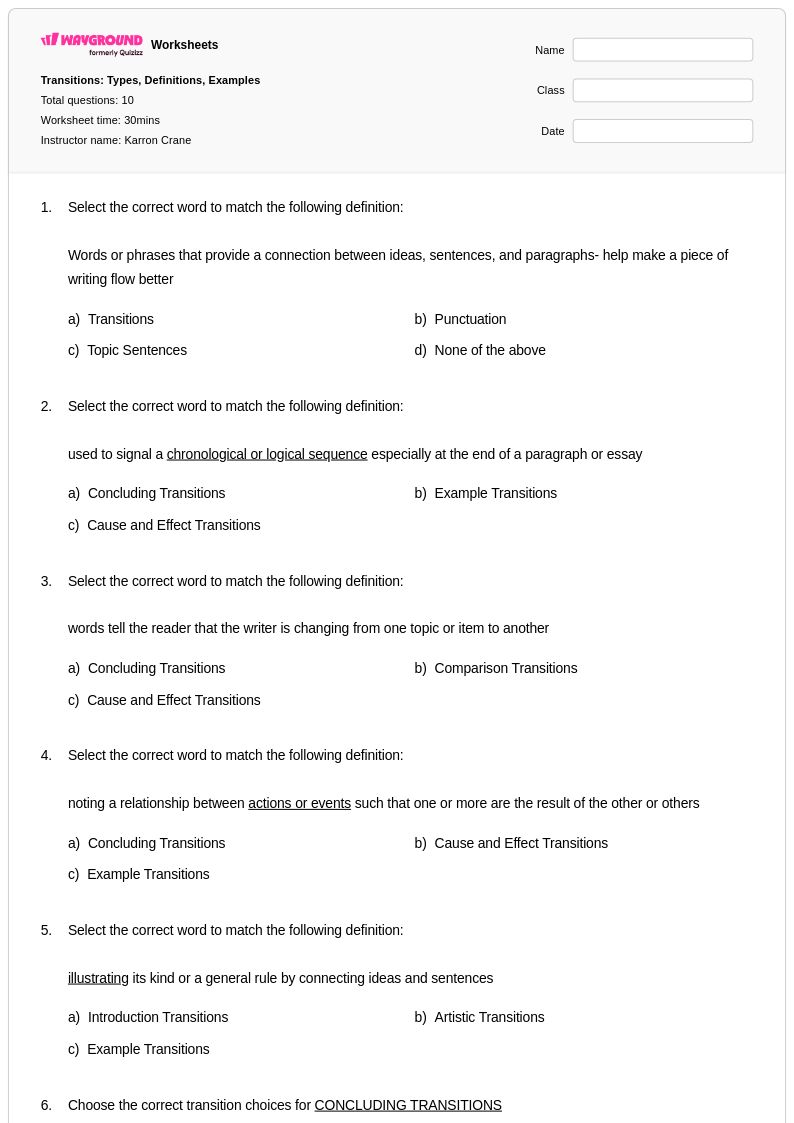
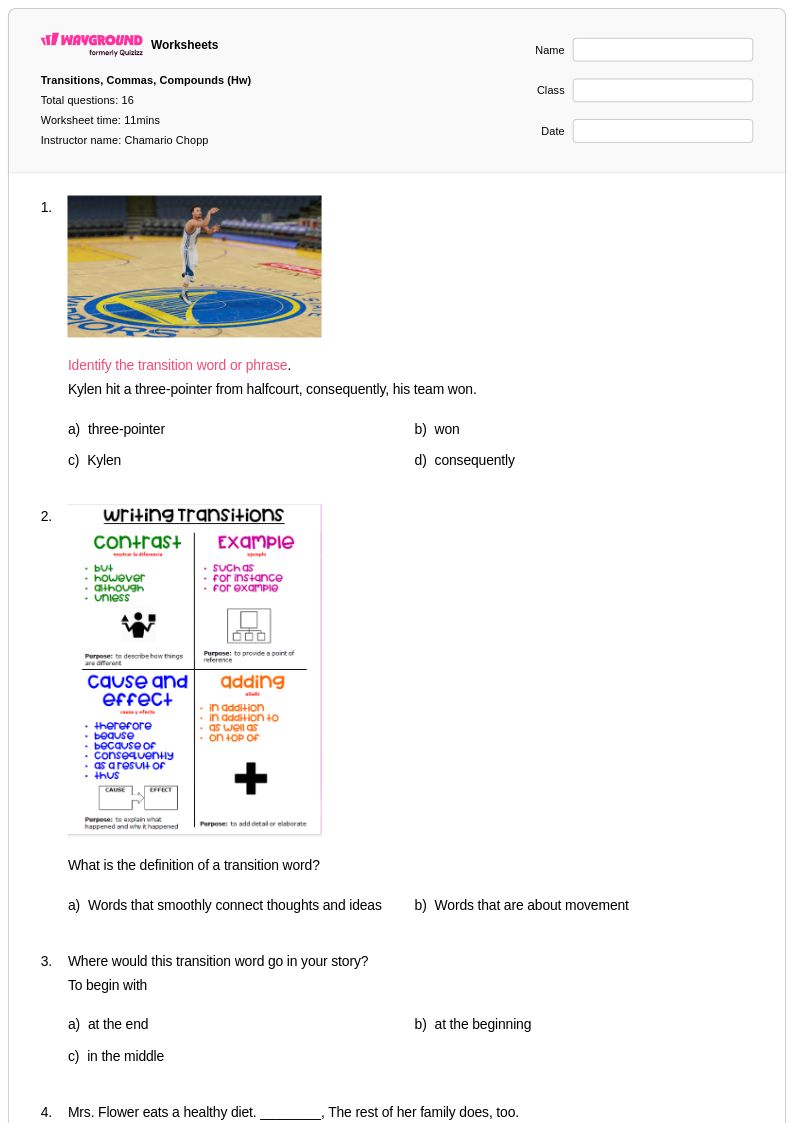
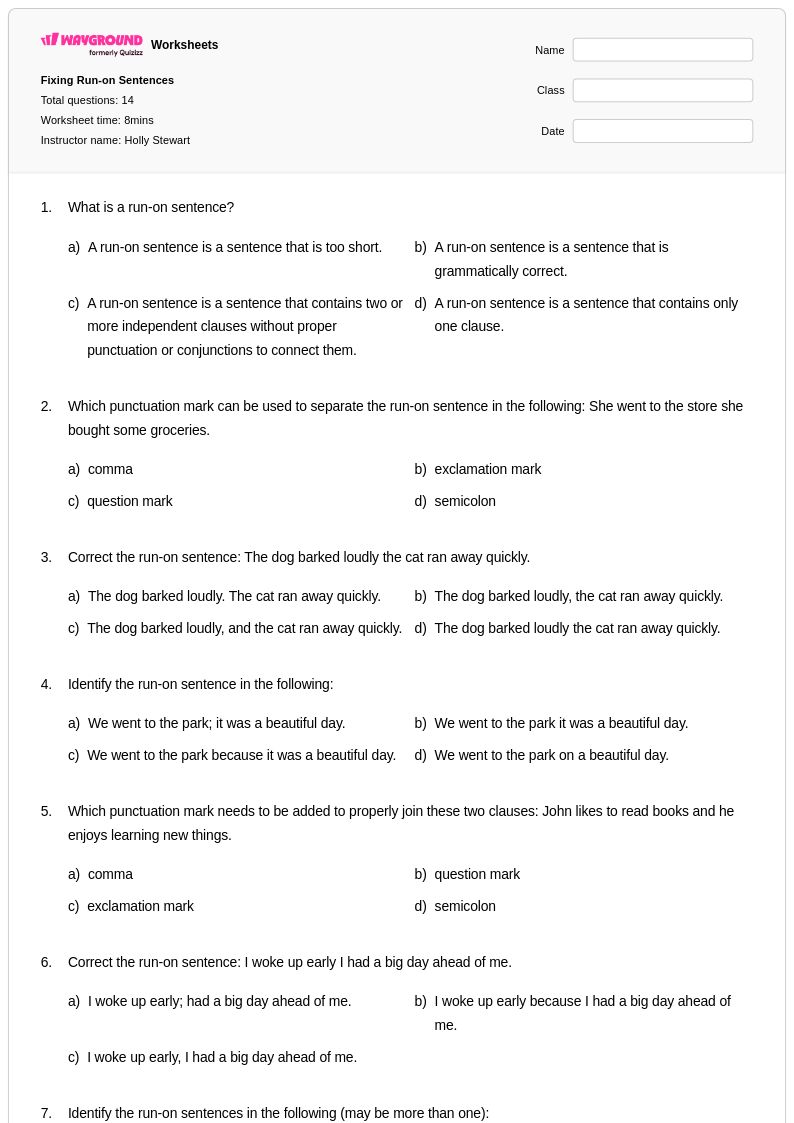
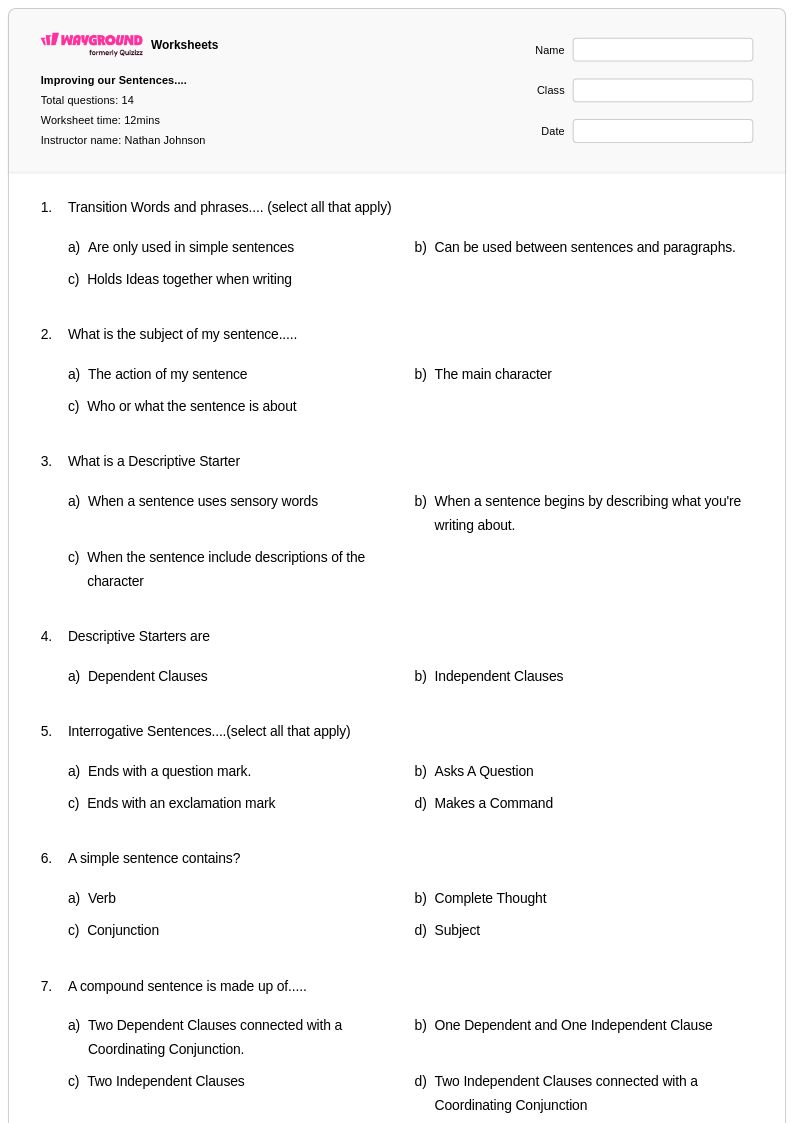
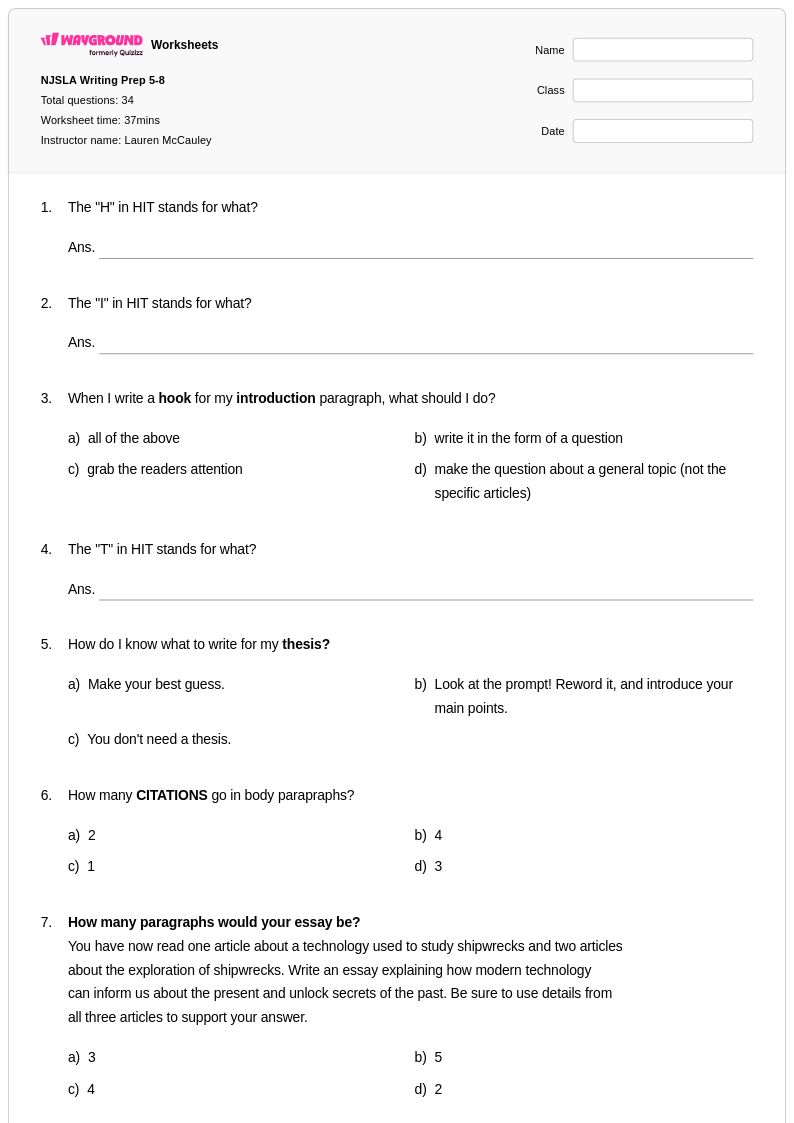
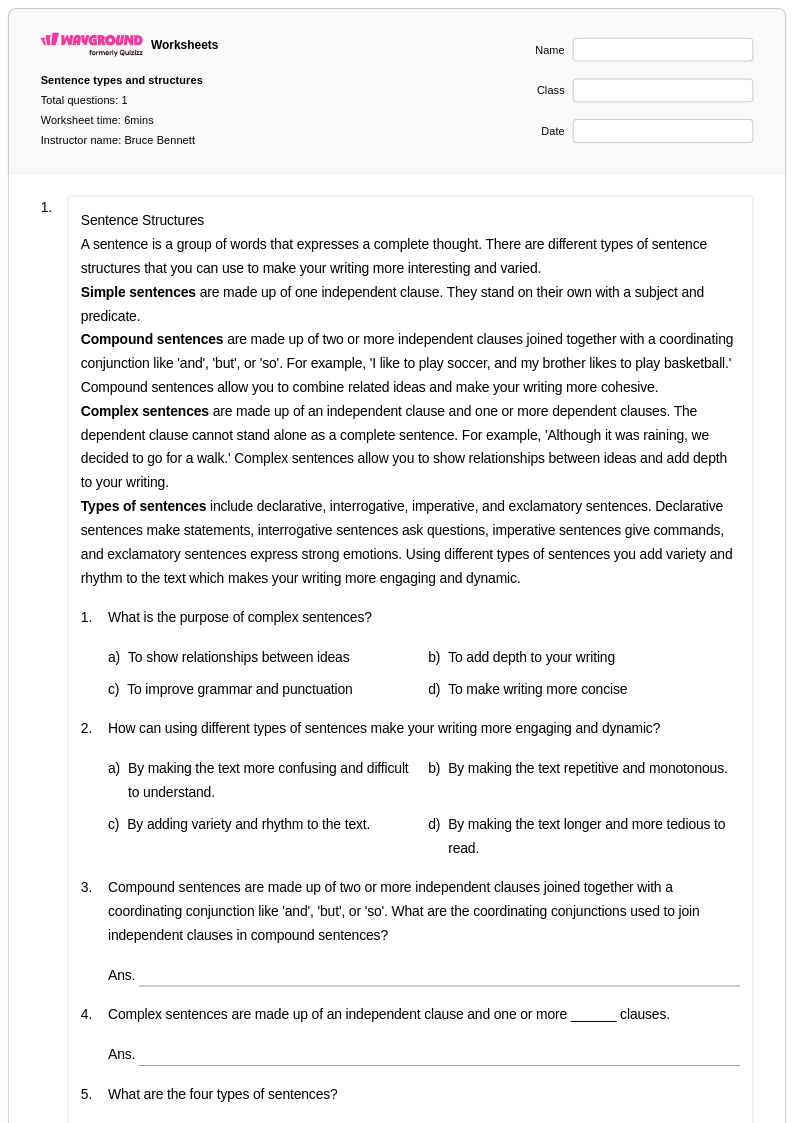
Transition sentences serve as crucial bridges between ideas in Grade 6 writing, and Wayground's comprehensive worksheet collection helps students master this essential skill through targeted practice and instruction. These carefully designed worksheets focus on teaching sixth-grade students how to create smooth connections between paragraphs, sentences, and ideas using appropriate transitional words and phrases. Students work through practice problems that demonstrate how effective transitions improve writing flow and clarity, while developing their understanding of different types of transitions including those that show sequence, contrast, cause and effect, and emphasis. Each worksheet comes with a complete answer key and is available as a free printable pdf, making it easy for educators to provide consistent practice opportunities that strengthen students' organizational writing skills and help them create more coherent, well-structured compositions.
Wayground (formerly Quizizz) empowers teachers with millions of educator-created resources specifically designed to support transition sentence instruction and writing organization skills at the Grade 6 level. The platform's robust search and filtering capabilities allow teachers to quickly locate worksheets that align with specific learning standards and match their students' individual needs, whether for initial instruction, remediation, or enrichment activities. Teachers can customize these materials to accommodate different learning styles and skill levels, ensuring differentiated instruction that meets every student's requirements. Available in both printable pdf format and interactive digital versions, these transition sentence worksheets integrate seamlessly into any lesson planning approach, providing educators with flexible tools for classroom instruction, homework assignments, and targeted skill practice that builds stronger writing foundations.
FAQs
How do I teach transition sentences to students who struggle with paragraph flow?
Start by teaching transitions as functional categories rather than as a vocabulary list. Show students how transitions signal specific logical relationships, such as contrast (however, although), sequence (first, then, finally), and cause and effect (therefore, as a result), and have them practice identifying which relationship exists between two ideas before choosing a transition. Modeling the revision process, where a choppy paragraph is transformed into a cohesive one through strategic transition placement, is especially effective for students who struggle to see why transitions matter.
What exercises help students practice using transition sentences in their writing?
Effective practice exercises include sentence-combining tasks where students connect two related ideas using an appropriate transition, paragraph revision activities where transitions have been removed and students must restore them, and sorting exercises where students categorize transitions by type. Transition sentences worksheets that include targeted practice problems across multiple transition types help students build both recognition and application skills, which is why structured worksheet practice is a reliable complement to direct writing instruction.
What are the most common mistakes students make with transition sentences?
The most common error is overusing a single transition word, particularly 'also' or 'then', regardless of the logical relationship being expressed. Students also frequently misuse transitions by placing them where no meaningful connection exists, creating the appearance of flow without actual logical coherence. A related mistake is treating transitions as interchangeable, for example using 'however' and 'therefore' as if they both simply mean 'and next', which produces writing that contradicts itself or confuses the reader.
How can I help students understand the difference between transition types like contrast, sequence, and cause and effect?
The most effective approach is to anchor each transition category to a specific logical test. For contrast transitions, ask: 'Are these two ideas in tension with each other?' For cause and effect, ask: 'Does one idea directly produce or explain the other?' For sequence, ask: 'Does order matter here?' Teaching students to apply these diagnostic questions before selecting a transition reduces random guessing and builds the habit of thinking about meaning before word choice.
How do I use transition sentences worksheets in my classroom?
Transition sentences worksheets on Wayground are available as printable PDFs for traditional classroom use and in digital formats for technology-integrated or remote learning environments, and teachers can also host them as a quiz directly on Wayground for immediate feedback. They work well as guided practice during a writing unit, as independent work after direct instruction, or as targeted remediation for students whose essays lack cohesion. Because the worksheets include detailed answer keys, students can review their own responses independently, freeing up class time for higher-order writing instruction.
How do I differentiate transition sentence practice for students at different skill levels?
For developing writers, begin with recognition tasks, such as identifying which transition best fits a blank, before moving to production tasks where students generate their own connecting sentences. More advanced students benefit from revision-based activities where they evaluate and improve the transitions in a full paragraph or short essay. On Wayground, teachers can apply accommodations such as reduced answer choices for students who need support narrowing their options, or read-aloud settings for students who process written text more effectively when it is read to them.