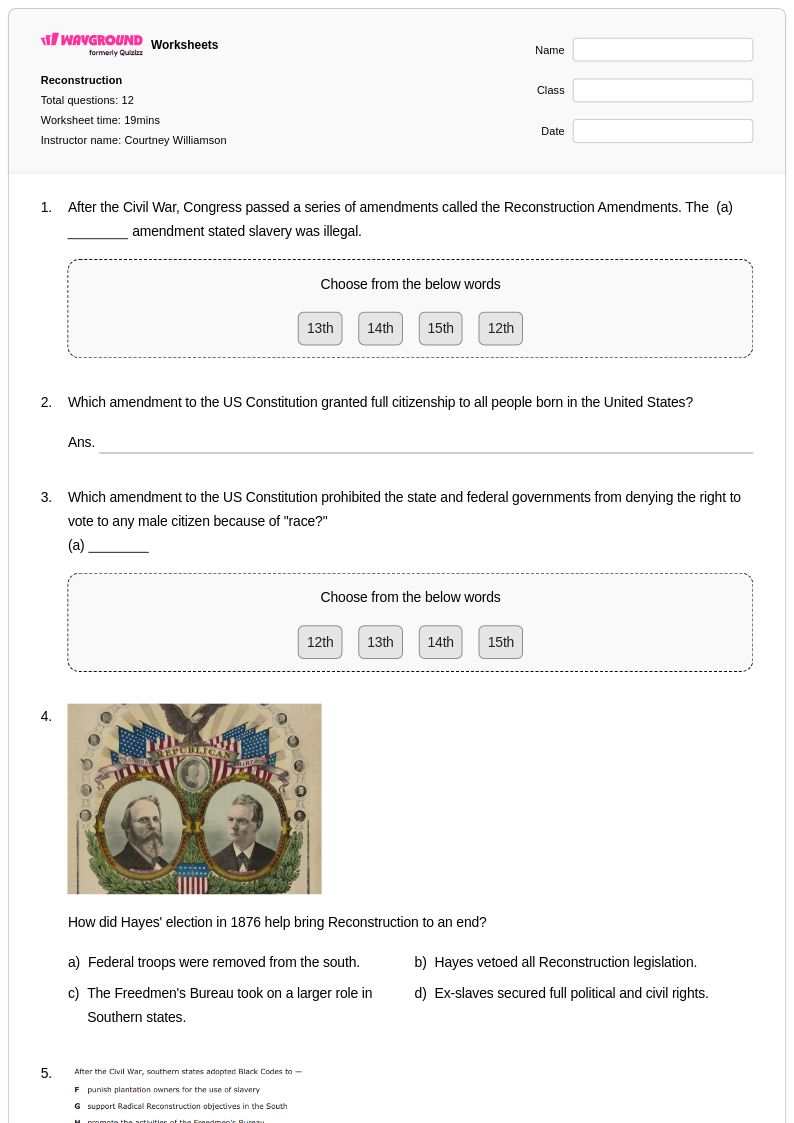
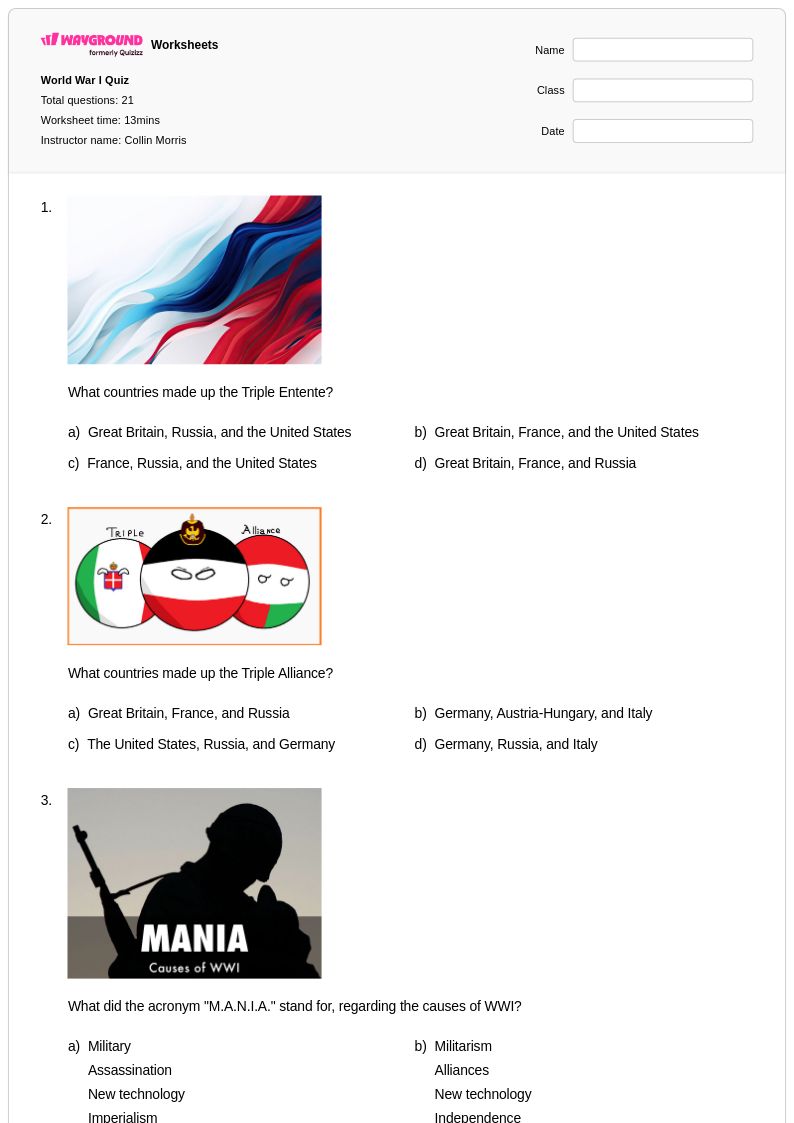
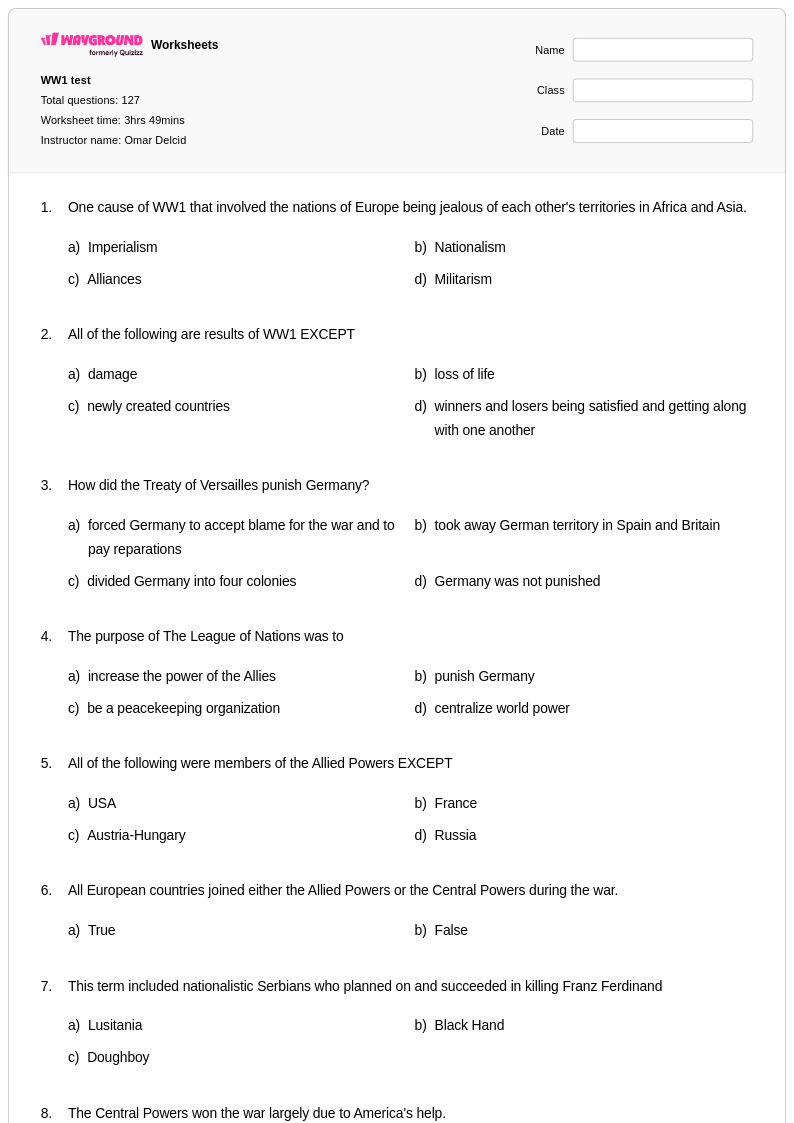
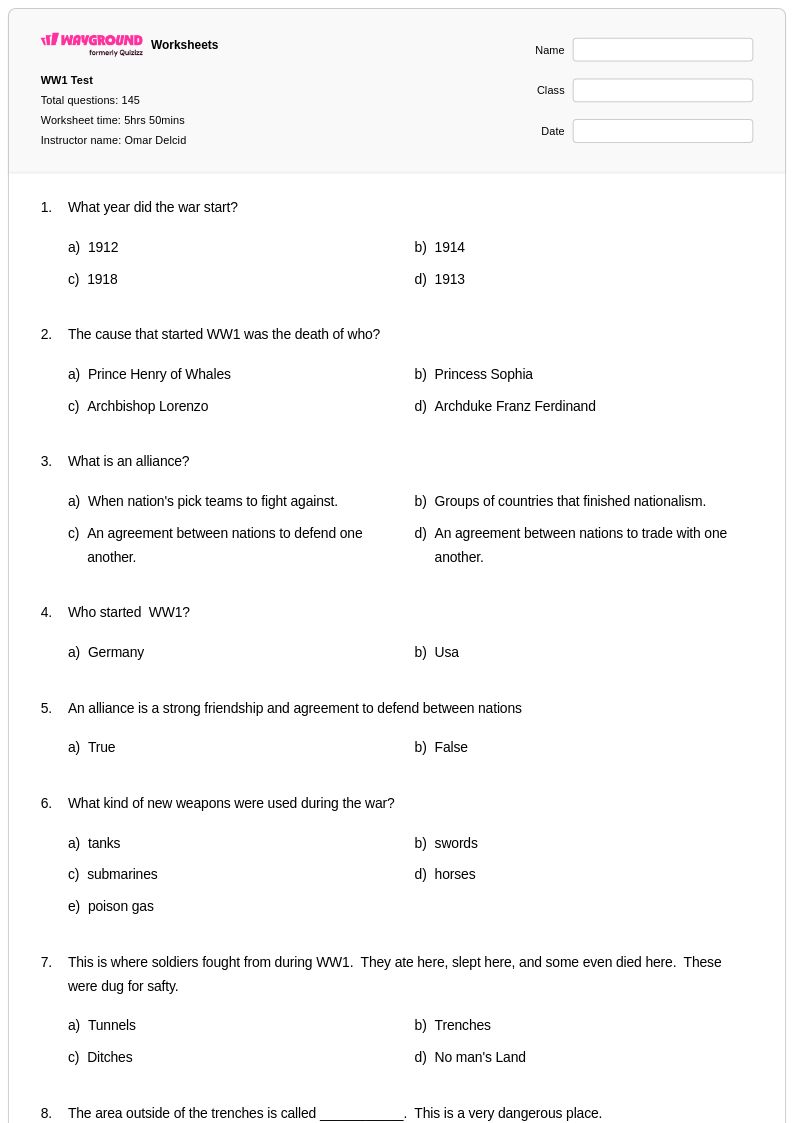
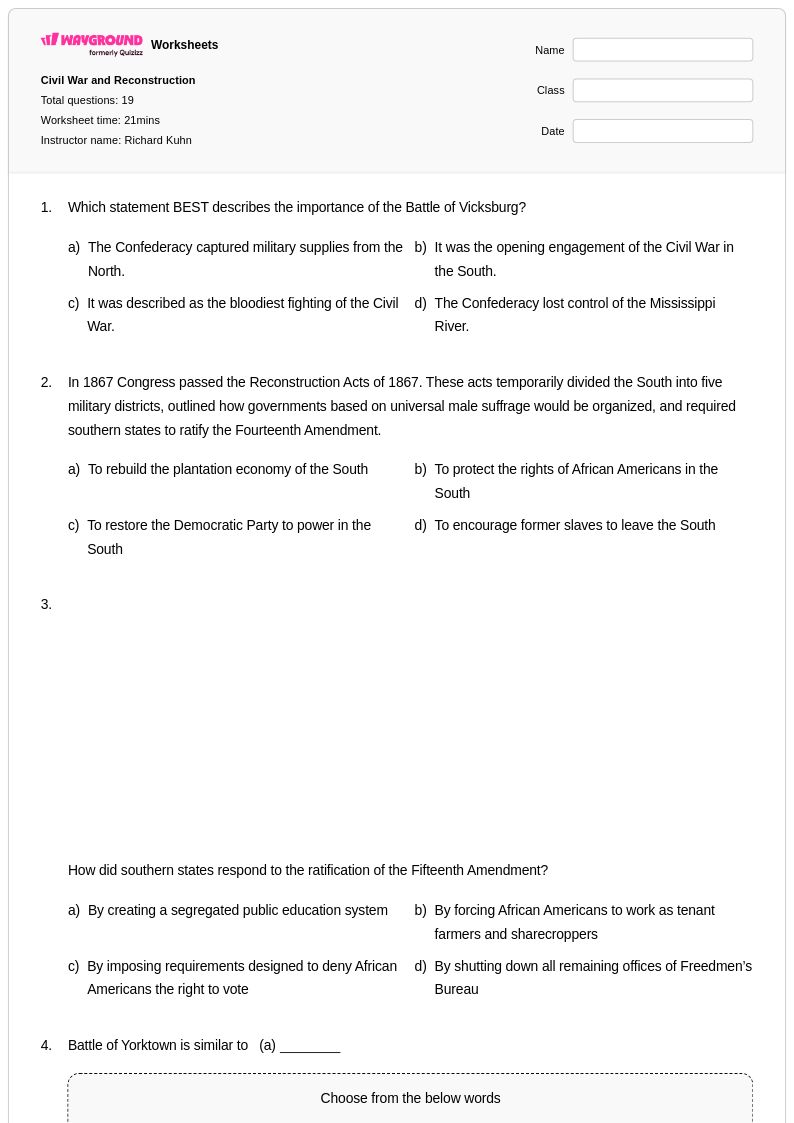
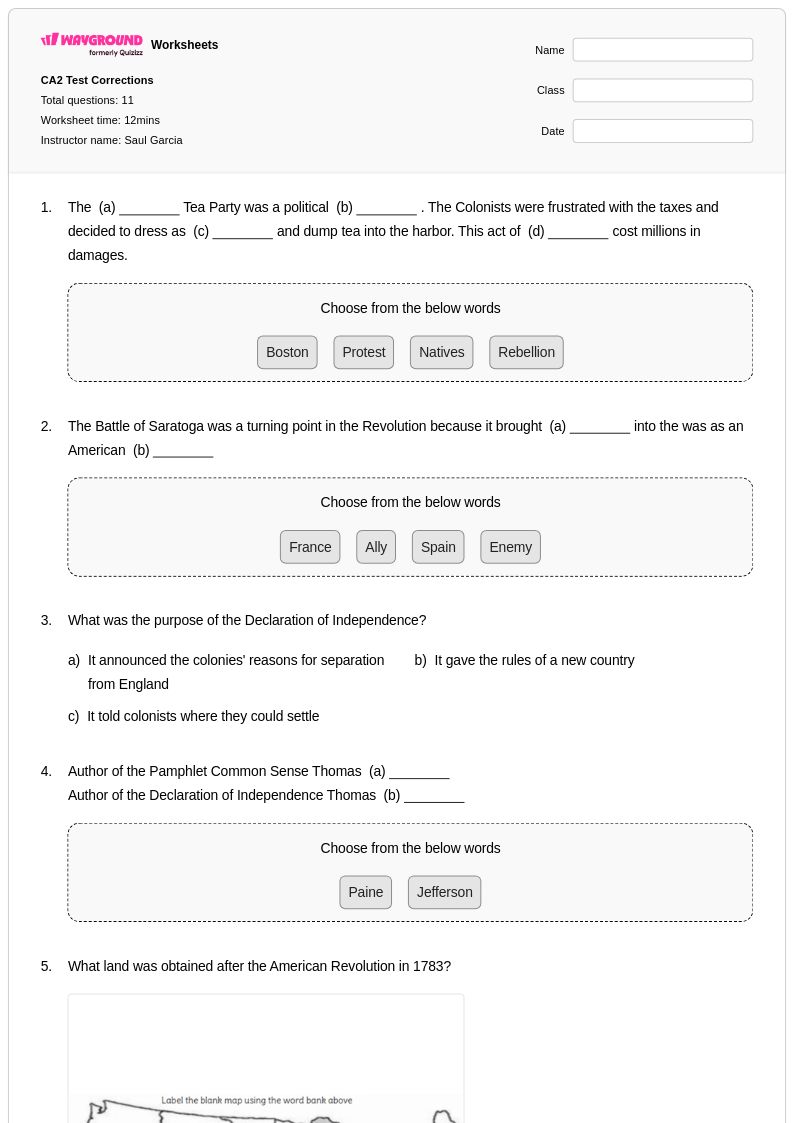
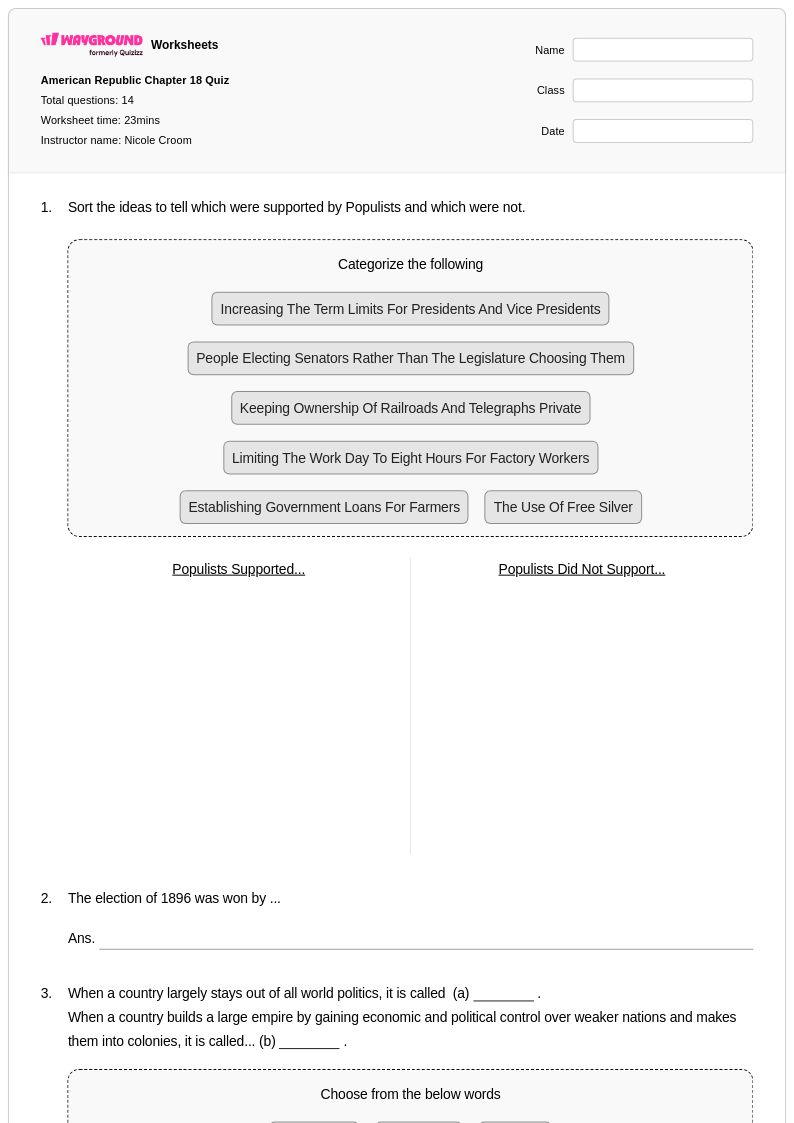
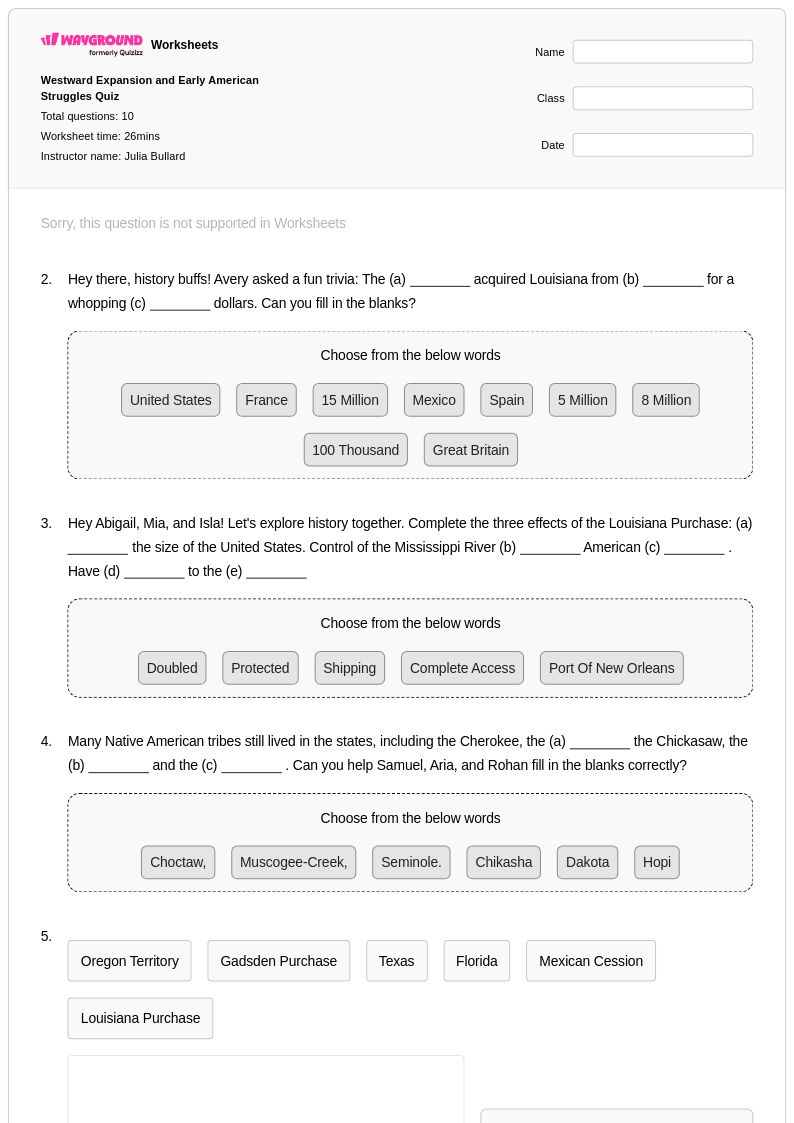
Free Printable United States Entry Into World War 1 Worksheets for Grade 8
Grade 8 World History worksheets covering United States Entry Into World War 1 help students explore America's decision to join the Great War through engaging printables, practice problems, and comprehensive answer keys available as free PDF downloads.
Explore printable United States Entry Into World War 1 worksheets for Grade 8
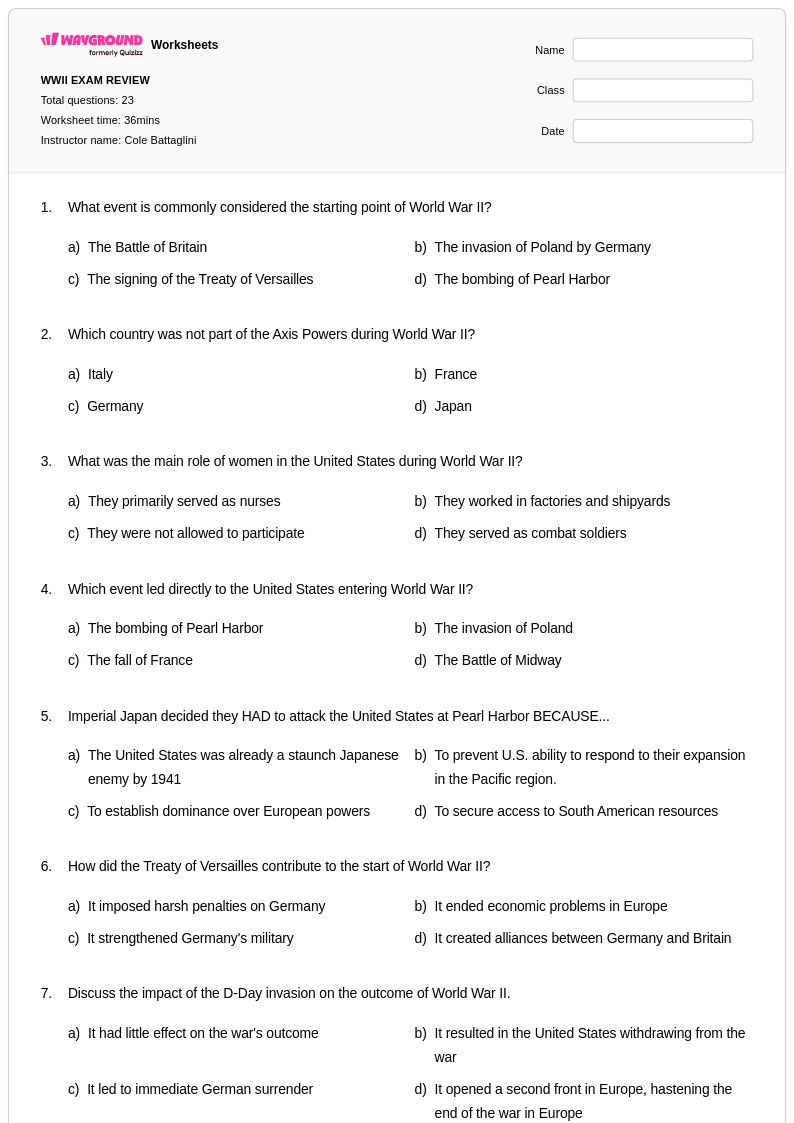
United States Entry Into World War 1 worksheets for Grade 8 students provide comprehensive coverage of America's pivotal decision to join the Great War and its far-reaching consequences. These educational resources examine the complex factors that shifted American public opinion from neutrality to active participation, including the Zimmermann Telegram, unrestricted submarine warfare, and economic ties to Allied nations. Students strengthen critical thinking skills by analyzing primary source documents, evaluating cause-and-effect relationships, and understanding the political and social climate of 1917 America. The worksheets feature practice problems that challenge students to connect domestic events with international developments, while answer key materials support both independent study and classroom instruction. Available as free printables in convenient pdf format, these resources help students master essential concepts about President Wilson's war message to Congress, the impact of propaganda, and the transformation of American society during wartime.
Wayground, formerly Quizizz, supports educators with an extensive collection of United States Entry Into World War 1 worksheets drawn from millions of teacher-created resources nationwide. The platform's robust search and filtering capabilities enable instructors to quickly locate materials aligned with specific learning standards and grade-level expectations, while differentiation tools allow seamless customization for diverse student needs and abilities. Teachers can access resources in both printable and digital pdf formats, providing flexibility for traditional classroom instruction, remote learning environments, and hybrid teaching approaches. These comprehensive worksheet collections facilitate effective lesson planning by offering varied question types, document-based activities, and assessment rubrics that support remediation for struggling learners and enrichment opportunities for advanced students. The platform's organizational features streamline the process of building cohesive unit studies that help Grade 8 students develop deeper understanding of this crucial turning point in American and world history.
FAQs
How do I teach the reasons the United States entered World War 1?
Teaching U.S. entry into WWI is most effective when students examine the interplay of multiple causes rather than a single event. Structure lessons around the four key pressure points: unrestricted German submarine warfare, the Zimmermann Telegram, economic entanglement with Allied nations, and the gradual erosion of American public neutrality. Having students weigh each factor and argue which was most decisive builds historical causation skills and prepares them to understand Wilson's shift from neutrality to intervention.
What primary sources work best for teaching U.S. entry into World War 1?
The Zimmermann Telegram, Wilson's April 1917 war address to Congress, and political cartoons from the neutrality period are among the most classroom-accessible primary sources for this topic. These documents allow students to practice close reading, identify bias and perspective, and connect diplomatic language to real consequences. Pairing the Zimmermann Telegram with news headlines from the time helps students understand how public opinion shifted rapidly once the document was published.
What exercises help students practice analyzing the causes of U.S. entry into WWI?
Cause-and-effect graphic organizers, document-based questions, and political cartoon analysis are especially effective for practicing this topic. Students benefit from ranking the causes of U.S. entry by significance and defending their reasoning in writing, which reinforces both content knowledge and historical argument skills. Structured practice problems that ask students to connect specific events, such as the sinking of the Lusitania or the Sussex Pledge, to broader policy shifts solidify their understanding of how cumulative pressure drove Wilson's decision.
What misconceptions do students commonly have about why the U.S. entered World War 1?
The most common misconception is that a single event, typically the Zimmermann Telegram, caused the U.S. to declare war. In reality, Wilson had been navigating competing pressures for nearly three years before April 1917, and the declaration resulted from a convergence of diplomatic, economic, and political factors. Students also frequently conflate the sinking of the Lusitania in 1915 with U.S. entry, not realizing that two more years passed before war was declared. Addressing these timeline errors directly is essential for accurate historical understanding.
How can I use United States Entry Into World War 1 worksheets in my classroom?
These worksheets are available as printable PDFs for direct classroom distribution and in digital formats for technology-integrated or remote learning environments, making them flexible across instructional settings. Teachers can use them to introduce the topic, guide document analysis, or assess student understanding at the close of a unit. On Wayground, worksheets can also be hosted as a quiz, allowing teachers to track student responses and identify gaps in understanding in real time.
How do I differentiate instruction on U.S. entry into WWI for students with different learning needs?
Differentiation for this topic can involve tiering primary source complexity, providing sentence frames for analytical writing, or reducing the number of causes students are asked to evaluate simultaneously. On Wayground, teachers can apply individual accommodations such as read aloud for students who need audio support, reduced answer choices to lower cognitive load, and extended time for students who require it. These settings can be assigned to individual students while the rest of the class receives standard settings, and they carry over to future sessions automatically.