Free Printable Units of Mass Worksheets for Grade 2
Grade 2 students can master units of mass through Wayground's comprehensive collection of free printable worksheets and practice problems that teach measuring weight using pounds, ounces, and kilograms with included answer keys.
Explore printable Units of Mass worksheets for Grade 2
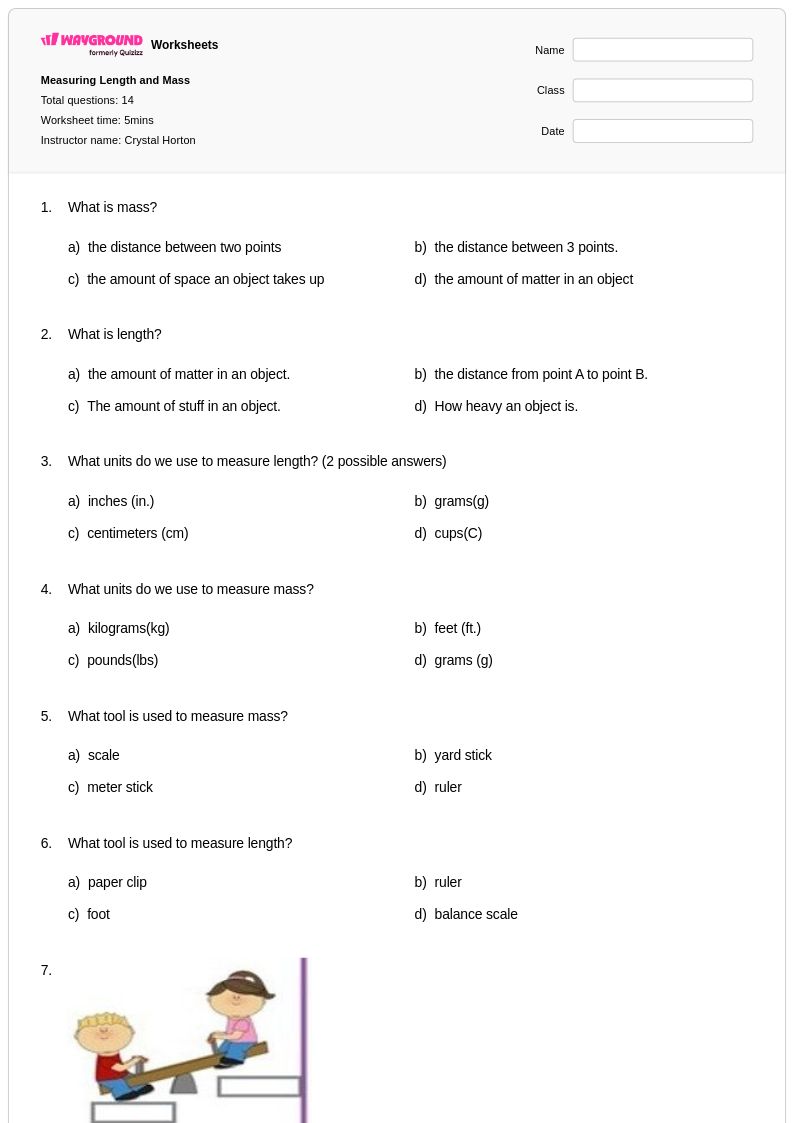
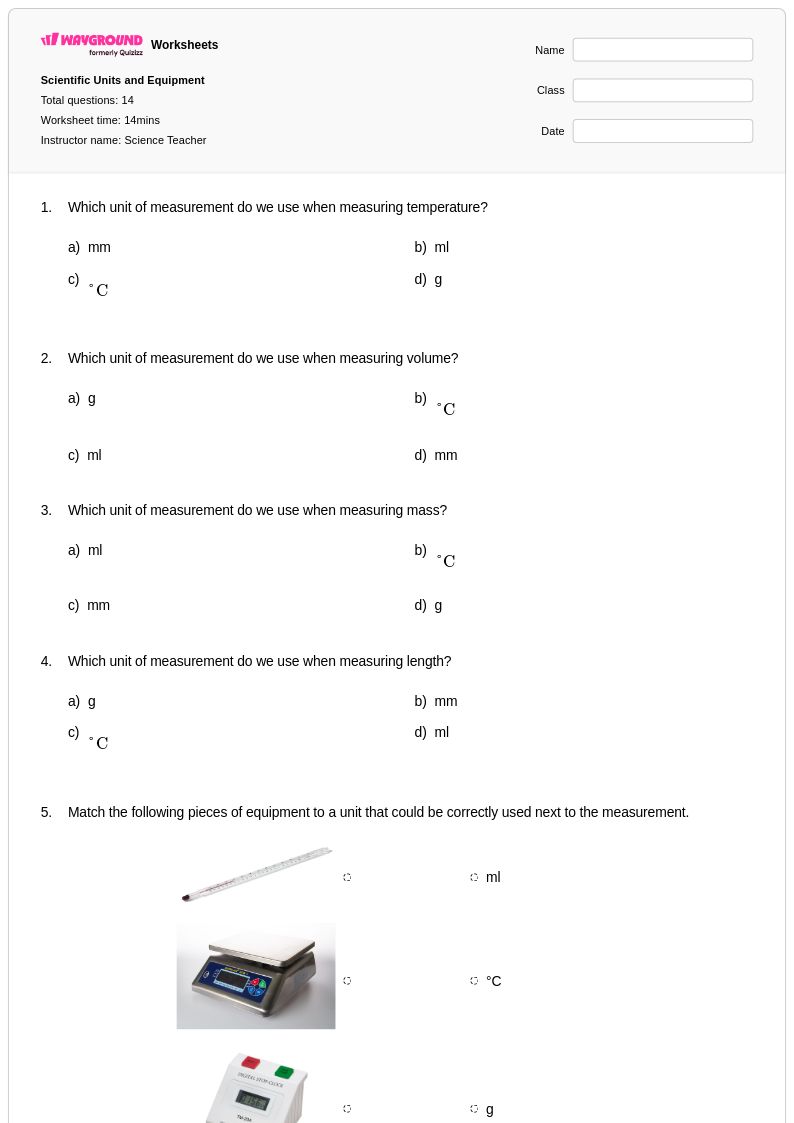
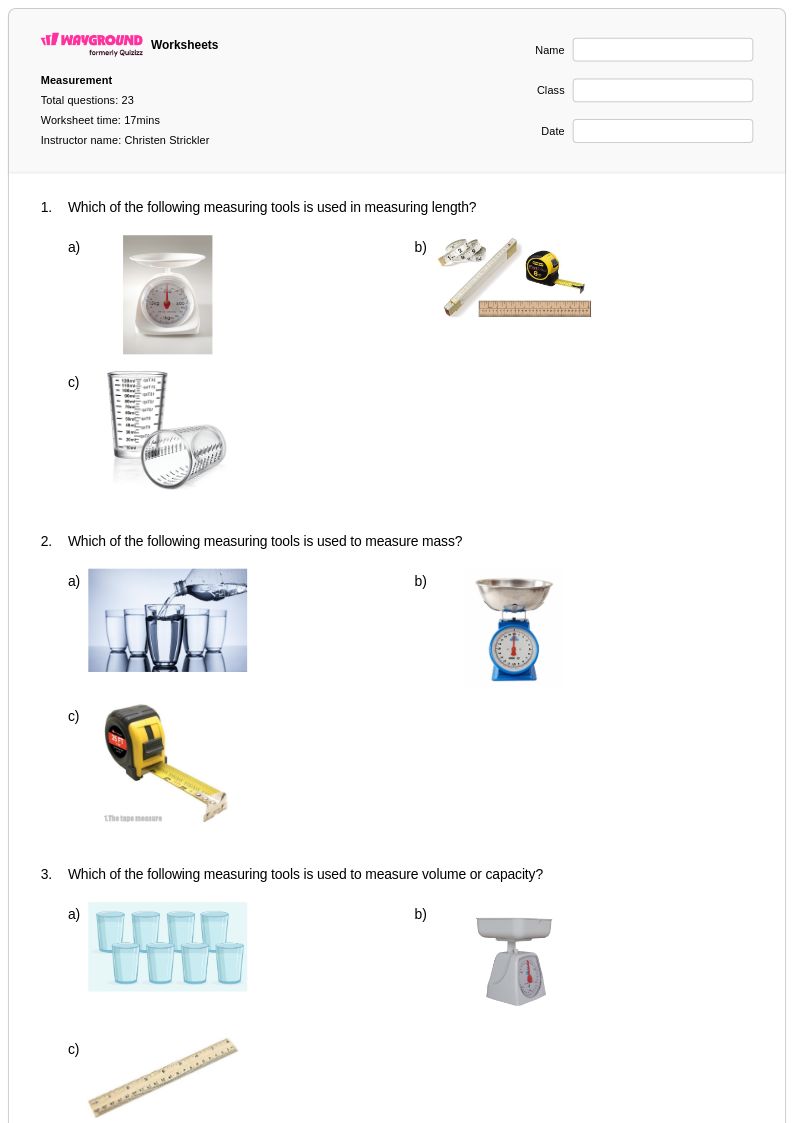
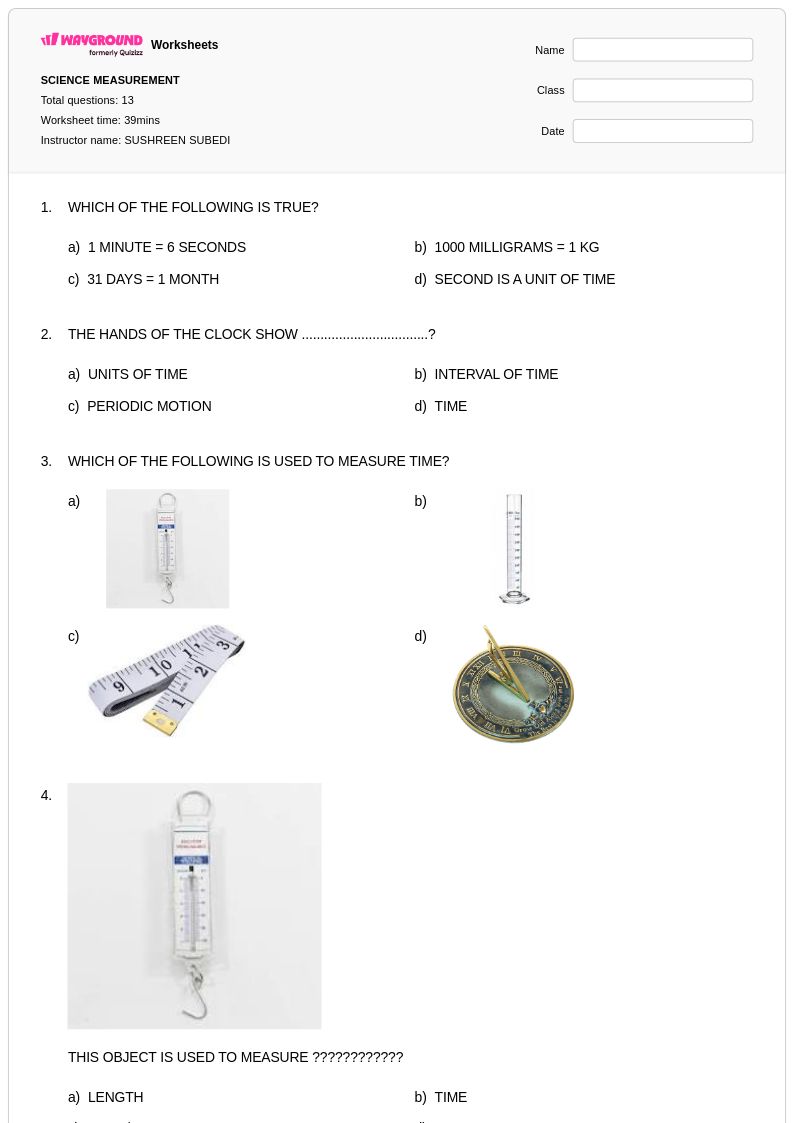
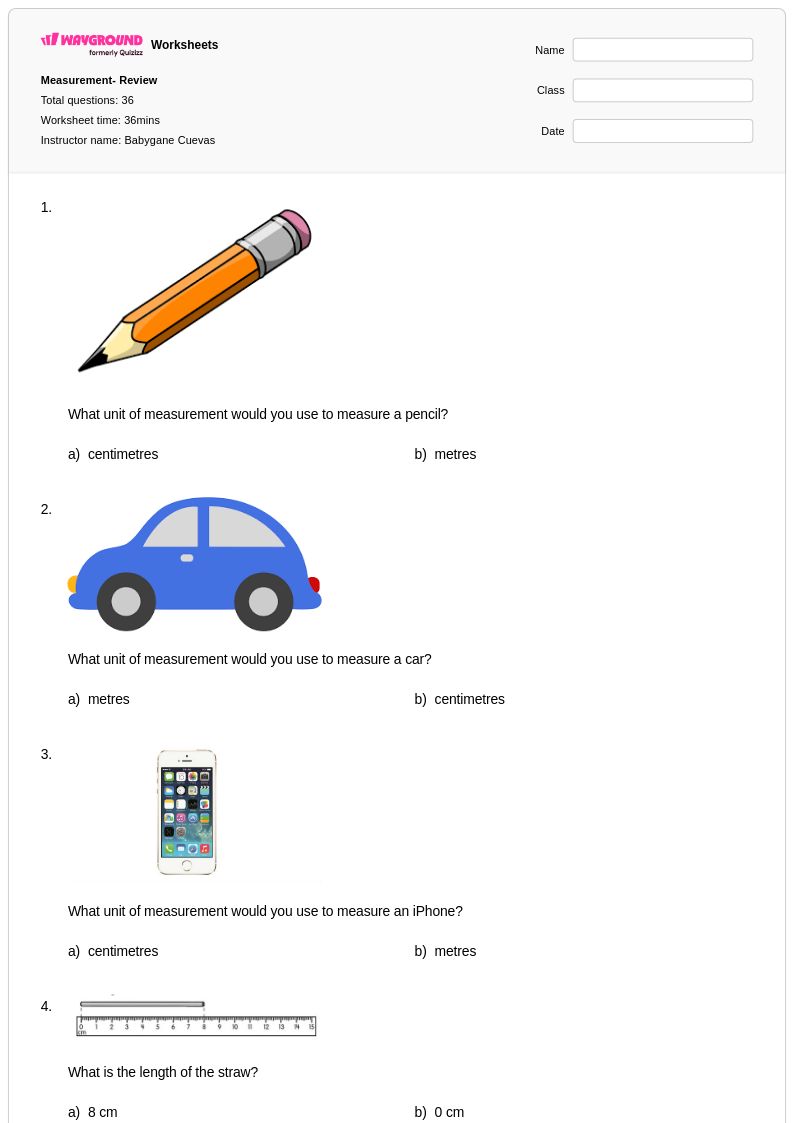
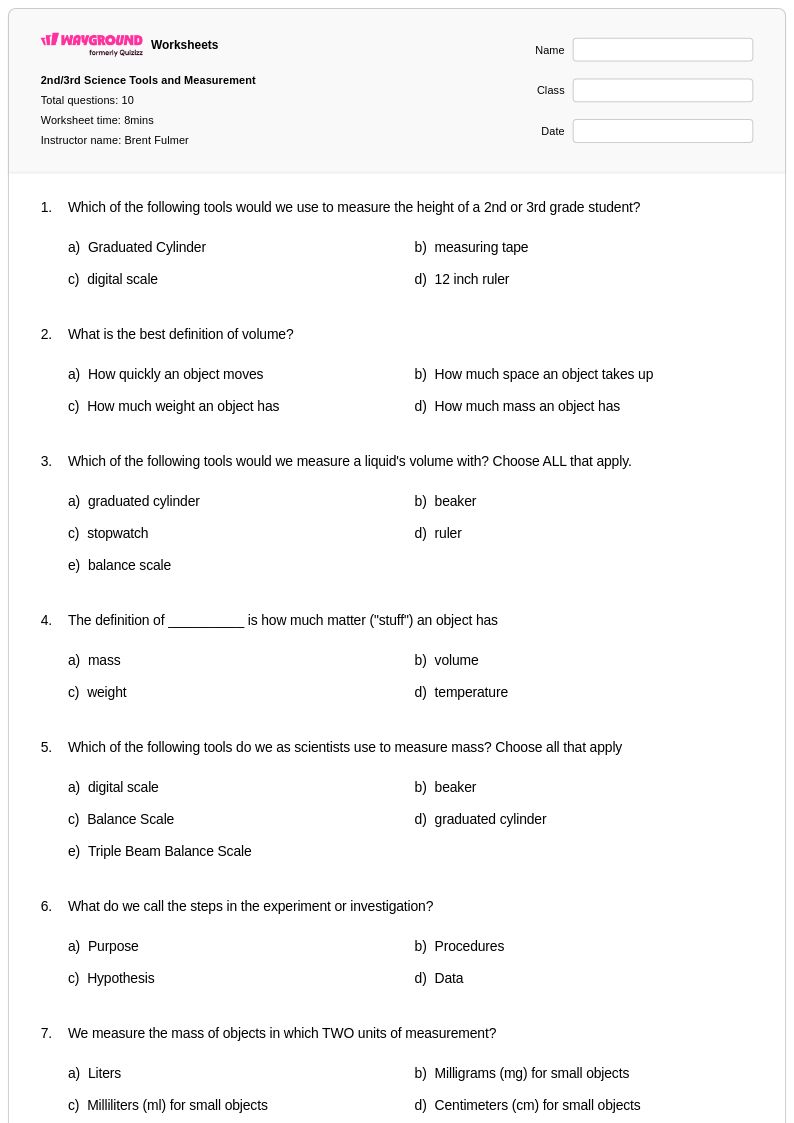
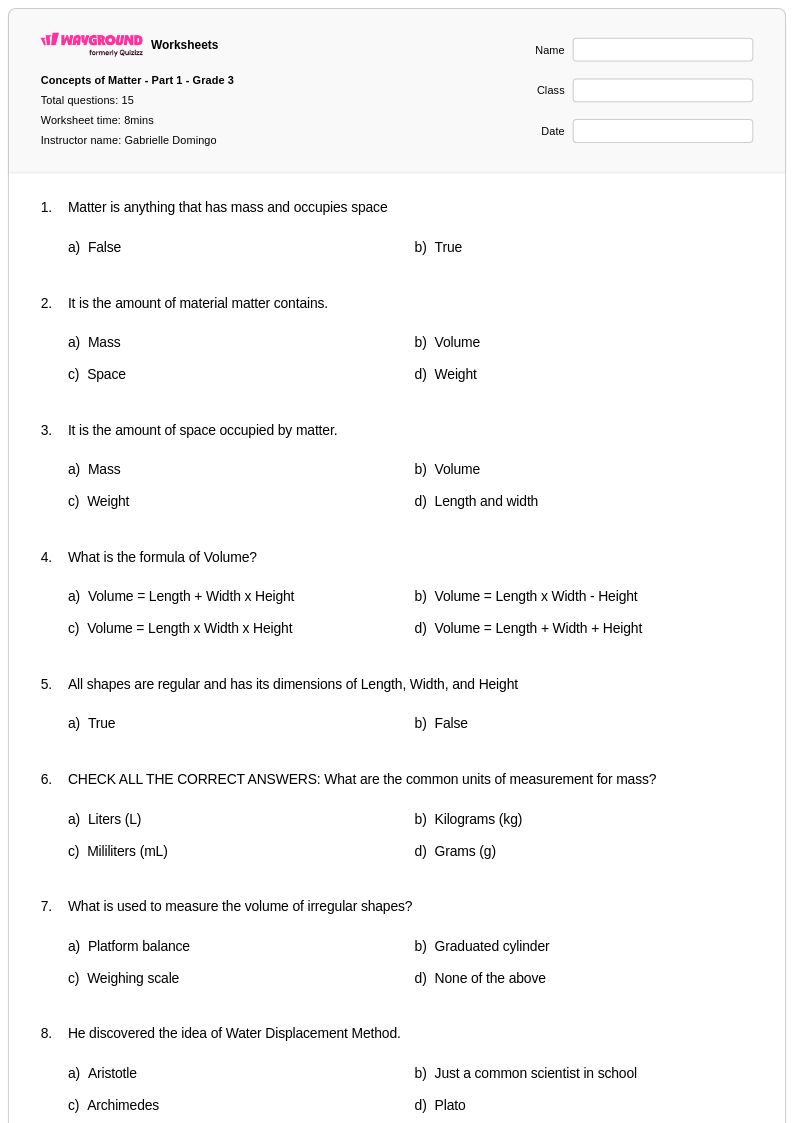
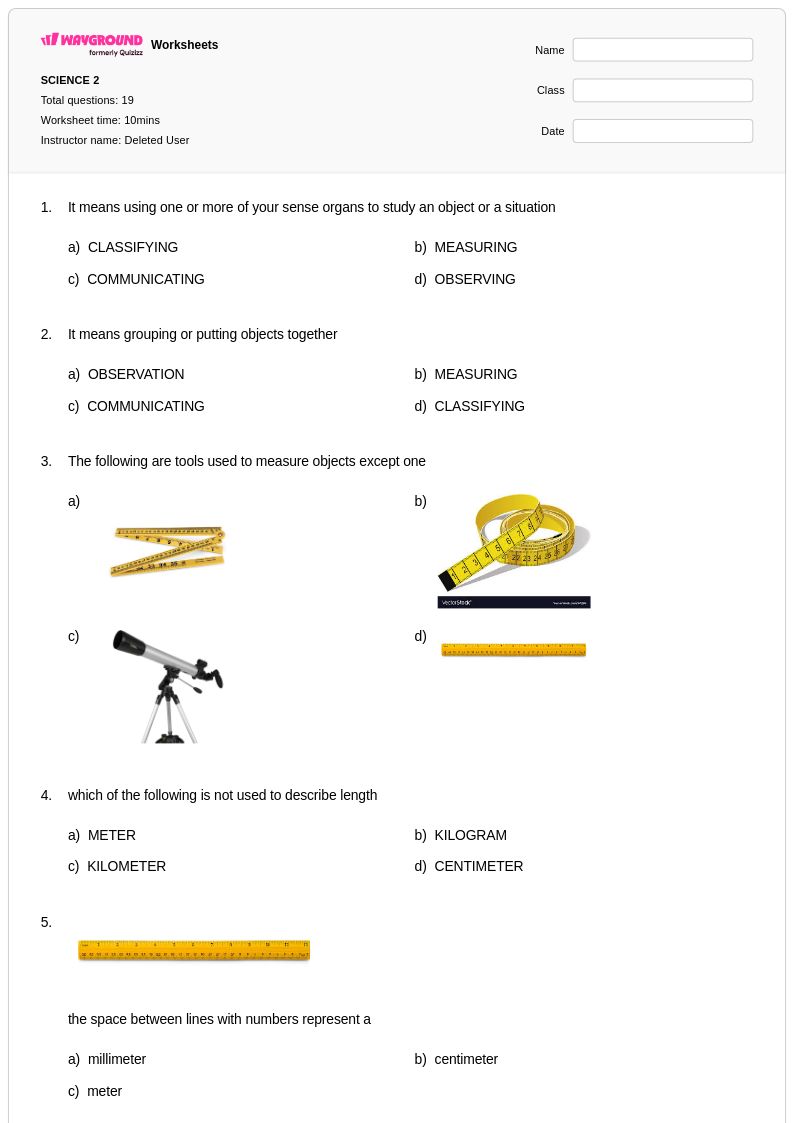
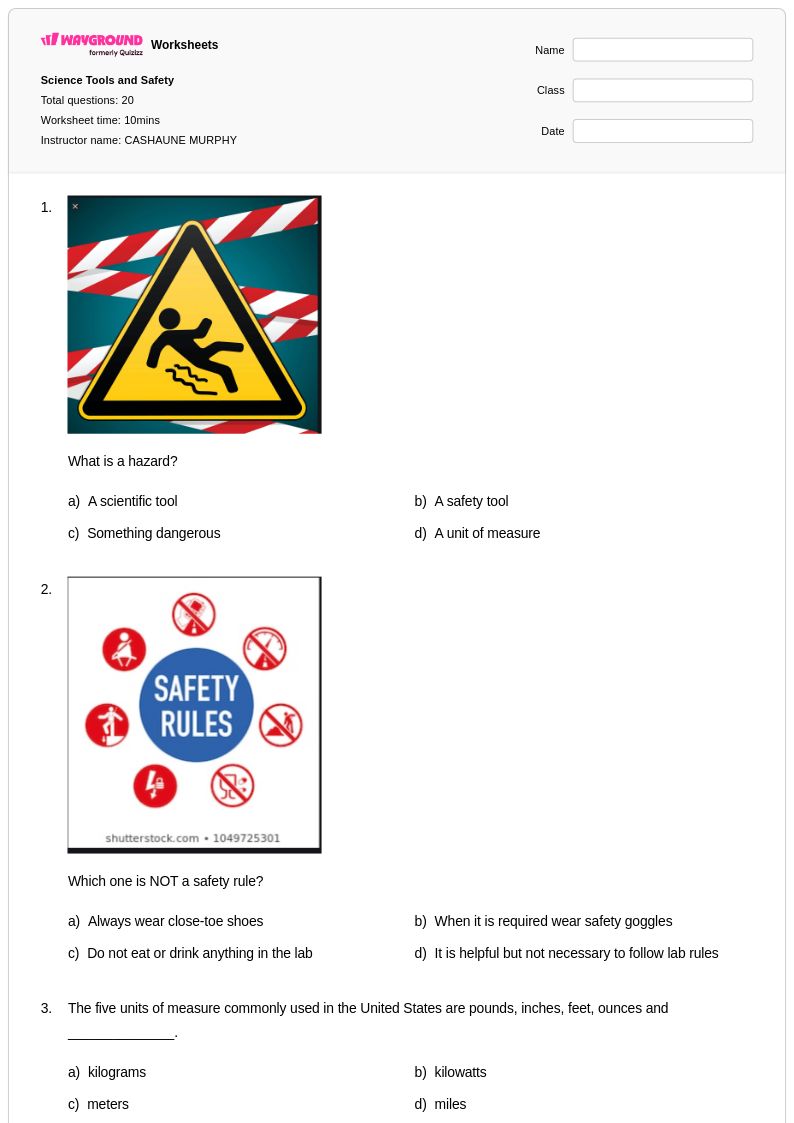
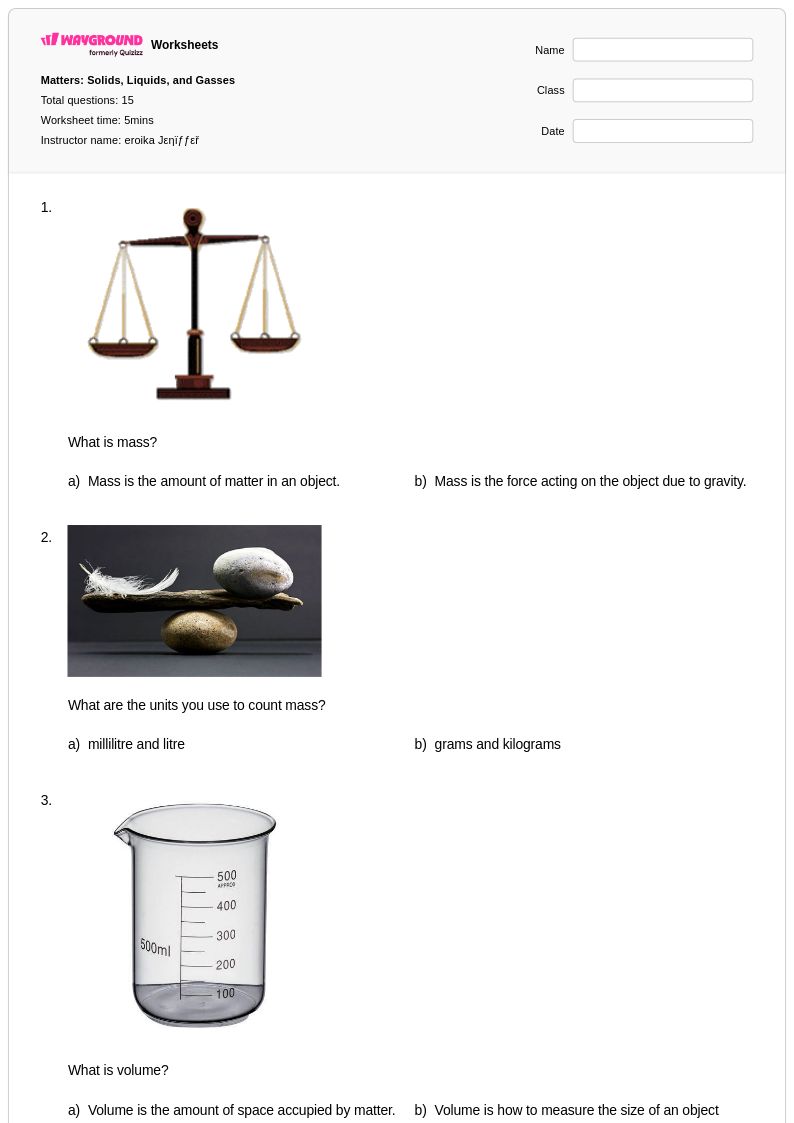
Units of mass worksheets for Grade 2 students available through Wayground (formerly Quizizz) provide essential foundational practice in understanding weight and mass measurement concepts. These comprehensive printables help young learners develop critical skills in comparing objects by weight, identifying appropriate units for measuring mass, and understanding the relationship between light and heavy objects in their everyday world. Each worksheet collection includes carefully crafted practice problems that progress from basic weight comparisons to more complex measurement scenarios, complete with detailed answer keys that support both independent learning and guided instruction. The free pdf resources focus on building measurement sense through hands-on activities that encourage students to estimate, compare, and measure using both standard and non-standard units appropriate for second-grade developmental levels.
Wayground's extensive library supports teachers with millions of educator-created resources specifically designed for units of mass instruction at the Grade 2 level. The platform's robust search and filtering capabilities allow educators to quickly locate worksheets aligned with curriculum standards, while differentiation tools enable customization for diverse learning needs within the classroom. Teachers can access these materials in both printable and digital pdf formats, making them versatile for various instructional settings and learning environments. This flexibility proves invaluable for lesson planning, targeted remediation for students who need additional support with measurement concepts, enrichment activities for advanced learners, and consistent skill practice that reinforces understanding of mass and weight relationships throughout the school year.
FAQs
How do I teach units of mass to students who confuse mass and weight?
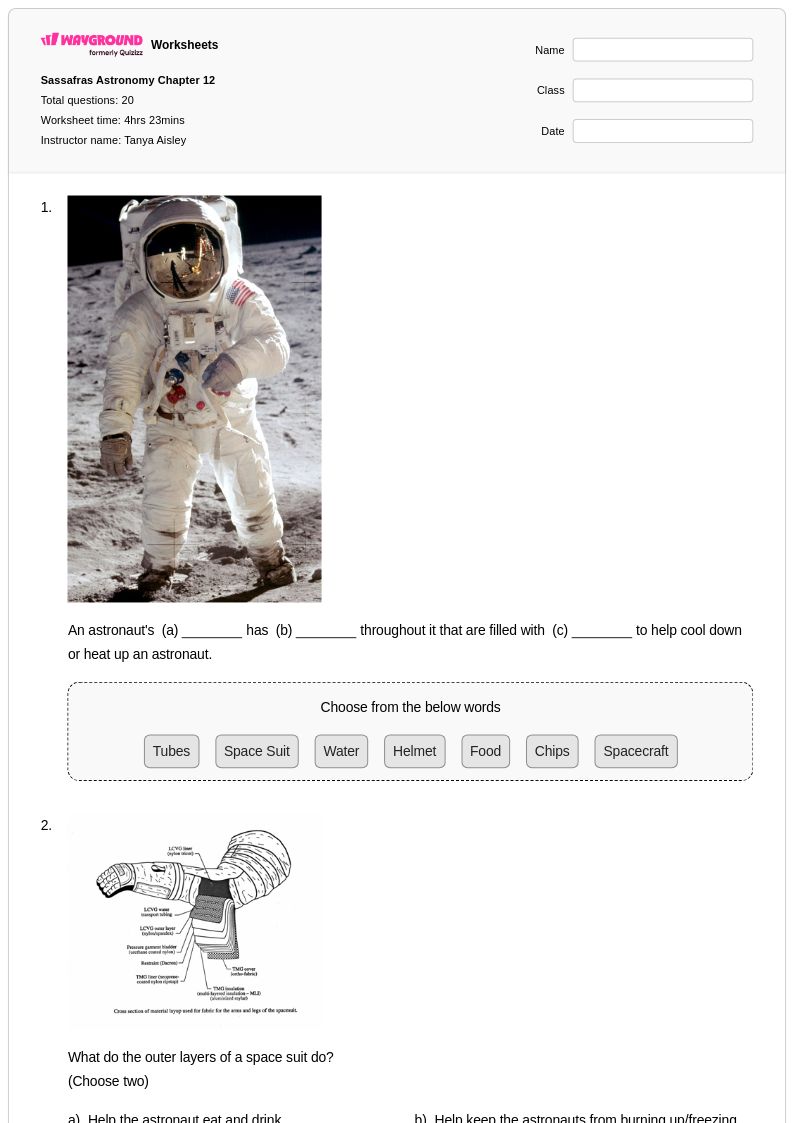
Mass and weight are related but distinct concepts: mass measures the amount of matter in an object and remains constant regardless of location, while weight is the gravitational force acting on that mass and can change. A clear teaching strategy is to anchor the distinction with a concrete example — an astronaut has the same mass on the Moon as on Earth, but a different weight. Once students internalize this relationship, they are better prepared to work with unit conversions and measurement tools accurately.
What exercises help students practice converting between units of mass?
The most effective practice exercises for mass unit conversions involve structured, step-by-step problems that require students to move between grams, kilograms, milligrams, and pounds using conversion factors. Starting with single-step conversions before progressing to multi-step problems builds procedural fluency. Worksheets that include real-world contexts — such as calculating the mass of lab materials or comparing ingredient quantities in a recipe — help students apply conversions meaningfully rather than mechanically.
What mistakes do students commonly make when working with units of mass?
One of the most common errors is multiplying when students should divide, or vice versa, when converting between metric units — for example, converting grams to kilograms by multiplying by 1000 instead of dividing. Students also frequently conflate mass and weight, leading to conceptual errors in problem-solving contexts. Another frequent mistake is failing to carry the unit label through calculations, which makes it harder to verify whether the answer is in the correct unit.
How do I use units of mass worksheets in my classroom?
Units of mass worksheets on Wayground are available as printable PDFs for traditional classroom use and in digital formats for technology-integrated environments, including the option to host them as a quiz directly on Wayground. Printable versions work well for independent practice, homework assignments, or lab warm-ups, while digital formats allow for interactive use on student devices. Each worksheet includes a complete answer key, so teachers can use them for guided instruction, self-checking activities, or formative assessment without additional preparation.
How can I differentiate units of mass instruction for students at different skill levels?
For students still developing foundational skills, begin with basic unit identification and single-step conversions before introducing multi-step or real-world problems. Wayground's accommodation tools allow teachers to assign extended time or reduced answer choices to individual students on digital worksheets, reducing cognitive load without singling anyone out. Advanced students can be directed toward complex conversion challenges and problems involving scientific notation, ensuring all learners are appropriately stretched.
At what grade level should students be introduced to metric units of mass?
Students are typically introduced to metric units of mass — grams and kilograms — in the upper elementary grades, with more formal conversion work and the introduction of milligrams and pounds usually occurring in middle school science and math courses. By high school, students are expected to fluently convert between units and apply mass measurements in scientific notation and laboratory contexts. The appropriate entry point depends on your curriculum standards, but building conceptual understanding before procedural conversion practice tends to produce stronger long-term retention.