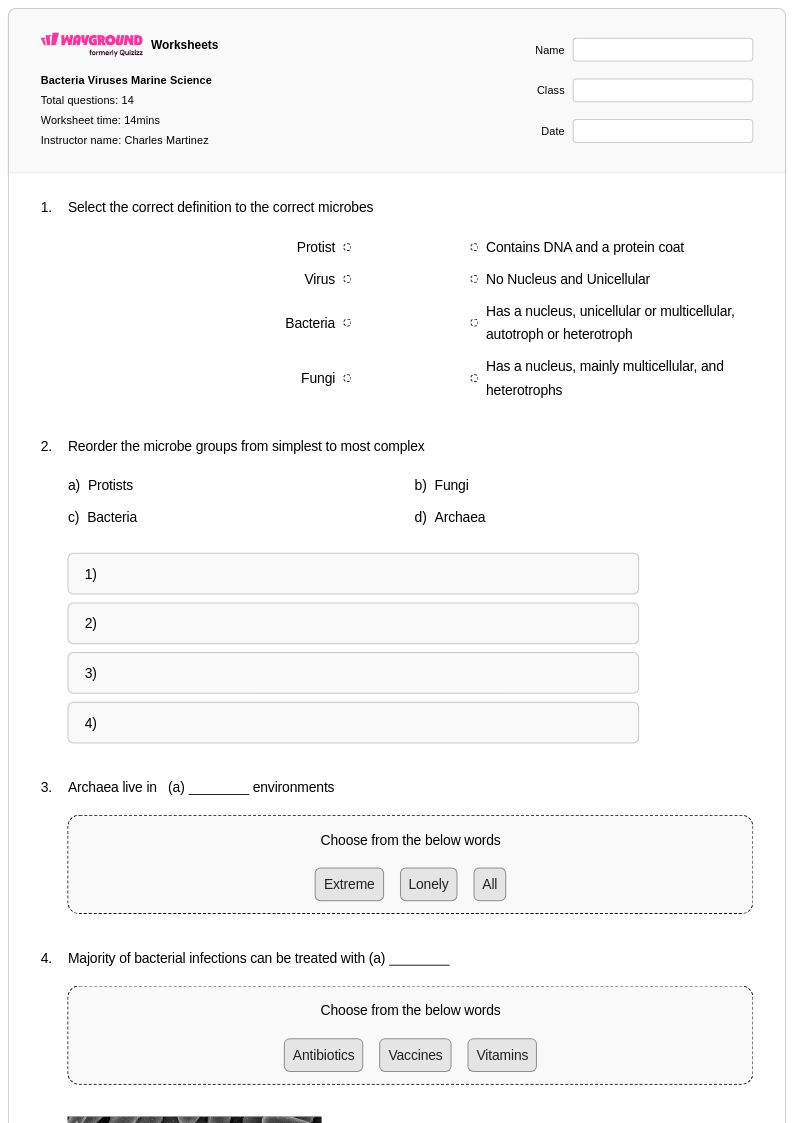
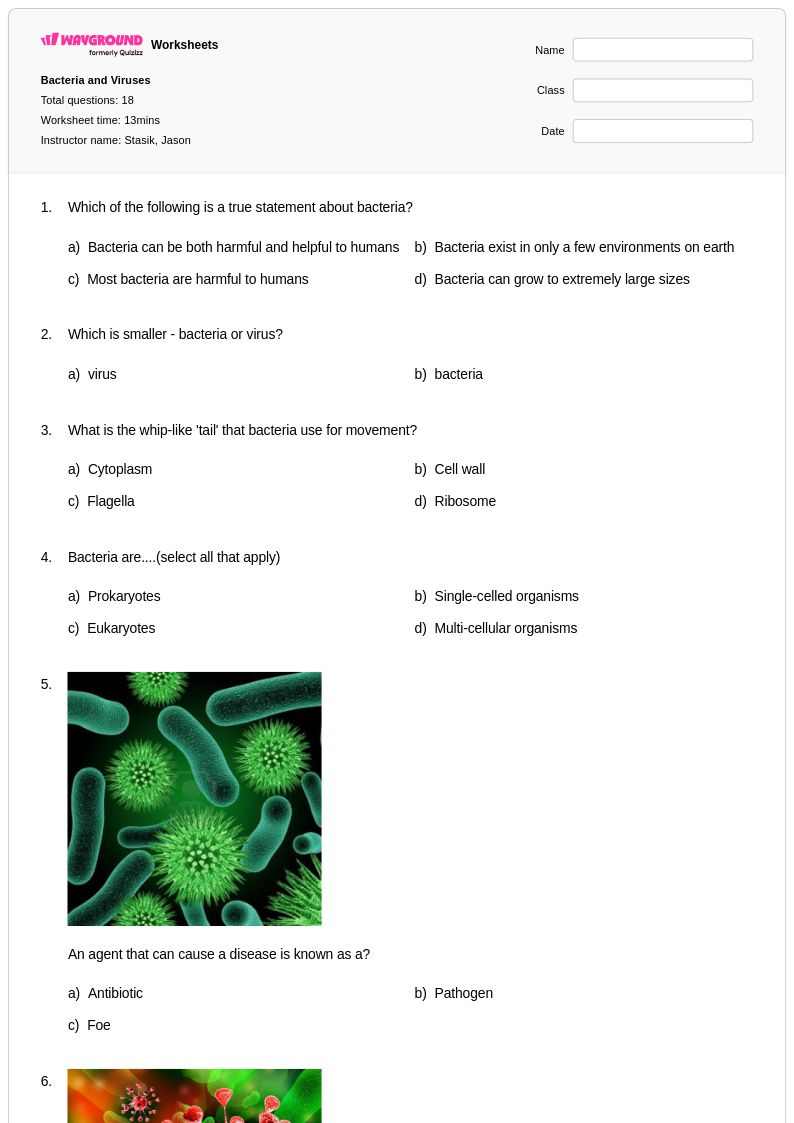
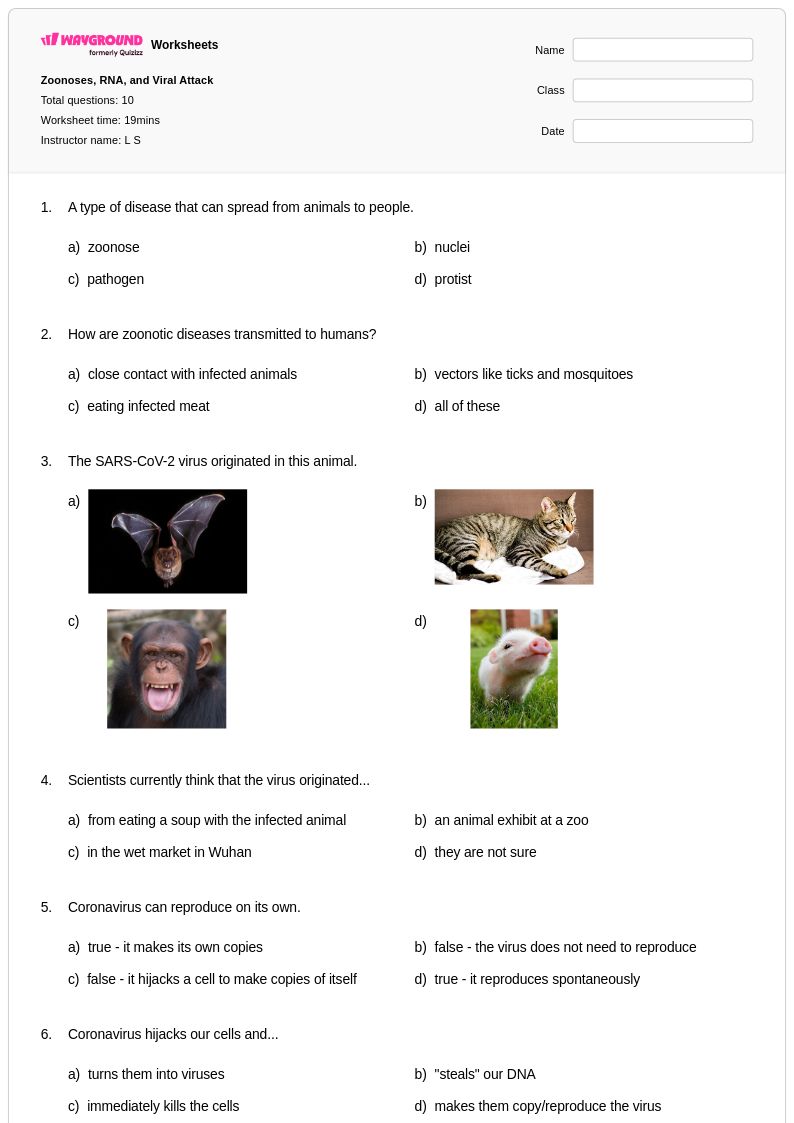
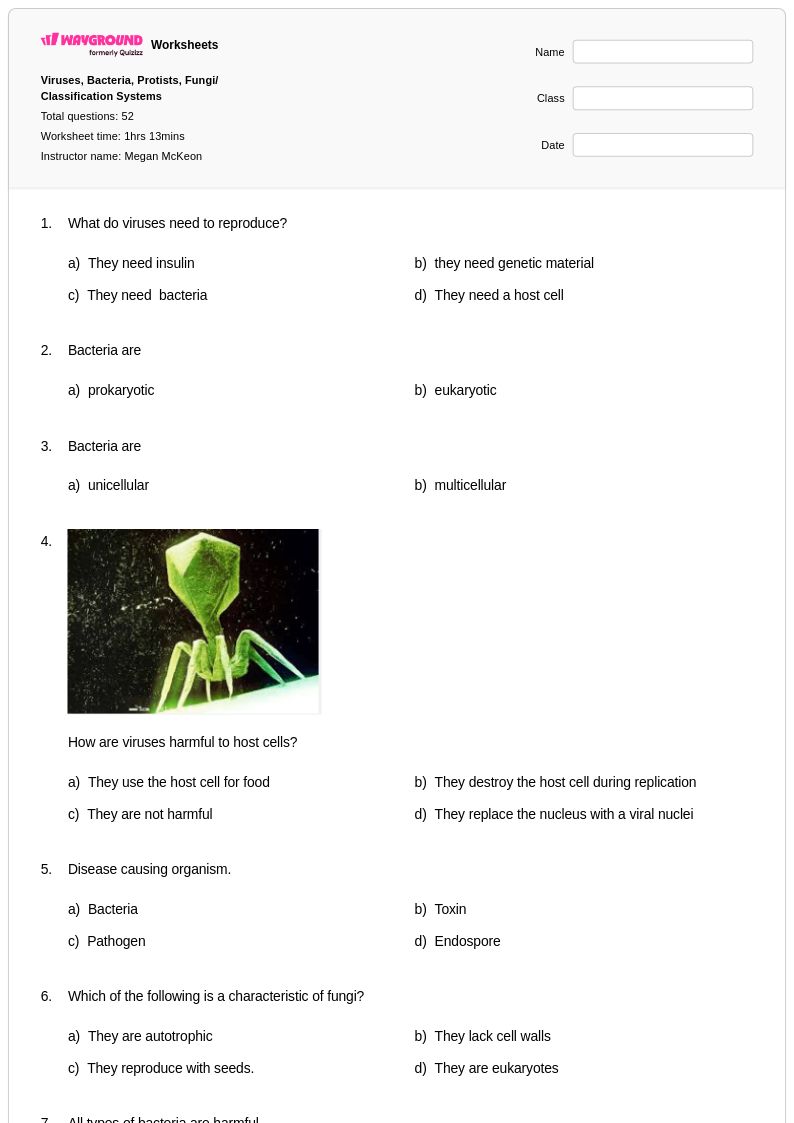
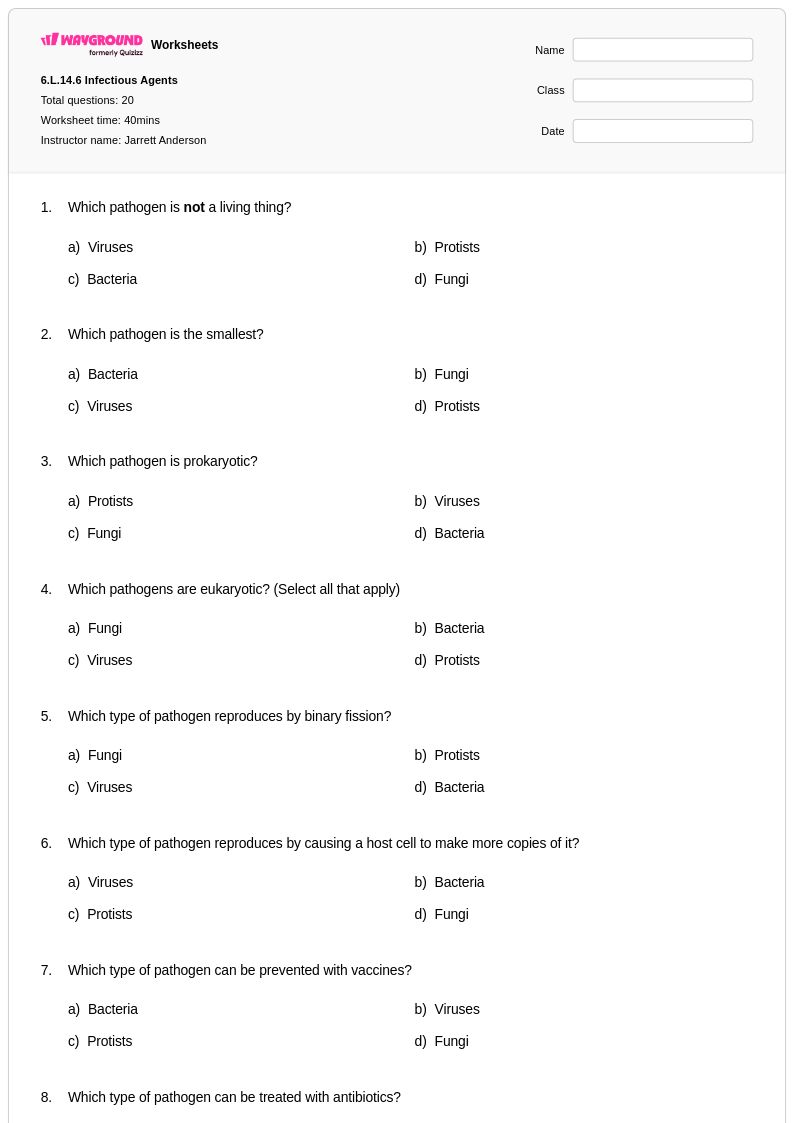
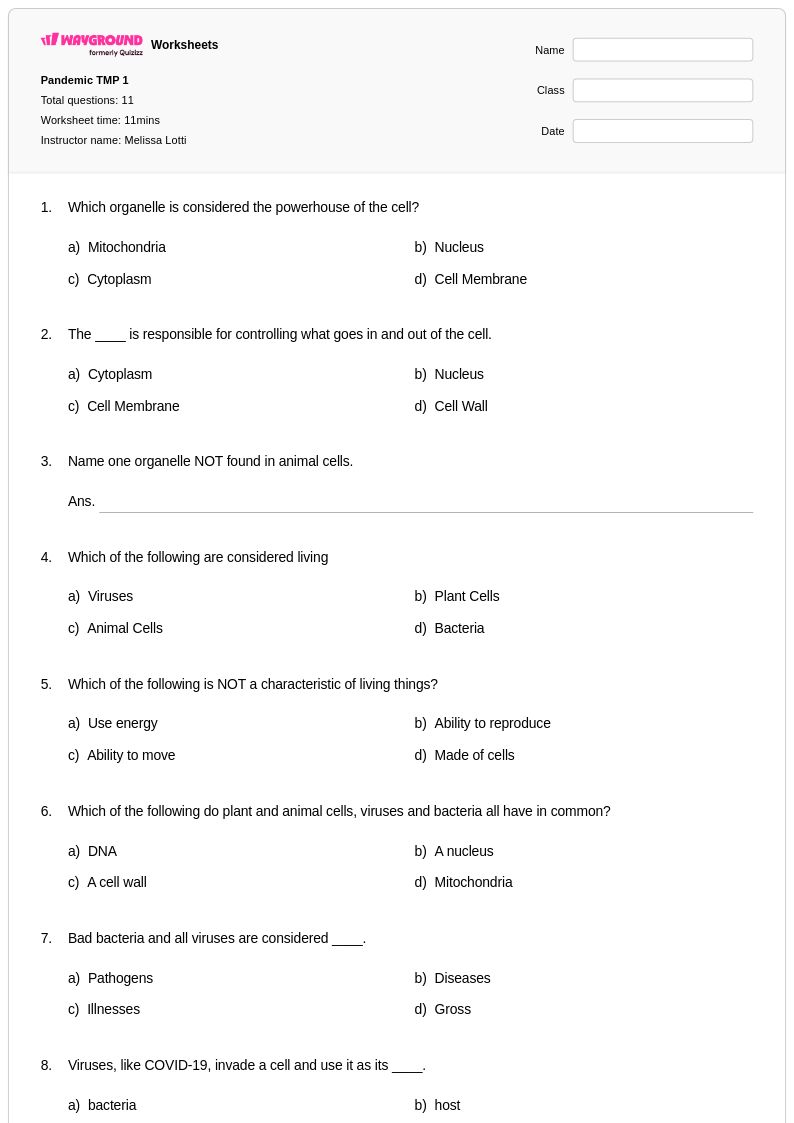
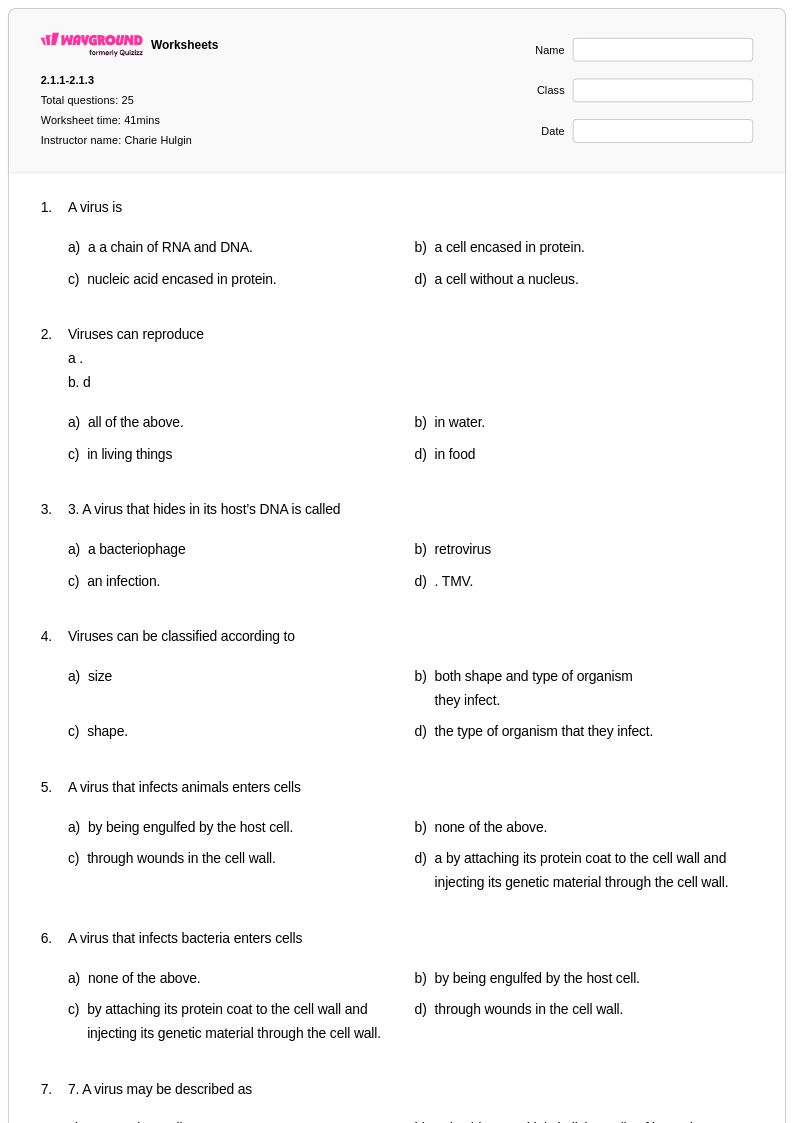
Explore our comprehensive collection of Grade 6 virus worksheets and printables that help students understand viral structure, reproduction, and disease transmission through engaging practice problems and detailed answer keys.
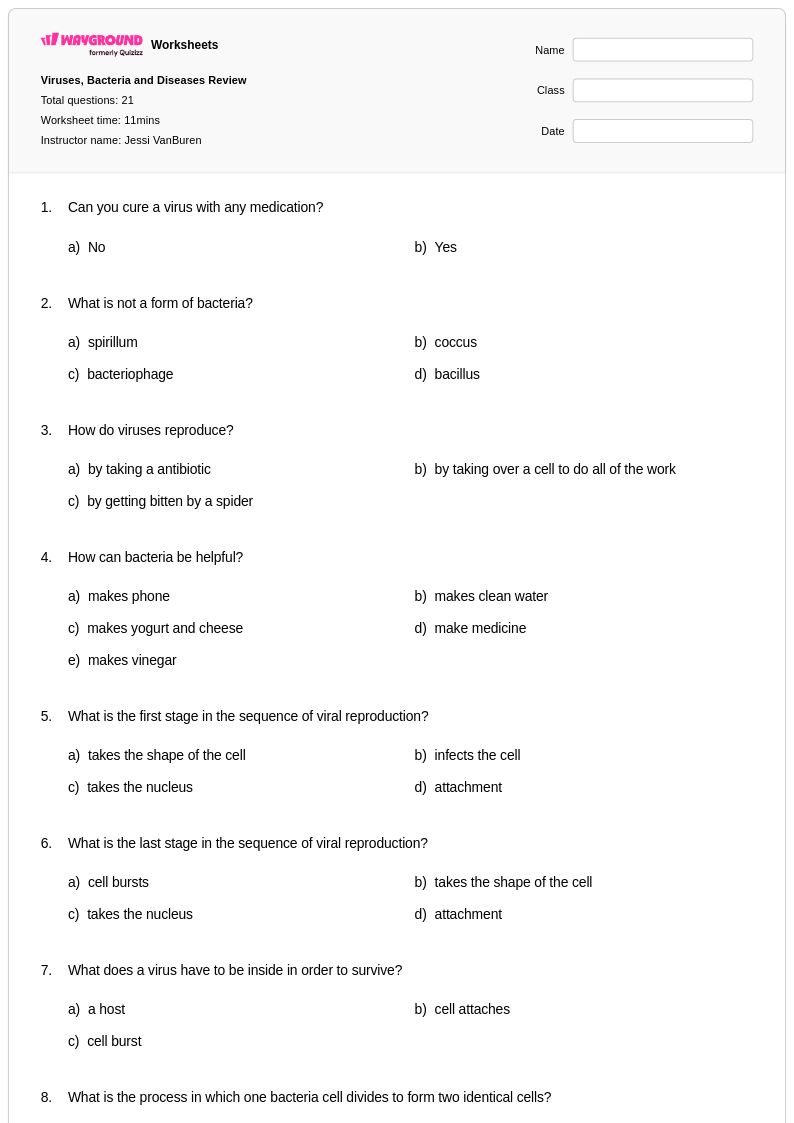
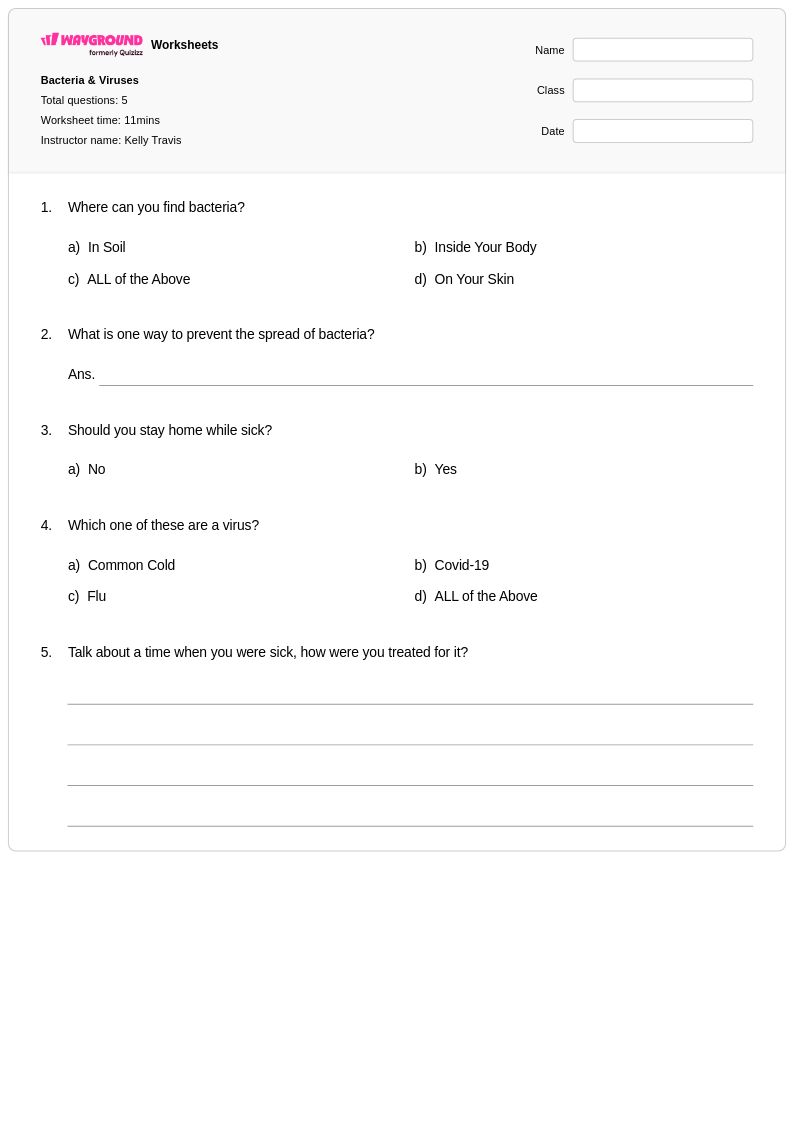
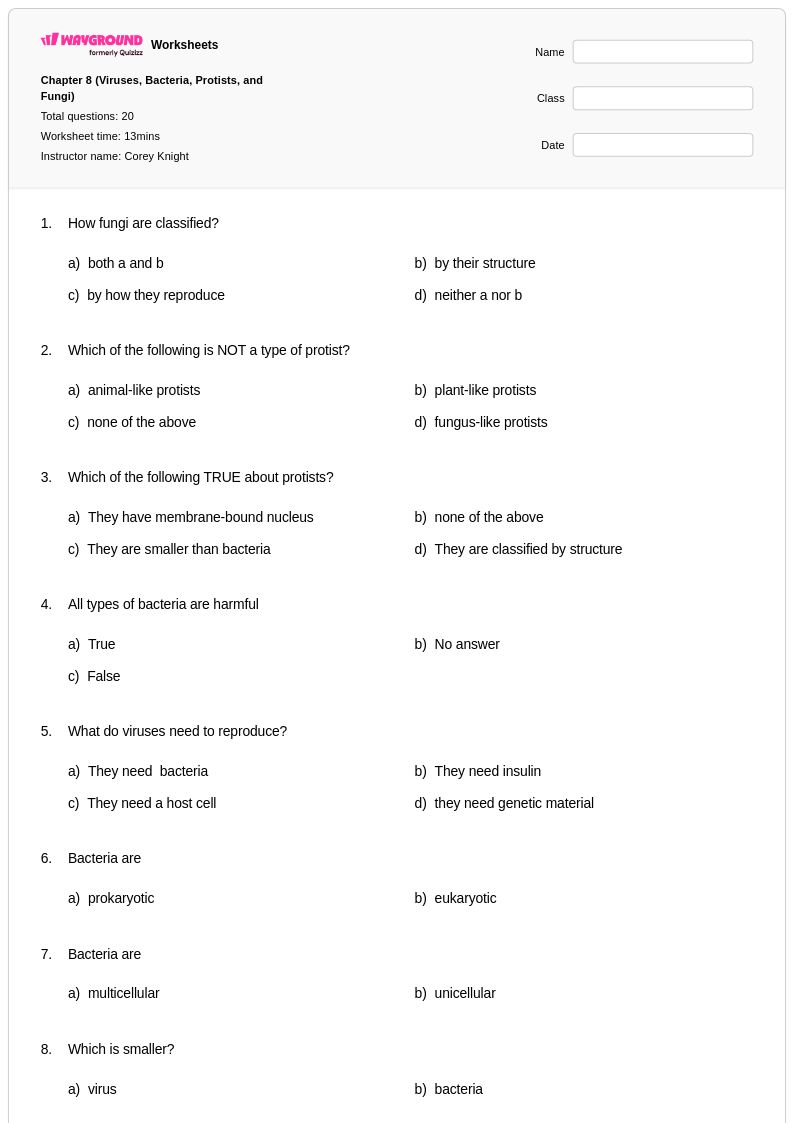
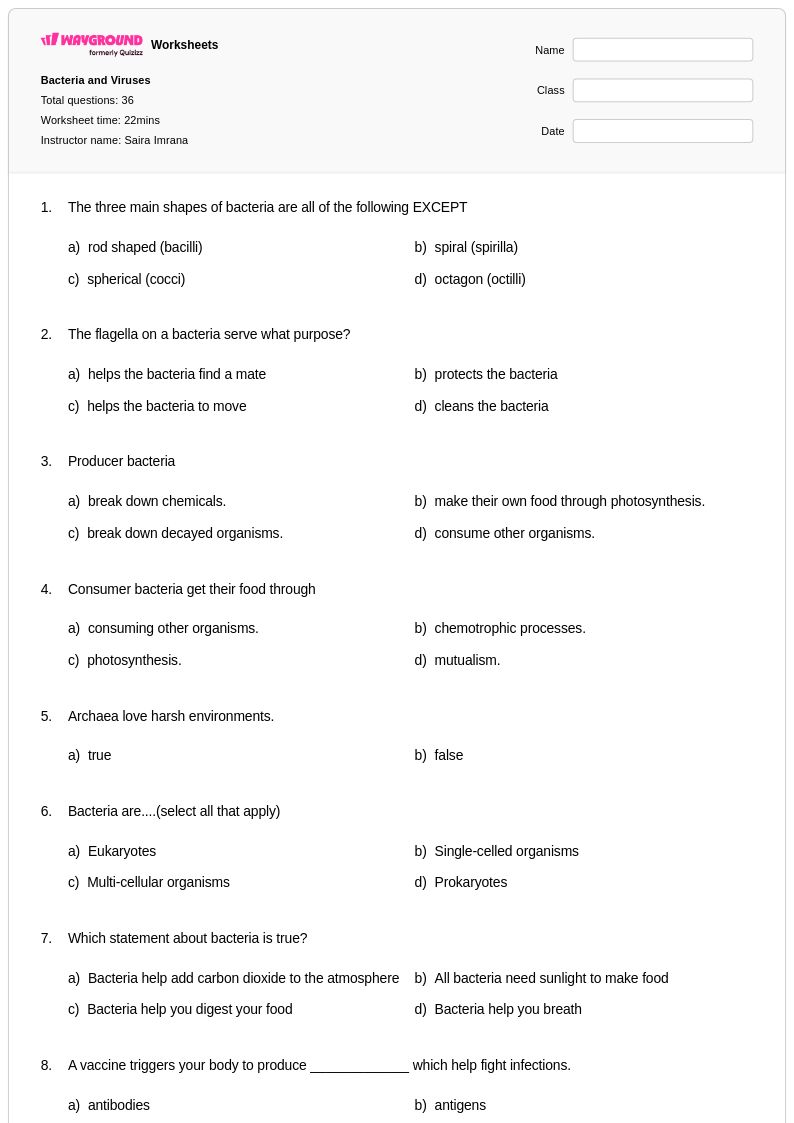
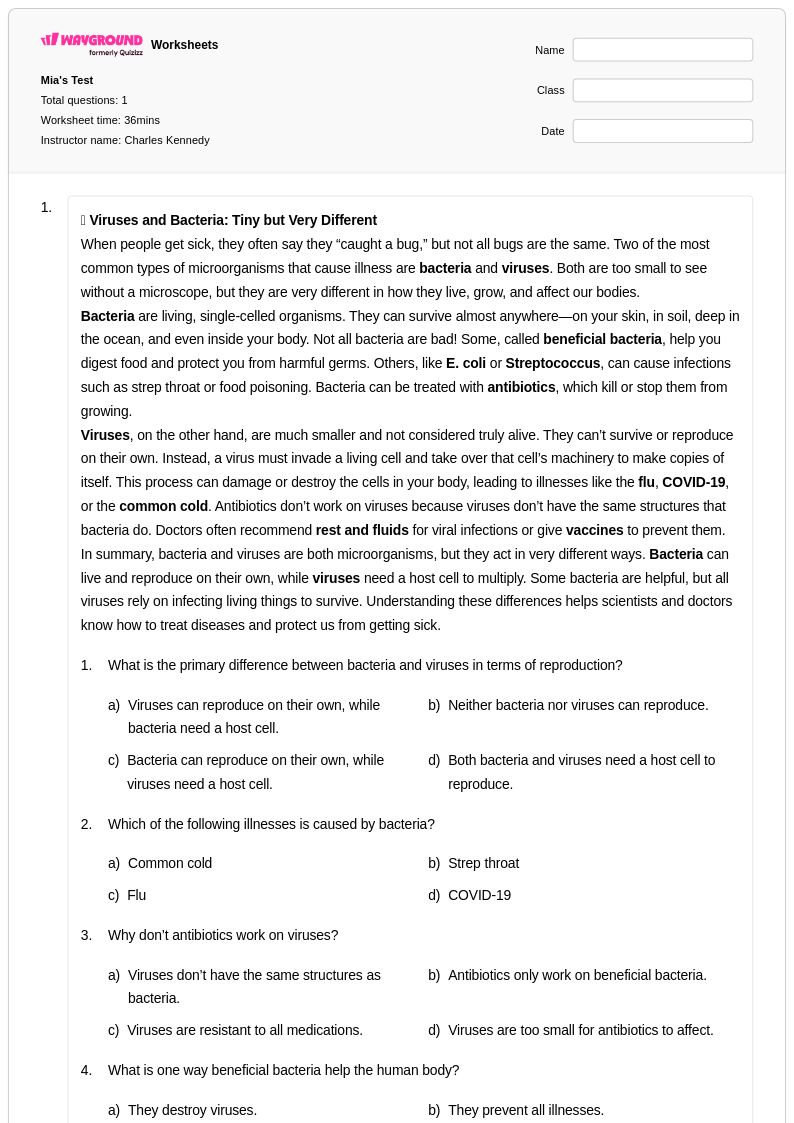
Viruses worksheets for Grade 6 students through Wayground (formerly Quizizz) provide comprehensive educational materials that help young learners understand these microscopic infectious agents and their biological significance. These carefully designed worksheets strengthen essential skills including identifying viral structures, comparing viruses to living organisms, analyzing viral reproduction cycles, and examining how viruses interact with host cells. Students engage with practice problems that cover fundamental concepts such as the differences between viruses and bacteria, how vaccines work to prevent viral infections, and the role viruses play in both disease and beneficial biological processes. Each worksheet collection includes detailed answer keys that support independent learning and self-assessment, while the free printable pdf format ensures accessibility for diverse classroom needs and home study environments.
Wayground (formerly Quizizz) empowers educators with an extensive library of millions of teacher-created virus worksheets specifically aligned with Grade 6 science standards and learning objectives. The platform's robust search and filtering capabilities allow teachers to quickly locate materials that match their specific curriculum requirements, whether focusing on viral structure, replication mechanisms, or public health applications. Advanced differentiation tools enable instructors to customize worksheets for varying ability levels within their classrooms, supporting both remediation for struggling learners and enrichment opportunities for advanced students. Available in both printable and digital formats including downloadable pdfs, these virus worksheet collections streamline lesson planning while providing flexible resources for skill practice, formative assessment, and reinforcement of key biological concepts throughout the academic year.
FAQs
How do I teach students the difference between viruses and living organisms?
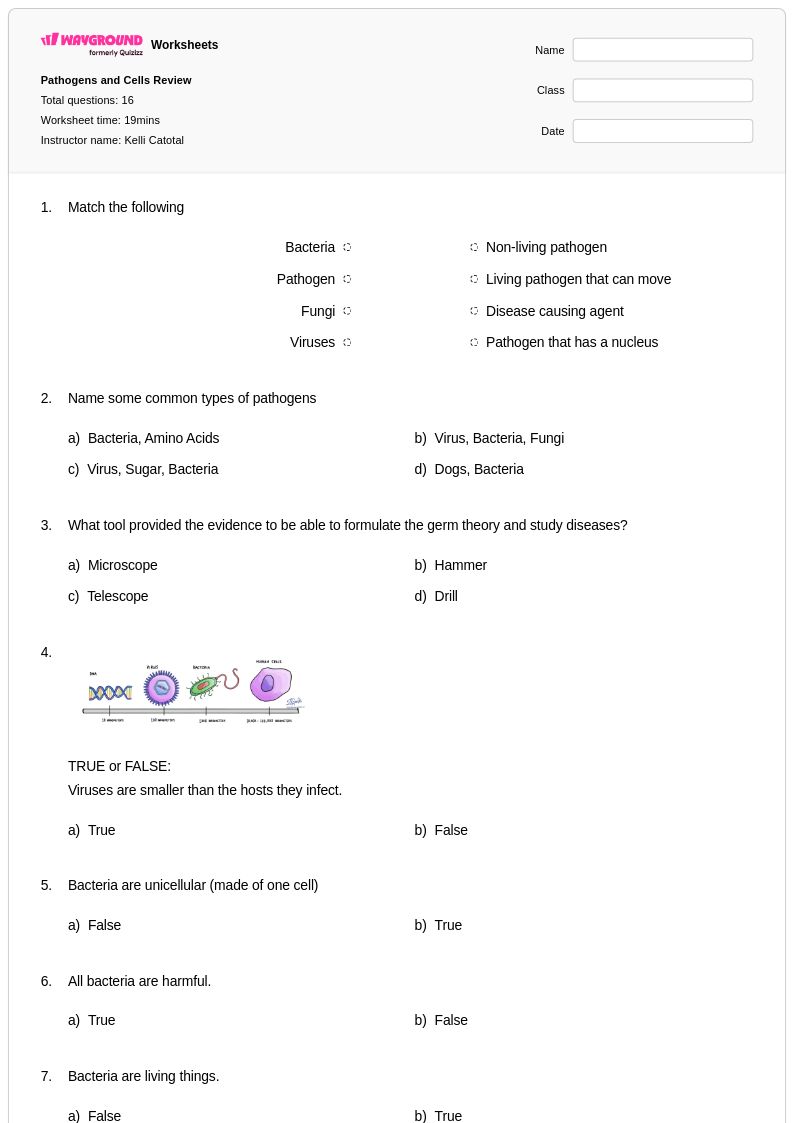
The most effective approach is to have students compare viruses against the established characteristics of life, such as cellular structure, metabolism, and independent reproduction. Viruses lack cells, cannot carry out metabolic processes on their own, and can only replicate inside a host cell, which places them outside the traditional definition of living things. Anchoring this lesson in a structured comparison activity helps students internalize the distinction rather than simply memorizing it.
What topics should a virus biology worksheet cover for a complete unit?
A thorough virus worksheet unit should cover viral structure and classification, the lytic and lysogenic replication cycles, host-pathogen interactions, viral transmission mechanisms, and the role viruses play in disease and biotechnology. Including practice problems that ask students to analyze and compare these concepts, rather than just recall them, builds the critical thinking skills needed for assessments. Answer keys are essential for efficient grading and for allowing students to self-check their work.
What exercises help students understand how viruses replicate inside host cells?
Sequencing activities work particularly well for viral replication, as they require students to order the stages of the lytic or lysogenic cycle rather than passively read about them. Diagram labeling and fill-in-the-blank exercises that trace how a virus attaches to, enters, and hijacks a host cell reinforce the mechanism step by step. Comparing the two replication cycles side by side in a worksheet format helps students identify where the pathways diverge and why that matters for disease outcomes.
What misconceptions do students commonly have about viruses?
A persistent misconception is that viruses are simply very small bacteria, which leads students to incorrectly assume that antibiotics can treat viral infections. Students also frequently confuse the lytic and lysogenic cycles, often believing the lysogenic cycle always leads to immediate cell death. Another common error is assuming all viruses cause disease, when in reality many viral infections are asymptomatic or even exploited beneficially in biotechnology.
How can I use these virus worksheets in both print and digital classrooms?
Wayground's virus worksheets are available as printable PDFs for traditional classroom use and in digital formats for technology-integrated learning environments, so they work equally well whether students are at desks or on devices. Teachers can also host the worksheets as a quiz directly on Wayground, enabling real-time student responses and automatic scoring. This flexibility means the same resource can serve a face-to-face lesson one day and a remote or hybrid session the next without any additional preparation.
How can I support students who struggle with virus biology concepts?
Differentiation is key for students who find virology abstract: selecting worksheets at a lower complexity level and pairing them with visual aids like annotated viral diagrams can reduce cognitive overload. On Wayground, teachers can enable accommodations such as Read Aloud, which has questions read to students audibly, and reduced answer choices, which limits the number of options displayed to make multiple-choice items more manageable. These settings can be applied to individual students without affecting the experience of the rest of the class.