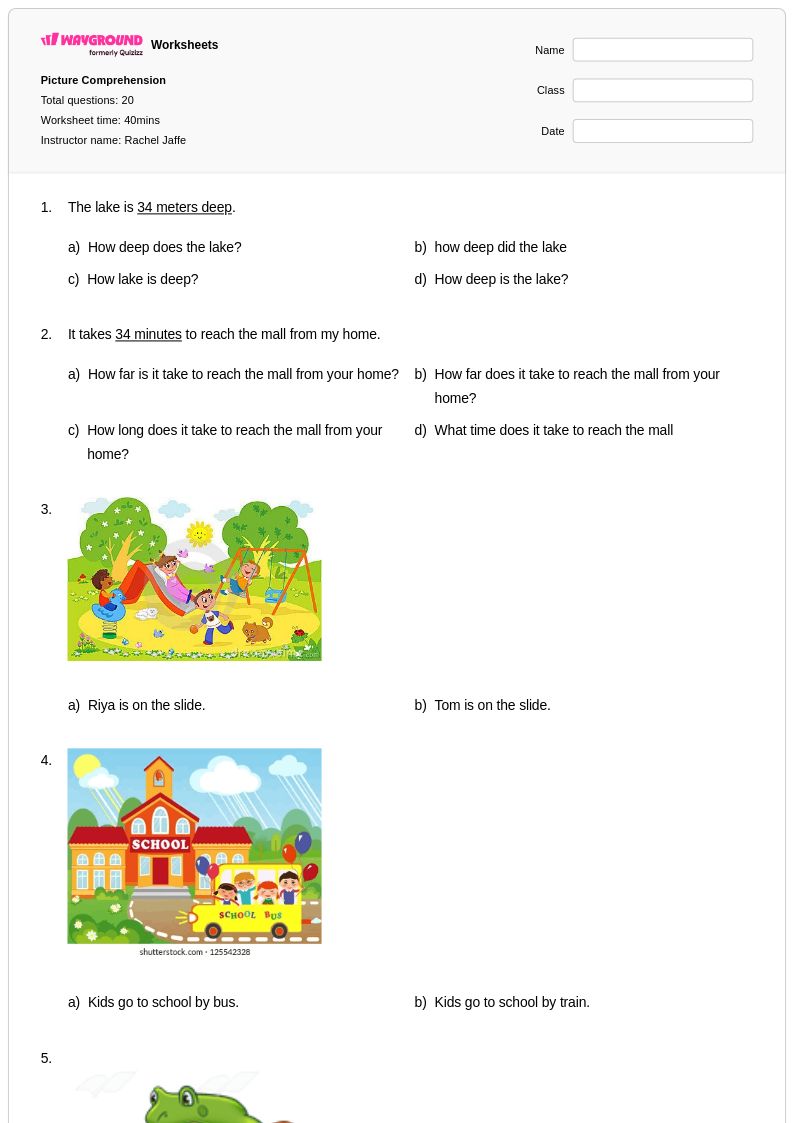
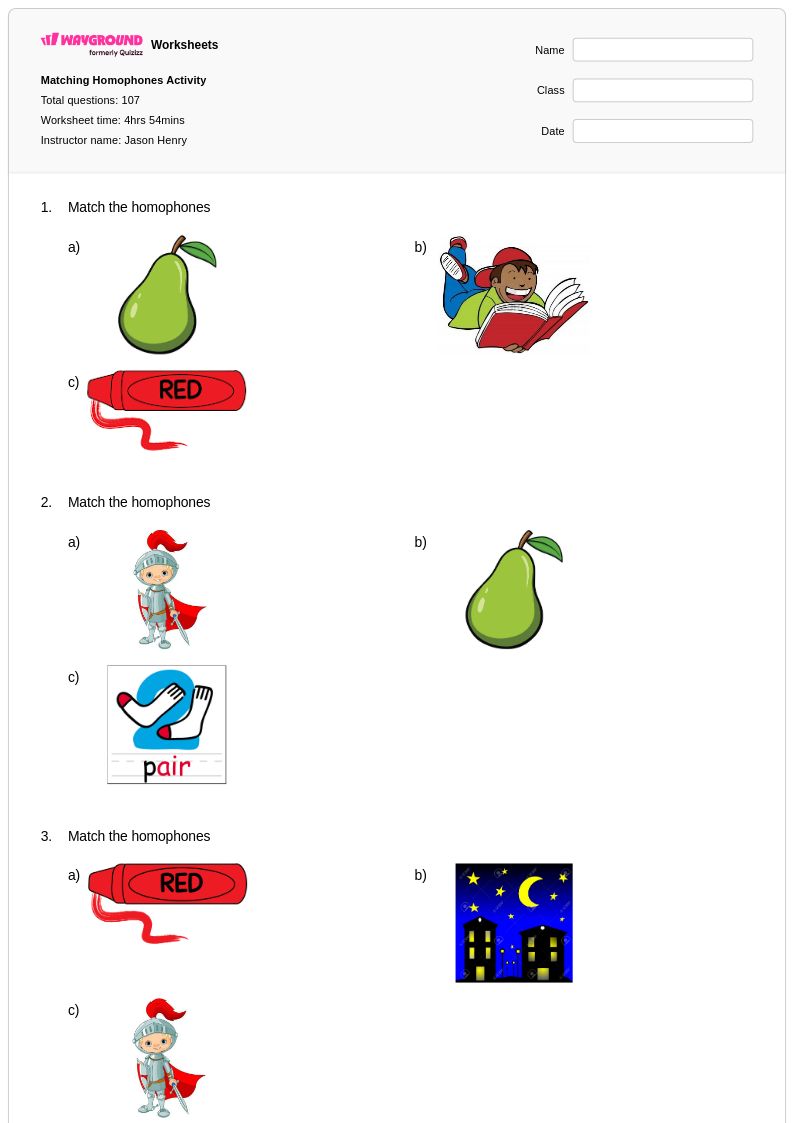
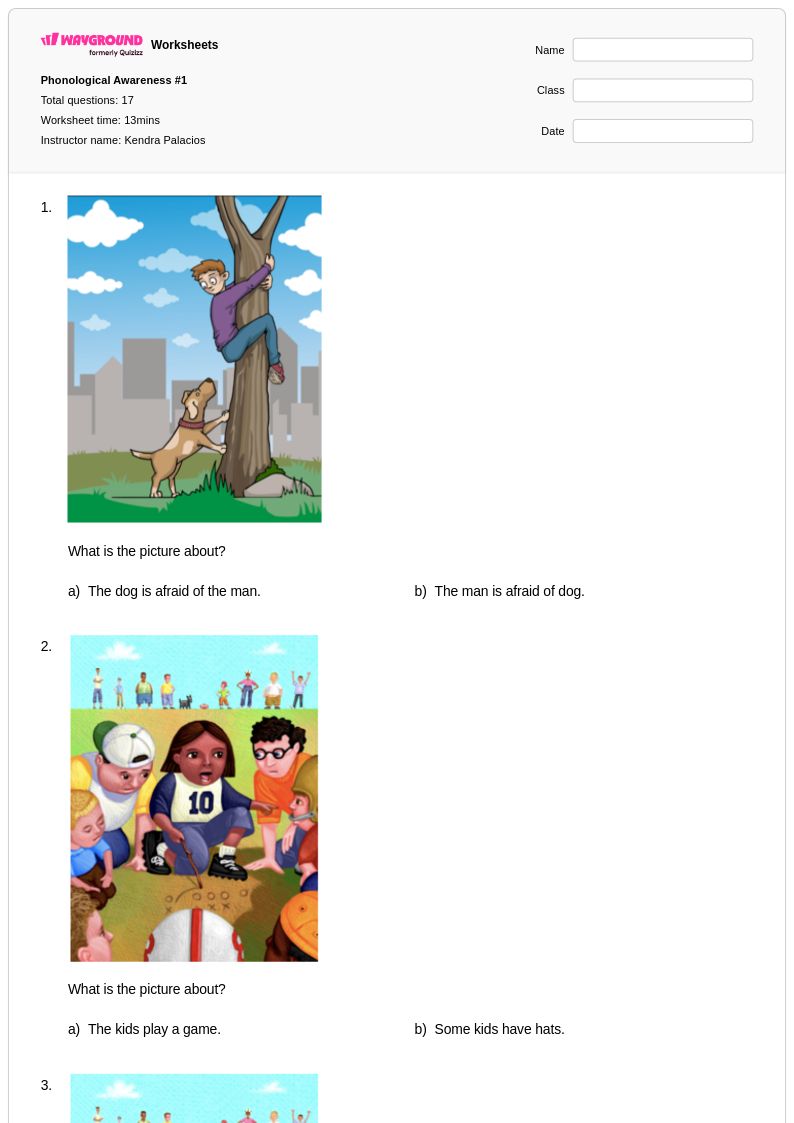
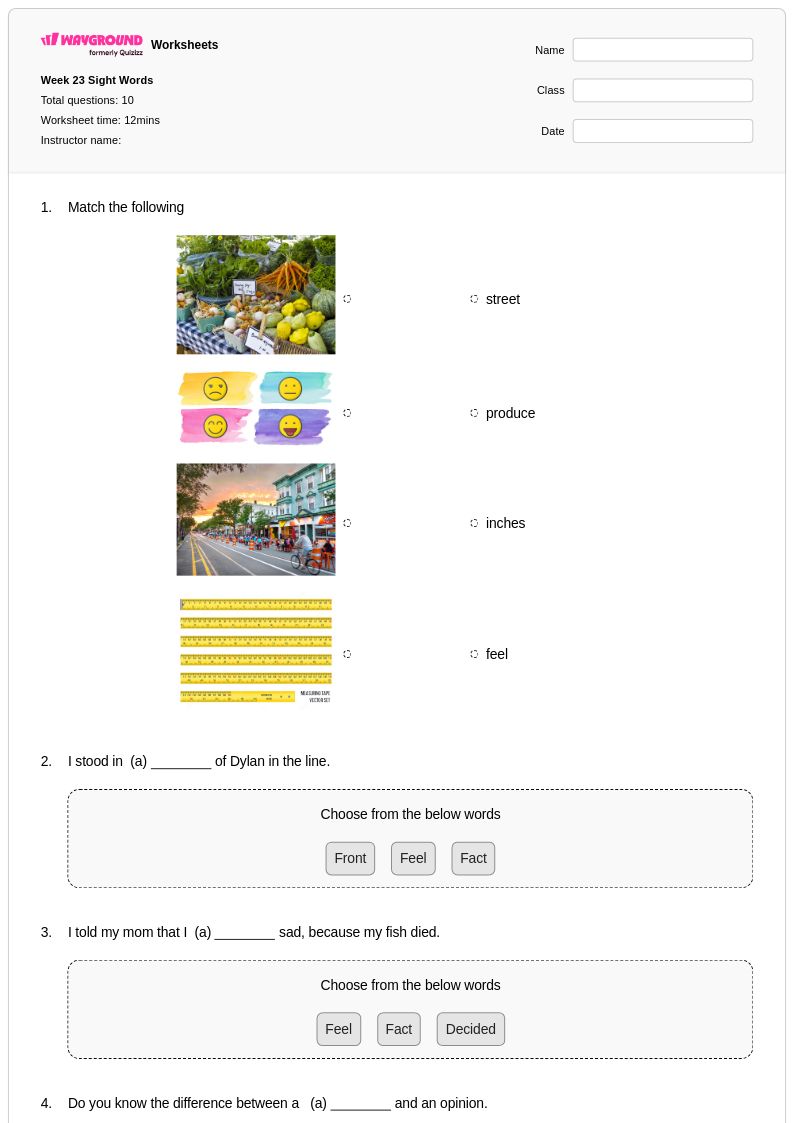
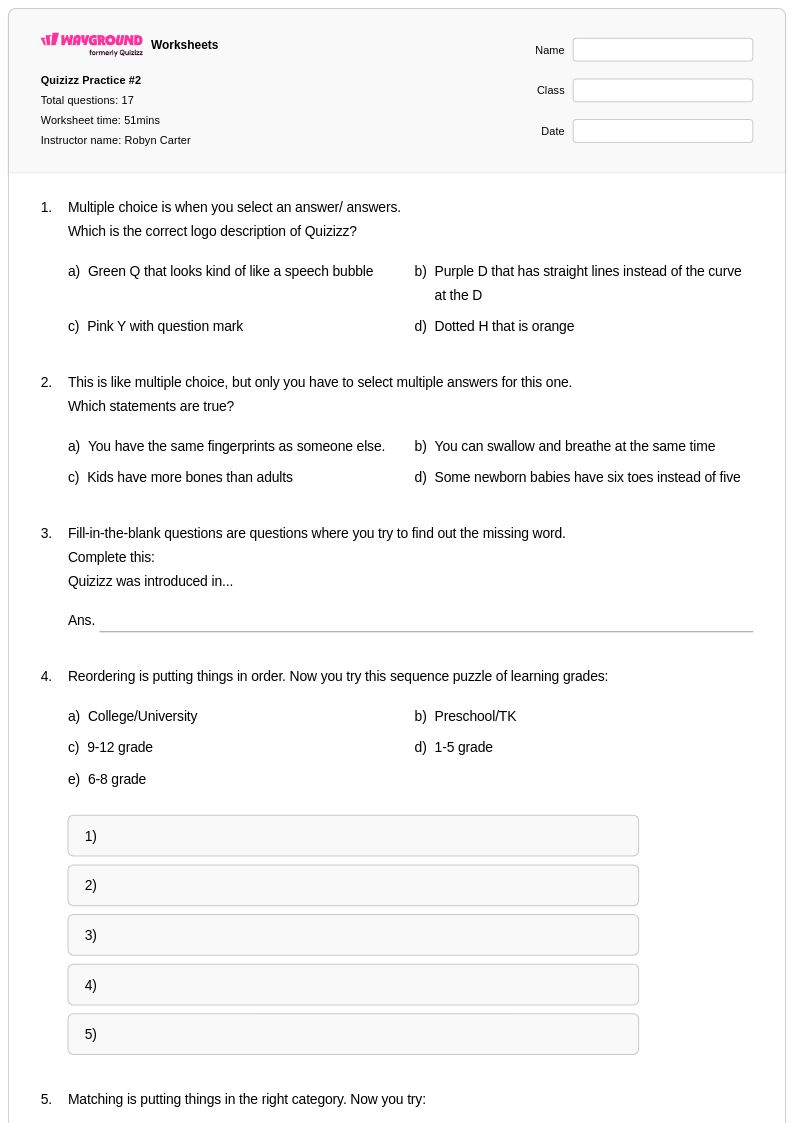
Free Printable Word-picture Matching Worksheets for Grade 2
Explore Grade 2 word-picture matching worksheets and printables that help students strengthen vocabulary recognition skills through engaging practice problems, complete with answer keys and free PDF downloads.
Explore printable Word-picture Matching worksheets for Grade 2
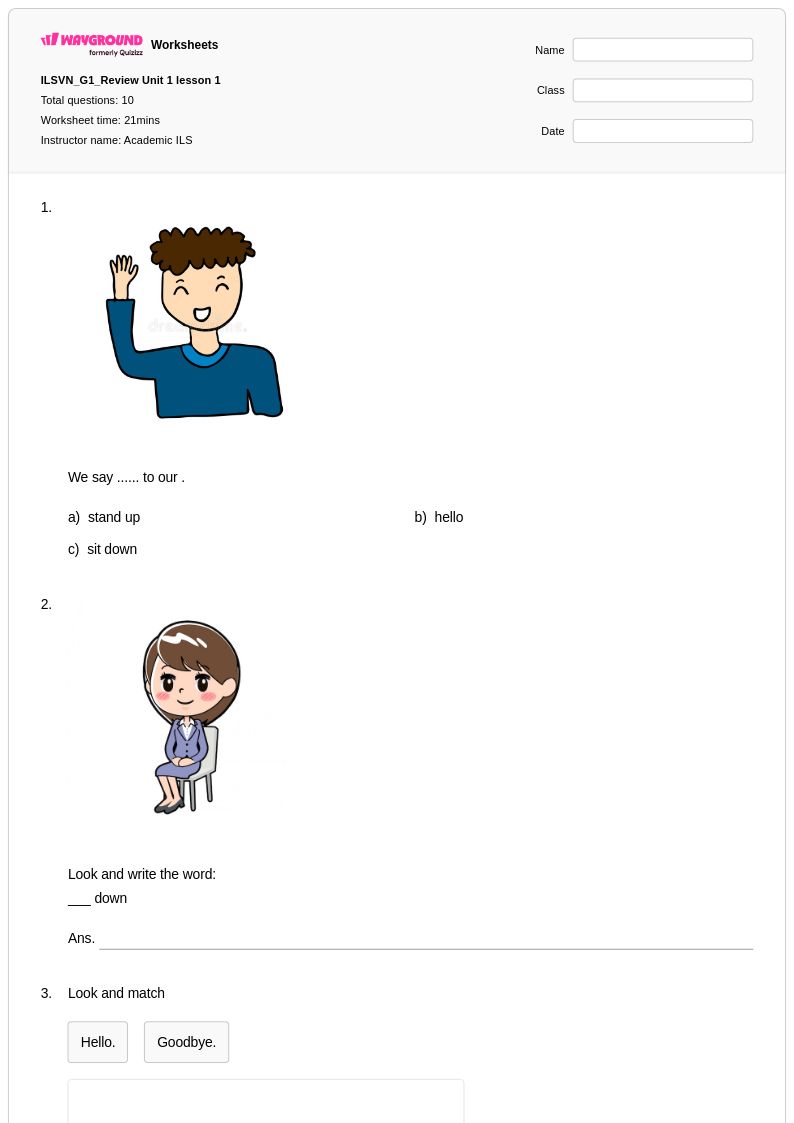
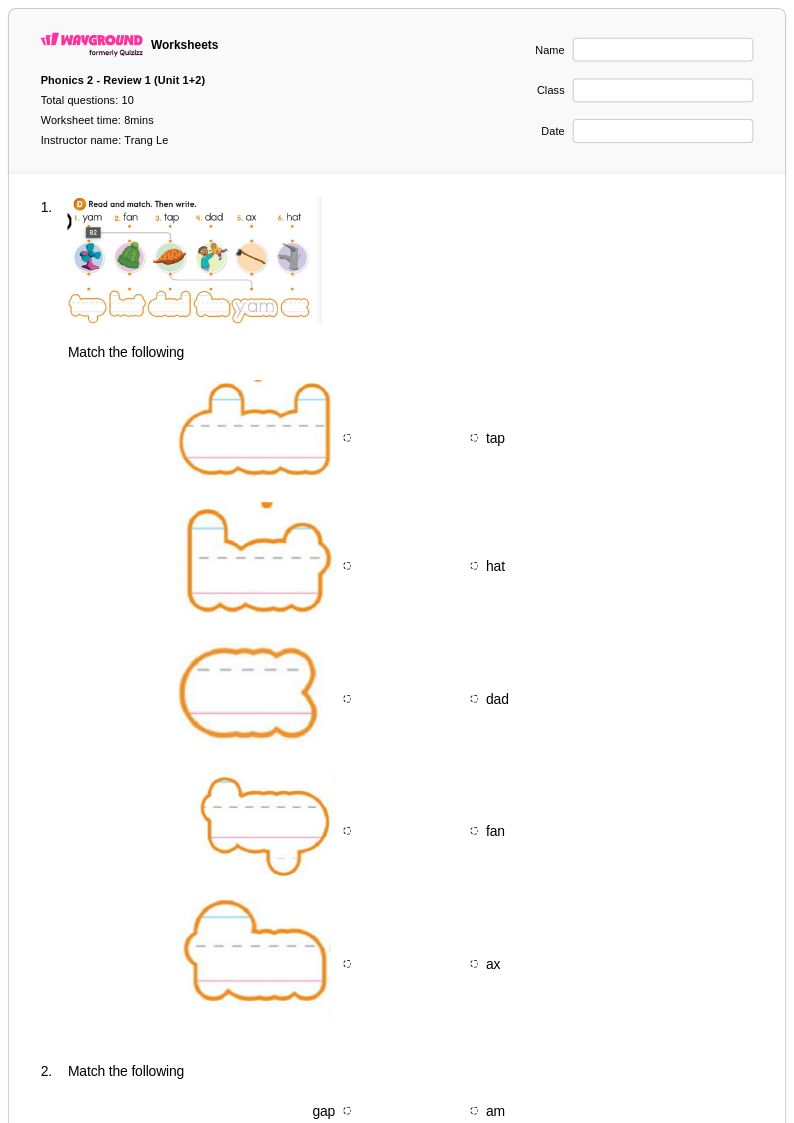
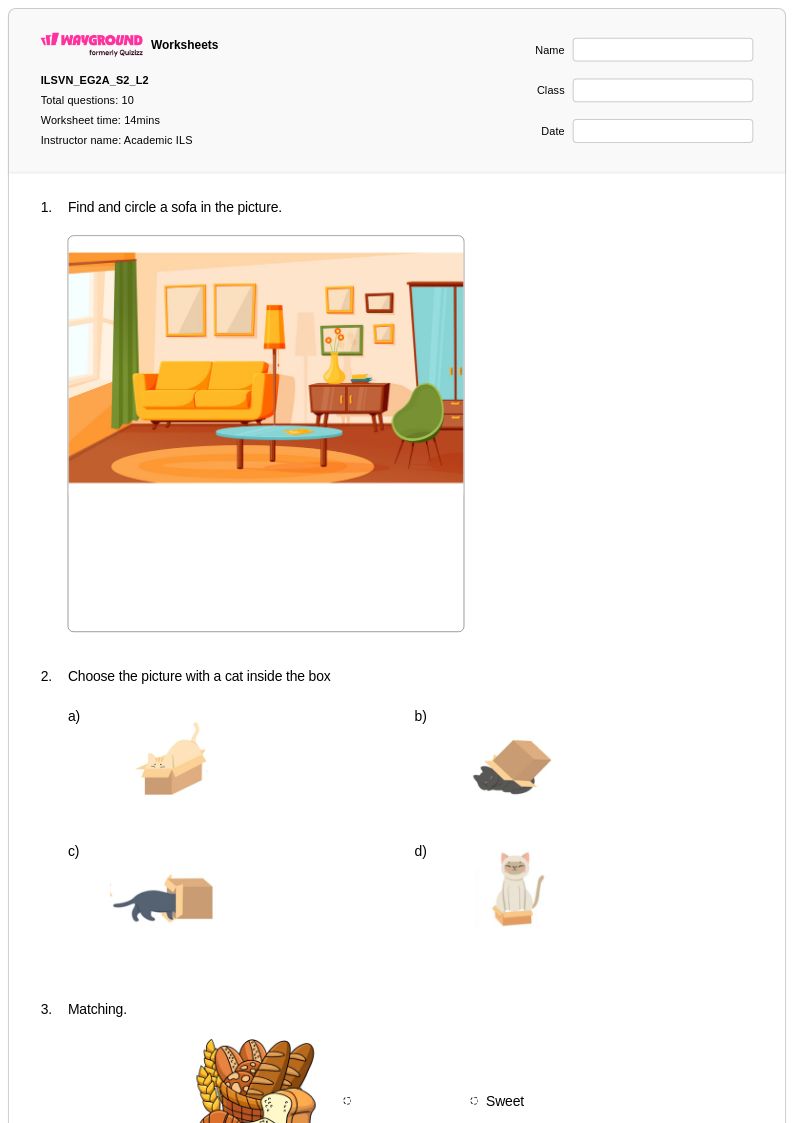
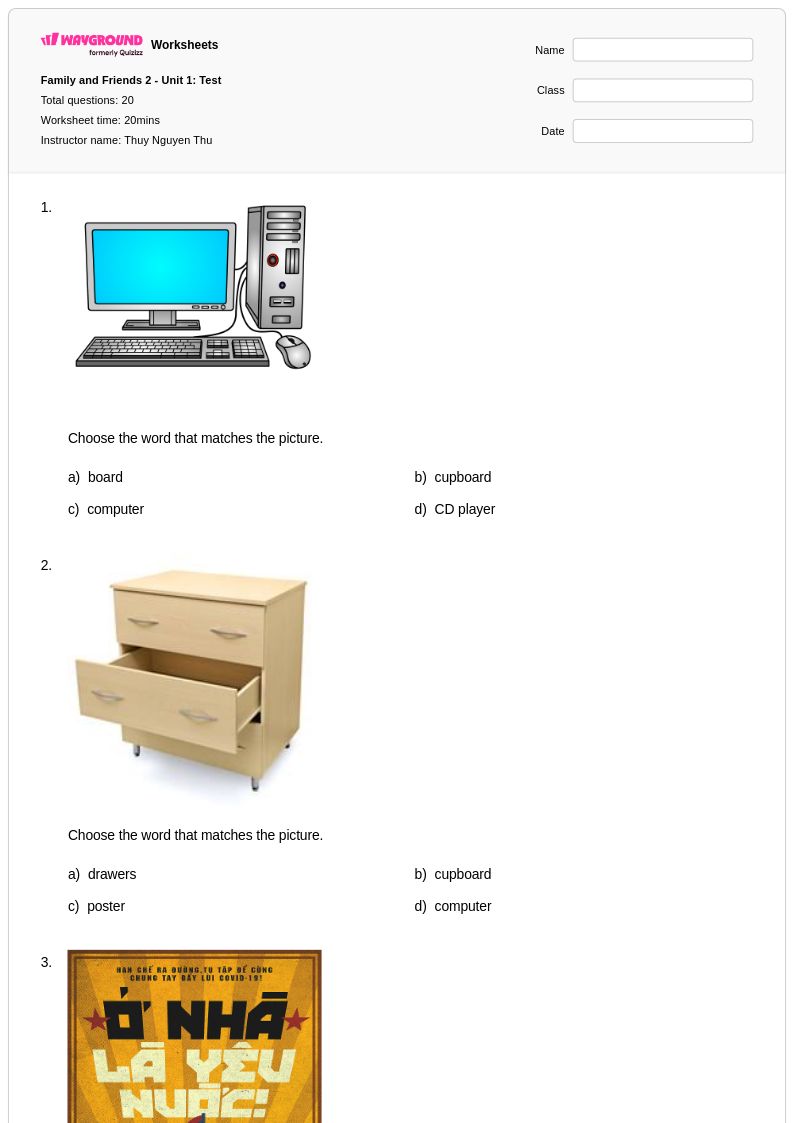
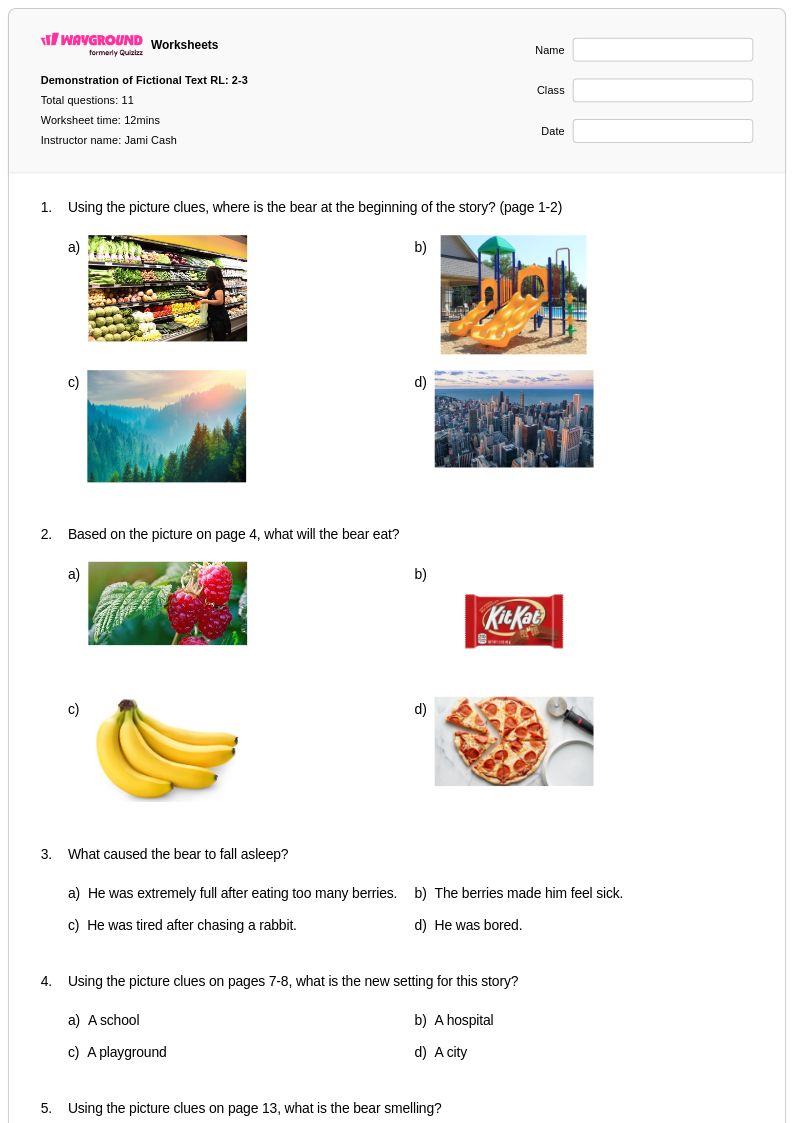
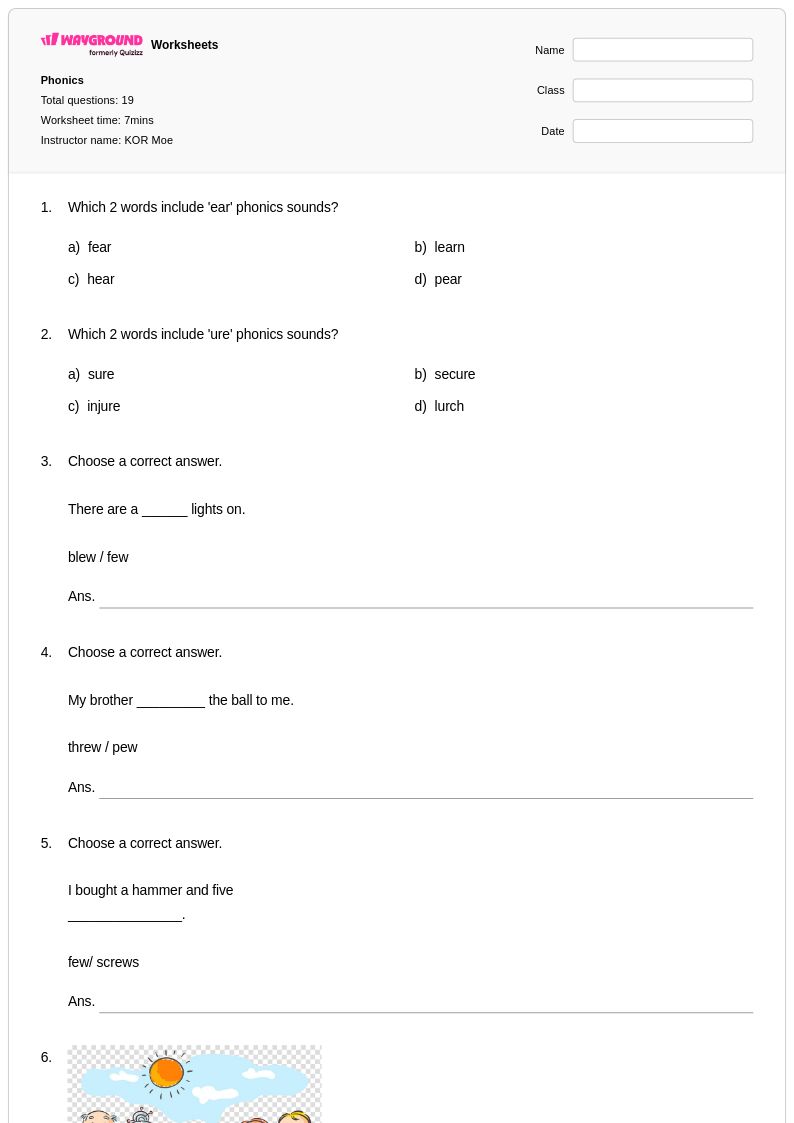
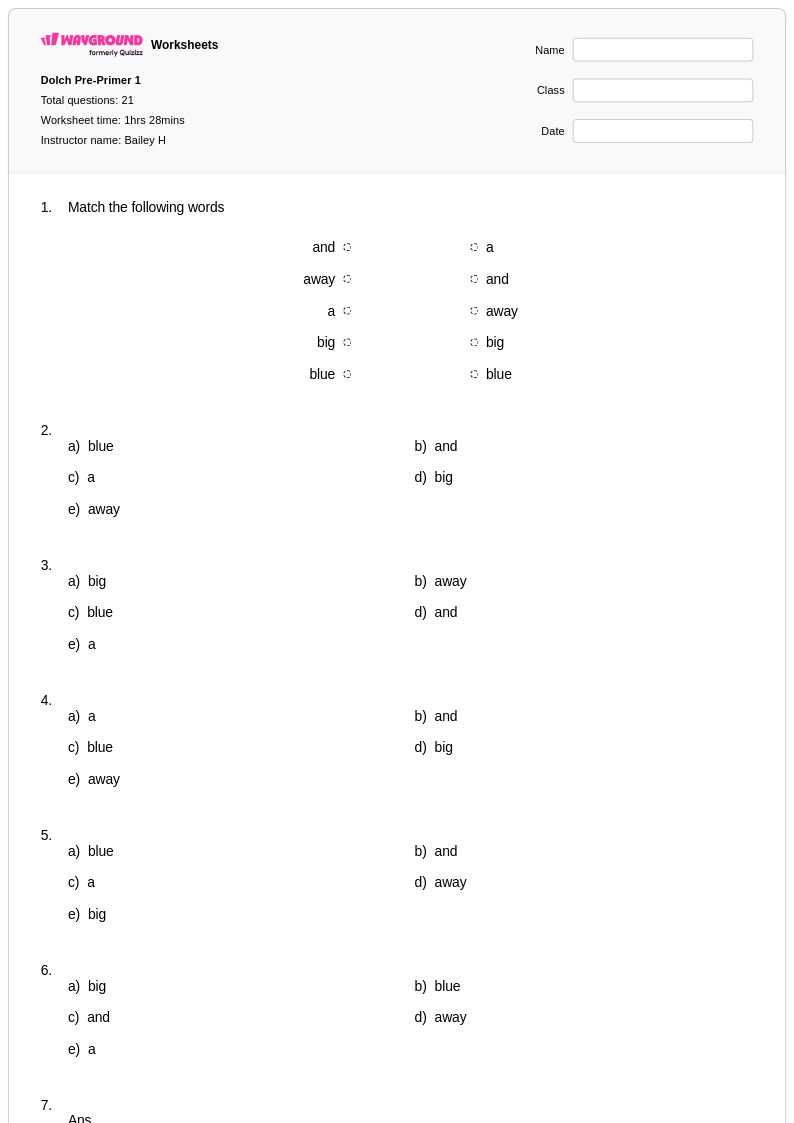
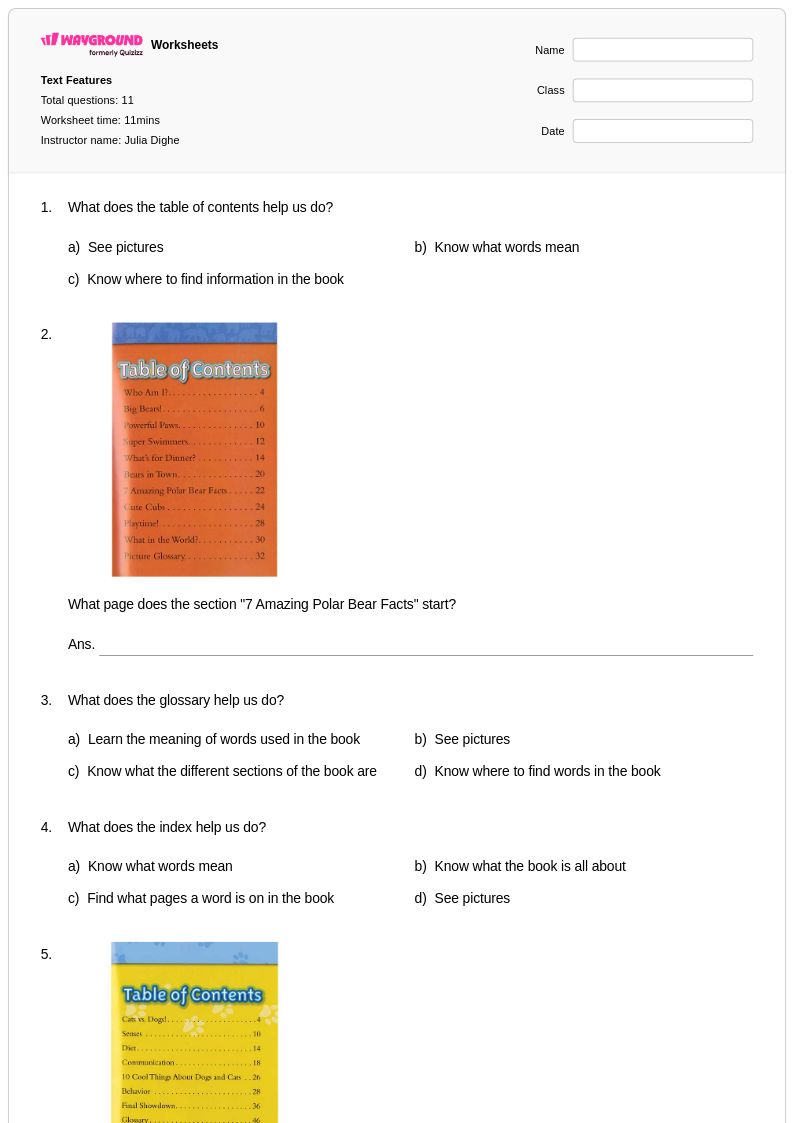
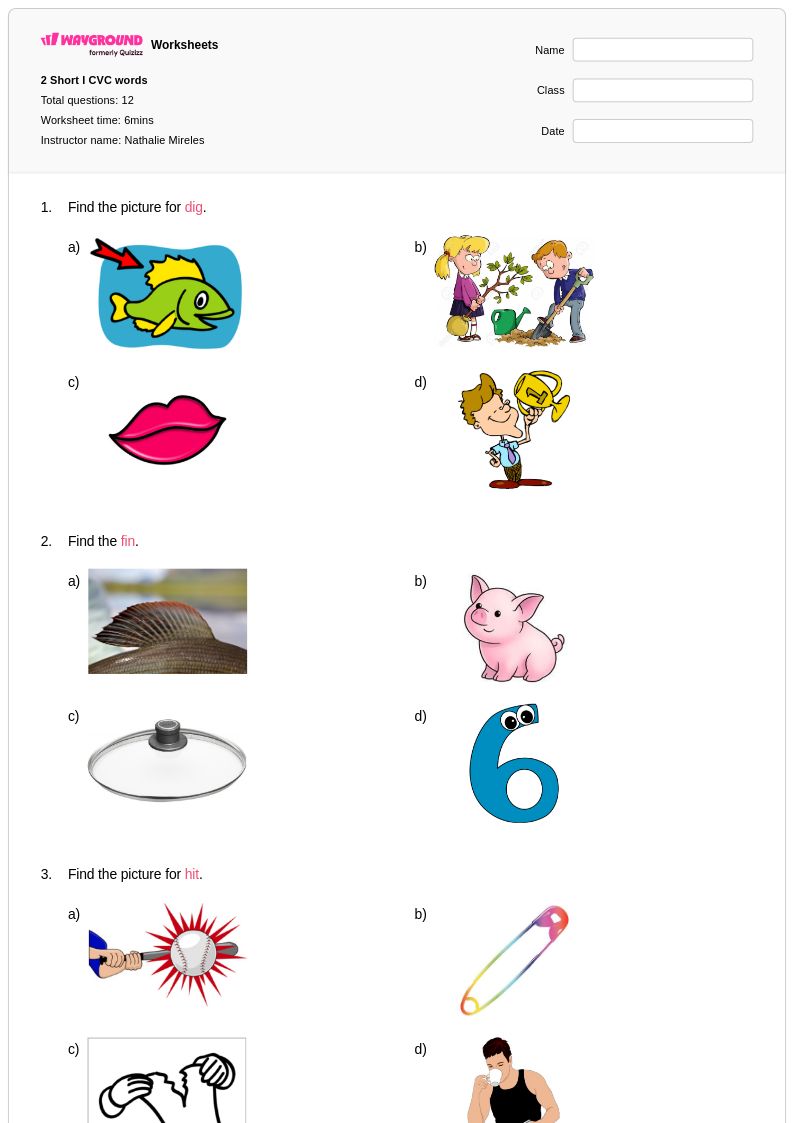
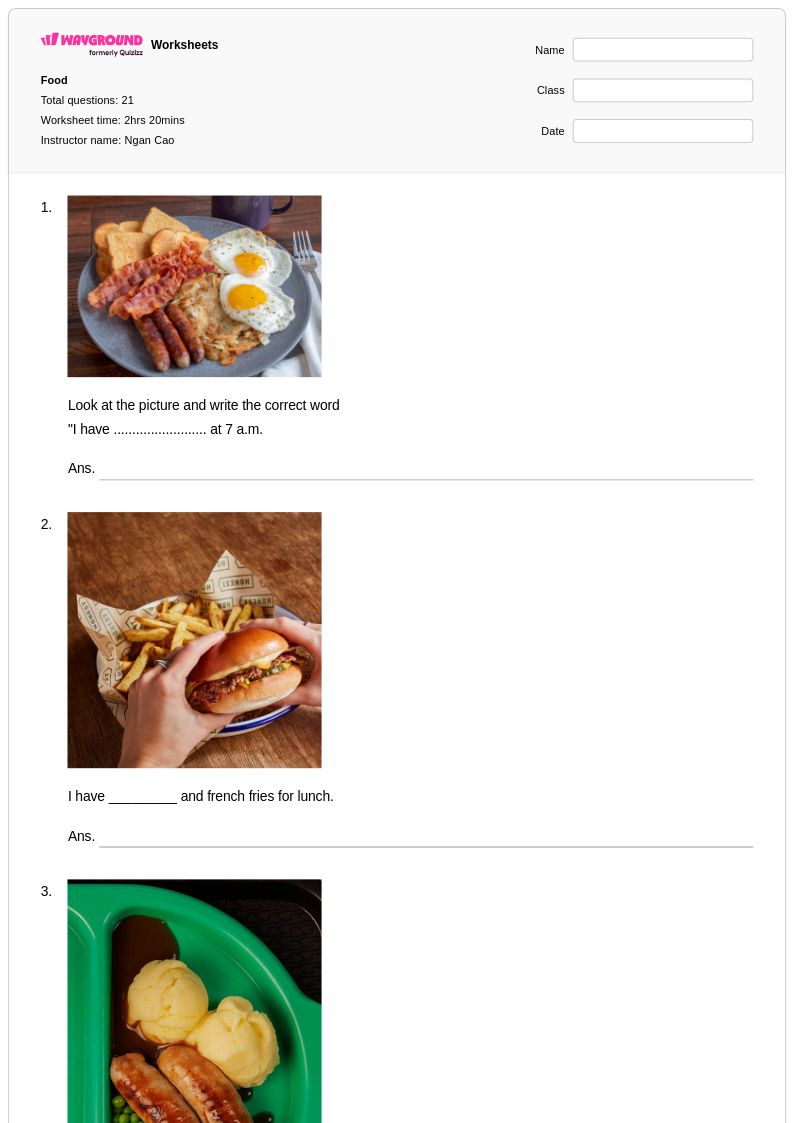
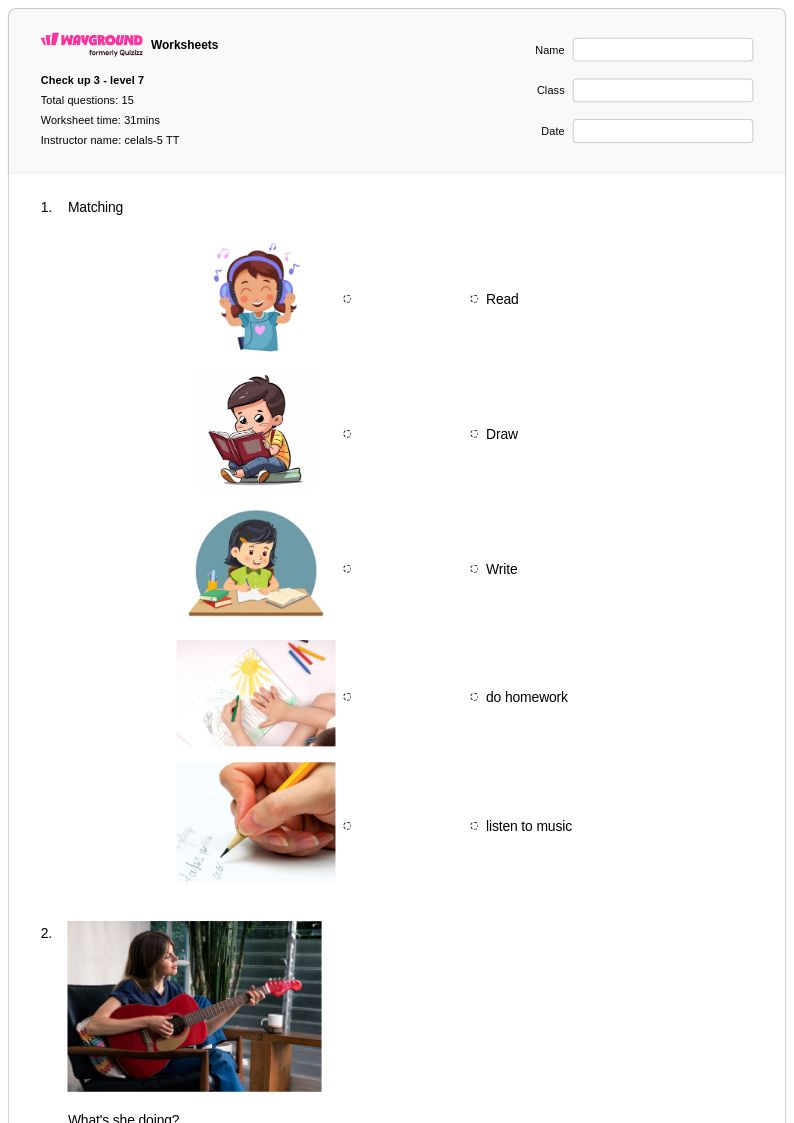
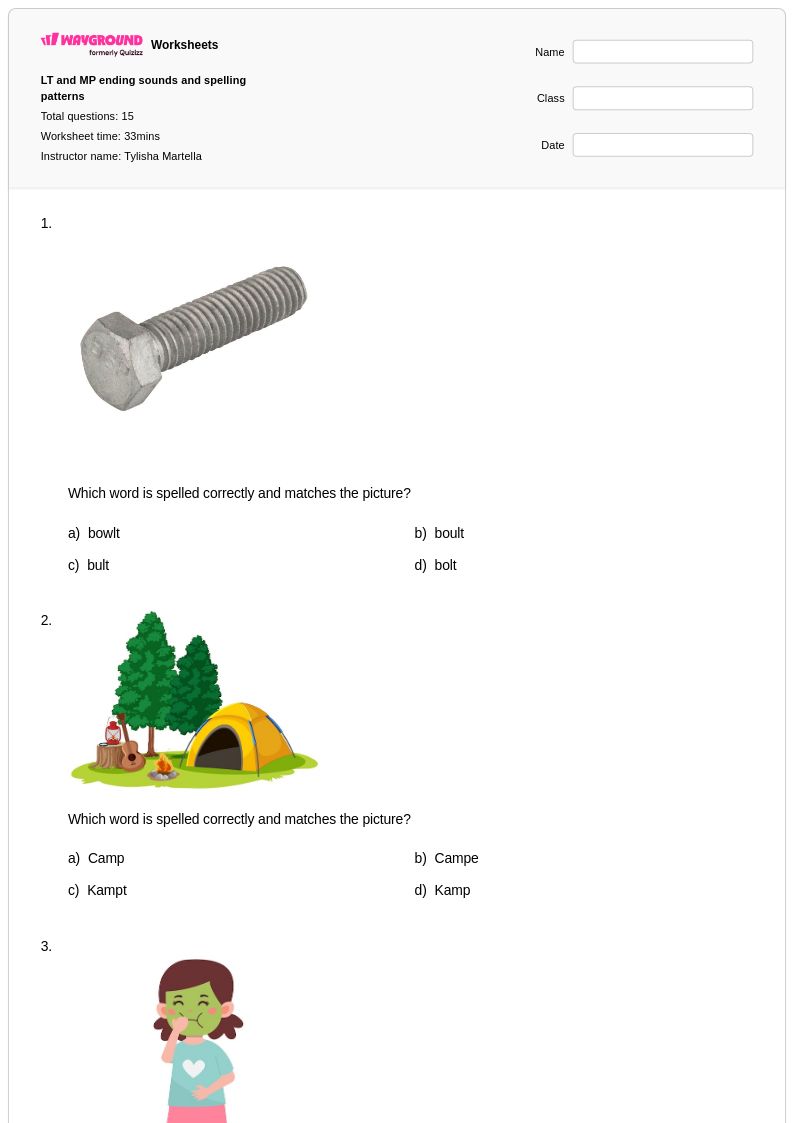
Word-picture matching worksheets for Grade 2 available through Wayground (formerly Quizizz) provide essential foundational practice for developing vocabulary recognition and visual literacy skills. These carefully designed printables challenge second-grade students to connect written words with corresponding images, strengthening their ability to decode text while building meaningful associations between language and visual representations. Each worksheet includes a comprehensive answer key and offers systematic practice problems that help young learners develop automatic word recognition, expand their sight word vocabulary, and enhance reading comprehension abilities. The free pdf resources focus on age-appropriate vocabulary sets that align with Grade 2 learning expectations, incorporating high-frequency words, phonics patterns, and thematic vocabulary that supports cross-curricular learning objectives.
Wayground (formerly Quizizz) empowers educators with access to millions of teacher-created word-picture matching resources specifically designed for Grade 2 instruction. The platform's robust search and filtering capabilities allow teachers to quickly locate worksheets that align with specific learning standards and curriculum requirements, while differentiation tools enable customization based on individual student needs and reading levels. These versatile collections are available in both printable pdf formats for traditional classroom use and digital formats for interactive learning experiences, supporting flexible lesson planning and diverse instructional approaches. Teachers can efficiently identify materials for targeted skill practice, remediation support for struggling readers, and enrichment activities for advanced learners, making word-picture matching instruction both effective and accessible across varied classroom environments and learning styles.
FAQs
How do I teach word-picture matching to early learners?
Word-picture matching is best introduced through direct vocabulary instruction paired with visual supports. Start by presenting a small set of high-frequency or thematic words alongside clear, unambiguous images, and model the matching process explicitly before asking students to work independently. Repeated exposure across multiple sessions builds the cognitive link between written words and their visual referents, which is foundational for reading comprehension and vocabulary retention.
What skills does word-picture matching help students practice?
Word-picture matching exercises reinforce sight word recognition, semantic understanding, and the ability to connect written language to real-world concepts. Students practice scanning and comparing visual and textual information simultaneously, which strengthens both decoding fluency and vocabulary depth. These exercises are particularly effective for building the mental lexicon that supports later reading and writing tasks.
What common mistakes do students make with word-picture matching activities?
A frequent error is matching based on a single visual detail rather than the full meaning of a word — for example, matching 'cat' to an image of an animal based on shape alone without distinguishing it from 'dog.' Students also sometimes rely on positional guessing rather than genuine word recognition, especially when answer choices are limited. Monitoring for these patterns helps teachers identify whether gaps are in vocabulary knowledge, decoding, or visual discrimination.
How can I use word-picture matching worksheets to support students with different learning needs?
Word-picture matching is naturally accessible because images provide context clues that scaffold understanding for emerging readers and English language learners. On Wayground, teachers can apply individual accommodations such as read-aloud support so word labels are read aloud to students, reduced answer choices to lower cognitive load for students who need it, and adjustable reading modes with larger fonts or high-contrast themes. These settings can be assigned to specific students without other students being notified, making differentiation seamless within a single activity.
How do I use Wayground's word-picture matching worksheets in my classroom?
Wayground's word-picture matching worksheets are available as printable PDFs for traditional classroom use and in digital formats for technology-integrated learning environments. Teachers can distribute printed copies for independent practice, morning work, or literacy centers, or assign the digital version for individual student completion on a device. Wayground also allows teachers to host worksheets as a quiz, enabling real-time participation and automatic scoring without additional setup.
At what stage of vocabulary instruction should I introduce word-picture matching?
Word-picture matching is most effective during the early stages of vocabulary instruction, when students are first encountering new words and need structured opportunities to form associations between written labels and meanings. It works well as an introduction activity before writing or reading tasks, and also serves as a low-stakes review tool after initial instruction to check whether recognition has been established before moving to production-level tasks like writing or using words in context.