Help Grade 7 students master proper word usage with Wayground's comprehensive collection of free worksheets, printables, and practice problems that include detailed answer keys to reinforce grammar and mechanics skills.
Explore printable Word Usage worksheets for Grade 7
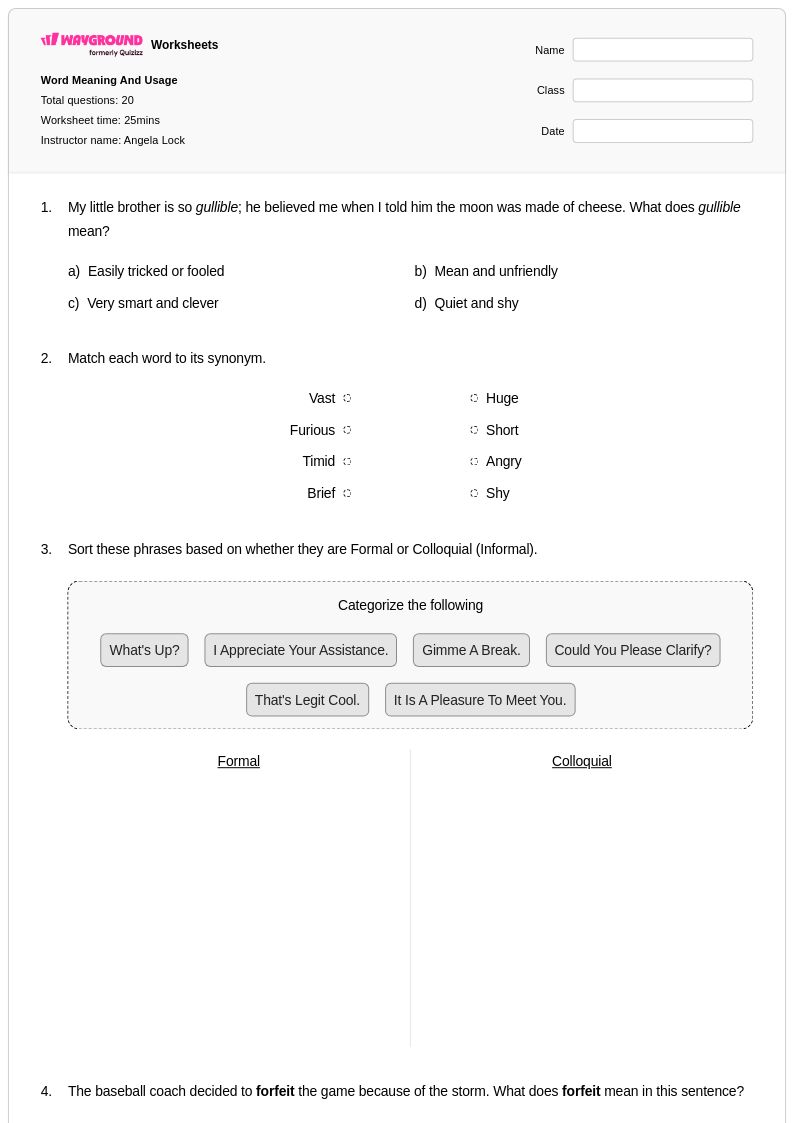
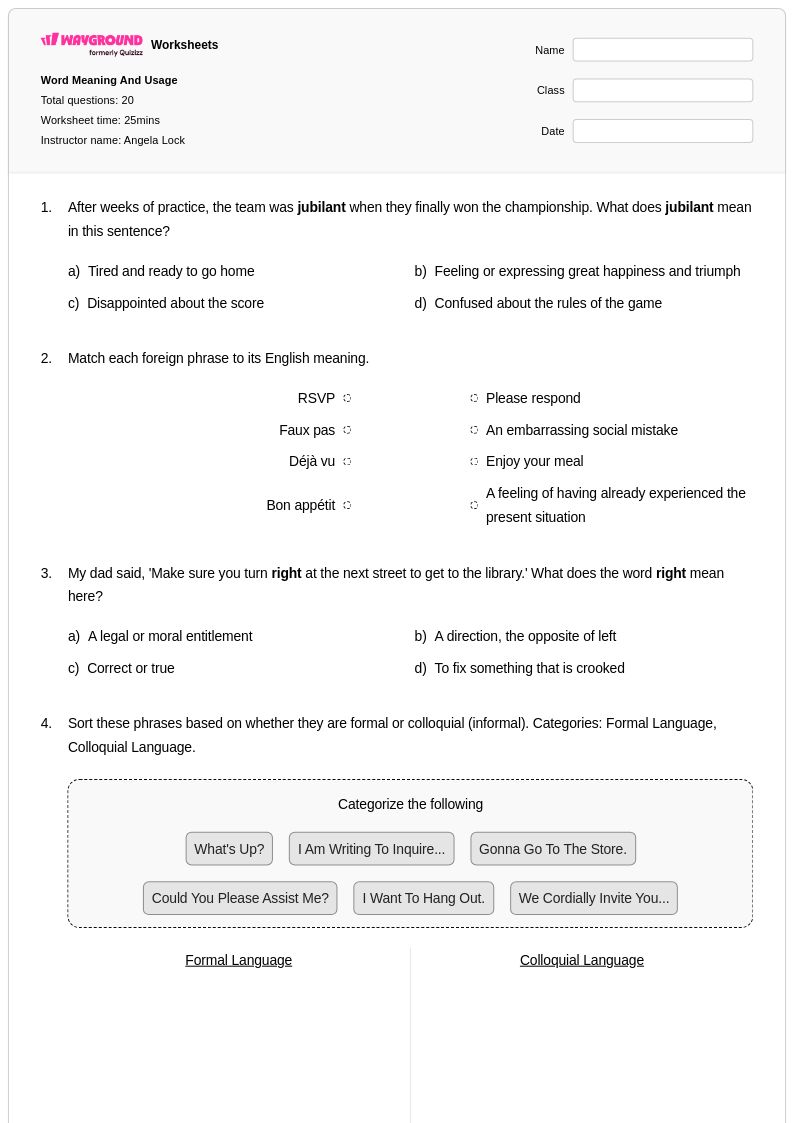
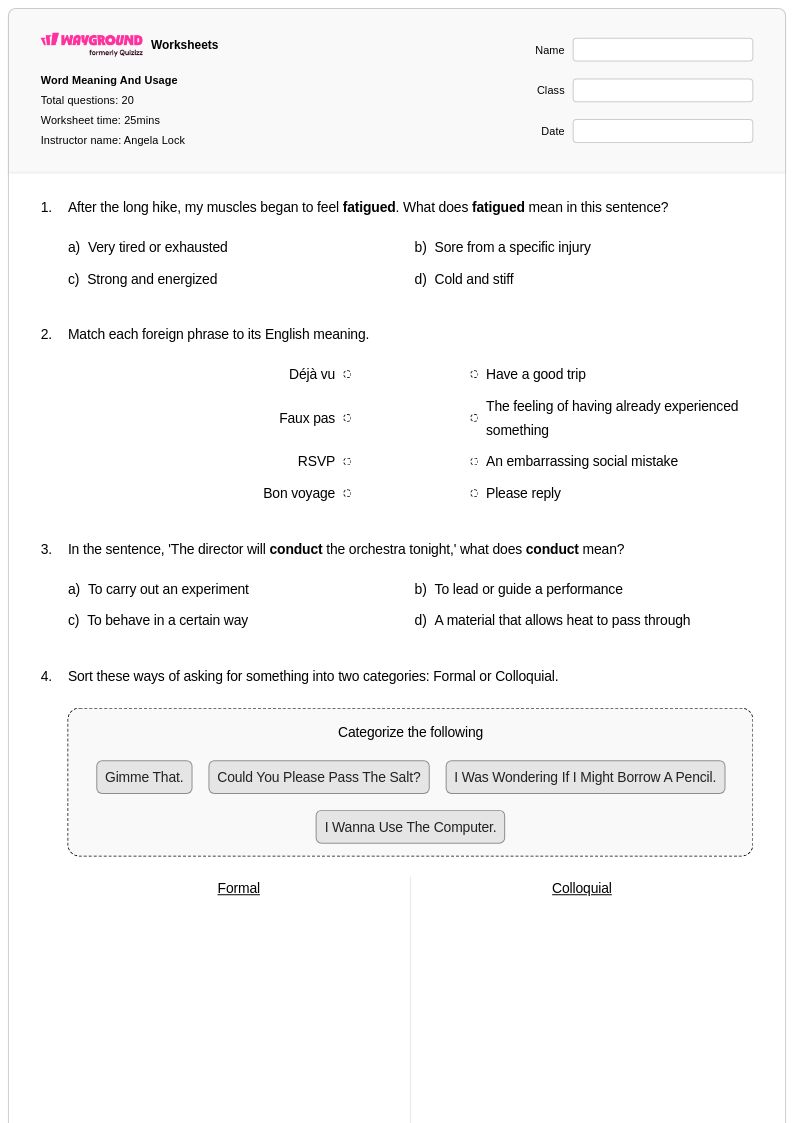
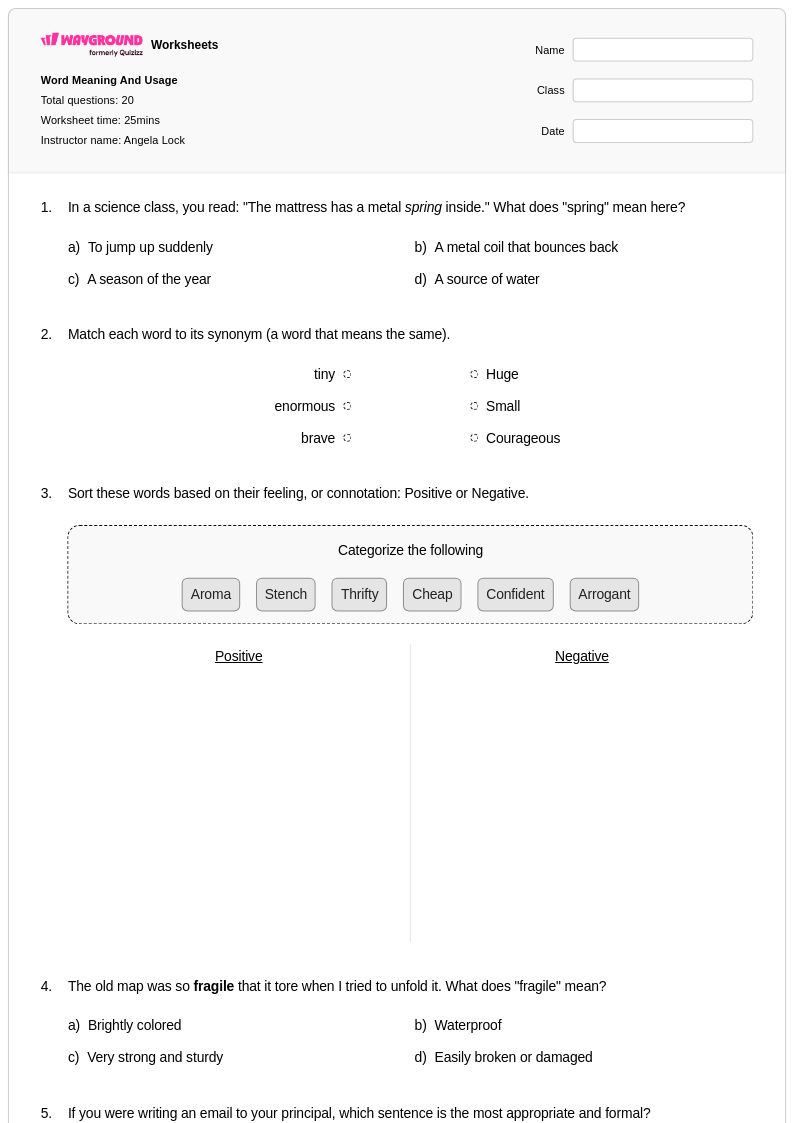
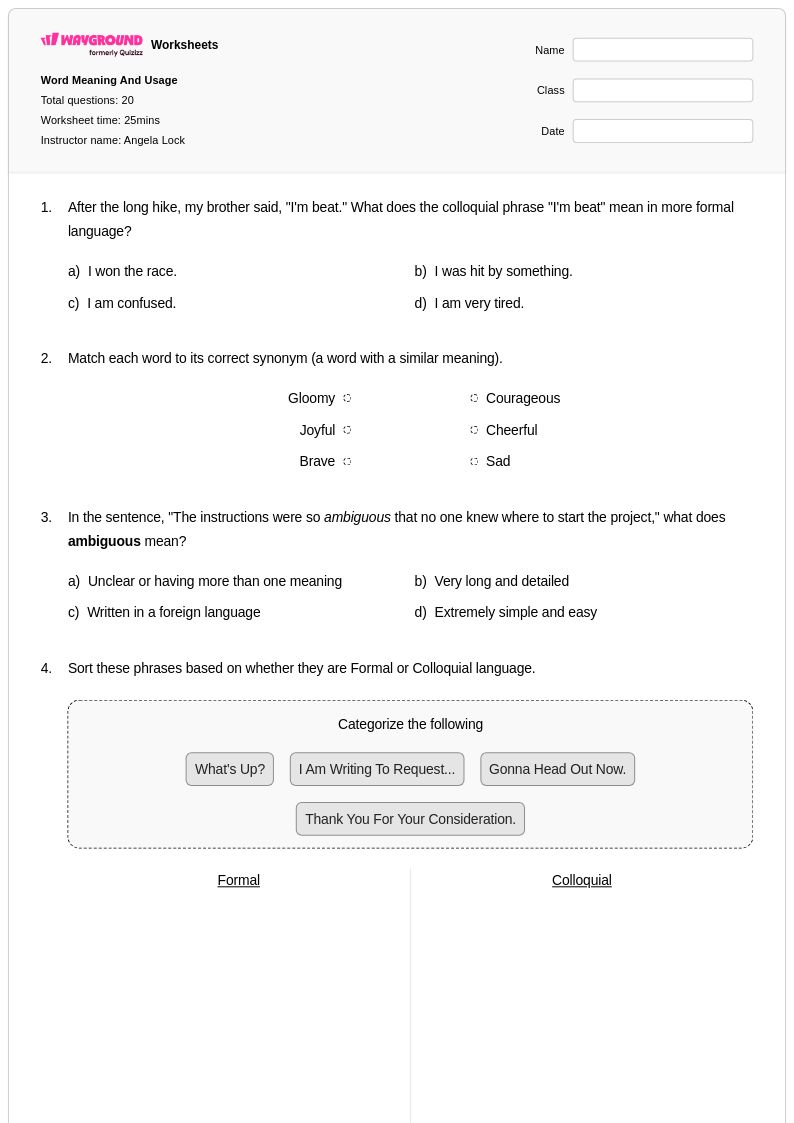
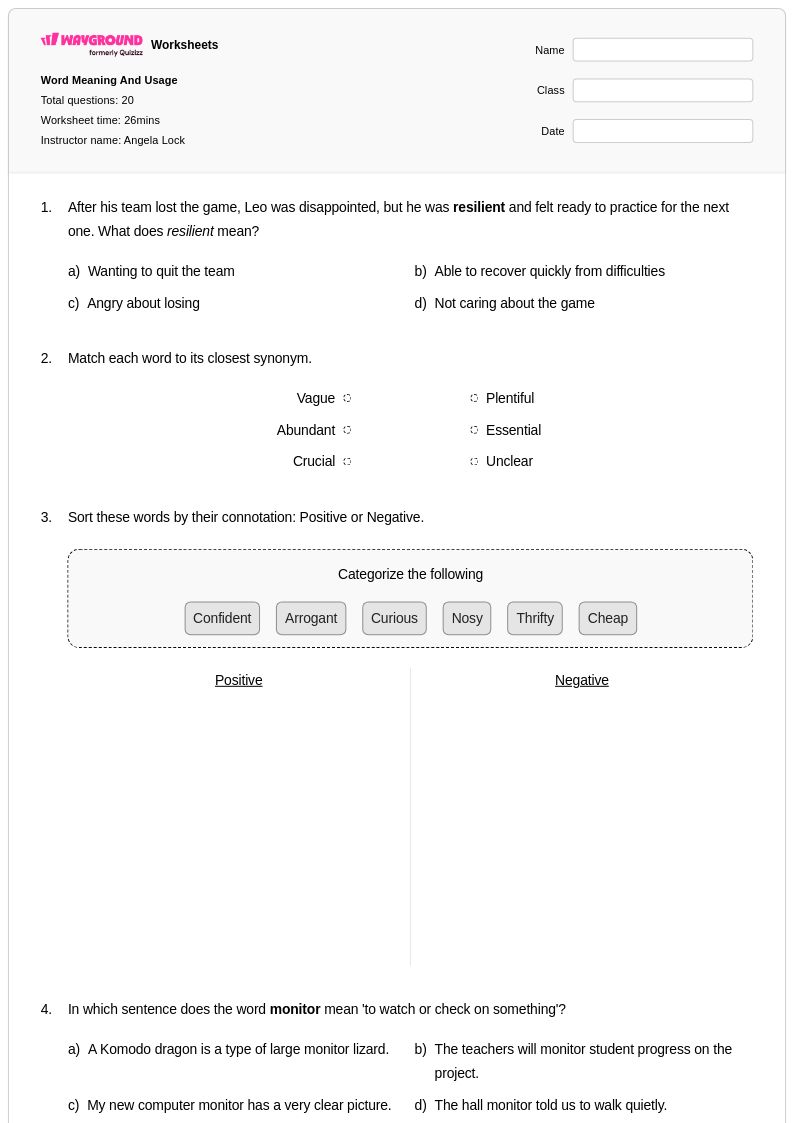
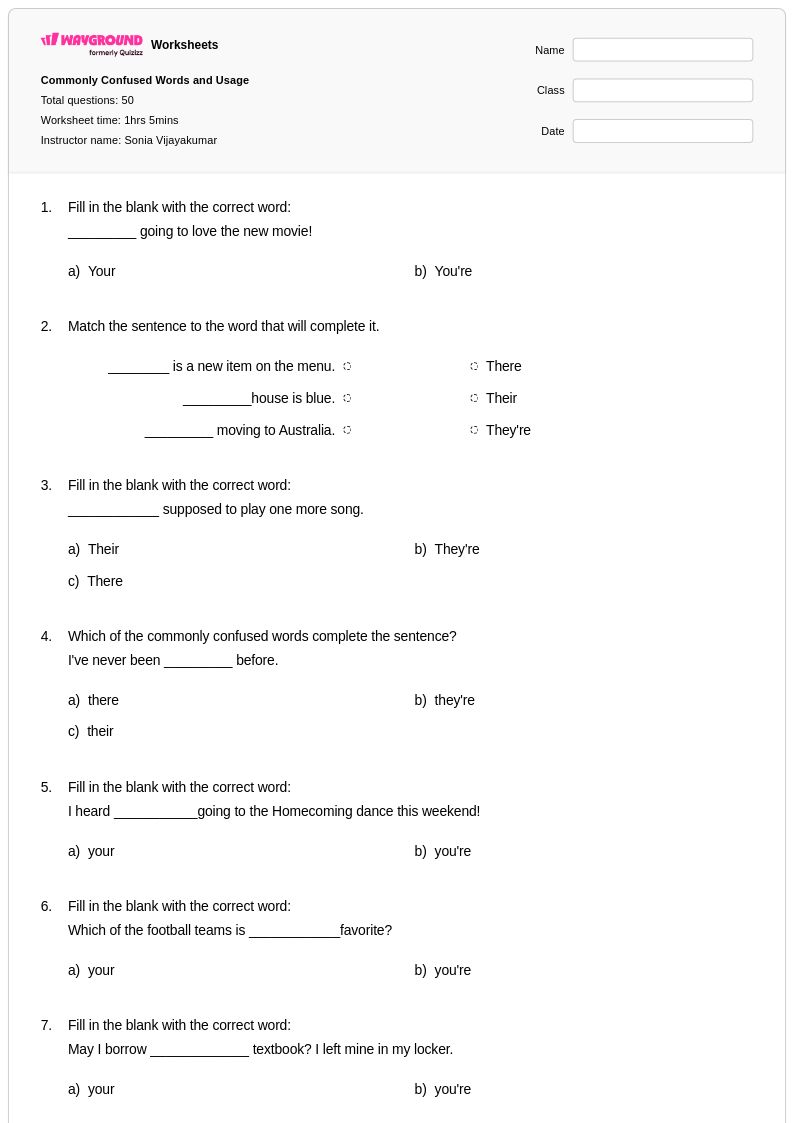
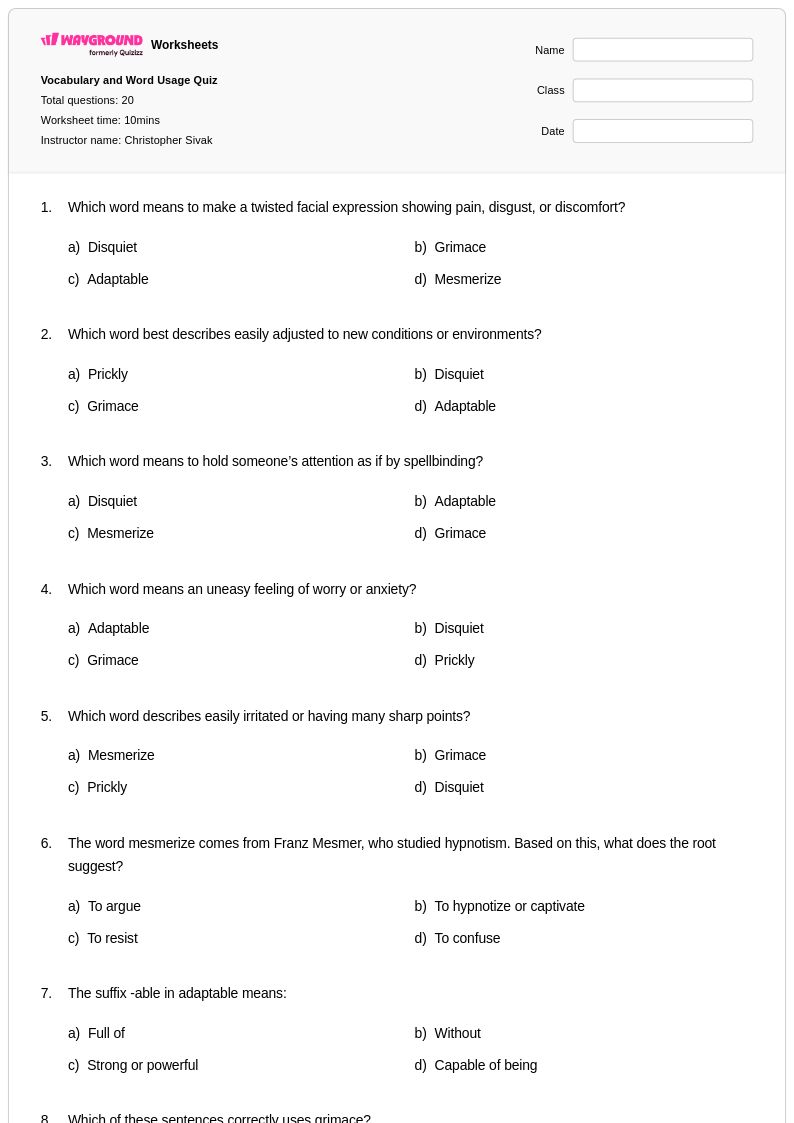
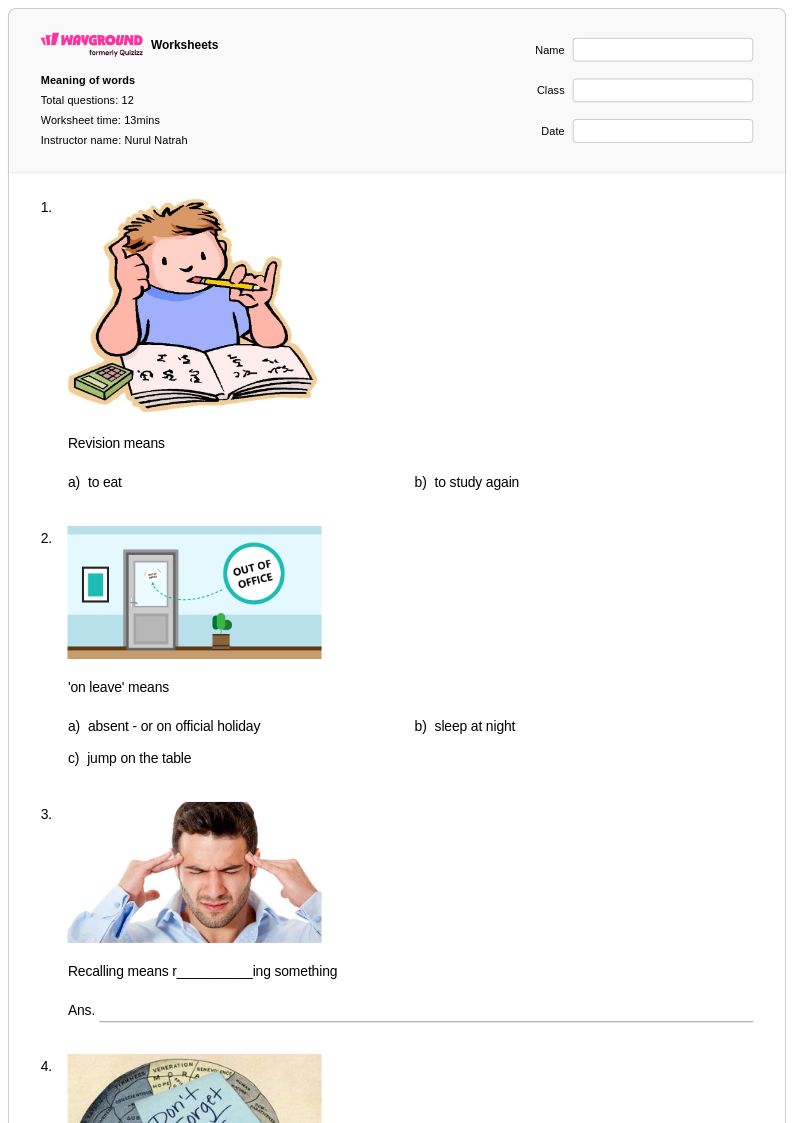
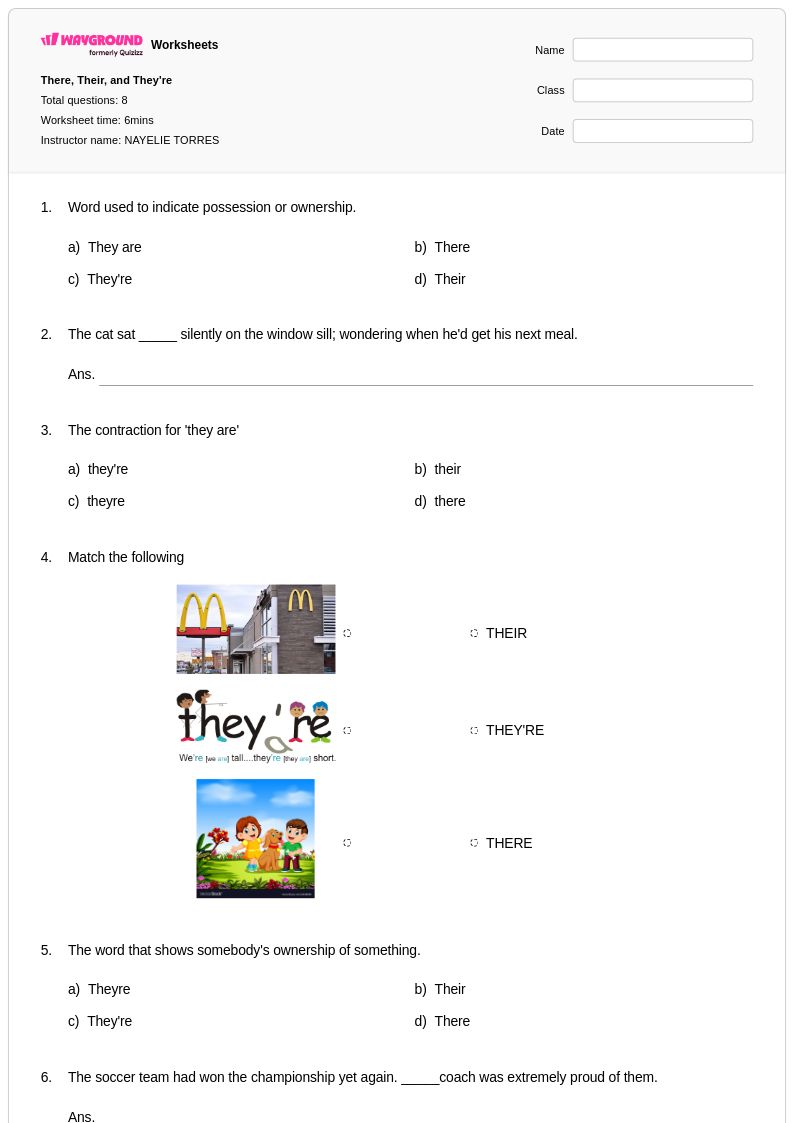
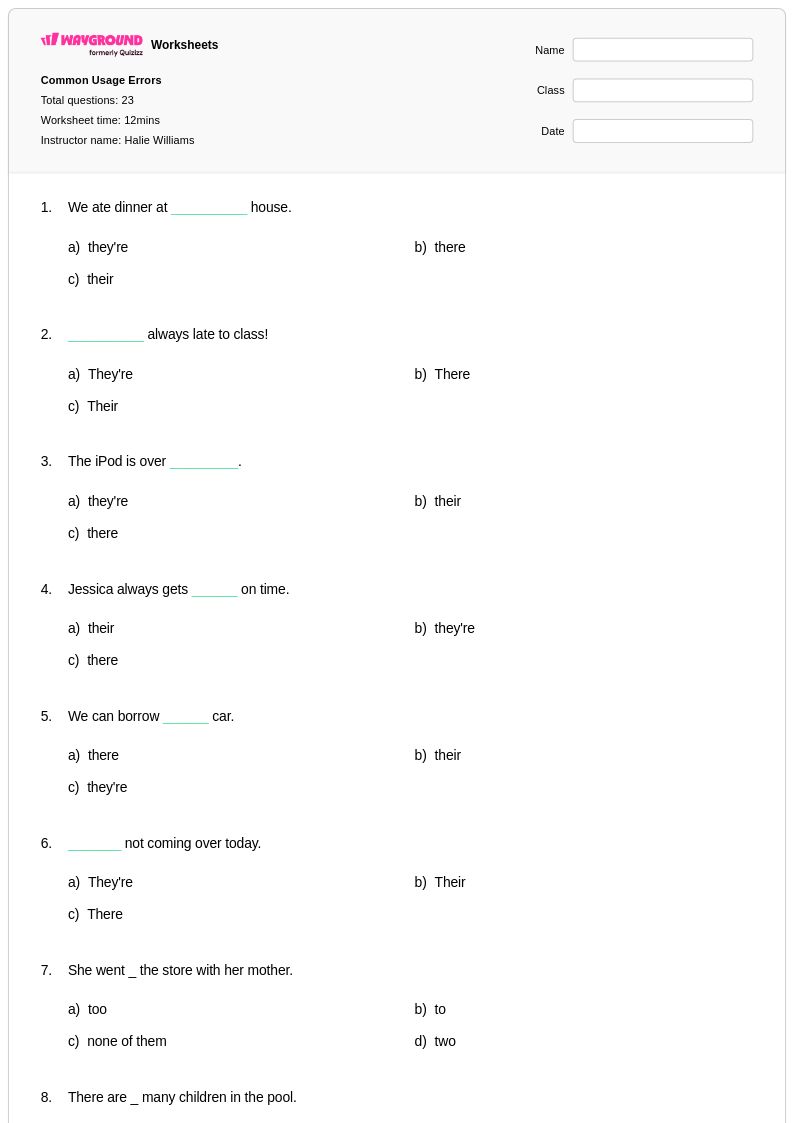
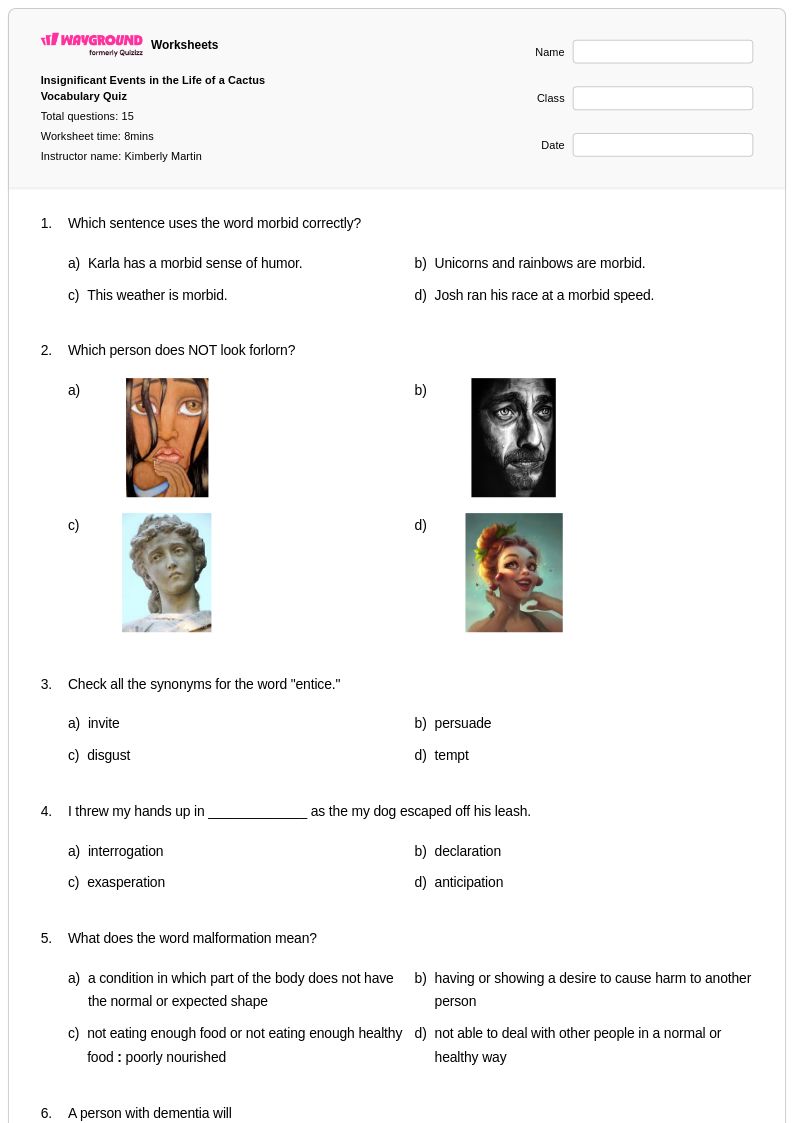
Word usage worksheets for Grade 7 students available through Wayground (formerly Quizizz) provide comprehensive practice in selecting and applying appropriate vocabulary, understanding connotations, and mastering precision in language choices. These expertly designed resources strengthen students' ability to distinguish between commonly confused words, recognize formal versus informal language registers, and develop sensitivity to word meanings in various contexts. The collection includes detailed answer keys and free printable materials that guide seventh graders through practice problems focusing on homophones, synonyms with subtle differences, context clues, and domain-specific vocabulary across academic subjects. Students work with challenging exercises that build their understanding of how word choice affects tone, clarity, and audience engagement while developing the sophisticated vocabulary skills essential for advanced academic writing and communication.
Wayground (formerly Quizizz) empowers educators with millions of teacher-created word usage resources specifically calibrated for seventh-grade language arts instruction. The platform's robust search and filtering capabilities allow teachers to locate materials aligned with state and national standards, while differentiation tools enable customization for varied learning needs and ability levels. These comprehensive worksheet collections are available in both printable pdf formats and interactive digital versions, supporting flexible classroom implementation and remote learning environments. Teachers can efficiently plan targeted vocabulary instruction, provide remediation for students struggling with precise word choice, offer enrichment opportunities for advanced learners, and deliver consistent skill practice that builds toward mastery of sophisticated language use throughout the academic year.
FAQs
How do I teach word usage effectively in a language arts class?
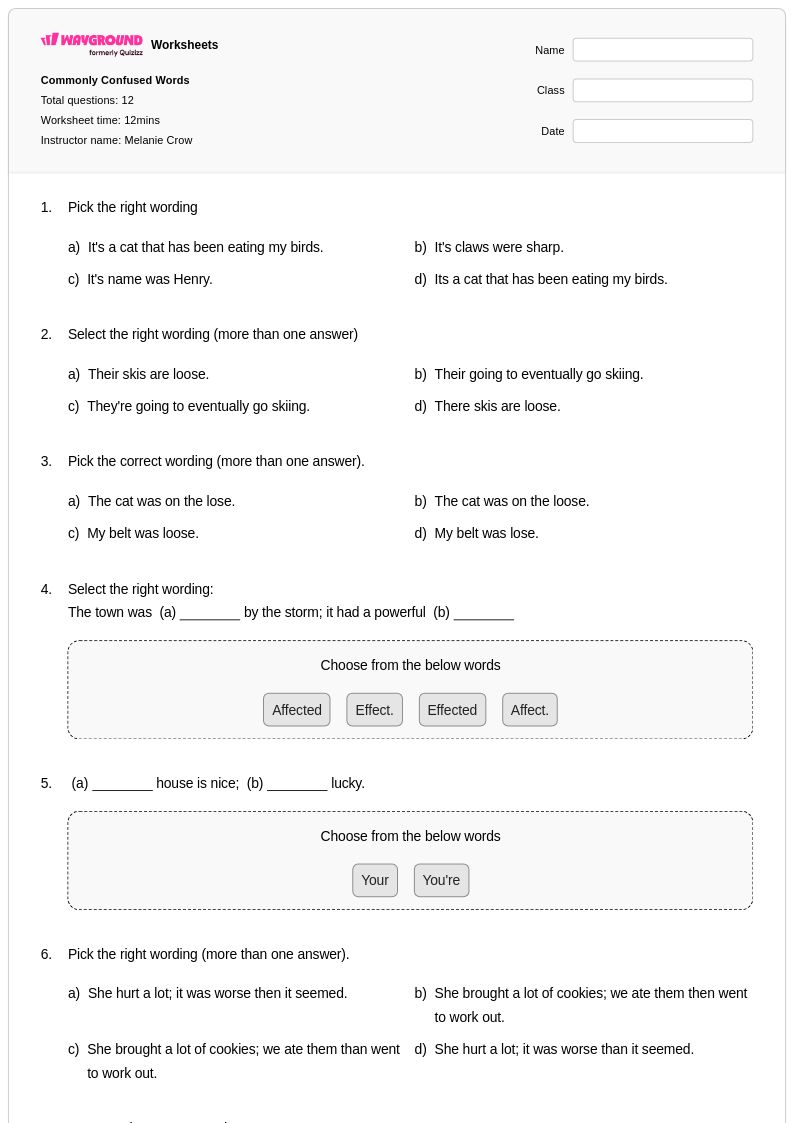
Effective word usage instruction begins with helping students distinguish between denotation and connotation, then moves into comparing commonly confused words like 'affect' vs. 'effect' or 'then' vs. 'than' in context. Teachers should present authentic writing samples where word choice shifts the meaning or tone, prompting students to analyze why one word works better than another. Pairing direct instruction with structured practice — such as cloze exercises and synonym selection tasks — reinforces precision and helps students internalize the logic behind appropriate word choice.
What exercises help students practice choosing the right word in context?
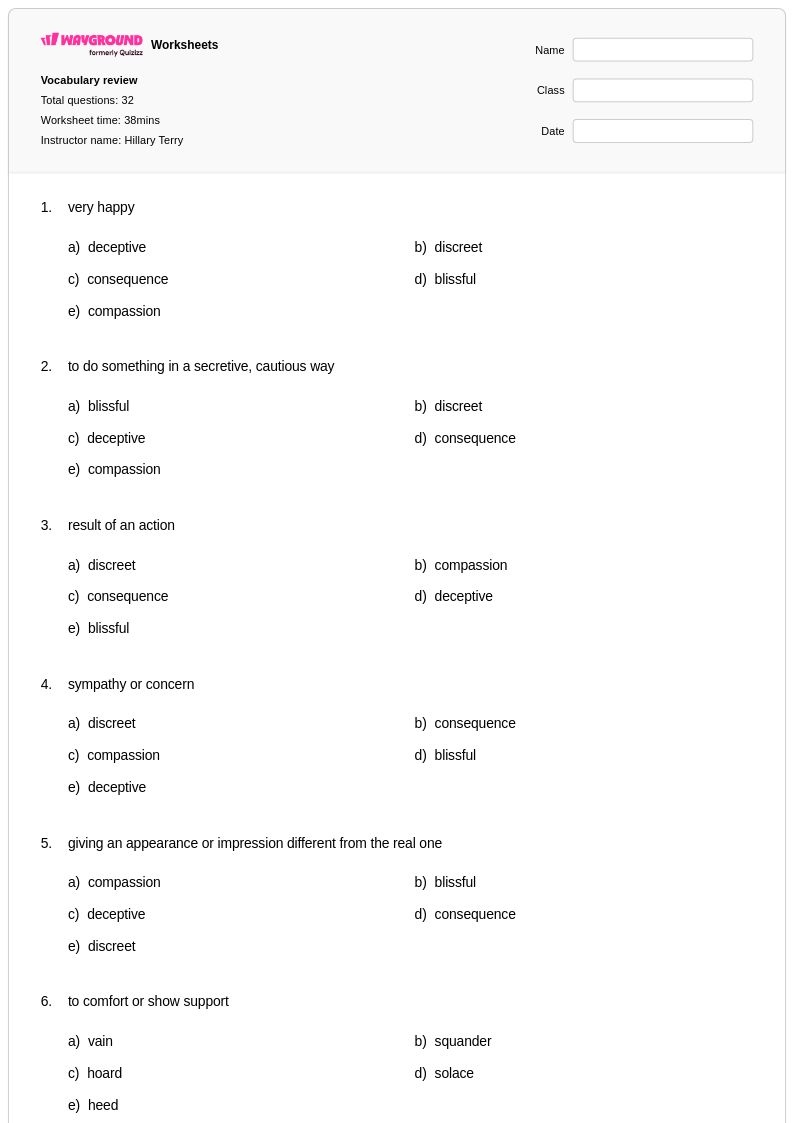
The most effective exercises for word usage practice ask students to identify errors in word choice within sentences, select contextually appropriate synonyms from a set of options, and rewrite passages using more precise vocabulary. Exercises that contrast near-synonyms — such as 'happy,' 'elated,' and 'content' — build awareness of nuance and register. Activities that require students to match words to specific contexts, such as academic versus casual writing, strengthen the habit of intentional word selection.
What mistakes do students commonly make with word usage?
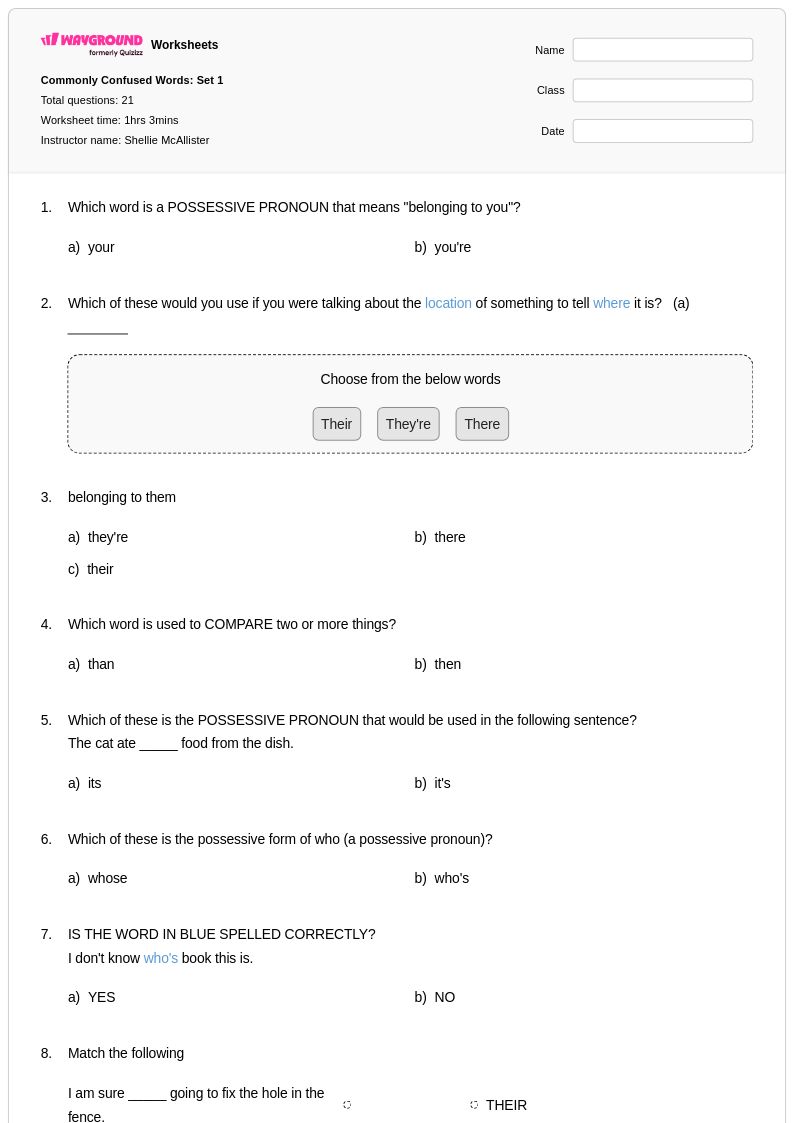
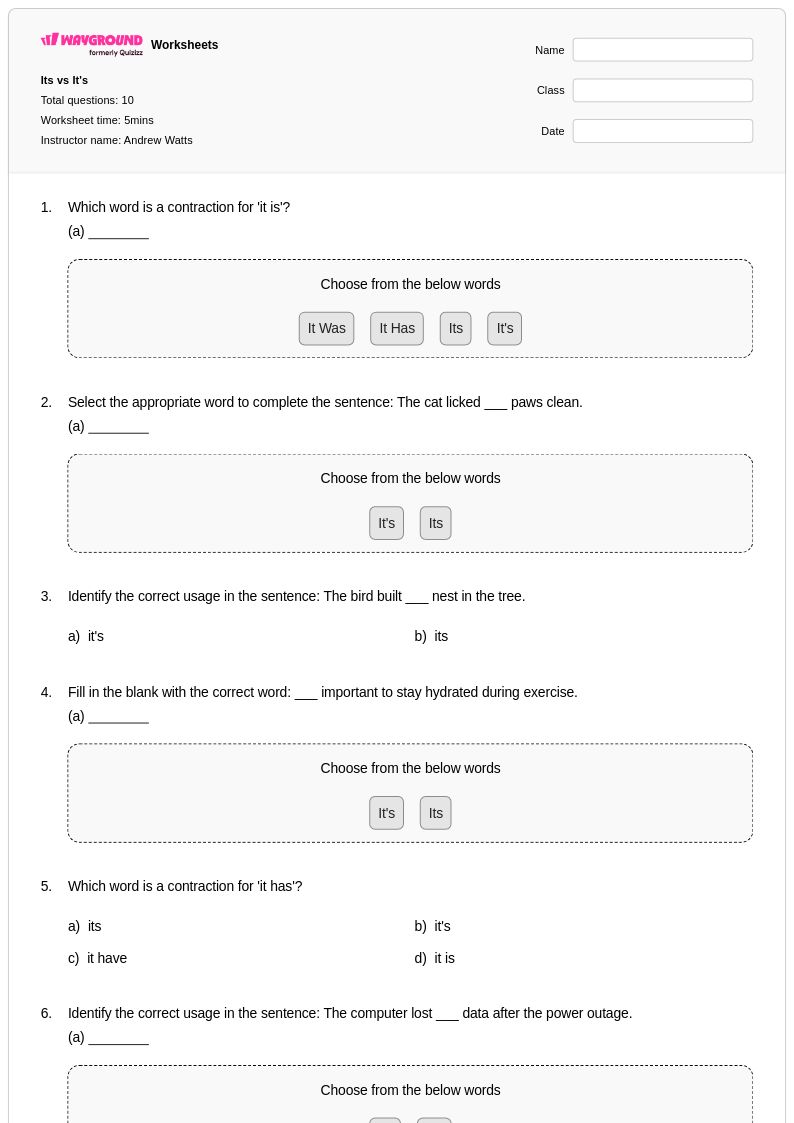
Students most often struggle with commonly confused word pairs, such as 'your/you're,' 'its/it's,' 'lie/lay,' and 'fewer/less,' applying them incorrectly because they rely on sound rather than meaning. A second frequent error is choosing a word based on approximate meaning rather than precise fit — for example, using 'big' when 'substantial' or 'immense' would be more appropriate for the context. Students also tend to overlook connotation entirely, selecting a technically correct word that carries an unintended emotional weight.
How can I differentiate word usage practice for students at different skill levels?
For students who struggle with foundational word choice, begin with exercises that focus on commonly confused word pairs and high-frequency vocabulary before introducing nuance. Advanced learners benefit from tasks that require them to evaluate subtle tonal differences between synonyms or revise writing samples for precision and register. On Wayground, teachers can apply accommodations such as reduced answer choices for students who need lower cognitive load, or read-aloud support for those who process language better auditorily — all configurable per student without disrupting the rest of the class.
How do I use Wayground's word usage worksheets in my classroom?
Wayground's word usage worksheets are available as printable PDFs for traditional classroom use and in digital formats for technology-integrated or hybrid learning environments, giving teachers flexibility in how they assign and collect work. Each worksheet includes a complete answer key, so teachers can use them for independent practice, homework, or in-class review without additional prep. Teachers can also host worksheets as a quiz directly on Wayground, enabling real-time student responses and streamlined progress tracking.
How do I assess whether students have mastered word usage skills?
Word usage mastery is best assessed through a combination of error identification tasks and open-ended writing analysis, not multiple choice alone. Ask students to correct word choice errors in a provided passage and explain why the substitution improves the sentence — this reveals whether they understand the underlying principle or are simply guessing. Tracking patterns in errors, such as repeated confusion between homophones or overuse of vague vocabulary, gives teachers actionable data for targeted remediation.