
Recommended Topics for you
- Brainstorming
- Creating a Title
- Editing
- Formatting Titles
- Journaling
- Mind Mapping
- Narrative Planning
- Peer Review
- Prewriting
- Publishing
- Restating Questions
- Revising Sentences
- Revising Writing
- Sbar Communication
- Sentence Copying
- Sentence Creation
- Sentence Starters
- Show Don't Tell
- Storyboarding
- Transcription
- Written Expression
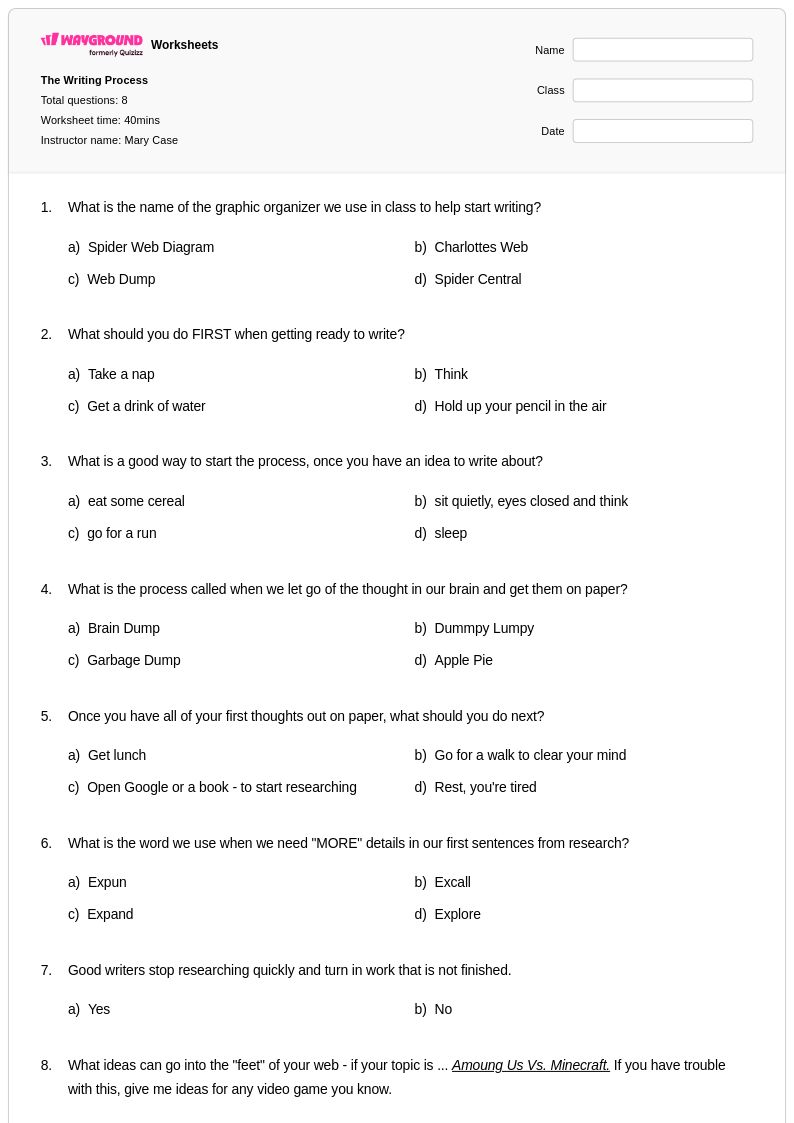
8 Q
3rd
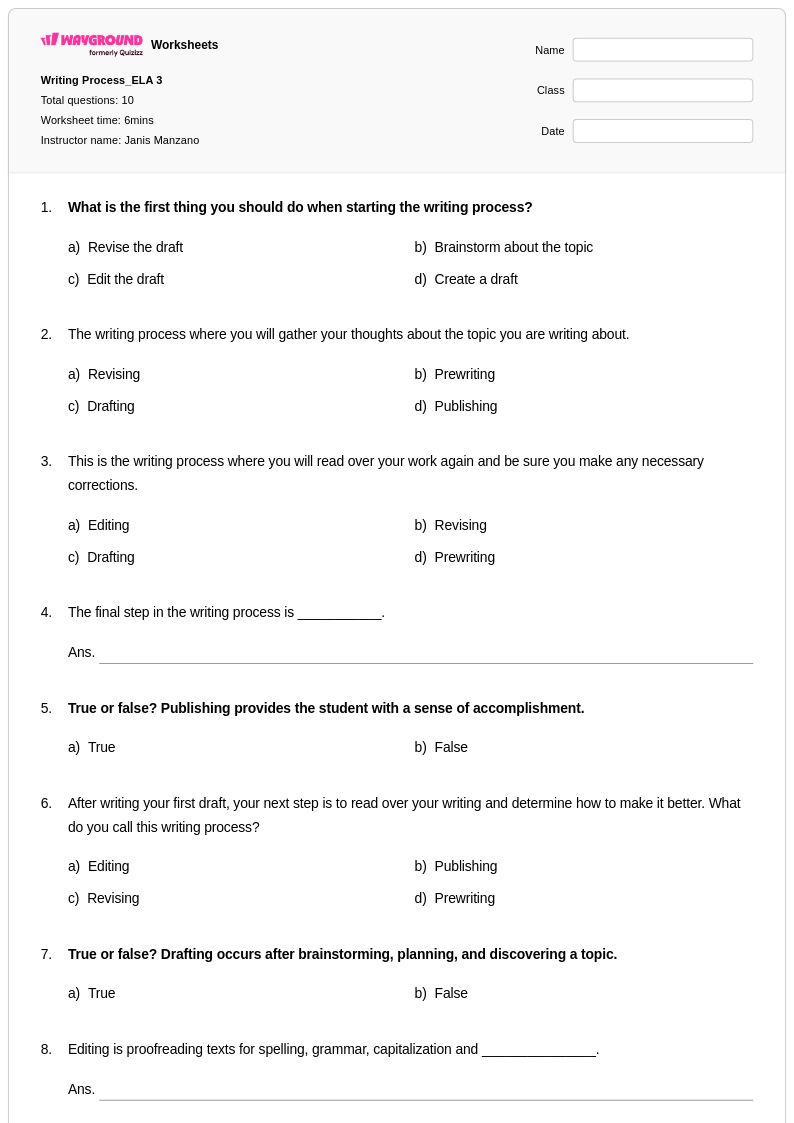
10 Q
3rd
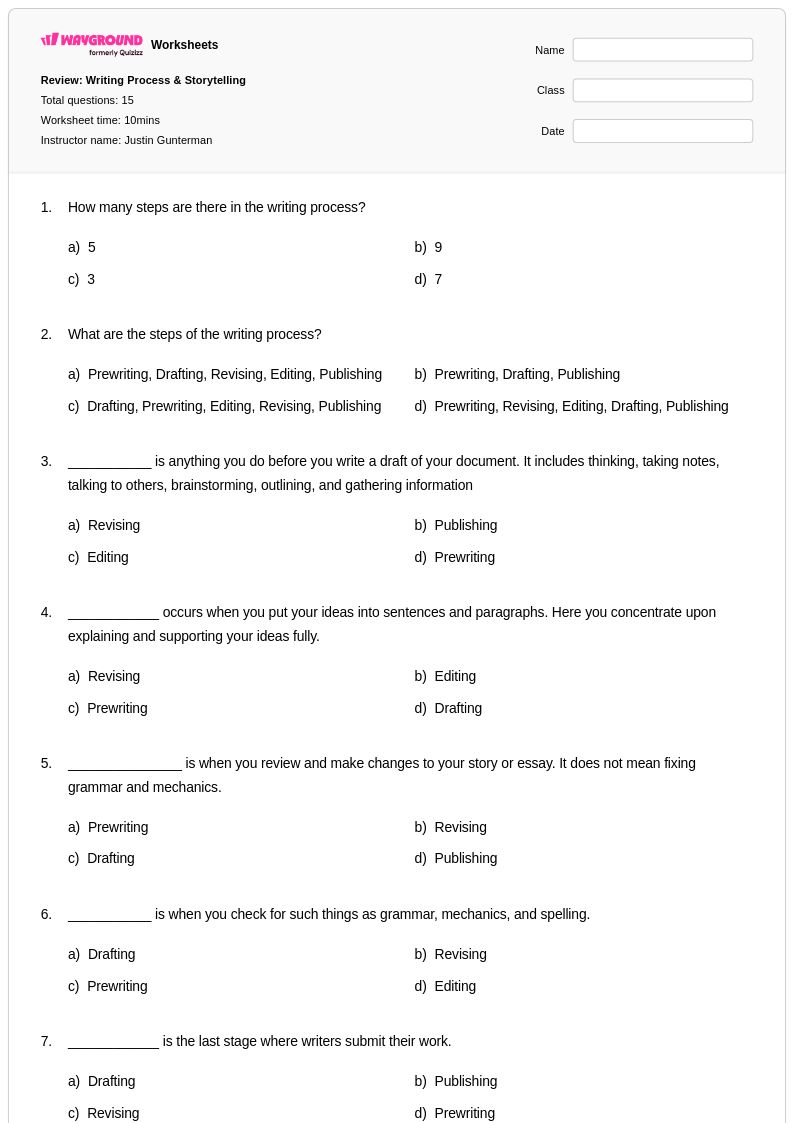
15 Q
3rd - 10th
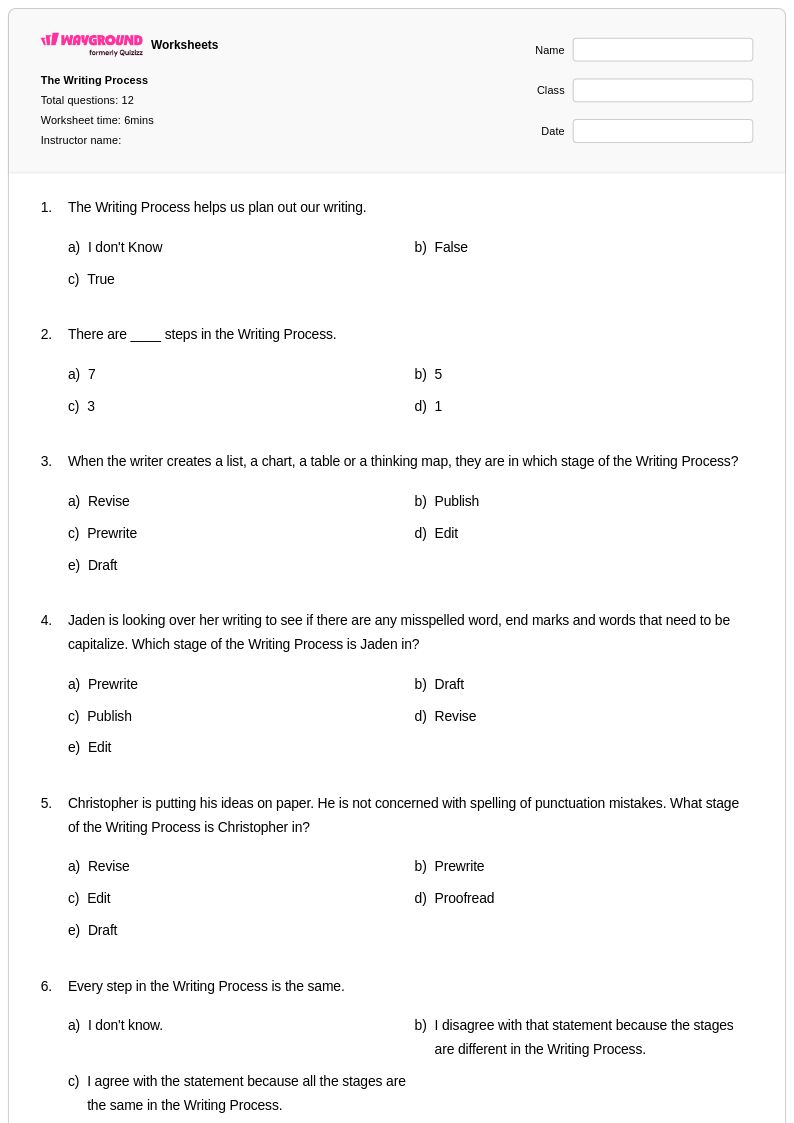
12 Q
3rd - 6th
10 Q
3rd
9 Q
3rd - 6th
9 Q
3rd - 5th
13 Q
3rd
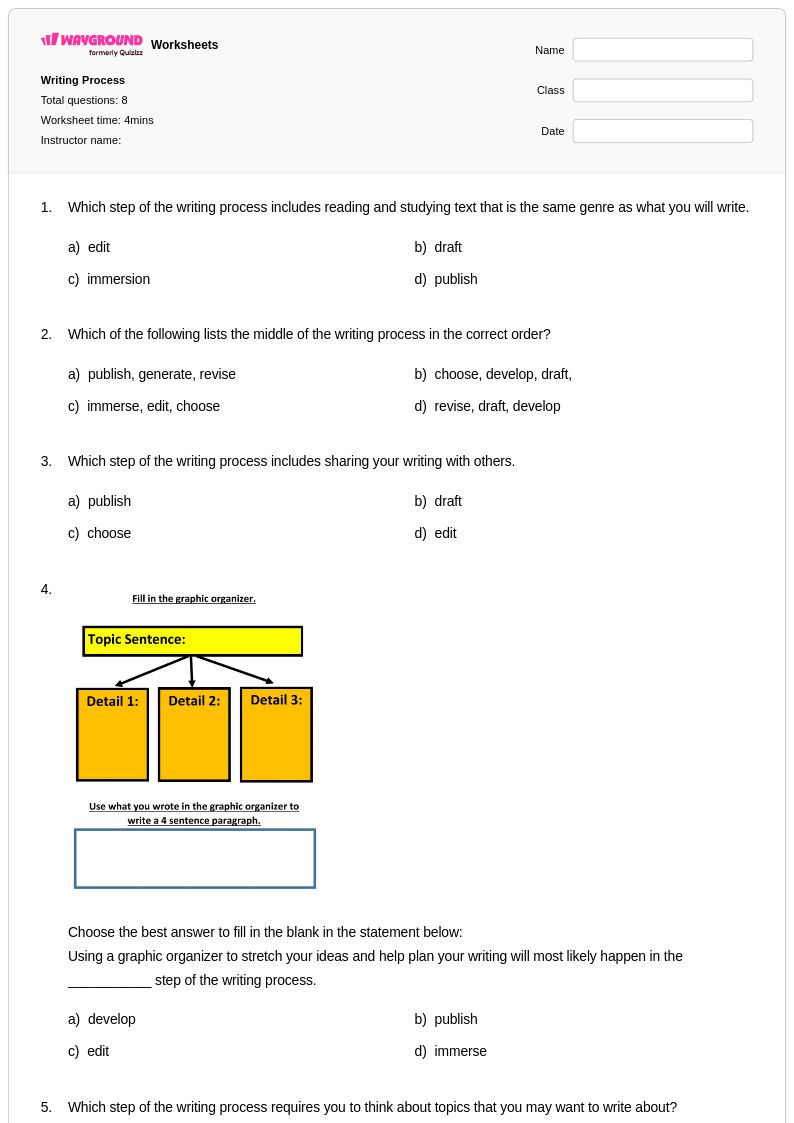
8 Q
2nd - 5th
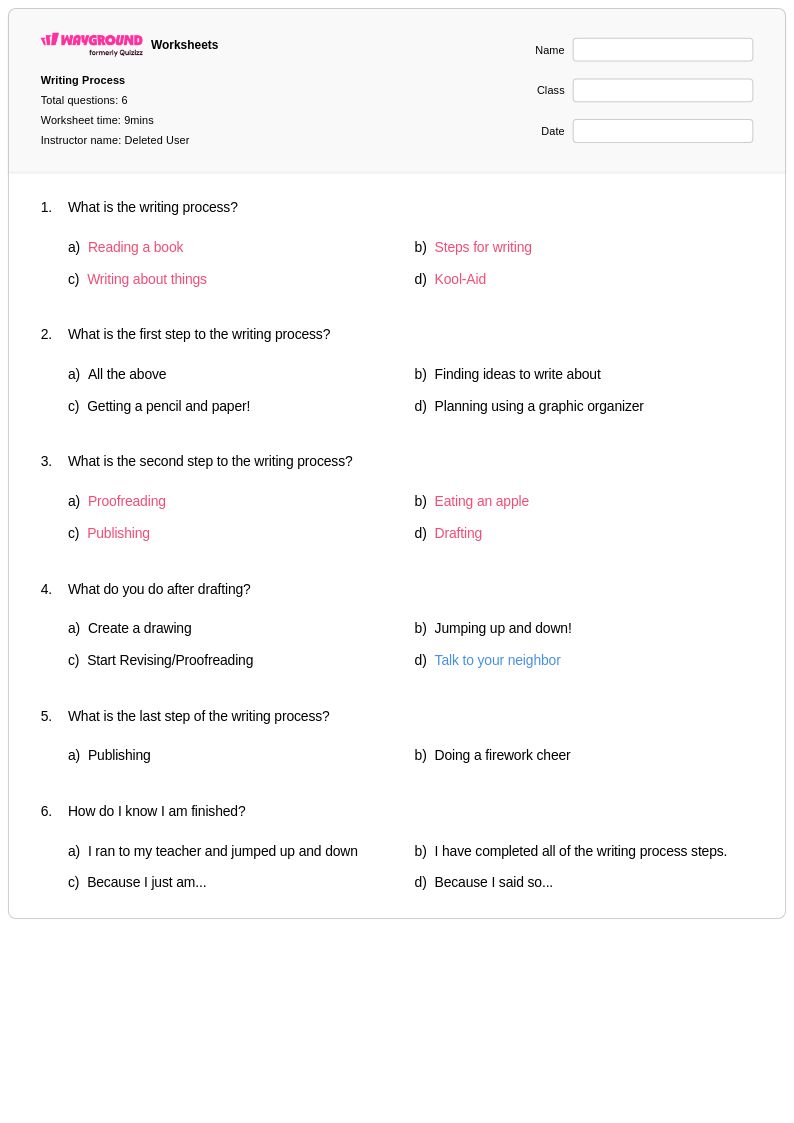
6 Q
3rd
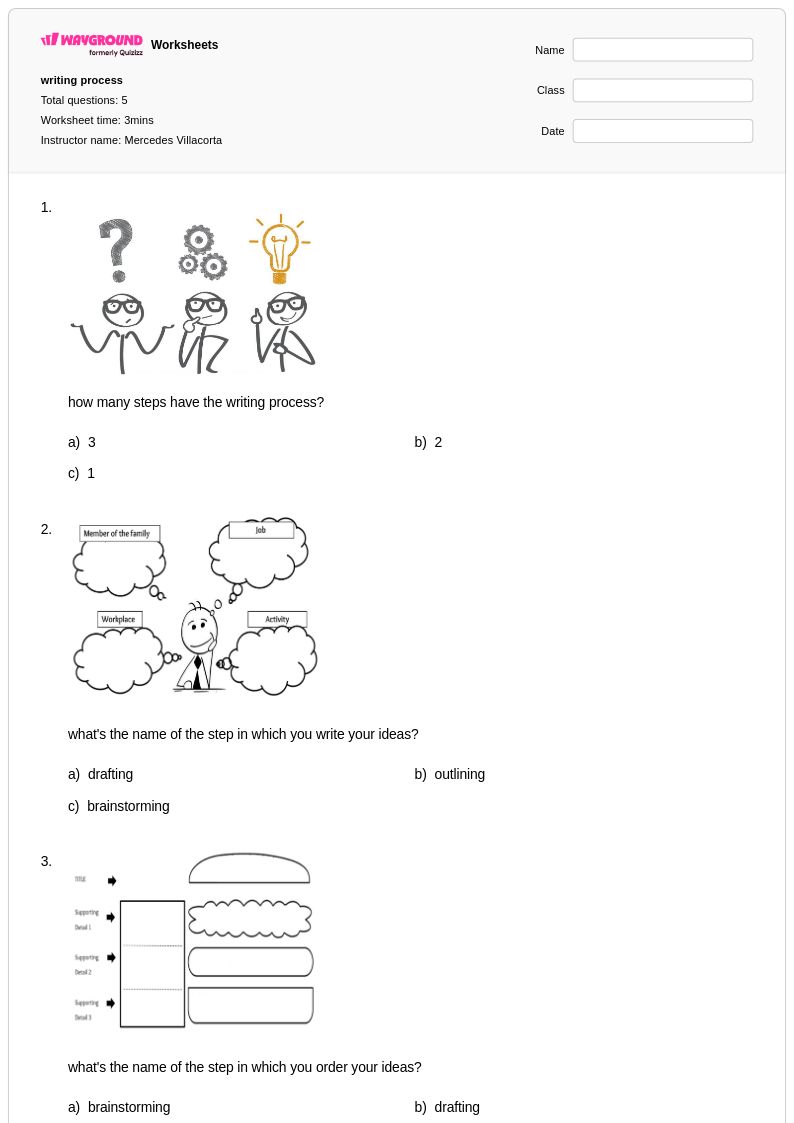
5 Q
1st - 3rd
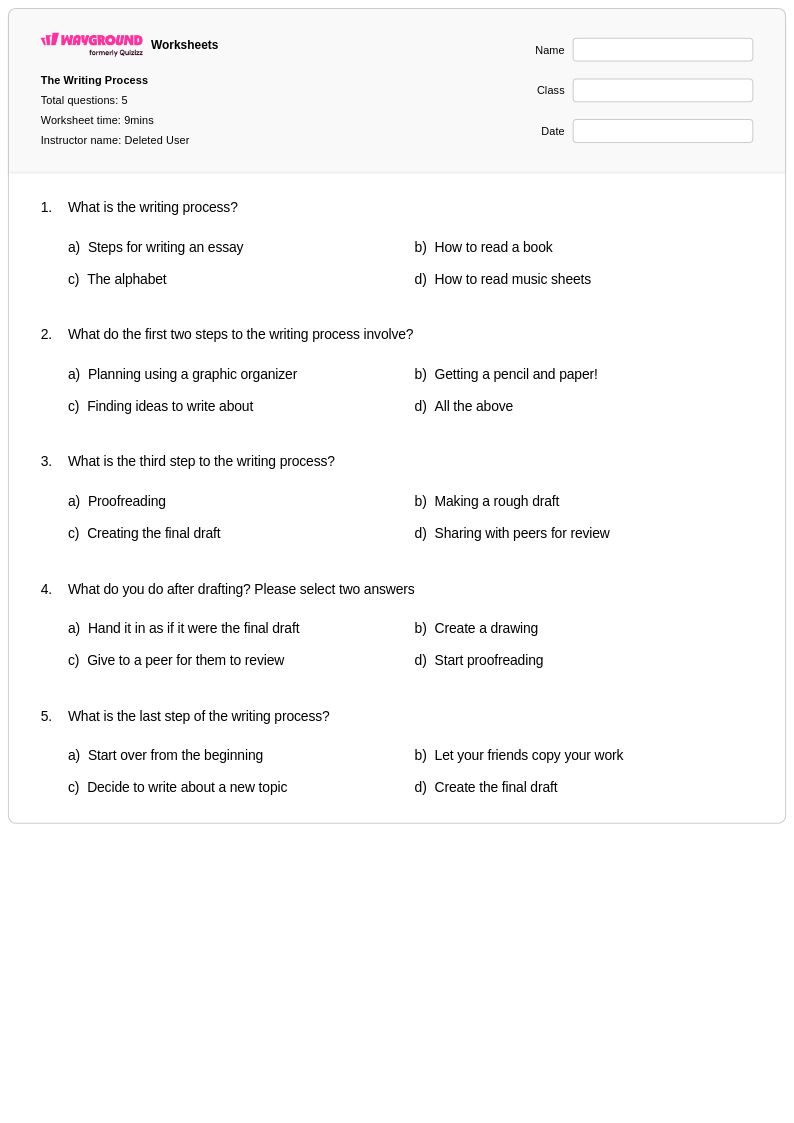
5 Q
3rd
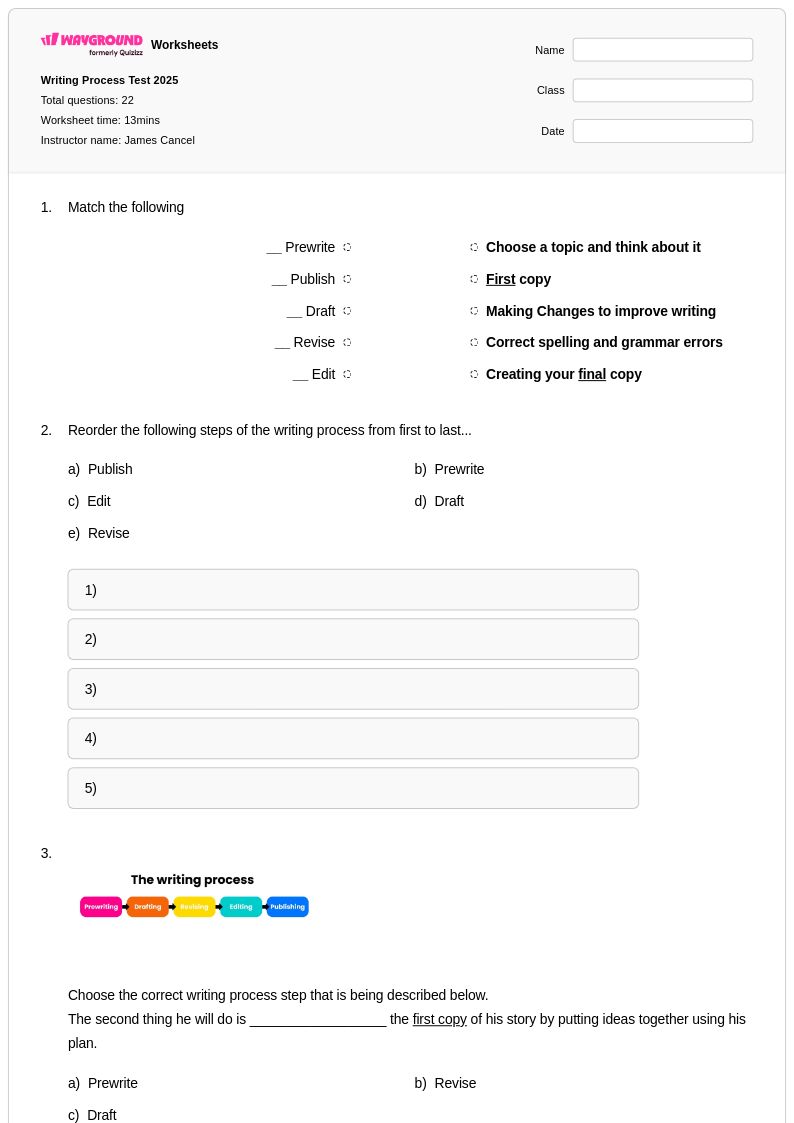
27 Q
3rd
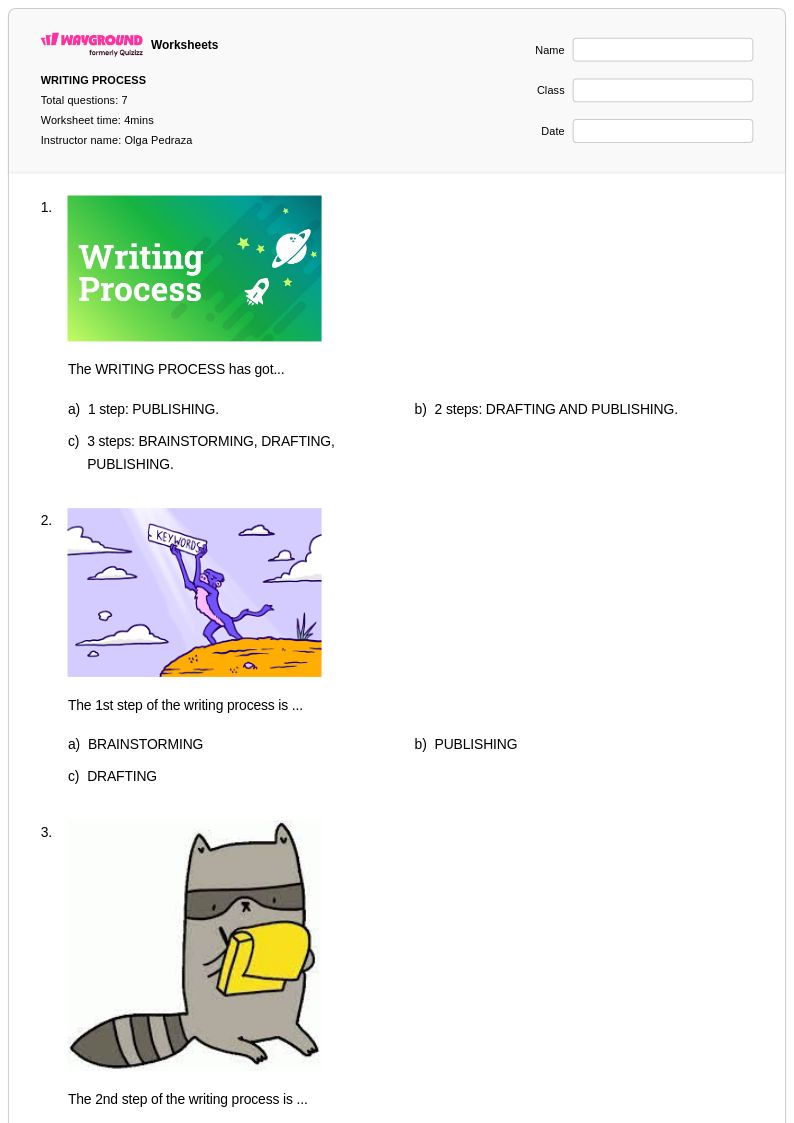
7 Q
3rd
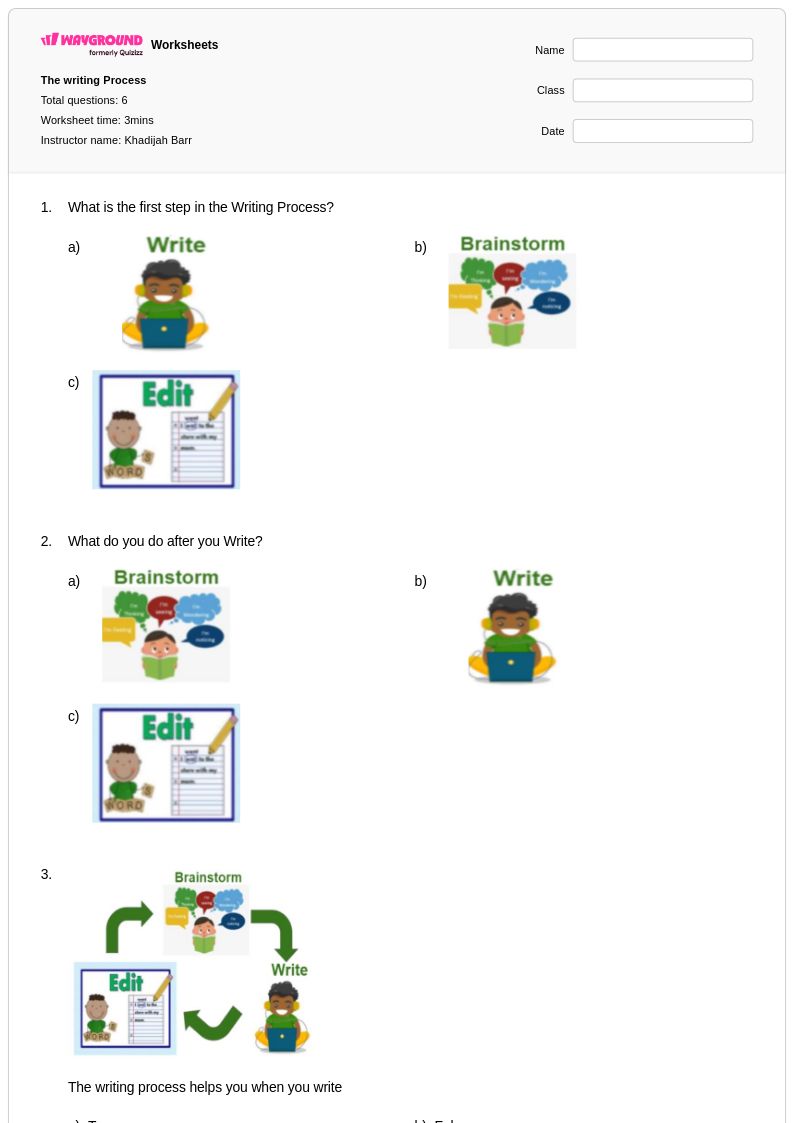
6 Q
3rd - 5th
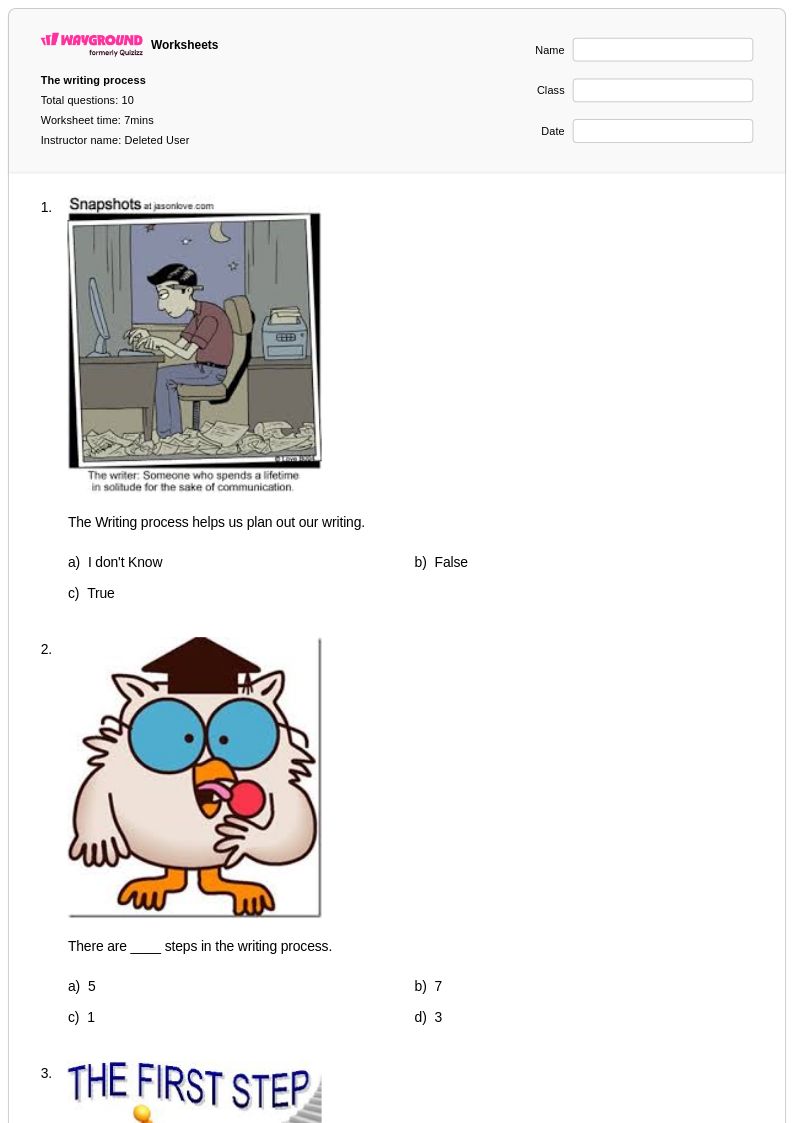
10 Q
KG - Uni
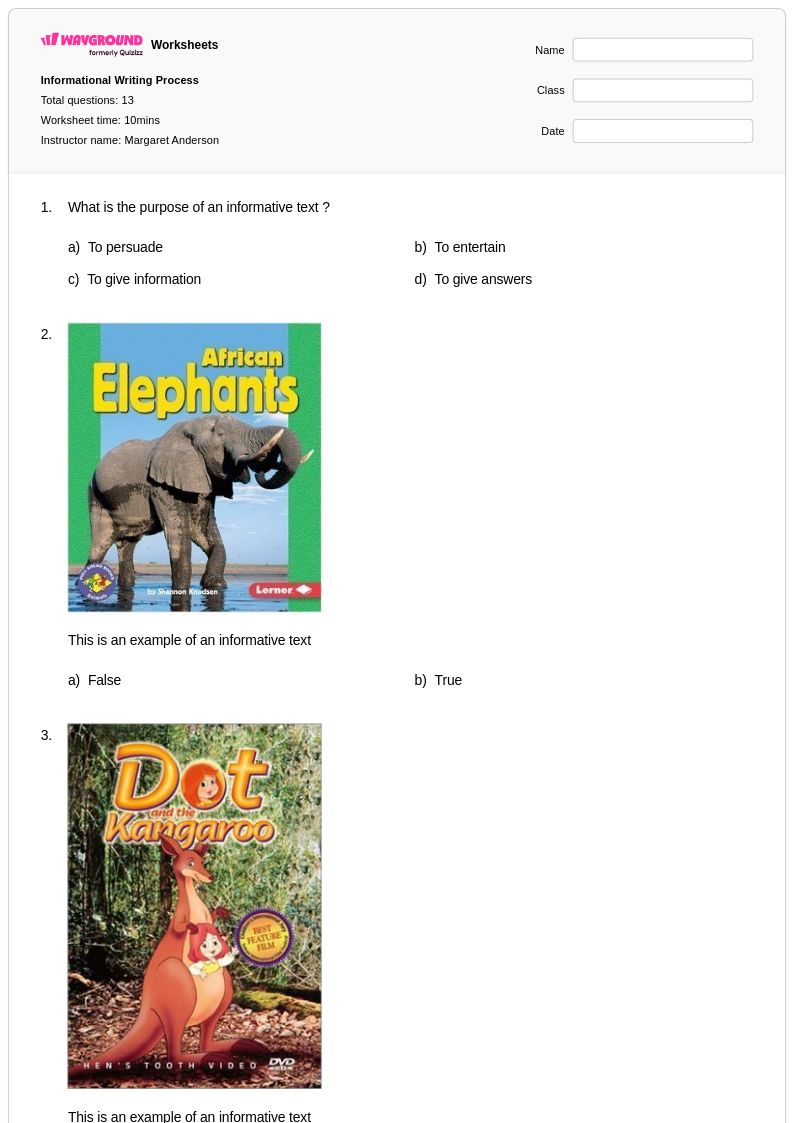
13 Q
3rd
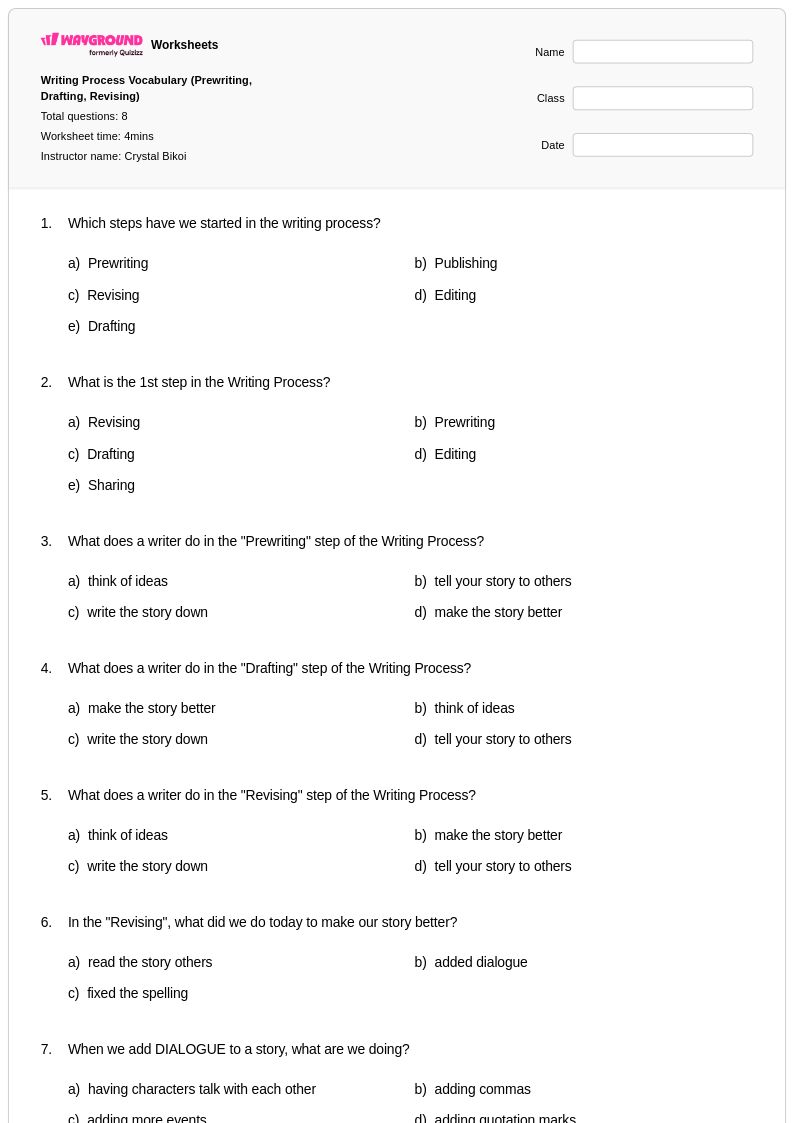
8 Q
3rd
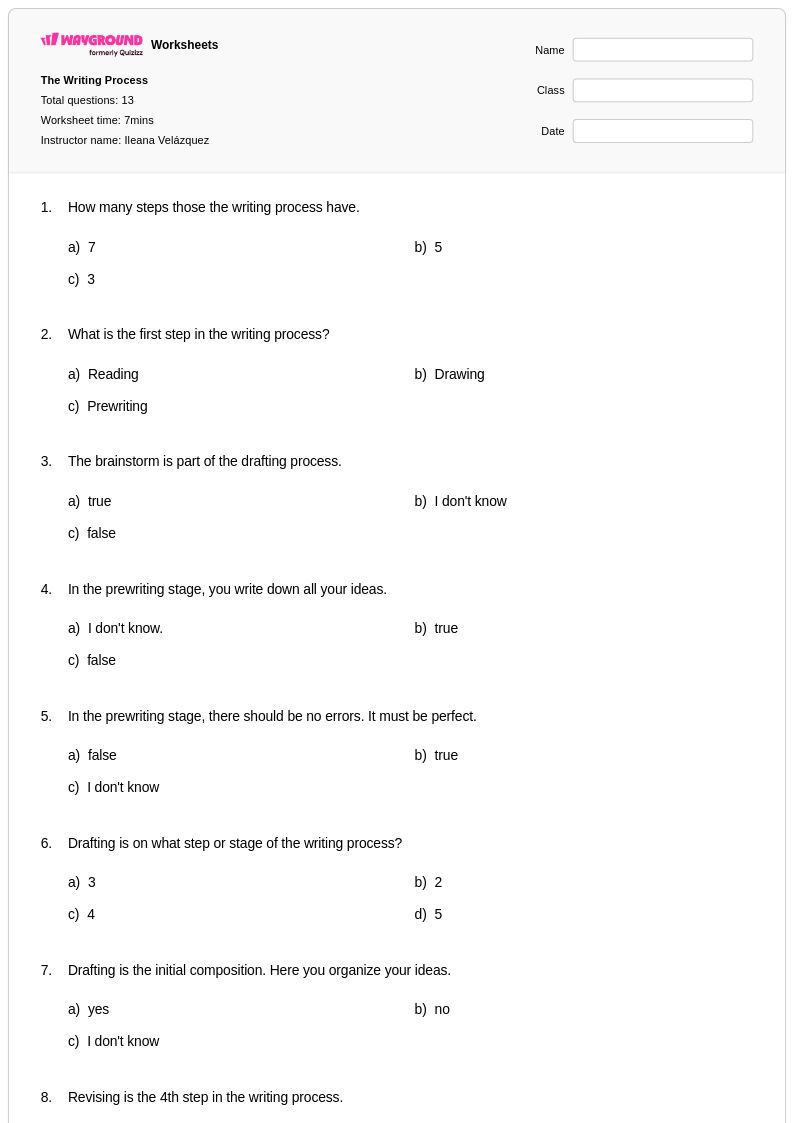
13 Q
3rd
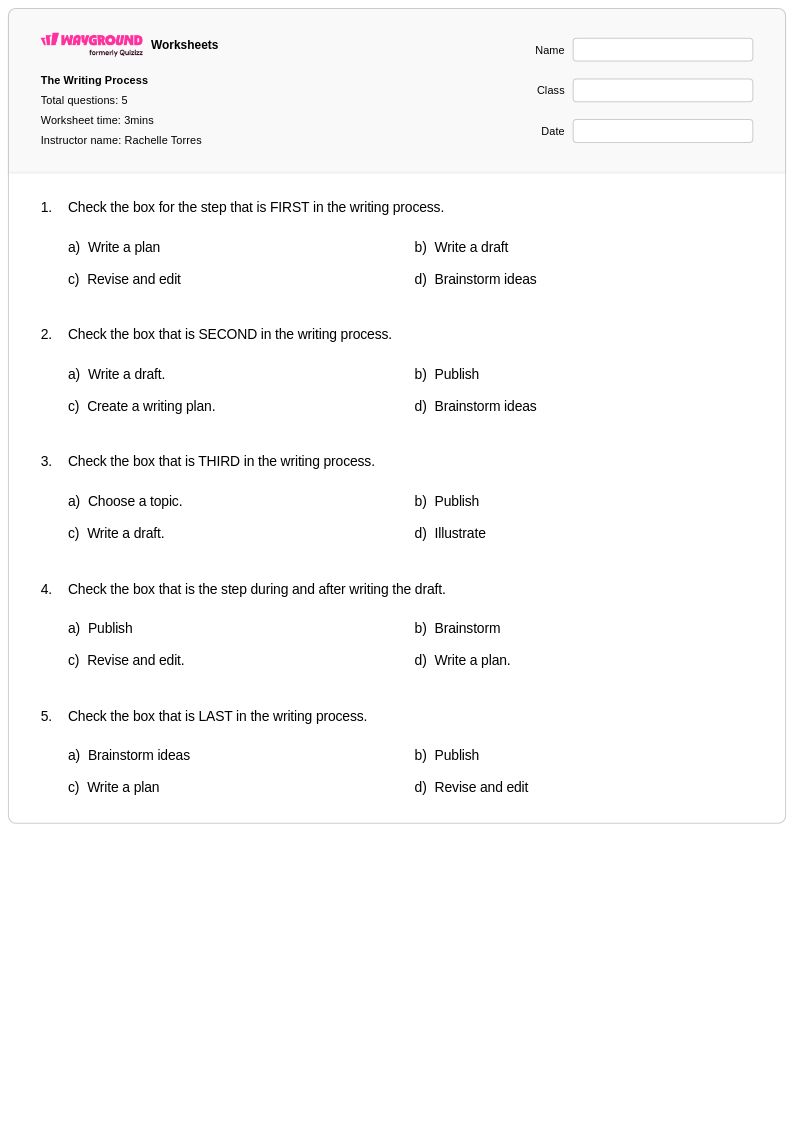
5 Q
3rd
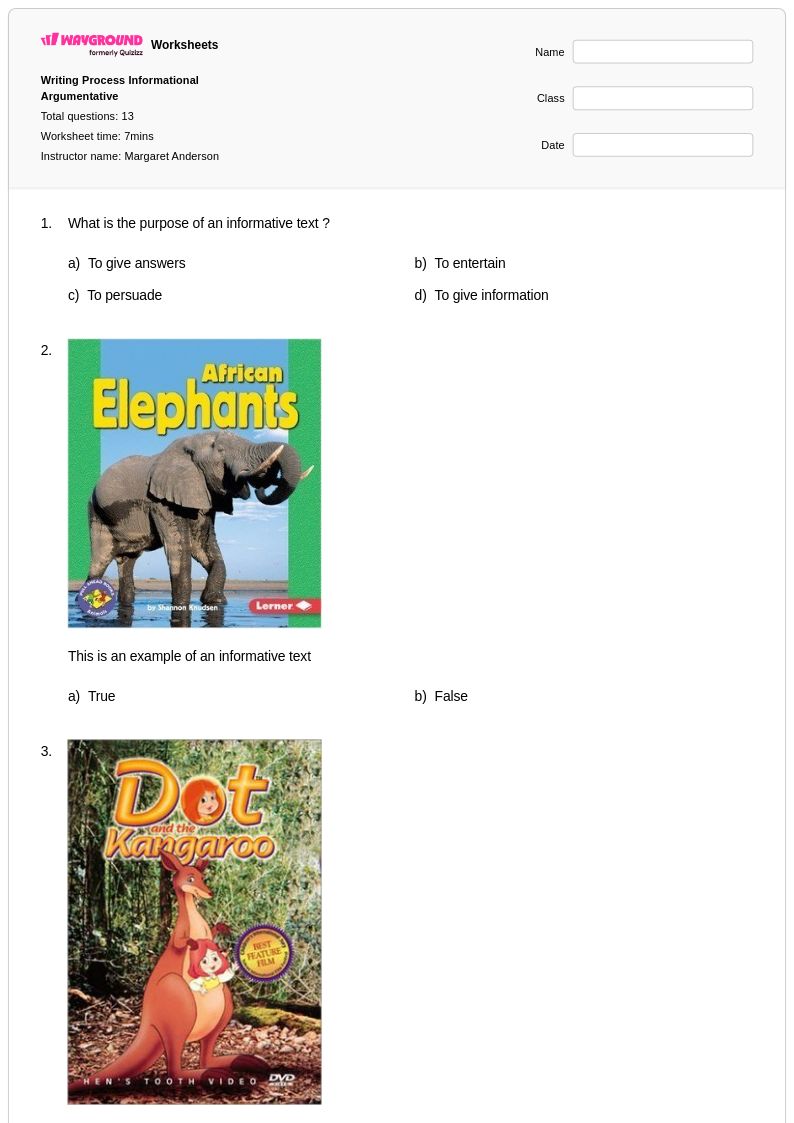
13 Q
3rd
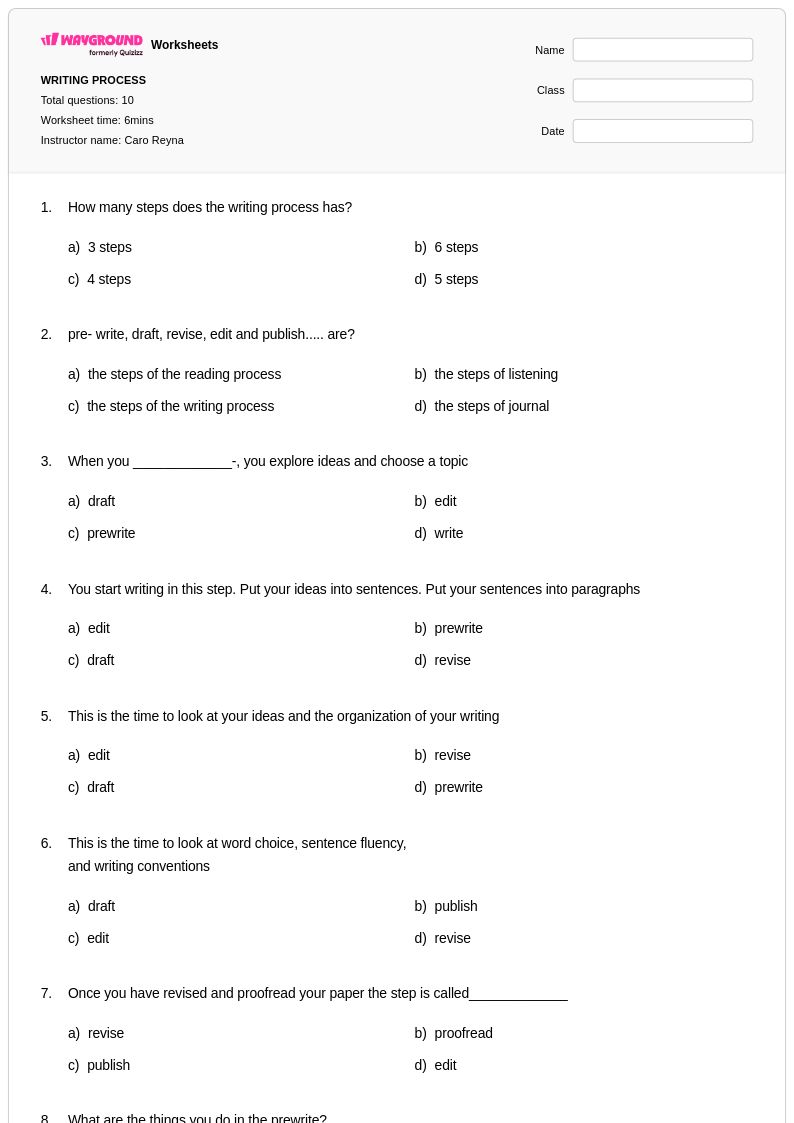
10 Q
1st - 3rd
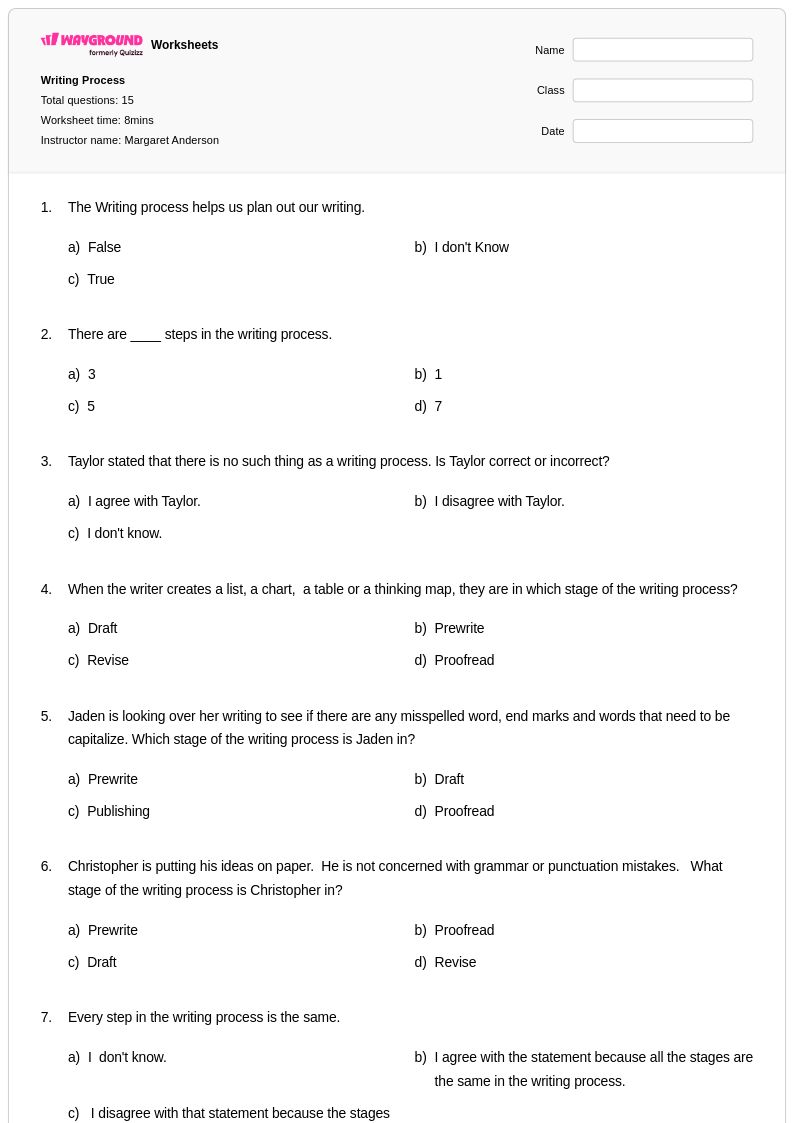
15 Q
3rd - 5th
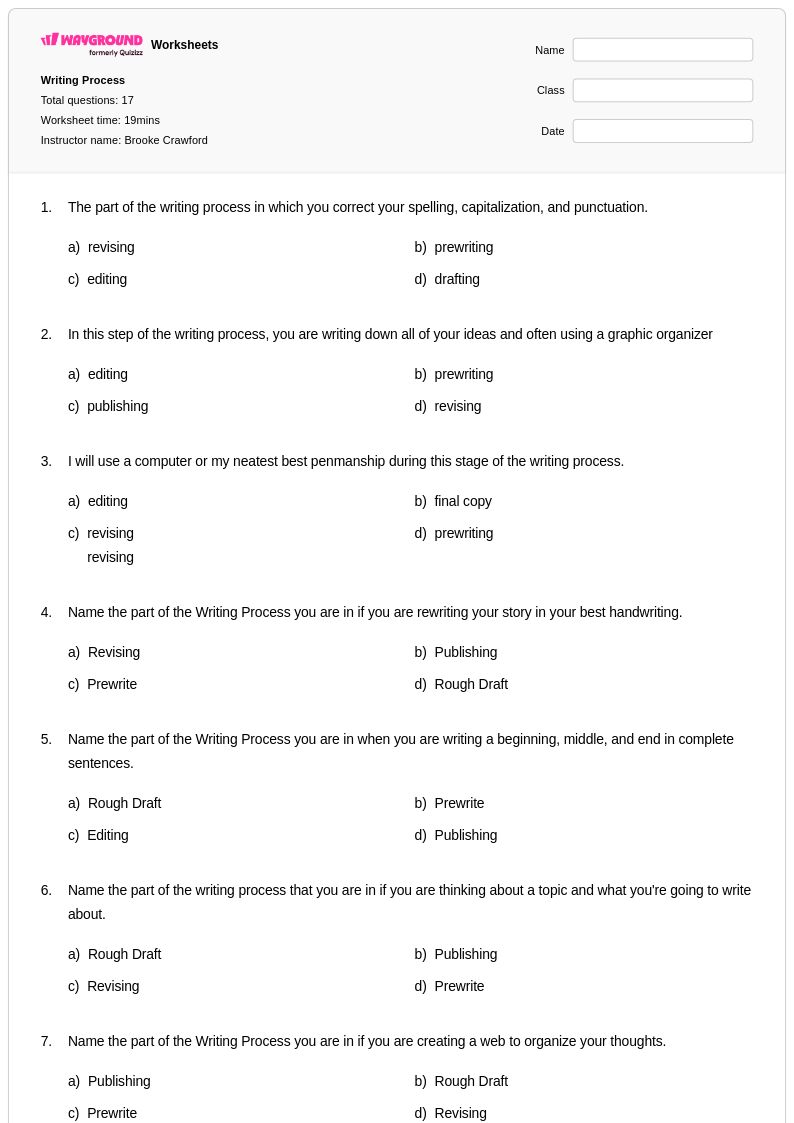
17 Q
3rd
Explore Writing Process Worksheets by Grades
Explore Writing Process Worksheets for grade 3 by Topic
Explore Other Subject Worksheets for grade 3
Explore printable Writing Process worksheets for Grade 3
Writing process worksheets for Grade 3 students through Wayground (formerly Quizizz) provide comprehensive practice in the fundamental stages of effective writing development. These educational resources guide young learners through each critical phase of composition, from initial brainstorming and planning to drafting, revising, editing, and publishing their work. The worksheets strengthen essential skills including idea generation, organizational strategies, sentence construction, and self-reflection techniques that form the foundation of successful writing habits. Students engage with practice problems that teach them to sequence their thoughts logically, use graphic organizers effectively, and understand the recursive nature of writing improvement. Each printable worksheet includes structured activities that make the abstract concepts of the writing process concrete and accessible, with answer keys providing clear guidance for both independent work and teacher-directed instruction. These free resources offer systematic skill-building exercises that help third-grade writers develop confidence and competency in expressing their ideas through written communication.
Wayground (formerly Quizizz) empowers educators with an extensive collection of teacher-created writing process worksheets specifically designed for Grade 3 instruction, drawn from millions of high-quality educational resources. The platform's robust search and filtering capabilities allow teachers to quickly locate materials that align with specific standards and meet diverse classroom needs, whether for whole-group instruction, small-group practice, or individual remediation and enrichment activities. These differentiation tools enable educators to customize worksheets according to student ability levels, learning styles, and specific skill gaps in writing development. Available in both digital and printable PDF formats, the resources provide maximum flexibility for various instructional settings and technological environments. Teachers can efficiently plan comprehensive writing instruction sequences, create targeted practice sessions for students struggling with particular aspects of the writing process, and offer advanced challenges for students ready to explore more sophisticated composition techniques, all while maintaining alignment with grade-appropriate expectations and learning objectives.
FAQs
How do I teach the writing process to students who struggle to get started?
What exercises help students practice revising and editing their own writing?
What are the most common mistakes students make during the writing process?
How can I use writing process worksheets to support different types of writing assignments?
How do I use Wayground's writing process worksheets in my classroom?
How do I differentiate writing process instruction for struggling writers and advanced students?
What is the R.A.C.E. strategy and how does it fit into the writing process?