
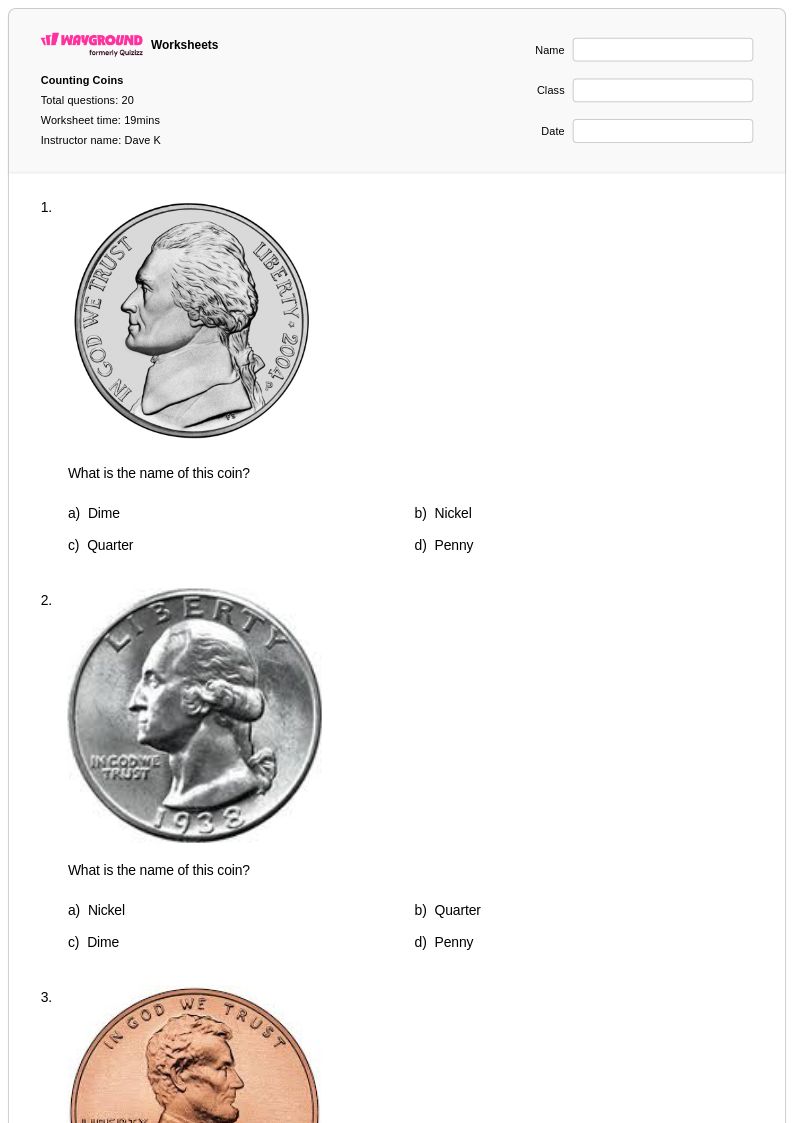
20 Q
2nd
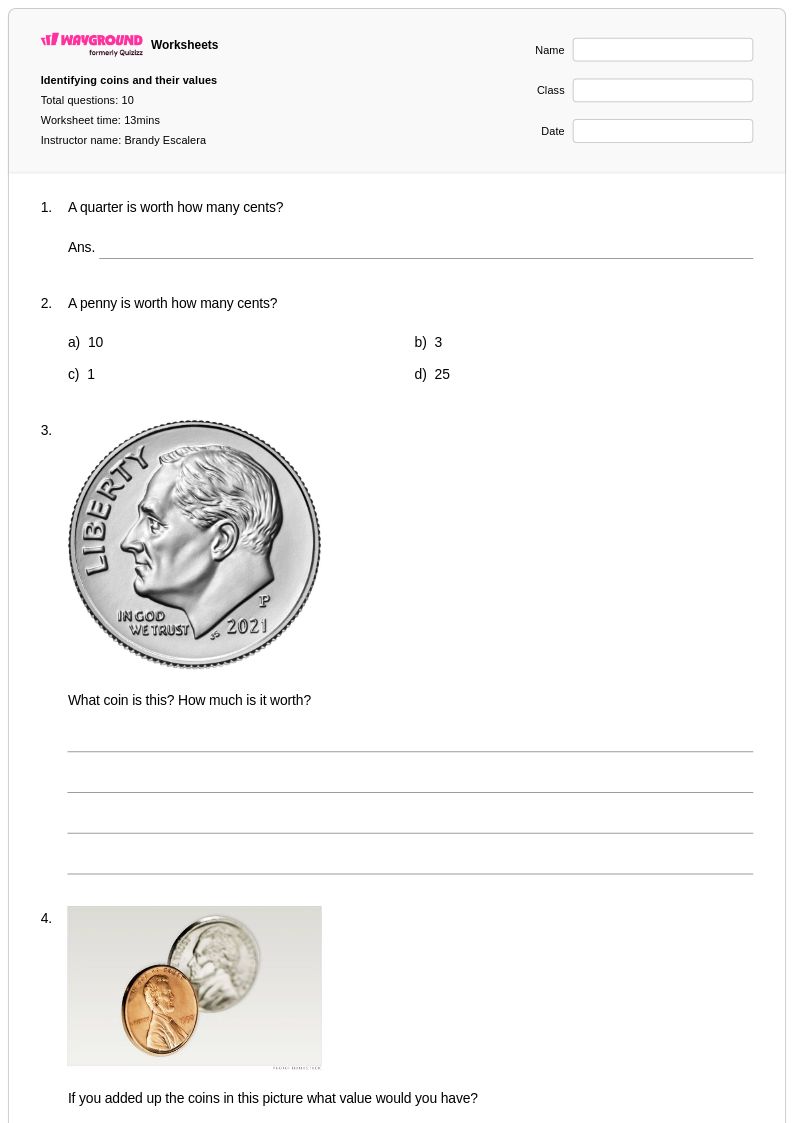
10 Q
1st
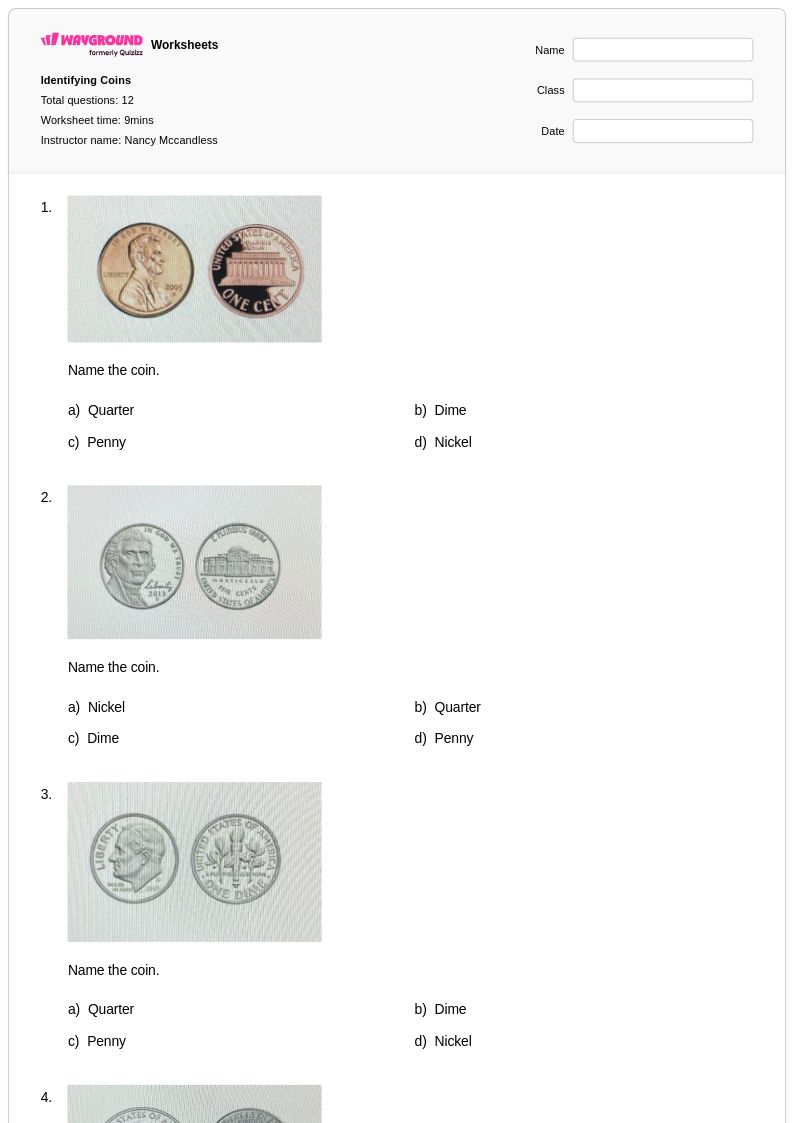
12 Q
KG
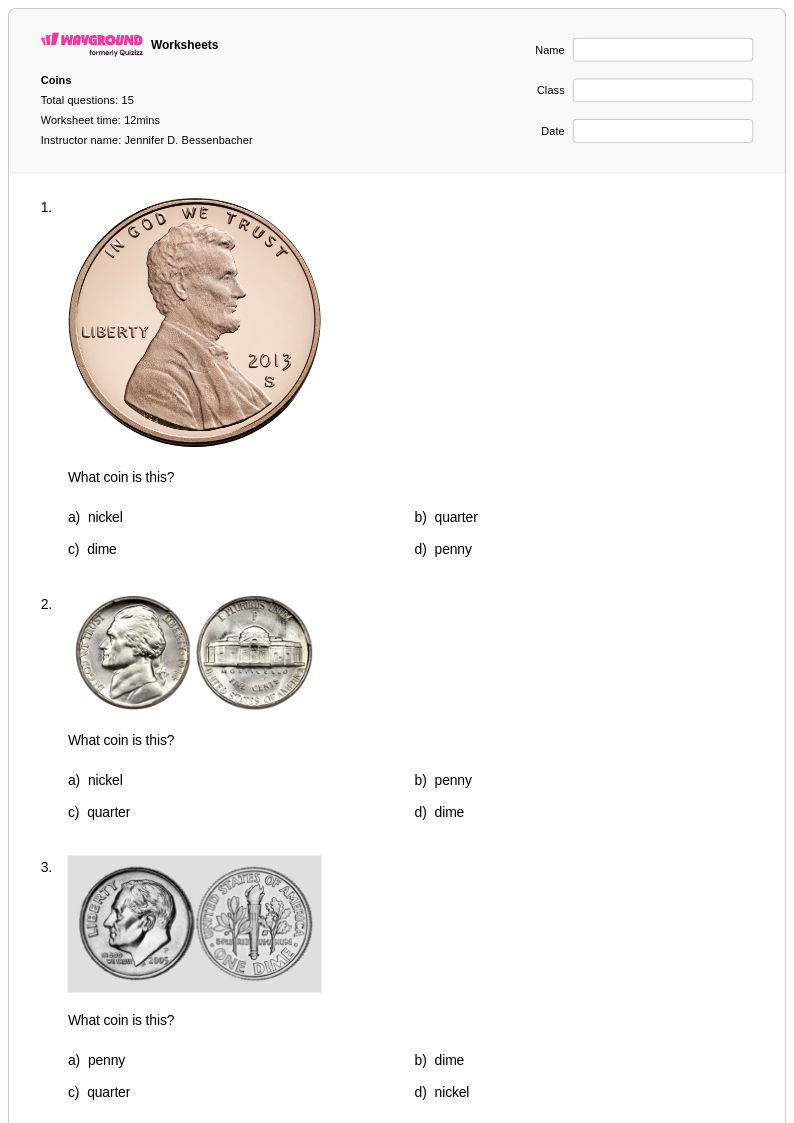
15 Q
2nd
10 Q
1st
5 Q
1st
10 Q
2nd
10 Q
KG
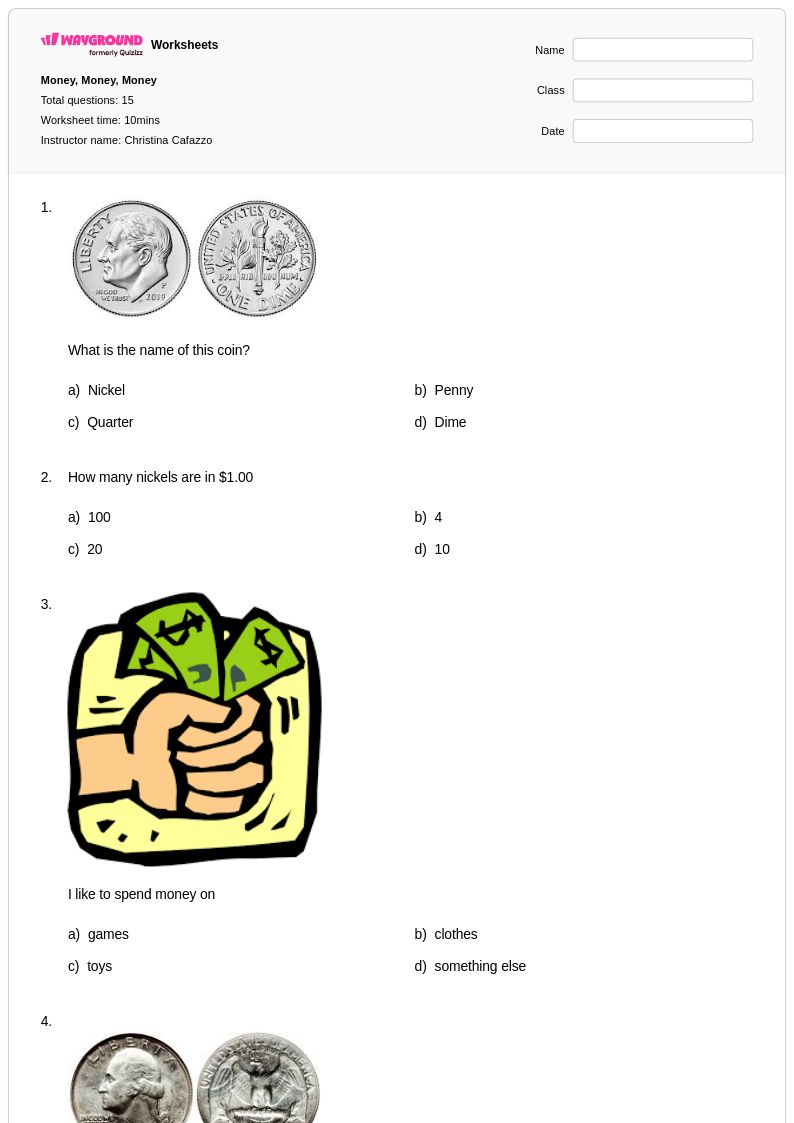
15 Q
1st - 2nd
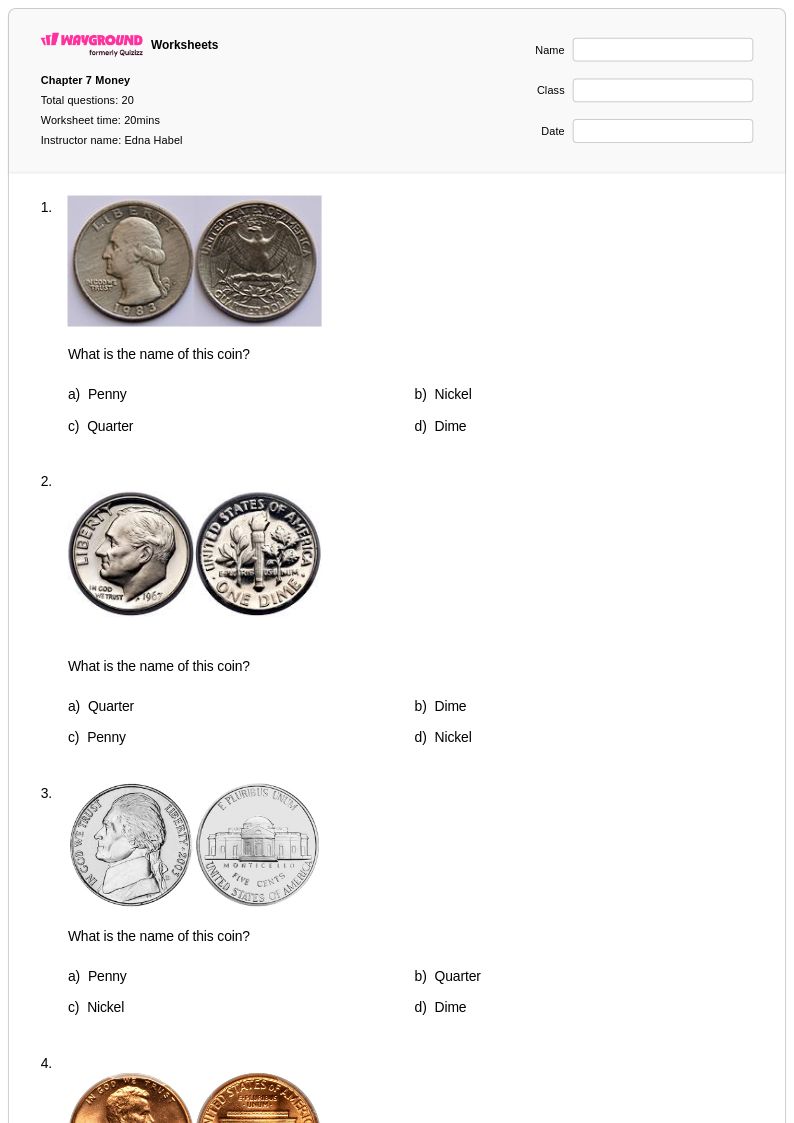
20 Q
2nd
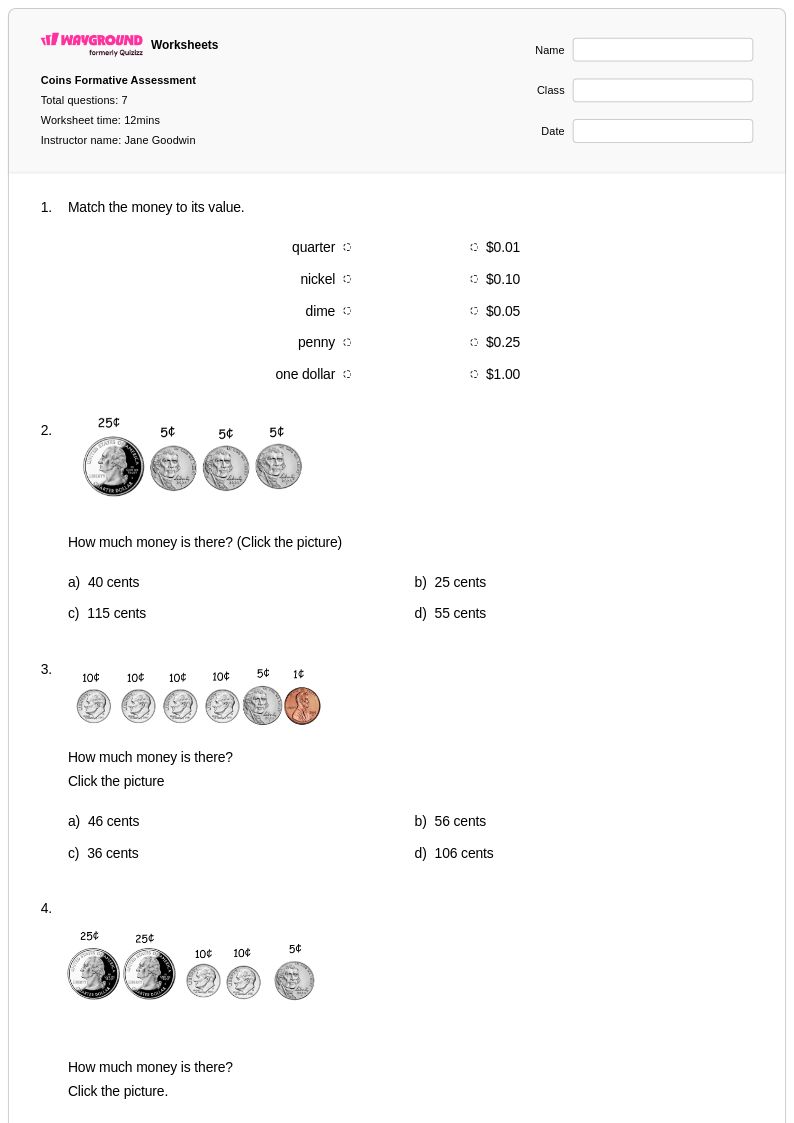
7 Q
2nd
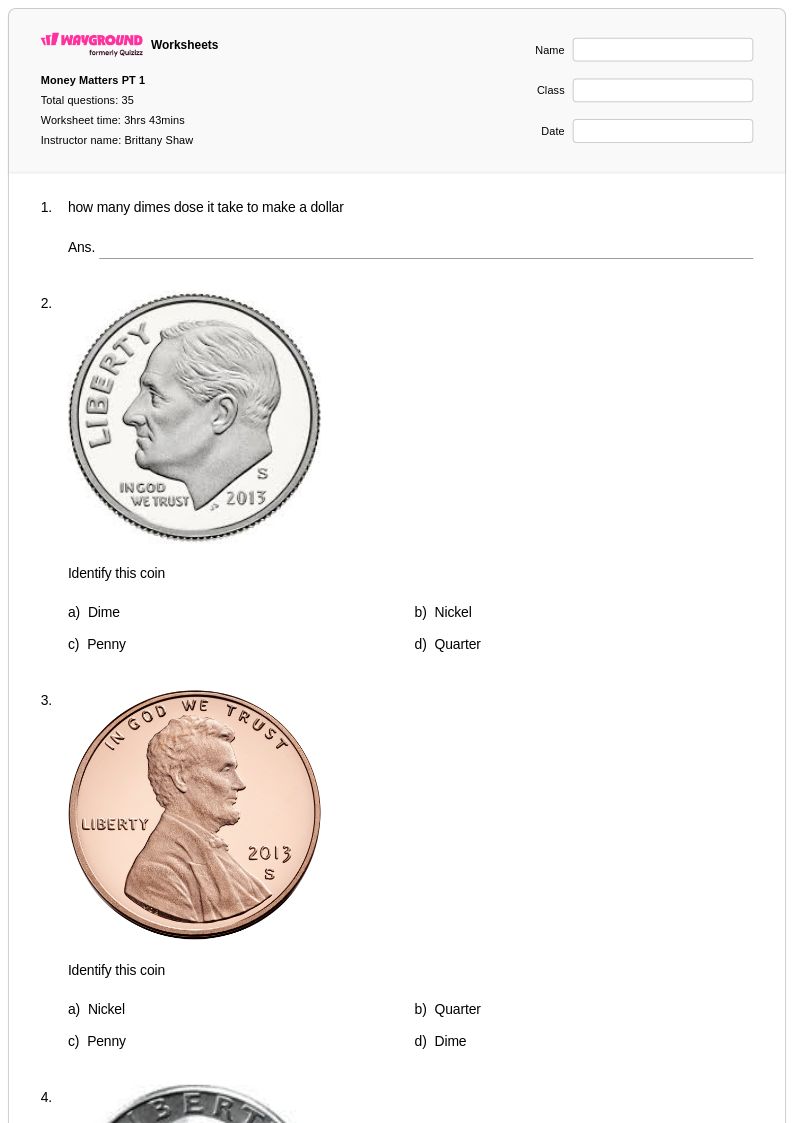
35 Q
4th
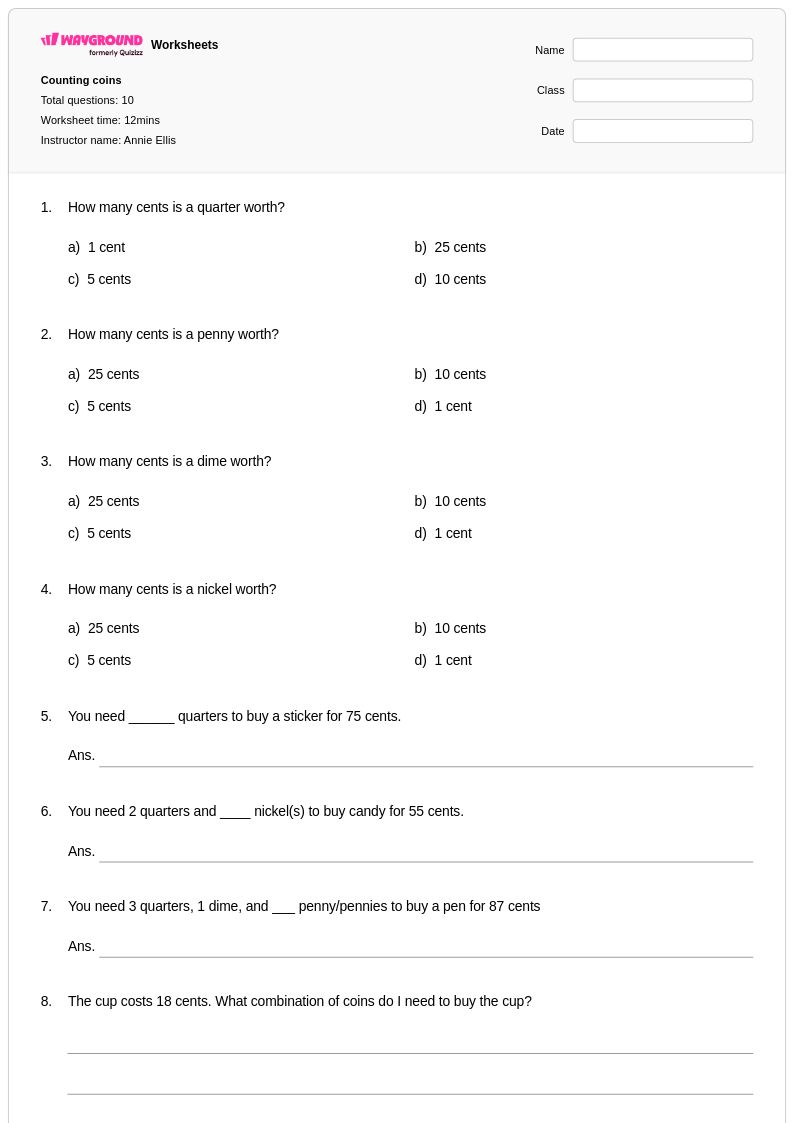
10 Q
KG - 3rd
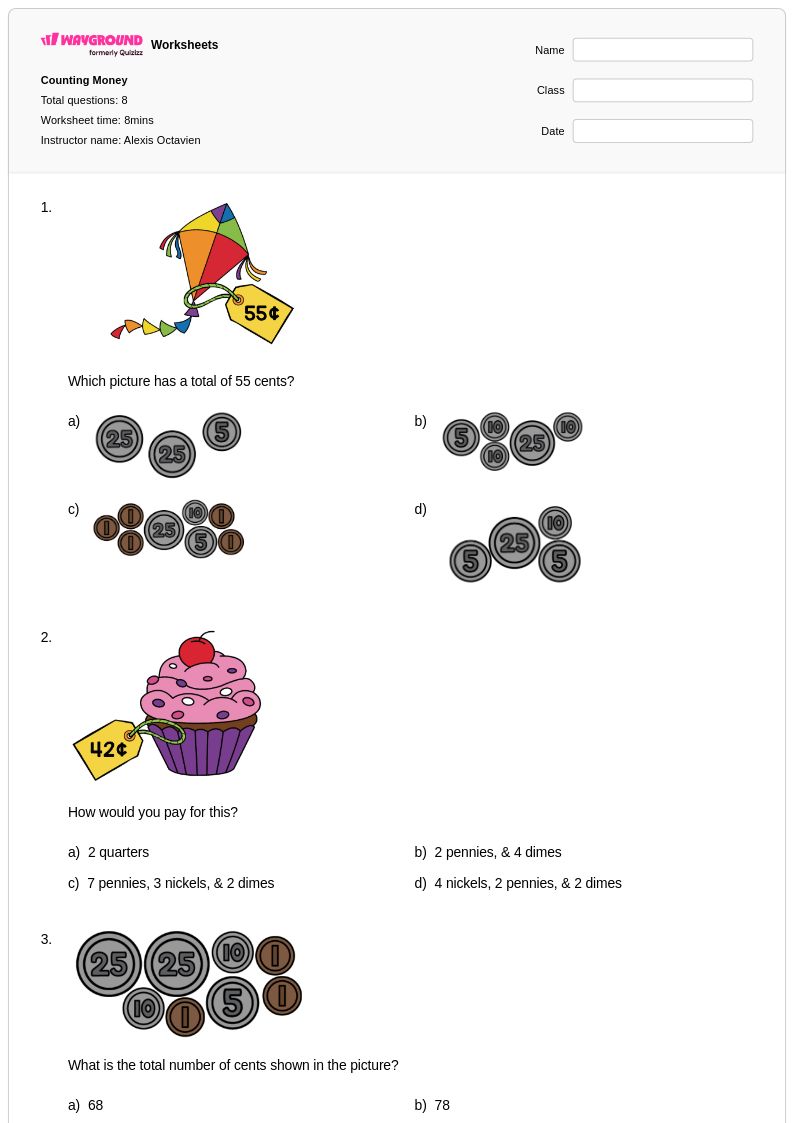
8 Q
2nd
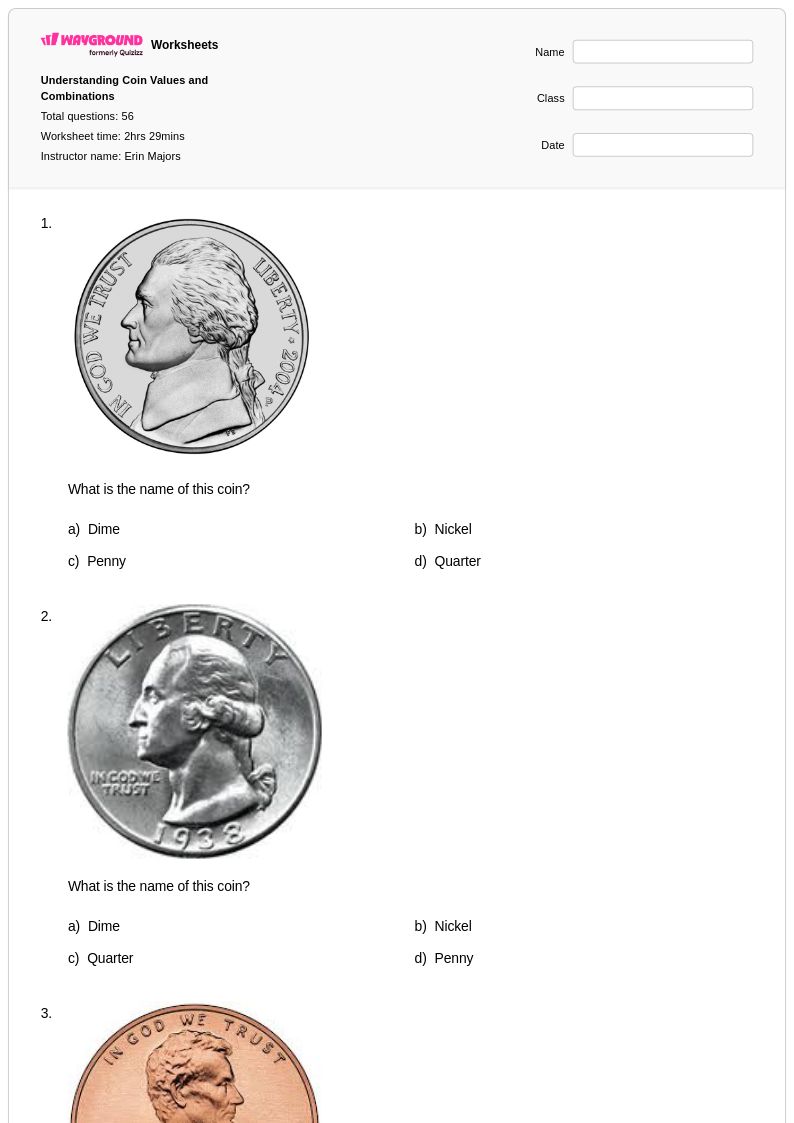
56 Q
2nd
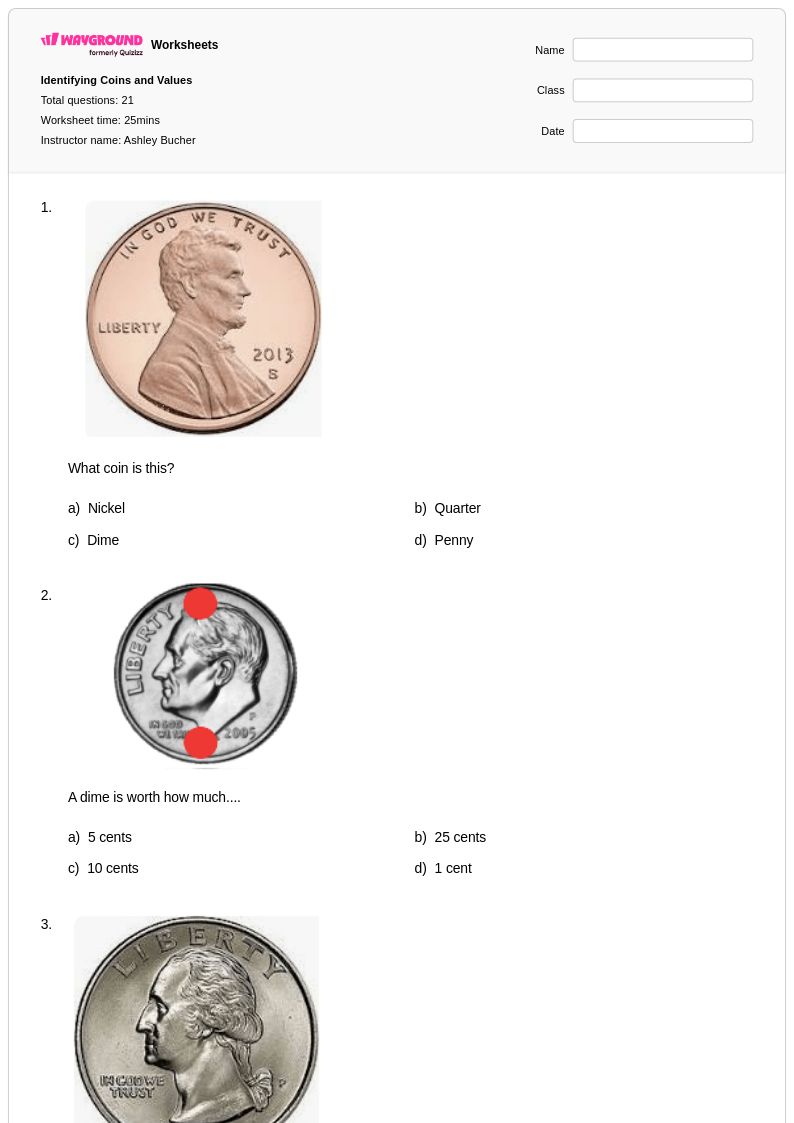
21 Q
2nd
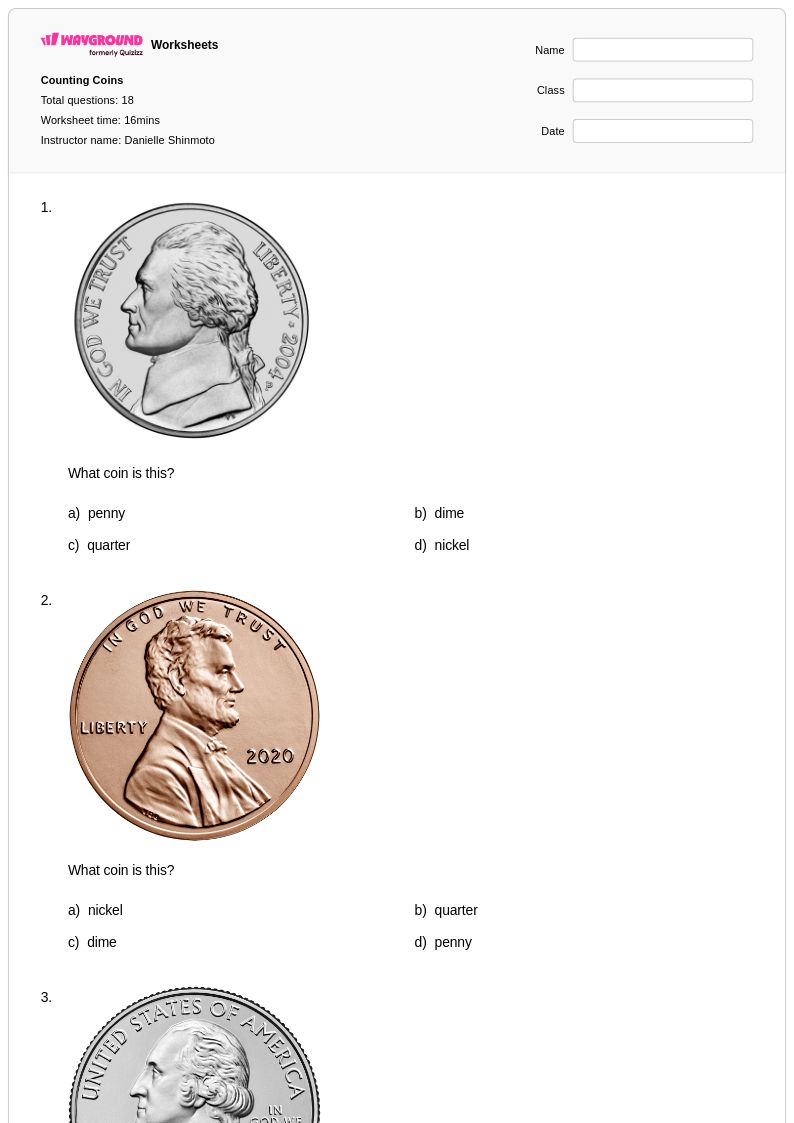
18 Q
2nd
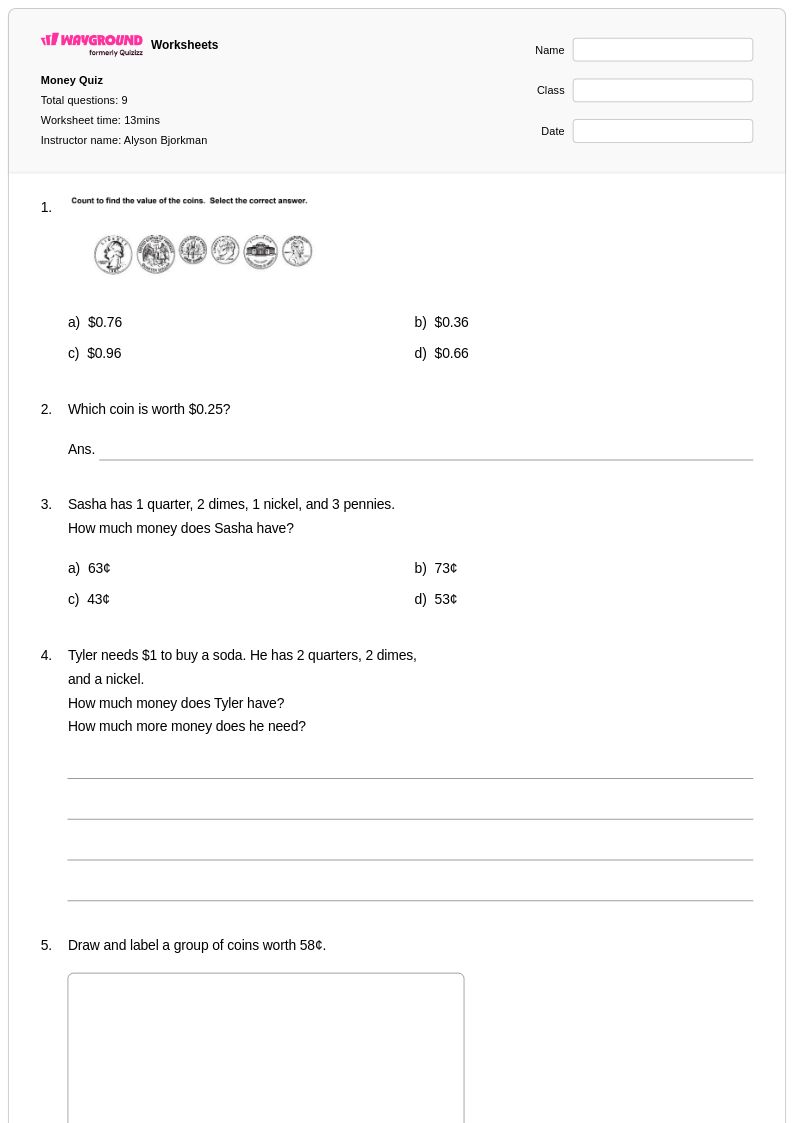
9 Q
2nd
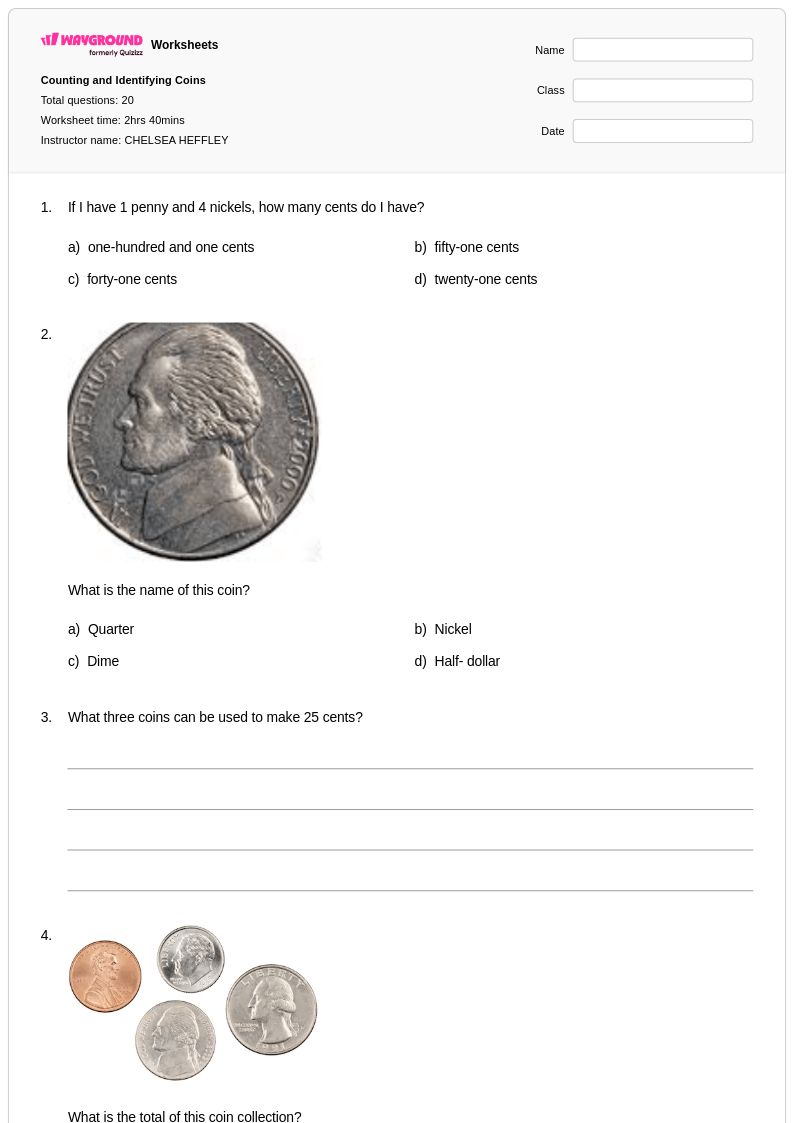
20 Q
1st - 3rd
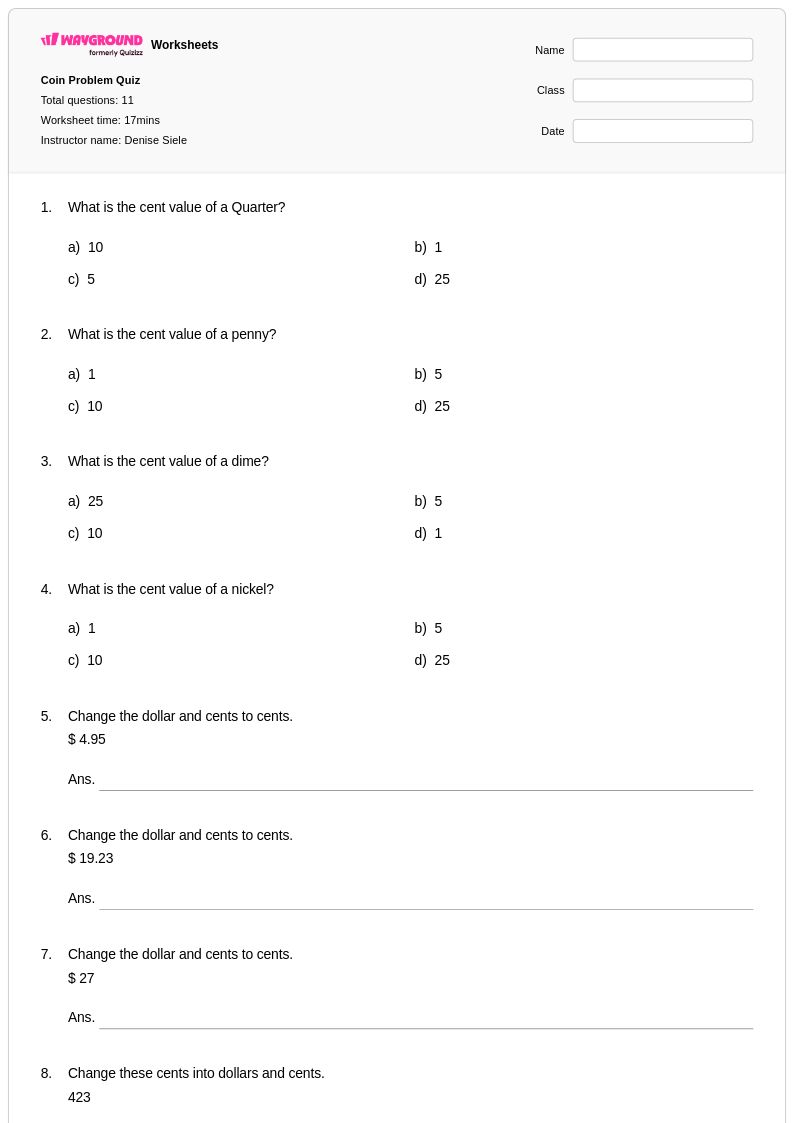
11 Q
10th
19 Q
2nd
20 Q
2nd
14 Q
1st
10 Q
2nd
Explore Worksheets by Grade
Explore Worksheets by Subjects
Explore printable Adding Groups of Coins worksheets
Adding groups of coins worksheets available through Wayground (formerly Quizizz) provide students with essential practice in fundamental money mathematics skills. These comprehensive resources focus specifically on helping learners master the process of combining different coin denominations to determine total values, a critical foundation for real-world financial literacy. The worksheets systematically guide students through various scenarios involving pennies, nickels, dimes, and quarters, strengthening their ability to recognize coin values, count by different increments, and apply addition strategies when working with mixed coin collections. Each printable resource includes carefully structured practice problems that progress from simple single-denomination groups to more complex multi-coin combinations, with answer keys provided to support independent learning and immediate feedback. These free pdf materials emphasize both computational accuracy and conceptual understanding of monetary relationships.
Wayground (formerly Quizizz) empowers educators with millions of teacher-created resources specifically designed for adding groups of coins instruction, featuring robust search and filtering capabilities that allow precise targeting of skill levels and learning objectives. The platform's extensive collection supports comprehensive lesson planning through standards-aligned materials that can be easily customized to meet diverse classroom needs, whether for initial skill introduction, targeted remediation, or enrichment activities. Teachers benefit from flexible formatting options that include both digital interactive versions and printable pdf worksheets, enabling seamless integration into various instructional contexts from traditional paper-based practice to technology-enhanced learning environments. The sophisticated differentiation tools allow educators to modify difficulty levels, adjust problem quantities, and select specific coin combinations, ensuring that every student receives appropriate challenge levels while building confidence and proficiency in money mathematics concepts.
FAQs
How do I teach students to add groups of coins?
What exercises help students practice adding groups of coins?
What mistakes do students make when counting groups of coins?
How can I use an adding groups of coins worksheet?
How does counting and adding coins fit into the Common Core math progression?
How can I differentiate practice with adding groups of coins?