
Recommended Topics for you
- Area Calculation
- Average Speed
- Calculating Speed
- Capacity Conversion
- Comparing Measurement
- Conversion Graphs
- Converting Customary Units
- Converting Units
- Customary Capacity
- Customary Conversions
- Customary Units of Capacity
- Customary Units of Length
- Distance, Rate, and Time
- Estimating Length
- Length Comparison
- Length Conversion
- Load Calculation
- Mass Conversion
- Measurement Tools and Strategies
- Measuring Distance
- Measuring Length
- Measuring Mass
- Measuring to the Nearest Quarter Inch
- Measuring Volume
- Measuring Weight
- Metric Conversion
- Metric System Conversion
- Non-standard Units
- Reading a Dial Caliper
- Reading a Ruler
- Reading a Tape Measure
- Reading Meters
- Reading Metric Ruler
- Reading Scales
- Reconstitution Calculation
- Scale and Conversions
- Size Comparison
- Speed, Distance, and Time
- Speed Calculations
- Standard and Nonstandard Units
- Units of Measurement
- Weight Comparison
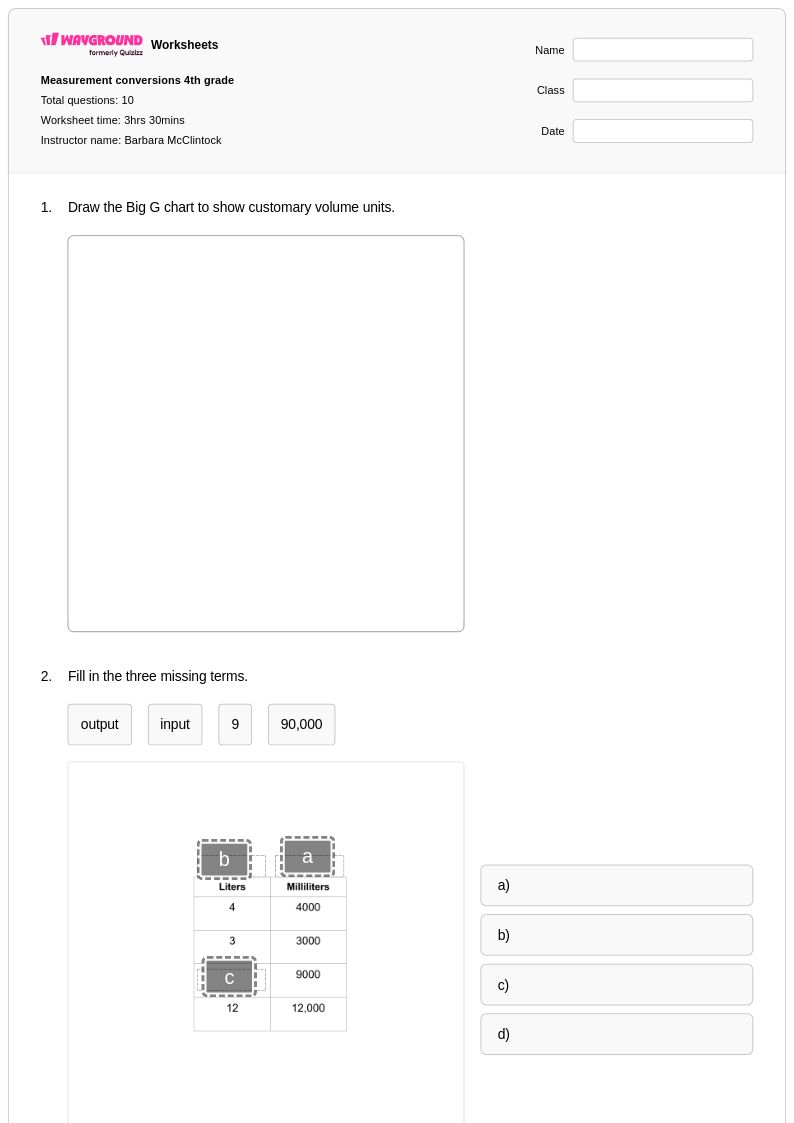
10 Q
4th
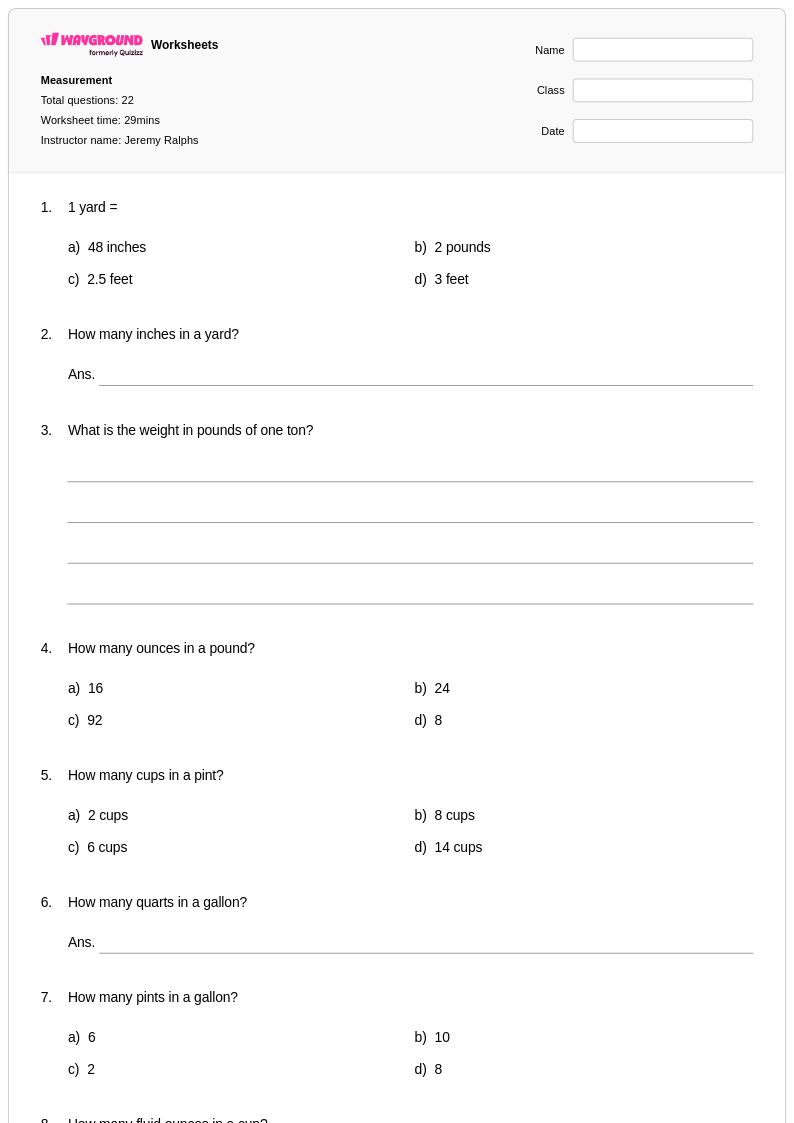
22 Q
4th
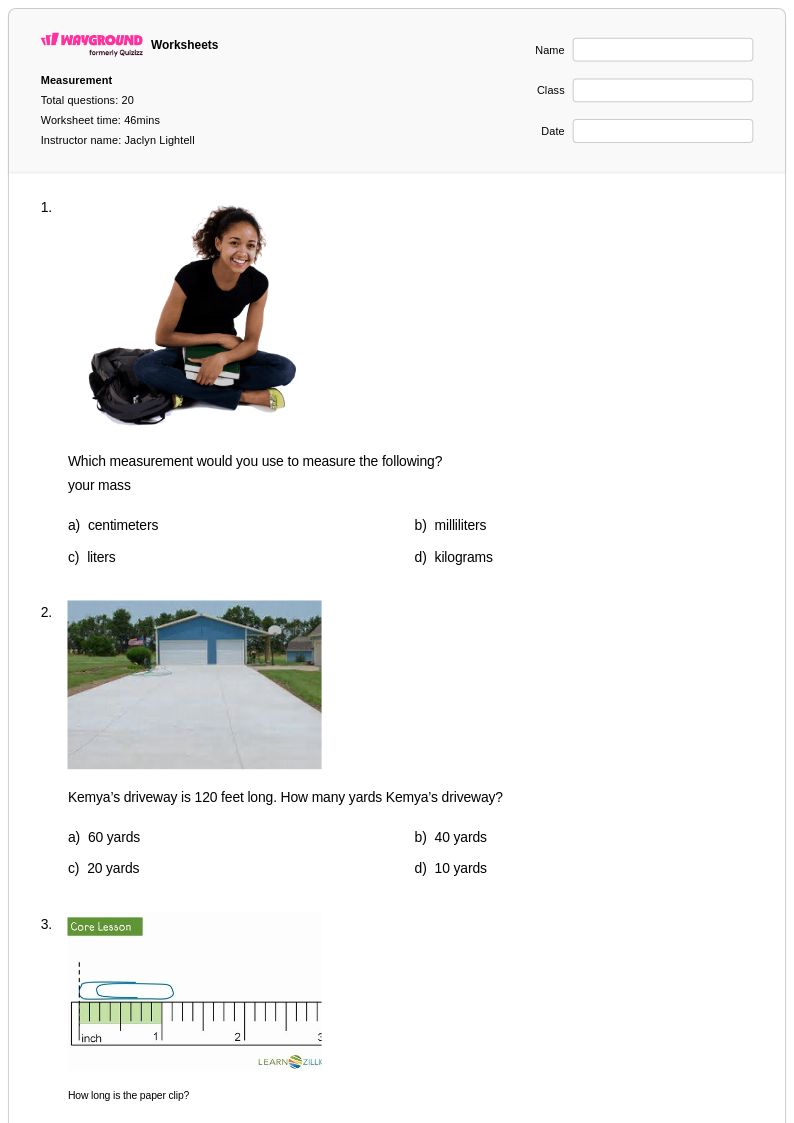
20 Q
5th
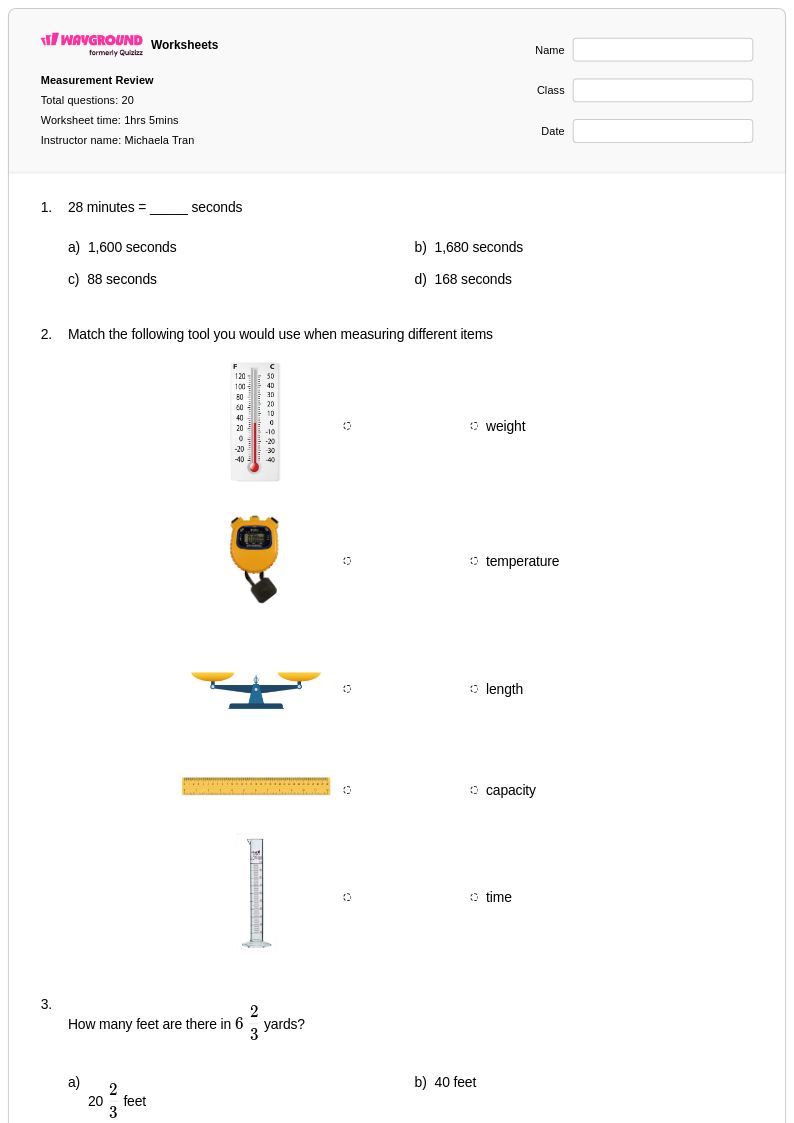
20 Q
4th
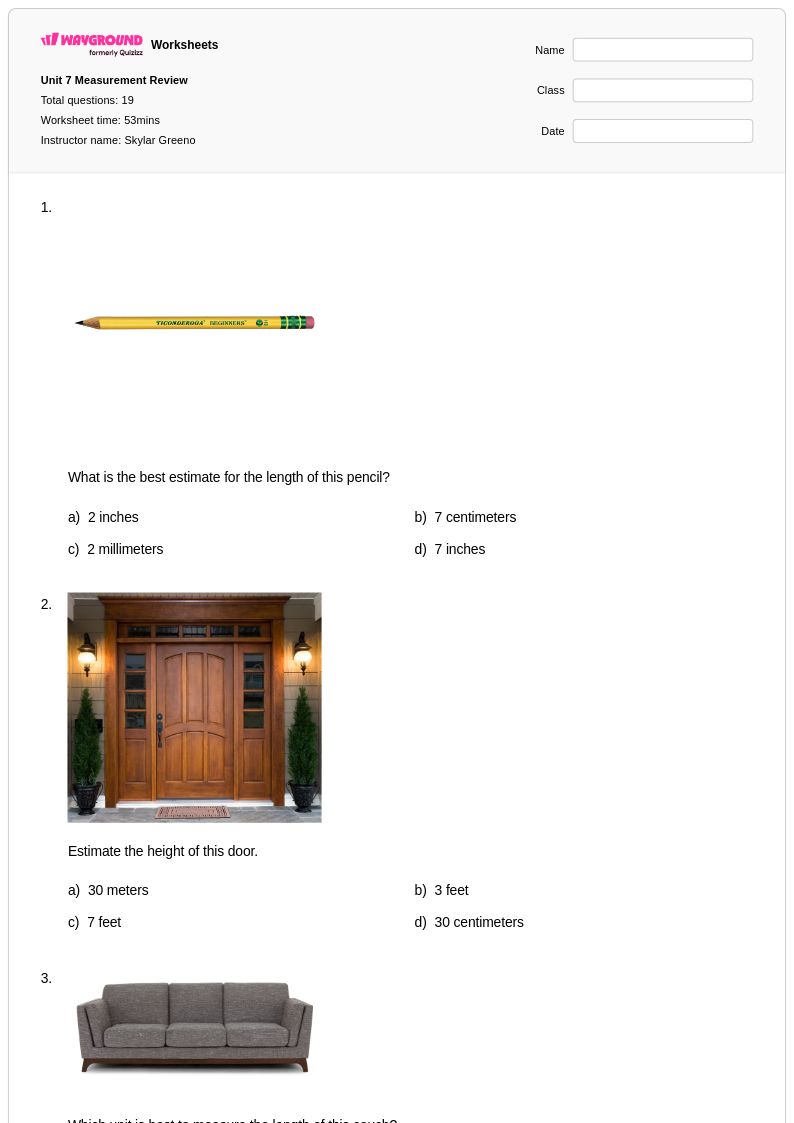
19 Q
4th
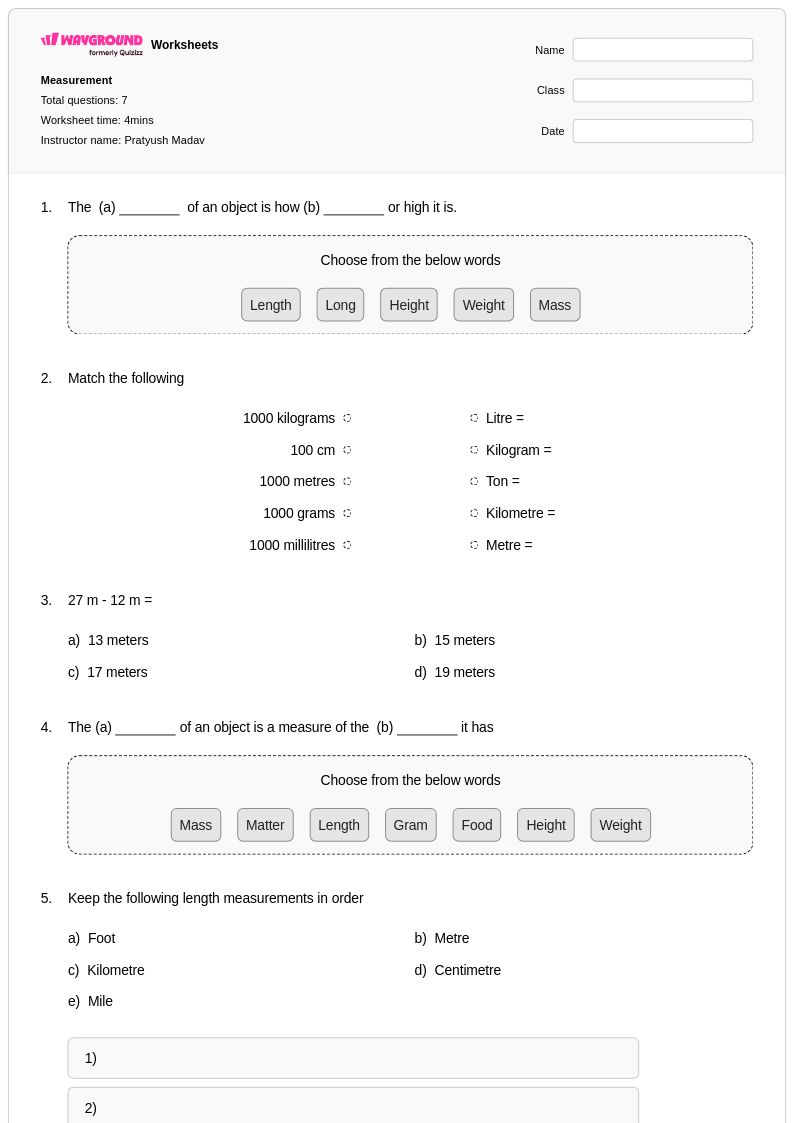
7 Q
3rd
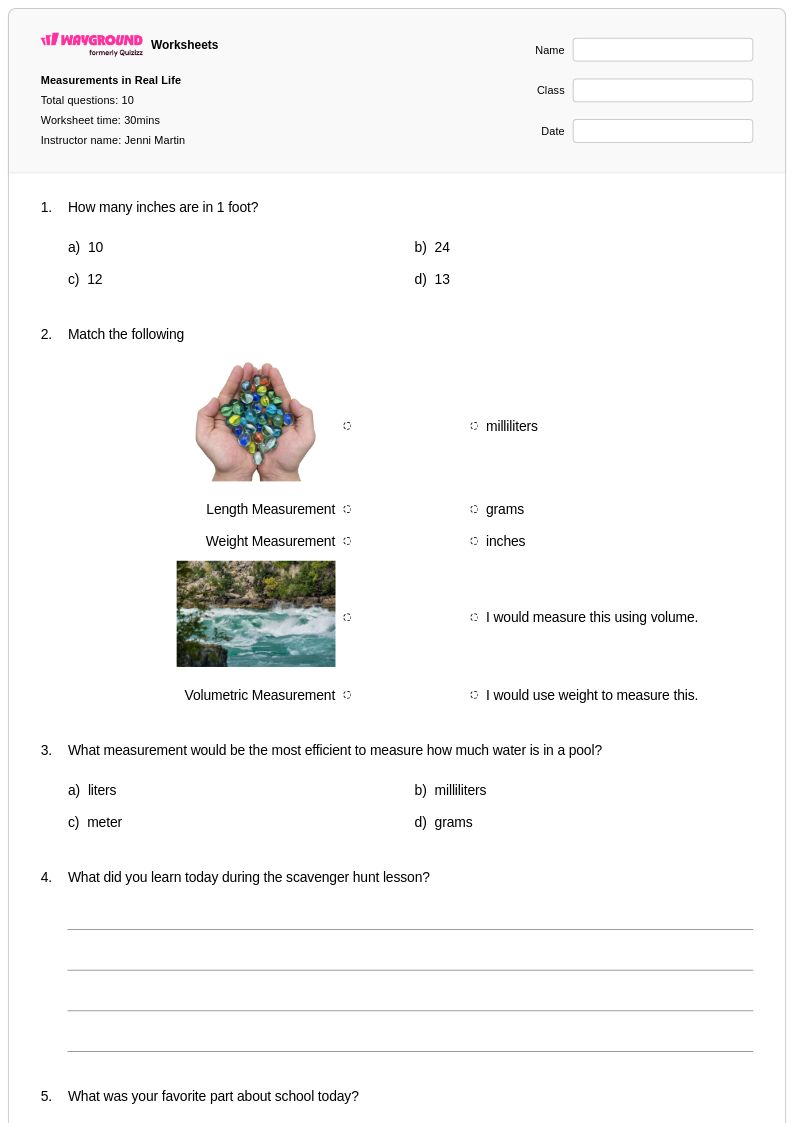
10 Q
3rd - 4th
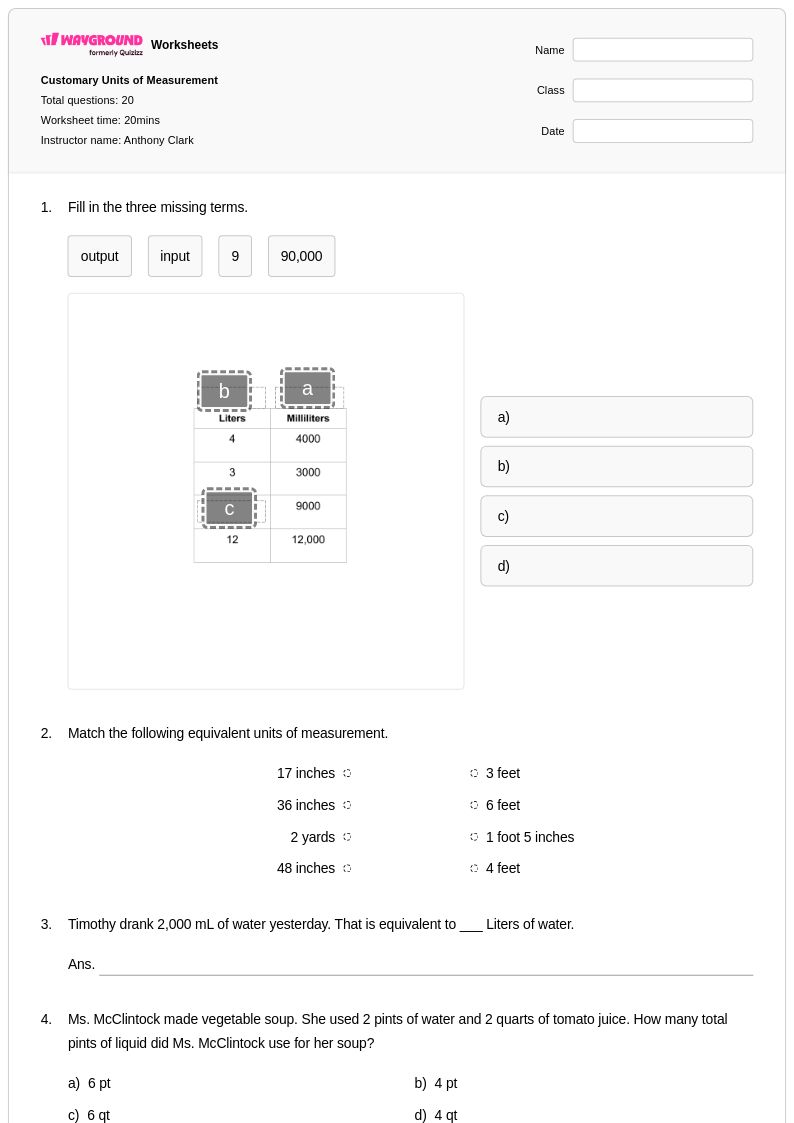
20 Q
4th - Uni
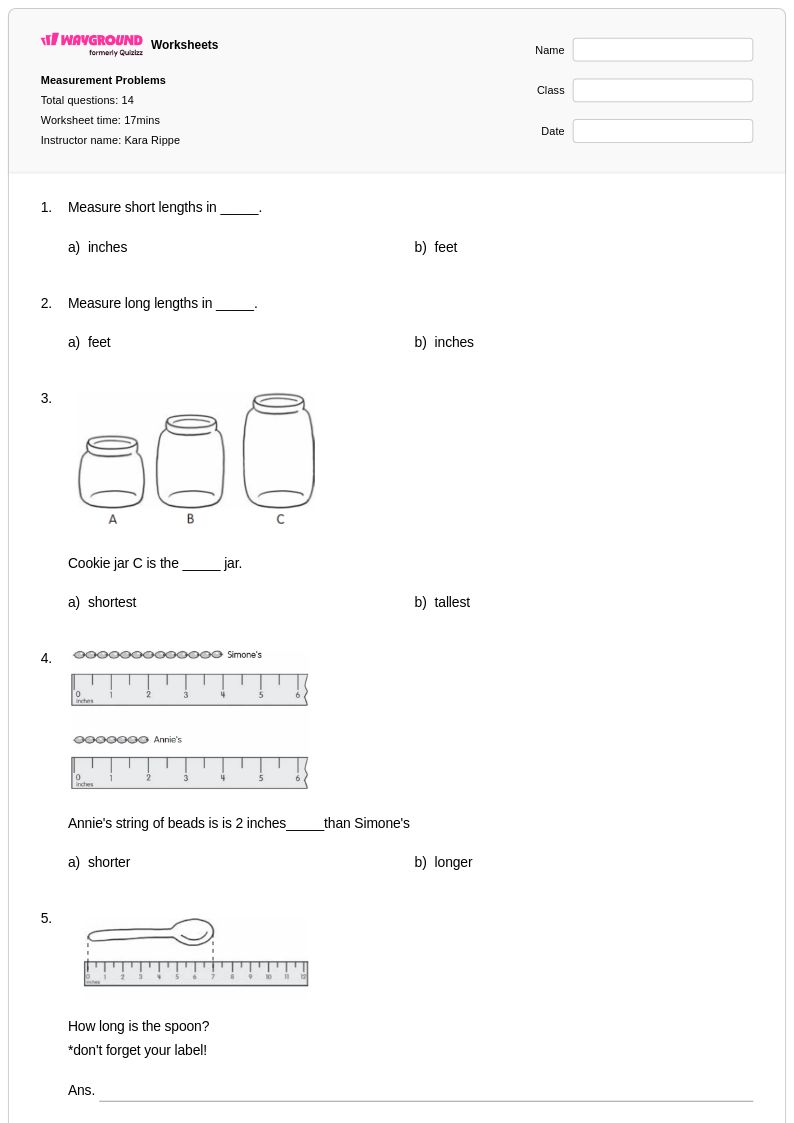
14 Q
2nd
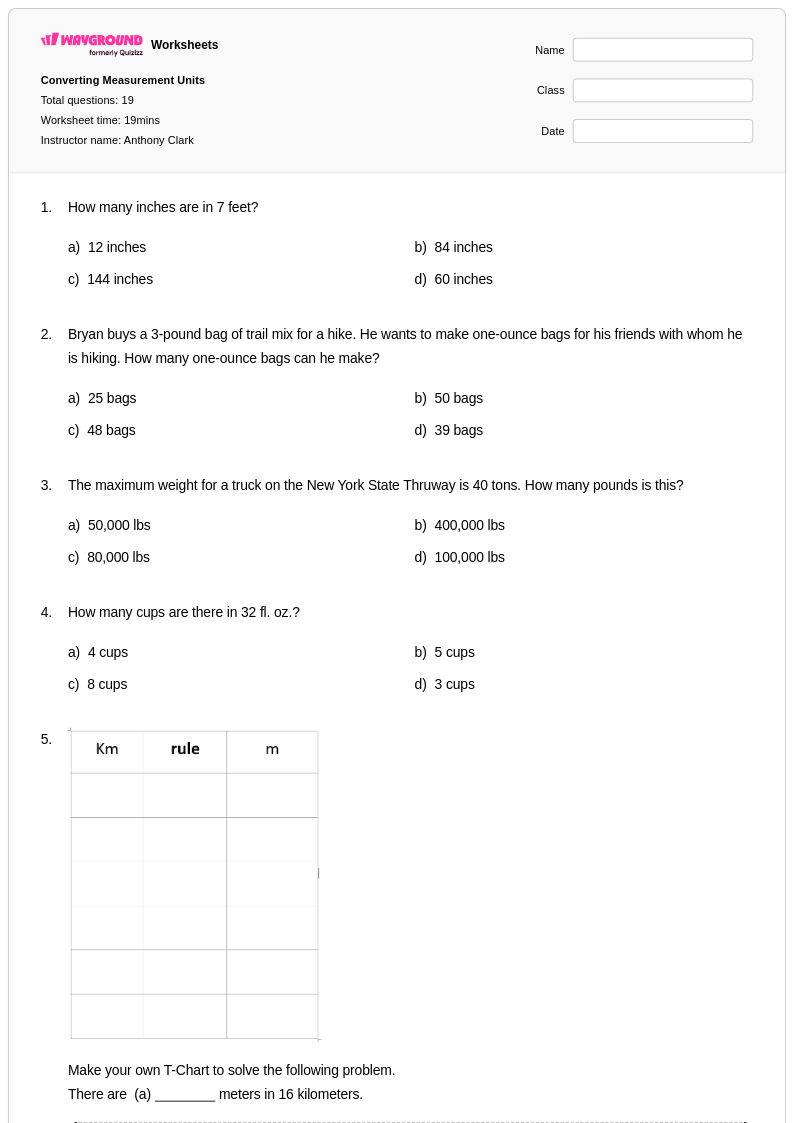
19 Q
5th - Uni
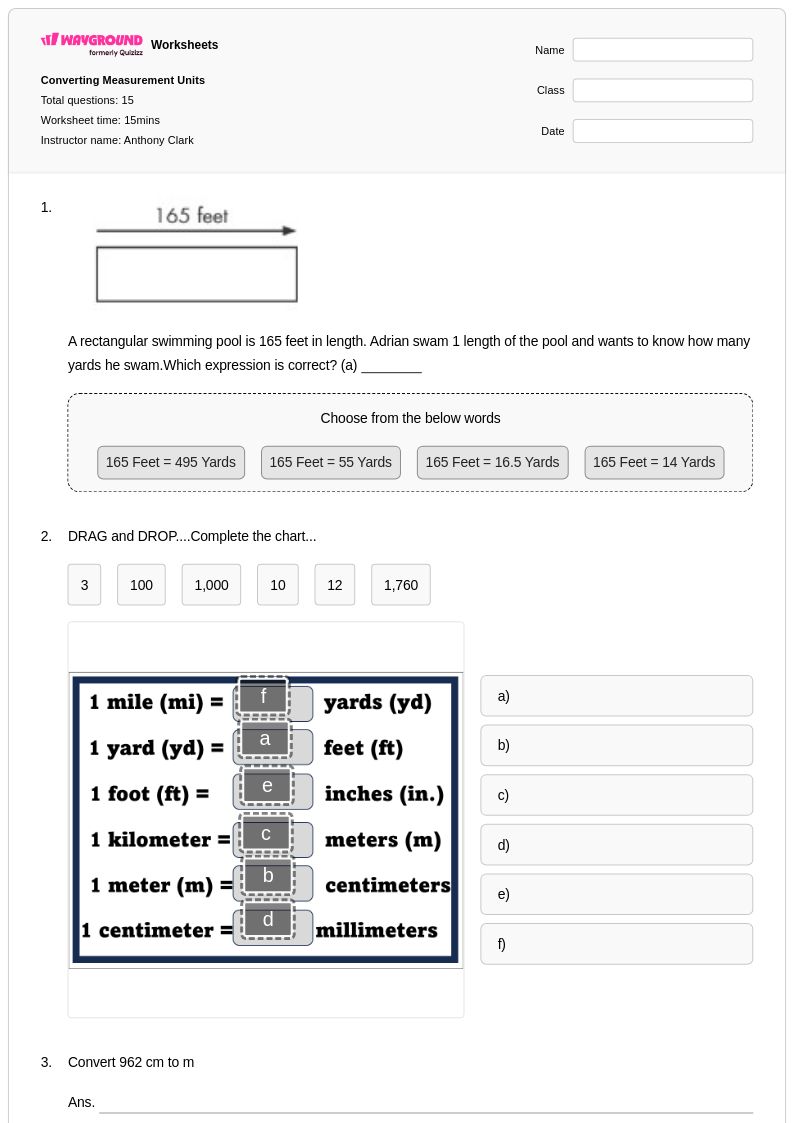
15 Q
5th - Uni
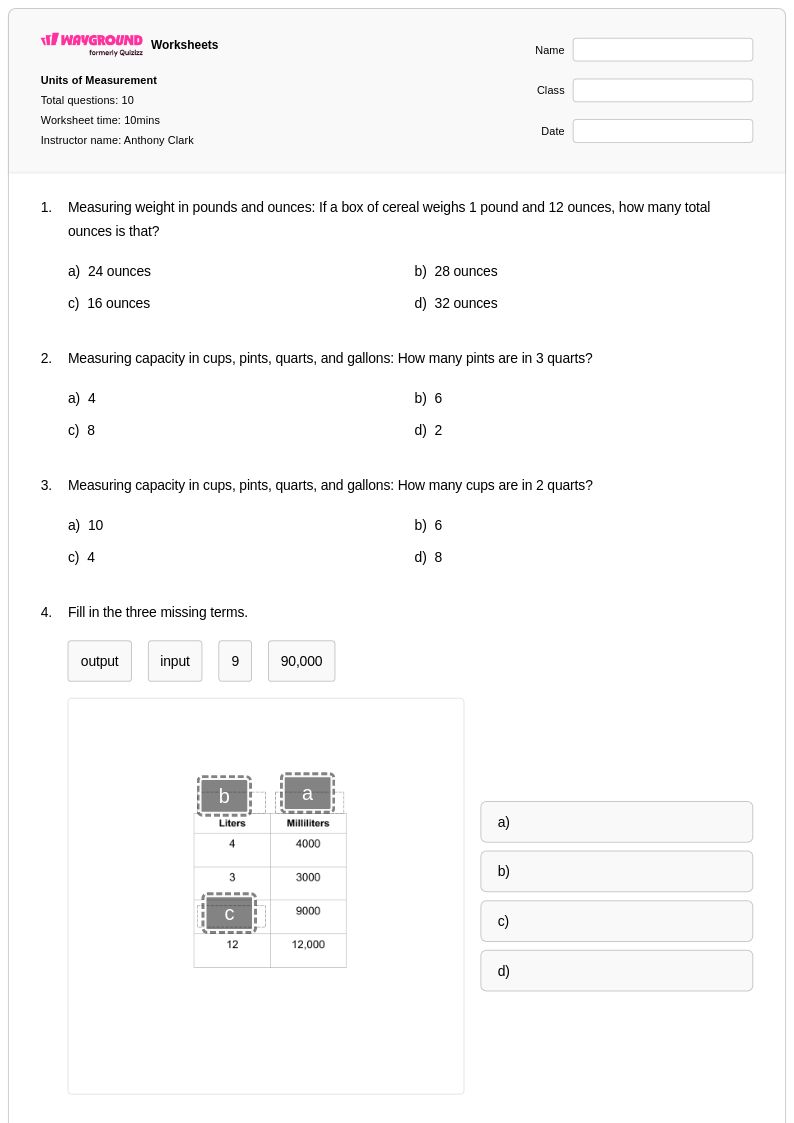
10 Q
4th - Uni
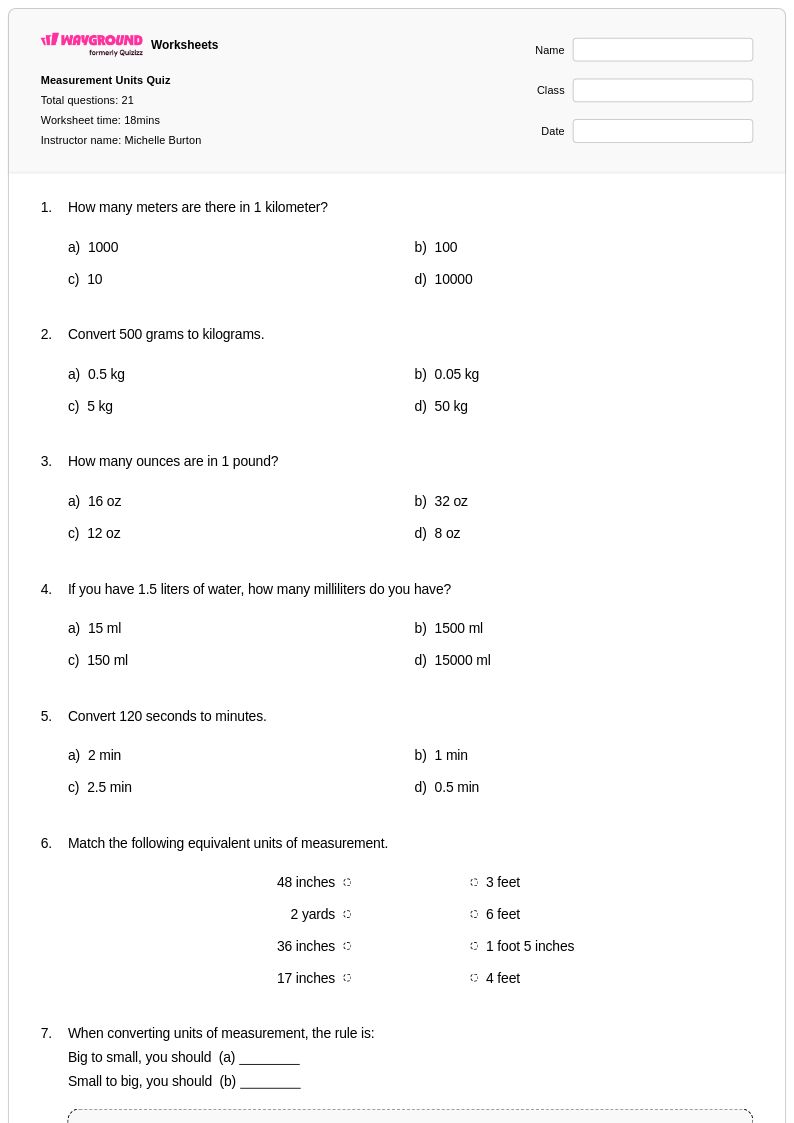
21 Q
4th
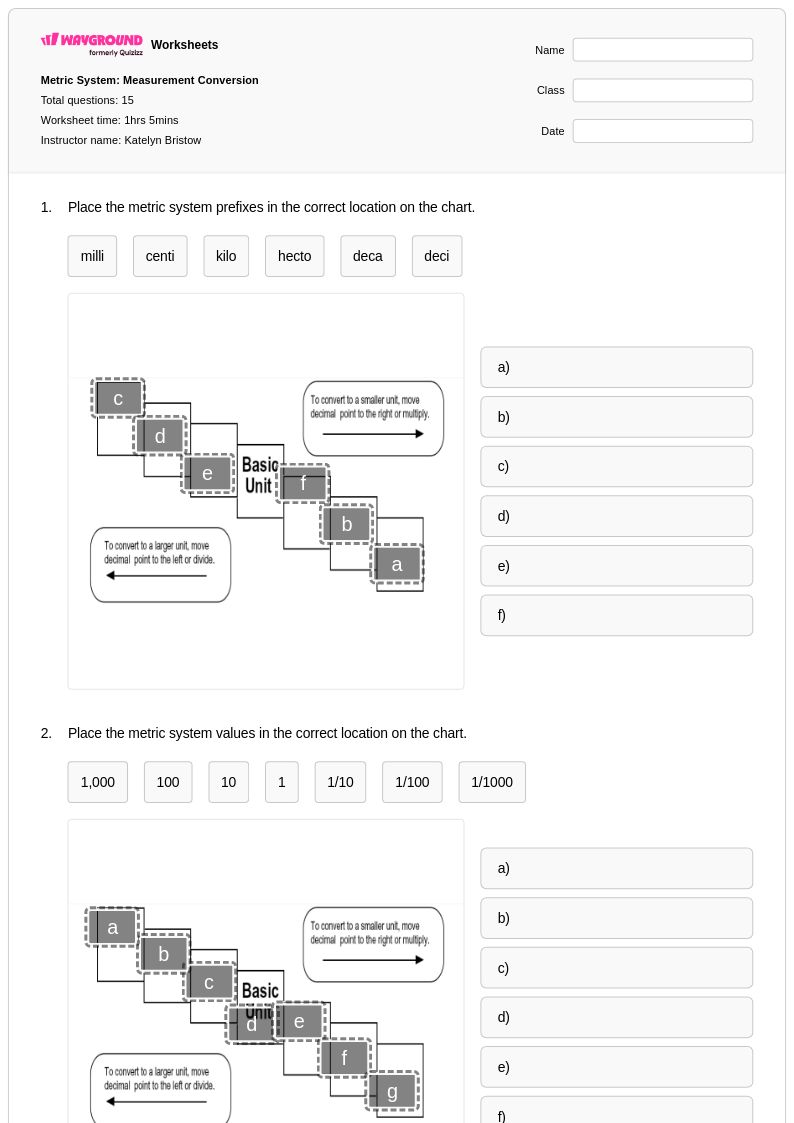
15 Q
5th
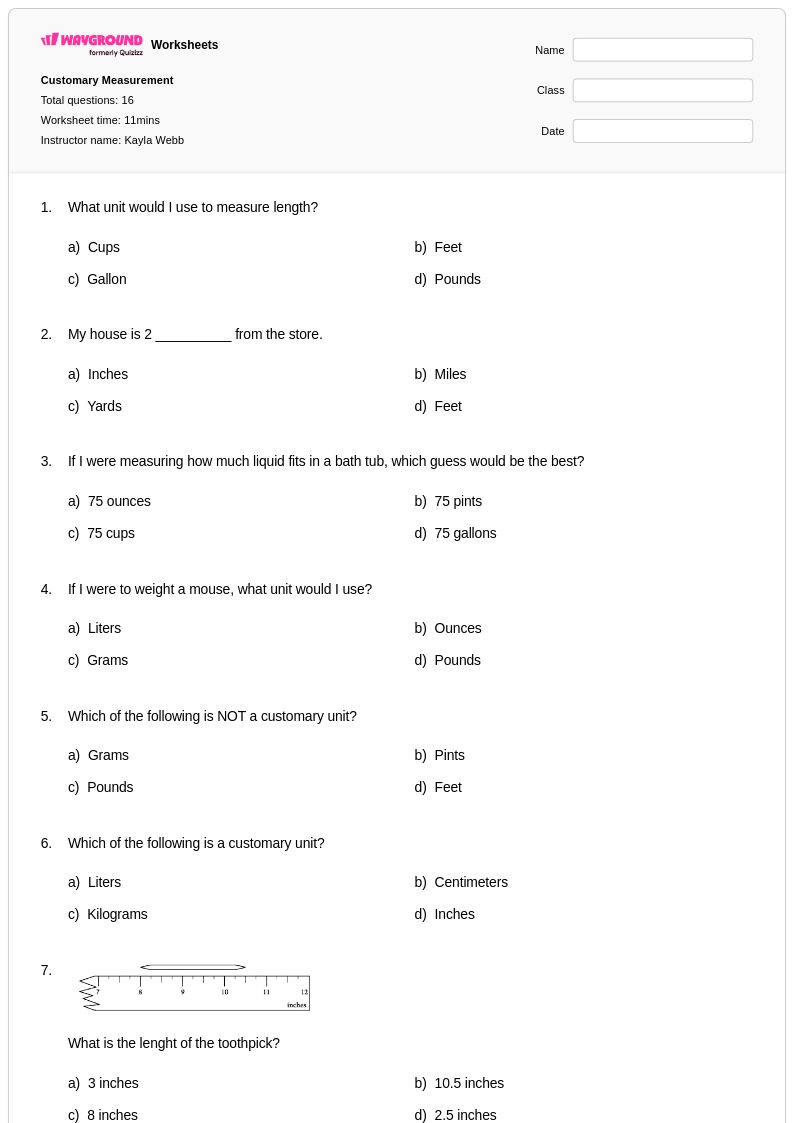
16 Q
4th
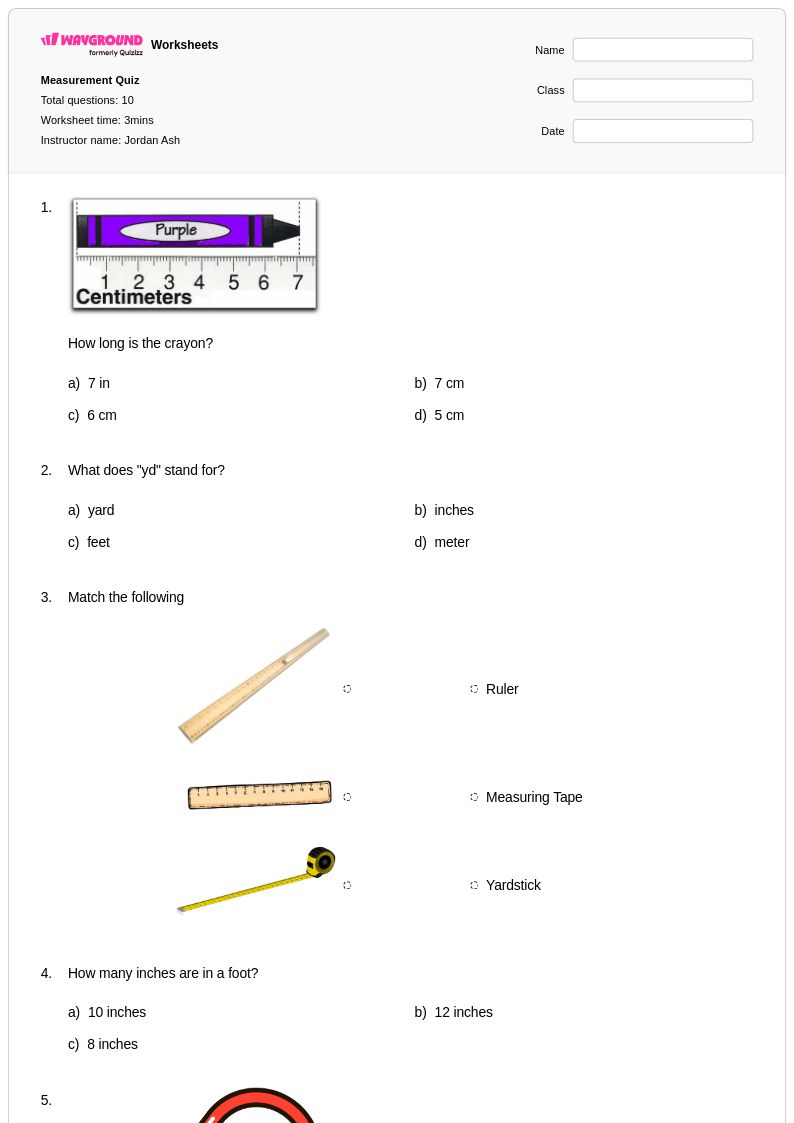
10 Q
2nd
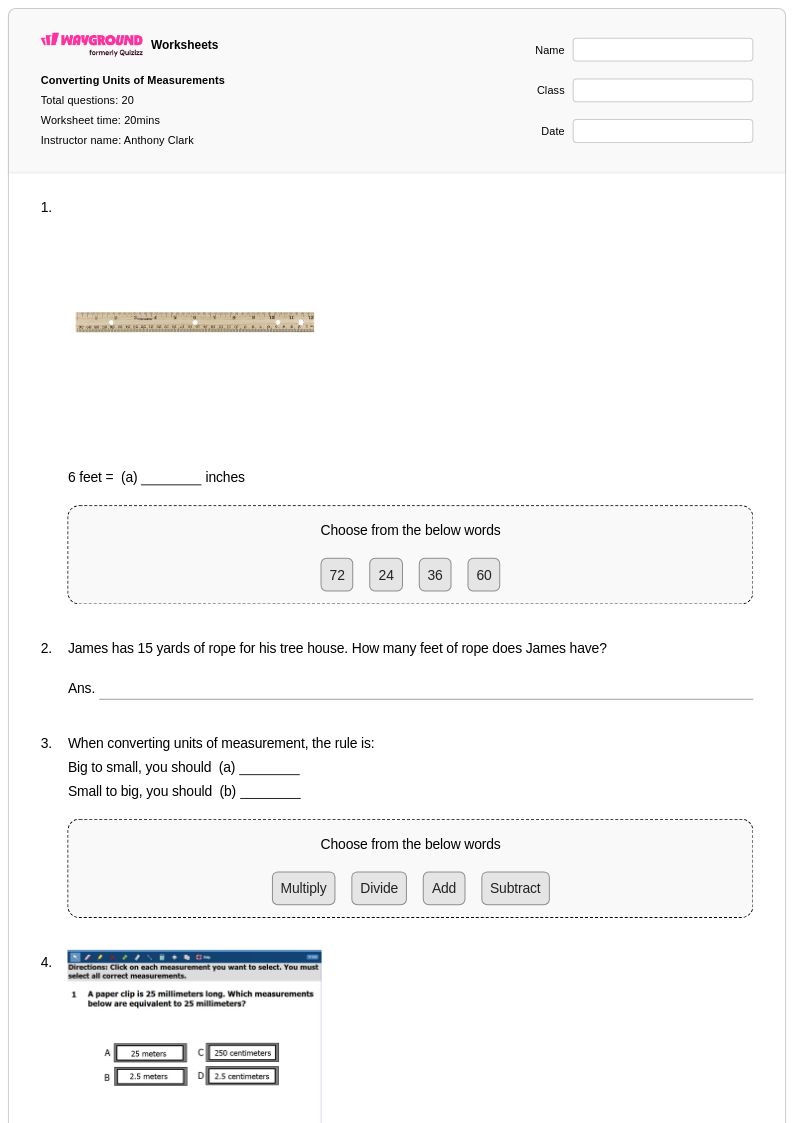
20 Q
5th - Uni
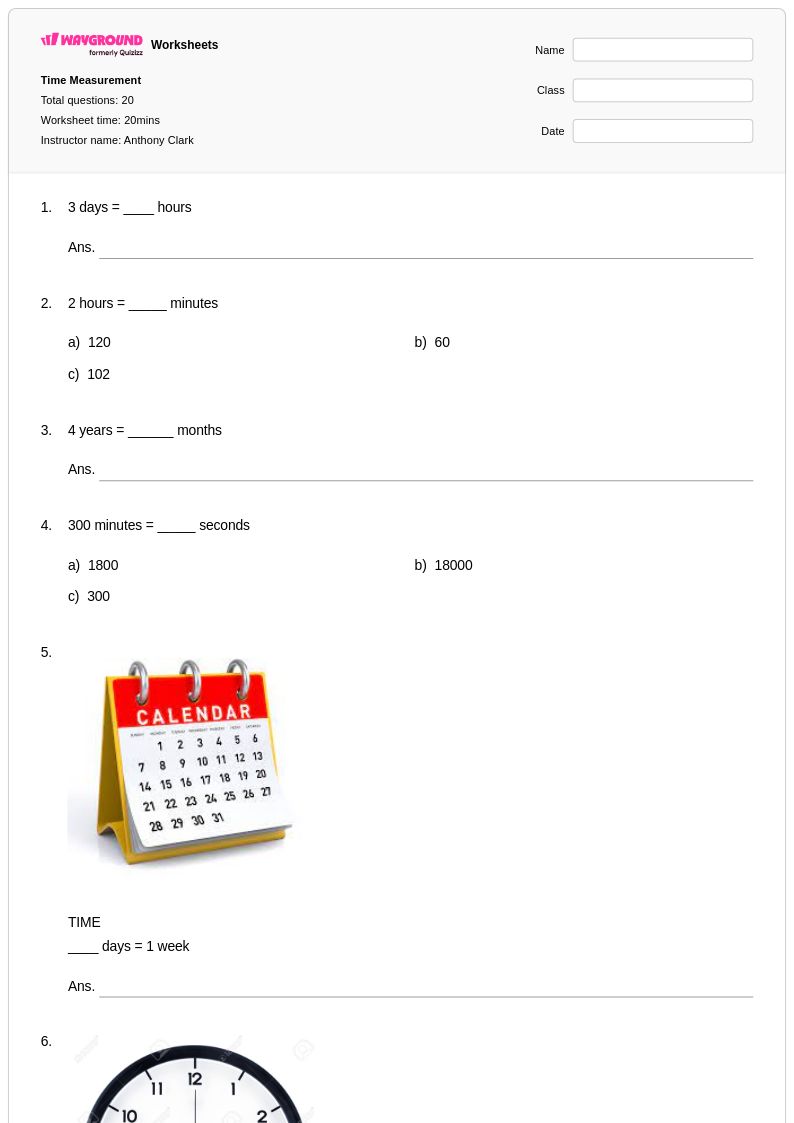
20 Q
3rd - Uni
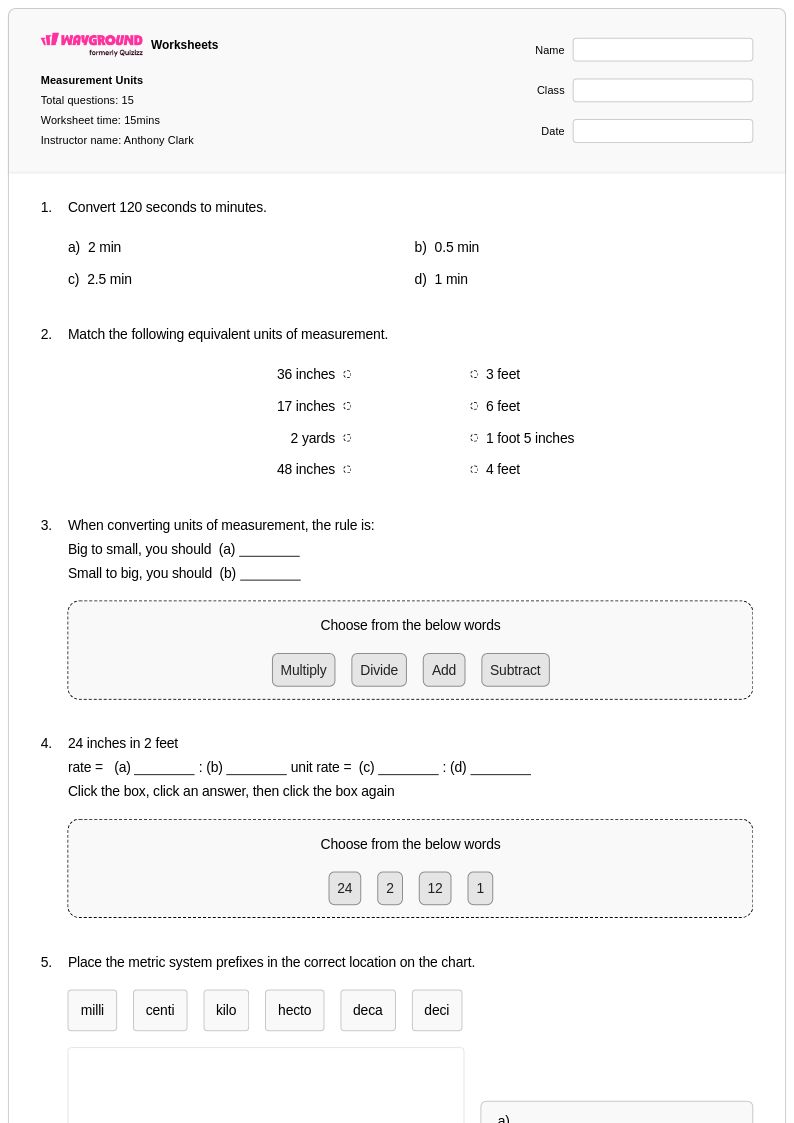
15 Q
4th - Uni
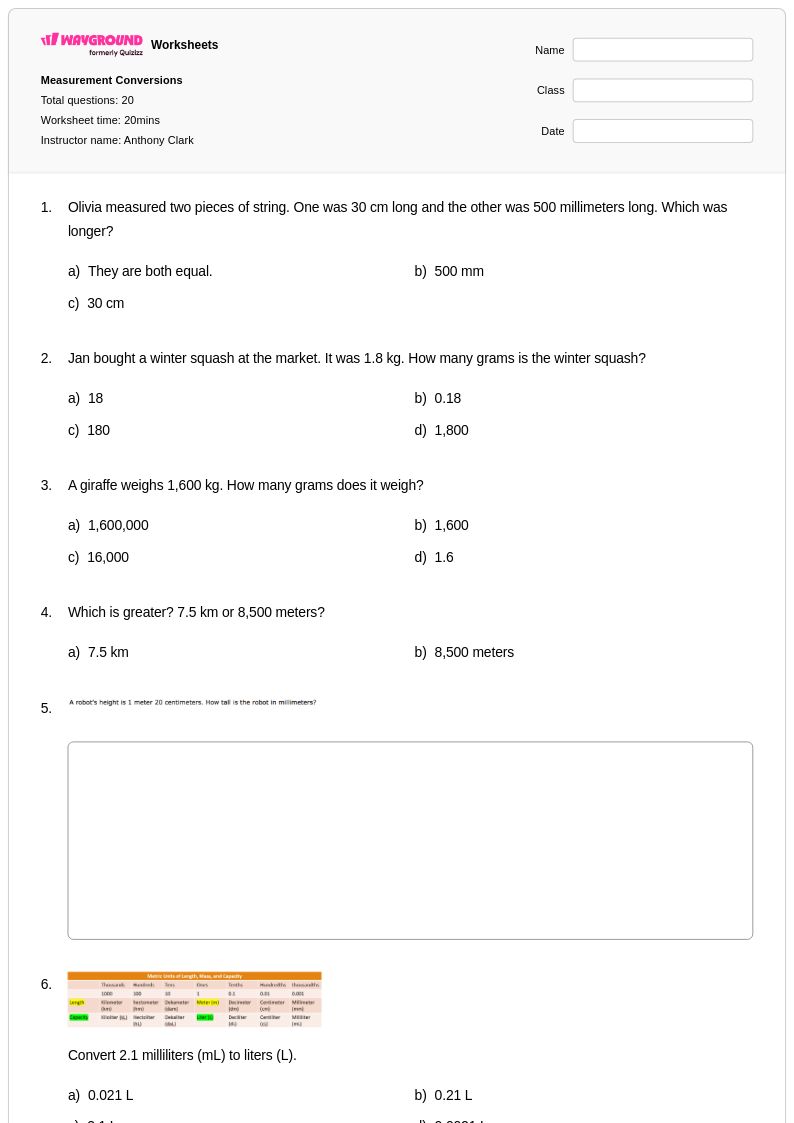
20 Q
5th - Uni
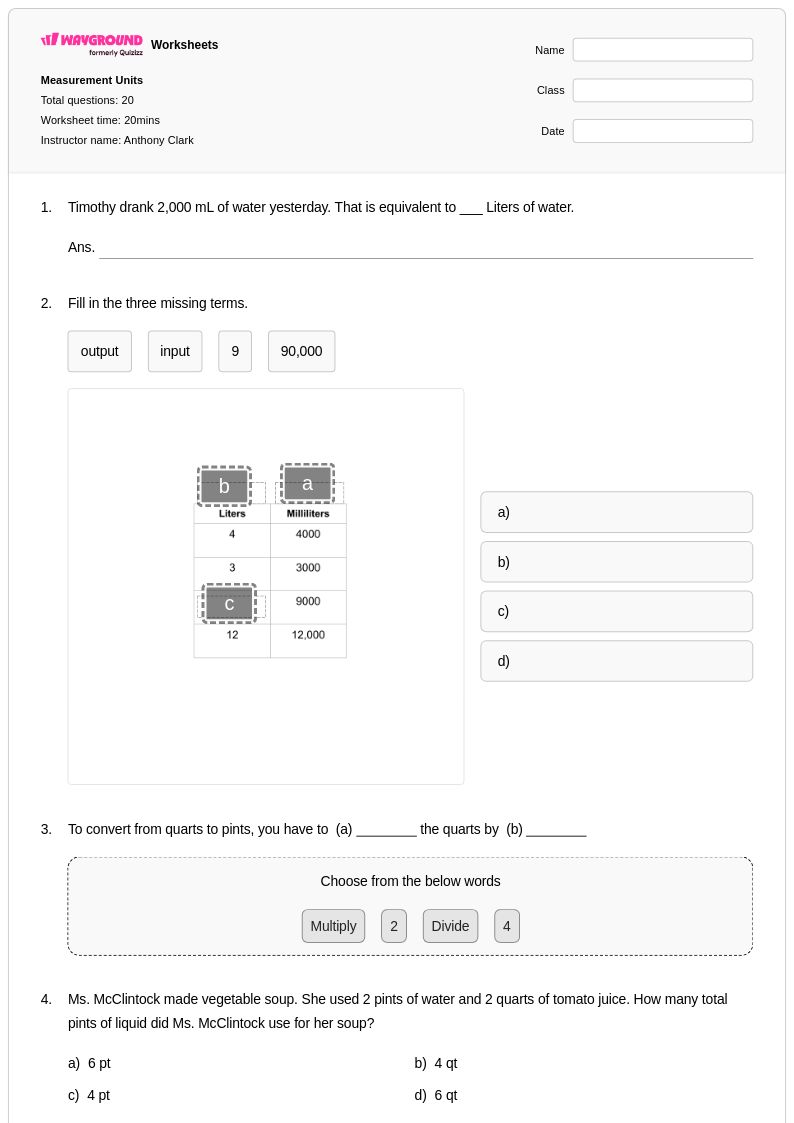
20 Q
4th - Uni
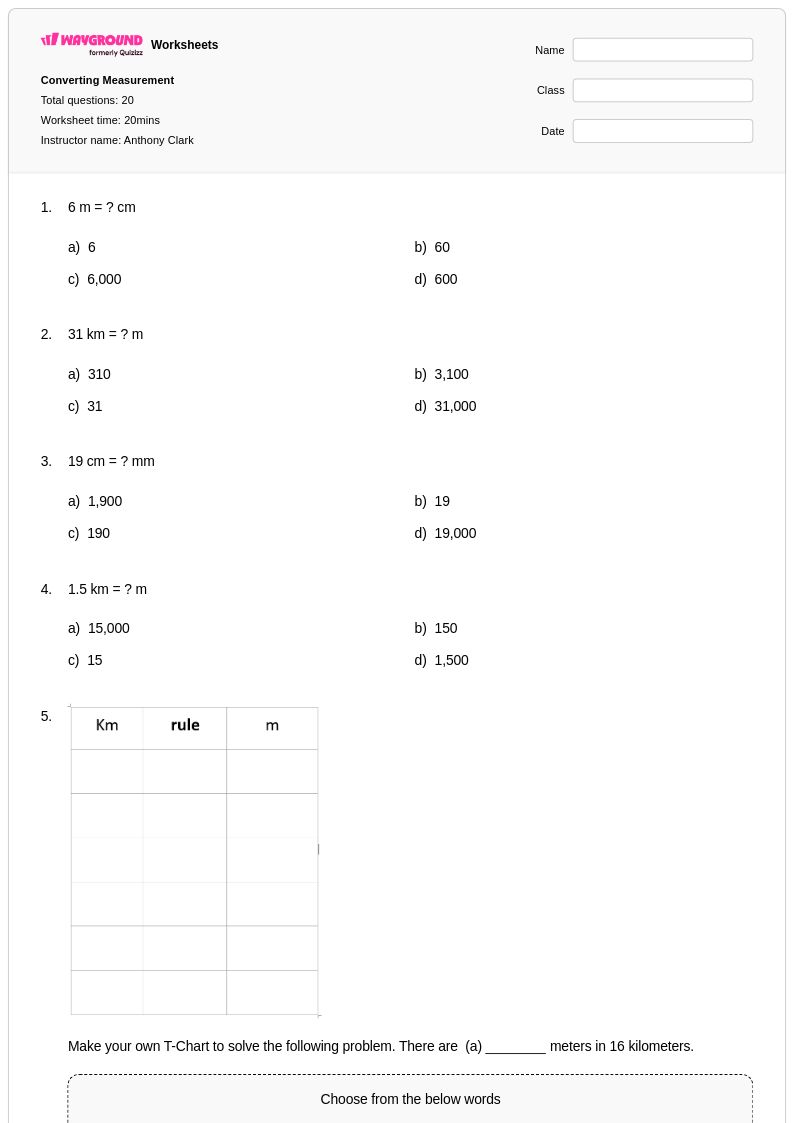
20 Q
5th - Uni
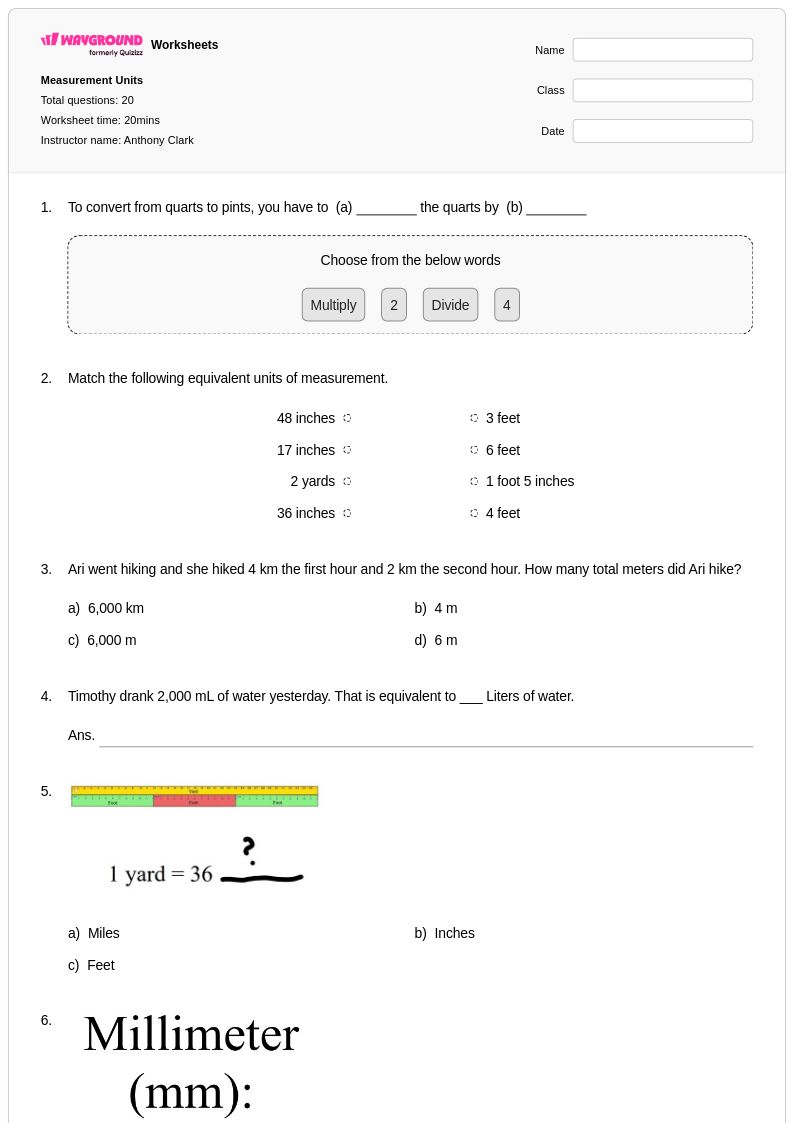
20 Q
4th - Uni

20 Q
5th
Explore Worksheets by Grade
Explore Measurement Worksheets by Topics
- Area Calculation
- Average Speed
- Calculating Speed
- Capacity Conversion
- Comparing Measurement
- Conversion Graphs
- Converting Customary Units
- Converting Units
- Customary Capacity
- Customary Conversions
- Customary Units of Capacity
- Customary Units of Length
- Distance, Rate, and Time
- Estimating Length
- Length Comparison
- Length Conversion
- Load Calculation
- Mass Conversion
- Measurement Tools and Strategies
- Measuring Distance
Explore Worksheets by Subjects
Explore printable Measurement worksheets
Measurement worksheets available through Wayground (formerly Quizizz) provide comprehensive practice opportunities that develop students' understanding of units, conversions, and real-world applications across various mathematical contexts. These expertly designed resources strengthen essential skills including linear measurement, area and perimeter calculations, volume and capacity concepts, weight and mass comparisons, and time-based problems. Students engage with diverse practice problems that range from basic unit identification to complex multi-step conversion challenges, while teachers benefit from included answer keys that streamline grading and assessment processes. The collection offers both free printables and digital formats in convenient pdf downloads, ensuring accessibility for various classroom needs and learning environments.
Wayground (formerly Quizizz) supports educators with millions of teacher-created measurement resources that feature robust search and filtering capabilities, enabling quick access to grade-appropriate and standards-aligned content. The platform's differentiation tools allow teachers to customize worksheets based on individual student needs, accommodating various skill levels within the same classroom through flexible modification options. These comprehensive collections are available in both printable and digital formats, including downloadable pdf versions that facilitate seamless integration into lesson planning workflows. Teachers utilize these versatile resources for targeted skill practice, remediation support for struggling learners, and enrichment activities for advanced students, creating a dynamic measurement curriculum that addresses diverse learning objectives and assessment requirements.
FAQs
How can I introduce the concept of measurement to students?
What types of measurement practice can I find on Wayground?
What is a common mistake students make when learning measurement?
How does the math curriculum sequence measurement skills?
How can I differentiate measurement activities for students at different levels?
How can I use Wayground's measurement worksheets in my classroom?