
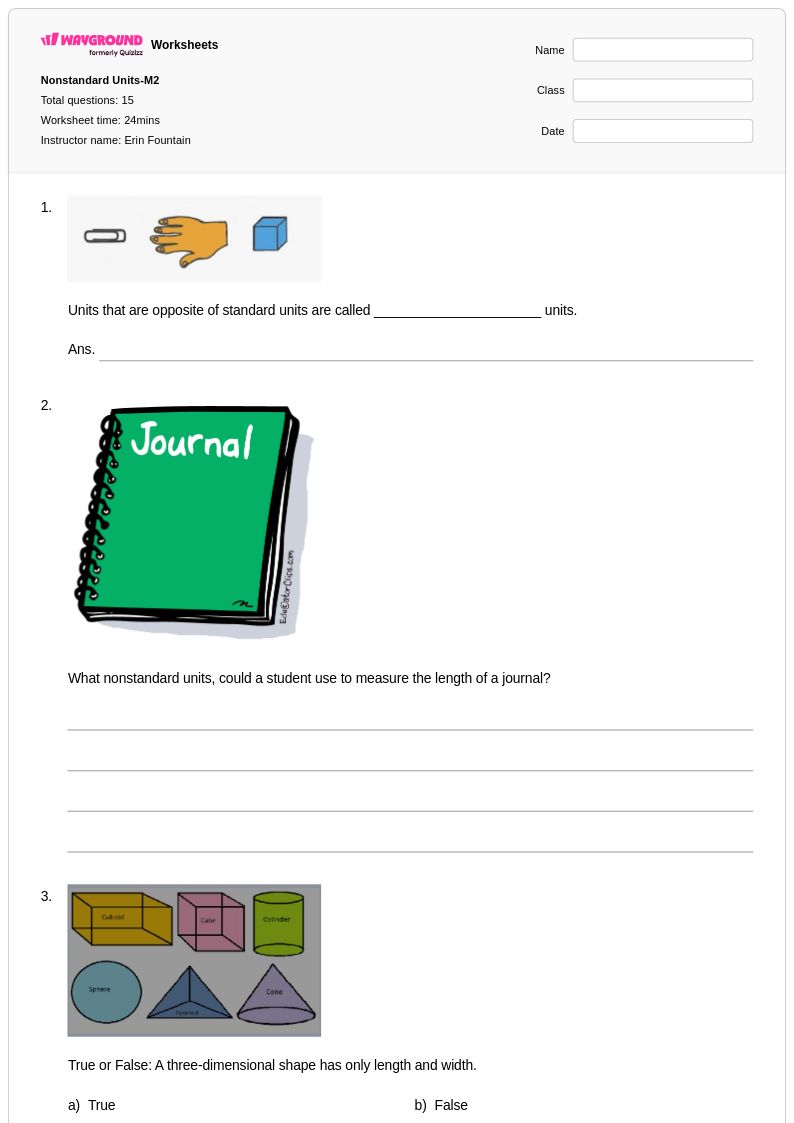
15 Q
2nd - 5th
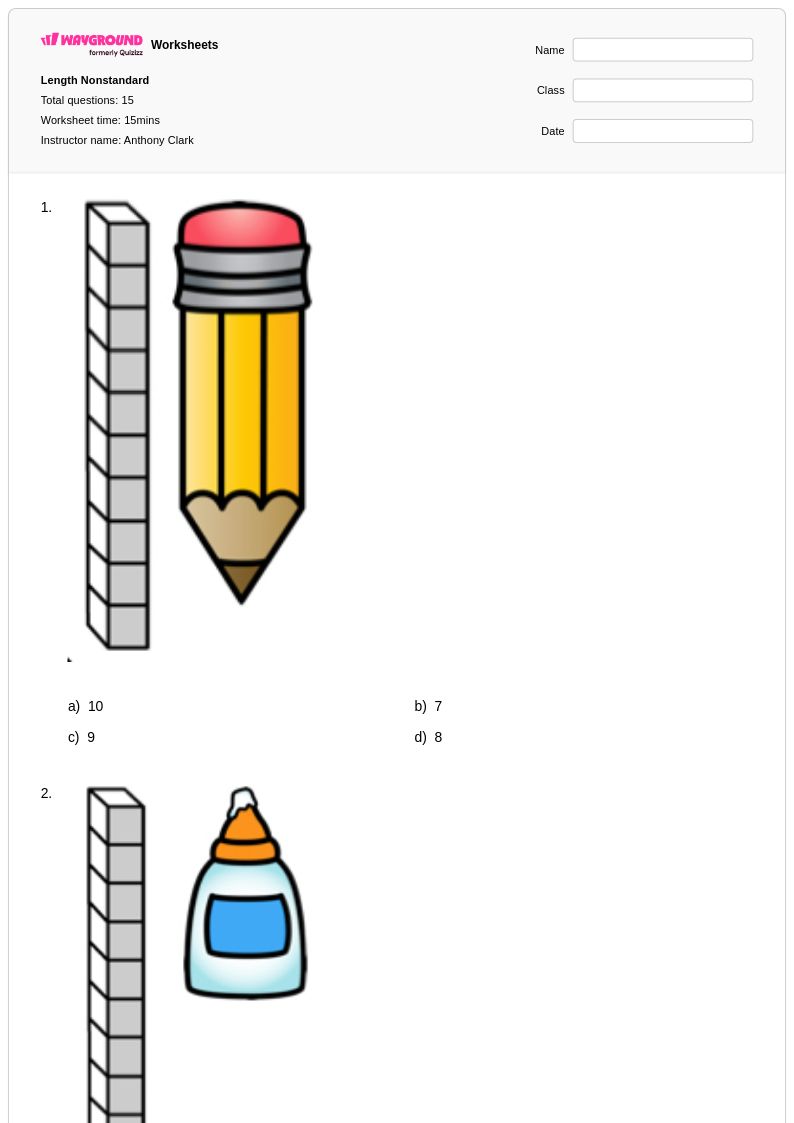
15 Q
1st - Uni
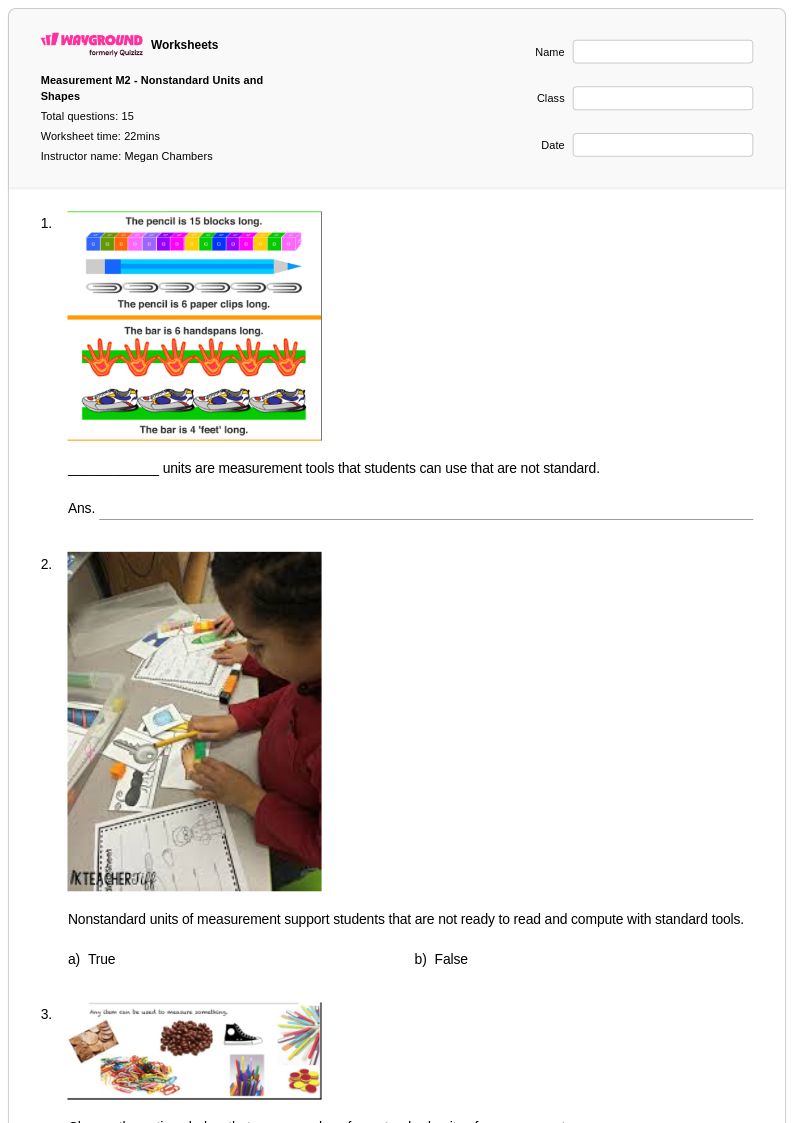
15 Q
PD
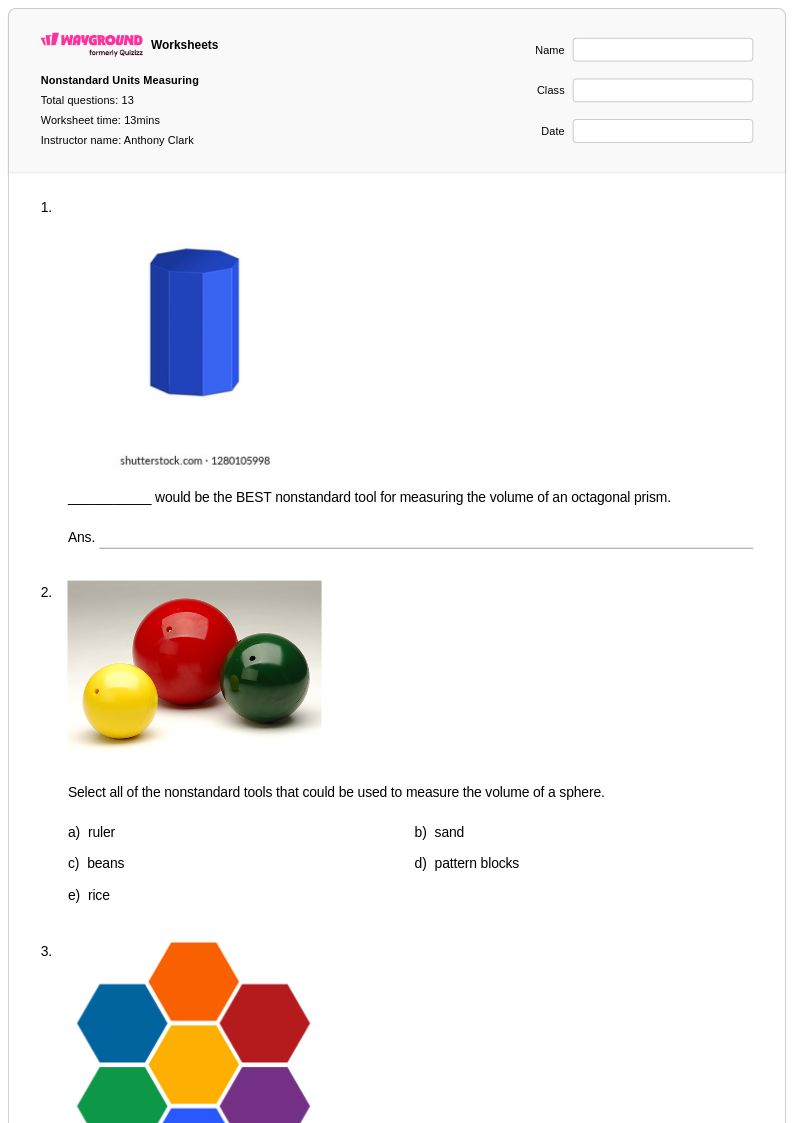
13 Q
2nd - Uni
20 Q
2nd - Uni
20 Q
1st - Uni
15 Q
1st - Uni
15 Q
1st - Uni
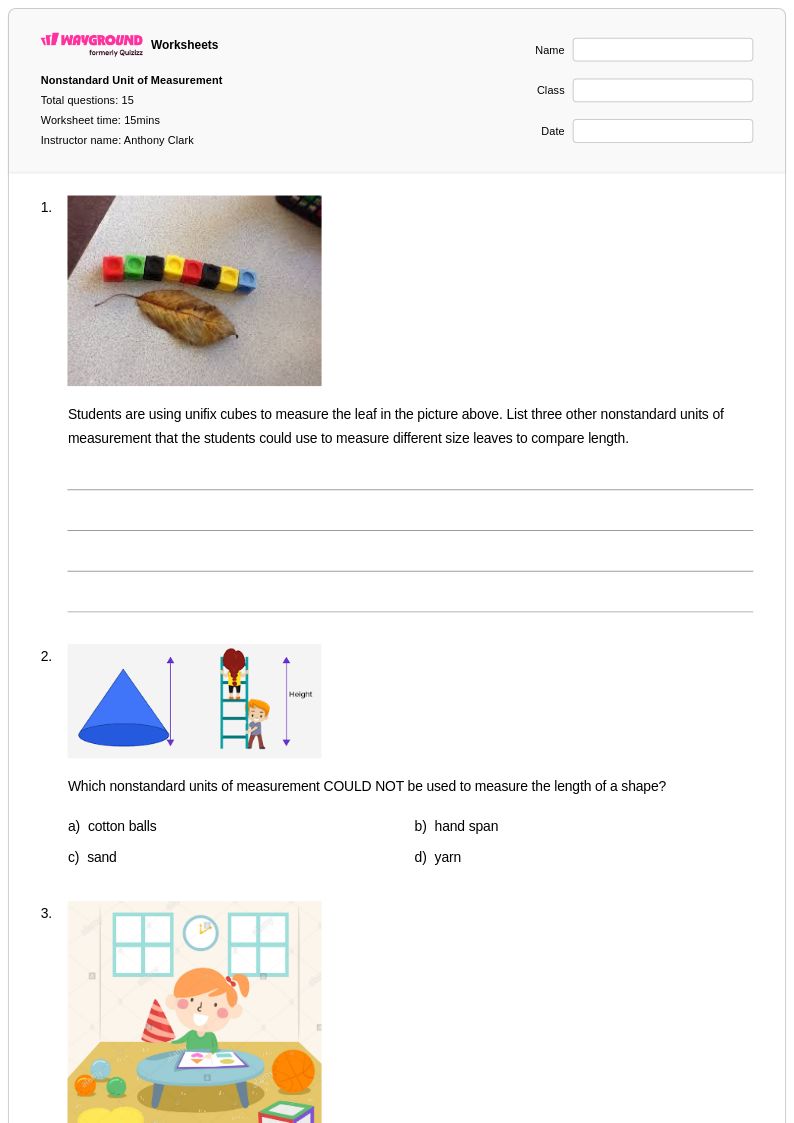
15 Q
1st - Uni
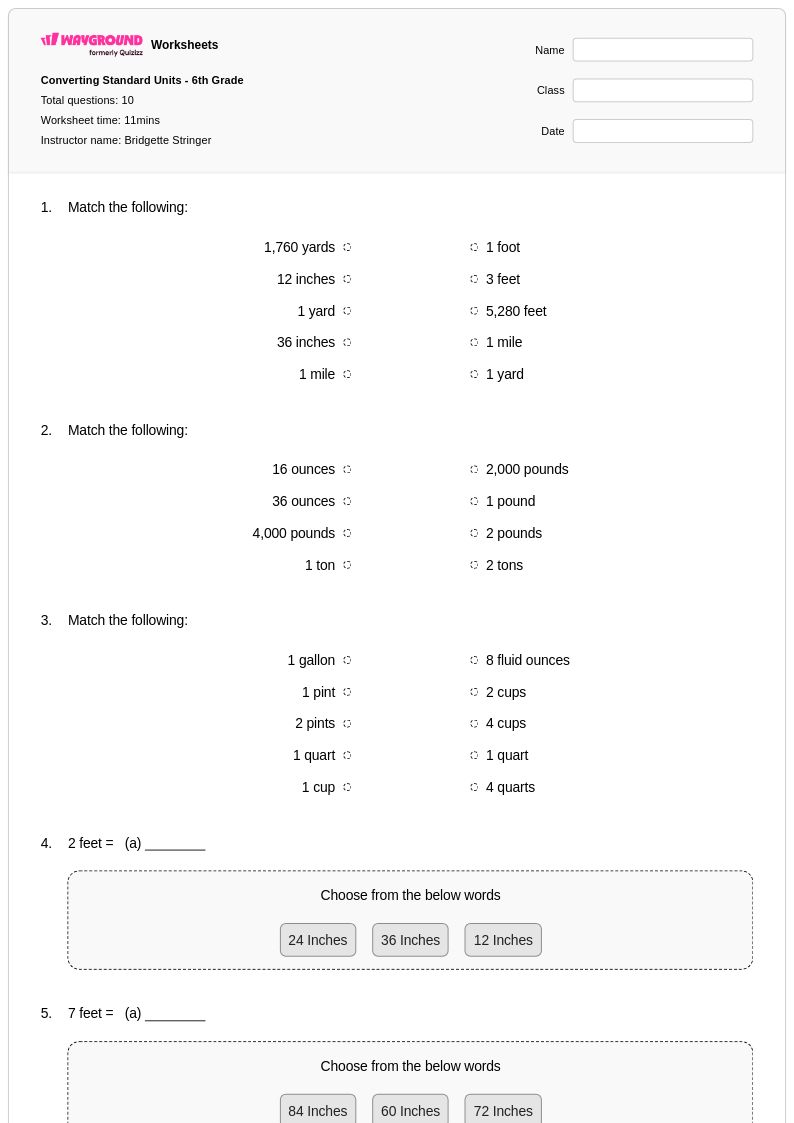
10 Q
6th
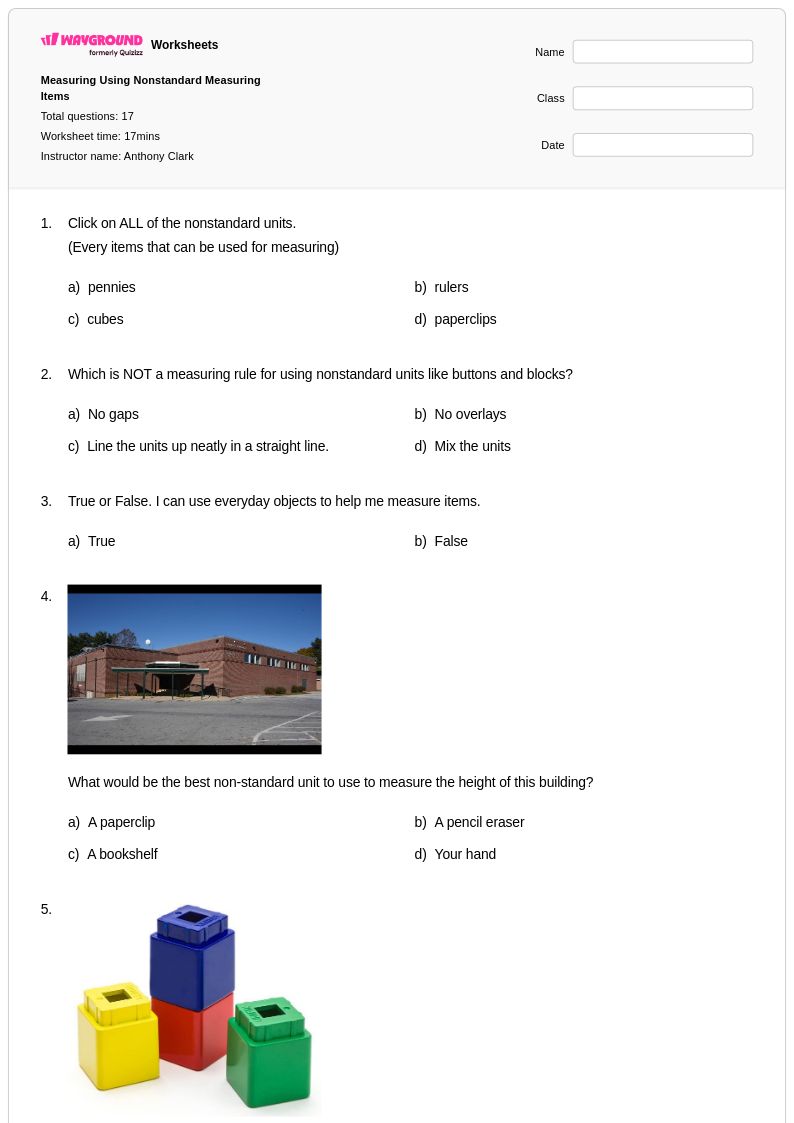
17 Q
4th - Uni
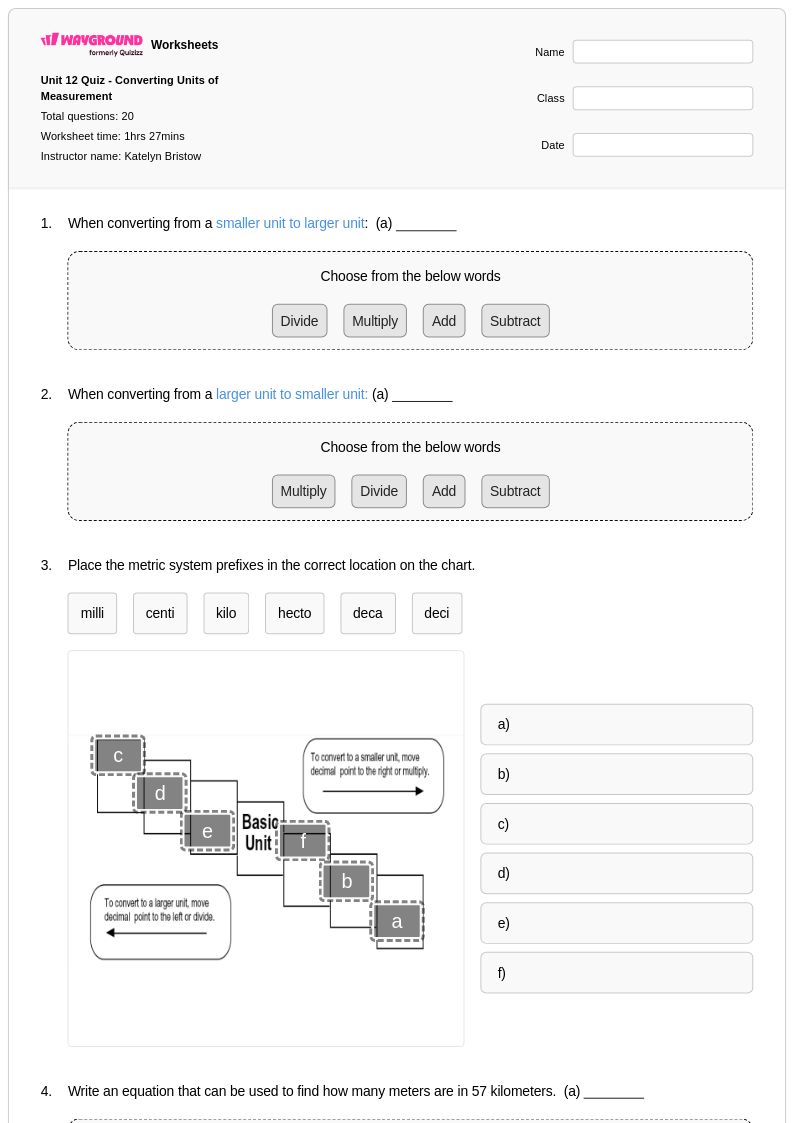
20 Q
5th
20 Q
1st - Uni
17 Q
2nd - 5th
15 Q
1st - Uni
21 Q
4th
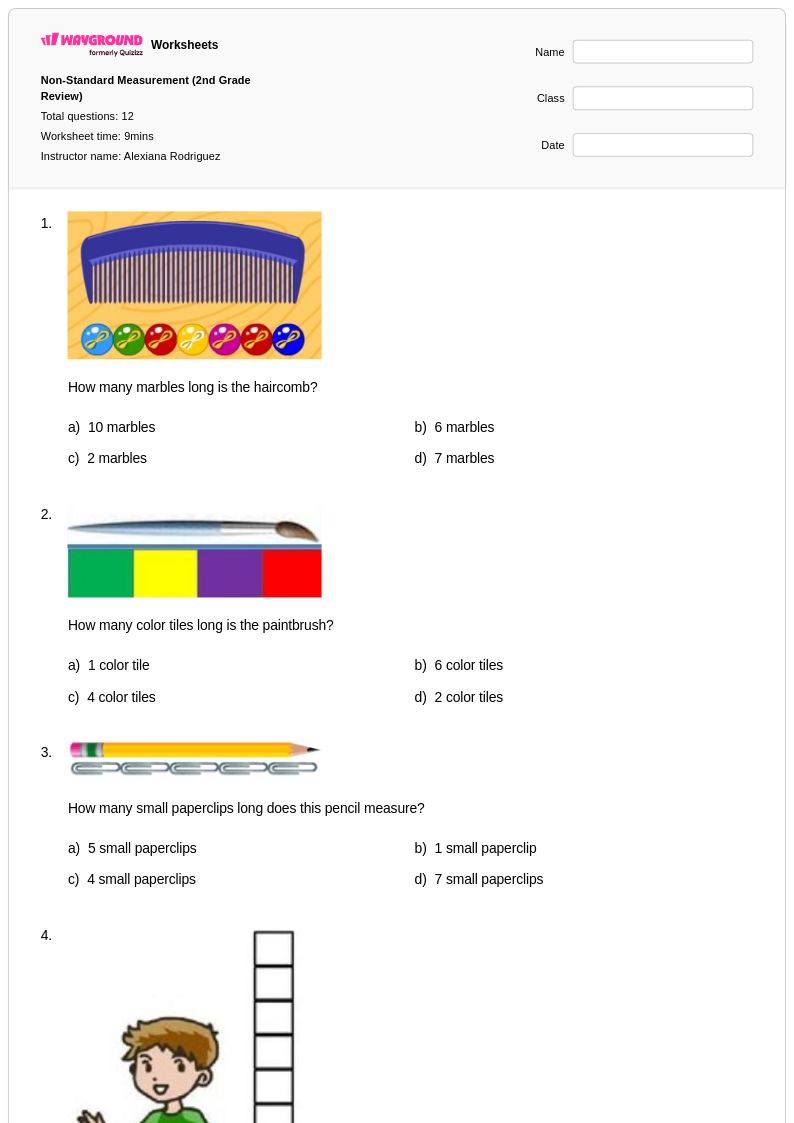
12 Q
2nd
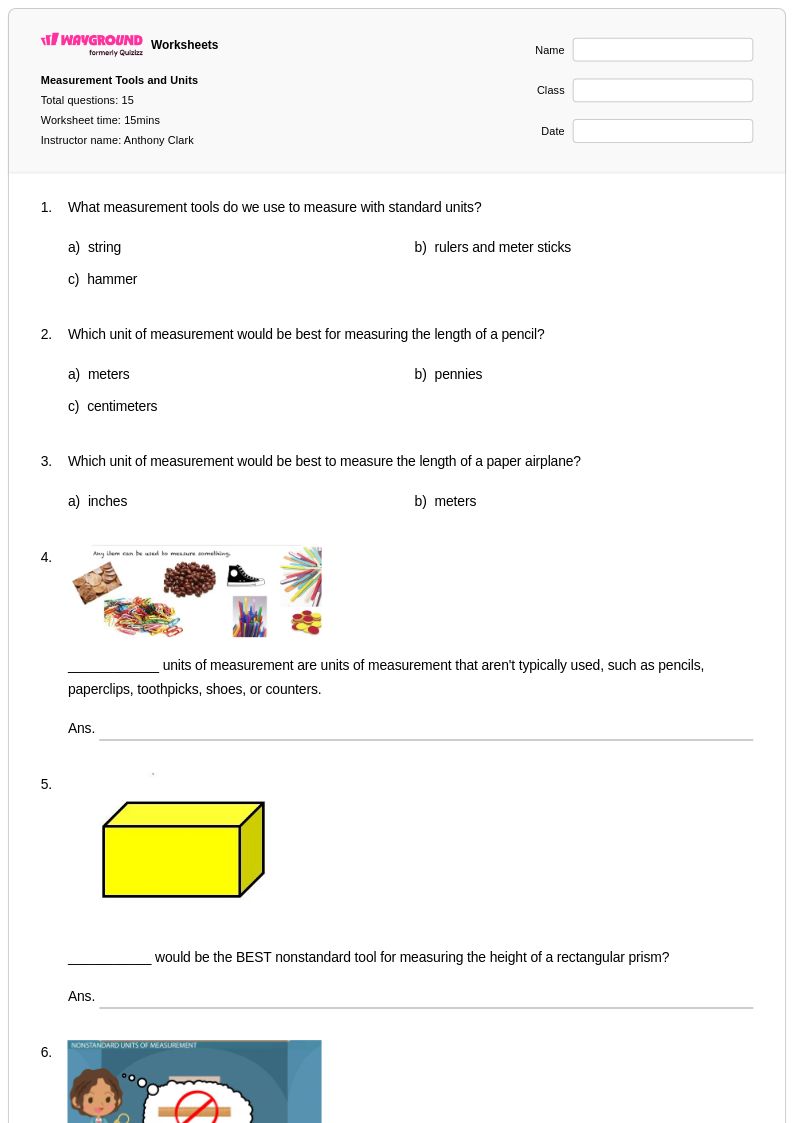
15 Q
2nd - Uni
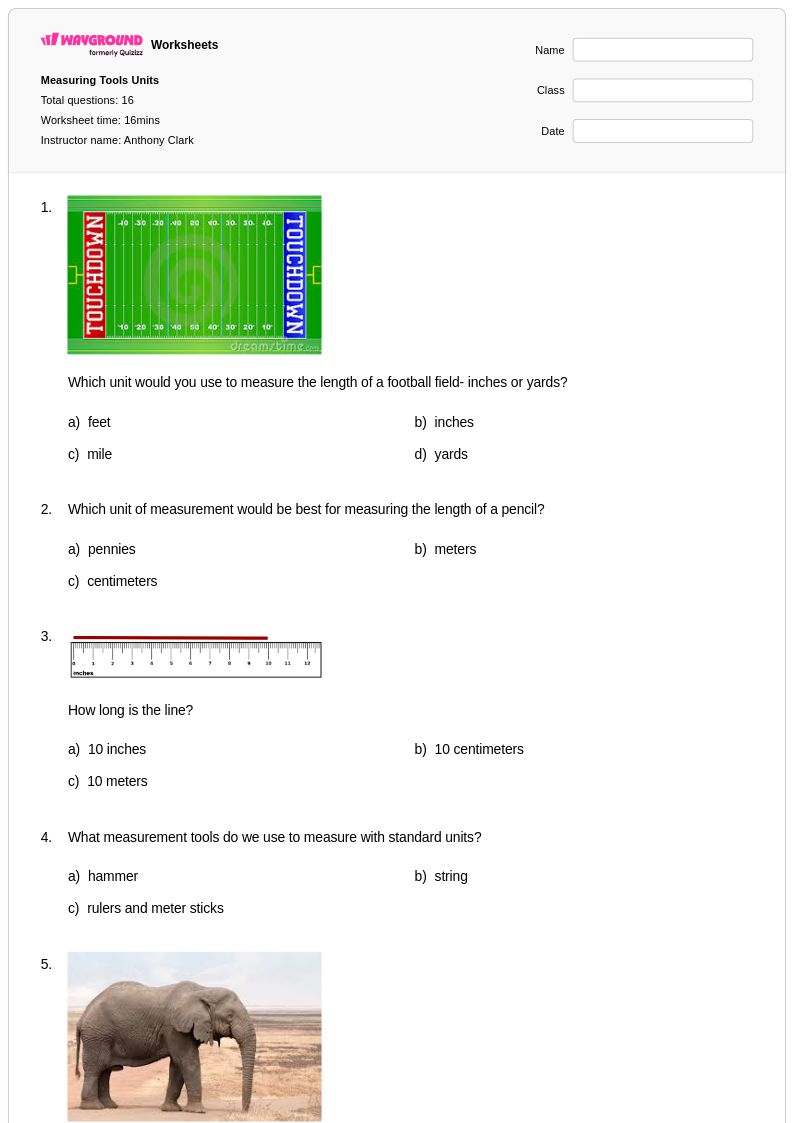
16 Q
2nd - Uni
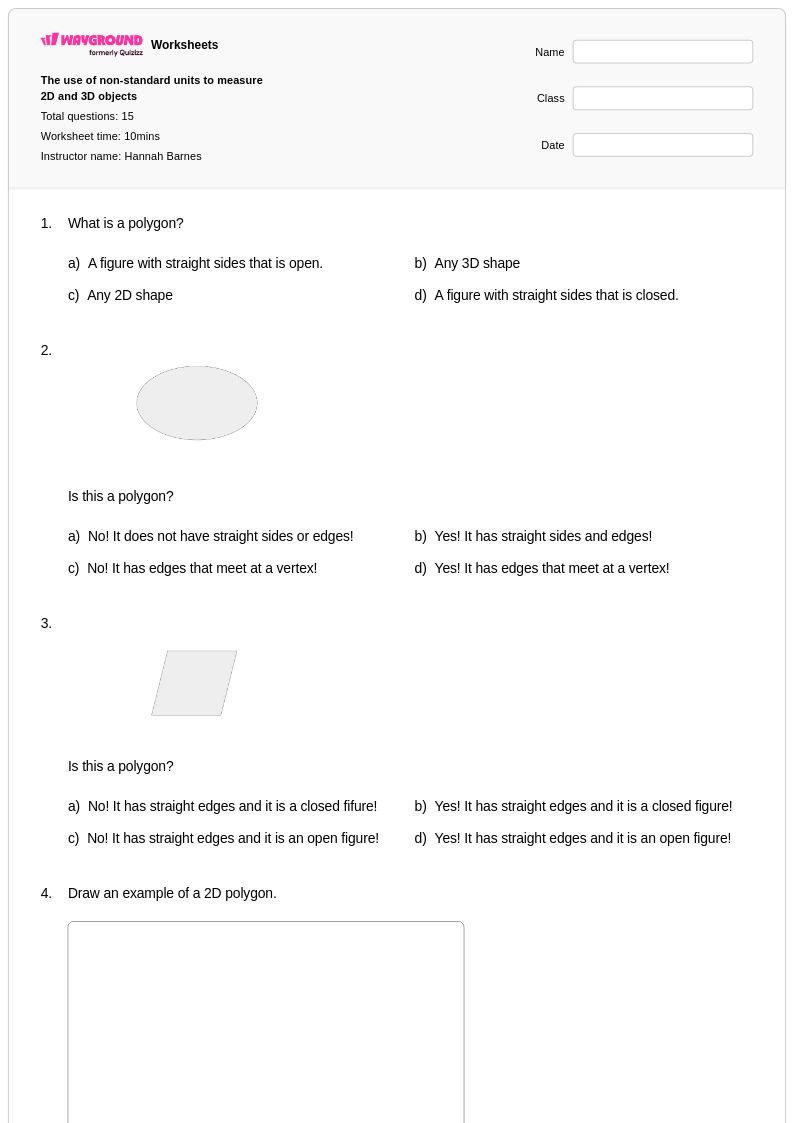
15 Q
4th
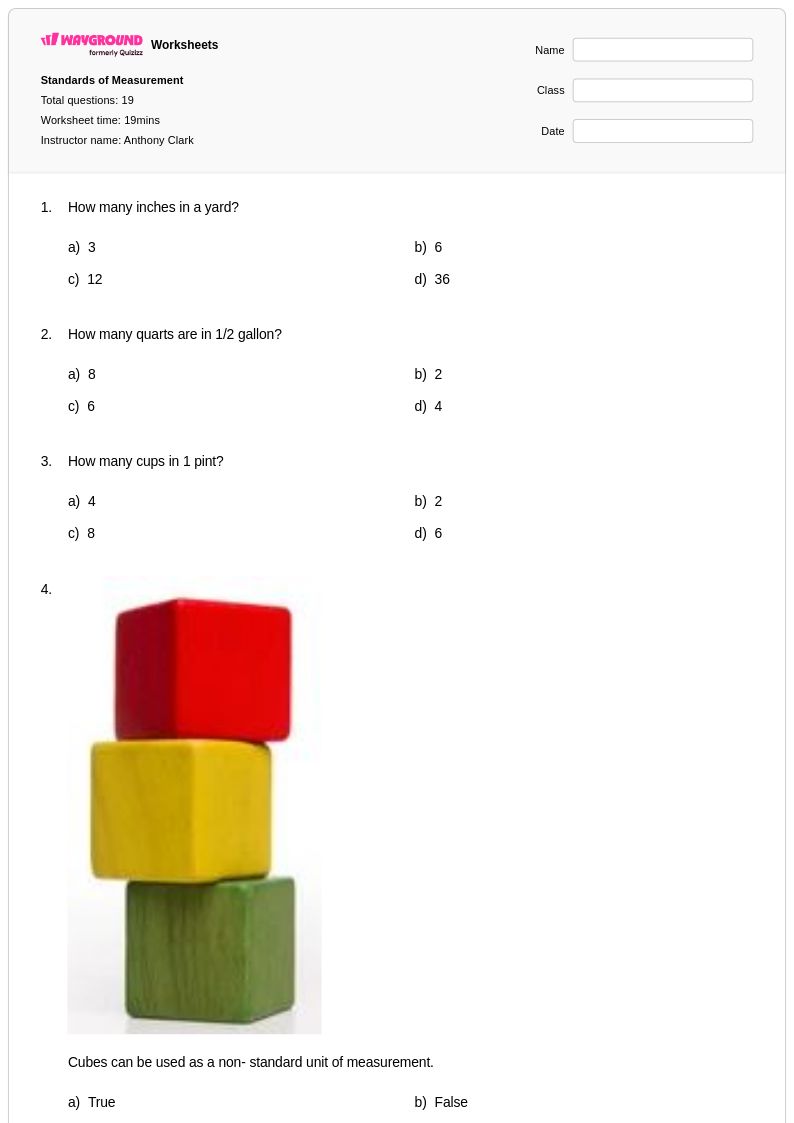
19 Q
1st - Uni
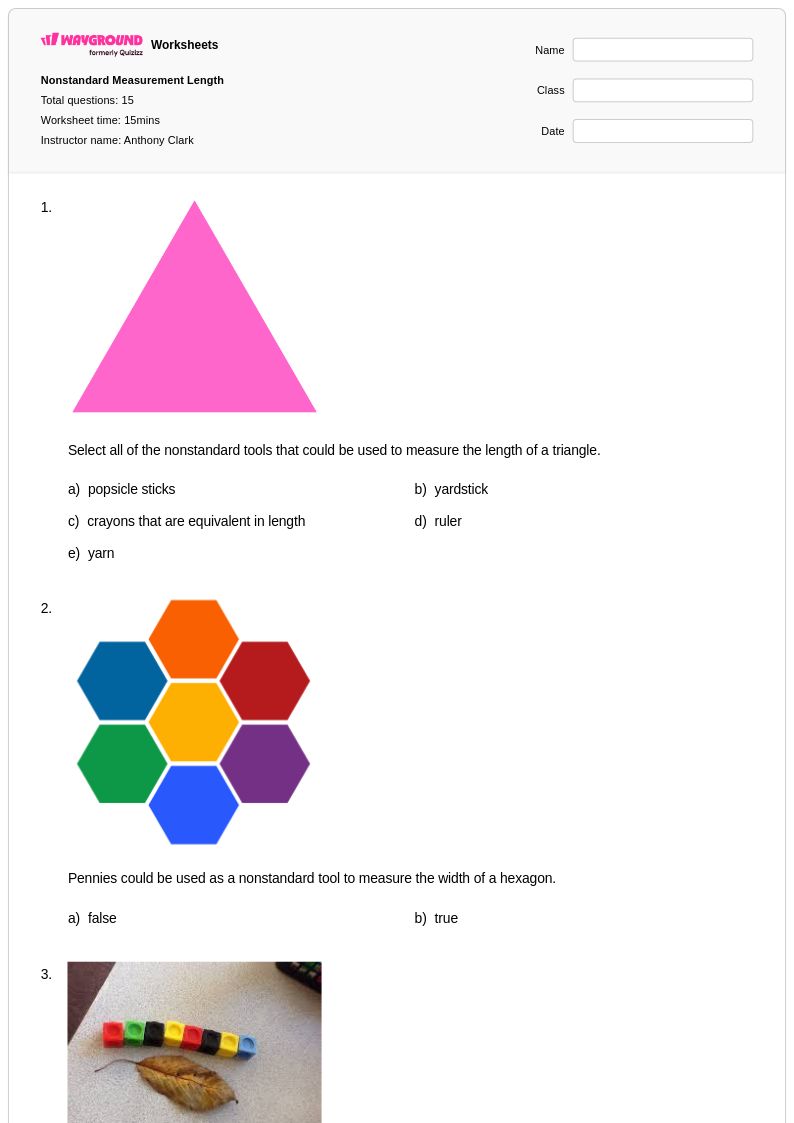
15 Q
1st - Uni
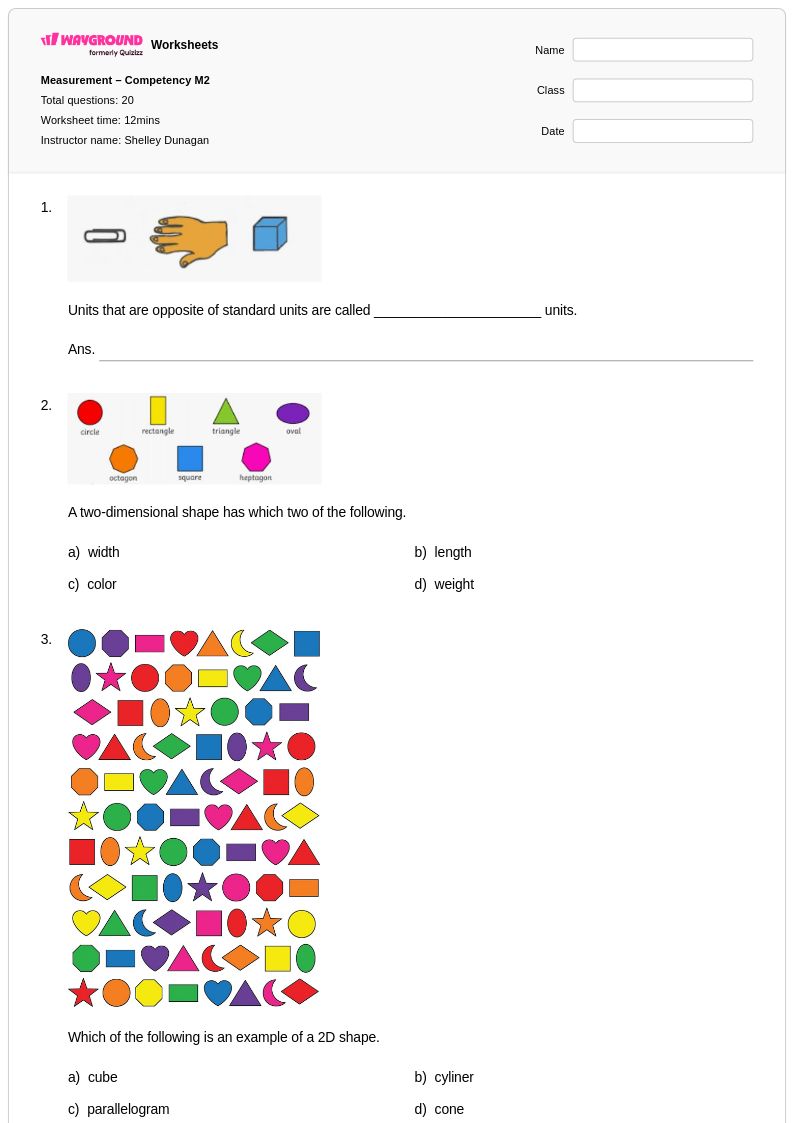
20 Q
1st - 3rd
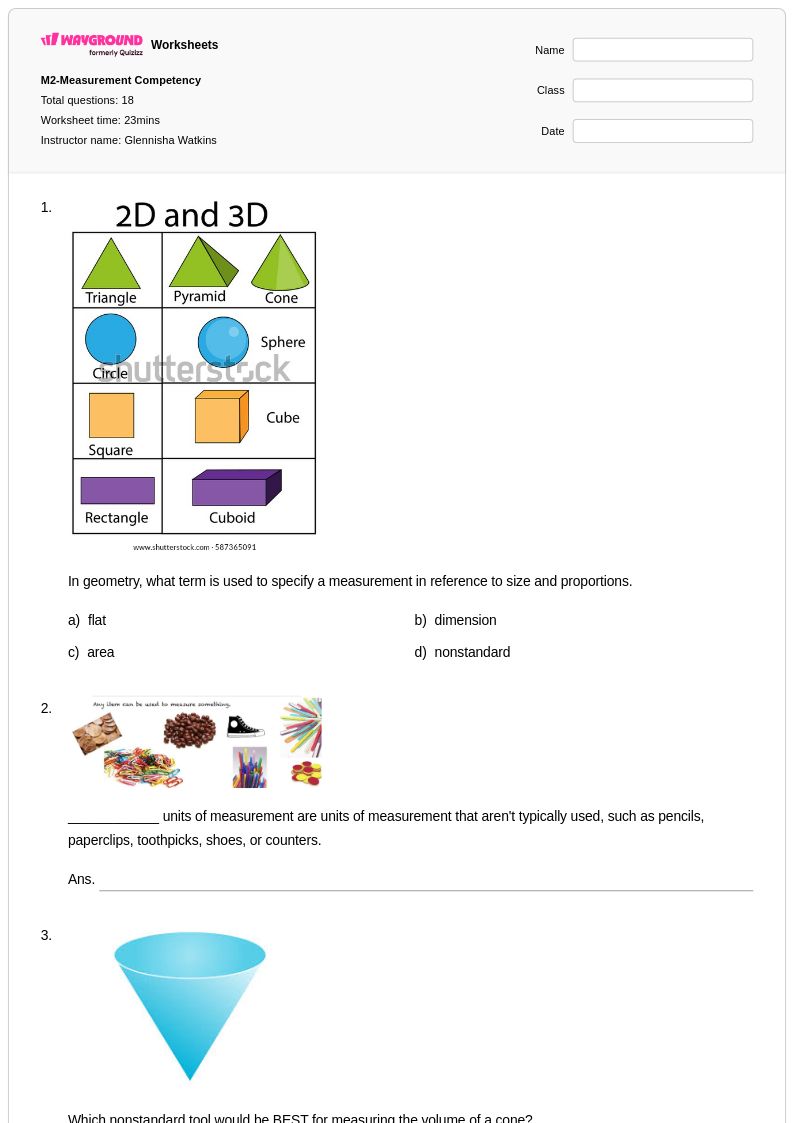
18 Q
KG - 4th
Explore Worksheets by Subjects
Explore printable Standard and Nonstandard Units worksheets
Standard and nonstandard units worksheets available through Wayground (formerly Quizizz) provide comprehensive practice opportunities for students to develop essential measurement skills by comparing and converting between conventional and unconventional measurement tools. These educational resources strengthen students' understanding of measurement concepts by having them work with both traditional units like inches, feet, and centimeters alongside creative alternatives such as paper clips, blocks, or hand spans. The worksheets feature engaging practice problems that challenge learners to measure objects using various units, compare measurements, and understand the importance of standardized measurement systems. Each worksheet collection includes detailed answer keys and is available as free printables in convenient PDF format, making it easy for educators to implement immediate assessment and provide targeted feedback on student progress.
Wayground (formerly Quizizz) supports educators with millions of teacher-created standard and nonstandard units worksheets that can be easily discovered through robust search and filtering capabilities designed specifically for mathematics instruction. The platform's extensive collection aligns with measurement standards and offers powerful differentiation tools that allow teachers to customize content based on individual student needs and learning objectives. These versatile resources are available in both printable PDF format and interactive digital versions, providing flexibility for various classroom settings and learning preferences. Teachers can efficiently plan measurement lessons, provide remediation for struggling learners, offer enrichment opportunities for advanced students, and deliver consistent skill practice through worksheets that systematically build understanding of how different units relate to real-world measurement applications.
FAQs
How do I teach the difference between standard and nonstandard units?
What activities help students practice standard and nonstandard measurement?
What mistakes do students make when using standard and nonstandard units?
How can I use these standard and nonstandard units worksheets?
How does standard and nonstandard measurement fit into the Common Core math progression?
How can I differentiate measurement practice for mixed-ability students?