
Recommended Topics for you
- Area Calculation
- Capacity Conversion
- Comparing Measurement
- Converting Customary Units
- Converting Units
- Customary Capacity
- Customary Conversions
- Customary Units of Capacity
- Customary Units of Length
- Estimating Length
- Length Comparison
- Length Conversion
- Mass Conversion
- Measurement Tools and Strategies
- Measuring Distance
- Measuring Length
- Measuring Mass
- Measuring to the Nearest Quarter Inch
- Measuring Volume
- Measuring Weight
- Metric Conversion
- Metric System Conversion
- Non-standard Units
- Reading a Ruler
- Reading a Tape Measure
- Reading Scales
- Size Comparison
- Standard and Nonstandard Units
- Units of Measurement
- Weight Comparison
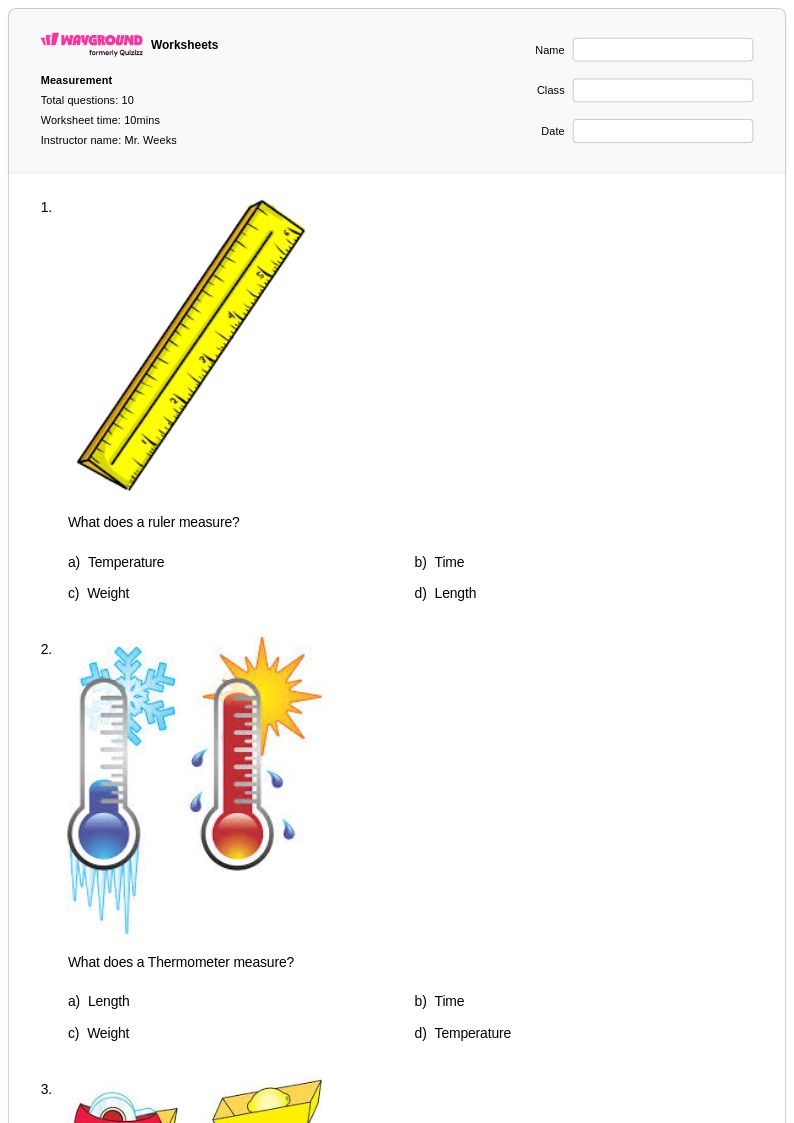
10 Q
KG - 1st
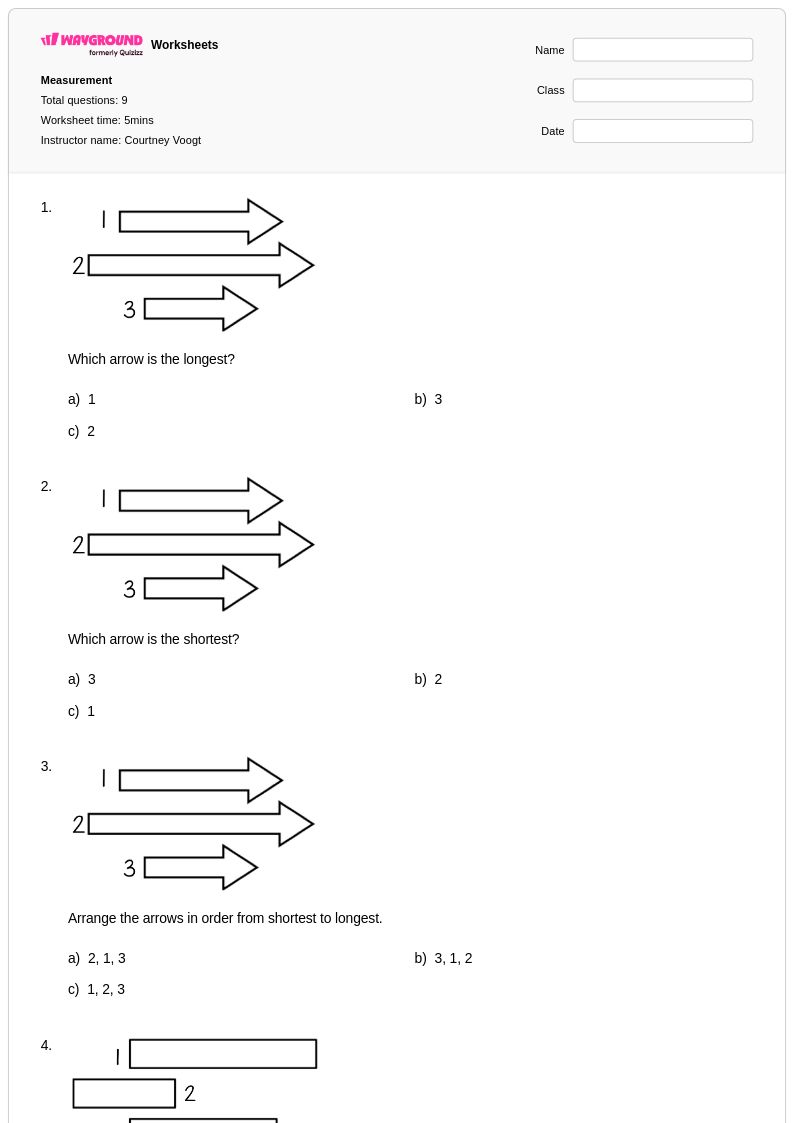
9 Q
1st
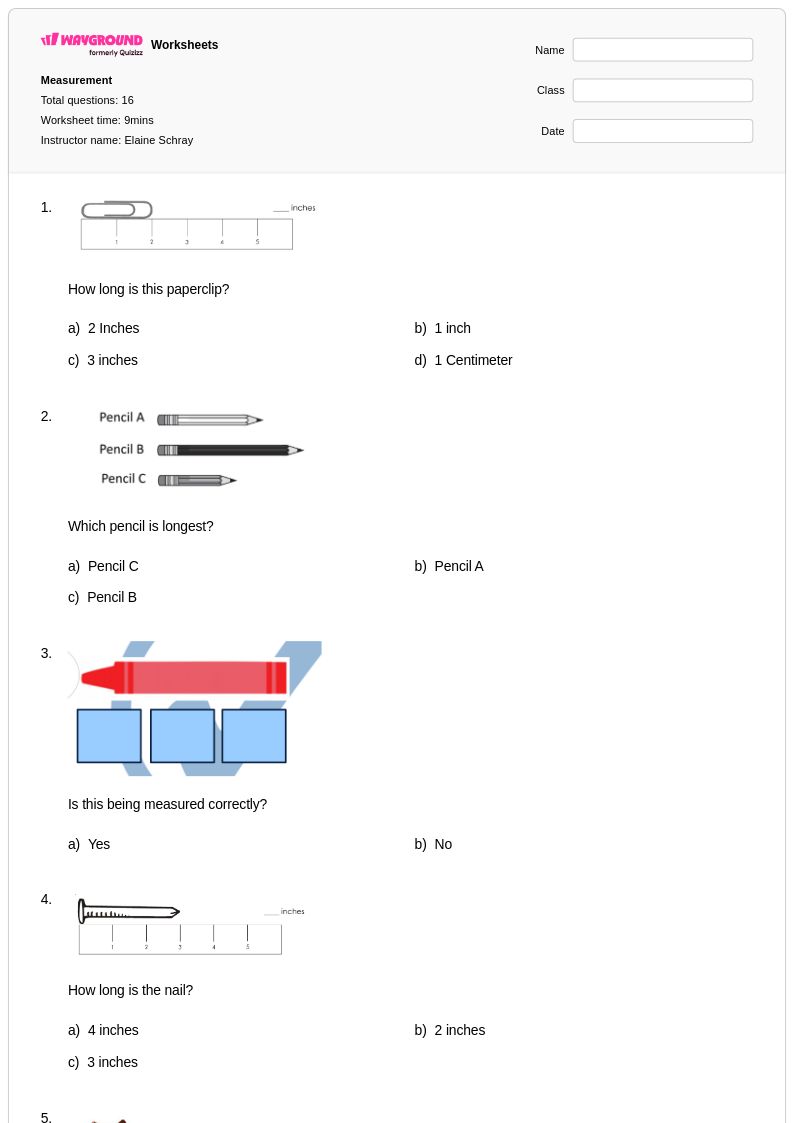
16 Q
1st
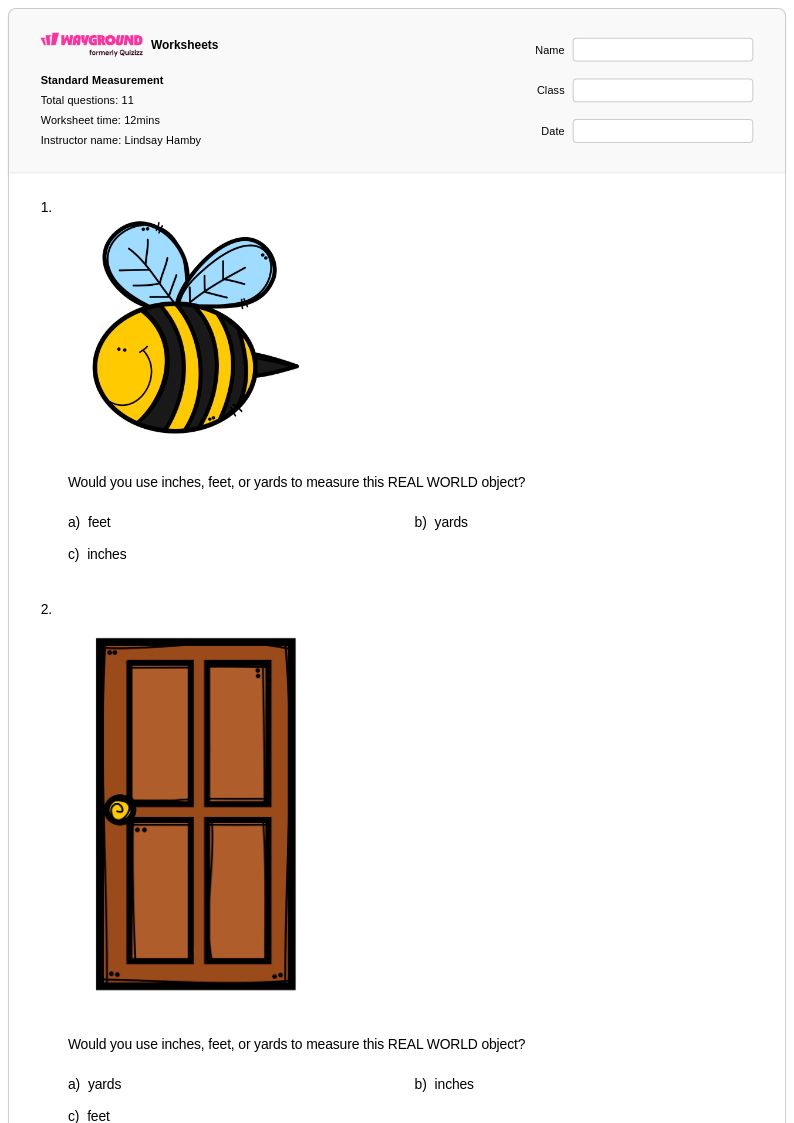
11 Q
1st - 2nd
12 Q
KG - 1st
11 Q
1st
10 Q
1st - 2nd
11 Q
1st
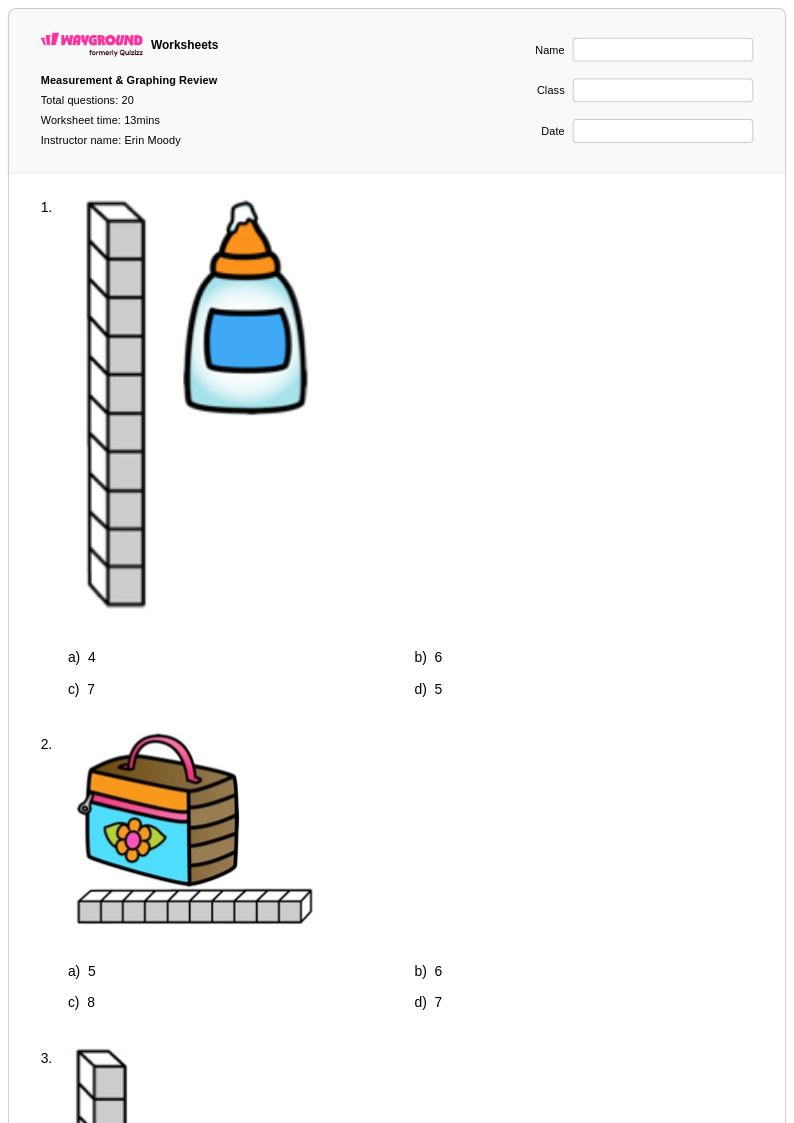
20 Q
KG - 1st
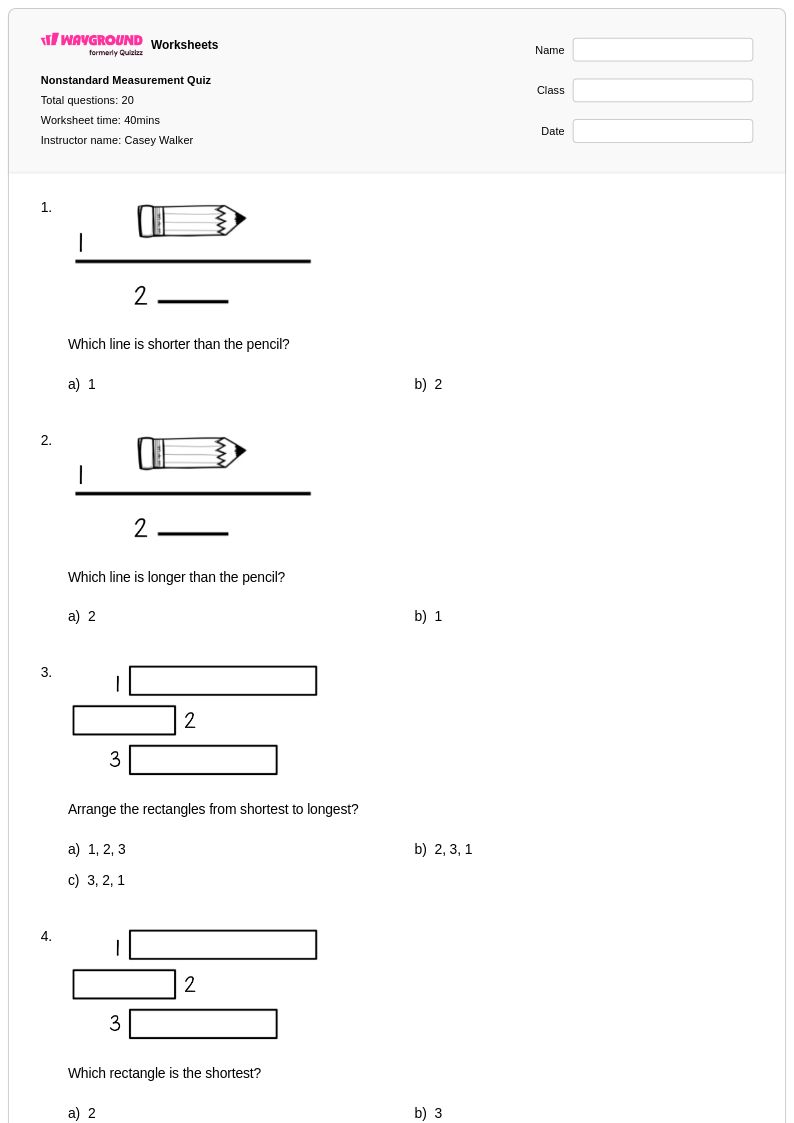
20 Q
1st
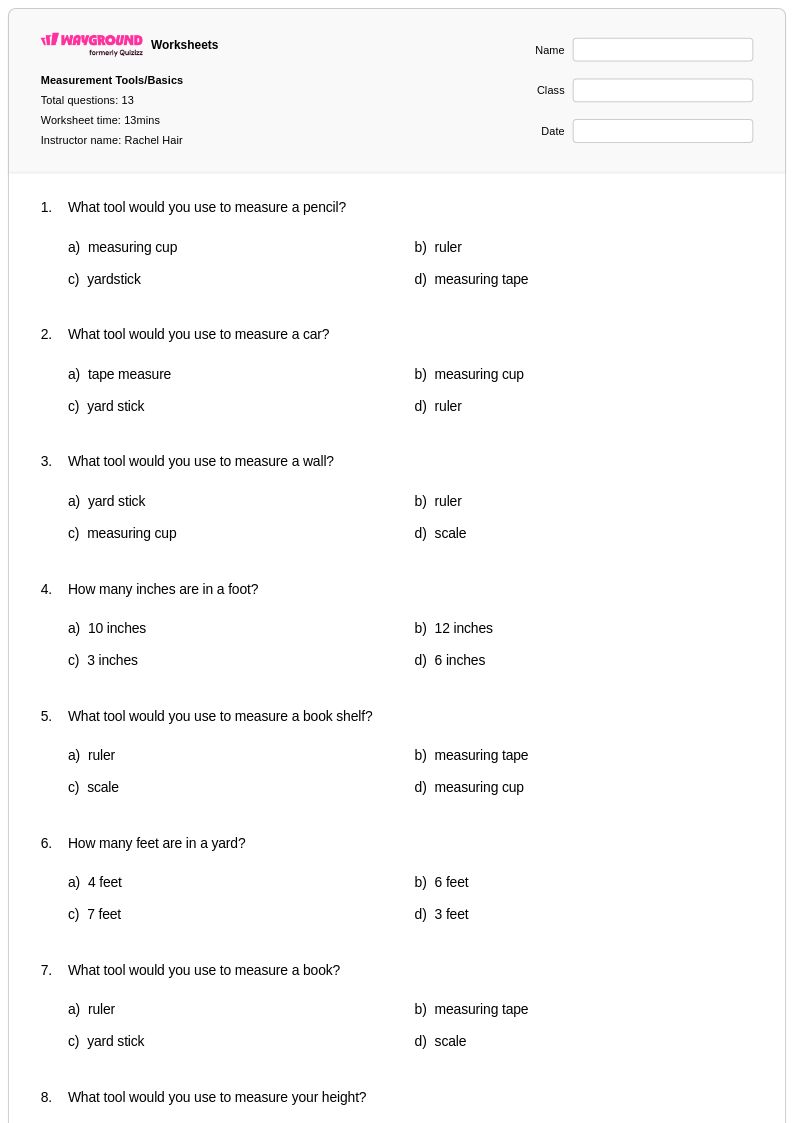
13 Q
1st - 3rd
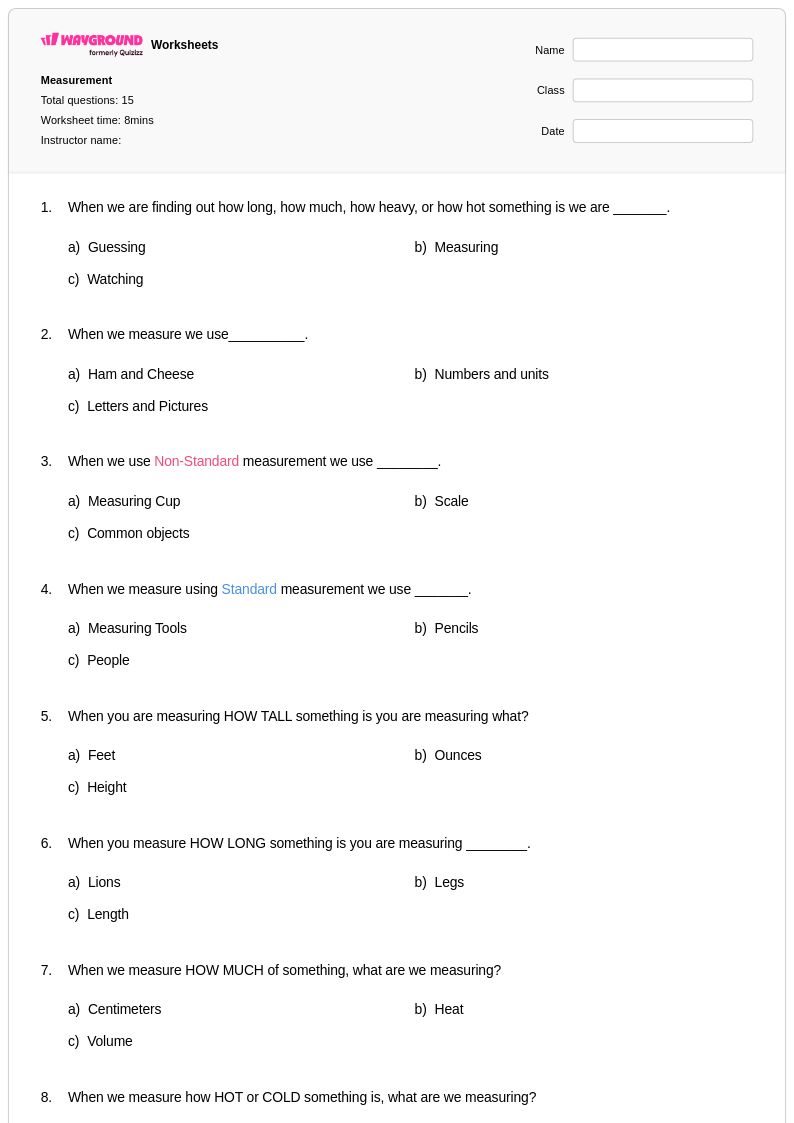
15 Q
1st - 3rd
17 Q
1st
20 Q
1st
15 Q
1st - 3rd
10 Q
1st - 3rd
21 Q
1st - 3rd
22 Q
KG - 1st
10 Q
1st - 2nd
10 Q
KG - 1st
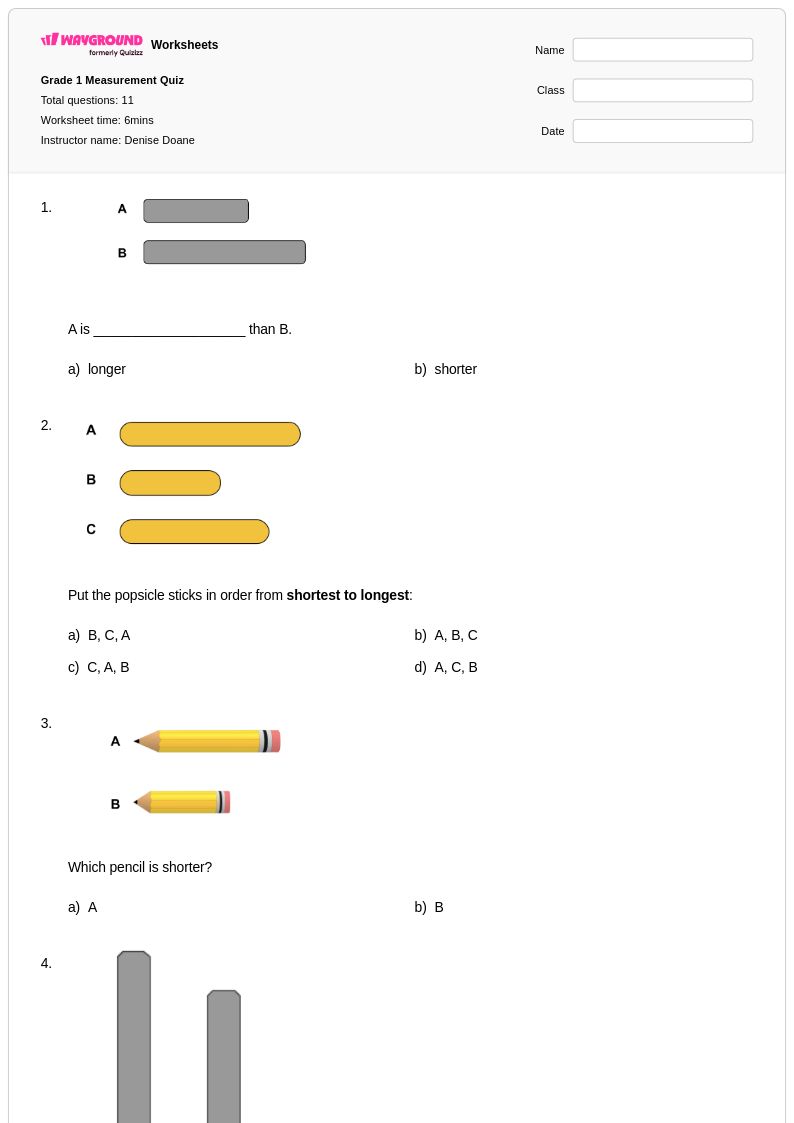
11 Q
1st
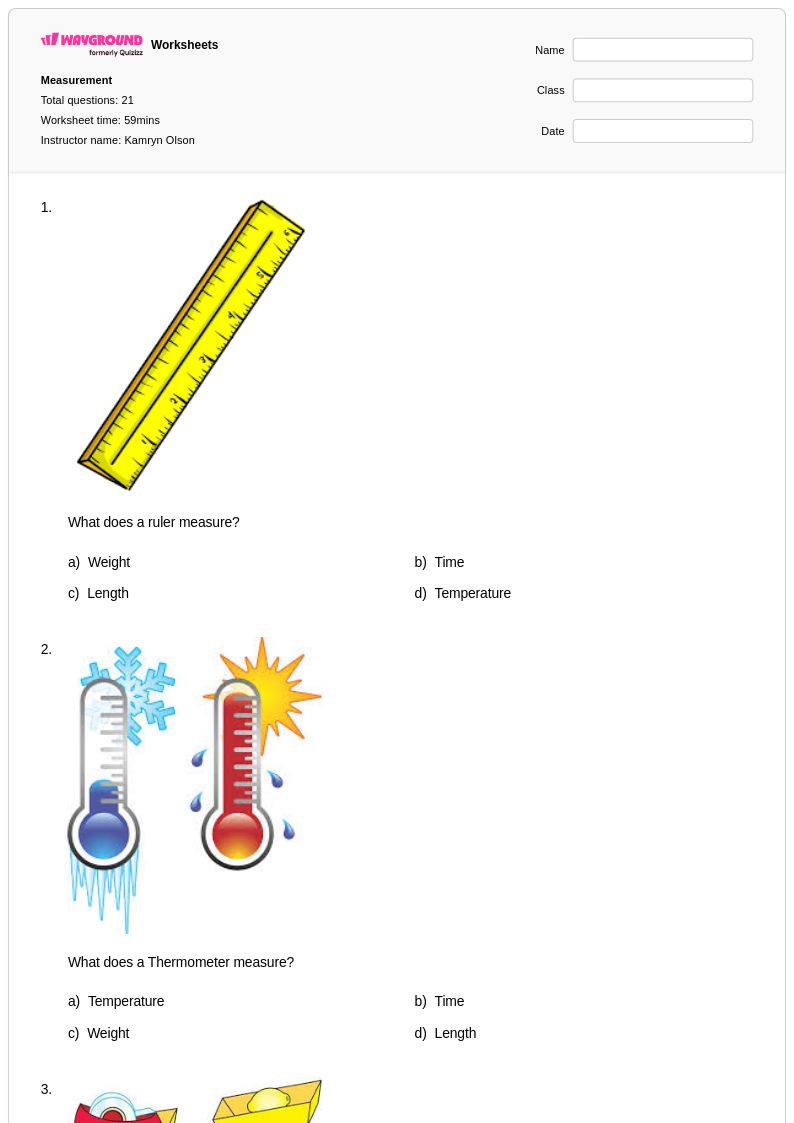
21 Q
KG - 1st
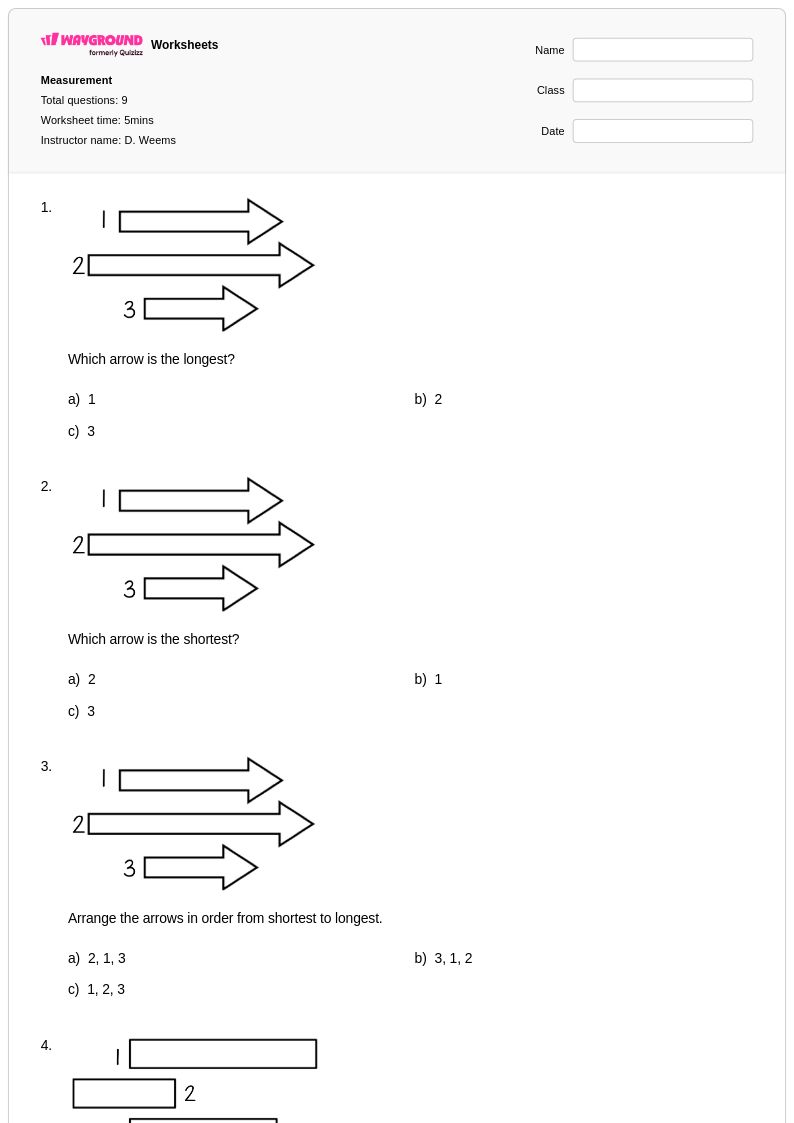
9 Q
1st
Explore Measurement Worksheets by Grades
Explore Measurement Worksheets for class 1 by Topic
- Area Calculation
- Capacity Conversion
- Comparing Measurement
- Converting Customary Units
- Converting Units
- Customary Capacity
- Customary Conversions
- Customary Units of Capacity
- Customary Units of Length
- Estimating Length
- Length Comparison
- Length Conversion
- Mass Conversion
- Measurement Tools and Strategies
- Measuring Distance
- Measuring Length
- Measuring Mass
- Measuring to the Nearest Quarter Inch
- Measuring Volume
- Measuring Weight
Explore Other Subject Worksheets for class 1
Explore printable Measurement worksheets for Class 1
Class 1 measurement worksheets available through Wayground (formerly Quizizz) provide foundational practice in understanding length, height, weight, capacity, and time concepts that are essential for young learners' mathematical development. These carefully designed resources help students develop critical skills in comparing objects, using non-standard units of measurement, and beginning to work with standard measurement tools like rulers and measuring cups. Each worksheet collection includes comprehensive answer keys and is available as free printables in convenient pdf format, making it easy for educators to incorporate meaningful measurement practice problems into their daily instruction. Students engage with hands-on activities that build spatial reasoning and quantitative thinking while learning to describe and compare the physical world around them.
Wayground (formerly Quizizz) supports teachers with an extensive library of millions of teacher-created measurement resources specifically designed for Class 1 learners, featuring robust search and filtering capabilities that allow educators to quickly locate materials aligned with specific curriculum standards and learning objectives. The platform's differentiation tools enable teachers to customize worksheets for varying ability levels within their classrooms, while the flexible format options include both printable pdf versions for traditional paper-and-pencil work and digital formats for interactive learning experiences. These comprehensive measurement collections facilitate effective lesson planning and provide targeted resources for remediation, enrichment, and ongoing skill practice, ensuring that all students can build confidence in foundational measurement concepts through engaging, developmentally appropriate activities that meet diverse learning needs.
FAQs
What measurement skills do first graders learn?
How should I introduce the concept of a 'unit' to first graders?
What is a common mistake first graders make when measuring?
What activities help first graders practice iterating units?
How does first-grade measurement align with Common Core standards?
How can I use Wayground's first-grade measurement worksheets?