
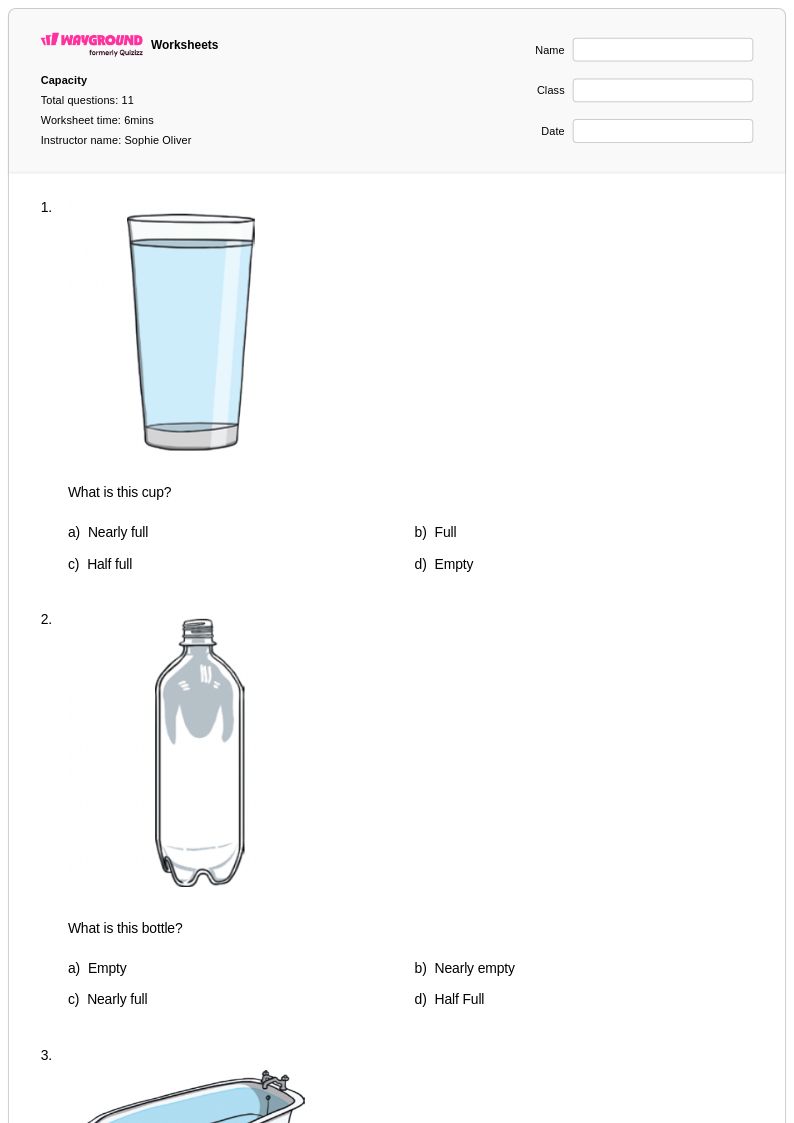
11 Q
1st
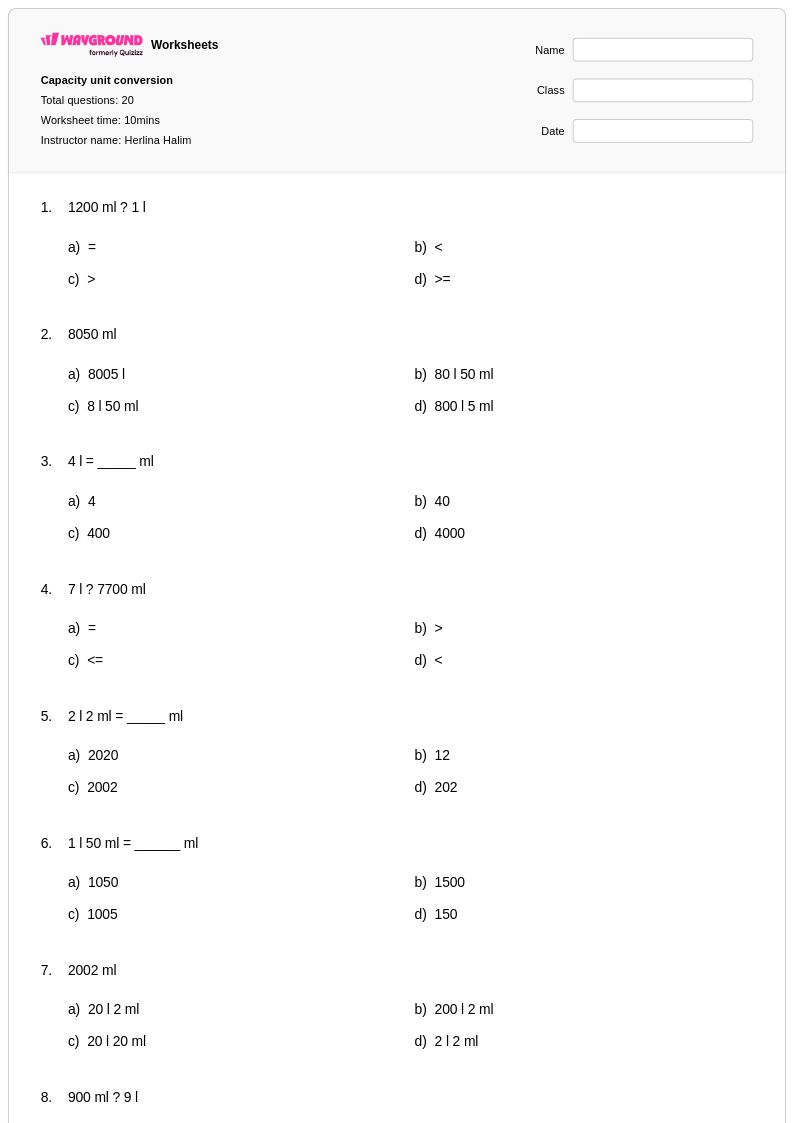
20 Q
1st - 3rd
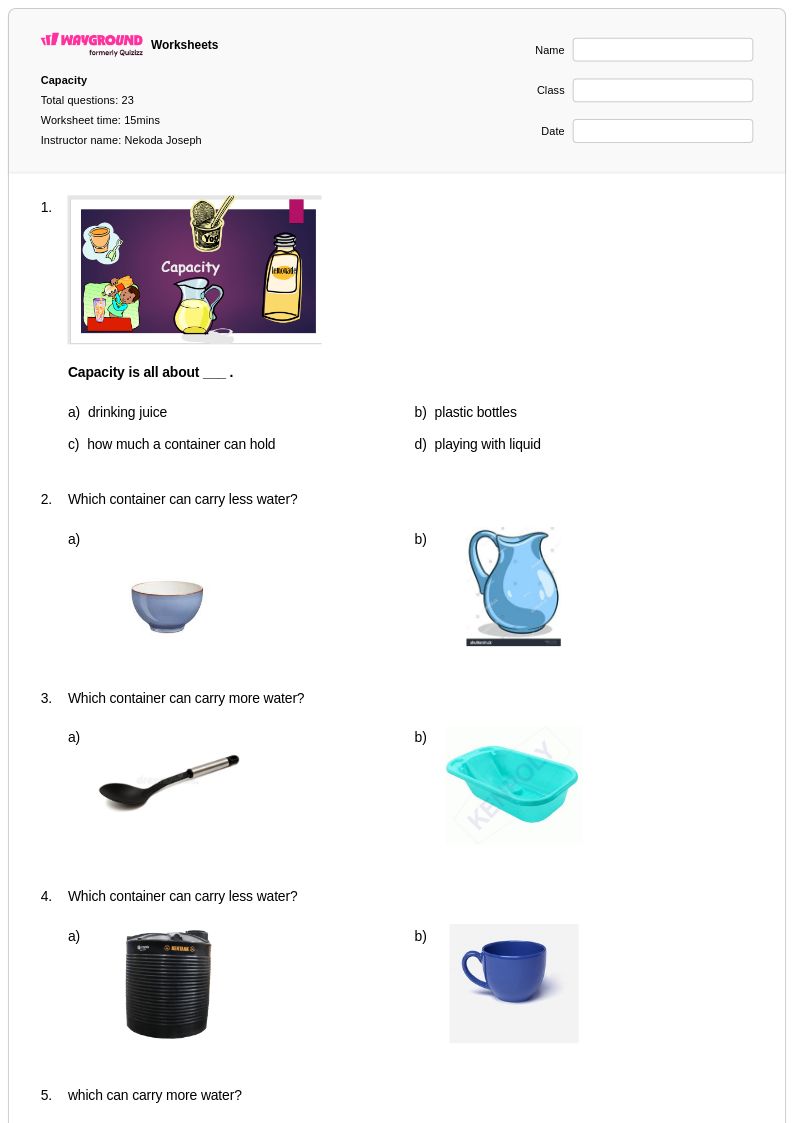
23 Q
1st
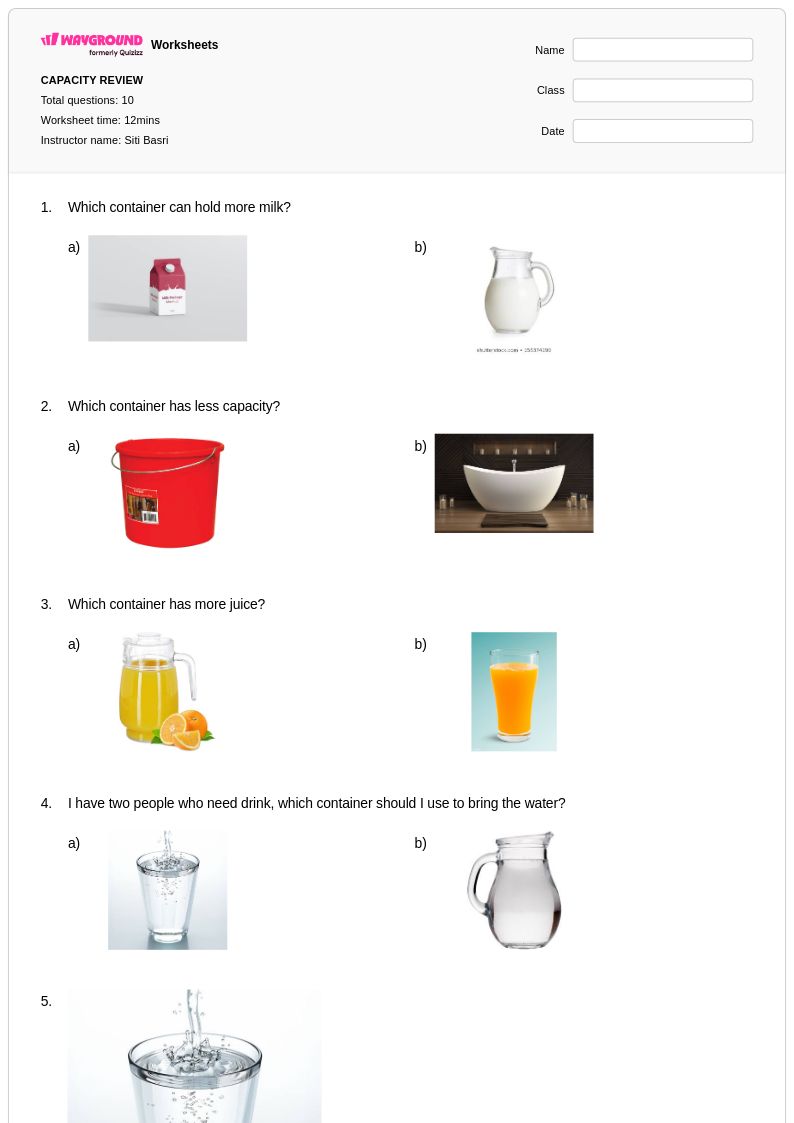
10 Q
1st
20 Q
1st - 3rd
8 Q
1st
17 Q
1st - 5th
7 Q
KG - 1st
10 Q
1st - 2nd
20 Q
1st - Uni
15 Q
1st
10 Q
1st
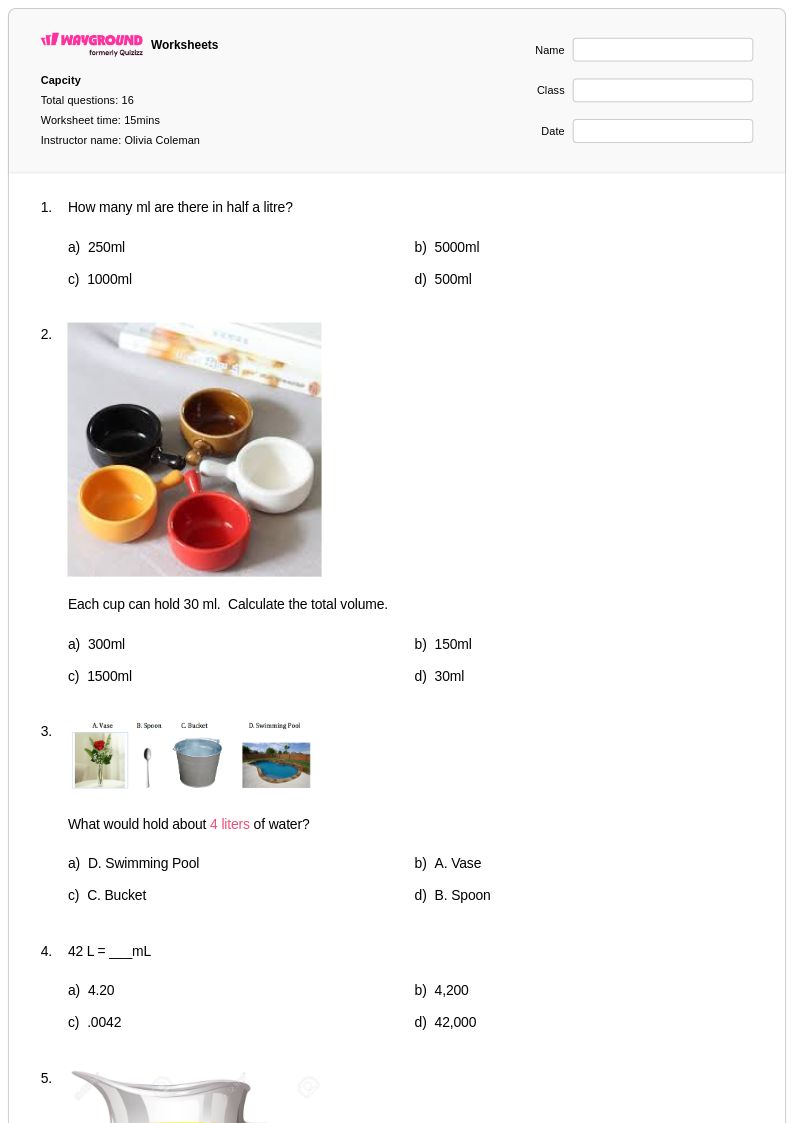
16 Q
KG - 2nd
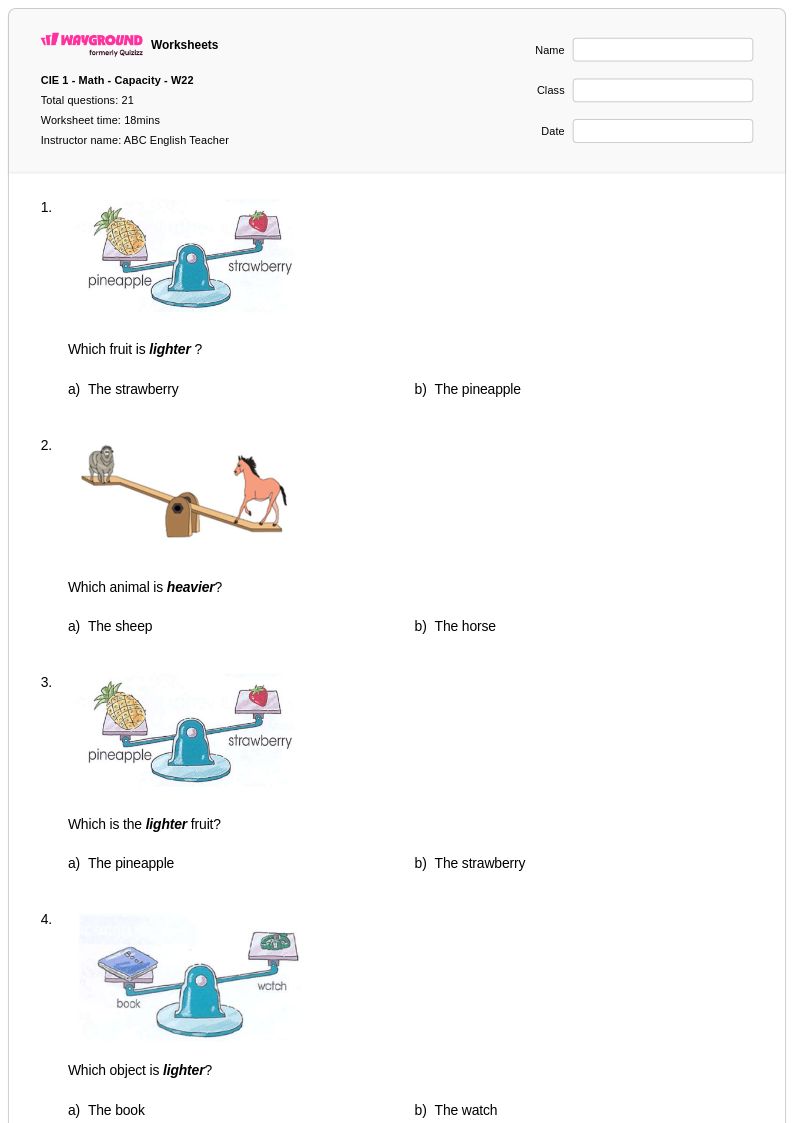
21 Q
1st
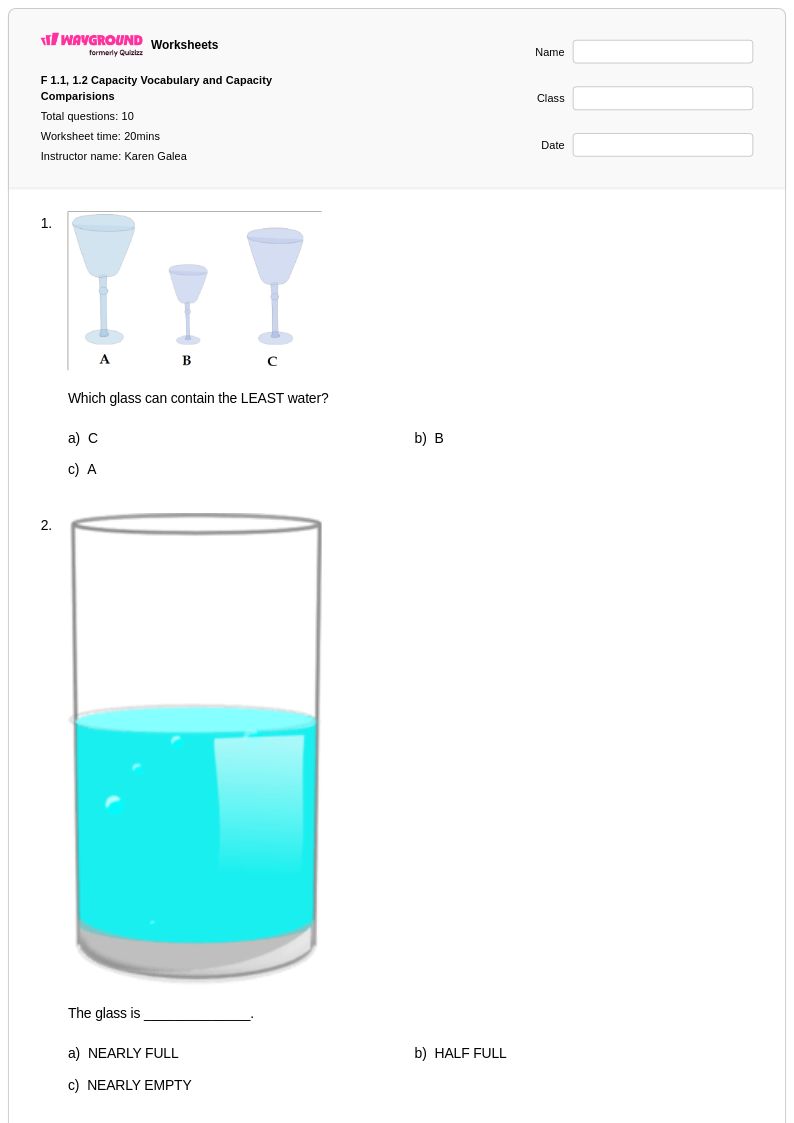
10 Q
1st
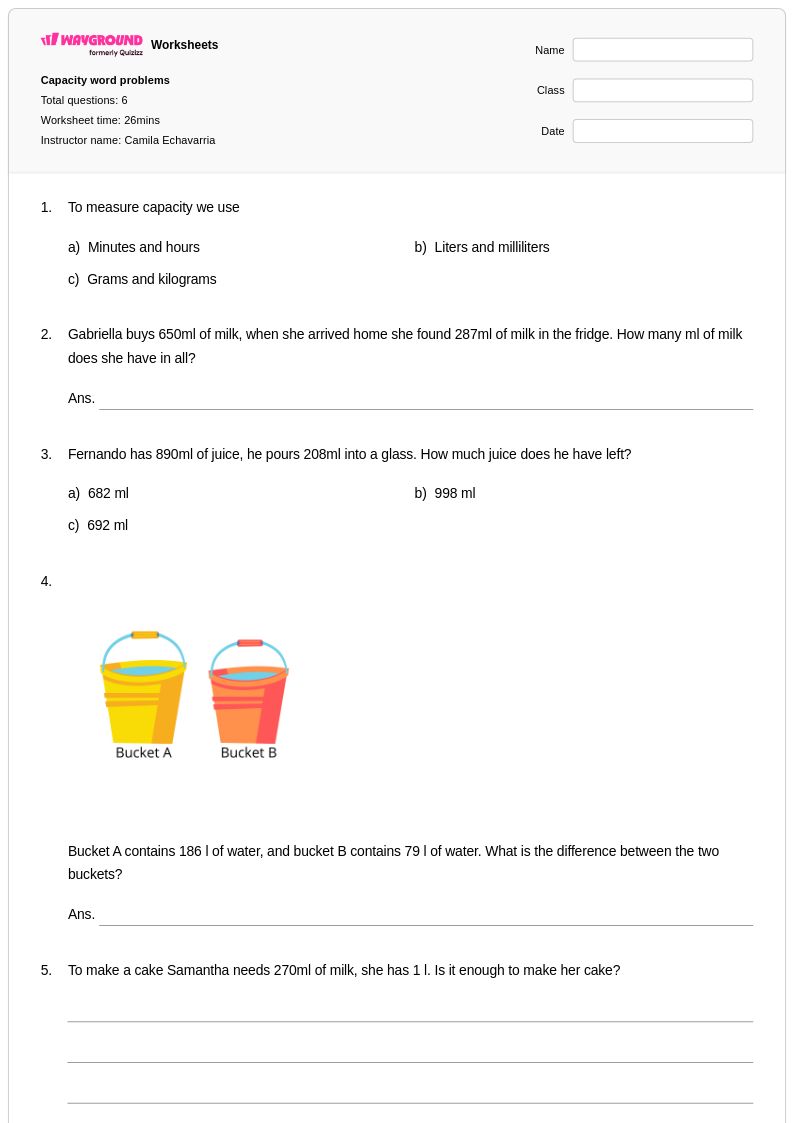
6 Q
1st
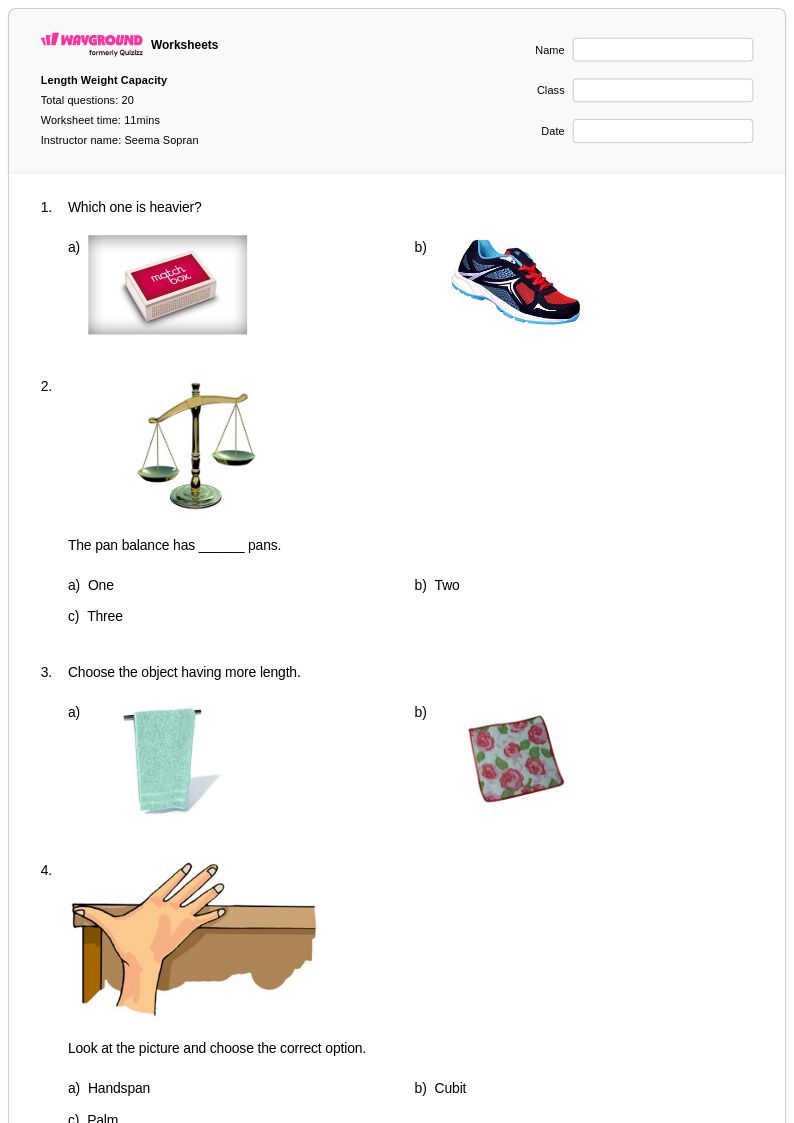
20 Q
1st
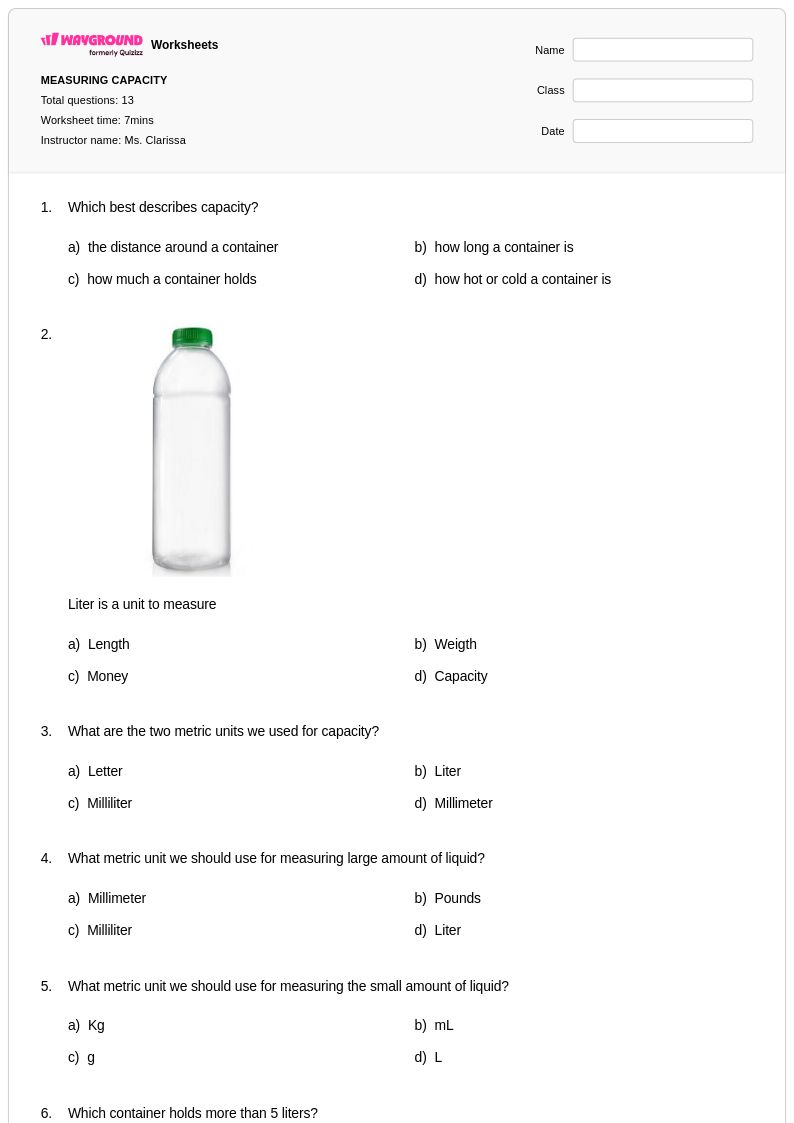
13 Q
KG - 1st
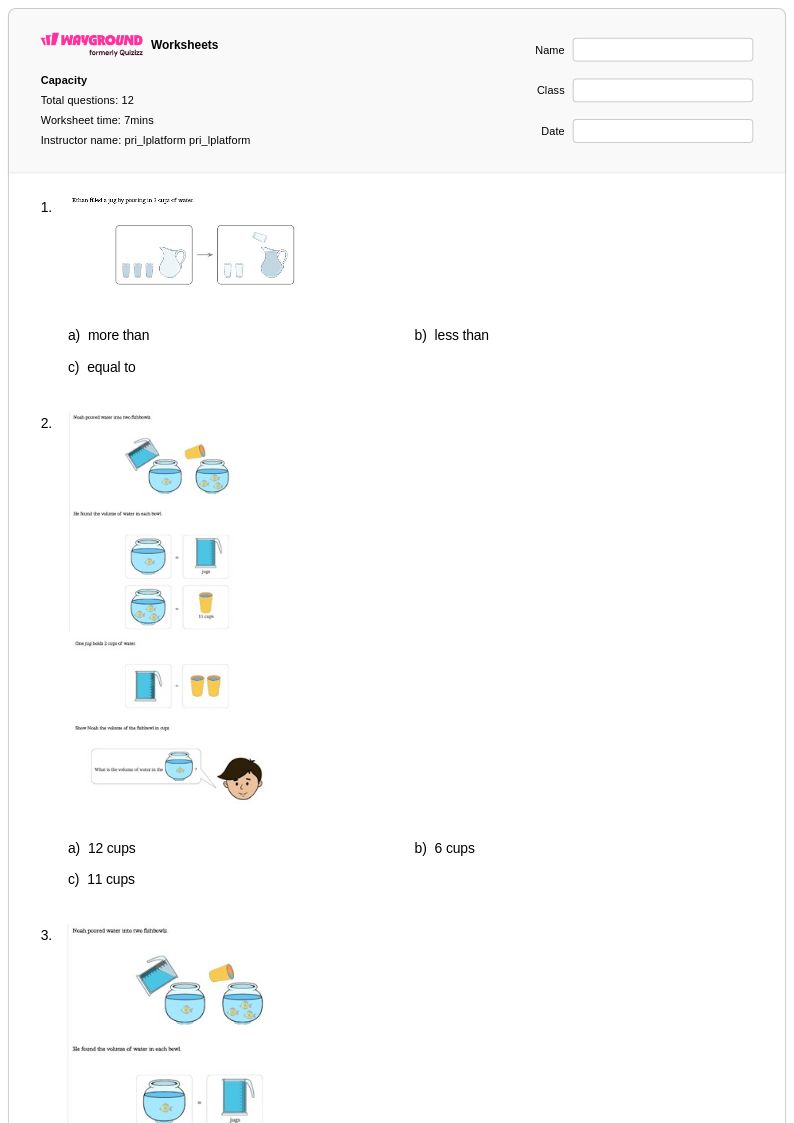
12 Q
1st
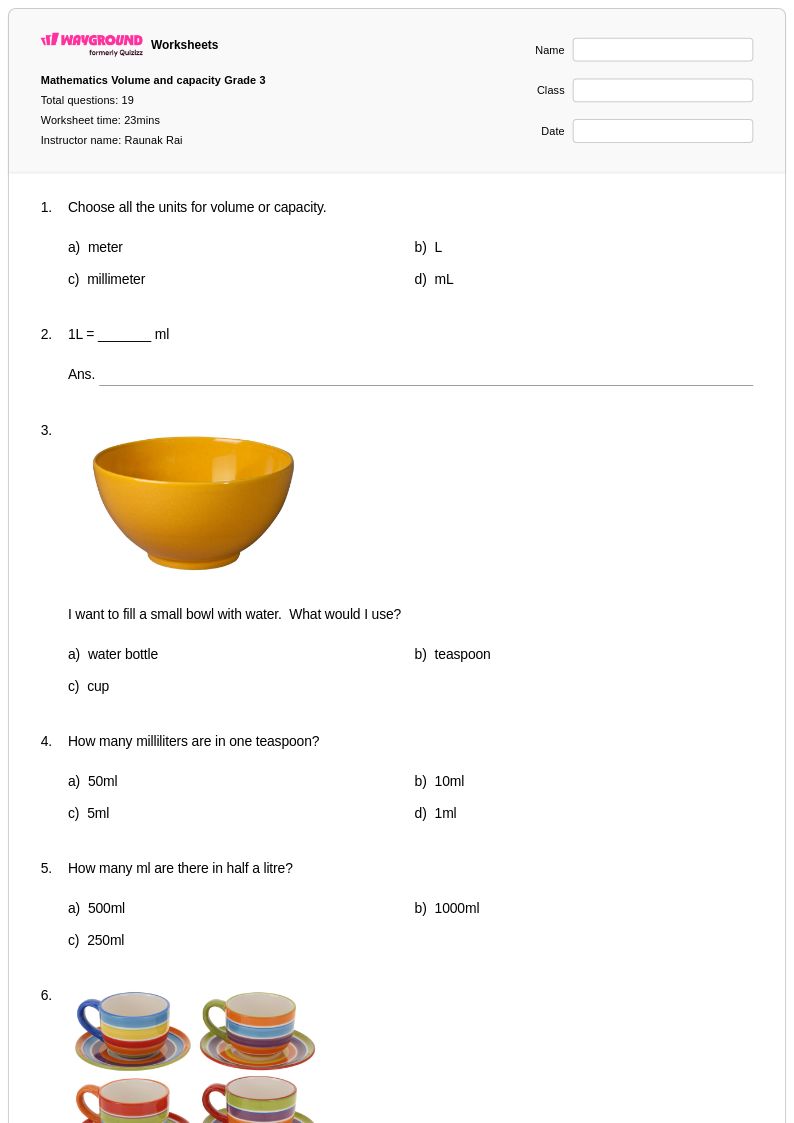
19 Q
1st - 3rd
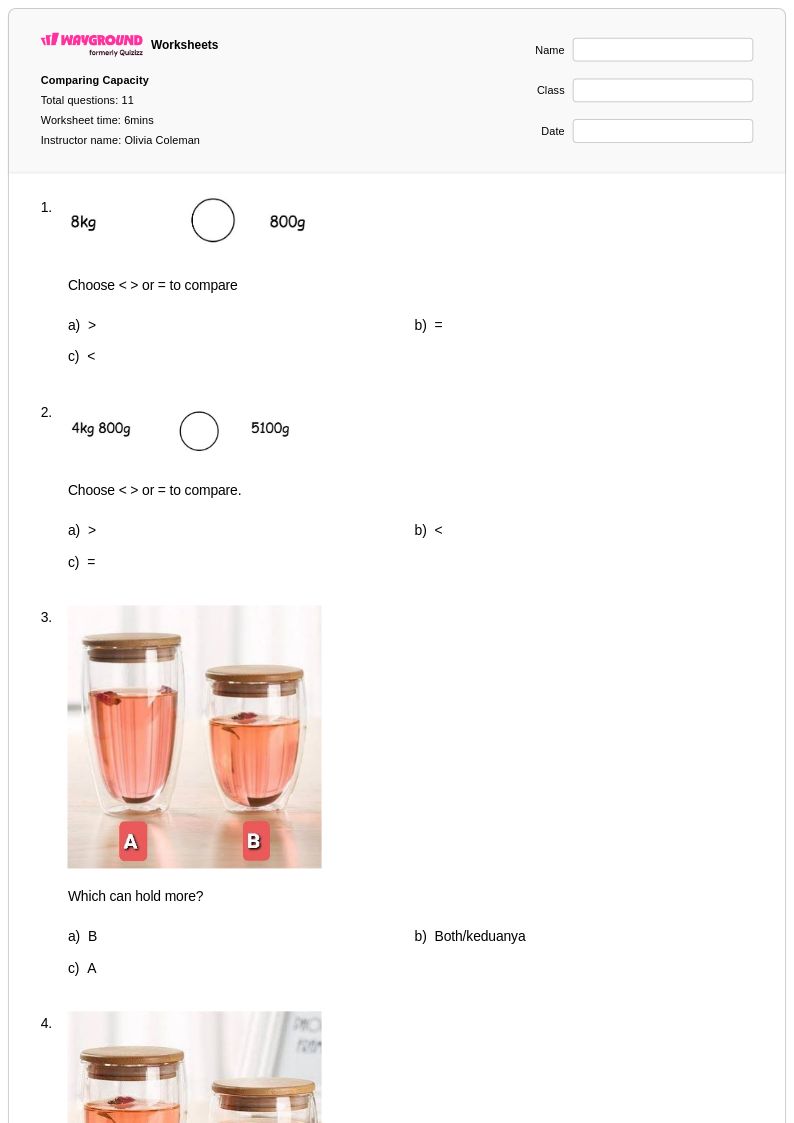
11 Q
1st - 2nd
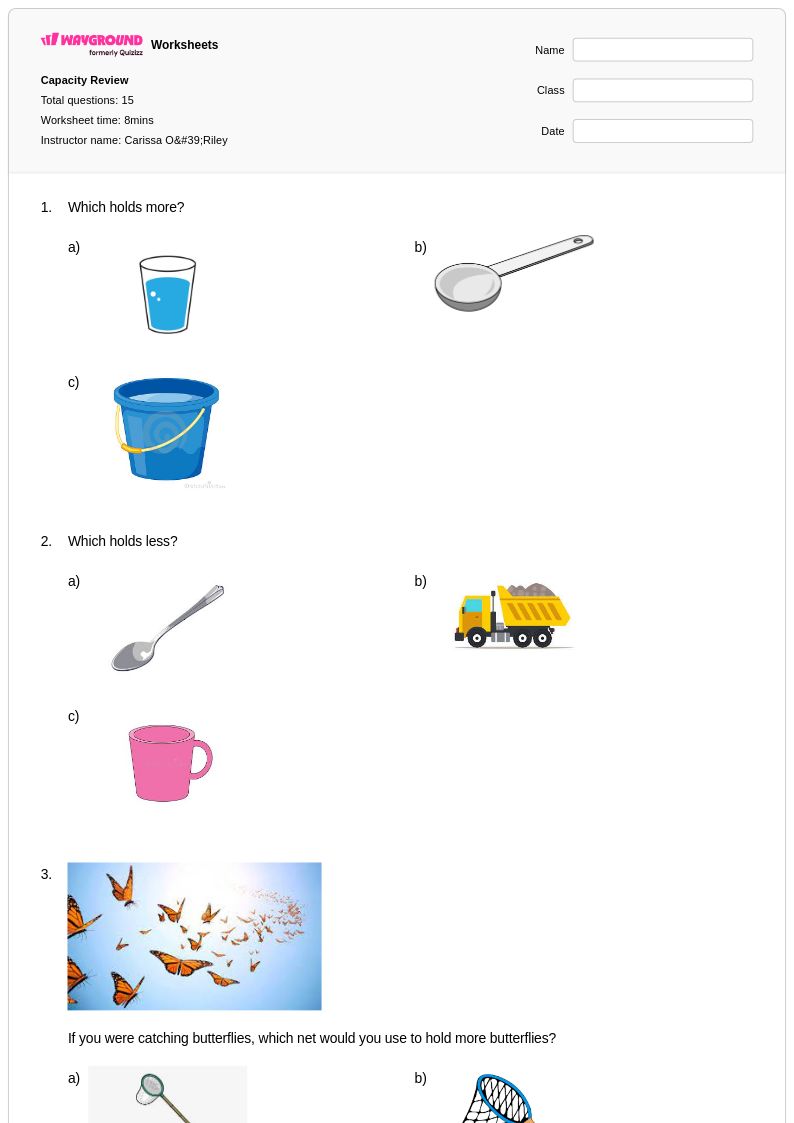
15 Q
KG - 1st
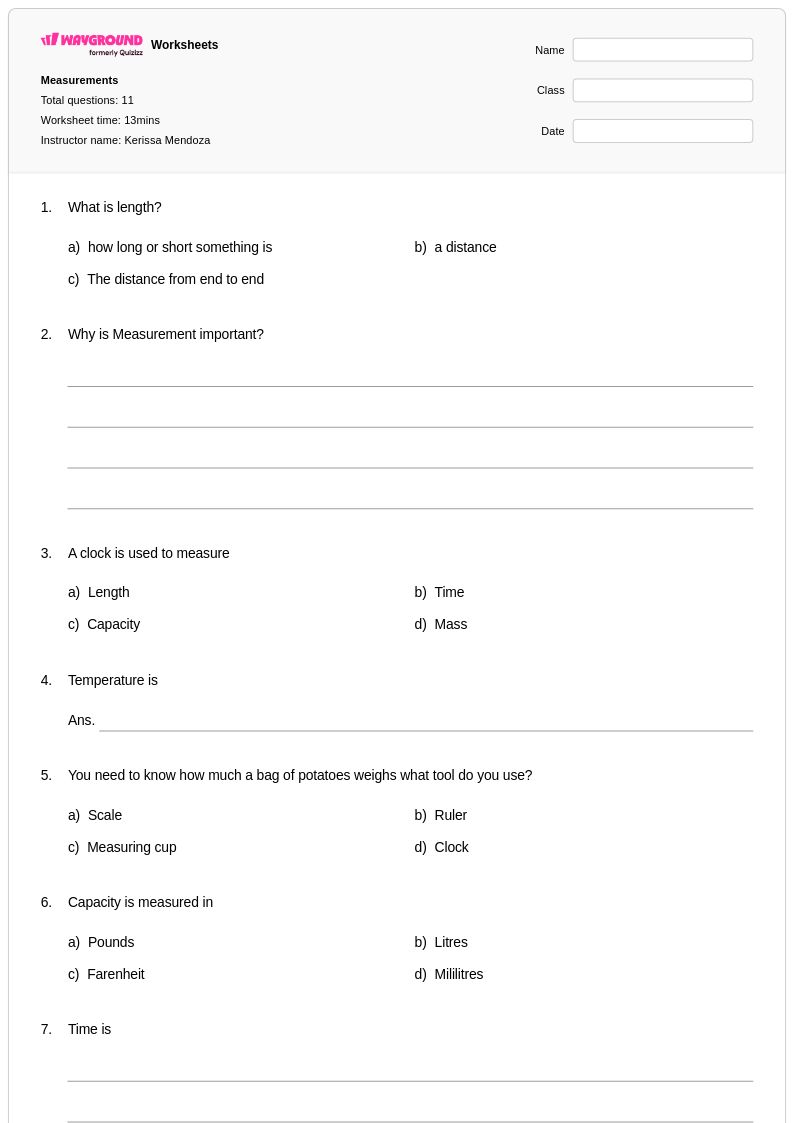
11 Q
1st
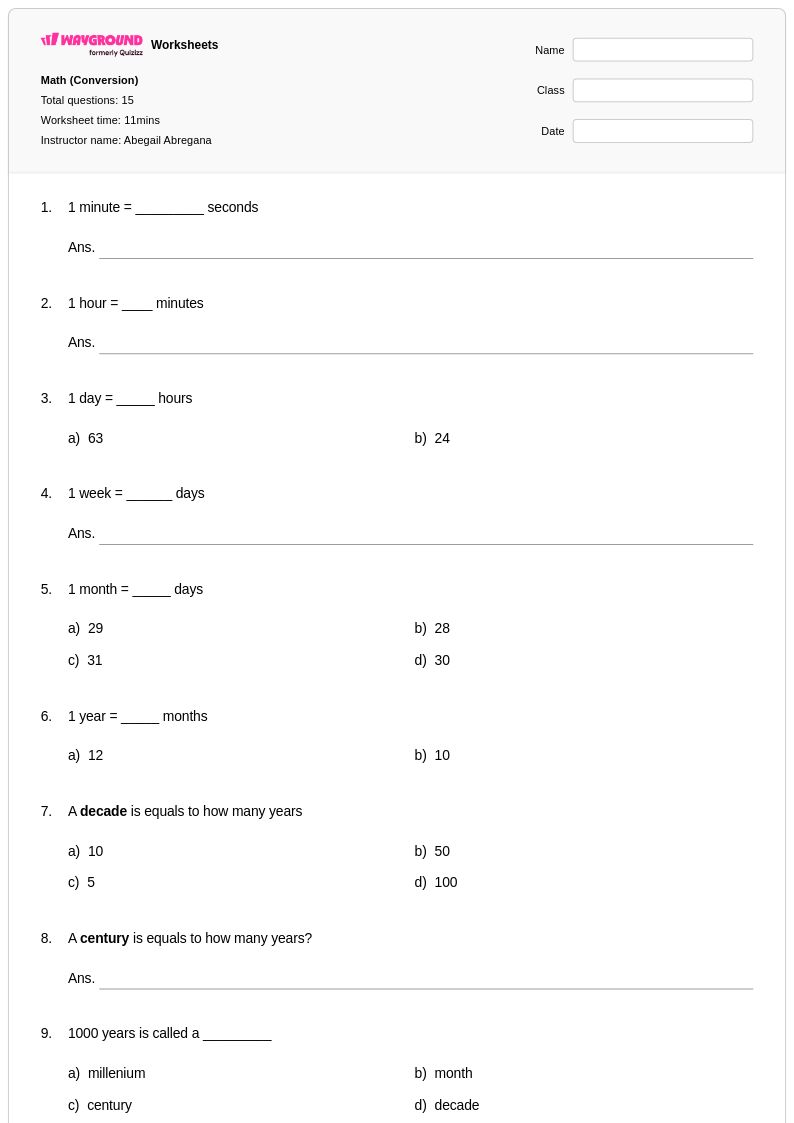
15 Q
1st - 3rd
Explore Capacity Conversion Worksheets by Grades
Explore Other Subject Worksheets for class 1
Explore printable Capacity Conversion worksheets for Class 1
Capacity conversion worksheets for Class 1 students available through Wayground provide essential foundational practice in understanding how different units of measurement relate to one another when measuring liquids and containers. These carefully designed printables introduce young learners to basic capacity concepts by helping them compare and convert between familiar units such as cups, pints, and gallons through visual representations and hands-on practice problems. Each worksheet includes an answer key to support independent learning and accurate assessment, while the free pdf format ensures teachers can easily distribute materials for both classroom instruction and homework assignments. Students develop critical measurement skills as they learn to recognize capacity relationships, estimate liquid volumes, and understand that the same amount of liquid can be expressed using different units of measurement.
Wayground's extensive collection of teacher-created capacity conversion resources supports Class 1 educators with millions of professionally developed worksheets that can be filtered by specific learning objectives and aligned with mathematics standards. The platform's robust search functionality allows teachers to quickly locate materials that match their students' current skill levels, while built-in differentiation tools enable customization for learners who need additional support or enrichment opportunities. These versatile resources are available in both printable pdf formats for traditional classroom use and digital formats for interactive learning experiences, giving educators flexibility in how they deliver instruction and practice. Teachers can seamlessly integrate these capacity conversion worksheets into lesson planning, use them for targeted remediation with struggling students, or assign them as independent skill practice to reinforce measurement concepts taught during whole-group instruction.
FAQs
How do I teach capacity conversion to first graders?
What exercises help Grade 1 students practice capacity conversion?
What mistakes do first graders make with capacity units?
How should I use a Grade 1 capacity conversion worksheet?
How can I support first graders who struggle with capacity conversion?
Is capacity conversion appropriate for Grade 1?