

15Q
5th - Uni

20Q
5th - Uni

20Q
5th - Uni

10Q
5th - Uni

11Q
5th - Uni

20Q
5th - Uni

10Q
5th - Uni
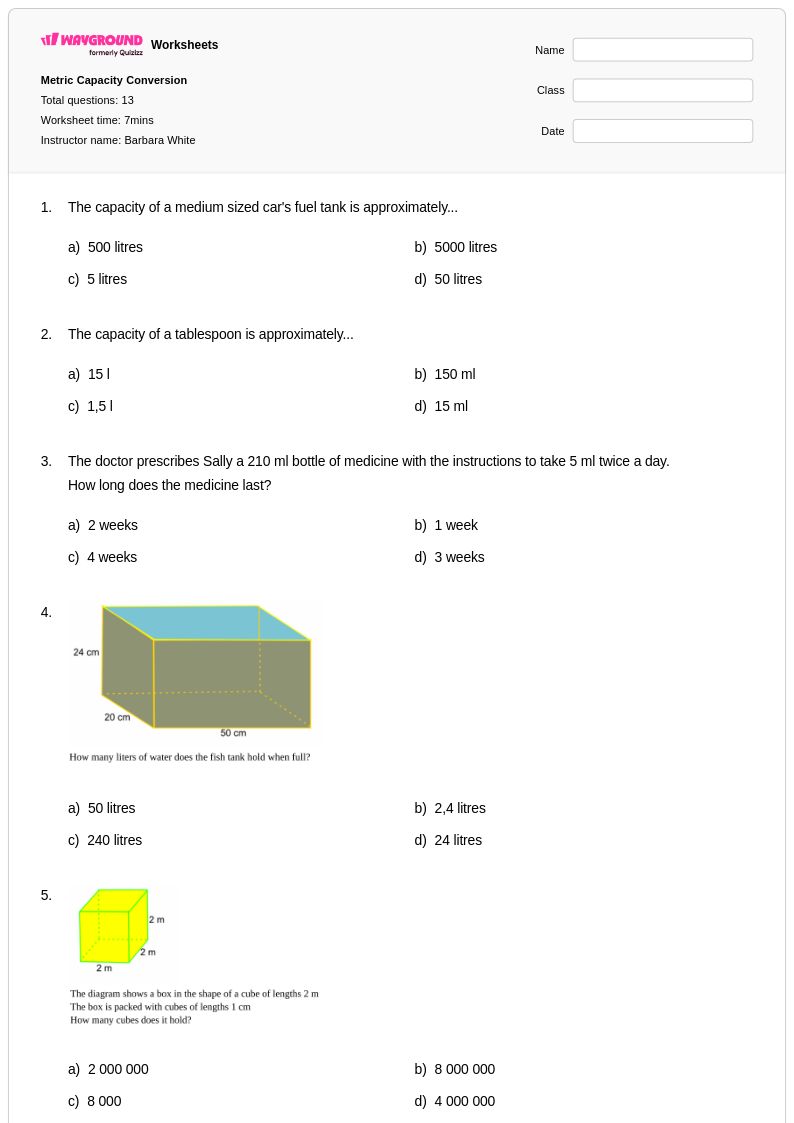
13Q
7th - 9th
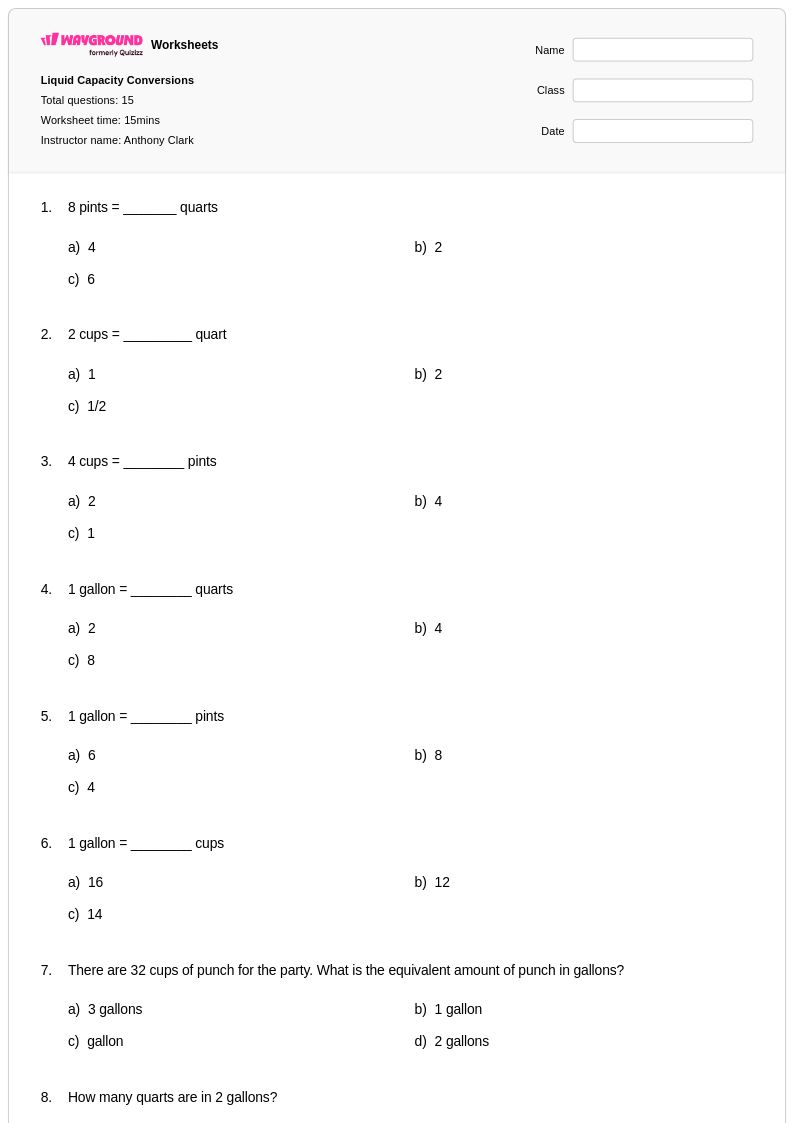
15Q
5th - Uni
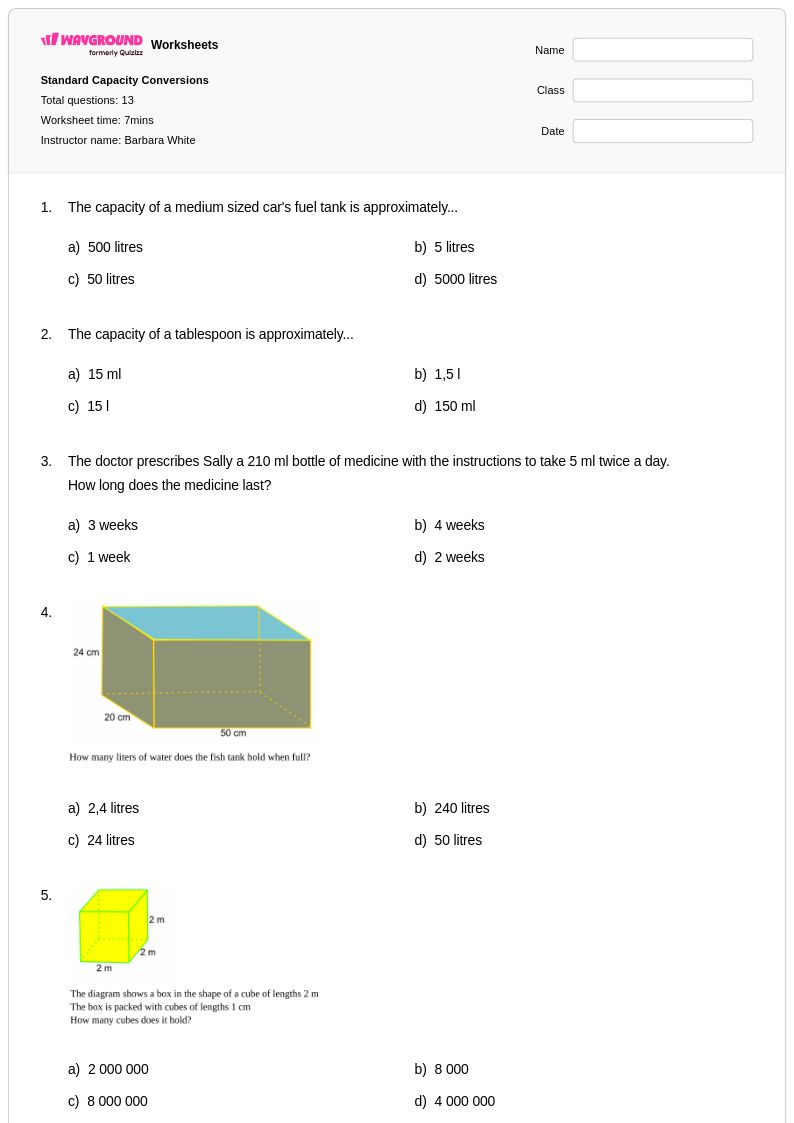
13Q
7th - 9th
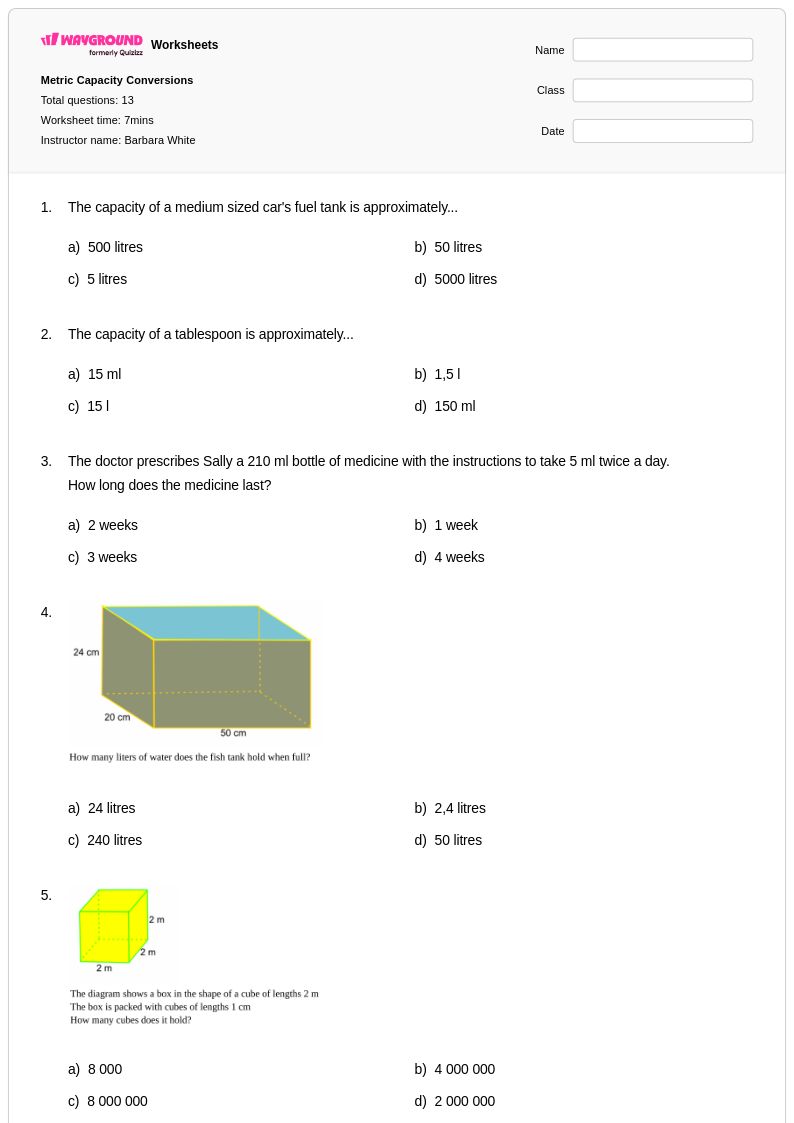
13Q
7th - 9th
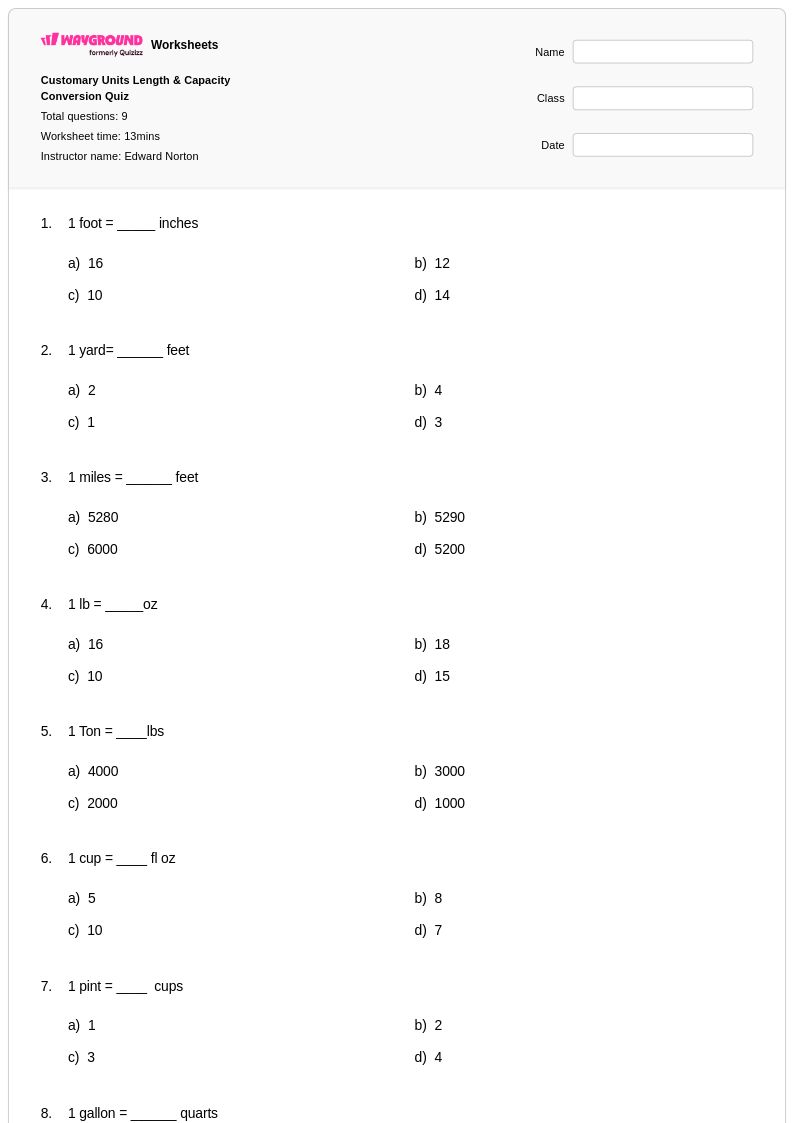
9Q
4th - Uni
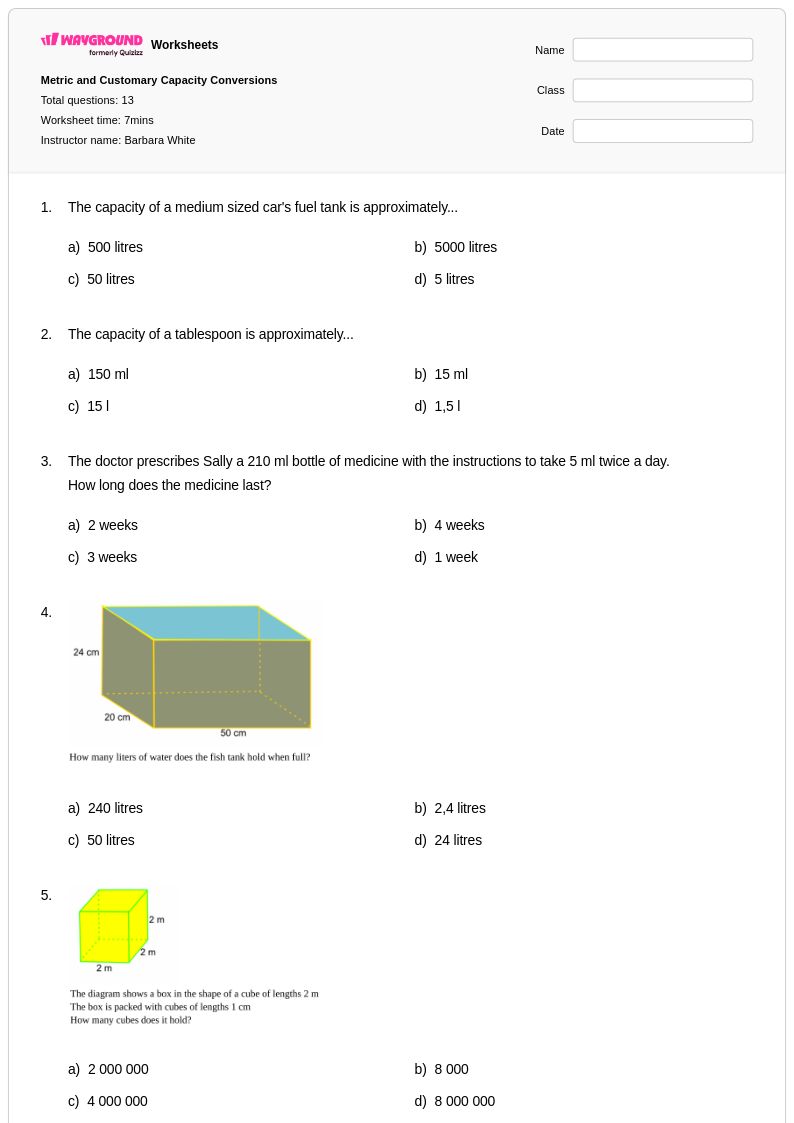
13Q
7th - 9th
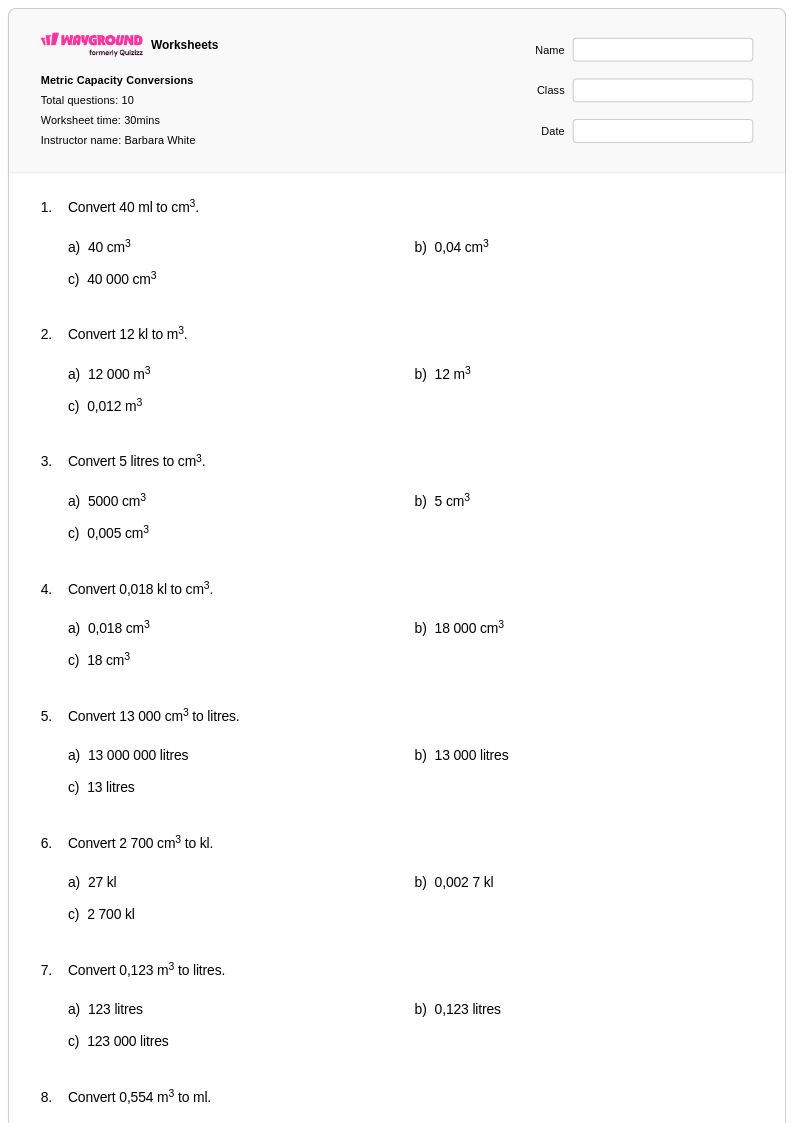
10Q
7th - 9th
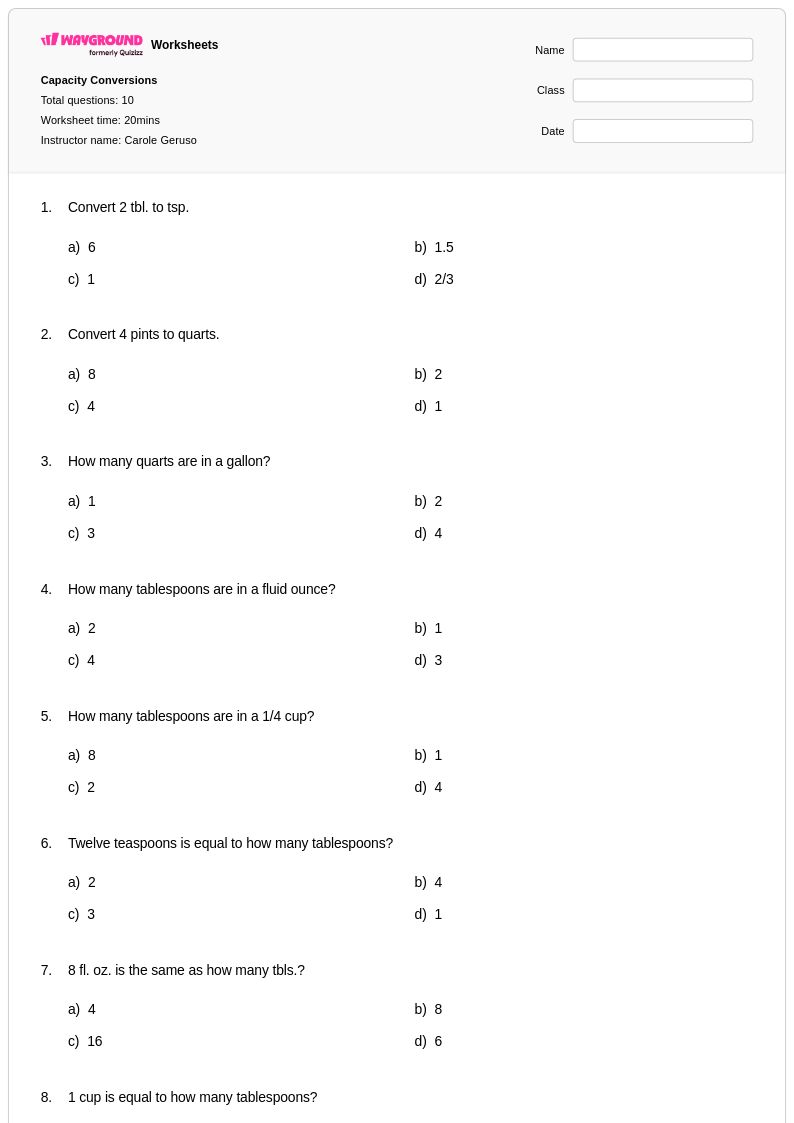
10Q
5th - 11th
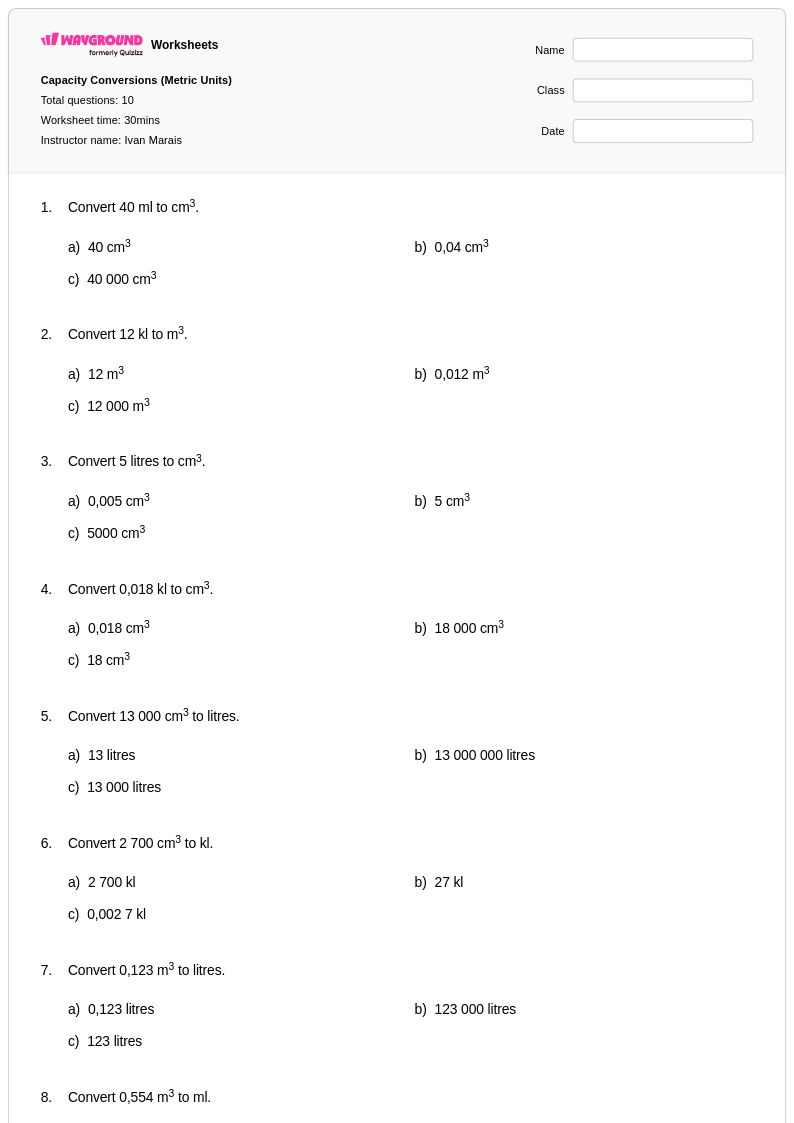
10Q
7th - 9th
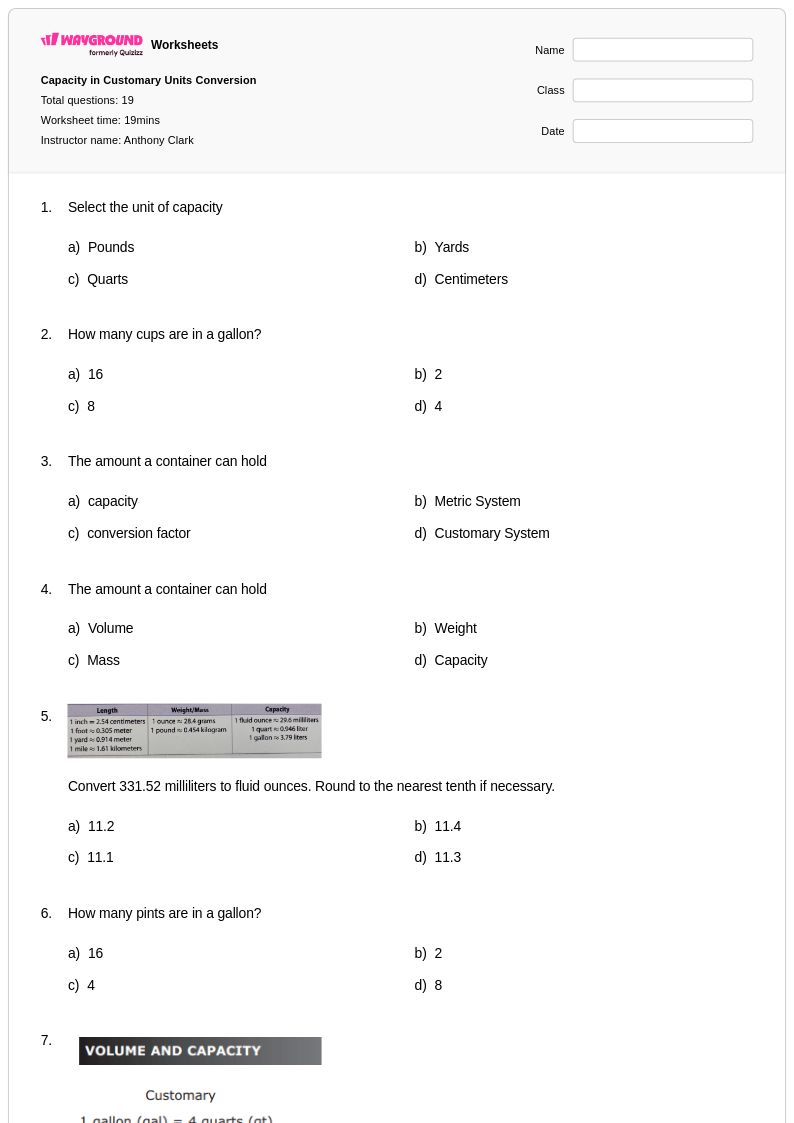
19Q
6th - Uni
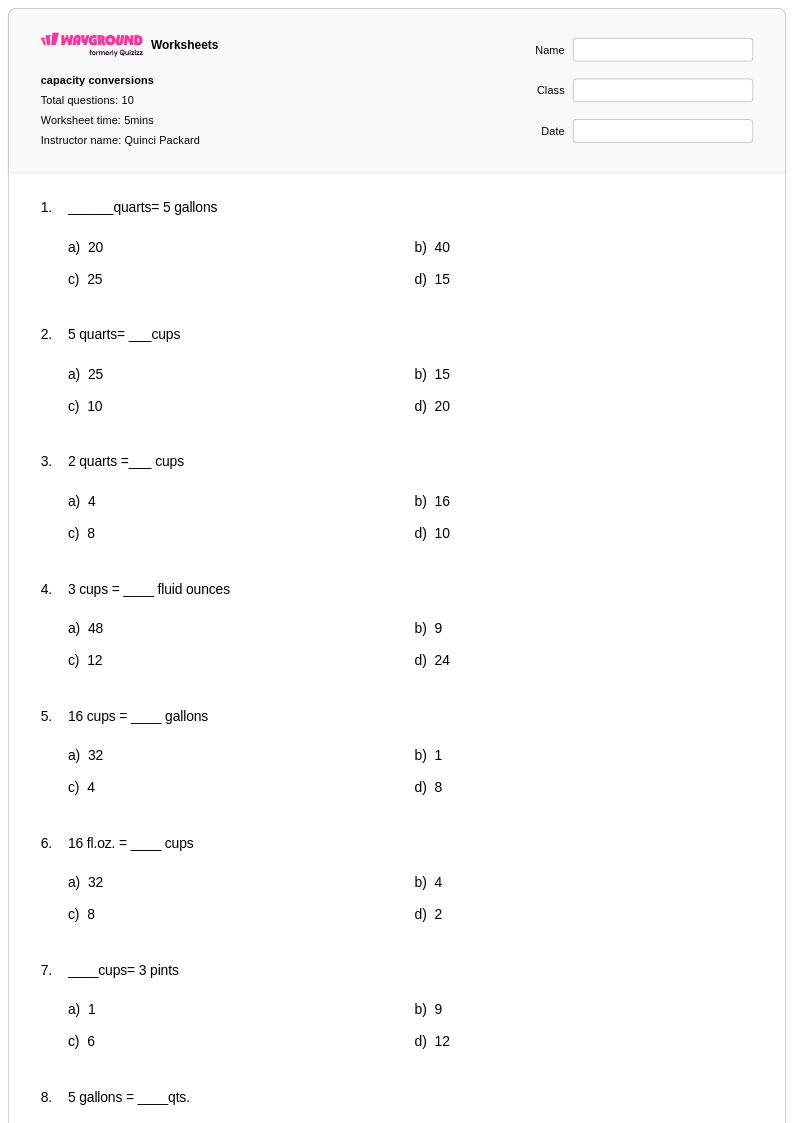
10Q
5th - 8th
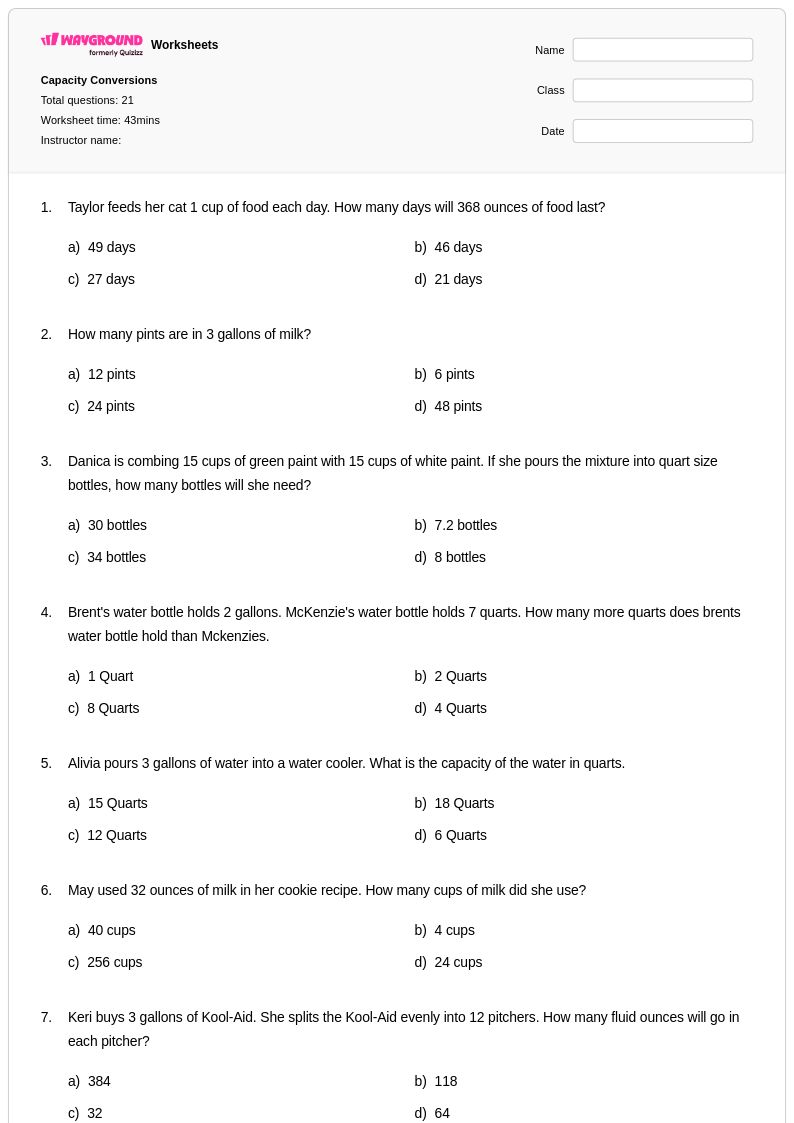
21Q
4th - 8th
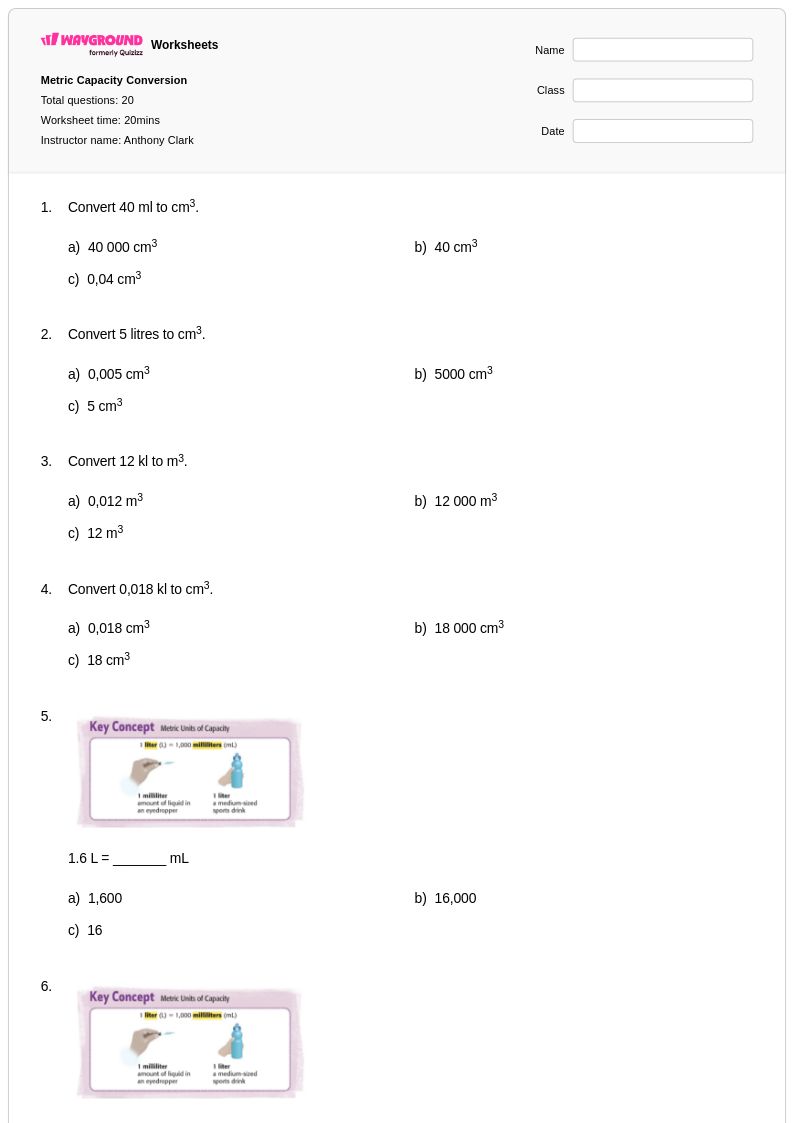
20Q
5th - Uni
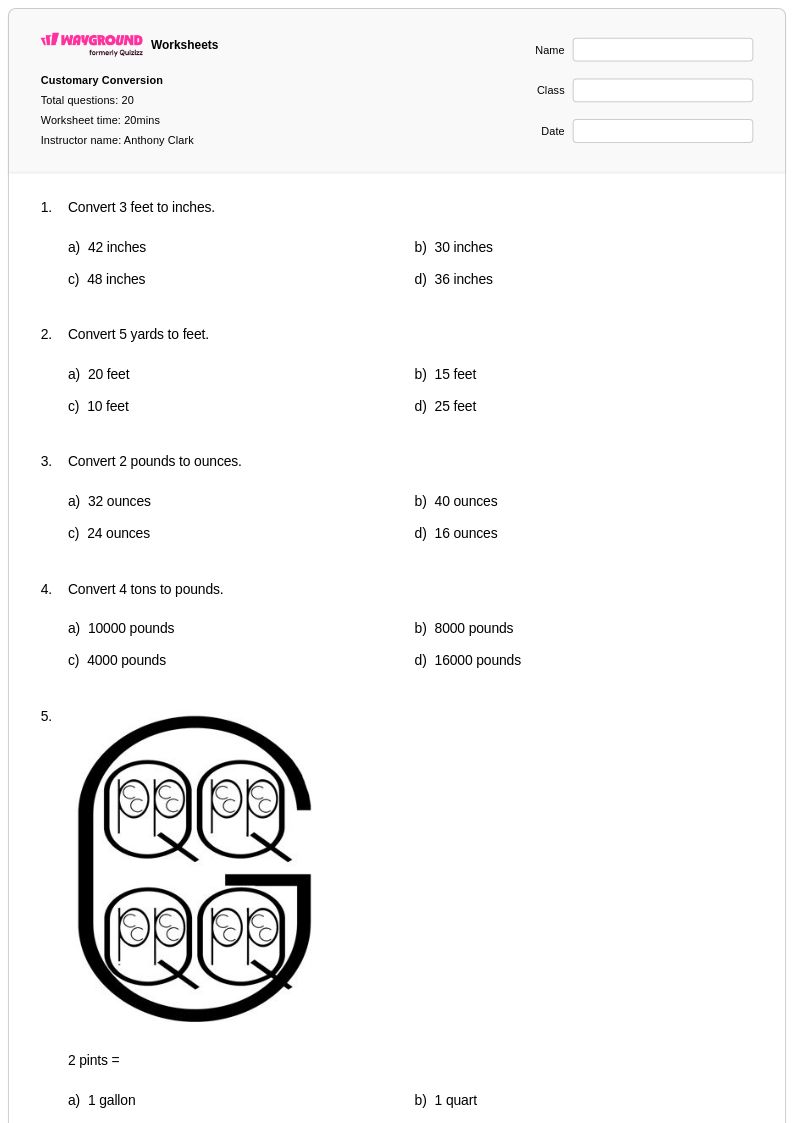
20Q
5th - Uni
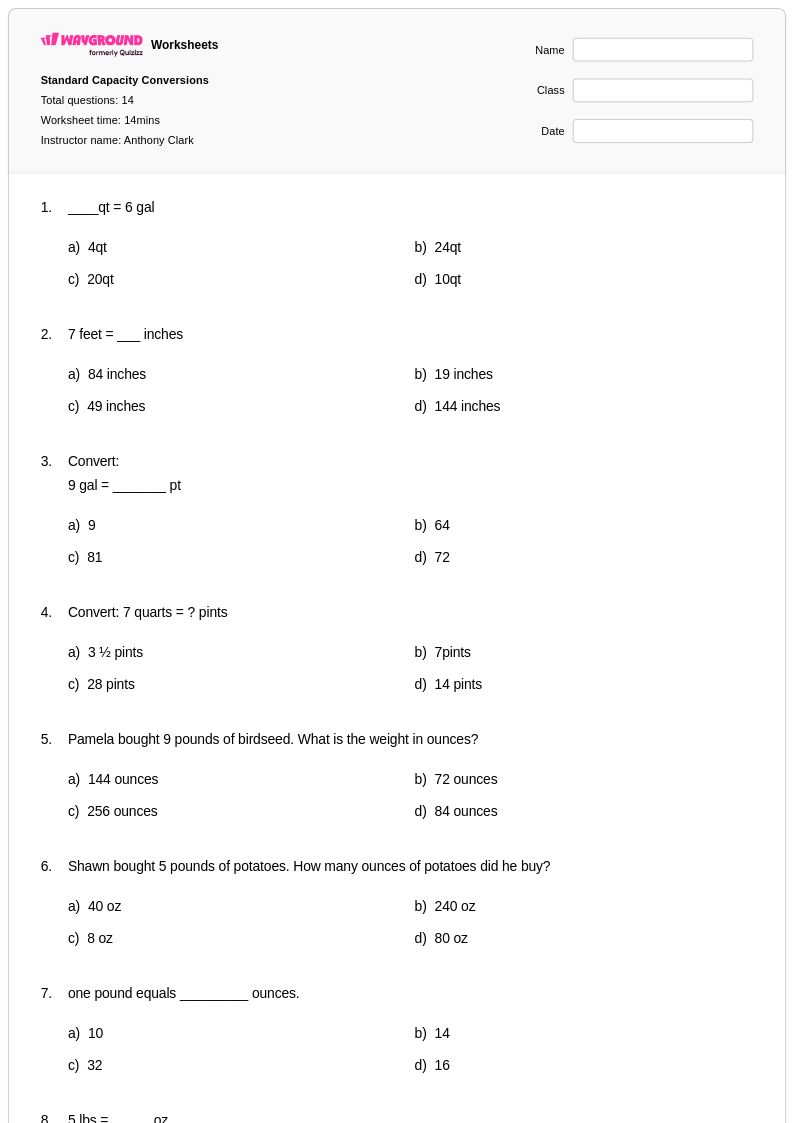
14Q
5th - Uni
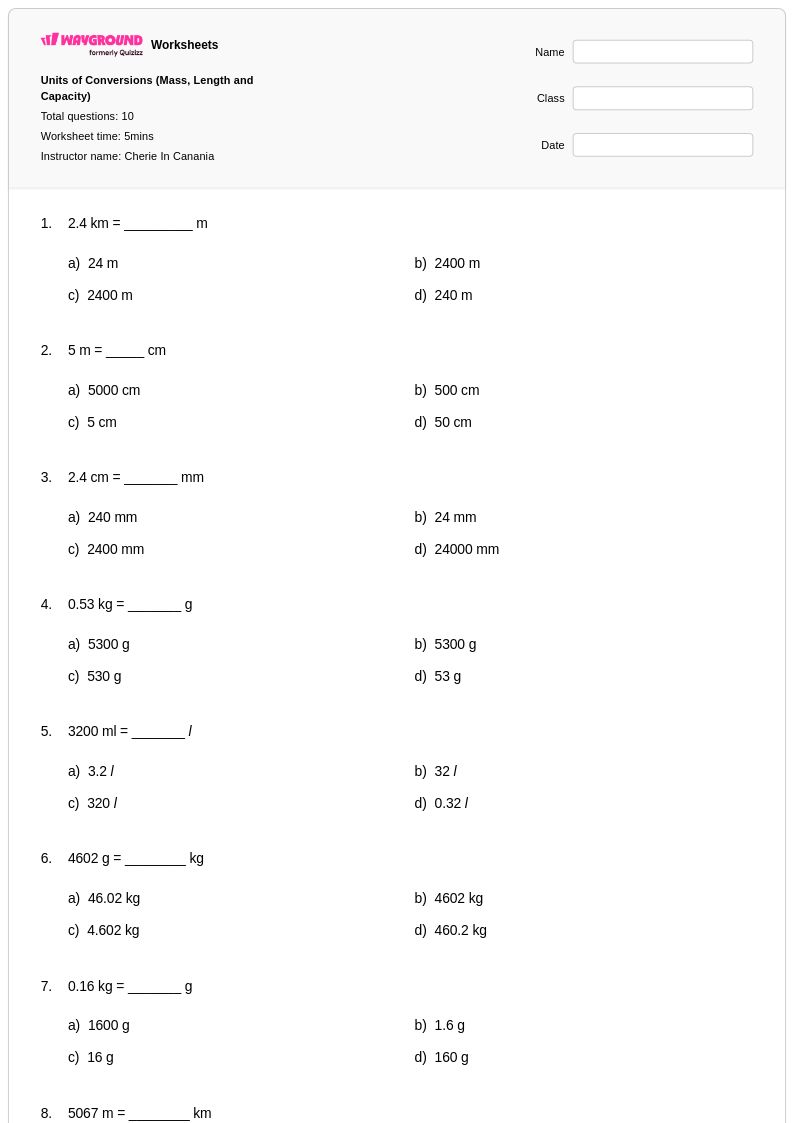
10Q
6th - 7th
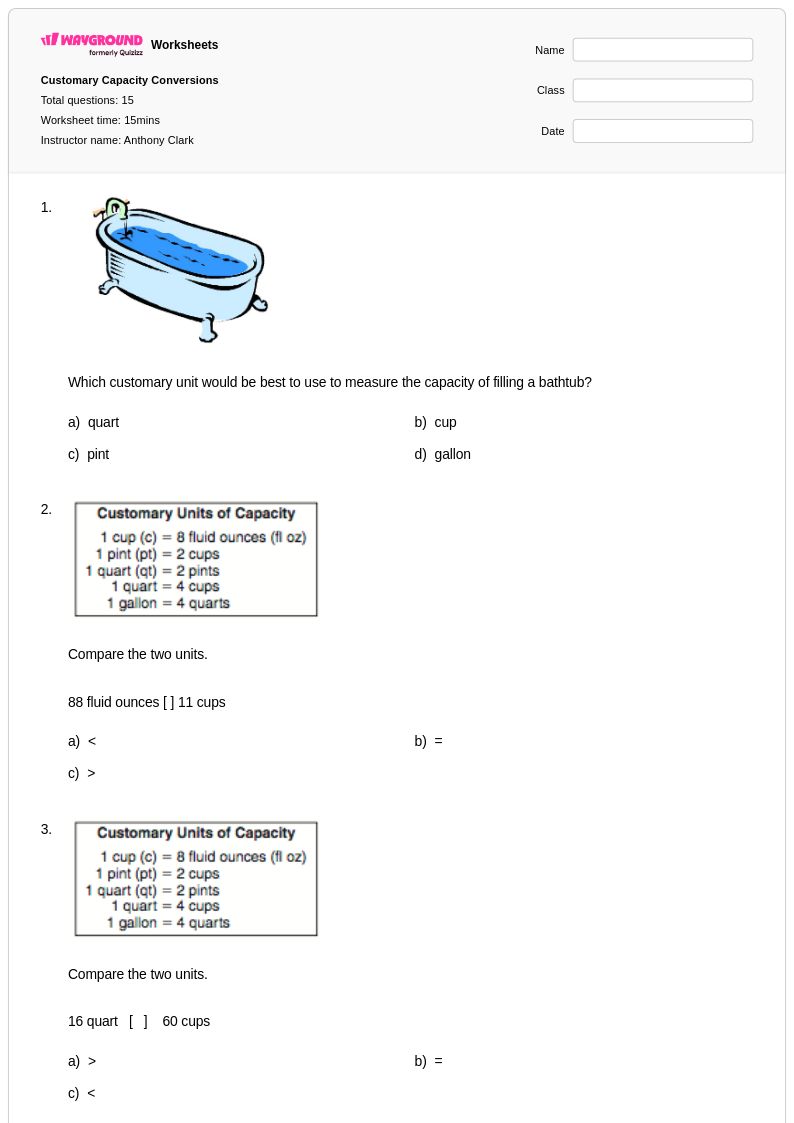
15Q
5th - Uni
Explorar Capacity Conversion hojas de trabajo por grados
Explore otras hojas de trabajo de materias para class 7
Explore printable Capacity Conversion worksheets for Class 7
Capacity conversion worksheets for Class 7 students available through Wayground (formerly Quizizz) provide comprehensive practice with converting between different units of liquid measurement within both metric and customary systems. These expertly designed resources strengthen students' understanding of relationships between units such as liters and milliliters, gallons and quarts, and cups and fluid ounces, while building fluency with conversion factors and proportional reasoning. Each worksheet includes carefully sequenced practice problems that progress from basic conversions to more complex multi-step scenarios, complete with detailed answer keys that support both independent learning and classroom instruction. Teachers can access these materials as free printables in convenient pdf format, making them ideal for homework assignments, classroom practice, or assessment preparation.
Wayground (formerly Quizizz) empowers educators with millions of teacher-created capacity conversion resources specifically aligned to Class 7 mathematics standards and learning objectives. The platform's robust search and filtering capabilities allow teachers to quickly locate worksheets that match their students' specific skill levels and learning needs, while built-in differentiation tools enable seamless customization for remediation or enrichment activities. These capacity conversion materials are available in both printable pdf format for traditional paper-based instruction and digital formats for technology-integrated classrooms, providing maximum flexibility for lesson planning and skill practice. Teachers can efficiently organize their measurement instruction by accessing standards-aligned content that supports systematic skill development and helps students master the critical mathematical concepts needed for success in higher-level coursework.