
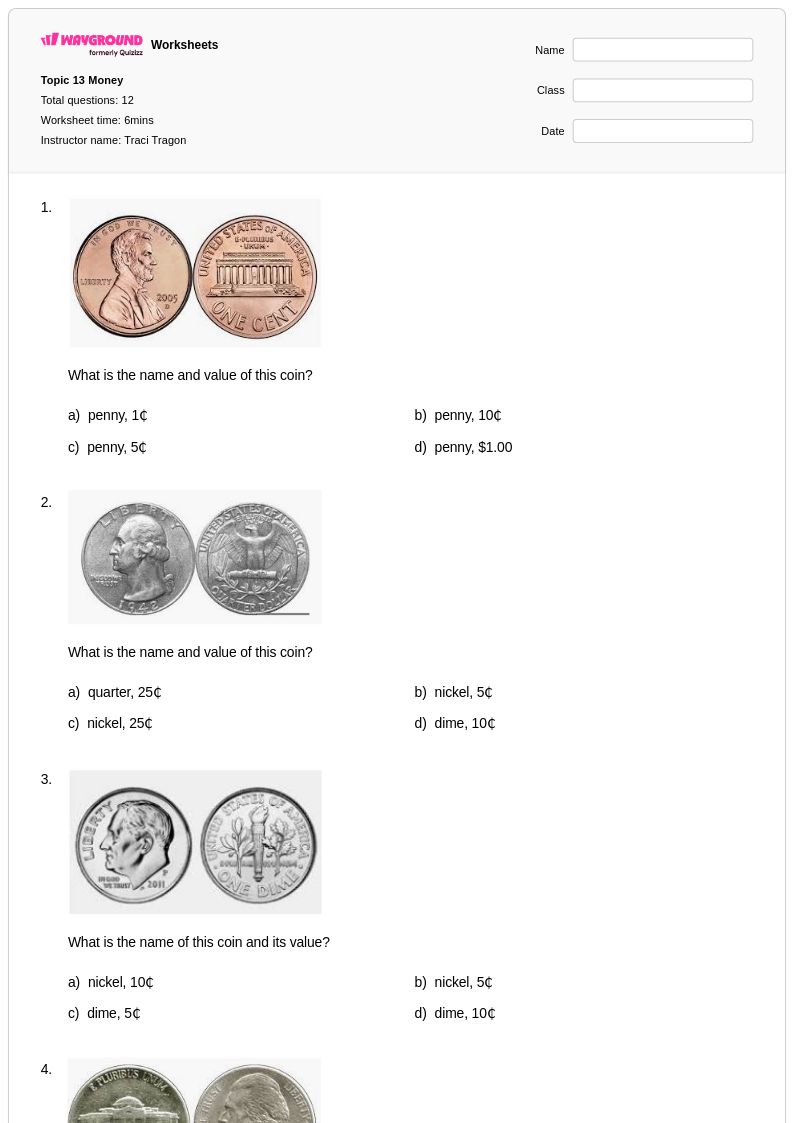
12 Q
1st
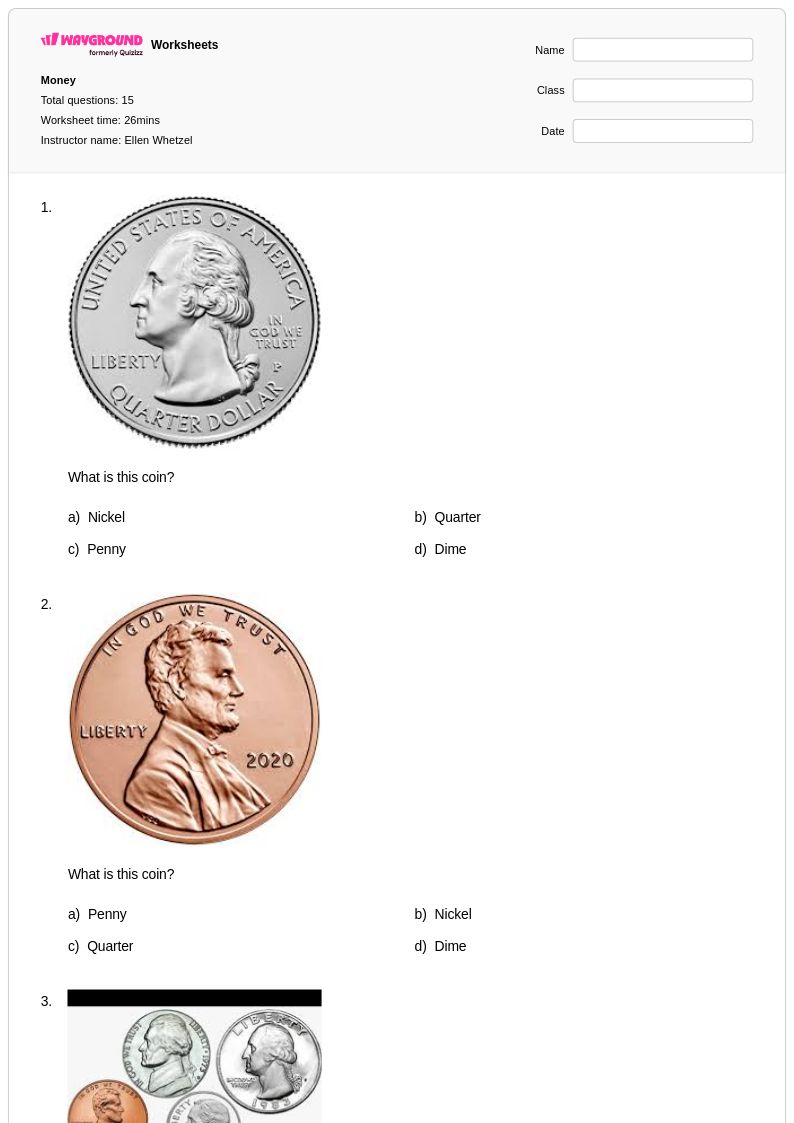
15 Q
1st - 12th
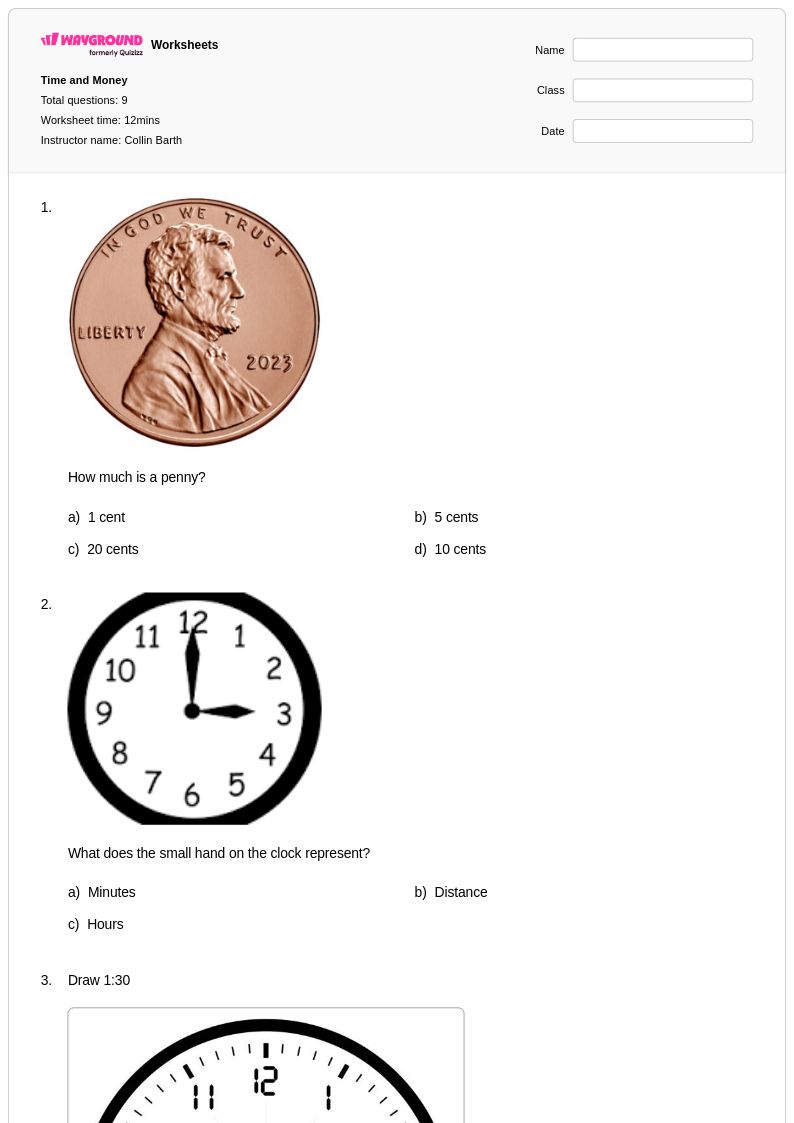
9 Q
1st
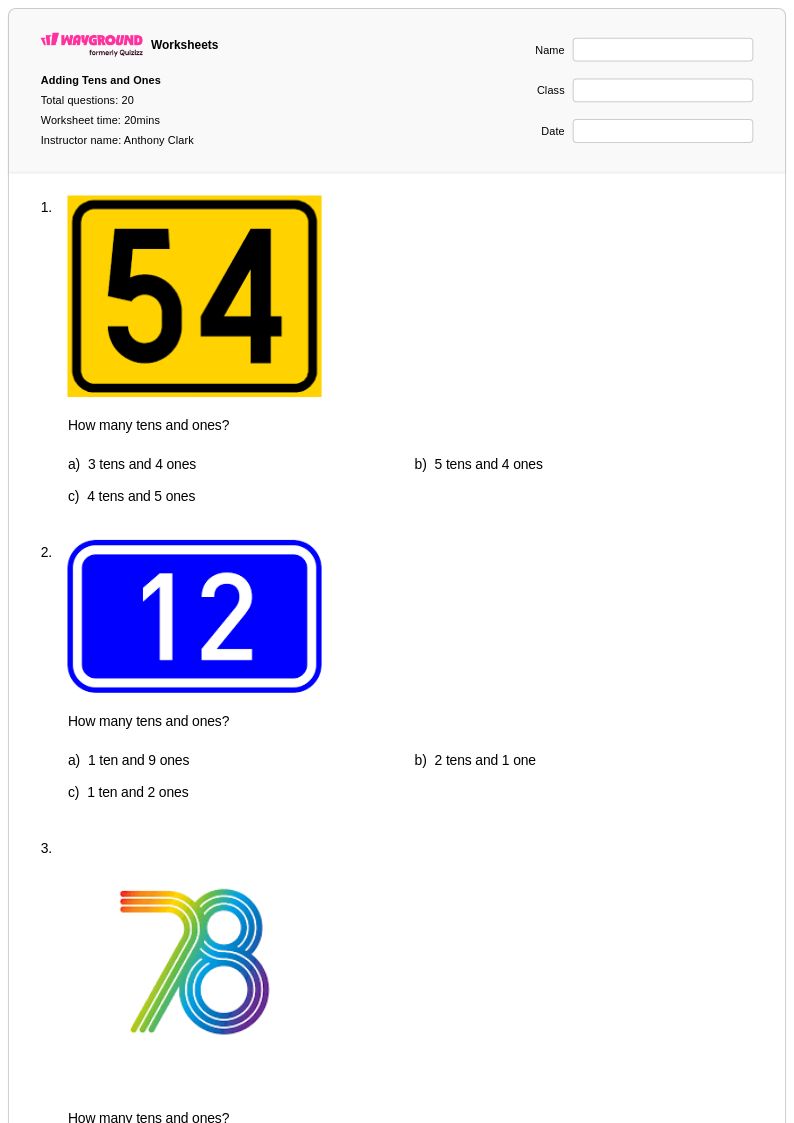
20 Q
1st - Uni
8 Q
1st
7 Q
1st
6 Q
1st
9 Q
1st
10 Q
1st
10 Q
1st - 5th
20 Q
1st - Uni
20 Q
1st - Uni
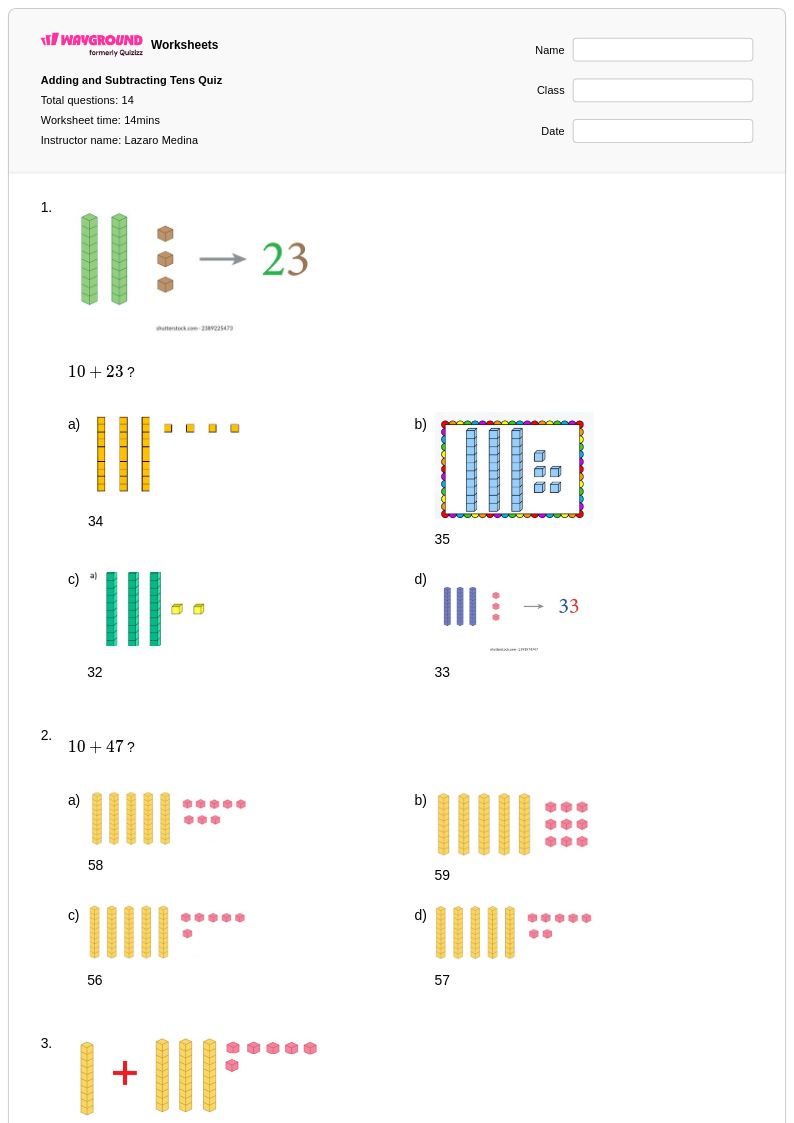
14 Q
1st
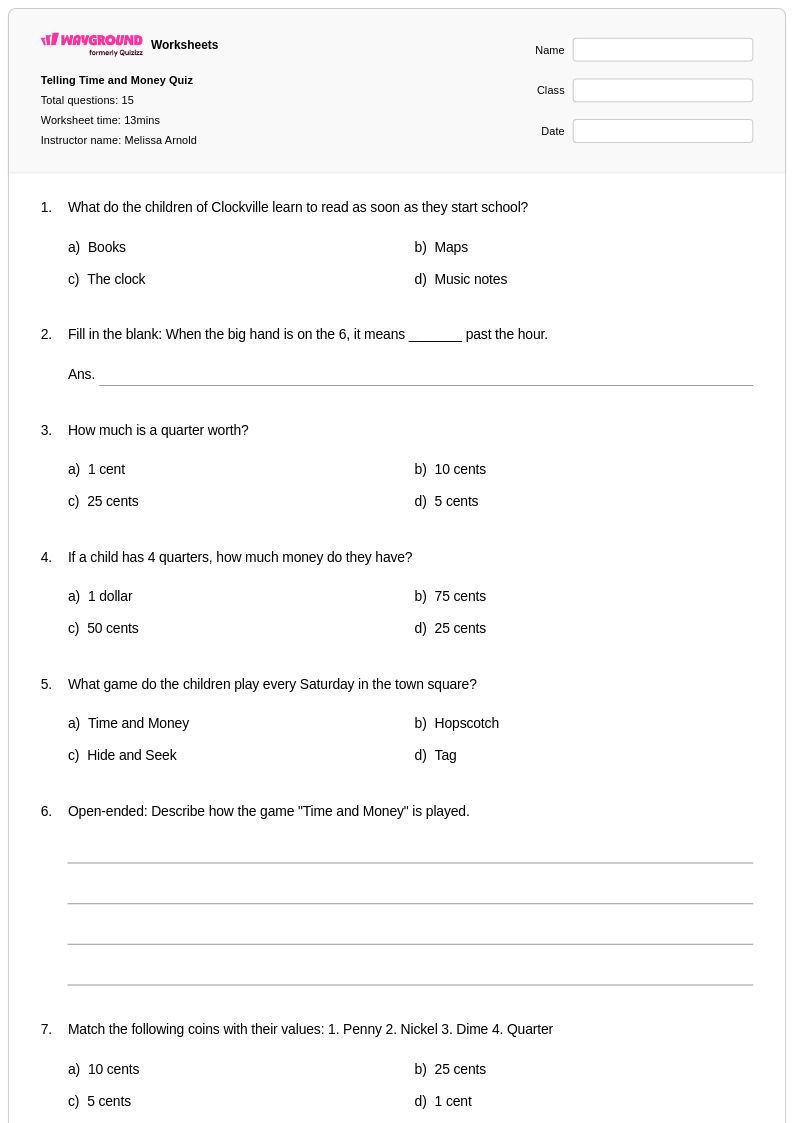
15 Q
1st
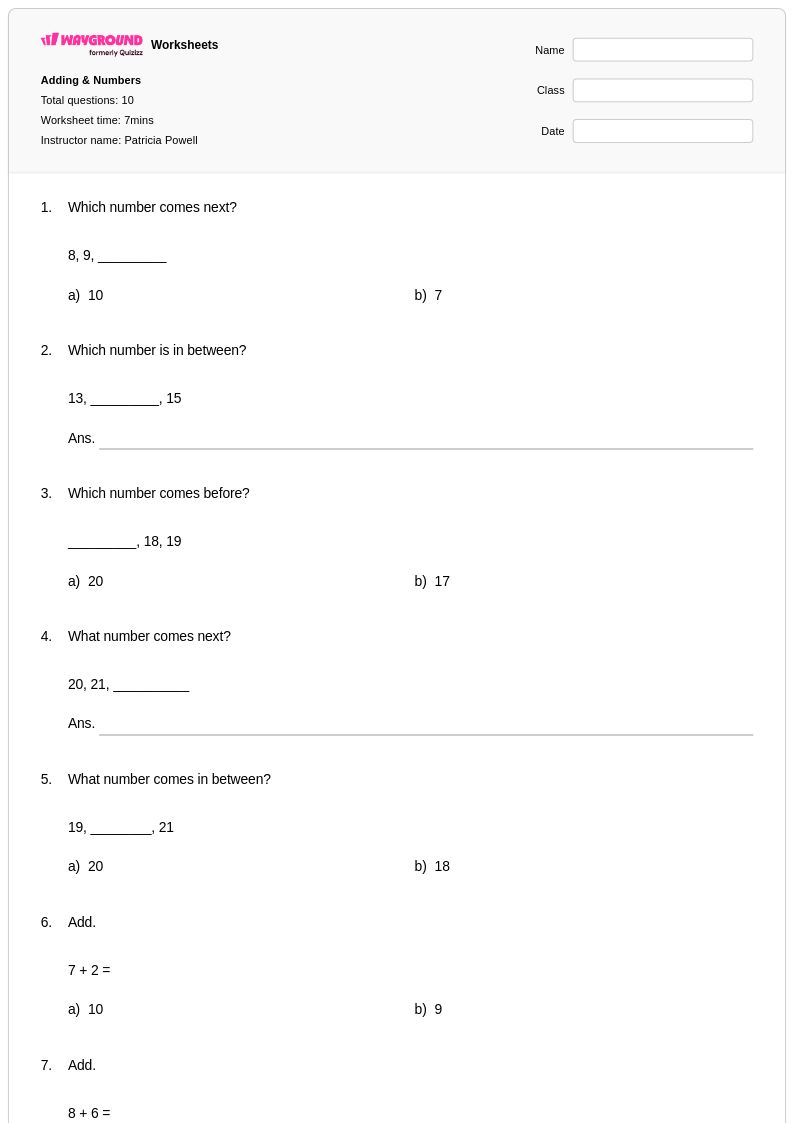
10 Q
1st
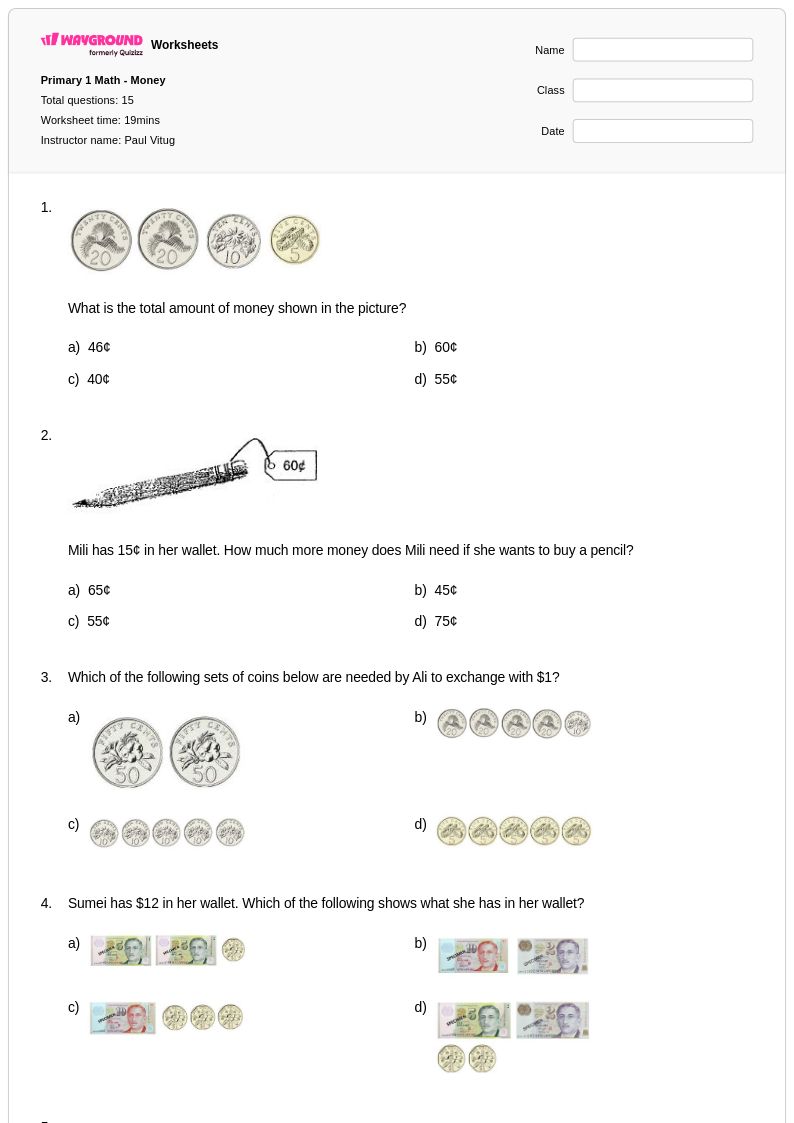
15 Q
1st
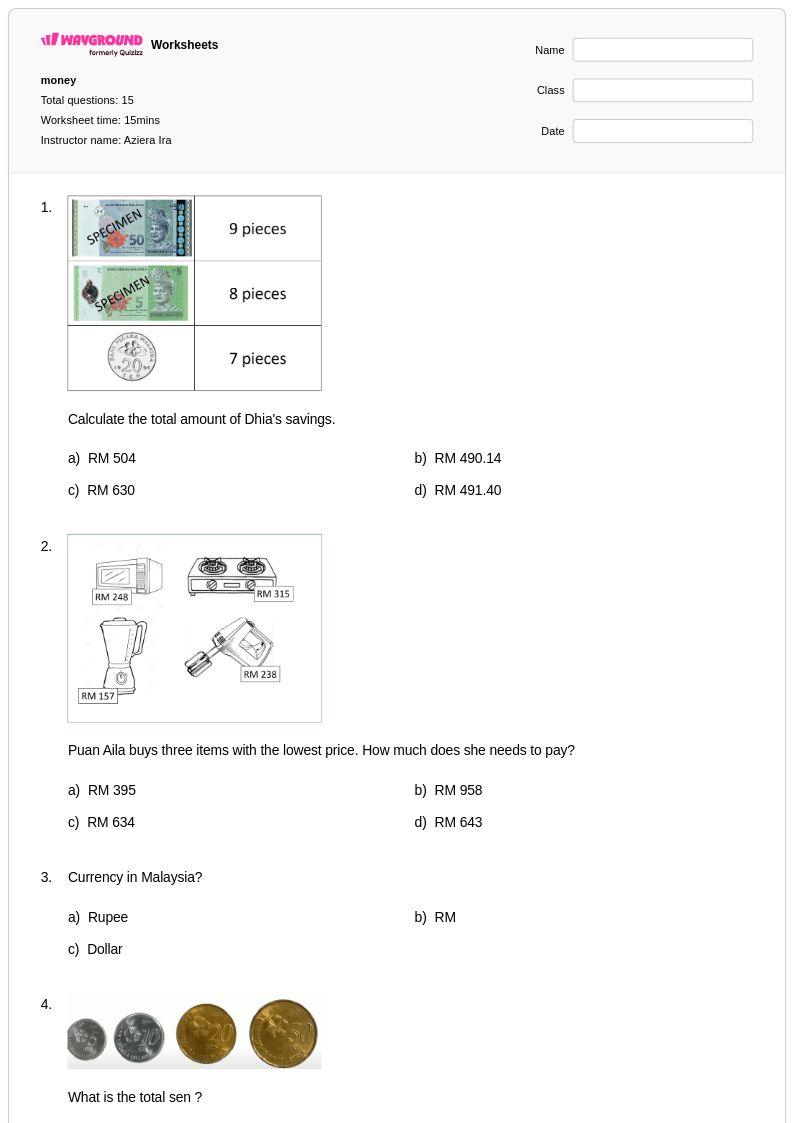
15 Q
1st
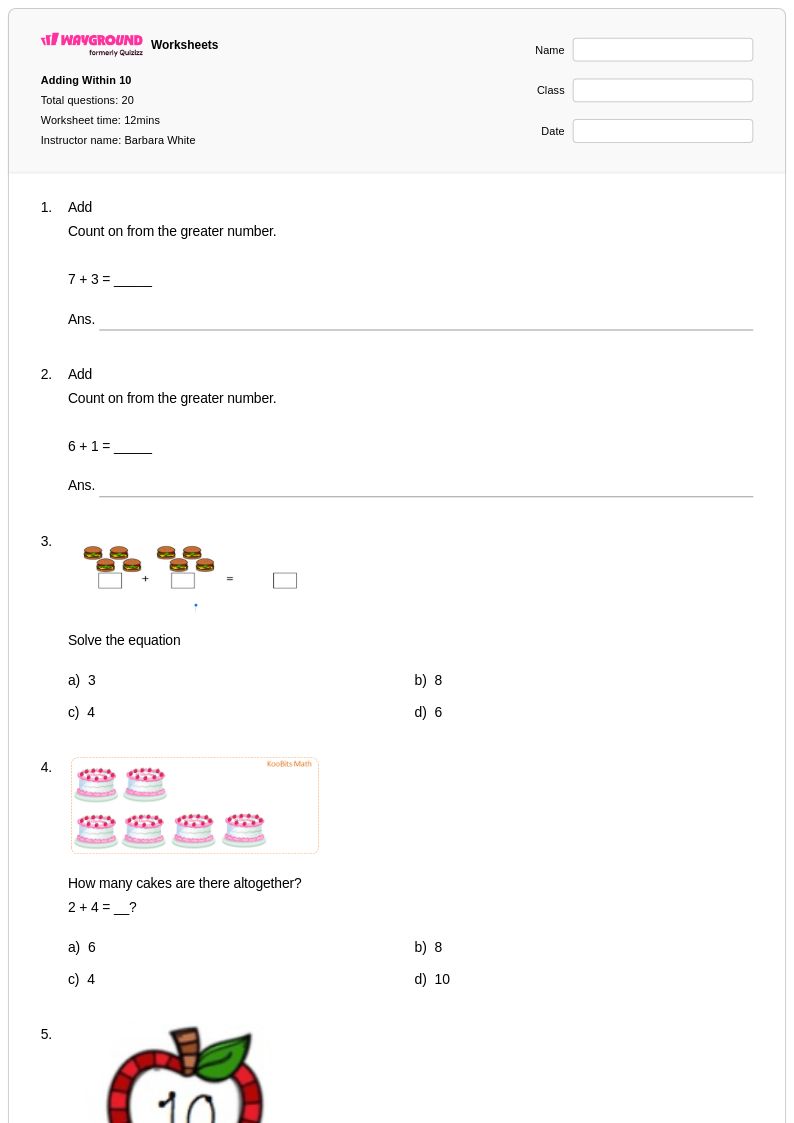
20 Q
1st
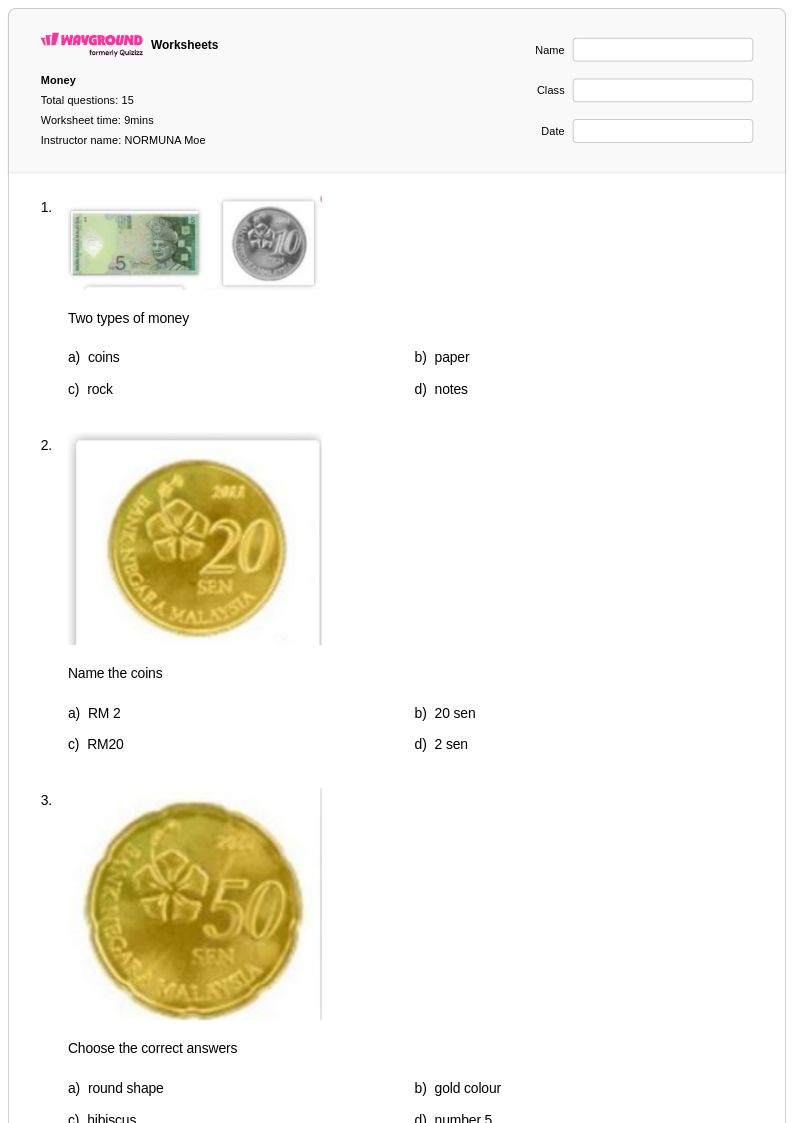
15 Q
1st
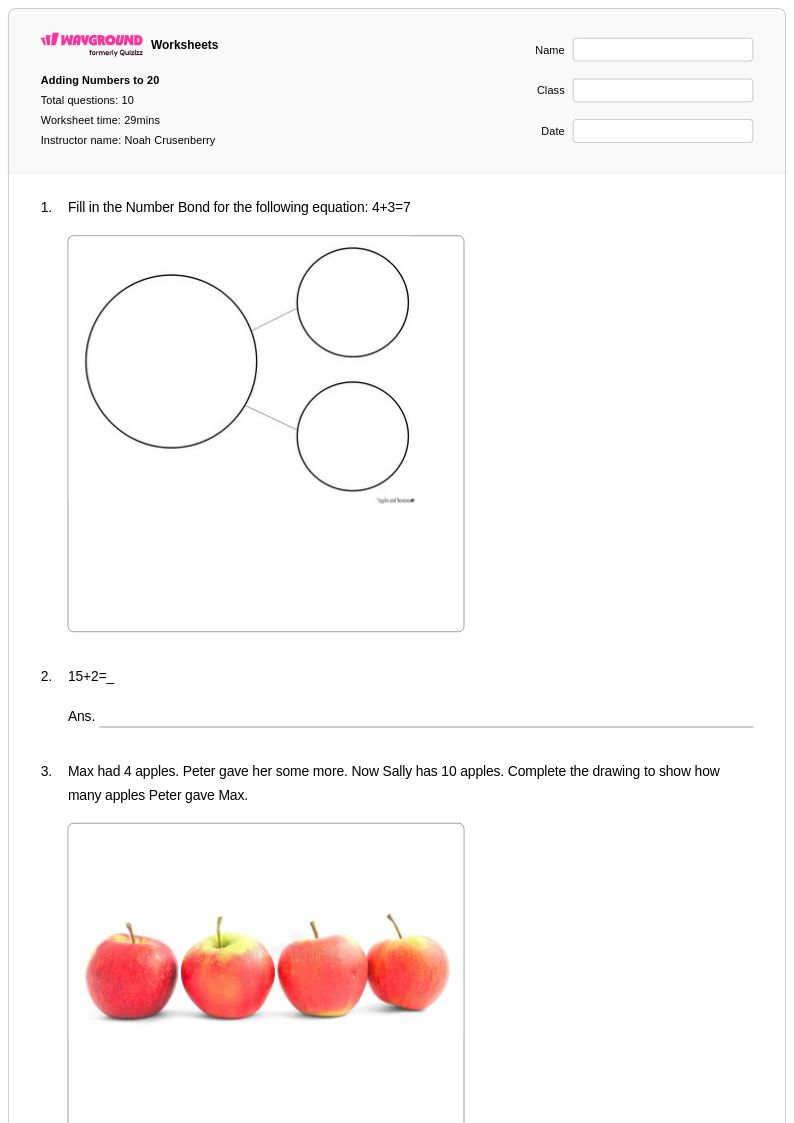
10 Q
1st
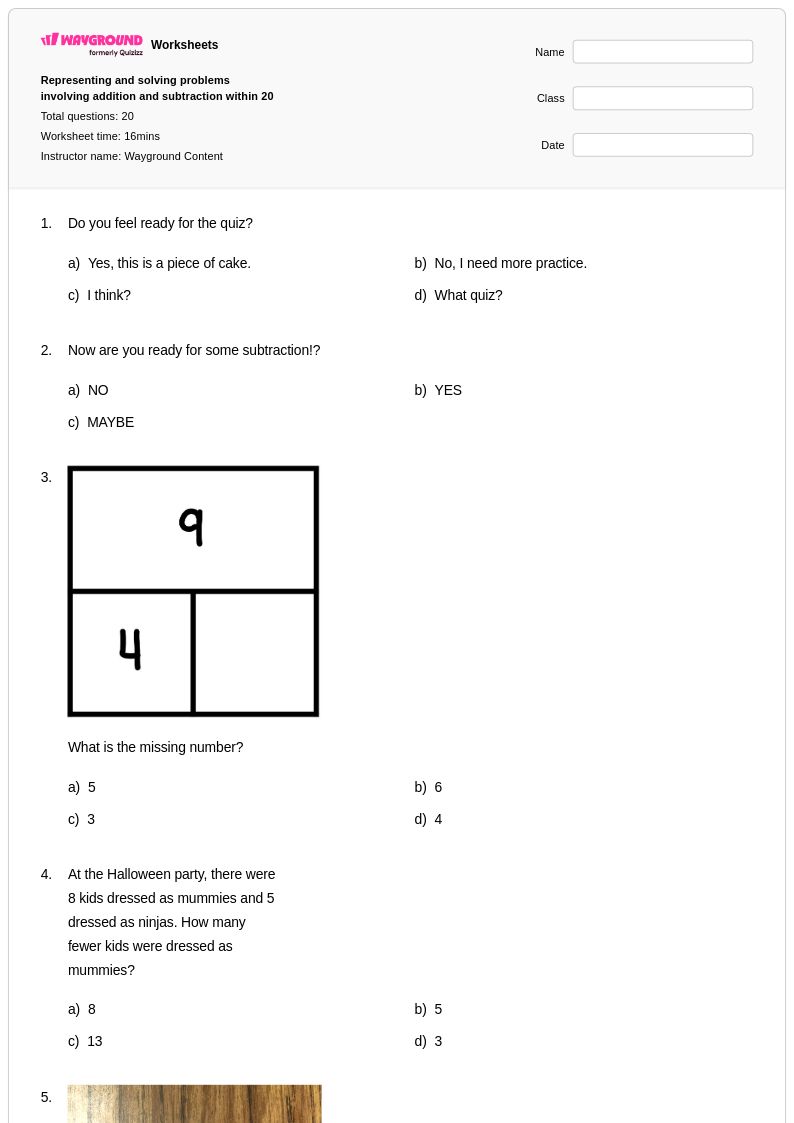
20 Q
1st
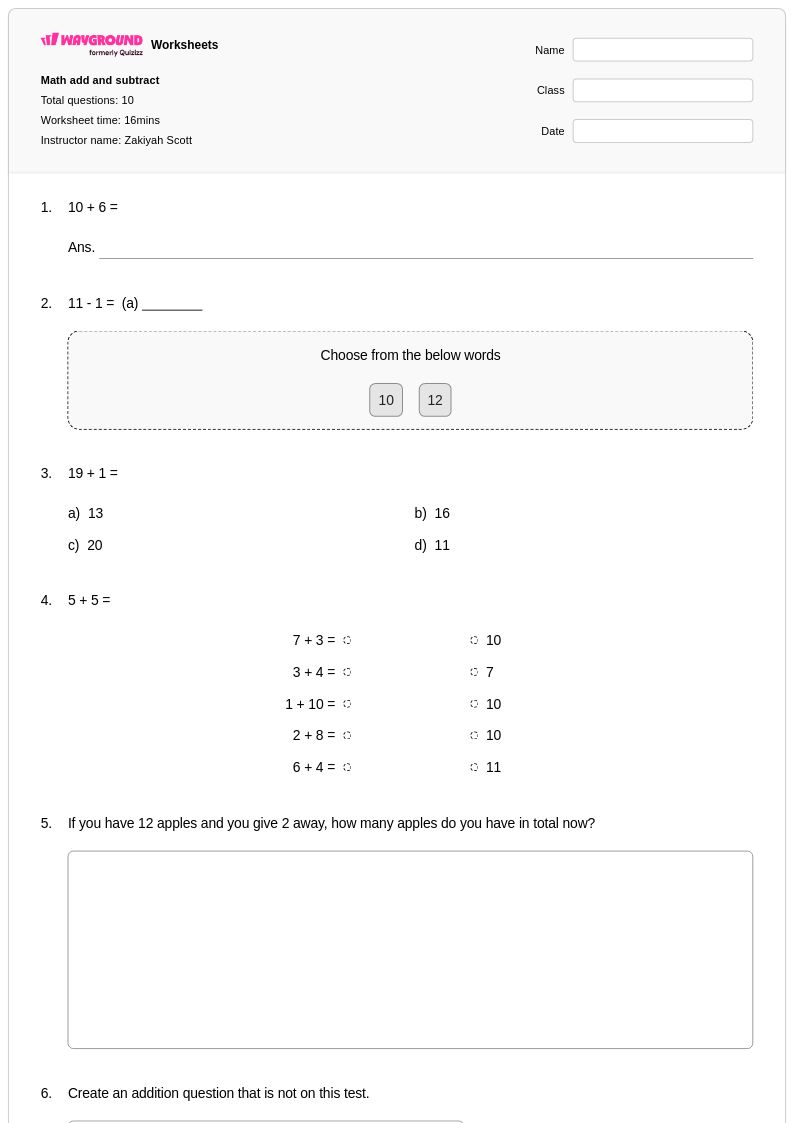
10 Q
1st
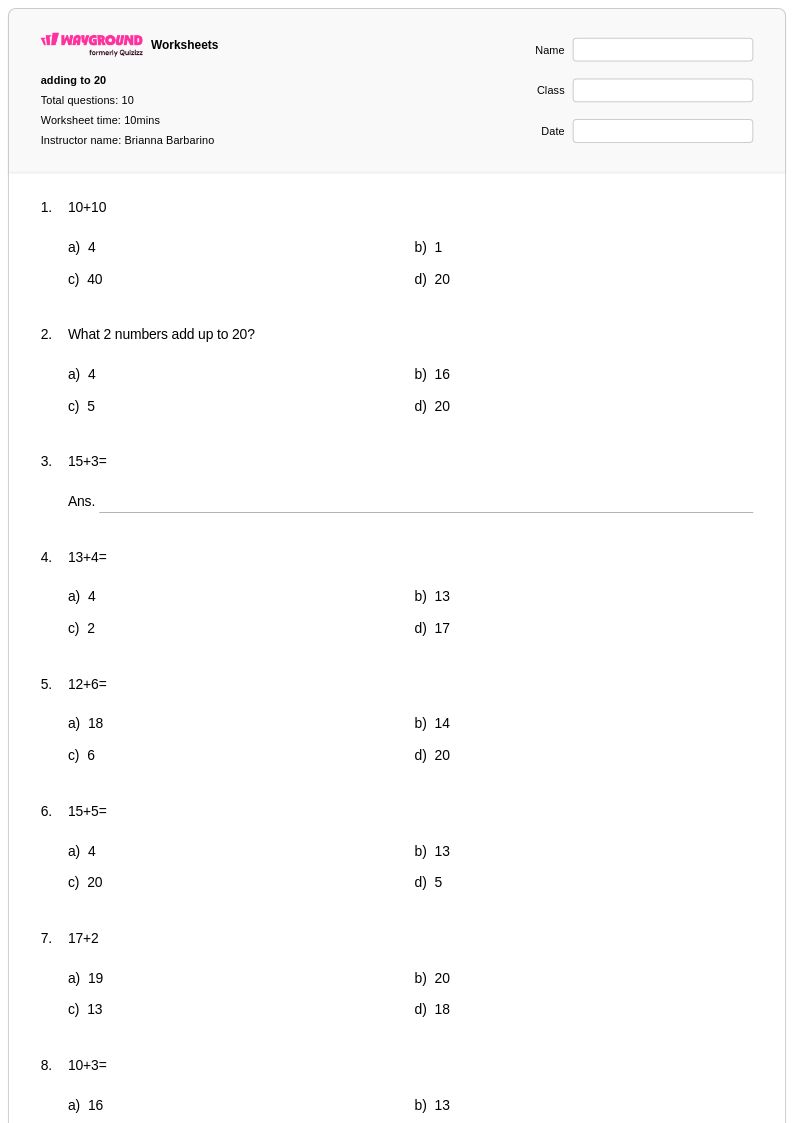
10 Q
1st
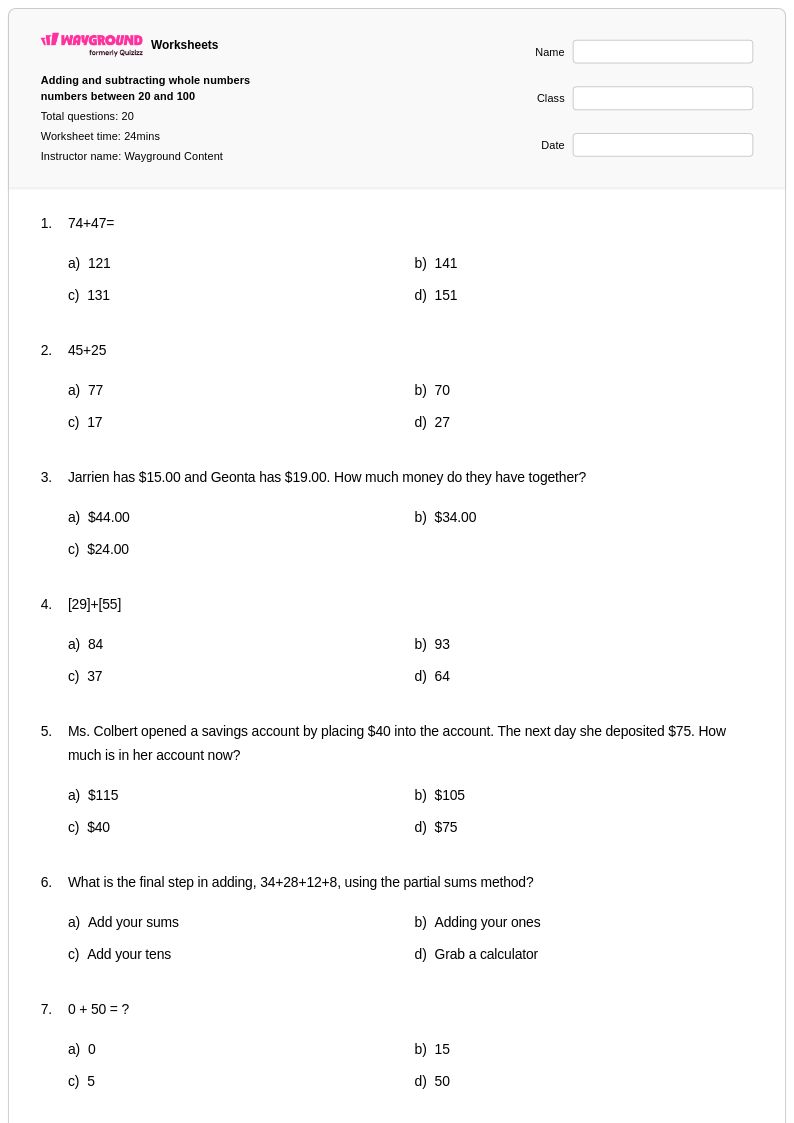
20 Q
1st - 2nd
Explore Other Subject Worksheets for class 1
Explore printable Adding Money worksheets for Class 1
Adding money worksheets for Class 1 students available through Wayground (formerly Quizizz) provide essential foundation-building practice for young learners developing their understanding of currency and basic arithmetic operations. These carefully designed printables focus on fundamental skills such as counting coins, recognizing different denominations, and performing simple addition problems using pennies, nickels, dimes, and quarters. Each worksheet collection includes comprehensive answer keys and offers free access to practice problems that progressively build students' confidence in handling money calculations. The pdf format ensures easy classroom distribution while maintaining high-quality visual representations of coins and currency that help first-grade students make concrete connections between abstract numbers and real-world monetary values.
Wayground (formerly Quizizz) empowers educators with an extensive library of millions of teacher-created resources specifically tailored for Class 1 adding money instruction, featuring robust search and filtering capabilities that allow teachers to quickly locate materials aligned with specific learning standards and student needs. The platform's differentiation tools enable teachers to customize worksheets for various skill levels within their classrooms, while flexible formatting options provide both printable pdf versions for traditional paper-based practice and digital formats for interactive learning experiences. These comprehensive features streamline lesson planning by offering immediate access to remediation materials for struggling students, enrichment activities for advanced learners, and targeted skill practice opportunities that support systematic progression through essential money-handling competencies that form the foundation for more complex financial literacy concepts in later grades.
FAQs
How do I teach adding money to first graders?
What exercises help Grade 1 students practice adding money?
What mistakes do first graders make when adding coins?
How can I use a Grade 1 adding money worksheet from Wayground?
How does adding money fit into the Grade 1 Common Core math progression?
How can I differentiate adding money practice for first graders?
Is adding money appropriate for Grade 1?