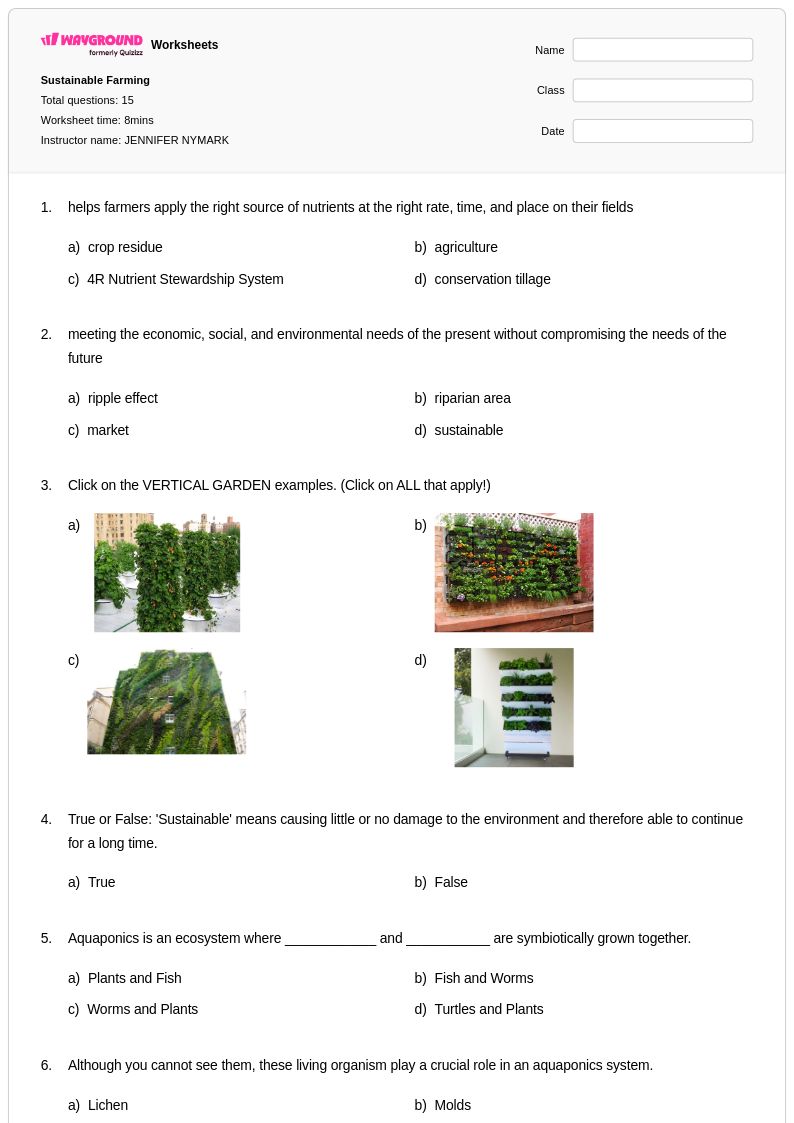
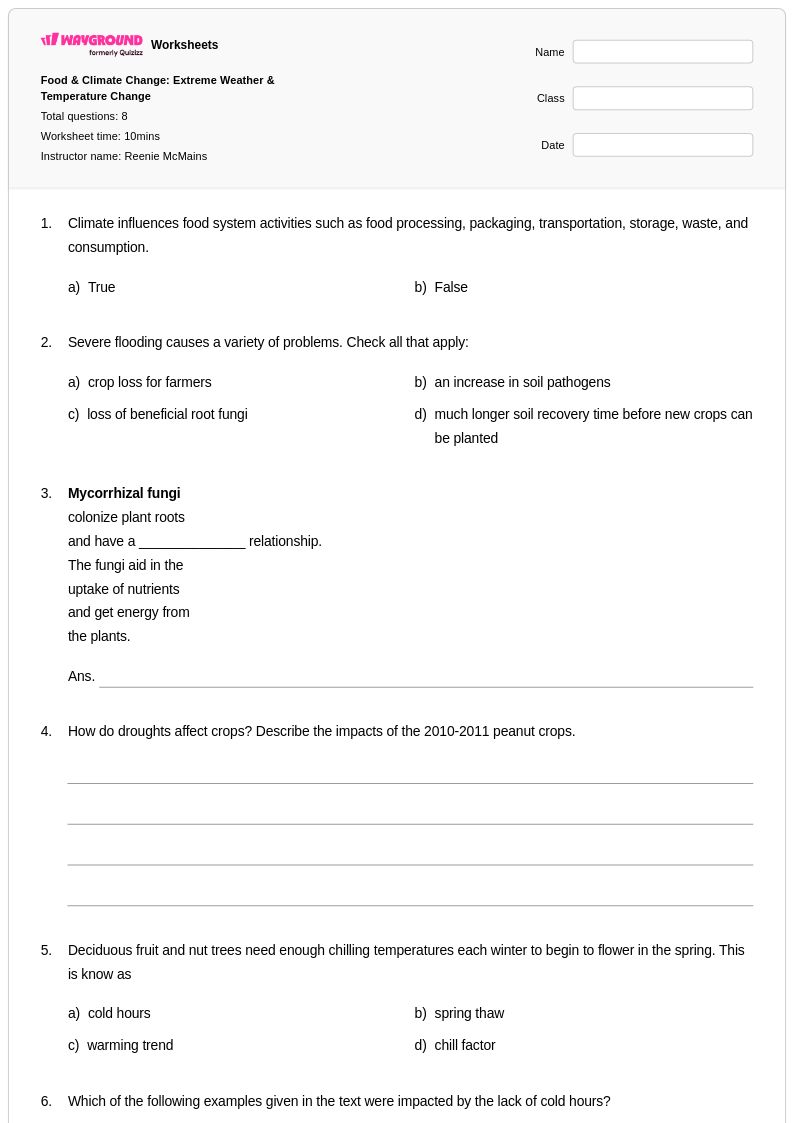
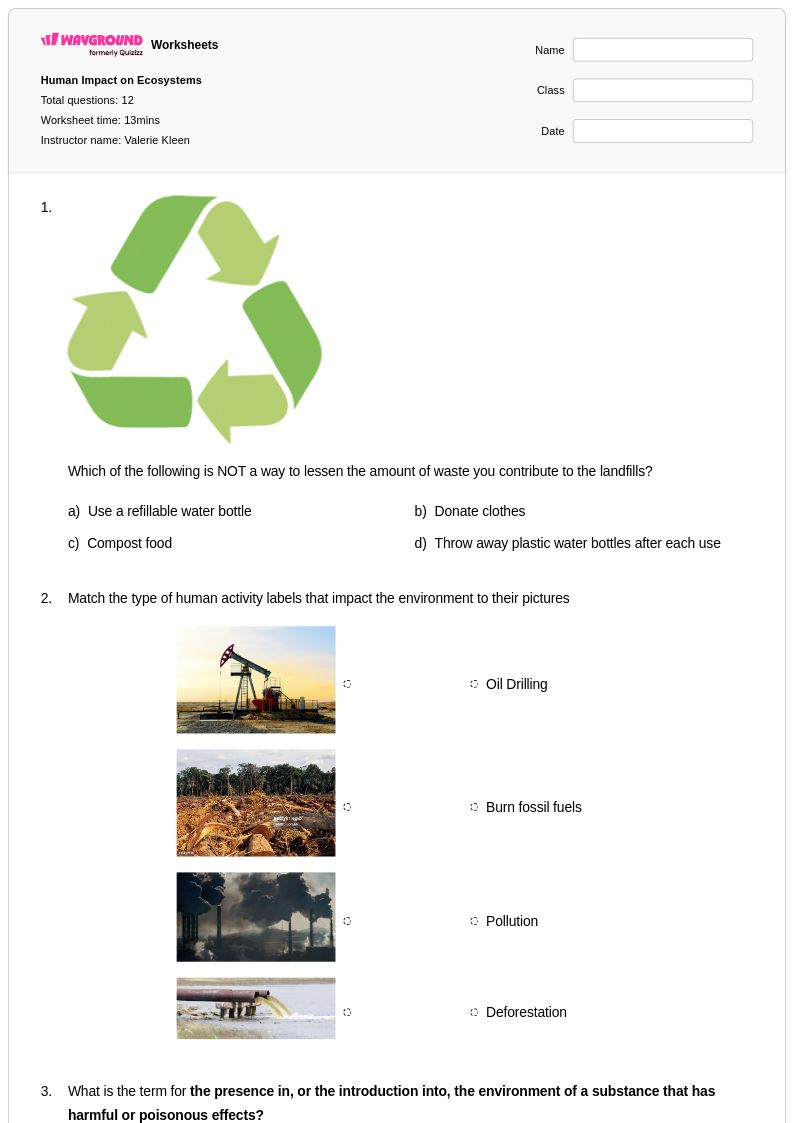
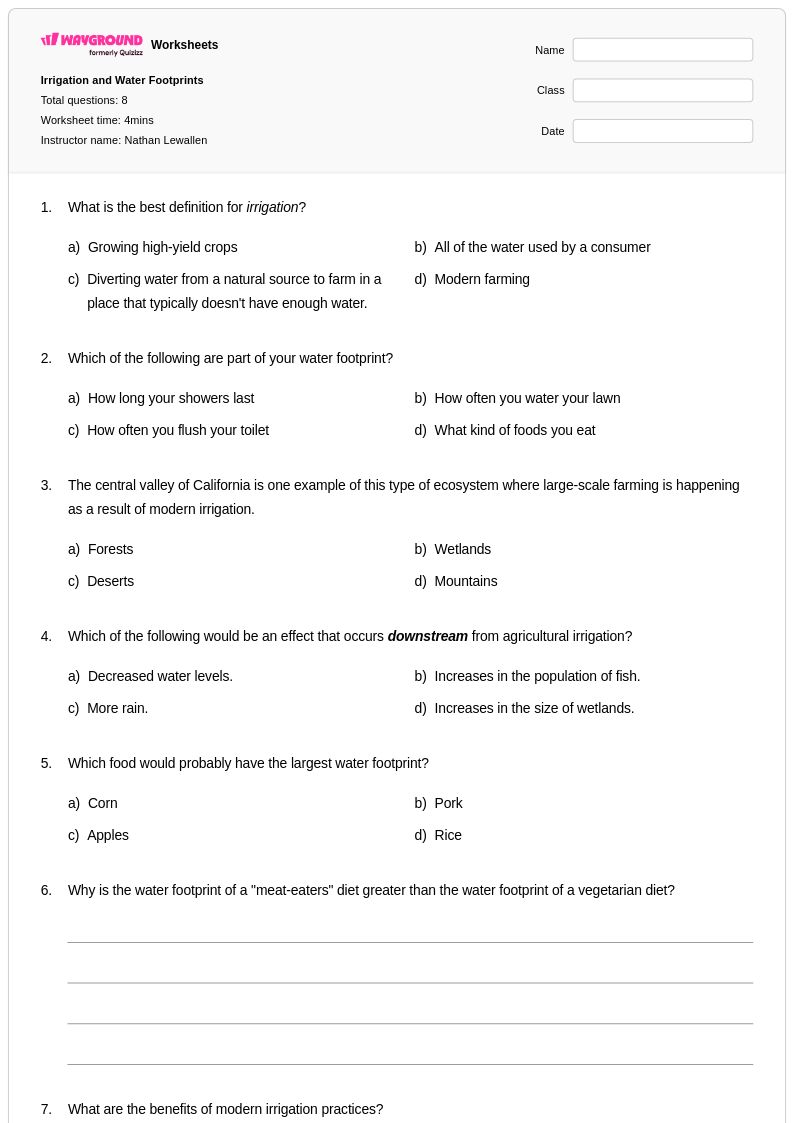
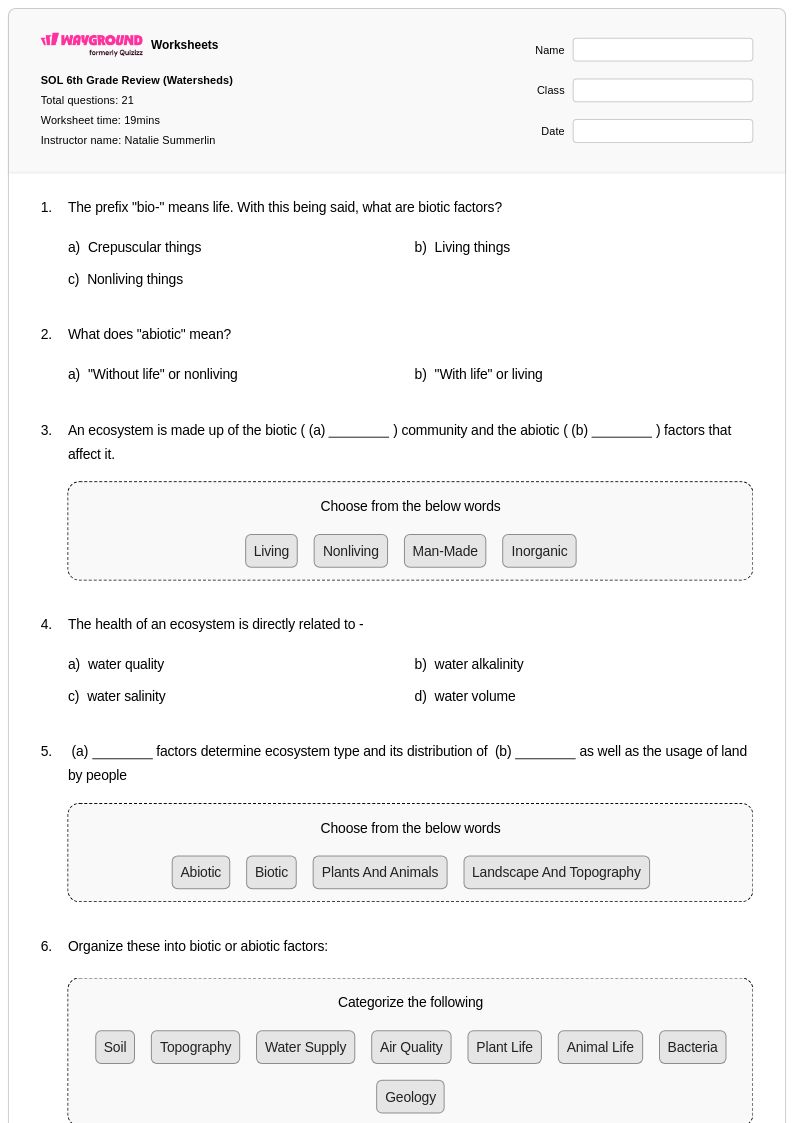
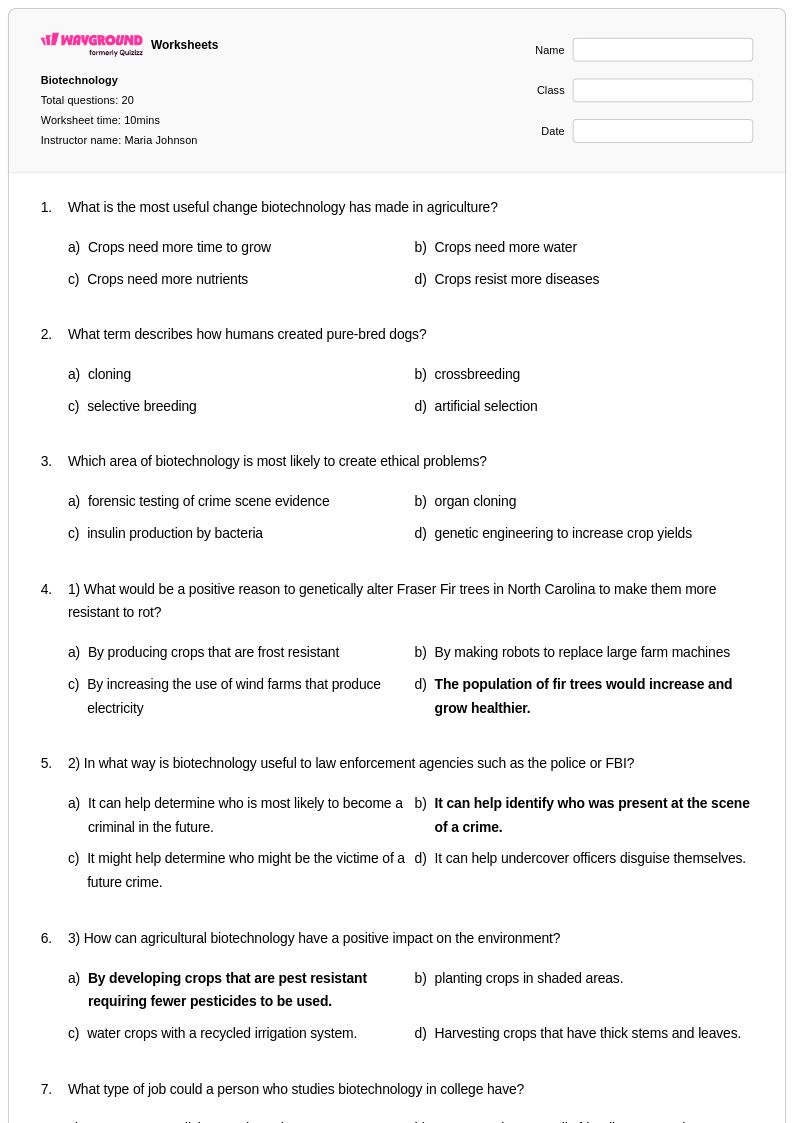
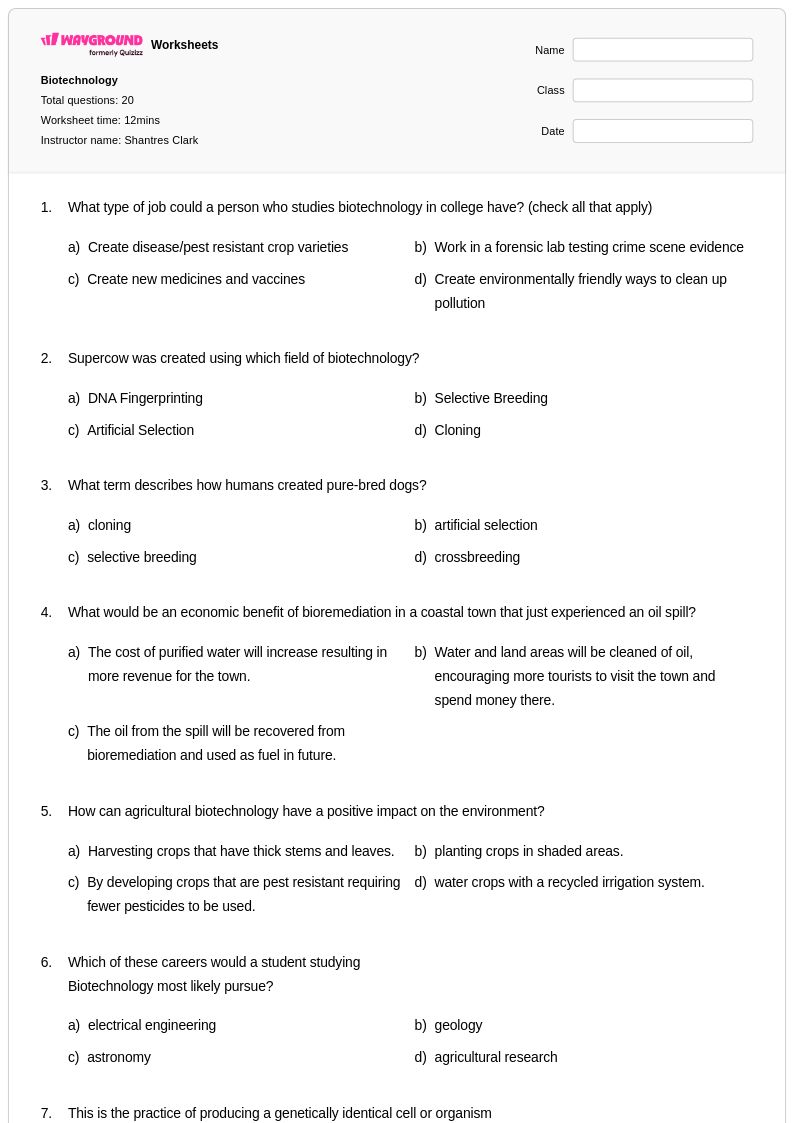
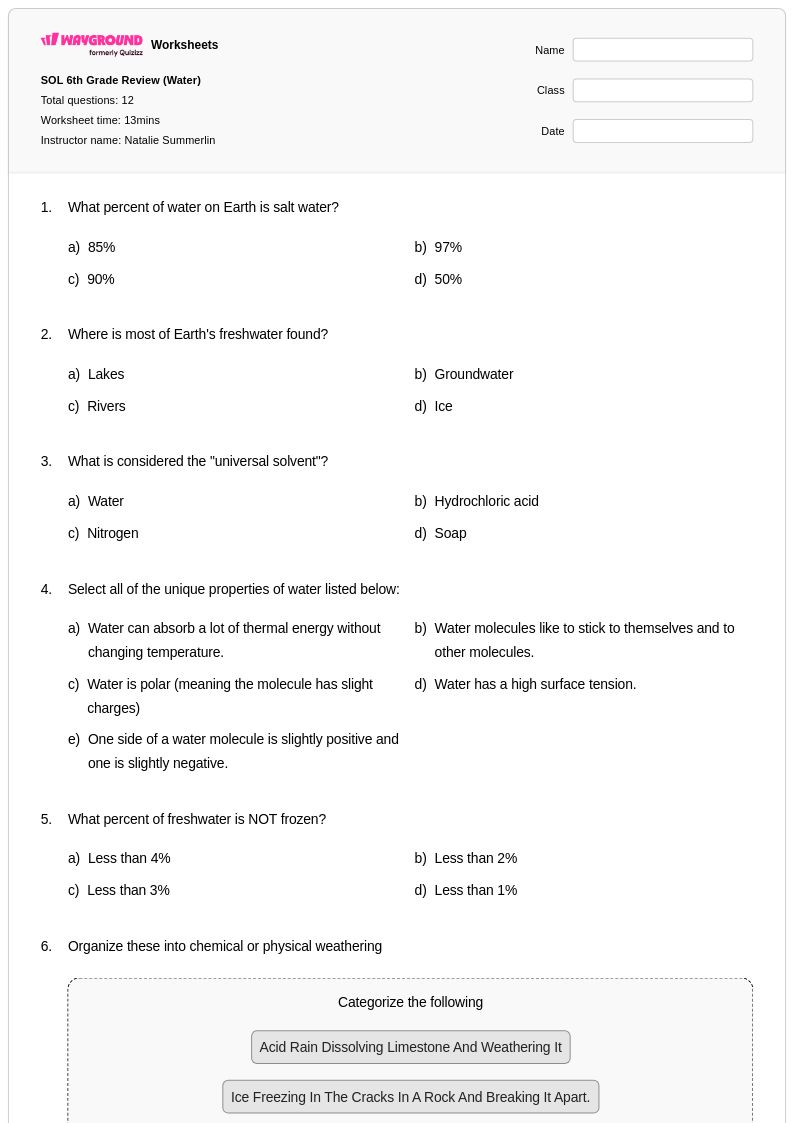
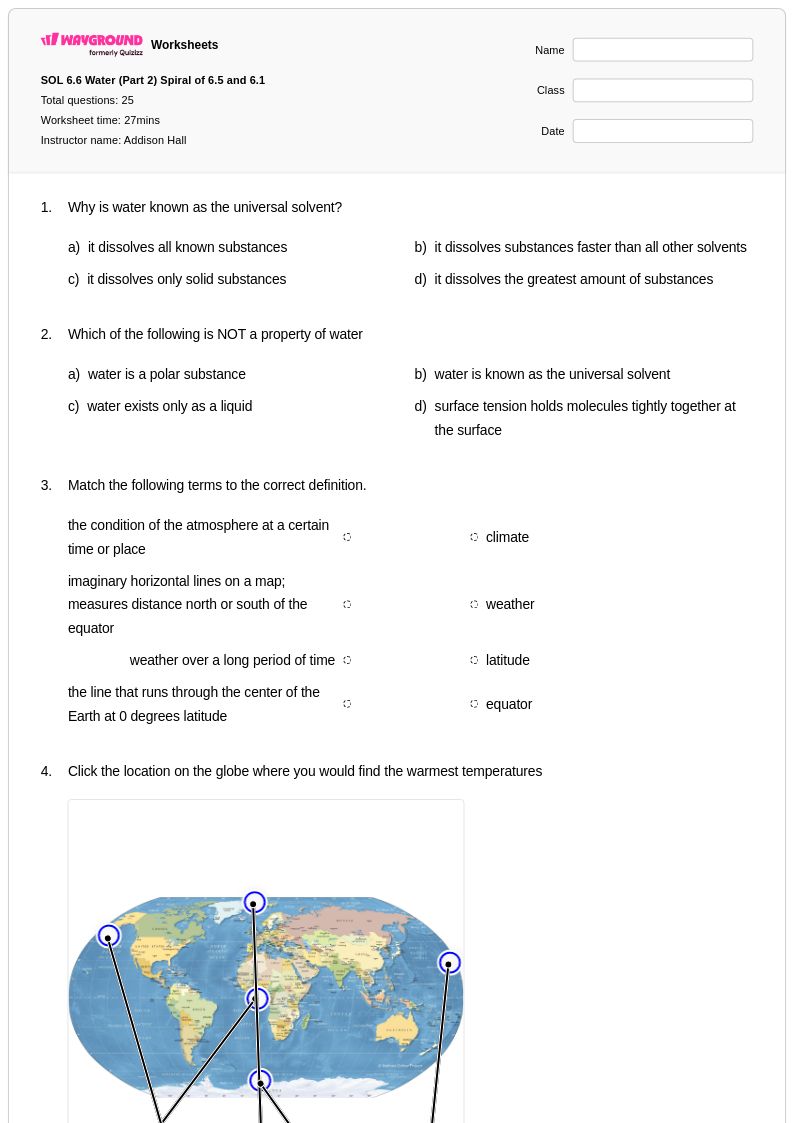
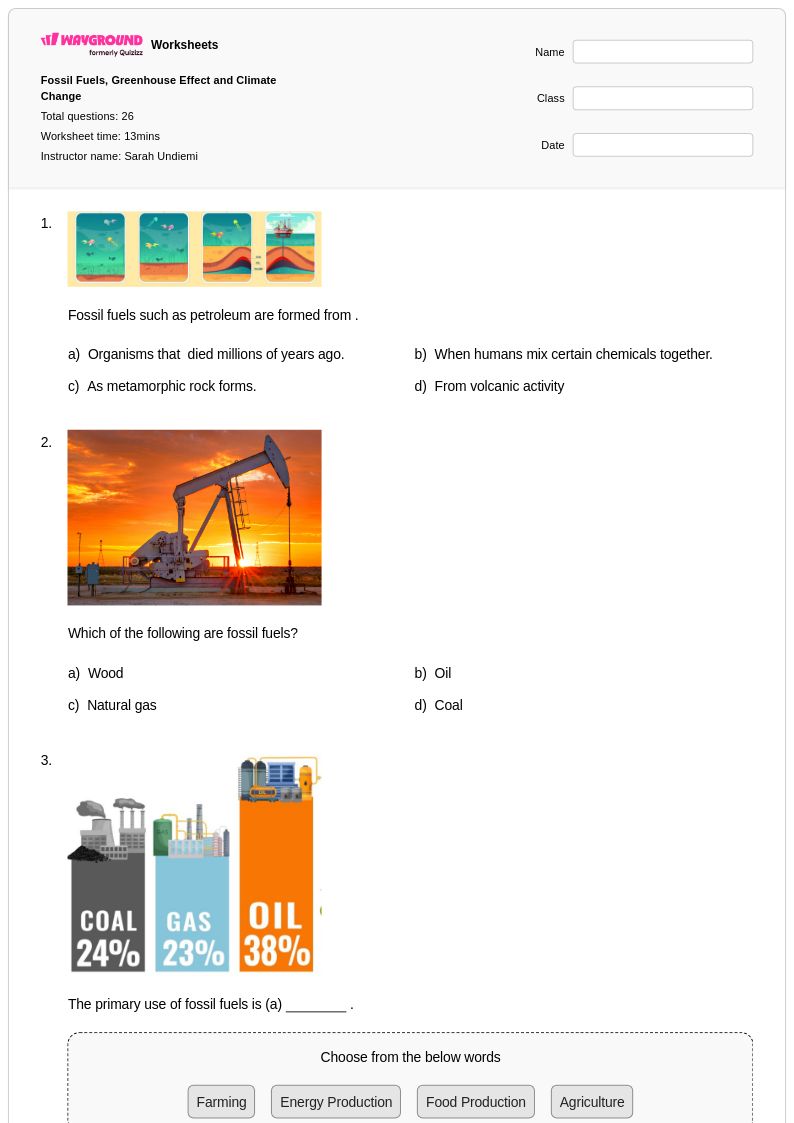
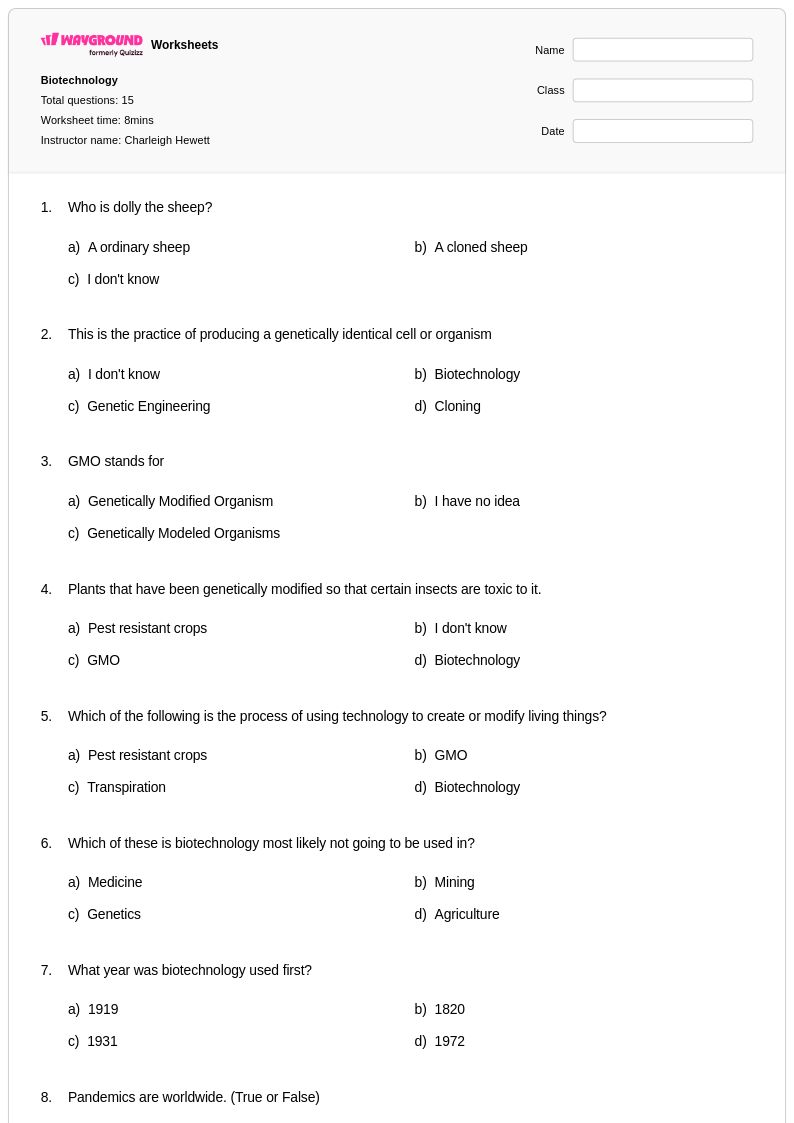
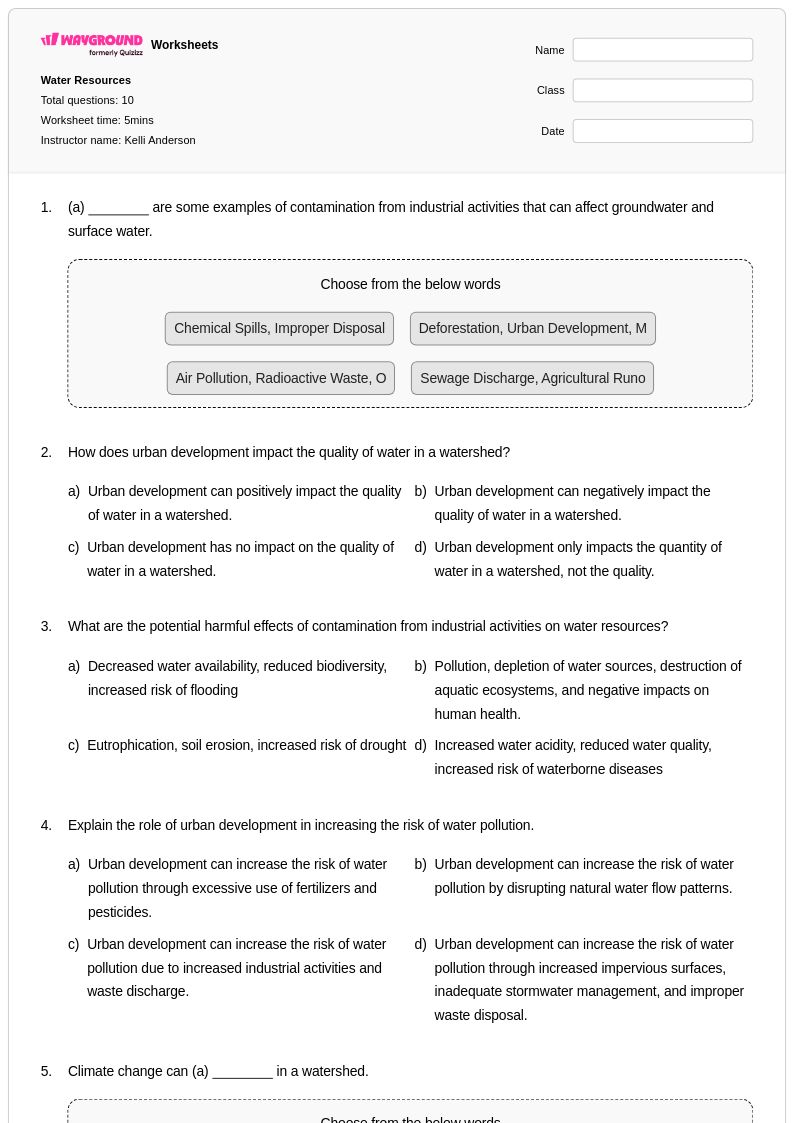
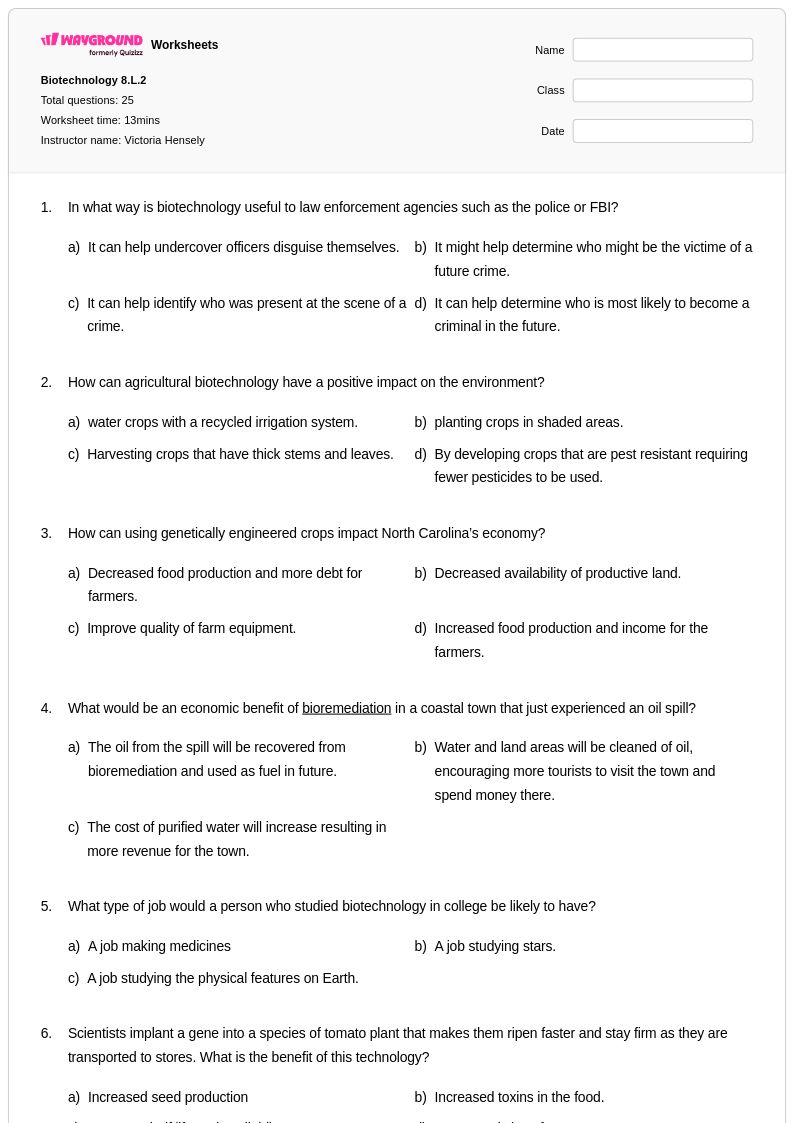
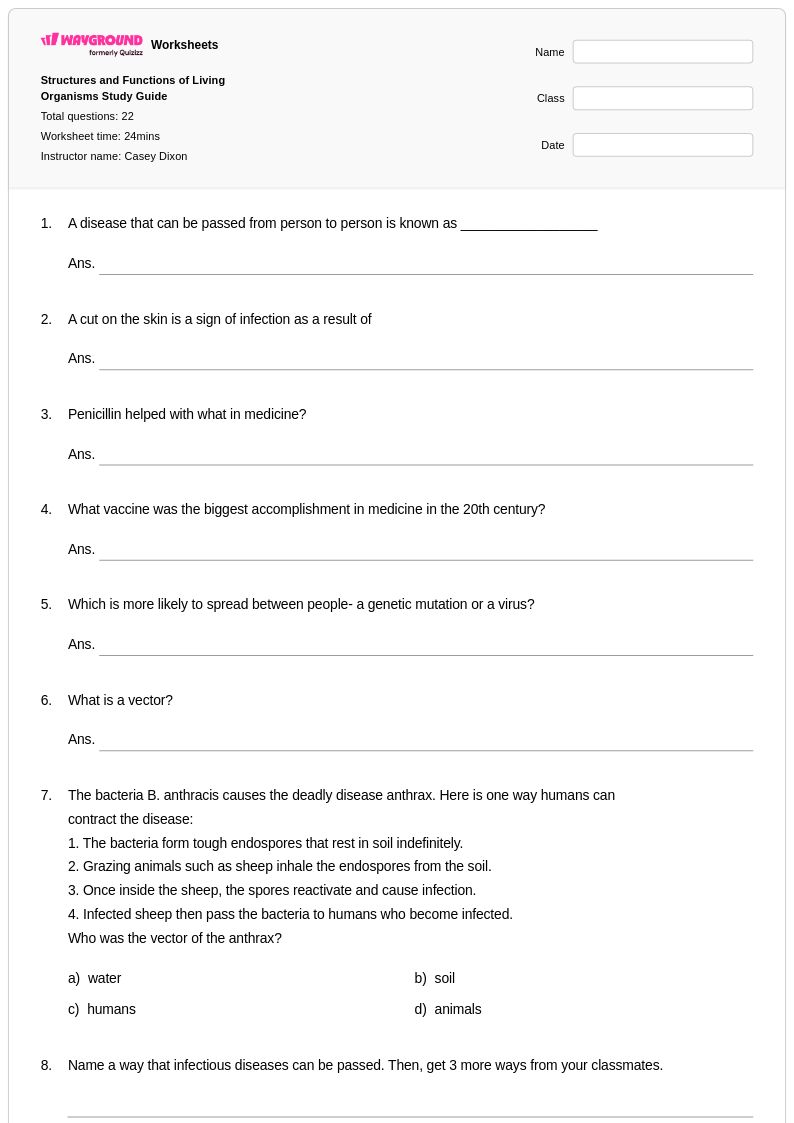
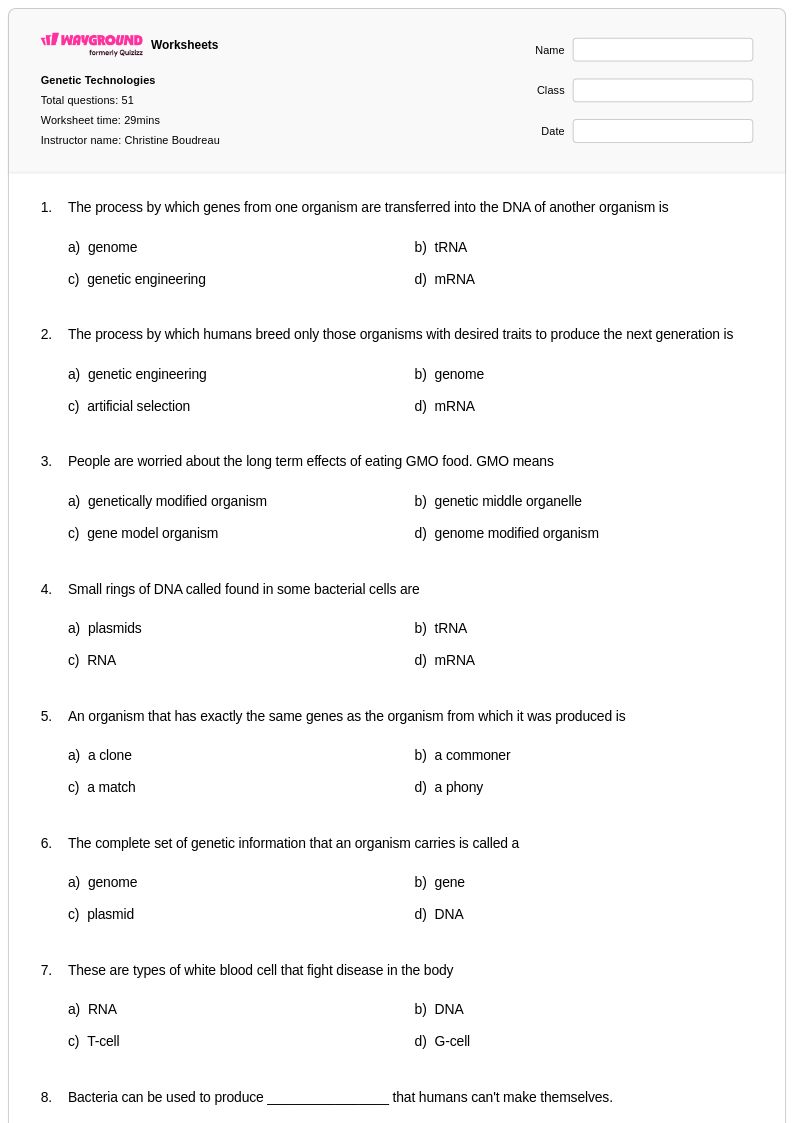
Explore Class 8 agriculture printables and free worksheets with answer keys that help students master farming practices, crop production, and sustainable agricultural methods through engaging practice problems and PDF resources.
Explore printable Agriculture worksheets for Class 8
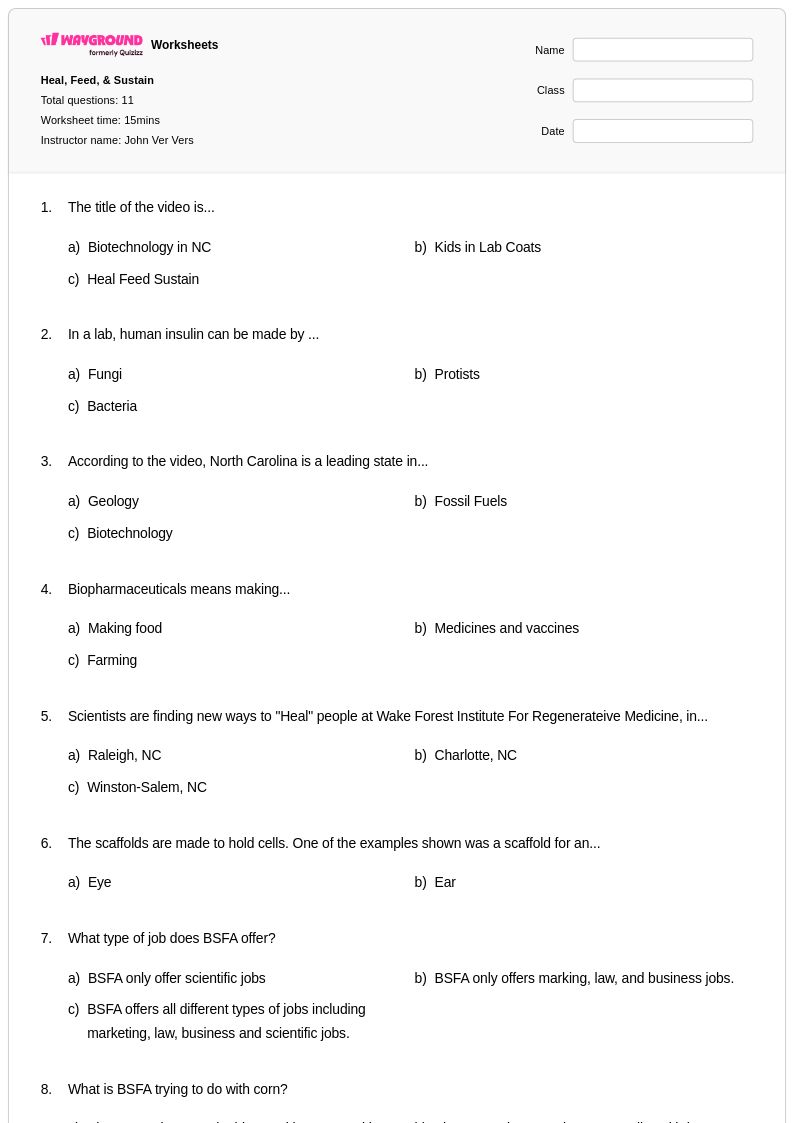
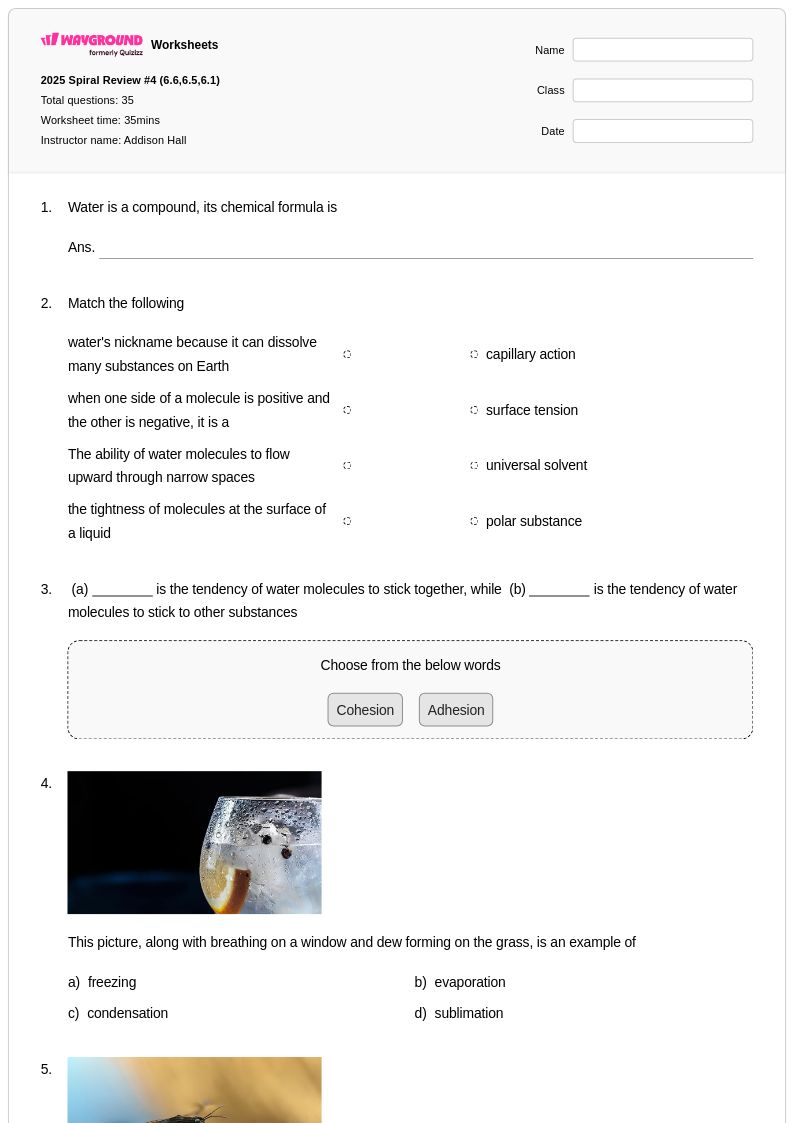
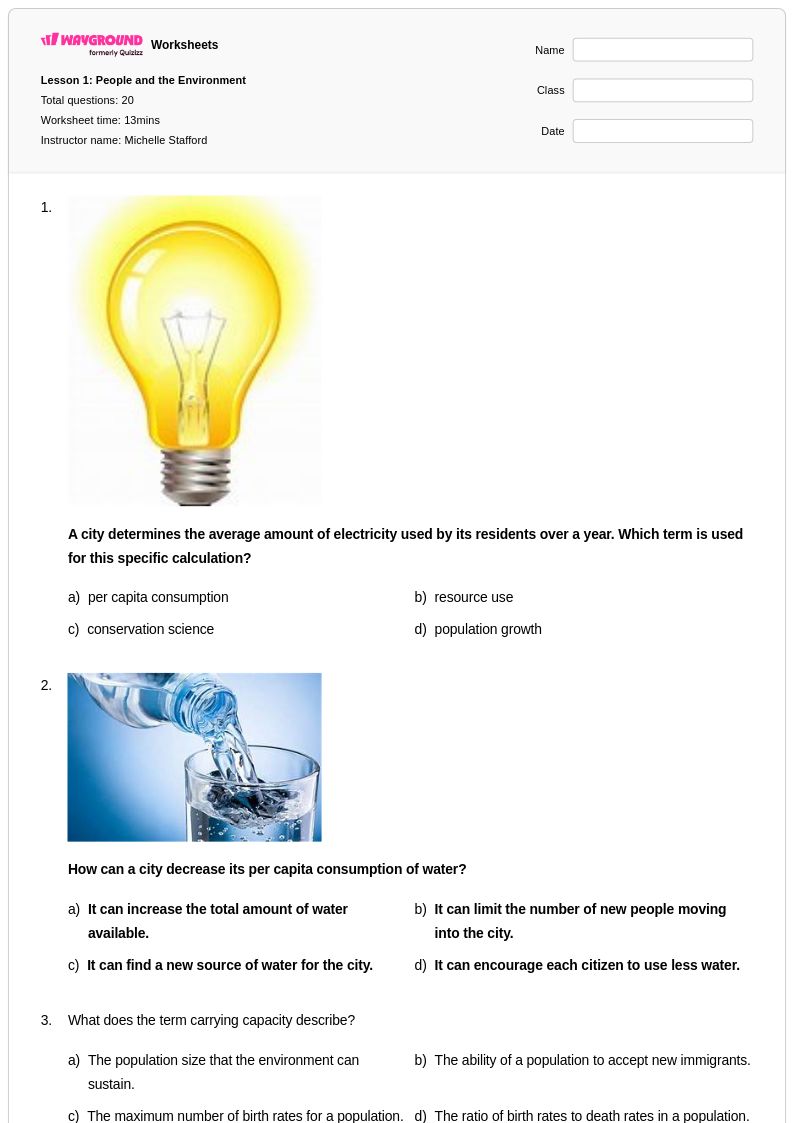
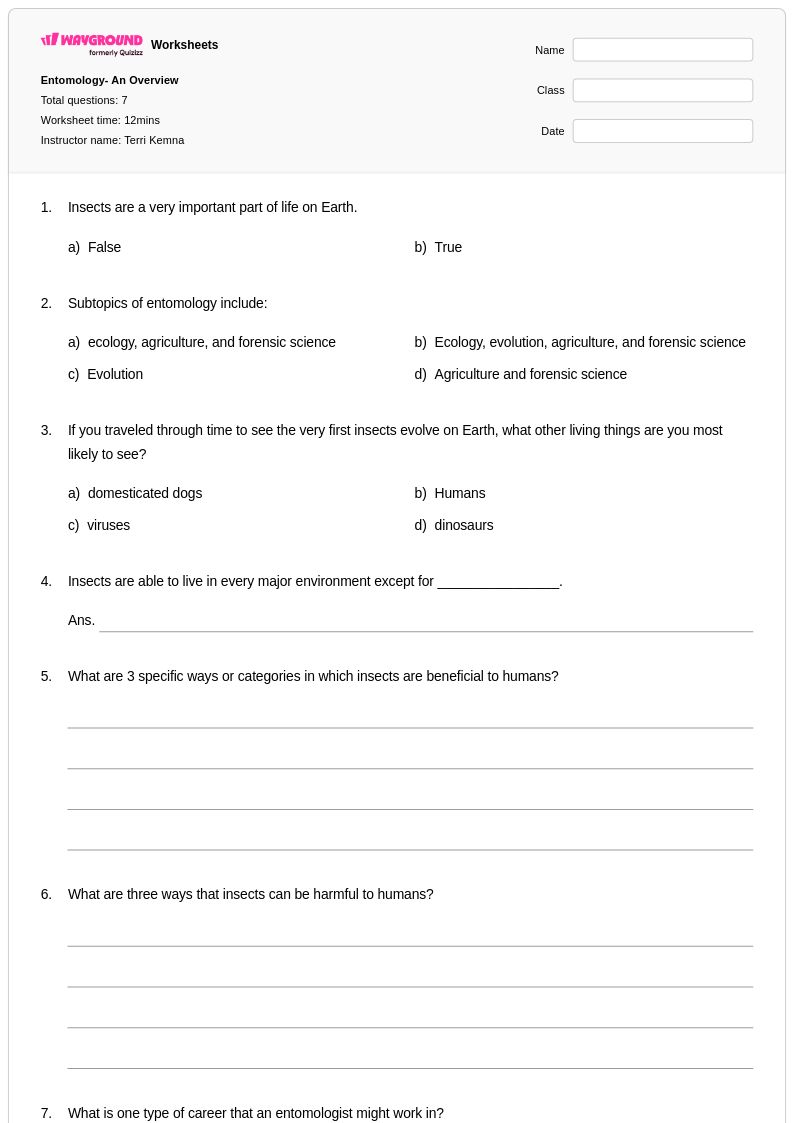
Agriculture worksheets for Class 8 science provide comprehensive educational resources that explore the scientific principles underlying modern farming practices and food production systems. These carefully designed materials from Wayground (formerly Quizizz) help students understand concepts such as soil chemistry, plant biology, genetics in crop development, sustainable farming techniques, and the environmental impact of agricultural practices. Students engage with practice problems that examine photosynthesis processes in crops, nutrient cycling in agricultural ecosystems, and the role of technology in precision farming. Each worksheet includes detailed answer keys that support independent learning, and the free printable pdf format ensures accessibility for diverse classroom needs while strengthening critical thinking skills about food security, biotechnology applications, and agricultural science careers.
Wayground (formerly Quizizz) empowers educators with millions of teacher-created agriculture resources that transform Class 8 science instruction through robust search and filtering capabilities aligned with educational standards. Teachers can easily differentiate instruction by accessing worksheets that range from basic agricultural concepts to advanced topics like genetic modification and sustainable farming practices, with flexible customization options that allow educators to modify content for individual student needs. The platform's comprehensive collection supports effective lesson planning by providing materials suitable for remediation, enrichment, and regular skill practice, while offering both printable and digital formats including downloadable pdfs that accommodate various learning environments. This extensive resource library enables teachers to seamlessly integrate real-world agricultural applications into their science curriculum, helping students connect classroom learning with contemporary challenges in food production, environmental stewardship, and agricultural innovation.
FAQs
How do I teach agriculture concepts to students who have no farming background?
Start with concrete, relatable connections — food origins, grocery store supply chains, and local ecosystems — before introducing technical vocabulary like soil composition or crop rotation. Use visual aids and case studies of real farming systems to ground abstract concepts in tangible examples. Structured worksheets that progress from basic definitions to applied analysis help students without prior exposure build confidence systematically.
What topics should an agriculture worksheet cover for a well-rounded unit?
A comprehensive agriculture worksheet unit should address soil science, plant biology, crop production cycles, livestock management, agricultural technology, and sustainable farming practices. Including content on food security and the environmental impact of farming ensures students understand agriculture's broader role in society. Worksheets that require students to evaluate crop rotation strategies or analyze farming systems push beyond recall into critical thinking.
What exercises help students practice understanding the livestock industry?
Effective practice exercises for the livestock industry include labeling diagrams of animal anatomy, matching breeds to their agricultural purposes, and analyzing case studies on animal husbandry practices. Comparison activities that contrast conventional and sustainable livestock management help students evaluate trade-offs in real-world farming decisions. Short-answer and scenario-based questions reinforce applied understanding beyond memorization.
What mistakes do students commonly make when learning about agriculture and farming systems?
Students frequently conflate soil fertility with soil composition, missing the distinction between physical properties and nutrient availability. Another common error is treating crop rotation as simply alternating crops without understanding the nitrogen cycle or pest management rationale behind it. Students also tend to underestimate the role of agricultural technology and policy in shaping modern food systems, focusing narrowly on physical farming practices.
How can I use agriculture worksheets to support differentiated instruction?
Agriculture worksheets can be differentiated by adjusting reading complexity, scaffolding vocabulary support, or modifying the number of answer choices for students who need reduced cognitive load. On Wayground, teachers can apply individual student accommodations such as extended time, read-aloud support, and reduced answer choices without other students being notified, keeping the classroom experience equitable. Pairing printable versions for independent work with digital formats for interactive review allows further flexibility across learning levels.
How do I use Wayground's agriculture worksheets in my classroom?
Wayground's agriculture worksheets are available as printable PDFs for traditional classroom use and in digital formats for technology-integrated environments, including the option to host them as a quiz directly on Wayground. Teachers can use them for direct instruction support, independent practice, homework, or formative assessment depending on where students are in a unit. Each worksheet includes a complete answer key, reducing prep time and making them practical for both new and experienced educators.