Free Printable Alphabet Charts Worksheets for Kindergarten
Discover free printable alphabet charts worksheets and PDFs designed to help kindergarten students master letter recognition, phonics, and foundational reading skills through engaging practice problems with answer keys.
Explore printable Alphabet Charts worksheets for Kindergarten
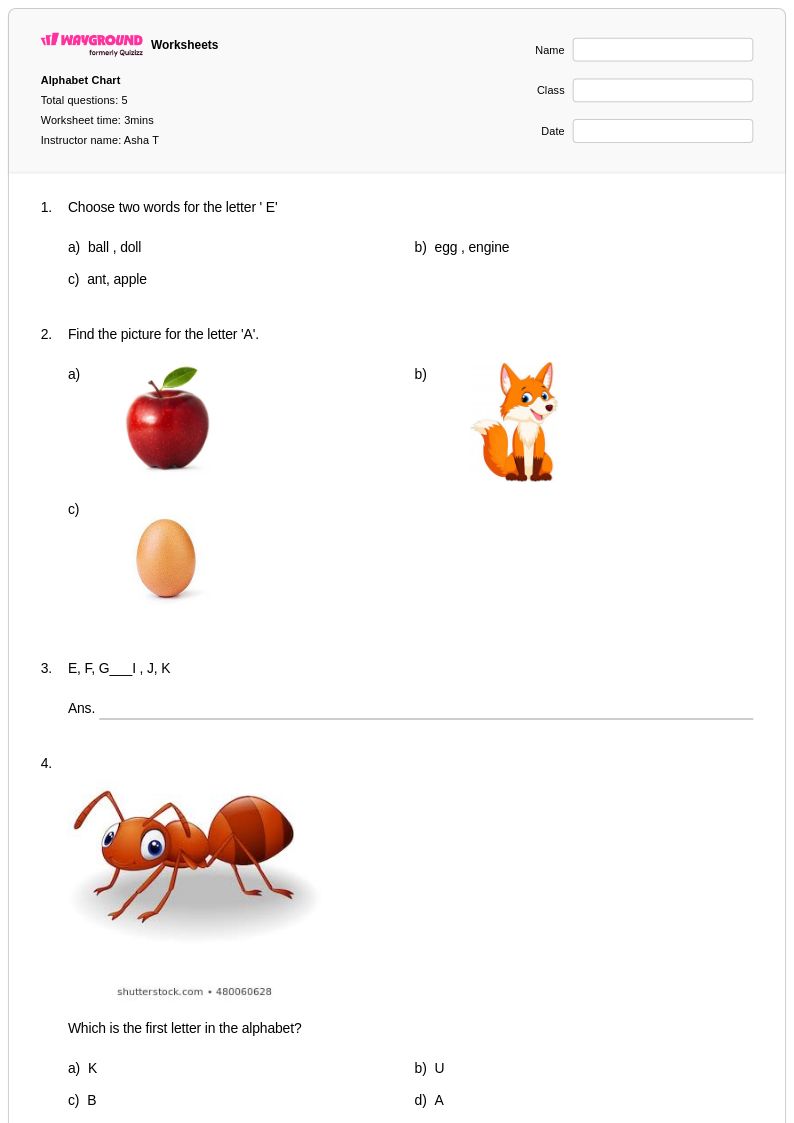
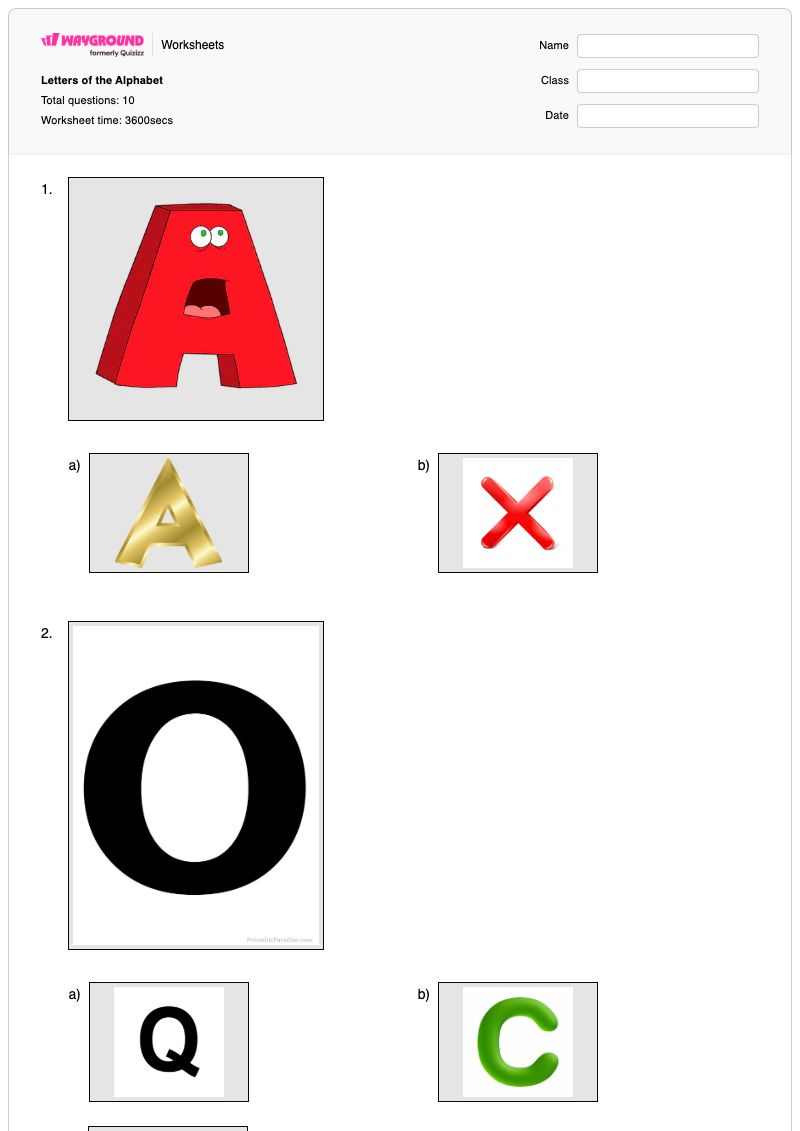
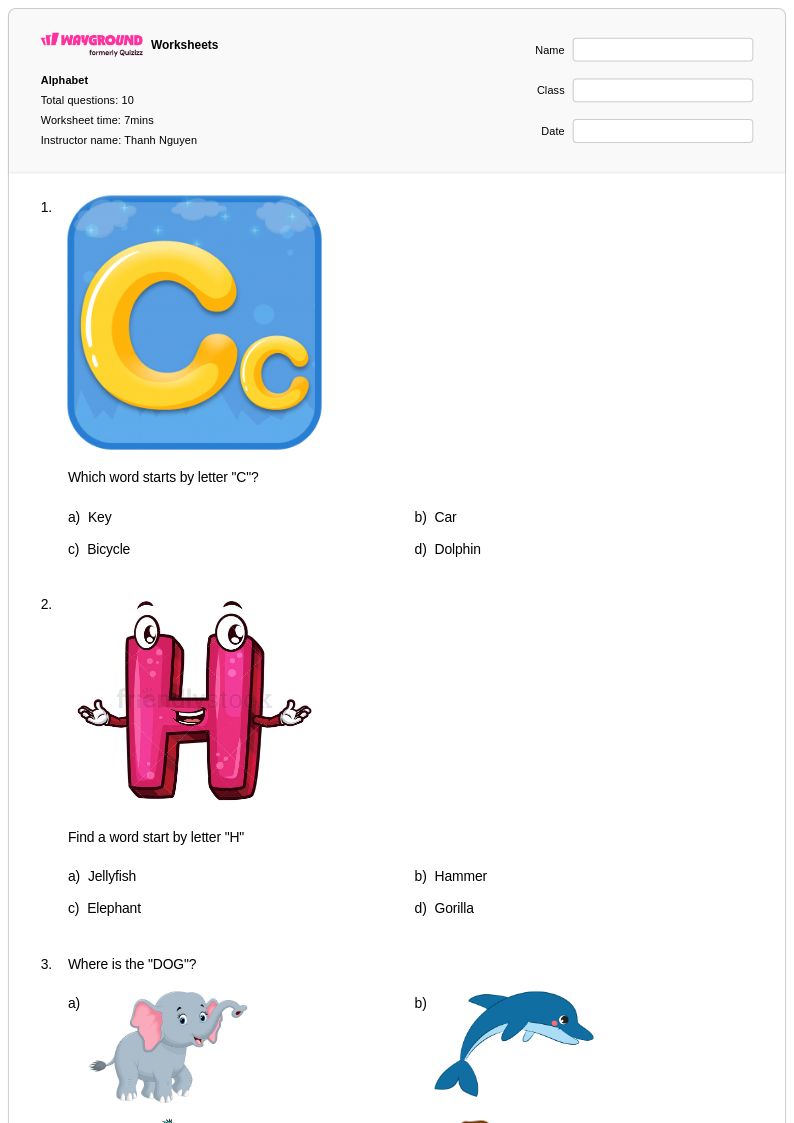
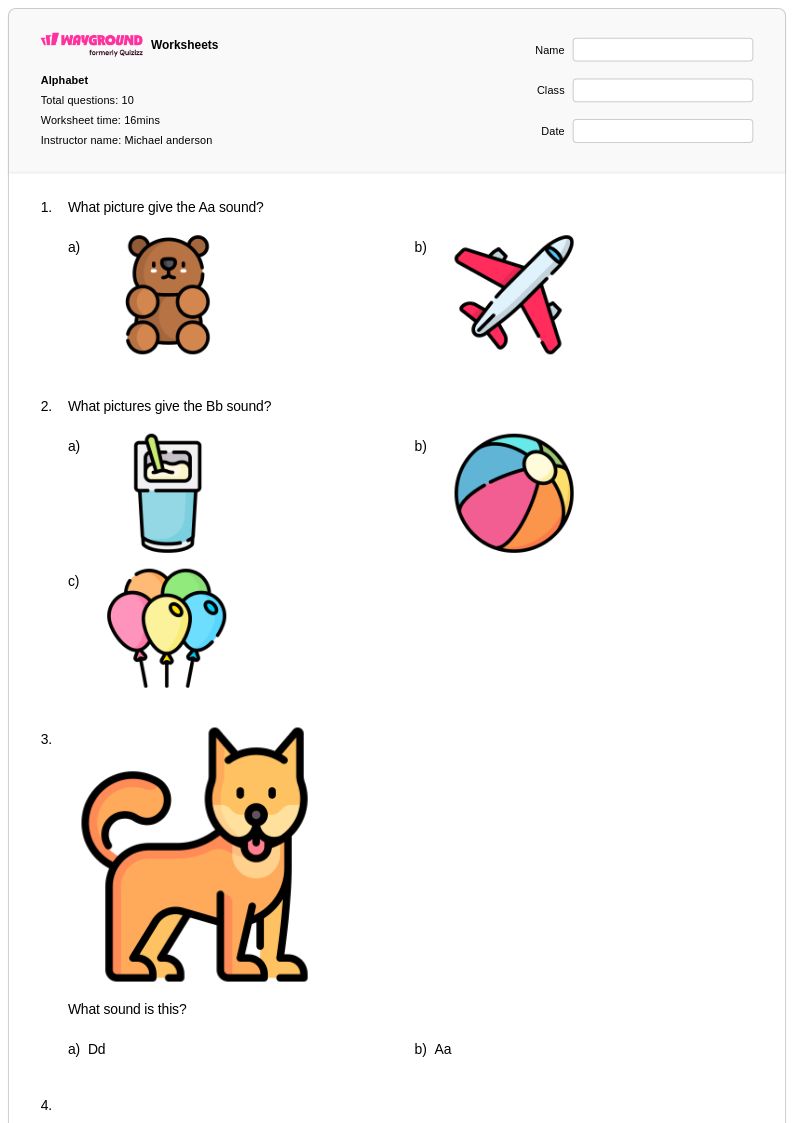
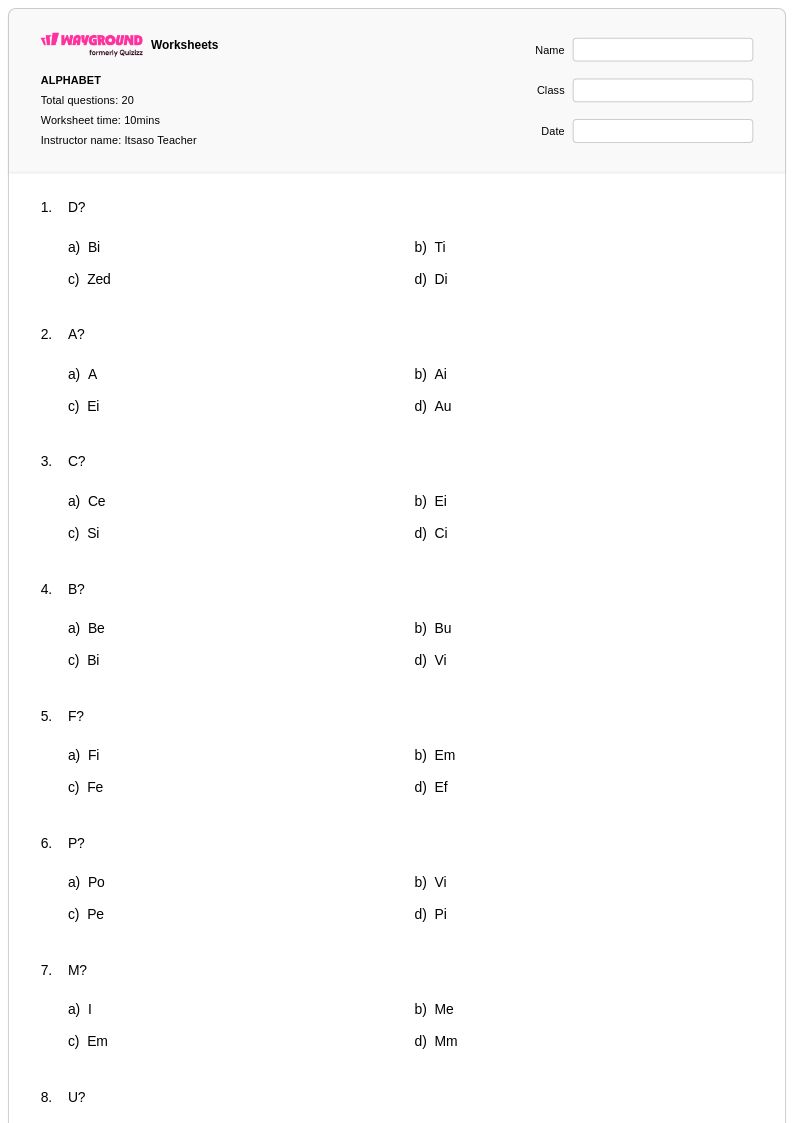
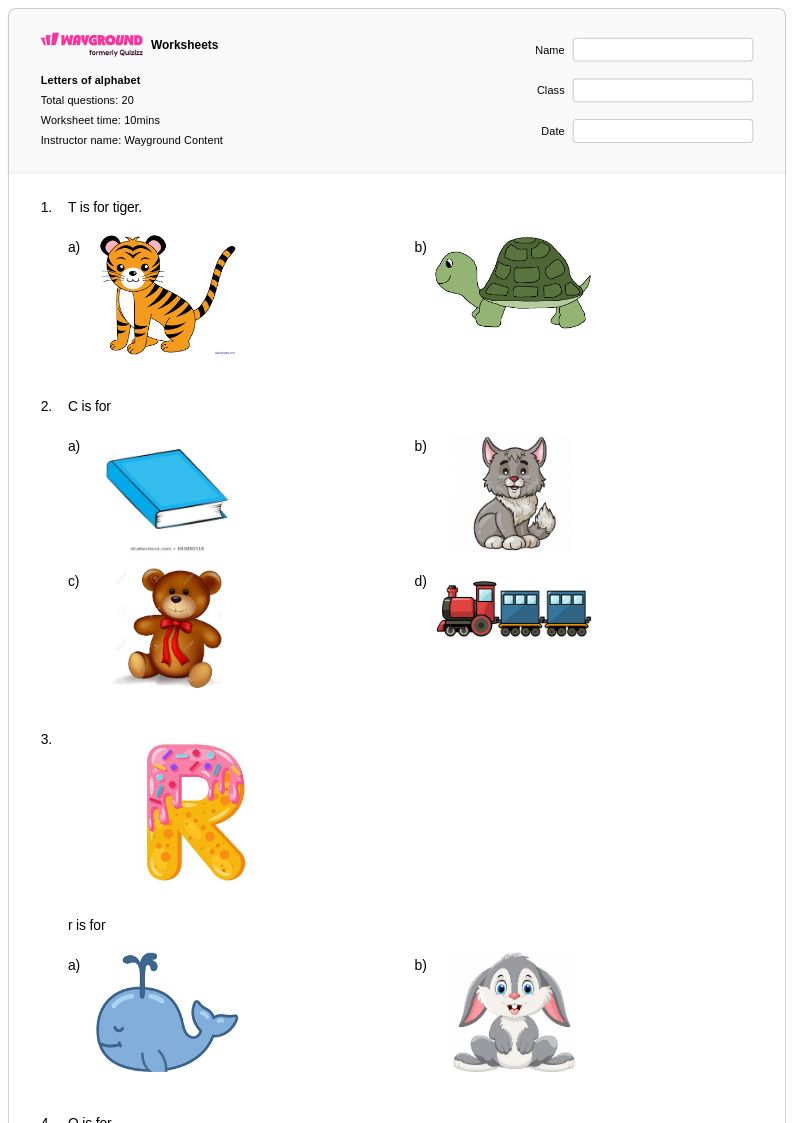
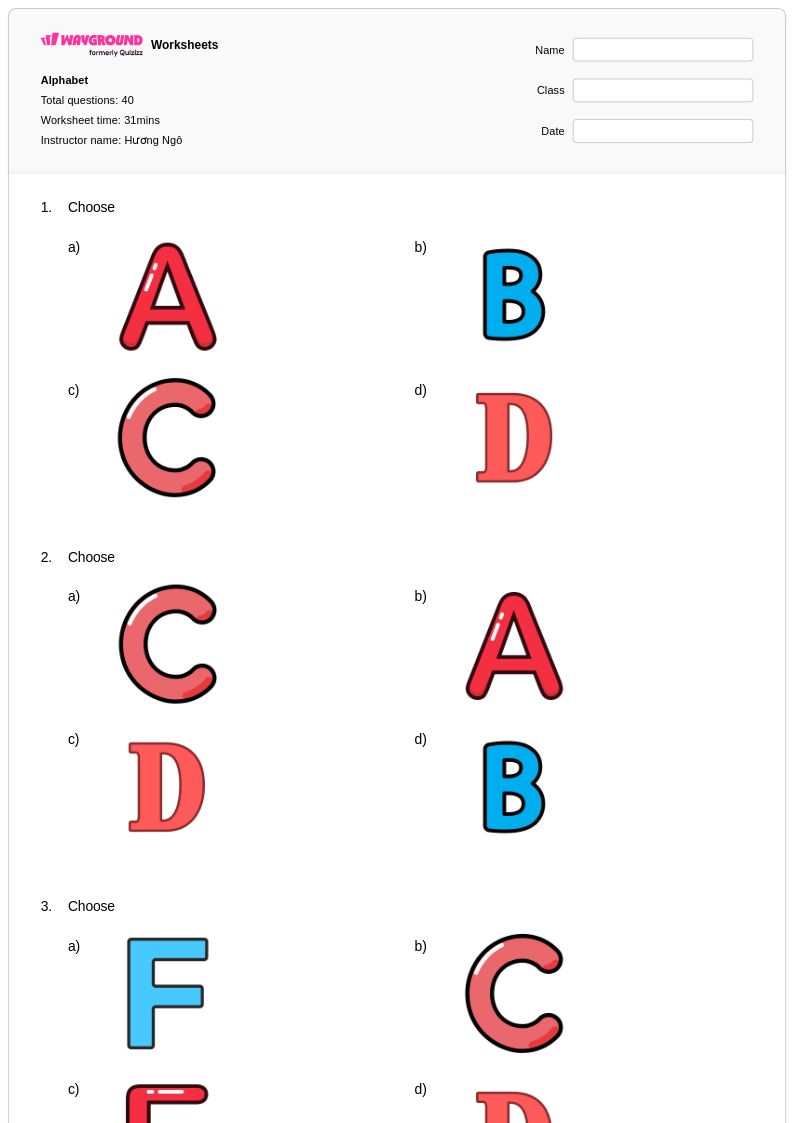
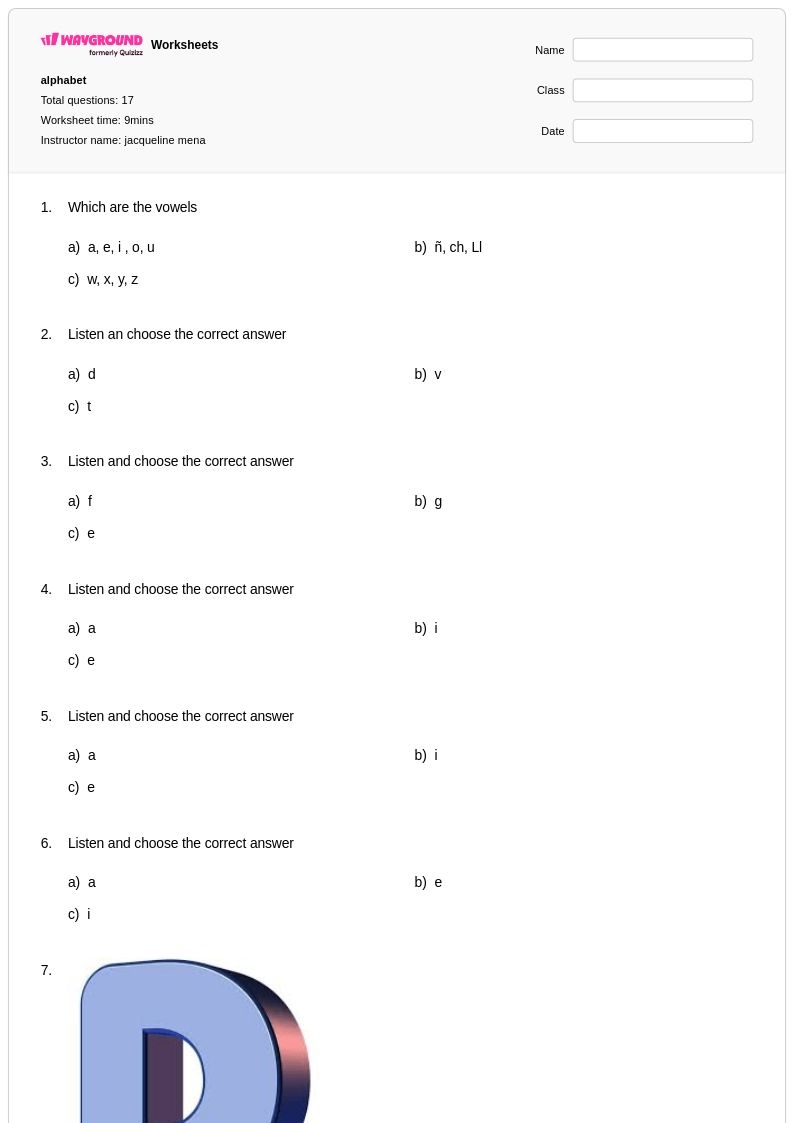
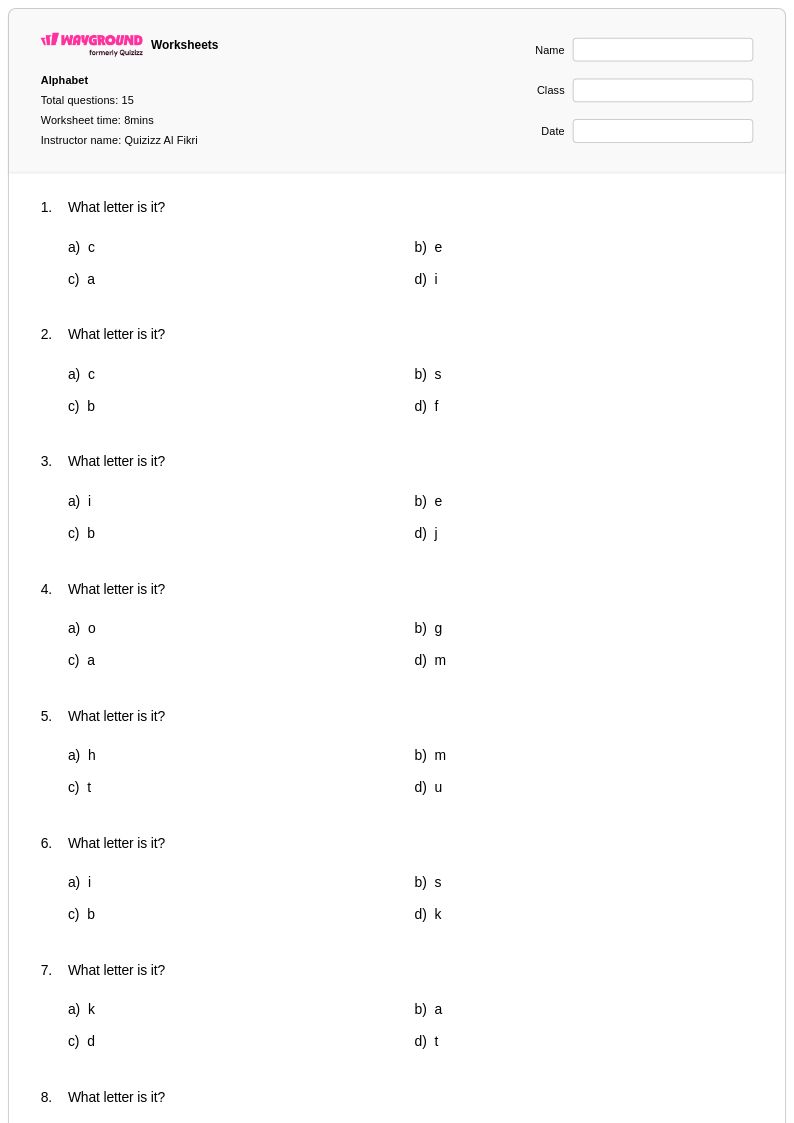
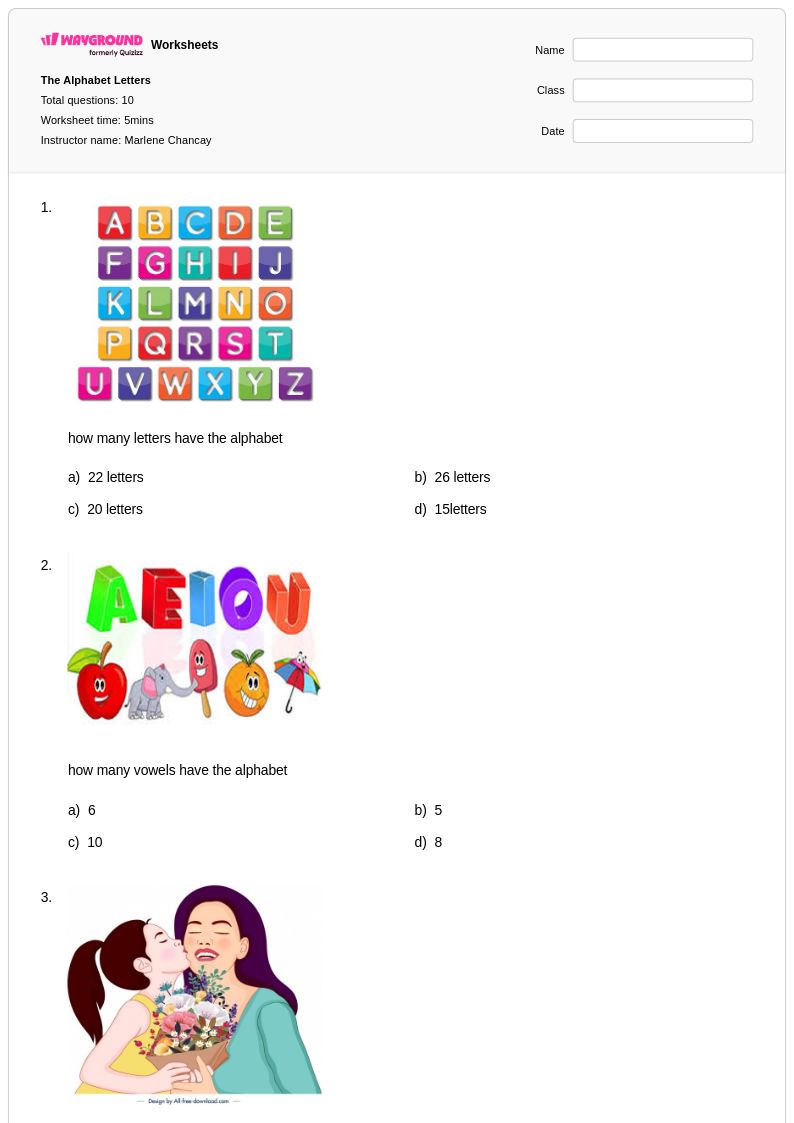
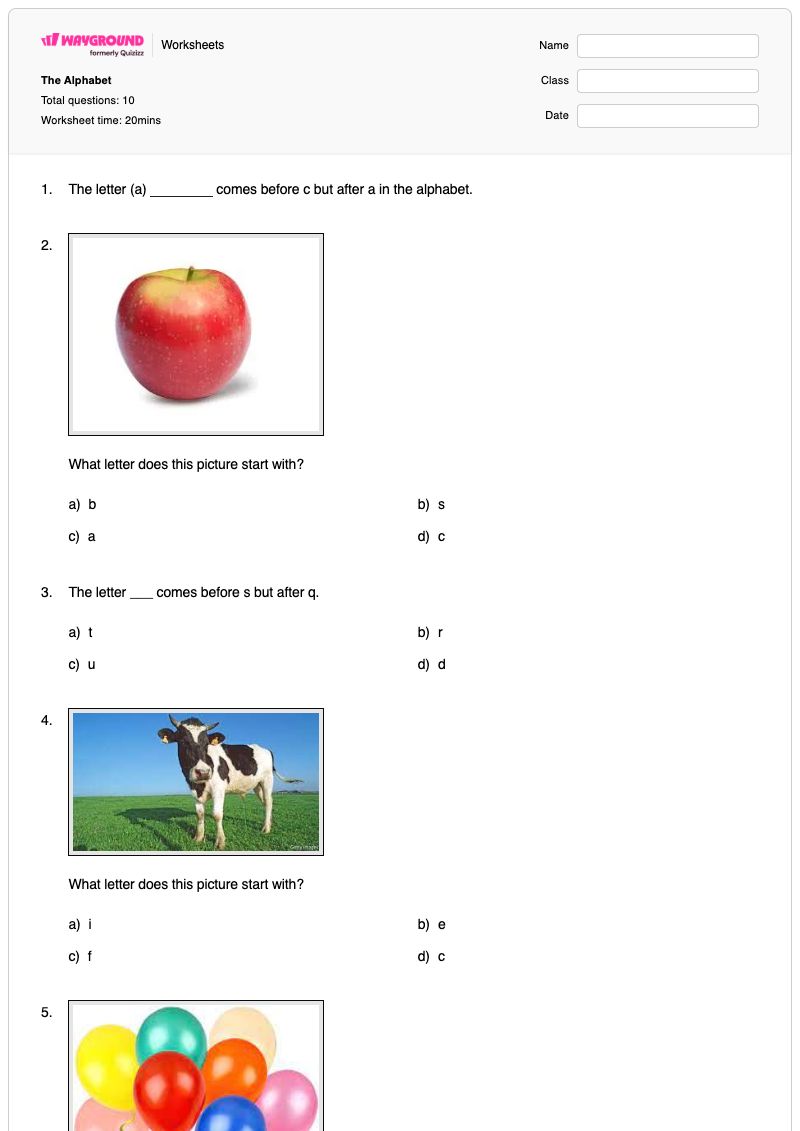
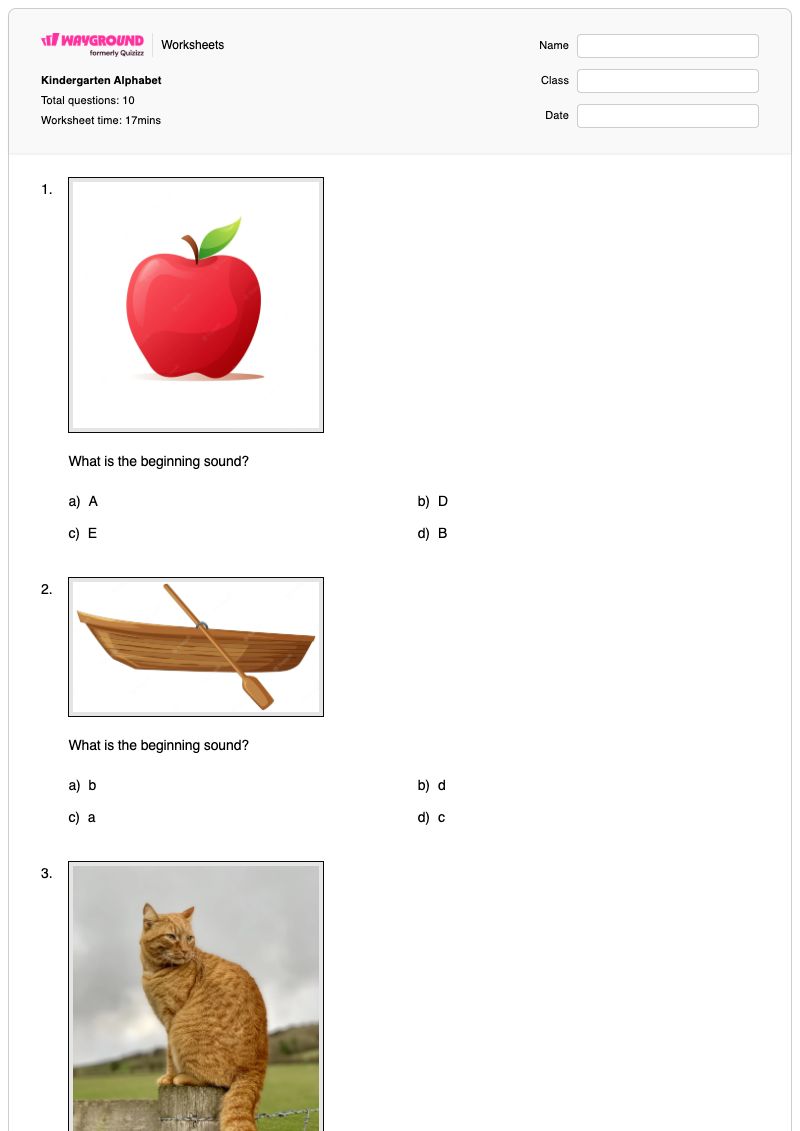
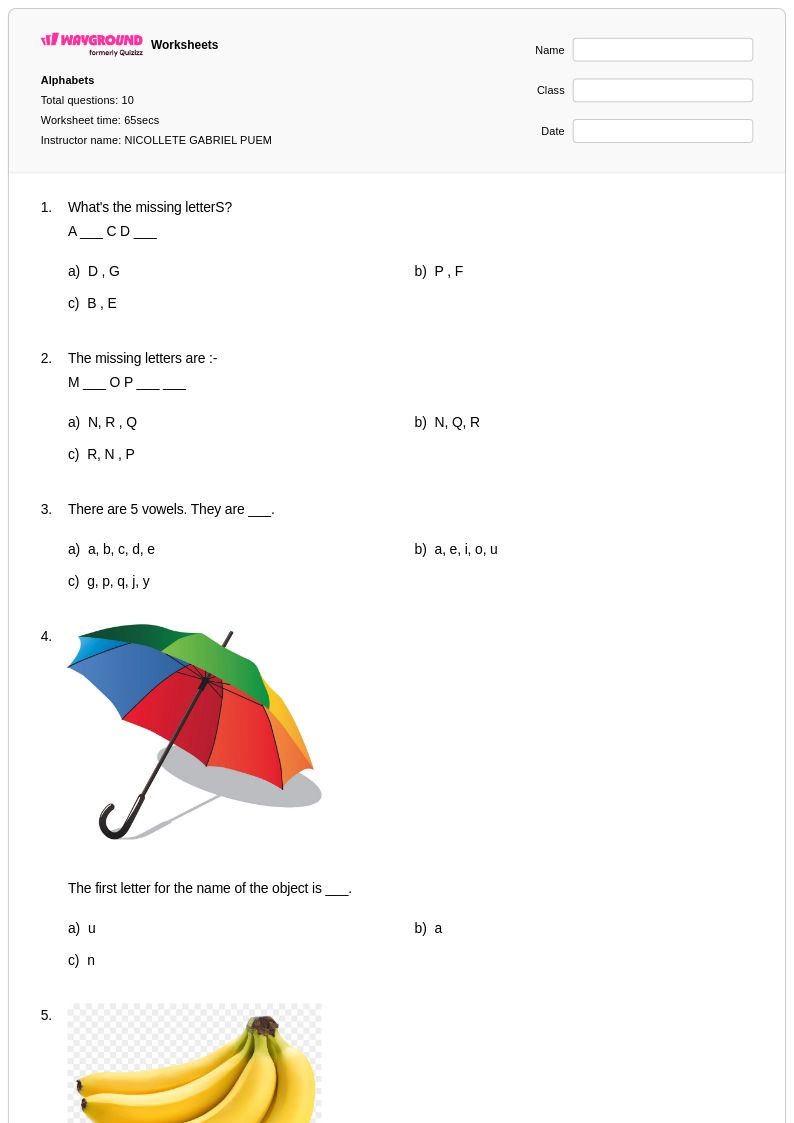
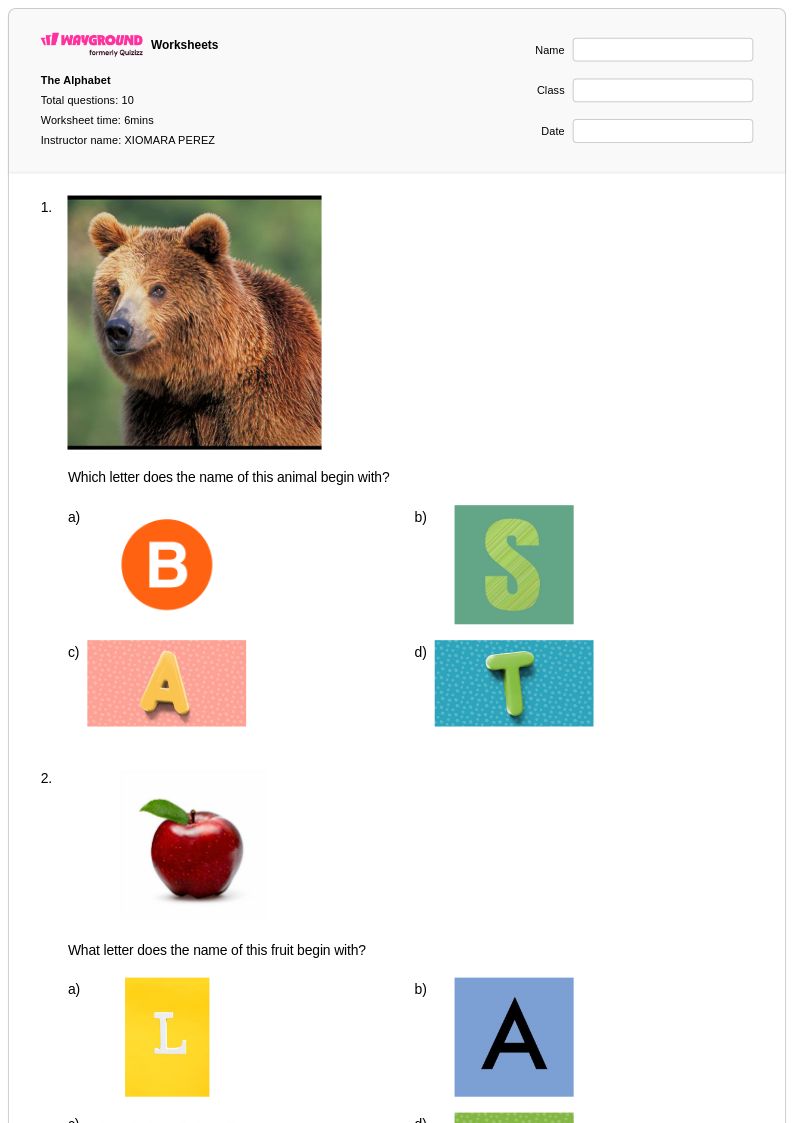
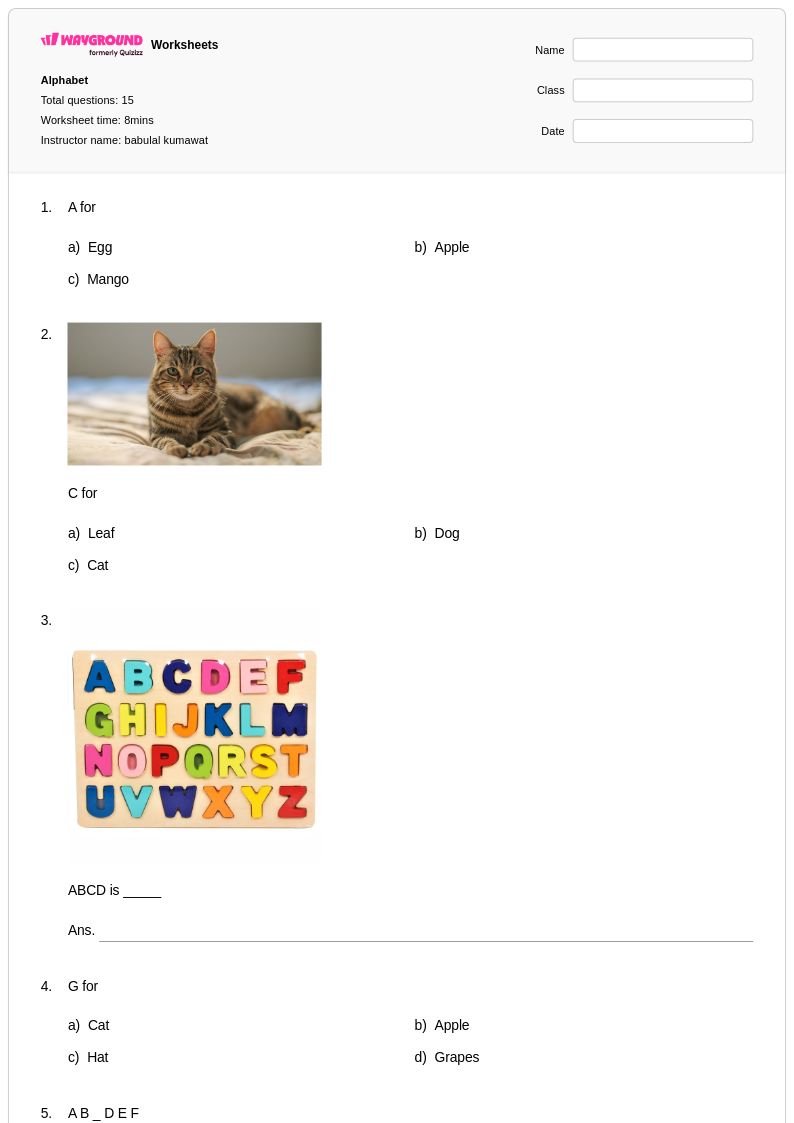
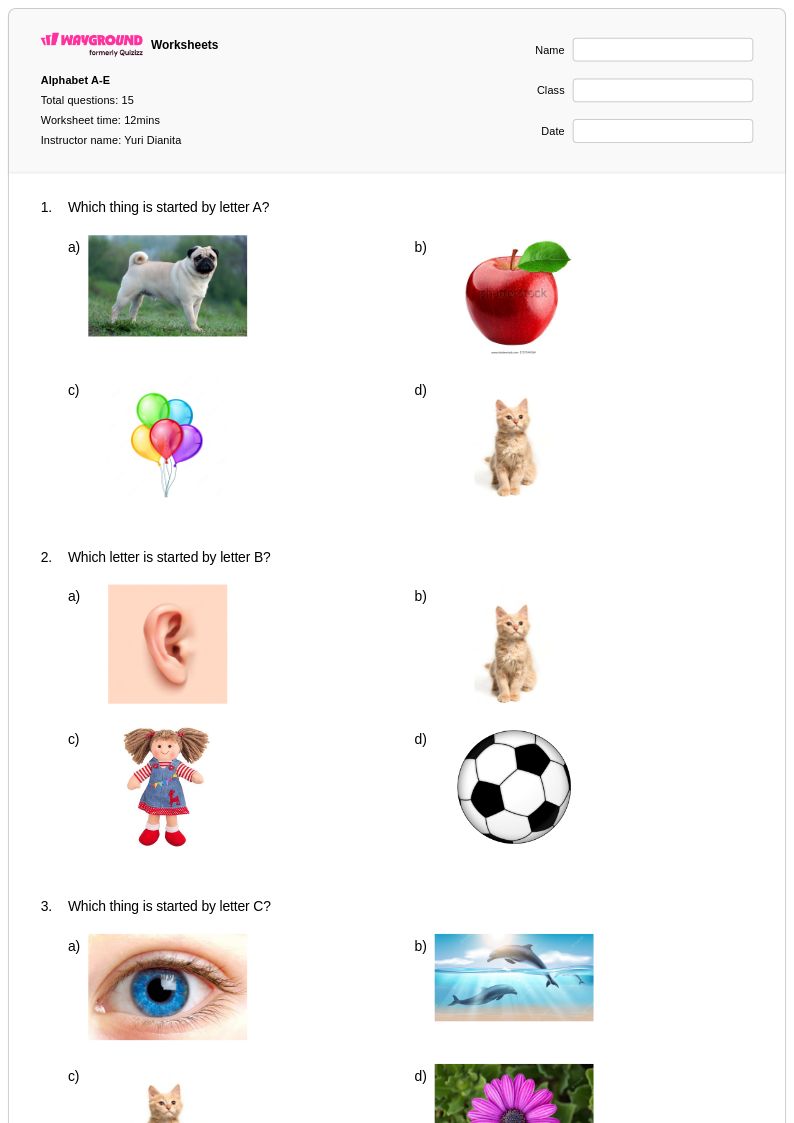
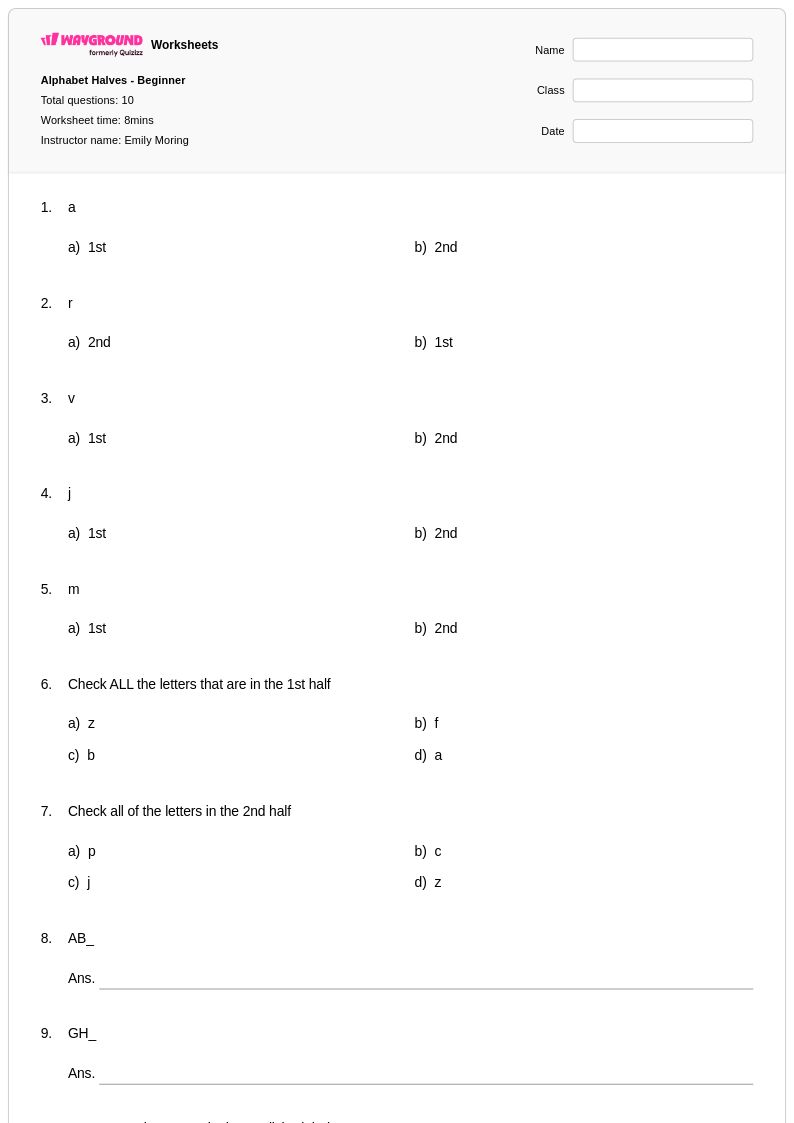
Alphabet charts for kindergarten serve as fundamental visual learning tools that help young students master letter recognition, letter formation, and phonetic awareness through structured practice. Wayground's collection of alphabet chart worksheets provides kindergarten educators with comprehensive resources that display uppercase and lowercase letters alongside corresponding images and sounds, creating multiple pathways for letter learning and retention. These printable materials strengthen essential pre-reading skills by offering repeated exposure to letter shapes, sequential order, and sound-symbol relationships that form the foundation of literacy development. Teachers can access free pdf versions with complete answer keys, allowing for seamless implementation of practice problems that reinforce alphabetical order, letter identification, and beginning phonics concepts.
Wayground's extensive library contains millions of teacher-created alphabet chart resources specifically designed to meet the diverse learning needs of kindergarten classrooms. The platform's robust search and filtering capabilities enable educators to quickly locate materials aligned with state standards and curriculum requirements, while built-in differentiation tools allow for easy customization based on individual student abilities and learning styles. These versatile worksheet collections are available in both printable pdf formats for traditional classroom use and digital versions for interactive learning experiences, supporting flexible lesson planning approaches. Teachers utilize these comprehensive resources for targeted skill practice, remediation activities for struggling learners, and enrichment opportunities for advanced students, ensuring that every kindergartner develops strong foundational alphabet knowledge through engaging, research-based instructional materials.
FAQs
How do I teach the alphabet to early learners?
Effective alphabet instruction combines visual reference tools, like alphabet charts, with repeated multisensory exposure. Teachers typically introduce letters in a structured sequence, pairing each letter with its sound and a familiar picture cue. Tracing activities, letter matching exercises, and sound association tasks reinforce recognition across multiple practice sessions. Consistent daily exposure to both uppercase and lowercase forms accelerates letter fluency.
What activities help students practice letter recognition?
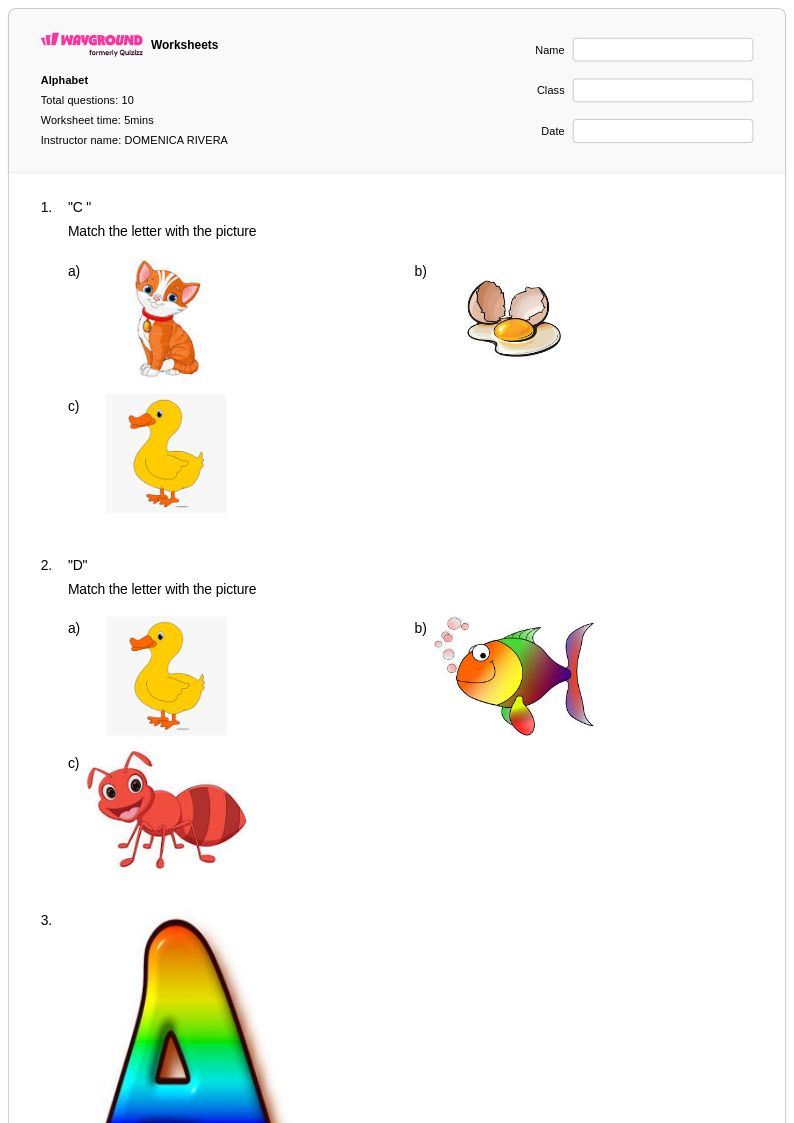
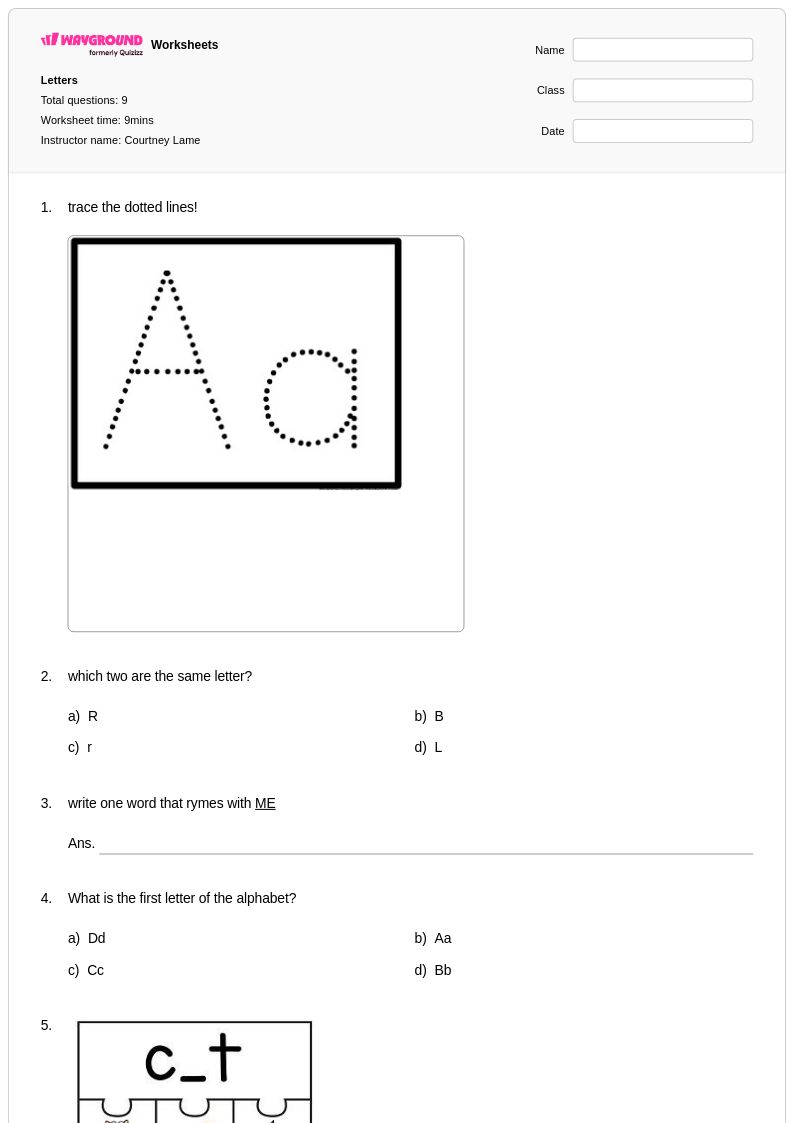
Letter recognition improves most when students engage with the same letters across multiple formats. Effective practice activities include tracing uppercase and lowercase letters, matching letters to pictures that begin with the corresponding sound, sorting letters by case, and identifying letters within simple words. Alphabet chart worksheets that incorporate these task types give students structured repetition without becoming repetitive in format.
What common mistakes do students make when learning the alphabet?
One of the most frequent errors is letter reversal, particularly with pairs like b/d and p/q, which share similar shapes but differ in orientation. Students also commonly confuse letters with similar sounds, such as m and n, or visually similar forms like v and u. Targeted practice that isolates these easily confused pairs and provides immediate visual feedback helps students self-correct and build accurate letter memory.
How can I differentiate alphabet instruction for students at different skill levels?
Differentiation in alphabet instruction means adjusting the complexity and support level of tasks to match where each student is in their letter knowledge. Some students may need tracing support and picture cues to connect letters to sounds, while others are ready for independent letter writing or sound sorting without visual scaffolds. On Wayground, teachers can apply accommodations such as read aloud support for students who need questions read to them, reduced answer choices to lower cognitive load, and adjustable font sizes through reading mode, all configurable per individual student without affecting the rest of the class.
How do I use Wayground's alphabet chart worksheets in my classroom?
Wayground's alphabet chart worksheets are available as printable PDFs for traditional classroom use and in digital formats for technology-integrated learning environments. Teachers can print worksheets for independent practice, homework, or small group instruction, or assign them digitally, including hosting them as a quiz directly on Wayground. Each worksheet includes a complete answer key, supporting both self-guided student work and teacher-led review sessions.