Free Printable Alphabetical Order Worksheets for Kindergarten
Develop kindergarten students' alphabetical order skills with Wayground's free printable worksheets and practice problems, complete with answer keys to support early literacy learning.
Explore printable Alphabetical Order worksheets for Kindergarten
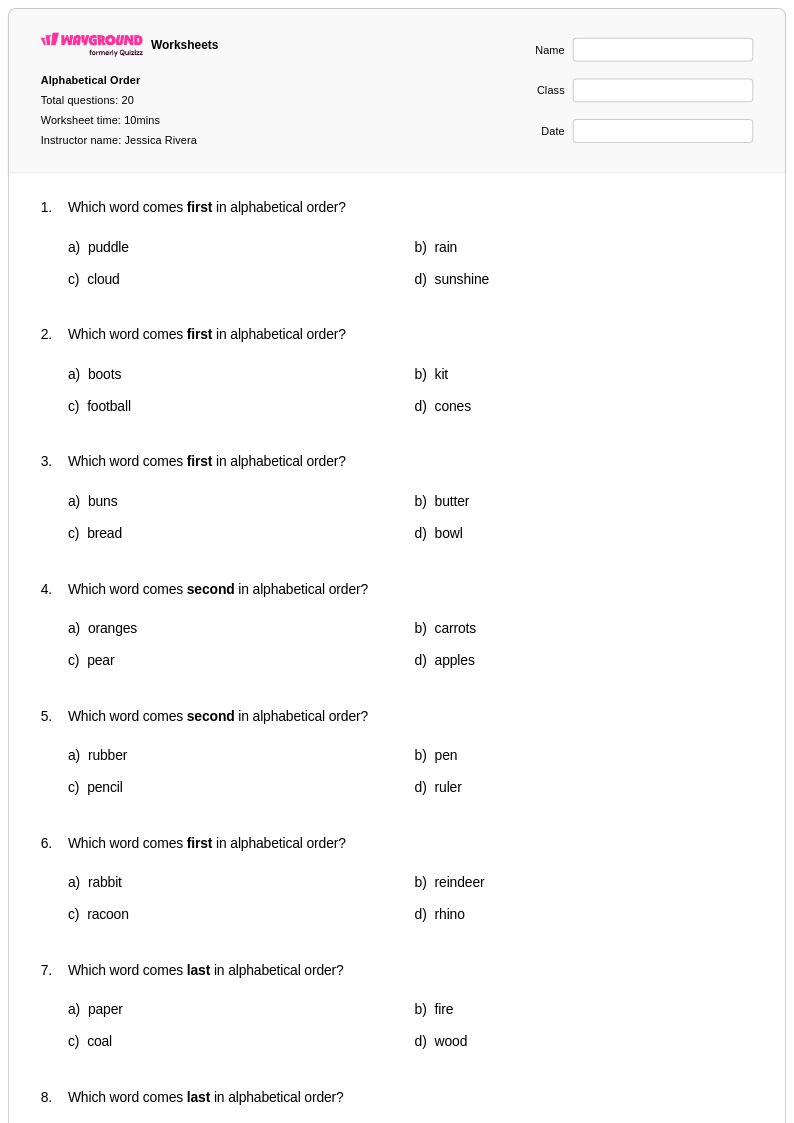
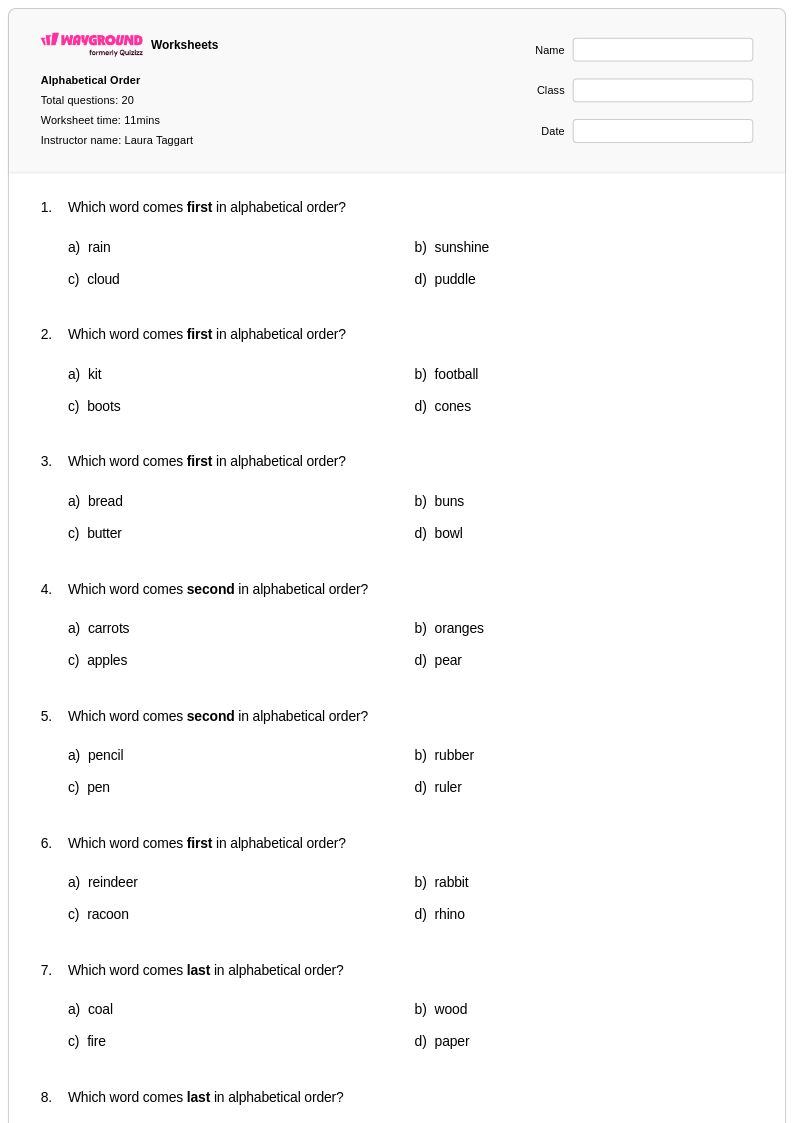
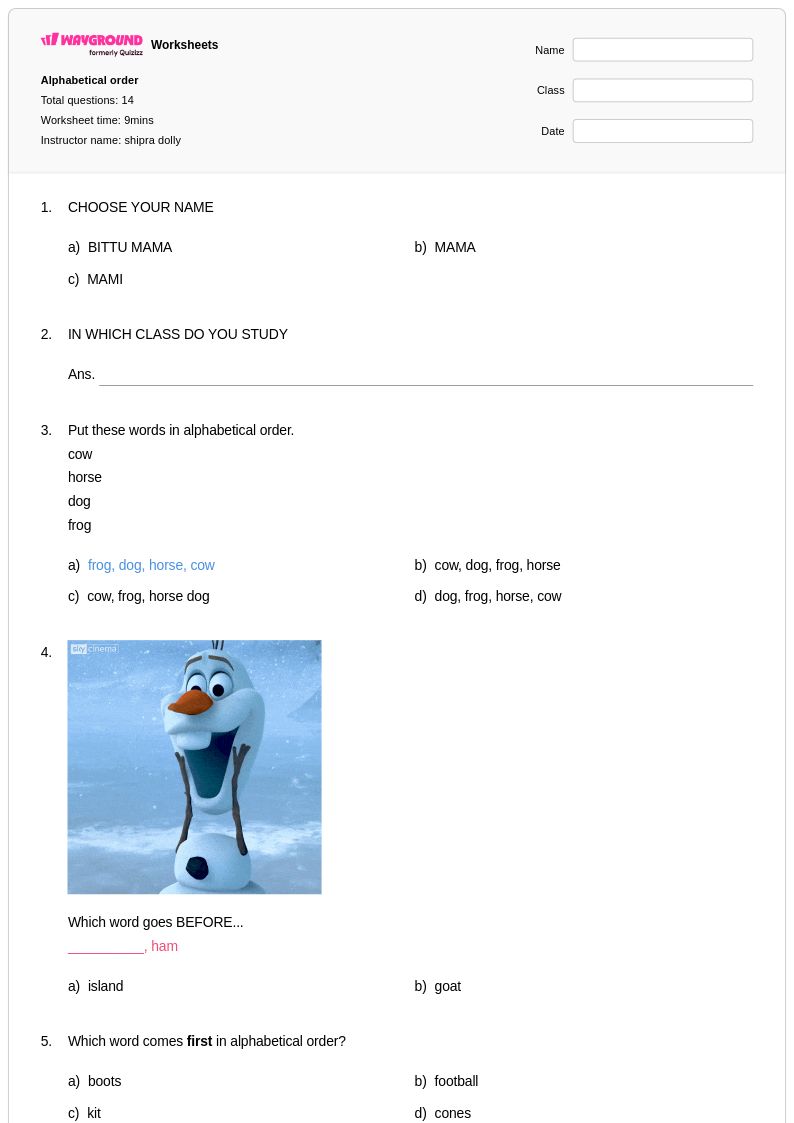
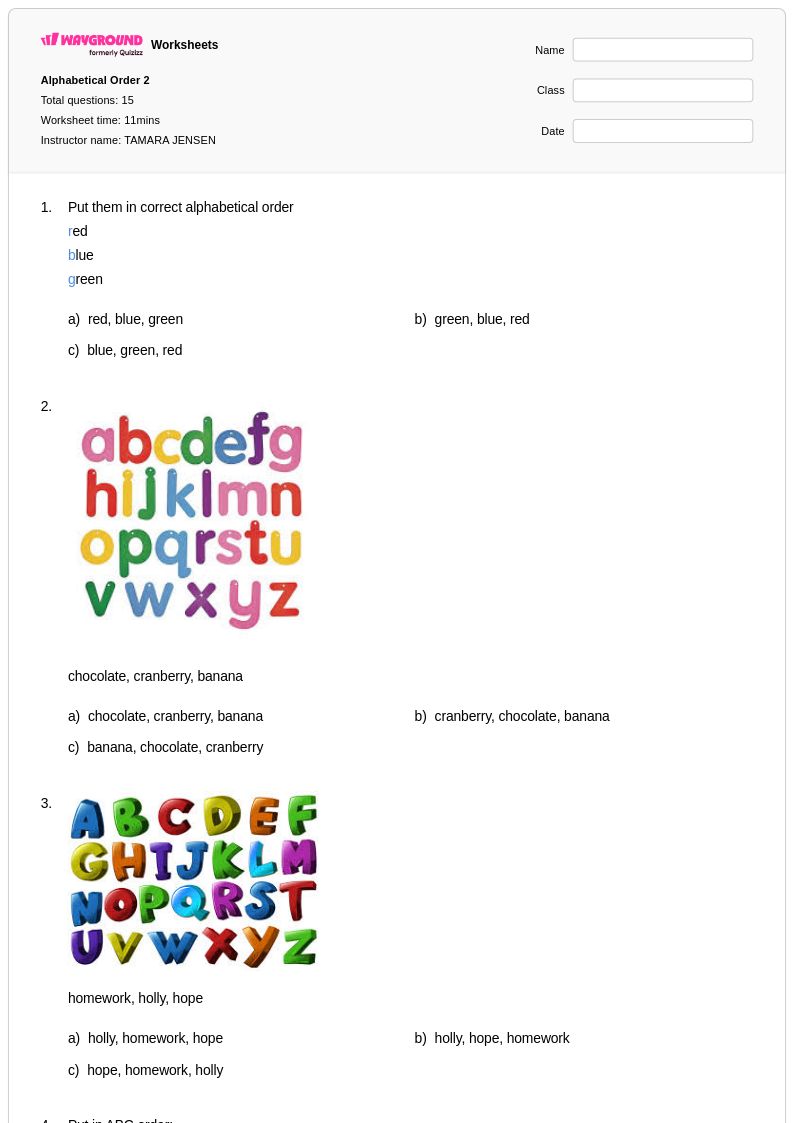
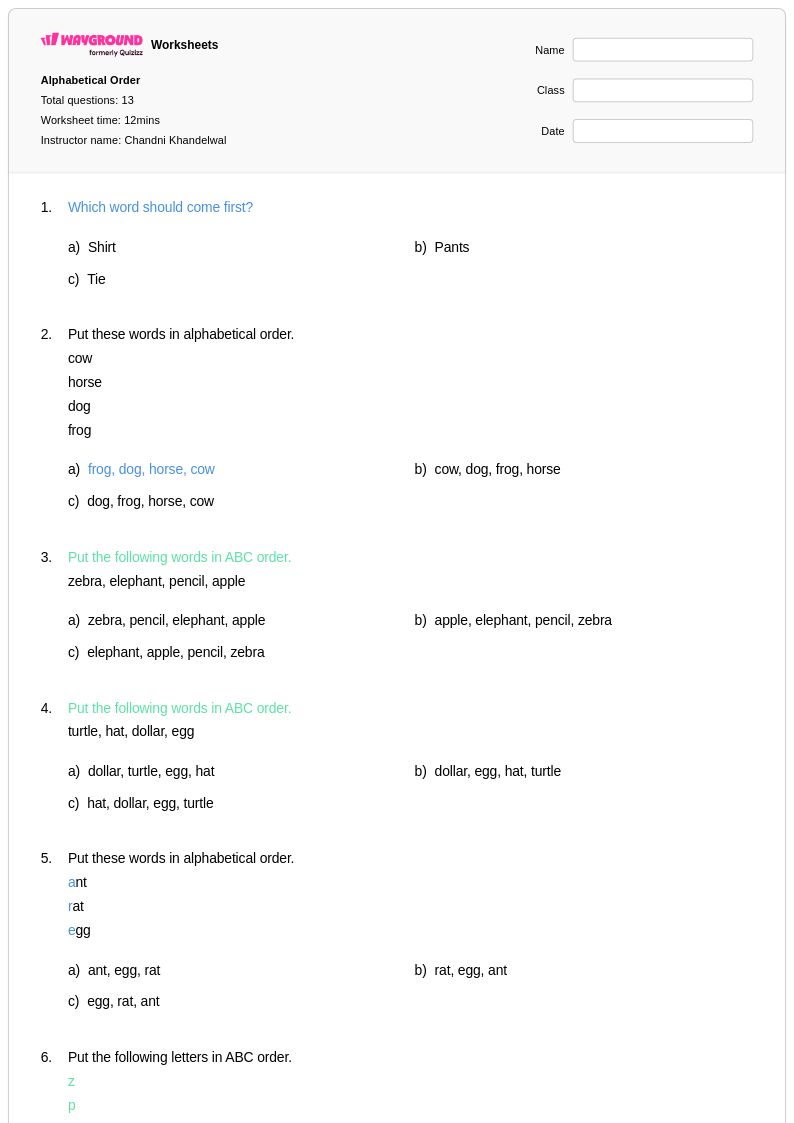
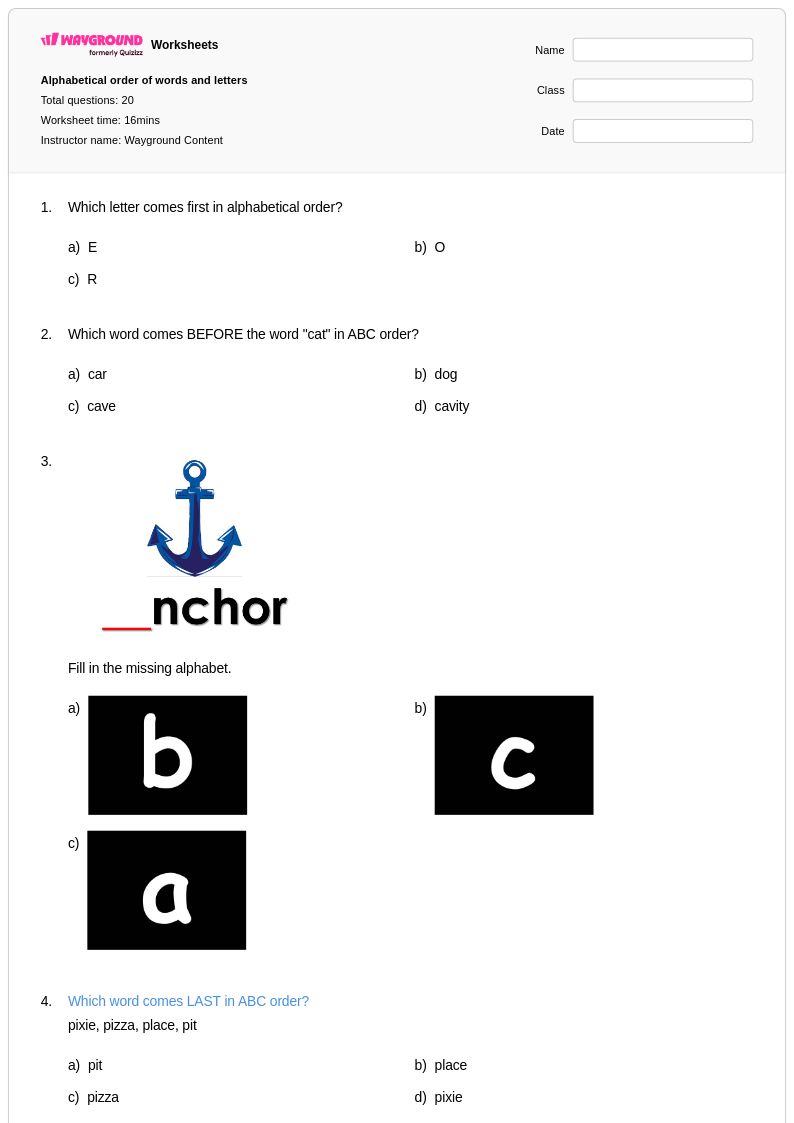
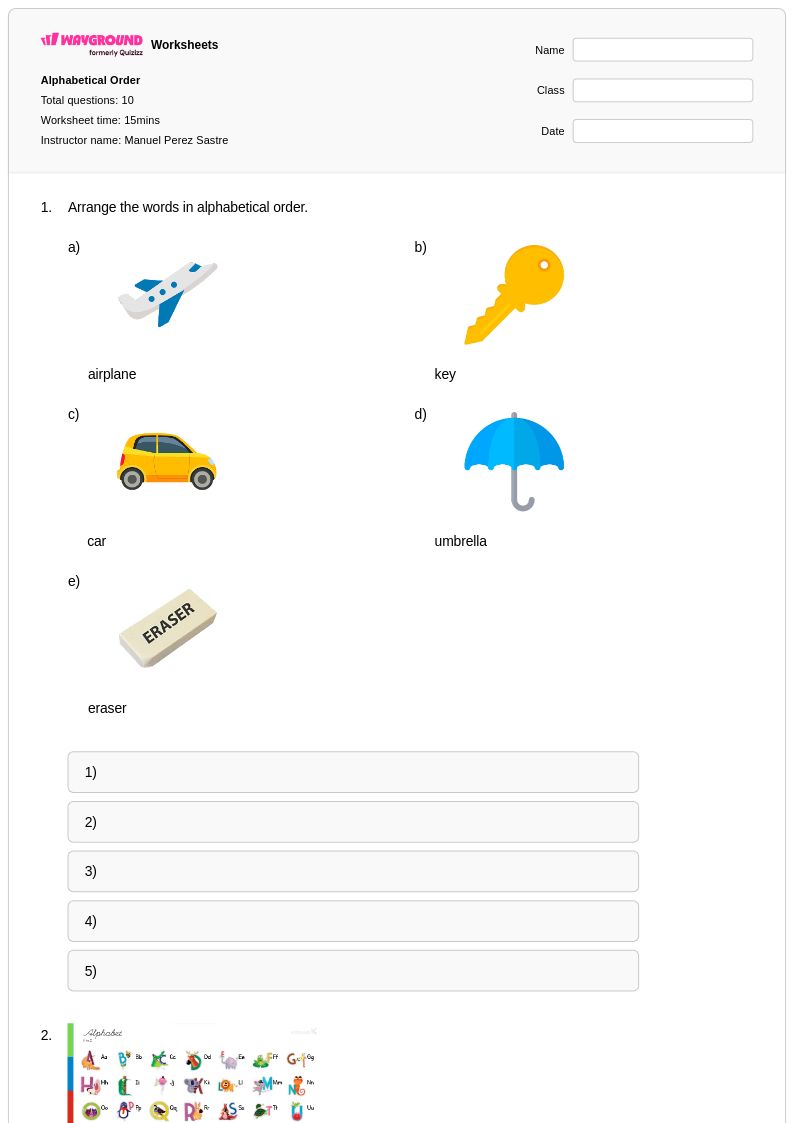
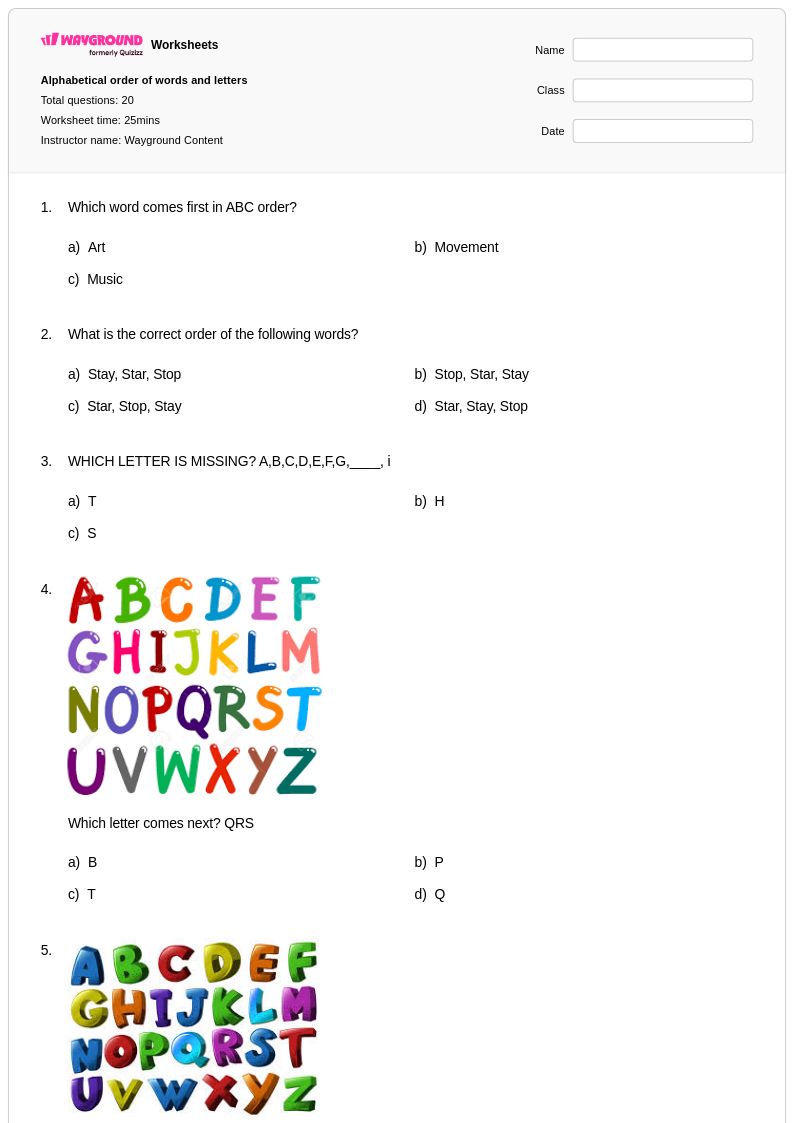
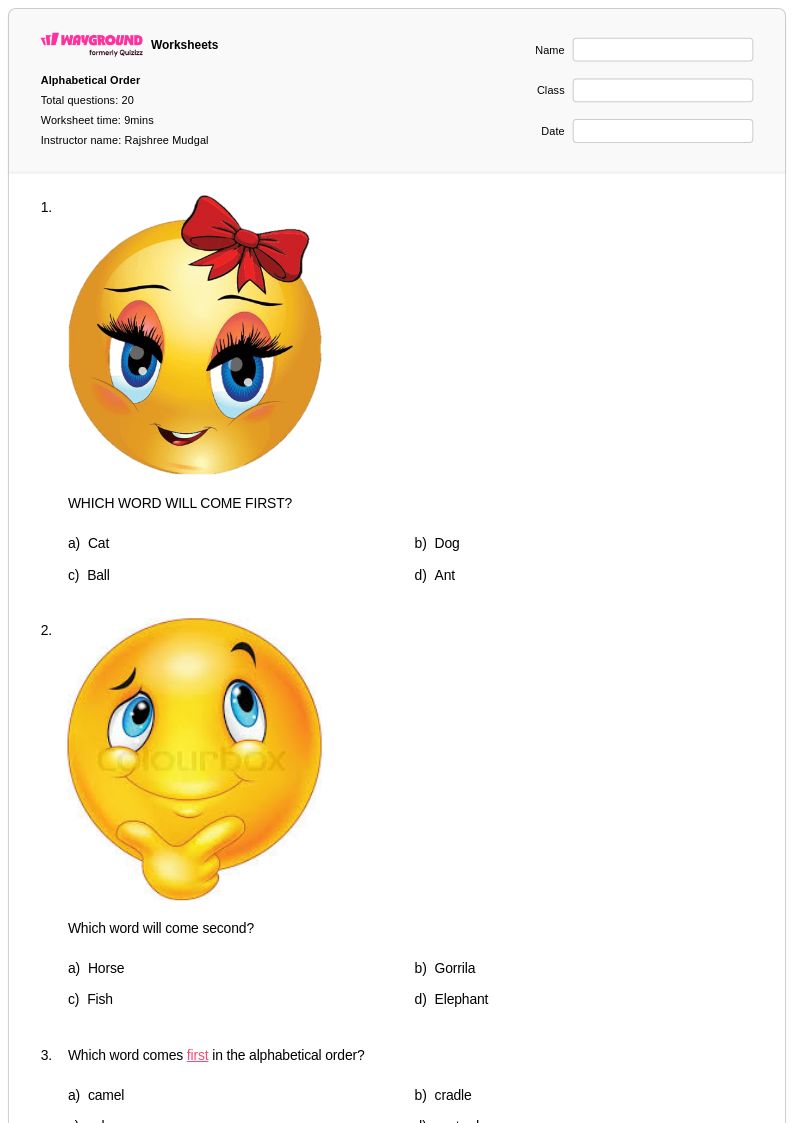
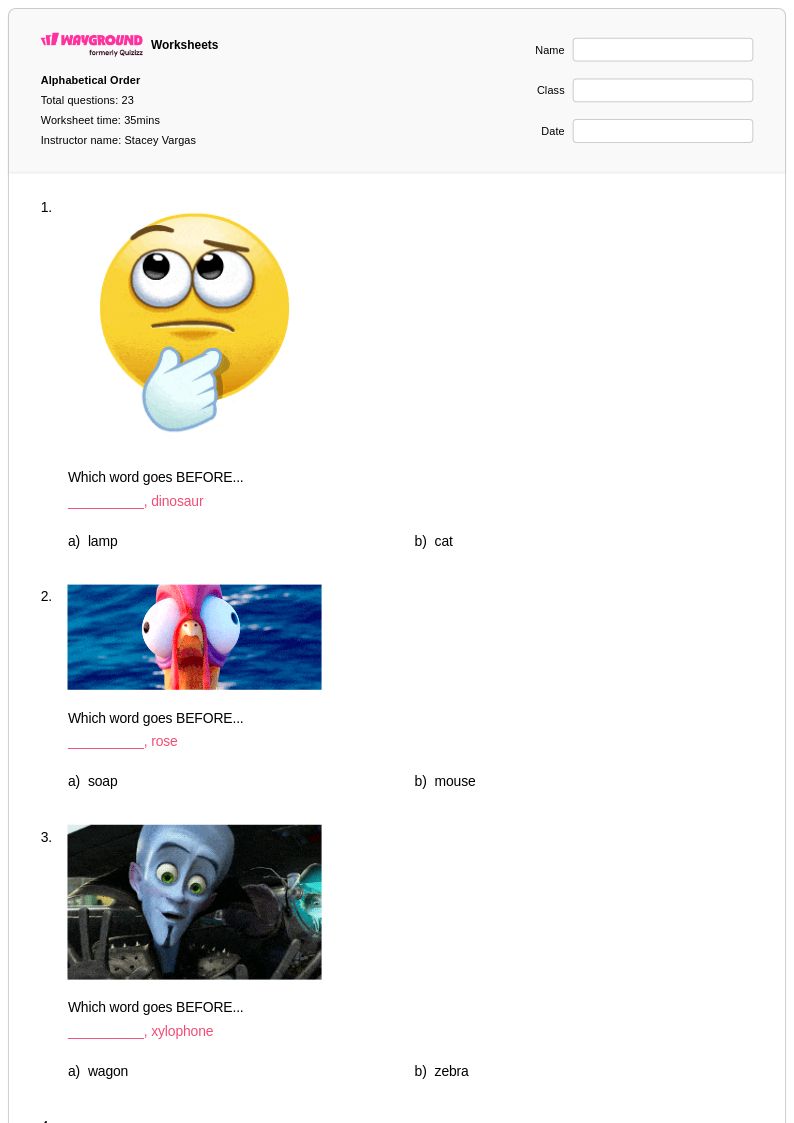
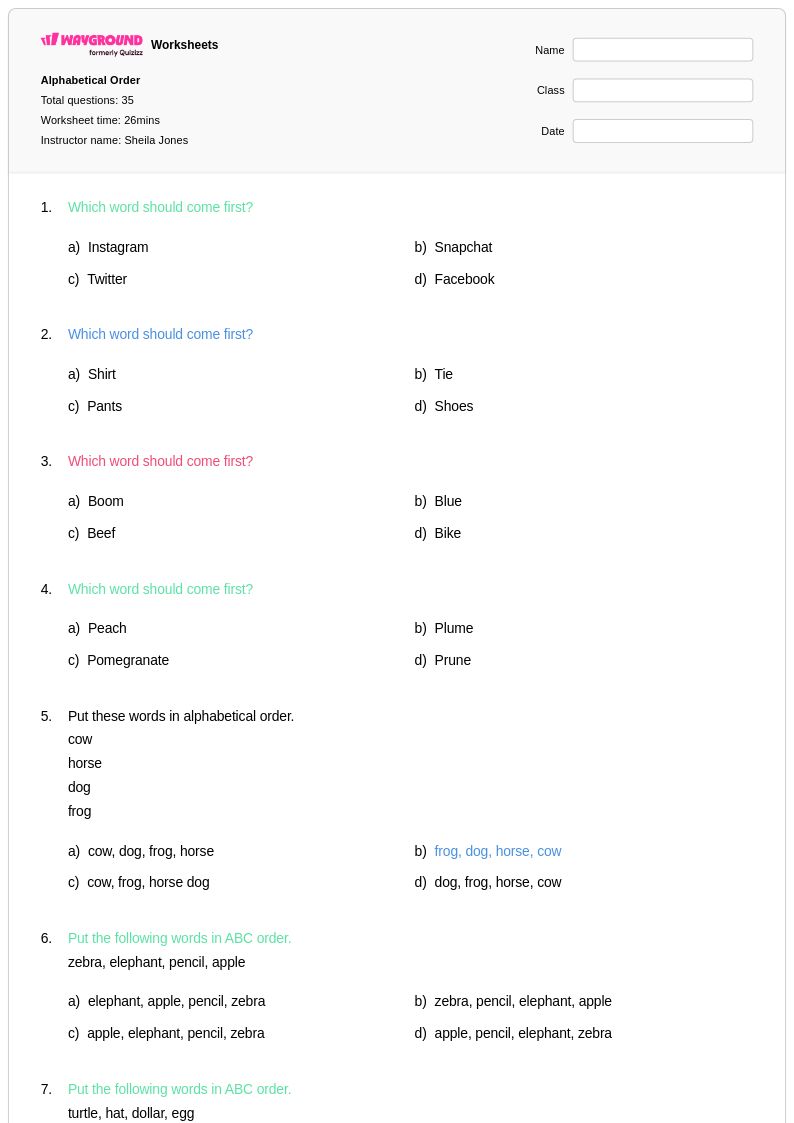
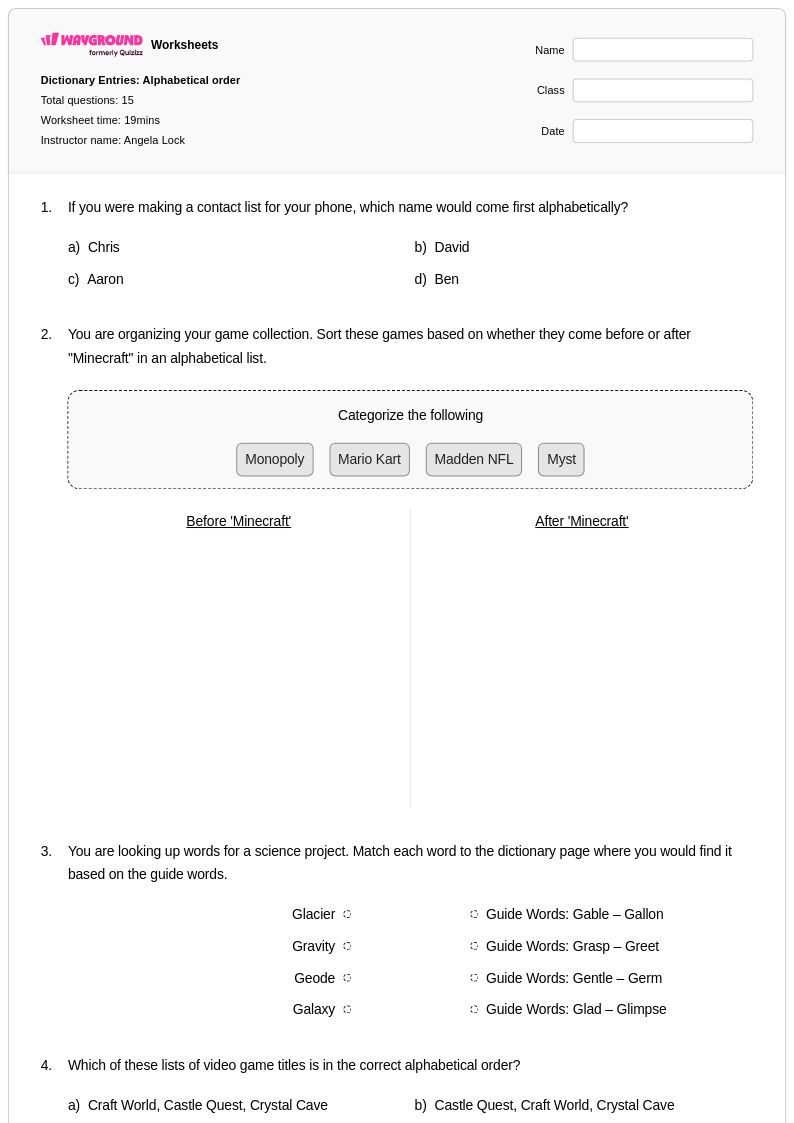
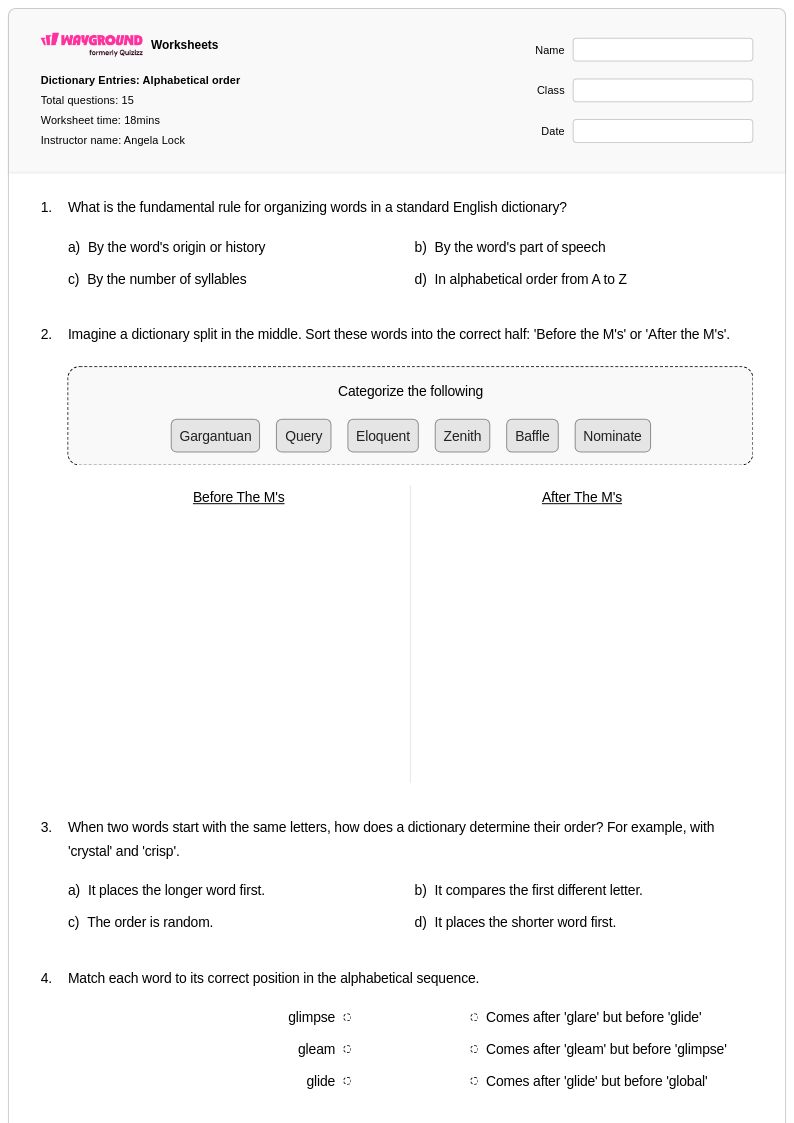
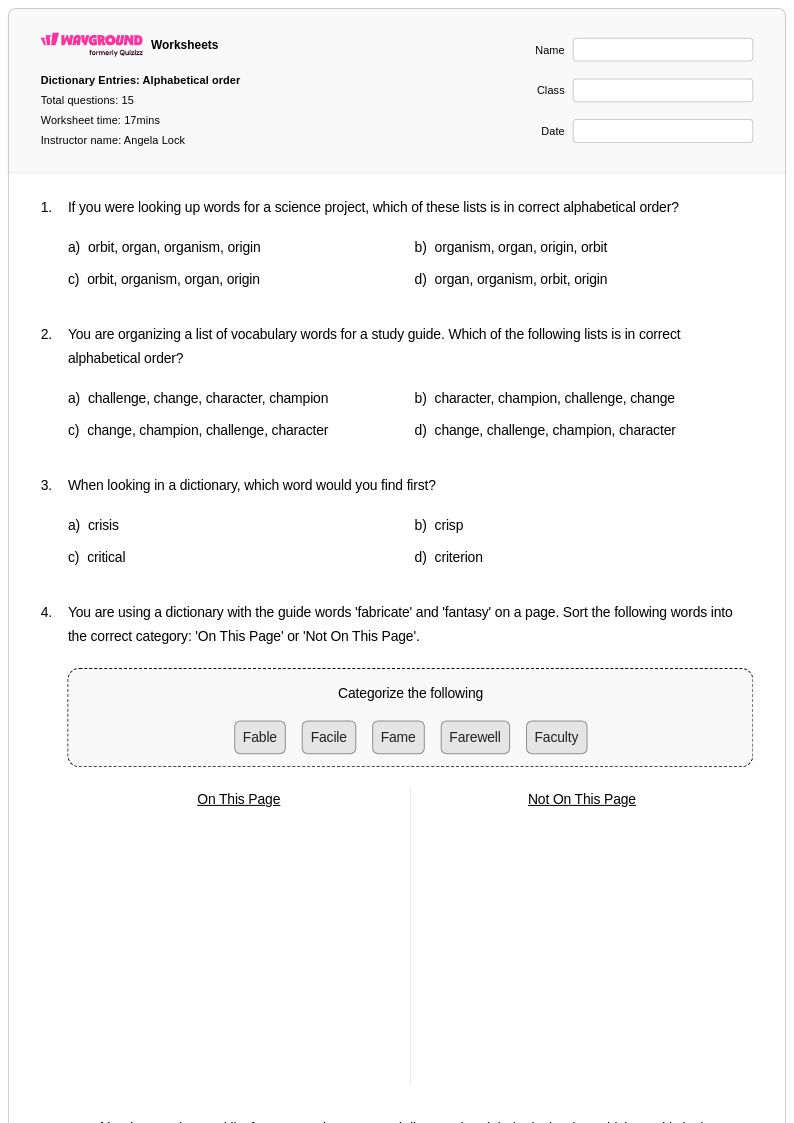
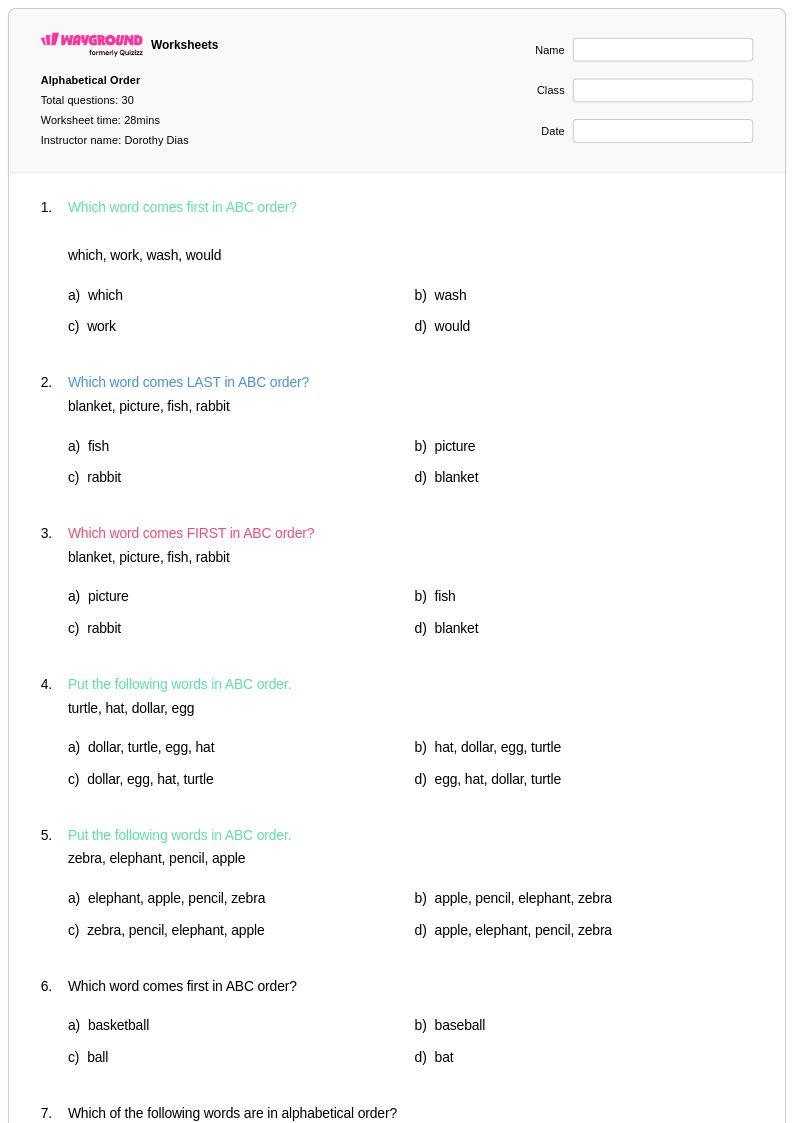
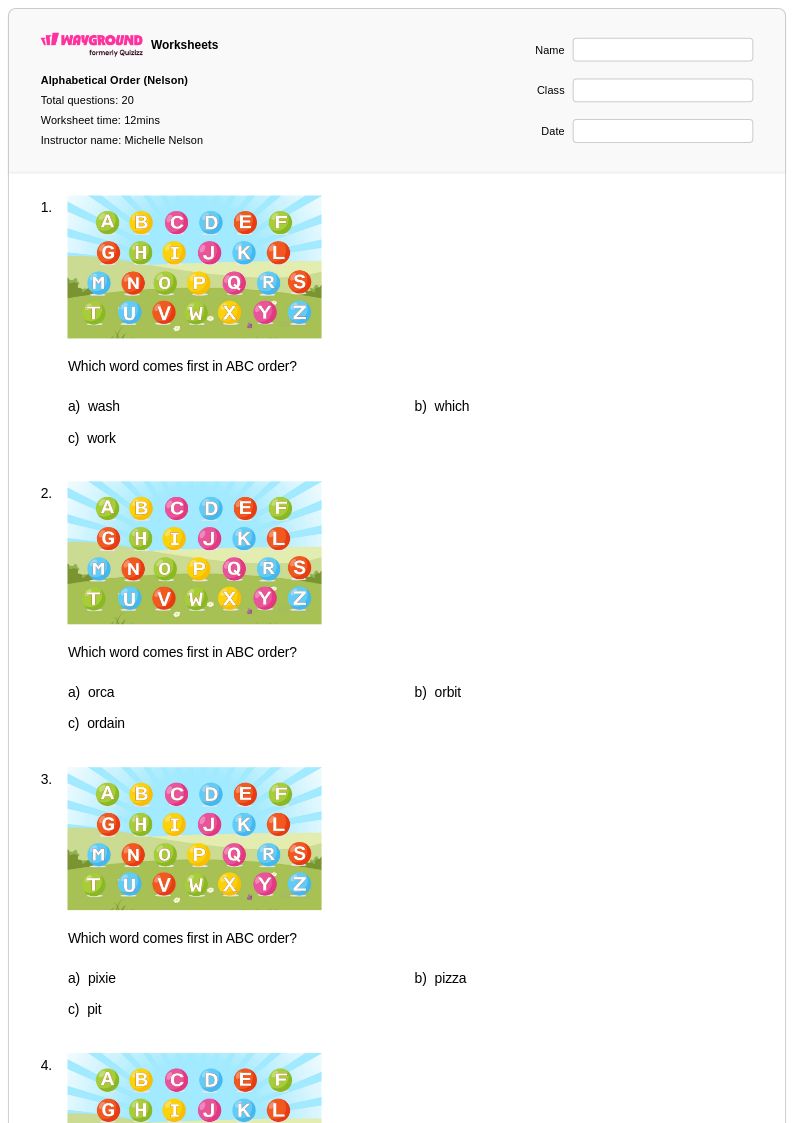
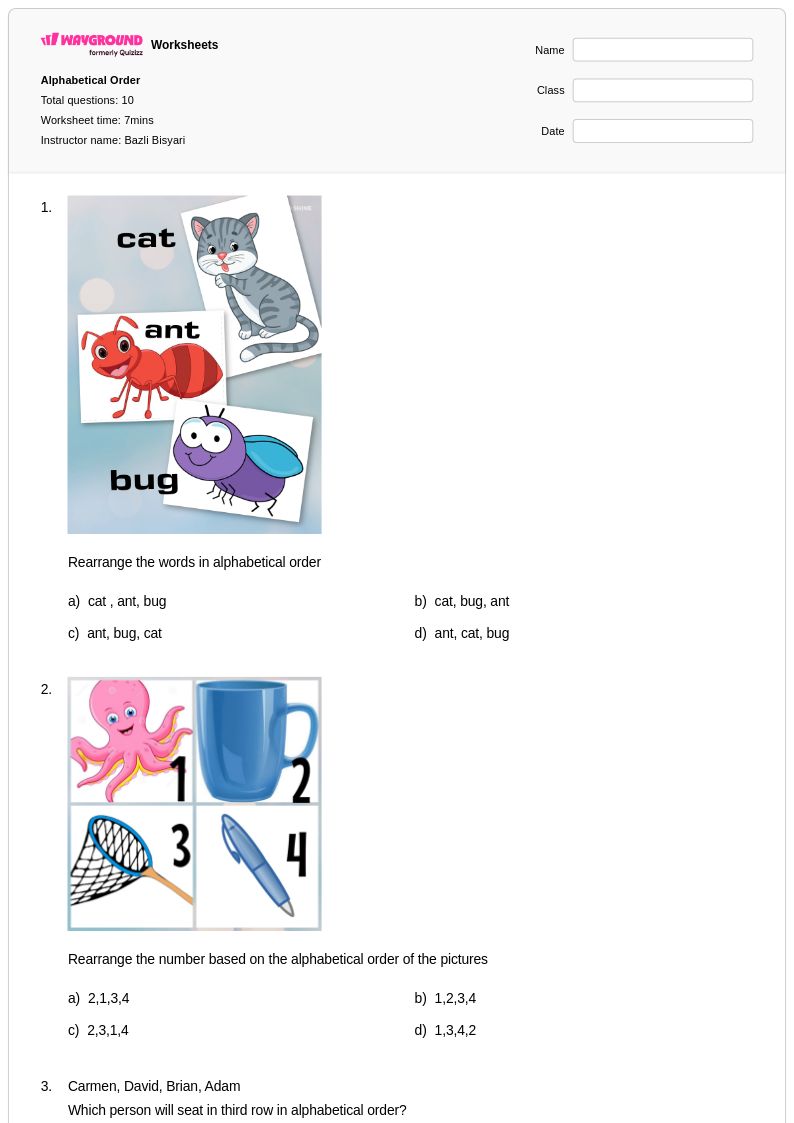
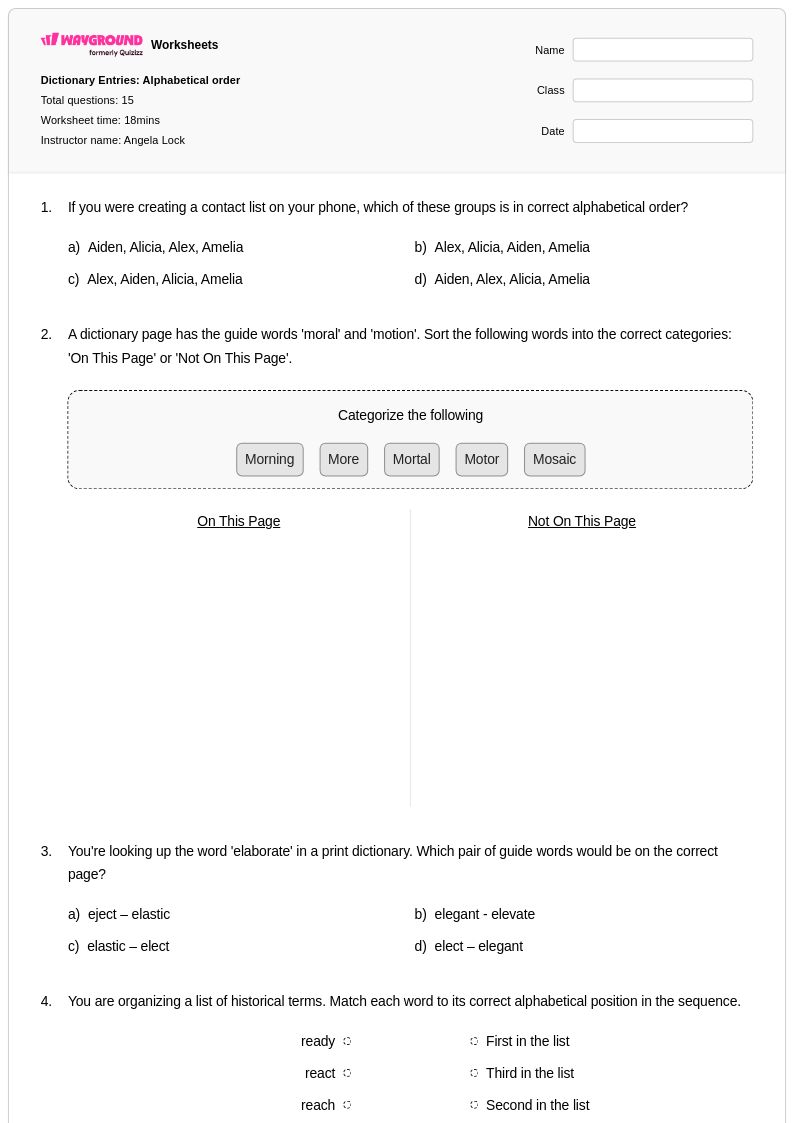
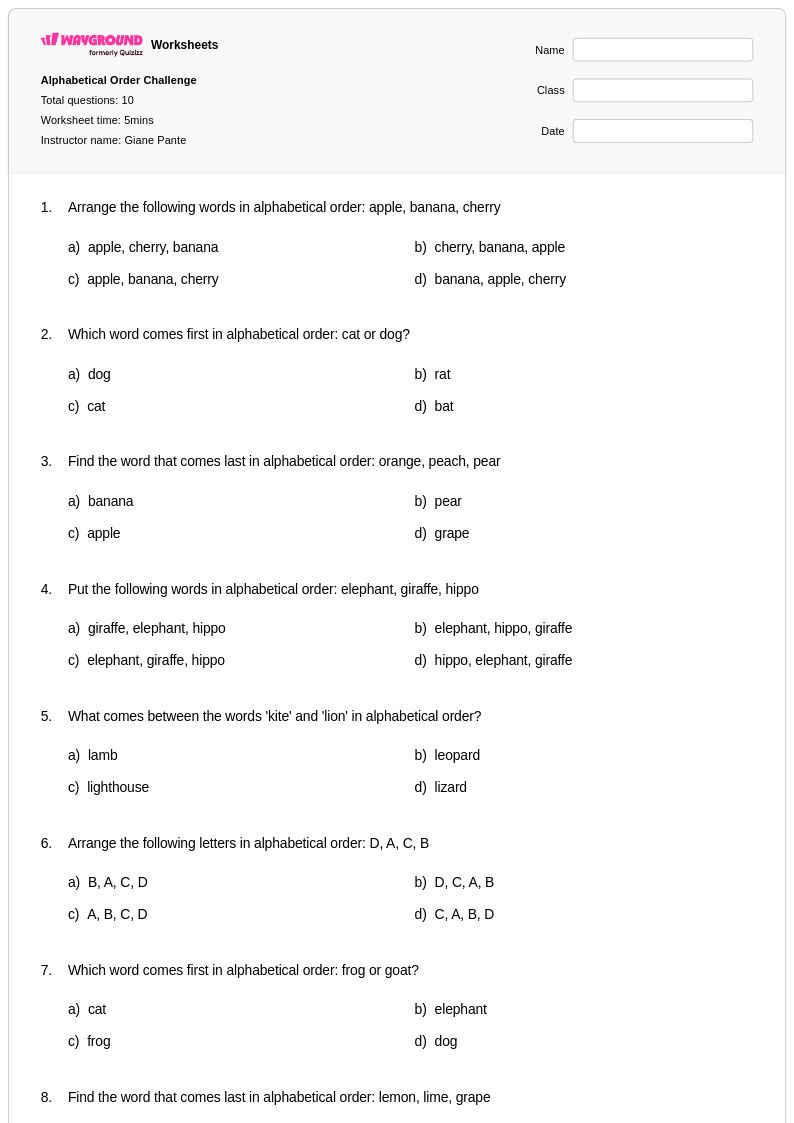
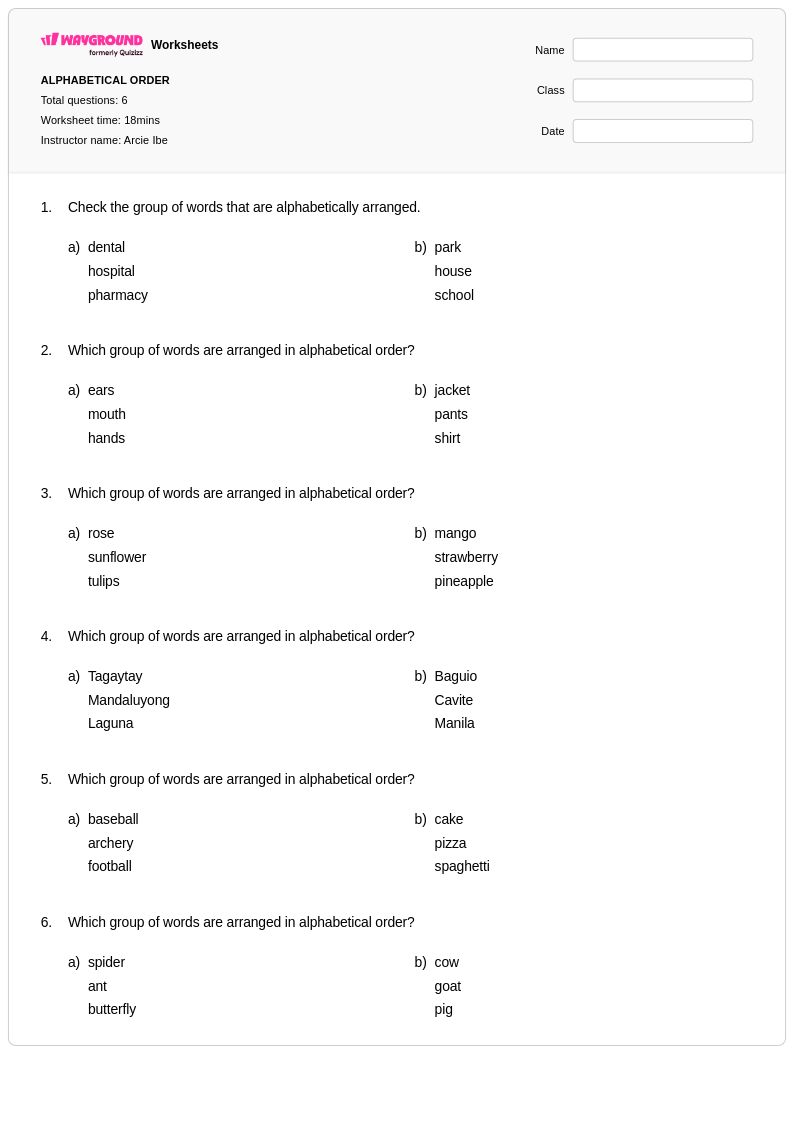
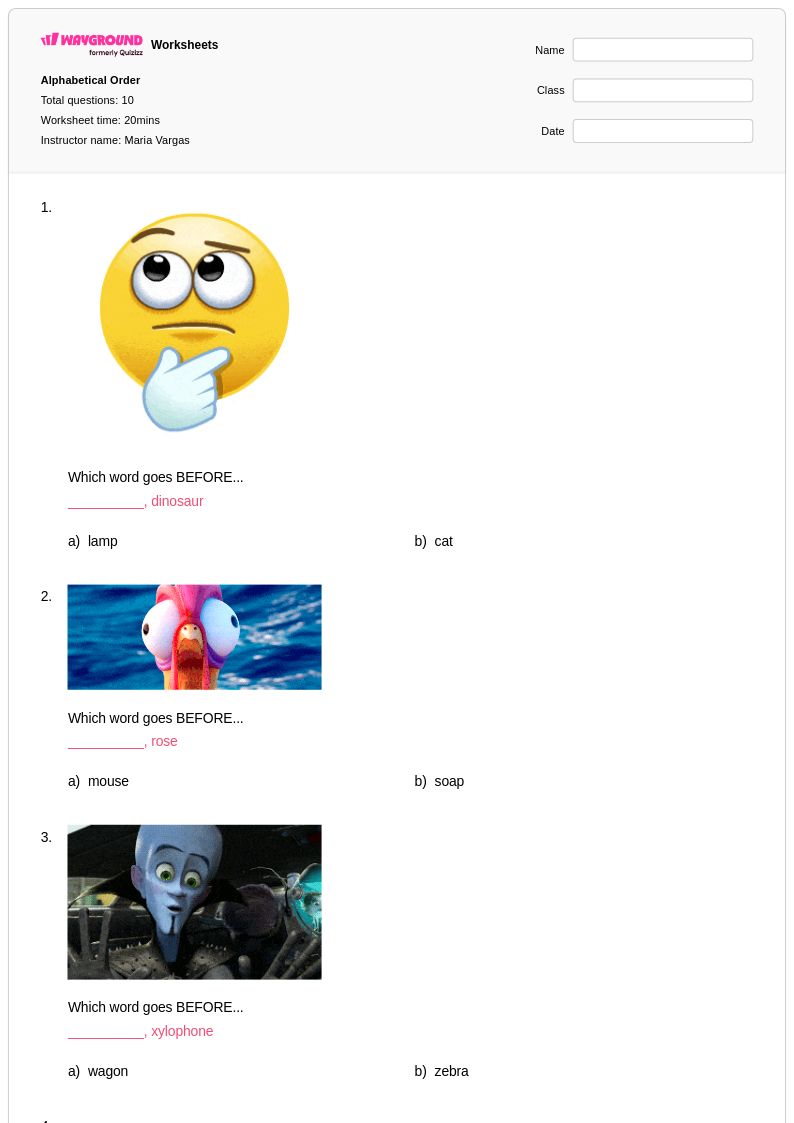
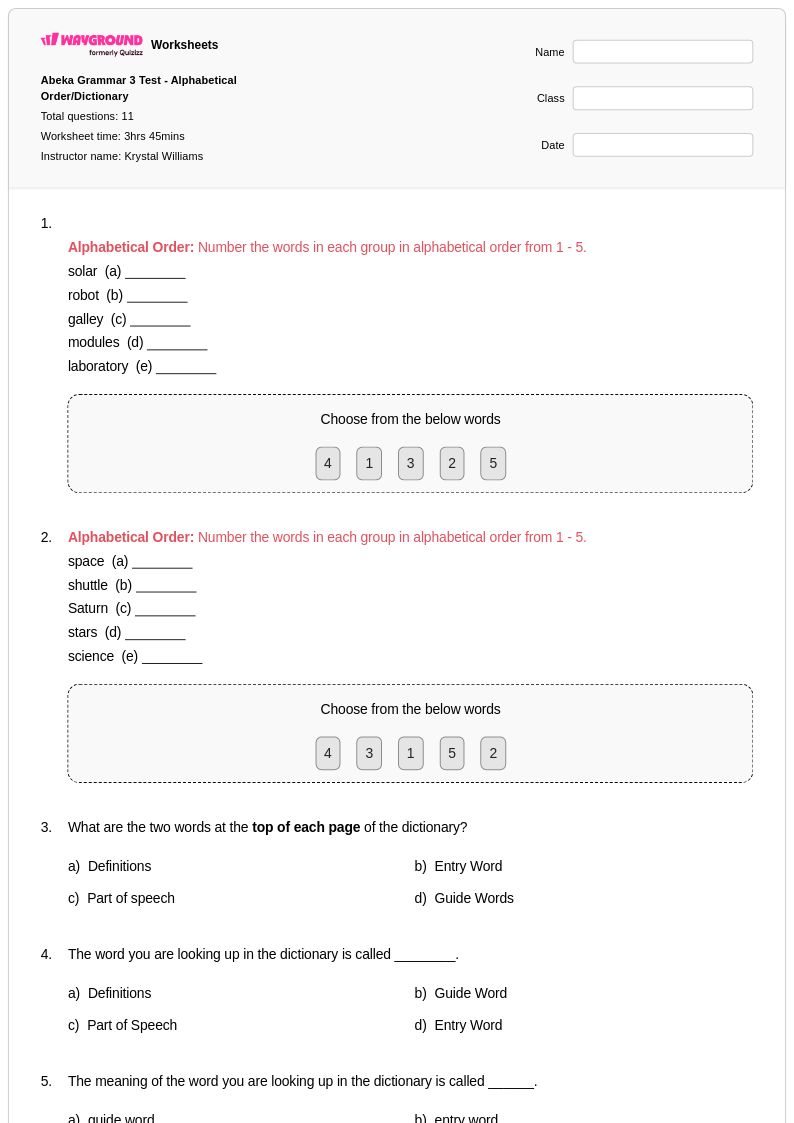
Alphabetical order worksheets for kindergarten students available through Wayground (formerly Quizizz) provide essential foundational literacy practice that strengthens early reading and organizational skills. These carefully designed printables help young learners master the sequence of letters A through Z, developing crucial pre-reading abilities that support future dictionary skills, library organization understanding, and systematic thinking patterns. Each worksheet collection includes comprehensive practice problems that progress from simple ABC recognition to more complex sequencing tasks, complete with detailed answer keys that enable teachers and parents to provide immediate feedback. The free pdf resources feature engaging activities such as letter ordering exercises, alphabet trains, missing letter identification, and picture-word alphabetization that make learning this fundamental skill both educational and enjoyable for kindergarten-age children.
Wayground (formerly Quizizz) empowers educators with access to millions of teacher-created alphabetical order resources specifically aligned with kindergarten learning standards and developmental expectations. The platform's robust search and filtering capabilities allow teachers to quickly locate worksheets that match their students' specific skill levels, whether for initial instruction, targeted remediation, or enrichment activities. These versatile materials are available in both printable pdf format for traditional classroom use and digital formats for interactive learning experiences, supporting flexible lesson planning across diverse teaching environments. The comprehensive differentiation tools enable educators to customize worksheets for individual student needs, ensuring that each kindergarten learner receives appropriate challenge levels while building confidence in this essential pre-literacy skill that forms the foundation for future academic success in reading, writing, and research abilities.
FAQs
How do I teach alphabetical order to early elementary students?
Begin with single-letter sorting before moving to multi-word lists. Have students physically arrange letter cards or word strips in sequence, which builds the muscle memory and visual recognition needed before transitioning to written exercises. Once students can reliably sort by first letter, introduce second- and third-letter alphabetization with words that share a common starting letter, such as 'ball,' 'bat,' and 'barn.' Connecting alphabetical order to real-world tools like dictionaries and indexes gives students a practical reason to master the skill.
What exercises help students practice alphabetizing words?
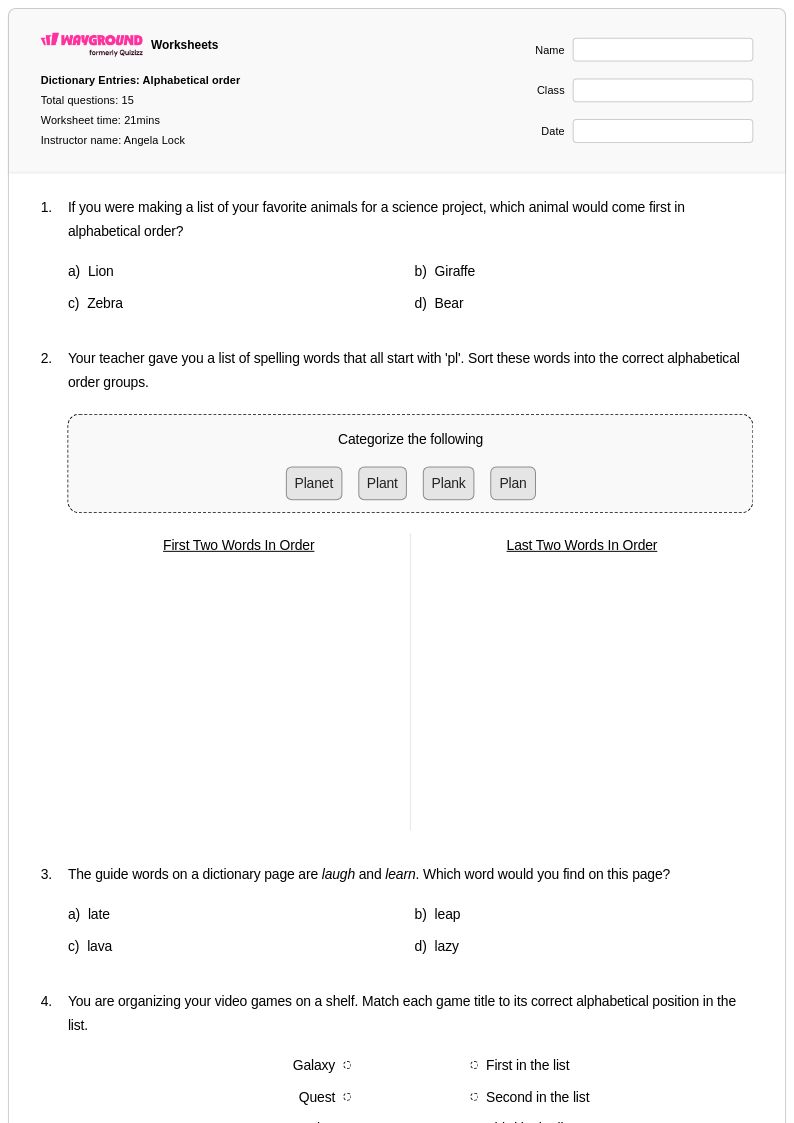
Effective practice exercises include sorting short word lists by first letter, then progressing to second- and third-letter comparisons when initial letters match. Word-sort activities, cut-and-paste sequencing tasks, and fill-in-the-missing-word exercises all target different aspects of alphabetization. Timed practice with increasingly complex word sets helps students build automaticity, while dictionary look-up tasks apply alphabetical order in a real reference context. Worksheets that mix familiar vocabulary with subject-specific terms reinforce alphabetization across content areas simultaneously.
What mistakes do students commonly make when learning alphabetical order?
The most common error is stopping at the first letter without comparing subsequent letters when two or more words share the same initial letter. Students also frequently confuse the relative positions of middle-alphabet letters like M, N, O, and P, which are harder to sequence by memory than letters near the beginning or end of the alphabet. Another frequent mistake is treating capital and lowercase letters as belonging to different sequences. Targeted practice with minimal pairs, such as 'ship' and 'shop,' helps students develop the habit of scanning beyond the first letter before placing a word.
How do I use Wayground's alphabetical order worksheets in my classroom?
Wayground's alphabetical order worksheets are available as printable PDFs, making them easy to distribute for independent work, homework, or small-group instruction, and in digital formats that work equally well in one-to-one device environments or computer labs. Teachers can host the worksheets as a quiz directly on Wayground, which allows for real-time progress monitoring. Each worksheet includes a complete answer key, so grading and self-correction remain straightforward regardless of the format chosen.
How do I differentiate alphabetical order practice for students at different skill levels?
For students who are still mastering the alphabet sequence, begin with simple first-letter sorting using high-frequency or familiar words before introducing any multi-letter comparisons. Advanced students benefit from alphabetizing longer lists, working with proper nouns, or sorting subject-specific vocabulary from science or social studies. On Wayground, teachers can apply individual accommodations such as reduced answer choices or read-aloud support to specific students, while the rest of the class works through default settings without disruption.
At what grade level should students be proficient in alphabetical order?
Most literacy standards expect students to alphabetize by first letter by the end of first grade and by second and third letters by the end of second or third grade. By fourth grade, students are typically expected to use alphabetical order fluently as a reference tool, such as locating entries in a dictionary or glossary. Students who have not yet automatized multi-letter alphabetization in upper elementary often struggle with dictionary and index use, making targeted remediation practice a high-priority intervention.