Free Printable Exclamatory Sentences Worksheets for Kindergarten
Discover free kindergarten exclamatory sentences worksheets and printables that help young learners identify and practice using exciting expressions with engaging activities, practice problems, and complete answer keys.
Explore printable Exclamatory Sentences worksheets for Kindergarten
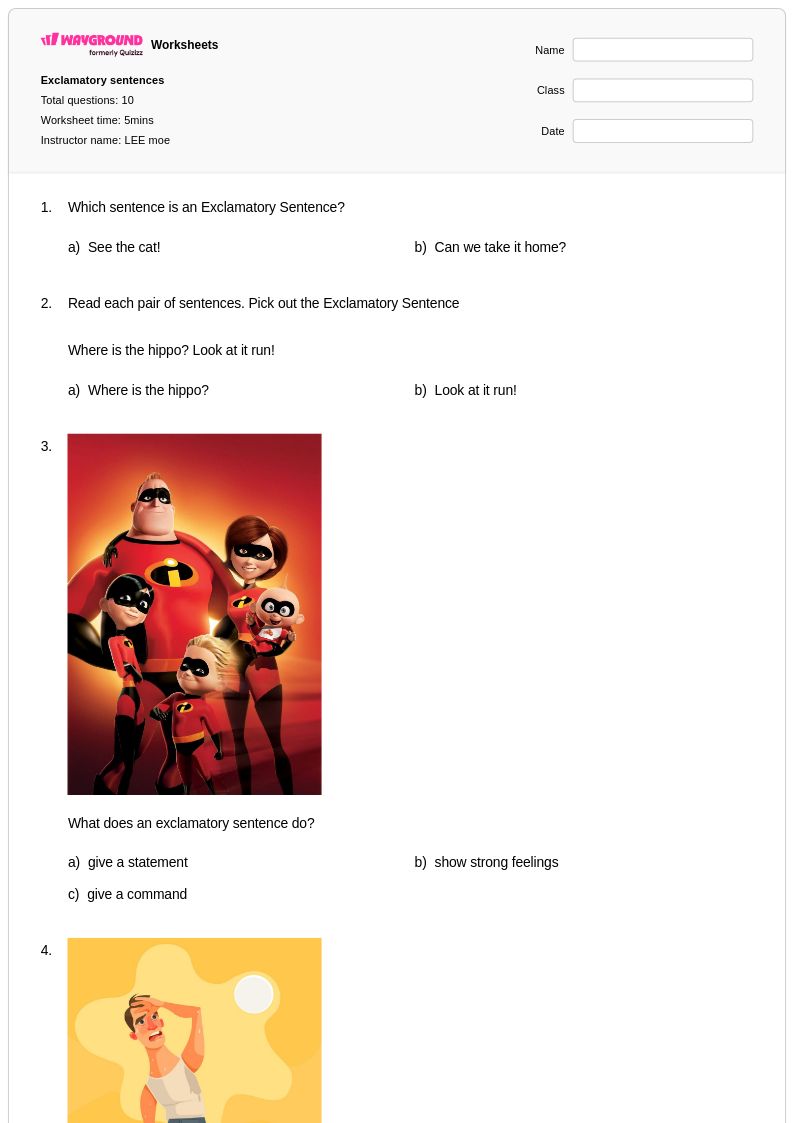
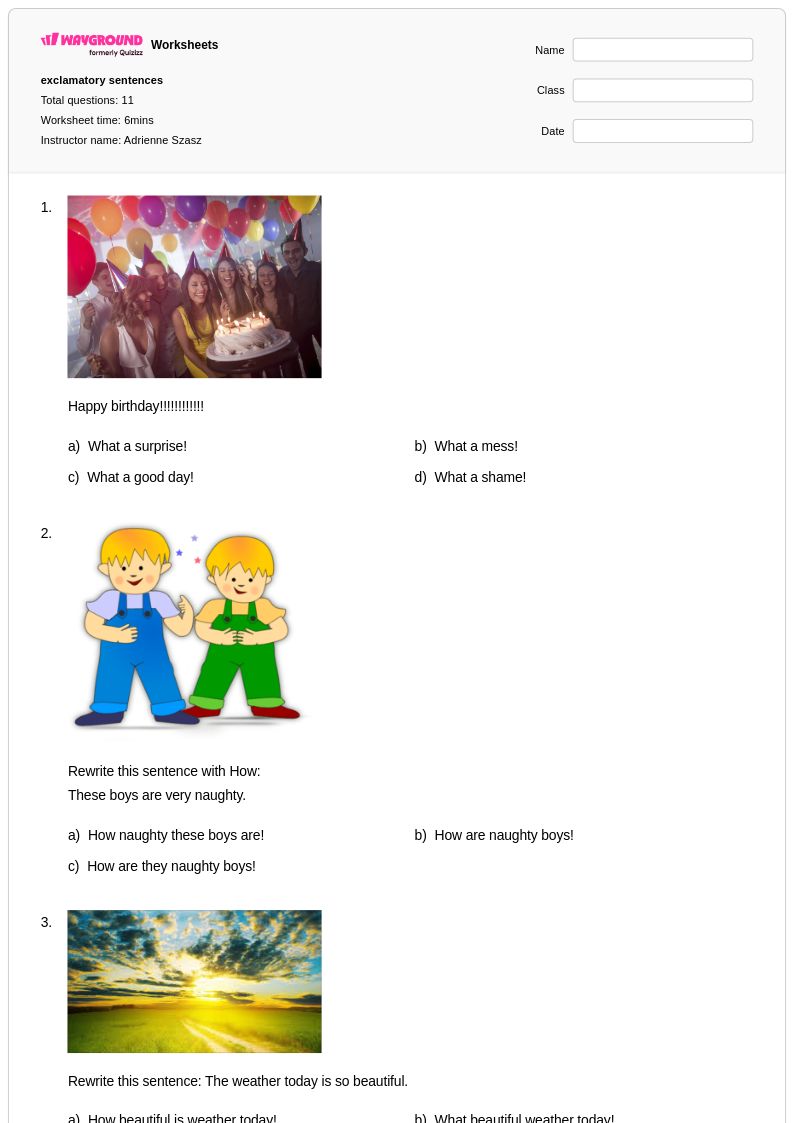
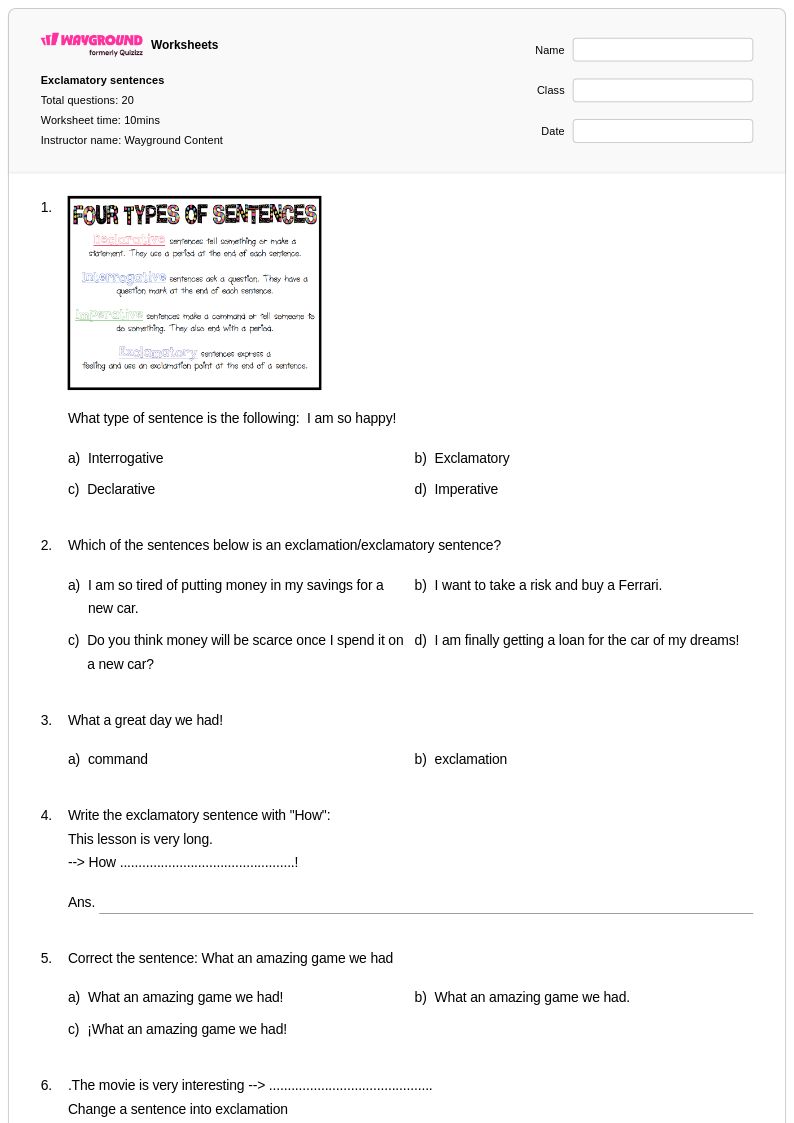
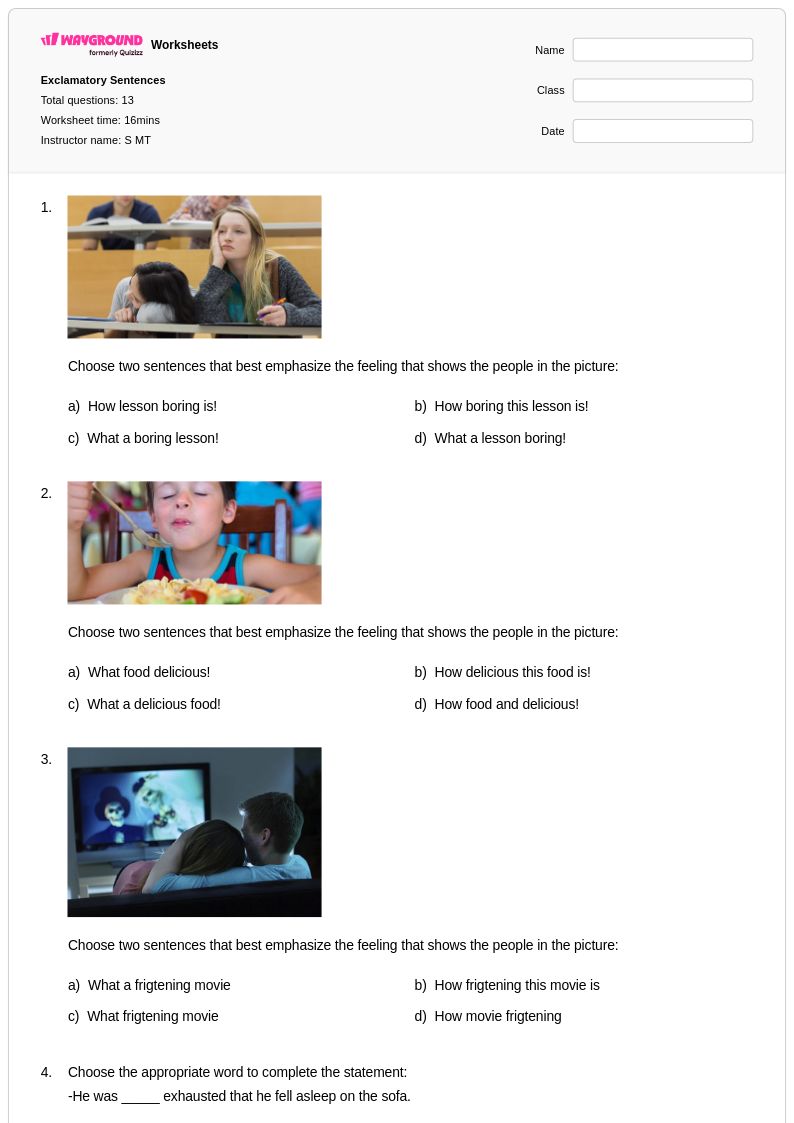
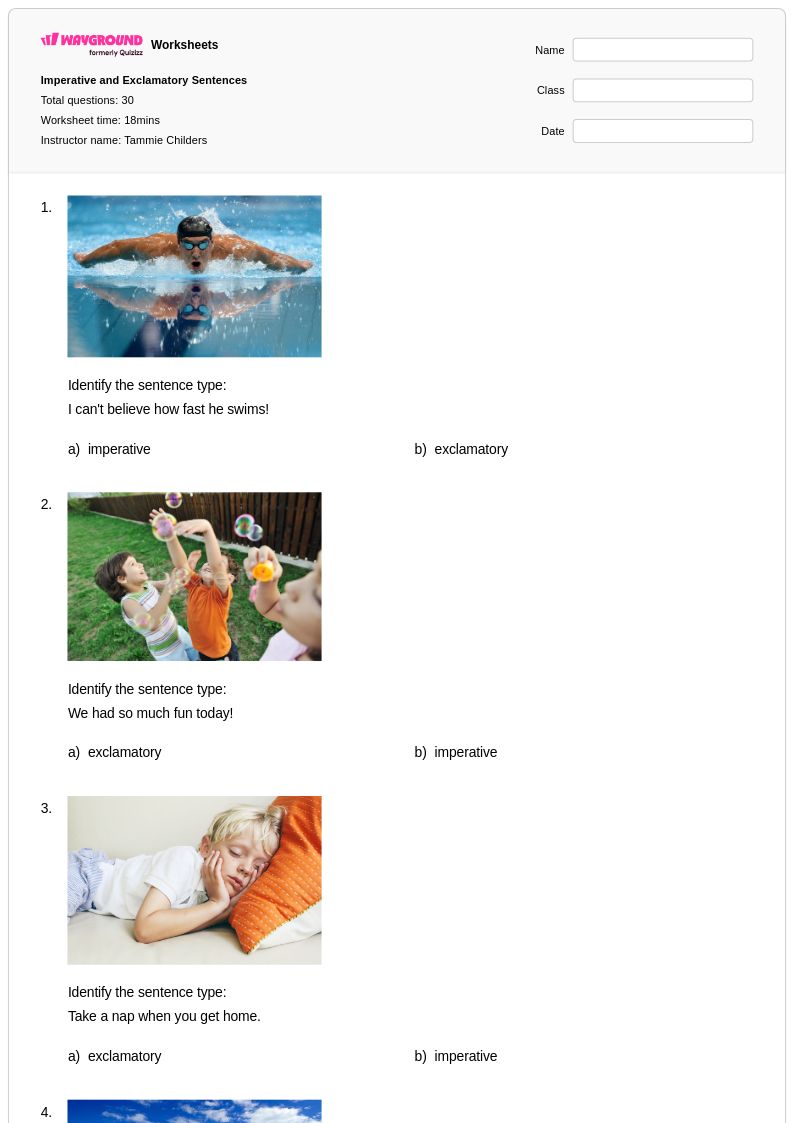
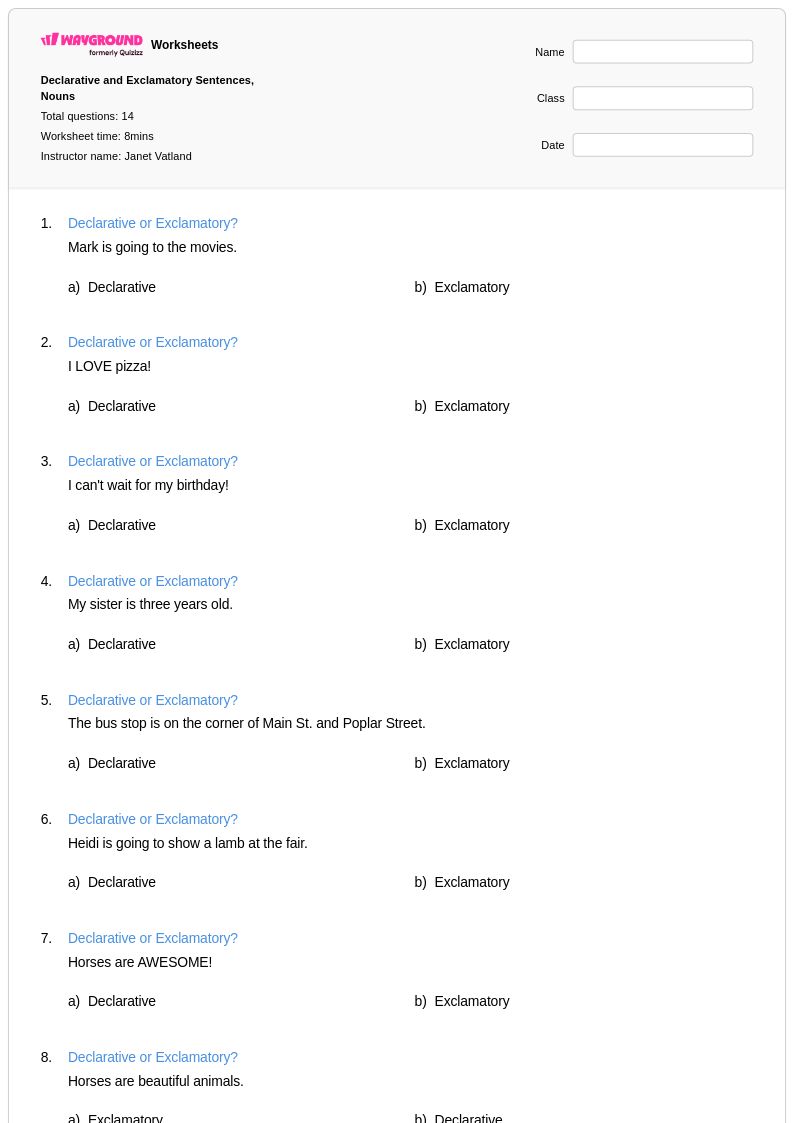
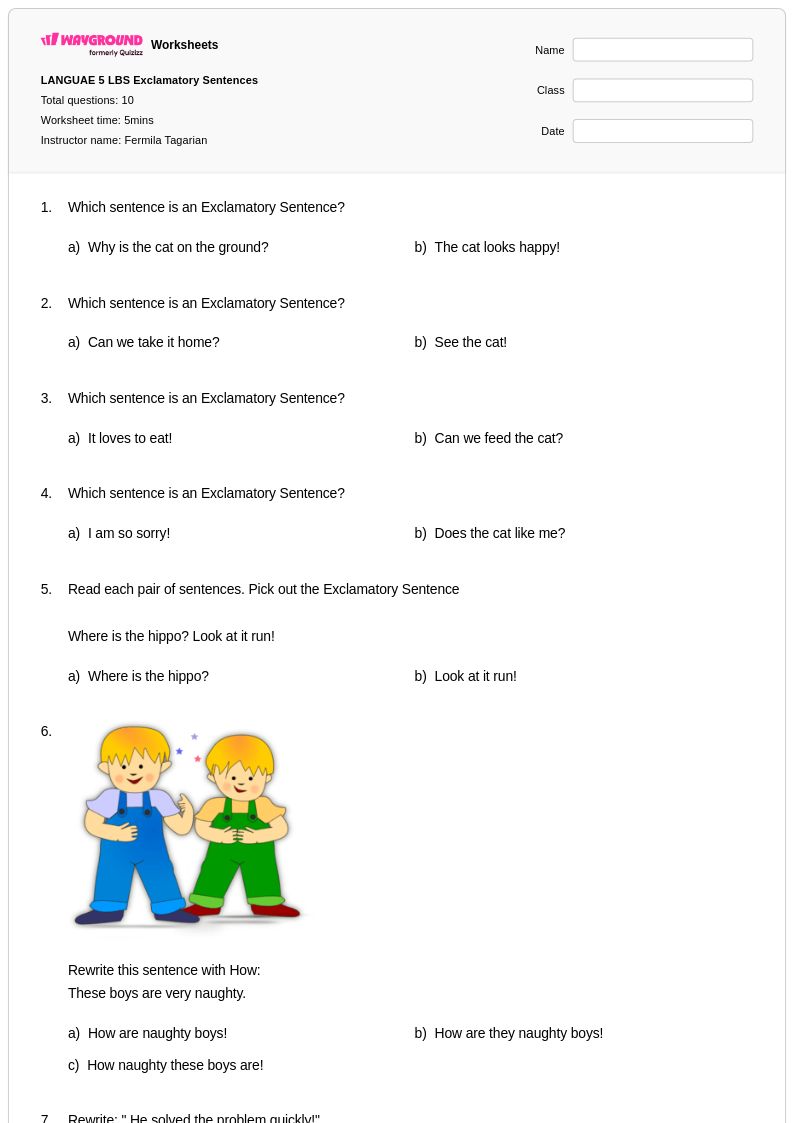
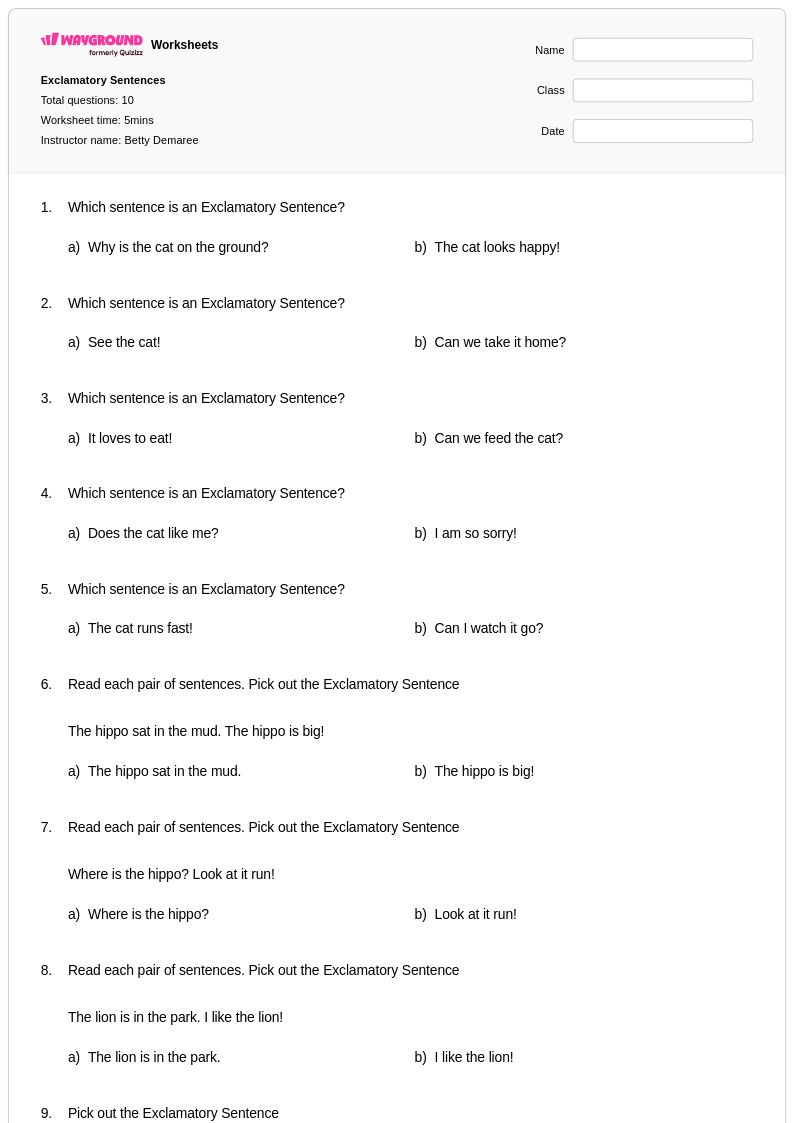
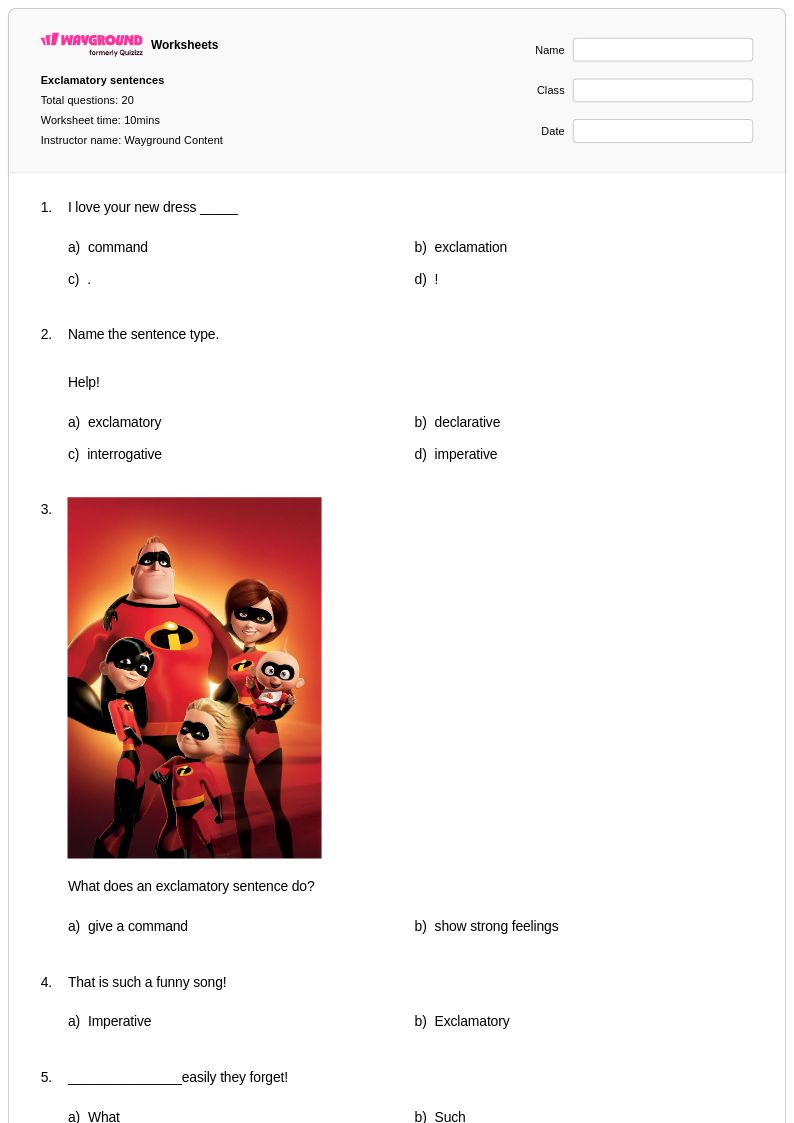
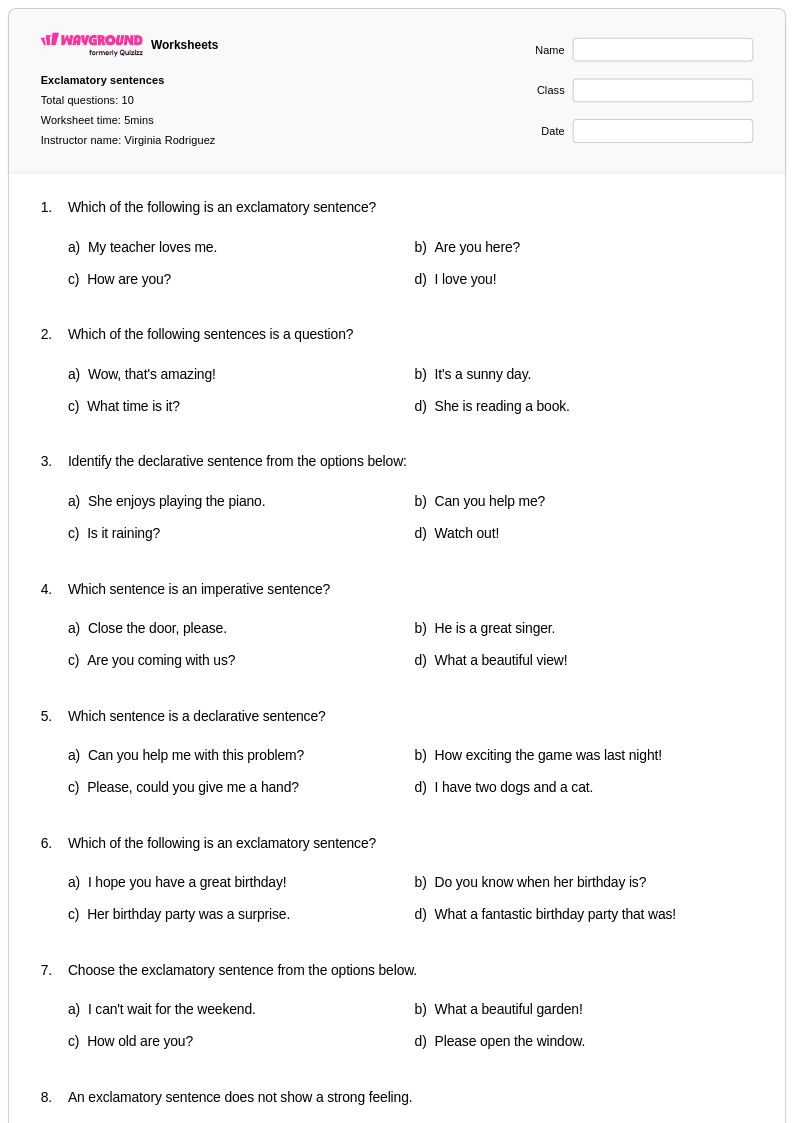
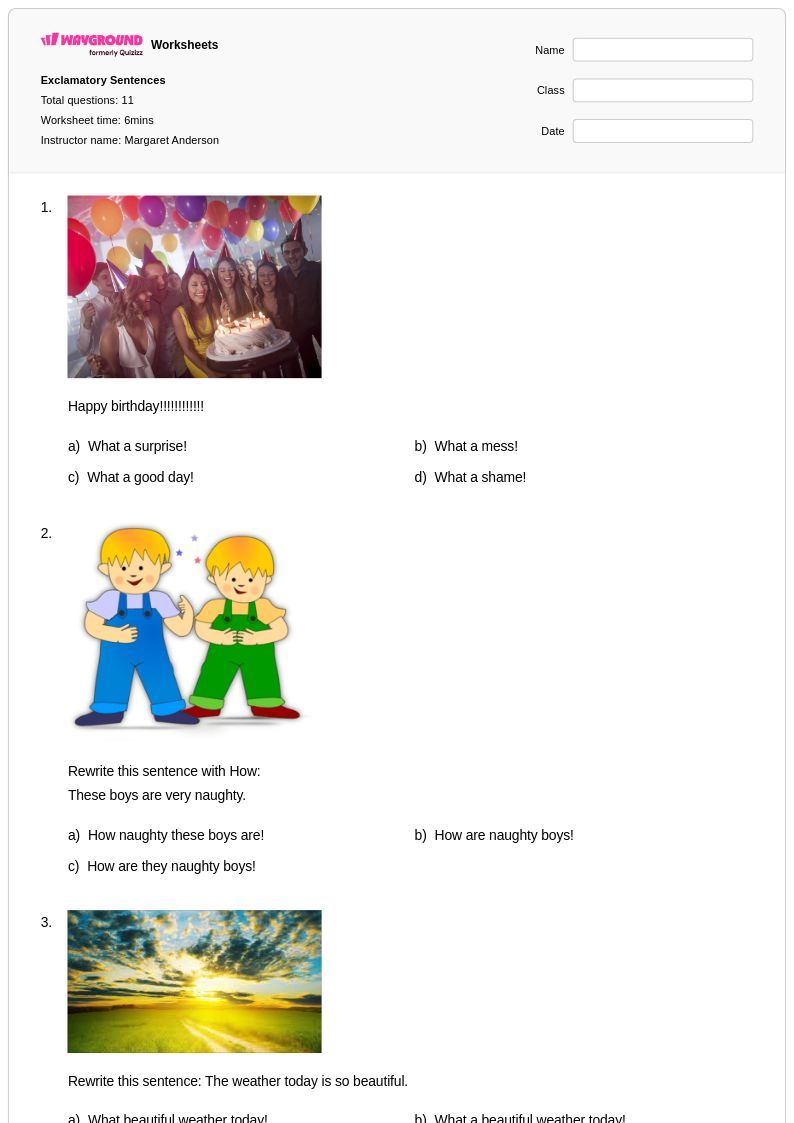
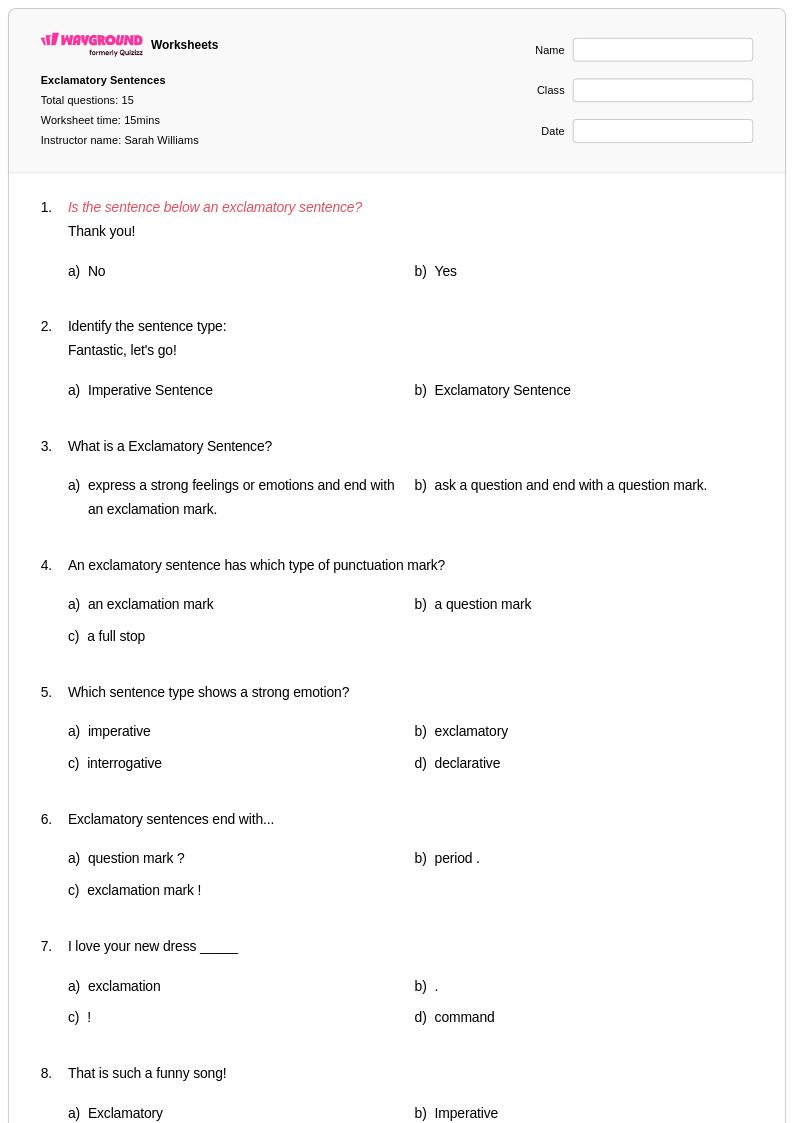
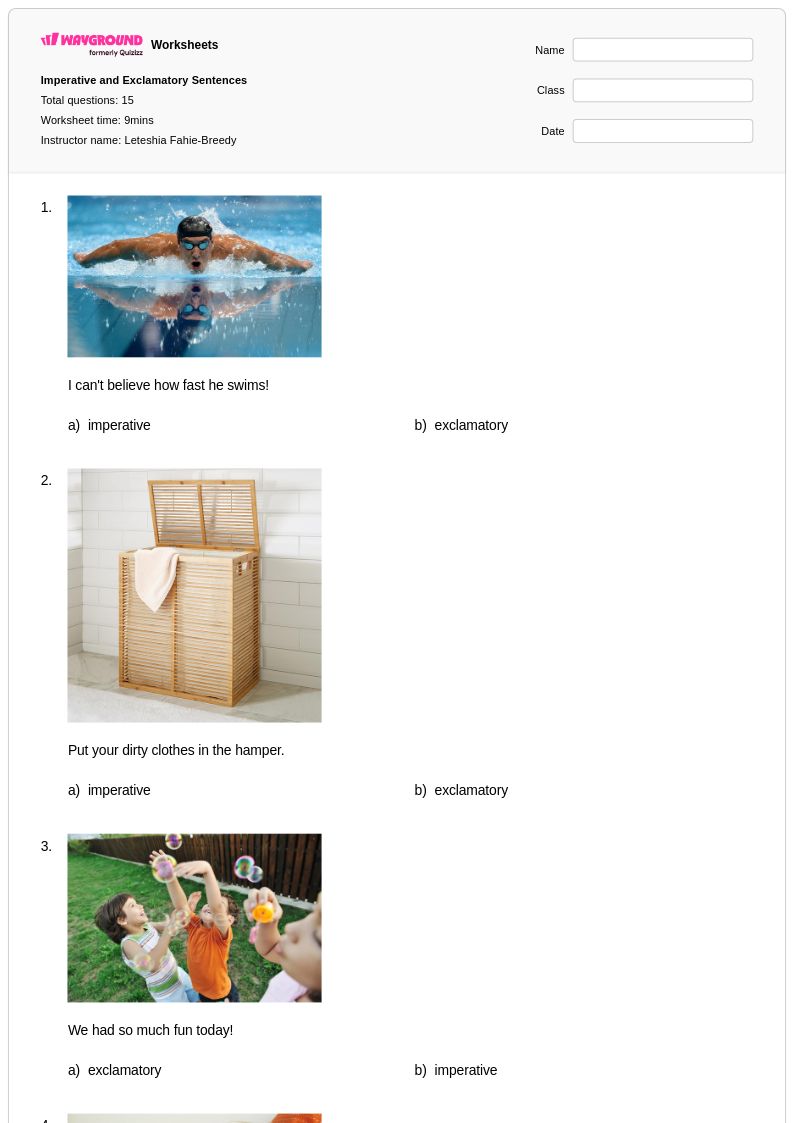
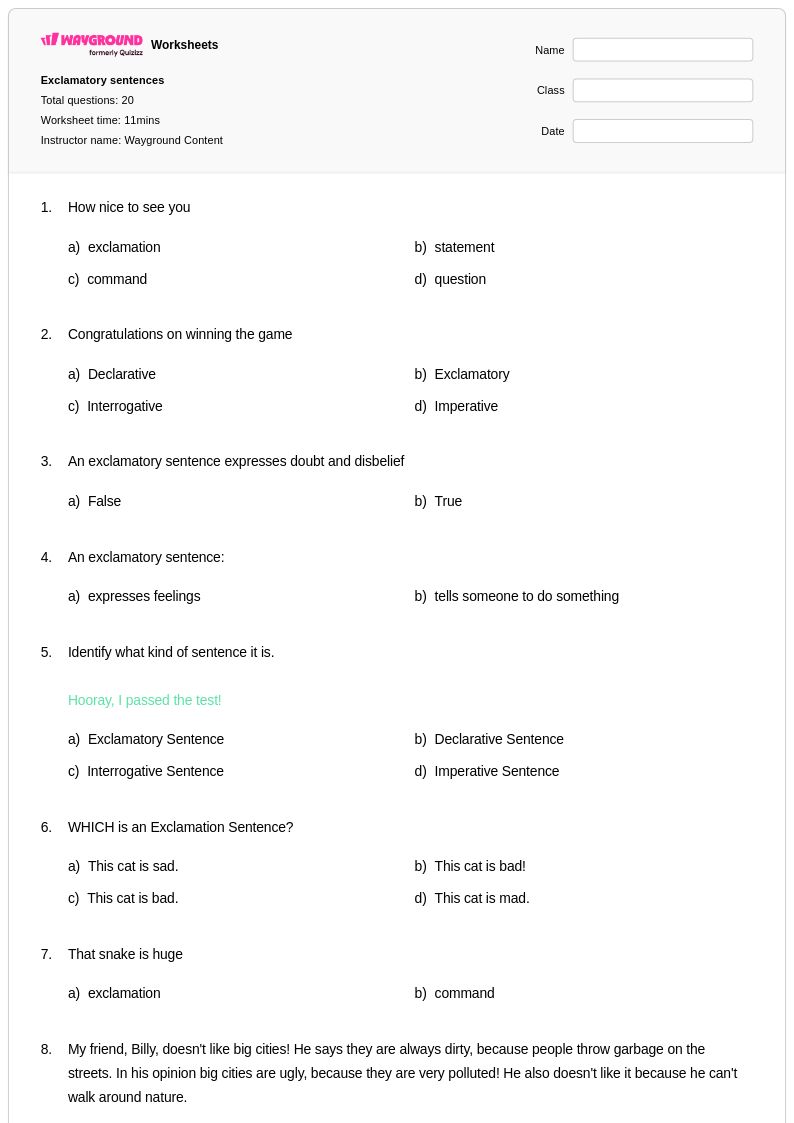
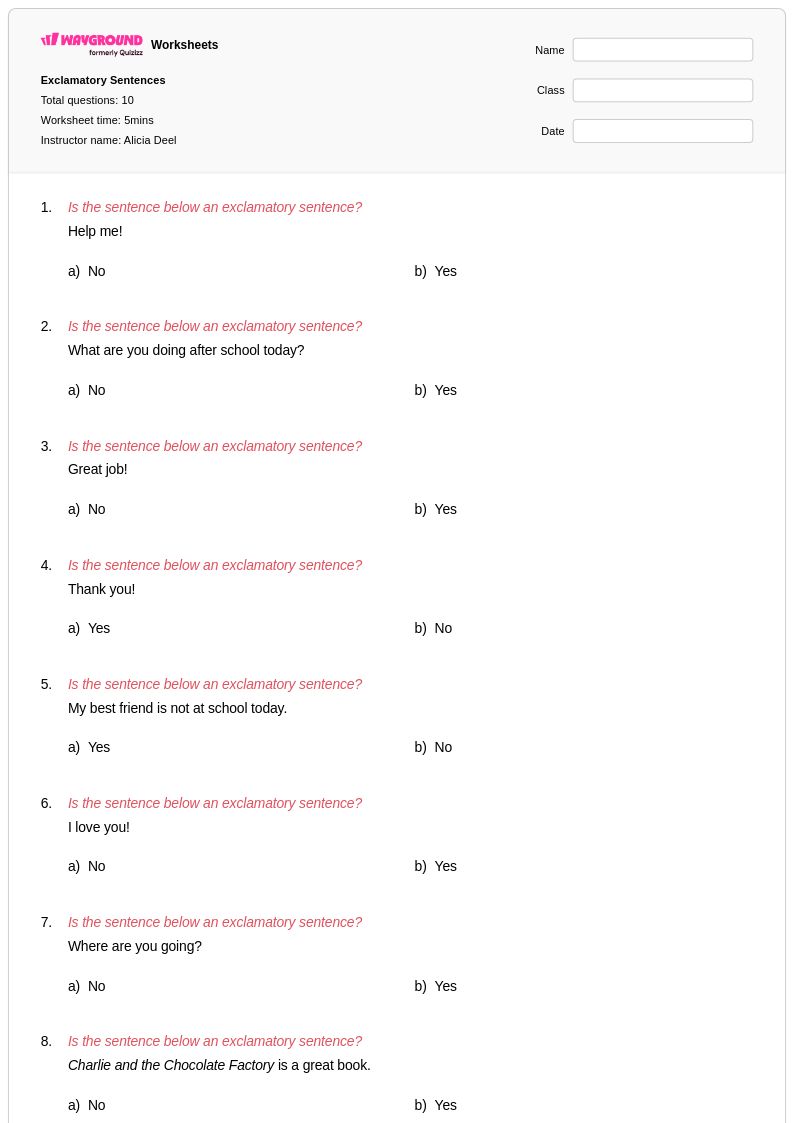
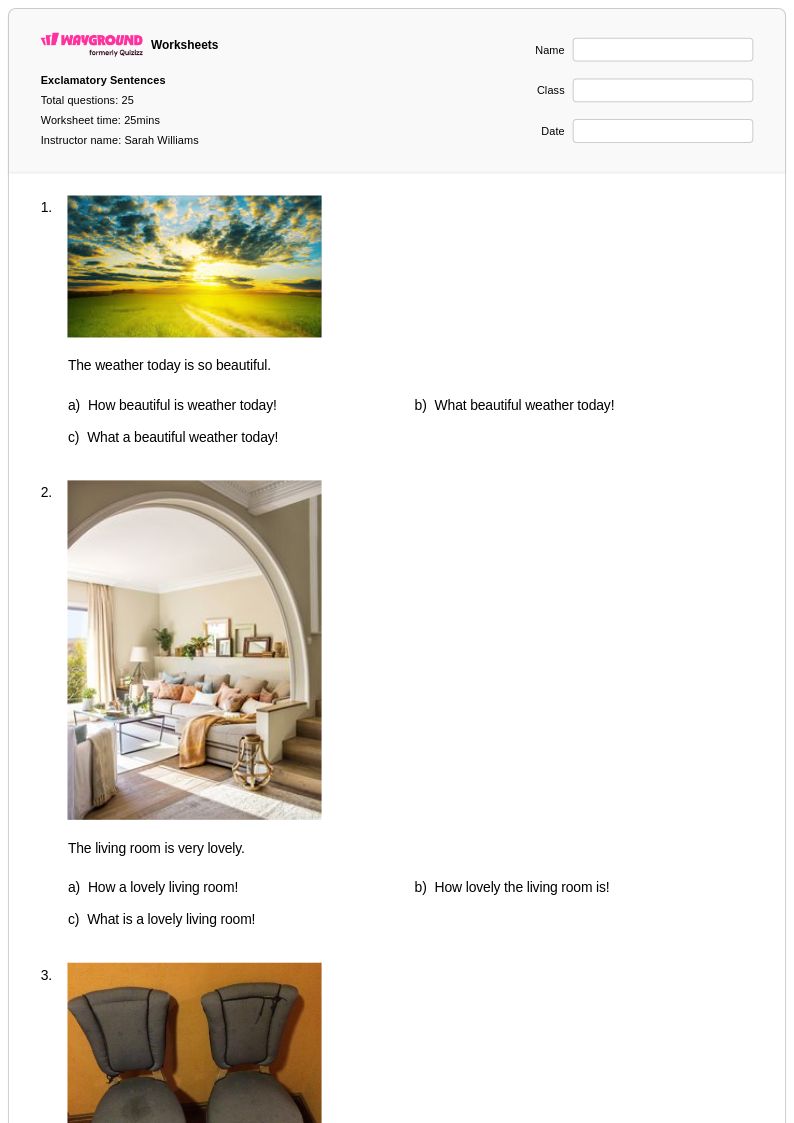
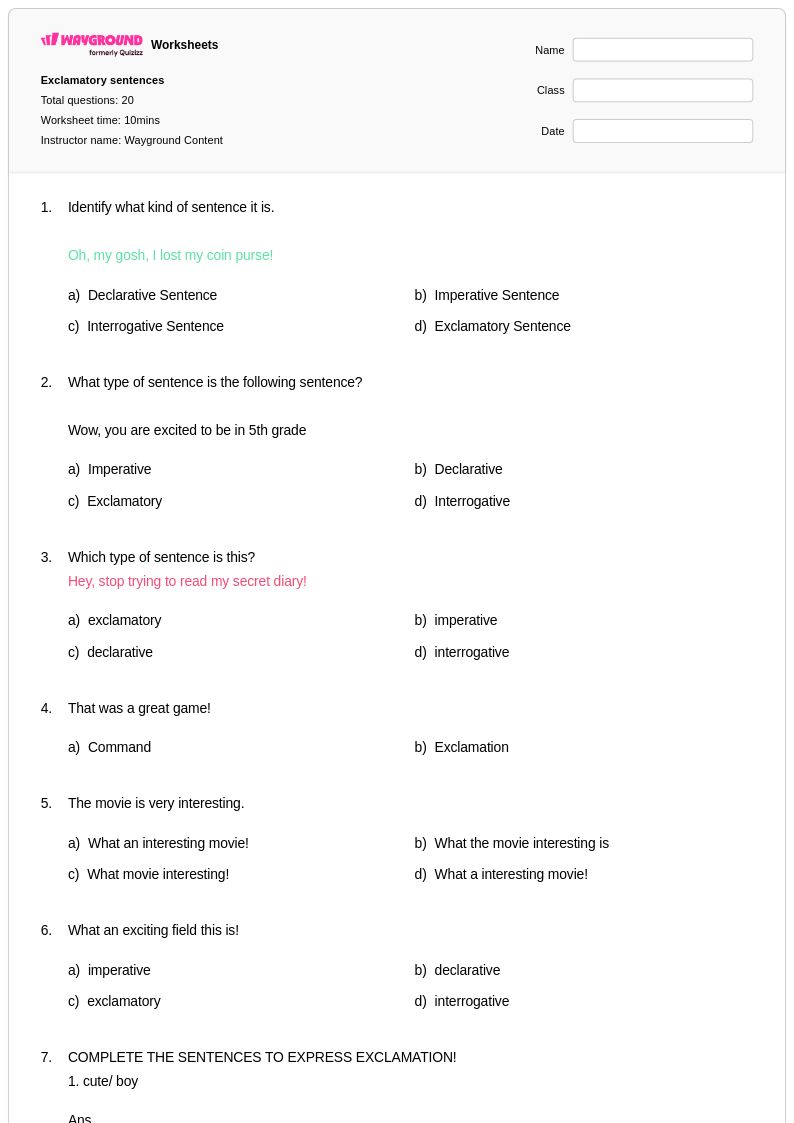
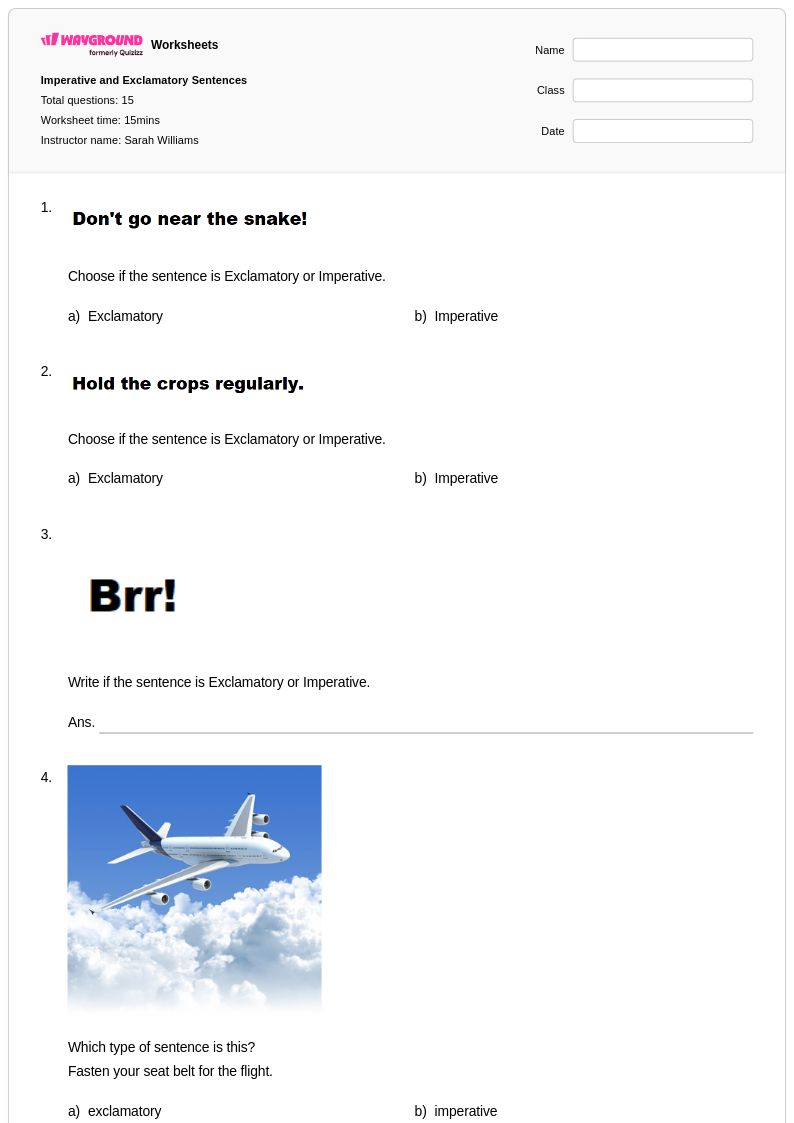
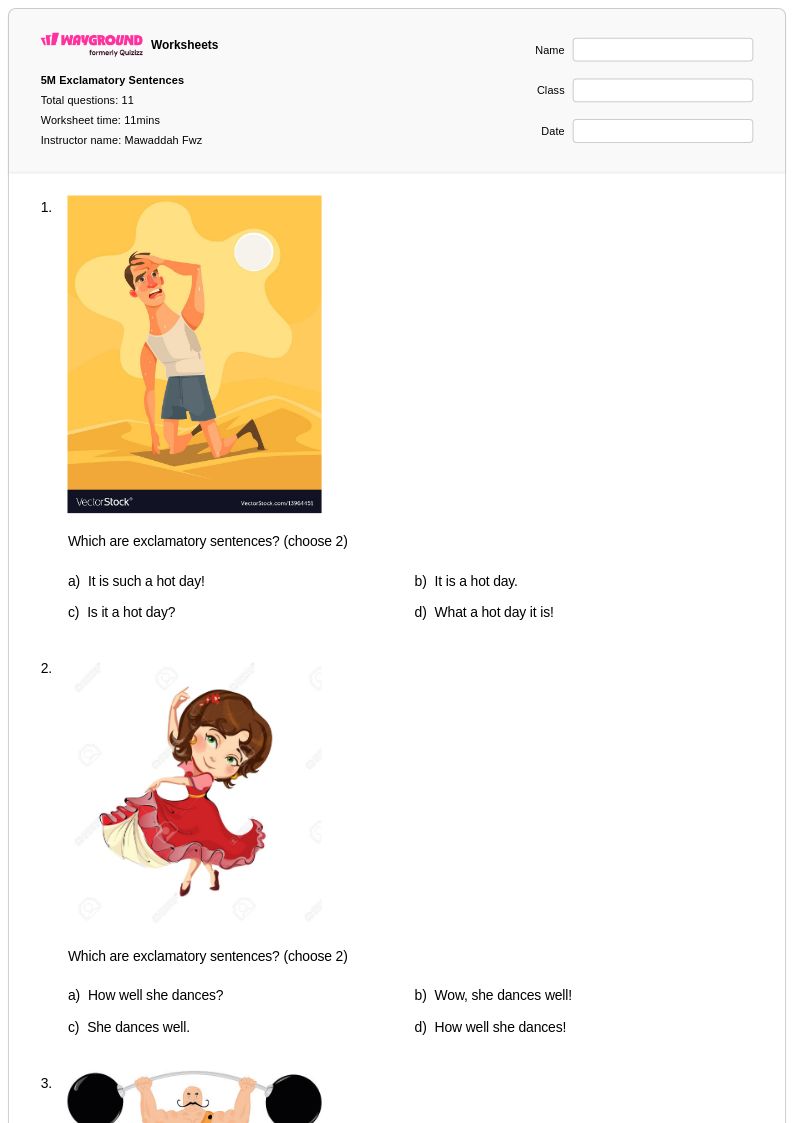
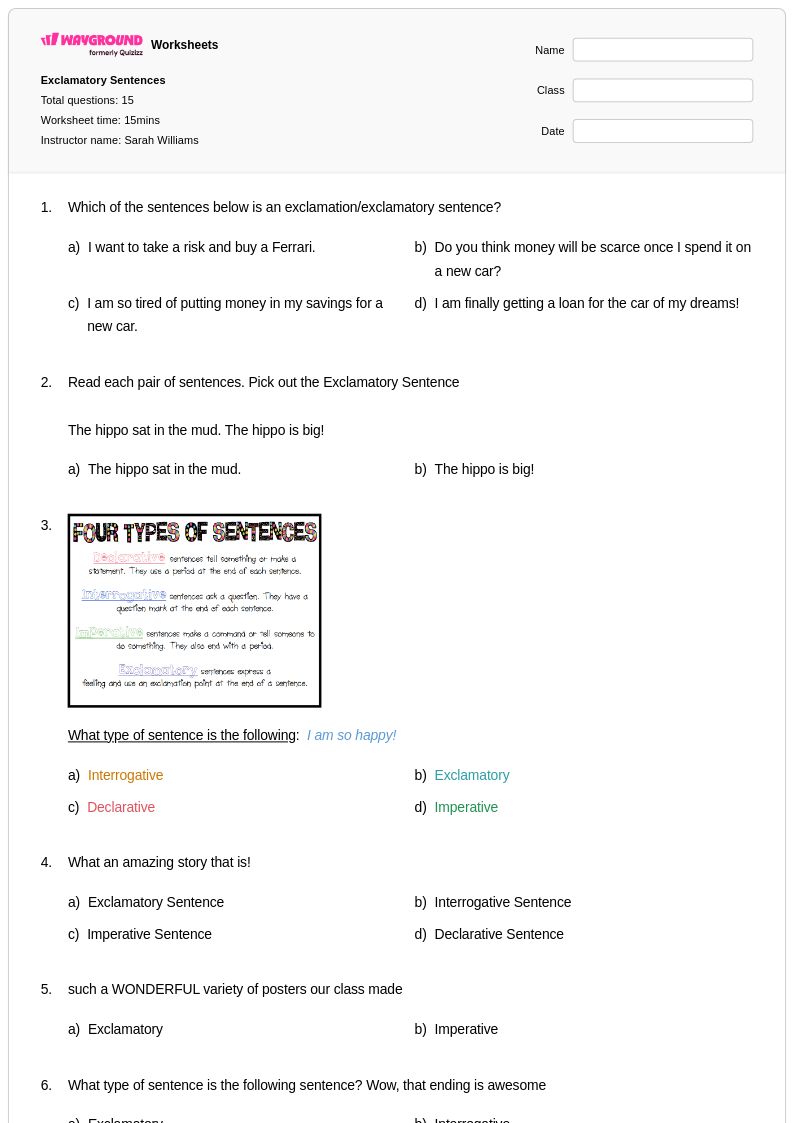
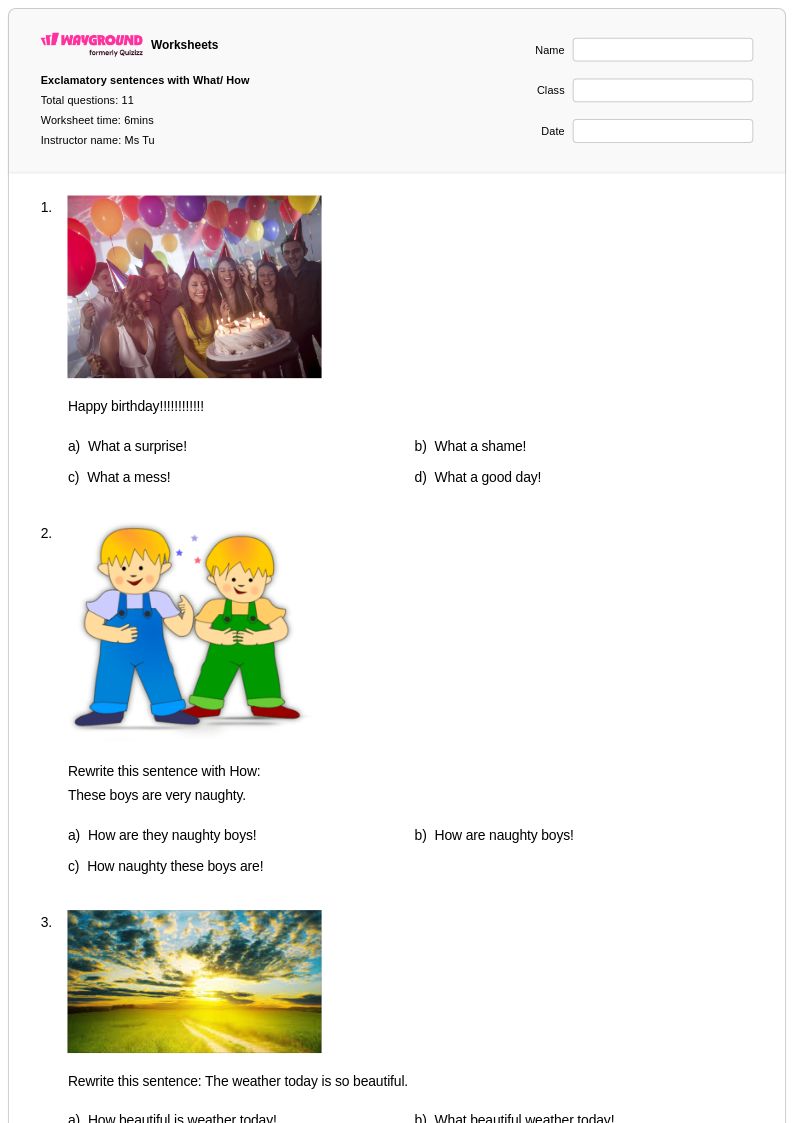
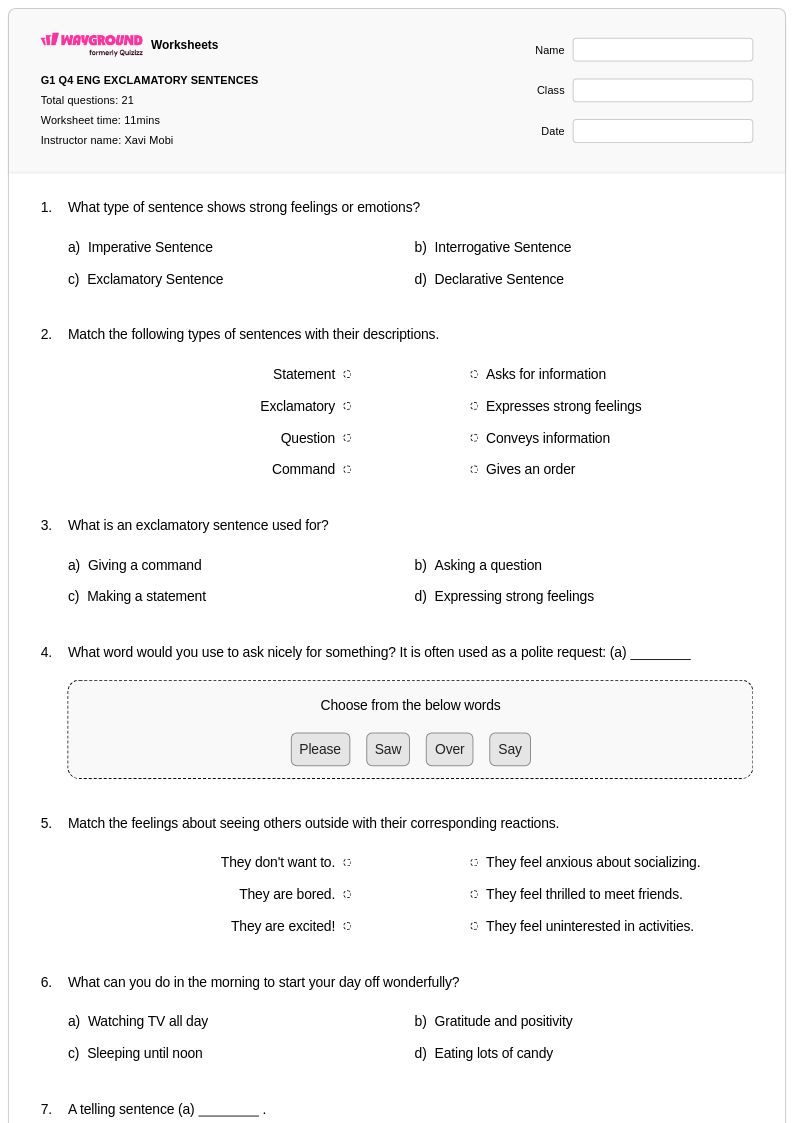
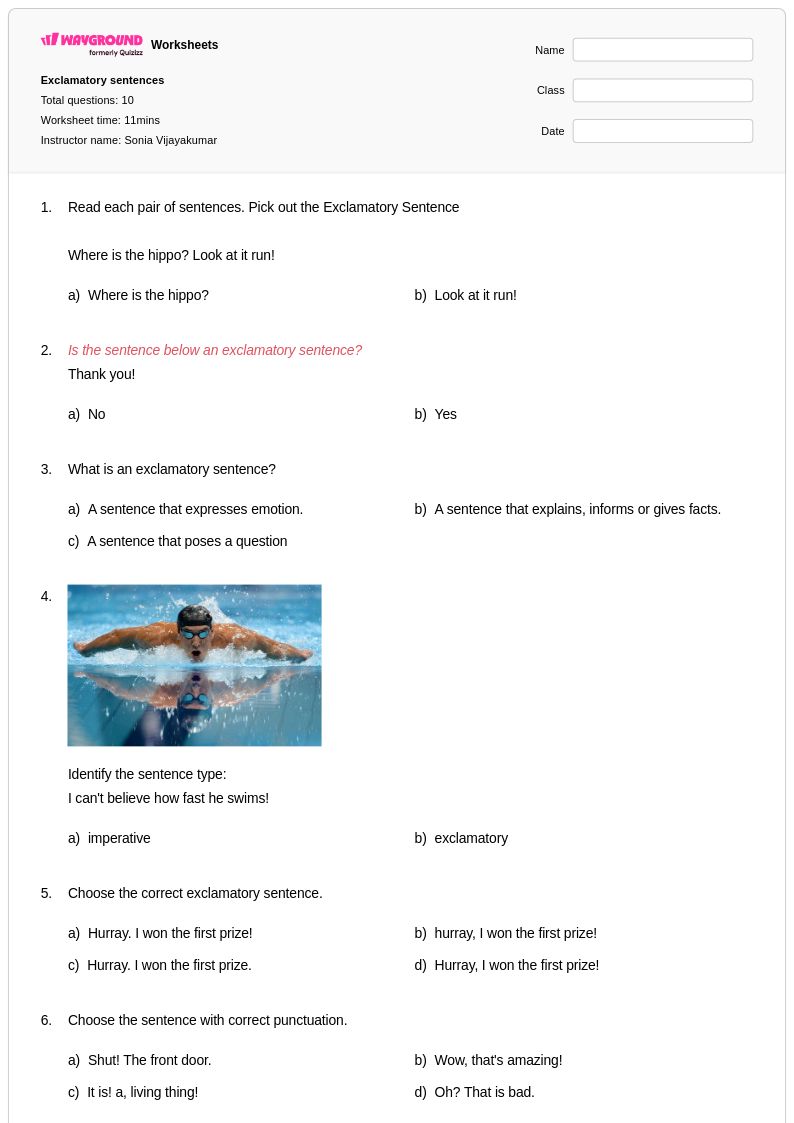
Exclamatory sentences for kindergarten students represent a foundational element in early grammar instruction, helping young learners recognize and express strong emotions and excitement through written language. Wayground's extensive collection of exclamatory sentence worksheets provides kindergarten educators with comprehensive resources that teach students to identify the characteristic exclamation point and understand how these sentences differ from statements and questions. These carefully designed practice problems guide students through recognizing exclamatory sentences in context, completing sentences with appropriate exclamation points, and creating their own expressions of surprise, joy, or emphasis. Each worksheet includes a detailed answer key to support accurate assessment, and the free printable format ensures teachers can easily distribute materials for independent practice, small group work, or homework assignments that reinforce this essential punctuation concept.
Wayground's robust platform, formerly known as Quizizz, empowers teachers with millions of educator-created resources specifically designed for kindergarten grammar and mechanics instruction. The platform's advanced search and filtering capabilities allow teachers to quickly locate exclamatory sentence worksheets that align with their specific curriculum standards and learning objectives, while built-in differentiation tools enable customization for diverse learning needs within the classroom. Teachers can access these materials in both printable pdf formats for traditional paper-based learning and digital versions for interactive instruction, providing flexibility for various teaching environments and student preferences. This comprehensive resource collection supports strategic lesson planning by offering multiple practice opportunities for skill development, targeted remediation for students who need additional support, and enrichment activities for advanced learners who have mastered basic exclamatory sentence recognition and formation.
FAQs
How do I teach exclamatory sentences to elementary students?
Start by helping students understand that exclamatory sentences express strong emotion or excitement and always end with an exclamation mark. Use read-aloud examples with exaggerated tone so students can hear the emotional difference between a declarative sentence and an exclamatory one. From there, practice transforming flat statements into exclamatory sentences as a class before moving to independent work. Connecting the grammar concept to real emotional contexts, such as surprising news or exciting events, helps students internalize when and why exclamatory sentences are used.
What exercises help students practice identifying and writing exclamatory sentences?
Effective practice exercises include sentence-sorting activities where students categorize sentences by type, transformation tasks that ask students to rewrite declarative sentences as exclamatory ones, and fill-in-the-blank problems focused on correct punctuation placement. Worksheets that present emotional context clues and ask students to identify whether a sentence warrants an exclamation mark build both recognition and judgment skills. These varied formats keep practice purposeful and move students beyond rote memorization toward applied grammar understanding.
What mistakes do students commonly make with exclamatory sentences?
The most common error is overusing exclamation marks, treating every sentence as exclamatory regardless of emotional intensity. Students also frequently confuse exclamatory sentences with imperative ones, particularly when a command is delivered with strong emotion. Another common misconception is believing that any sentence ending in an exclamation mark is automatically exclamatory, when punctuation alone does not determine sentence type. Targeted practice that asks students to justify their classification choices helps correct these misunderstandings.
How can I differentiate exclamatory sentence instruction for students at different skill levels?
For students who are still developing their understanding, reduce the number of answer choices on identification tasks to lower cognitive load and focus practice on the most concrete examples of exclamatory sentences. More advanced students can be challenged with open-ended writing tasks that require them to produce original exclamatory sentences in varied contexts and explain their punctuation decisions. On Wayground, teachers can apply individual accommodations such as reduced answer choices or read-aloud support to specific students, so differentiation happens quietly without disrupting the rest of the class.
How do I use Wayground's exclamatory sentences worksheets in my classroom?
Wayground's exclamatory sentences worksheets are available as free printable PDFs for traditional classroom use and in digital formats for technology-integrated or remote learning environments. Teachers can also host worksheets directly as a quiz on Wayground, allowing students to complete practice digitally with results tracked automatically. Each worksheet includes a detailed answer key, so teachers have everything needed for both instruction and quick assessment without additional prep.
How do I help students understand the difference between exclamatory and imperative sentences?
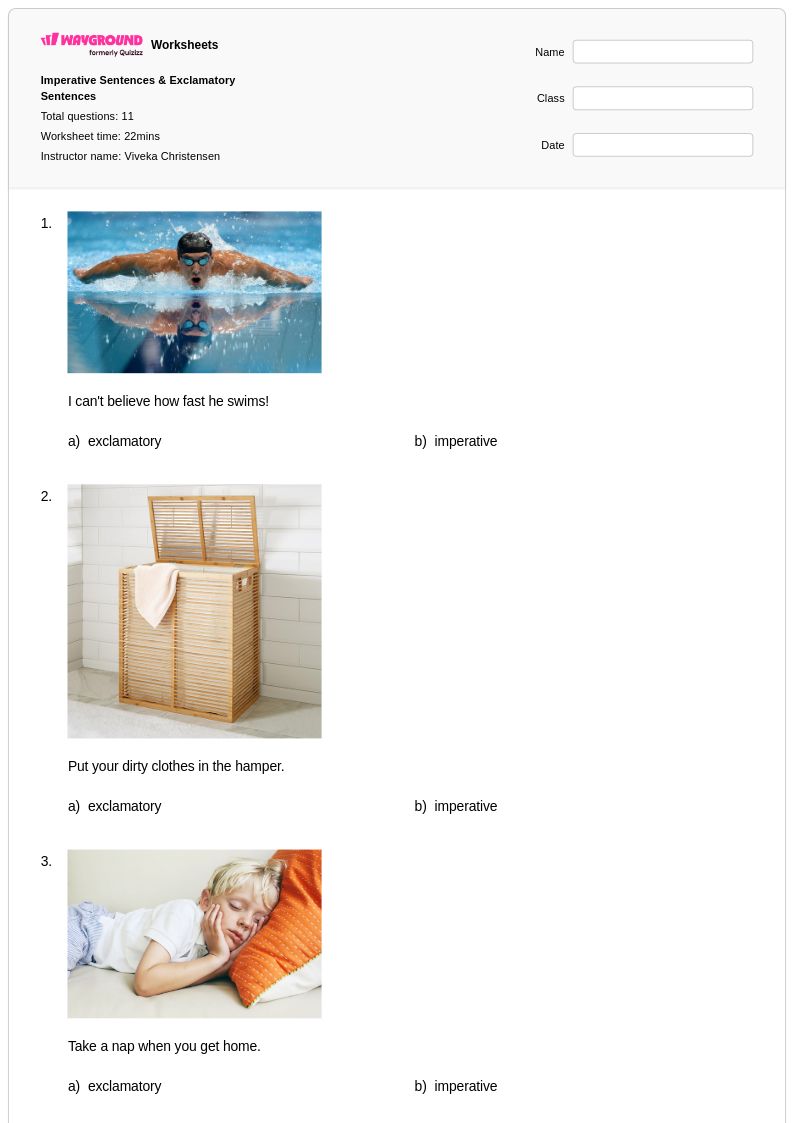
Teach students that exclamatory sentences express strong feeling and describe a situation, while imperative sentences issue a command or request, even when delivered with enthusiasm. A useful classroom strategy is to present paired examples side by side and ask students to identify what each sentence is doing: expressing emotion or directing action. Emphasizing that sentence type is determined by purpose, not punctuation or tone alone, clears up the most persistent confusion between these two sentence types.