
16 Q
9th - Uni
17 Q
10th - 12th
10 Q
9th - 12th
20 Q
12th - Uni
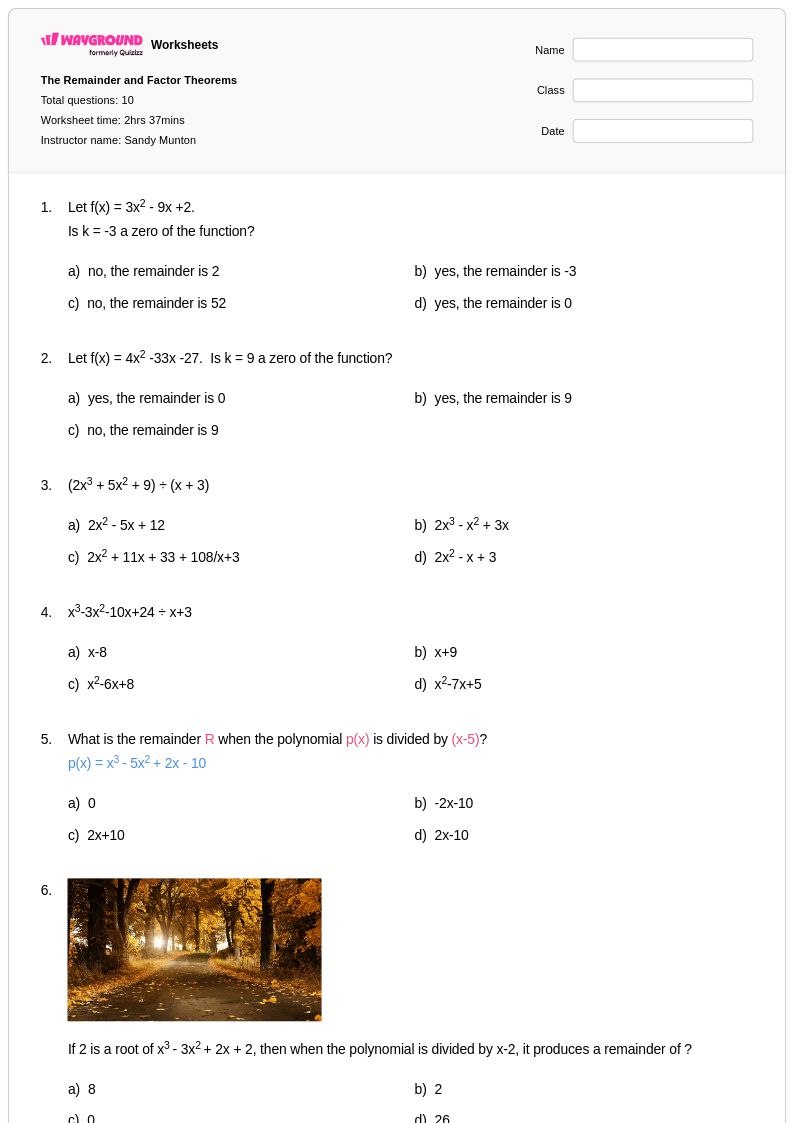
10 Q
12th
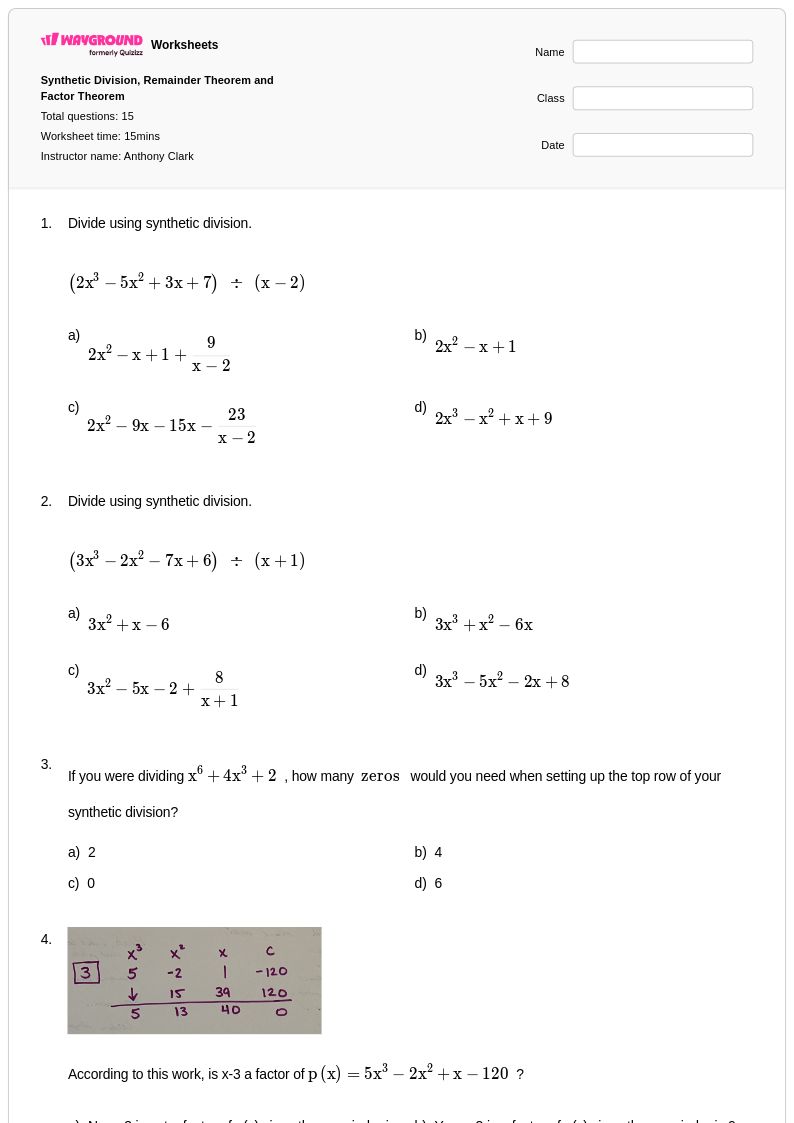
15 Q
12th - Uni
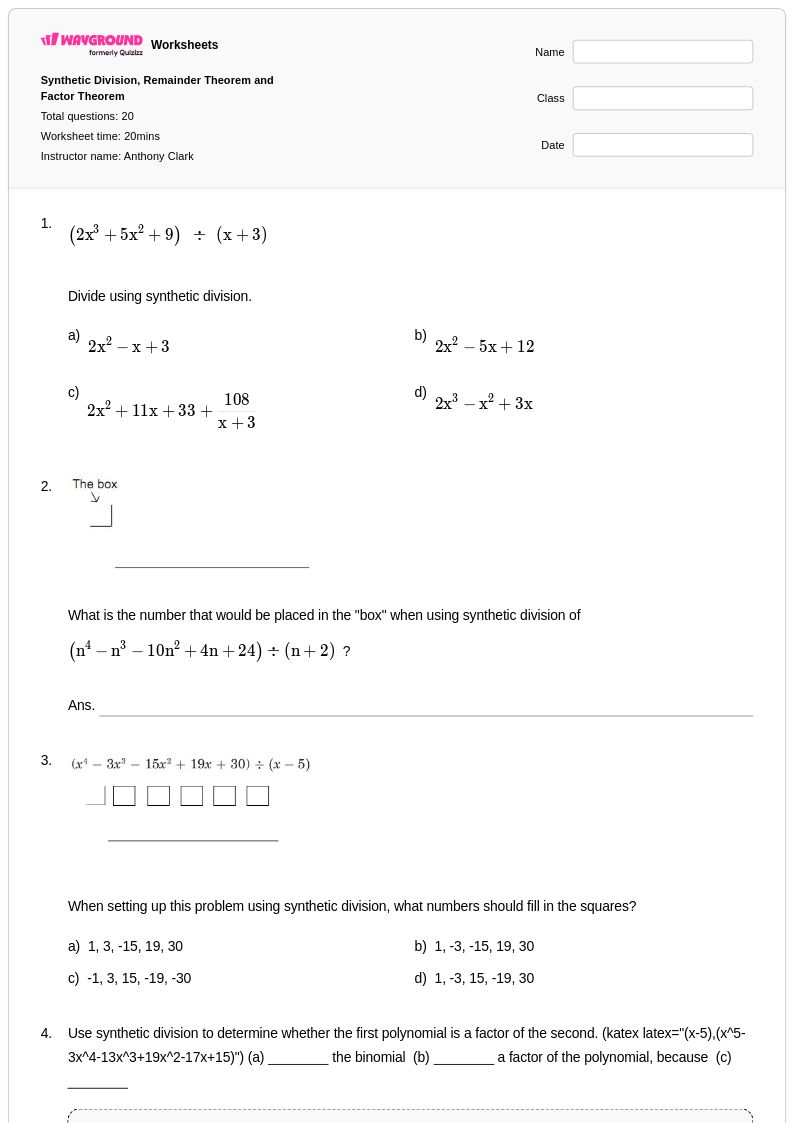
20 Q
12th - Uni
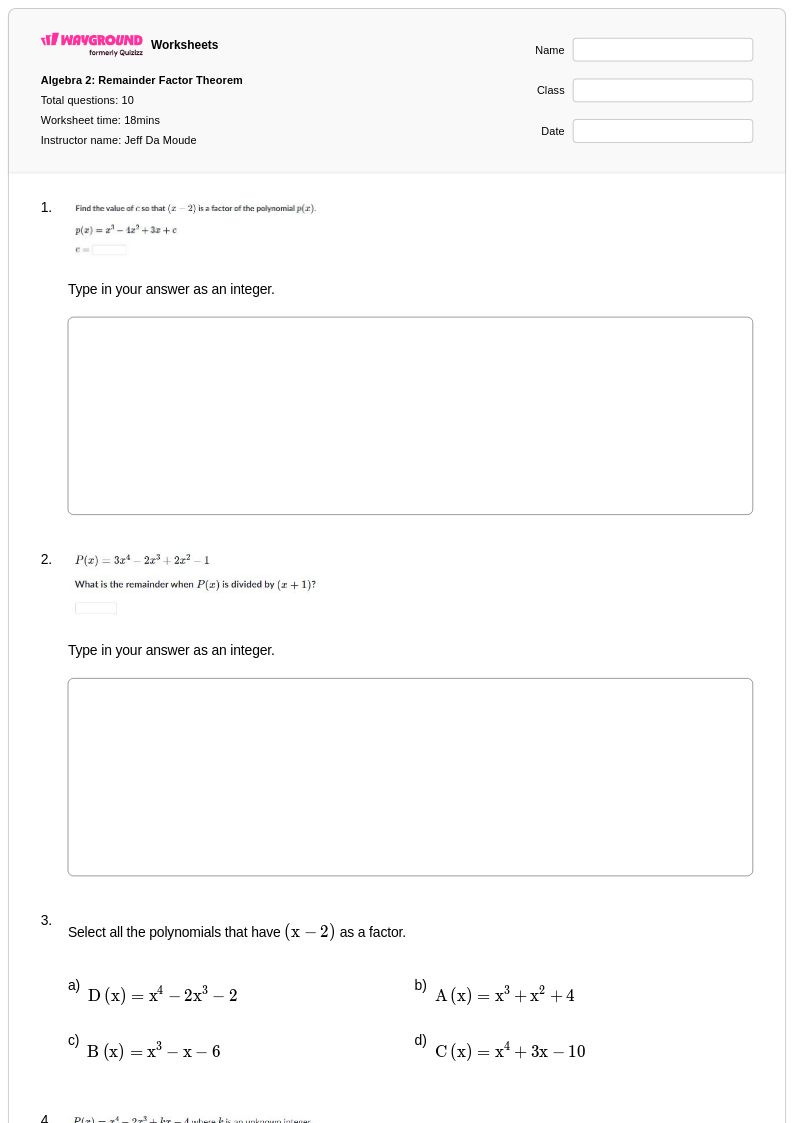
10 Q
12th
20 Q
12th - Uni
20 Q
12th - Uni
20 Q
11th - Uni
18 Q
9th - 12th
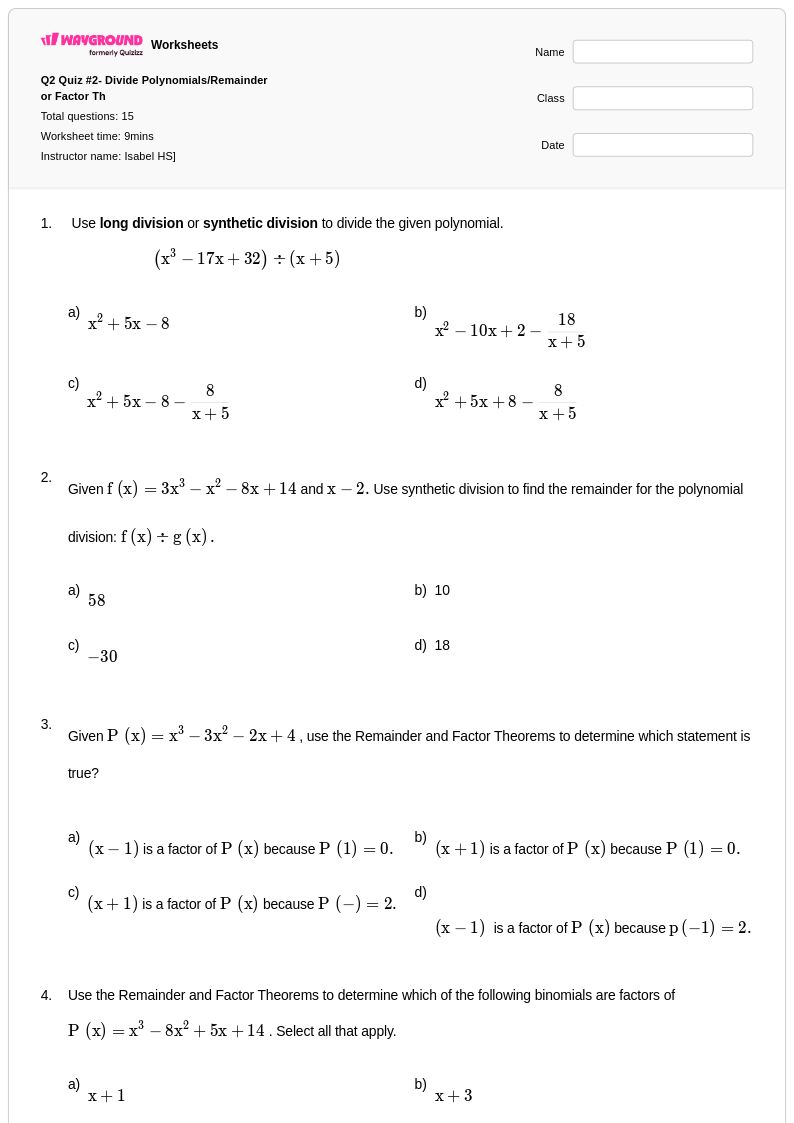
15 Q
12th
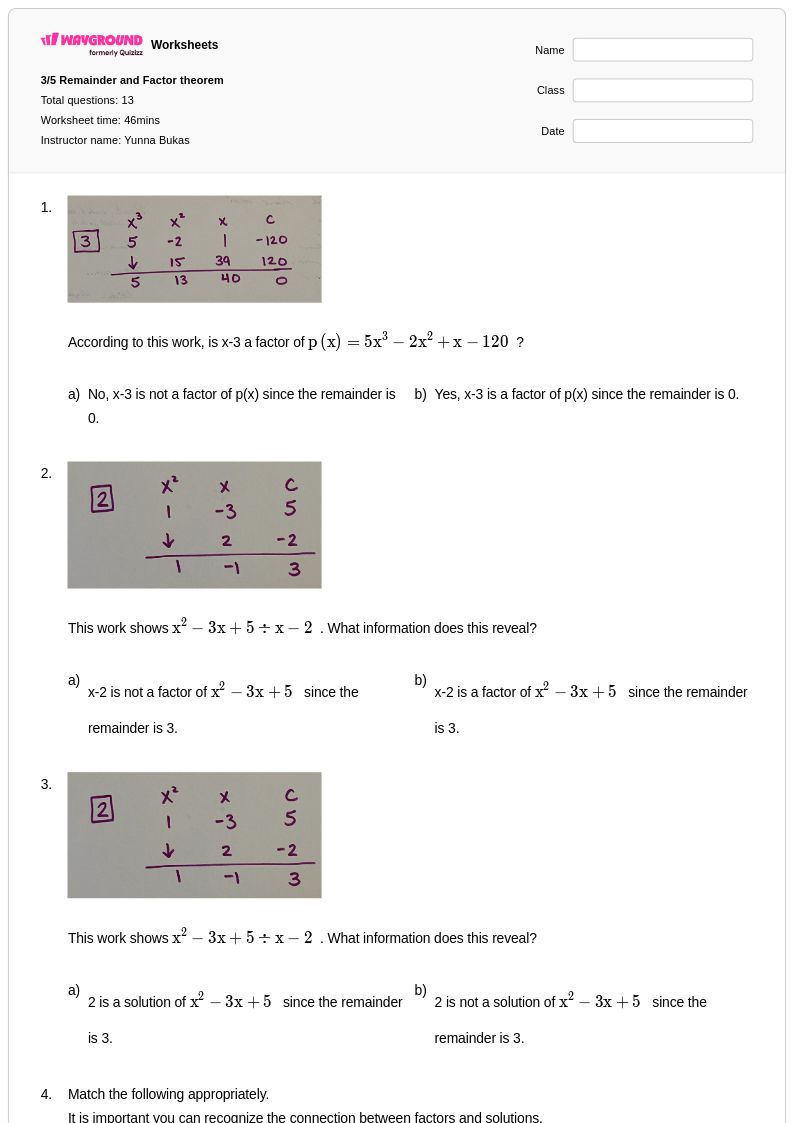
13 Q
9th - 12th
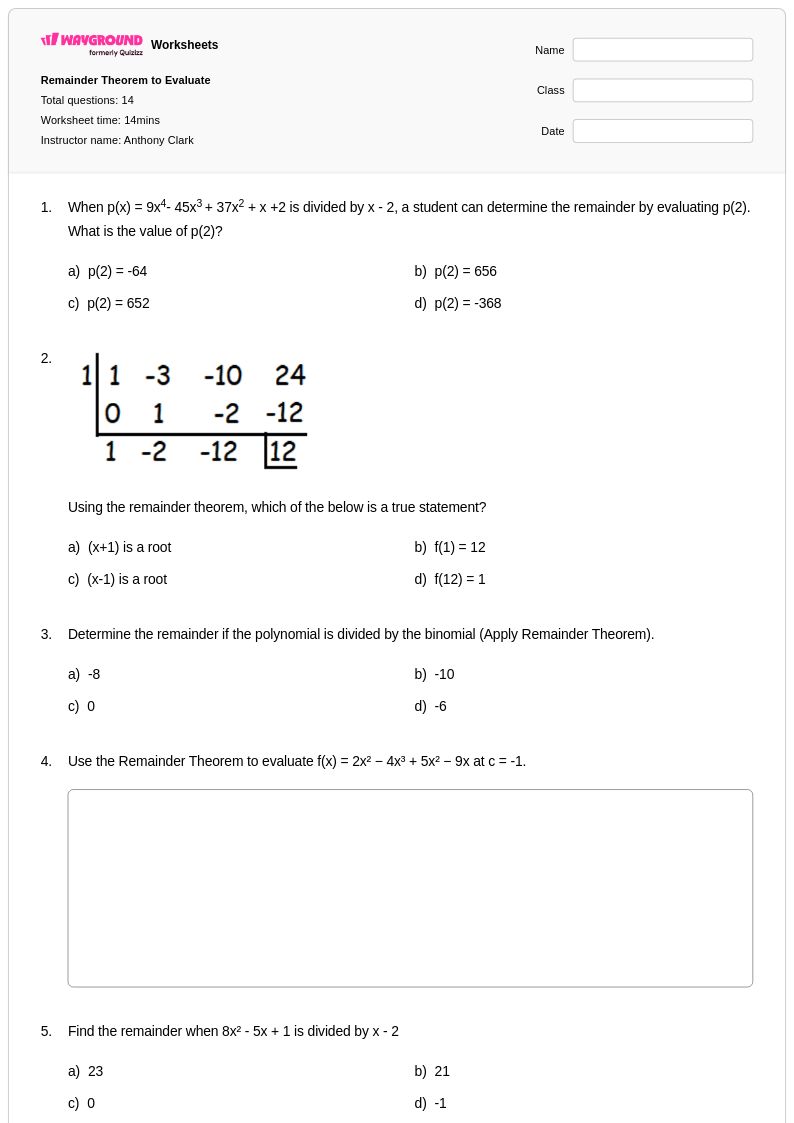
14 Q
12th - Uni
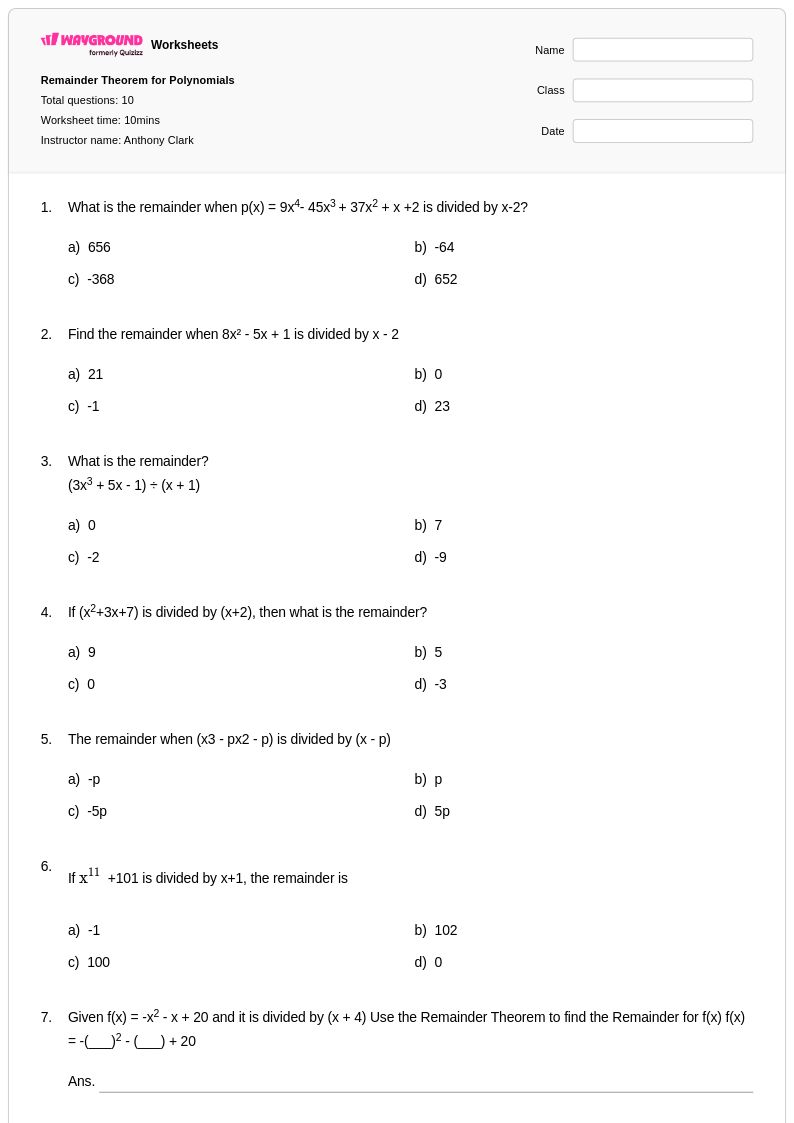
10 Q
10th - Uni
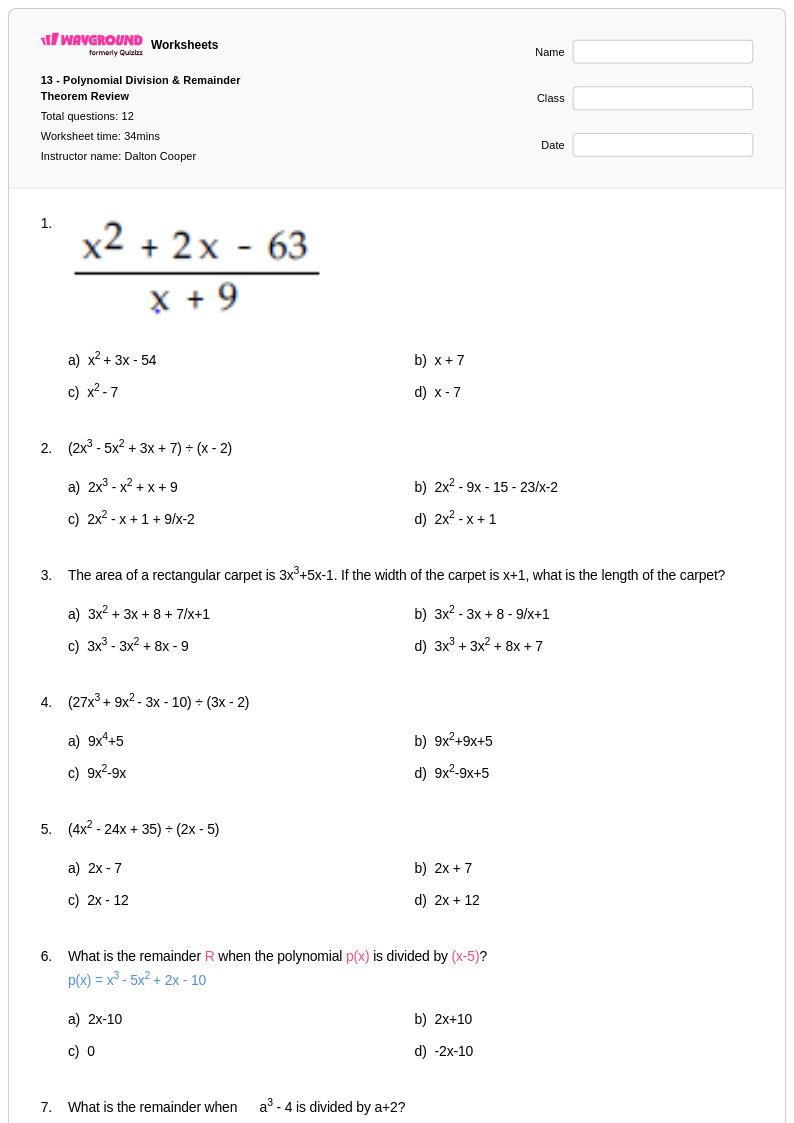
12 Q
9th - 12th
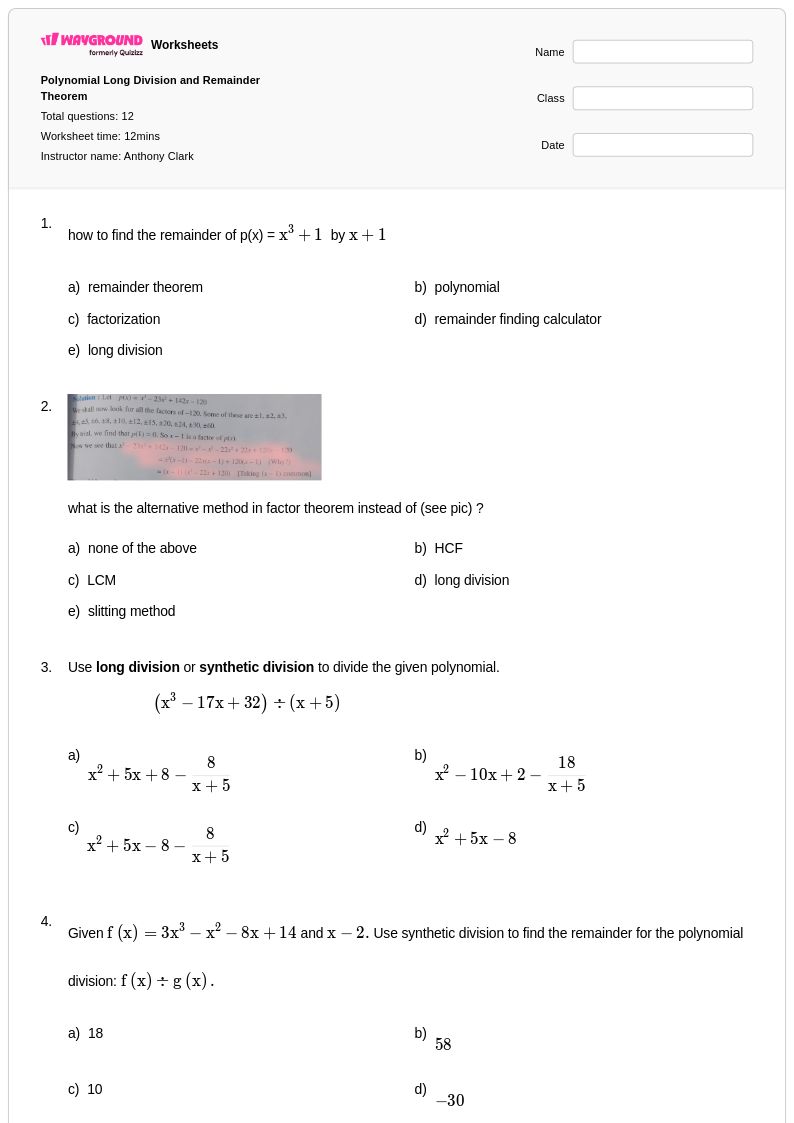
12 Q
10th - Uni
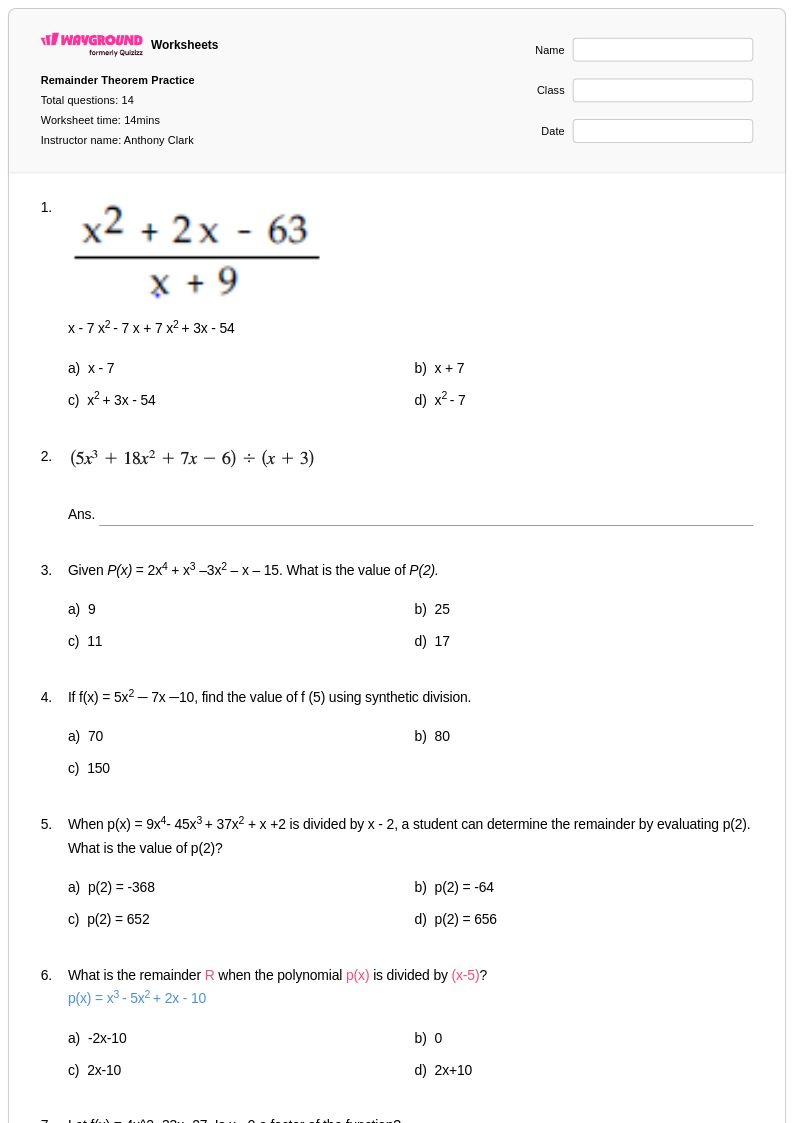
14 Q
11th - Uni
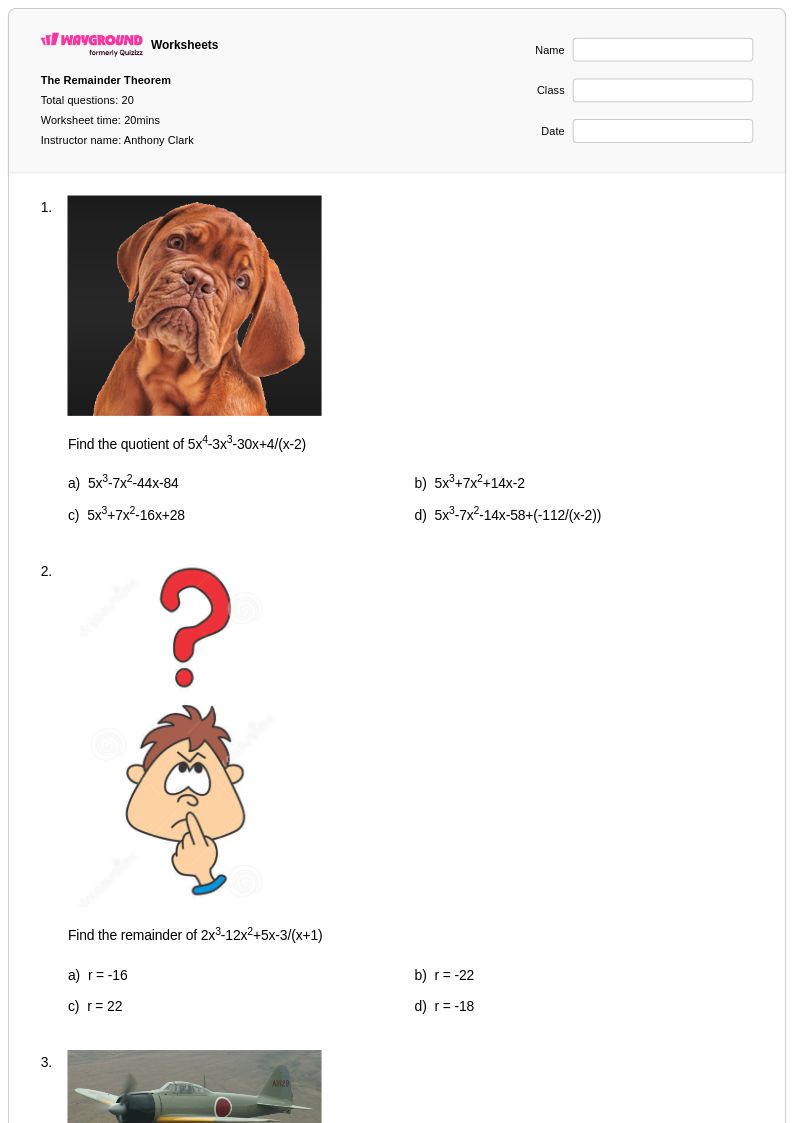
20 Q
10th - Uni
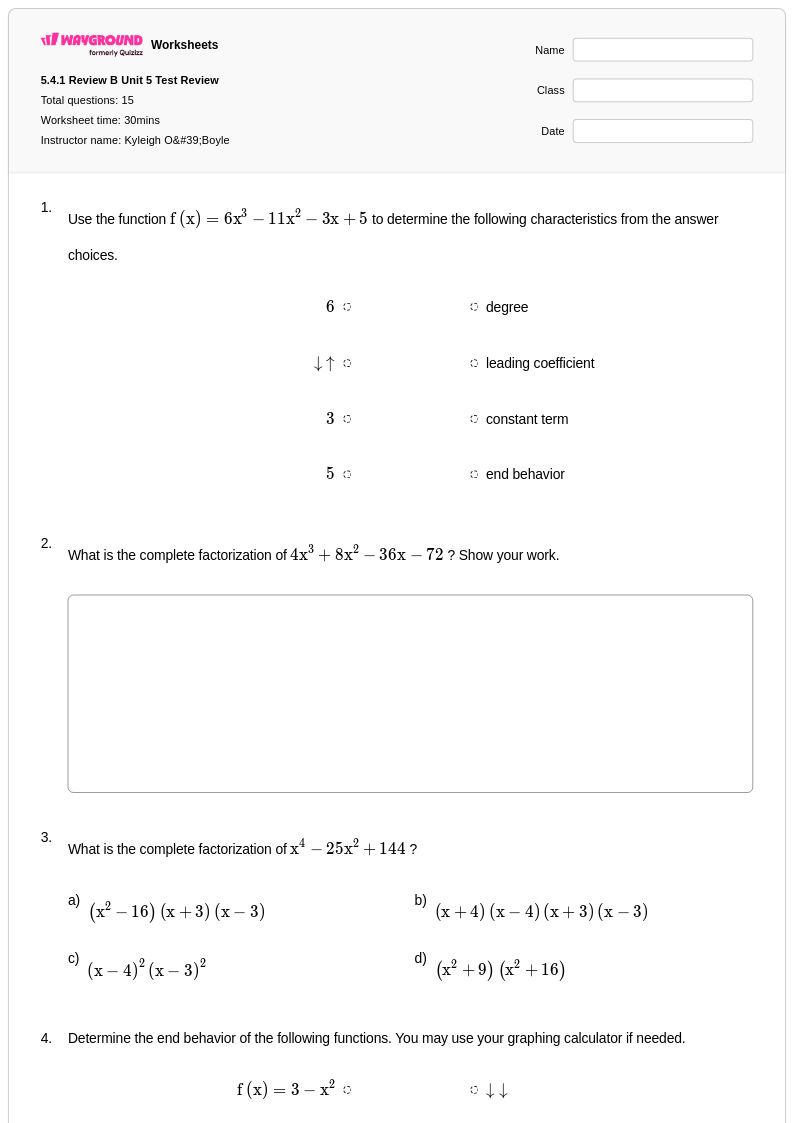
15 Q
12th
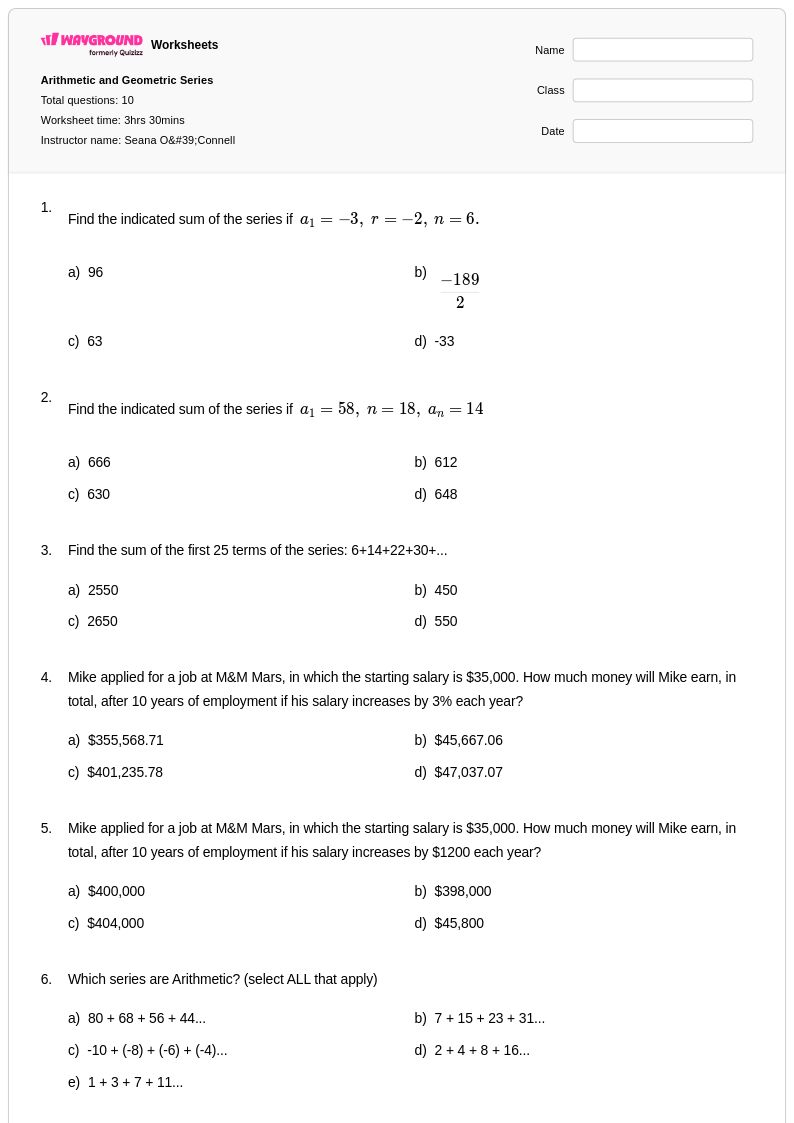
10 Q
9th - 12th
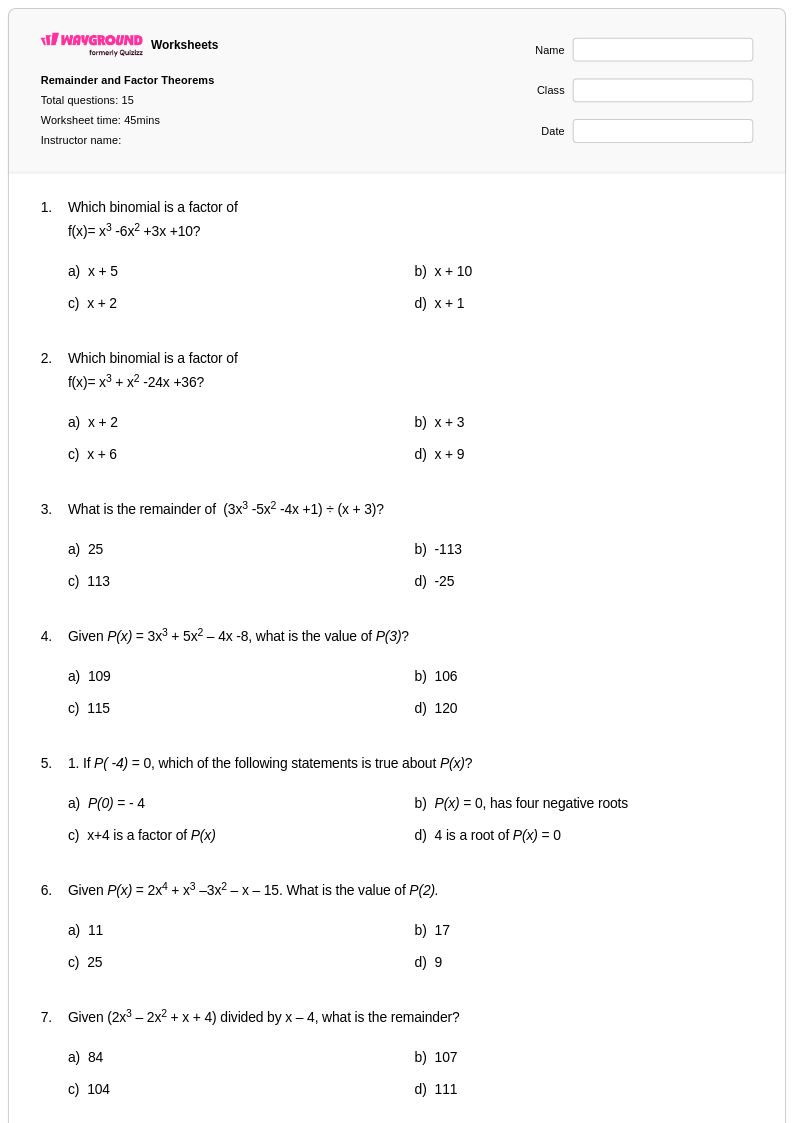
15 Q
9th - 12th
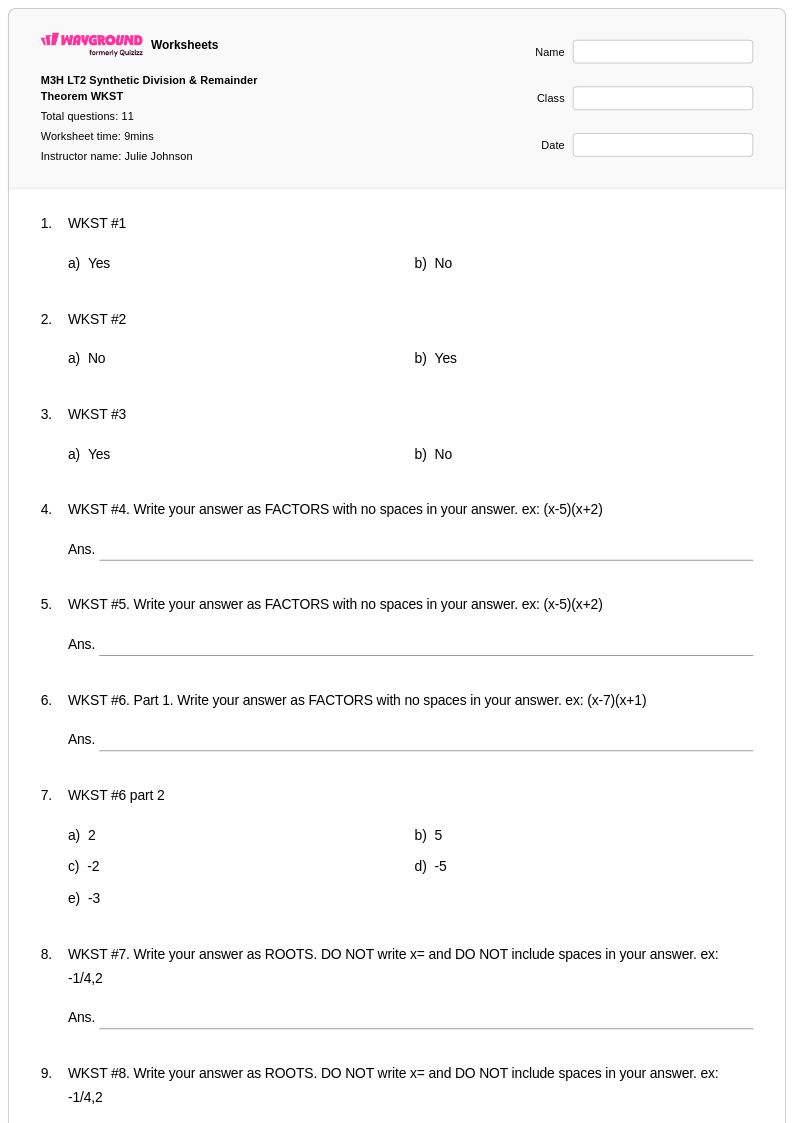
11 Q
10th - 12th
Explore Other Subject Worksheets for class 12
Explore printable Alternating Series Remainder Theorem worksheets for Class 12
The Alternating Series Remainder Theorem represents a crucial concept in Class 12 calculus, requiring students to understand how to estimate errors when using partial sums to approximate infinite alternating series. Wayground's comprehensive worksheet collection addresses this advanced topic through carefully designed practice problems that guide students through the theorem's application, helping them master error bound calculations and develop proficiency in determining how many terms are needed for a desired level of accuracy. These free printable resources strengthen essential skills including series convergence analysis, remainder estimation techniques, and the practical application of the theorem to real-world approximation problems, with each worksheet featuring detailed answer keys that support both independent study and classroom instruction.
Wayground, formerly Quizizz, empowers educators with millions of teacher-created resources specifically designed for advanced calculus concepts like the Alternating Series Remainder Theorem, offering robust search and filtering capabilities that allow teachers to quickly locate materials aligned with their curriculum standards and student needs. The platform's differentiation tools enable instructors to customize worksheets for varying skill levels within Class 12 classrooms, while the availability of both printable pdf formats and digital versions provides maximum flexibility for diverse learning environments. These comprehensive features streamline lesson planning by offering ready-to-use materials for skill practice, targeted remediation for students struggling with error estimation concepts, and enrichment opportunities for advanced learners ready to explore more complex applications of series approximation theory.
FAQs
What is an effective way to teach the Alternating Series Remainder Theorem in Grade 12?
What should Grade 12 students practice with the Alternating Series Remainder Theorem?
What errors do students commonly make with the Alternating Series Remainder Theorem?
How can I assign these Grade 12 worksheets?
How can I differentiate remainder-theorem practice in a Grade 12 class?
Why is the Alternating Series Remainder Theorem taught in Grade 12 calculus?