Free Printable Analyzing Point of View Worksheets for Class 4
Class 4 students can master analyzing point of view with Wayground's free printable worksheets and practice problems, complete with answer keys to reinforce essential English storytelling skills.
Explore printable Analyzing Point of View worksheets for Class 4
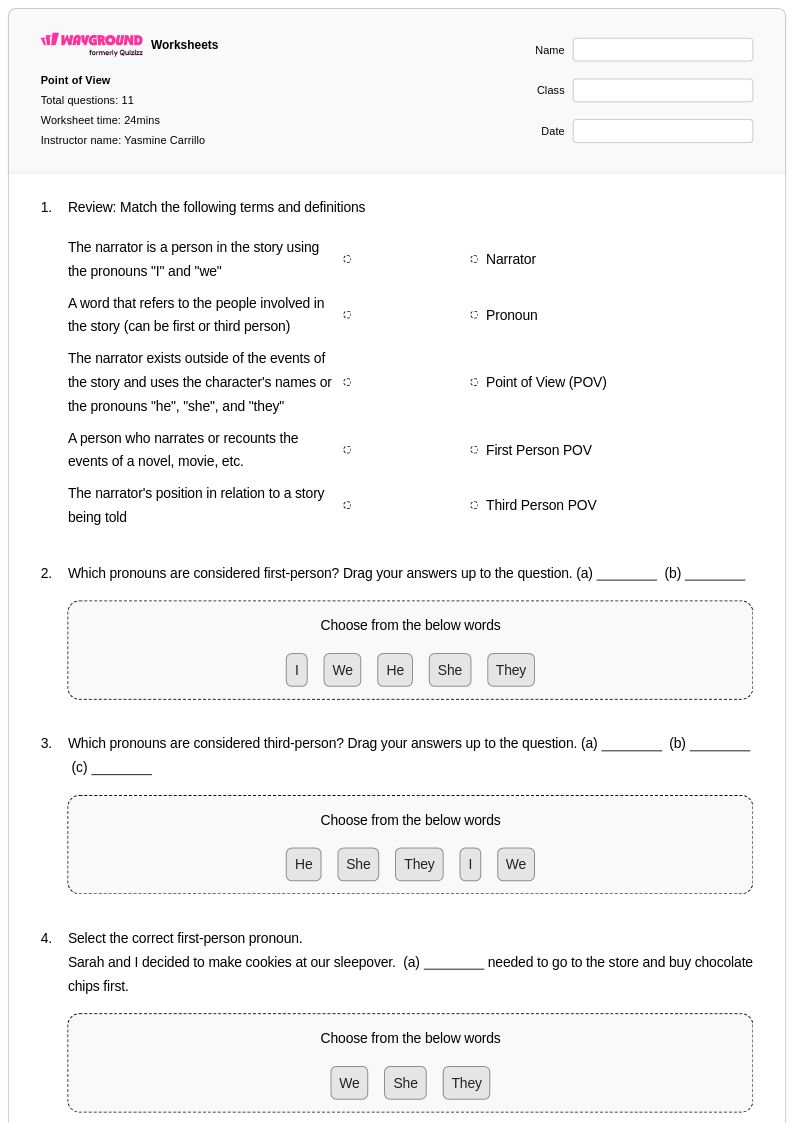
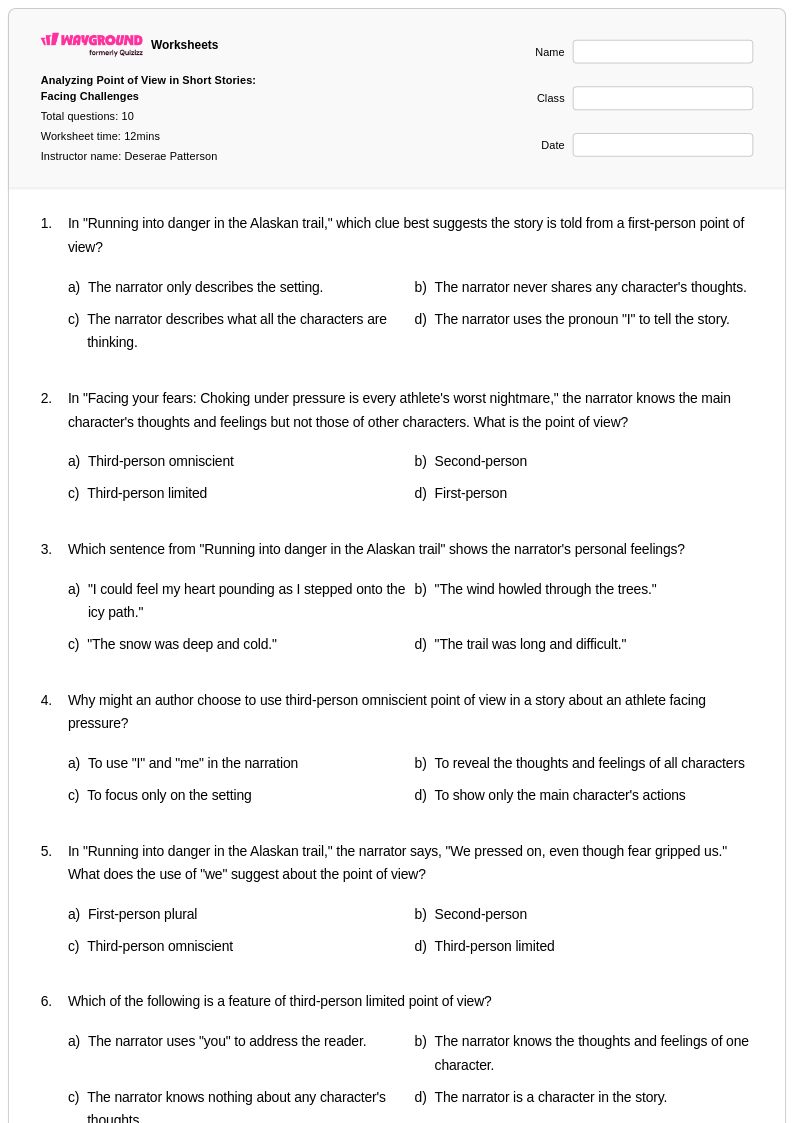
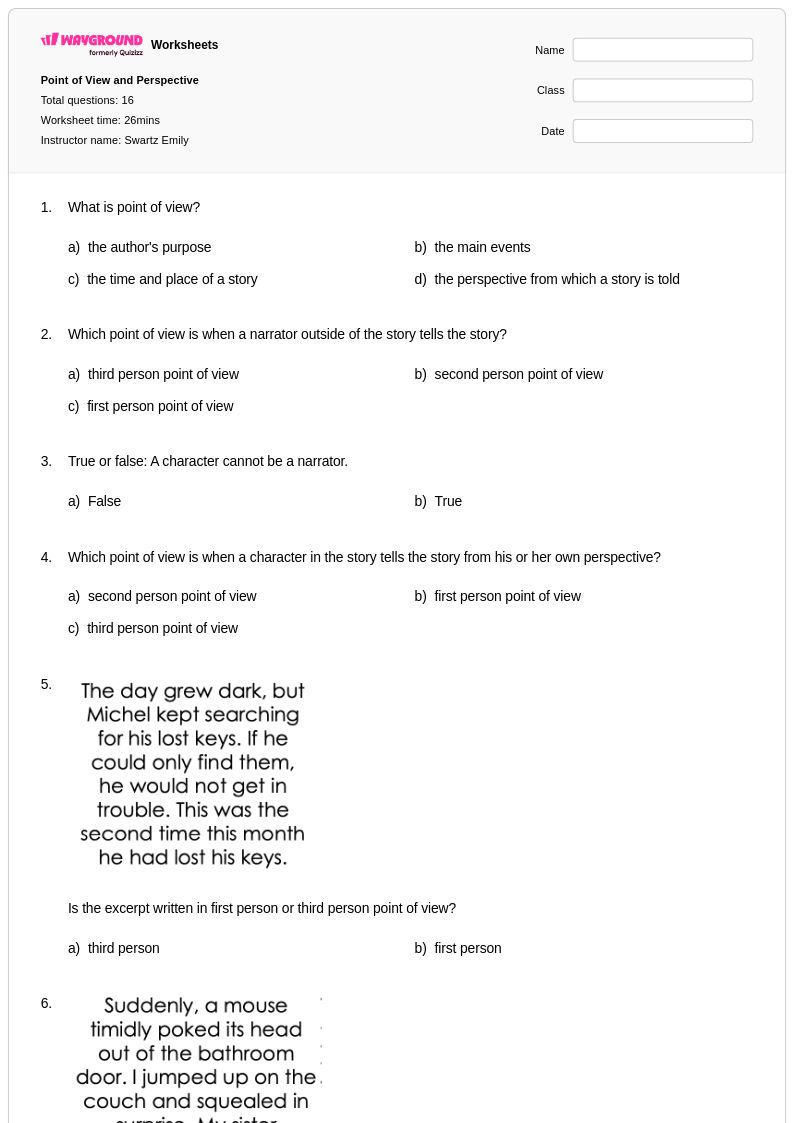
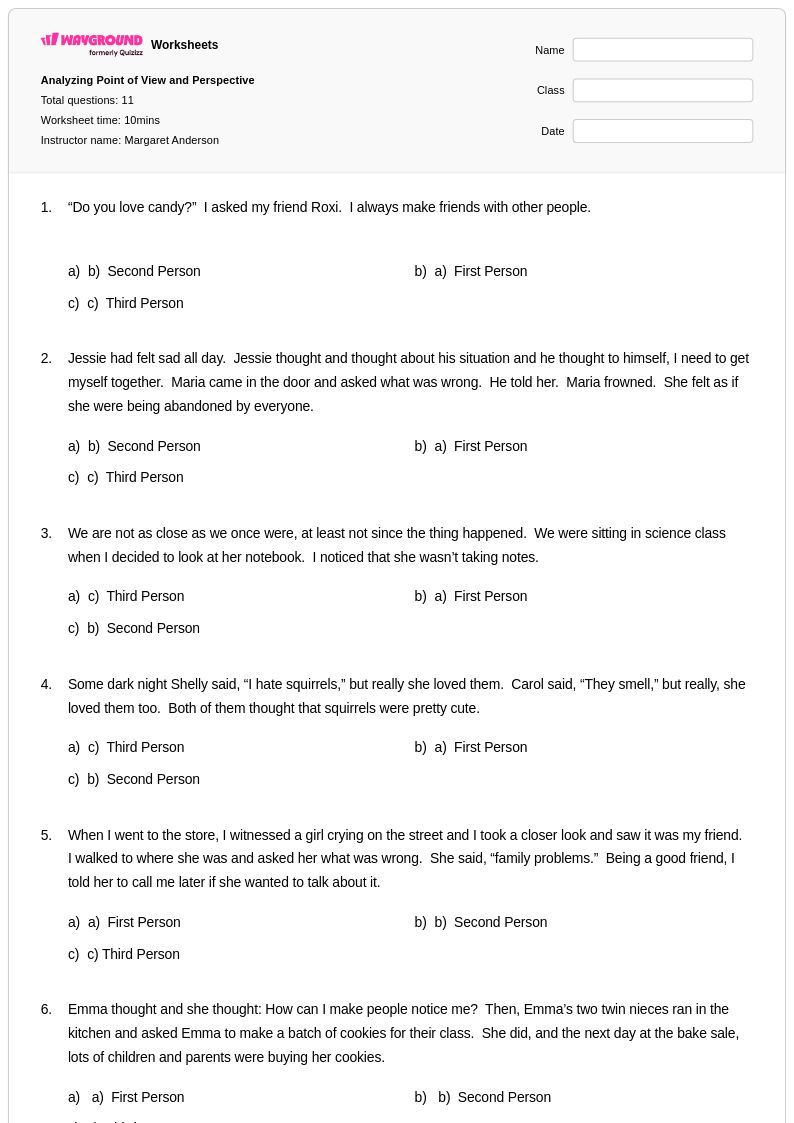
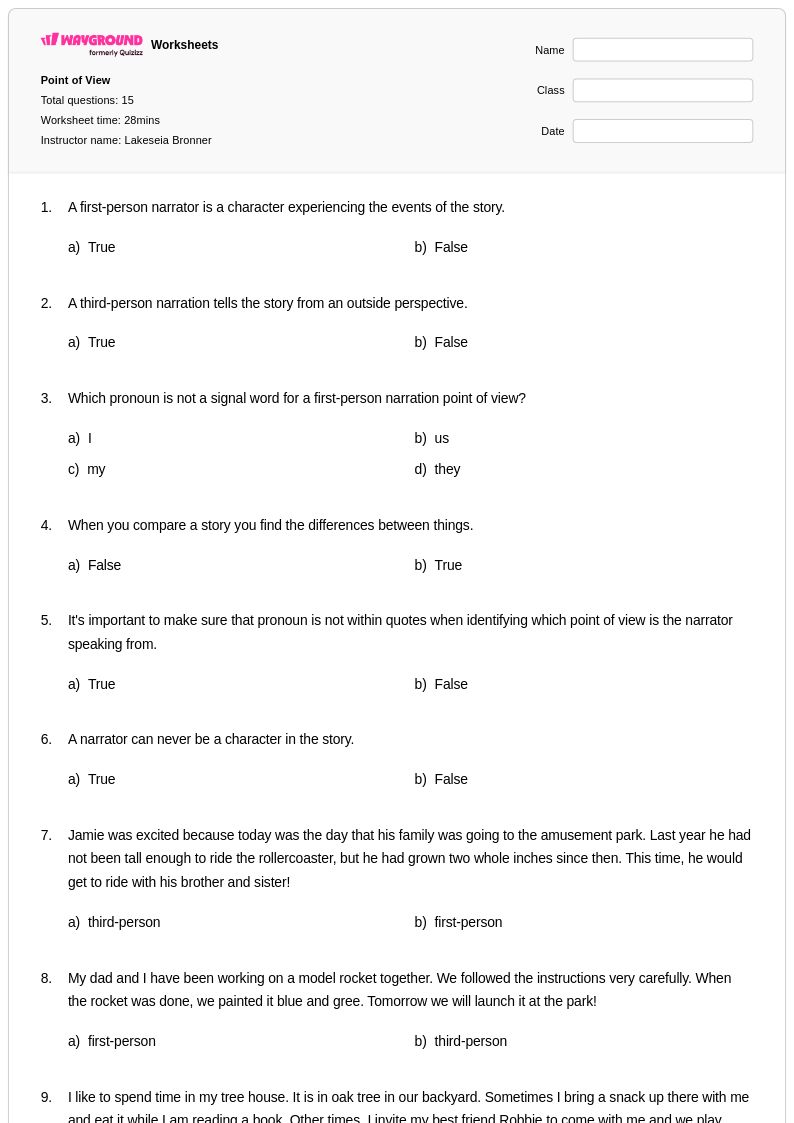
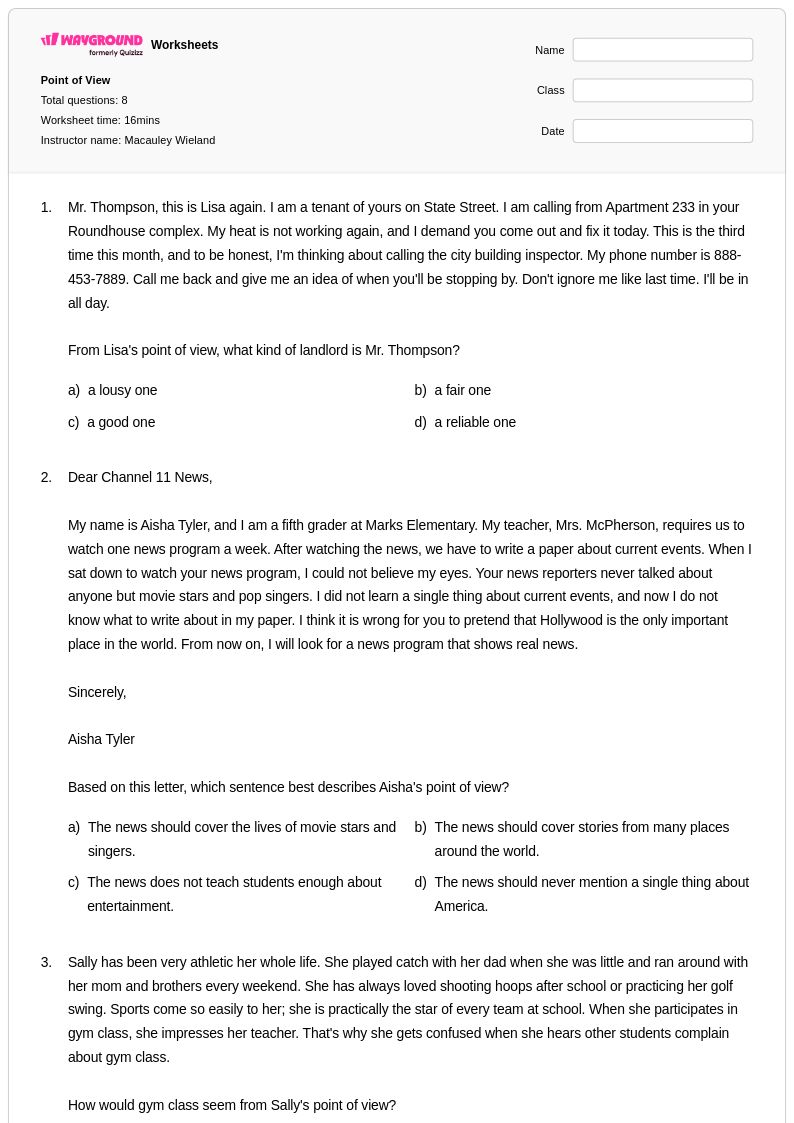
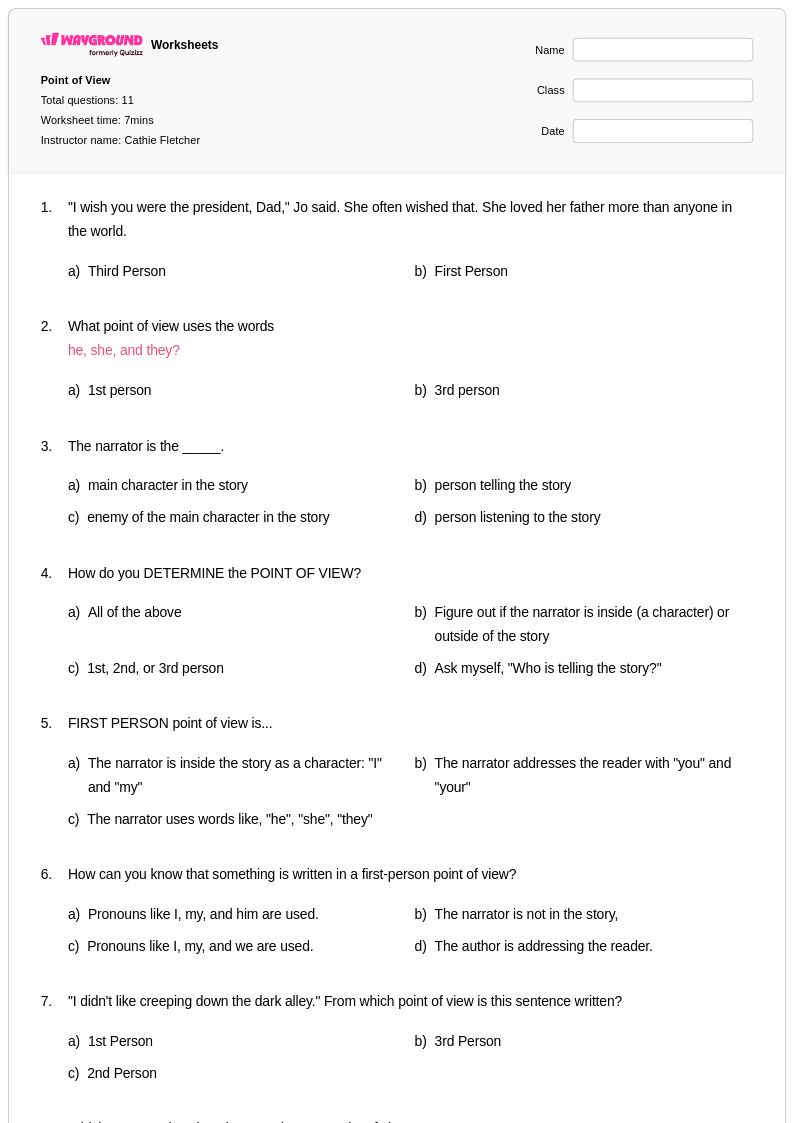
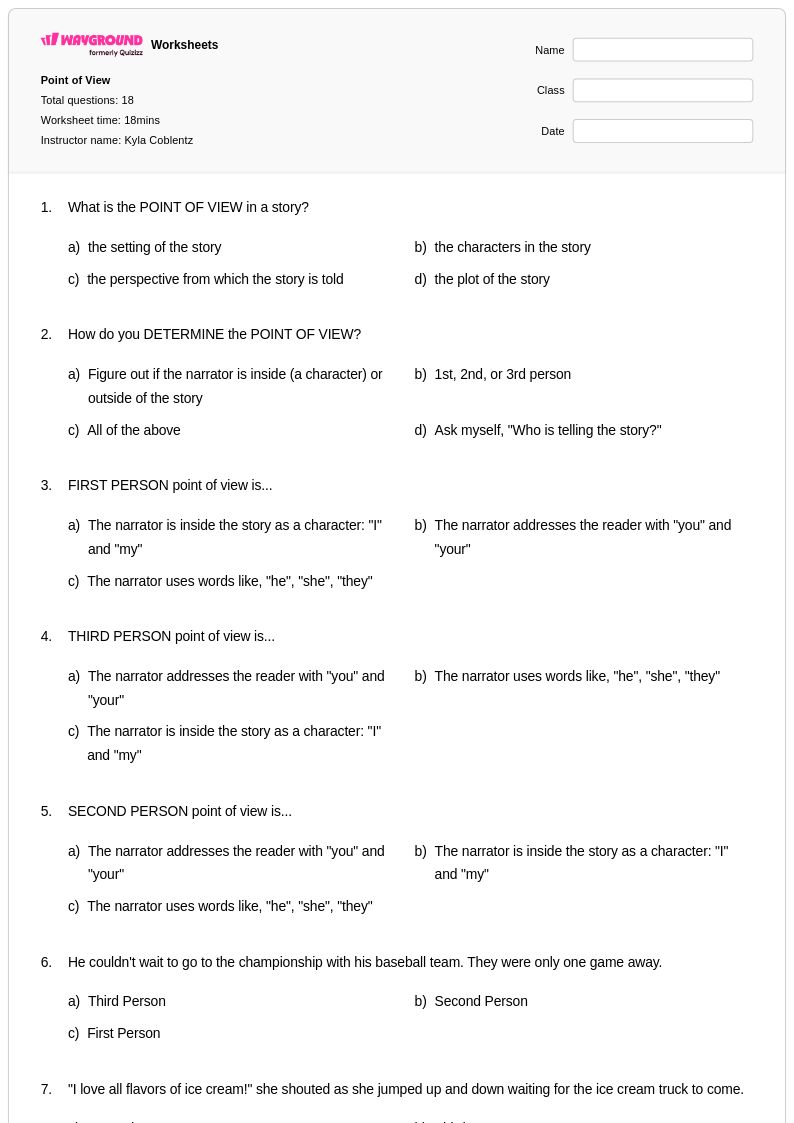
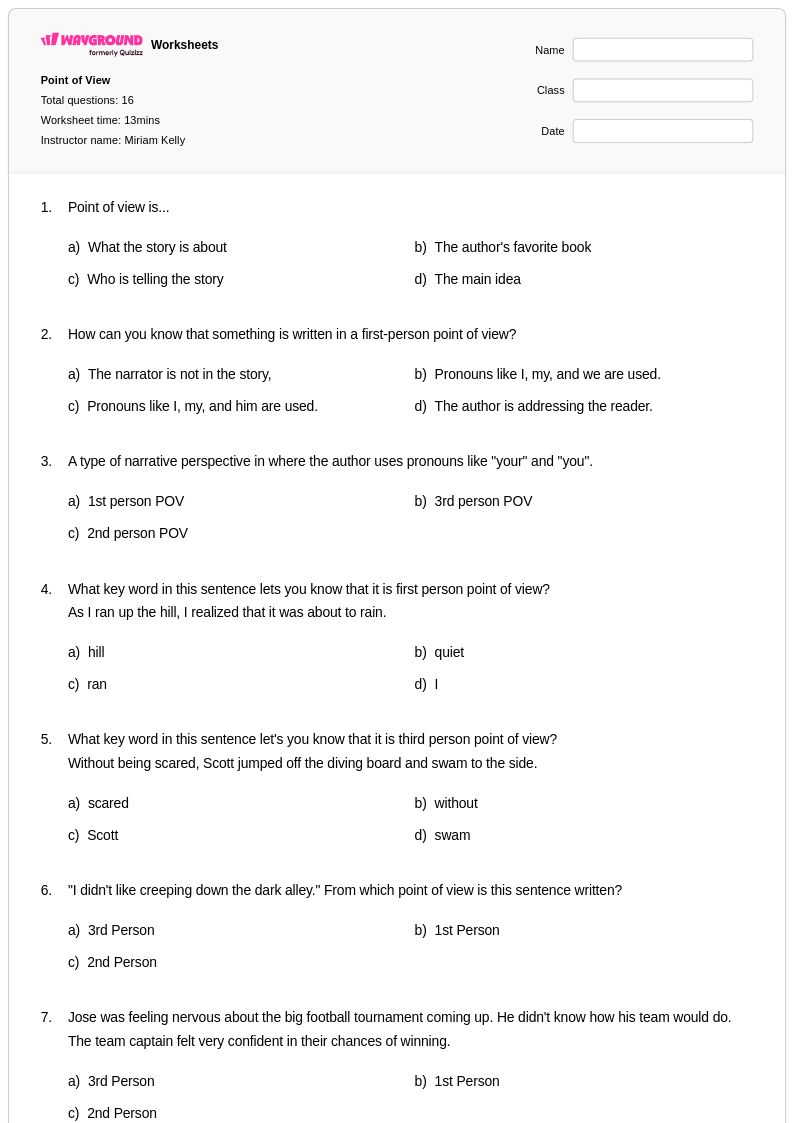
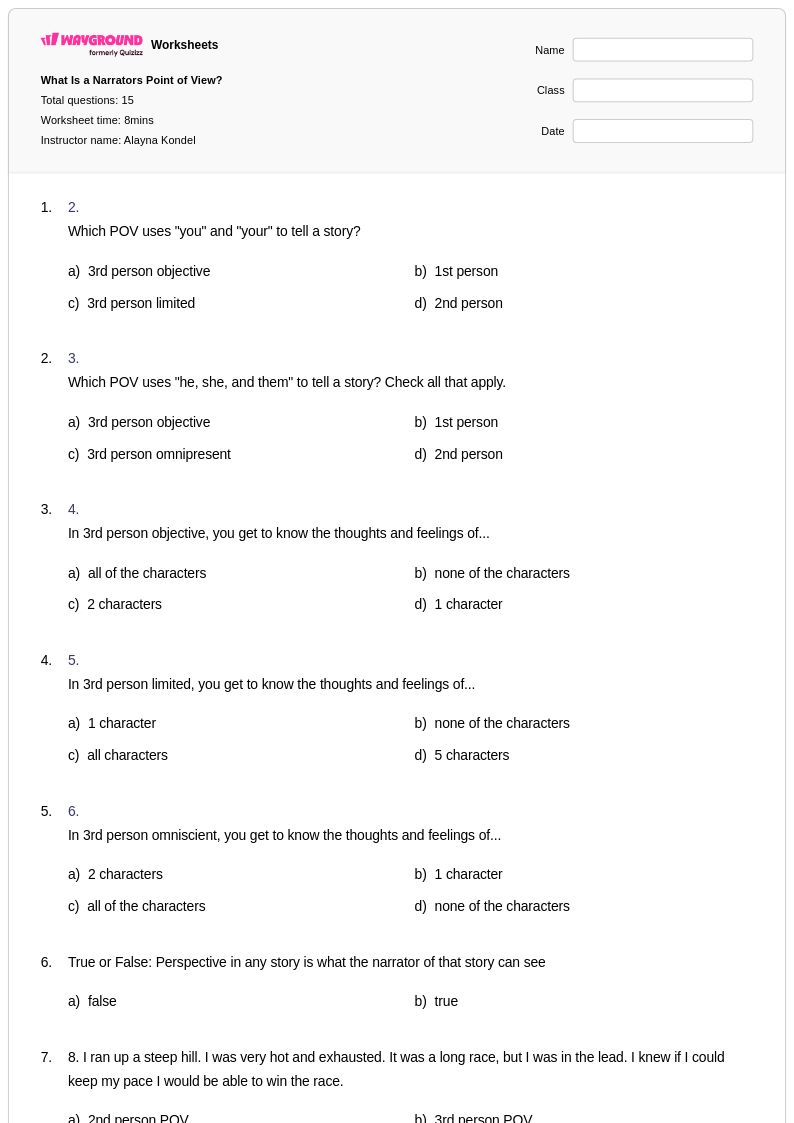
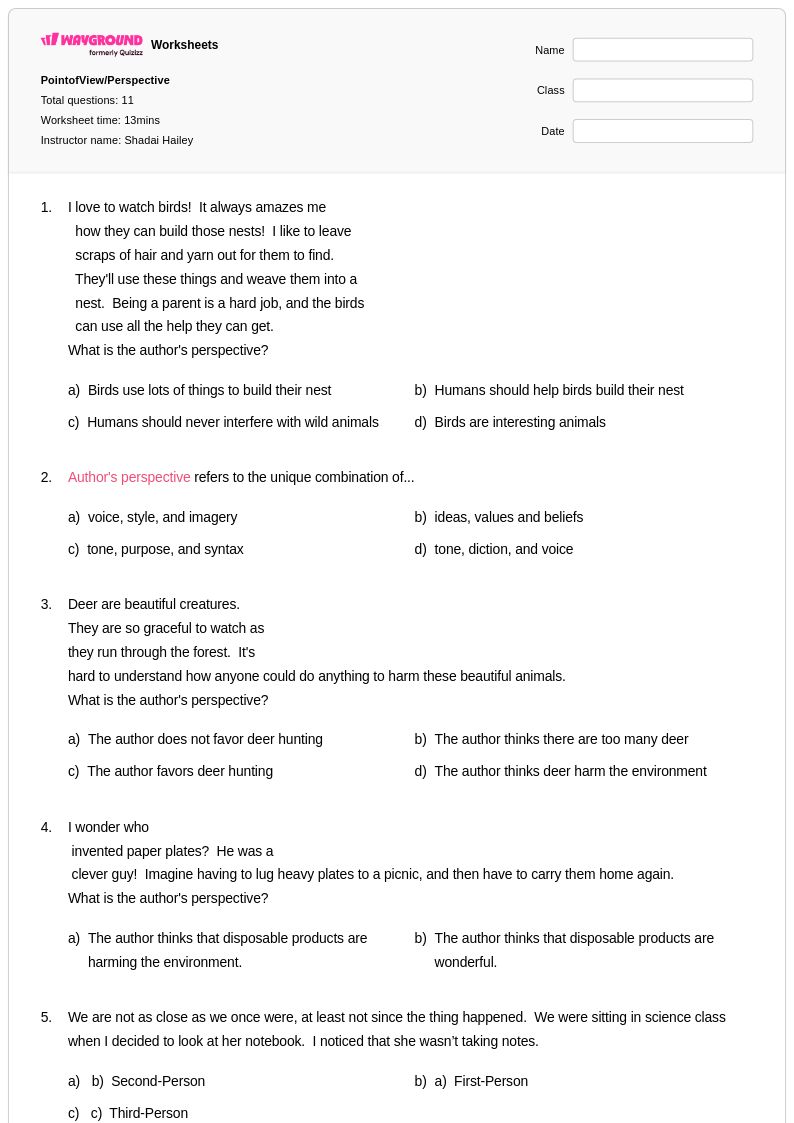
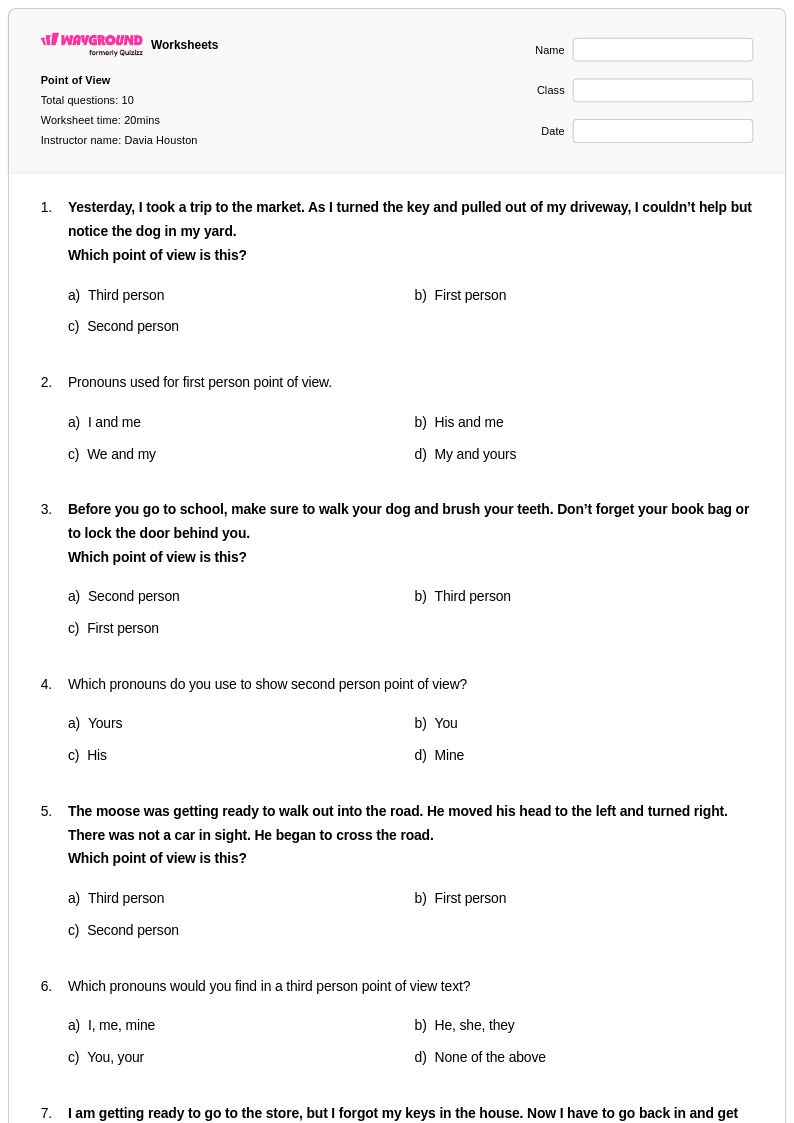
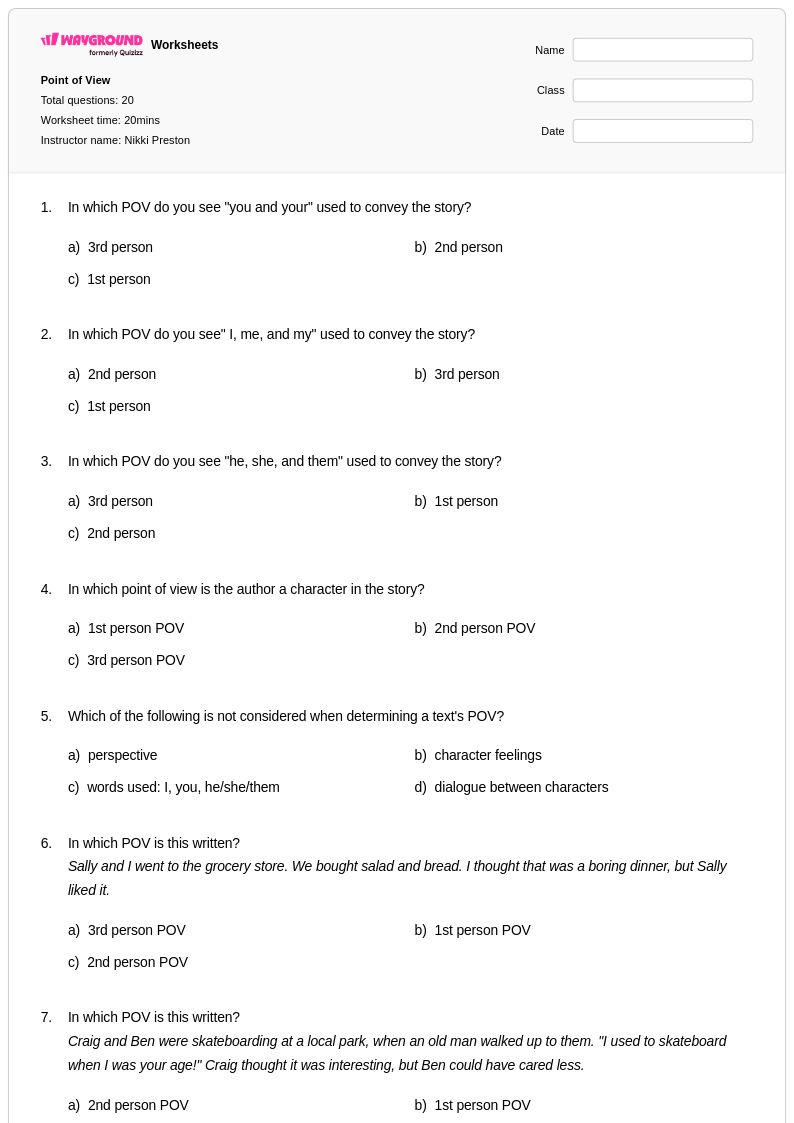
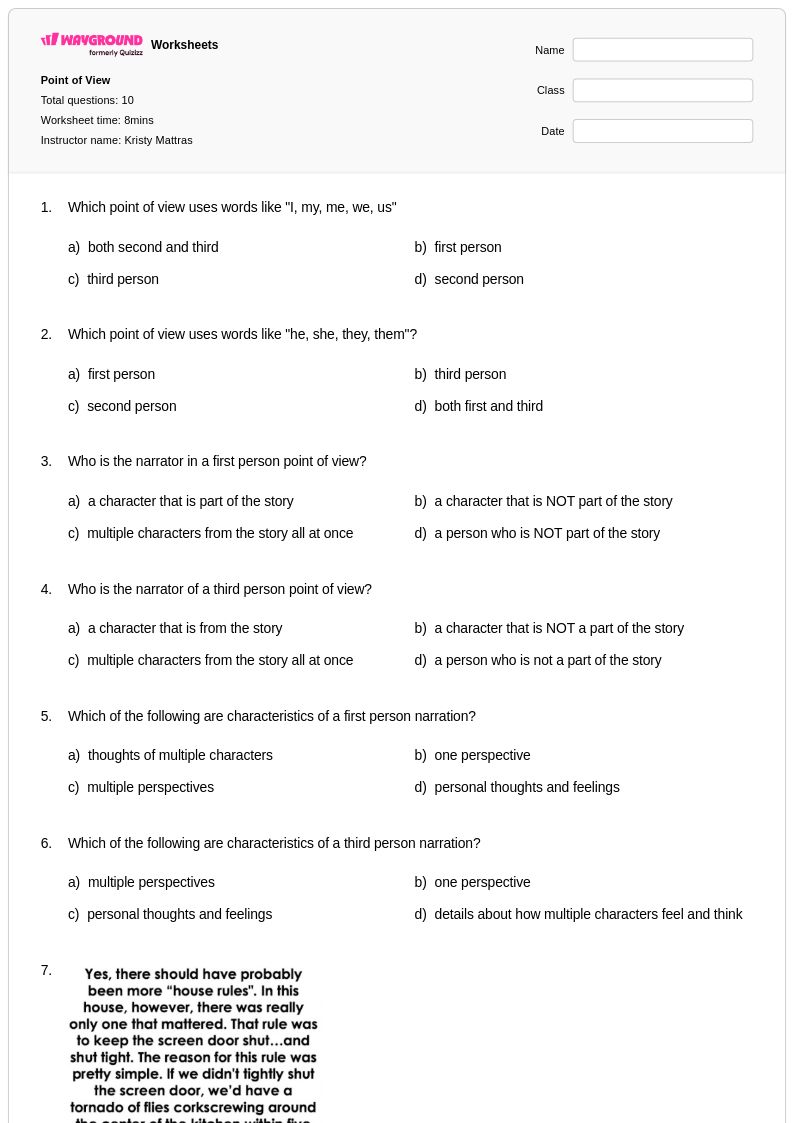
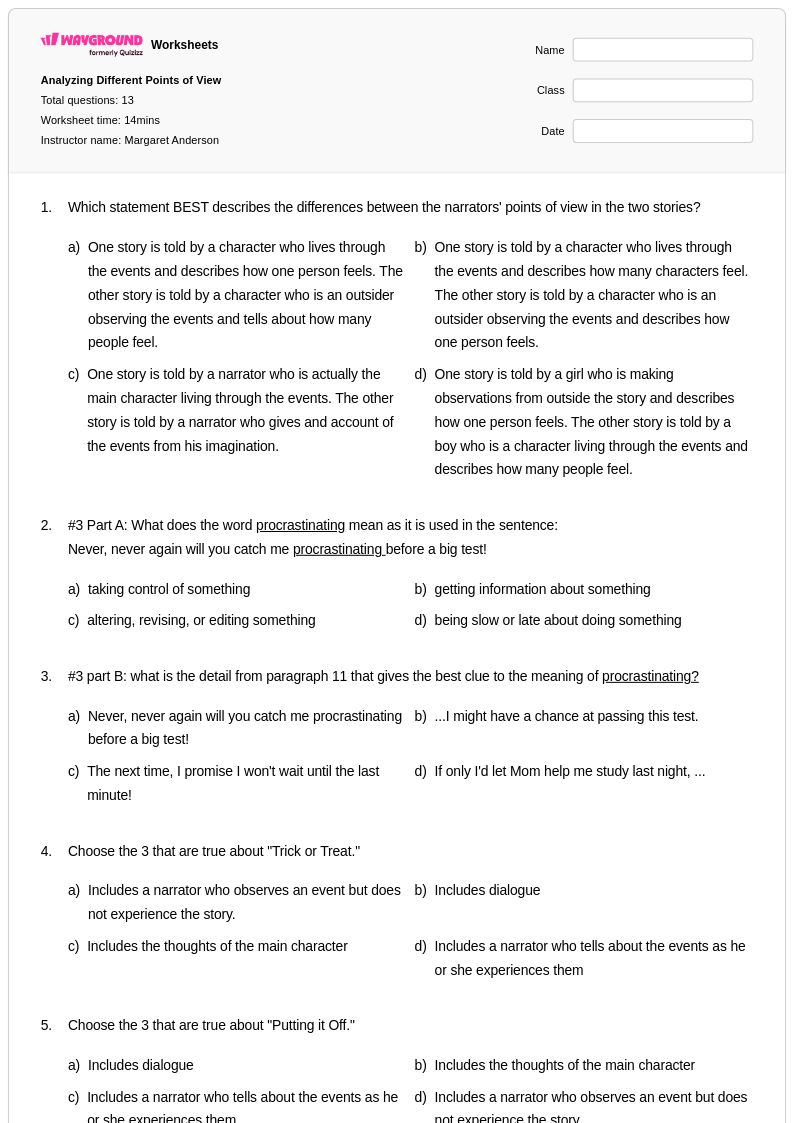
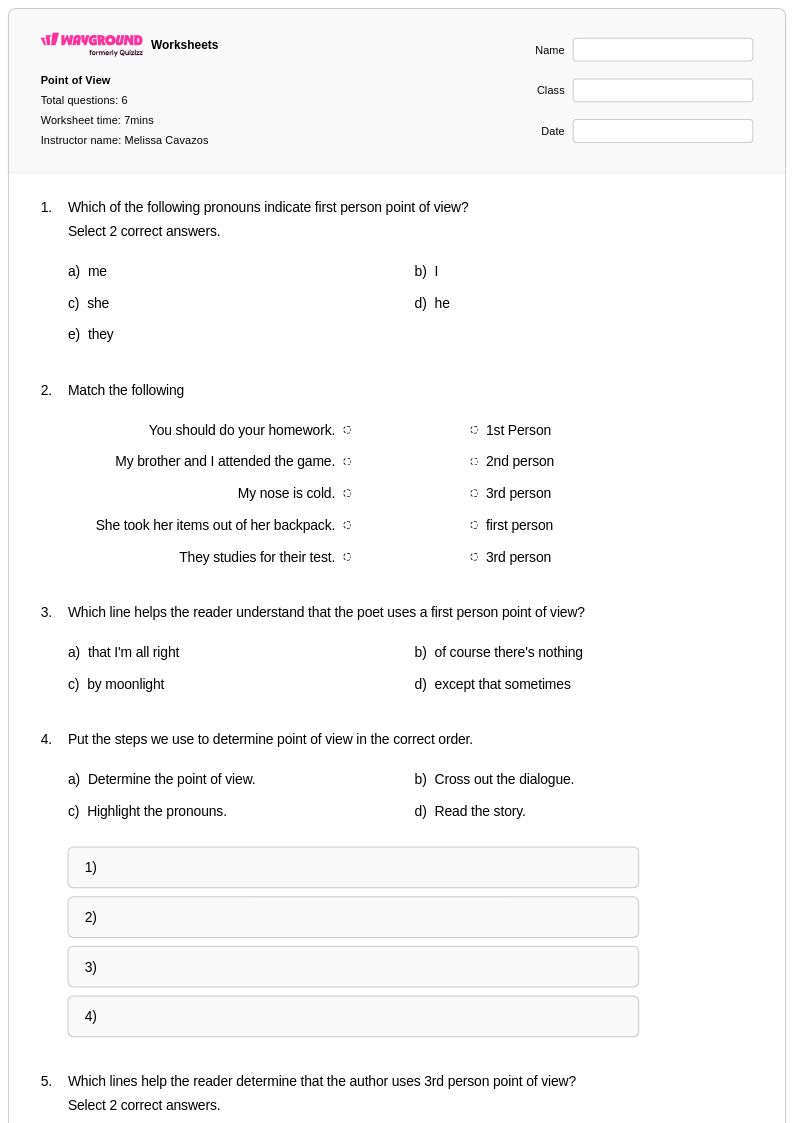
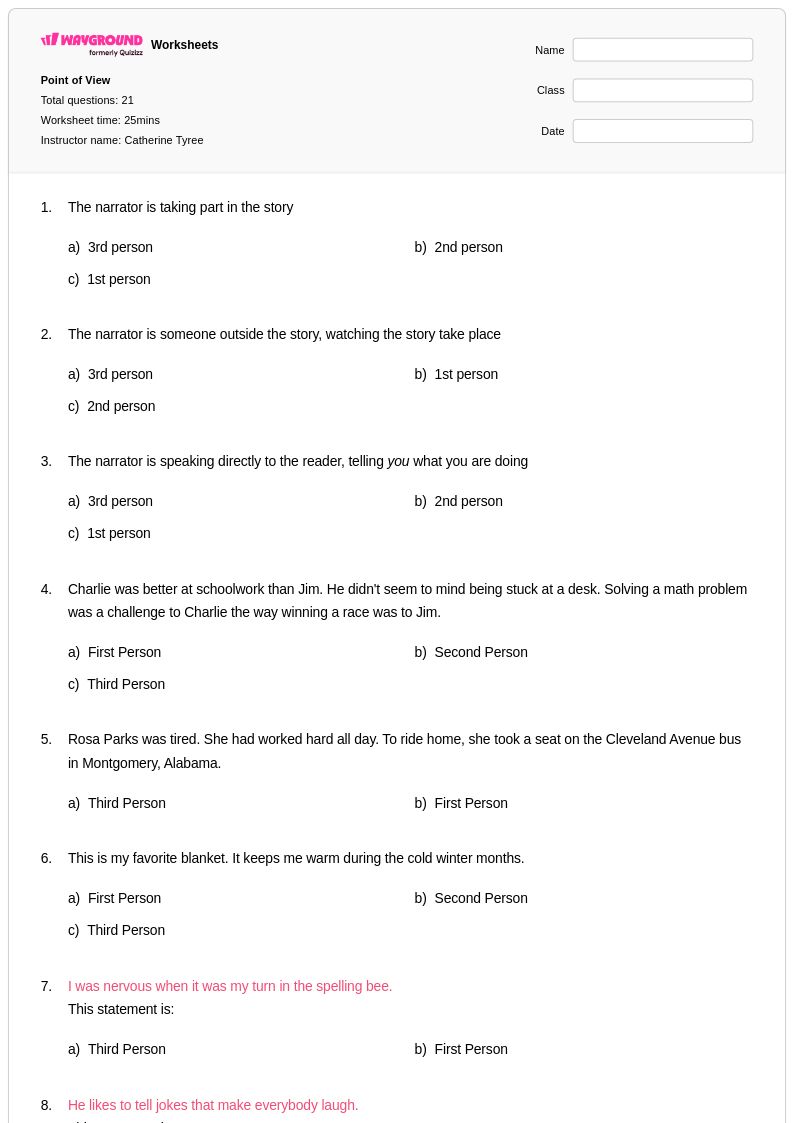
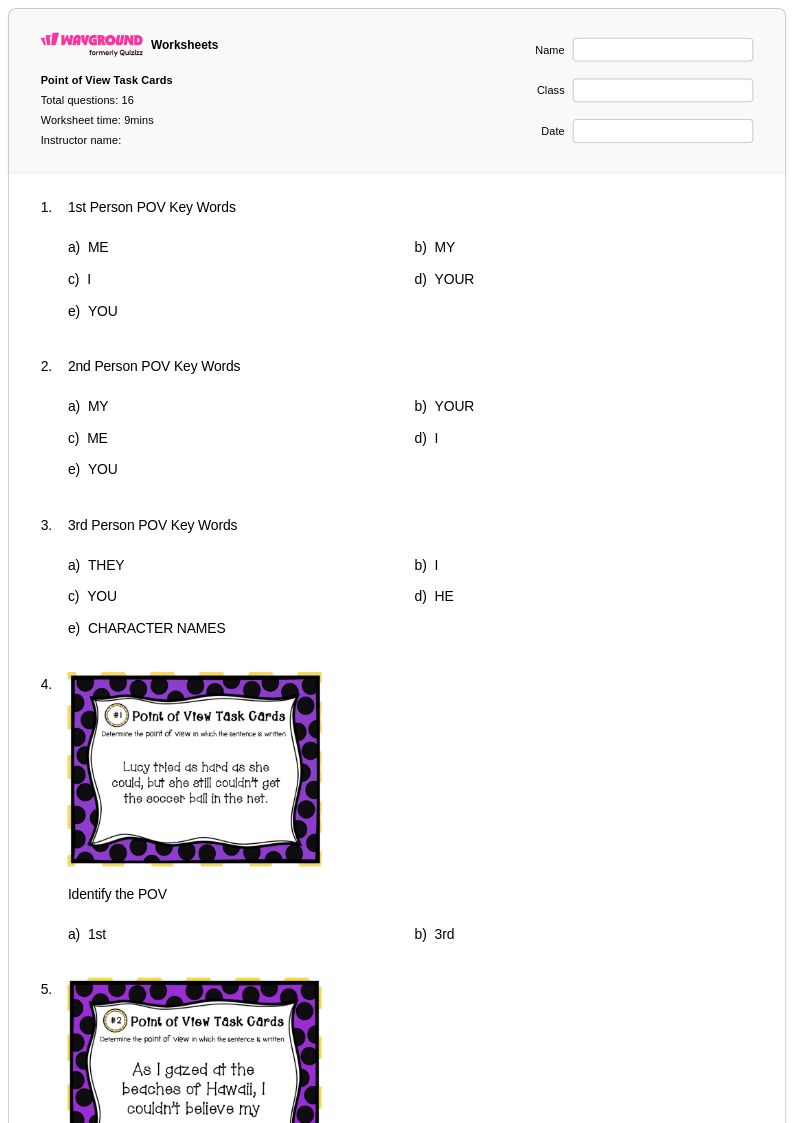
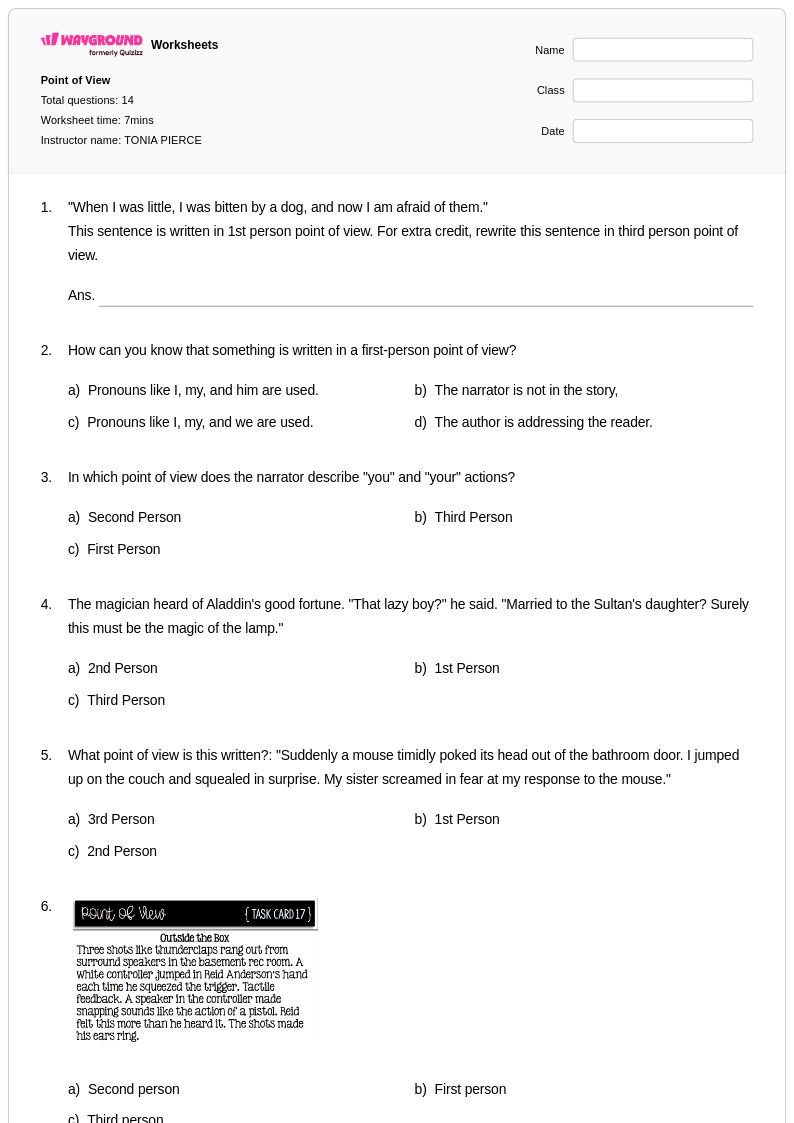
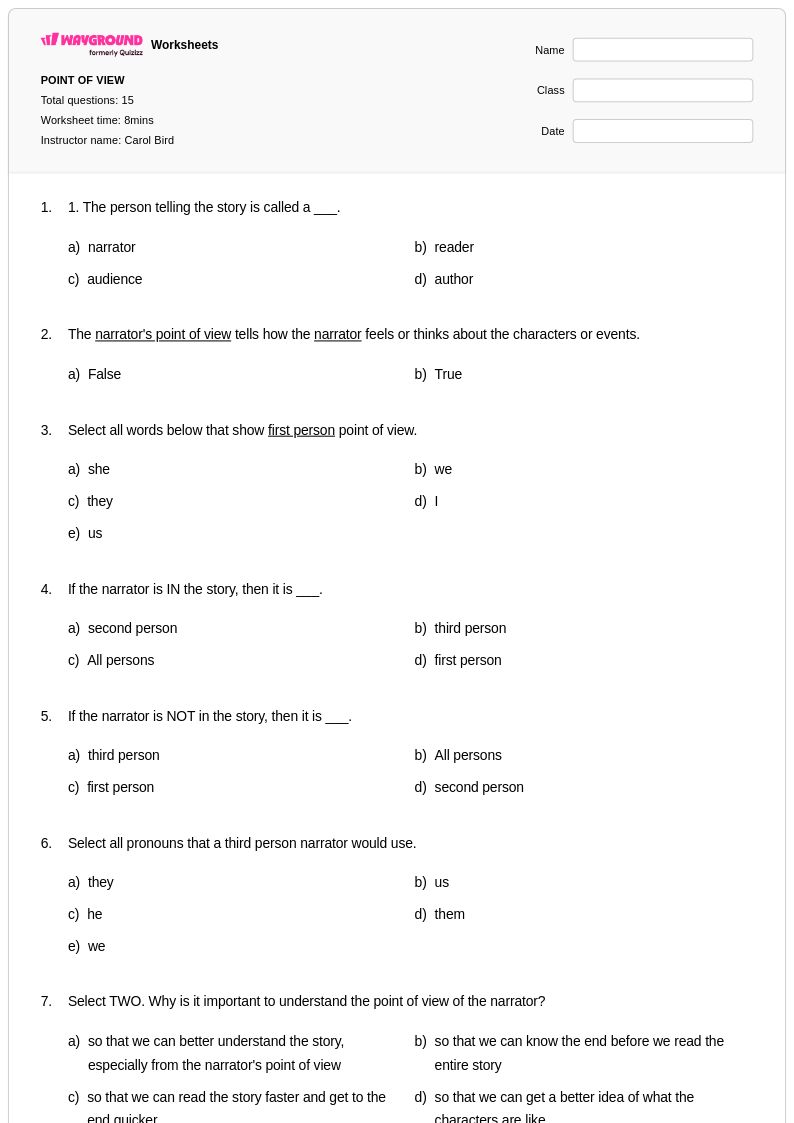
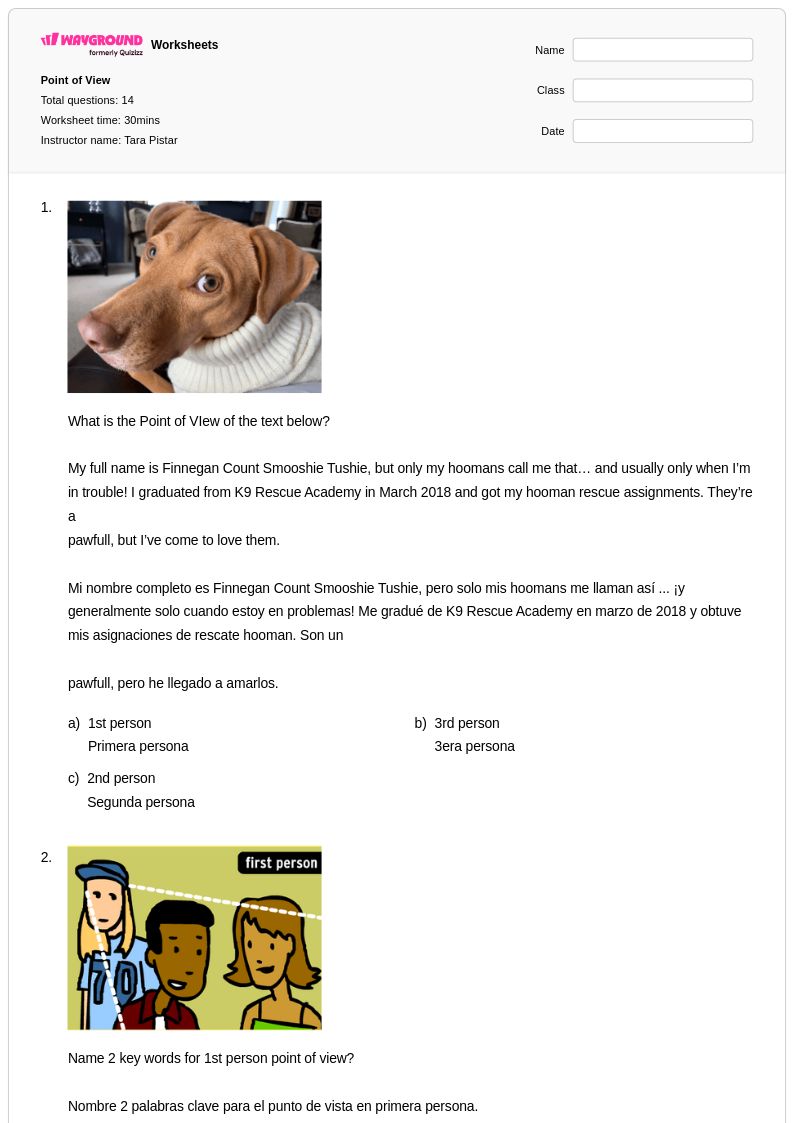
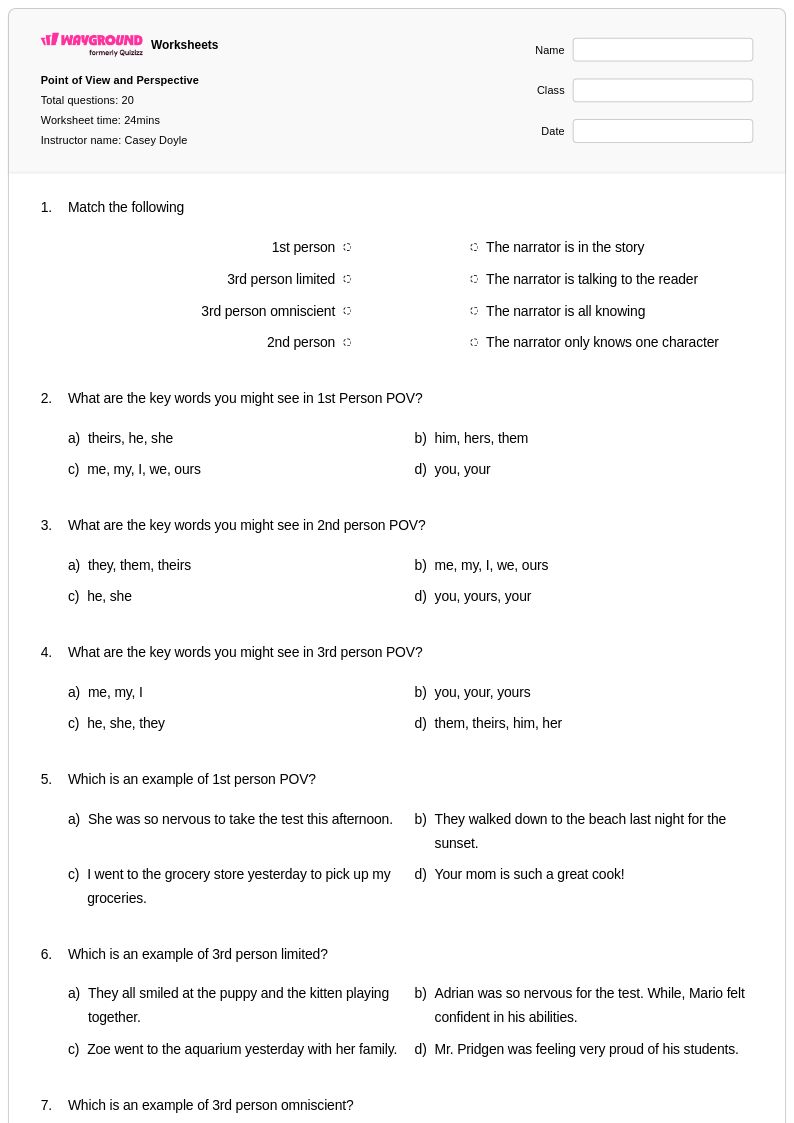
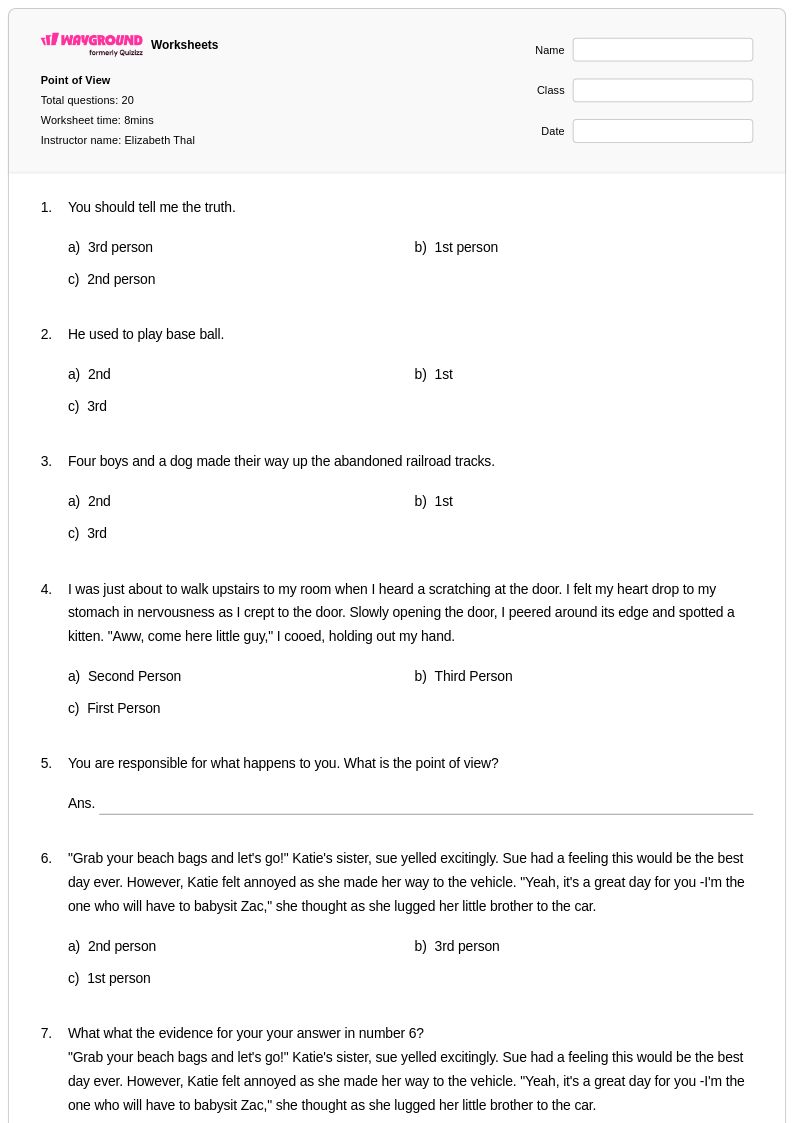
Analyzing point of view worksheets for Class 4 students available through Wayground (formerly Quizizz) provide essential practice in understanding narrative perspective and developing critical reading comprehension skills. These educational resources help fourth-grade learners identify whether a story is told from first person, second person, or third person point of view, while building their ability to recognize how different perspectives influence storytelling. Students work through engaging practice problems that require them to analyze text passages, identify narrator characteristics, and understand how point of view affects what readers learn about characters and events. Each worksheet comes with a comprehensive answer key, and teachers can access these materials as free printables or convenient pdf downloads that support both classroom instruction and independent practice.
Wayground (formerly Quizizz) empowers educators with millions of teacher-created resources specifically designed for analyzing point of view instruction, featuring robust search and filtering capabilities that help locate age-appropriate materials aligned with Class 4 reading standards. The platform's differentiation tools allow teachers to customize worksheets based on individual student needs, supporting both remediation for struggling readers and enrichment opportunities for advanced learners. These versatile materials are available in both printable and digital formats, including downloadable pdf versions that facilitate seamless lesson planning and flexible implementation across various learning environments. Teachers can efficiently identify resources that target specific point of view concepts, ensuring students receive focused skill practice that builds toward mastery of this fundamental narrative analysis technique.
FAQs
How do I teach point of view to students who confuse narrator perspective with author perspective?
The most effective approach is to explicitly separate the narrator from the author using concrete examples — show students a first-person narrator who is clearly unreliable, then ask who is actually telling the story versus who wrote it. Anchor instruction in short, high-interest passages where students can highlight clue words (I, you, he/she/they) before moving to interpretation. Once students can consistently identify the narrative voice, scaffold toward the harder question: how does the narrator's position limit or shape what the reader knows?
What exercises best help students practice distinguishing between first, second, and third-person point of view?
Identification exercises using short varied passages are the most efficient starting point — students label the perspective and cite the pronoun evidence that led to their answer. From there, conversion exercises (rewriting a first-person passage in third-person limited) force students to grapple with what information a narrator can and cannot access. Analyzing point of view worksheets that sequence from basic identification to nuanced analysis of narrator reliability and omniscience give students the structured repetition needed to internalize these distinctions.
What mistakes do students commonly make when analyzing point of view?
The most frequent error is conflating third-person limited with third-person omniscient — students assume any third-person narrator knows everything, when in fact limited narrators are confined to one character's thoughts and perceptions. A second common mistake is treating point of view as a labeling exercise rather than an analytical one: students identify 'third-person' but cannot explain how that choice affects what the reader learns about other characters or how suspense is built. Pushing students to ask 'what can't this narrator know?' is a reliable way to surface and correct both misconceptions.
How does point of view affect character development and plot in a story?
Point of view controls the information pipeline between the story and the reader, which directly shapes how characters are understood and how plot unfolds. A first-person narrator filters all events through personal bias, meaning the reader only knows what that narrator notices, remembers, or chooses to share — making reliability a constant question. Third-person omniscient narrators can reveal the inner lives of multiple characters simultaneously, allowing for dramatic irony when readers know something a character does not. Teaching students to trace how narrative voice shapes these elements moves point of view analysis from identification into genuine literary interpretation.
How do I use Wayground's analyzing point of view worksheets in my classroom?
Wayground's point of view worksheets are available as printable PDFs for traditional classroom use and in digital formats for technology-integrated learning environments, and teachers can also host them as a quiz directly on Wayground. Each worksheet includes a complete answer key, making them practical for independent practice, guided instruction, or remediation without additional prep. For students who need additional support, Wayground's accommodation tools allow teachers to enable read aloud, extended time, or reduced answer choices on an individual basis, so all students can access the same analytical tasks at an appropriate level.
How can I differentiate point of view instruction for students at different skill levels?
For students who are still mastering basic identification, focus on passages with clear pronoun signals and straightforward narrators before introducing complexity. Students who are ready to go deeper should work with unreliable narrators or texts that shift perspective, analyzing how those choices affect reader trust and story interpretation. Wayground's differentiation tools allow teachers to modify question formats and adjust task difficulty, and individual accommodations like reduced answer choices or read aloud can be assigned per student so advanced and developing readers can work from the same resource without requiring separate materials.