Free Printable Beginning, Middle, End Structure Worksheets for Class 4
Enhance Class 4 students' understanding of story structure with Wayground's free printable worksheets that teach beginning, middle, and end organization through engaging practice problems and comprehensive answer keys.
Explore printable Beginning, Middle, End Structure worksheets for Class 4
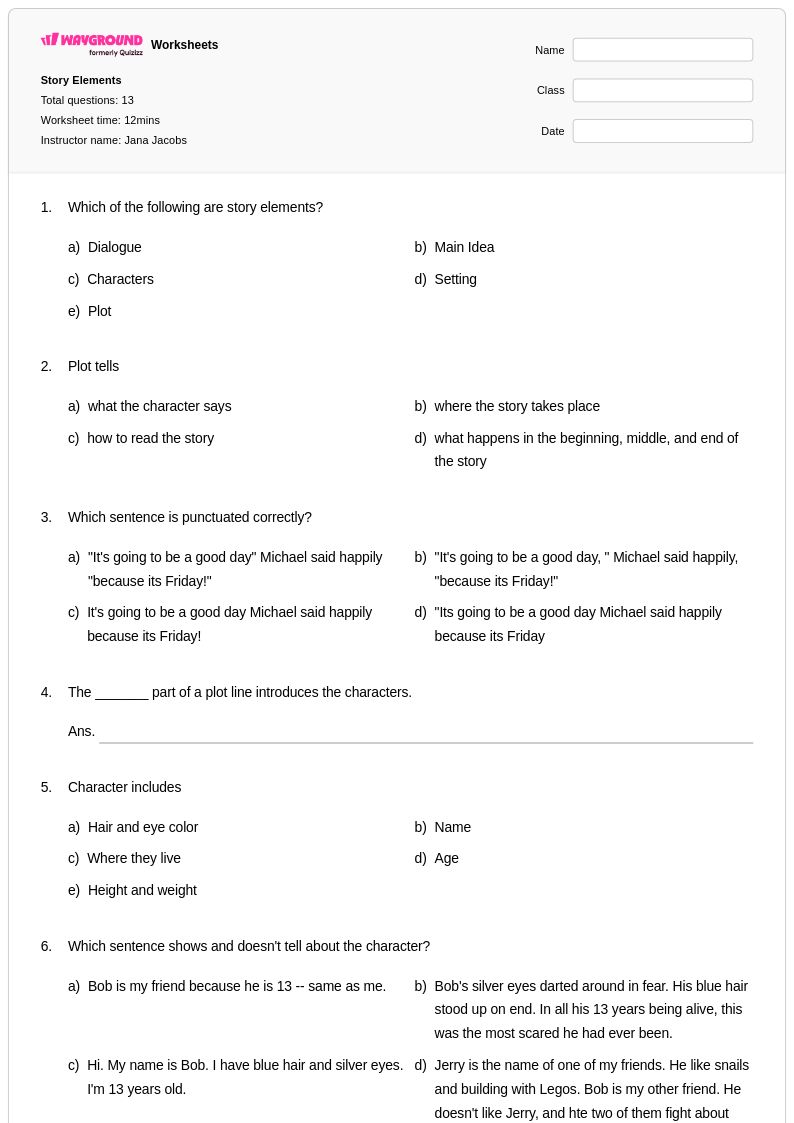
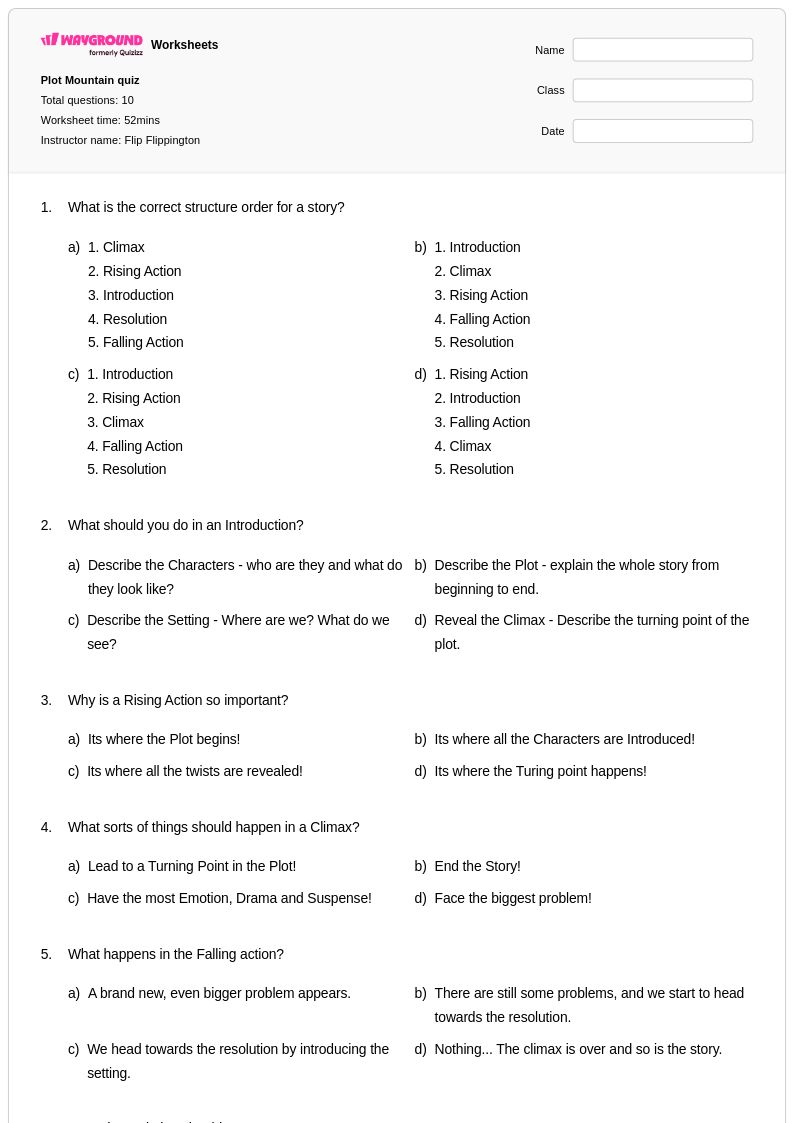
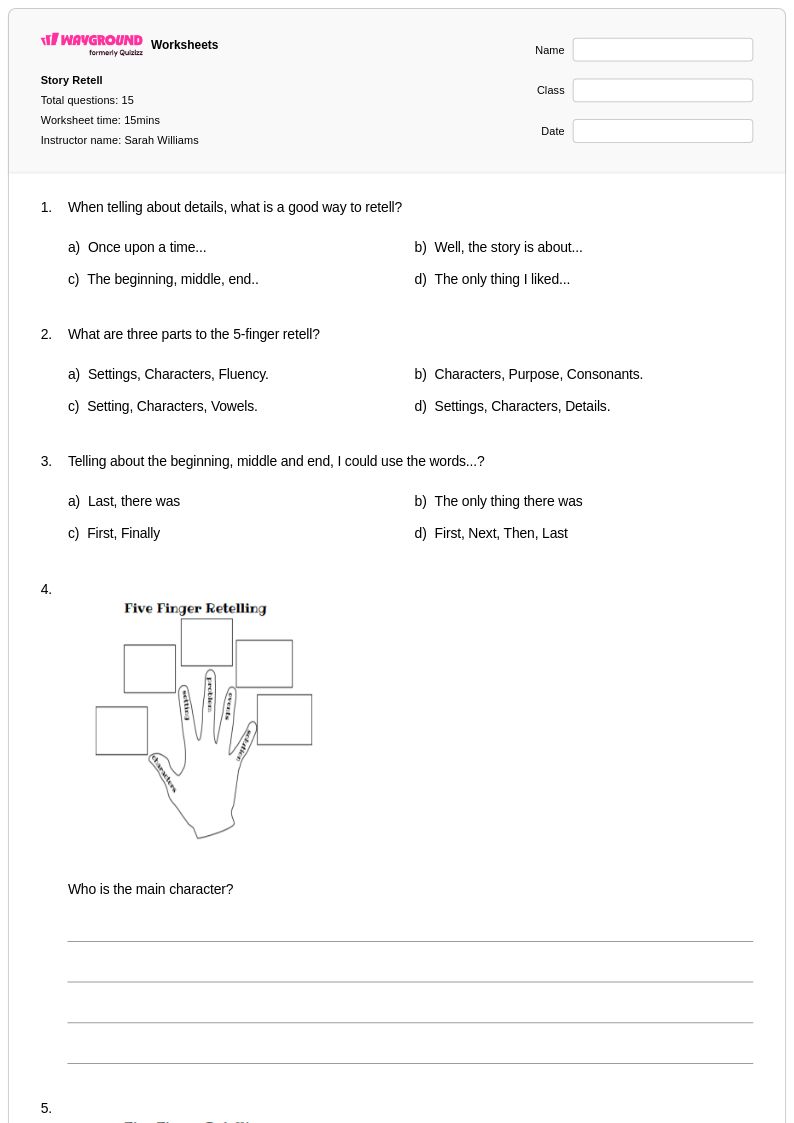
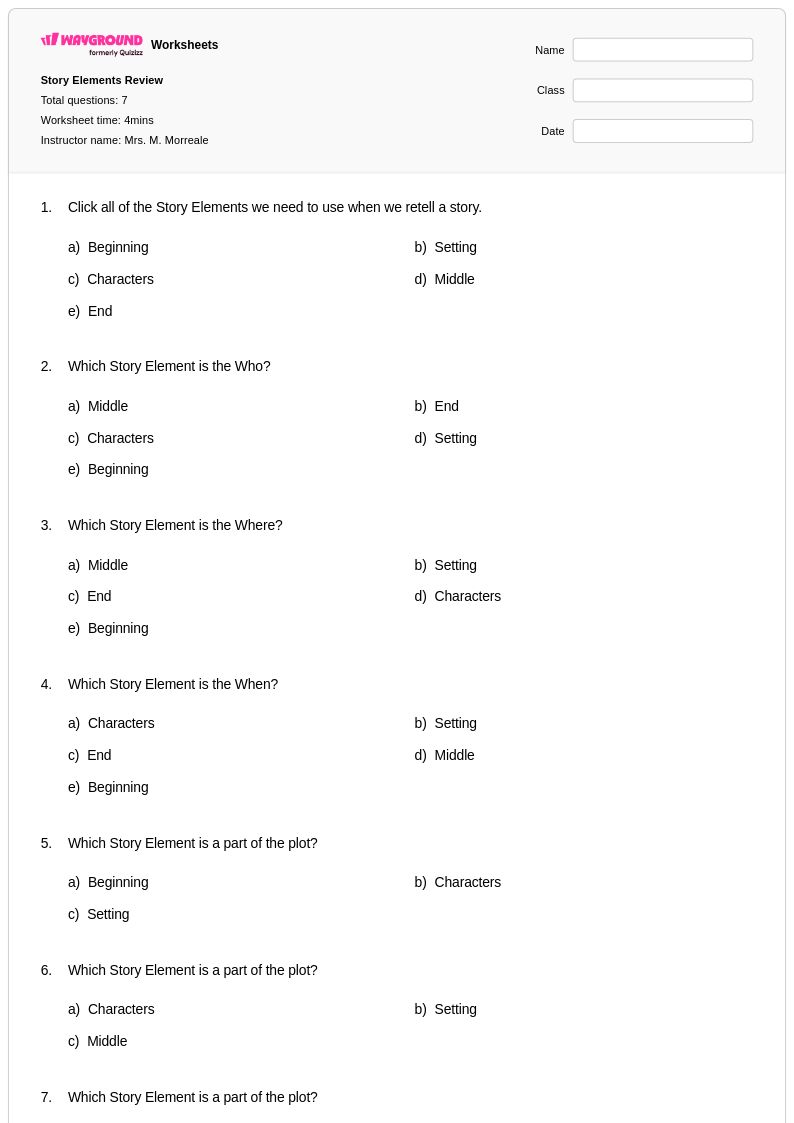
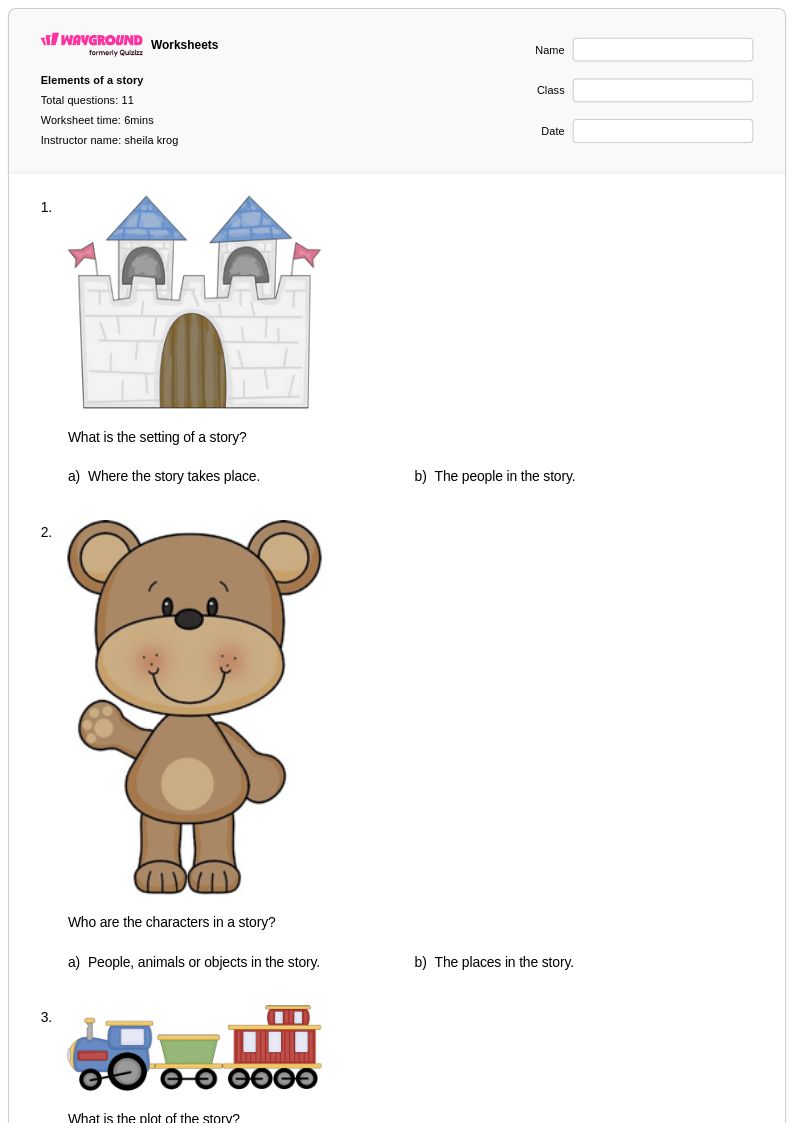
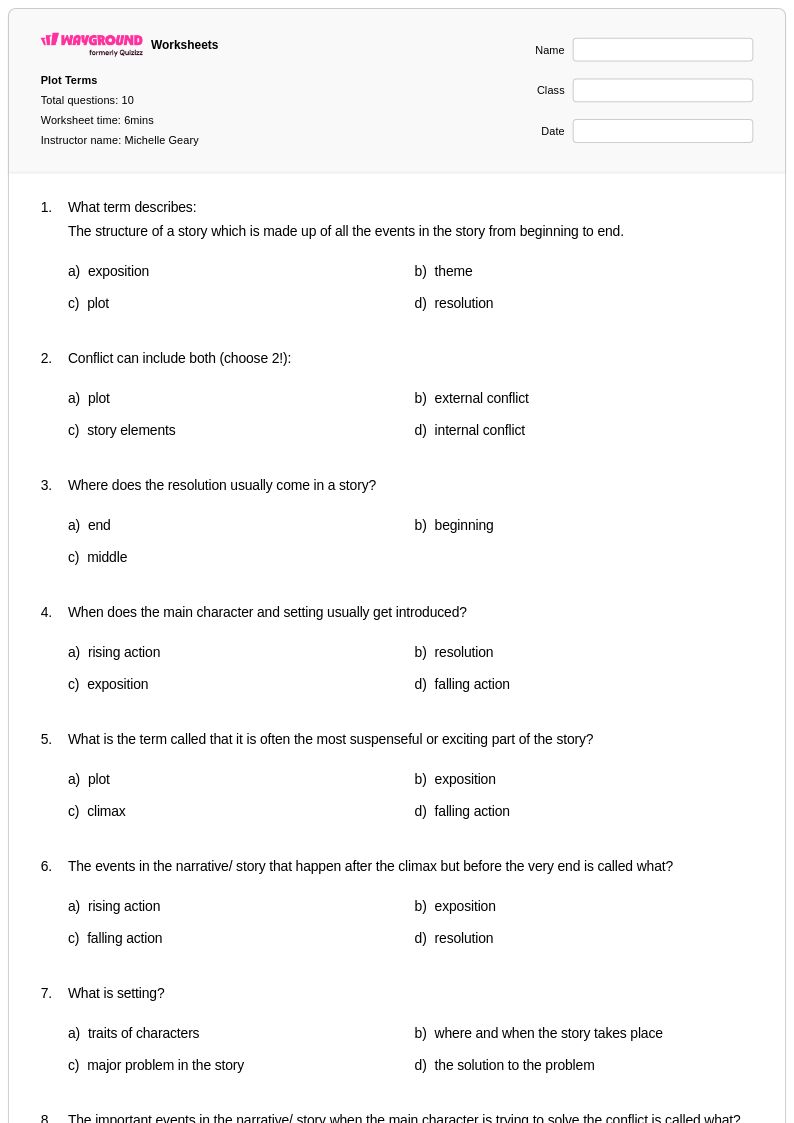
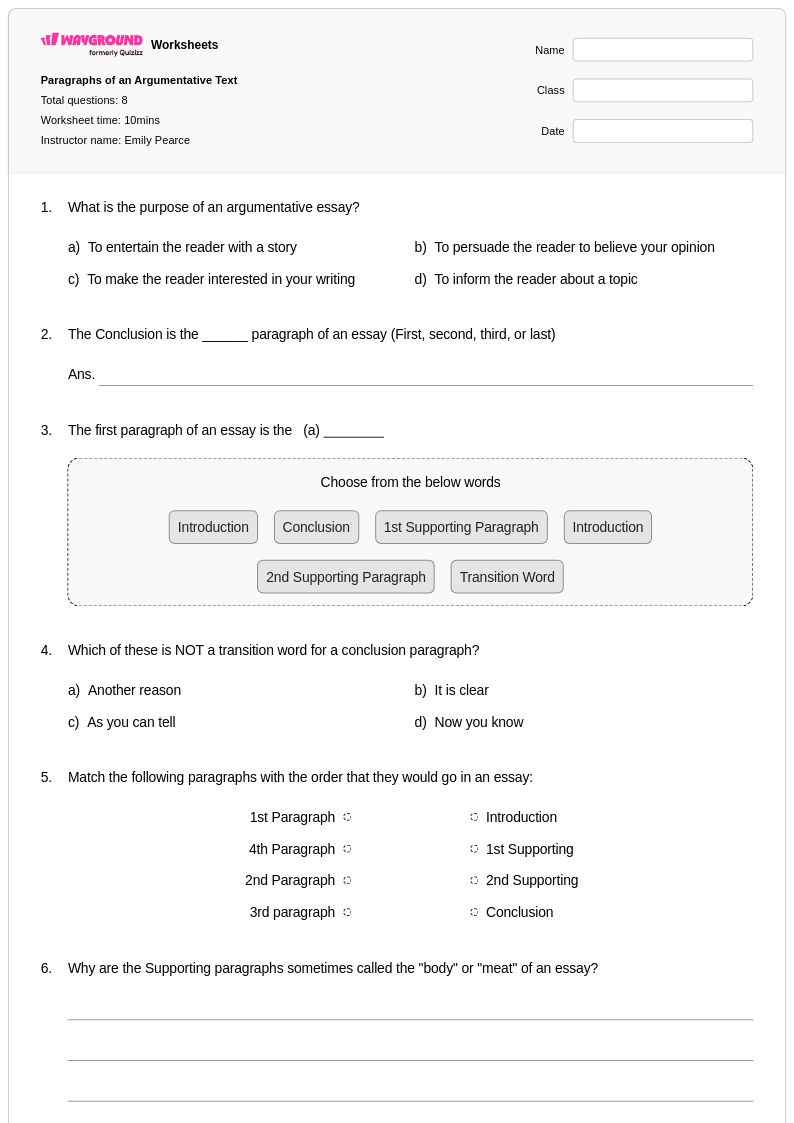
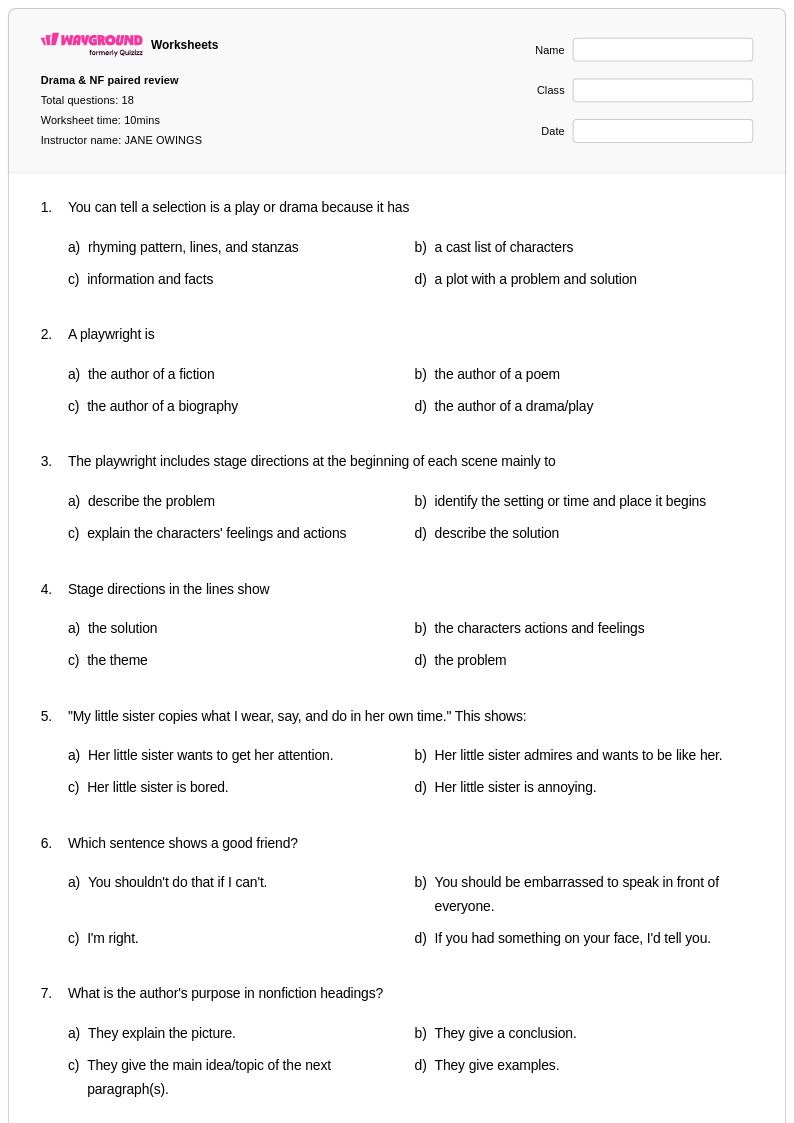
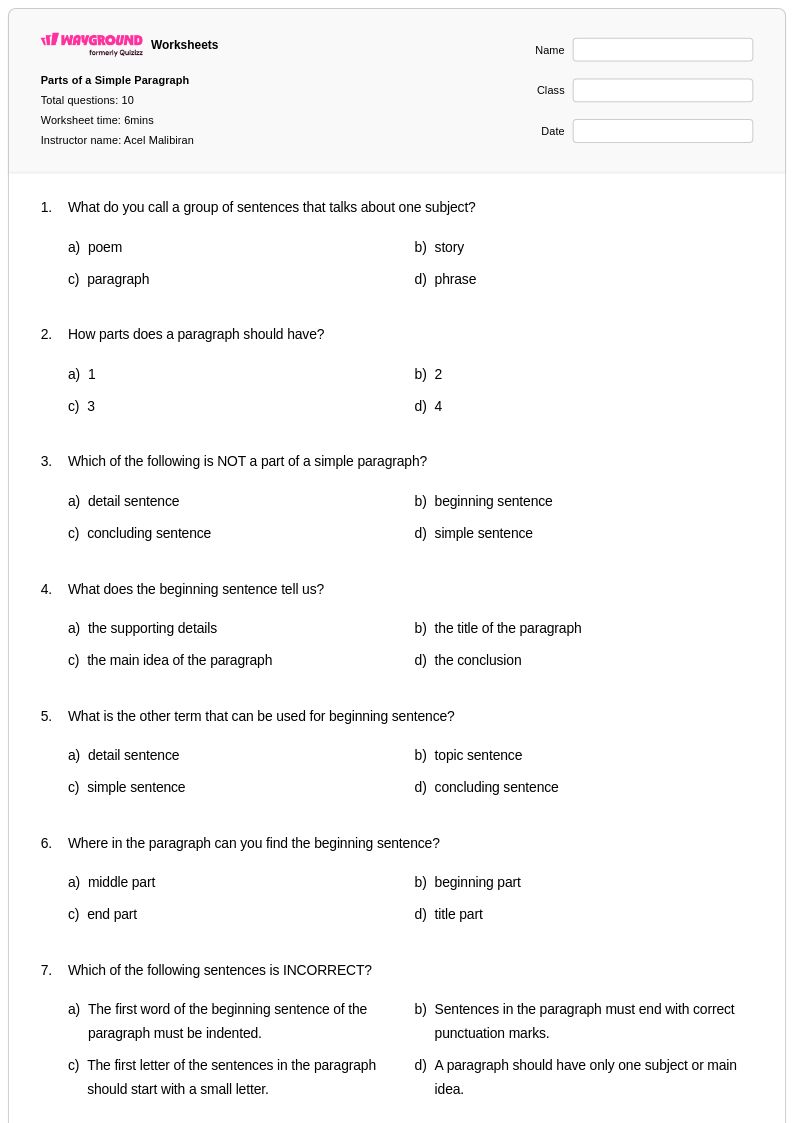
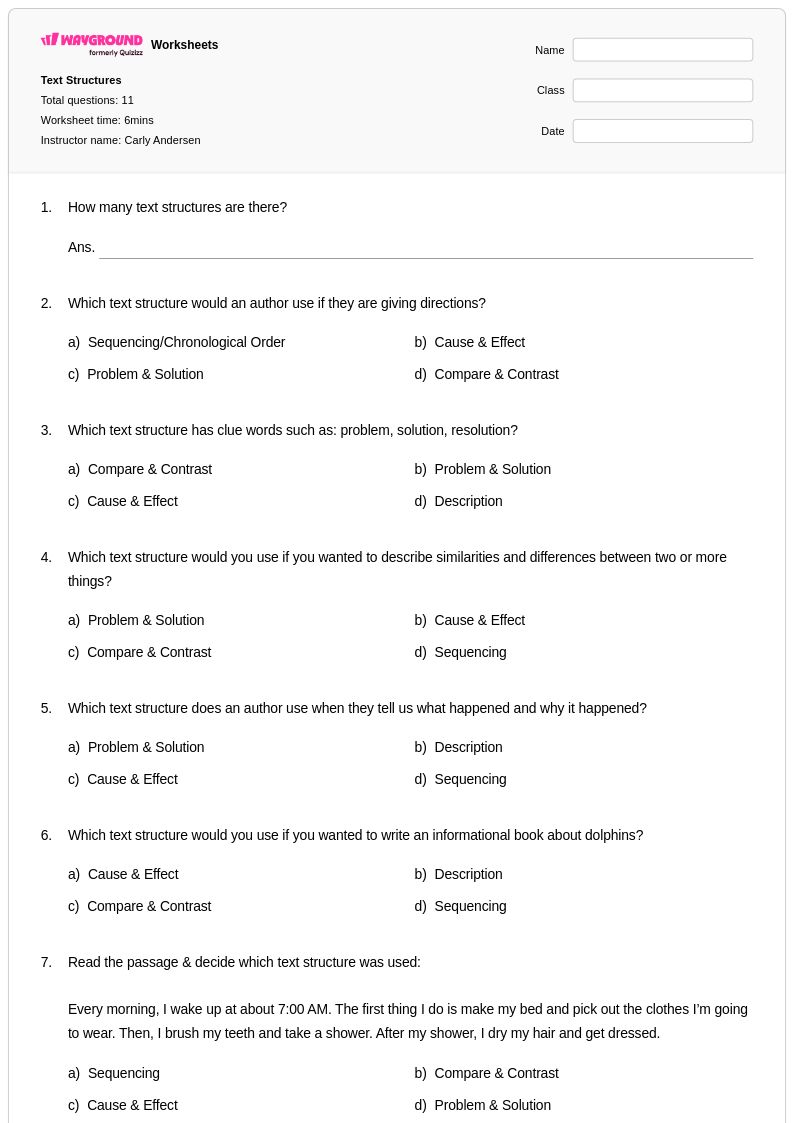
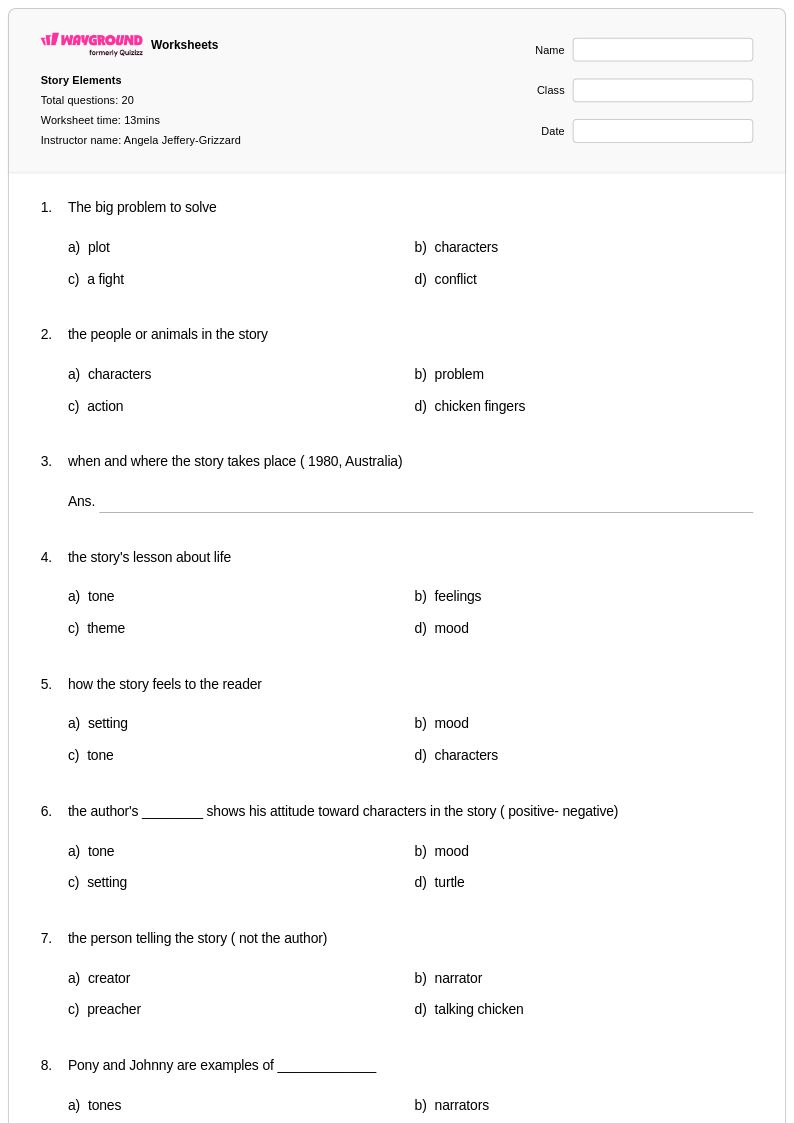
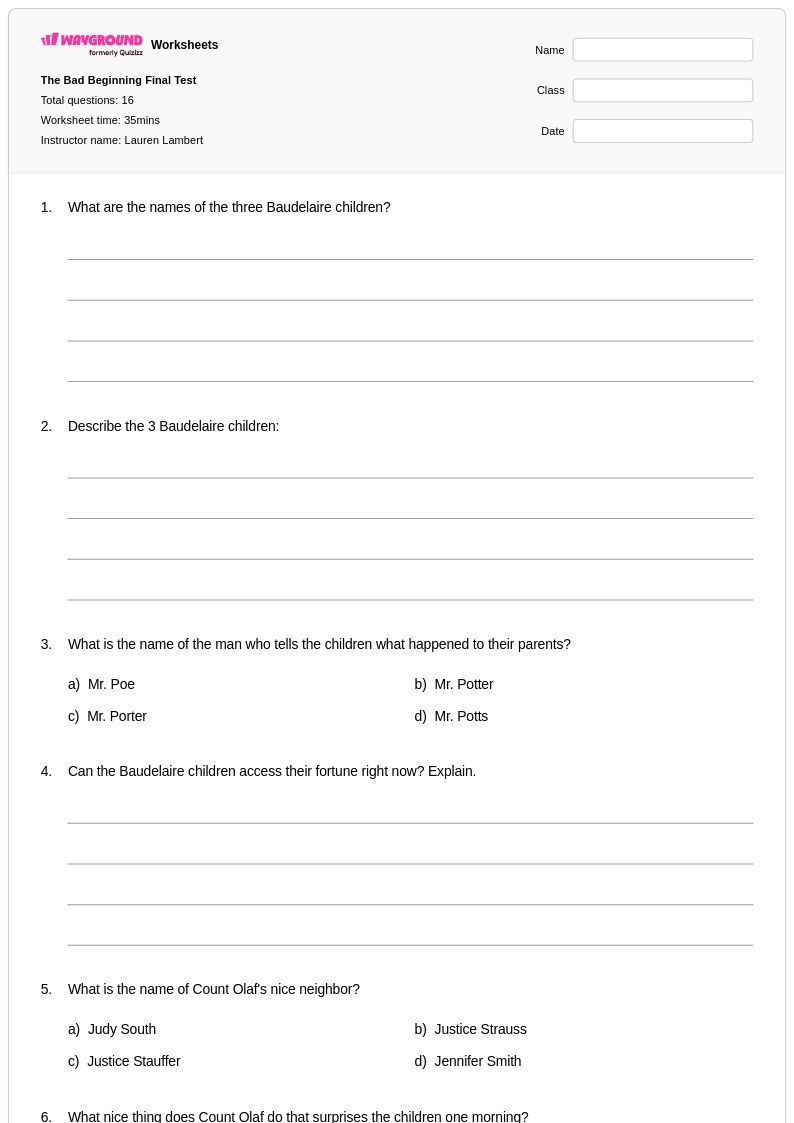
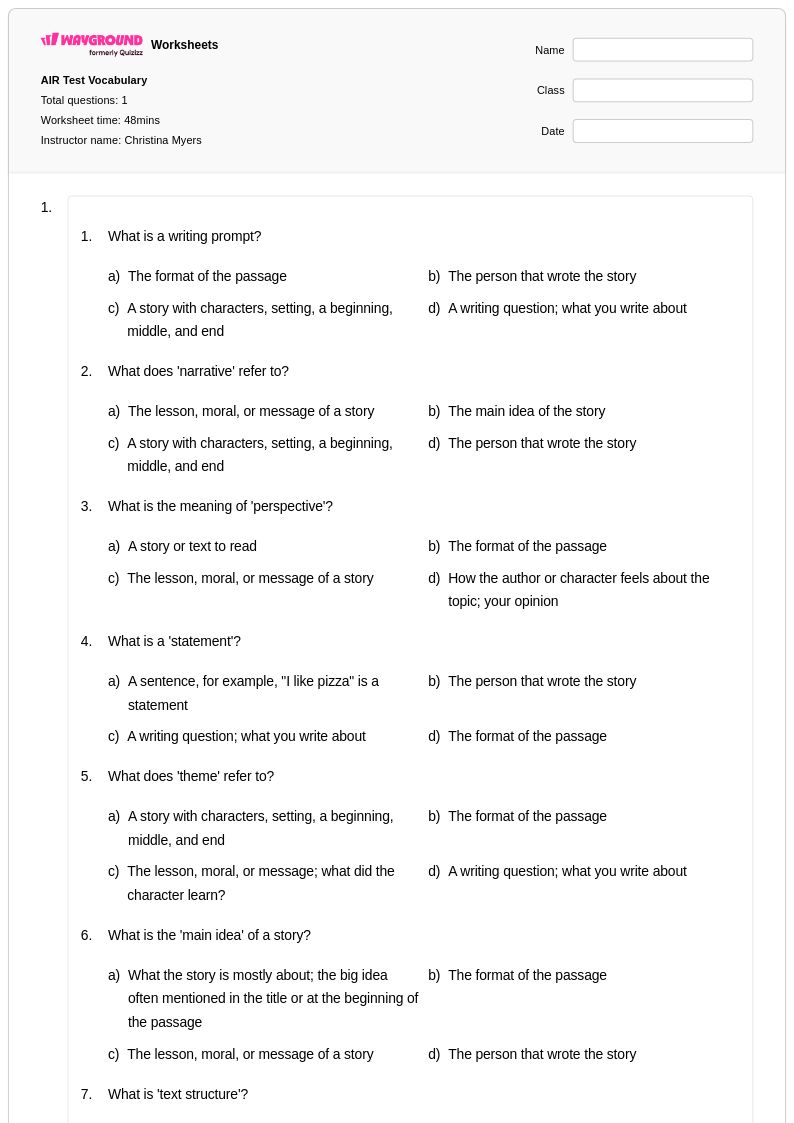
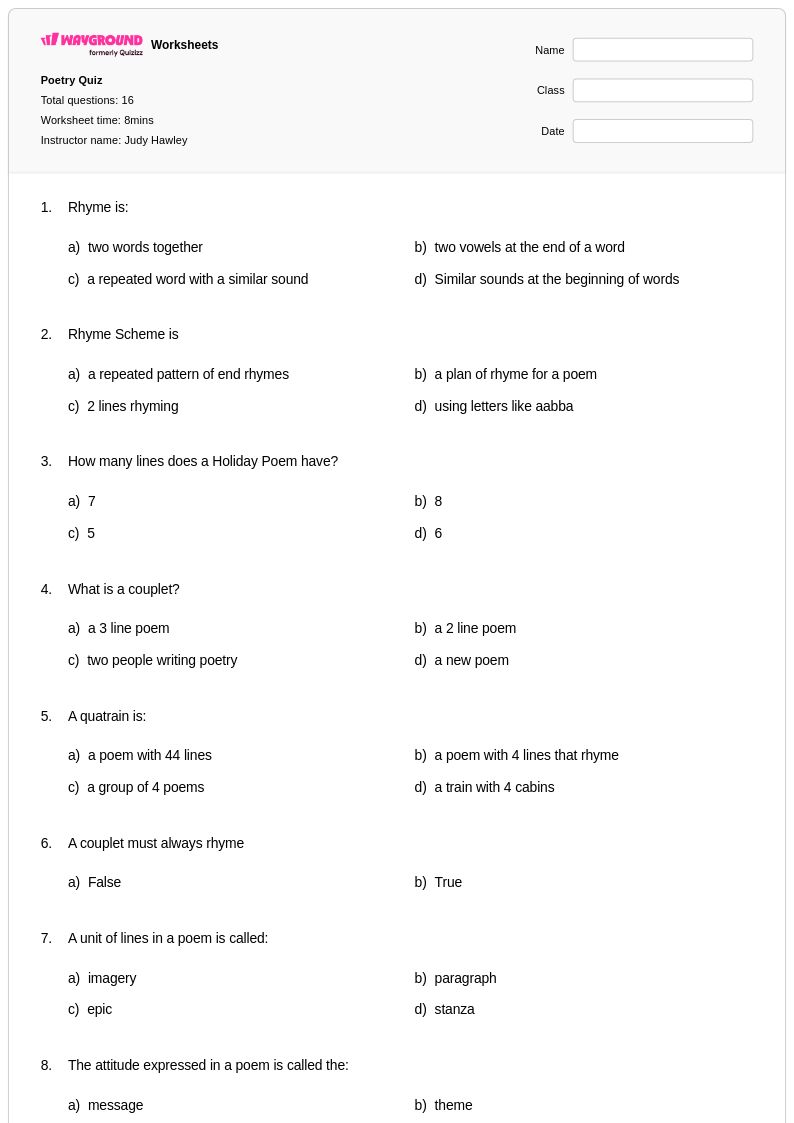
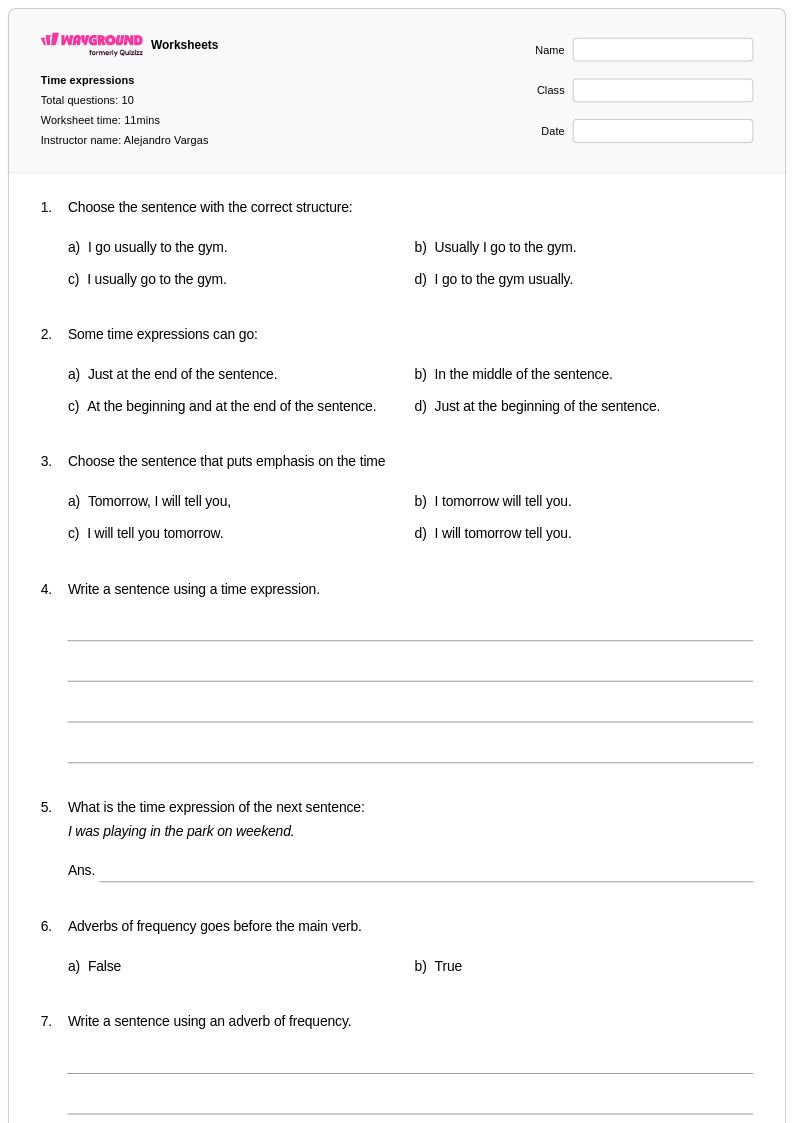
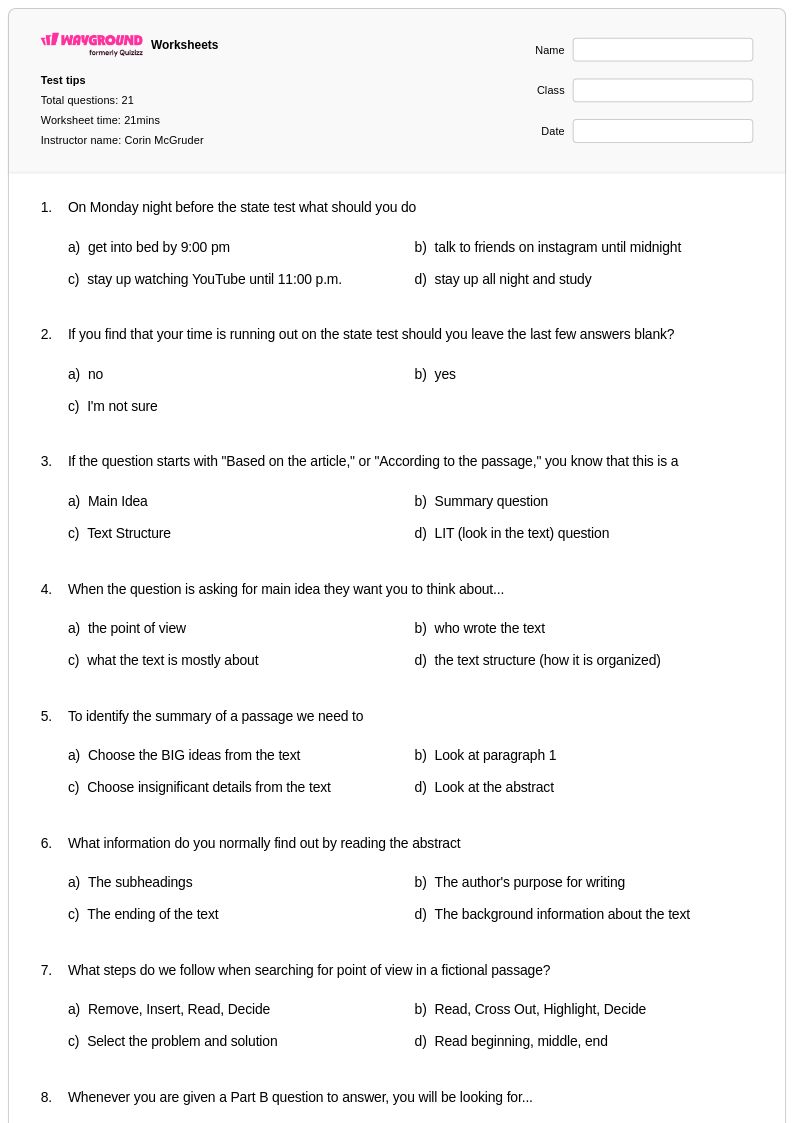
Beginning, Middle, End Structure worksheets for Class 4 students through Wayground (formerly Quizizz) provide comprehensive practice in identifying and analyzing the fundamental three-part framework that underlies most narrative texts. These carefully designed resources help fourth-grade learners develop critical reading comprehension skills by teaching them to recognize exposition elements in story beginnings, track rising action and conflict development in middle sections, and understand how resolution and conclusion techniques work in story endings. Each worksheet includes targeted practice problems that guide students through analyzing age-appropriate texts, complete with answer keys that support both independent learning and teacher-guided instruction. These free printable resources strengthen students' ability to organize their thinking about story structure, improve their reading comprehension, and build foundational skills for more advanced literary analysis.
Wayground (formerly Quizizz) empowers teachers with millions of educator-created Beginning, Middle, End Structure worksheets specifically calibrated for Class 4 reading comprehension instruction. The platform's robust search and filtering capabilities allow teachers to quickly locate resources aligned with specific reading standards and differentiate instruction based on individual student needs. Teachers can seamlessly customize these worksheets to match their classroom requirements, selecting from both printable pdf formats for traditional paper-and-pencil activities and digital formats for technology-integrated lessons. This extensive collection supports comprehensive lesson planning by providing materials suitable for initial skill introduction, targeted remediation for struggling readers, and enrichment activities for advanced students, ensuring that all fourth-grade learners can master this essential story structure concept through varied and engaging practice opportunities.
FAQs
How do I teach beginning, middle, and end structure to early readers?
Start by using simple, familiar stories so students can focus on structure rather than decoding unfamiliar content. Introduce each part explicitly: the beginning sets up characters and setting, the middle presents a problem or conflict, and the end shows how it is resolved. Graphic organizers that divide a page into three labeled sections help students visually anchor each story part before they practice independently.
What exercises help students practice identifying beginning, middle, and end in a story?
Sequencing activities where students cut apart story events and sort them into beginning, middle, and end categories are especially effective for building this skill. Retelling prompts that ask students to summarize each section in one or two sentences reinforce the concept through writing. Repeated exposure across different text types, including fiction, folktales, and simple informational narratives, helps students recognize that this three-part structure is a transferable reading strategy.
What mistakes do students commonly make when identifying story structure?
The most common error is placing too many events in the beginning or collapsing the middle and end together, often because students summarize the whole plot rather than categorizing by narrative function. Students also frequently confuse the climax with the end, not recognizing that resolution follows the turning point. Targeted practice with short, clearly structured texts helps students distinguish these stages before applying the skill to longer, more complex narratives.
How do beginning, middle, and end worksheets support reading comprehension development?
Understanding narrative structure gives students a predictable framework for processing any story, which reduces cognitive load and improves recall. When students can identify where a story is in its arc, they make more accurate predictions and better inferences about character motivation and plot direction. This structural awareness is a foundational comprehension strategy that transfers across genres and grade levels.
How can I use beginning, middle, and end worksheets in my classroom?
These worksheets are available as printable PDFs for traditional classroom use and in digital formats for technology-integrated learning environments, making them flexible for independent work, small group instruction, or homework. Teachers can also host them as a quiz on Wayground to track student responses and review answers as a class. The included answer keys support both self-paced independent practice and guided whole-class review.
How do I differentiate beginning, middle, and end instruction for students with different learning needs?
For students who need additional support, reduce the complexity of the source text rather than the structural task itself, so all learners practice the same analytical skill. On Wayground, teachers can enable accommodations such as Read Aloud so the worksheet content is read to students who struggle with decoding, and extended time can be configured per student for those who need more processing time. These settings are saved at the student level, so differentiation happens automatically in future sessions without disrupting the rest of the class.