
6 Q
3rd
20 Q
2nd - 4th
21 Q
2nd - 3rd
11 Q
3rd
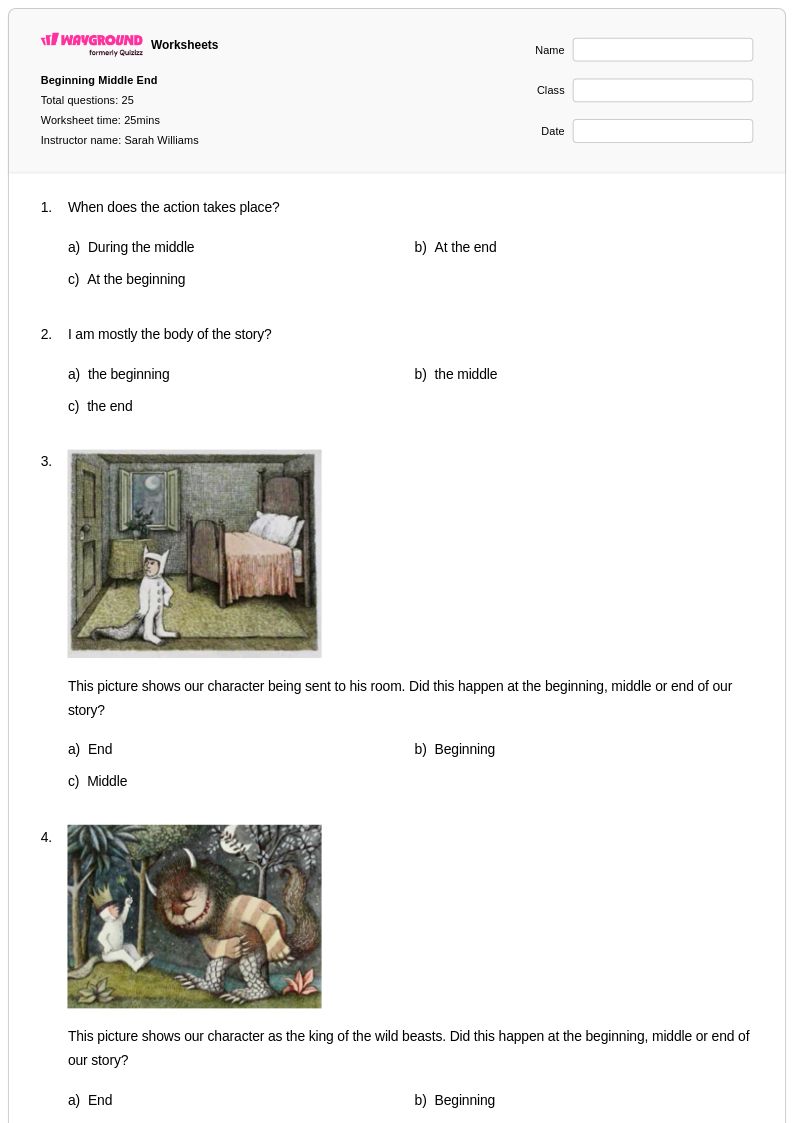
25 Q
3rd - Uni
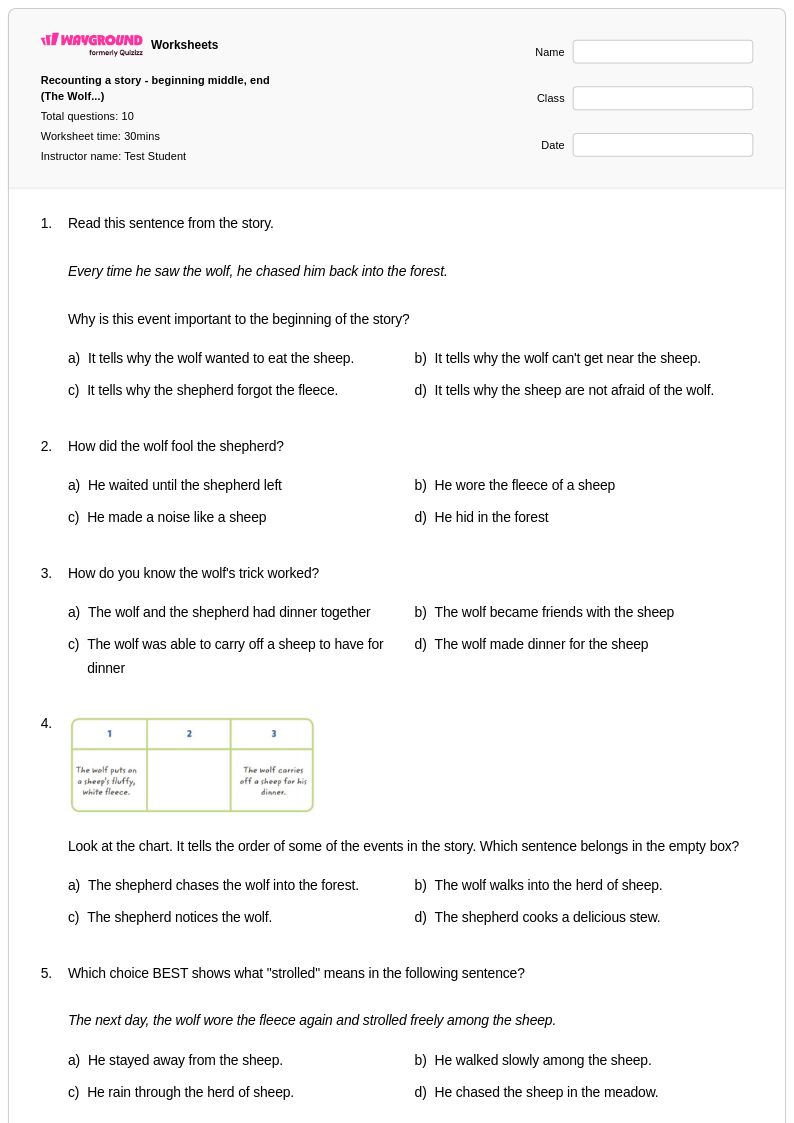
10 Q
3rd
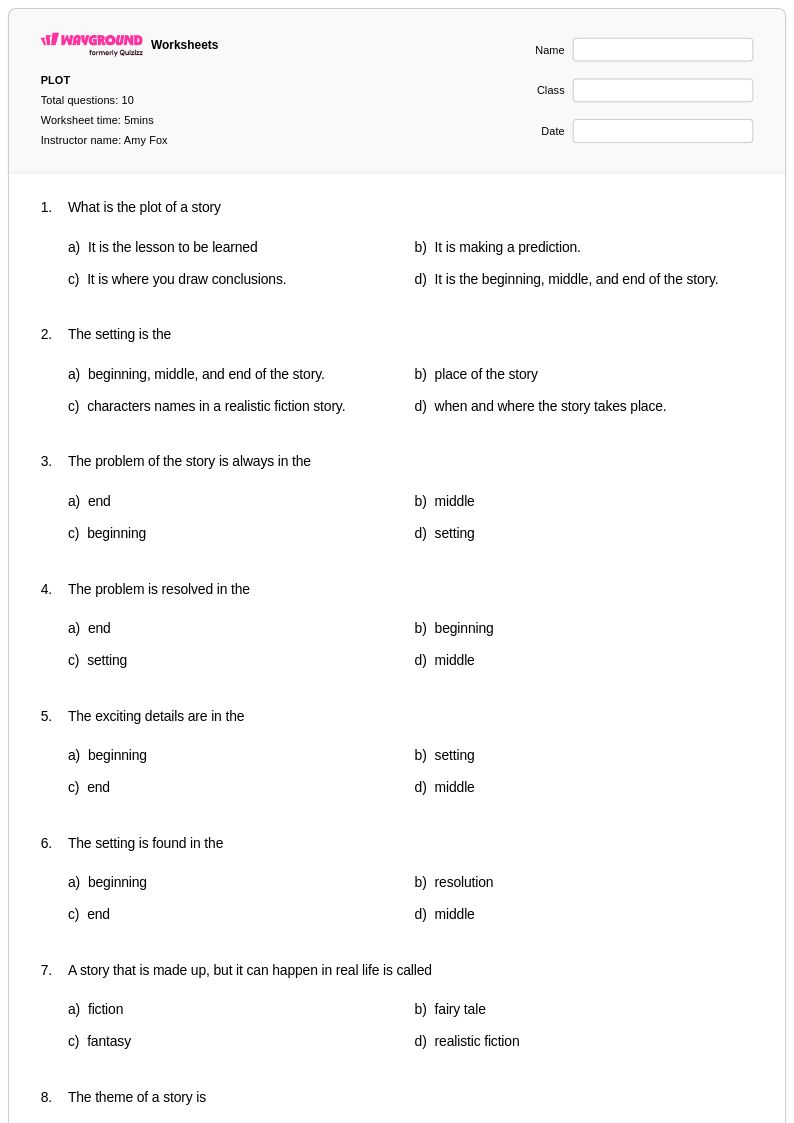
10 Q
2nd - 3rd
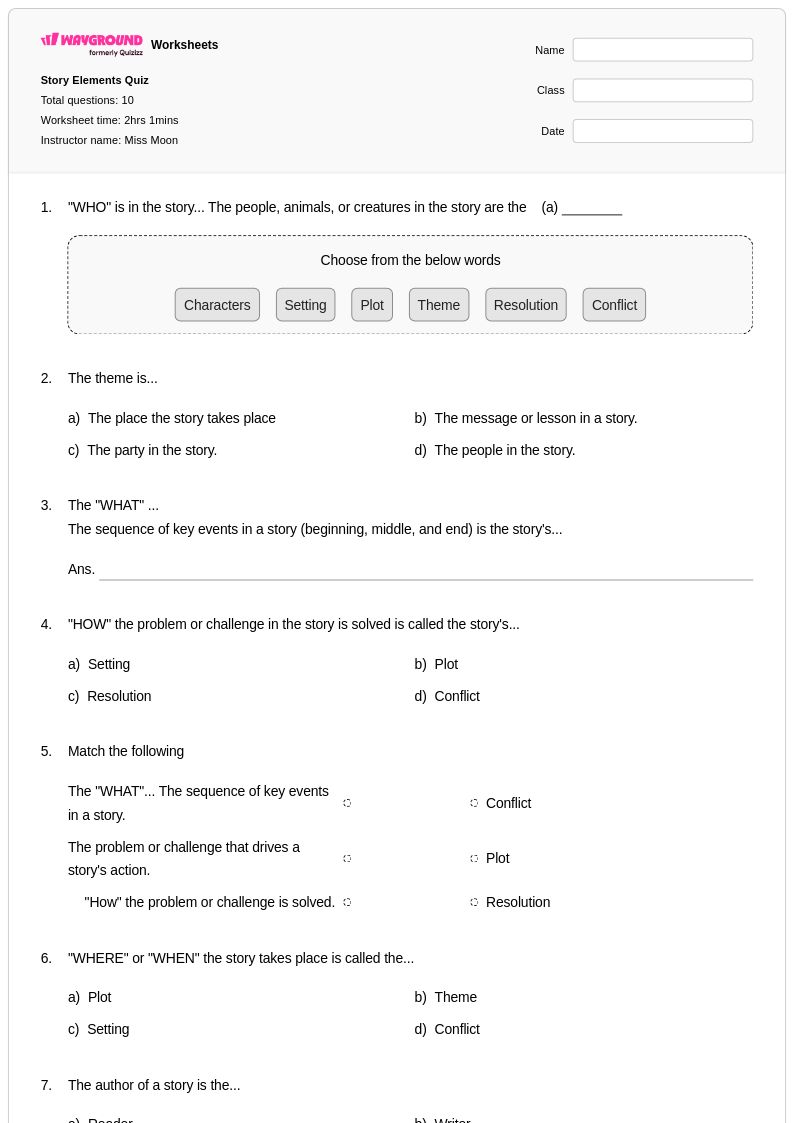
10 Q
3rd
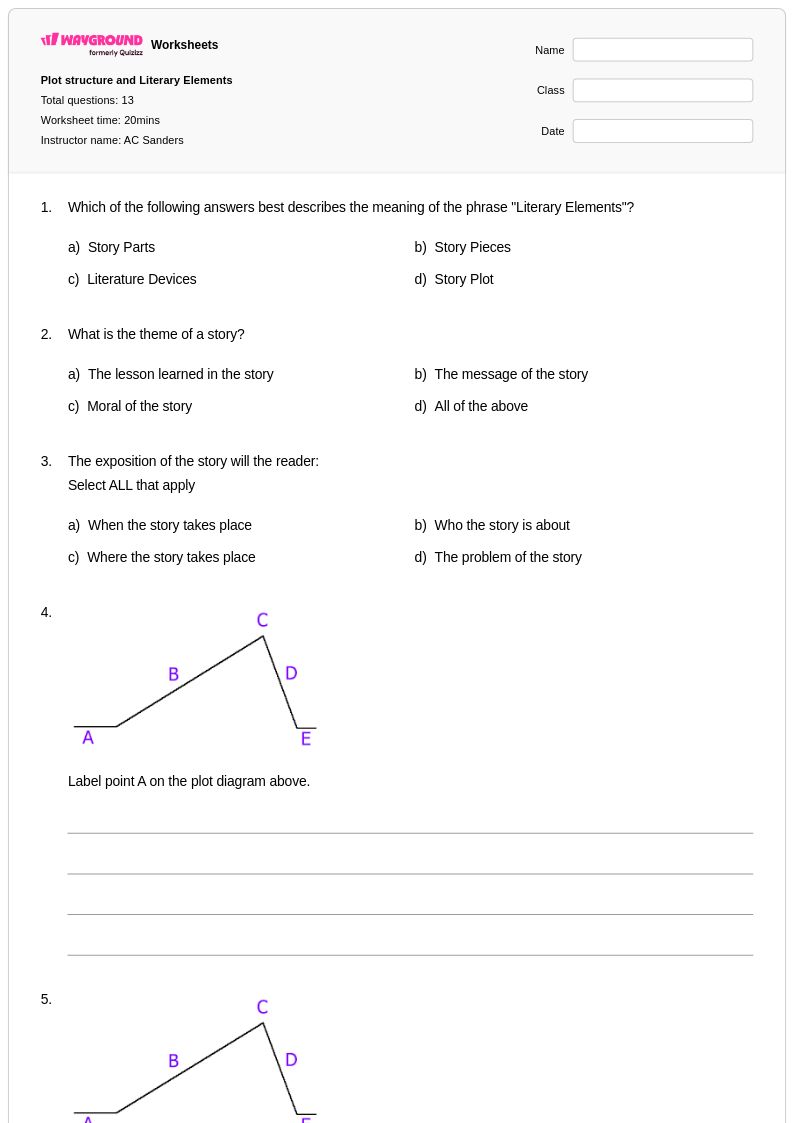
13 Q
3rd - 6th
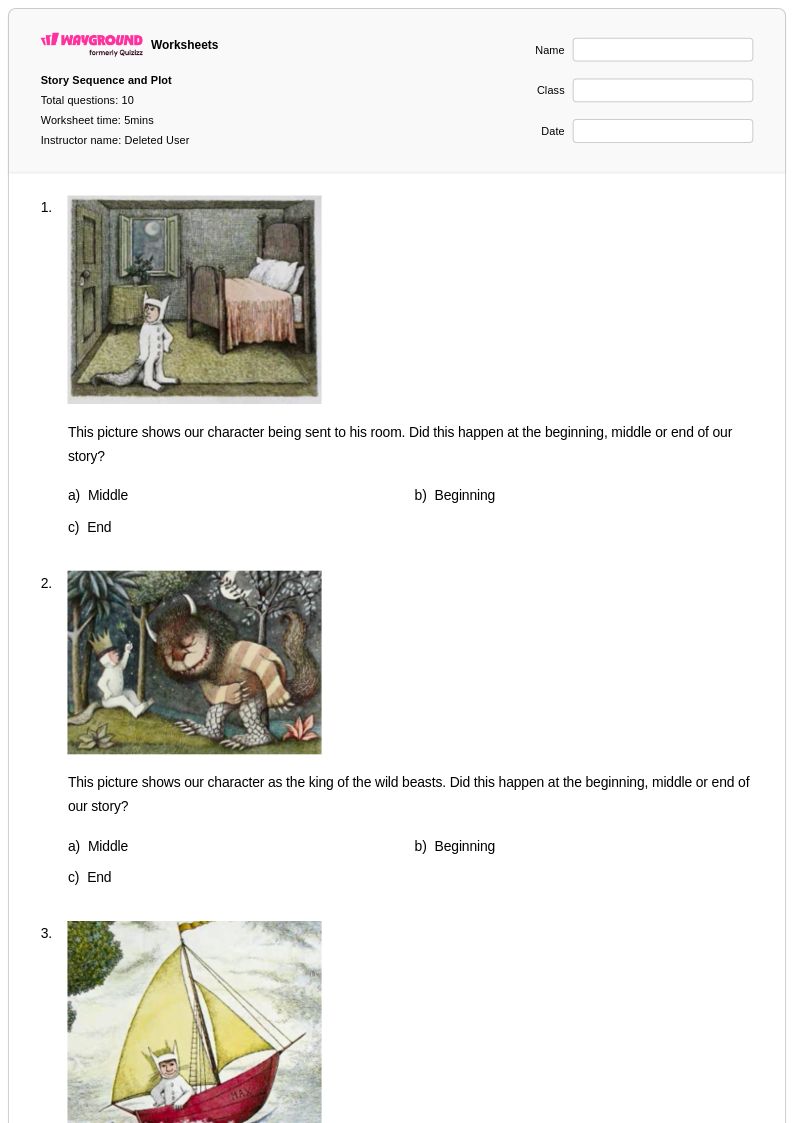
10 Q
1st - 3rd
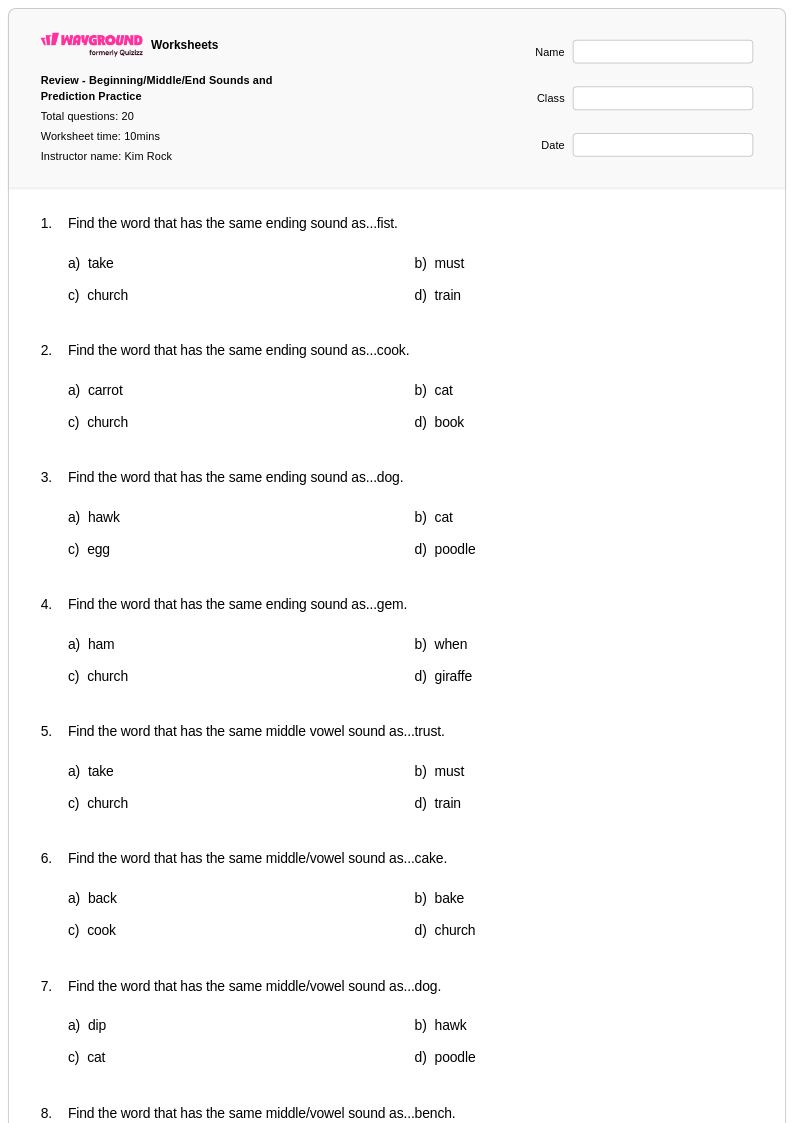
20 Q
3rd
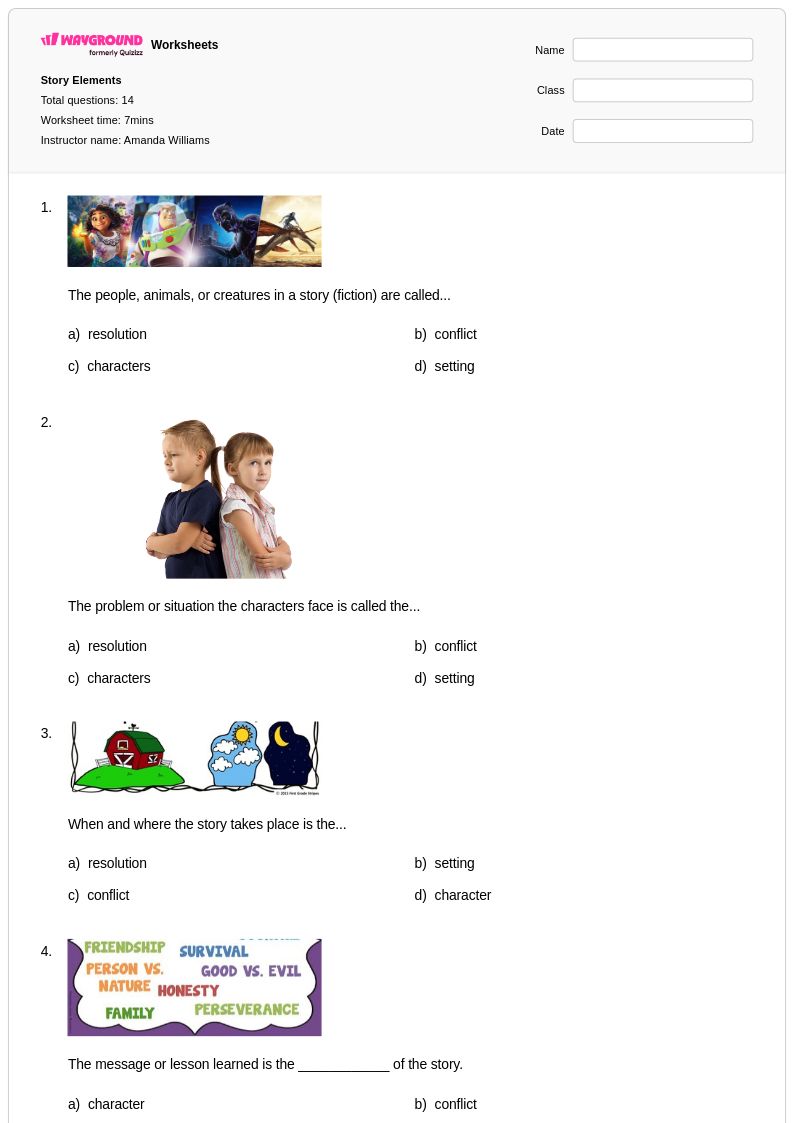
14 Q
3rd
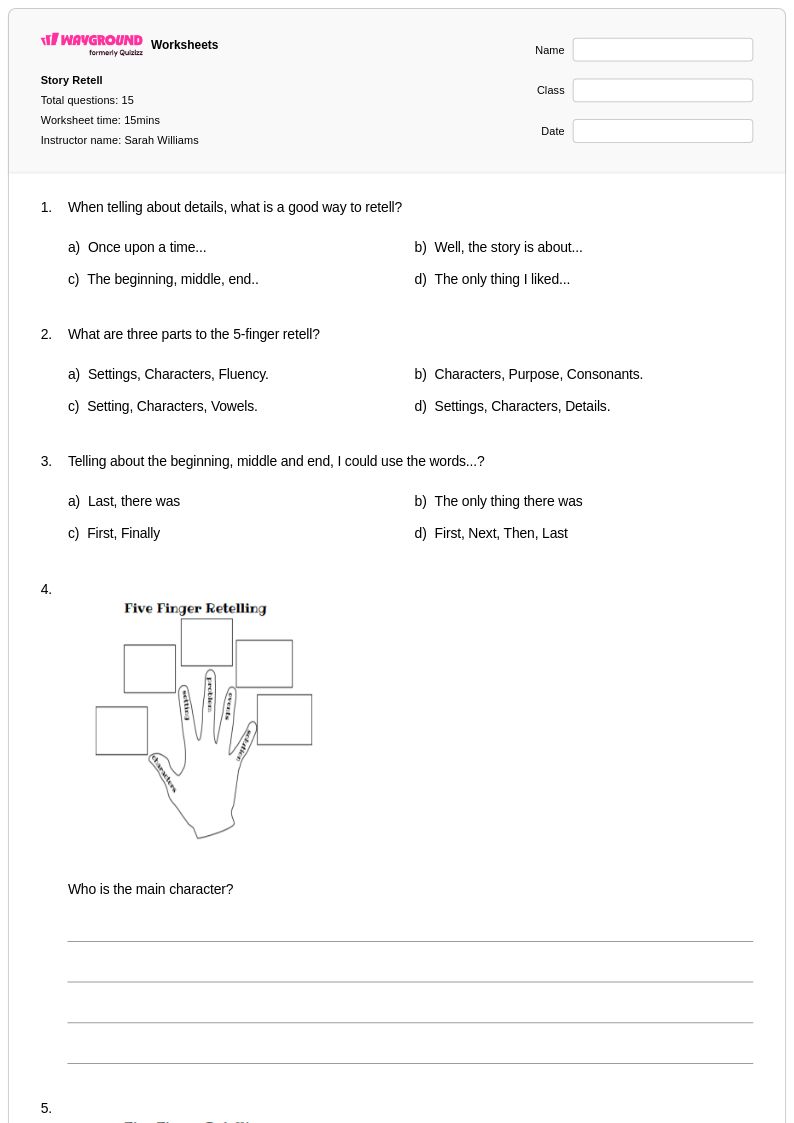
15 Q
3rd - Uni
7 Q
2nd - 4th
11 Q
1st - 5th
16 Q
3rd
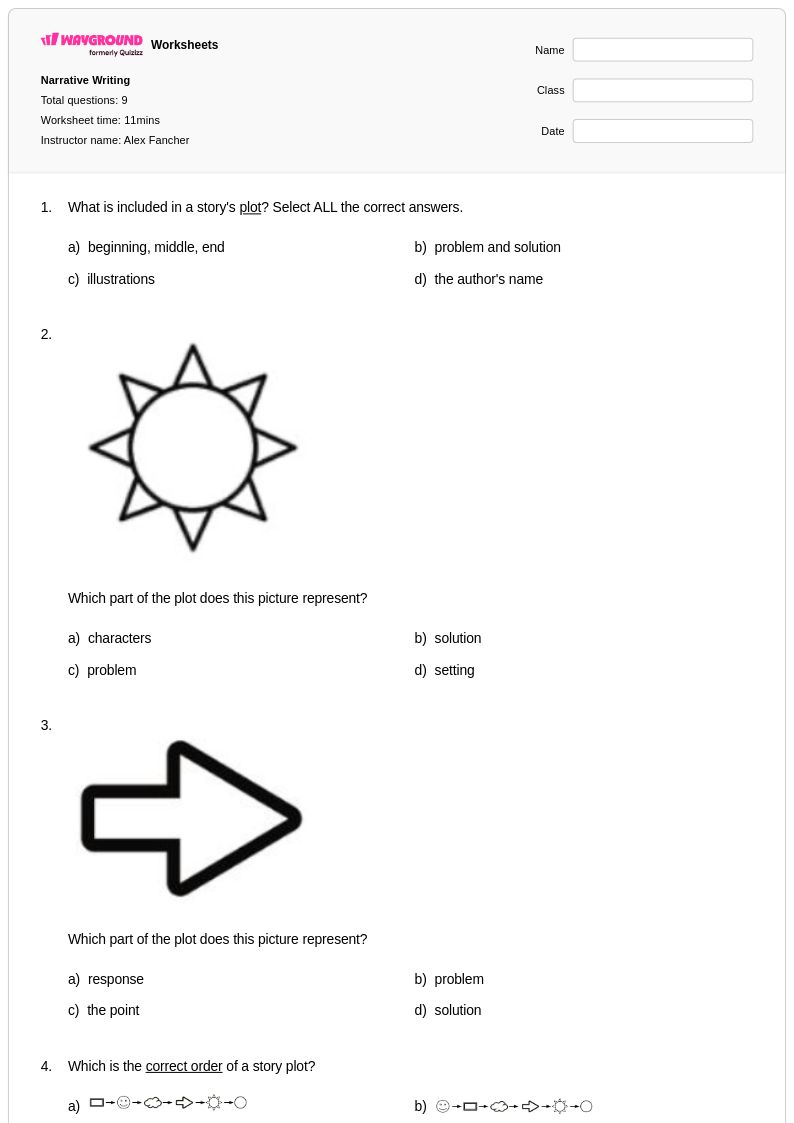
9 Q
3rd
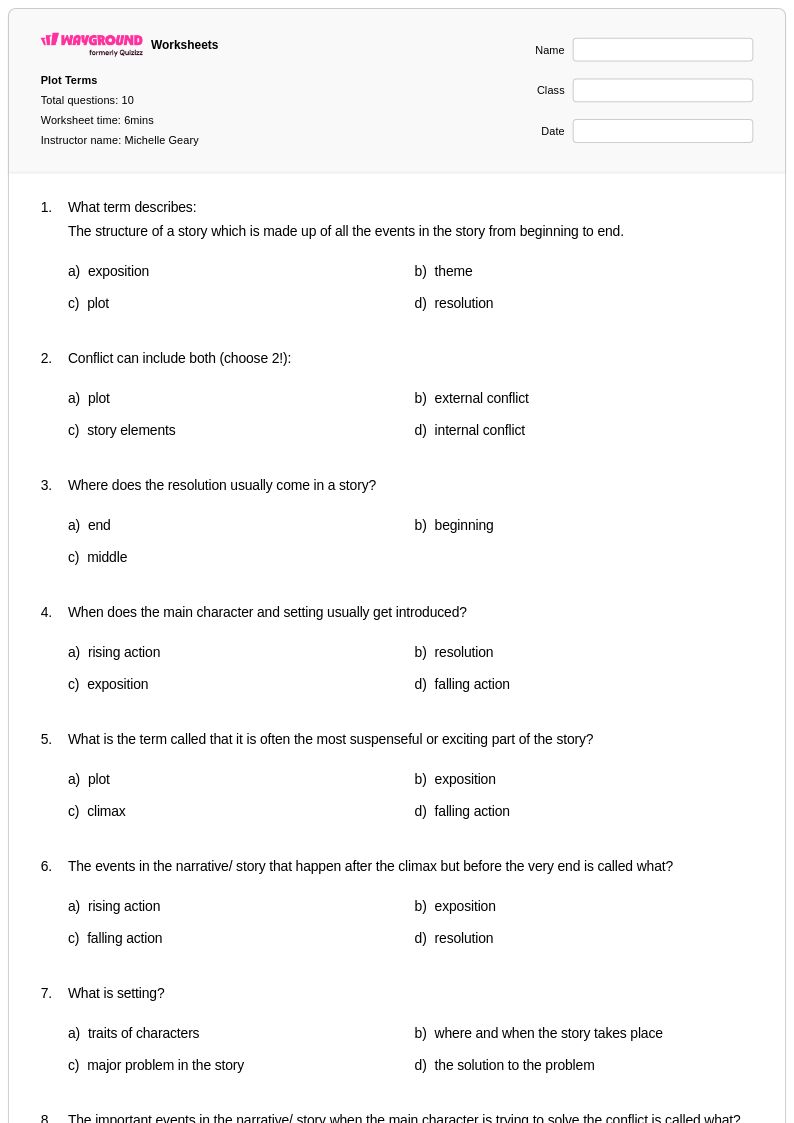
10 Q
2nd - 5th
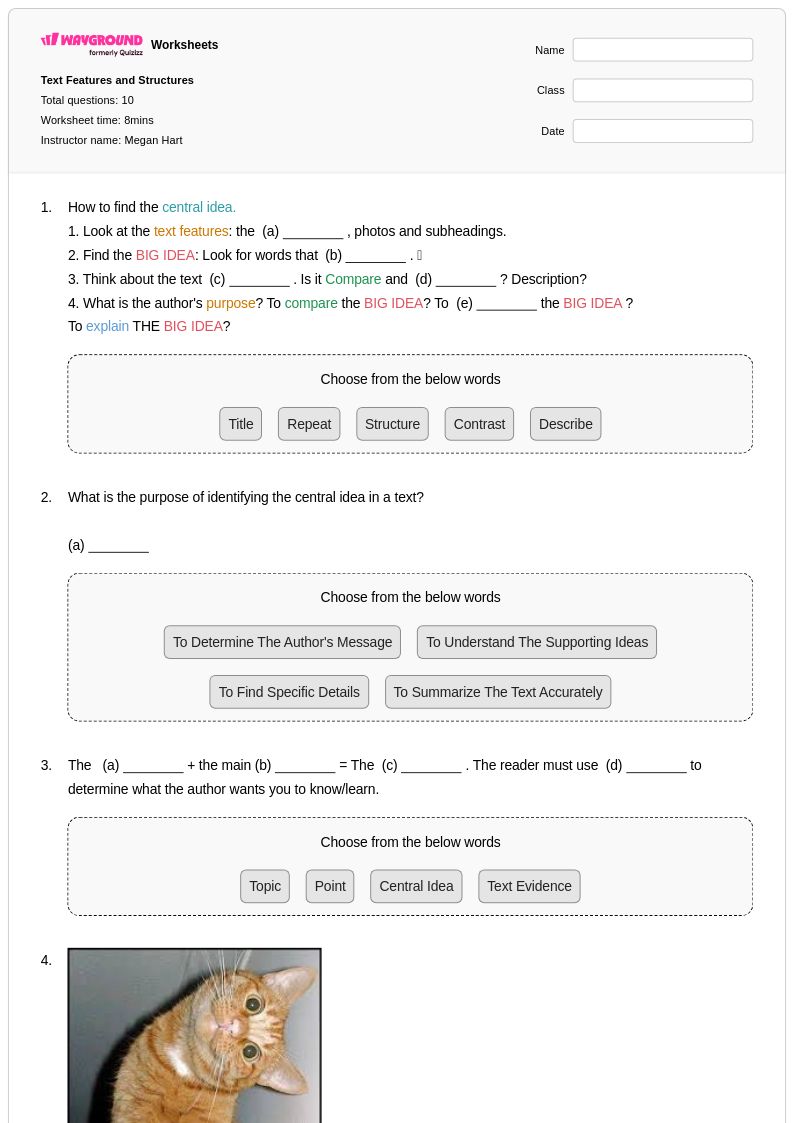
10 Q
3rd
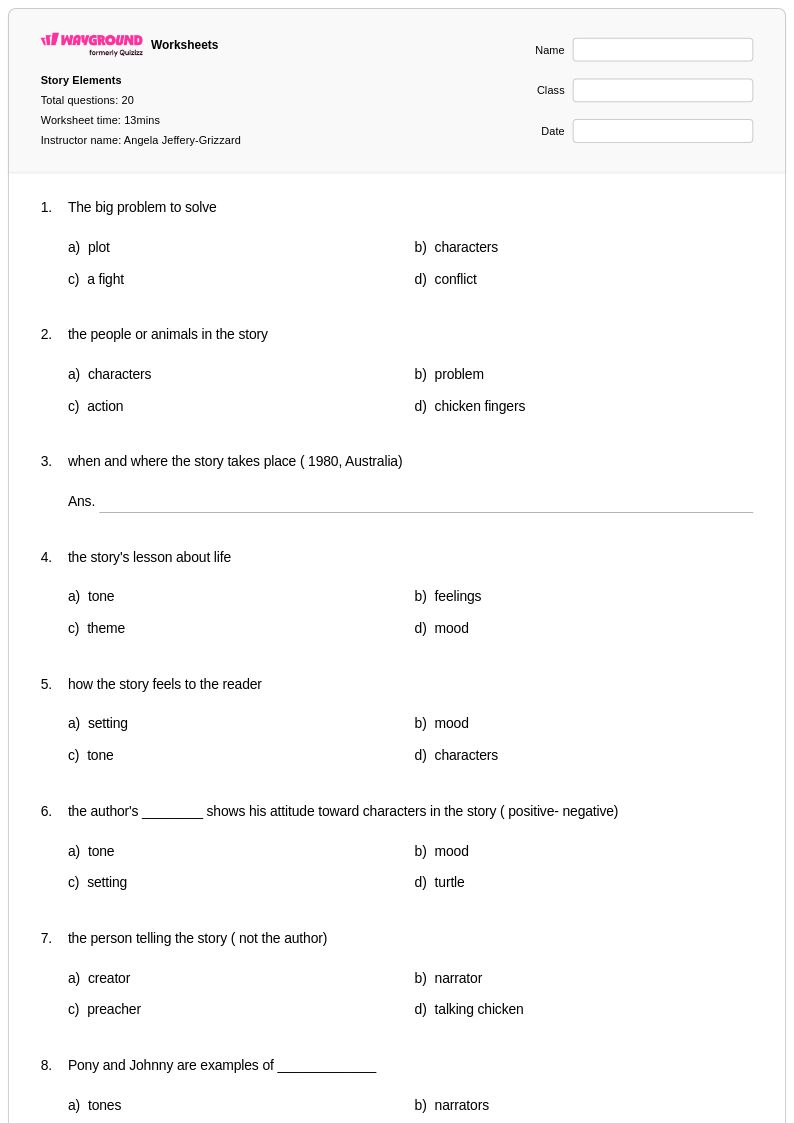
20 Q
3rd - 6th
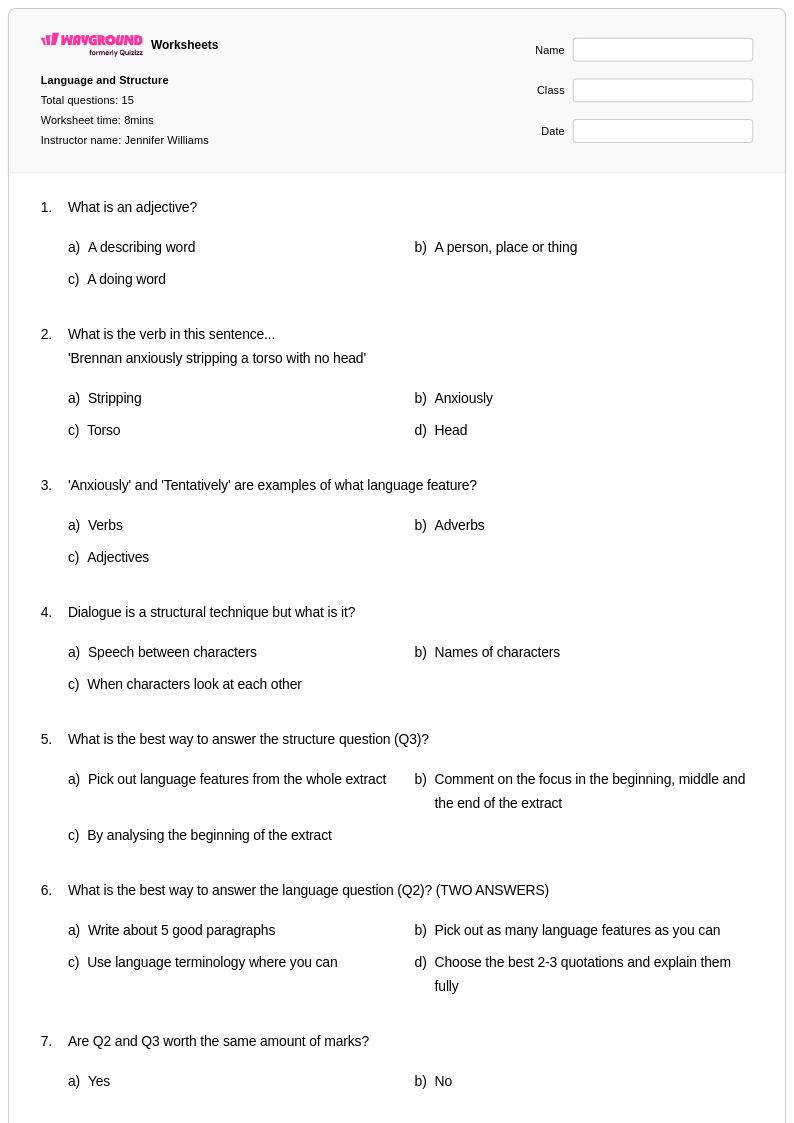
15 Q
3rd
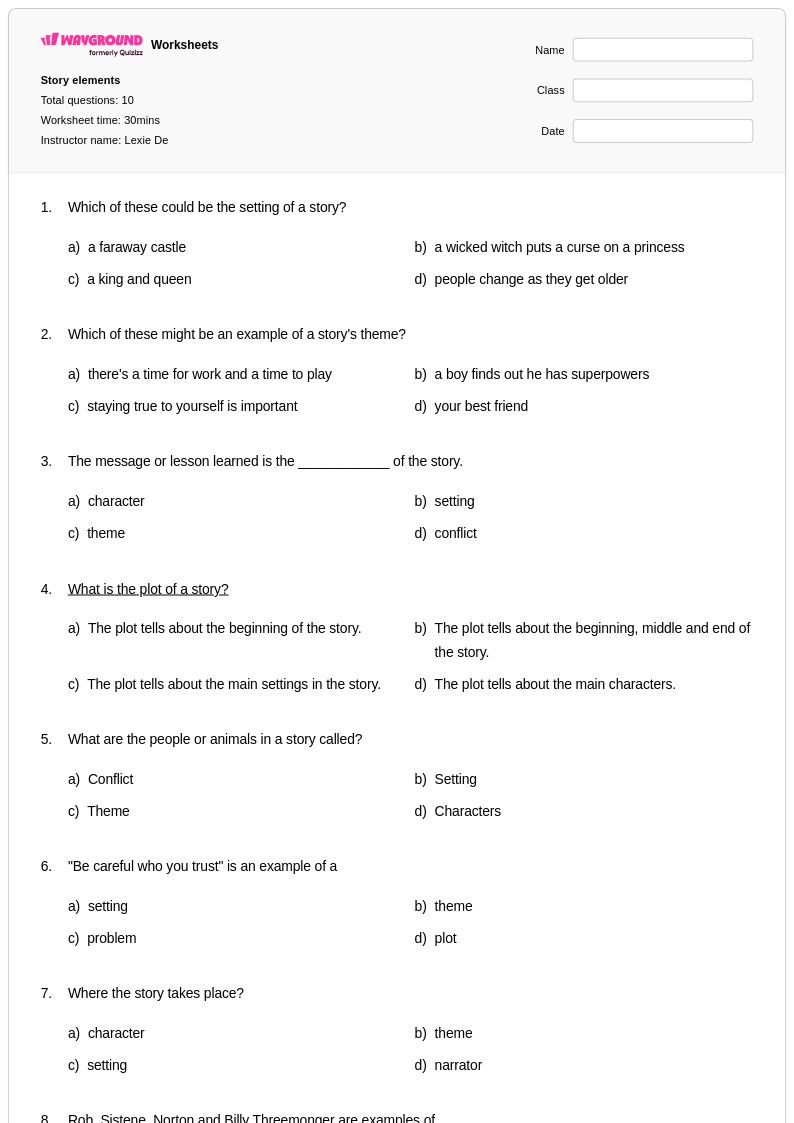
10 Q
3rd
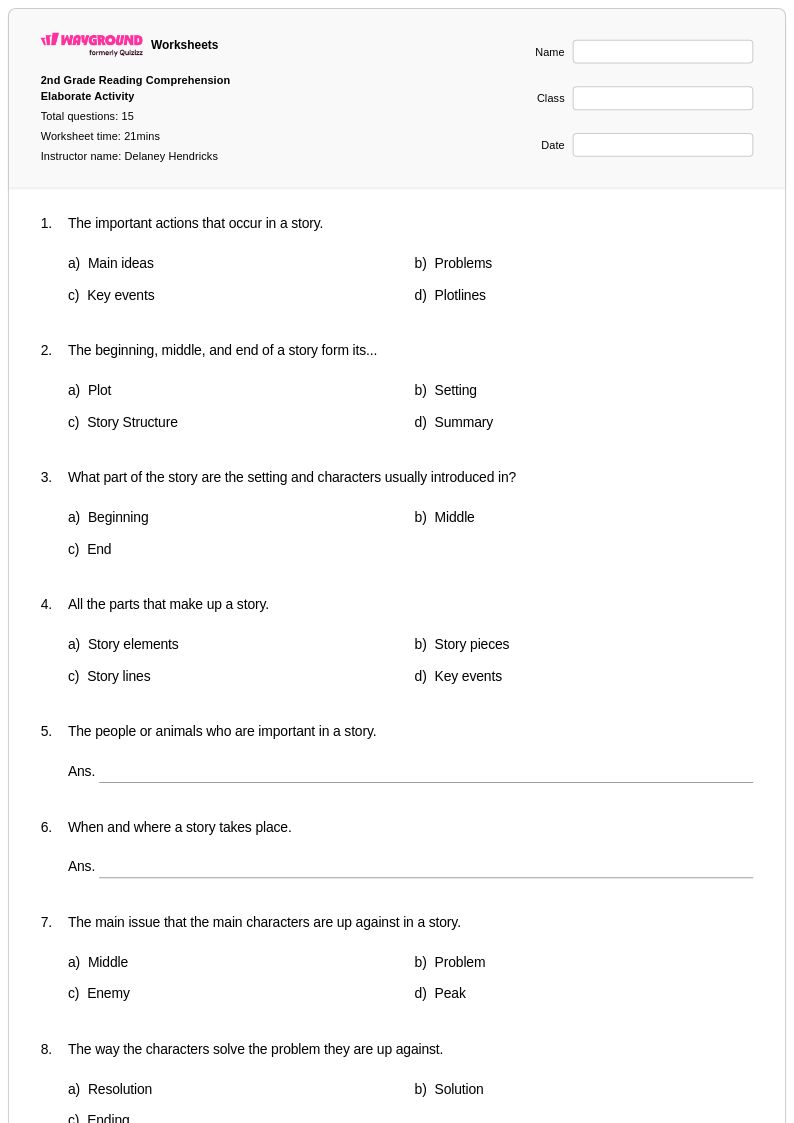
15 Q
1st - 3rd
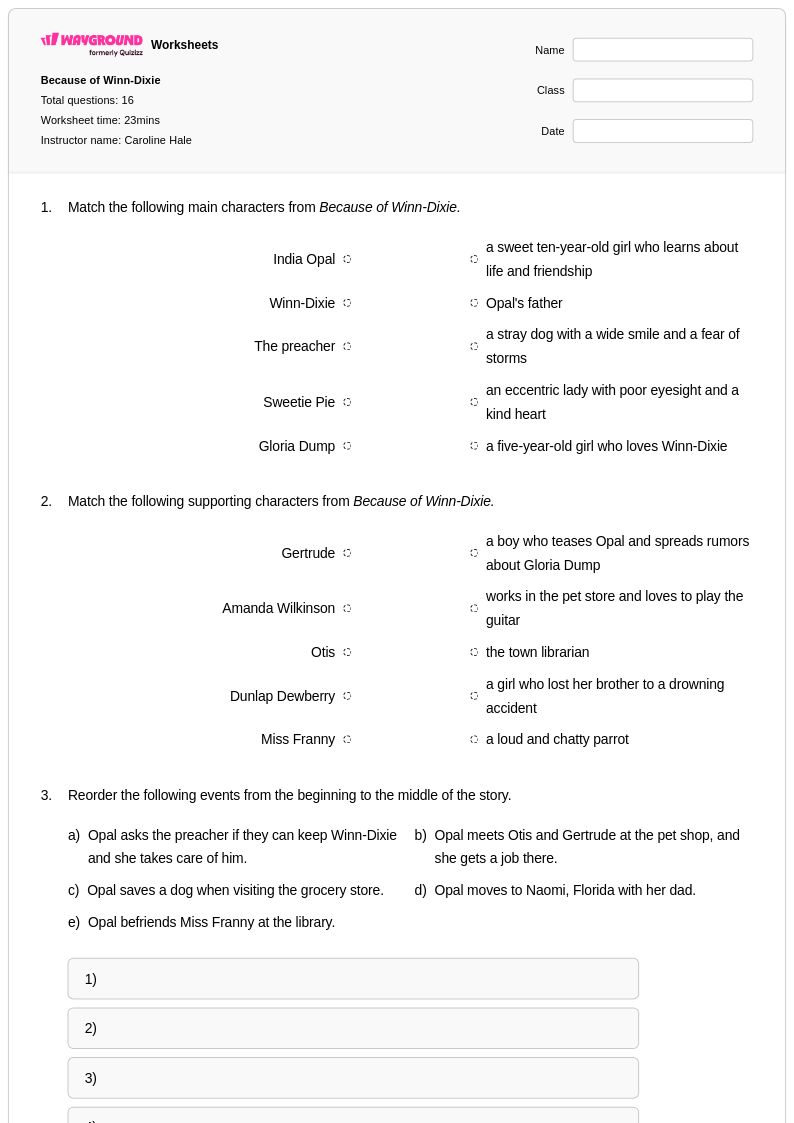
16 Q
3rd
Explore Beginning, Middle, End Structure Worksheets by Grades
Explore Other Subject Worksheets for class 3
Explore printable Beginning, Middle, End Structure worksheets for Class 3
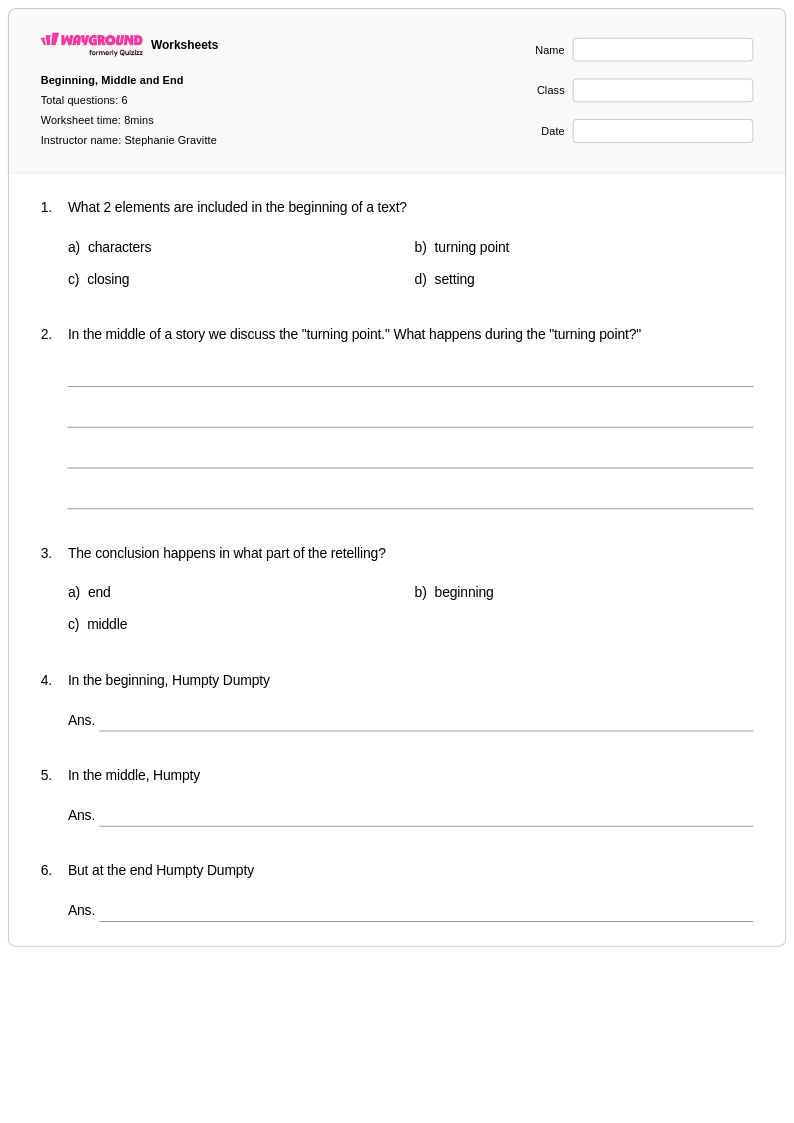
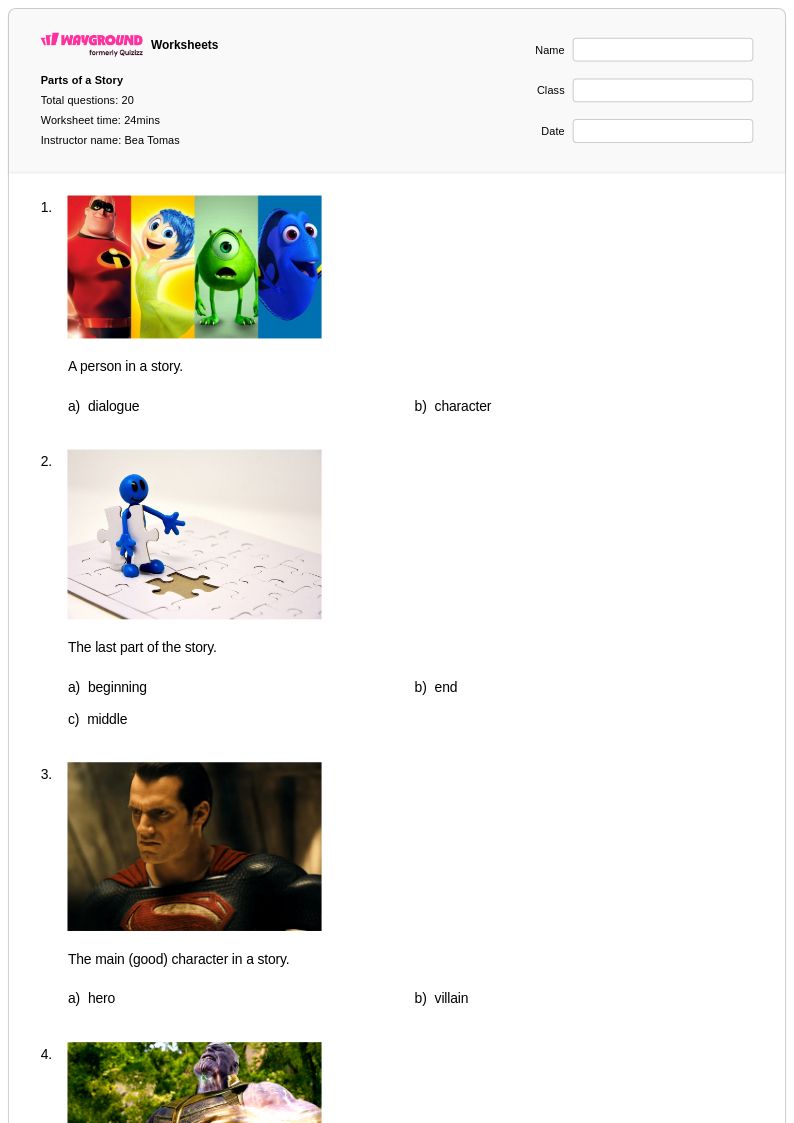
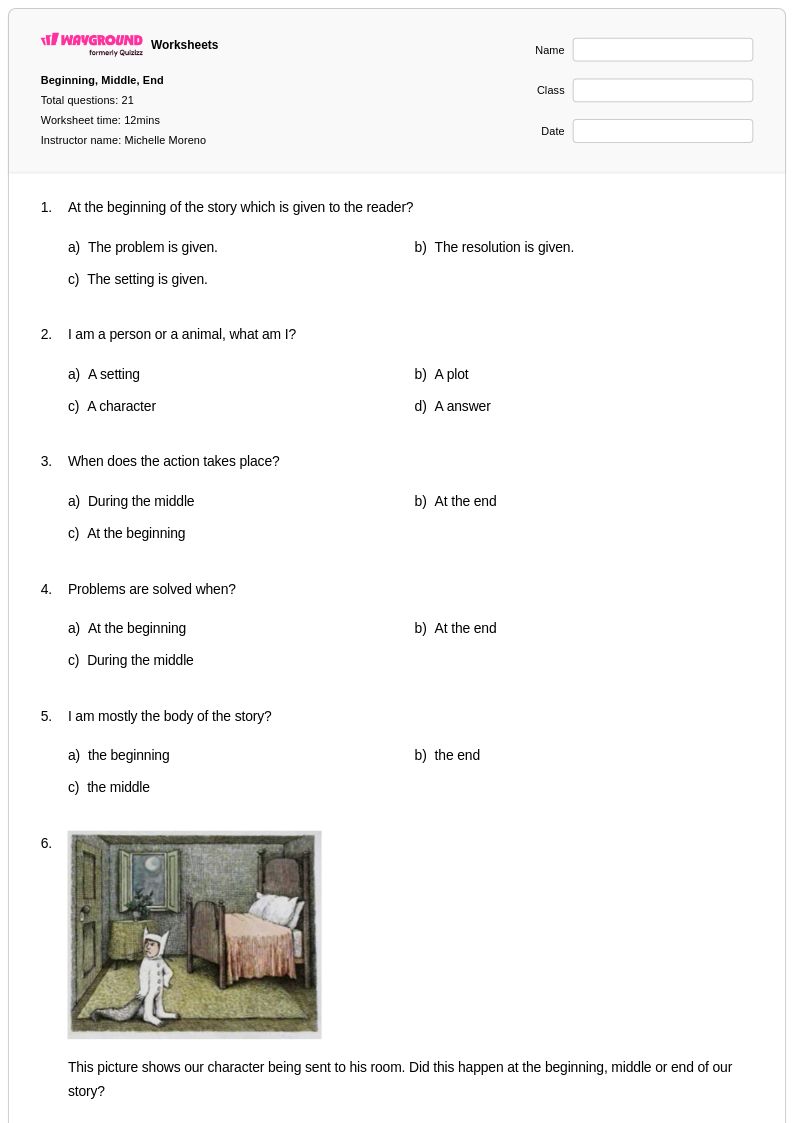
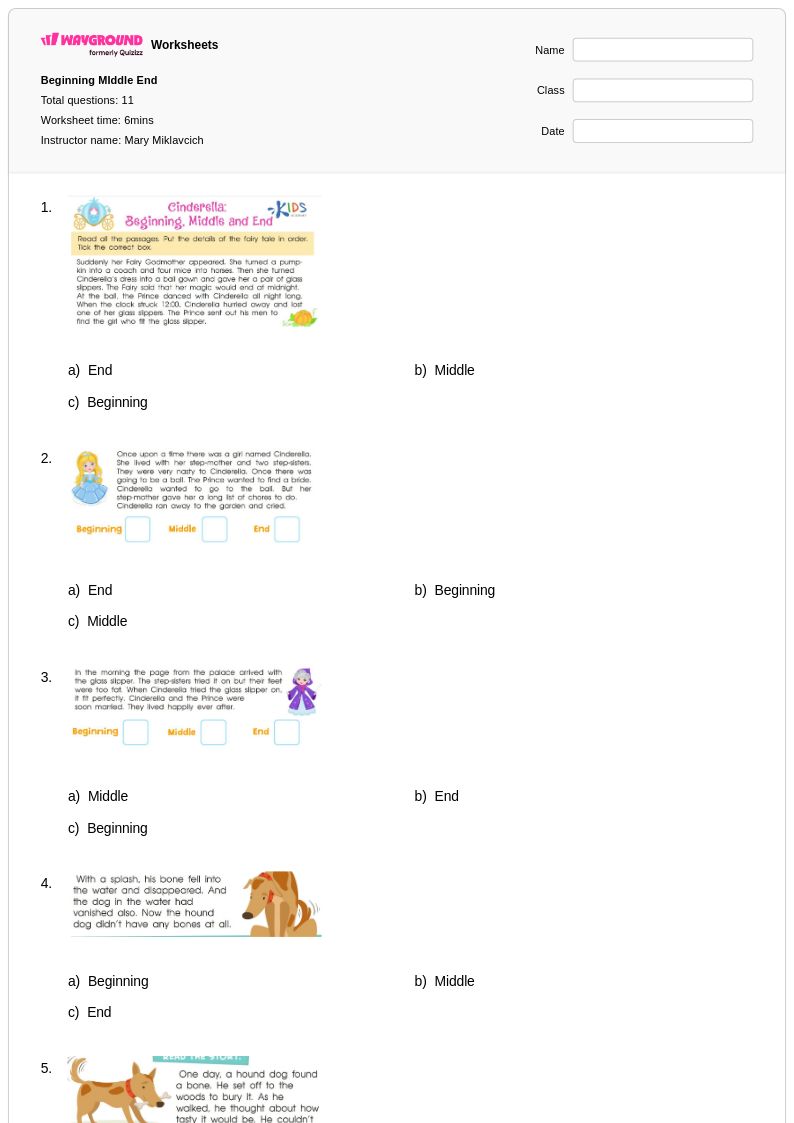
Beginning, middle, and end structure worksheets for Class 3 students available through Wayground (formerly Quizizz) provide essential practice in identifying and understanding story sequence and narrative organization. These comprehensive resources strengthen students' ability to recognize the introduction of characters and setting at the beginning of a story, track plot development and key events in the middle section, and identify resolution and conclusion elements at the end. The worksheets feature age-appropriate texts paired with targeted questions that guide third graders through systematic analysis of story structure, helping them develop critical reading comprehension skills. Each printable resource includes an answer key for immediate feedback, and the free pdf format ensures easy classroom distribution and home practice. These practice problems range from simple identification exercises to more complex sequencing activities that challenge students to demonstrate their understanding of how authors organize narrative elements.
Wayground (formerly Quizizz) supports educators with an extensive collection of teacher-created resources focused on story structure instruction, drawing from millions of worksheets developed by classroom professionals nationwide. The platform's robust search and filtering capabilities enable teachers to quickly locate materials aligned with specific reading standards and appropriate for diverse learning needs in Class 3 classrooms. Differentiation tools allow educators to modify existing worksheets or create customized versions that address individual student requirements, whether for remediation support or enrichment challenges. Available in both printable and digital formats including downloadable pdf files, these resources integrate seamlessly into lesson planning and provide flexible options for skill practice across various learning environments. The comprehensive collection supports systematic instruction in narrative structure while offering teachers the adaptability needed to meet diverse classroom demands and enhance reading comprehension outcomes.
FAQs
How do I teach beginning, middle, and end structure to early readers?
What exercises help students practice identifying beginning, middle, and end in a story?
What mistakes do students commonly make when identifying story structure?
How do beginning, middle, and end worksheets support reading comprehension development?
How can I use beginning, middle, and end worksheets in my classroom?
How do I differentiate beginning, middle, and end instruction for students with different learning needs?