
Recommended Topics for you
- Analyzing Story Structure
- Analyzing Word Choice
- Annotation
- Author's Claim
- Beginning, Middle, End Structure
- Book Report
- Cause and Effect
- Central Idea and Supporting Details
- Central Message
- Character, Setting, and Plot
- Character and Setting
- Character Development
- Character Motivation
- Character Perspective
- Character Traits
- Character Types
- Chronological Order
- Citing Textual Evidence
- Cloze Activity
- Comparing and Contrasting
- Comprehension Questions
- Conflict and Resolution
- Fact Vs. Opinion
- Following Directions
- Following Multistep Directions
- Functional Text Comprehension
- Graphic Sources
- Identifying Problems and Solutions in Reading
- Identifying the Author's Purpose
- Identifying the Main Idea
- Inferential Questions
- Key Ideas and Details
- Listening Comprehension
- Making Connections in Reading
- Making Inferences and Drawing Conclusions
- Making Predictions
- Making Text Connections
- Narrative Elements
- Orton-gillingham Approach
- Paraphrasing
- Parts of a Story
- Photograph Analysis
- Picture Analysis
- Plot Diagram
- Plot Elements
- Plot Structure
- Reading Fluency
- Rebus Puzzles
- Retelling
- Self-monitoring Strategies
- Sentence Comprehension
- Sequencing Events
- Story Elements
- Story Mapping
- Summarizing
- Text Analysis
- Text and Graphic Features
- Themes
- Types of Conflict
- Understanding Feelings
- Using Text Features
- Visual Literacy
- Visual Scanning
- Visualizing and Verbalizing
- Who What When Where Why Questions
- Yes or No Questions
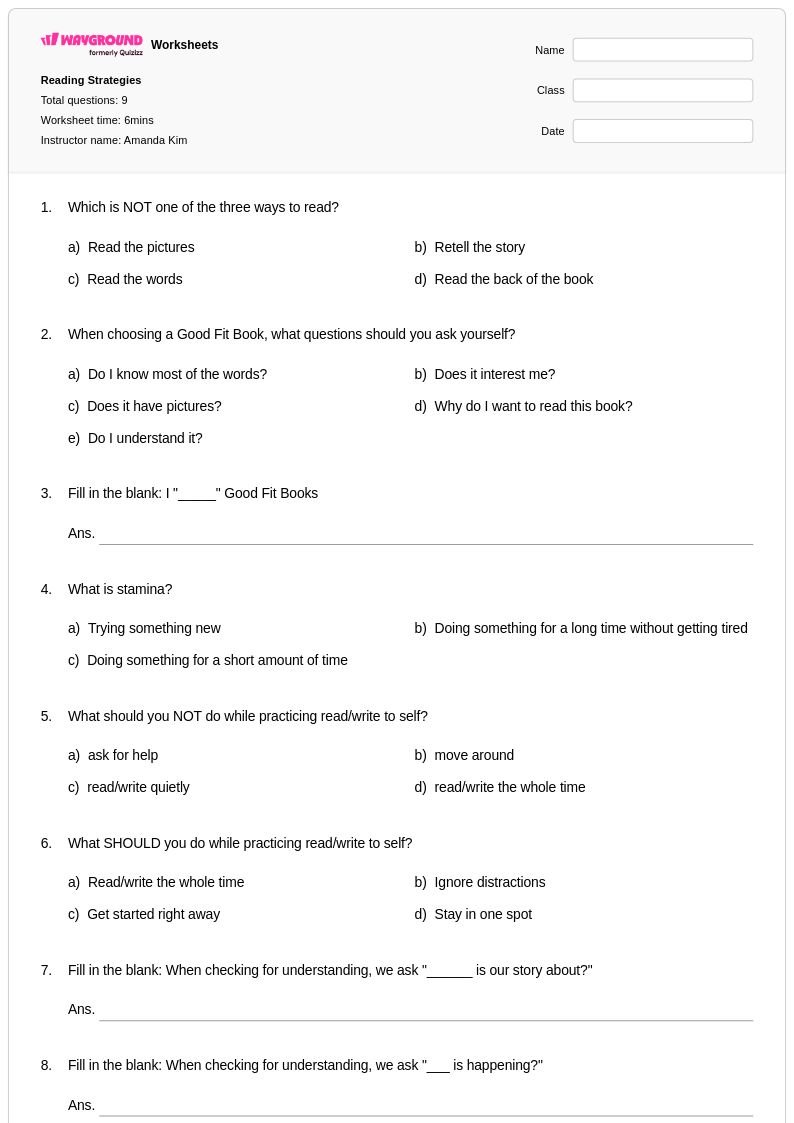
9 Q
3rd

38 Q
3rd
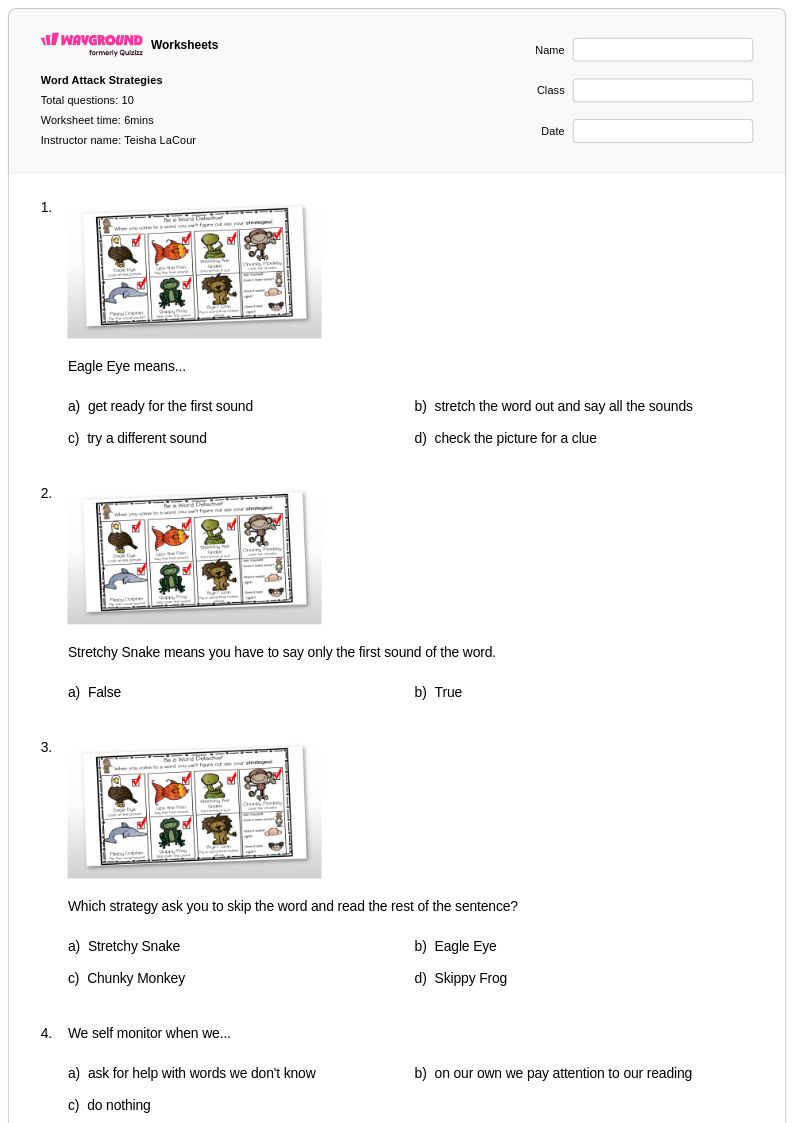
10 Q
3rd
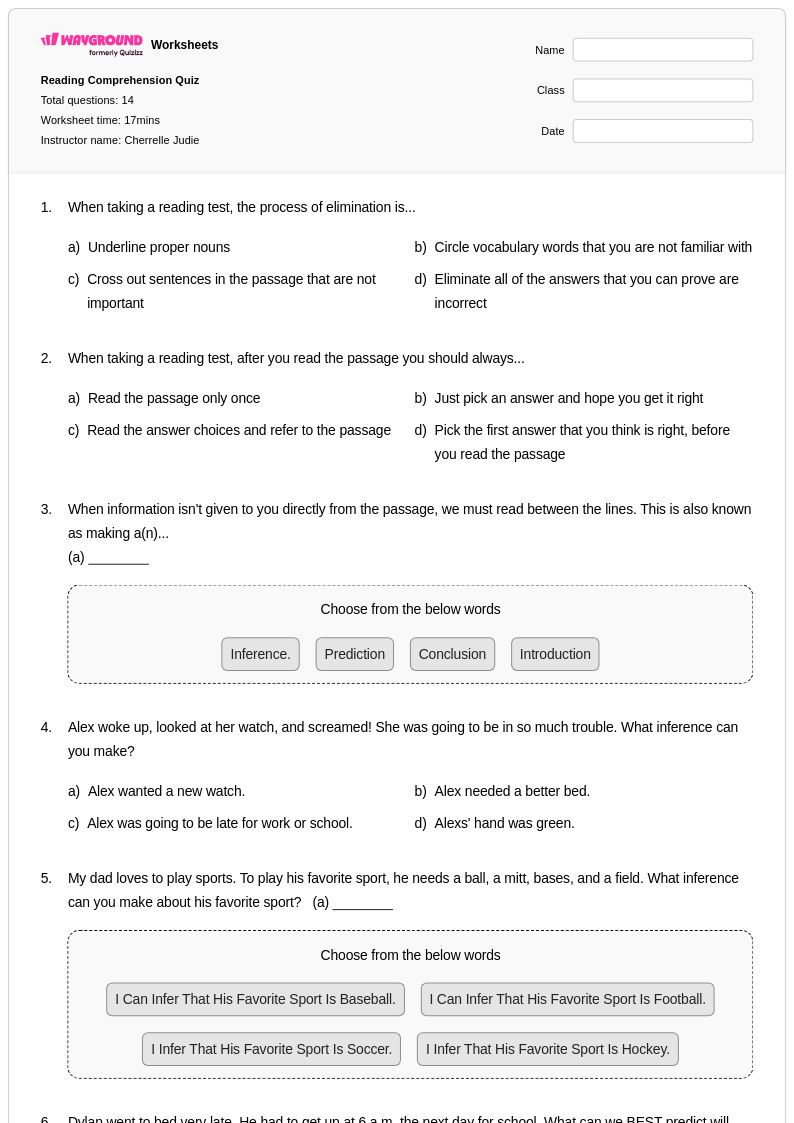
14 Q
3rd
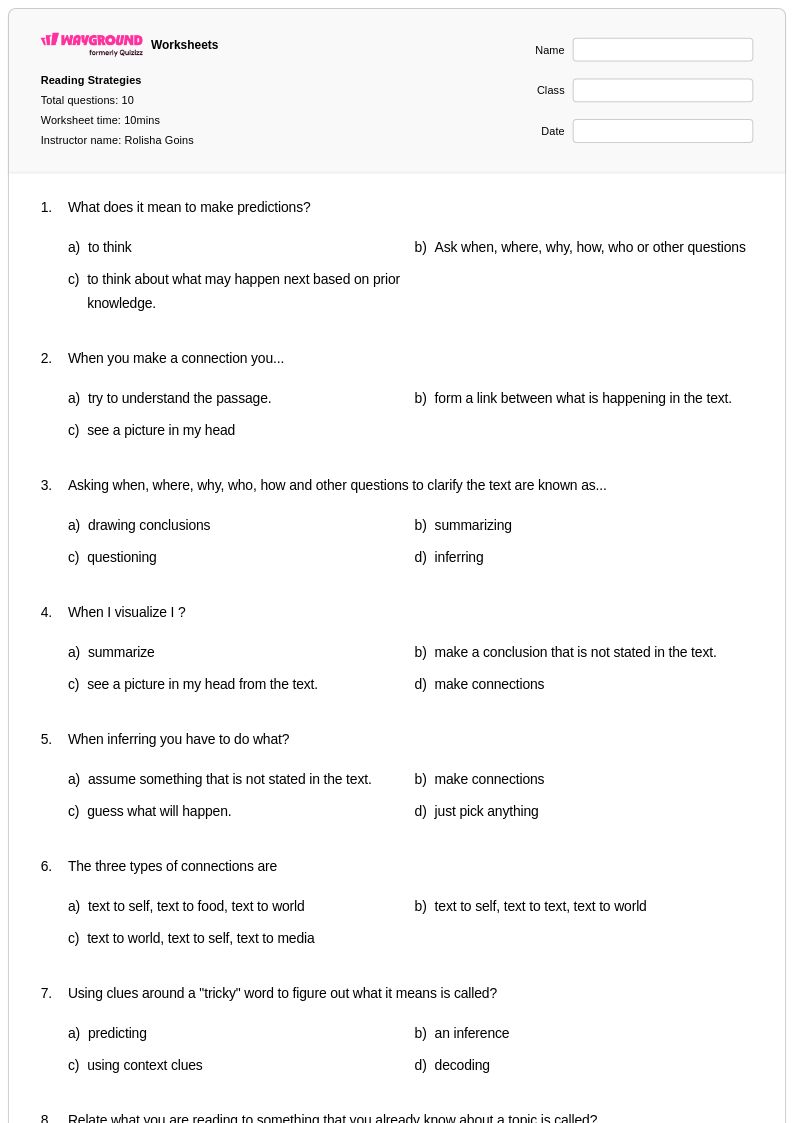
10 Q
3rd - 8th

20 Q
1st - 5th
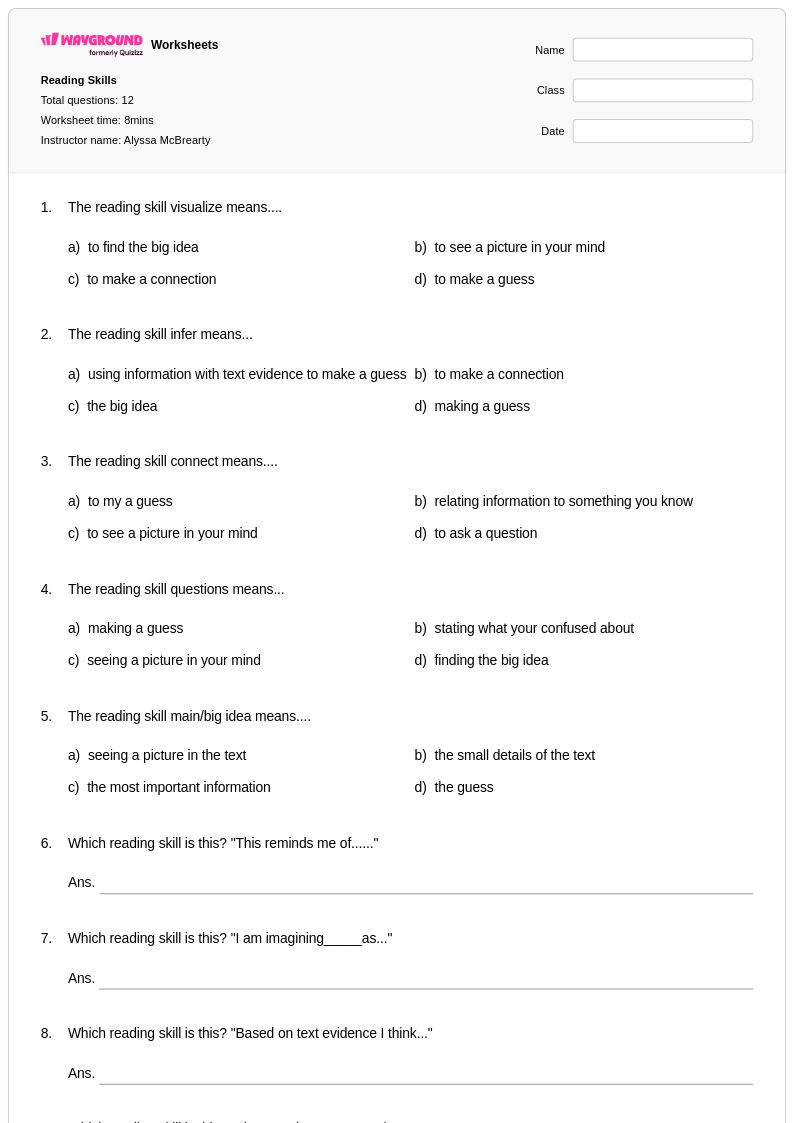
12 Q
3rd
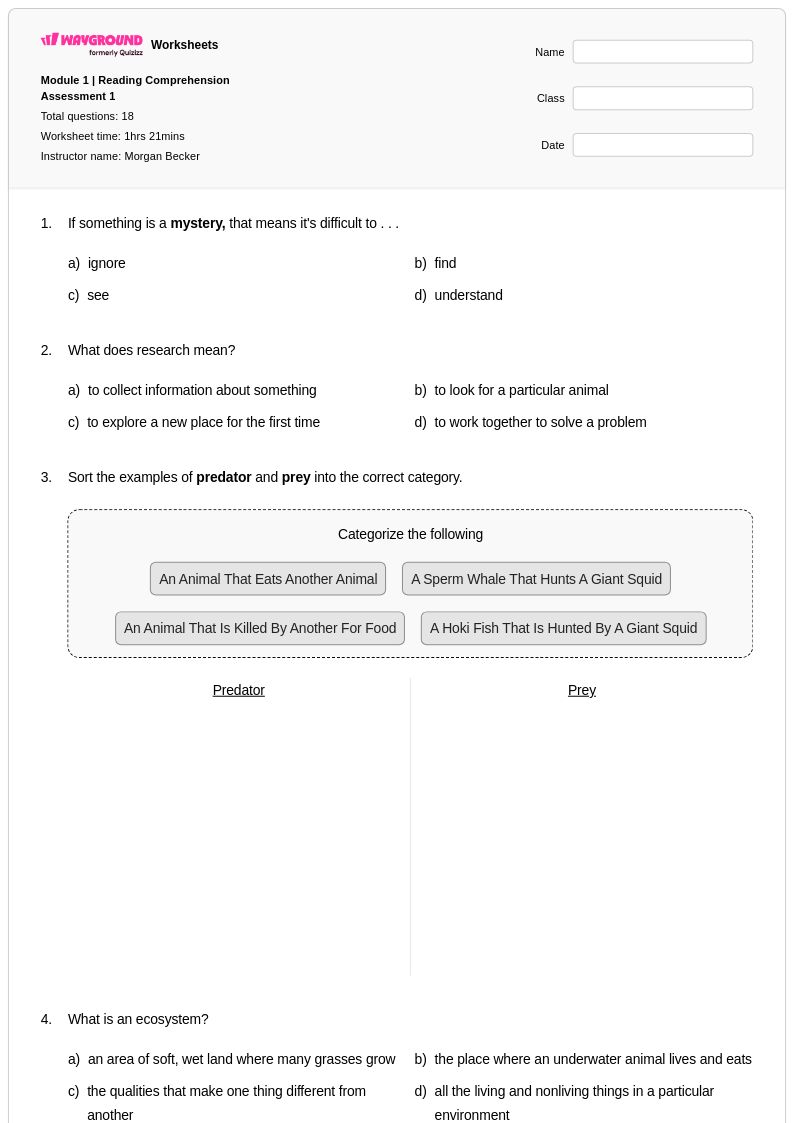
19 Q
3rd - Uni
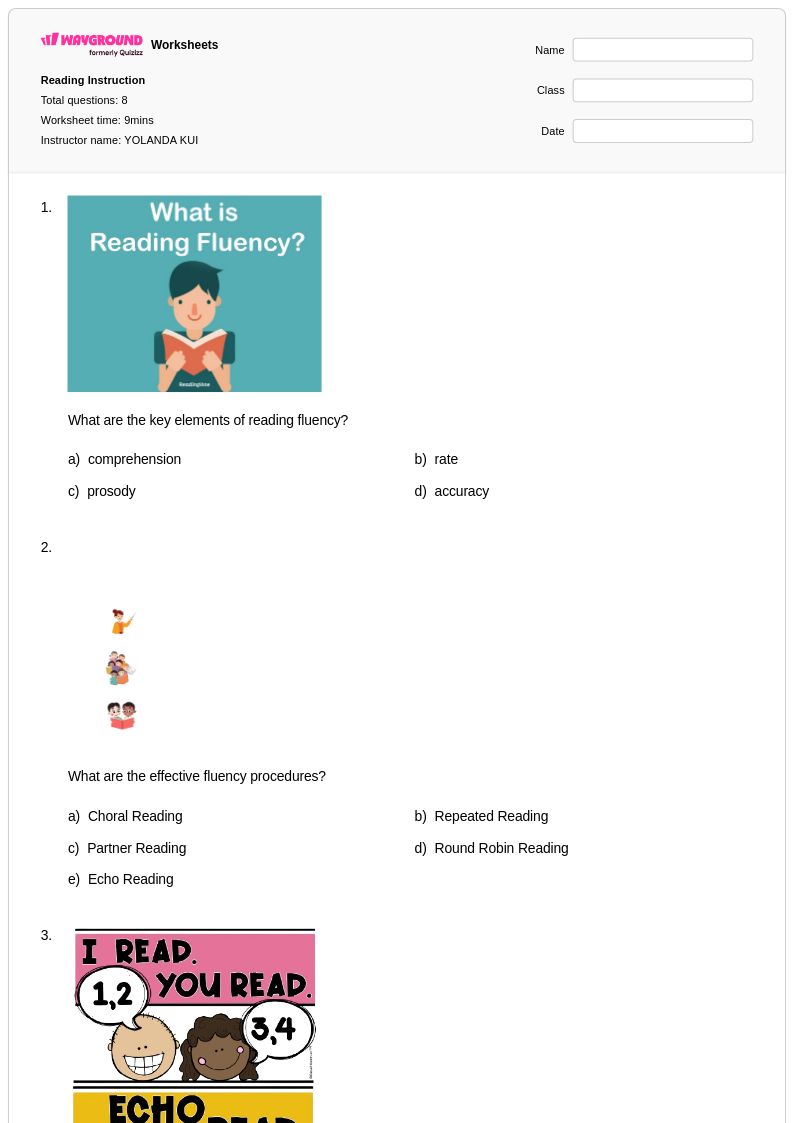
8 Q
1st - 5th
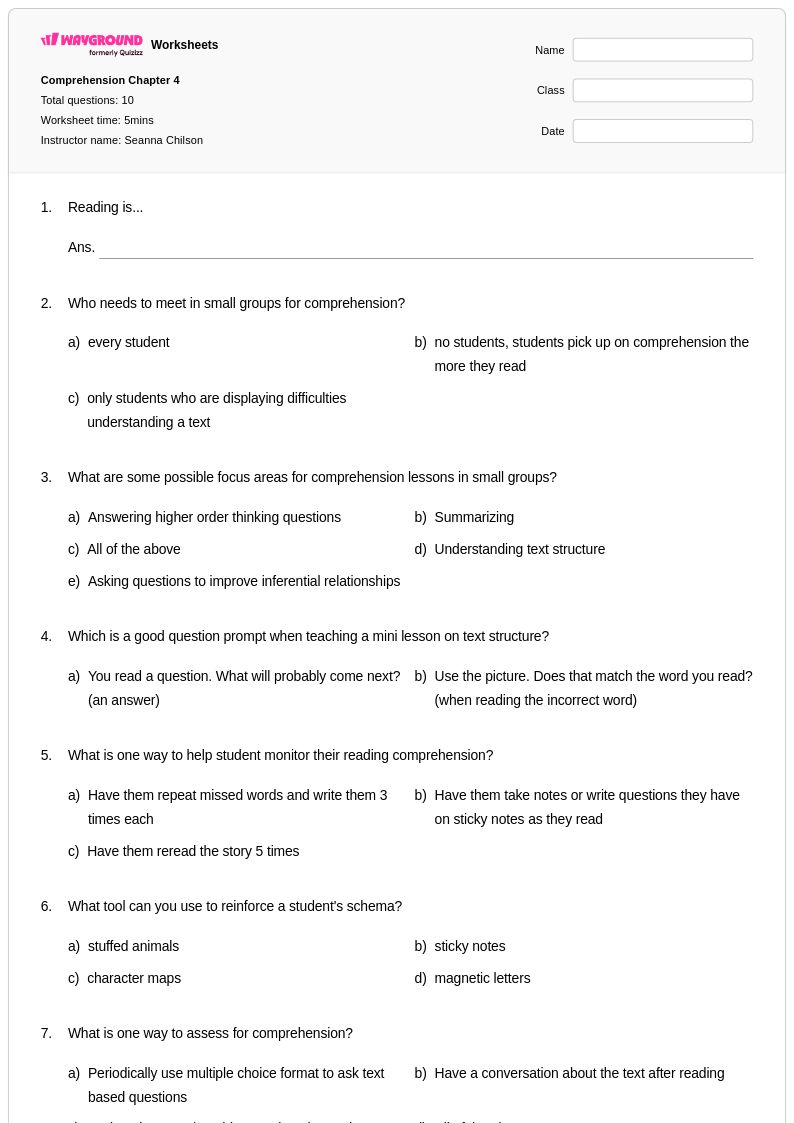
10 Q
3rd
19 Q
3rd
8 Q
2nd - 4th
15 Q
3rd - 5th
10 Q
3rd
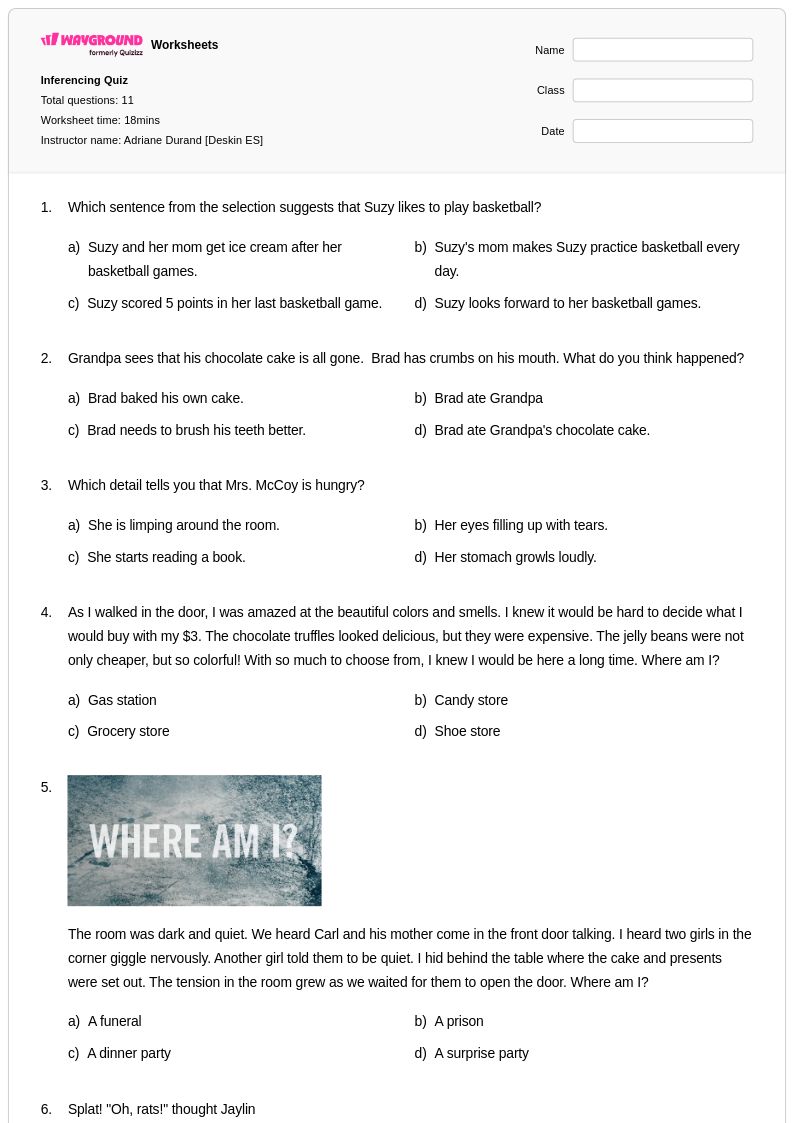
11 Q
1st - 5th
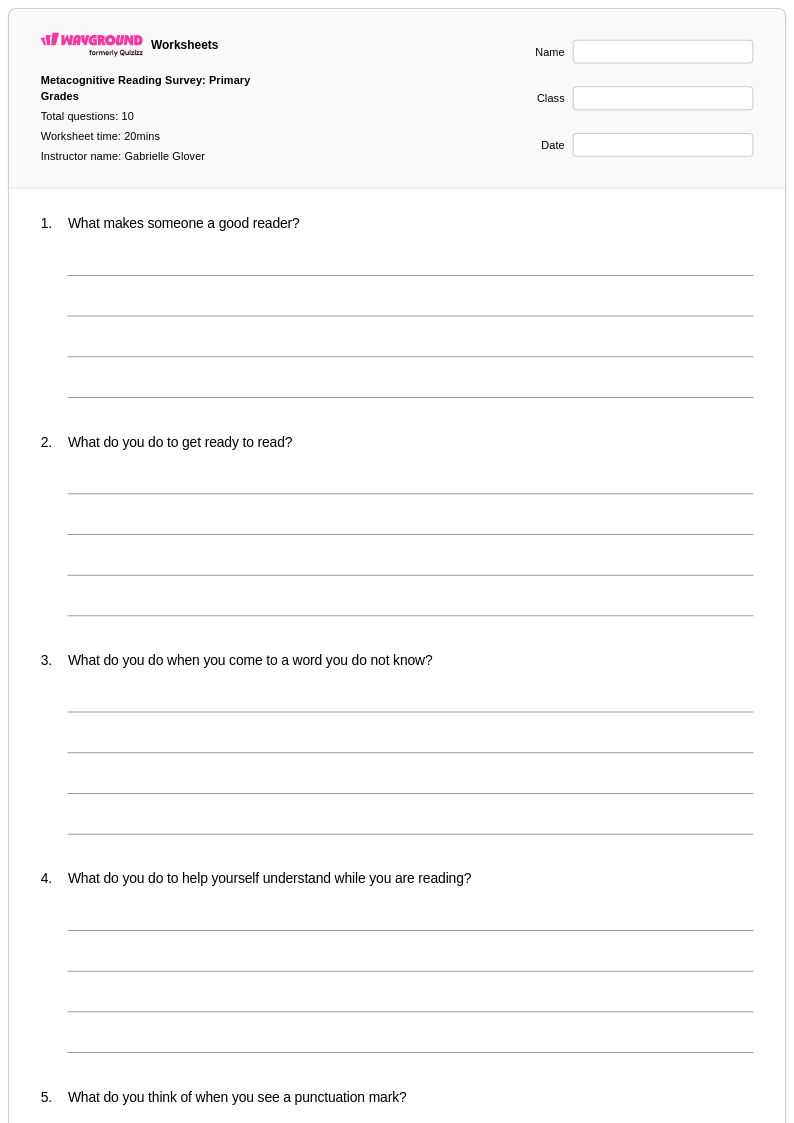
10 Q
3rd - 5th
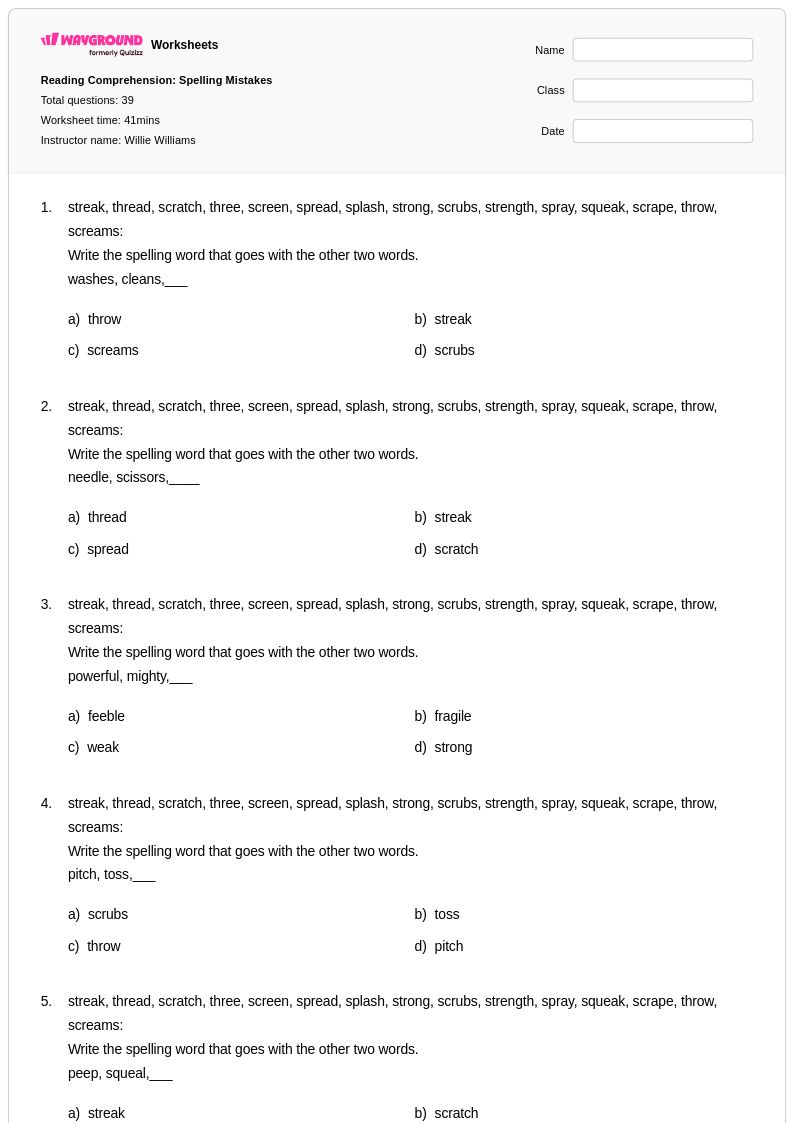
45 Q
3rd
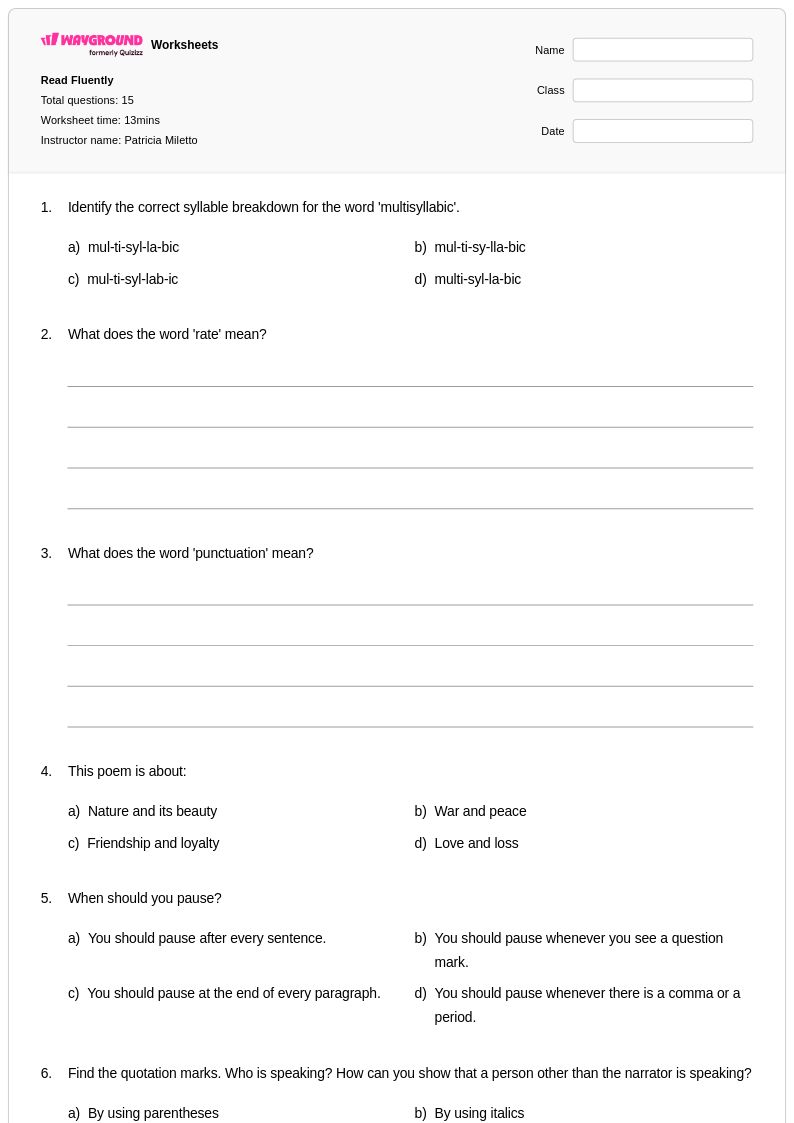
15 Q
3rd
32 Q
KG - 5th
8 Q
3rd
7 Q
3rd
13 Q
1st - Uni
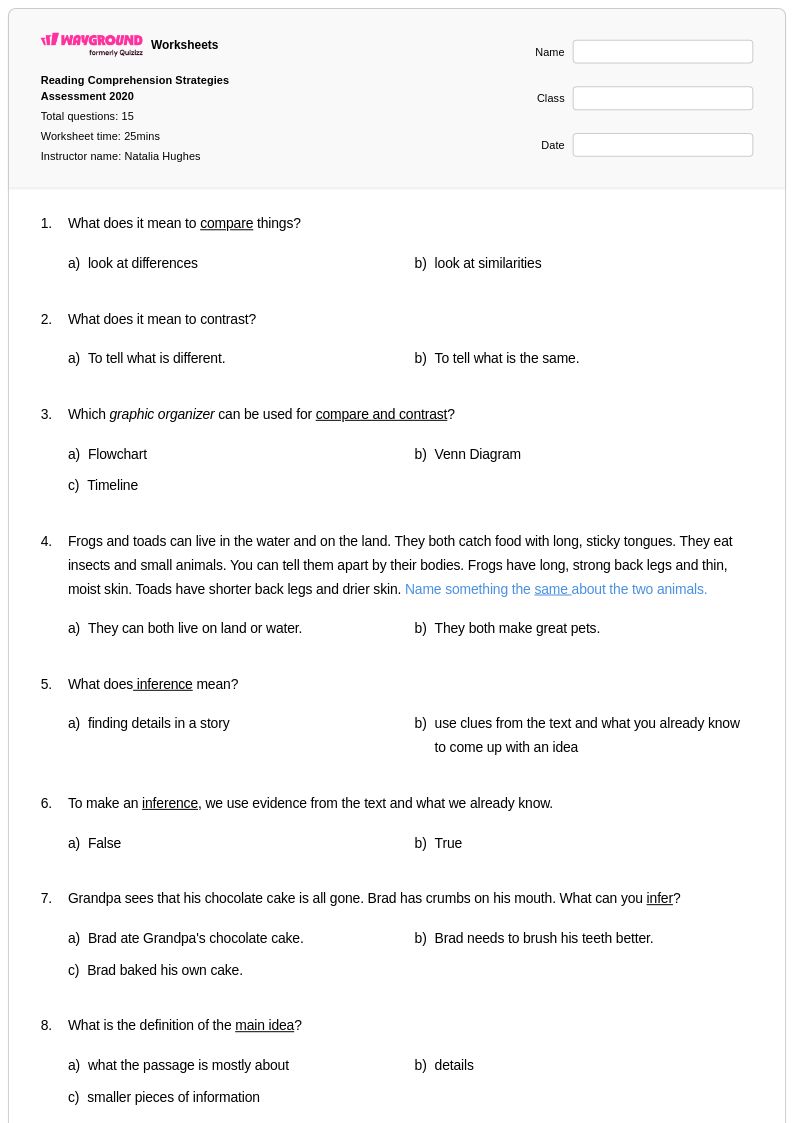
15 Q
3rd - 4th
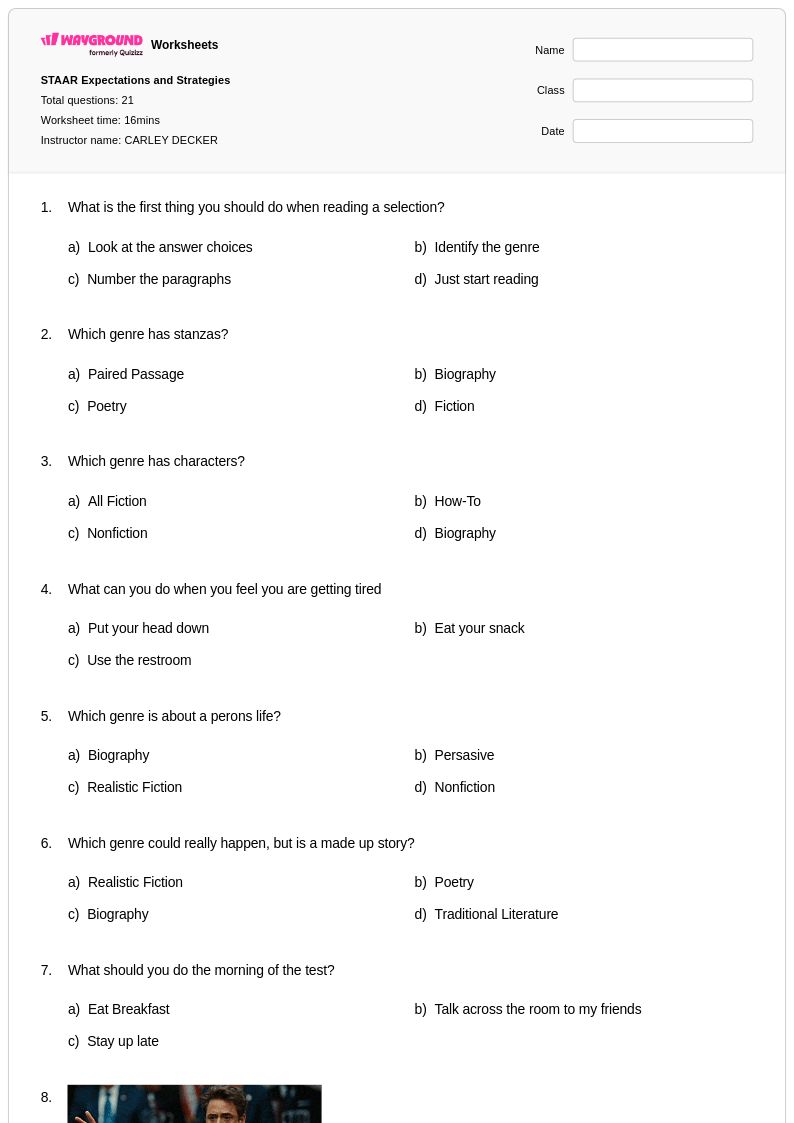
21 Q
3rd - 4th
Explore Reading Comprehension Strategies Worksheets by Grades
Explore Reading Comprehension Strategies Worksheets for class 3 by Topic
- Analyzing Story Structure
- Analyzing Word Choice
- Annotation
- Author's Claim
- Beginning, Middle, End Structure
- Book Report
- Cause and Effect
- Central Idea and Supporting Details
- Central Message
- Character, Setting, and Plot
- Character and Setting
- Character Development
- Character Motivation
- Character Perspective
- Character Traits
- Character Types
- Chronological Order
- Citing Textual Evidence
- Cloze Activity
- Comparing and Contrasting
Explore Other Subject Worksheets for class 3
Explore printable Reading Comprehension Strategies worksheets for Class 3
Reading comprehension strategies for Class 3 students form the foundation for lifelong learning success, and Wayground's extensive worksheet collection provides educators with comprehensive resources to develop these critical skills. These carefully crafted worksheets focus on essential strategies such as making predictions, identifying main ideas and supporting details, drawing inferences, summarizing key information, and connecting text to prior knowledge. Students engage with age-appropriate passages while practicing visualization techniques, questioning strategies, and monitoring their understanding as they read. Each worksheet includes detailed answer keys and clear instructions, making them ideal as printable resources for classroom instruction, homework assignments, or independent practice problems that reinforce comprehension skills through structured, sequential learning experiences.
Wayground's robust platform, formerly known as Quizizz, empowers teachers with millions of educator-created resources specifically designed to strengthen reading comprehension strategies in Class 3 classrooms. The platform's advanced search and filtering capabilities allow teachers to quickly locate worksheets that align with specific learning standards and target particular comprehension skills, whether for whole-group instruction, small-group remediation, or individual enrichment activities. Teachers can customize existing worksheets or create new ones to match their students' unique needs, with flexible options for both digital classroom integration and pdf printable formats. This comprehensive approach to differentiation ensures that every student receives appropriate skill practice while teachers benefit from time-saving planning tools that support effective reading instruction and assessment across diverse learning environments.
FAQs
How do I teach reading comprehension strategies to students who struggle with complex texts?
What reading comprehension strategy worksheets are most effective for building analytical thinking?
What common mistakes do students make when applying reading comprehension strategies?
How can I differentiate reading comprehension strategy worksheets for different reading levels in the same classroom?
How do I use Wayground's reading comprehension strategies worksheets in my classroom?
What's the difference between teaching summarizing and paraphrasing as reading comprehension strategies?
How do I teach students to use text features as a reading comprehension strategy?