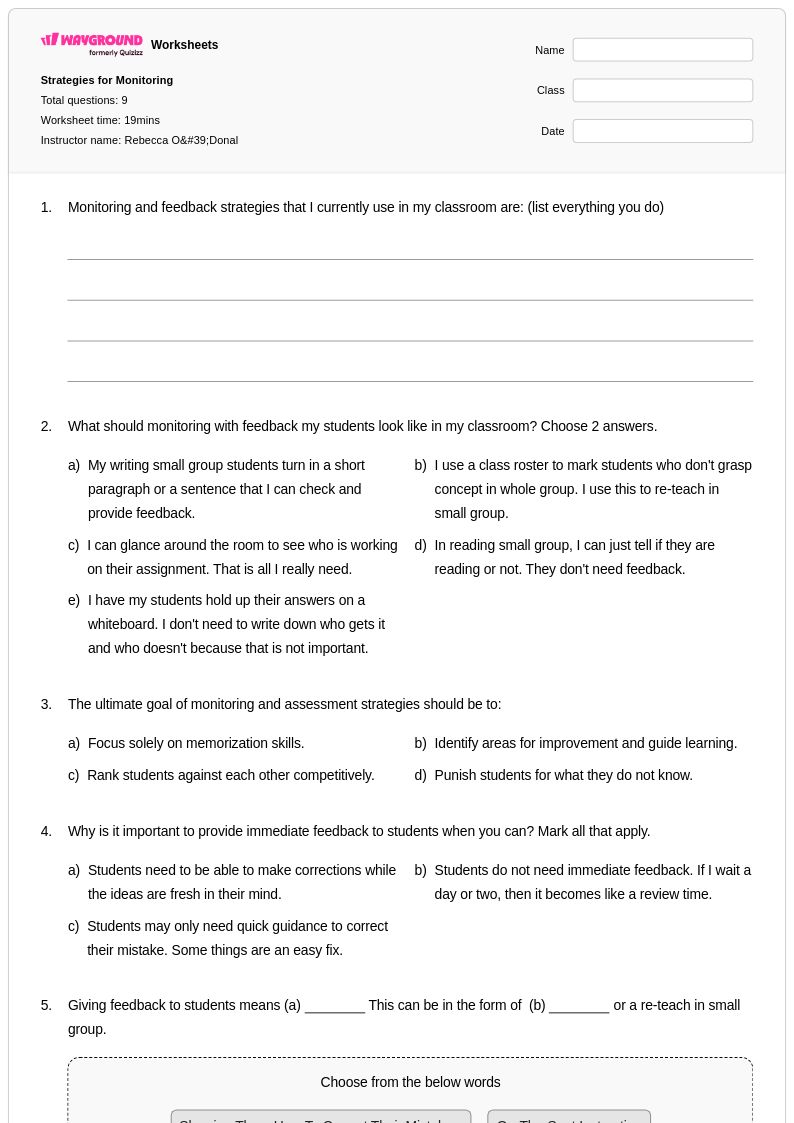
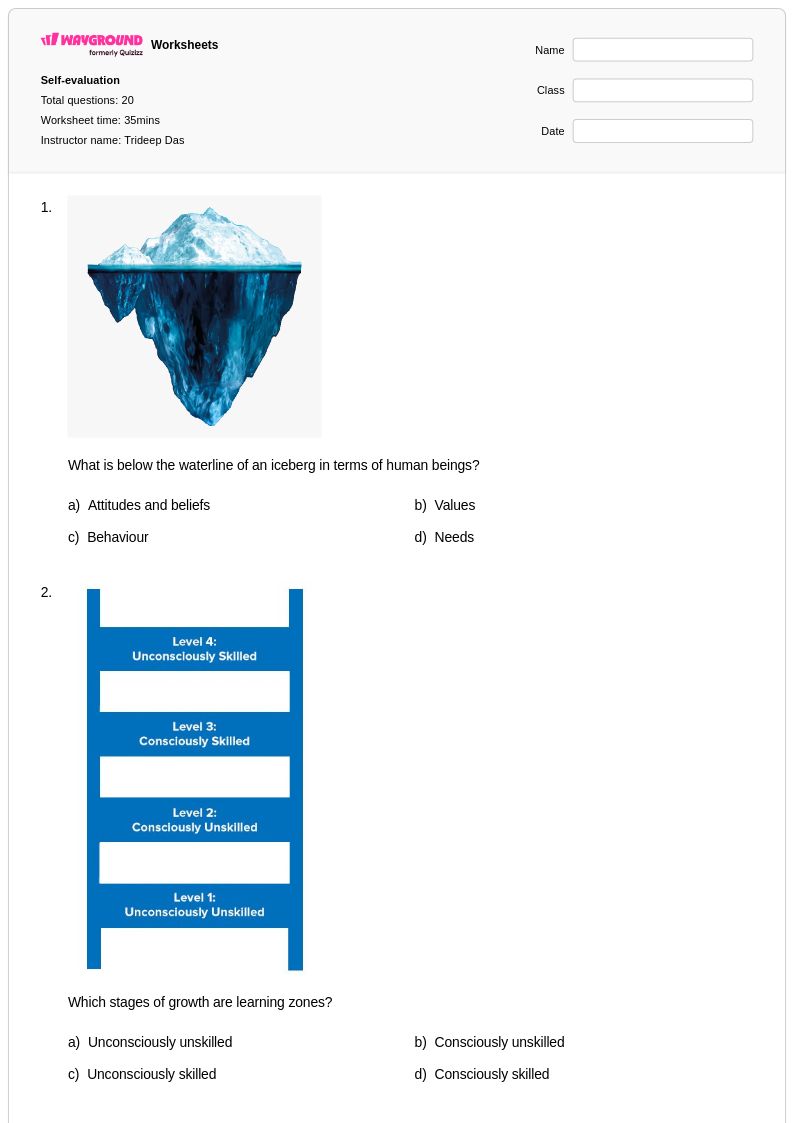
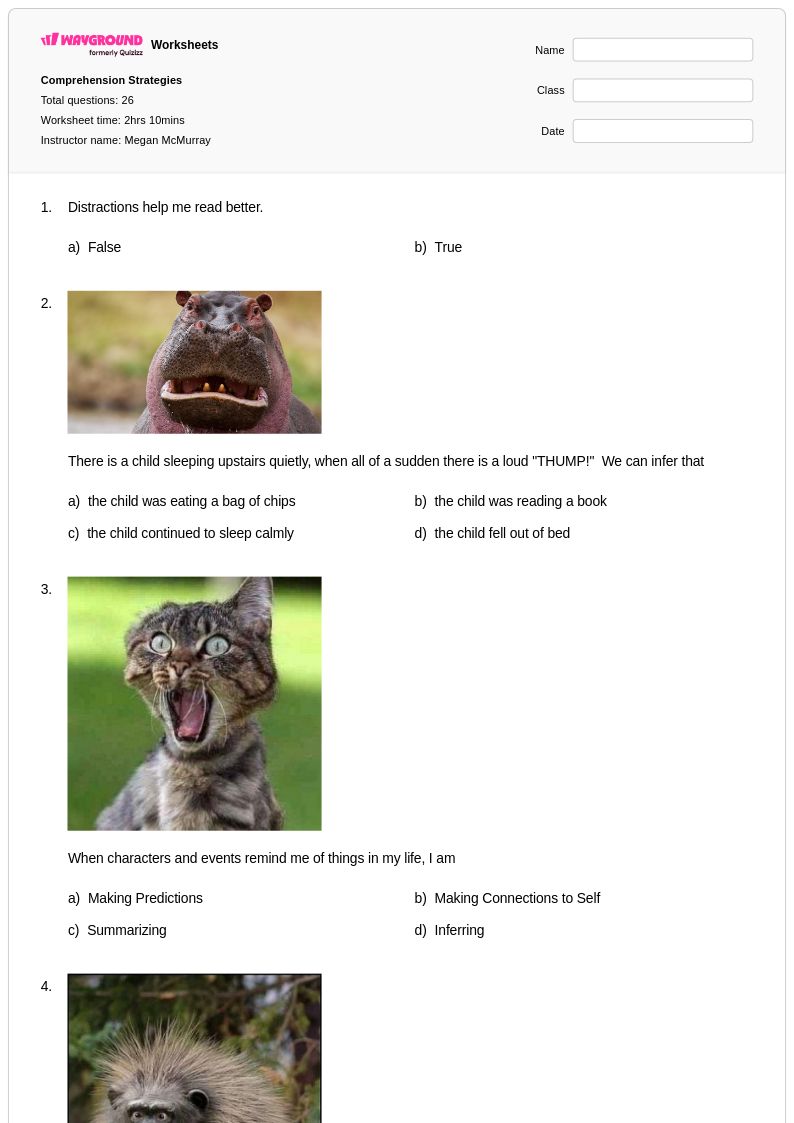
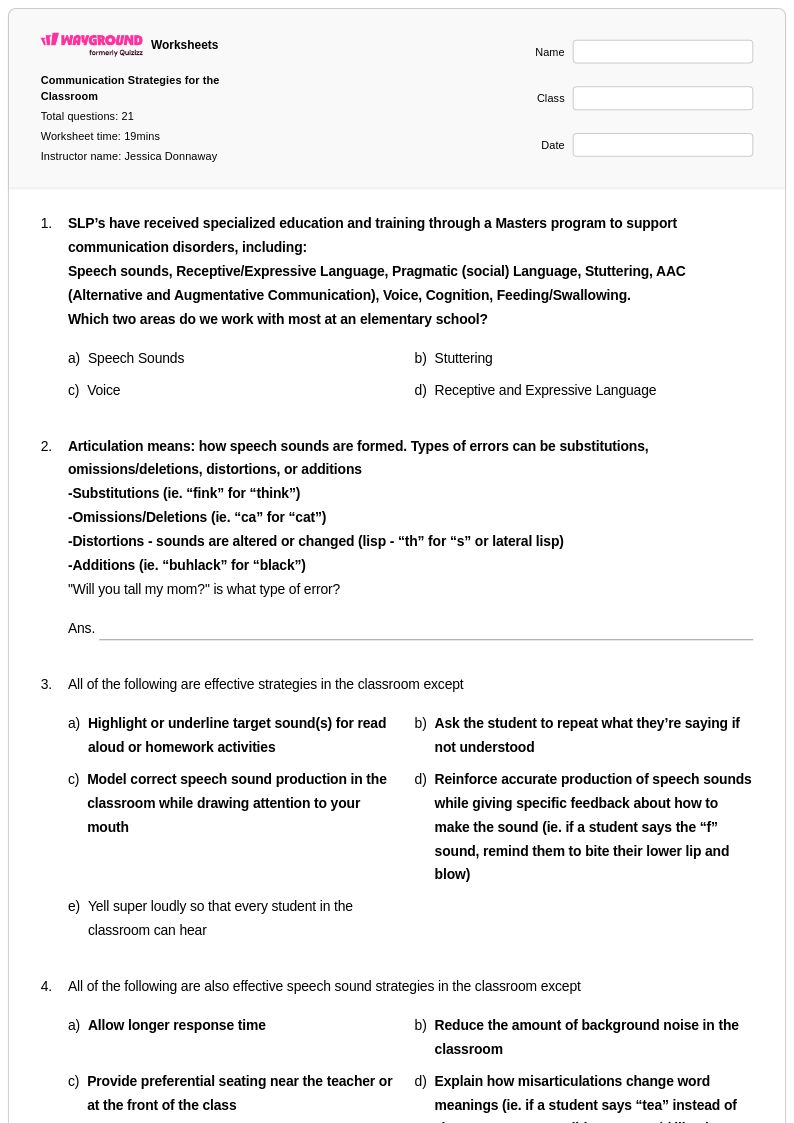
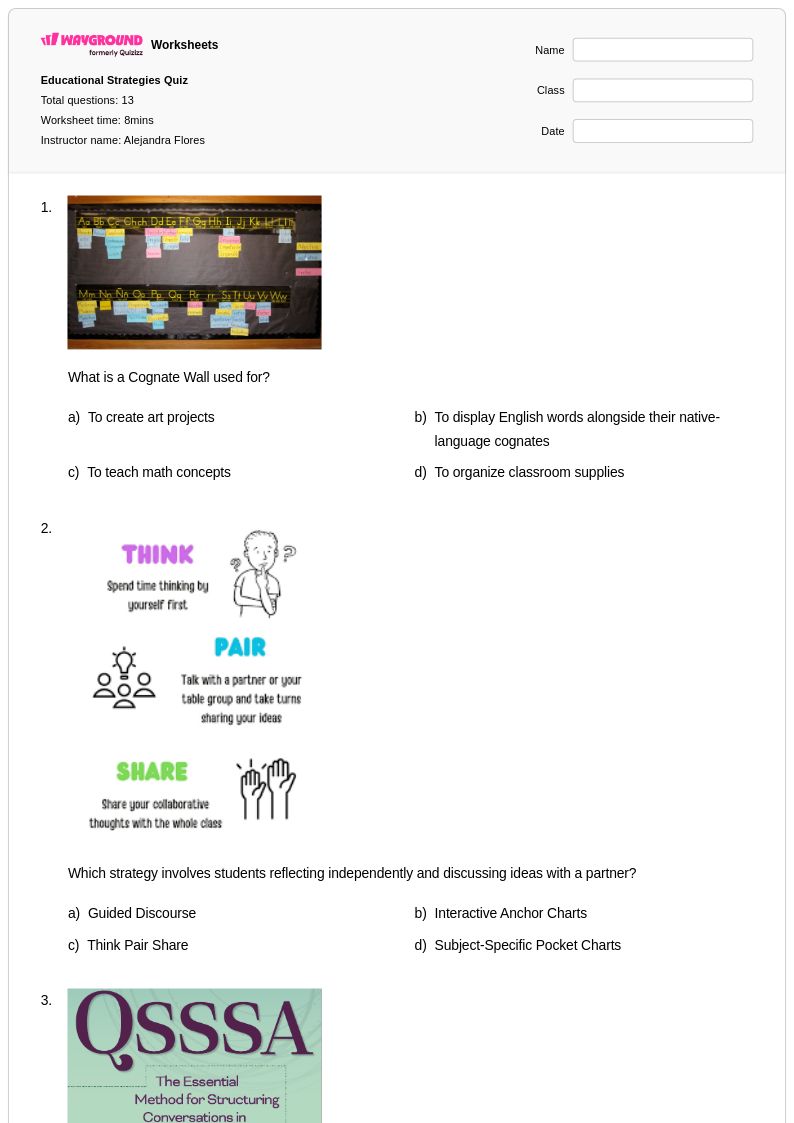
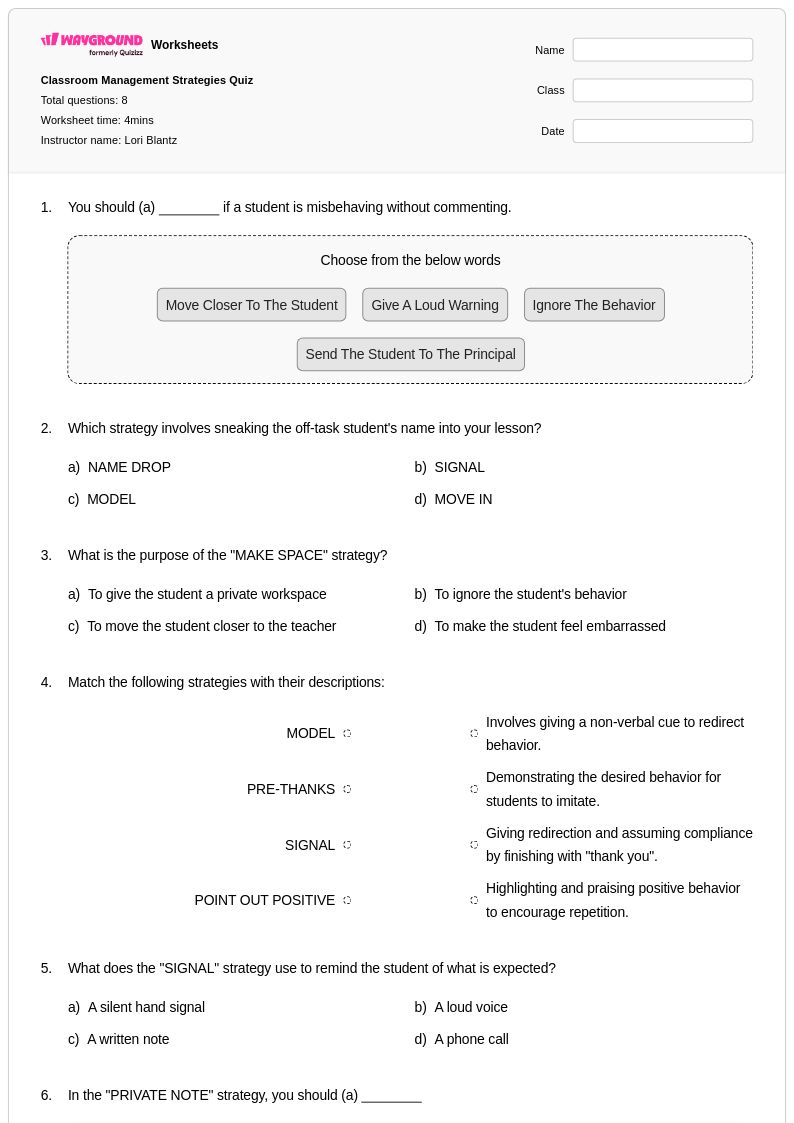
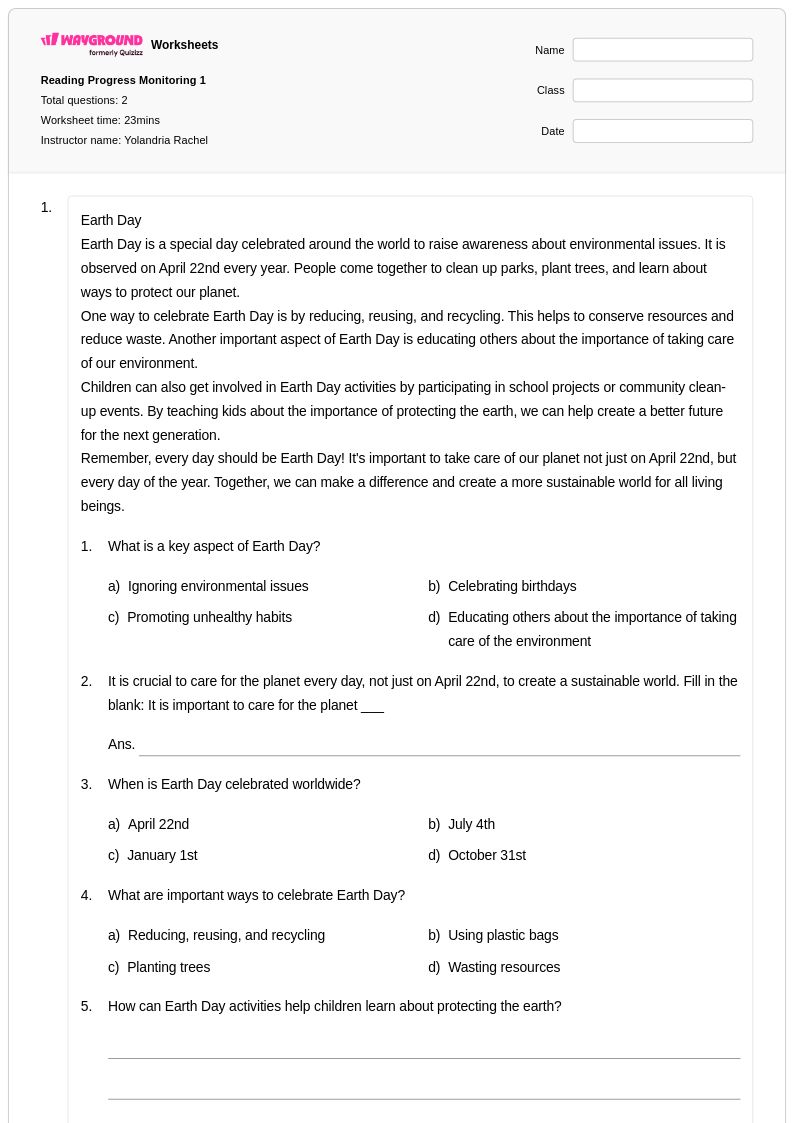
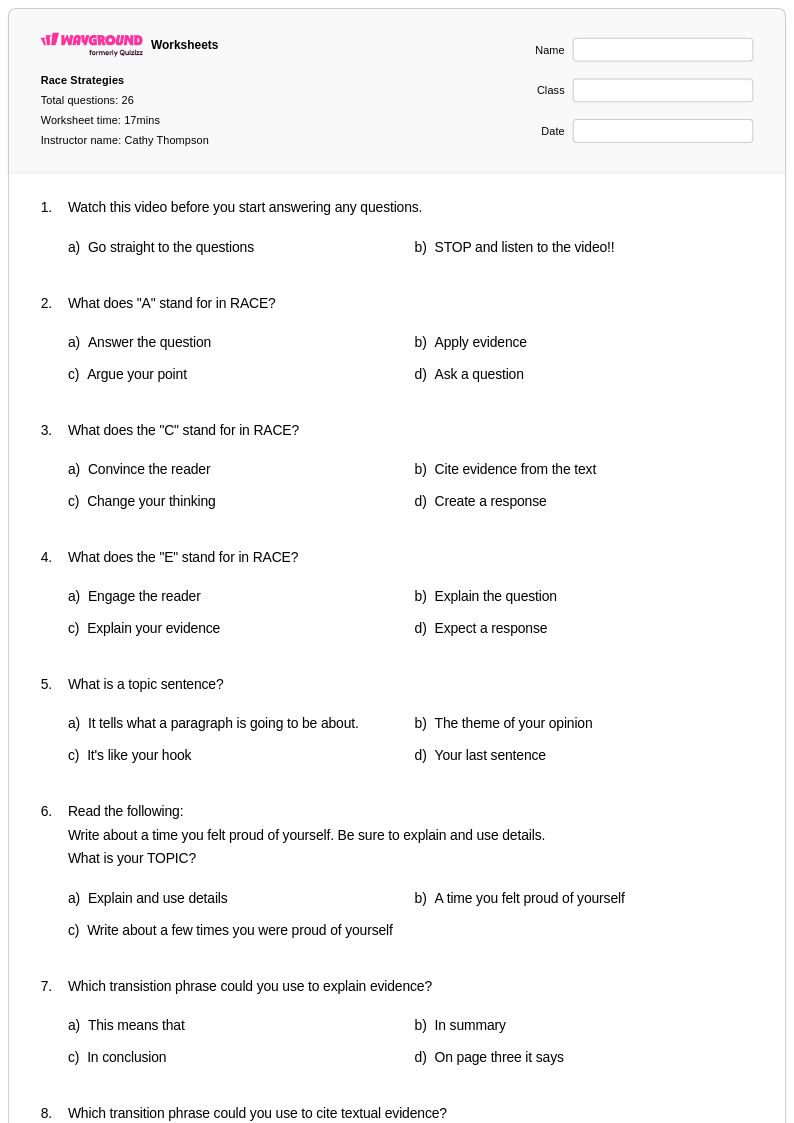
Free Printable Self-monitoring Strategies Worksheets for Class 3
Enhance Class 3 students' reading abilities with Wayground's free self-monitoring strategies worksheets, featuring printable PDFs with practice problems and answer keys to develop independent reading skills.
Explore printable Self-monitoring Strategies worksheets for Class 3
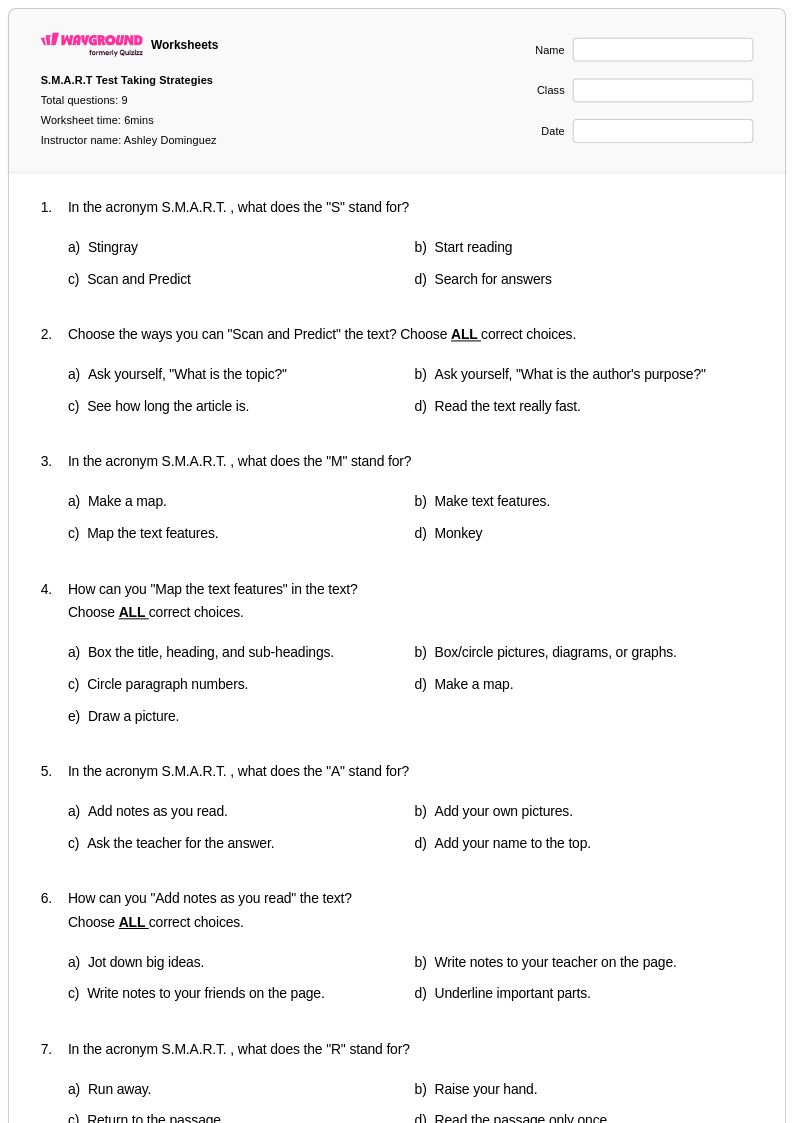
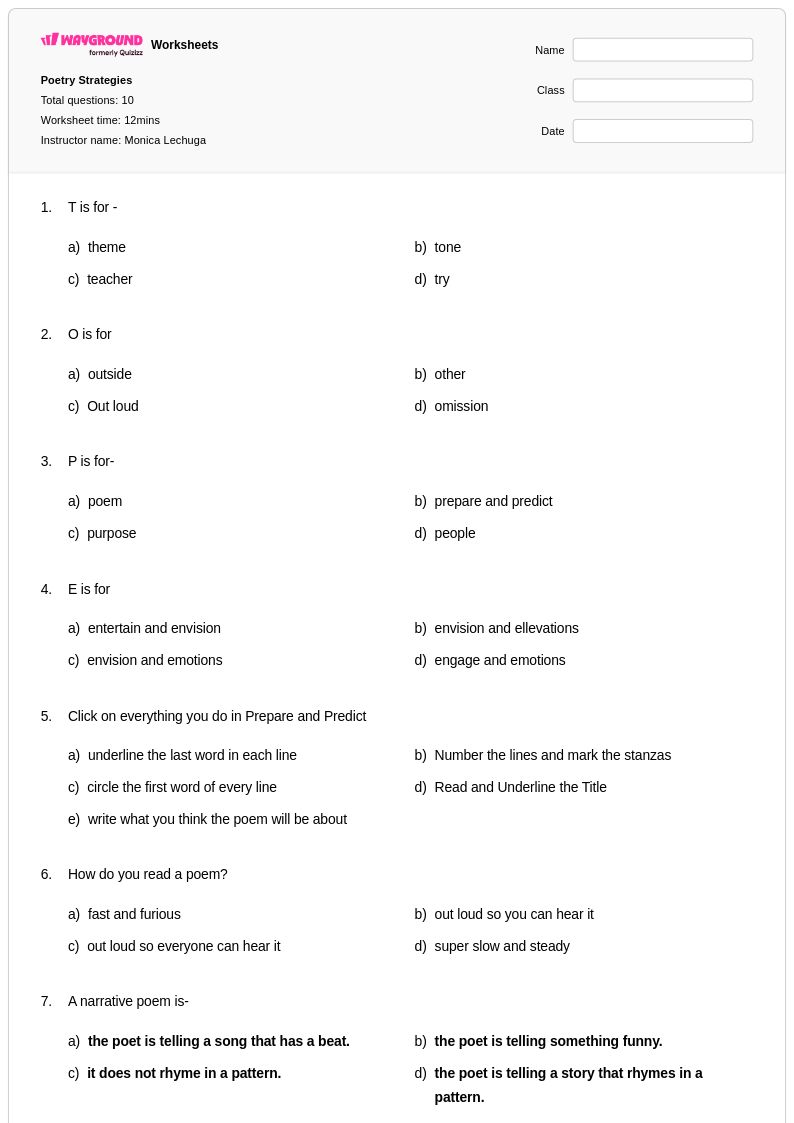
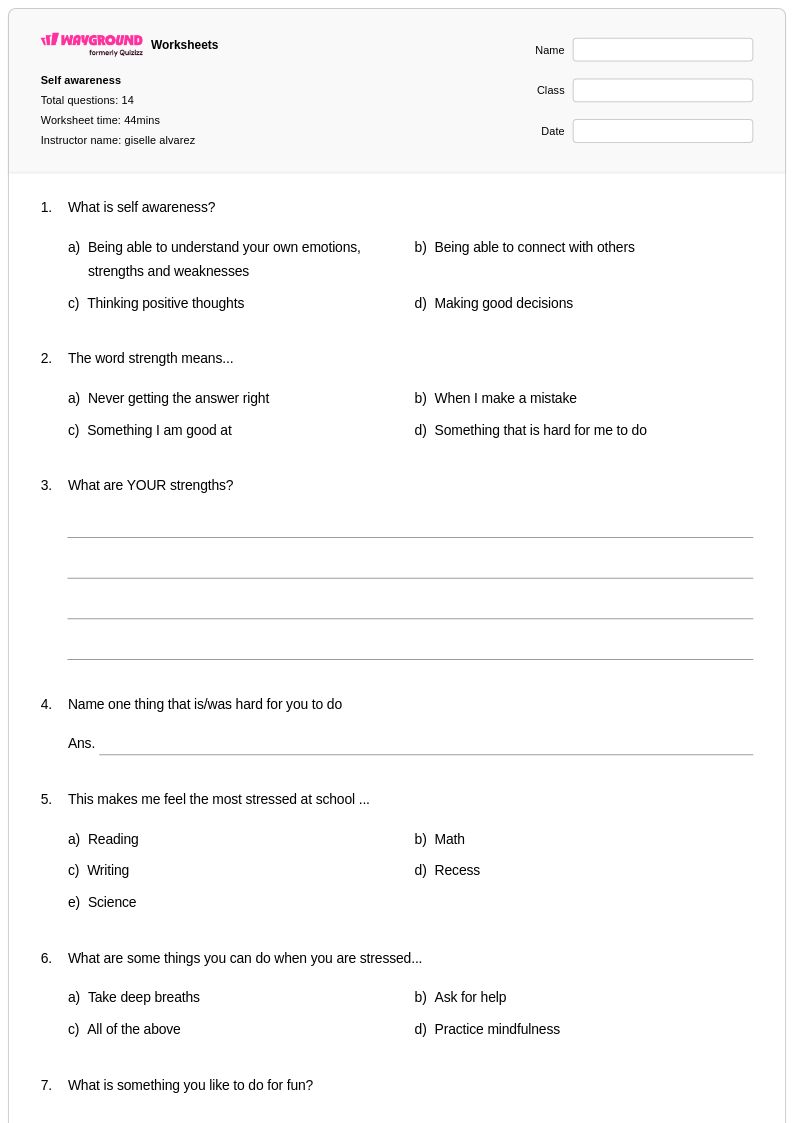
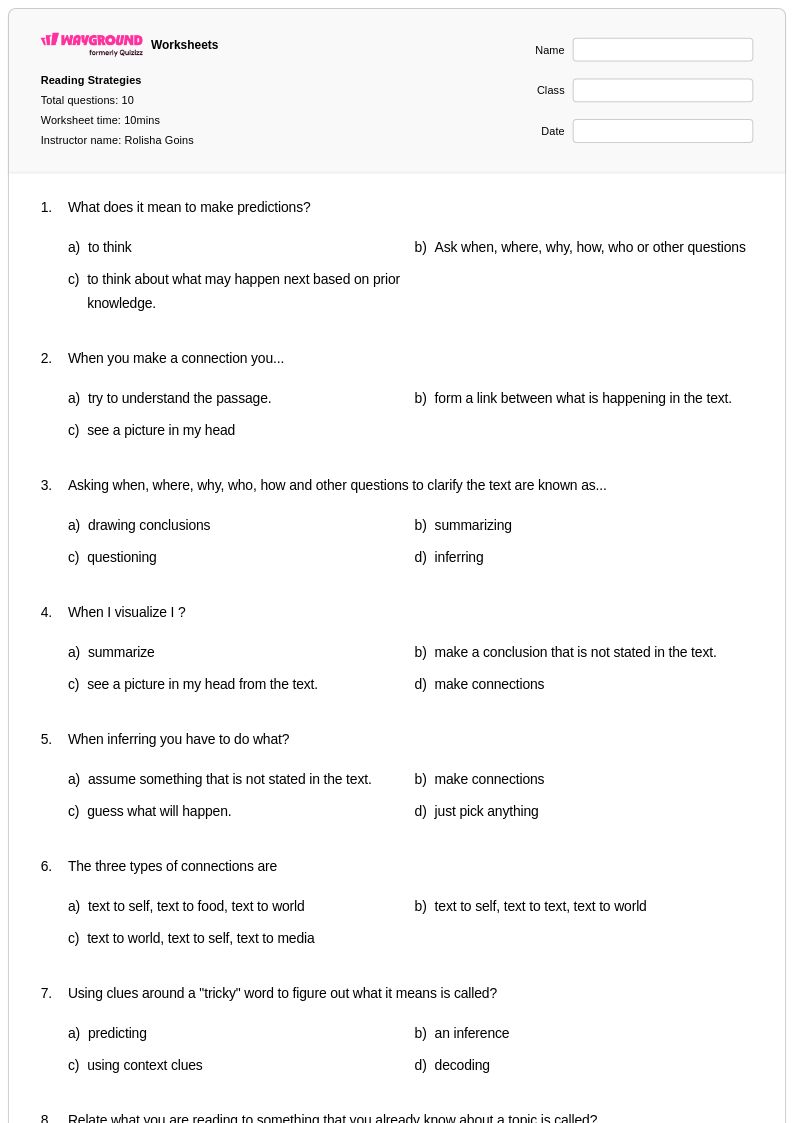
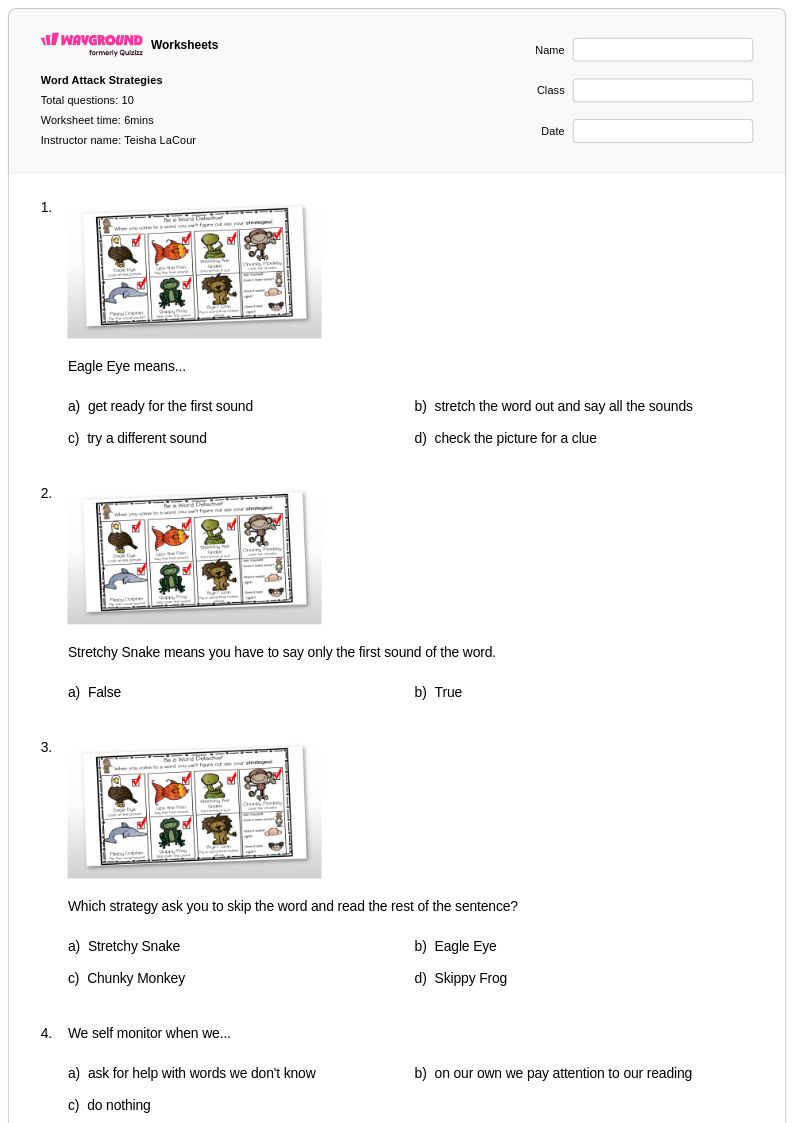
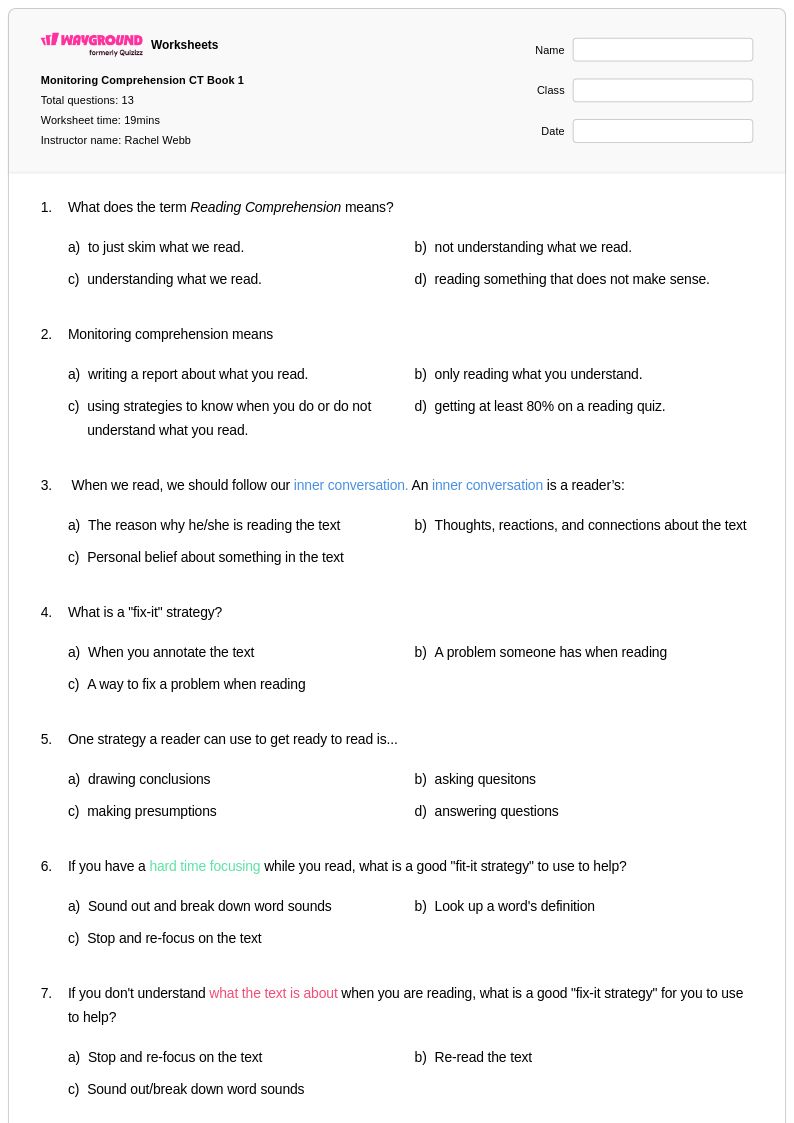
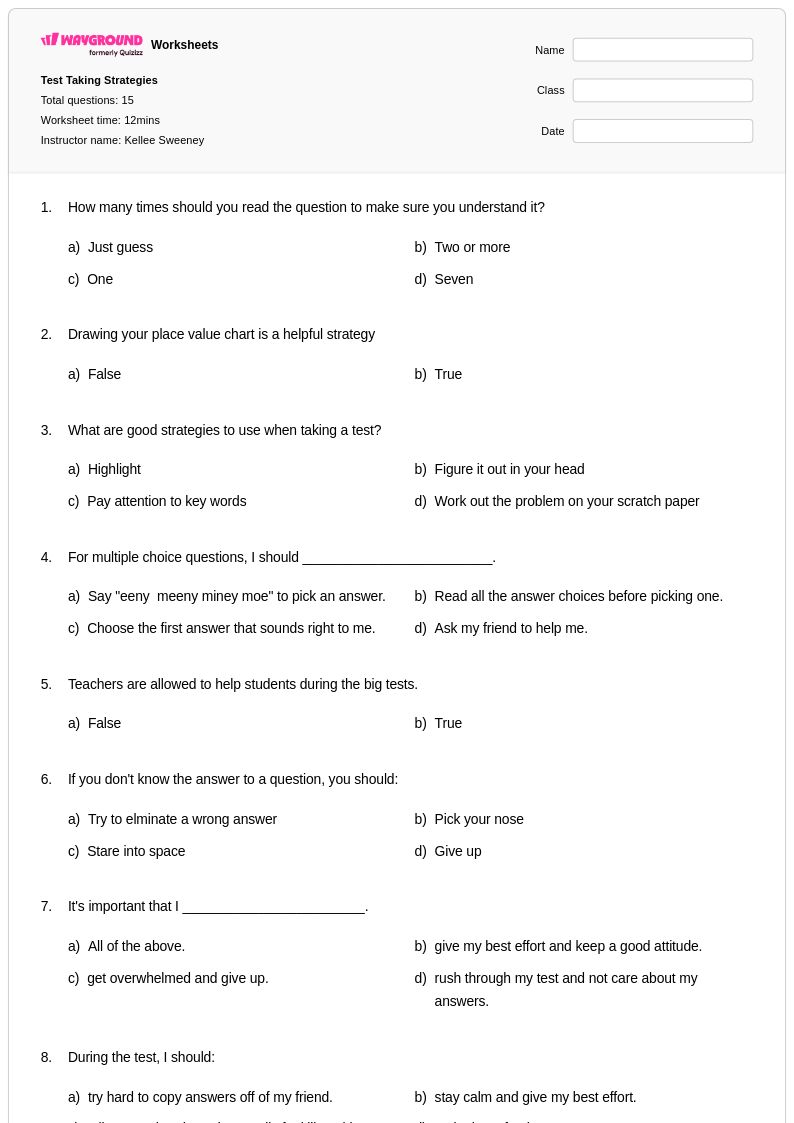
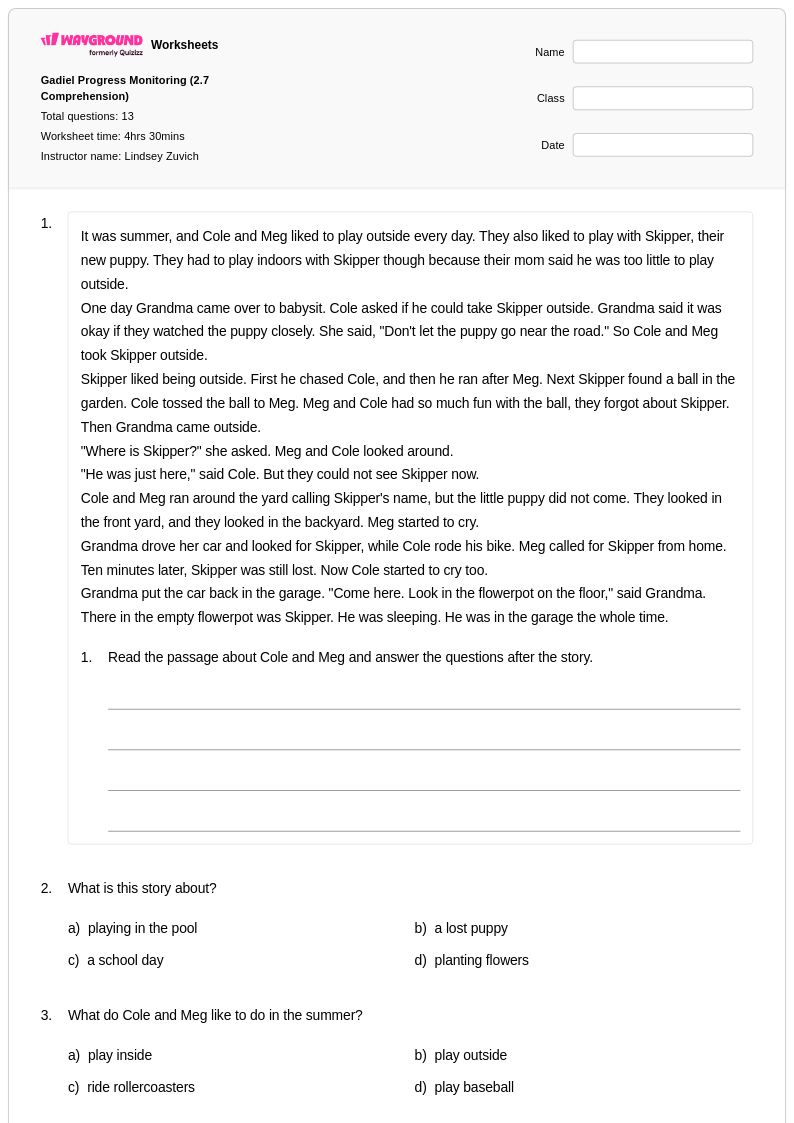
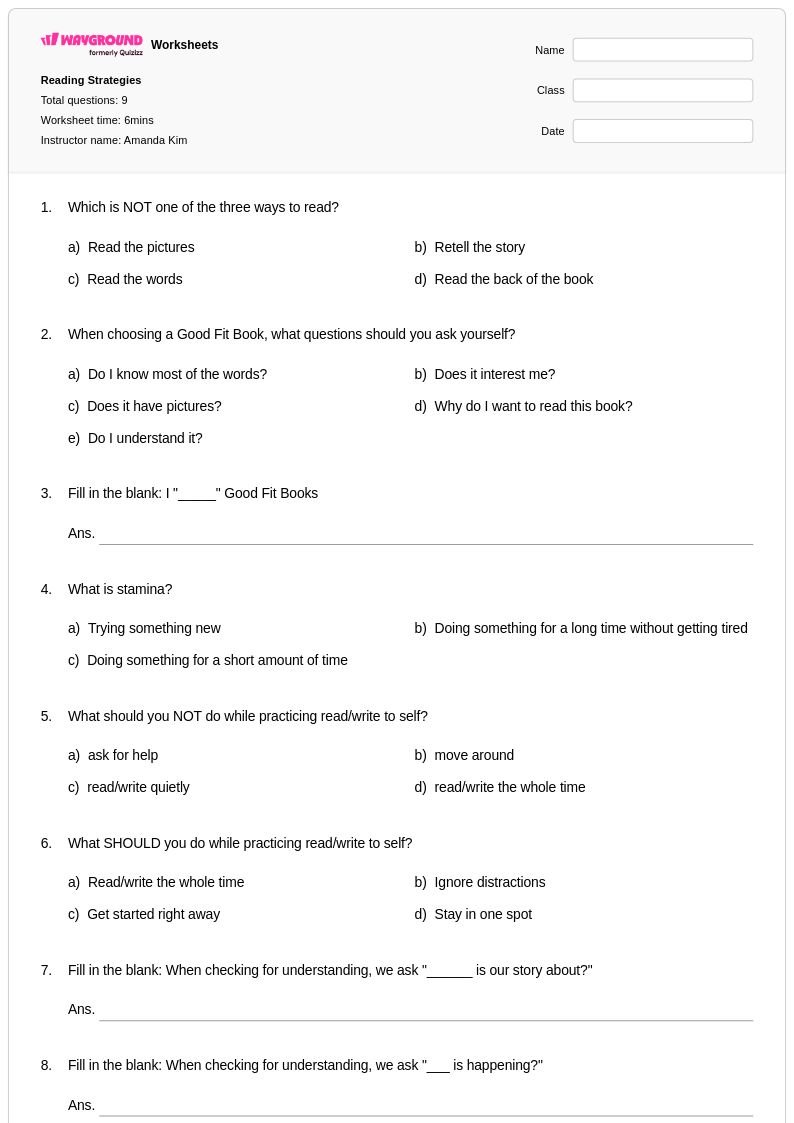
Self-monitoring strategies for Class 3 students form the foundation of independent reading comprehension, and Wayground's extensive collection of worksheets provides targeted practice in these essential metacognitive skills. These carefully designed resources help young learners develop the ability to recognize when they understand what they're reading and identify when comprehension breaks down. The worksheets focus on teaching students to ask themselves questions while reading, make predictions, visualize story elements, and use fix-up strategies when meaning becomes unclear. Each printable worksheet includes structured practice problems that guide students through the self-monitoring process, complete with answer keys that allow for immediate feedback and self-assessment. The free pdf resources emphasize practical techniques such as rereading confusing passages, connecting new information to prior knowledge, and summarizing key points to check understanding.
Wayground, formerly Quizizz, empowers educators with millions of teacher-created resources specifically designed to strengthen Class 3 students' self-monitoring capabilities during reading instruction. The platform's robust search and filtering system enables teachers to quickly locate worksheets aligned with specific reading standards and differentiate instruction based on individual student needs. These comprehensive collections support flexible lesson planning by offering both printable pdf formats for traditional classroom use and digital versions for technology-integrated learning environments. Teachers can customize existing worksheets or combine multiple resources to create targeted remediation activities for struggling readers while providing enrichment opportunities for advanced students. The extensive variety of self-monitoring practice materials helps educators systematically build students' awareness of their own thinking processes, ultimately fostering more confident and strategic readers who can independently navigate increasingly complex texts.
FAQs
How do I teach self-monitoring strategies to students?
Teaching self-monitoring strategies begins with making the invisible thinking process visible through explicit, modeled instruction. Use think-alouds to demonstrate how fluent readers pause, question themselves, and recognize when meaning breaks down. Introduce fix-up strategies one at a time, such as rereading, adjusting reading rate, or asking clarifying questions, so students build a reliable toolkit they can apply independently. Gradually release responsibility by moving from teacher-led practice to partner work and then independent application.
What exercises help students practice self-monitoring during reading?
Effective practice exercises include self-questioning protocols where students generate and answer their own comprehension questions at regular stopping points in a text. Comprehension checkpoints, reading journals, and coding systems (such as marking text with check marks for understanding and question marks for confusion) give students concrete ways to track their comprehension in real time. Structured worksheets that guide students through monitoring their understanding before, during, and after reading help reinforce these habits systematically.
What mistakes do students commonly make when learning to self-monitor their reading?
The most common error is passive reading, where students continue reading without registering that comprehension has broken down, often because they confuse decoding fluency with actual understanding. Students also tend to apply fix-up strategies too late or not at all, waiting until the end of a passage to realize they are lost rather than pausing at the point of confusion. Some learners over-rely on a single strategy, such as rereading, without knowing when a different approach would be more effective.
How can I differentiate self-monitoring strategy instruction for struggling readers?
For struggling readers, reduce the cognitive load by shortening text passages and providing sentence stems for self-questioning, such as 'I understand...' or 'I am confused about...' so students have language scaffolds to articulate their comprehension. Wayground supports additional accommodations including Read Aloud, which allows questions and content to be read to students who need it, and reduced answer choices to lower the difficulty of comprehension check questions. These settings can be assigned to individual students while the rest of the class works with standard materials, so differentiation happens seamlessly.
How do I use Wayground's self-monitoring strategies worksheets in my classroom?
Wayground's self-monitoring strategies worksheets are available as printable PDFs for traditional classroom use and in digital formats for technology-integrated environments, making them suitable for in-class instruction, homework, and remediation sessions. Teachers can also host worksheets as a live quiz on Wayground, giving students immediate feedback on their comprehension monitoring skills. Each worksheet includes an answer key, supporting both independent student practice and instructor-led discussion about metacognitive reading processes.
At what reading level or grade should I introduce self-monitoring strategies?
Self-monitoring strategies can be introduced as early as first or second grade in simplified forms, such as having students give a thumbs up or thumbs down to signal understanding, and progressively formalized through middle and high school as texts grow more complex. The strategies are especially critical when students transition to content-area reading in grades 4 and above, where unfamiliar vocabulary and dense informational text increase the likelihood of comprehension breakdowns. Instruction should be revisited and deepened at each grade level rather than treated as a one-time lesson.