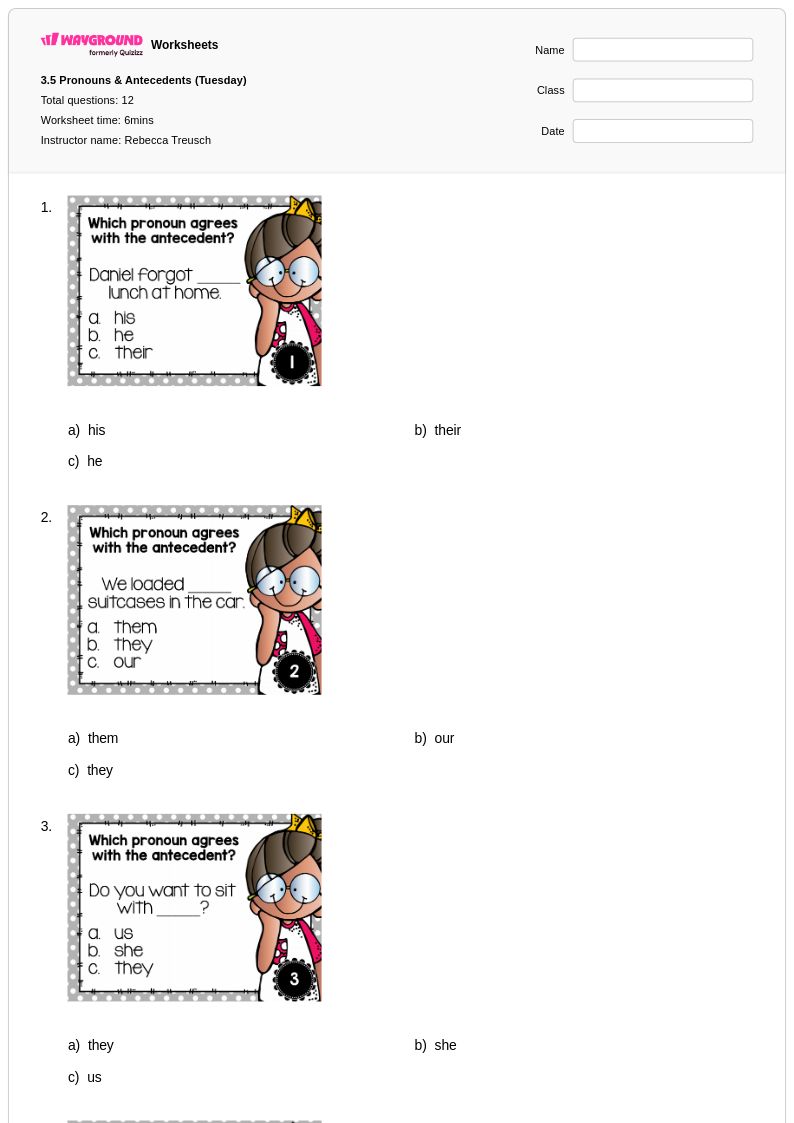
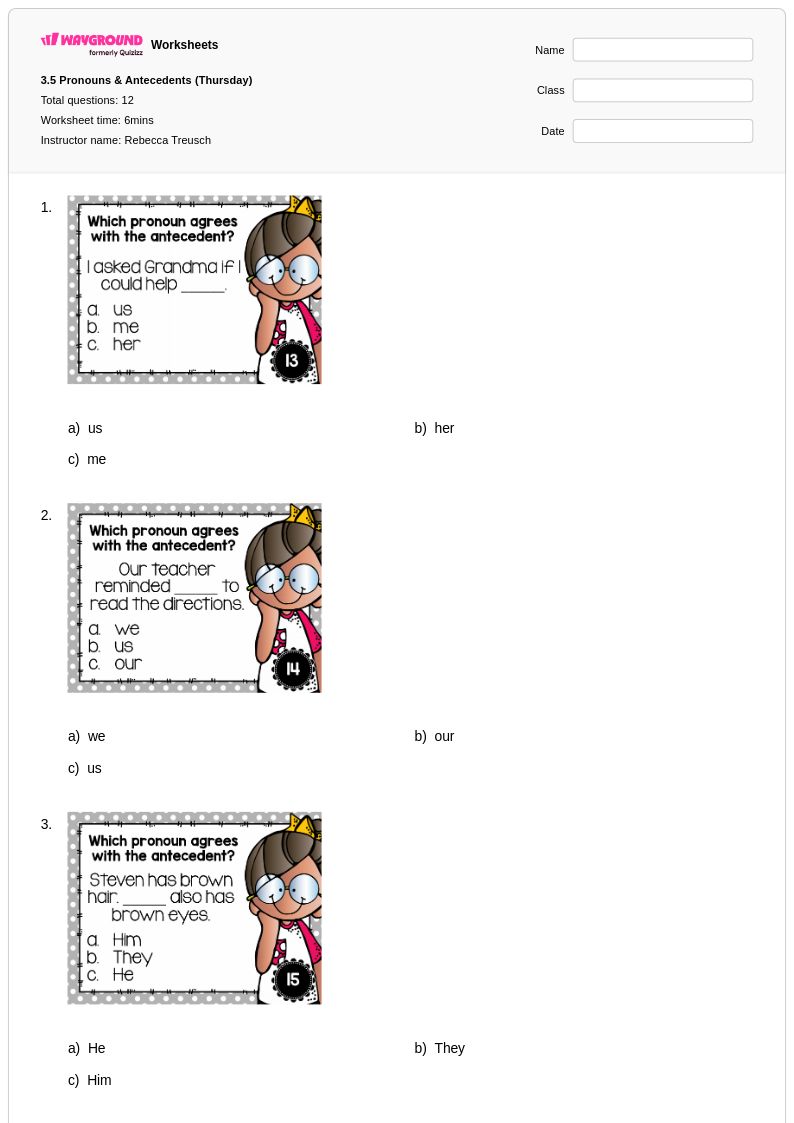
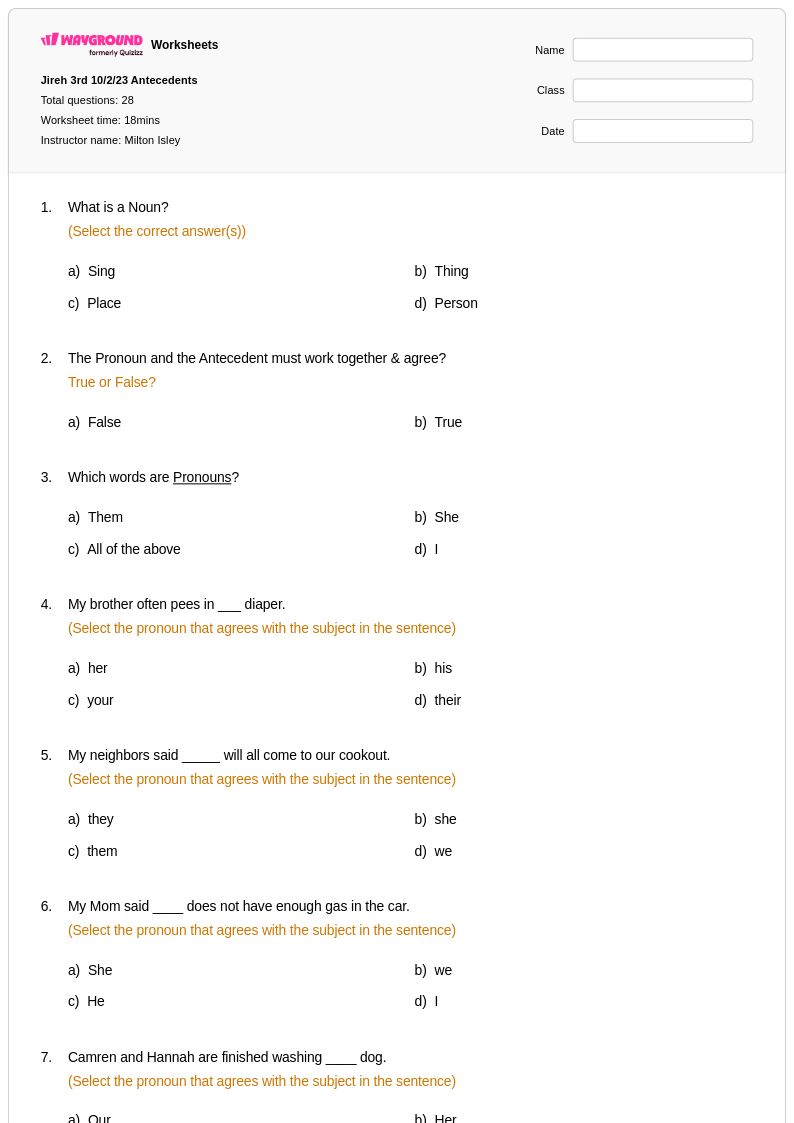
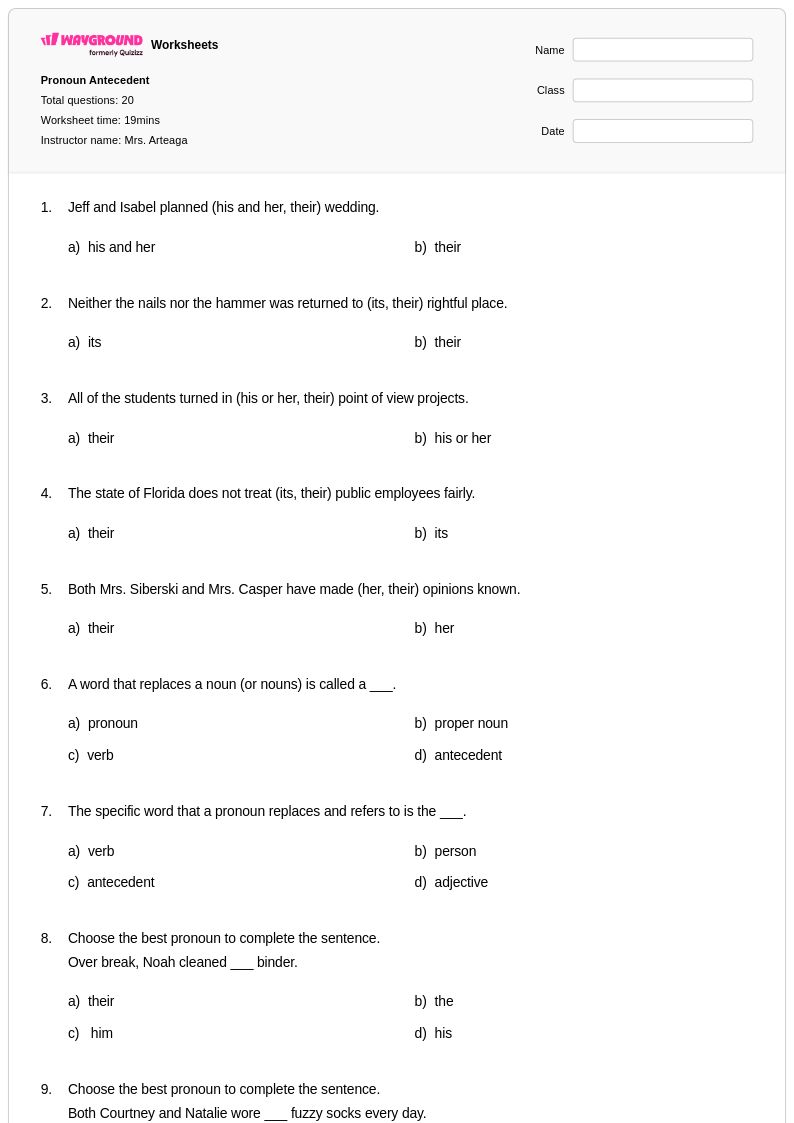
Class 3 antecedents worksheets from Wayground help students master pronoun-antecedent relationships through engaging printables, practice problems, and comprehensive answer keys for effective classroom learning.
Explore printable Antecedents worksheets for Class 3
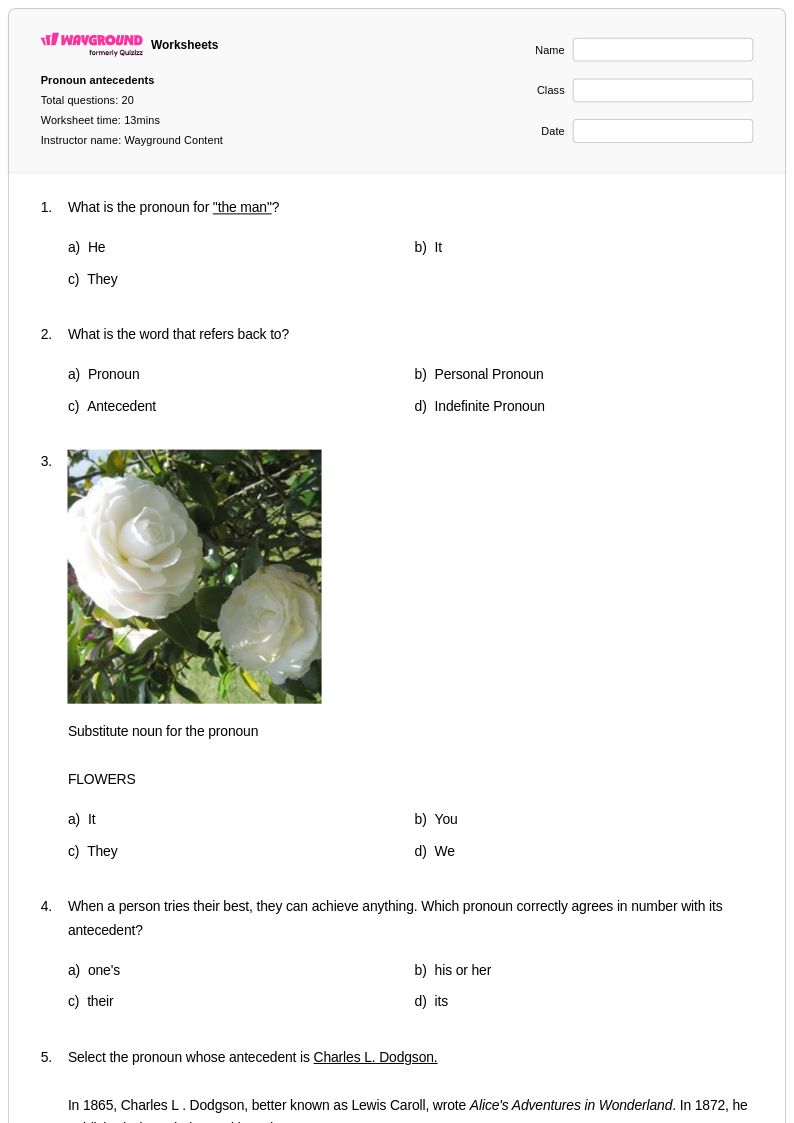
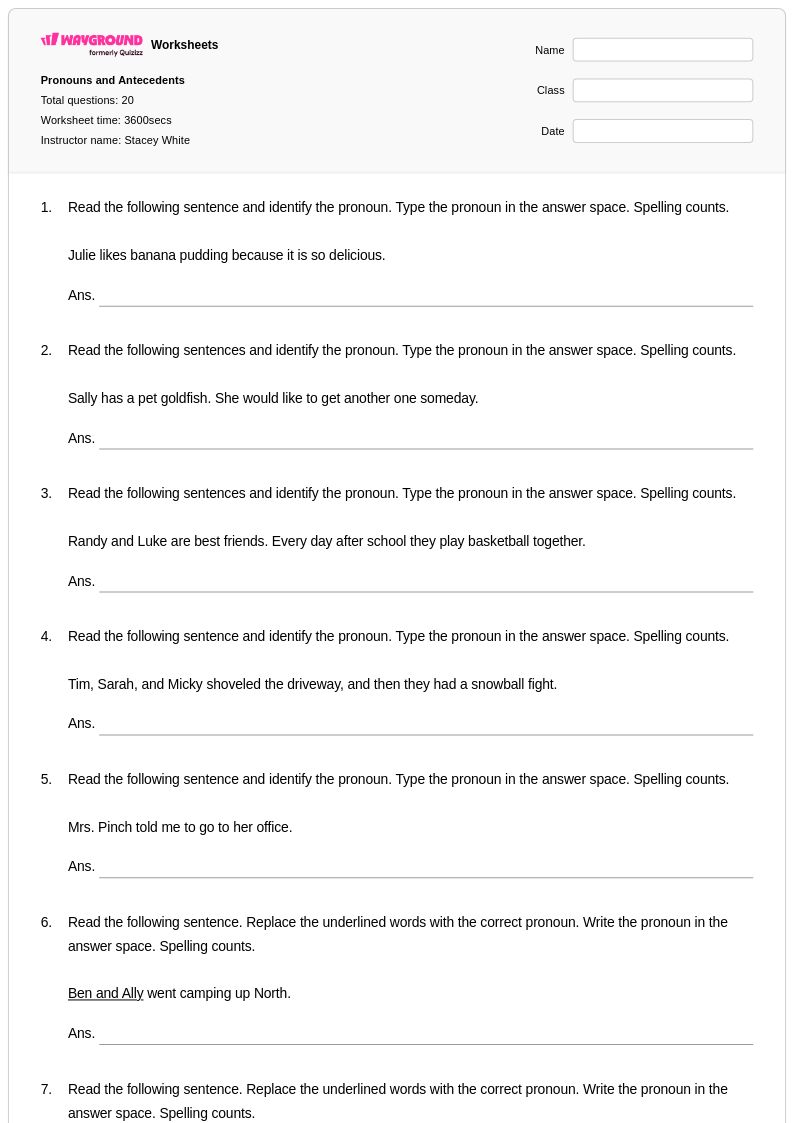
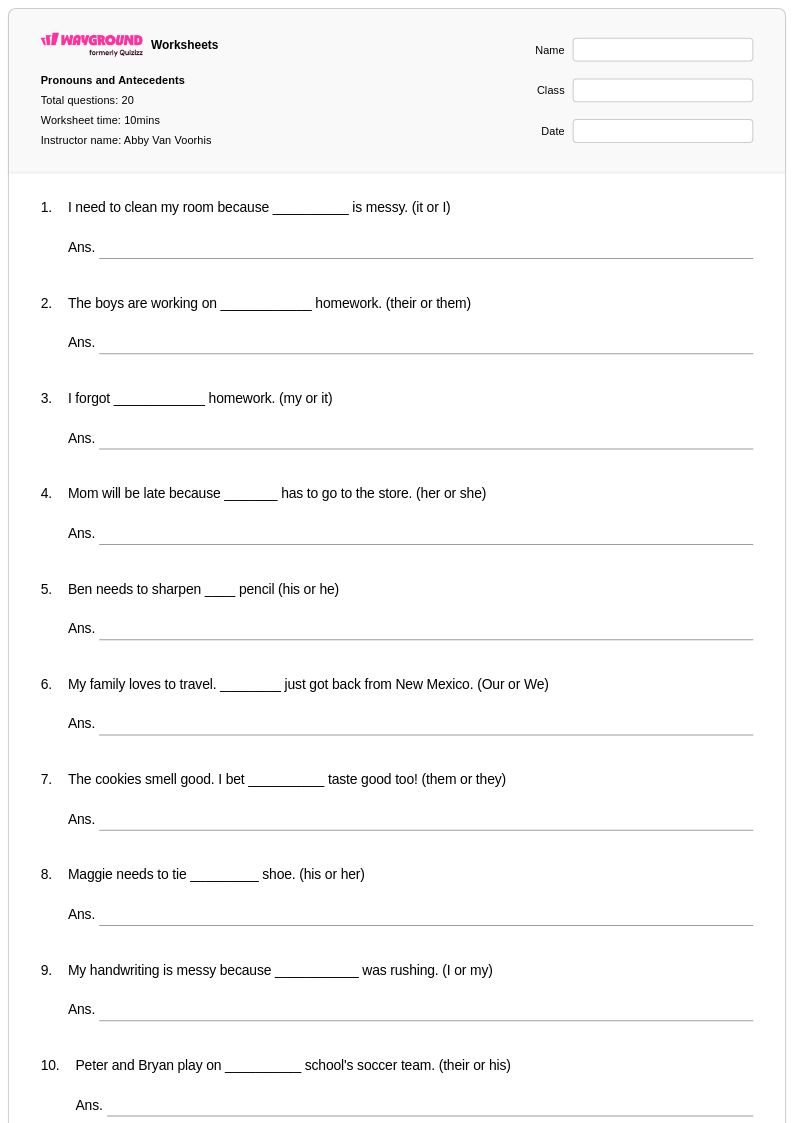
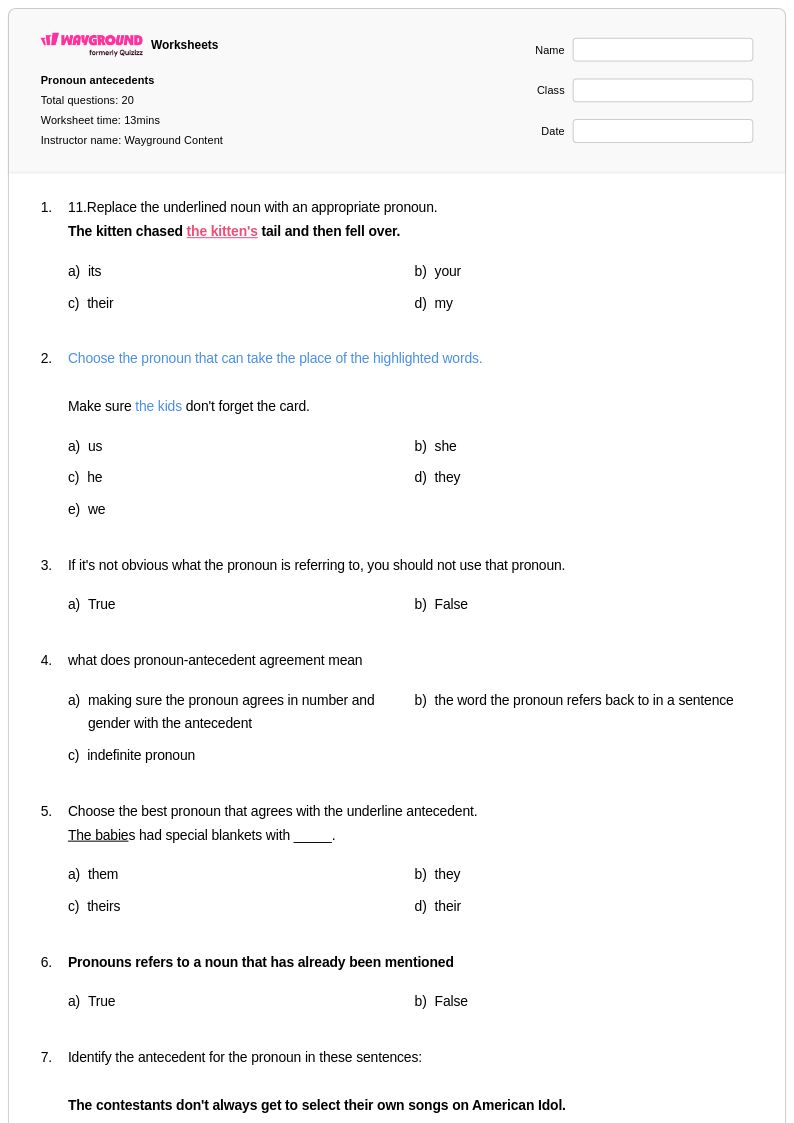
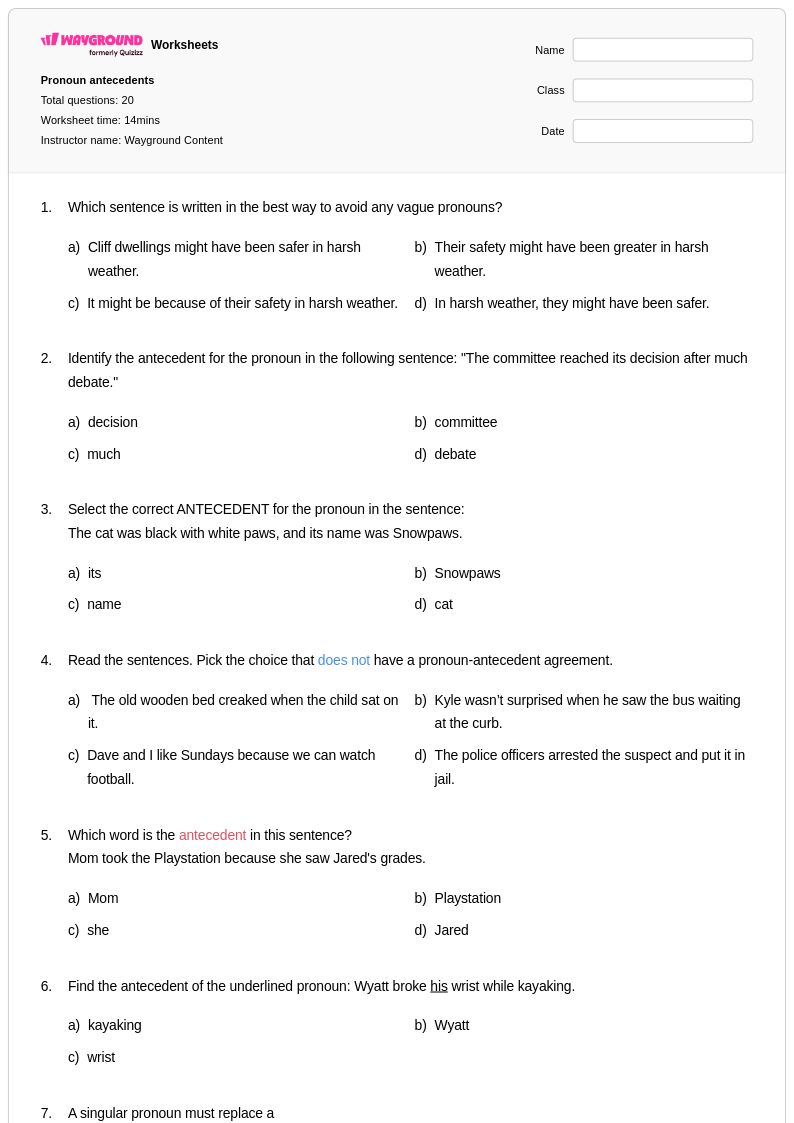
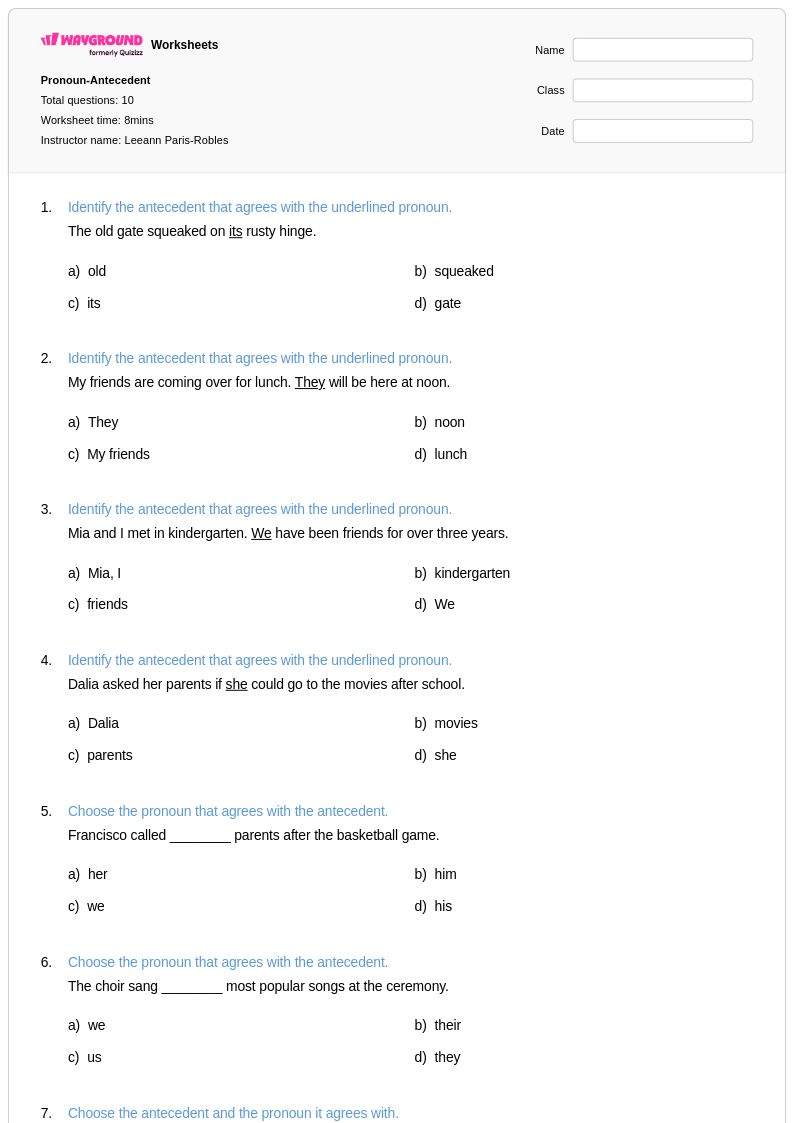
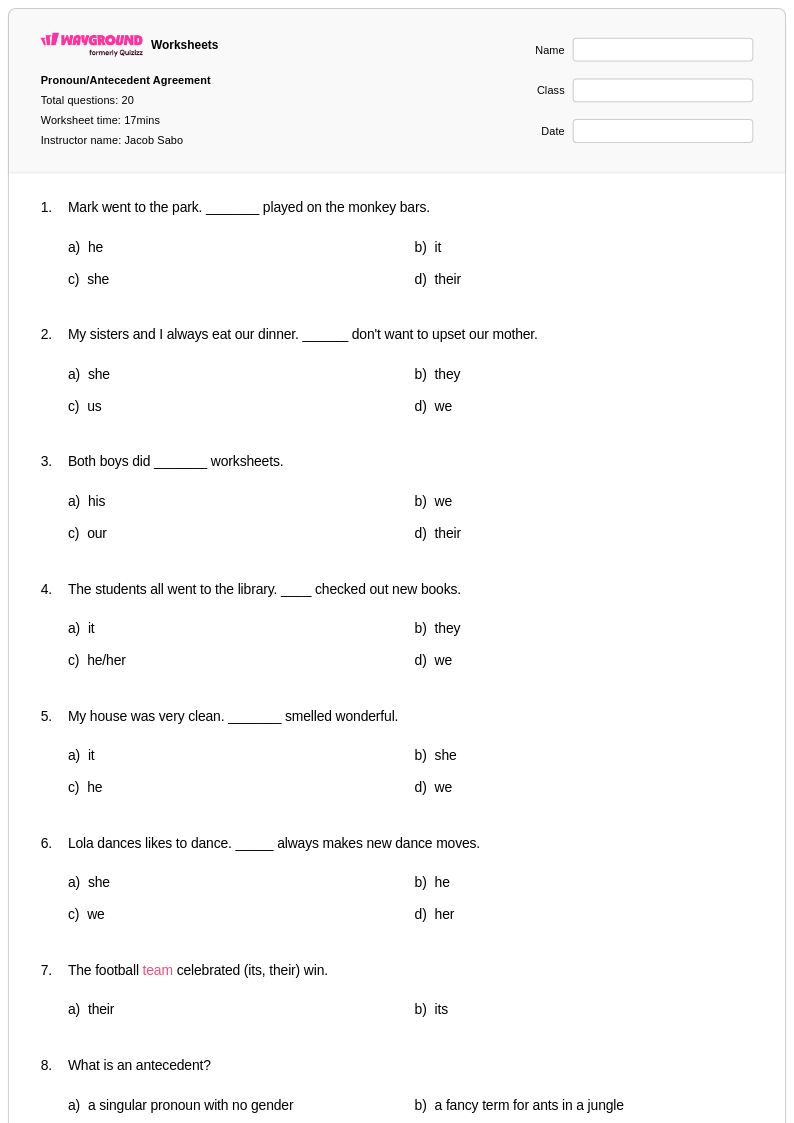
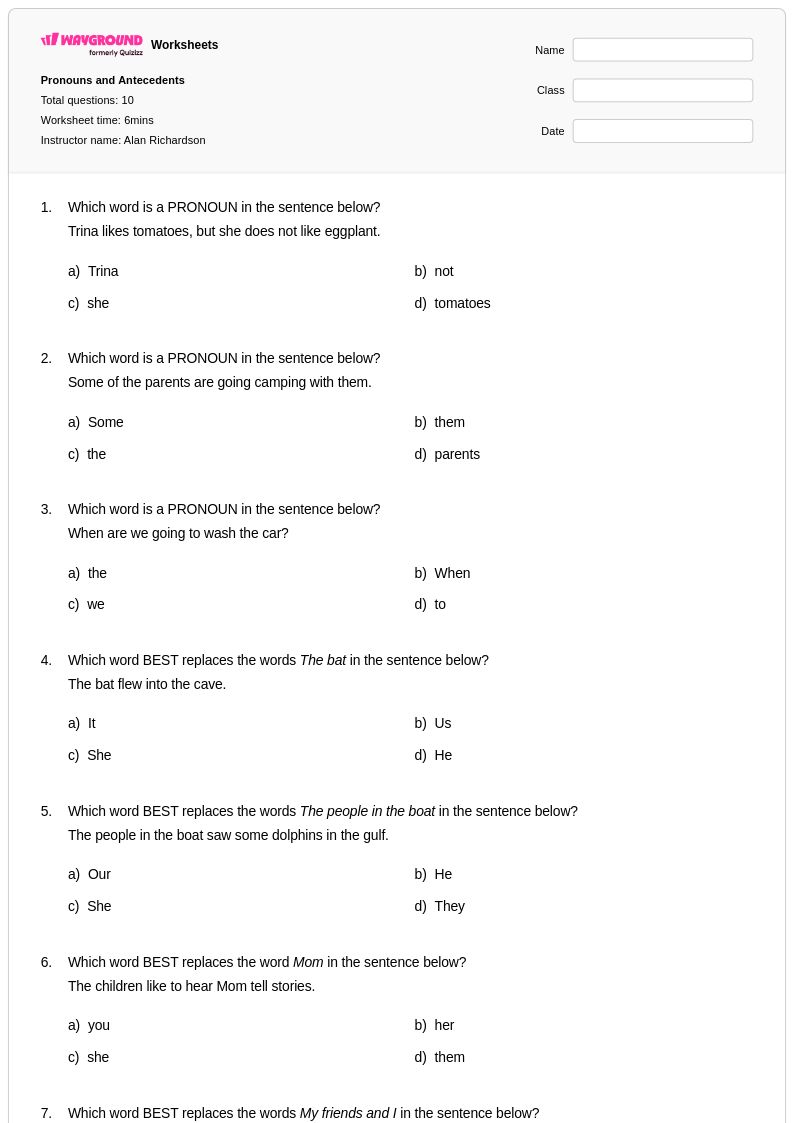
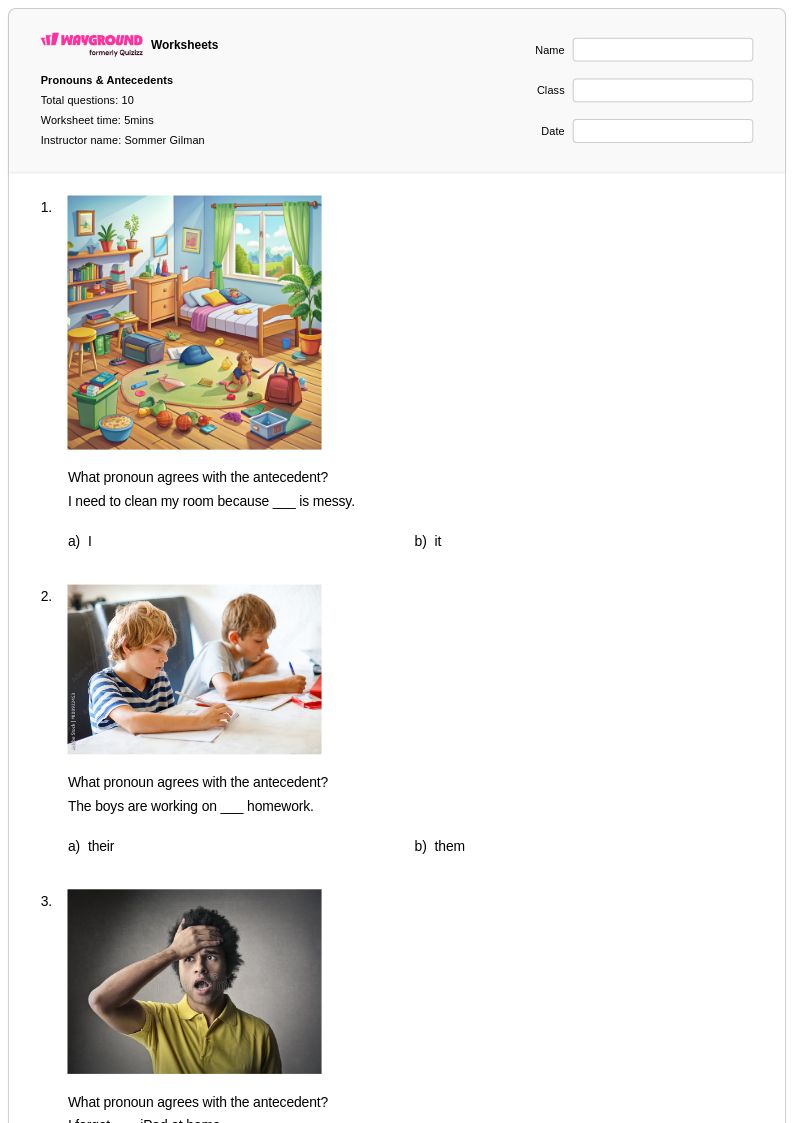
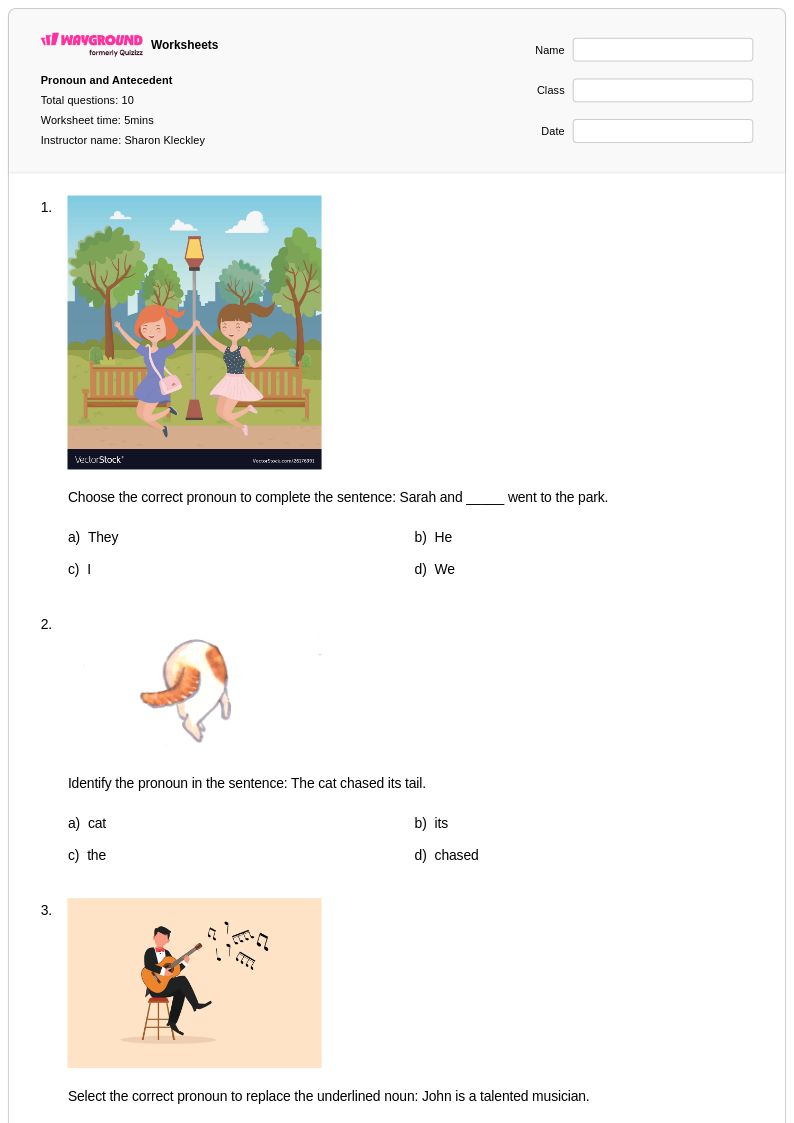
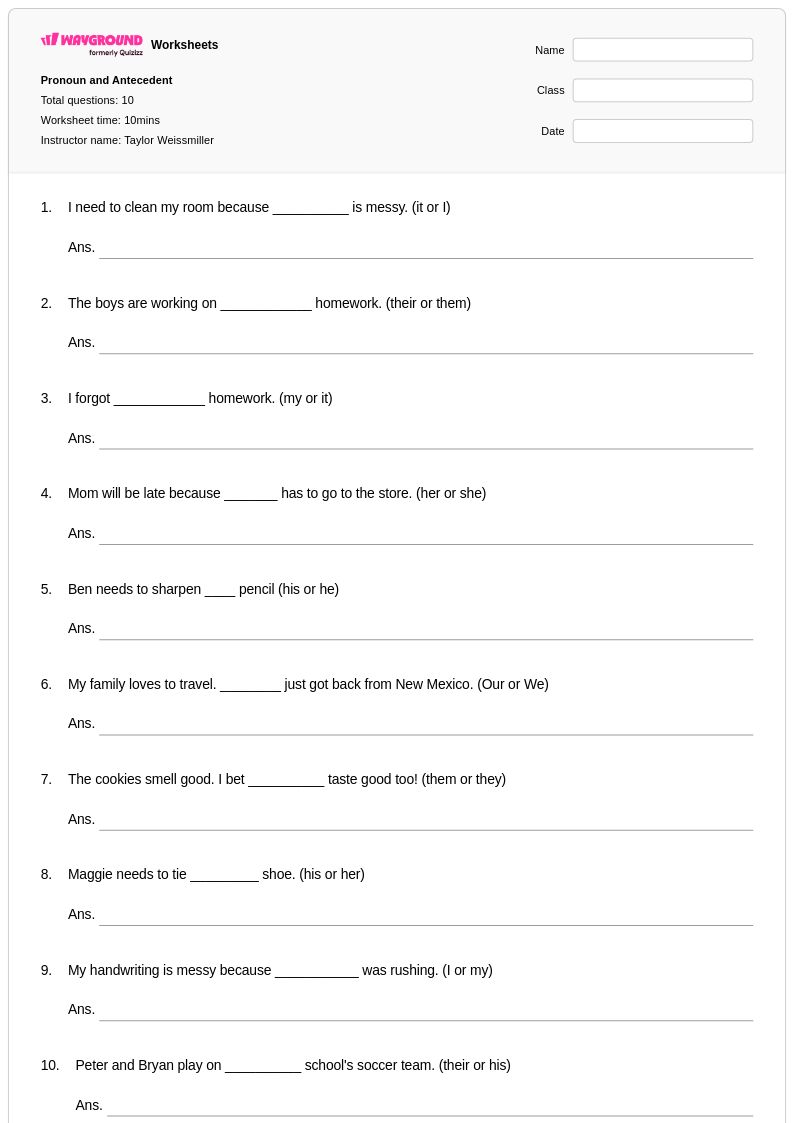
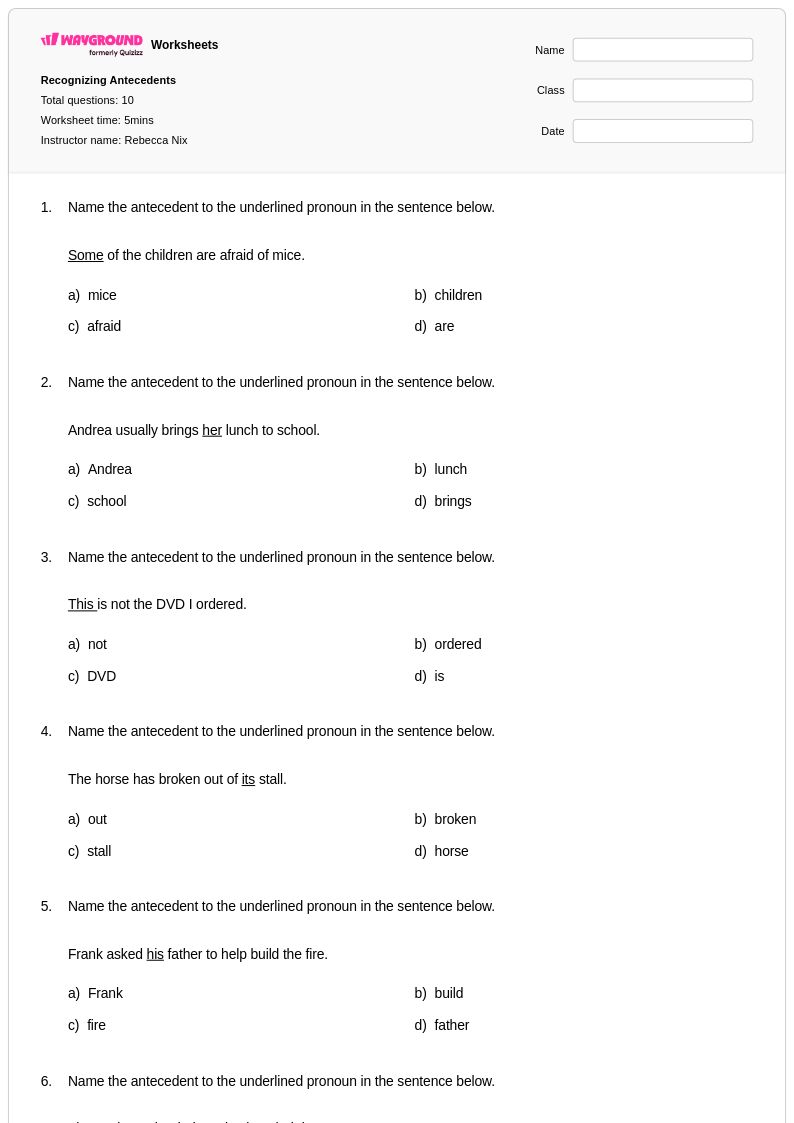
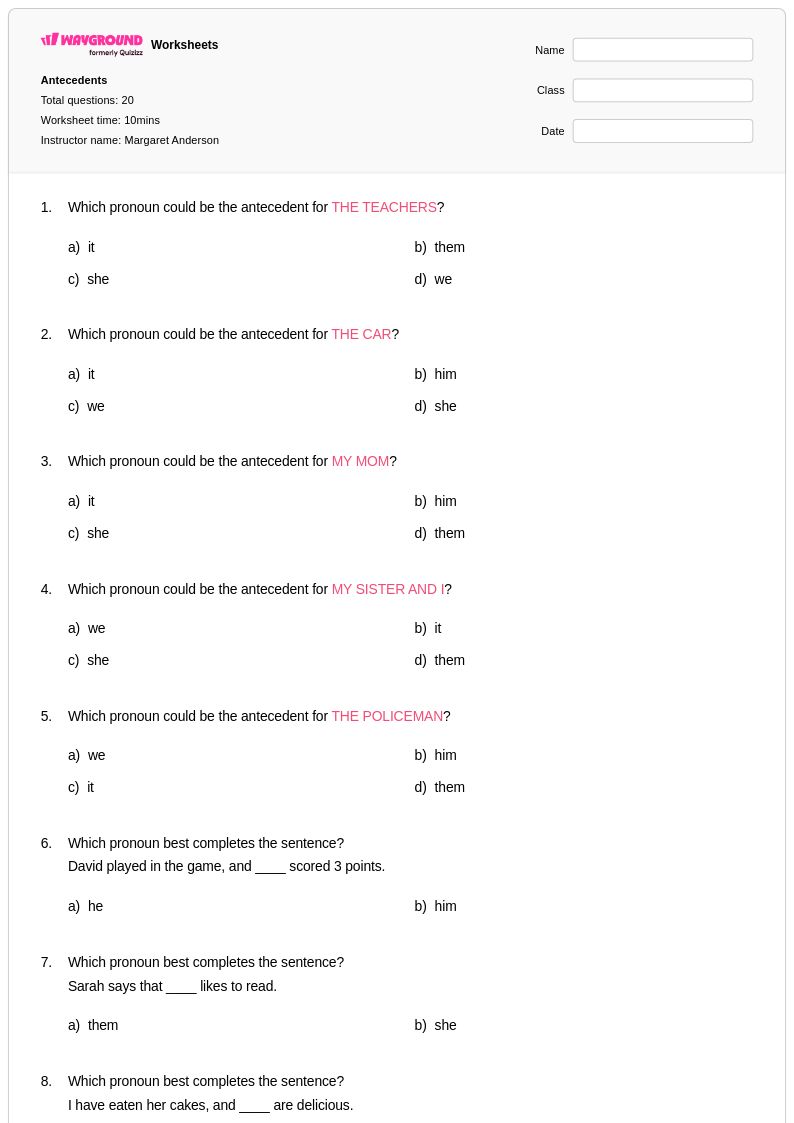
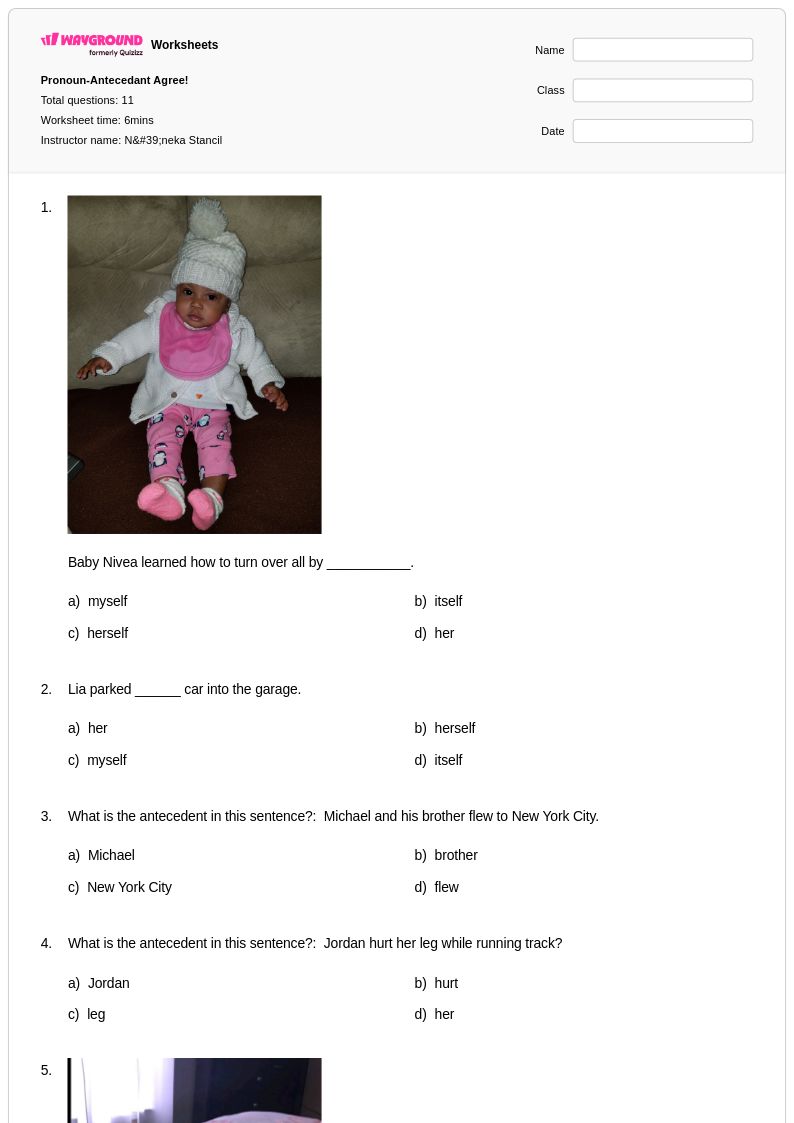
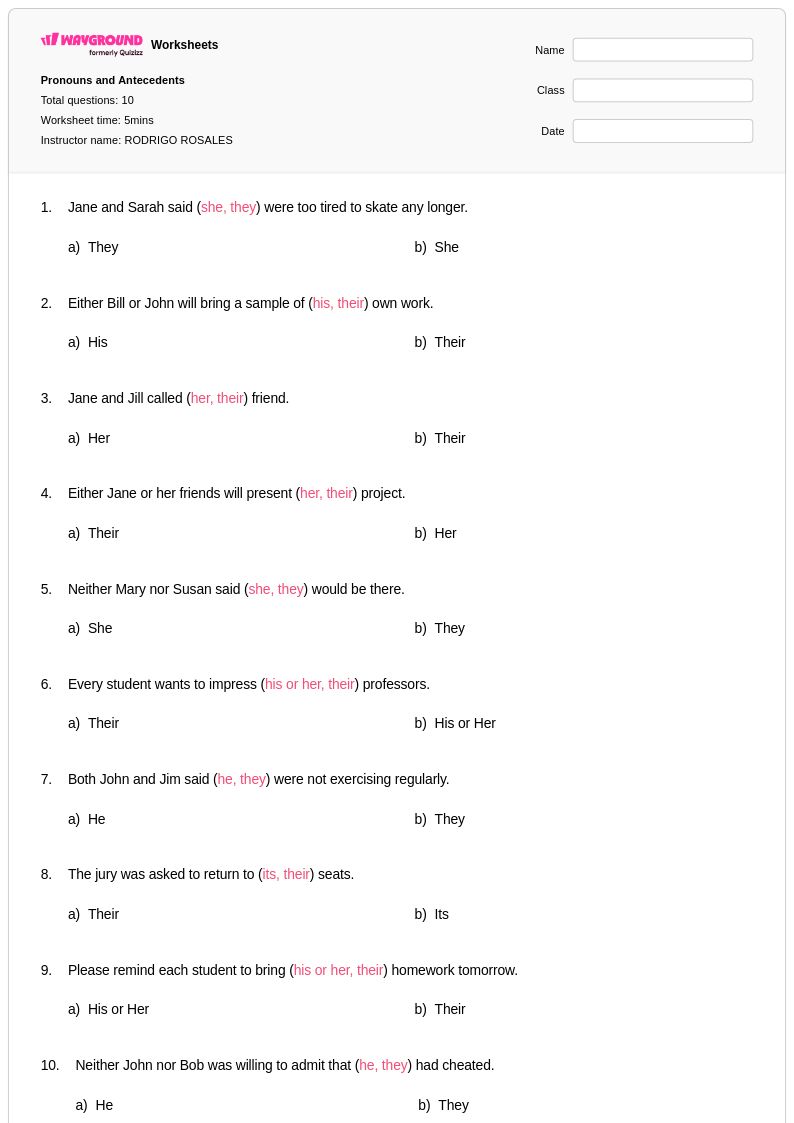
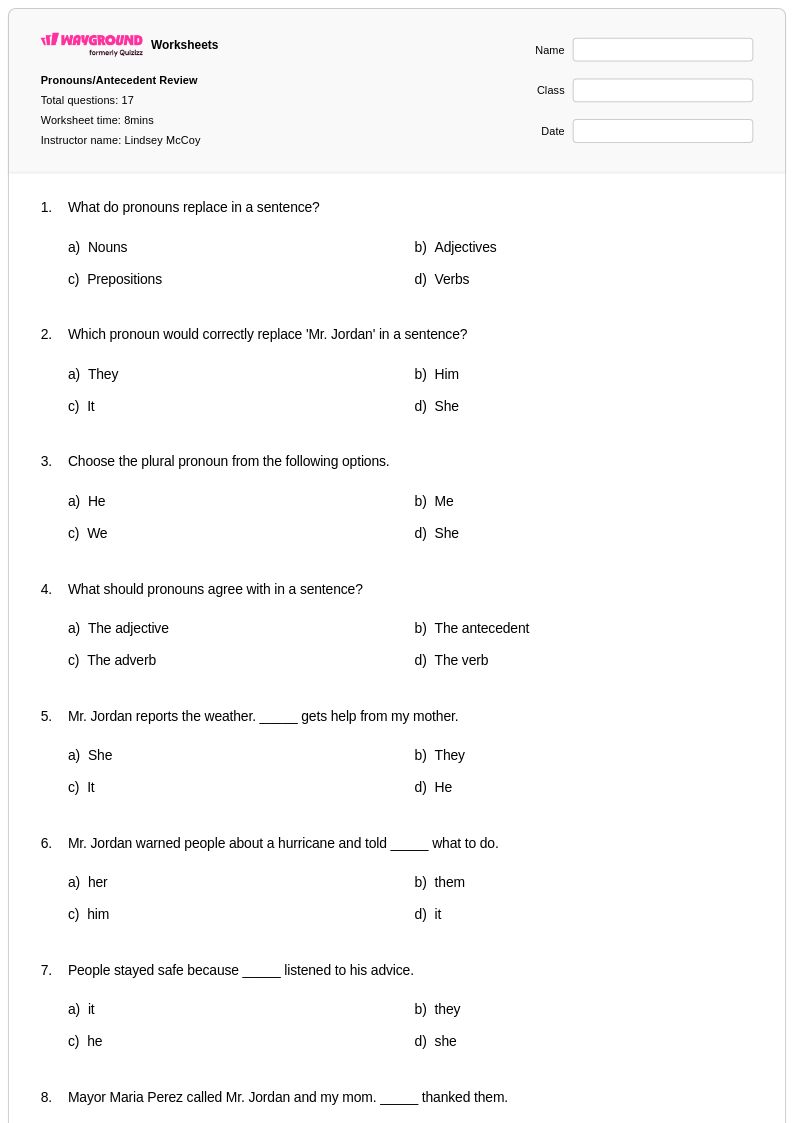
Antecedents worksheets for Class 3 students available through Wayground (formerly Quizizz) provide essential practice in identifying the nouns that pronouns replace within sentences. These carefully designed educational resources strengthen students' understanding of pronoun-antecedent relationships, helping them recognize how words like "he," "she," "it," and "they" connect back to specific people, places, or things mentioned earlier in text. The worksheets feature age-appropriate practice problems that guide third graders through the process of matching pronouns with their corresponding antecedents, building foundational grammar skills that improve both reading comprehension and writing clarity. Teachers can access these free printables in convenient pdf format, complete with answer keys that facilitate quick assessment and targeted feedback during grammar instruction.
Wayground (formerly Quizizz) empowers educators with millions of teacher-created antecedent worksheets that support comprehensive Class 3 pronoun instruction across diverse learning environments. The platform's robust search and filtering capabilities enable teachers to locate resources aligned with specific curriculum standards and student proficiency levels, while built-in differentiation tools allow for seamless customization based on individual learning needs. These antecedent practice materials are available in both printable and digital formats, including downloadable pdfs, making them adaptable for classroom activities, homework assignments, intervention sessions, and enrichment opportunities. The extensive collection supports strategic lesson planning by providing educators with varied approaches to teaching pronoun-antecedent relationships, from basic identification exercises to more complex sentence analysis activities that challenge students to apply their understanding in authentic reading and writing contexts.
FAQs
How do I teach pronoun-antecedent agreement to middle school students?
Start by ensuring students can reliably identify the noun a pronoun replaces before introducing agreement rules. Use sentence-level examples first, then move to paragraph-level texts where the antecedent and pronoun are separated by several words or clauses. Explicitly teach the three agreement categories: number (singular/plural), gender, and person. Color-coding pronouns and their antecedents during guided practice is a highly effective visual strategy before students work independently.
What exercises help students practice identifying antecedents?
Effective practice exercises include underlining the pronoun and drawing an arrow back to its antecedent, rewriting sentences to correct faulty pronoun-antecedent agreement, and identifying unclear or ambiguous antecedent references. Varied sentence structures are important because students need to recognize antecedents that appear several clauses before the pronoun, not just immediately before it. Mixing identification tasks with correction tasks builds both recognition and application skills.
What mistakes do students commonly make with pronoun antecedents?
The most common error is misidentifying the nearest noun as the antecedent rather than the noun the pronoun logically refers to. Students also frequently make agreement errors with indefinite pronoun antecedents such as 'everyone' or 'each', incorrectly treating them as plural. Ambiguous antecedent references, where a pronoun could plausibly refer to more than one noun in a sentence, are another frequent stumbling block. Targeting these three error types directly in practice materials produces the fastest improvement.
How do I use antecedent worksheets to address unclear pronoun references specifically?
Look for worksheets that include sentences with ambiguous antecedents, where a pronoun like 'they' or 'it' could refer to more than one noun. Have students first flag the ambiguity, then rewrite the sentence to eliminate it, which builds both analytical and revision skills. This two-step approach is more effective than correction-only tasks because it requires students to articulate why the reference is unclear before fixing it.
How do I use Wayground's antecedent worksheets in my classroom?
Wayground's antecedent worksheets are available as printable PDFs for traditional classroom use and in digital formats for technology-integrated learning environments, including the option to host them as a quiz directly on Wayground. Each worksheet includes a complete answer key, making them suitable for independent practice, homework, or teacher-led review. The digital format is particularly useful for assigning targeted remediation to individual students while the rest of the class moves forward, and Wayground's accommodation settings allow teachers to enable read aloud, extended time, or reduced answer choices for students who need additional support.
How can I differentiate antecedent practice for students at different skill levels?
For students who are still building foundational skills, begin with short, simple sentences where the antecedent immediately precedes the pronoun, then gradually introduce compound subjects and multi-clause sentences as confidence grows. Advanced students benefit from working with paragraph-length texts where they must track antecedents across multiple sentences. On Wayground, teachers can apply individual accommodations such as reduced answer choices or read aloud to specific students without affecting the experience of the rest of the class, making differentiation manageable within a single assignment.