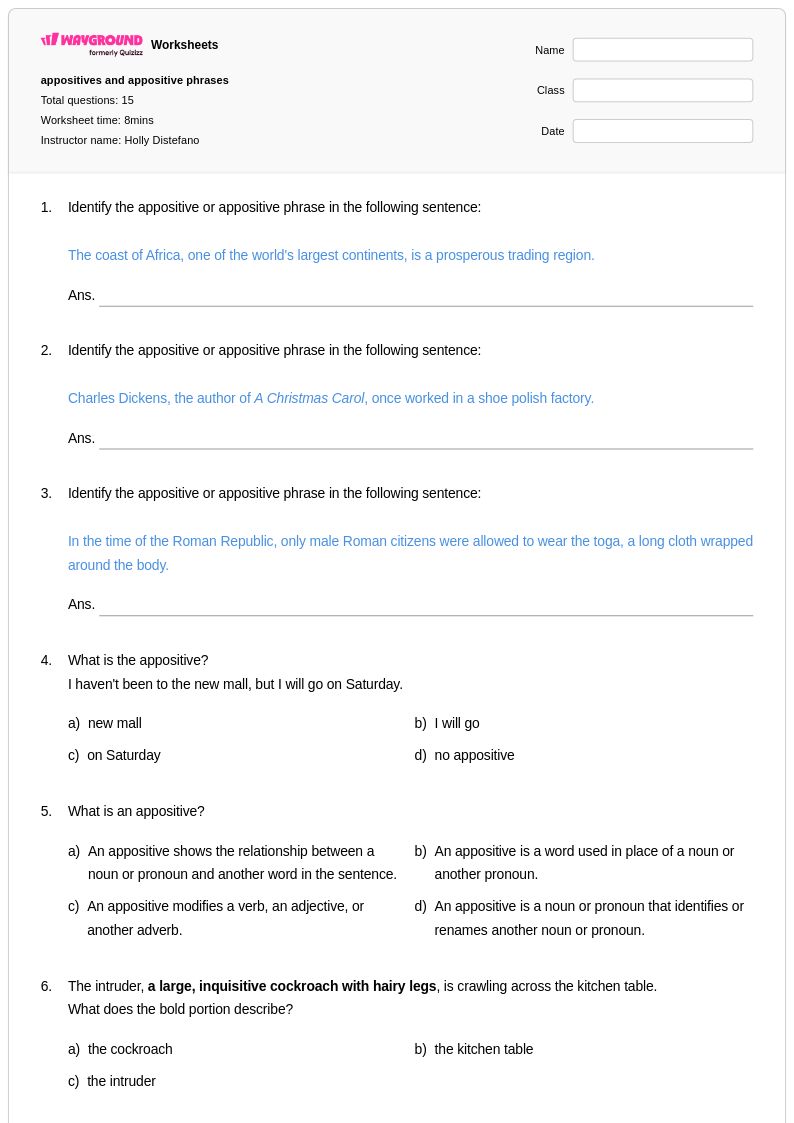
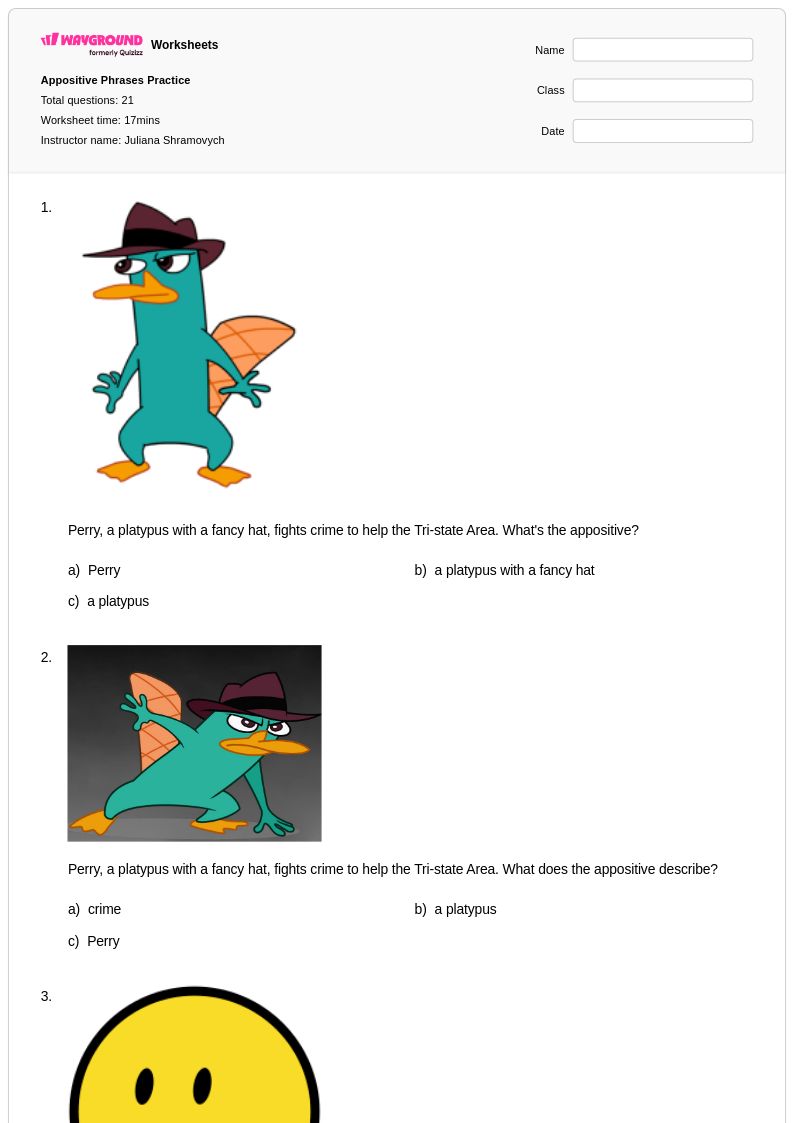
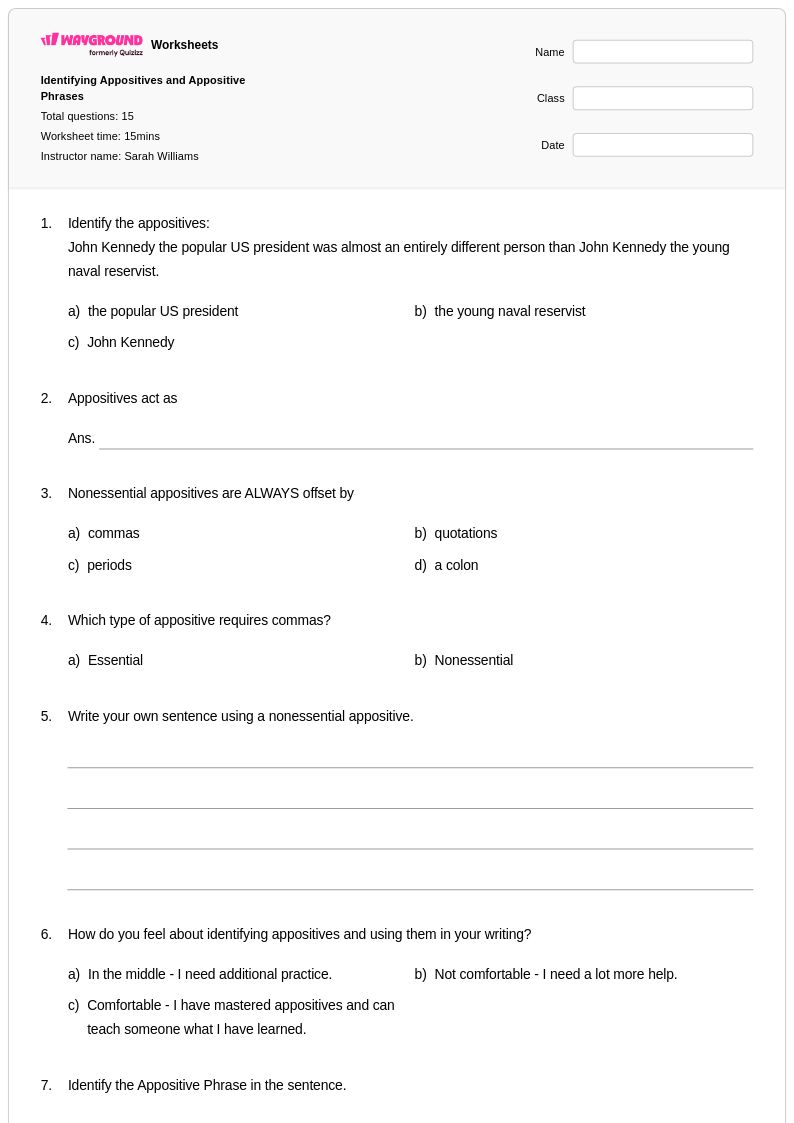
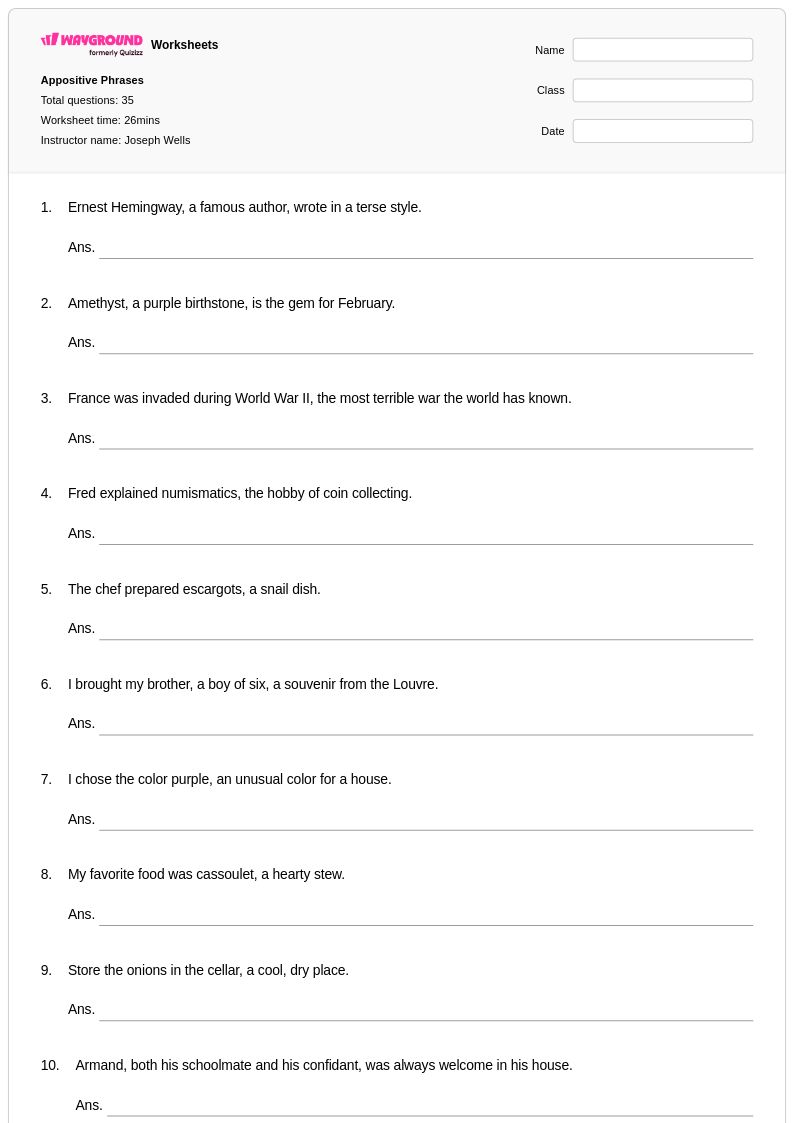
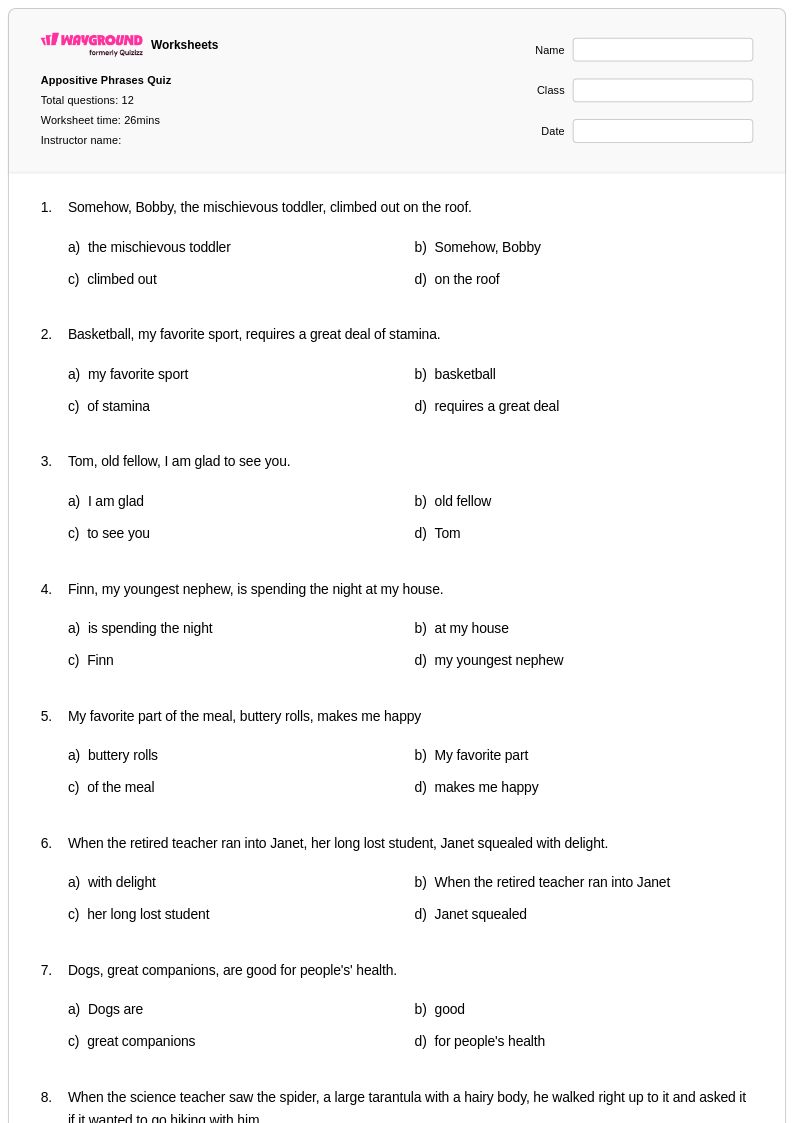
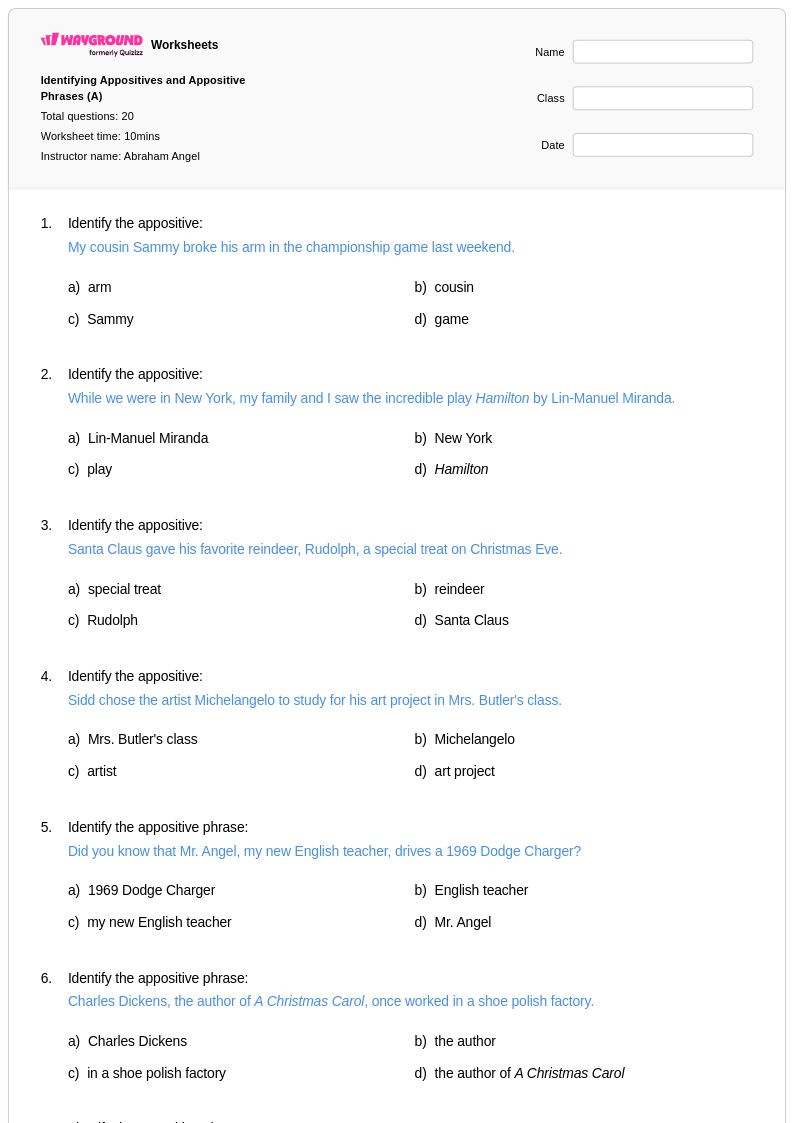
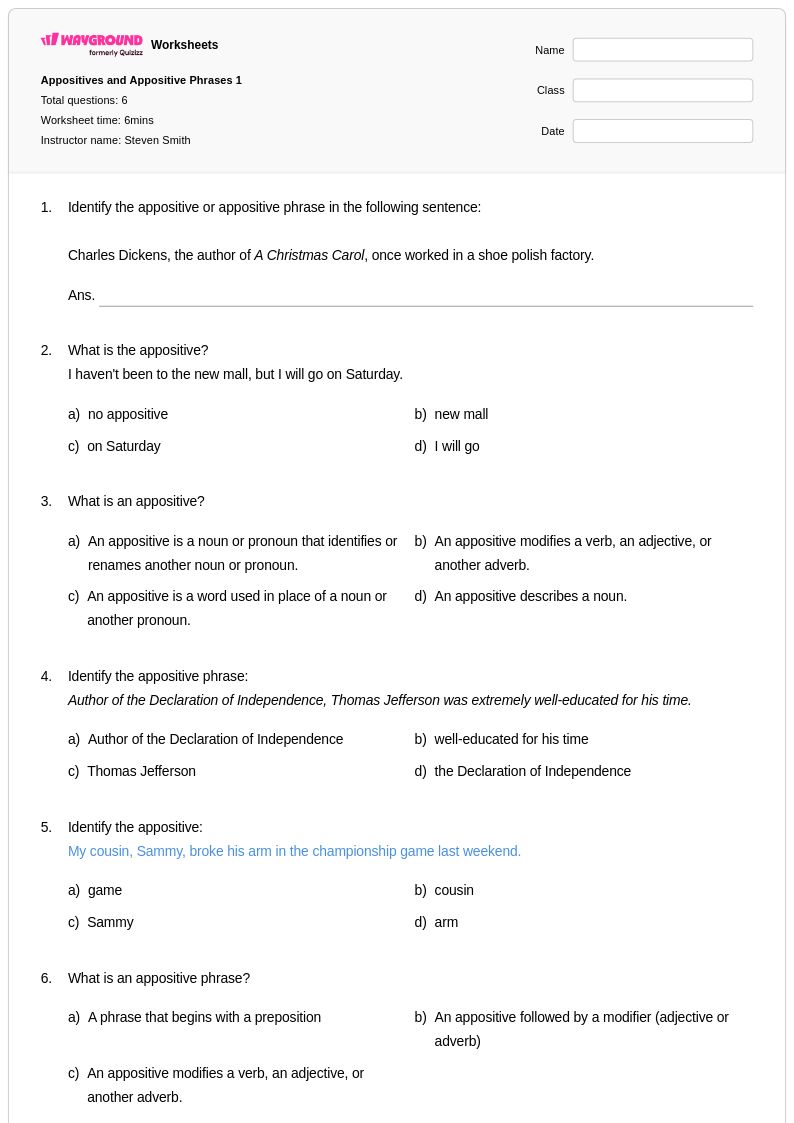
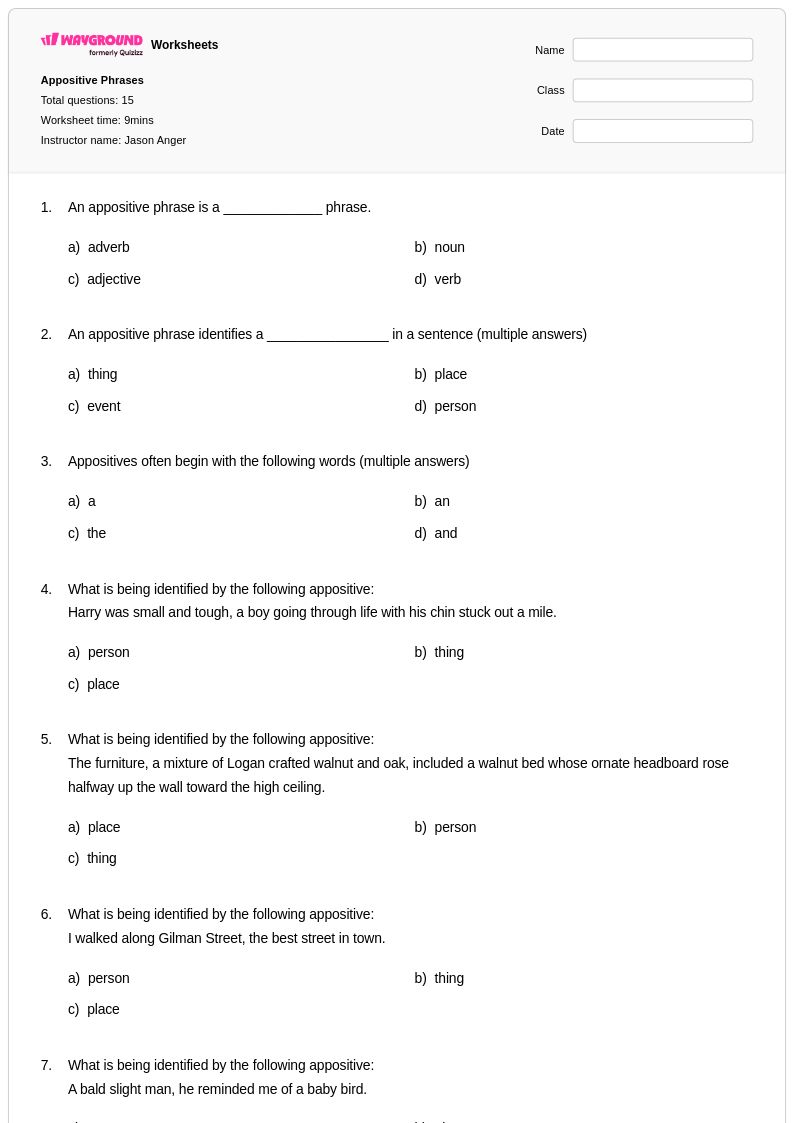
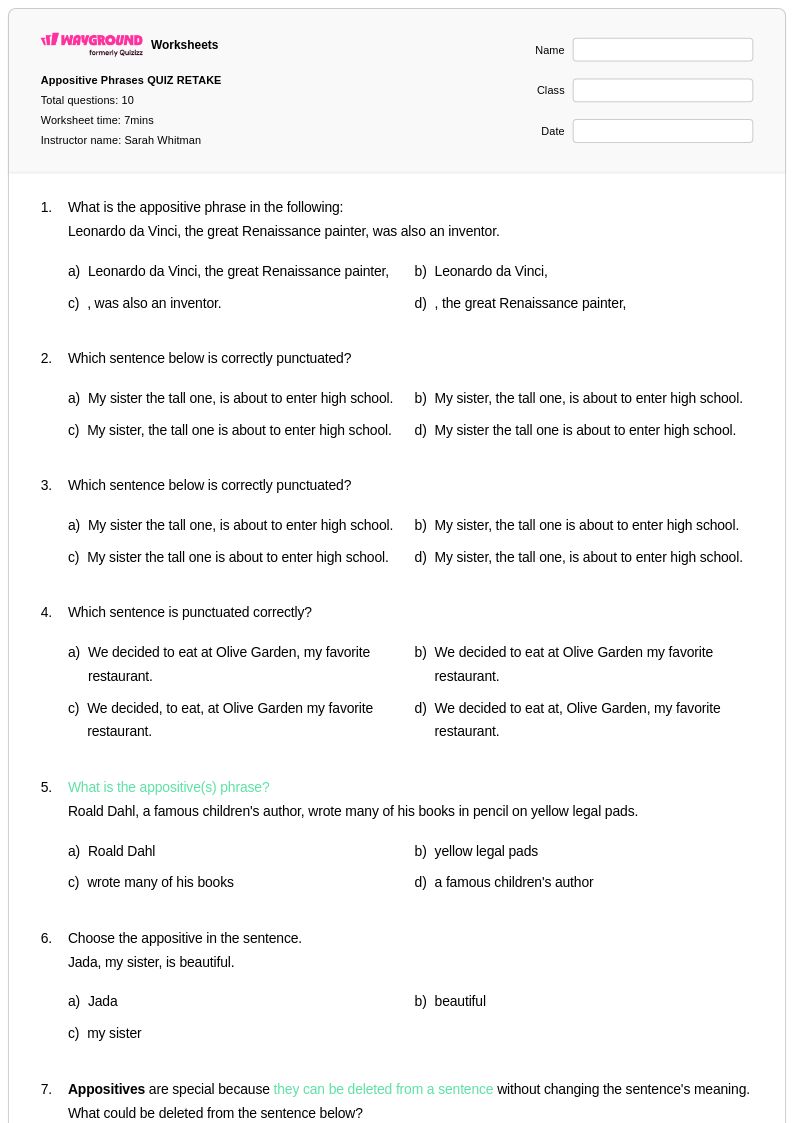
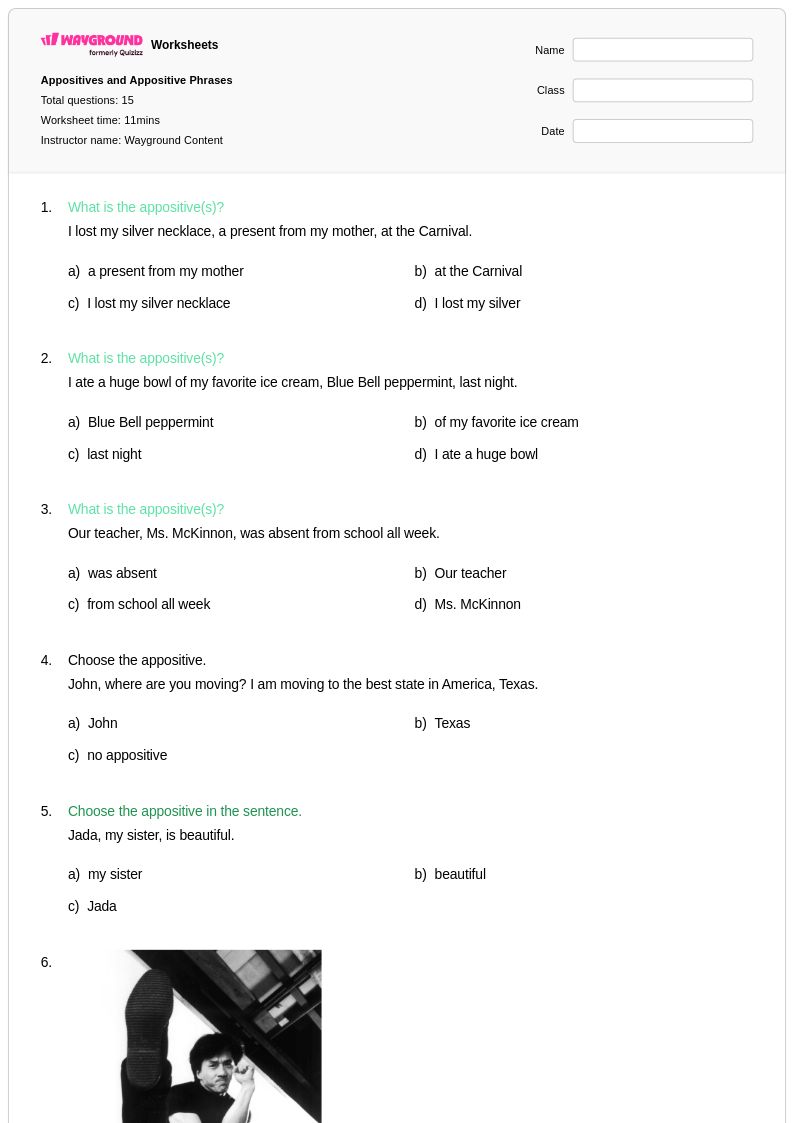
Master appositive phrases with Wayground's comprehensive collection of free worksheets and printables that help students practice identifying, punctuating, and using these descriptive grammar elements through engaging exercises with complete answer keys.
Appositive phrases represent a crucial grammatical concept that enhances writing sophistication by allowing students to combine sentences and add descriptive detail in a concise, elegant manner. Wayground (formerly Quizizz) offers comprehensive worksheets designed to help learners master the identification, construction, and punctuation of appositive phrases across various sentence structures. These carefully crafted practice problems guide students through recognizing essential and nonessential appositives, understanding proper comma usage, and applying these grammatical tools to create more mature, varied sentence patterns. The free printables include detailed answer keys that enable independent study and self-assessment, while the pdf format ensures convenient access for both classroom instruction and homework assignments. Students develop critical skills in sentence analysis, punctuation mechanics, and advanced writing techniques through systematic practice with these targeted grammatical exercises.
Wayground (formerly Quizizz) empowers educators with millions of teacher-created resources specifically focused on appositive phrases and related grammatical concepts, providing robust search and filtering capabilities that streamline lesson planning and resource selection. The platform's standards alignment features ensure that worksheet collections meet curriculum requirements while offering differentiation tools that accommodate diverse learning needs and proficiency levels. Teachers can customize existing materials or create entirely new assessments, accessing both printable and digital formats including downloadable pdf versions for maximum classroom flexibility. These comprehensive resources support effective remediation for struggling students, provide enrichment opportunities for advanced learners, and deliver consistent skill practice that reinforces proper appositive phrase usage across various writing contexts, ultimately helping educators build stronger grammatical foundations in their students' academic writing development.
FAQs
How do I teach appositive phrases to students?
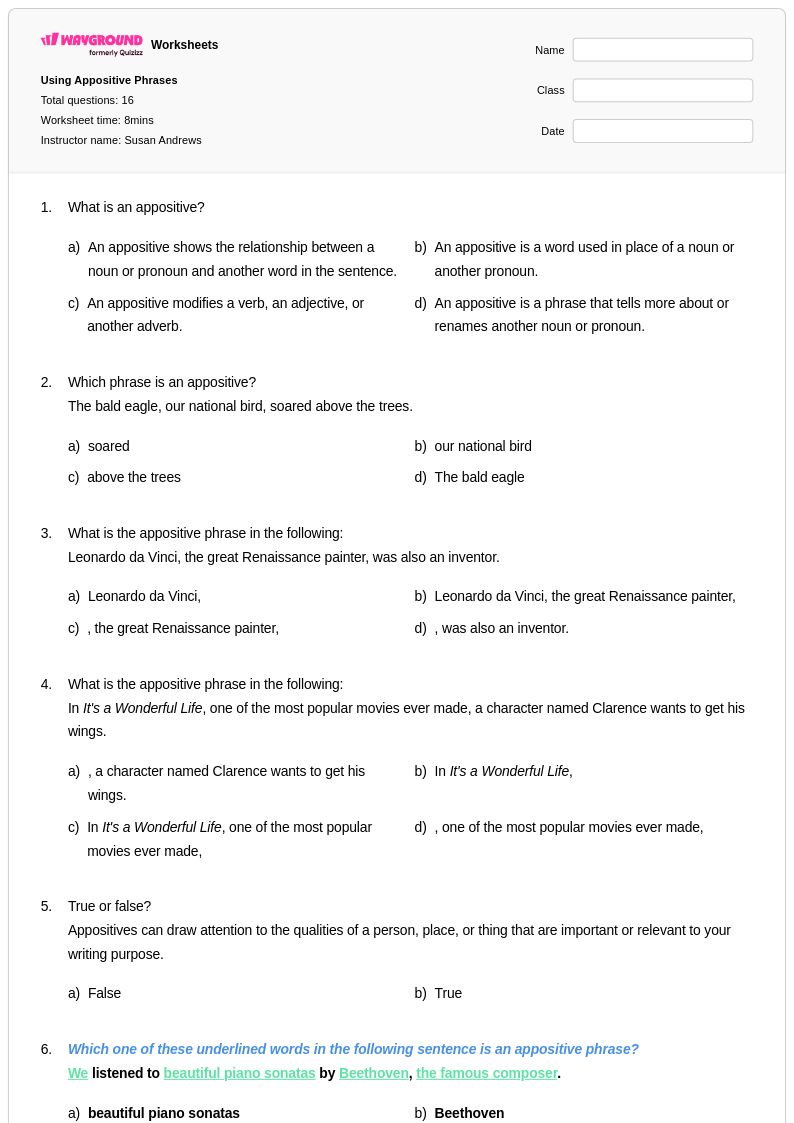
Start by showing students how an appositive renames or describes the noun directly beside it, then contrast essential appositives (no commas) with nonessential appositives (set off by commas) using clear mentor sentences. A reliable sequence is: identify appositives in published writing, analyze their function, then have students combine two short sentences into one using an appositive phrase. Anchoring instruction in real writing samples helps students see appositives as a stylistic tool, not just a grammar rule.
What exercises help students practice appositive phrases?
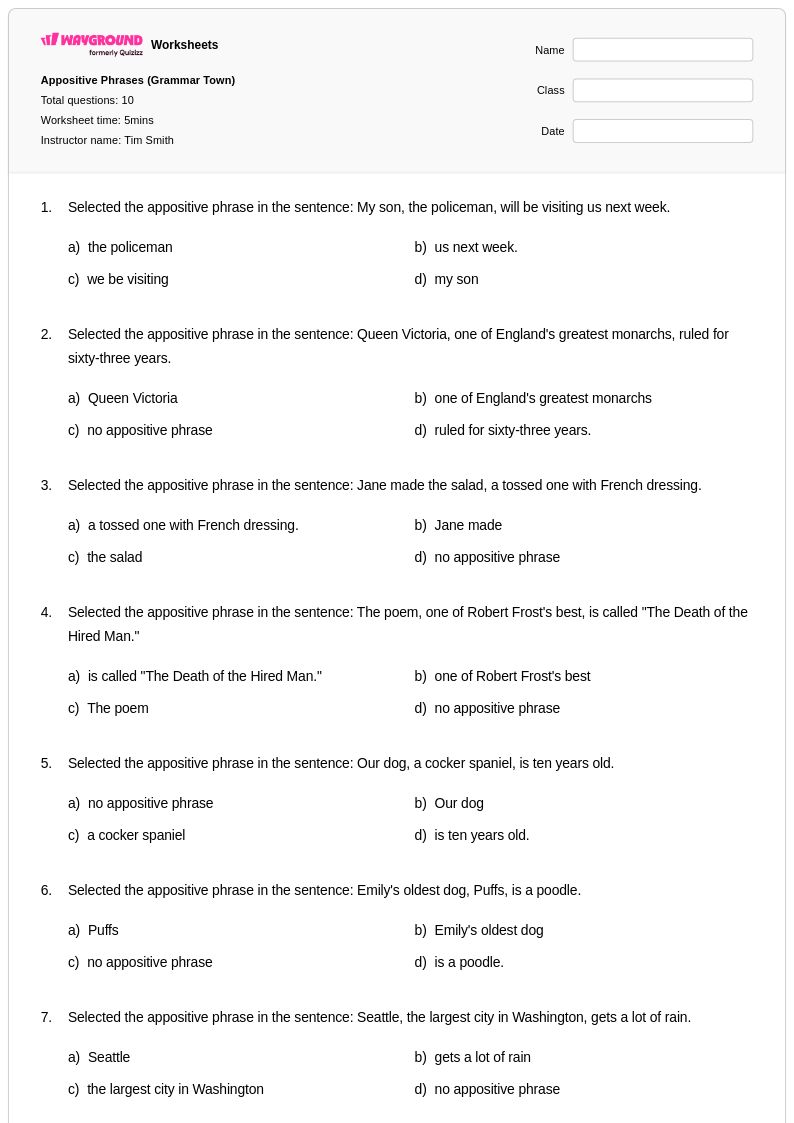
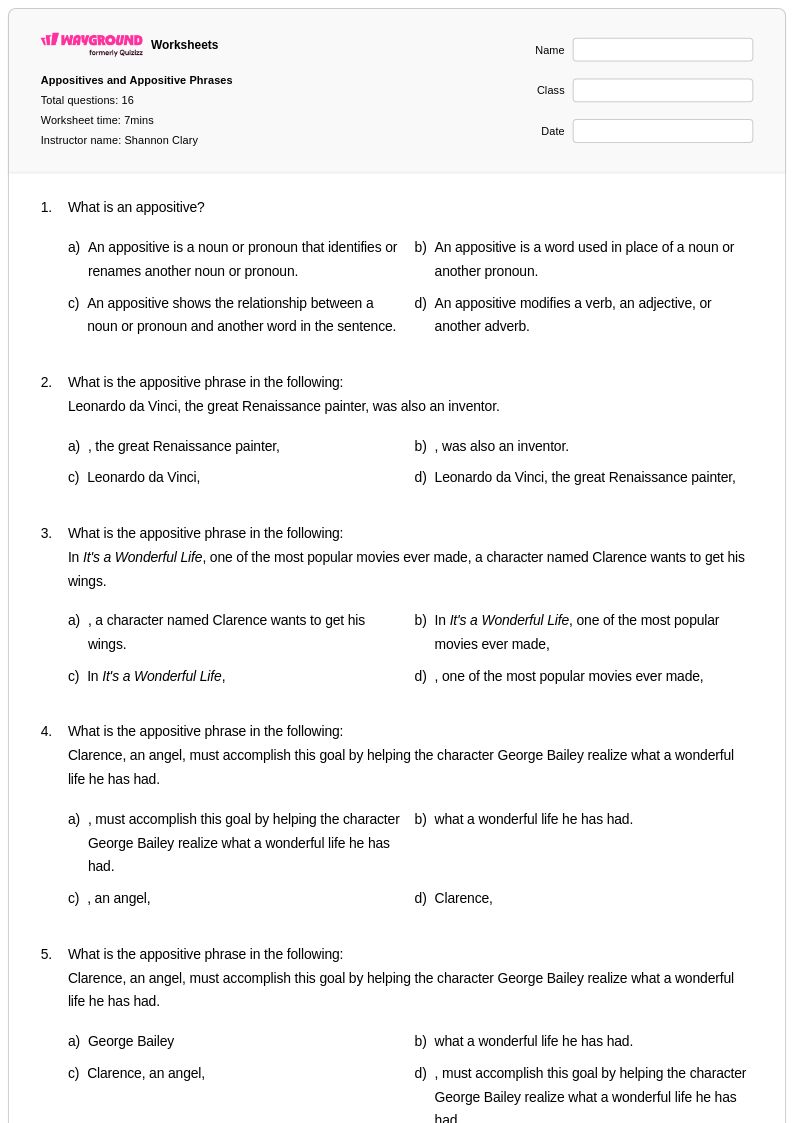
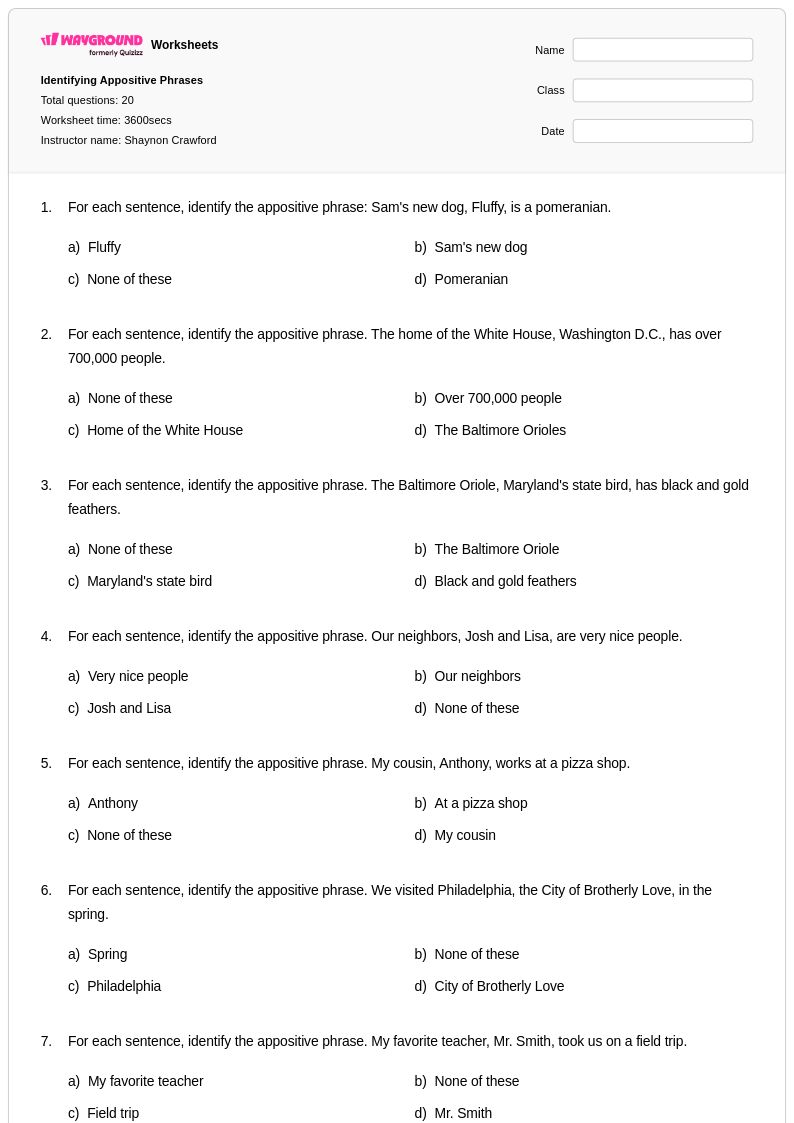
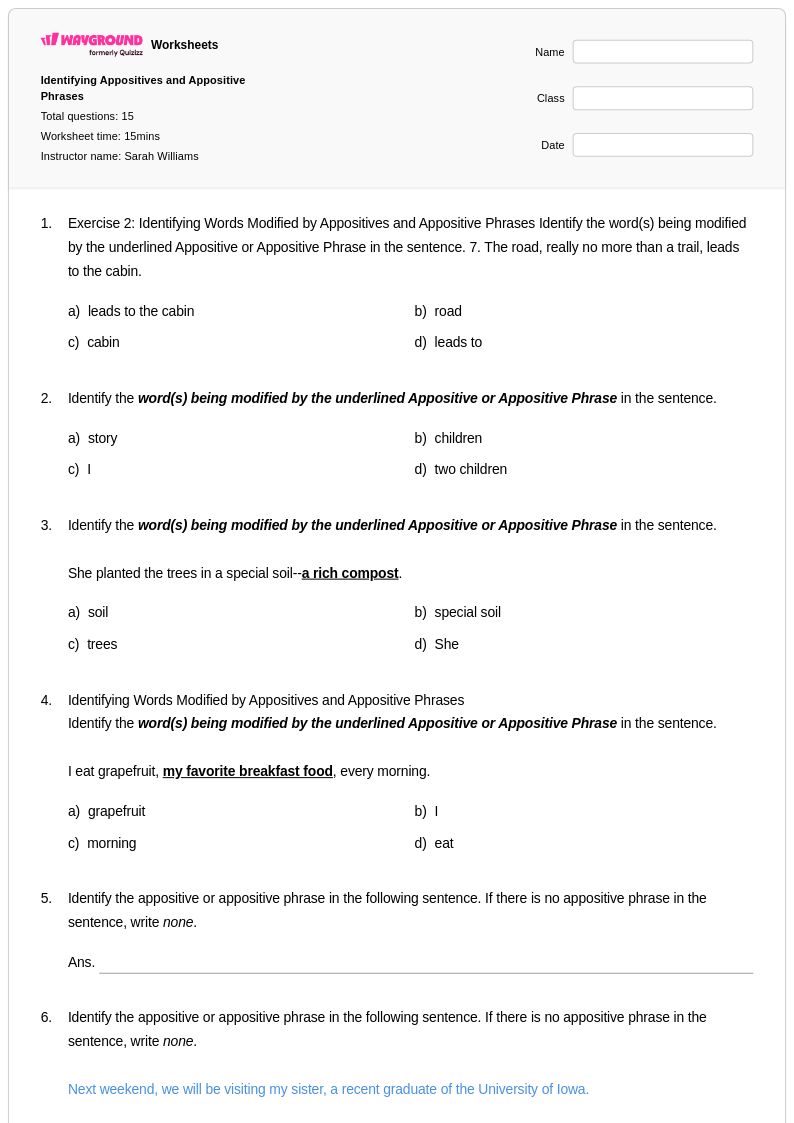
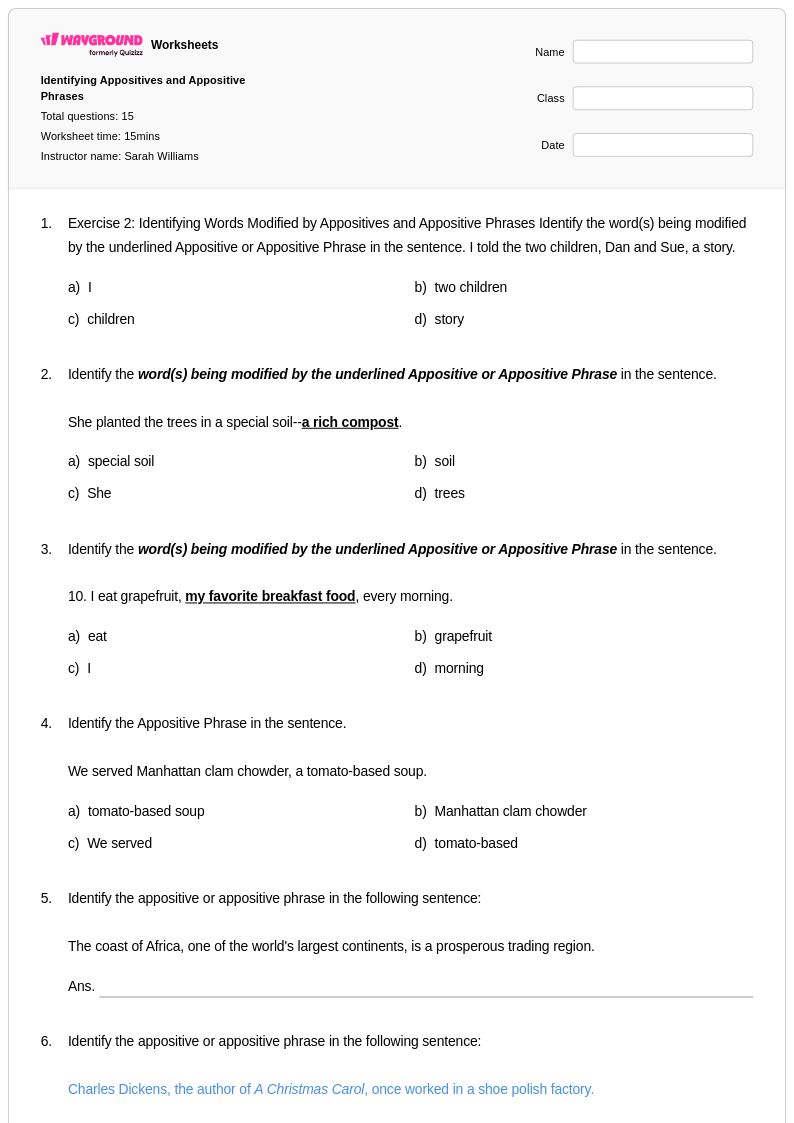
The most effective practice moves from recognition to production. Begin with identification tasks where students underline the appositive phrase and circle the noun it renames, then add comma-placement exercises that require distinguishing essential from nonessential appositives. Sentence-combining tasks, where students merge two related sentences into one using an appositive, build both grammatical accuracy and writing fluency.
What mistakes do students commonly make with appositive phrases?
The most frequent error is comma misuse: students either omit commas around nonessential appositives or incorrectly add commas around essential ones. A second common mistake is confusing the appositive with an adjective clause, especially when both follow a noun. Students also frequently misidentify the noun being renamed, which leads to sentences where the appositive logically refers to the wrong word.
How do I teach students to punctuate appositive phrases correctly?
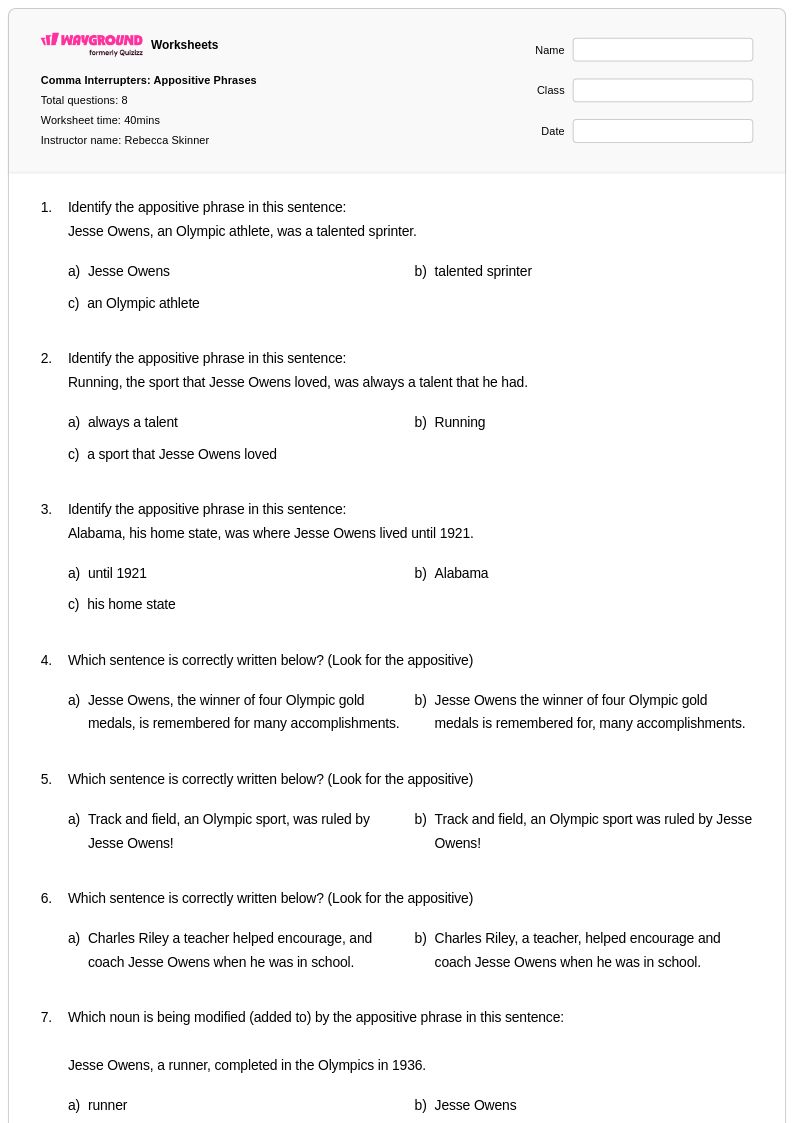
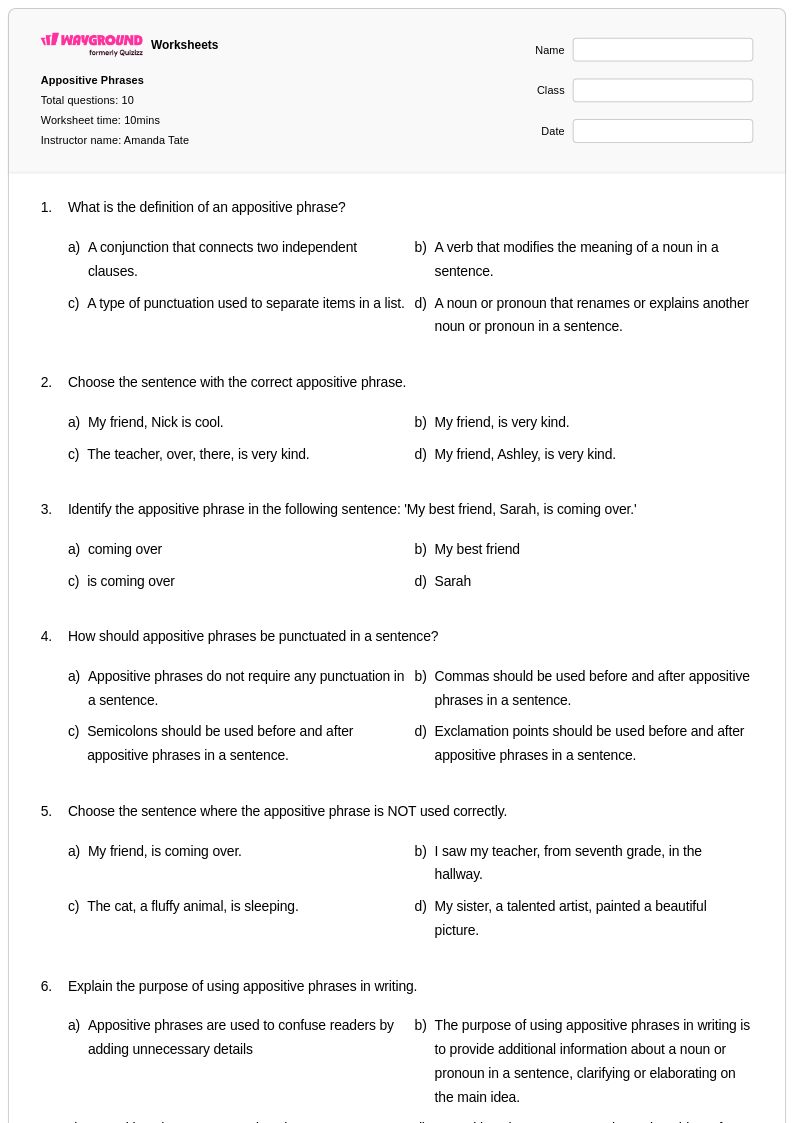
Teach the essential vs. nonessential distinction as the gateway to correct punctuation. An essential appositive restricts meaning and needs no commas (e.g., 'my brother Jake'), while a nonessential appositive adds extra information and requires commas (e.g., 'my brother, Jake, called'). A practical test is to remove the appositive: if the sentence loses critical meaning, it is essential; if it still makes sense without it, commas are required.
How can I use Wayground's appositive phrase worksheets in my classroom?
Wayground's appositive phrase worksheets are available as printable PDFs, making them easy to distribute for in-class practice or homework, and in digital formats suitable for technology-integrated or hybrid learning environments. You can also host them as a quiz directly on Wayground, which allows for instant student feedback. All worksheets include complete answer keys, so they work equally well for teacher-led instruction, independent practice, or self-paced review.
How do I differentiate appositive phrase instruction for students at different levels?
For struggling students, limit initial practice to nonessential appositives with a clear noun-rename structure before introducing the essential vs. nonessential distinction. Advanced learners can work on stacking appositives, embedding them mid-sentence, or using them in multi-clause constructions. On Wayground, individual accommodations such as read aloud, reduced answer choices, and extended time can be assigned per student so that differentiation is built into the digital worksheet experience without disrupting the rest of the class.