Free Printable Author's Claim Worksheets for Class 12
Enhance Class 12 students' critical reading skills with Wayground's free printable worksheets focused on identifying and analyzing author's claims, complete with practice problems and answer keys in PDF format.
Explore printable Author's Claim worksheets for Class 12
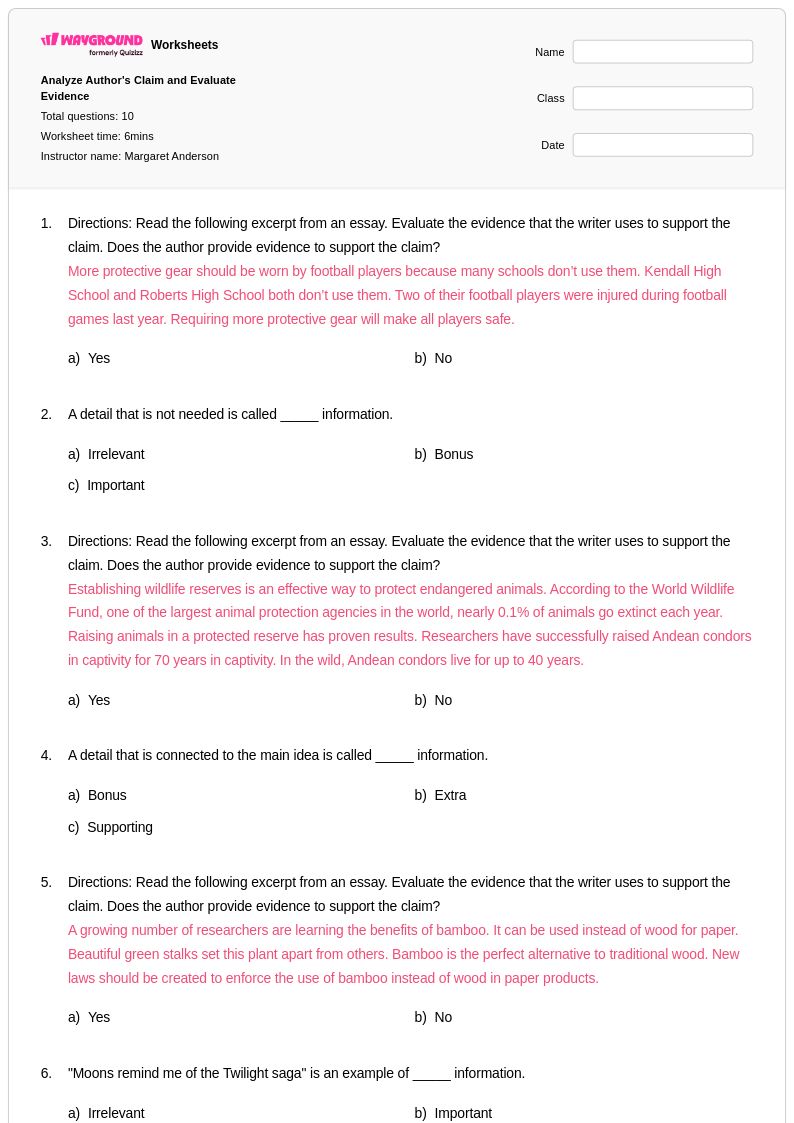
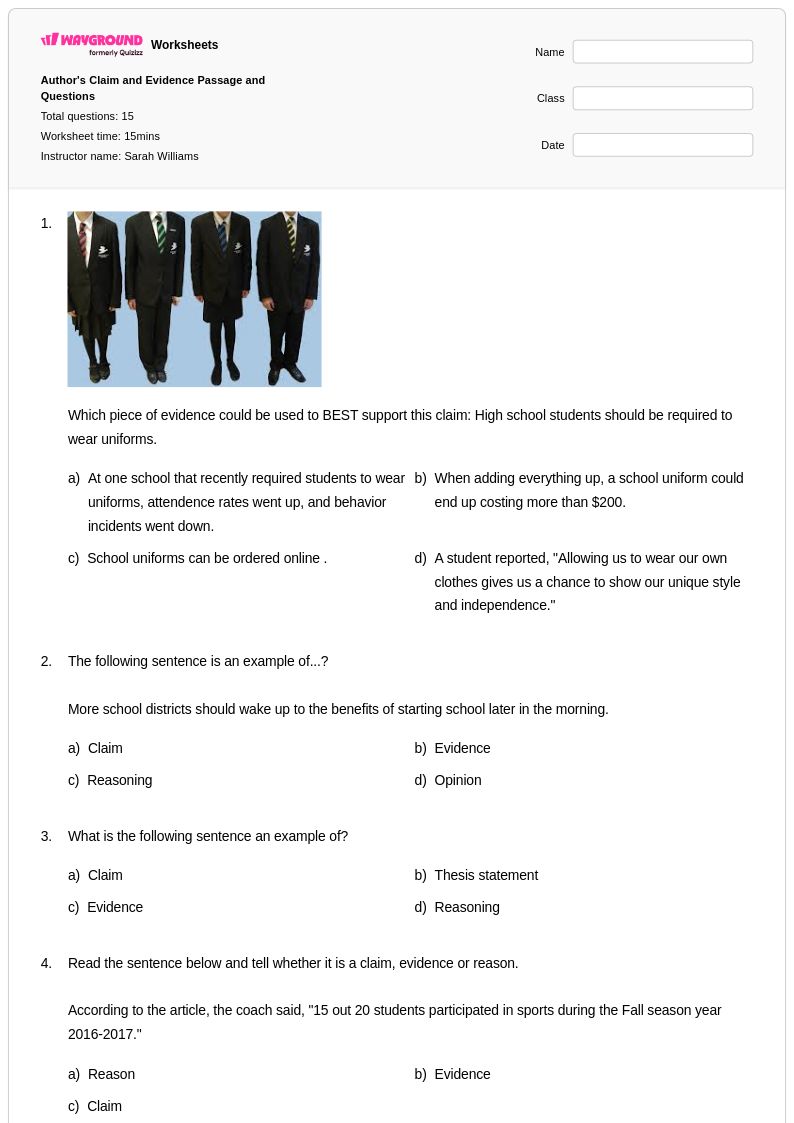
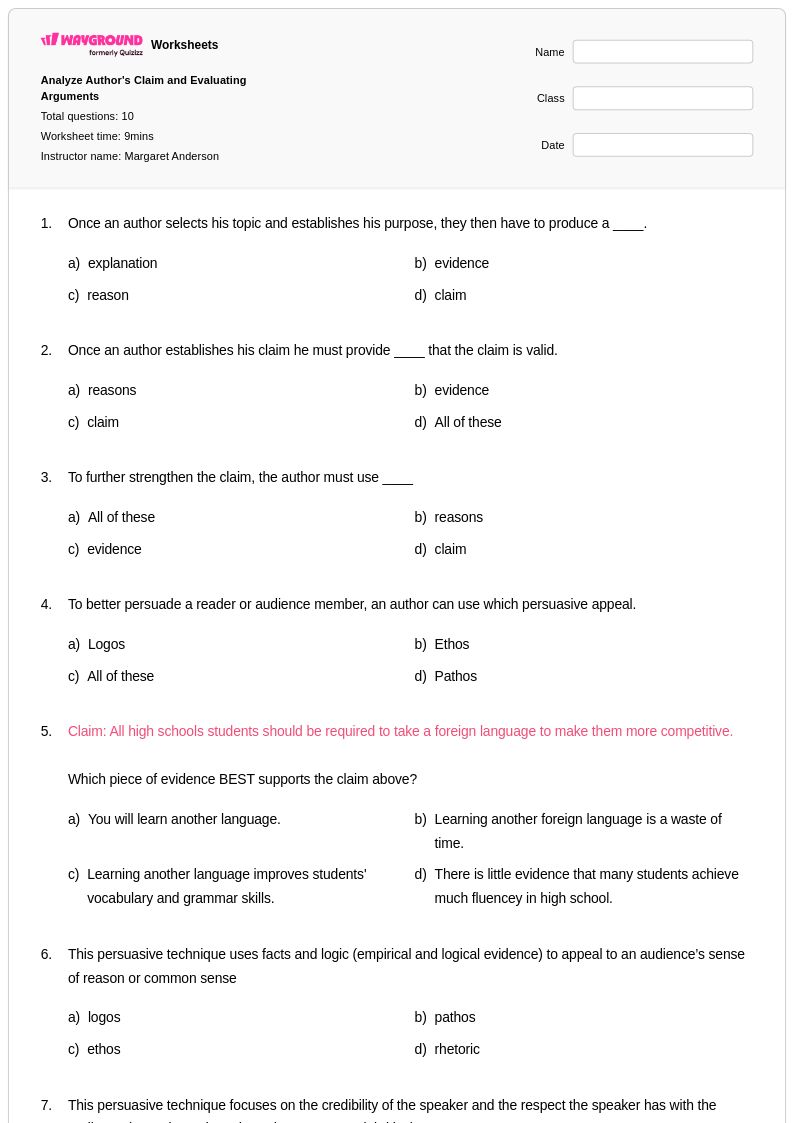
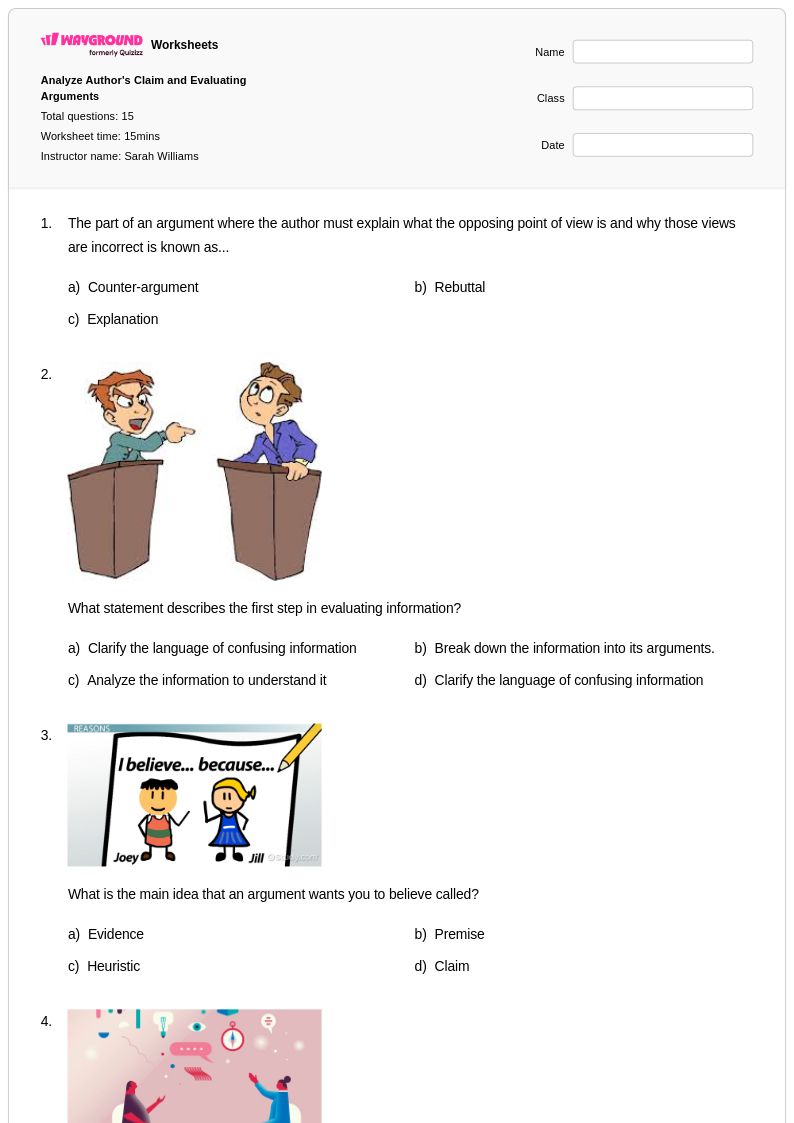
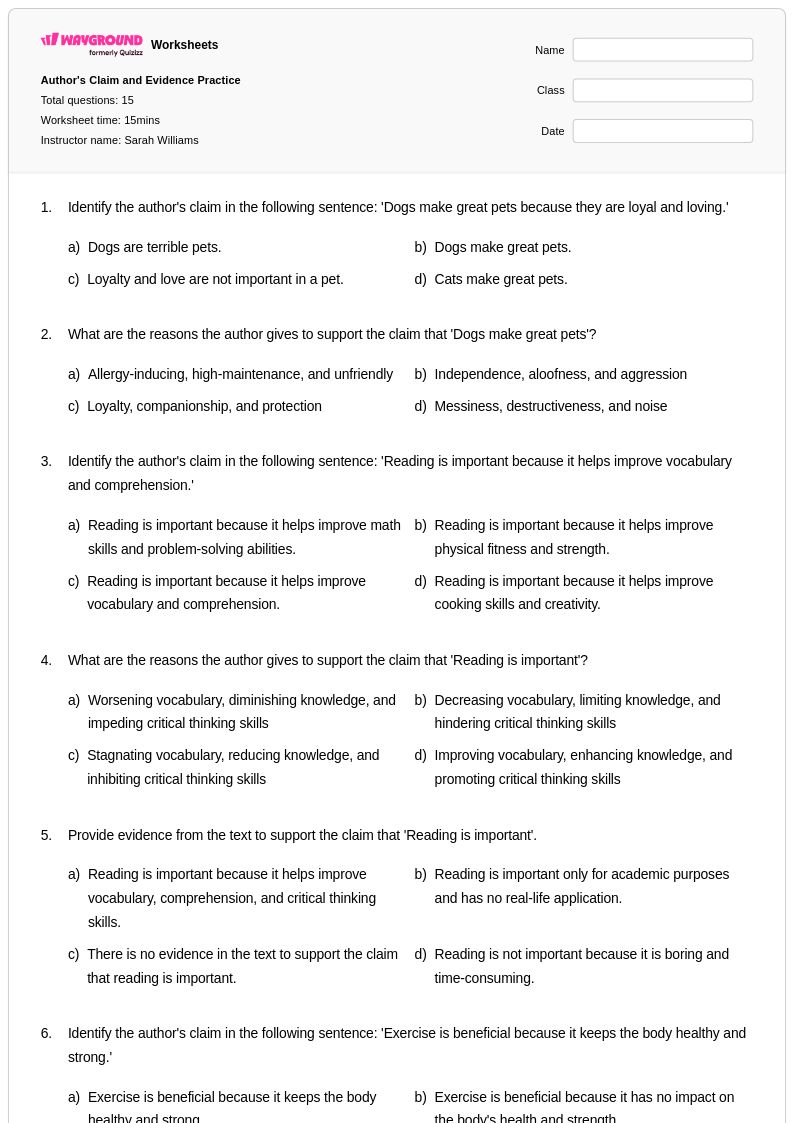
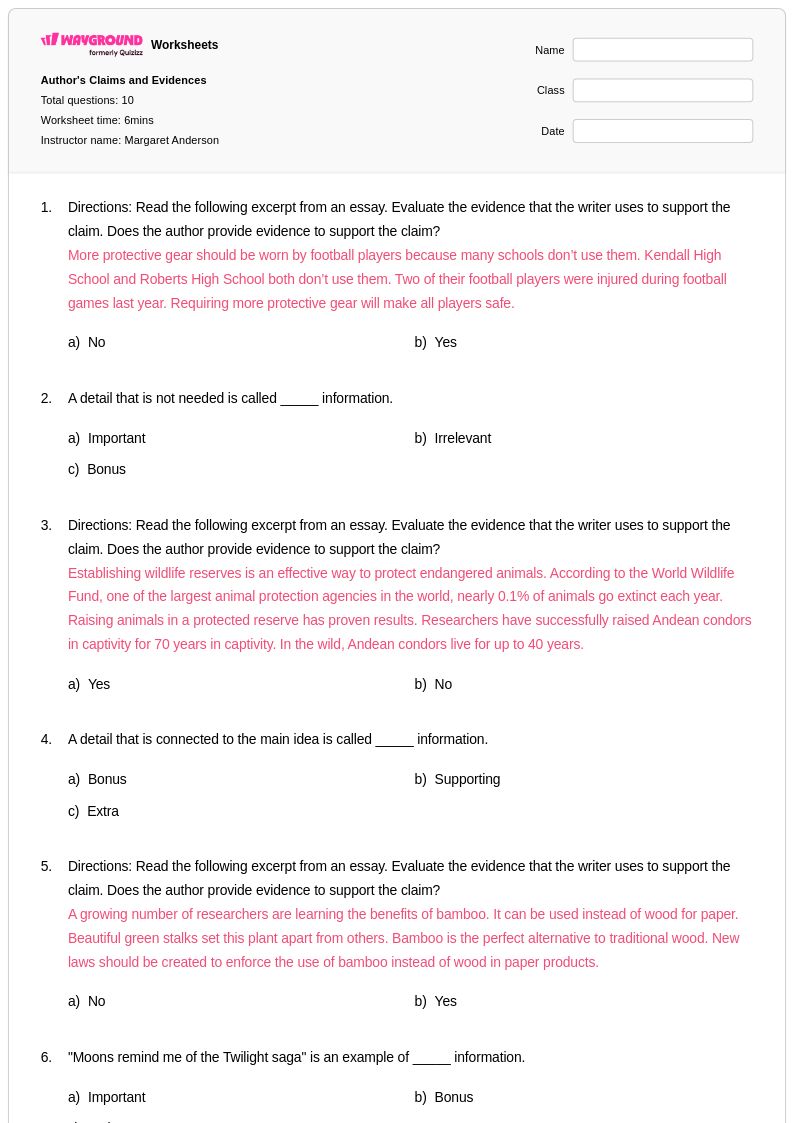
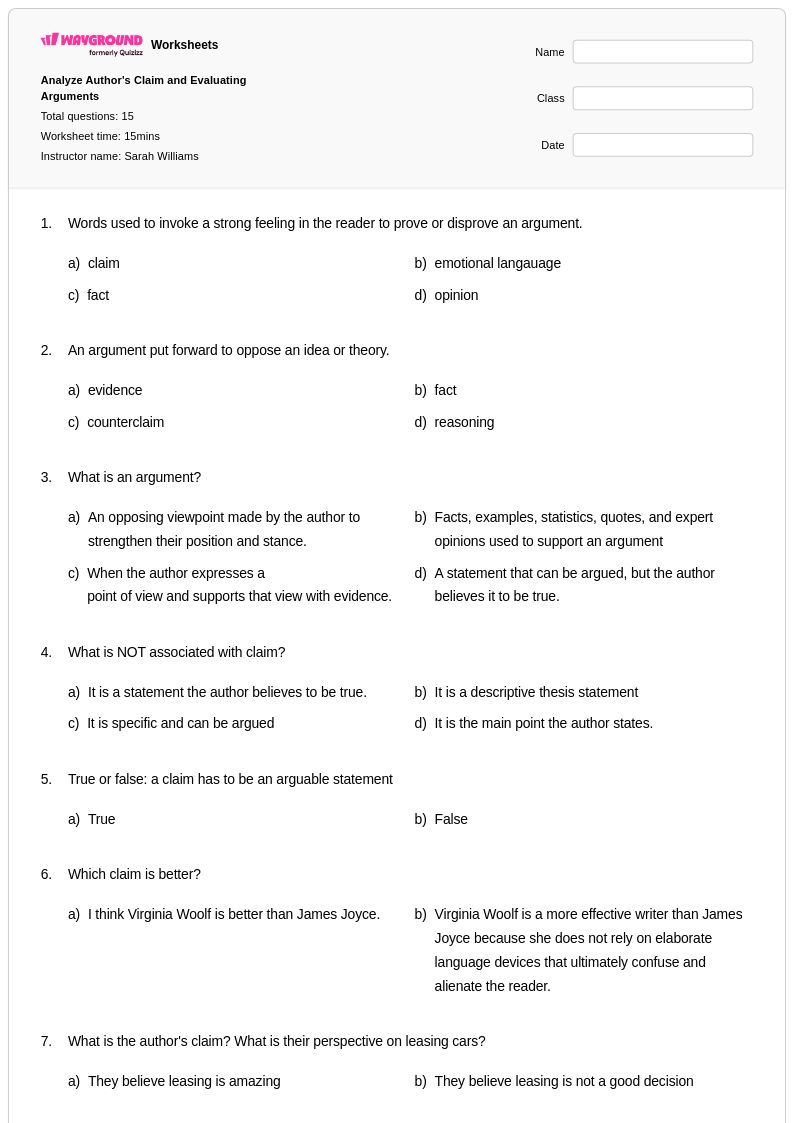
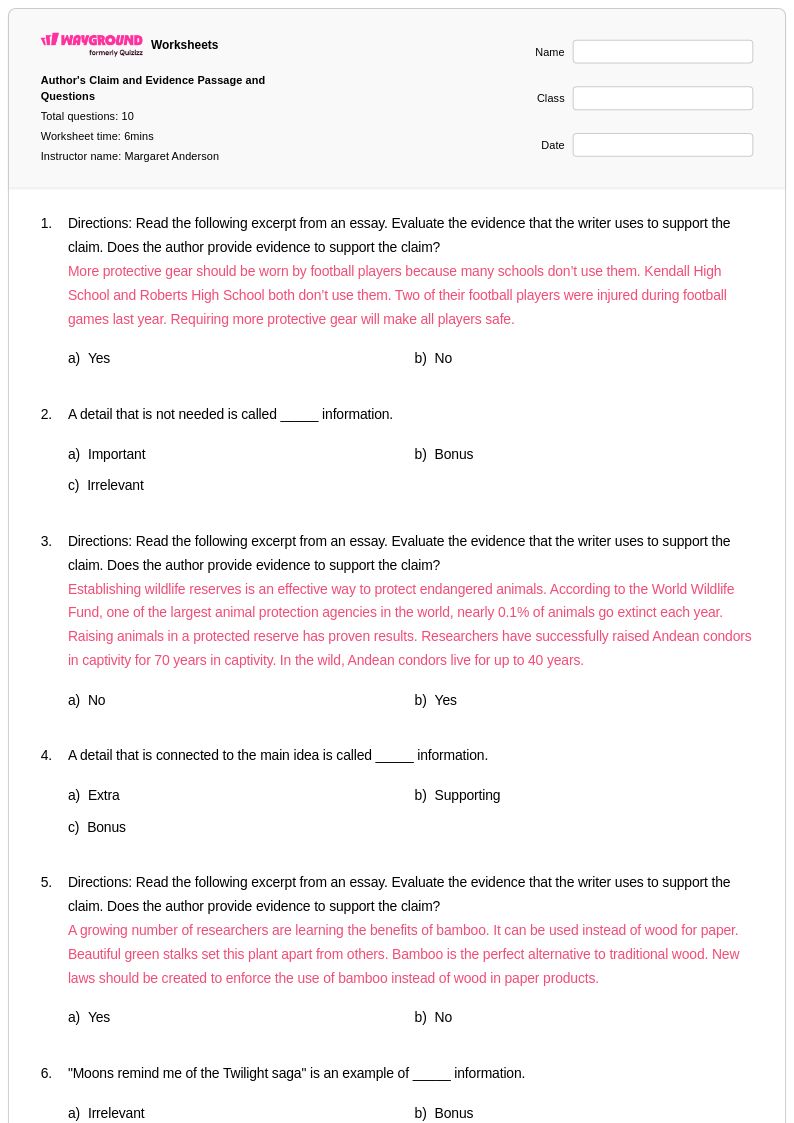
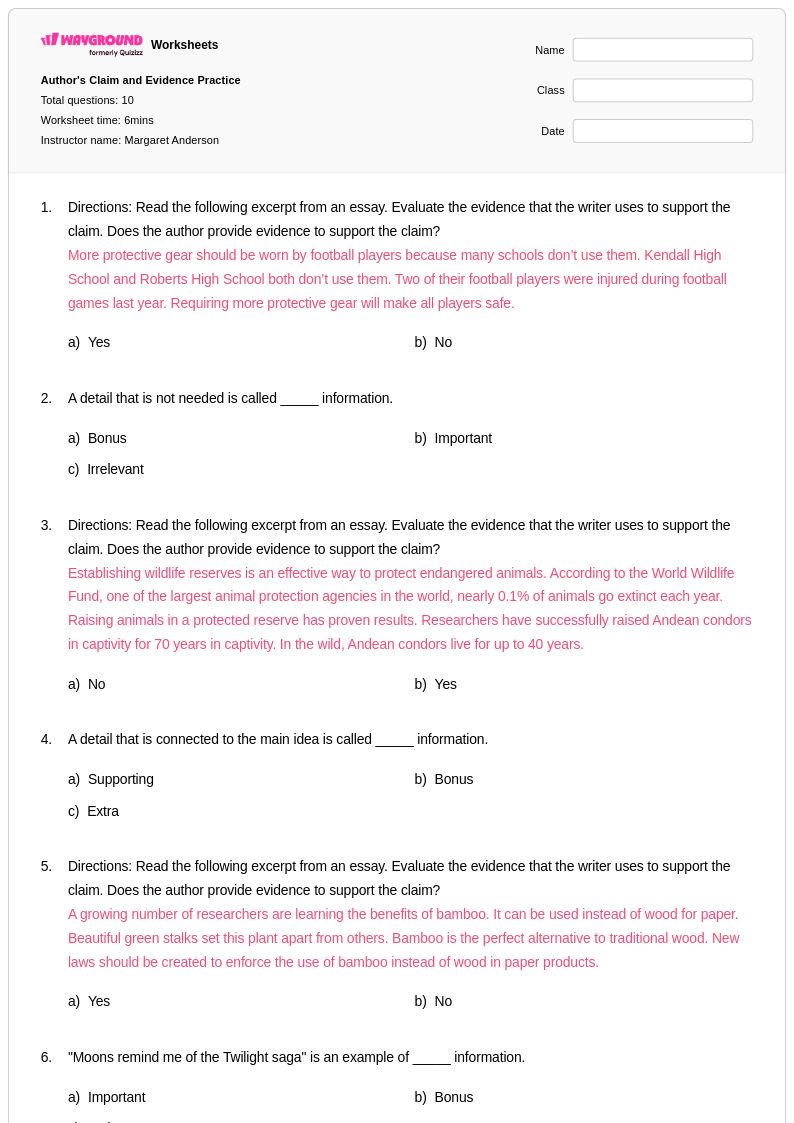
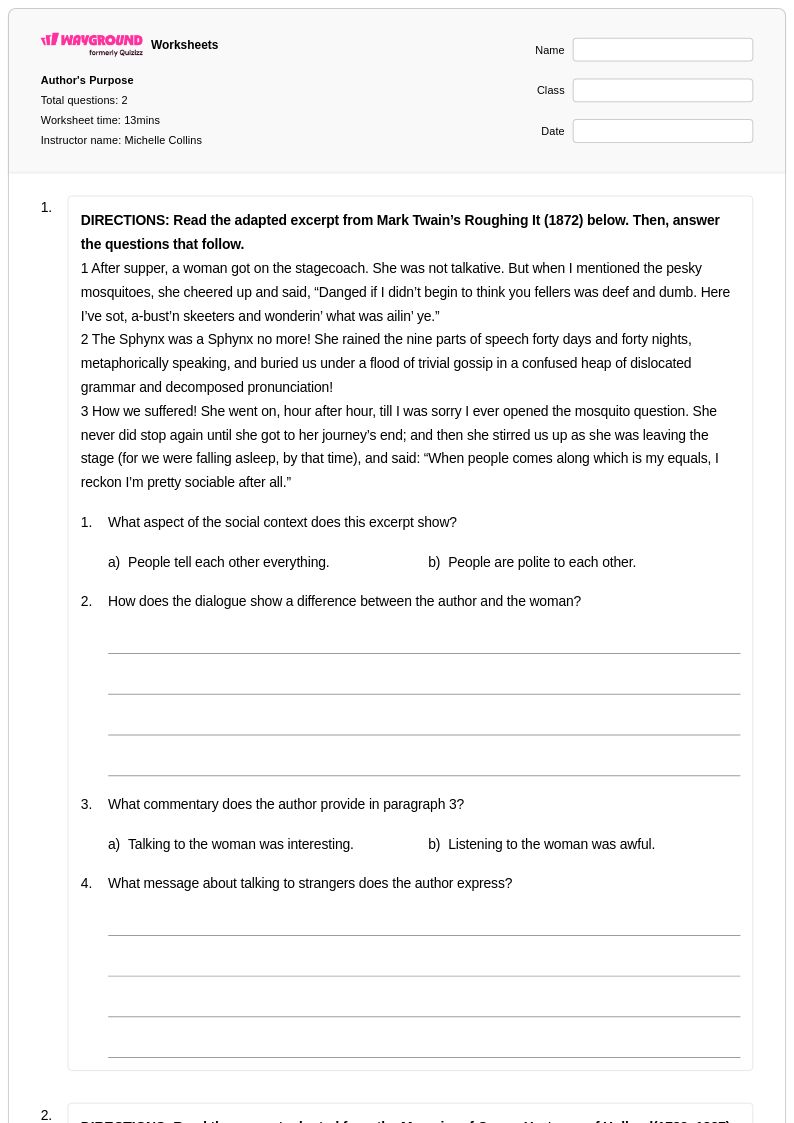
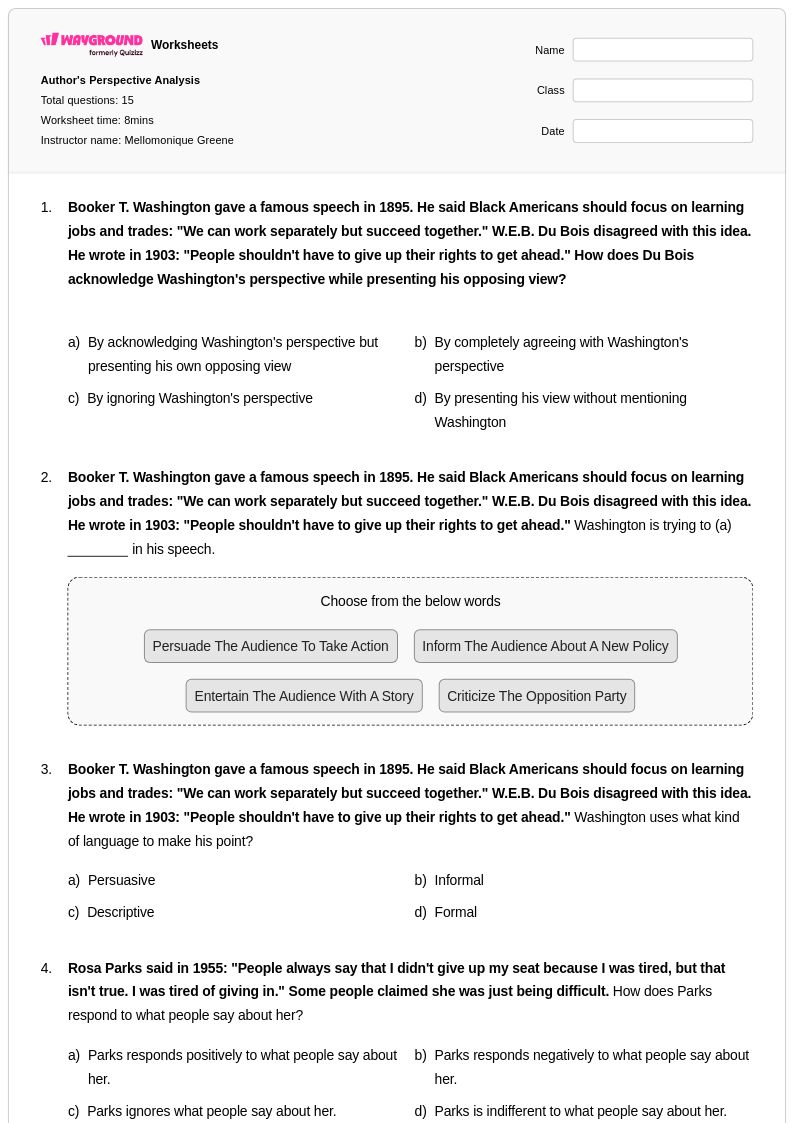
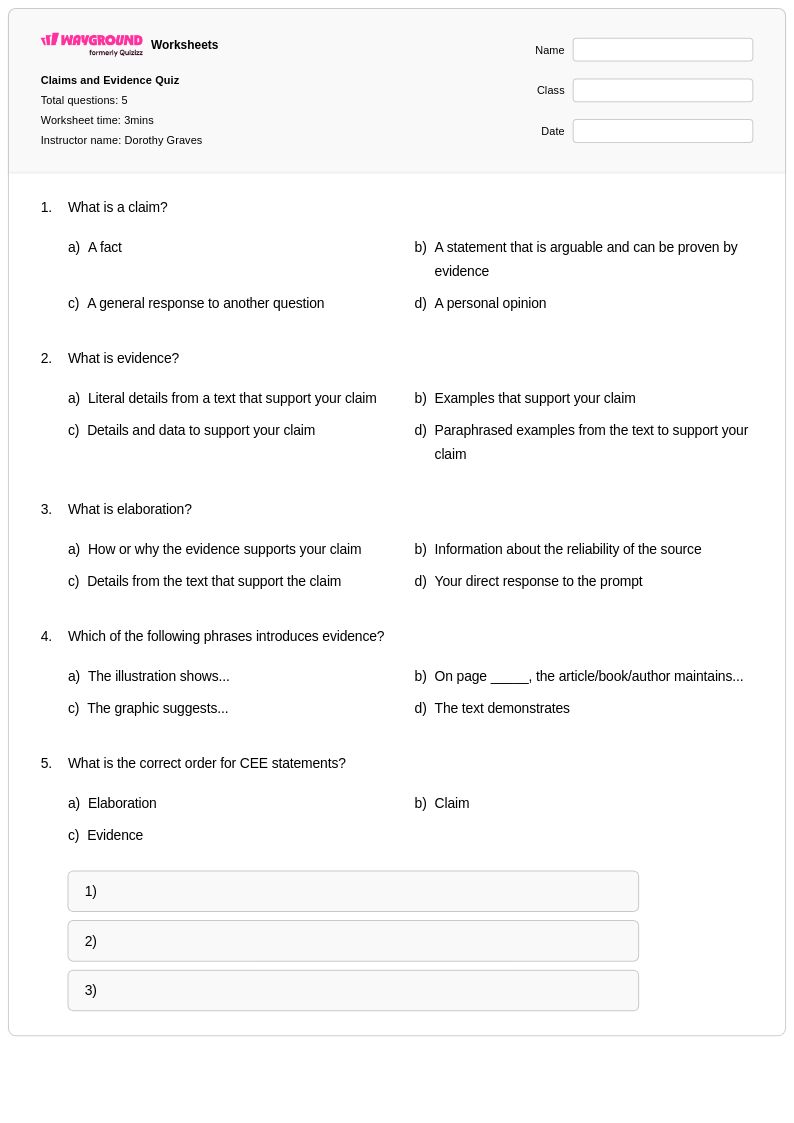
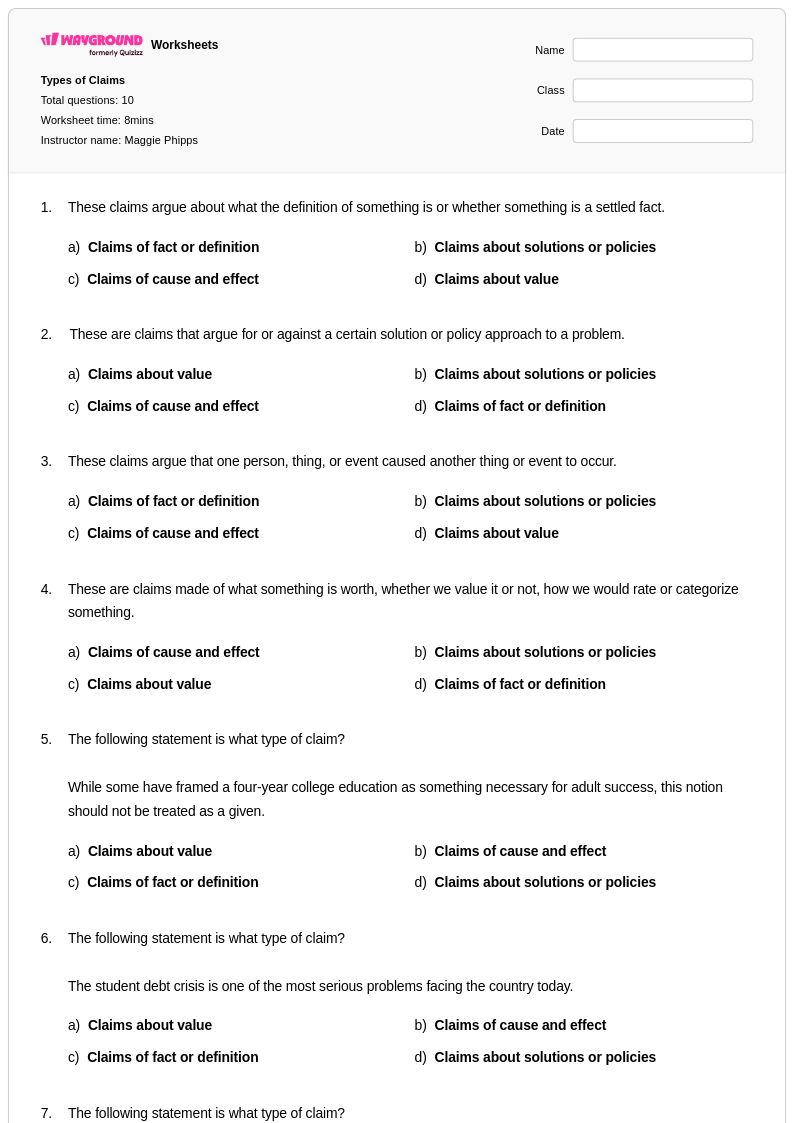
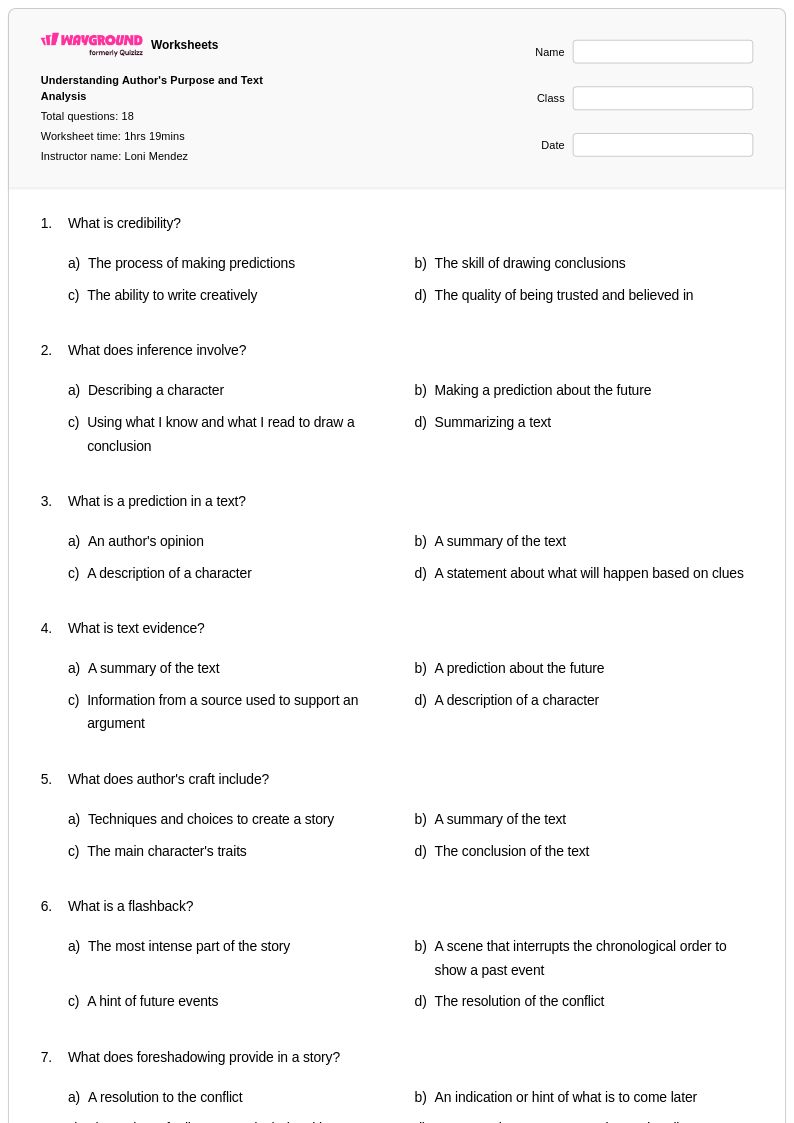
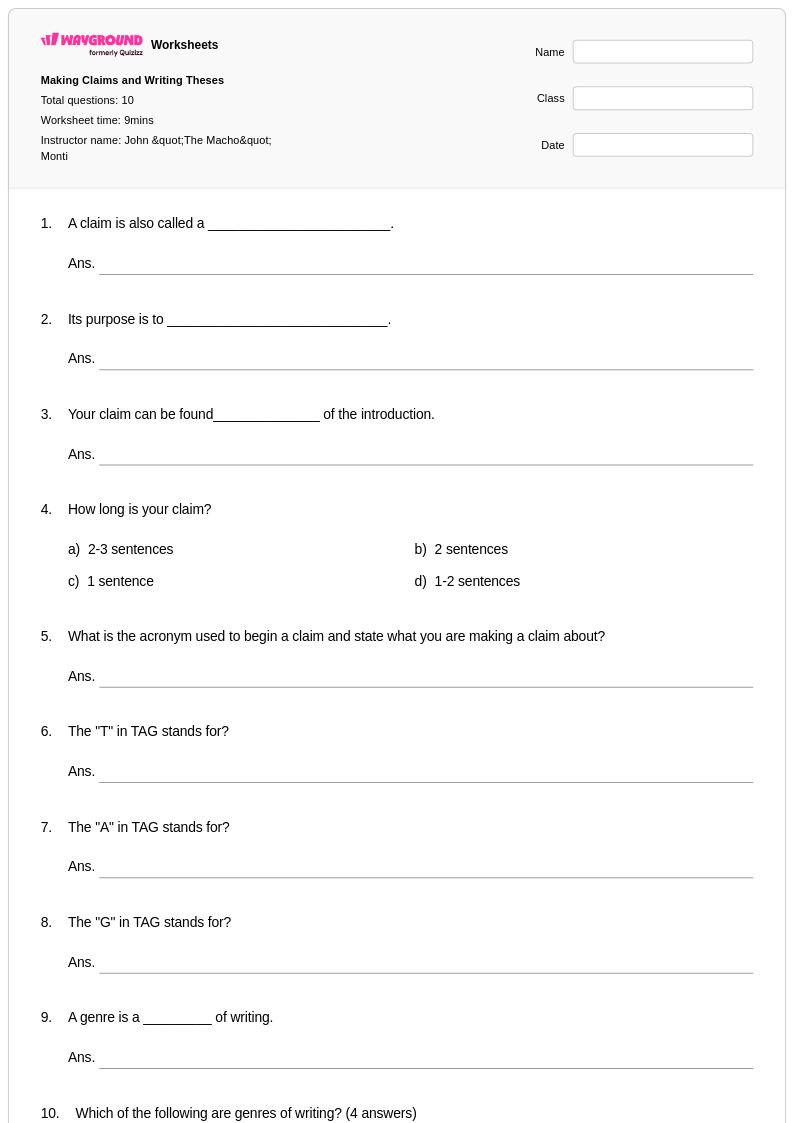
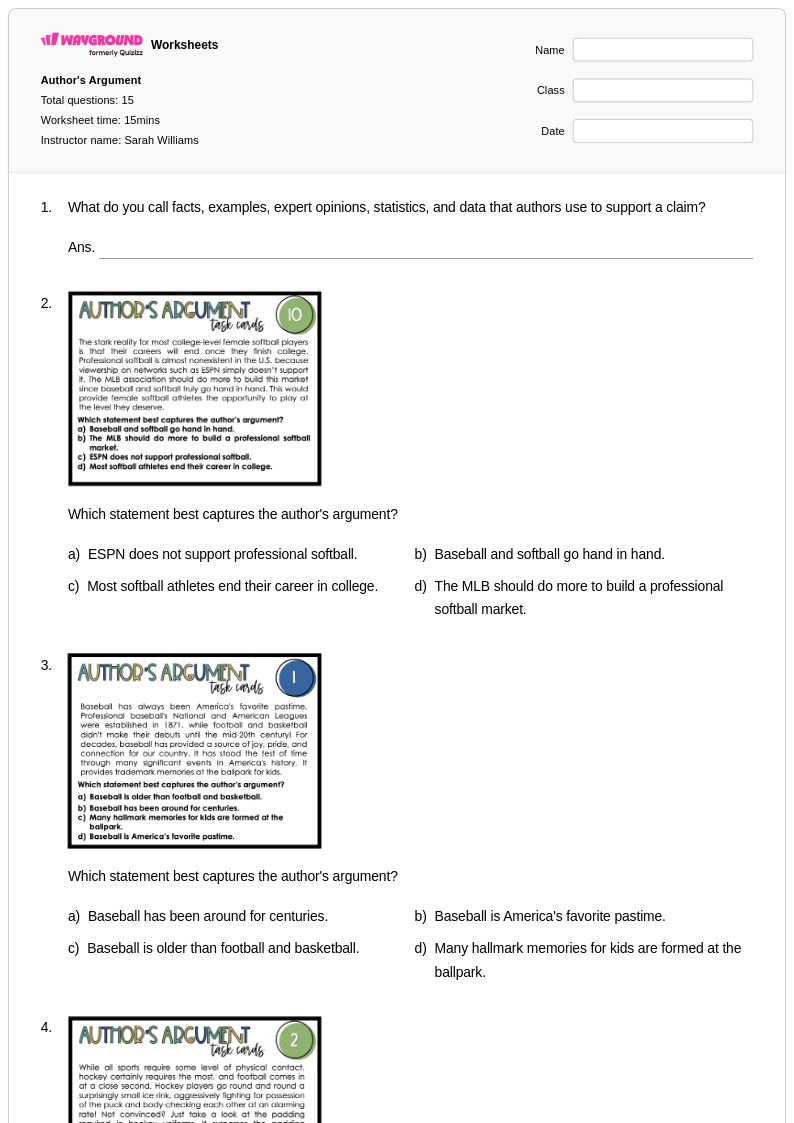
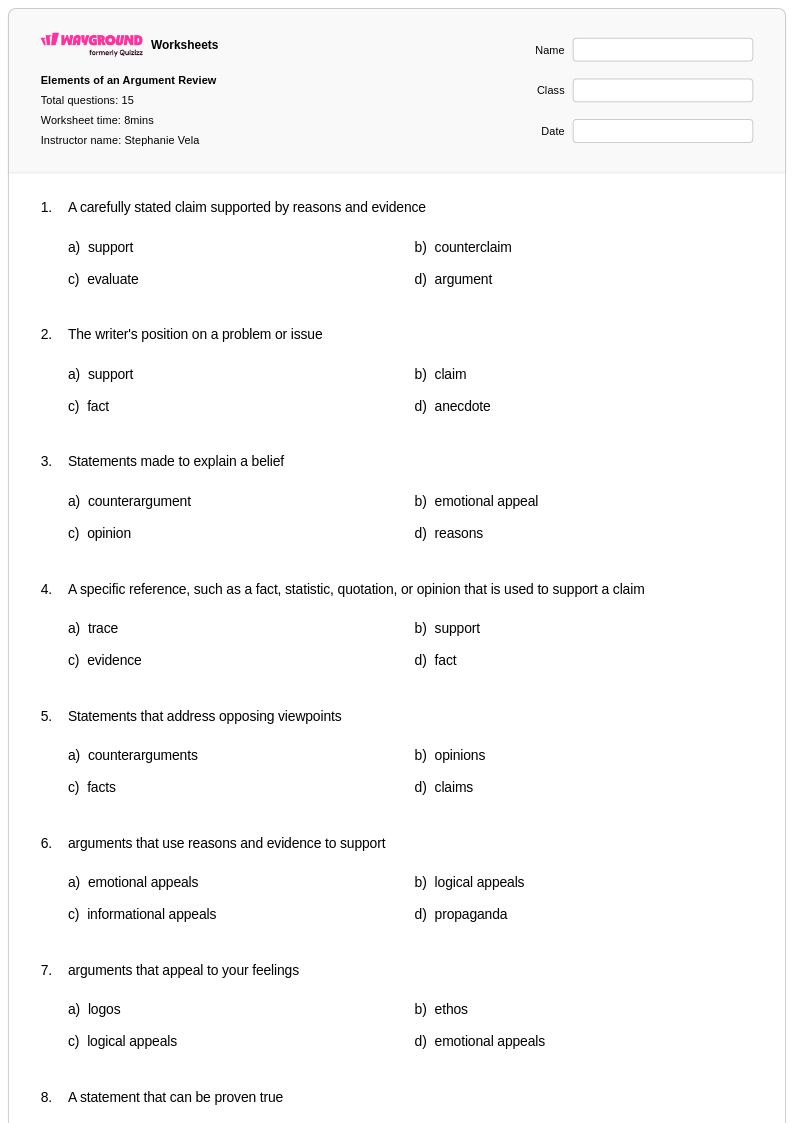
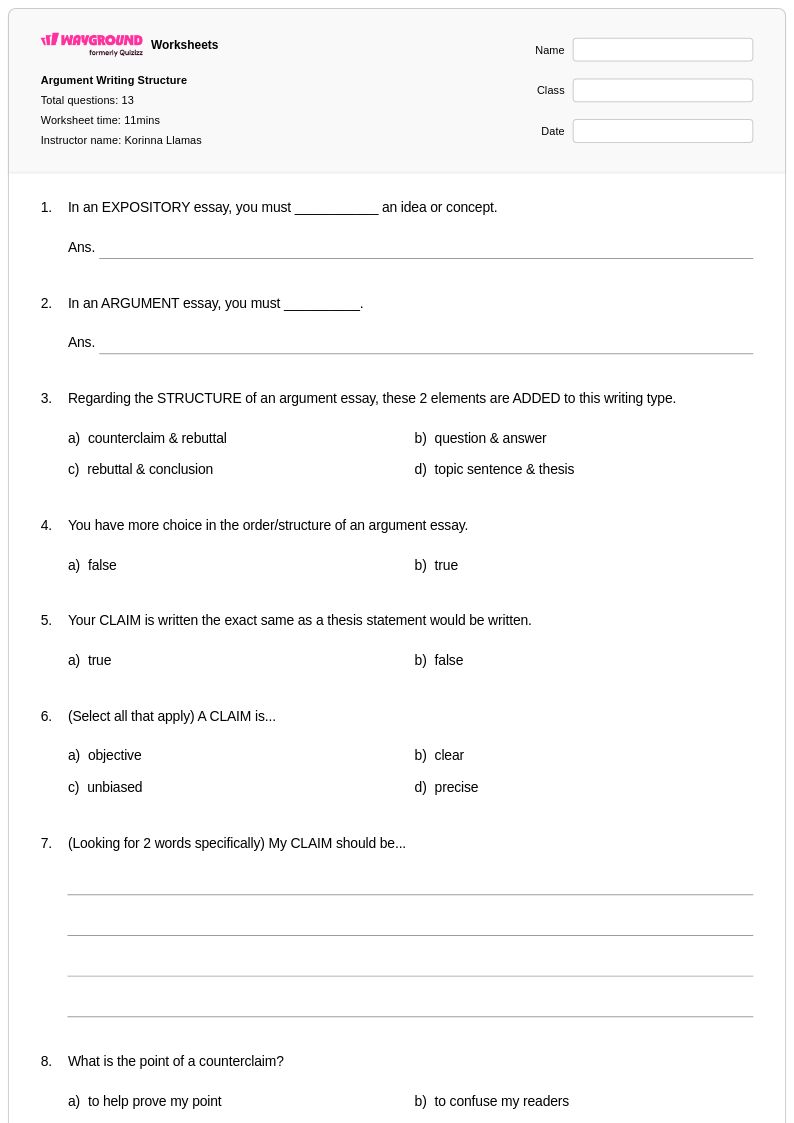
Author's claim worksheets for Class 12 students available through Wayground (formerly Quizizz) provide comprehensive practice in identifying, analyzing, and evaluating the central arguments that writers present in complex texts. These expertly designed materials strengthen students' ability to distinguish between an author's stated position and the supporting evidence, recognize implicit claims embedded within sophisticated arguments, and assess the validity of reasoning across diverse genres including editorials, speeches, academic essays, and literary works. Each worksheet collection includes detailed answer keys that guide students through the analytical process, while free printables offer flexible options for classroom implementation and independent study, ensuring that practice problems target the critical thinking skills essential for college-level reading comprehension.
Wayground (formerly Quizizz) empowers educators with millions of teacher-created resources specifically focused on author's claim analysis, featuring robust search and filtering capabilities that allow instructors to locate materials aligned with specific standards and learning objectives. The platform's differentiation tools enable teachers to customize worksheets for varying ability levels within Class 12 classrooms, while flexible formatting options provide both printable pdf versions for traditional instruction and digital alternatives for technology-enhanced learning environments. These comprehensive collections support strategic lesson planning by offering scaffolded practice opportunities that progress from basic claim identification to sophisticated argument evaluation, making them invaluable for remediation of struggling readers, enrichment activities for advanced students, and systematic skill practice that prepares students for the analytical demands of post-secondary education and standardized assessments.
FAQs
How do I teach students to identify an author's claim?
Start by distinguishing between a claim and a fact: a claim is an arguable assertion the author wants readers to accept, while a fact is verifiable without debate. Have students read short persuasive or opinion texts and underline the single sentence that best captures what the author is arguing. From there, practice moves to recognizing how the surrounding sentences function as supporting evidence rather than the claim itself. Scaffolded practice with varied text types, including persuasive essays and argumentative articles, helps students transfer this skill across genres.
What exercises help students practice identifying and analyzing an author's claim?
Effective practice includes locating explicit claims in opinion pieces, inferring implicit arguments from texts that never directly state a position, and evaluating whether the evidence provided actually supports the author's assertion. Author's claim worksheets that guide students through all three of these tasks in a single text build the layered analytical skills students need for standardized assessments and independent reading. Using a range of text types, from persuasive essays to informational articles, ensures students don't over-rely on surface-level cues.
What mistakes do students commonly make when identifying an author's claim?
The most common error is confusing the topic of a text with the author's claim, for example identifying 'climate change' as the claim rather than the author's specific argument about it. Students also frequently mistake a supporting detail or piece of evidence for the central claim, especially when that detail appears early in the text. A related misconception is assuming every text has an explicit, single-sentence claim, which leads to difficulty with texts that build an argument implicitly. Practice with implicit arguments and annotating evidence separately from claims helps students break these habits.
How do I use author's claim worksheets effectively in my classroom?
Author's claim worksheets on Wayground are available as printable PDFs for traditional classroom distribution or as digital assignments for technology-integrated and remote learning environments, and they can also be hosted as a quiz directly on Wayground for immediate student interaction. Each worksheet includes a complete answer key, so teachers can use them for guided practice, independent work, or homework without additional preparation. For digital use, Wayground supports student-level accommodations such as read aloud, extended time, and reduced answer choices, making the same worksheet accessible to a range of learners in the same class.
How is evaluating an author's claim different from summarizing a text?
Summarizing requires students to restate what a text says, while evaluating an author's claim requires students to identify what the author is arguing and then assess whether the evidence is sufficient, relevant, and logical. These are distinct cognitive tasks, and students often conflate them because both involve close reading. Teaching students to first locate the claim, then map the evidence, and finally judge the connection between the two creates a clear three-step process that separates analysis from retelling.
How can I differentiate author's claim instruction for struggling and advanced readers?
For struggling readers, start with short, clearly structured persuasive texts where the claim appears in the first or last sentence, and use sentence frames to scaffold the identification process. On Wayground, teachers can also enable accommodations such as read aloud and reduced answer choices for individual students to lower the access barrier without changing the rigor of the task. Advanced students benefit from texts with implicit claims, conflicting authorial perspectives, or weak evidence that requires critical evaluation rather than simple identification.