Free Printable Books of the Bible Worksheets for Class 7
Enhance Class 7 students' understanding of the Books of the Bible with Wayground's comprehensive collection of free worksheets, printables, and practice problems that explore biblical literature's role in community and cultural studies, complete with answer keys.
Explore printable Books of the Bible worksheets for Class 7
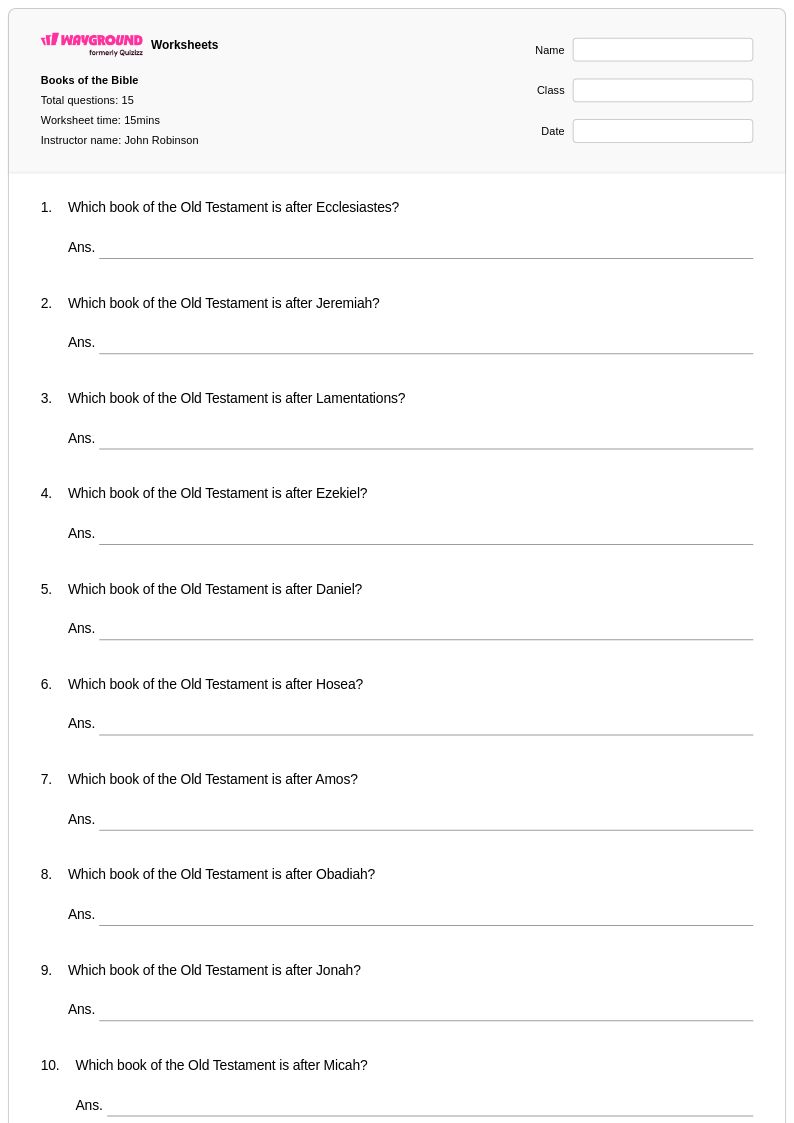
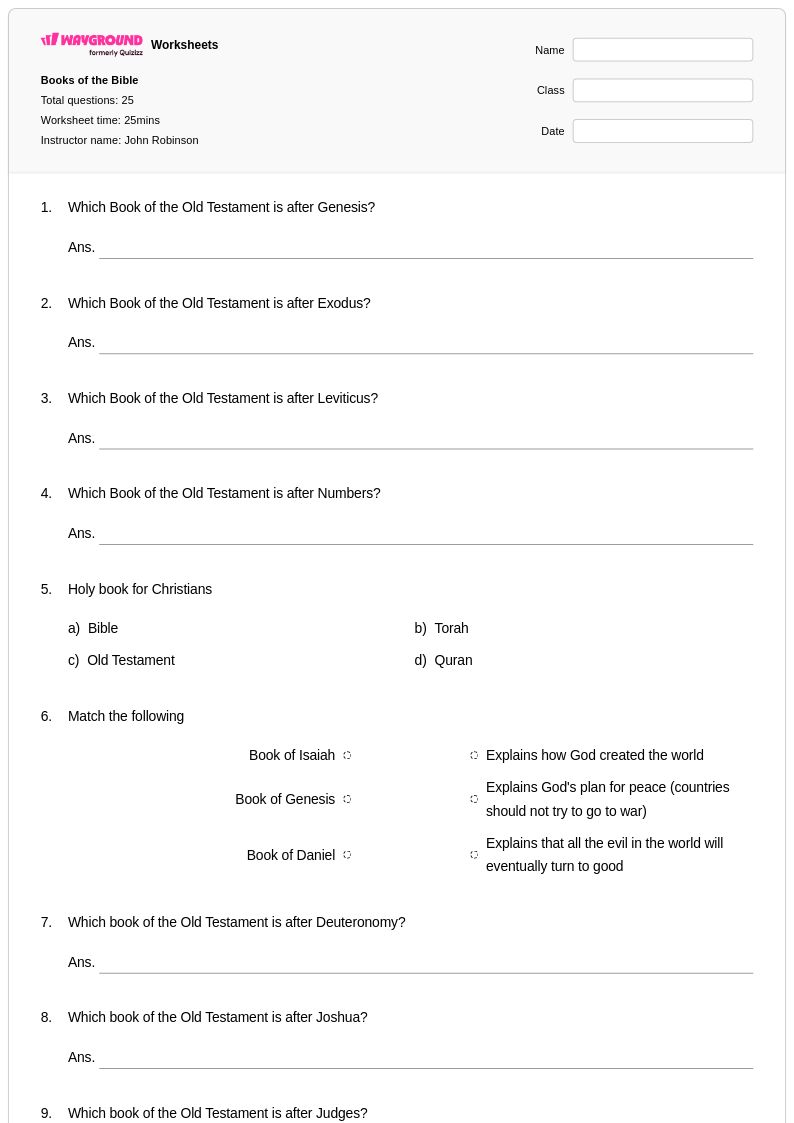
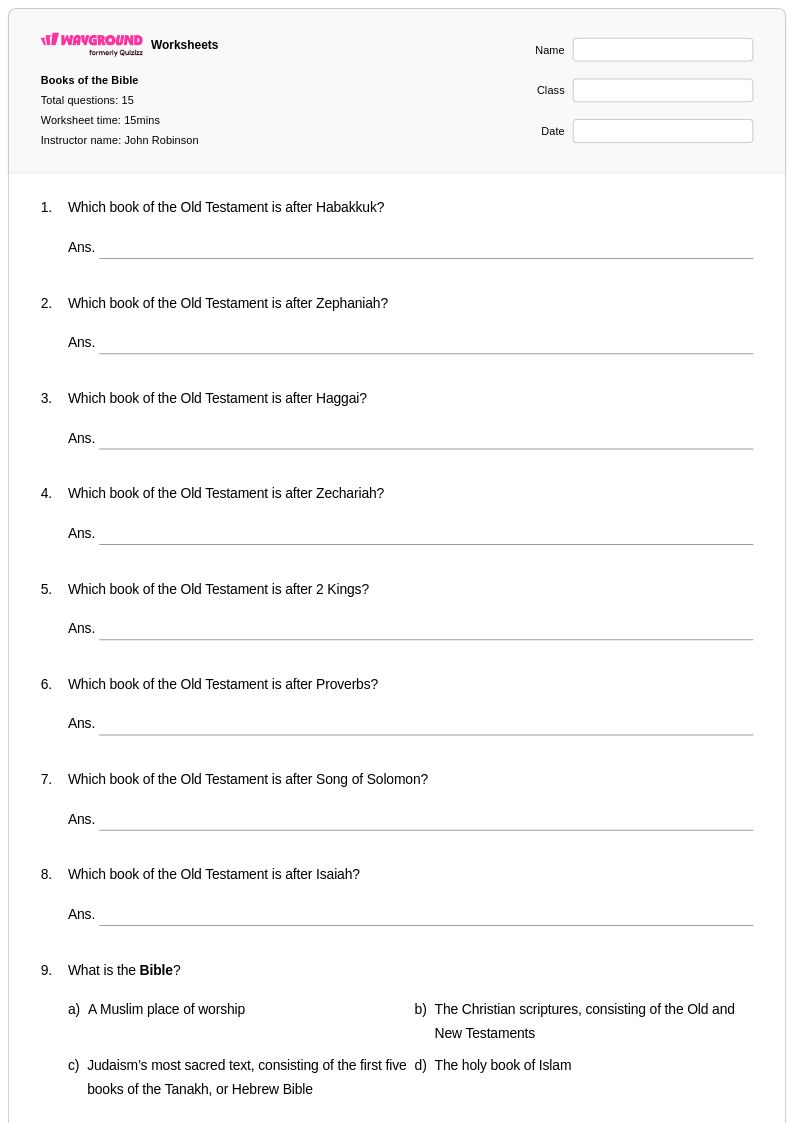
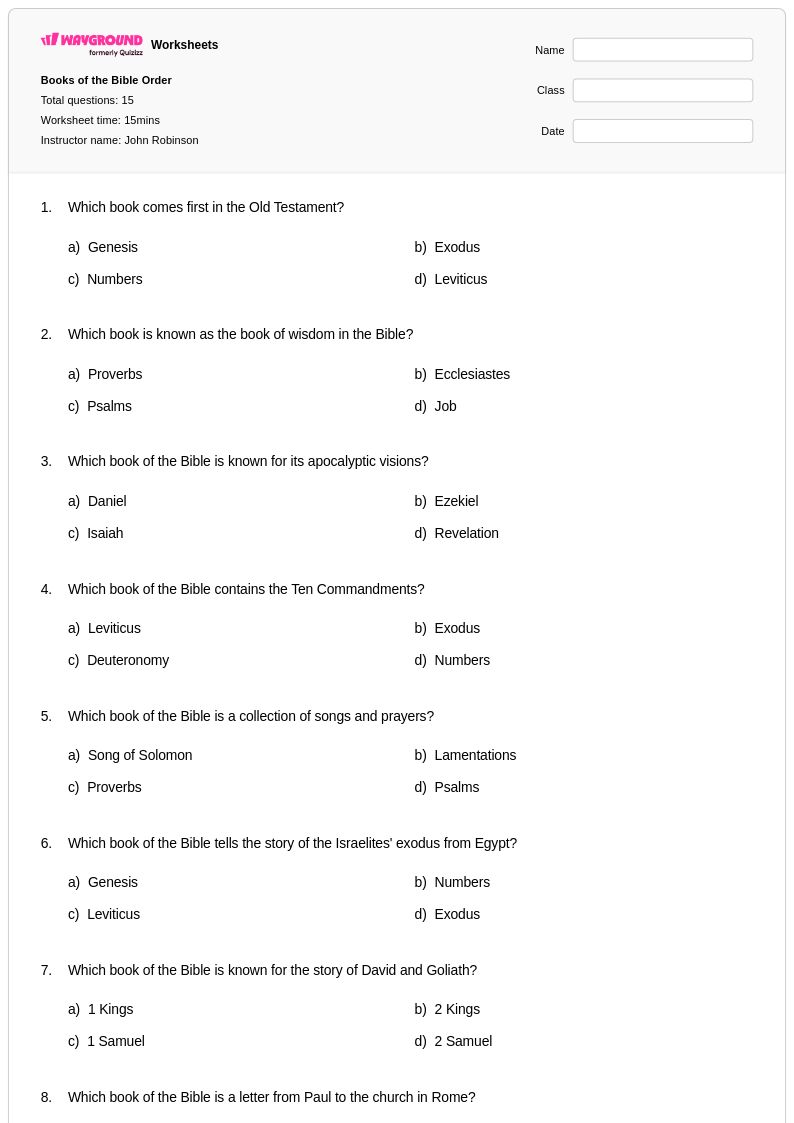
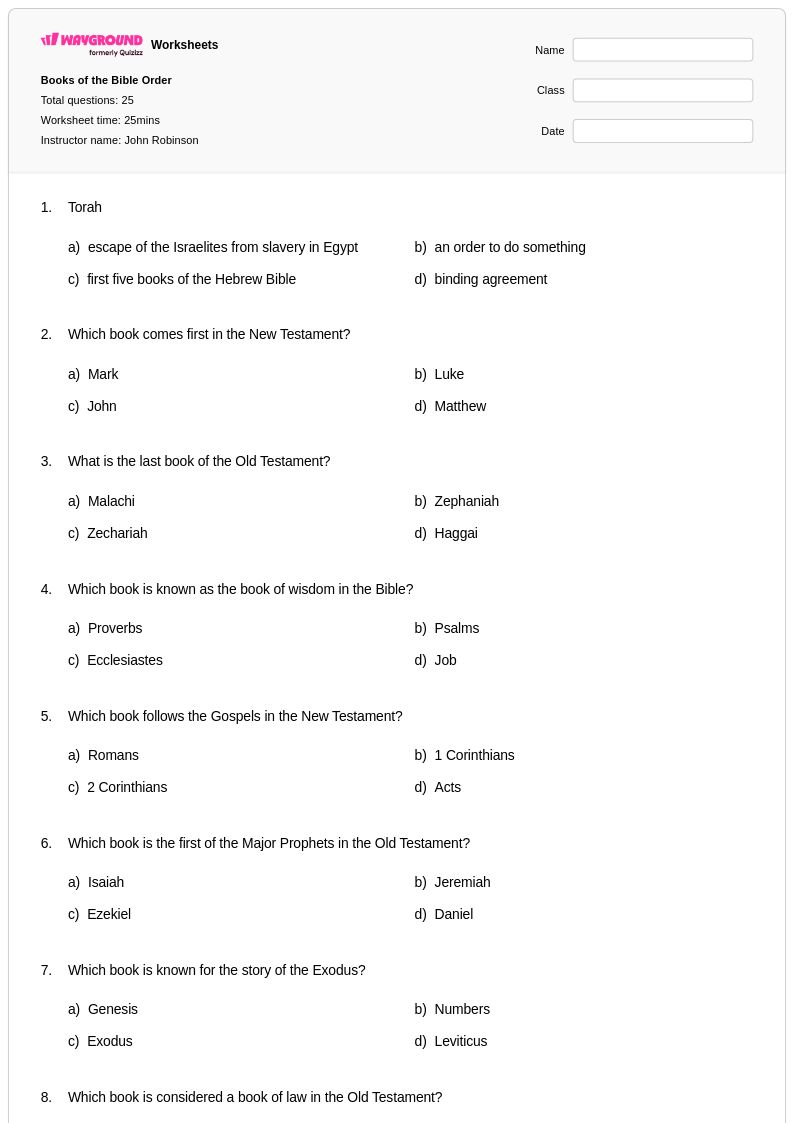
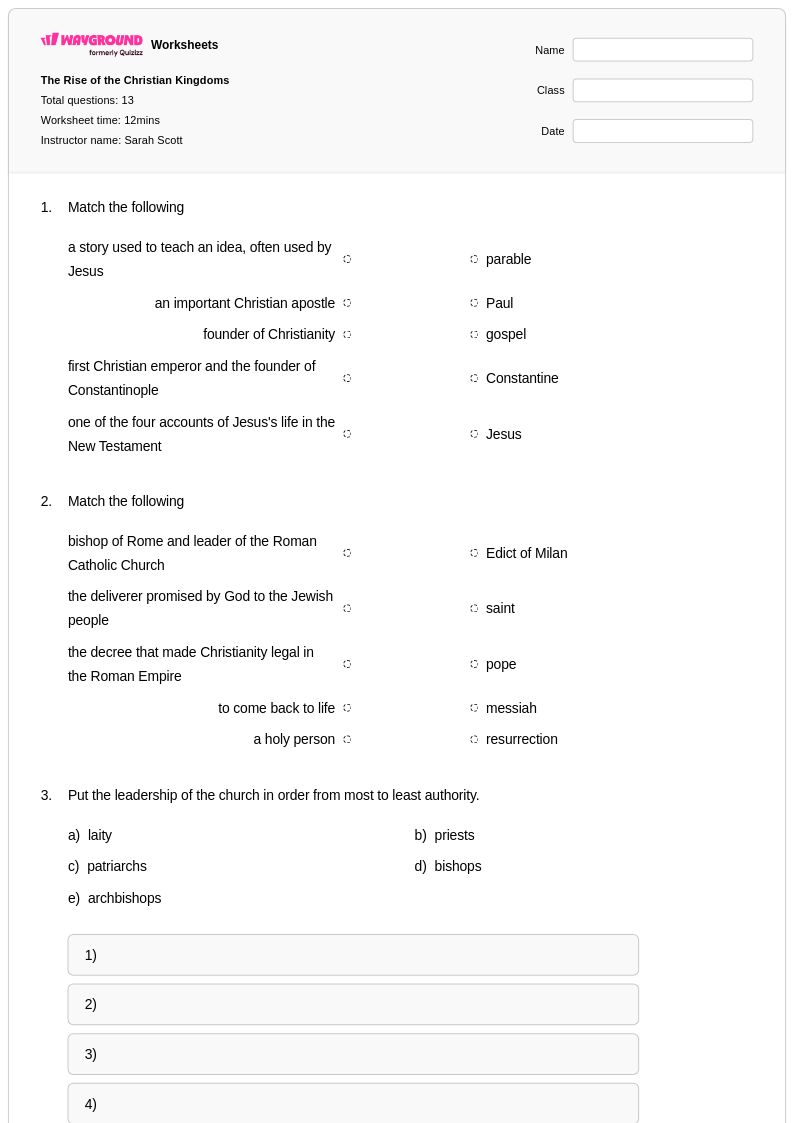
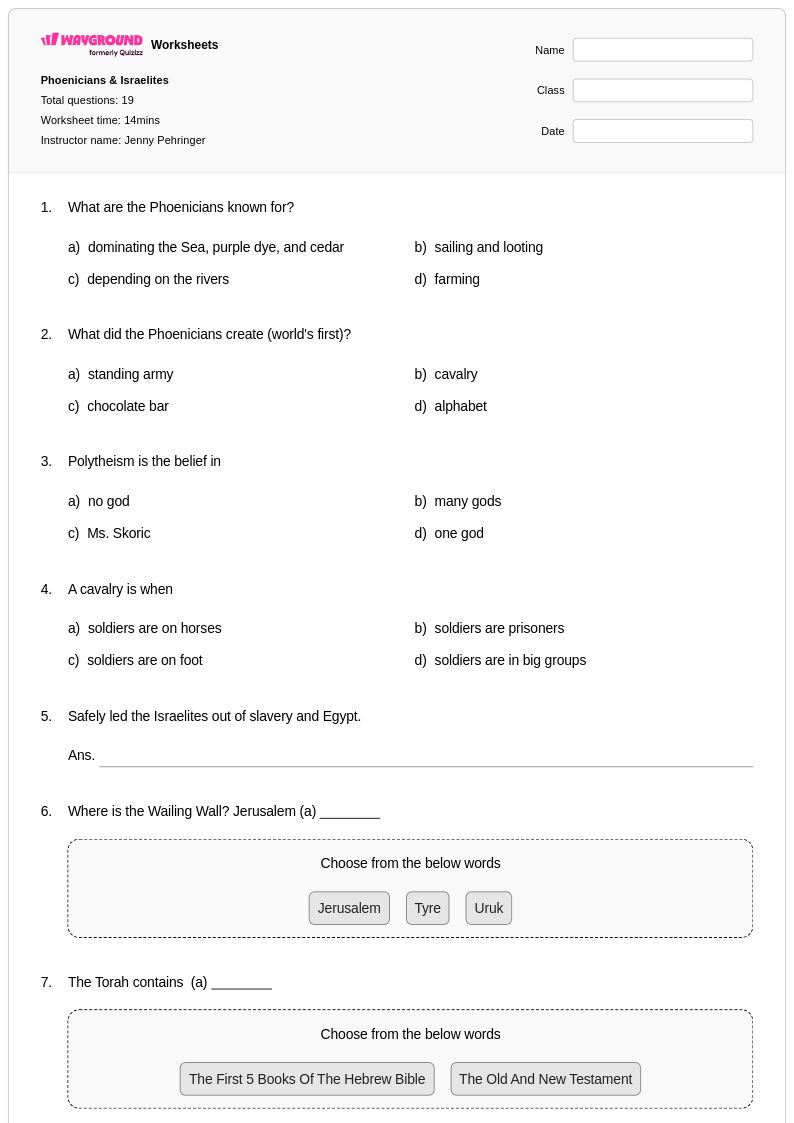
Books of the Bible worksheets for Class 7 provide students with comprehensive practice in identifying, organizing, and understanding the structure of biblical texts as part of their social studies exploration of community and cultures. These educational resources strengthen critical thinking skills by helping students analyze how religious texts have shaped civilizations, influenced cultural development, and continue to impact modern communities worldwide. The worksheets feature a variety of practice problems that challenge students to memorize the order of biblical books, categorize texts by testament and genre, and explore the historical context of these foundational religious documents. Each worksheet includes a detailed answer key to support independent learning, and the materials are available as free printables in convenient PDF format for easy classroom distribution and home study.
Wayground, formerly Quizizz, empowers educators with an extensive collection of teacher-created resources covering Books of the Bible instruction, drawing from millions of high-quality worksheets developed by experienced social studies professionals. The platform's robust search and filtering capabilities allow teachers to quickly locate materials that align with curriculum standards and match their students' specific learning needs. Advanced differentiation tools enable educators to customize worksheets for diverse learners, while the flexible format options support both traditional printable worksheets and interactive digital activities accessible through PDF downloads. These comprehensive features streamline lesson planning while providing targeted resources for remediation, enrichment, and skill practice, ensuring that all Class 7 students can successfully engage with this important aspect of cultural and religious literacy within their social studies curriculum.
FAQs
How do I teach students to memorize the books of the Bible in order?
Teaching the canonical order of the 66 books works best when broken into smaller chunks — first separating the Old Testament (39 books) from the New Testament (27 books), then grouping books by category such as Law, History, Poetry, Major Prophets, Minor Prophets, Gospels, and Epistles. Repetition through sequencing activities, fill-in-the-blank exercises, and matching tasks reinforces memory over time. Layering in the historical and cultural context behind each grouping gives students a meaningful framework rather than pure rote memorization.
What activities help students practice identifying and categorizing the books of the Bible?
Effective practice activities include matching books to their Old or New Testament division, sequencing exercises where students arrange books in canonical order, and categorization tasks that sort books by genre or literary type. These structured exercises build familiarity with biblical organization progressively, moving from basic identification to more nuanced classification. Worksheets that combine multiple activity types in a single resource allow students to revisit the same content from different angles, deepening retention.
What mistakes do students commonly make when learning the books of the Bible?
One of the most common errors is conflating the Old and New Testaments — students frequently misplace books like Hebrews or Acts into the Old Testament because the content references Jewish history. Students also struggle to distinguish between books with similar names, such as Kings and Chronicles, or the Minor Prophets, which share overlapping themes. Confusing the number of books in each Testament (39 Old, 27 New) is another persistent misconception that sequencing and categorization practice directly addresses.
How does studying the books of the Bible fit into a social studies curriculum?
Within social studies curricula focused on community and cultures, the books of the Bible function as primary source material that illuminates the historical, legal, and cultural practices of ancient Near Eastern and early Christian communities. Analyzing how the 66 books were organized and transmitted helps students understand how religious texts shaped governance, ethics, and social structure across civilizations. This approach frames biblical literacy as cultural literacy, connecting scripture study to broader themes of human history and cultural development.
How do I use Books of the Bible worksheets from Wayground in my classroom?
Books of the Bible worksheets on Wayground are available as printable PDFs for traditional classroom distribution and in digital formats for technology-integrated learning environments, including the option to host them as an interactive quiz on Wayground. Each worksheet includes a complete answer key, making them well suited for independent work, homework, or guided practice. Wayground also supports student-level accommodations such as read aloud, extended time, and reduced answer choices, so you can differentiate the same resource for learners with varying needs without creating separate materials.
How can I differentiate Books of the Bible worksheets for students at different skill levels?
For students newer to the content, start with two-category sorting tasks that distinguish Old from New Testament before introducing subcategory classification. More advanced students can engage with activities that analyze the cultural significance of specific books or explore the historical contexts that shaped the biblical canon. On Wayground, built-in differentiation tools allow teachers to assign accommodations like reduced answer choices or read aloud to individual students, so the same digital worksheet can serve multiple skill levels simultaneously.