Free Printable Boston Tea Party Worksheets for Class 5
Class 5 Boston Tea Party worksheets from Wayground help students explore this pivotal American Revolution event through engaging printables, practice problems, and comprehensive answer keys for effective learning.
Explore printable Boston Tea Party worksheets for Class 5
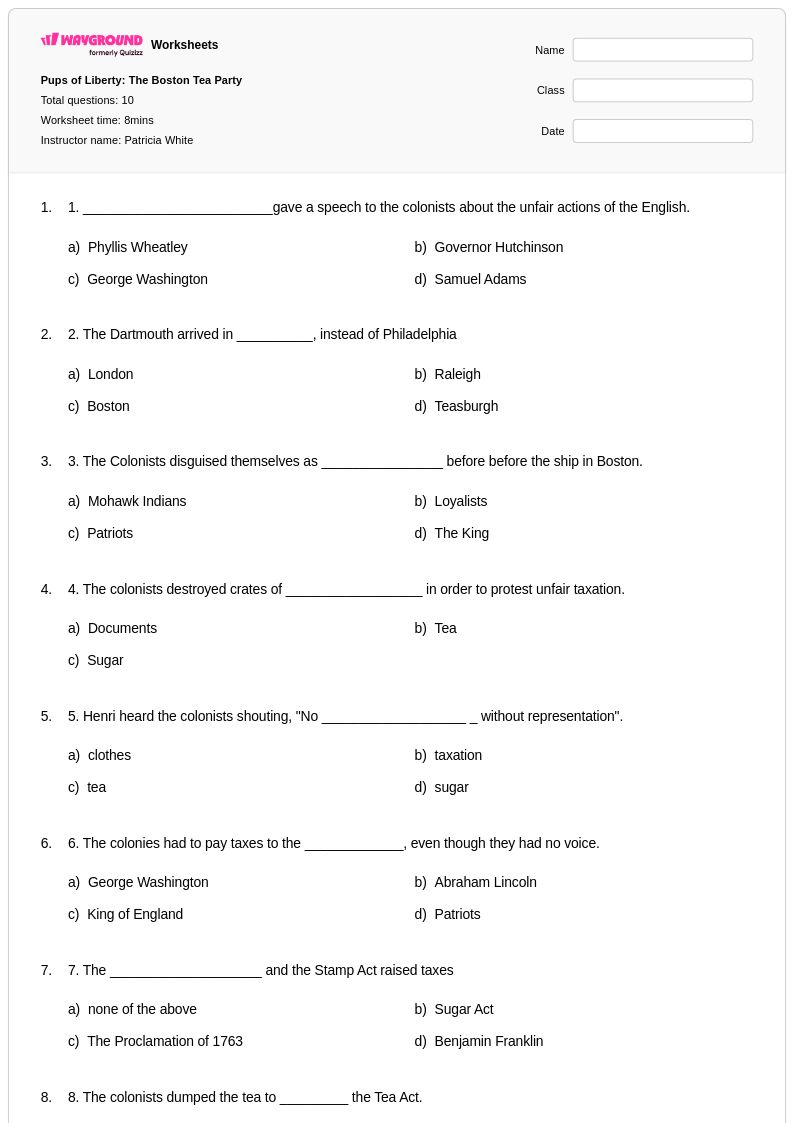
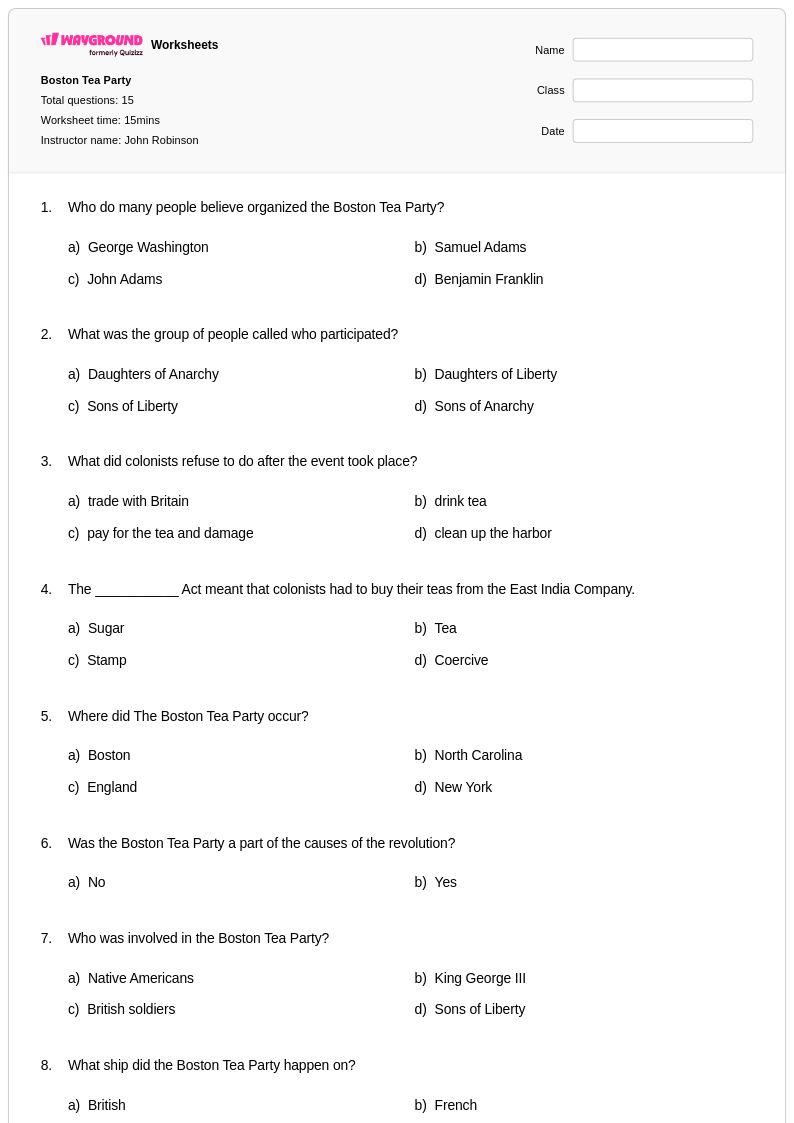
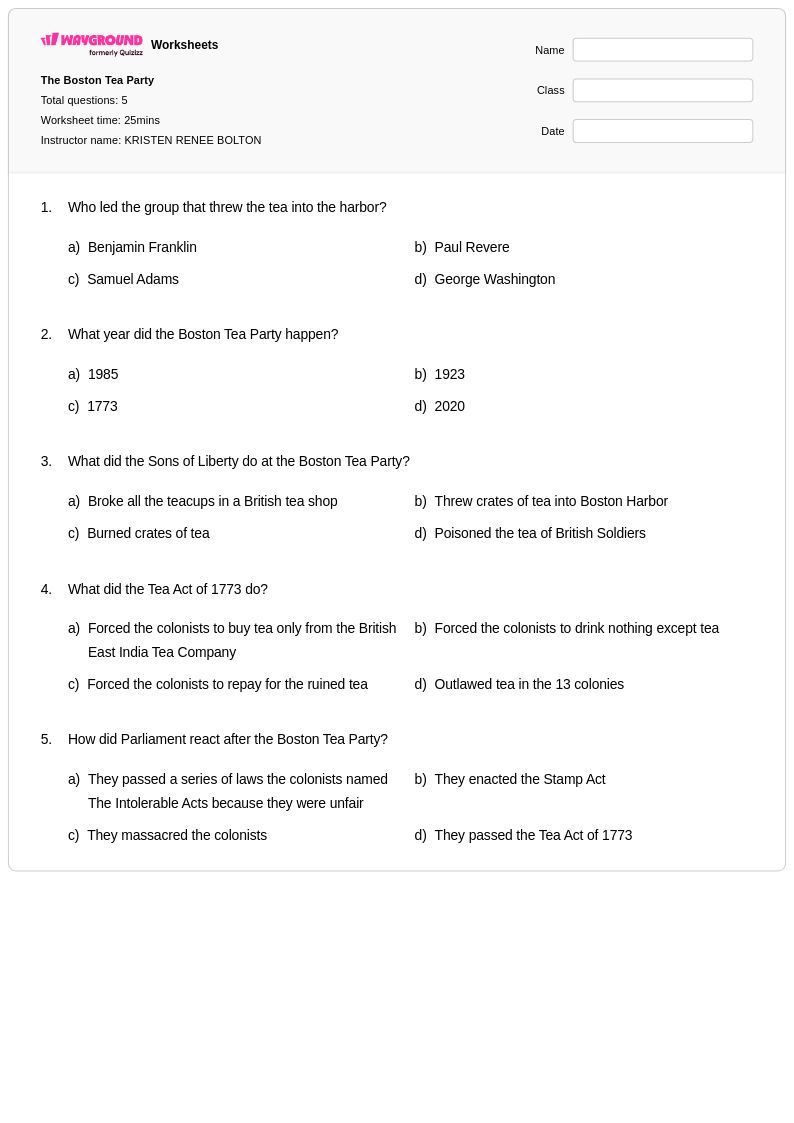
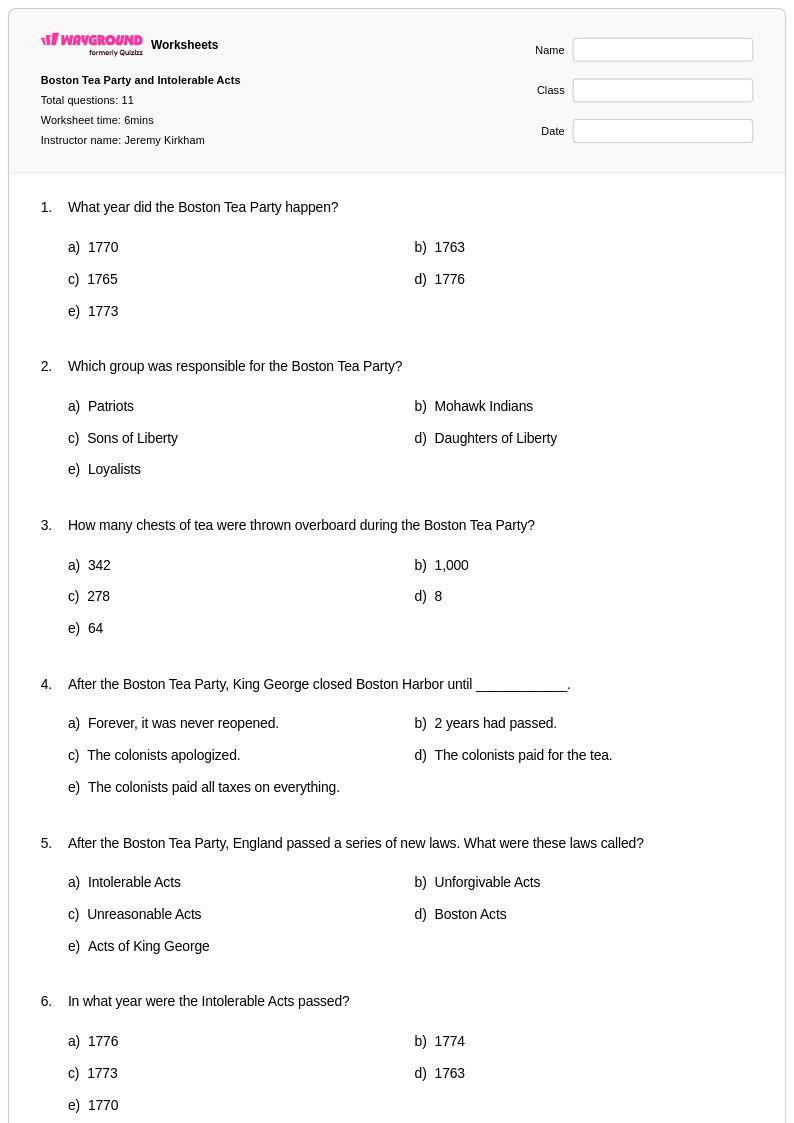
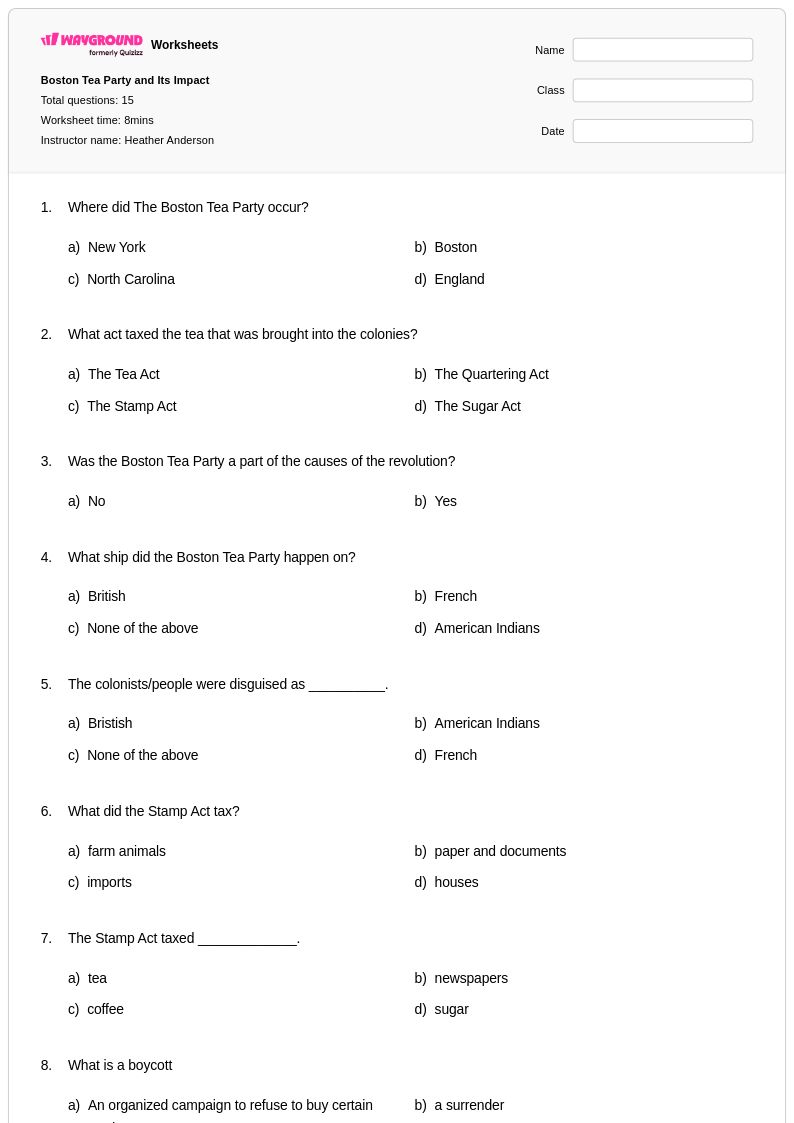
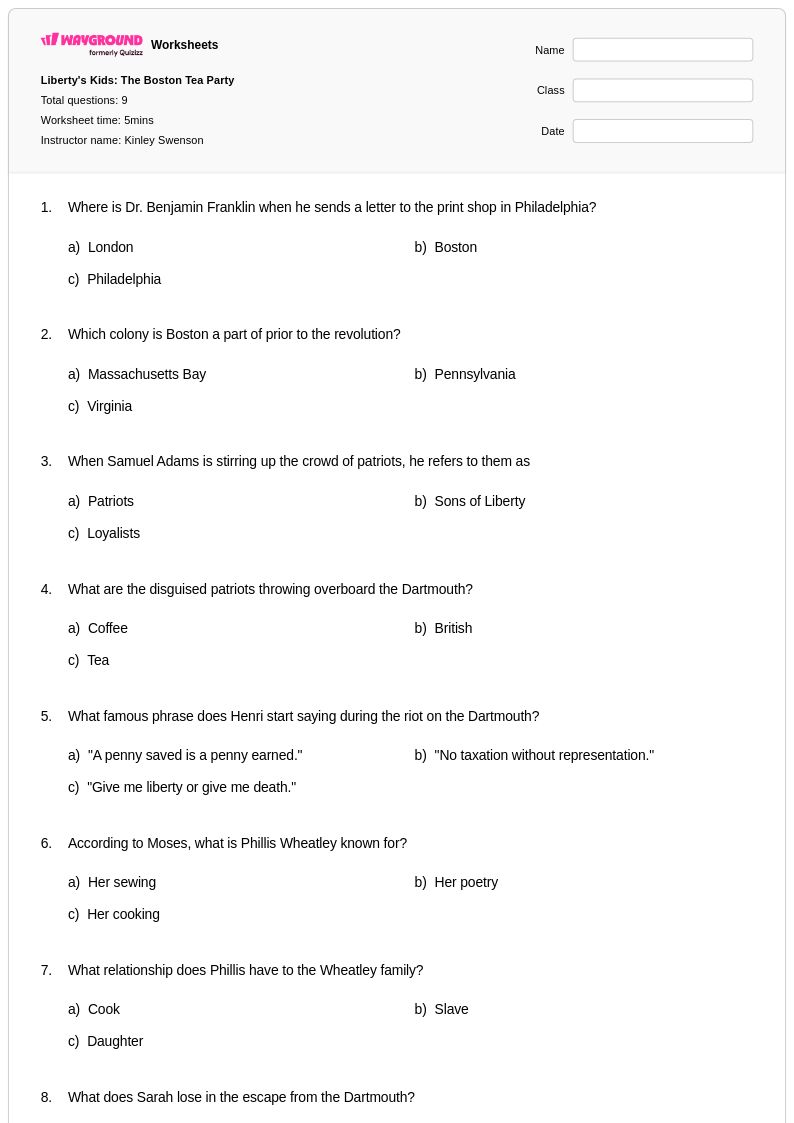
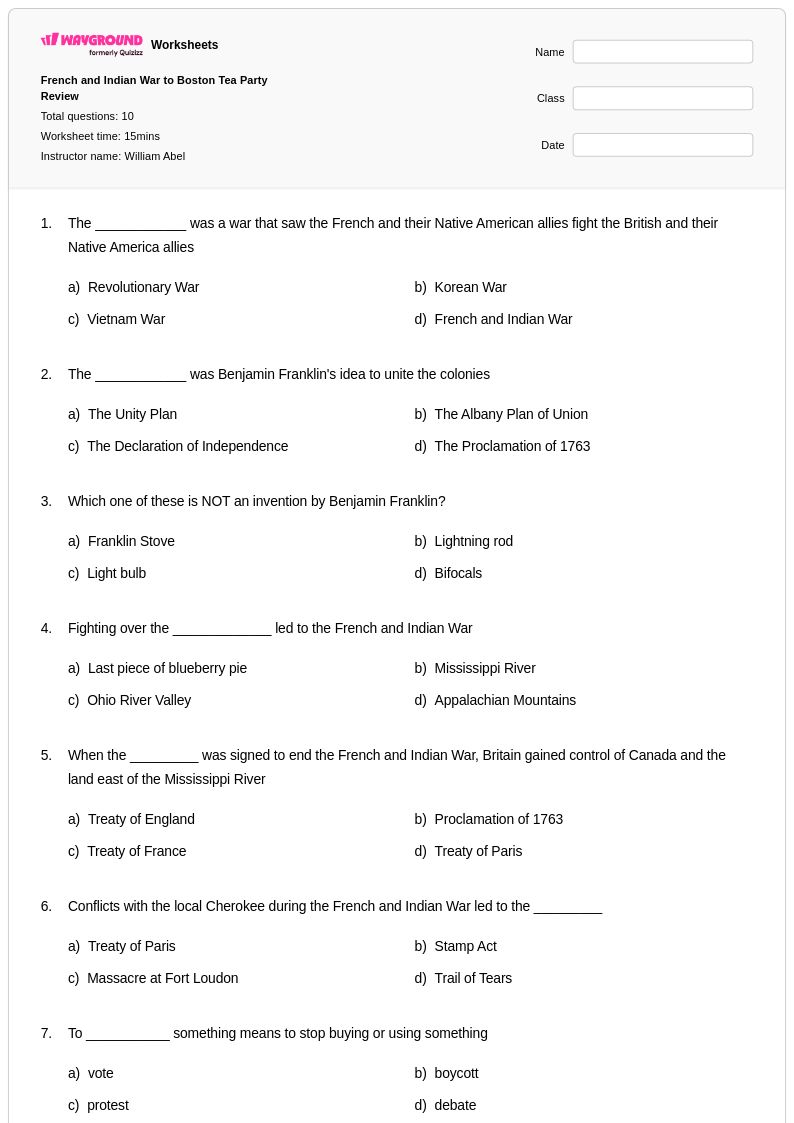
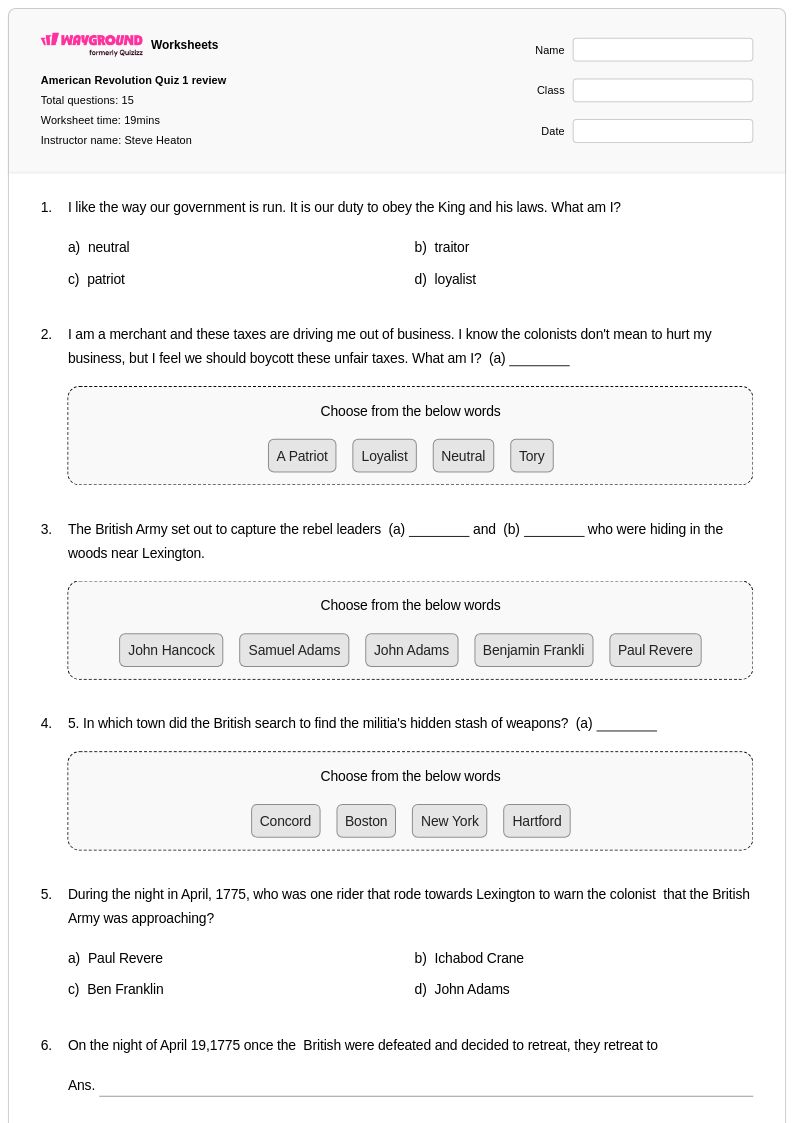
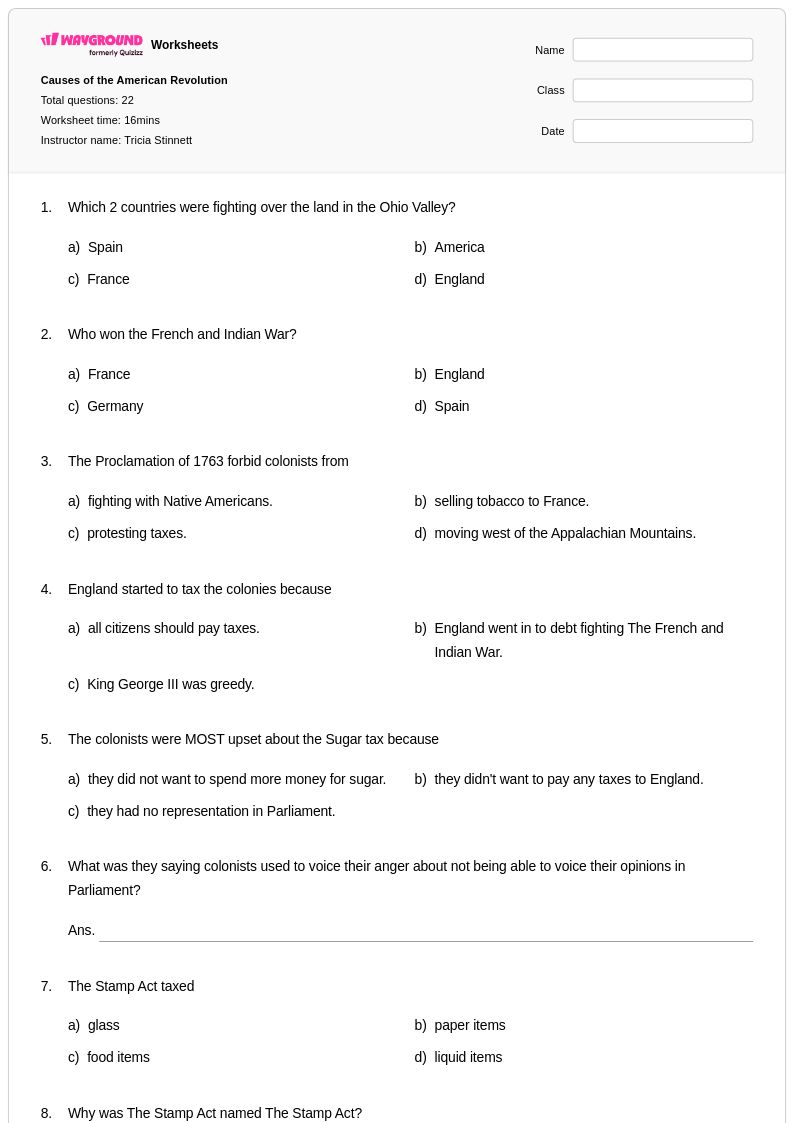
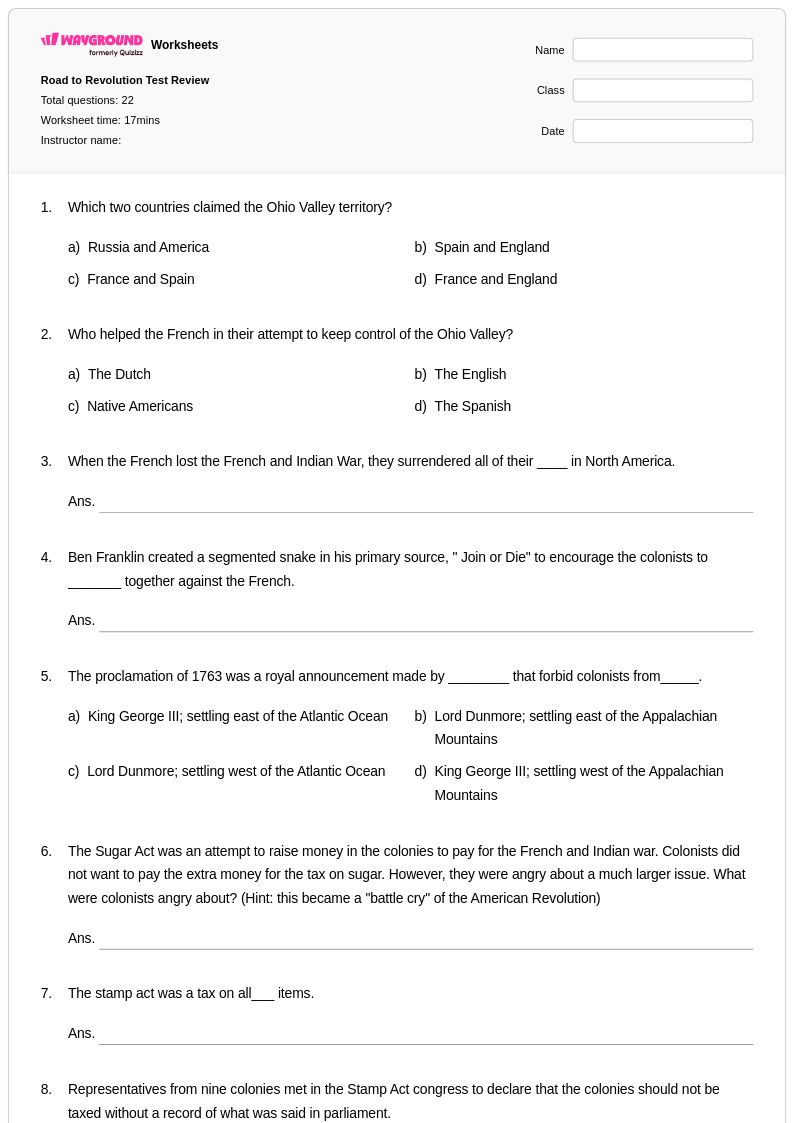
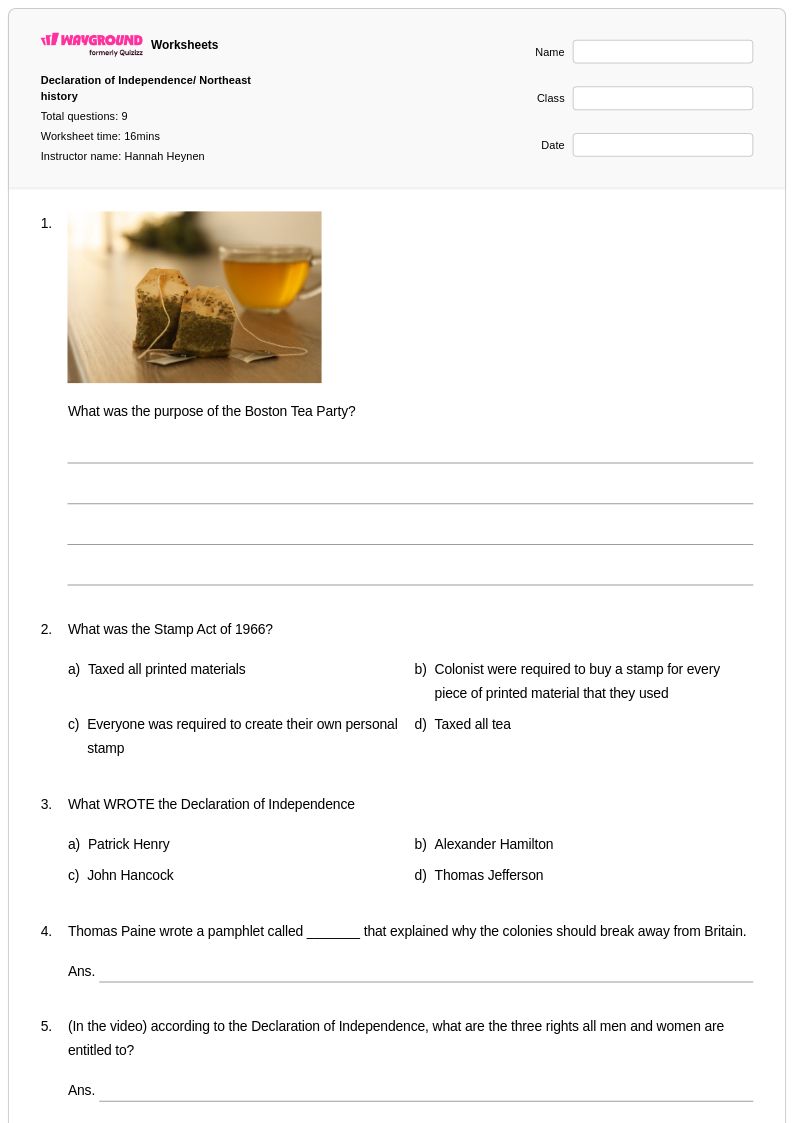
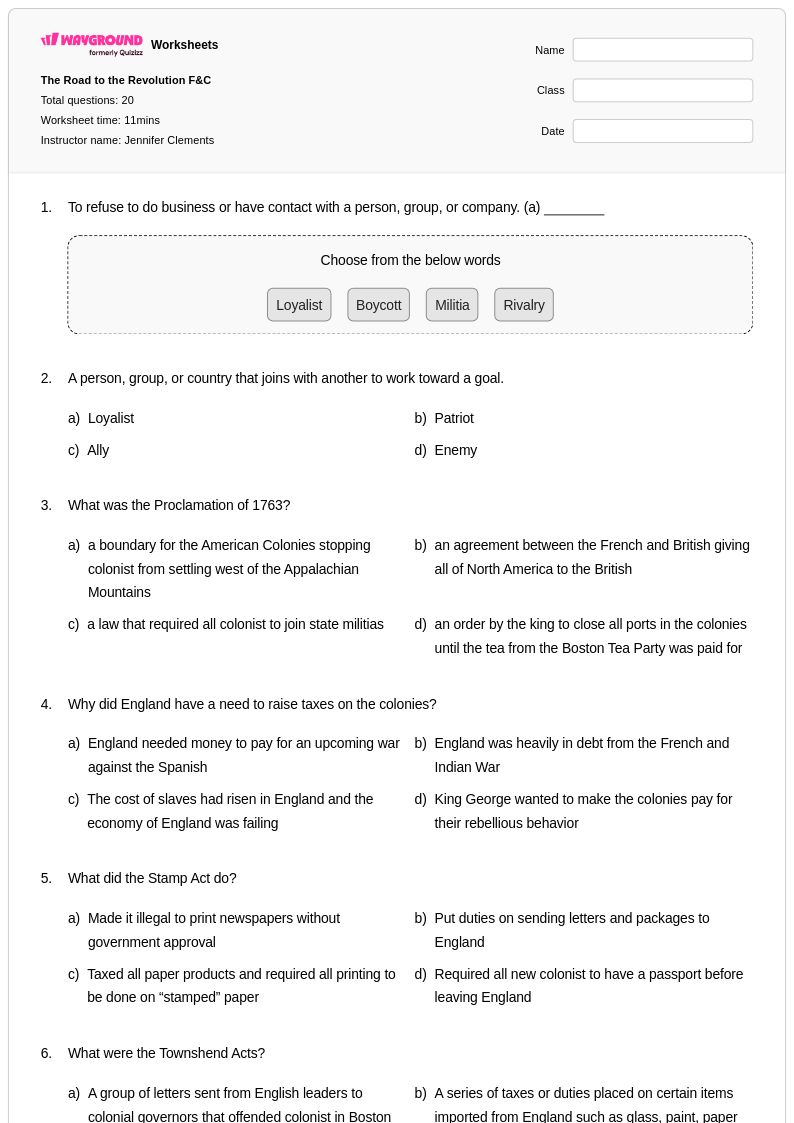
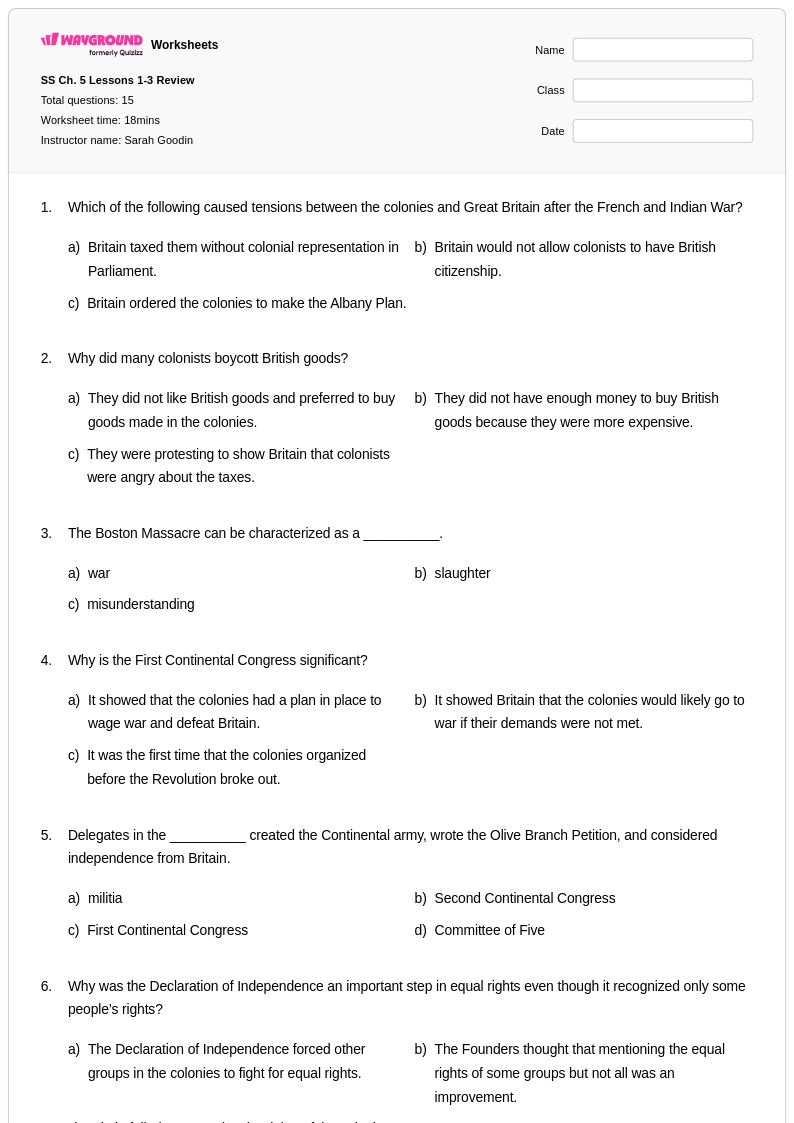
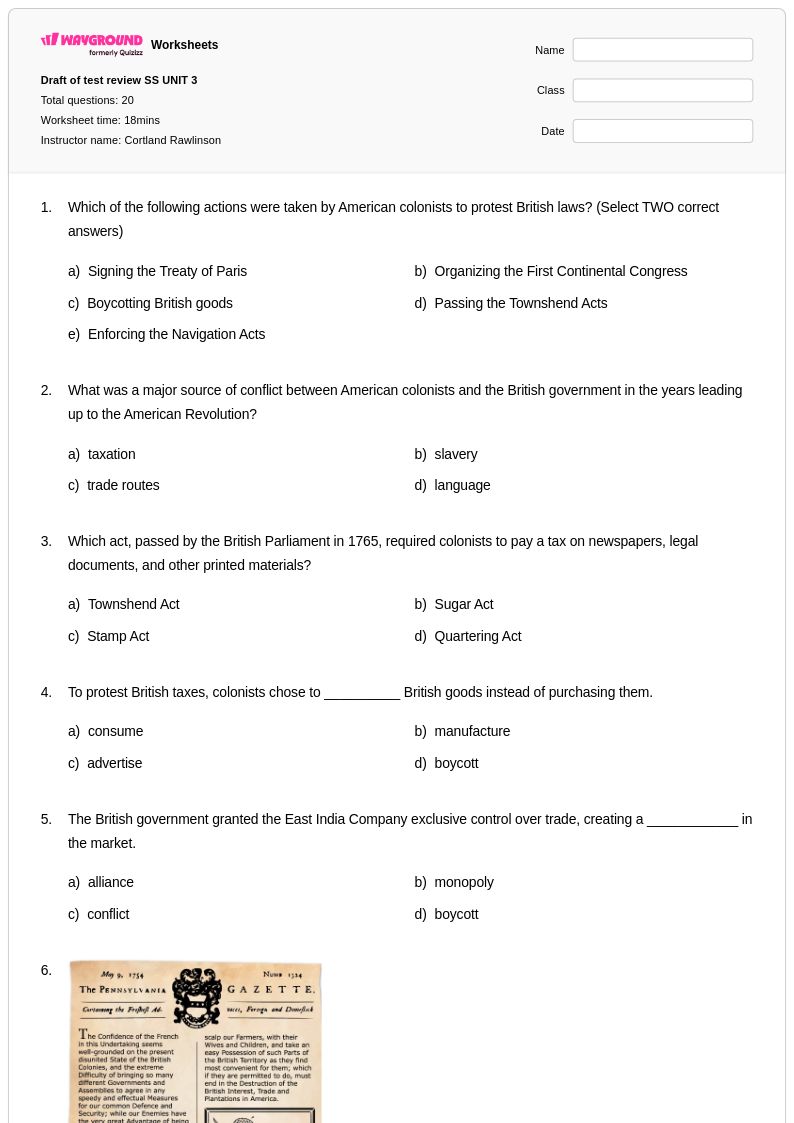
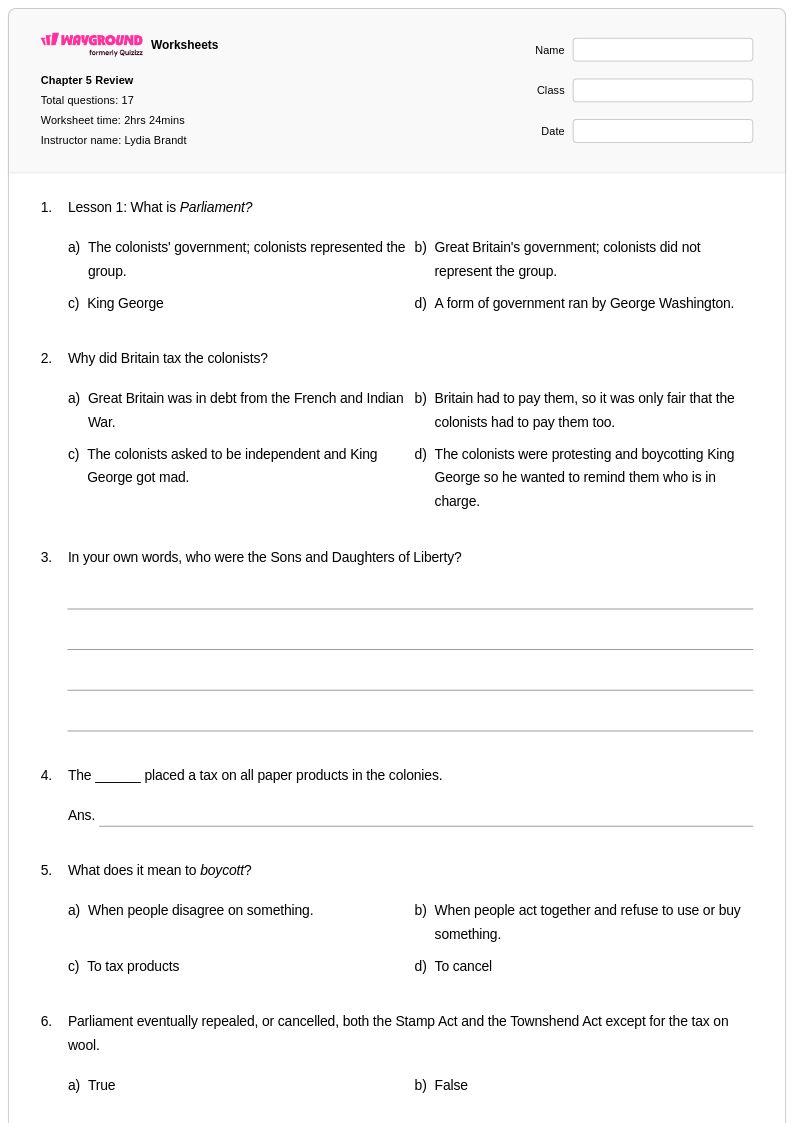
Boston Tea Party worksheets for Class 5 students available through Wayground provide comprehensive educational resources that bring this pivotal moment in American history to life in the classroom. These expertly crafted materials help students develop critical thinking skills as they analyze the causes and consequences of the December 16, 1773 protest against British taxation policies. The worksheet collection strengthens reading comprehension, historical analysis, and timeline sequencing abilities while students explore primary source documents, political cartoons, and eyewitness accounts from this defining act of colonial resistance. Each worksheet includes detailed answer keys and practice problems that reinforce key concepts about taxation without representation, the Sons of Liberty, and the escalating tensions between Britain and the American colonies. Available as free printables and downloadable pdf resources, these materials support various learning objectives from basic fact recall to complex cause-and-effect relationships.
Wayground's extensive platform, formerly known as Quizizz, empowers educators with access to millions of teacher-created Boston Tea Party resources specifically designed for Class 5 social studies instruction. The platform's robust search and filtering capabilities allow teachers to quickly locate worksheets that align with state standards and match their specific curriculum requirements. Advanced differentiation tools enable instructors to modify content complexity, making materials accessible for diverse learning needs while maintaining historical accuracy and academic rigor. These flexible resources are available in both printable and digital formats, including professionally formatted pdf downloads that facilitate seamless lesson planning and classroom implementation. Whether used for initial skill development, targeted remediation, or enrichment activities, these Boston Tea Party worksheets provide teachers with reliable, standards-aligned materials that enhance student understanding of this crucial chapter in American Revolutionary history.
FAQs
How do I teach the Boston Tea Party in a way that goes beyond the basic story?
Effective Boston Tea Party instruction moves students past the surface narrative by examining the political and economic forces behind the protest, including the Tea Act, the principle of taxation without representation, and the escalating conflict between Britain and the colonies. Incorporating primary source analysis, such as political cartoons, eyewitness accounts, and colonial pamphlets, pushes students to evaluate perspective and motivation rather than simply memorize events. Structured discussion around the competing viewpoints of the Sons of Liberty, British officials, and colonial merchants helps students understand that the Tea Party was a calculated act of resistance with broad political consequences, not a spontaneous riot.
What kinds of exercises help students practice analyzing the Boston Tea Party?
Practice exercises that work well for this topic include primary source document analysis, perspective-taking activities that ask students to write or reason from the viewpoint of different colonial groups, and cause-and-effect graphic organizers tracing the path from the Tea Act to the eventual Revolution. Political cartoon analysis is particularly effective because it develops both historical thinking and visual literacy simultaneously. Combining these with short-answer questions about key figures and events reinforces factual knowledge while building the analytical skills students need for deeper historical reasoning.
What misconceptions do students commonly have about the Boston Tea Party?
A common misconception is that colonists opposed the tea tax simply because it raised prices, when in fact the tea sold under the Tea Act was actually cheaper than before due to the removal of middlemen. The deeper grievance was the principle that Parliament had no right to tax the colonies without their representation, making the protest fundamentally political rather than economic. Students also frequently conflate the Boston Tea Party with a spontaneous mob action, when in reality it was a carefully organized event led by the Sons of Liberty. Addressing these misconceptions directly through document-based questioning and guided reading helps students develop a more accurate and nuanced understanding.
How do I use Boston Tea Party worksheets effectively in my classroom?
Boston Tea Party worksheets on Wayground are available as printable PDFs for traditional classroom use and in digital formats for technology-integrated or remote learning environments, giving teachers flexibility in how they assign and collect work. Teachers can also host worksheets as a quiz directly on Wayground, which allows for streamlined grading and instant feedback. For best results, pair document analysis worksheets with brief direct instruction on the Tea Act and colonial tensions before students work independently, and use the included answer keys to support both self-assessment and teacher-led review.
How do I differentiate Boston Tea Party instruction for students at different readiness levels?
Differentiation for this topic can include providing scaffolded reading supports for students who struggle with complex historical texts, such as graphic organizers or sentence frames for document analysis, while offering open-ended essay prompts or deeper primary source comparisons for advanced learners. On Wayground, teachers can apply individual student accommodations including read-aloud support for students who need audio assistance with complex texts, reduced answer choices to lower cognitive load for students who need it, and extended time settings. These accommodations are saved per student and can be applied without notifying the rest of the class, making differentiation seamless during digital assignments.
How does the Boston Tea Party connect to the broader causes of the American Revolution?
The Boston Tea Party is best understood as a catalyst within a longer sequence of colonial grievances, not an isolated incident. It directly provoked the British Parliament to pass the Intolerable Acts in 1774, which further unified colonial opposition and accelerated the path toward the First Continental Congress and, eventually, armed conflict. Teaching the Tea Party in connection with prior events like the Stamp Act, the Townshend Acts, and the Boston Massacre helps students see the cumulative logic of colonial resistance and understand why a protest over tea carried such outsized historical consequences.